Why Luxury City Hotels Are Becoming Sanctuaries for Slow Living
Luxury travel in cities is quietly changing shape. The most desirable hotels are no longer defined by access, nightlife, or visibility, but by something far more understated: the ability to slow everything down.
For a certain type of traveller, the modern luxury hotel is no longer a base for exploring a city. It is a buffer against it. A controlled environment where sleep is protected, schedules are softened, and overstimulation is filtered out rather than amplified.
What is emerging is a new category of hospitality — part wellness retreat, part private residence, part emotional reset. And it is reshaping not just where people stay, but how they move through the world. For more on the changing psychology of luxury travel, read our guide to How the Wealthy Are Redefining Travel Through Privacy, Wellness and Slow Living
Travel Without Friction: The Rise of Private Access
This shift doesn’t begin at check-in. Increasingly, it begins before departure.
Private Jet Club reflects this change in how luxury travellers are thinking about movement itself. Rather than treating travel as a sequence of disruptions — airports, queues, transfers, waiting — it reframes it as a continuous, managed experience.
Built around a membership model, the service connects travellers to aircraft globally while prioritising discretion, flexibility, and a quieter form of logistics. Empty legs, paired journeys, and concierge-led planning allow for a more fluid relationship with distance itself.
What matters here is not simply speed, but tone. The same mindset that is shaping wellness-led hotels — reduced friction, reduced noise, reduced overstimulation — is now being applied to how people physically arrive at them. Check out our article about the best luxury Summer destinations this year, to get inspiration for your next holiday.
In this sense, private aviation is becoming part of the wellness ecosystem. Not as status symbol, but as a way of preserving energy before the hotel experience even begins.
Six Senses London and the New Urban Sanctuary
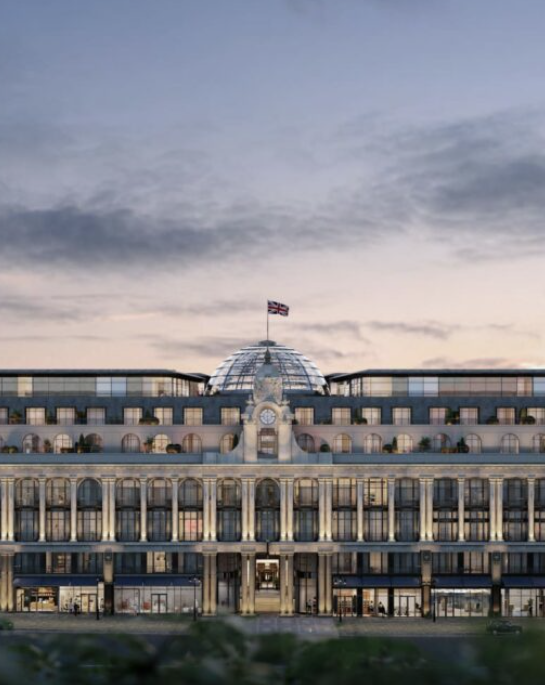
Six Senses London is one of the clearest expressions of what the modern city hotel is becoming.
Set within The Whiteley in Bayswater, it introduces the brand’s wellness-first philosophy into one of London’s most connected districts, yet actively resists its pace. Interiors are muted and tactile, designed around softness rather than spectacle. Natural materials, layered lighting, and quiet spatial design replace the traditional visual language of luxury hotels.
Wellness is not positioned as an add-on here. It runs through sleep systems, air quality, movement programming, and the general rhythm of the stay. The effect is less about escape from London and more about recalibration within it.
This is the new role of the city hotel: not to amplify energy, but to regulate it.
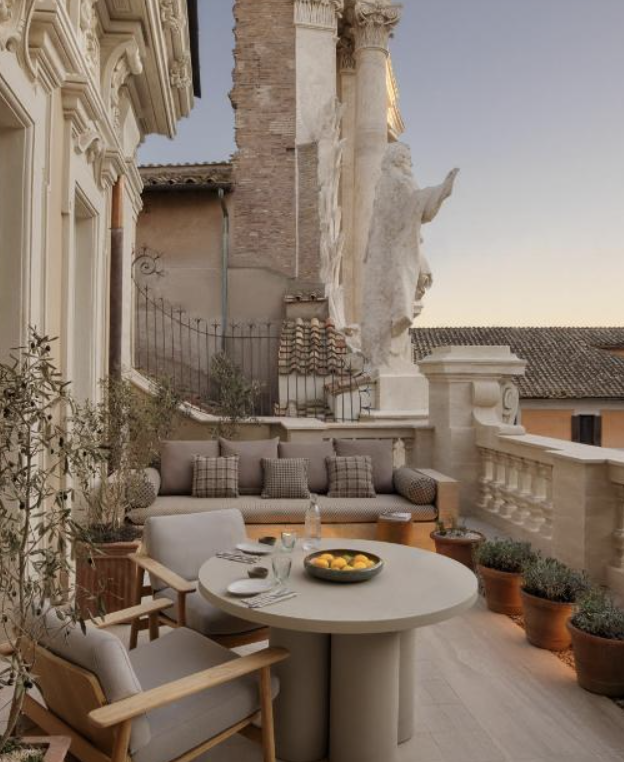
Six Senses Rome and the Return of Ritual
Six Senses Rome takes the same idea and anchors it in history.
Inside a restored palazzo near Via del Corso, the hotel draws directly from ancient Roman bathing culture. Thermal circuits become modern rituals — warm, tepid, and cold environments designed to shift the body into a slower physiological state.
Outside, Rome is dense, loud, and layered with movement. Inside, the pace collapses. The hotel becomes a controlled counter-environment where time feels recalibrated rather than simply paused.
What is interesting here is not luxury in the traditional sense, but restoration as architecture — the idea that a hotel can physically change how a city is experienced.
Privacy as the New Luxury Language
A parallel movement is unfolding away from cities altogether — toward properties where privacy replaces visibility as the defining luxury signal.
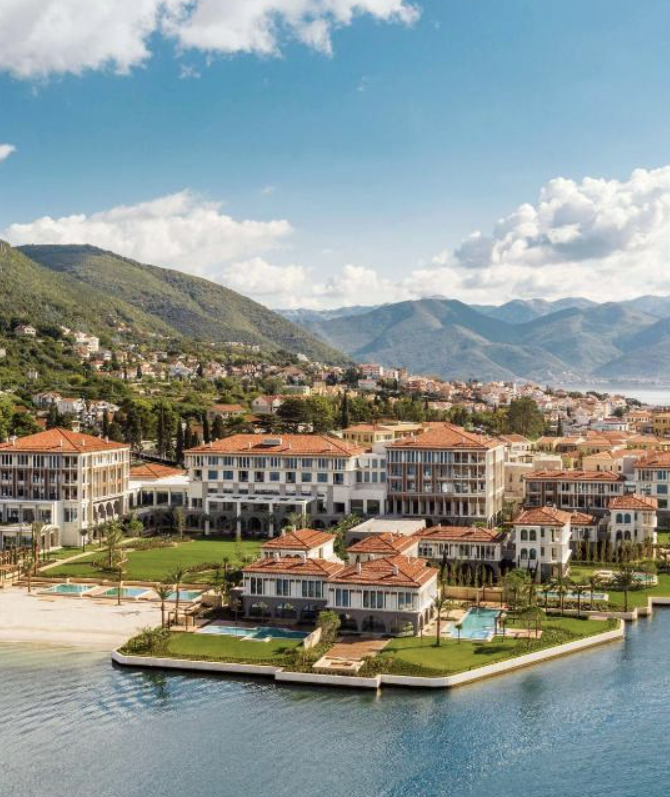
One&Only Portonovi
At One&Only Portonovi, the experience is shaped around scale and separation. Marina-side villas, quiet landscaping, and low-density design create a sense of distance from the outside world that feels increasingly rare in European luxury hospitality.
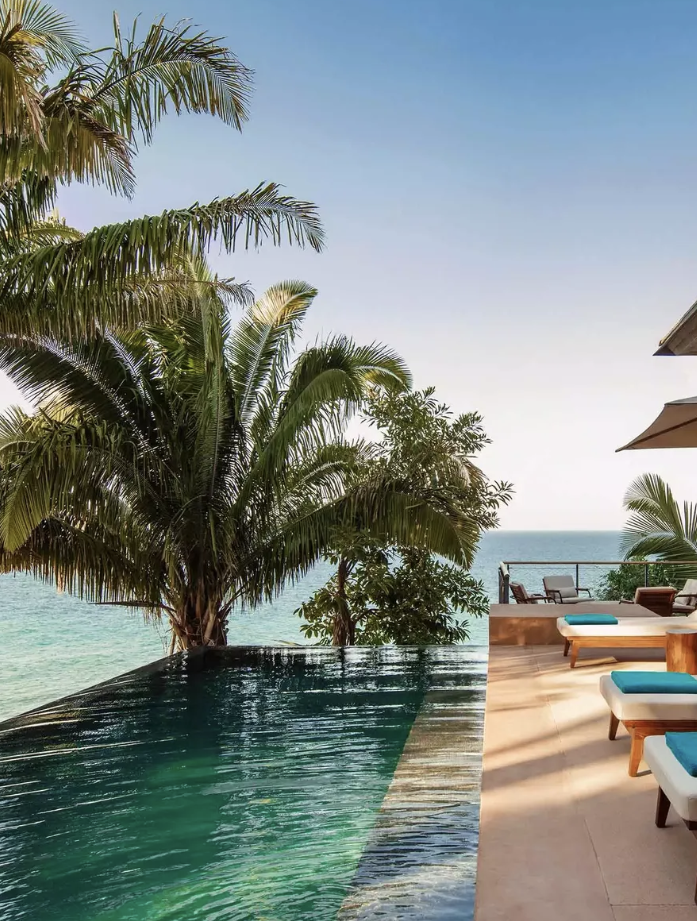
One&Only Mandarina
A similar logic runs through One&Only Mandarina, where rainforest, coastline, and elevated villas create a landscape of deliberate isolation. Movement is slower, transitions are softer, and the resort is designed less as a destination and more as an environment.
These properties sit within the same cultural shift as wellness hotels in cities: the desire is not accumulation, but reduction. Not more stimulation, but less interruption.
Heckfield Place and the Discipline of Silence
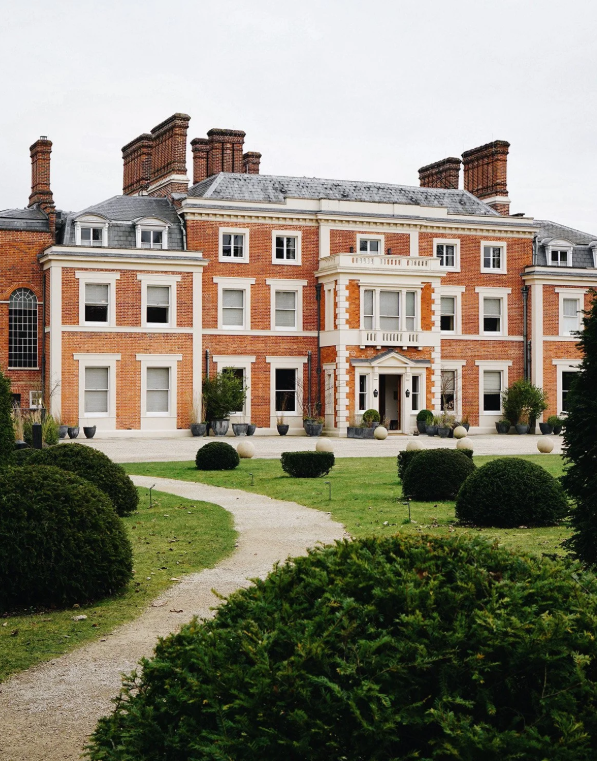
Heckfield Place extends this idea into the countryside.
Set within 400 acres of Hampshire landscape, the Georgian estate is built around quiet as a design principle rather than an aesthetic choice. Movement slows almost immediately on arrival. Devices are set aside, interiors are restrained, and time begins to feel less segmented.
The Bothy spa deepens this approach, focusing on seasonal treatments, circadian alignment, and recovery rituals that prioritise nervous system regulation over performance or intensity.
It reflects a broader truth in luxury travel: the most sought-after environments are not louder or more impressive, but quieter and more consistent. Read our interview with the founder of Staycation to find out more about how modern travel and luxury living are reshaping the indusytry.
The Woodward Geneva and Recovery as Status
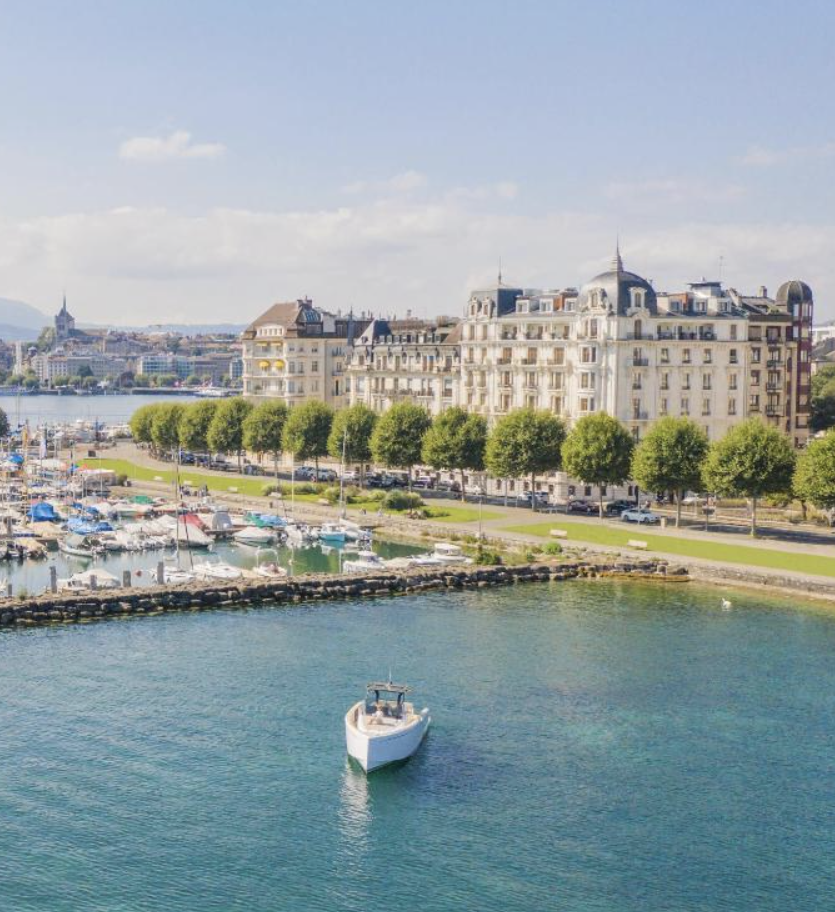
The Woodward Geneva represents another evolution of the same trend — wellness defined through precision rather than softness.
Here, recovery is structured around physical optimisation. Alpine proximity shapes the programming: mobility, post-activity treatment, and longevity-focused therapies designed for travellers who see wellbeing as part of performance rather than indulgence.
This is where luxury wellness begins to overlap with biohacking culture — where the goal is not just relaxation, but improvement.
Aman Tokyo and the Architecture of Calm
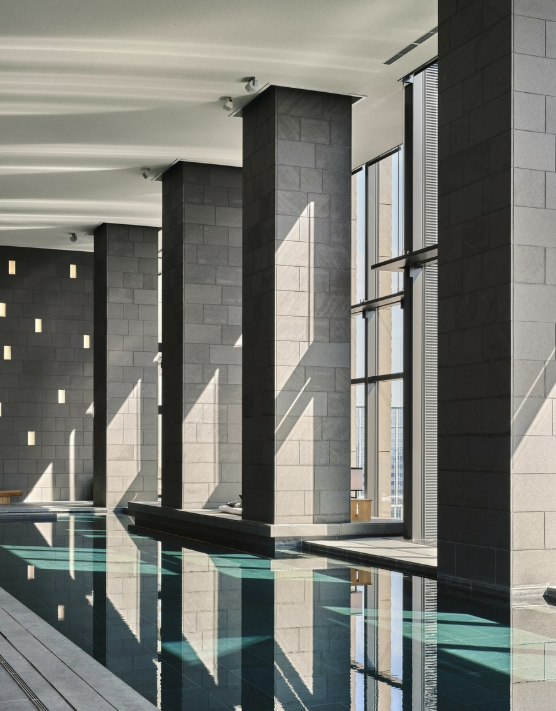
Aman Tokyo offers one of the clearest blueprints for urban wellness at scale.
Elevated above the city, the hotel creates a sense of distance from Tokyo’s density through proportion, silence, and spatial restraint. Large volumes of negative space, natural materials, and carefully controlled lighting turn the hotel into a kind of suspended environment.
It is not a retreat from the city, but a re-framing of it — where calm becomes architectural rather than thematic.
Social Wellness and the Reinvention of Connection
Not all luxury wellness is private. A parallel model is emerging around shared wellbeing.
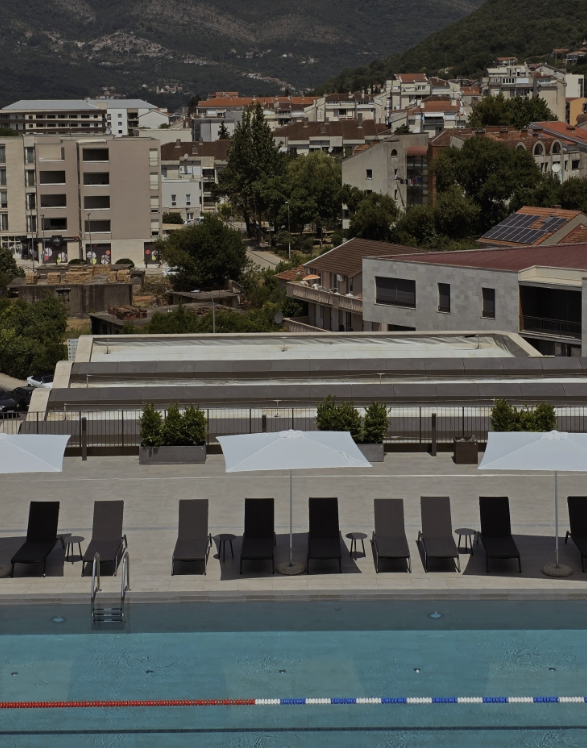
SIRO Boka Place
SIRO Boka Place represents this shift clearly. Here, fitness, recovery, breathwork, and movement become the foundation of social interaction. Guests meet through shared activity rather than nightlife or dining alone.
It reflects a broader generational change in luxury travel culture: connection is increasingly structured through health rather than excess.
The hotel lobby is no longer just a social space. It is becoming a recovery space.
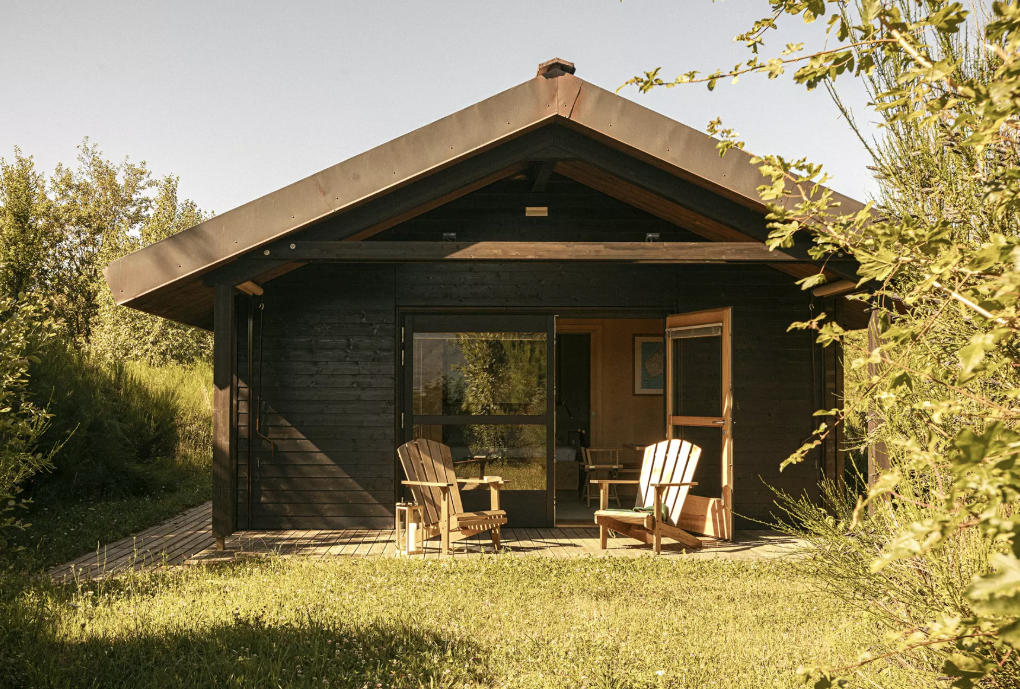
Oasyhotel and the Slow Return to Nature
Oasyhotel sits at the furthest edge of this spectrum.
Located within a protected WWF reserve in Tuscany, it removes almost all conventional markers of hotel life. Wooden lodges, forest bathing, and ecological immersion replace traditional hospitality structures.
Here, wellness is not designed. It is environmental. The experience is defined by absence as much as presence — absence of noise, density, and constant stimulation.
Why This Shift Matters
What connects these properties is not design language or geography, but intent.
Luxury travel is moving away from accumulation — more cities, more visibility, more experiences — toward reduction. Fewer transitions. Fewer inputs. More control over pace and attention.
City hotels are no longer competing to be the most impressive spaces in a destination. They are competing to be the least overwhelming.
And in that shift, a new definition of luxury is emerging — one built not on what a hotel adds to a journey, but on what it quietly removes from it.