Valentino Spring 2027
For Valentino’s Spring 2027 show, guests were asked to bring a book. Under the iron arches of Paris’ Sainte-Geneviève Library, the fashion crowd arrived carrying everything from Icelandic sagas to books about manifestation, turning the invitation into something more than a clever bit of show choreography. Alessandro Michele had been thinking about Umberto Eco’s idea of the “Antilibrary”, a collection of books one owns but has never read, and found an obvious parallel in his own wardrobe: all those beautiful clothes sitting in a closet, waiting for a life that may never arrive. It was an appropriately Michele premise, romantic, slightly absurd and deeply invested in the pleasure of collecting things simply because they mean something to you.
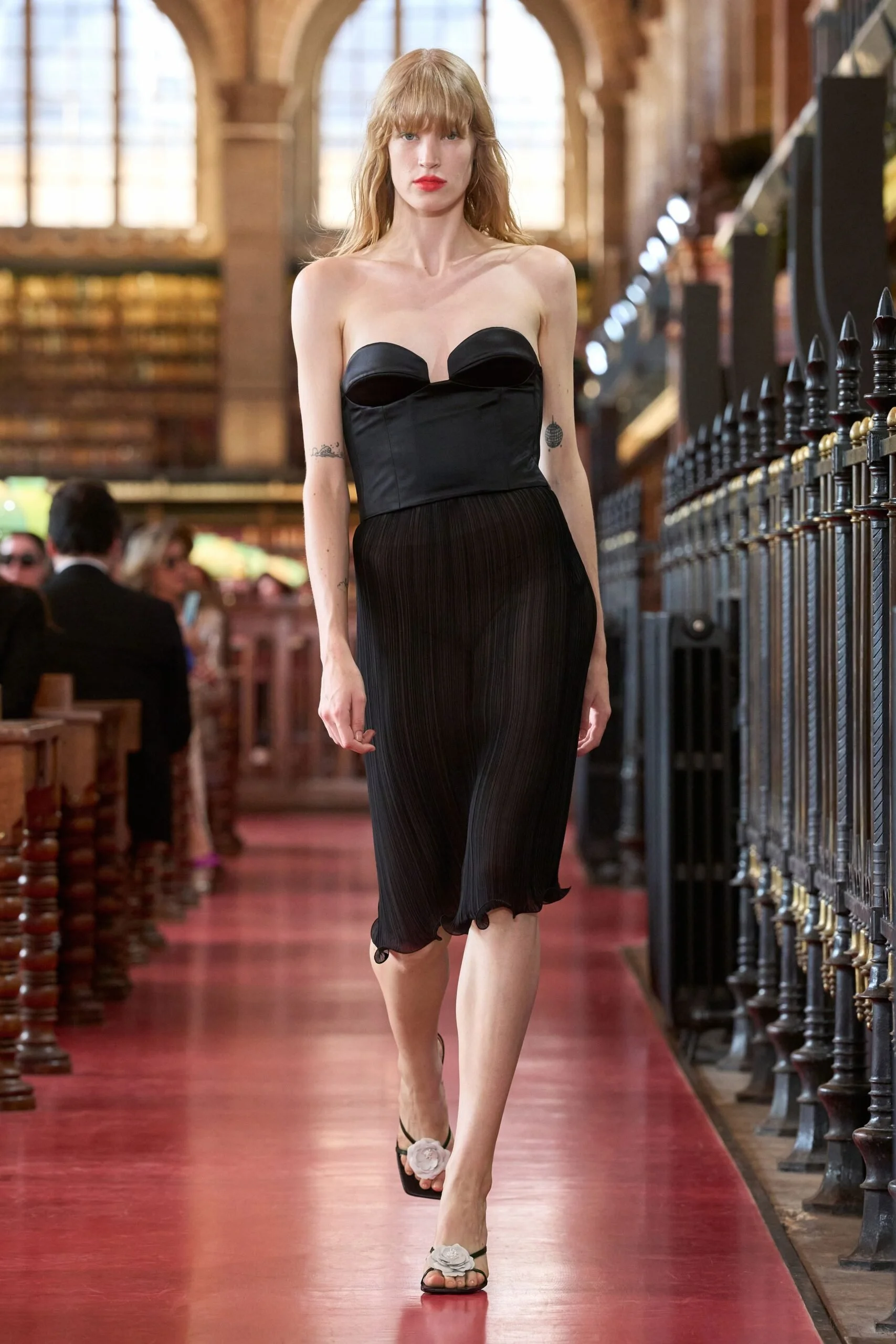
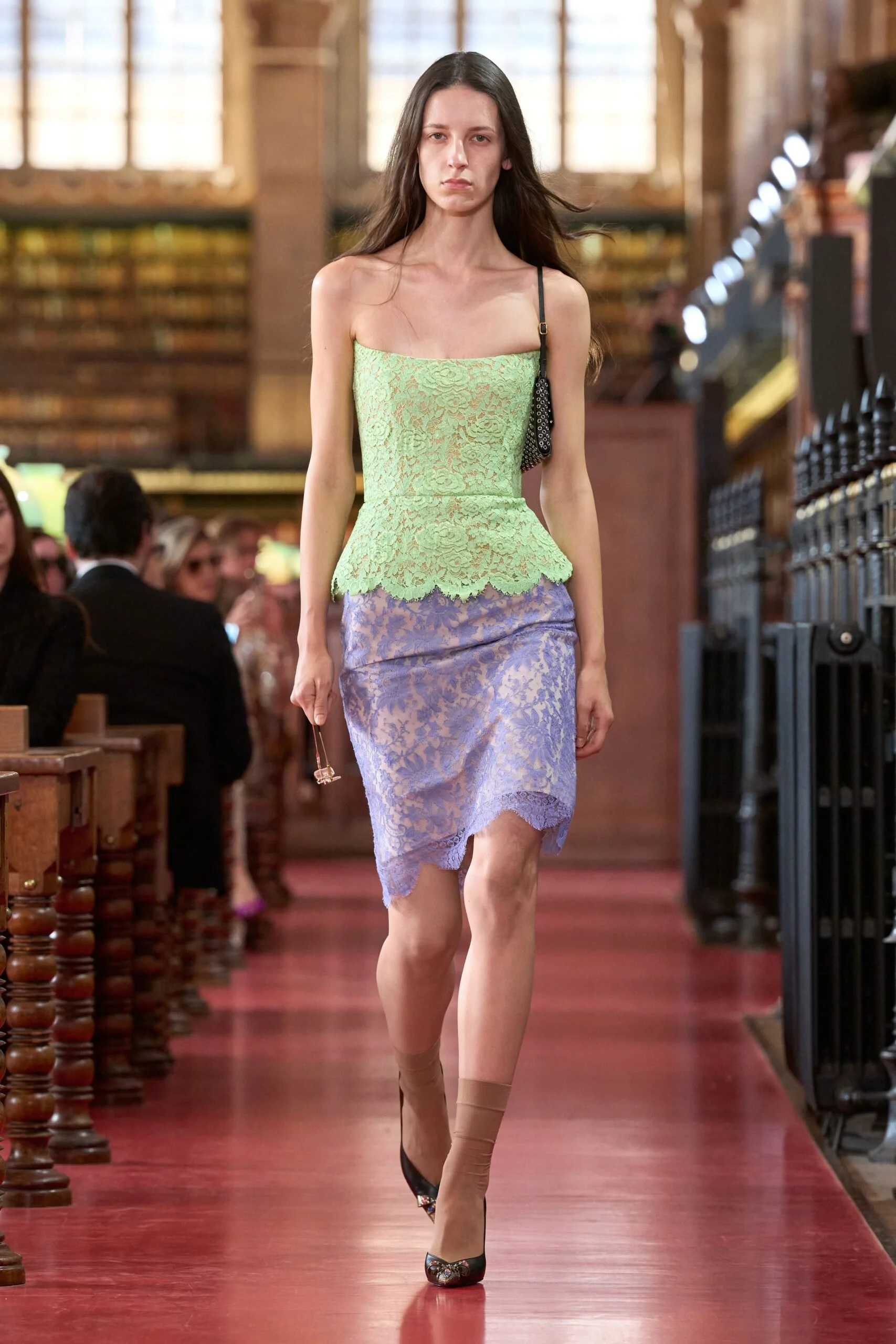
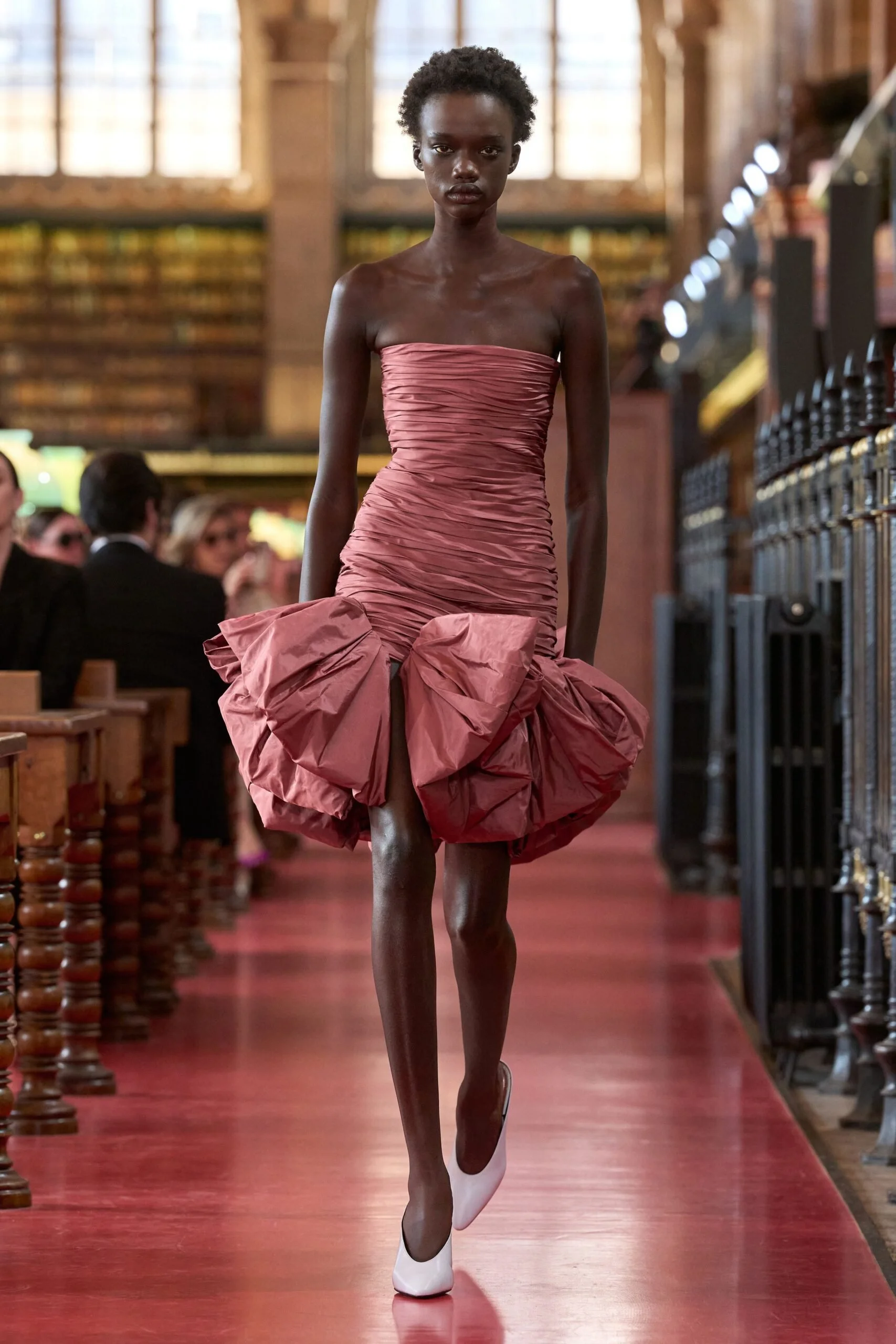
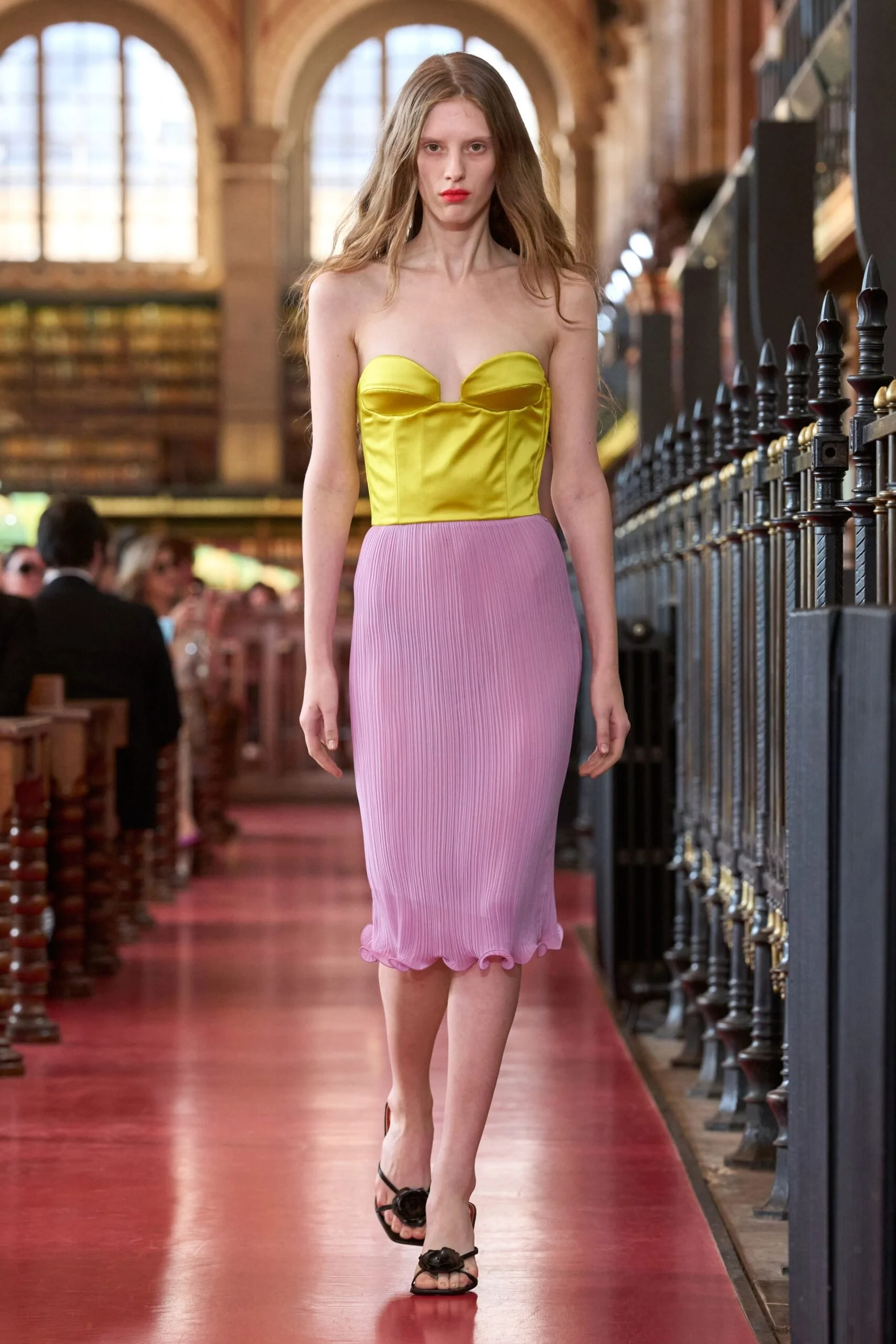
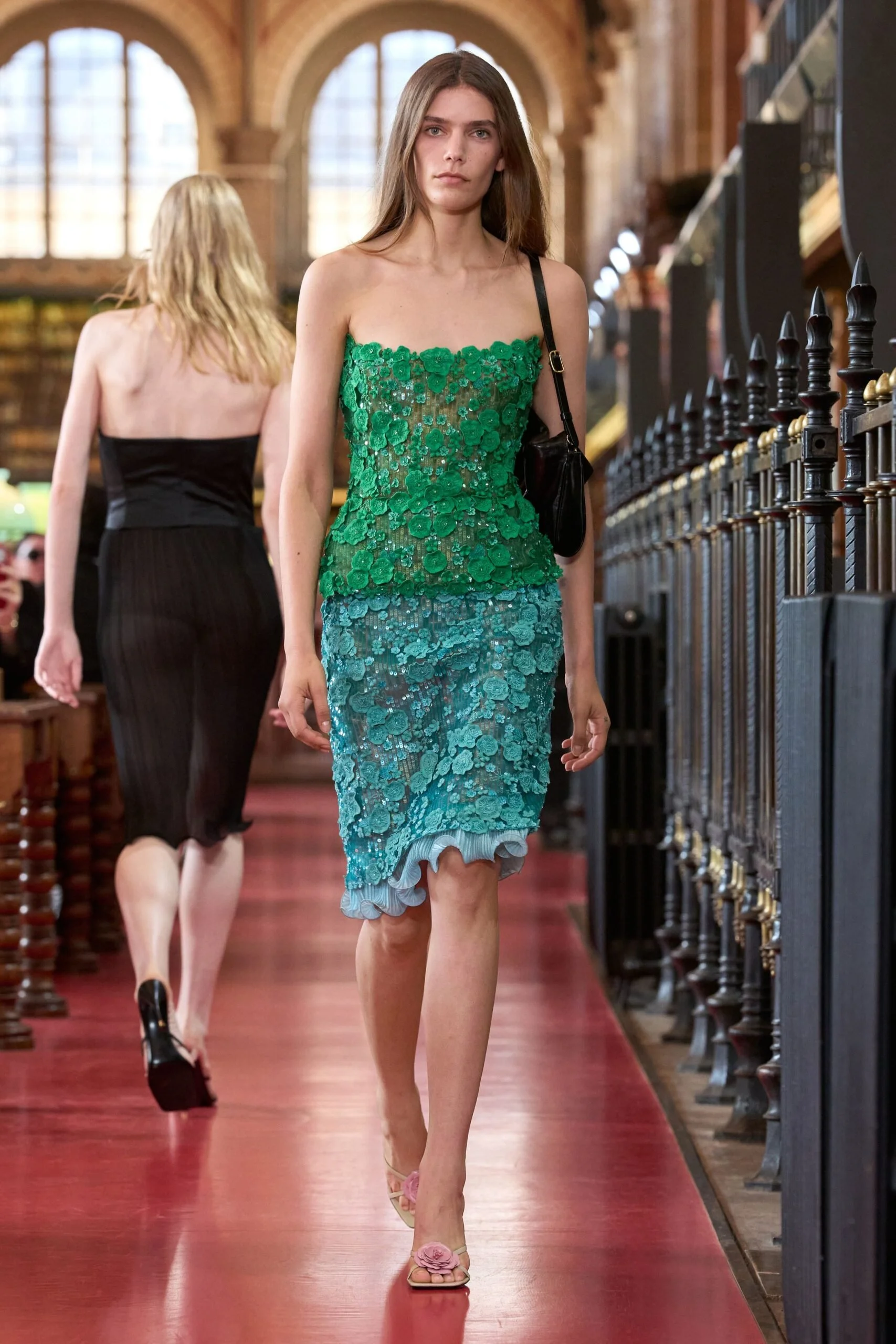
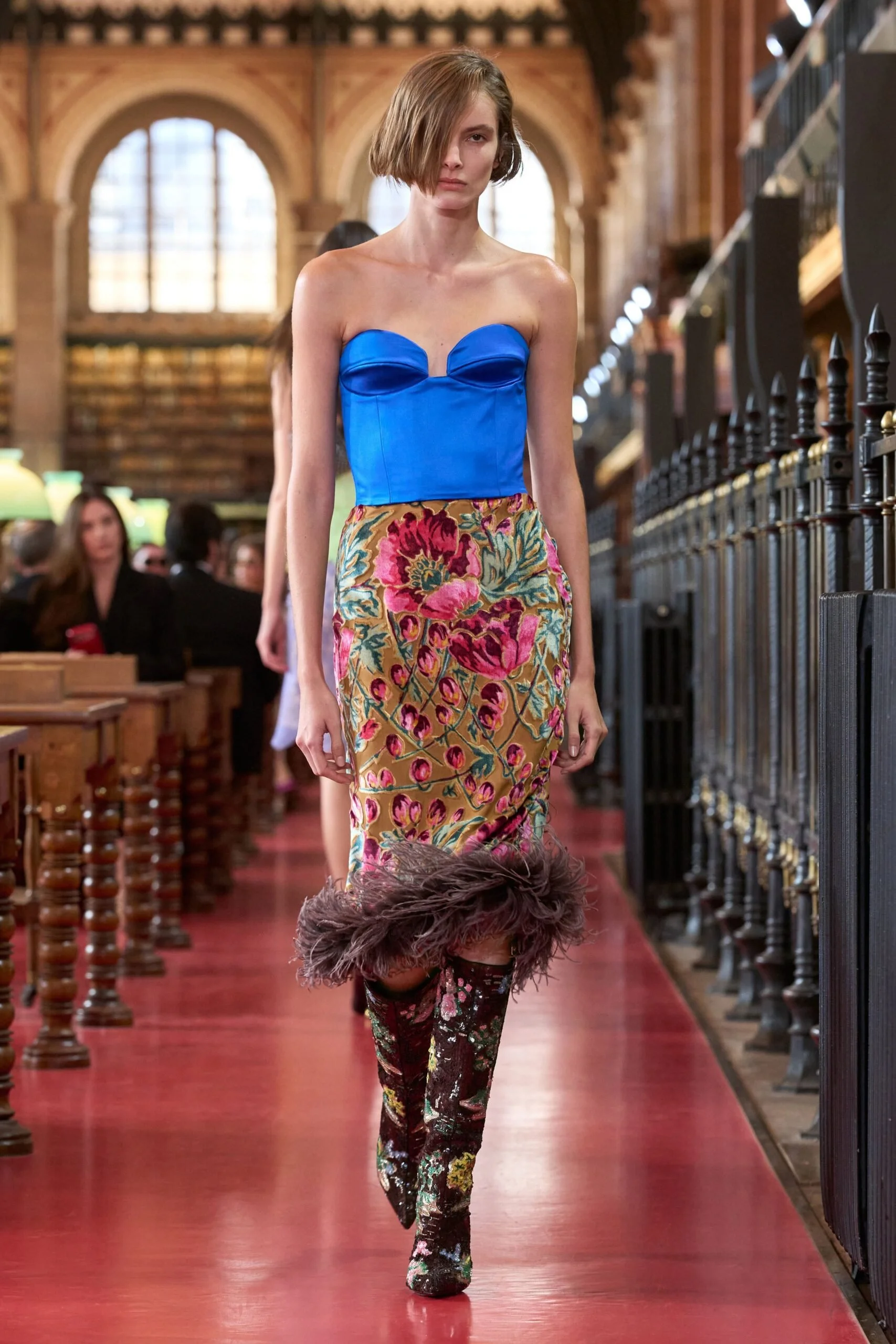
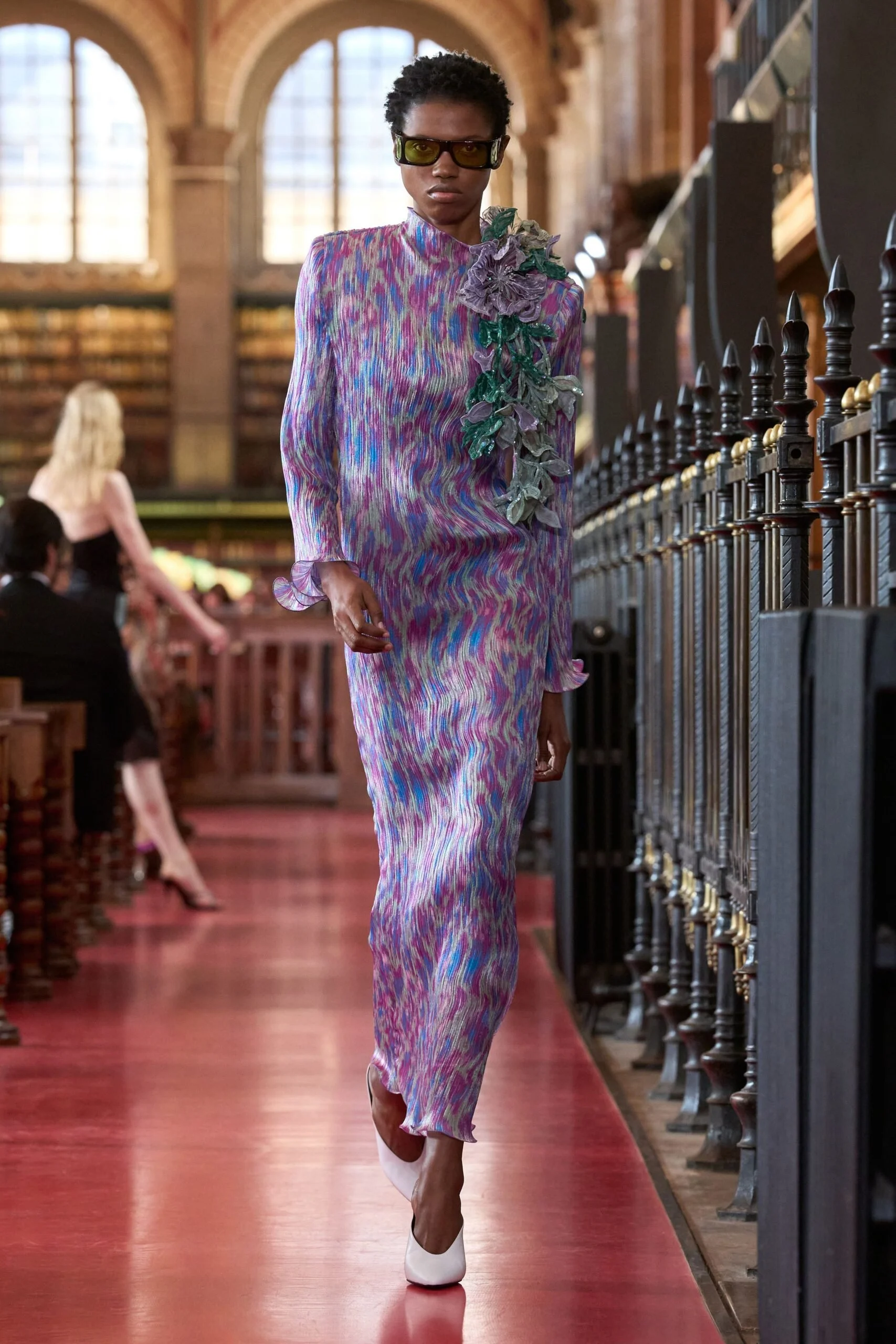
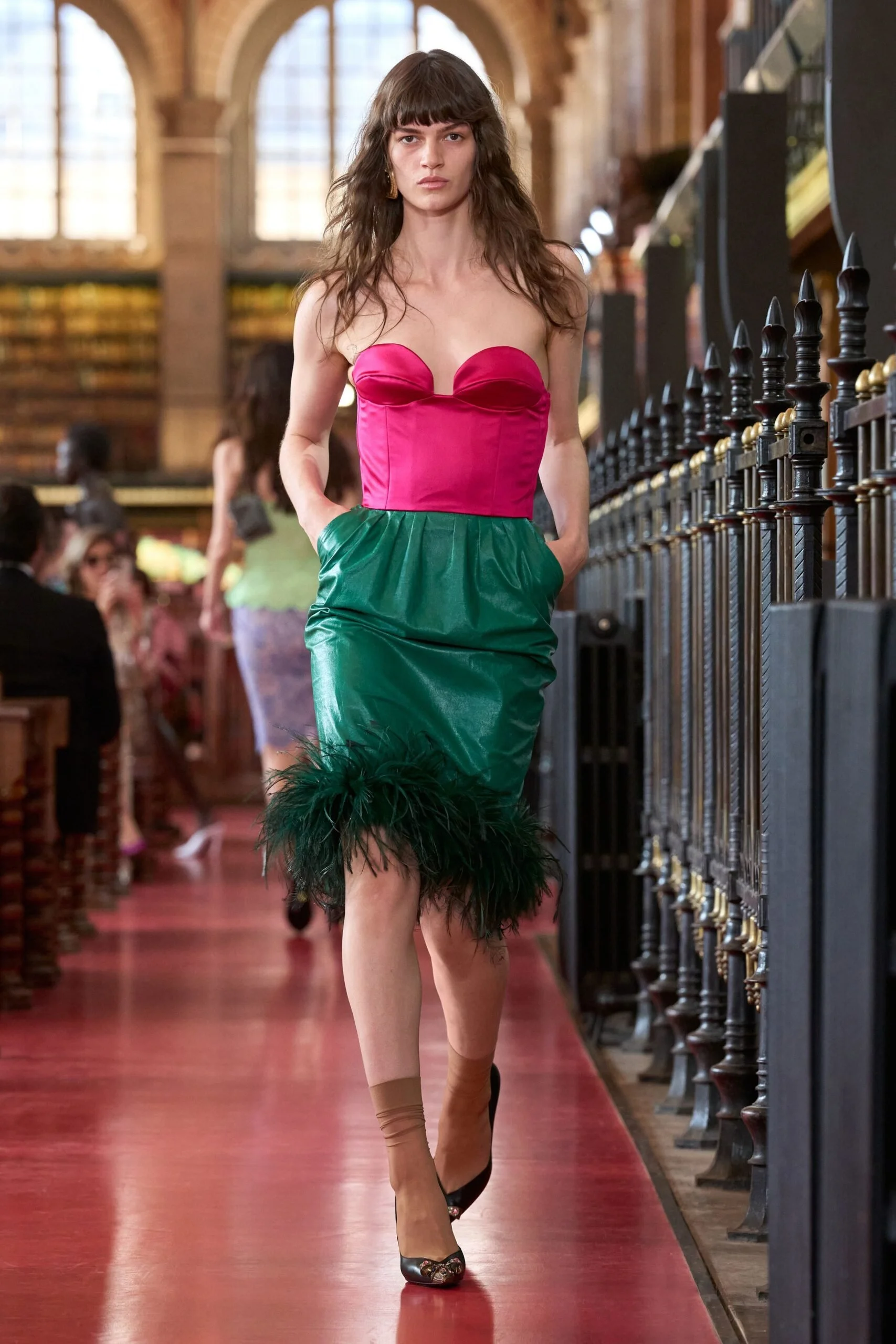
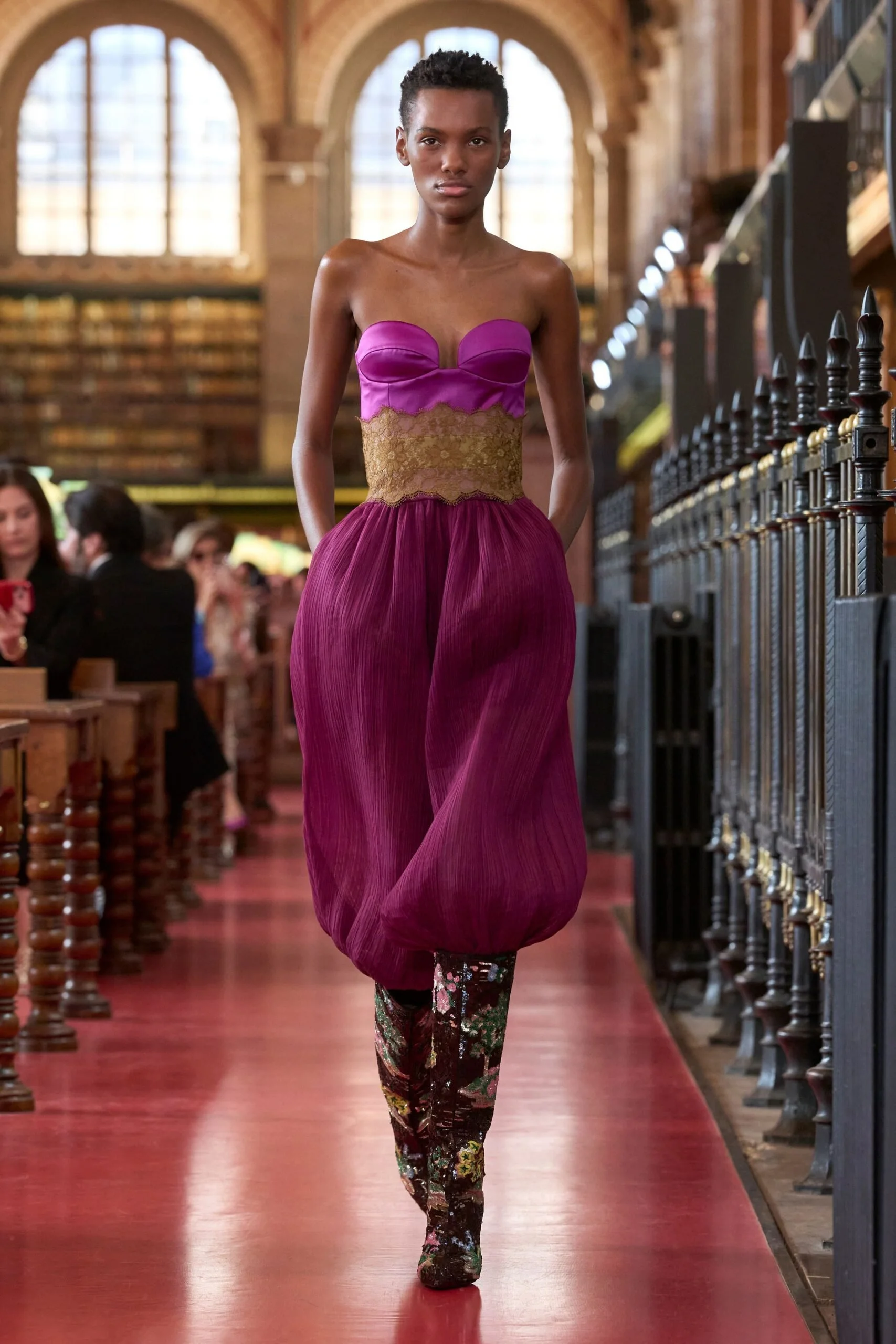
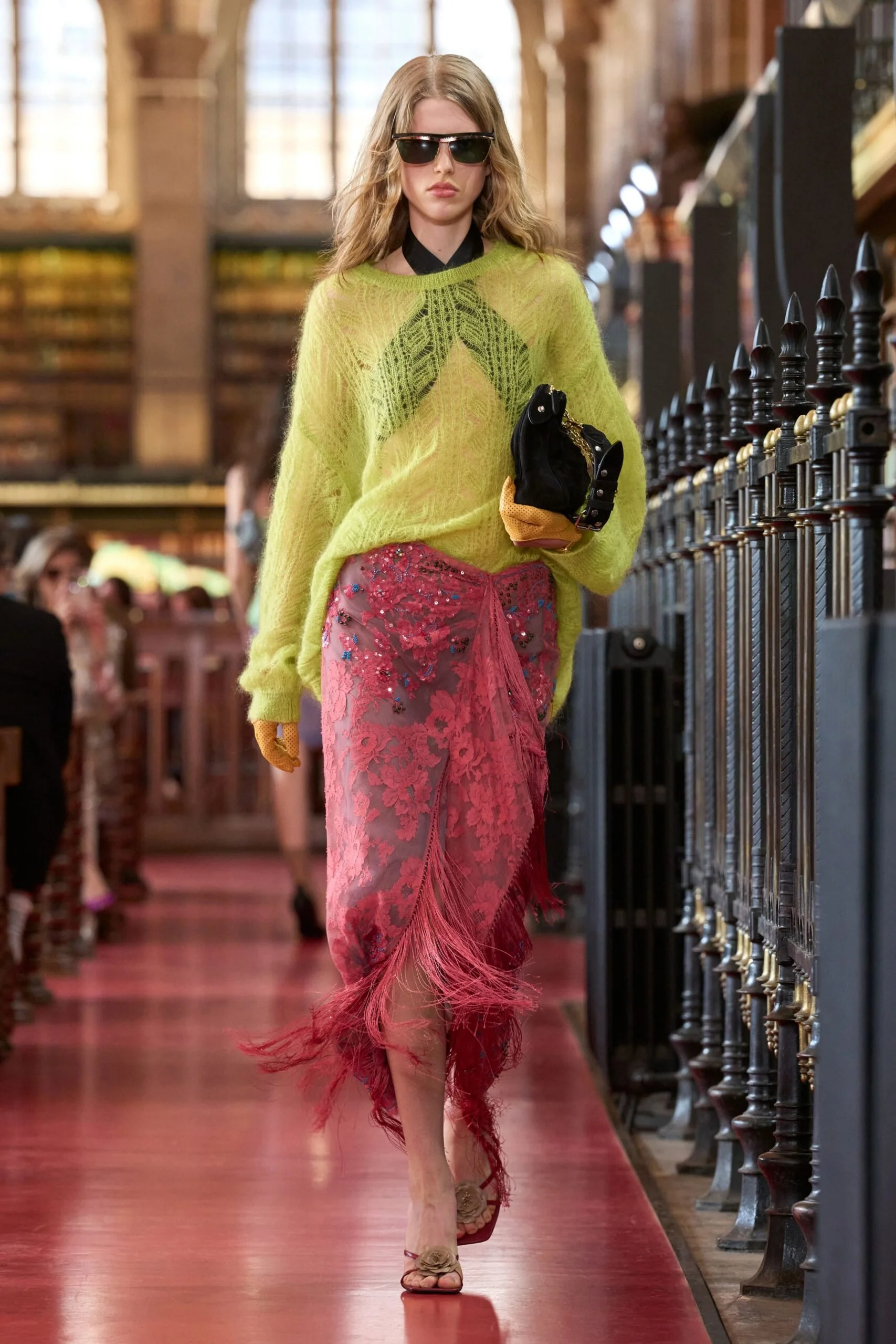
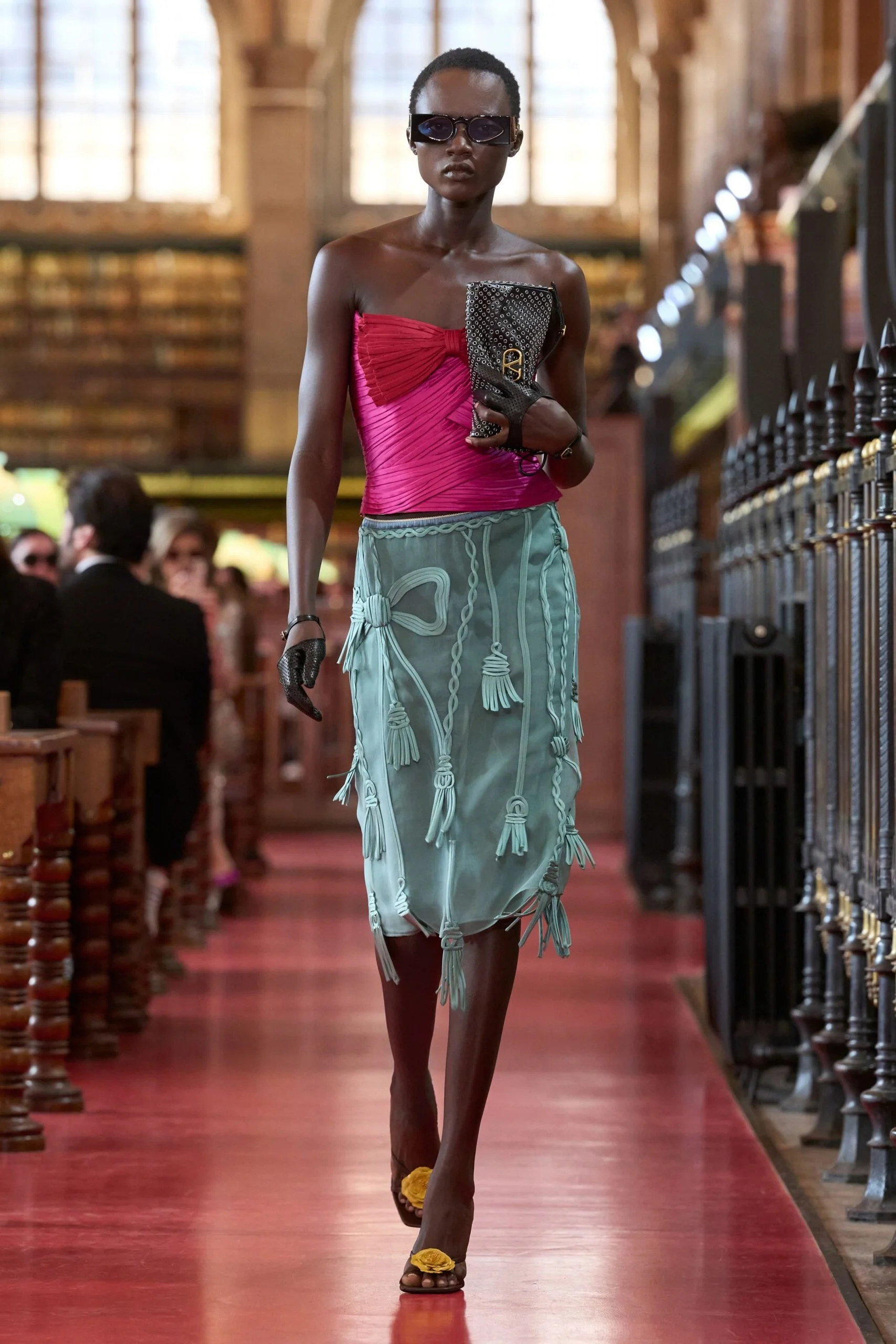
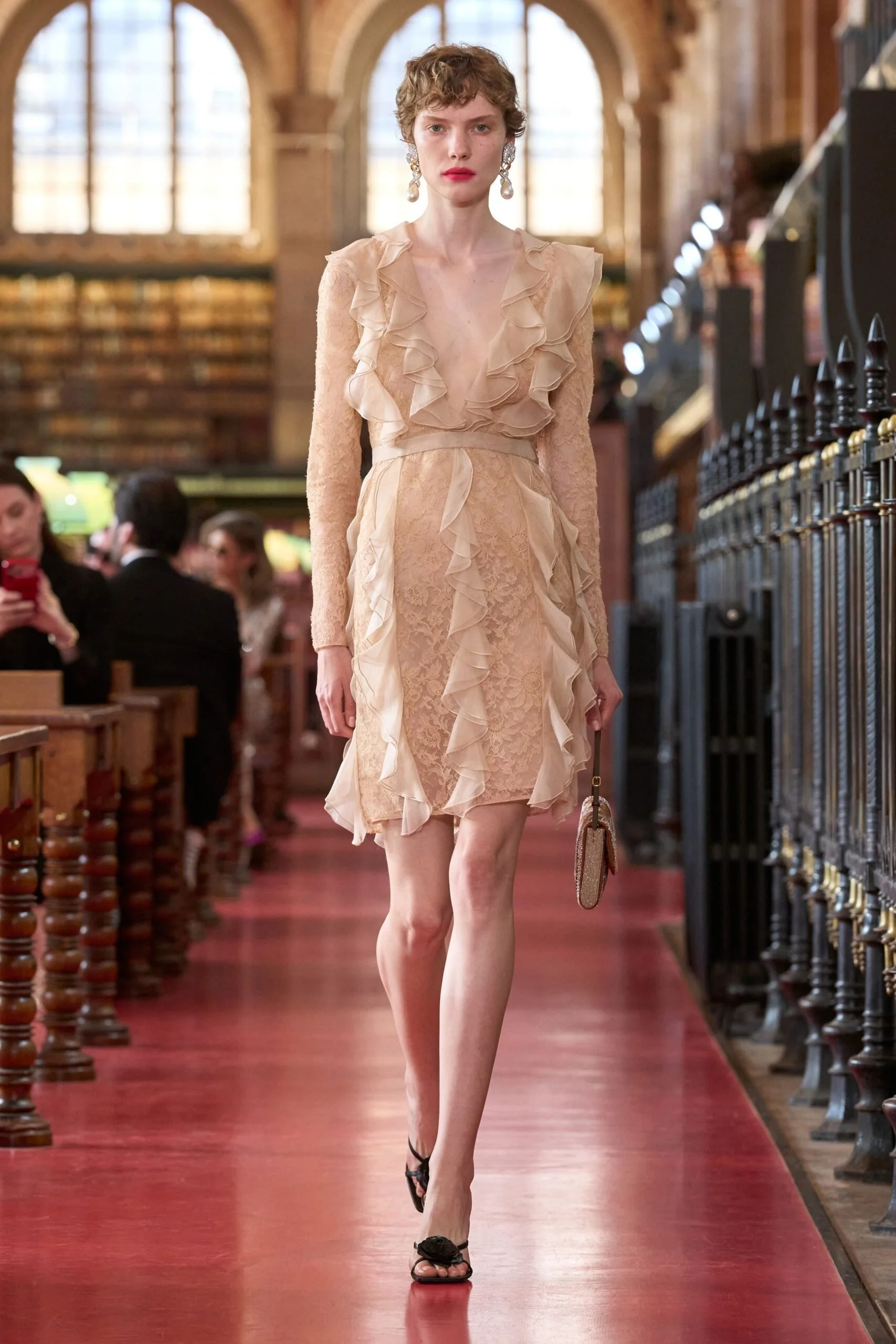
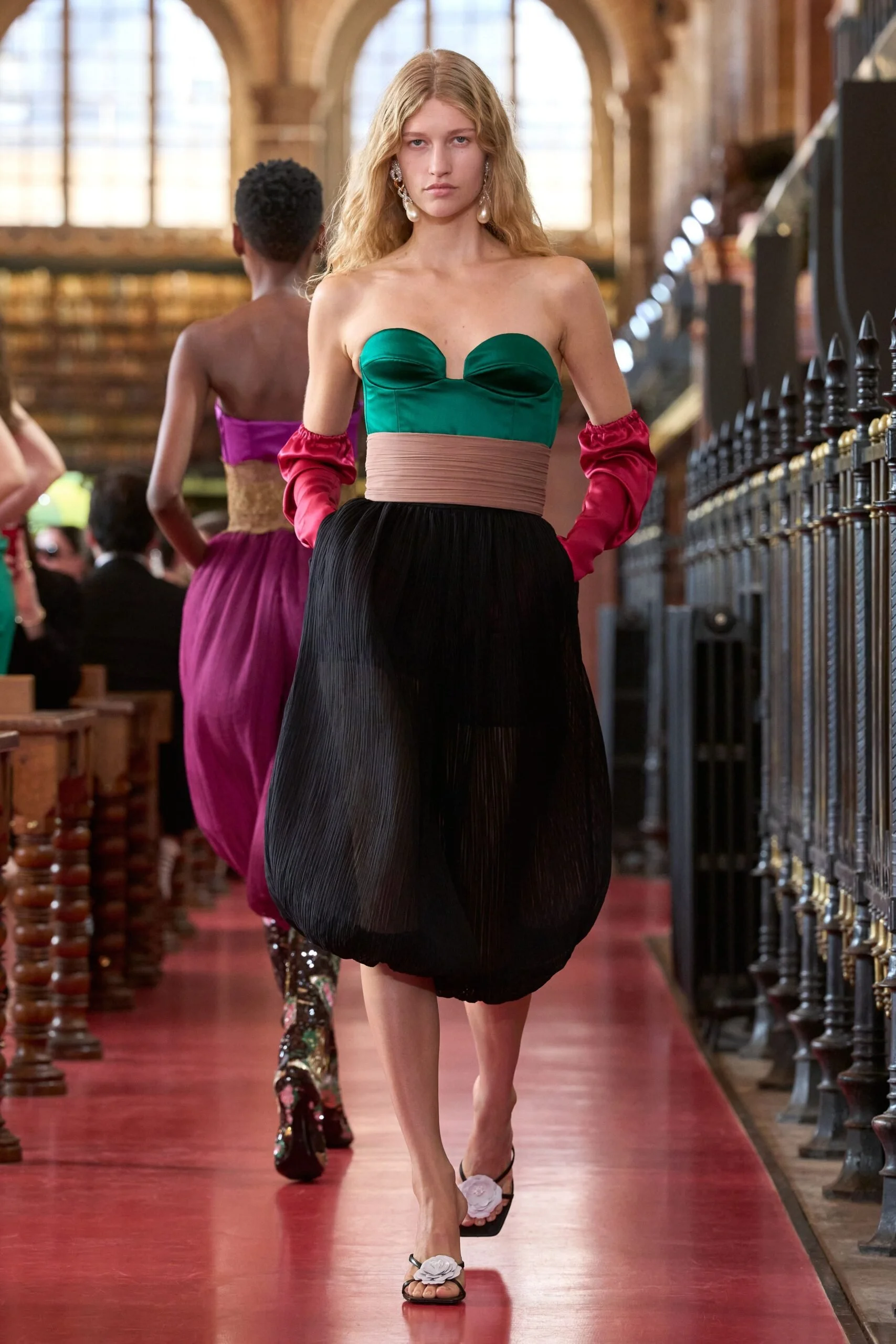
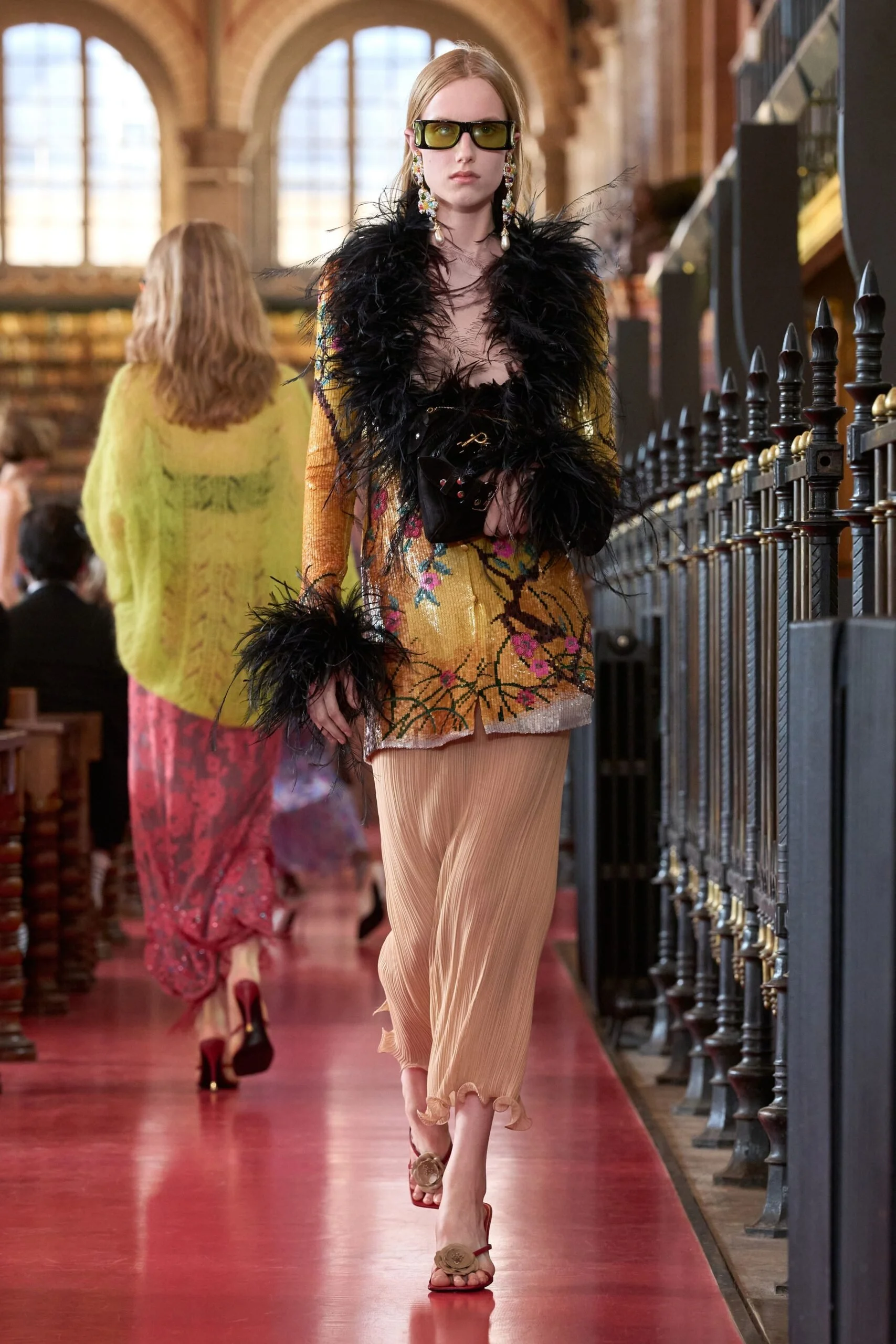
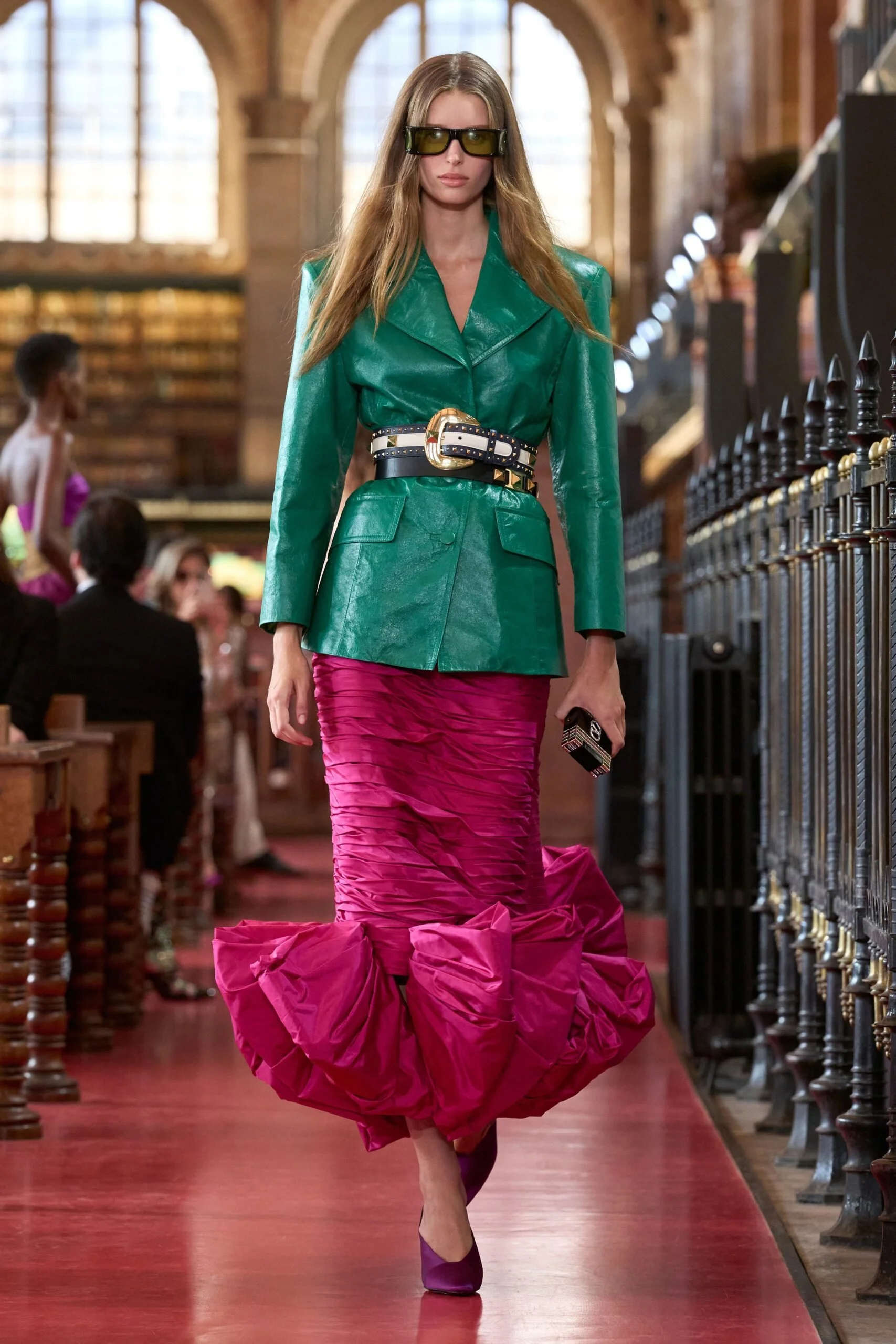
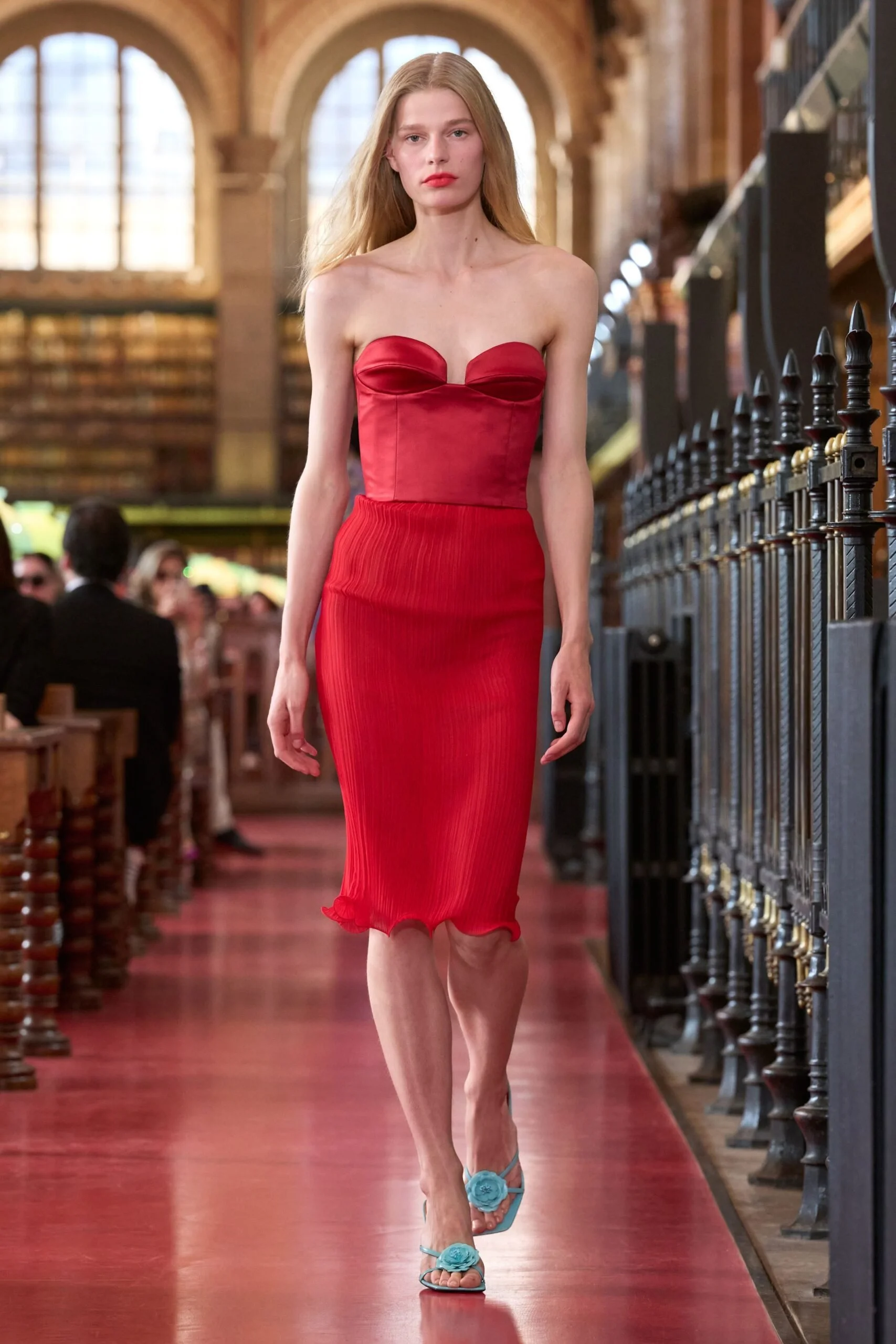
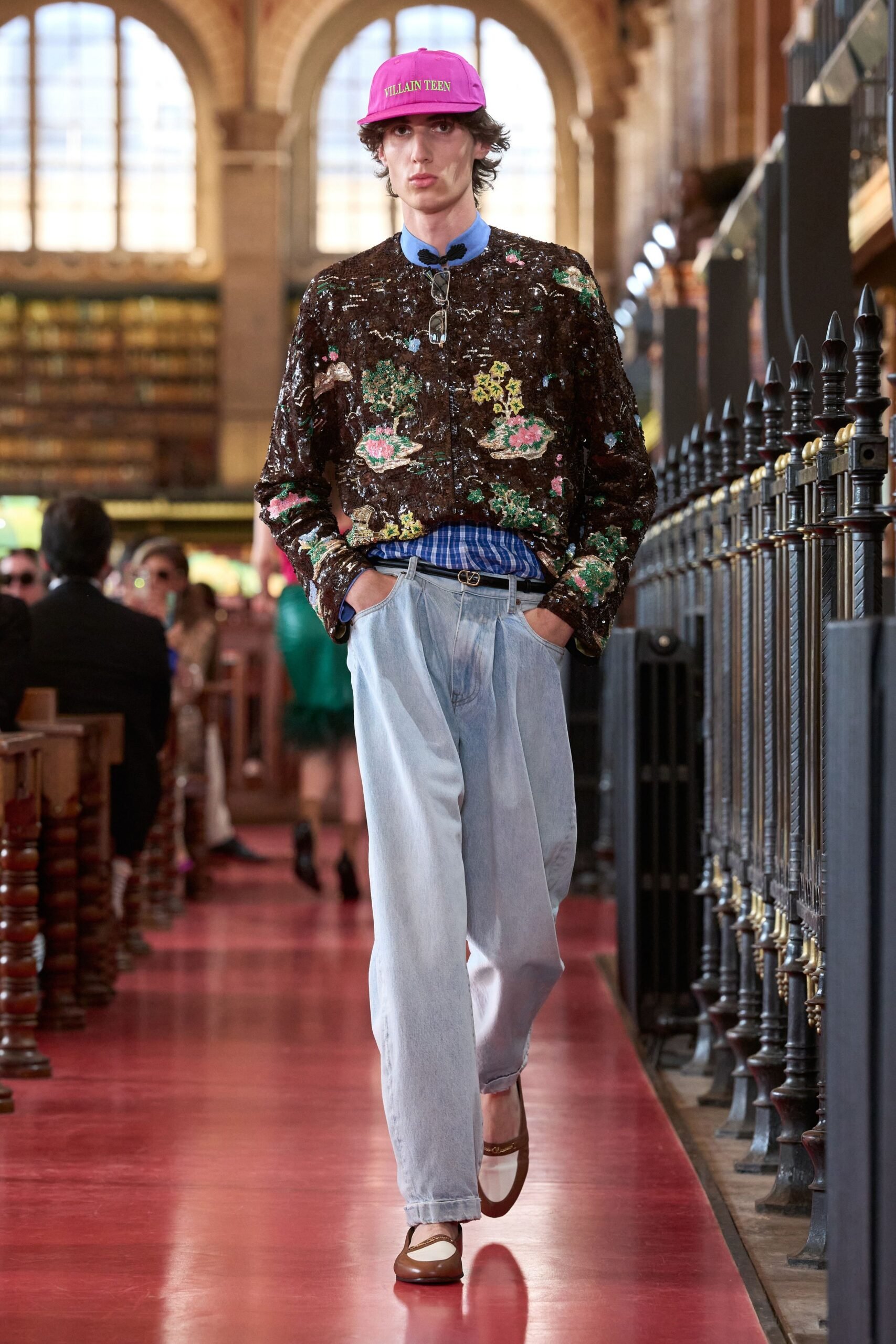
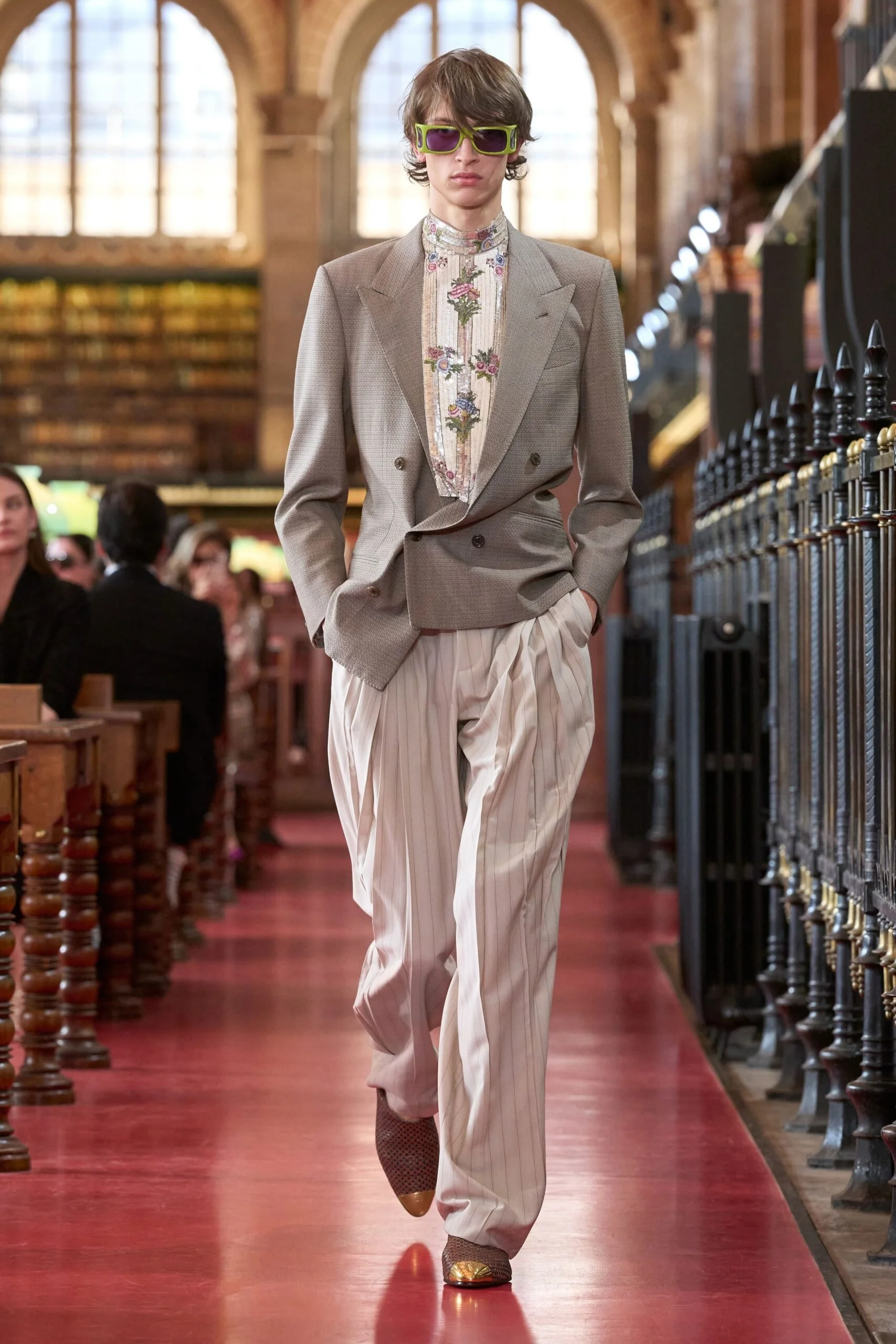
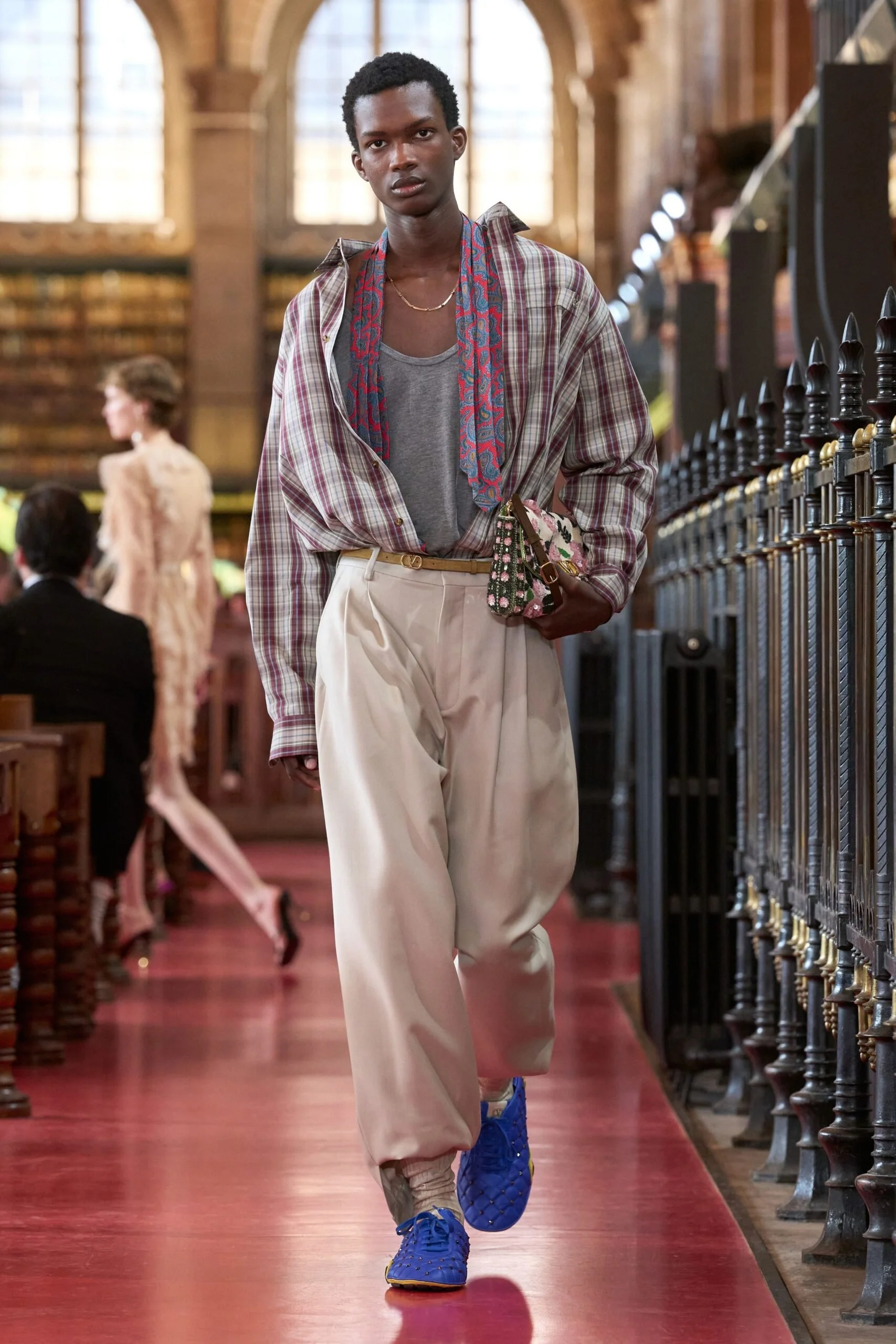
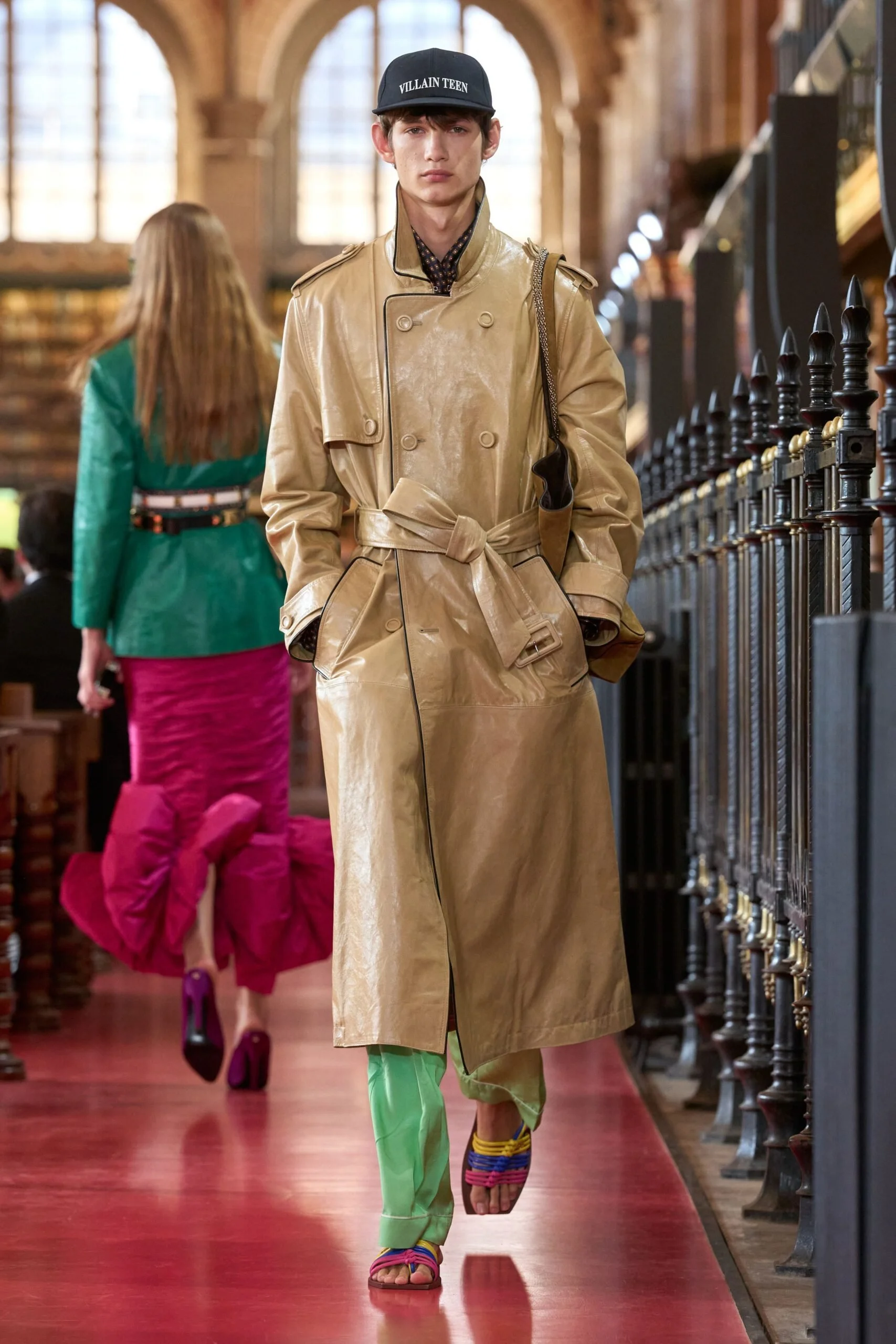
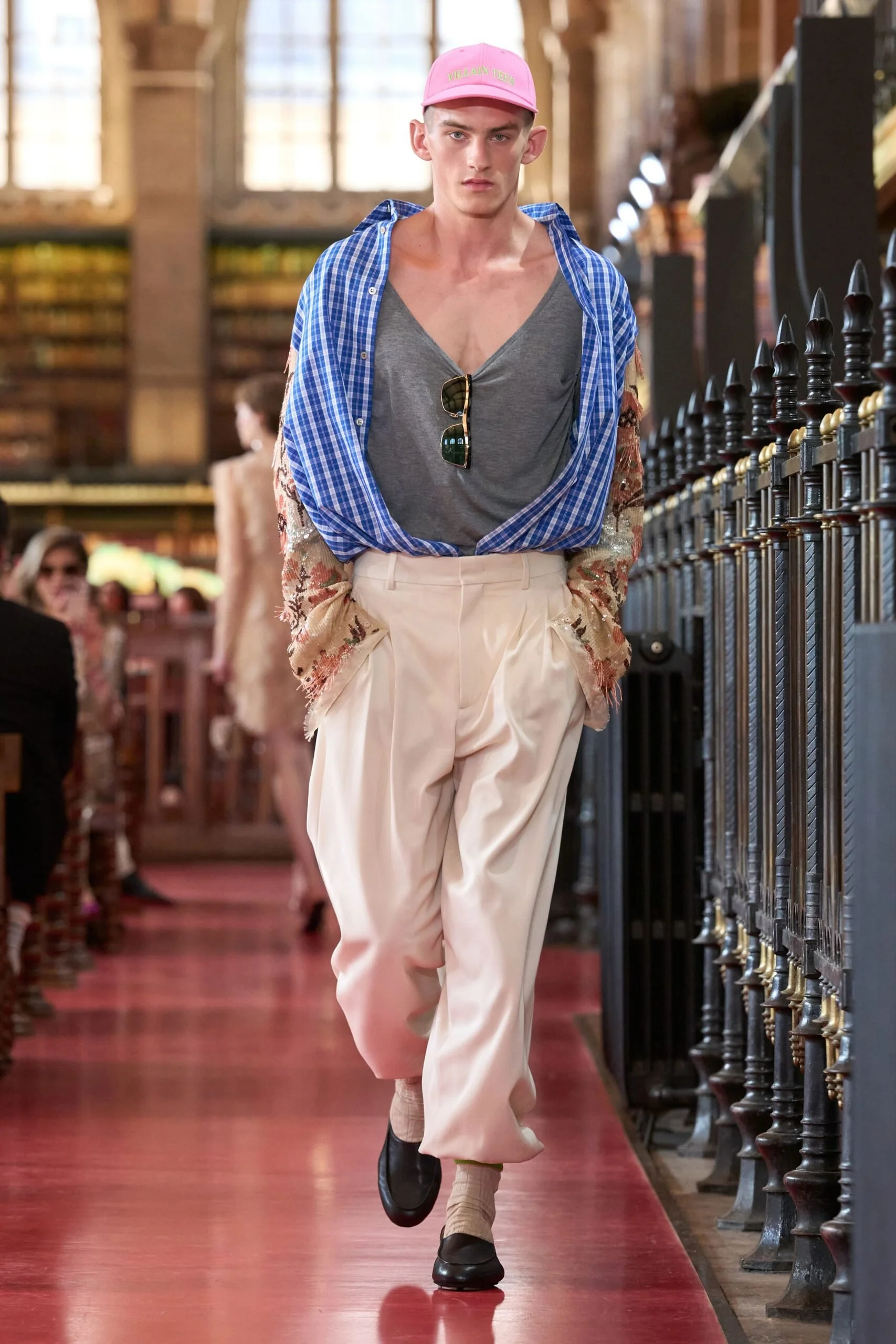
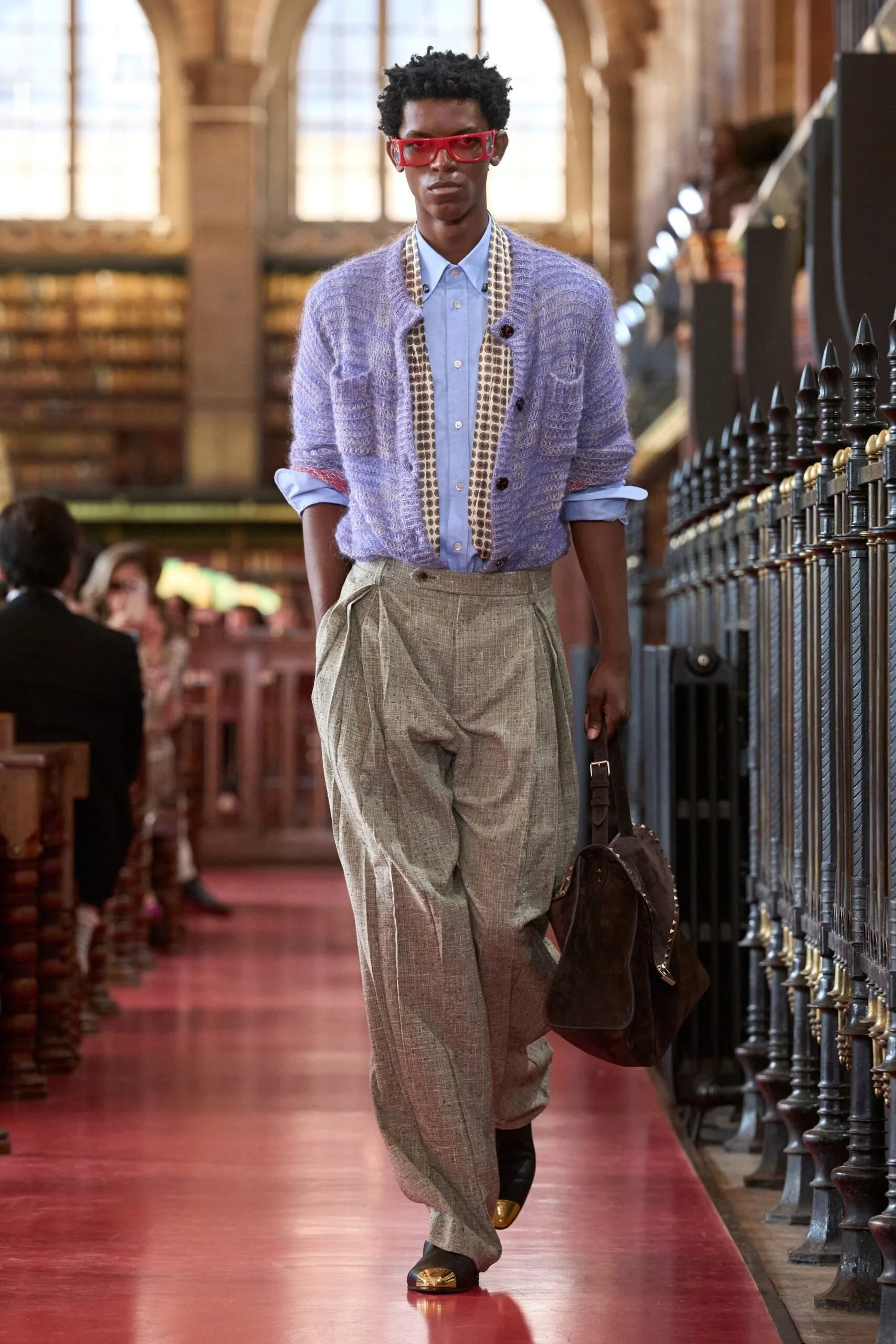
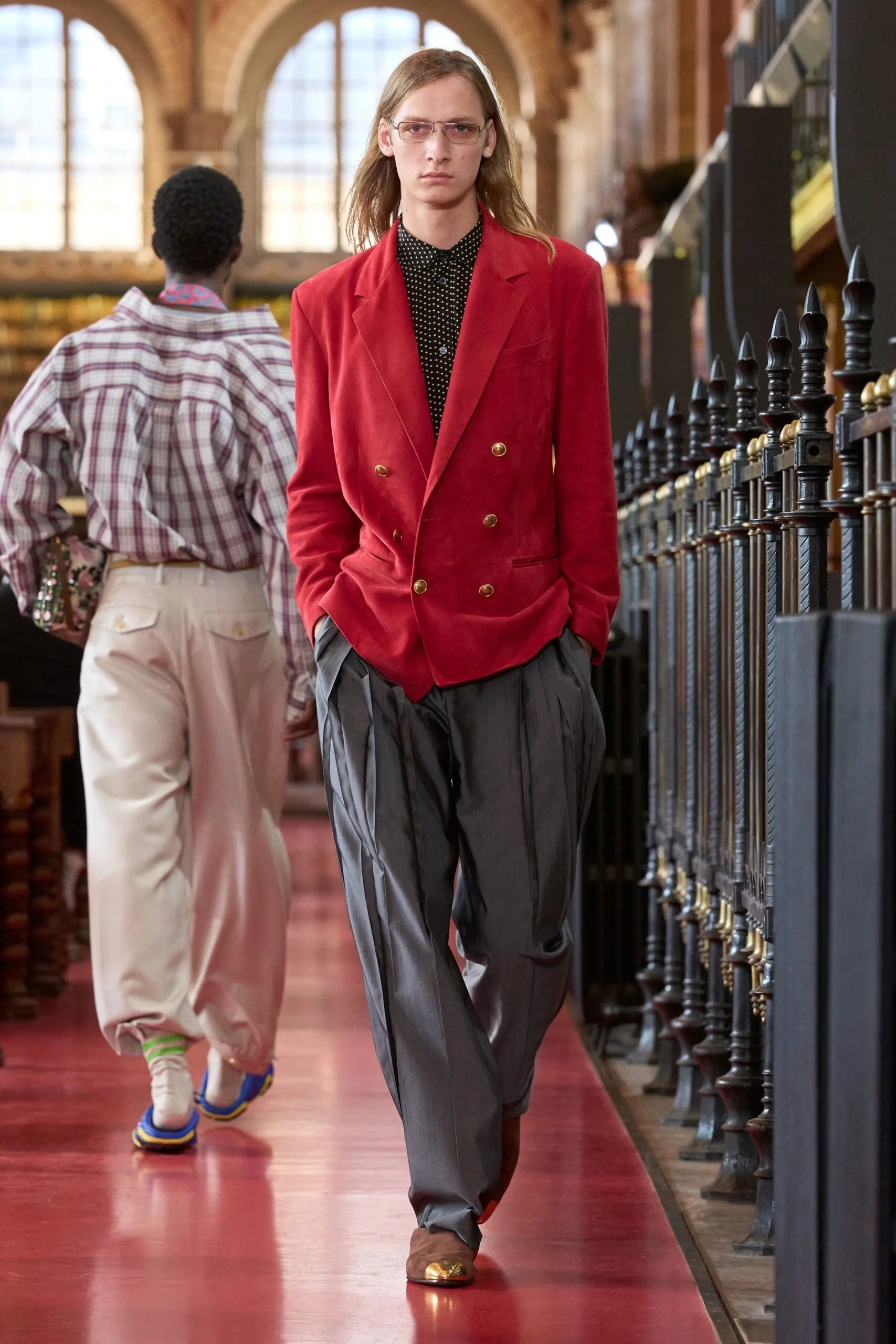
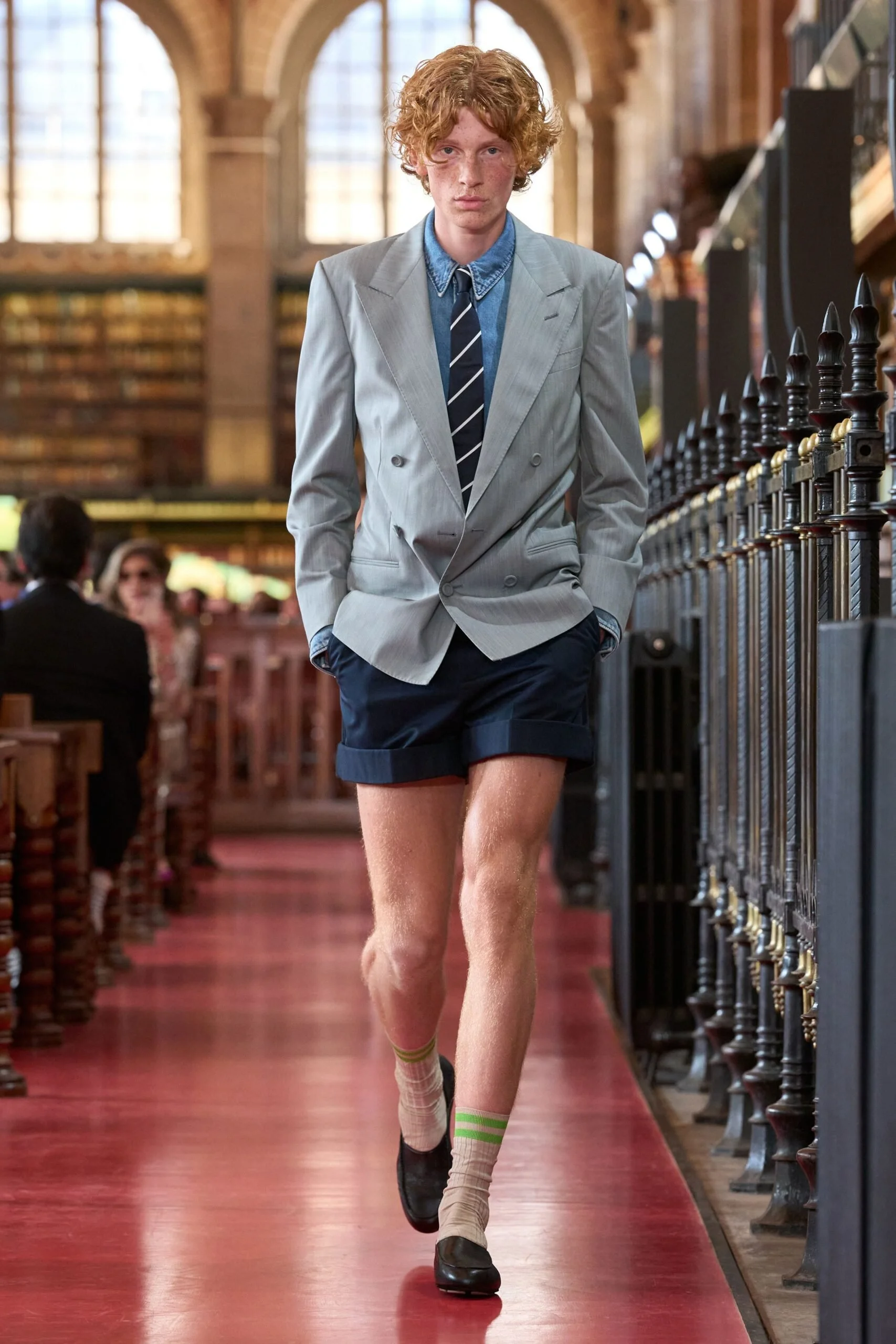
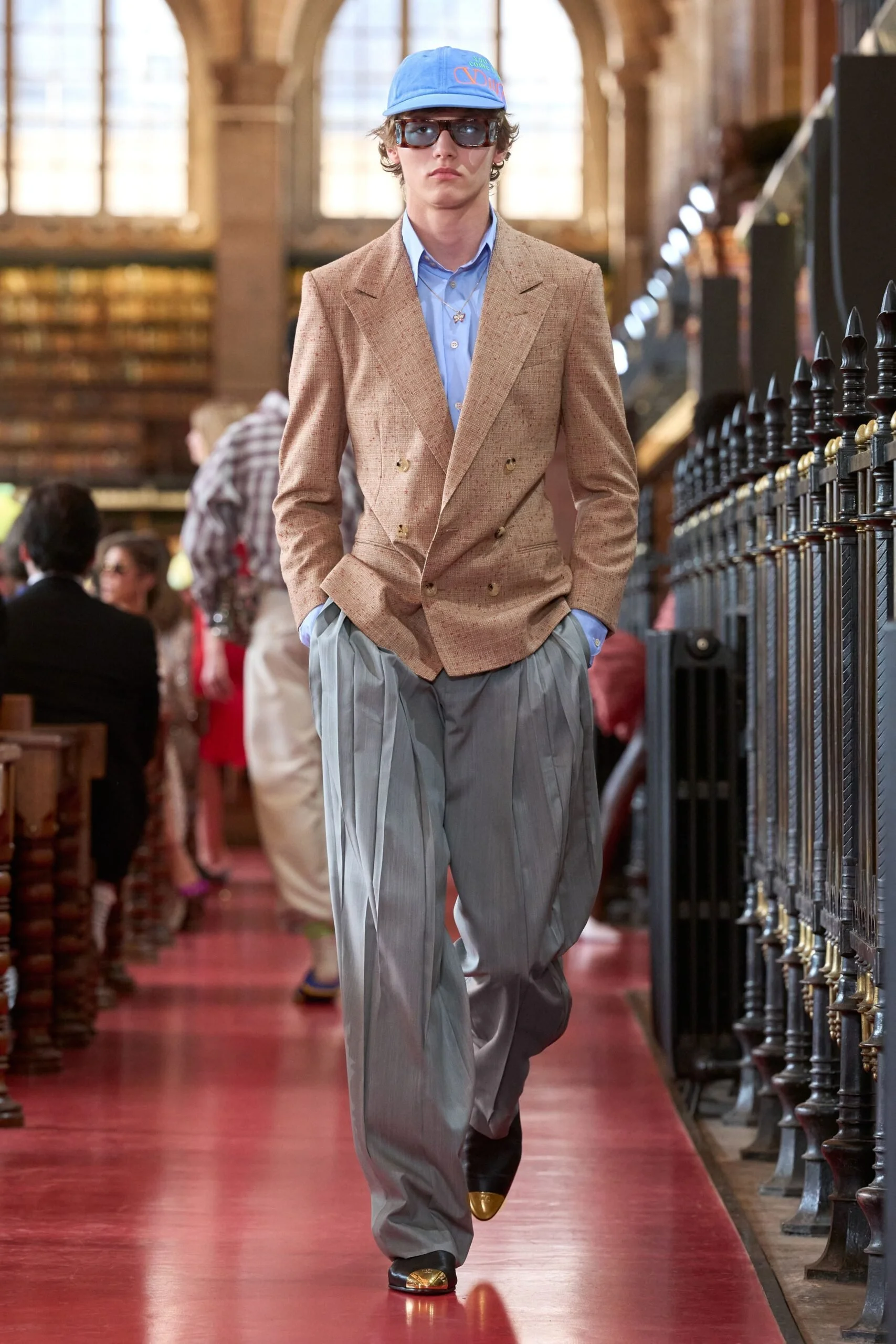
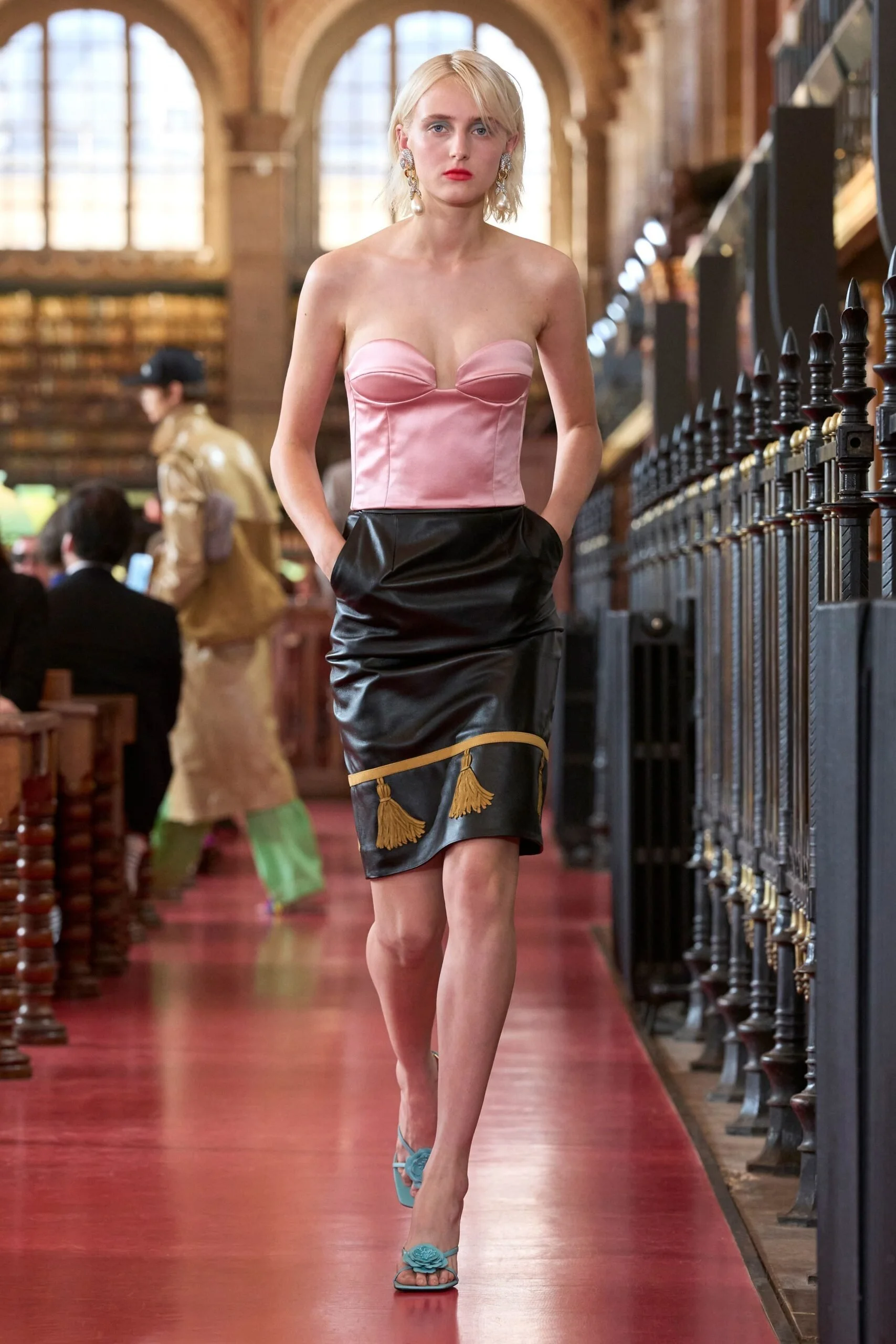
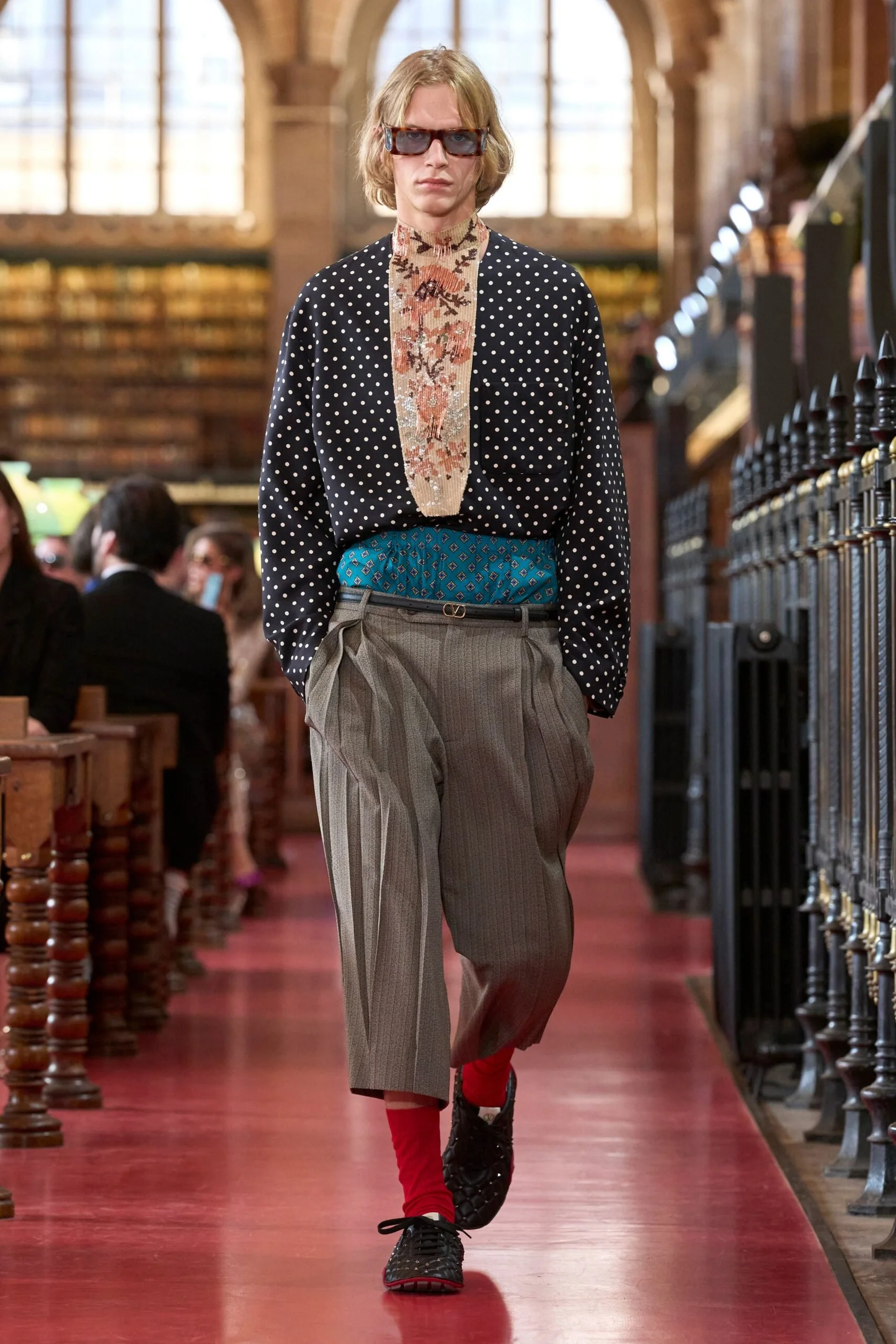
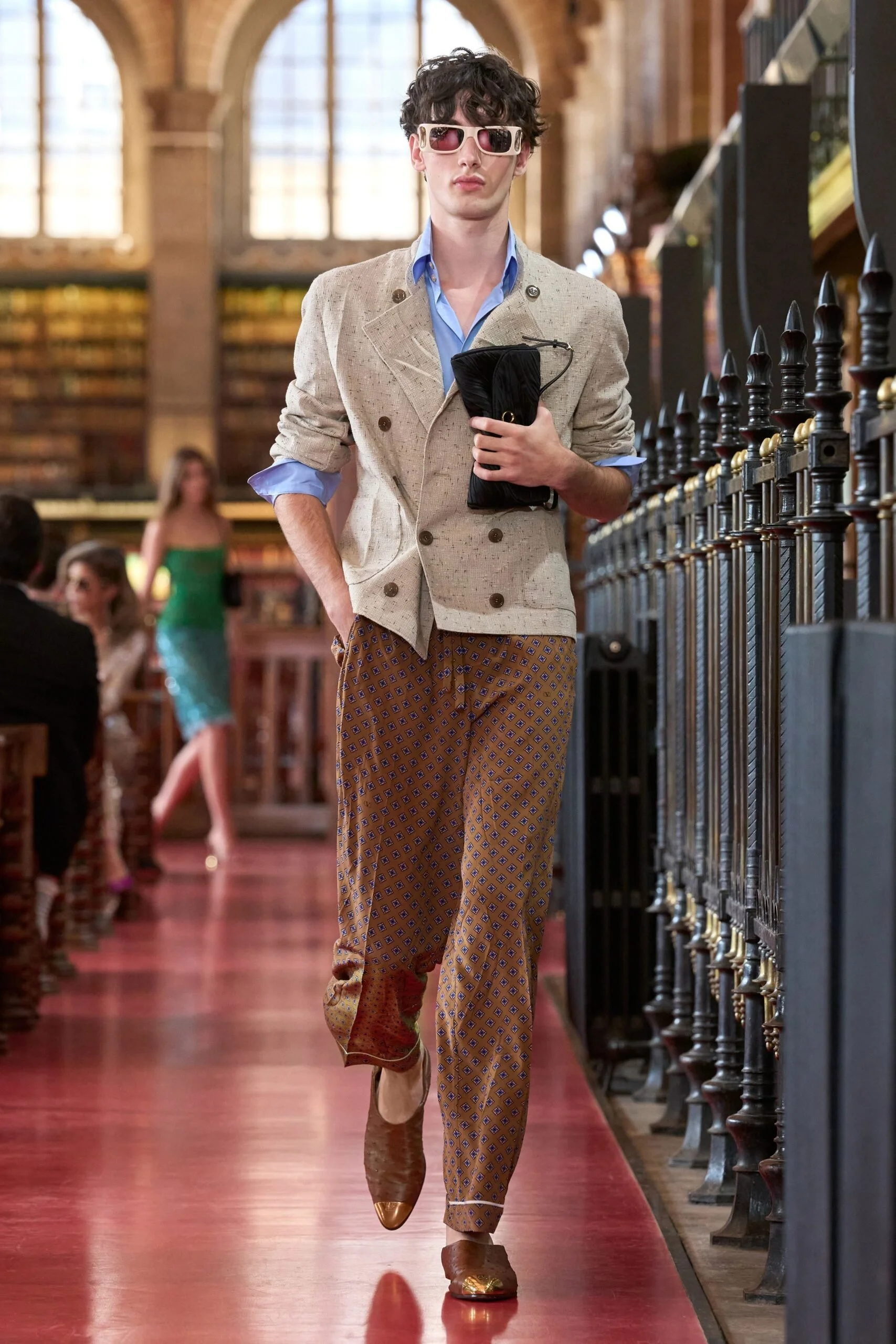
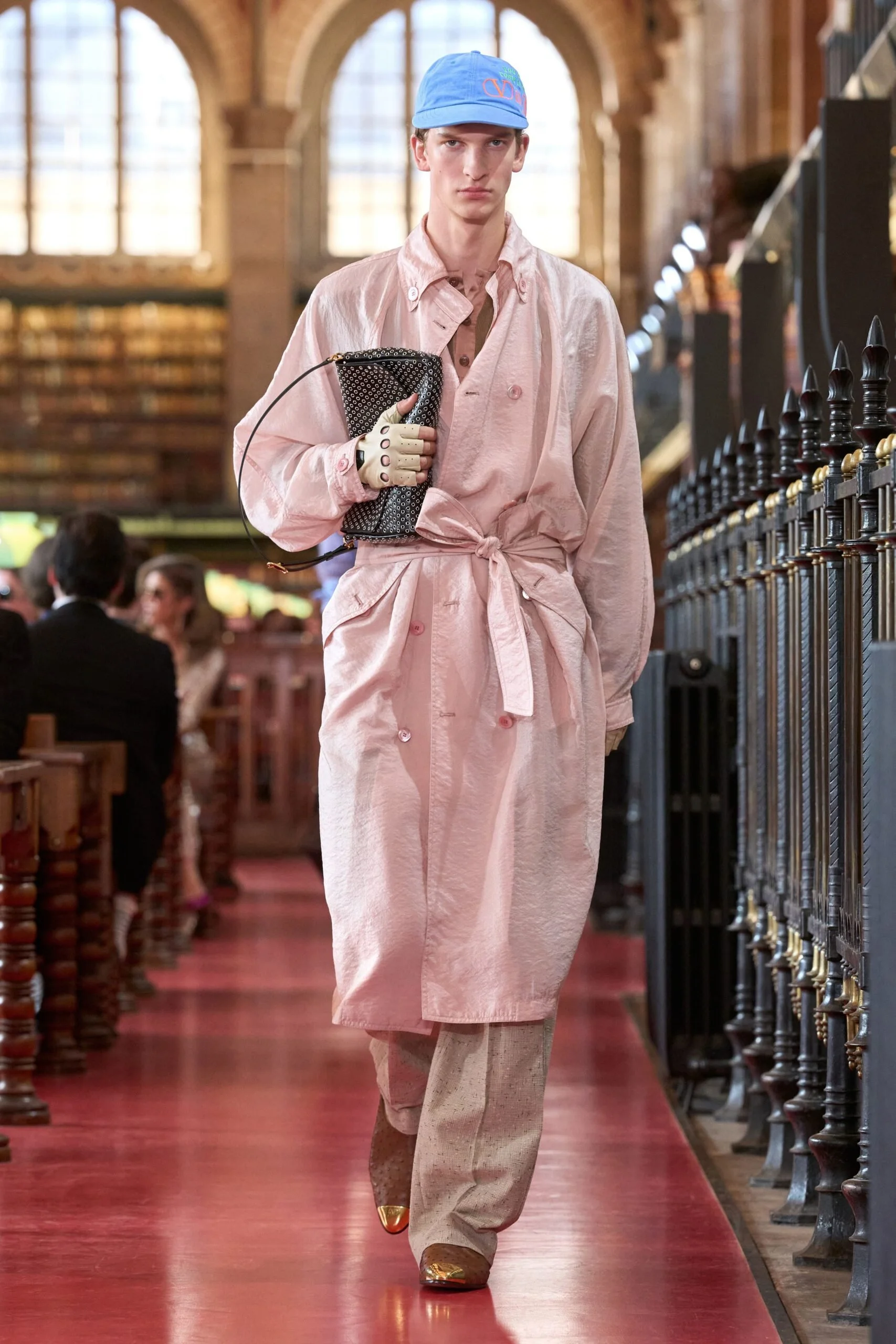
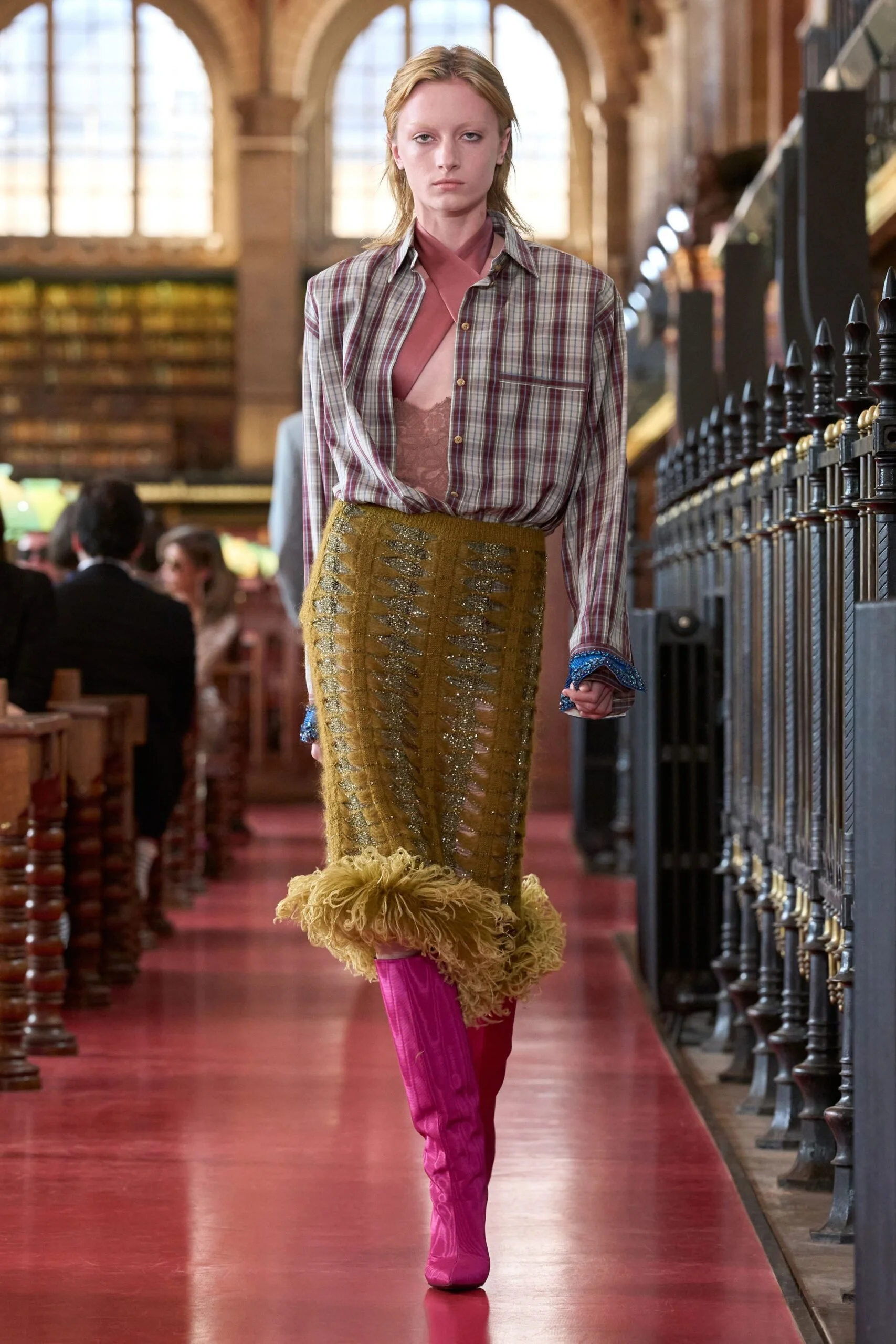
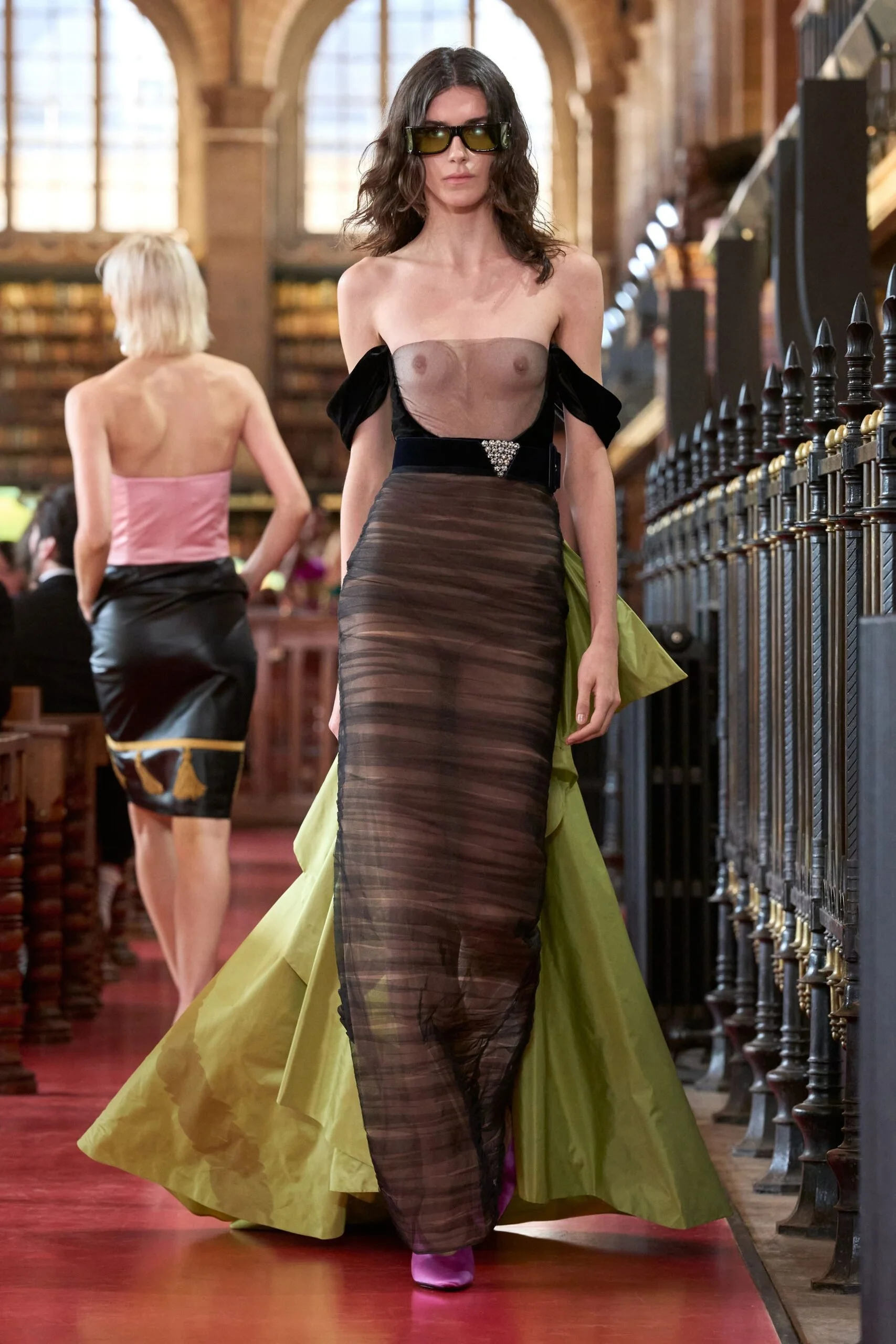
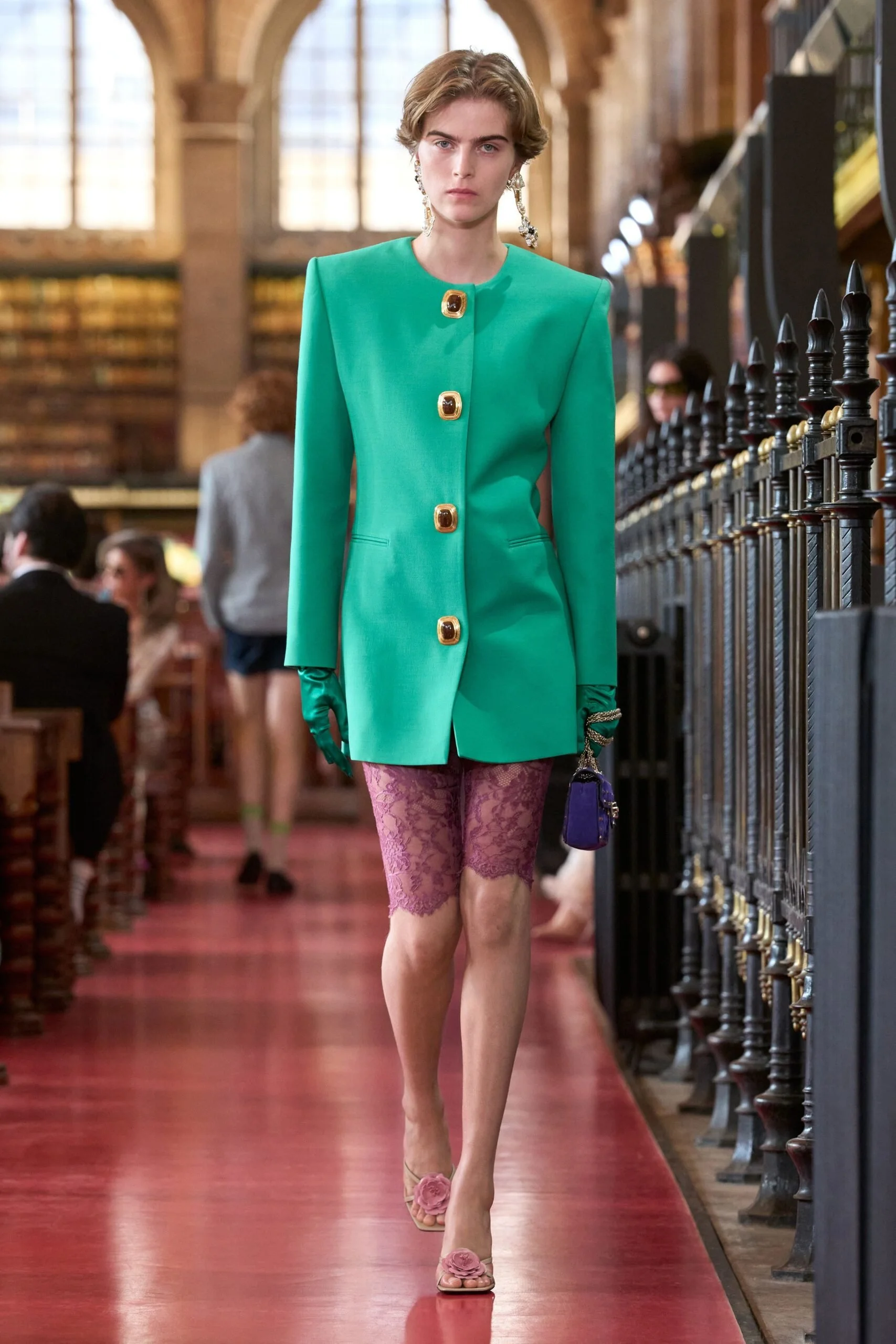
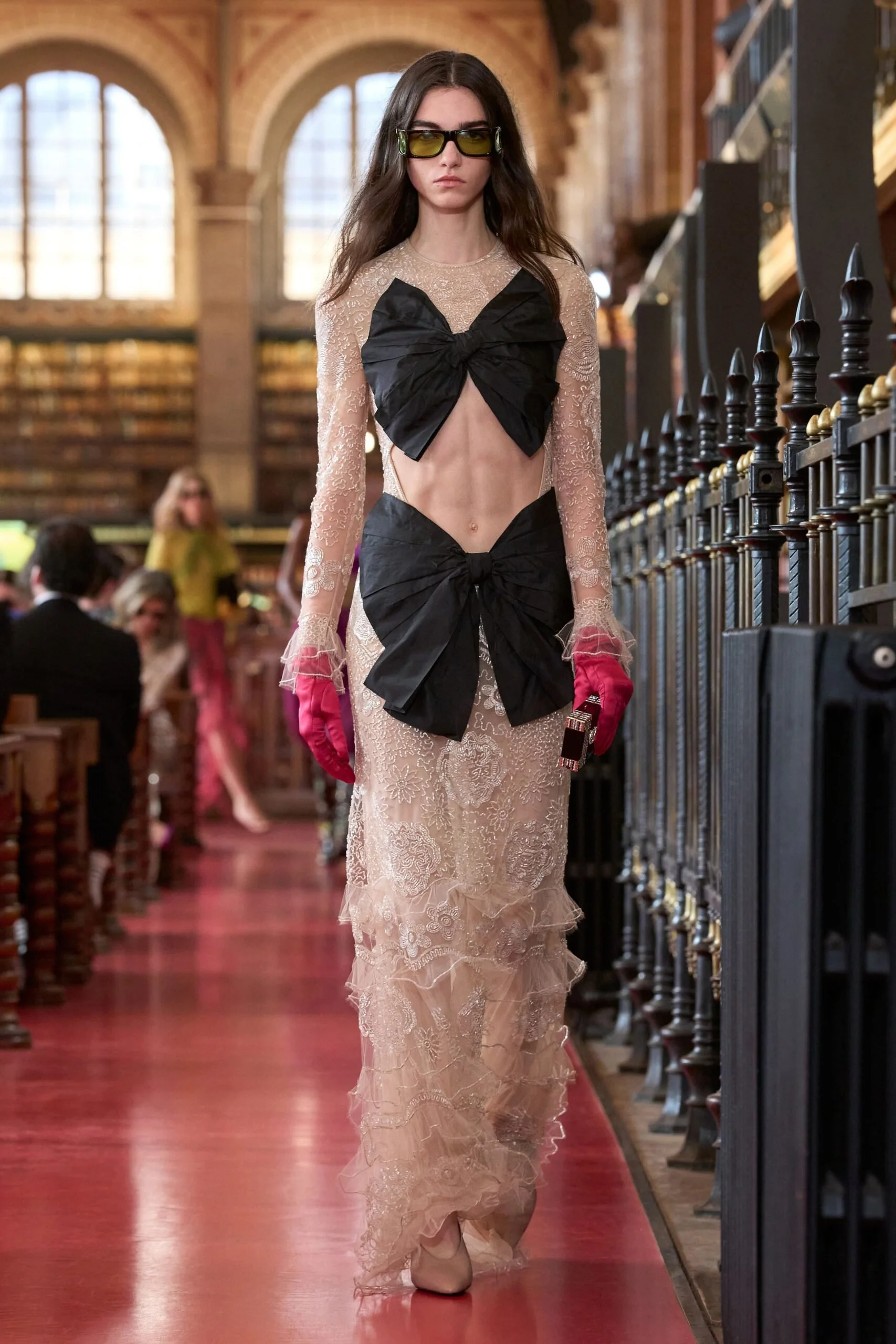
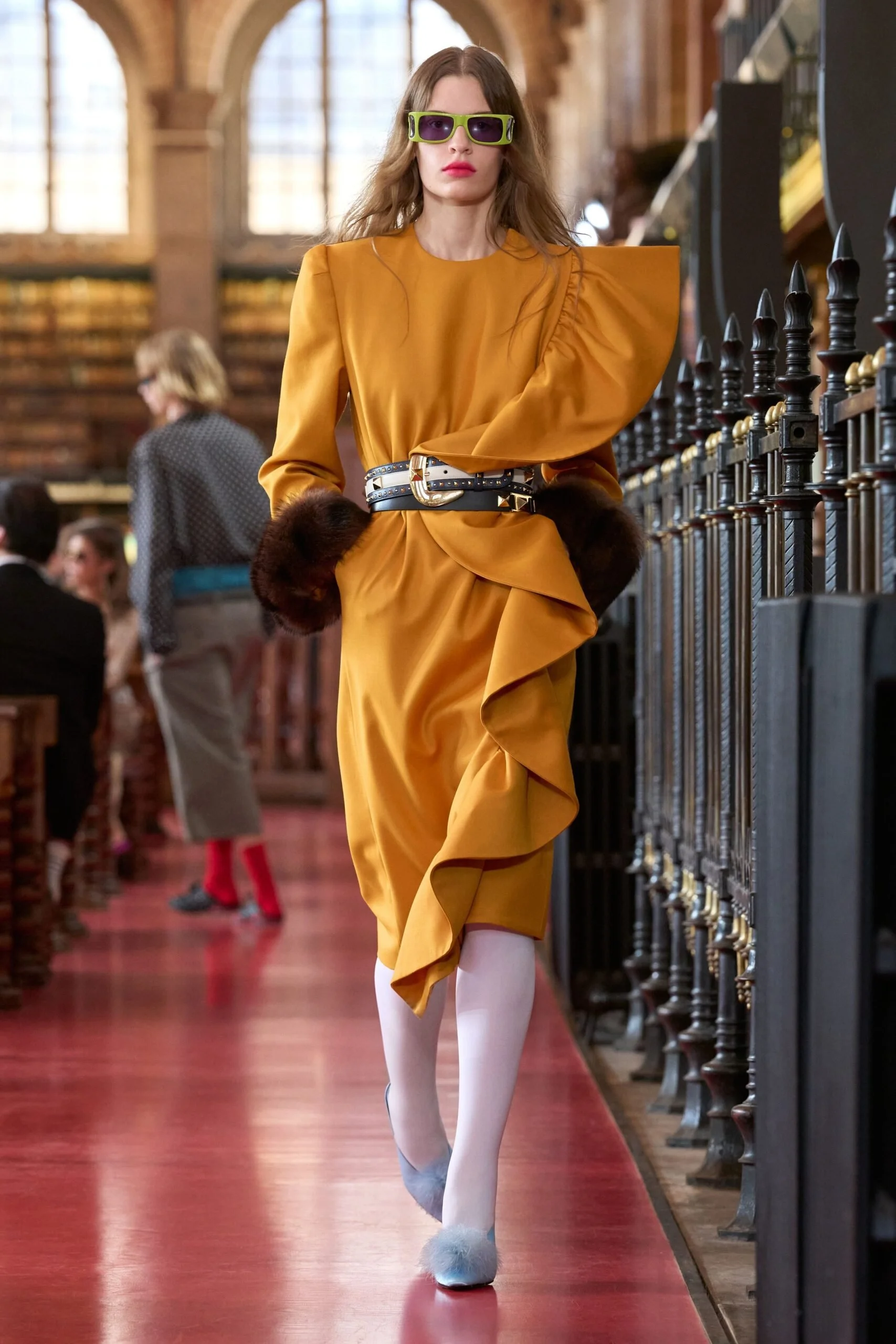
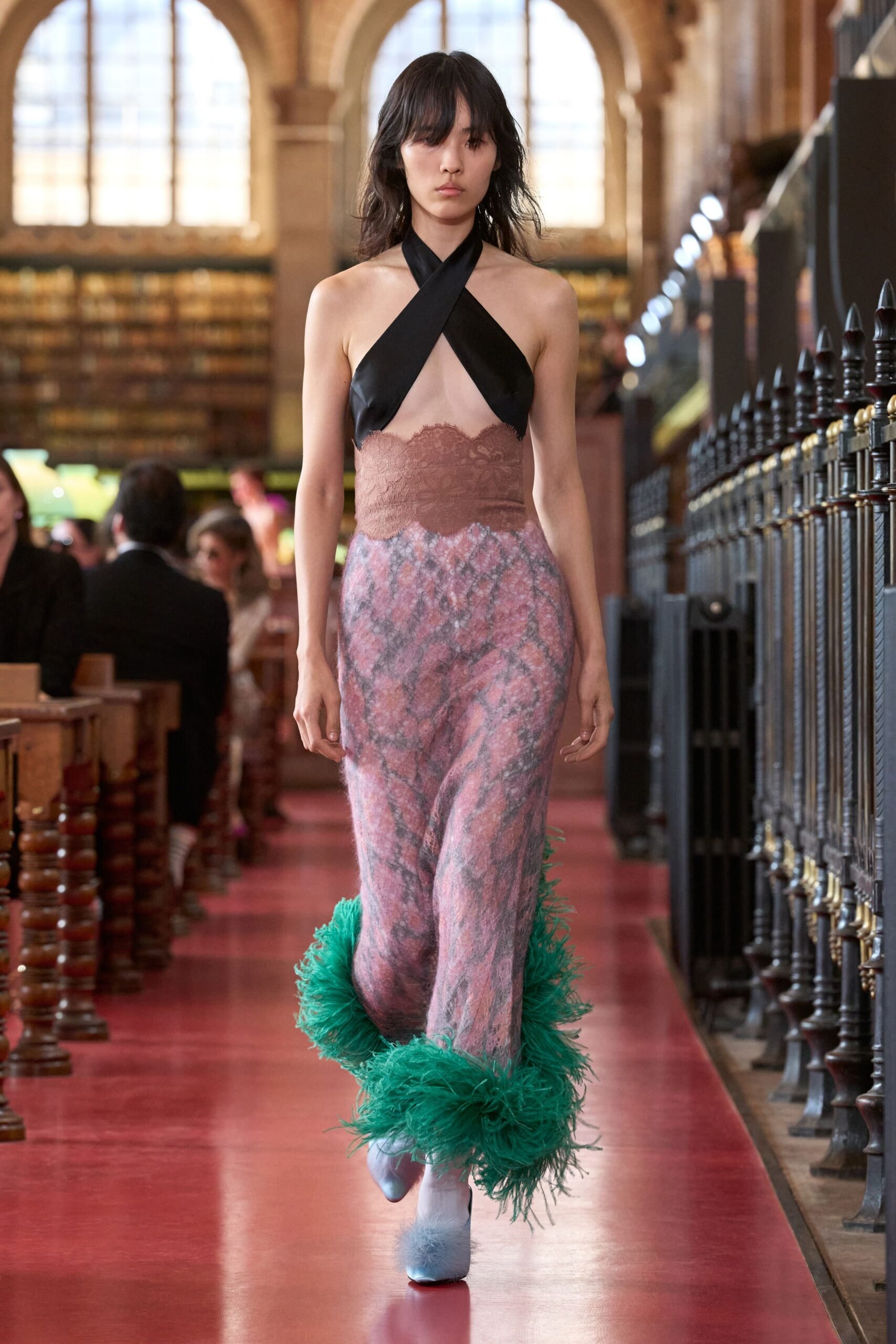
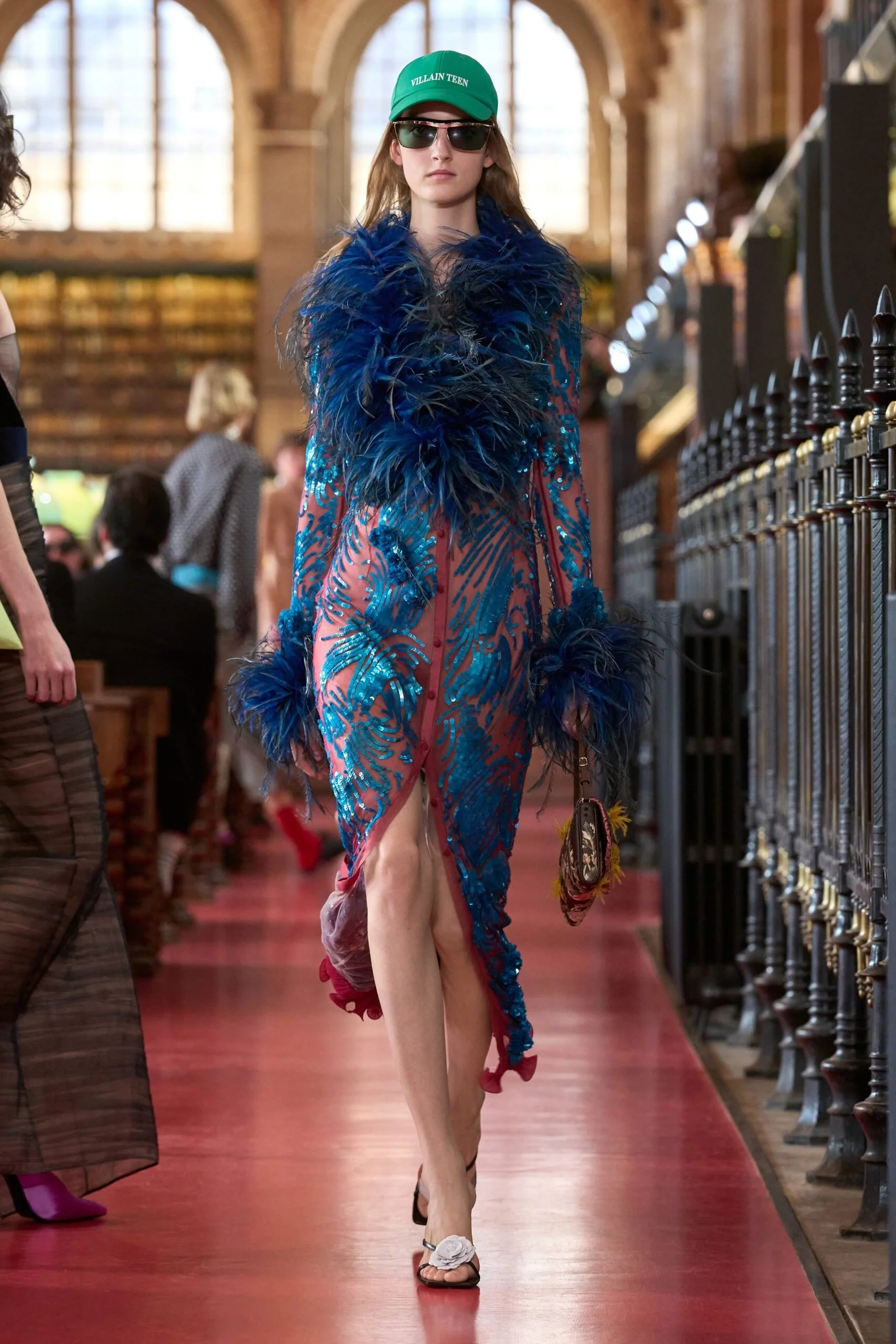
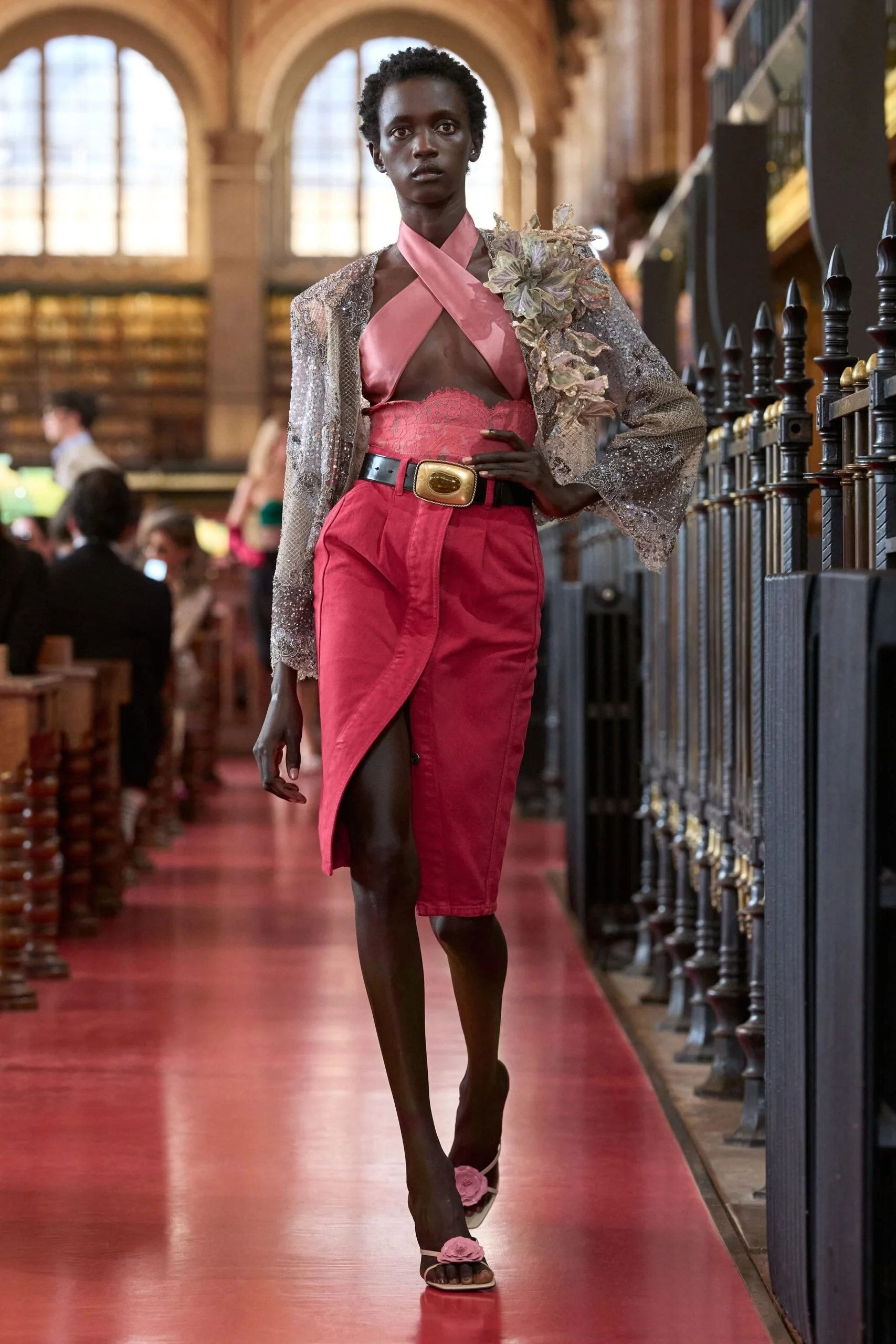
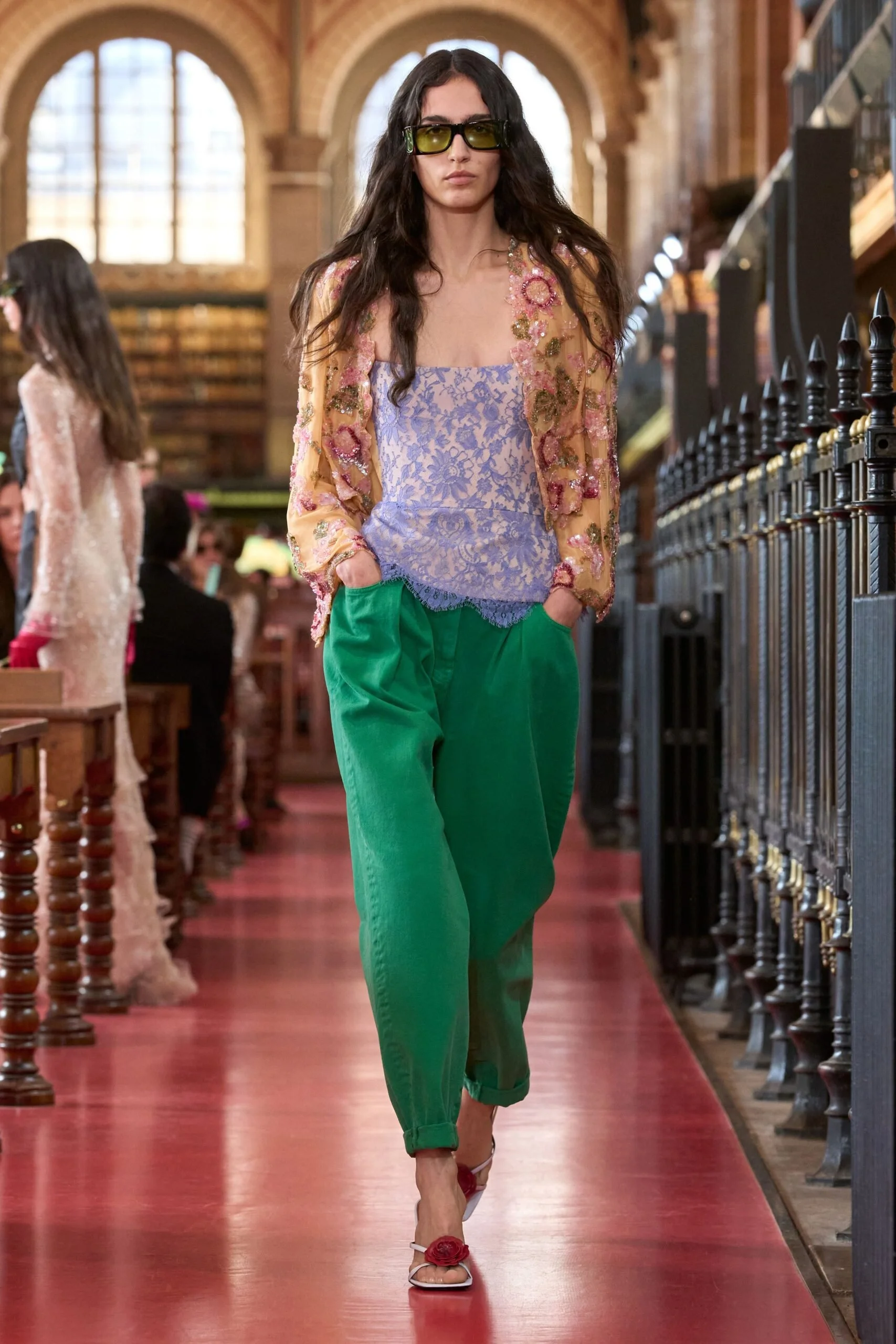
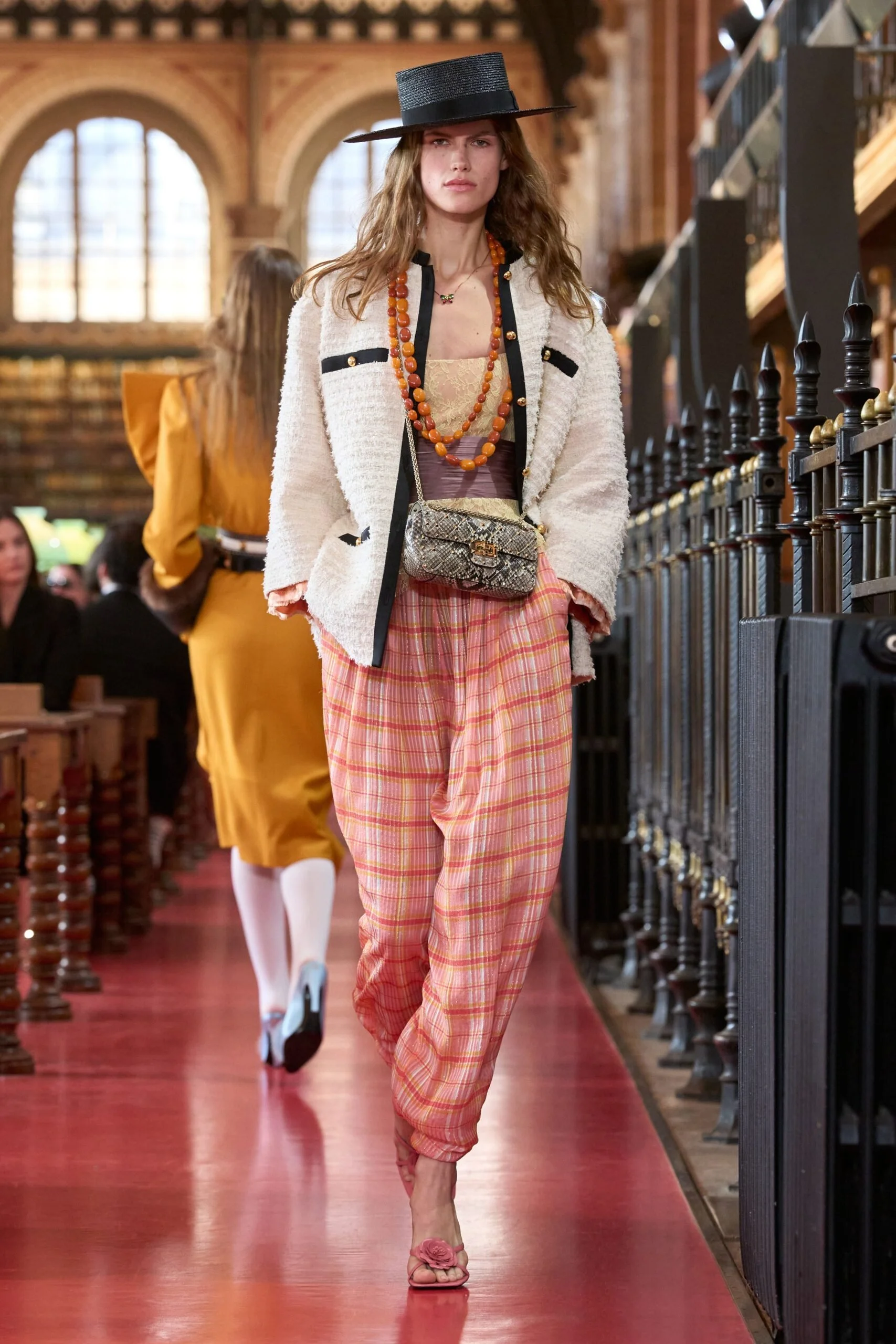
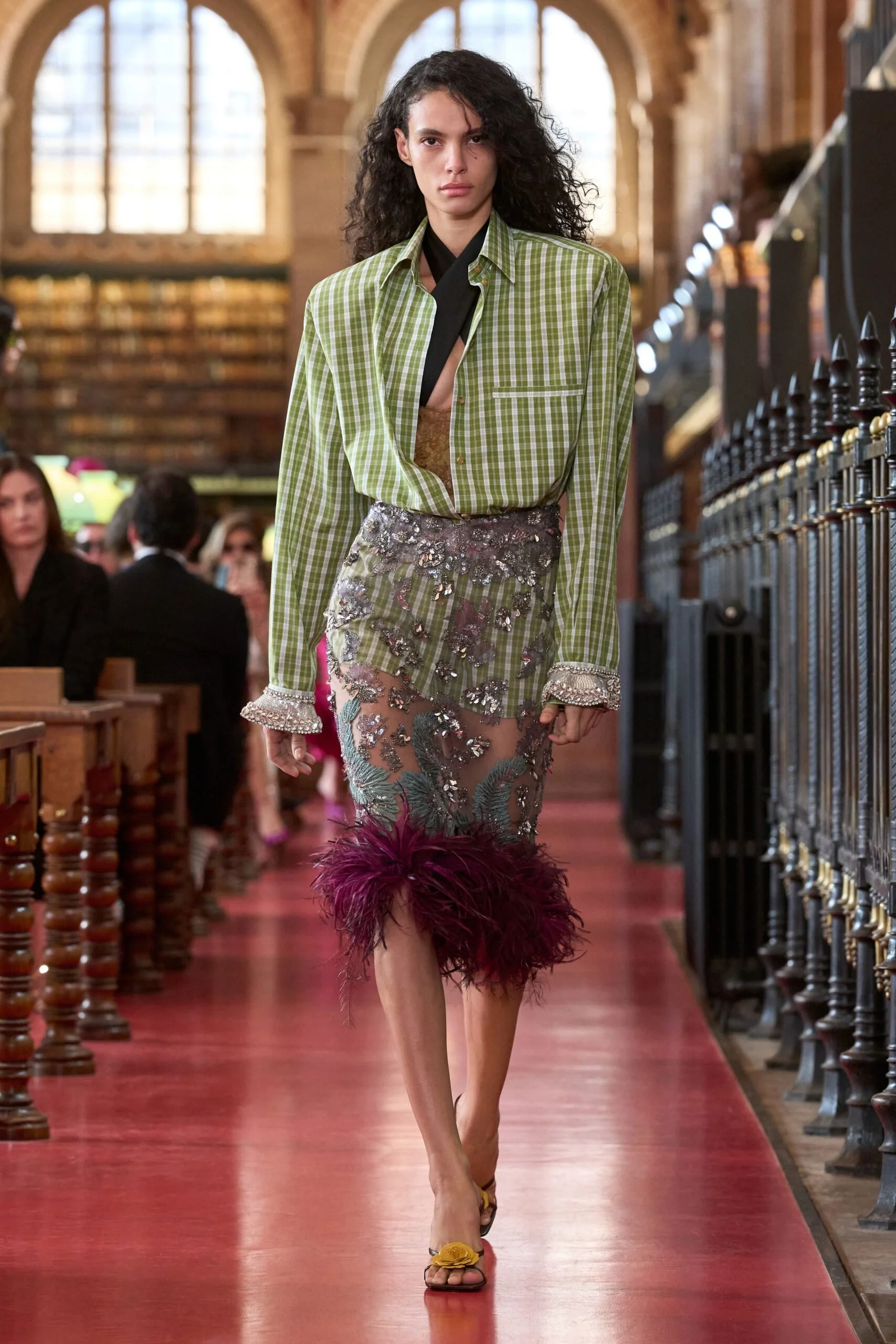
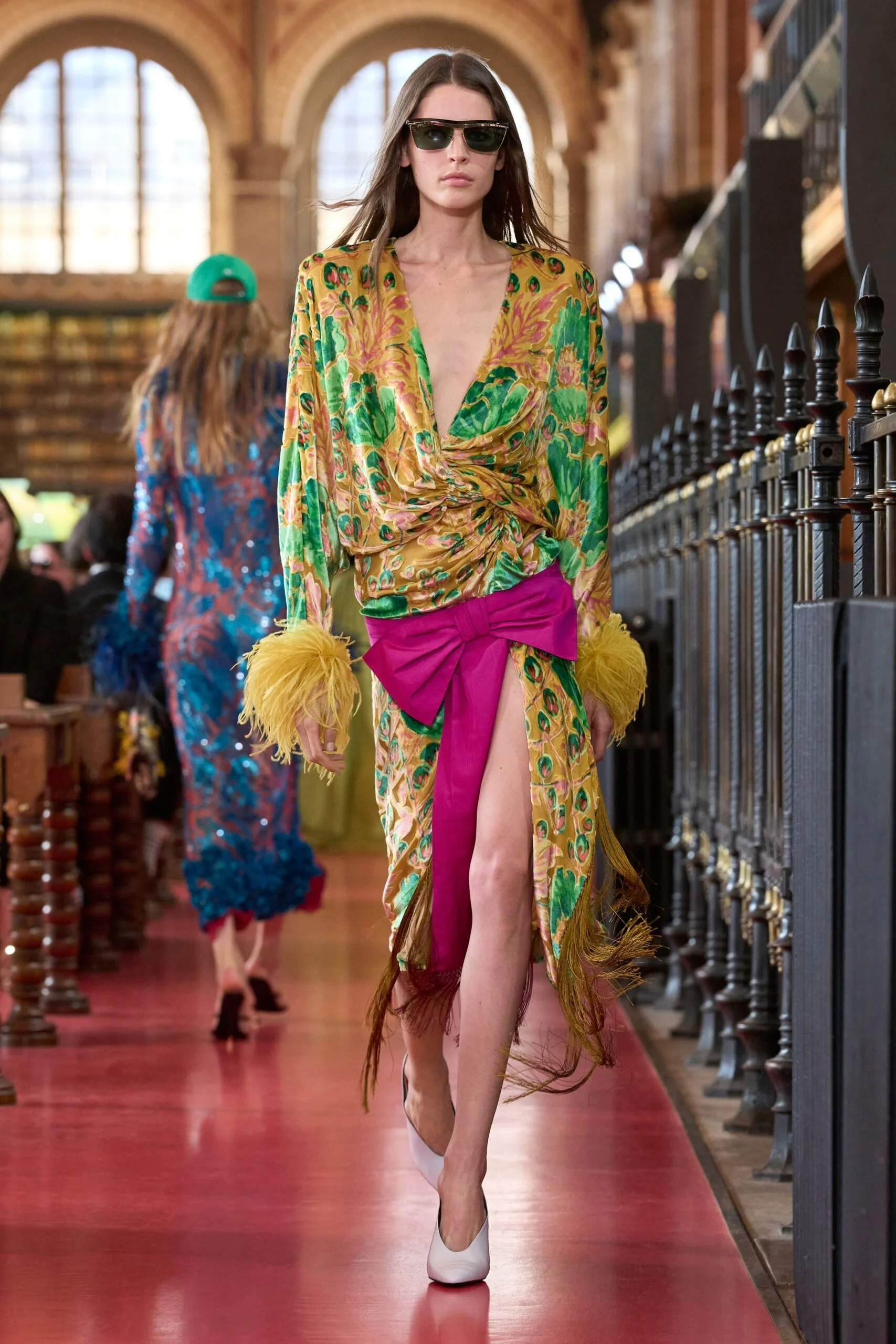
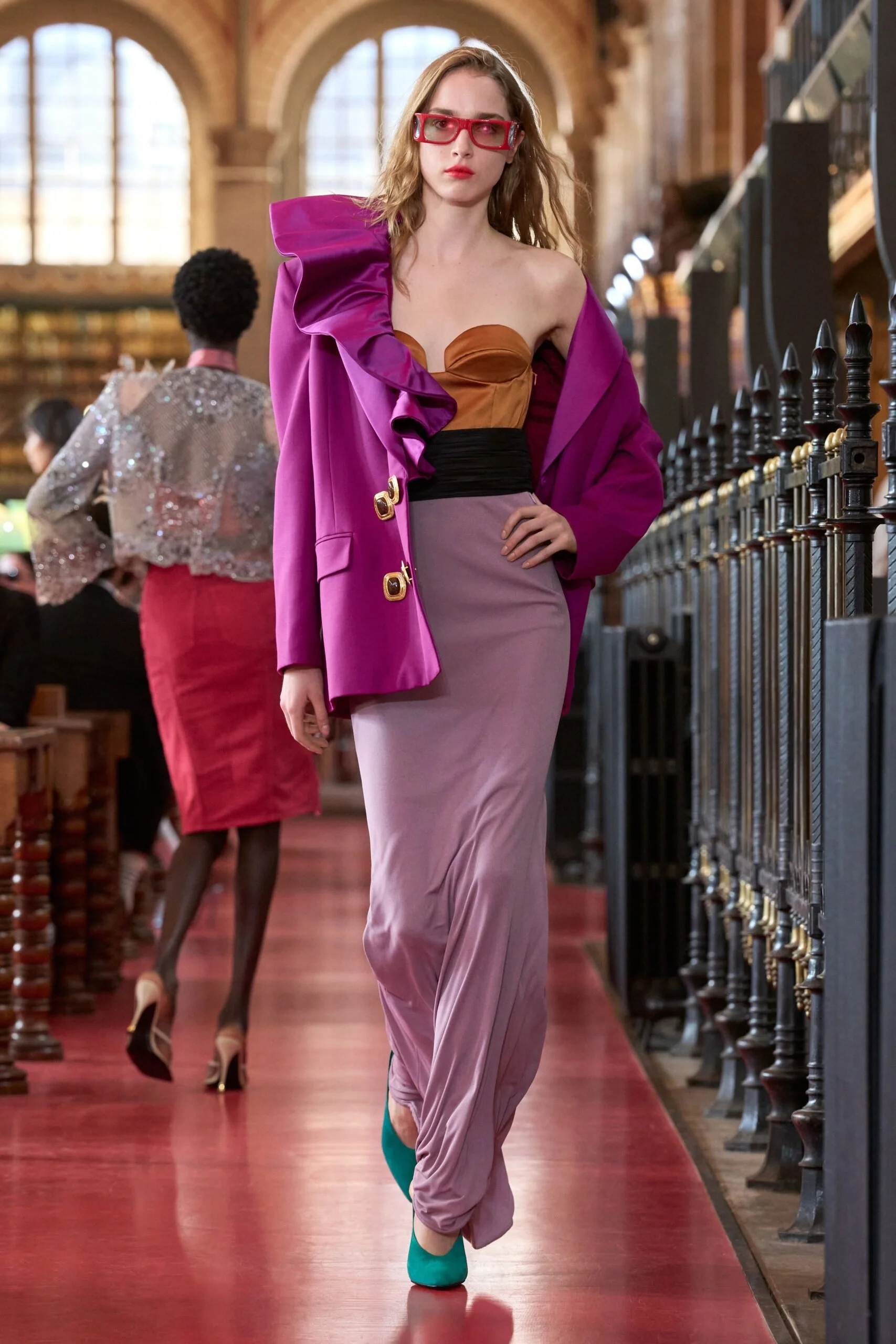
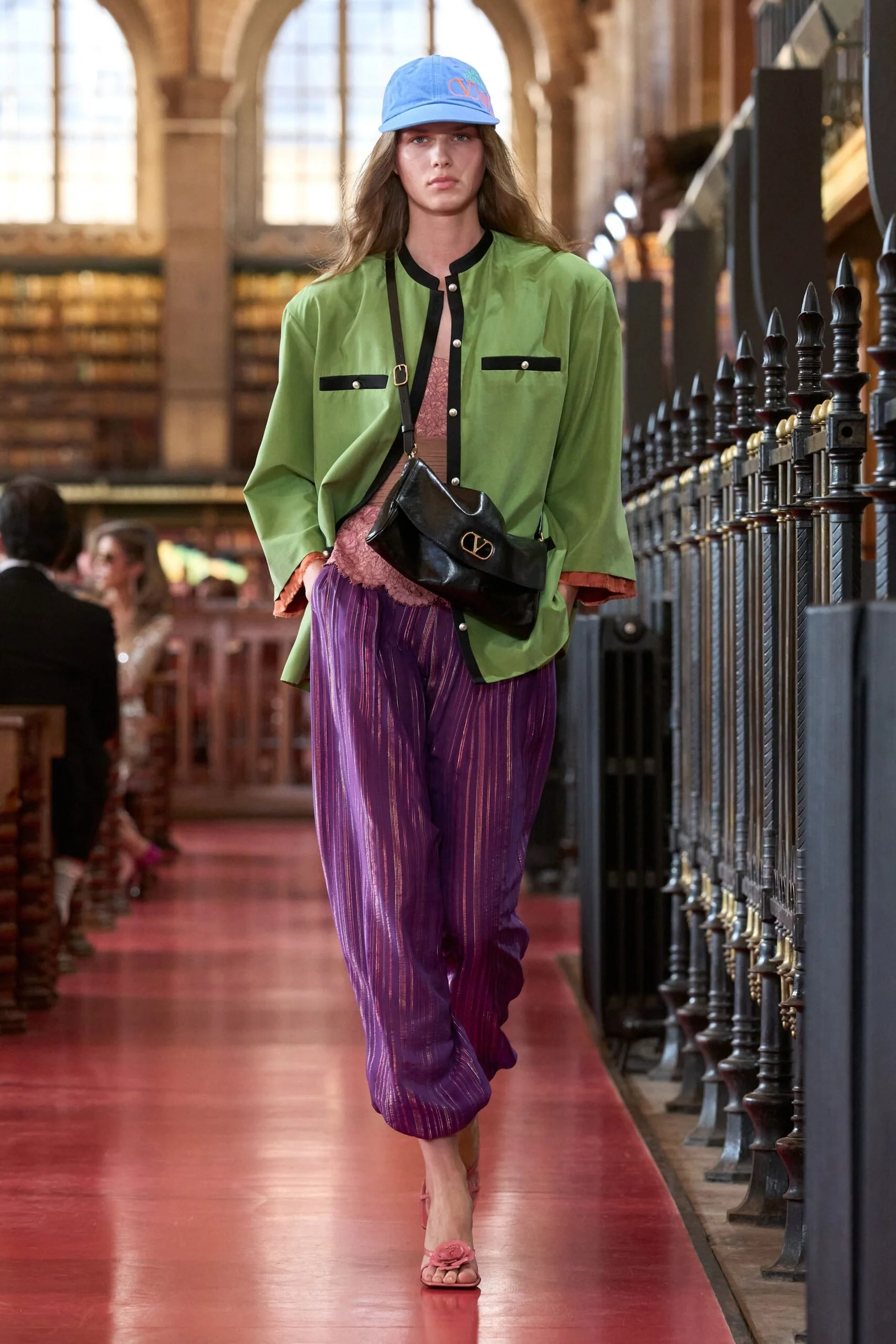
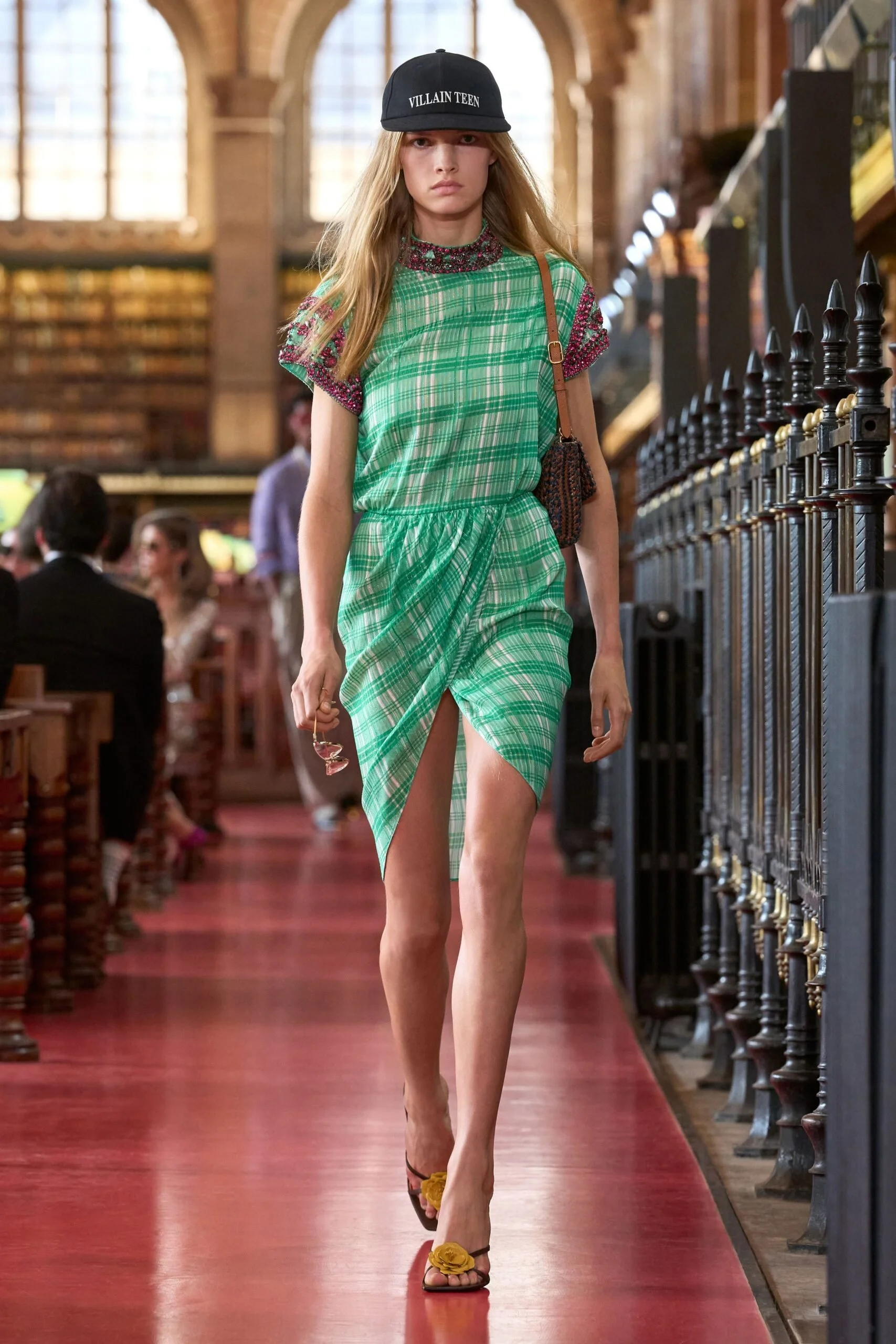
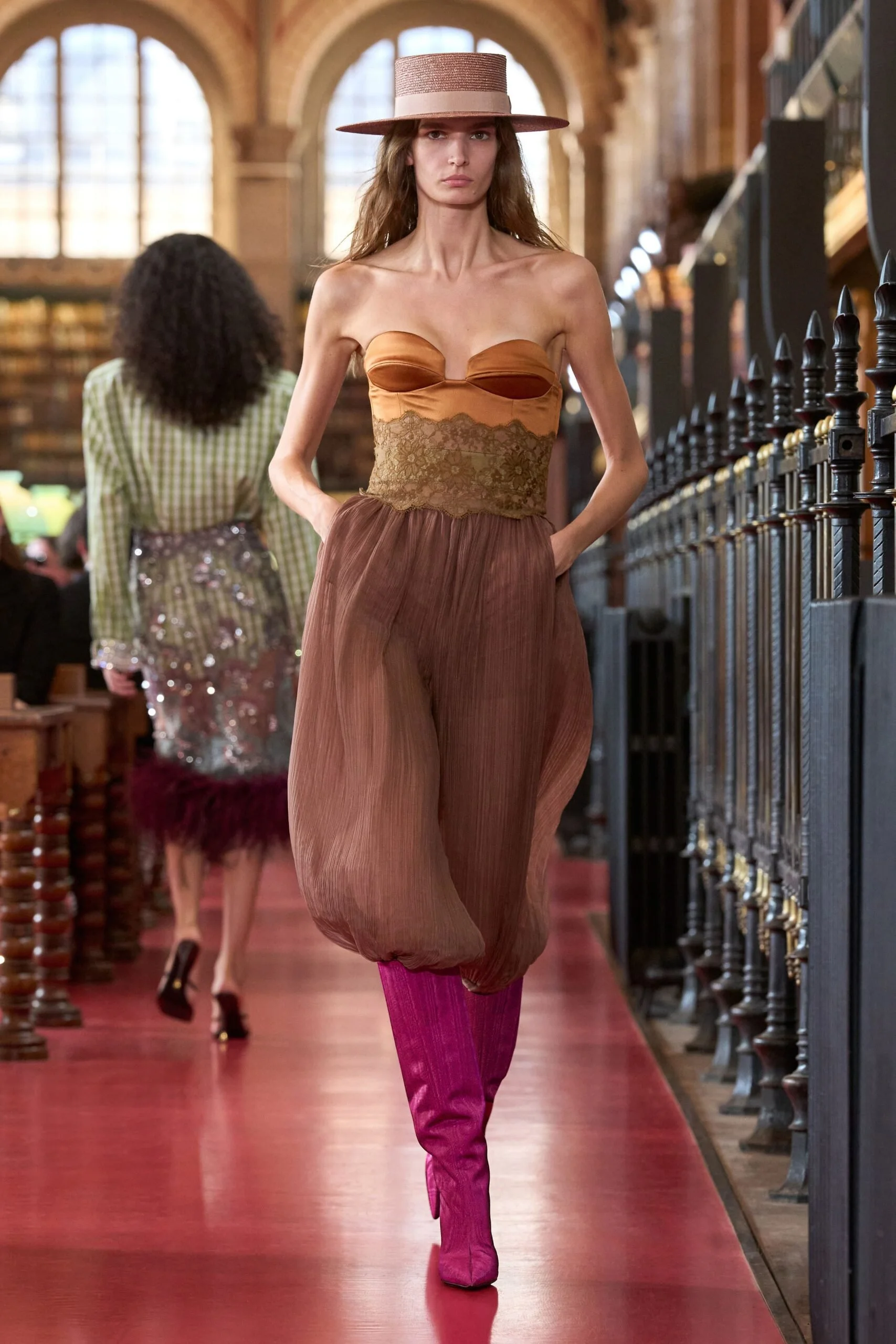
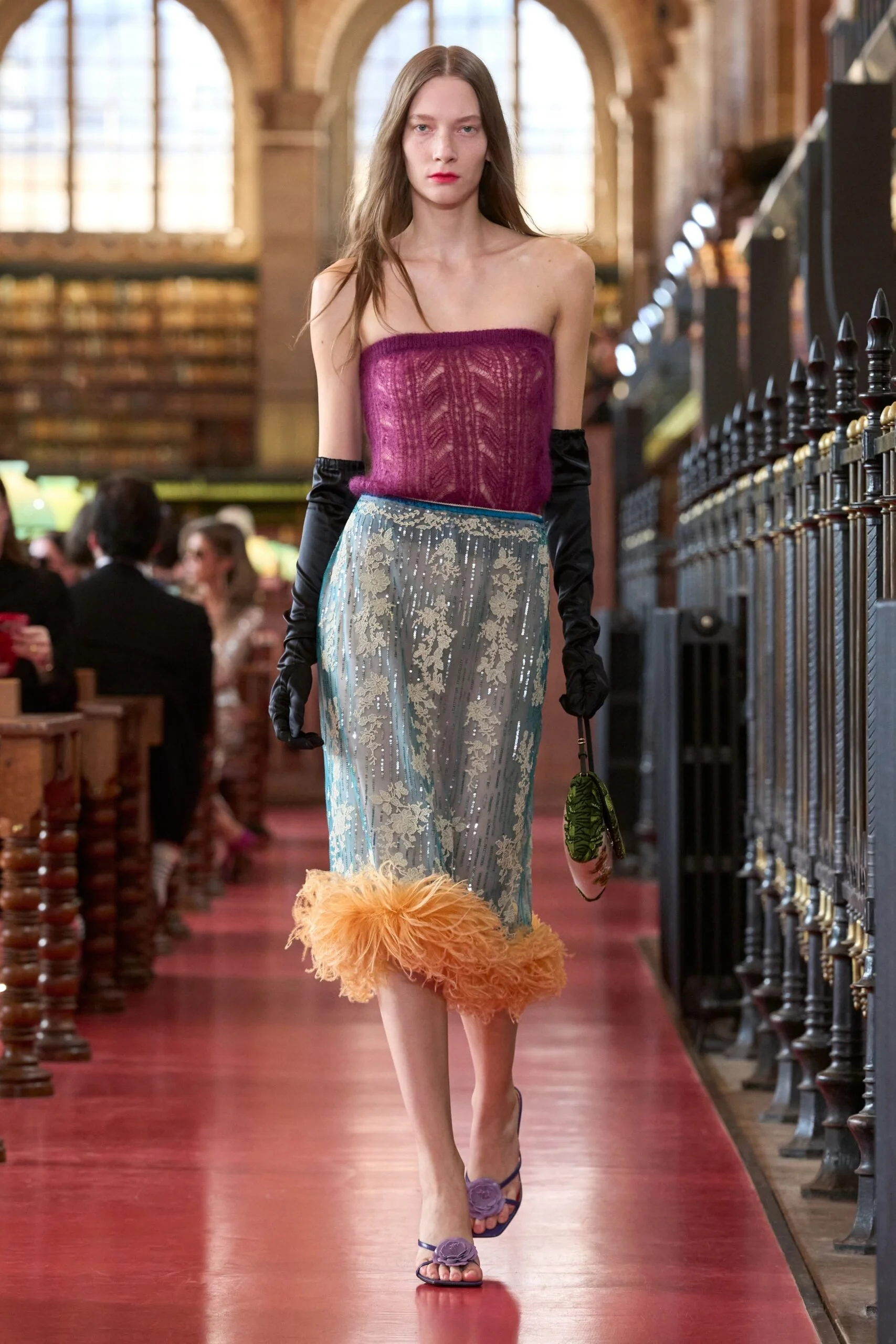
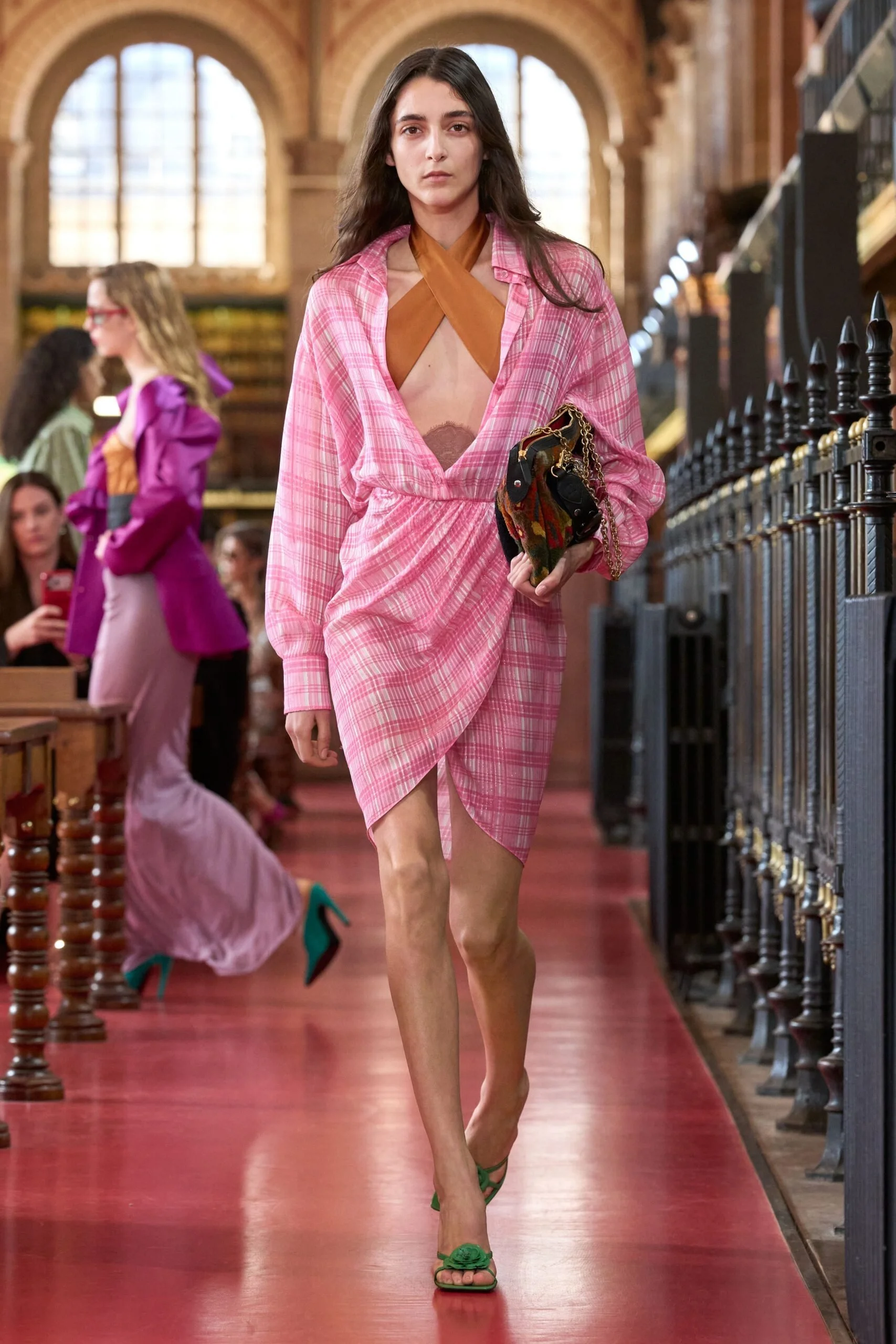
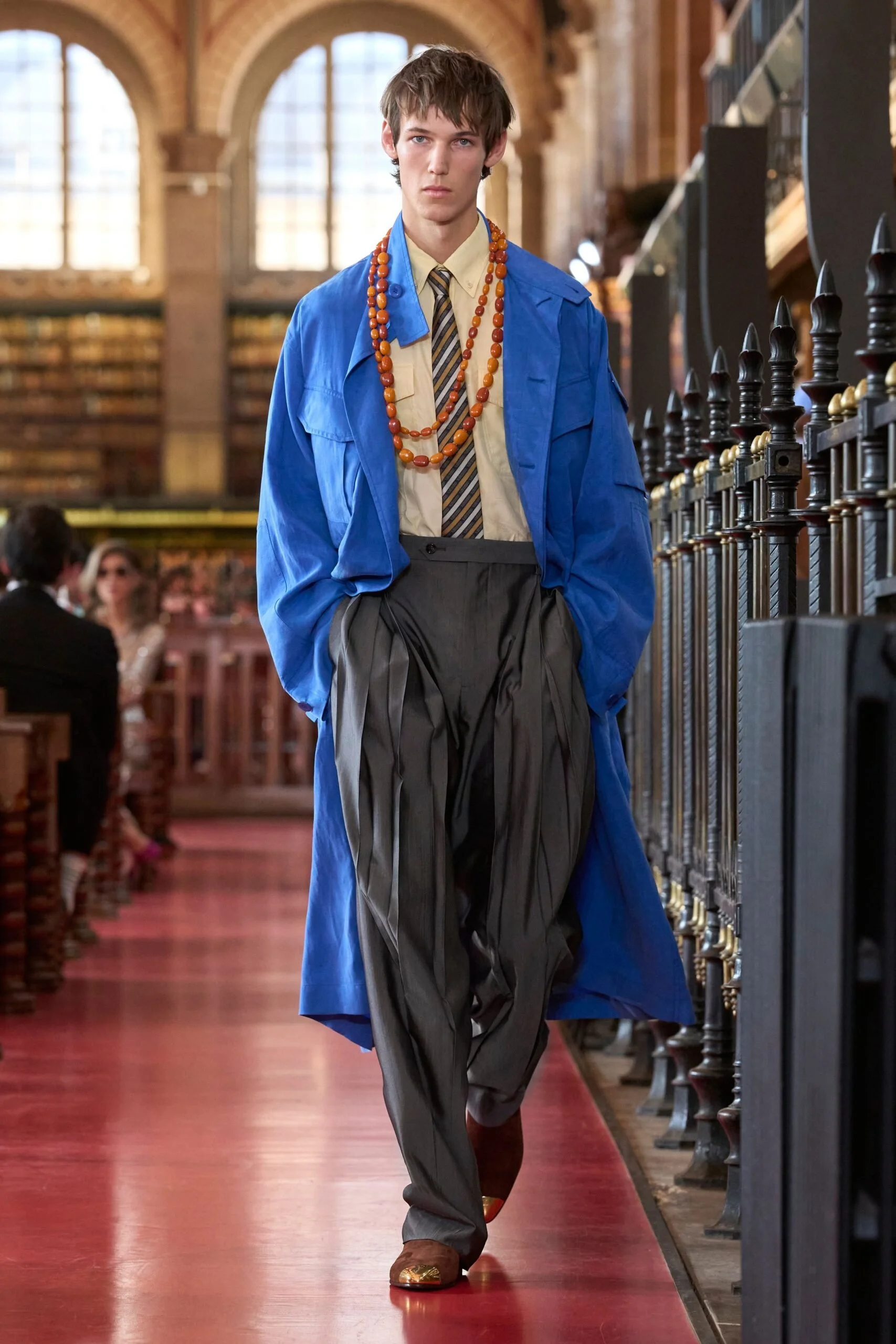
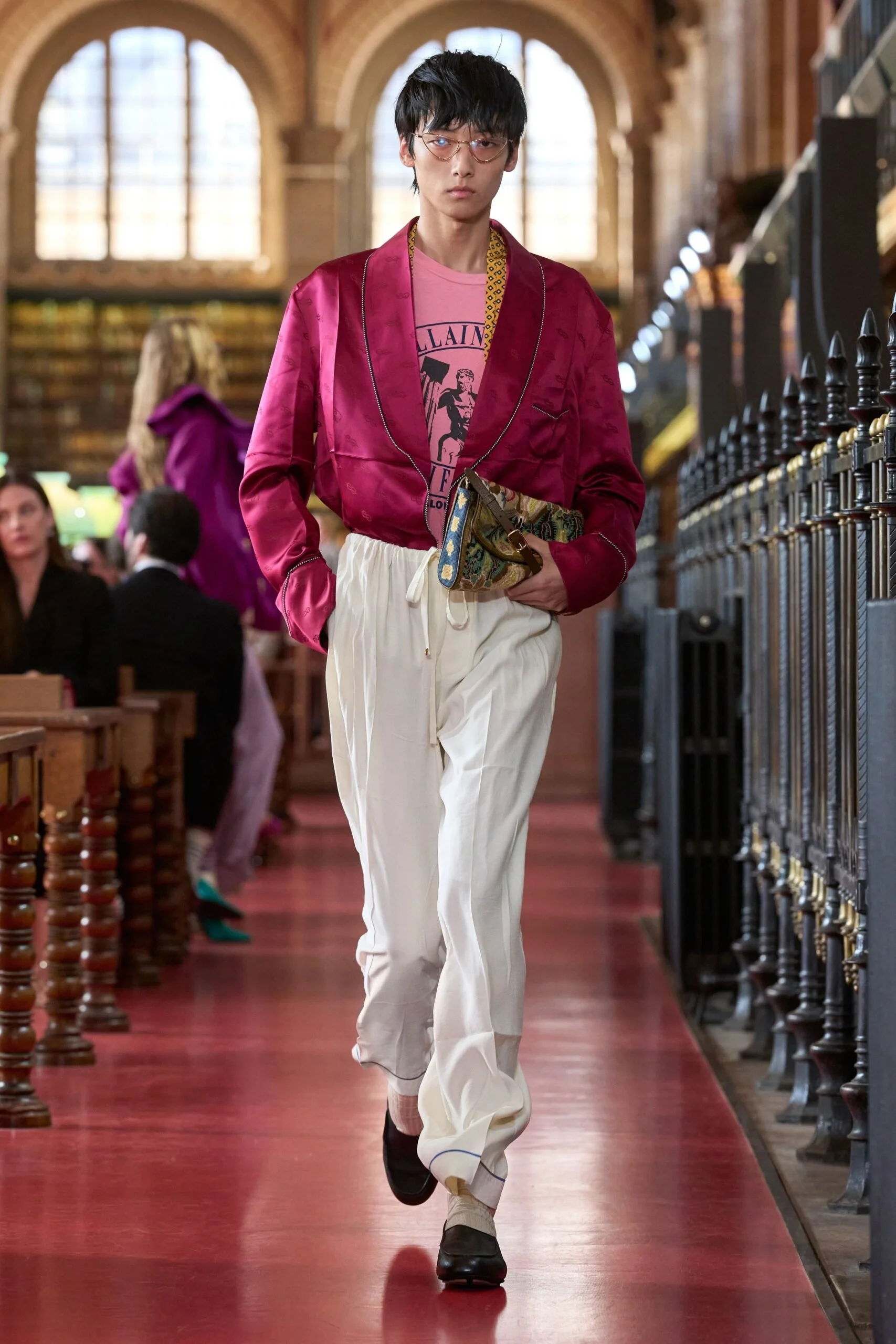
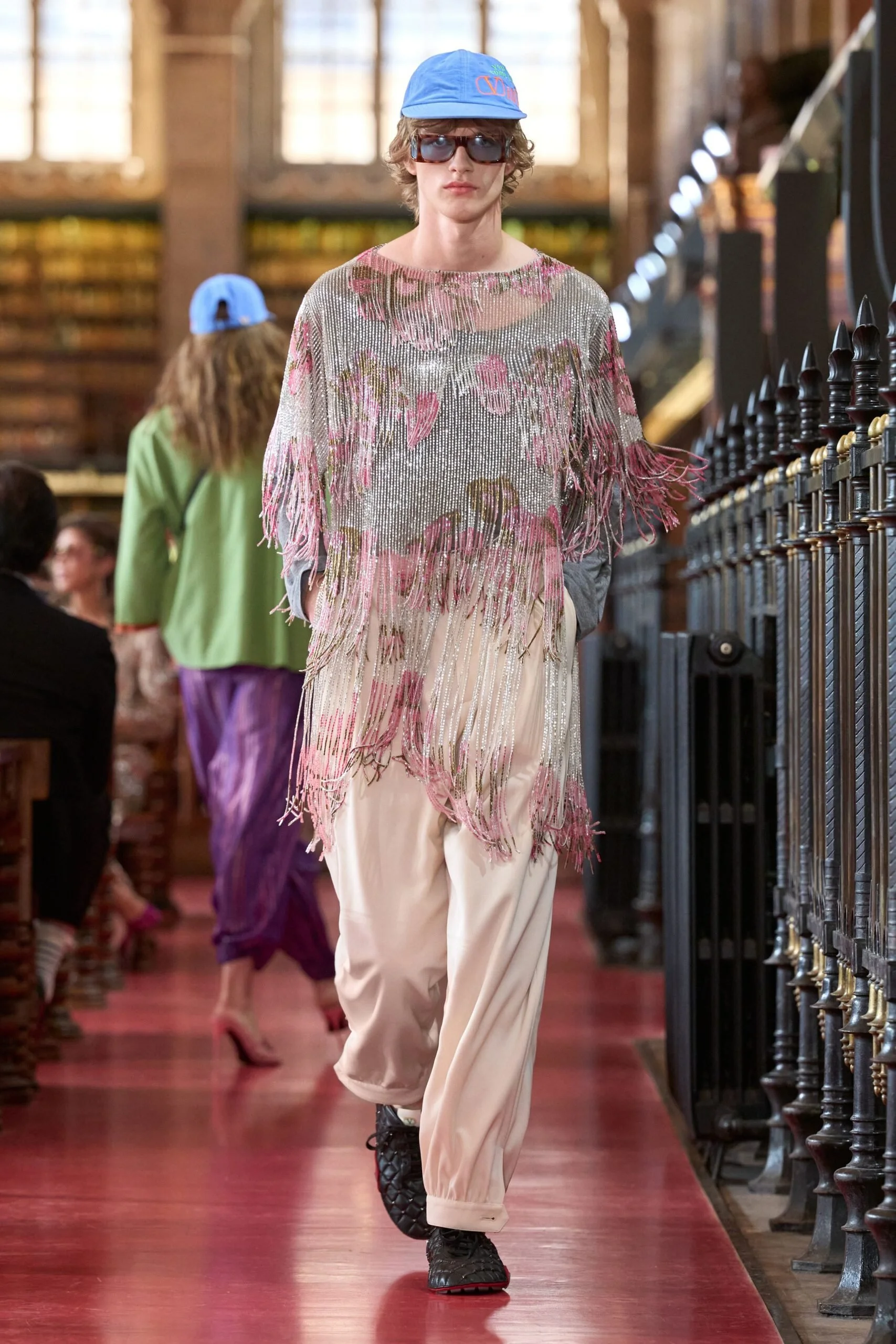
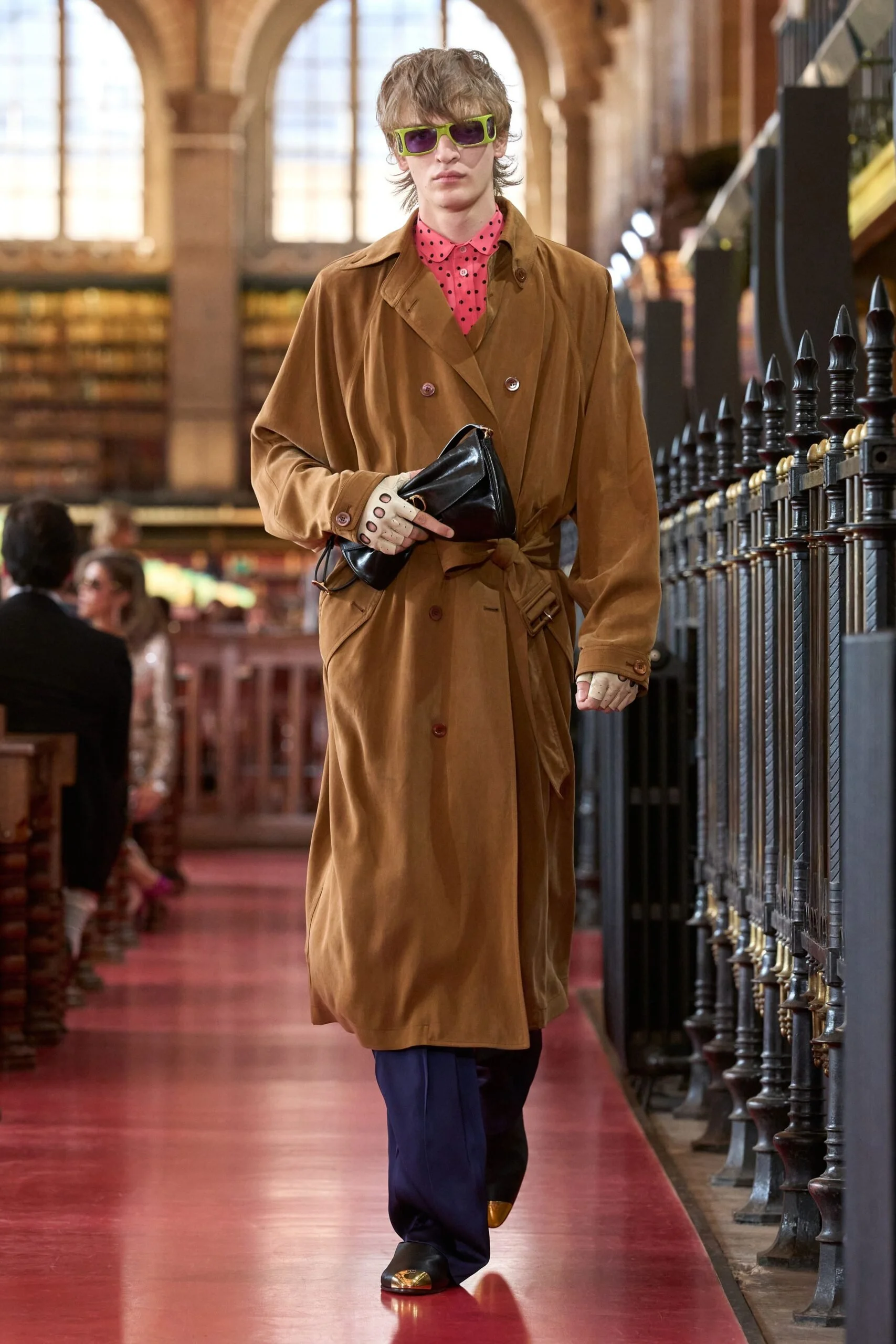
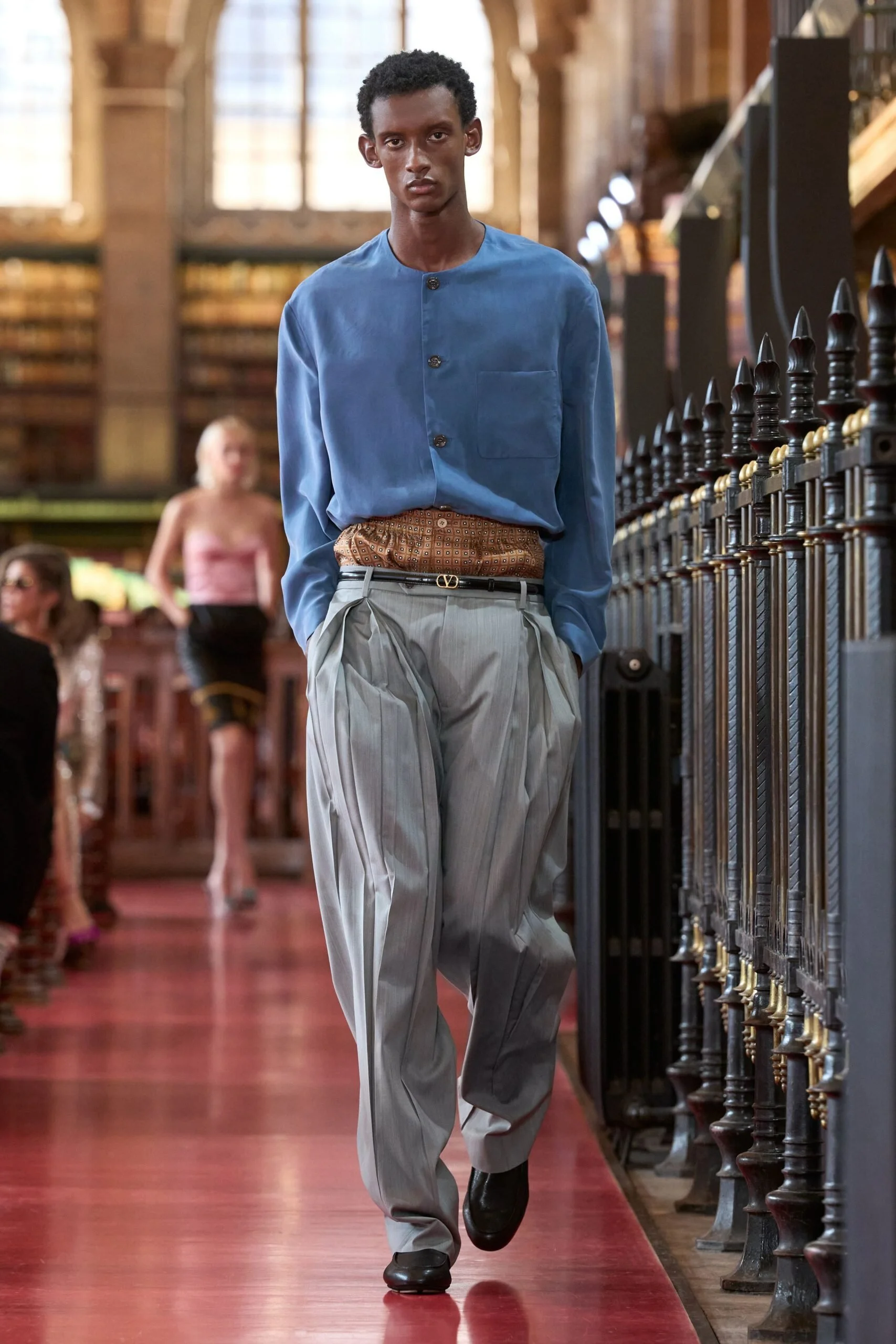
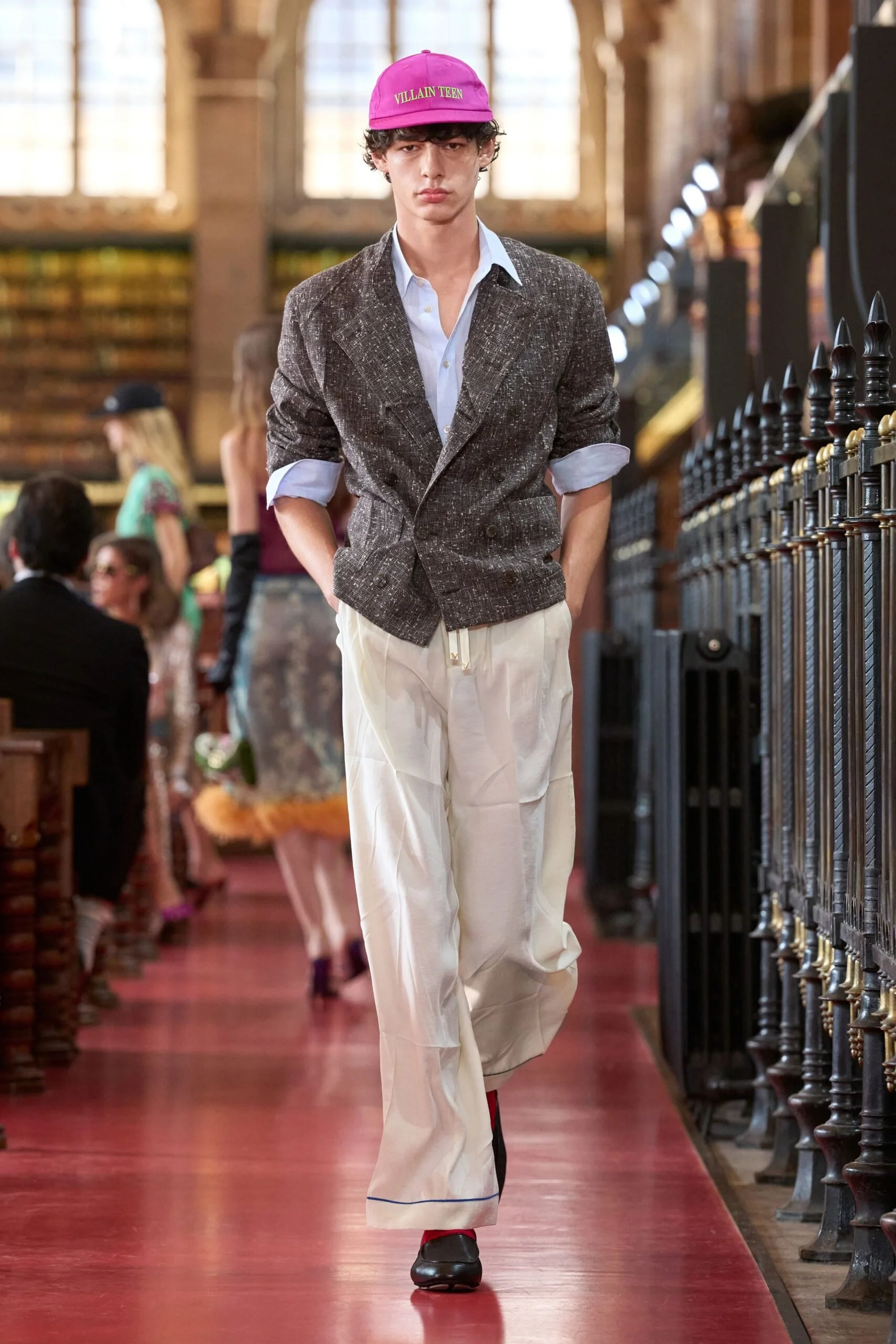
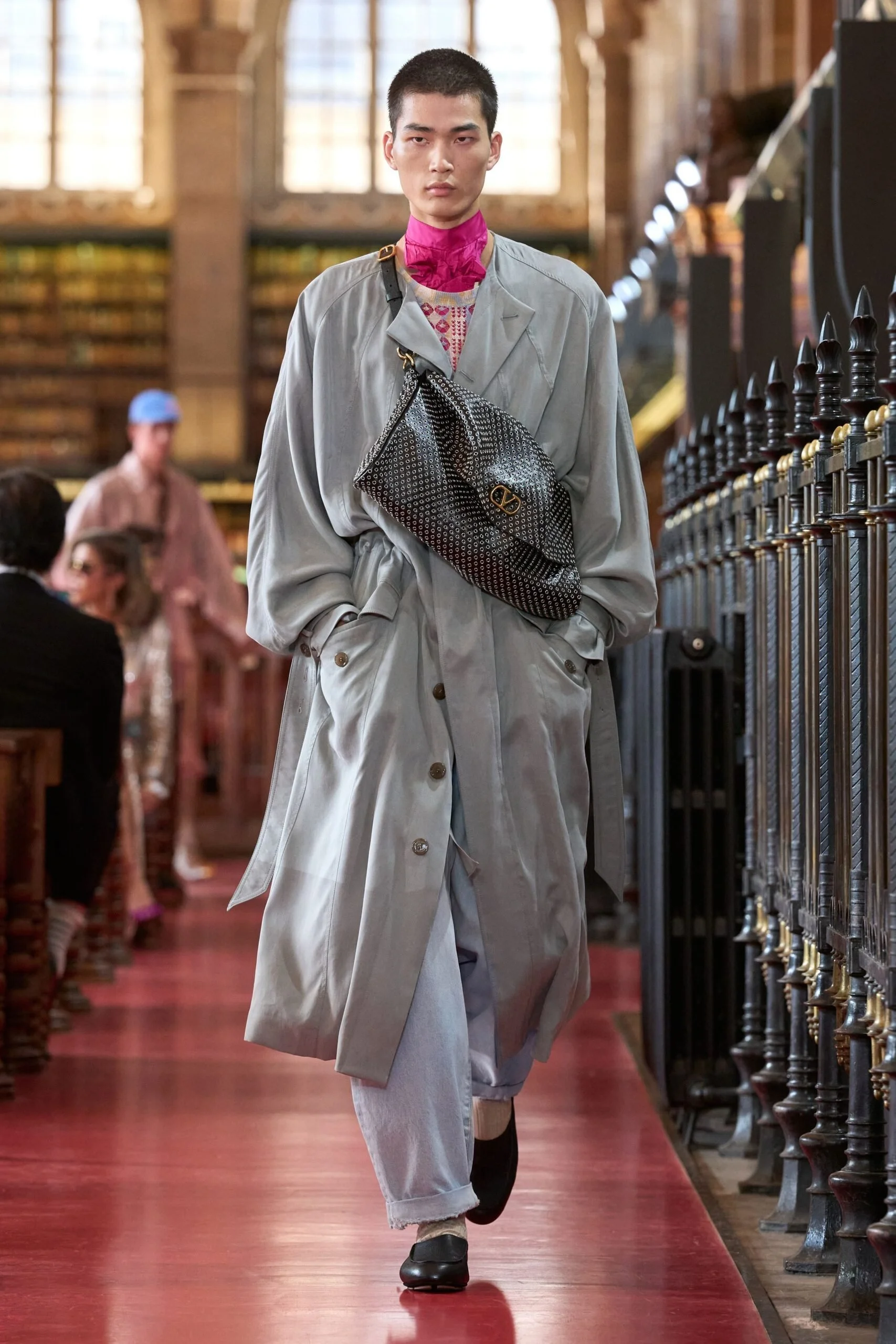
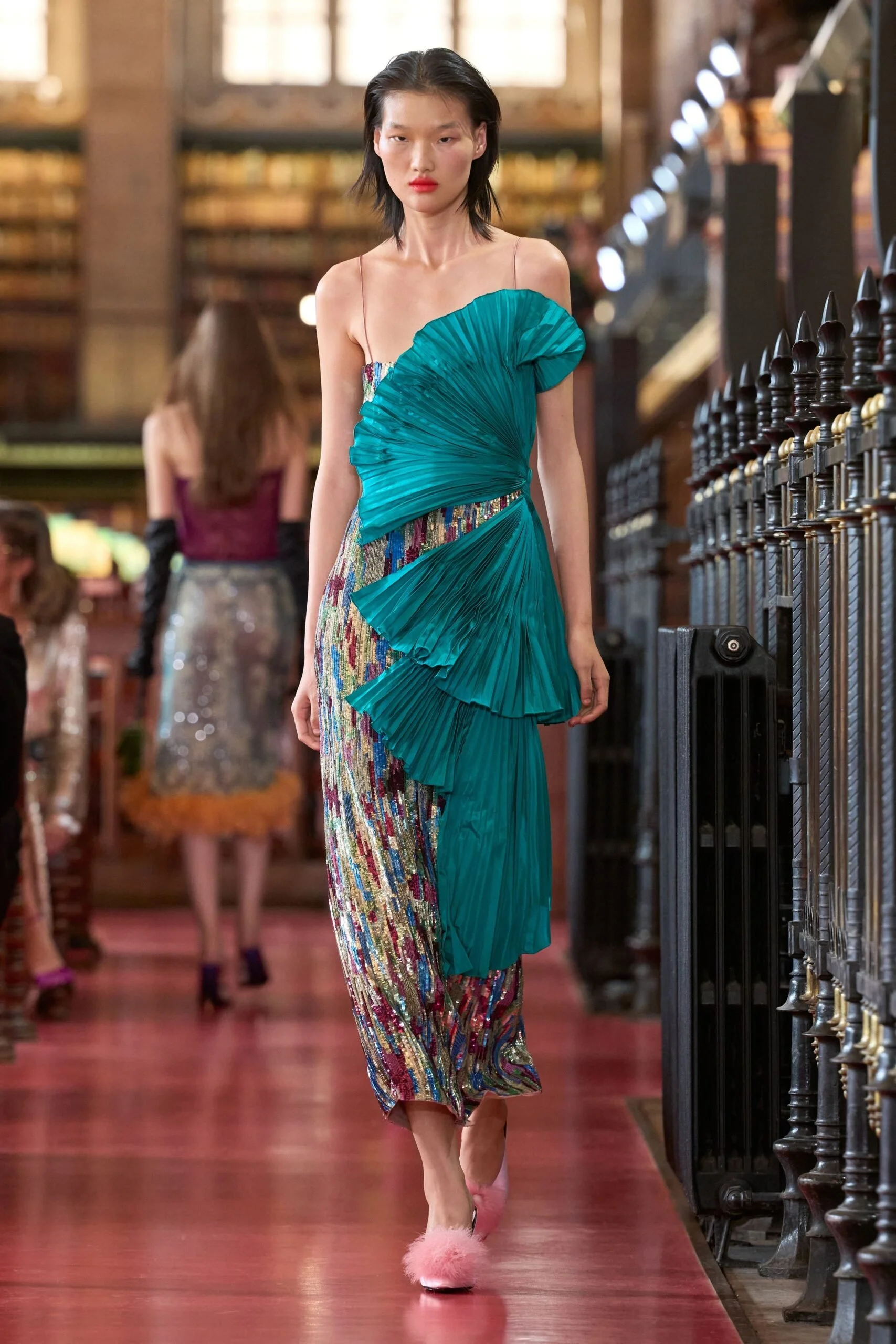
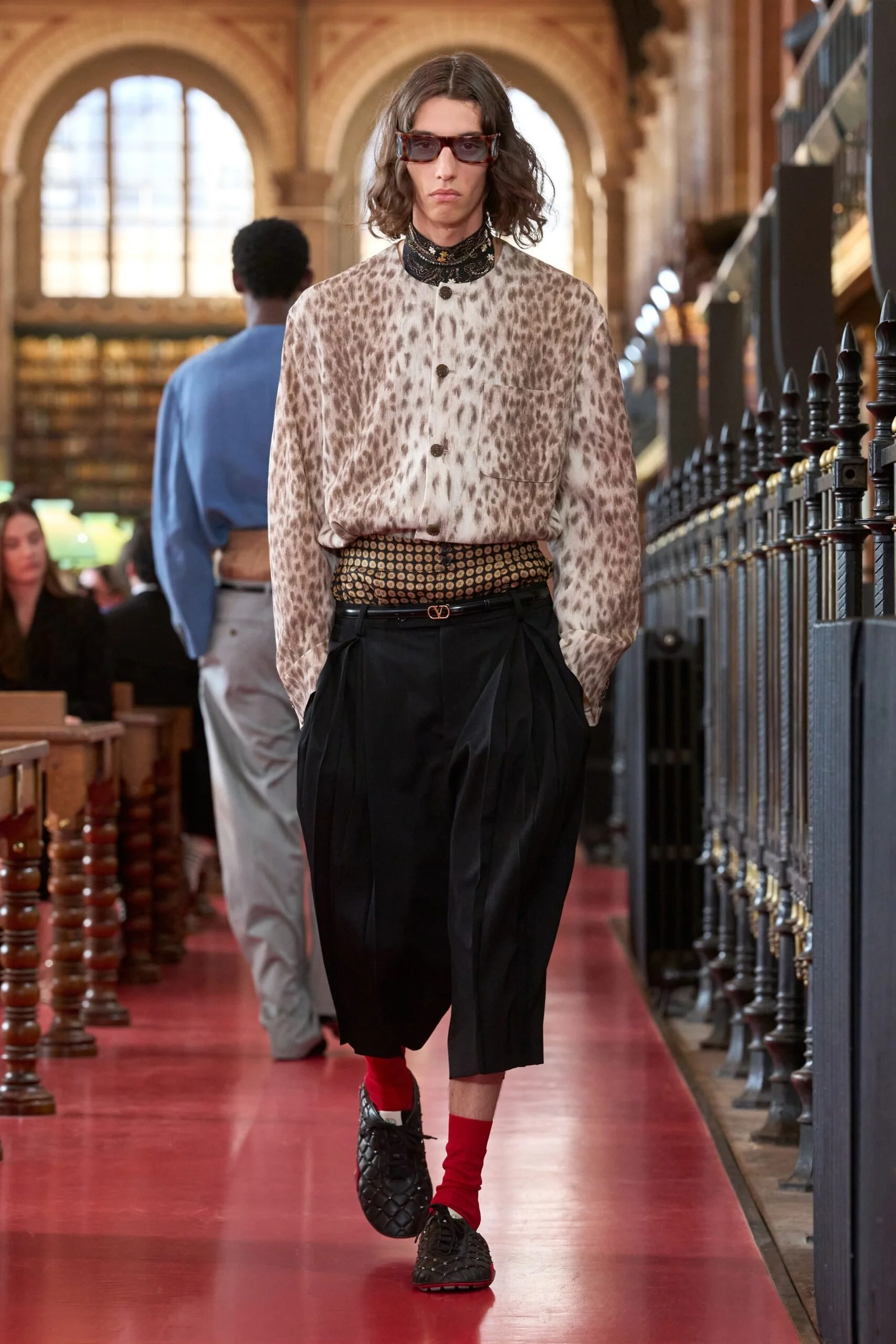
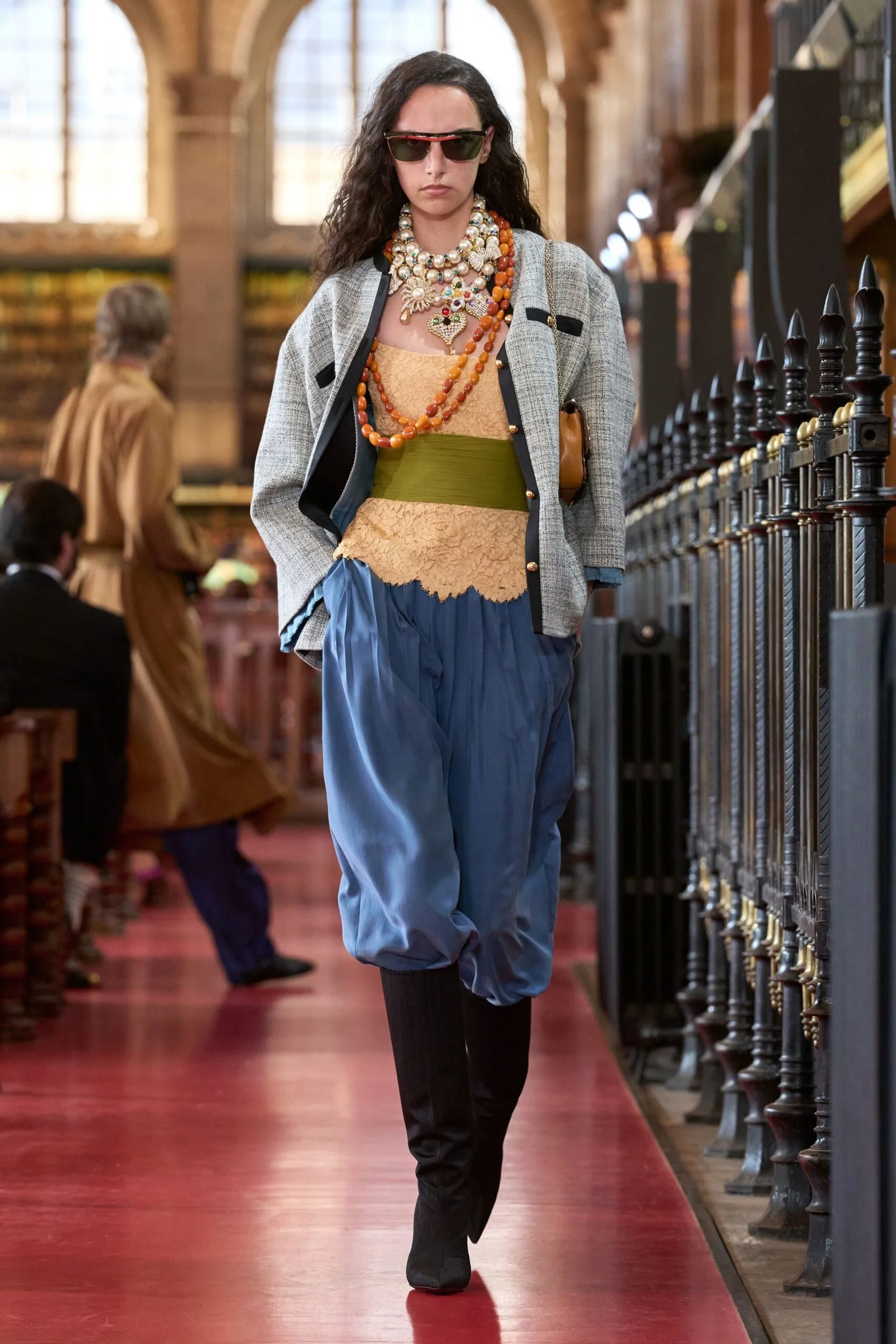
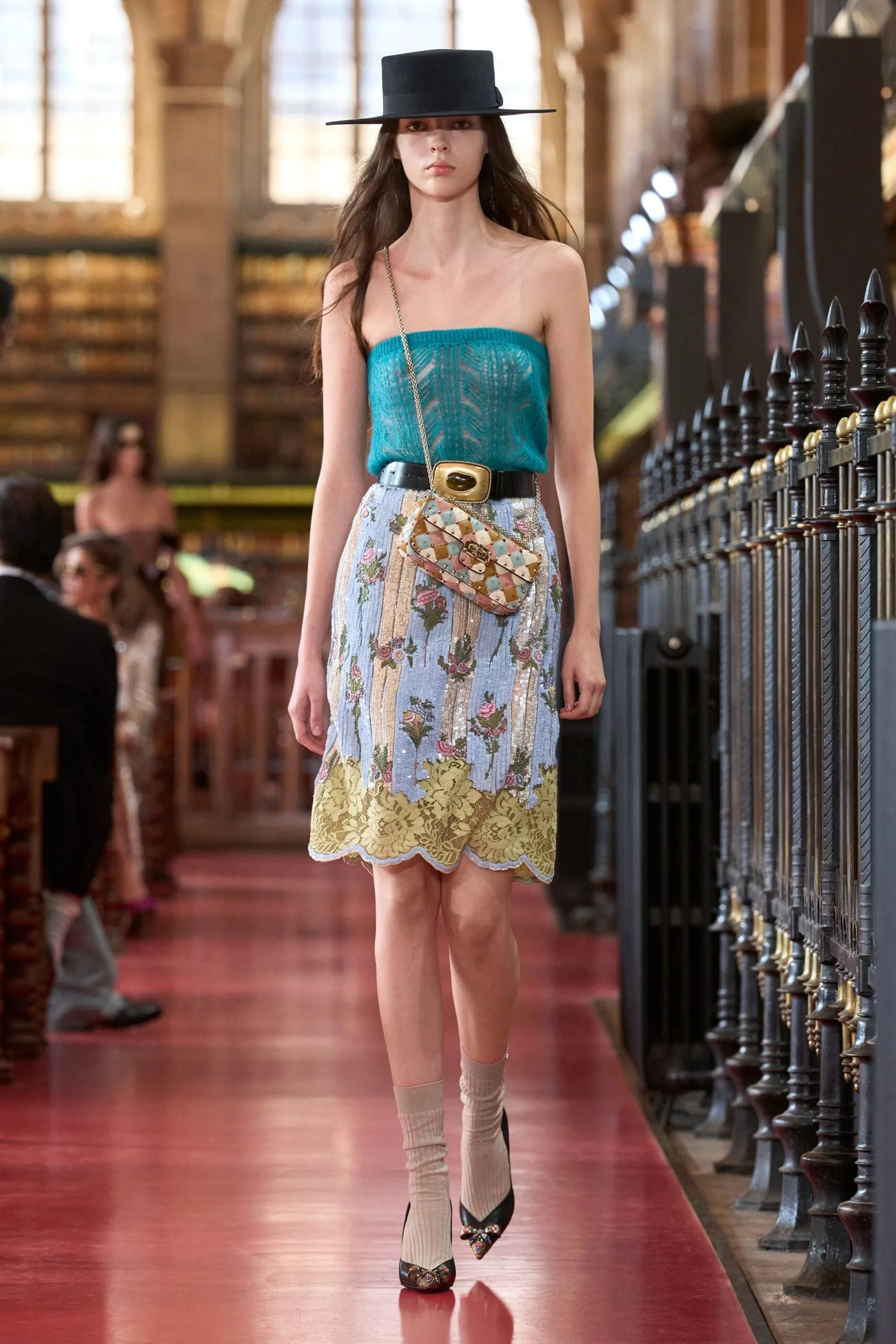
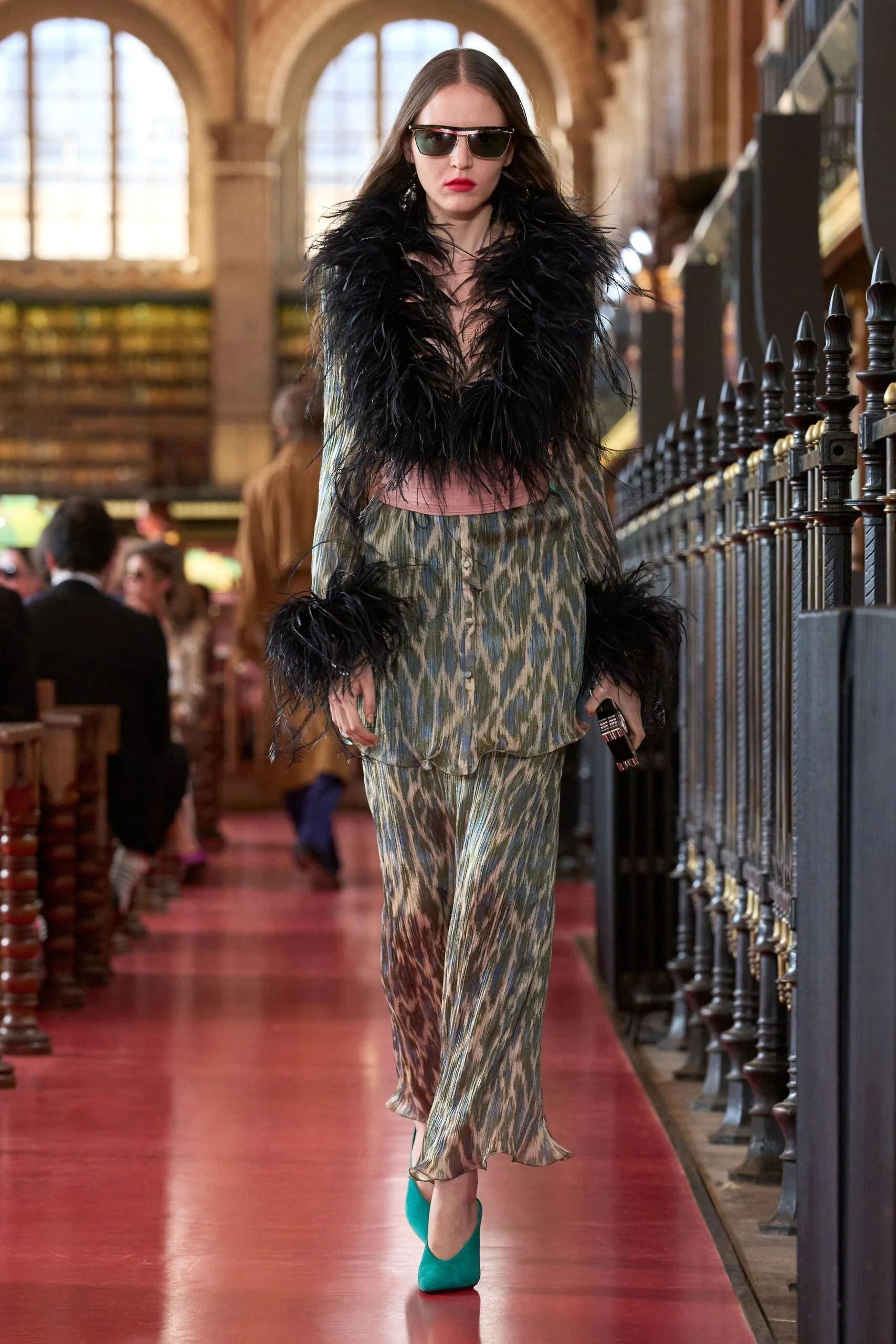
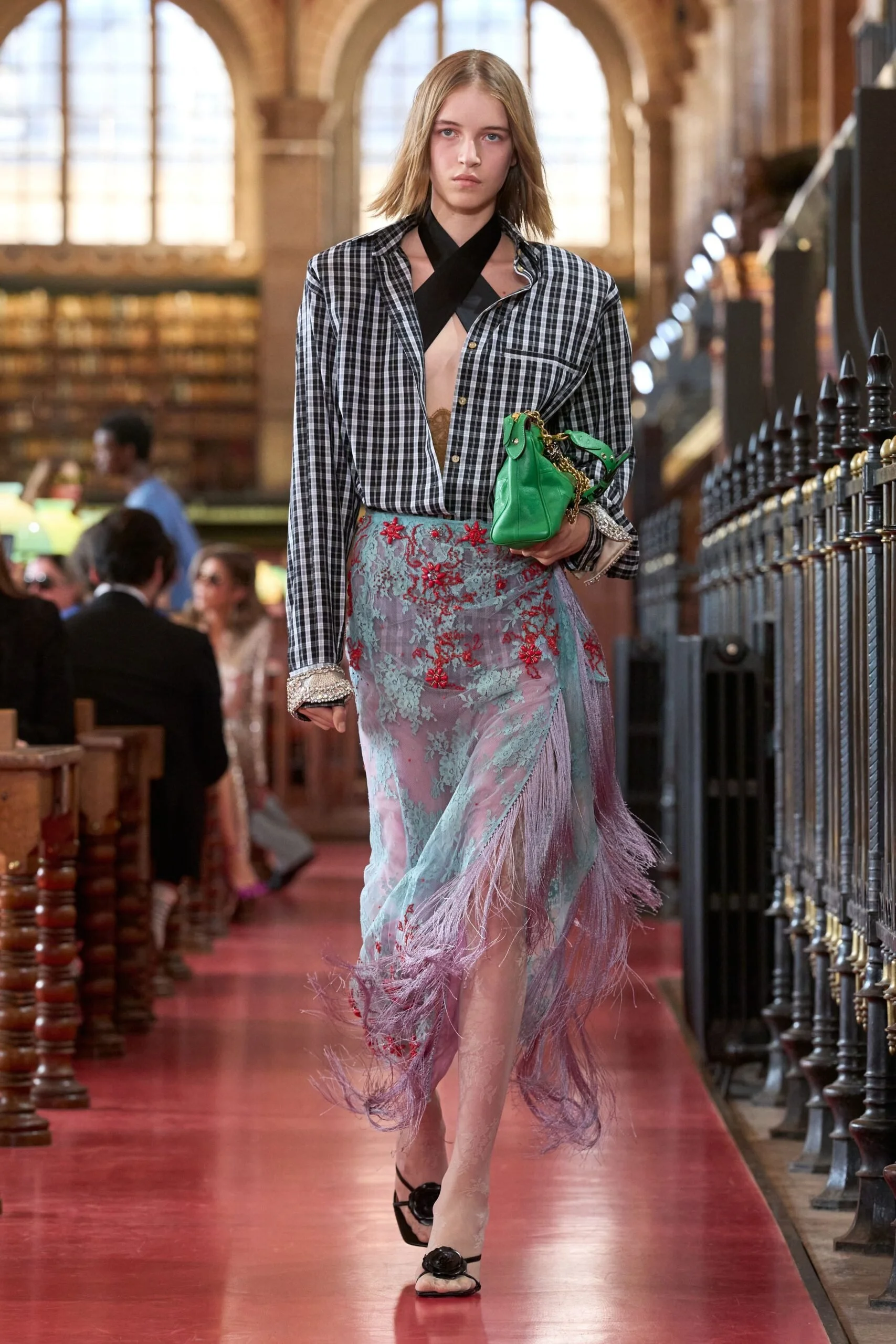
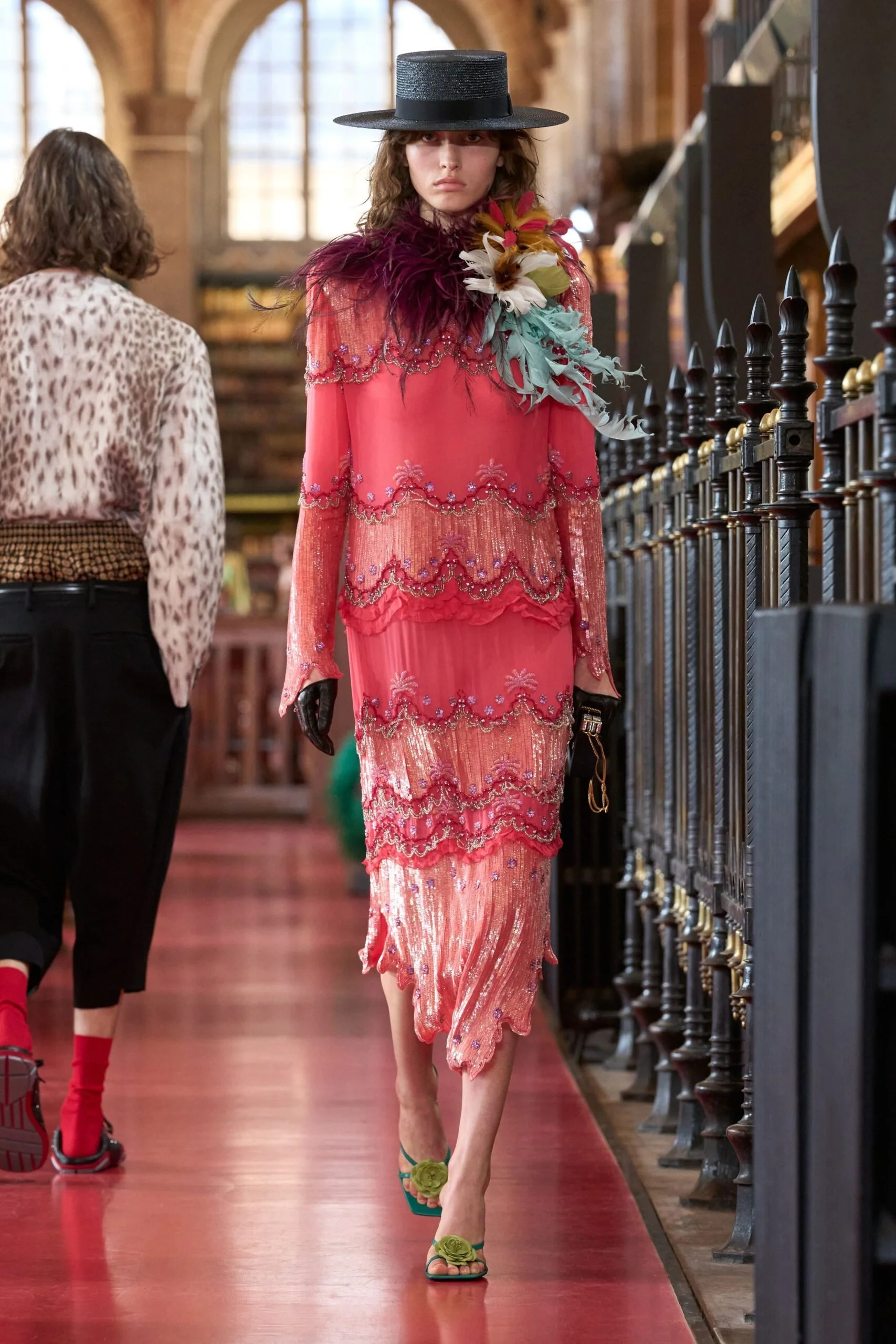
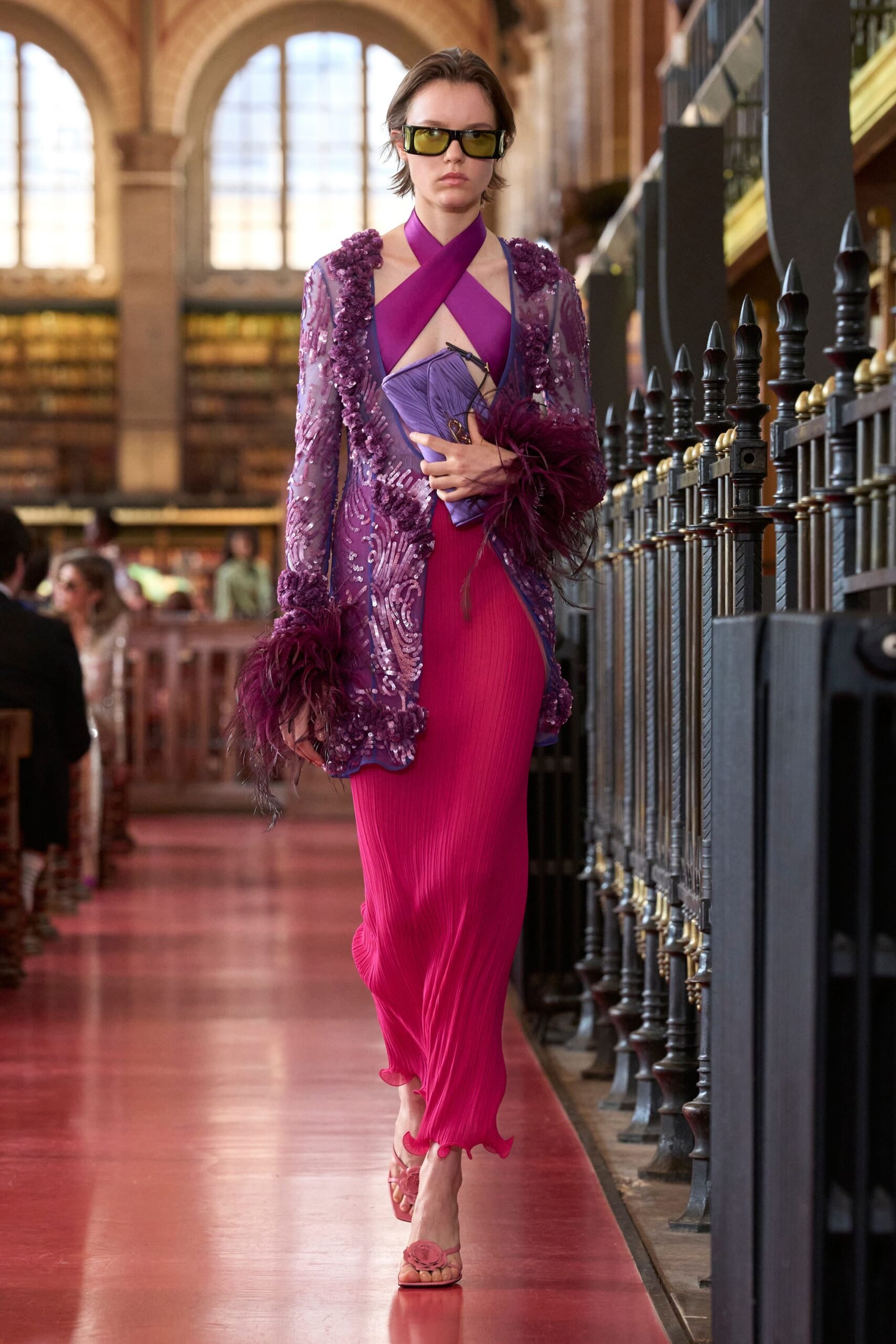
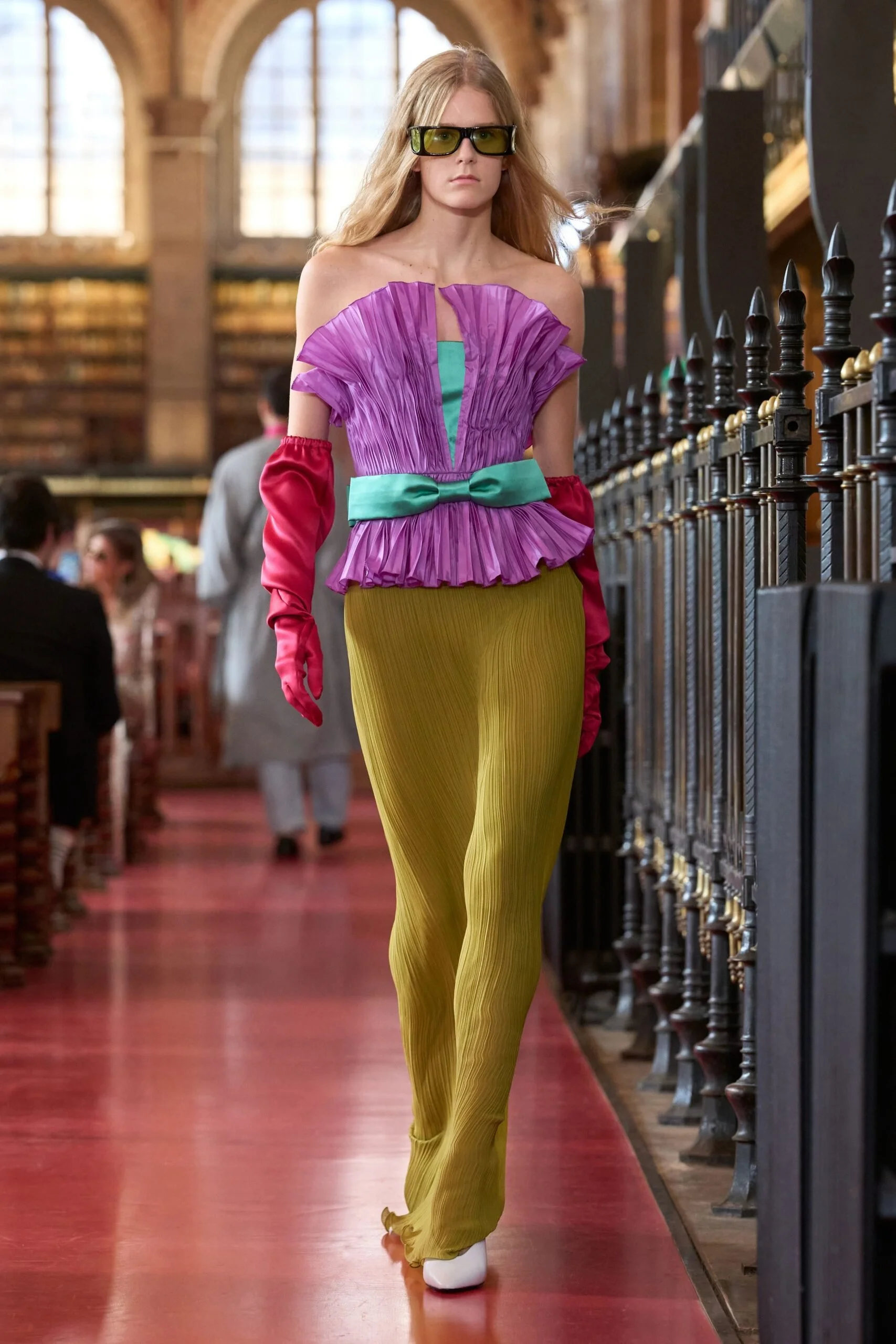
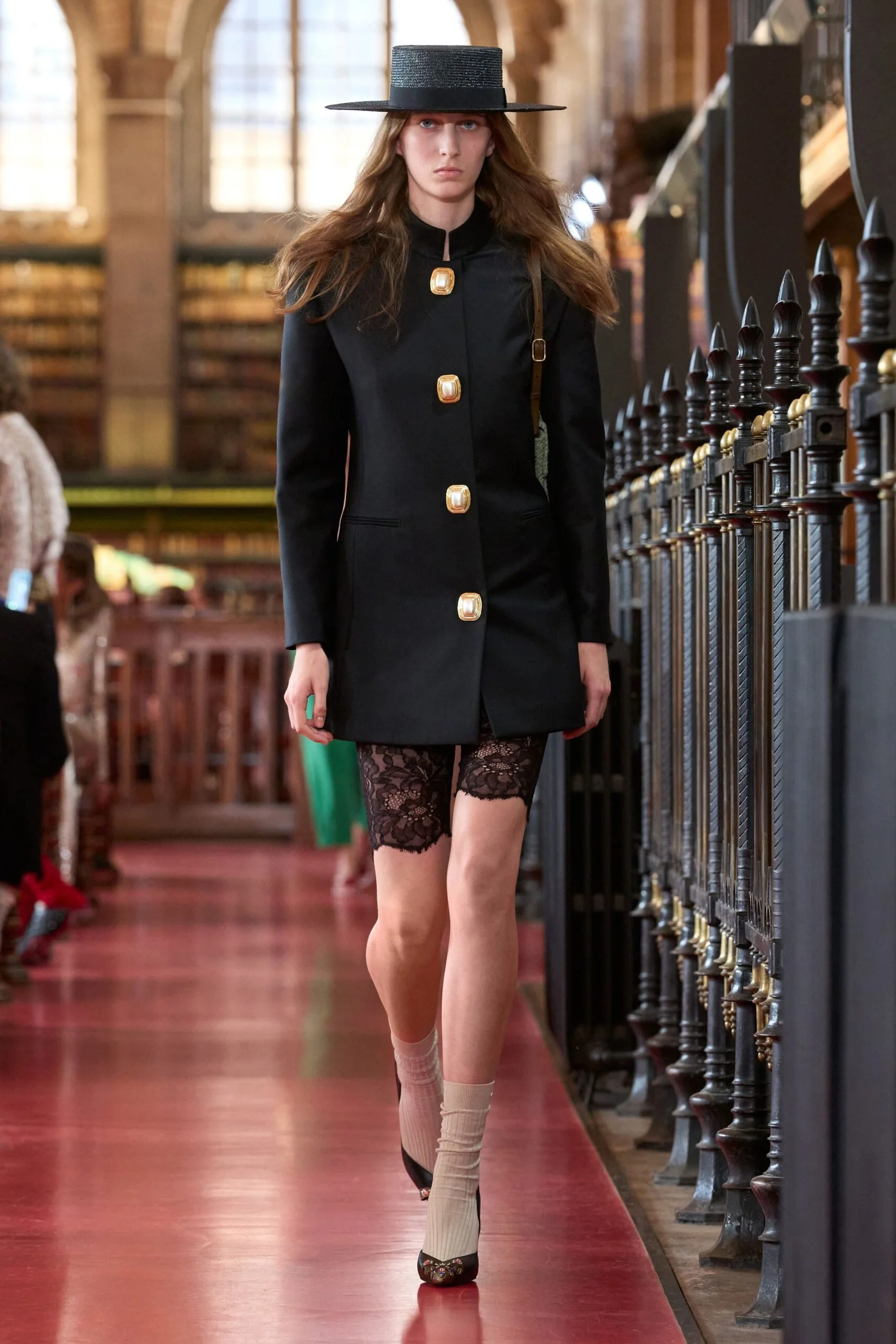
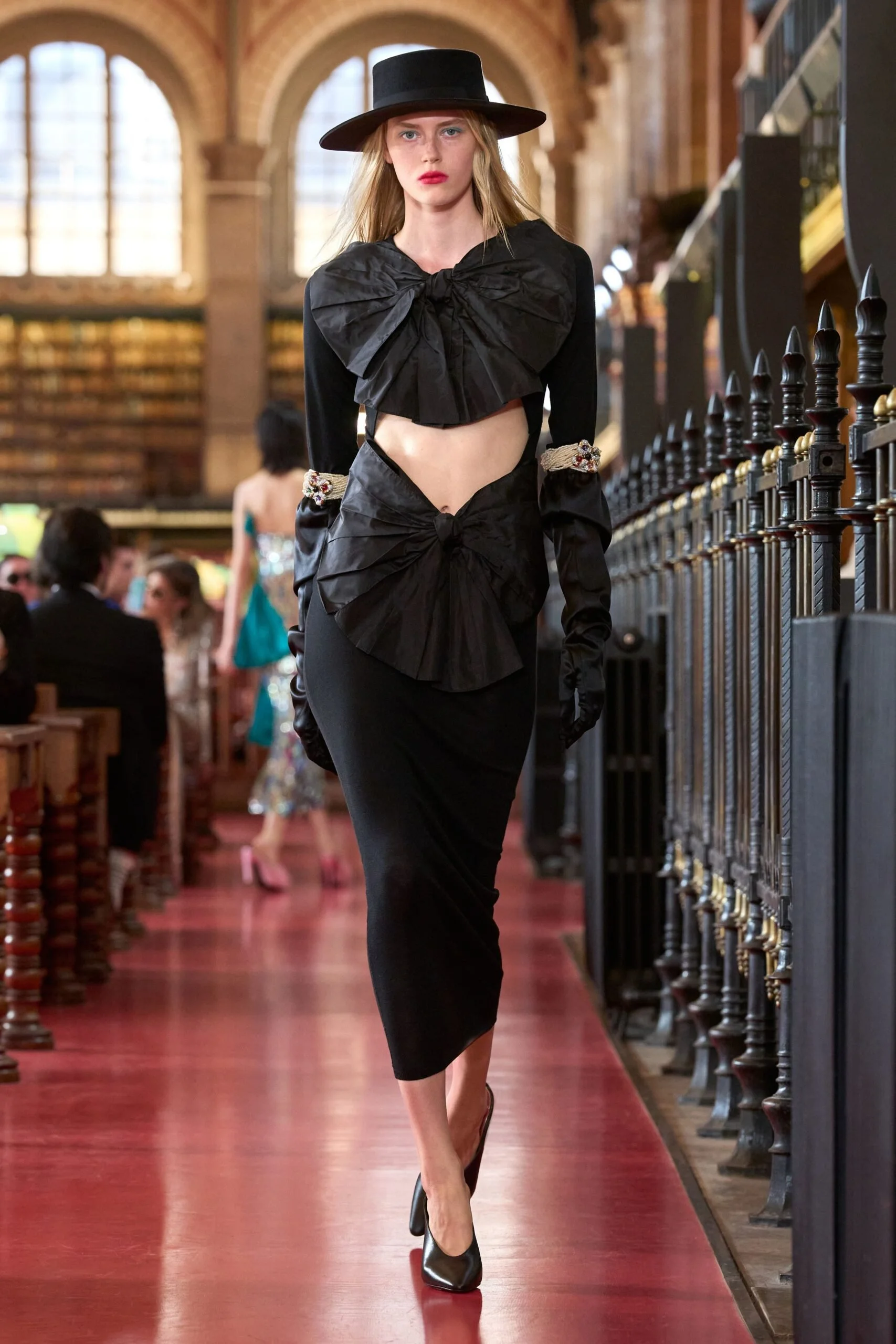
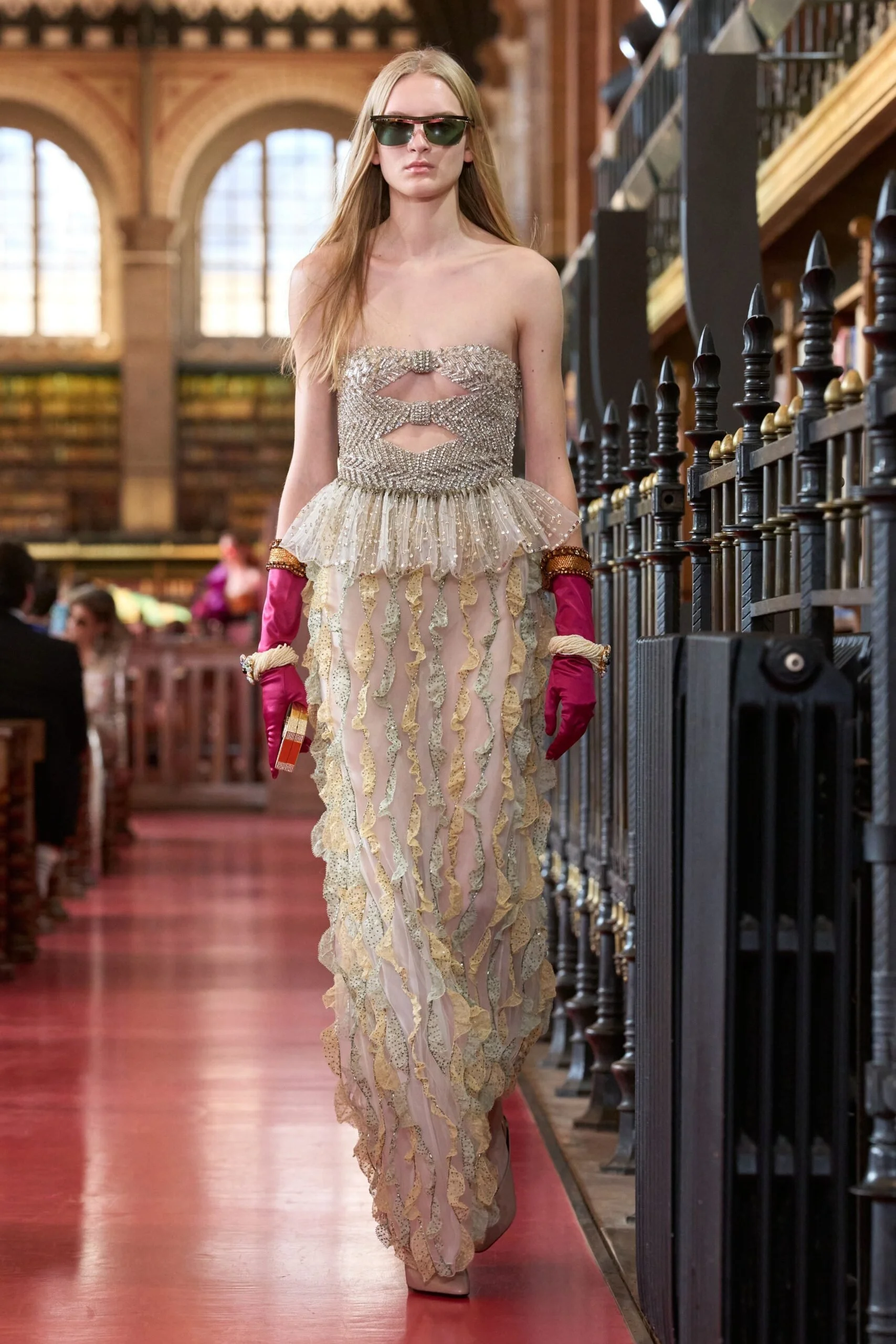
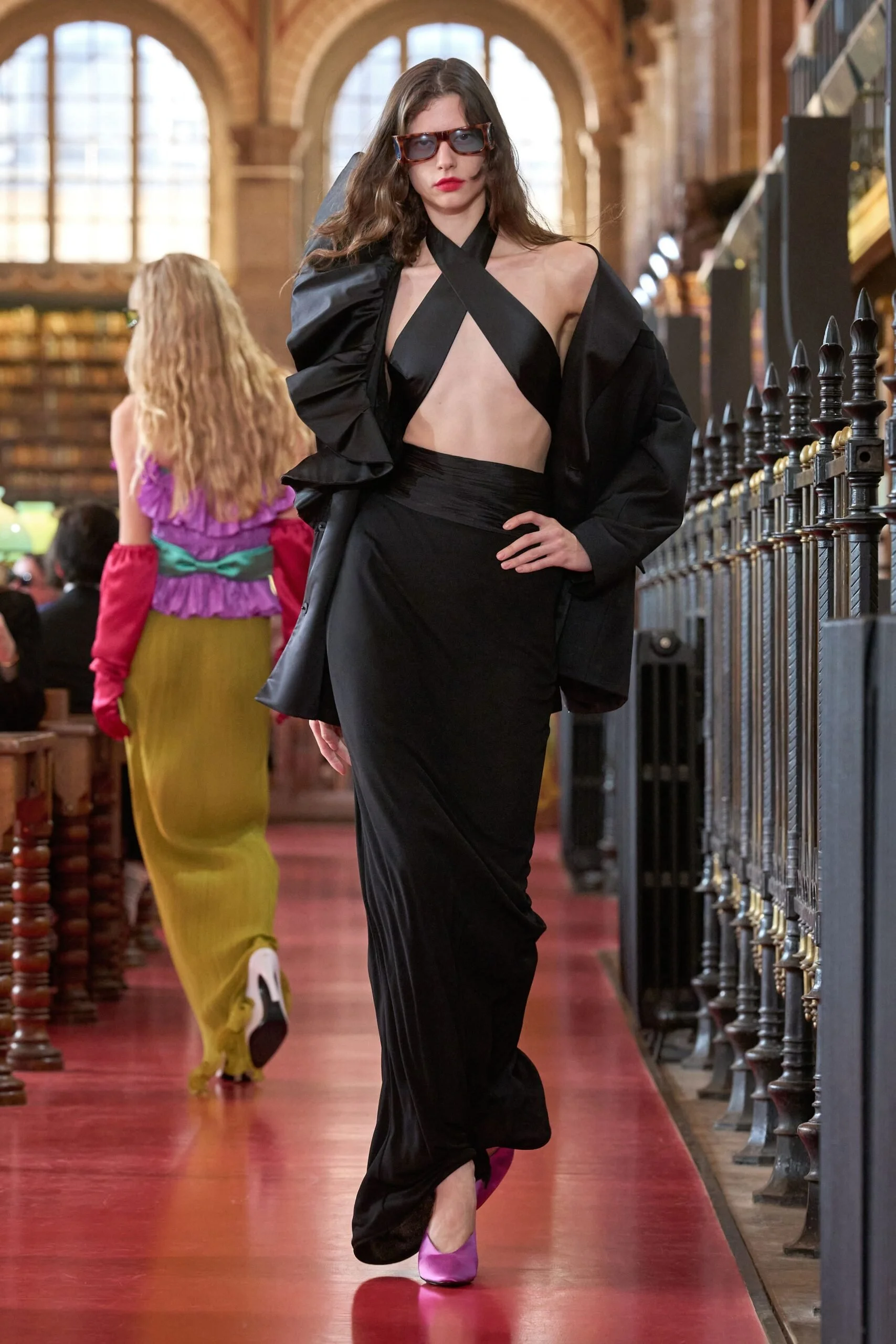
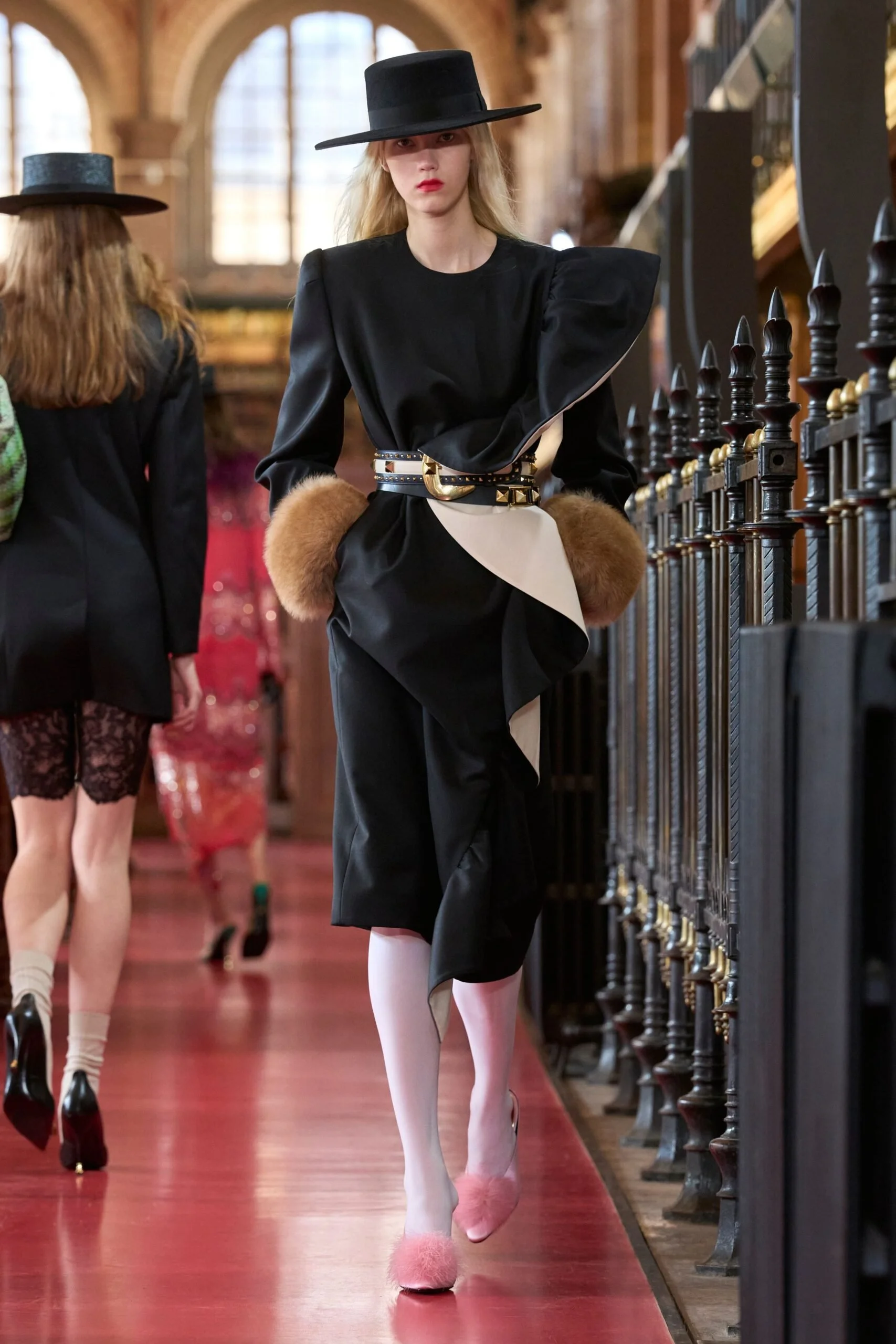
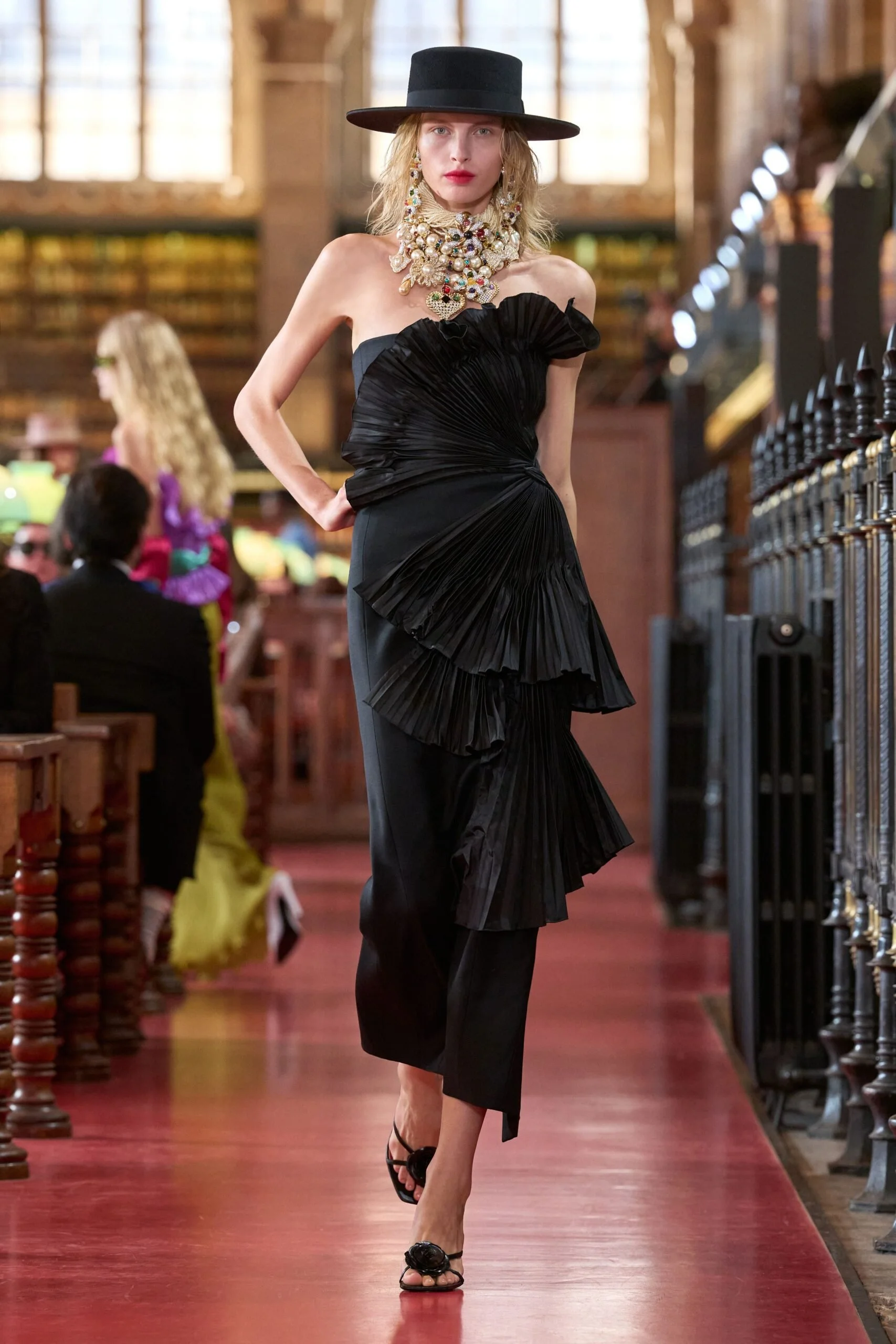
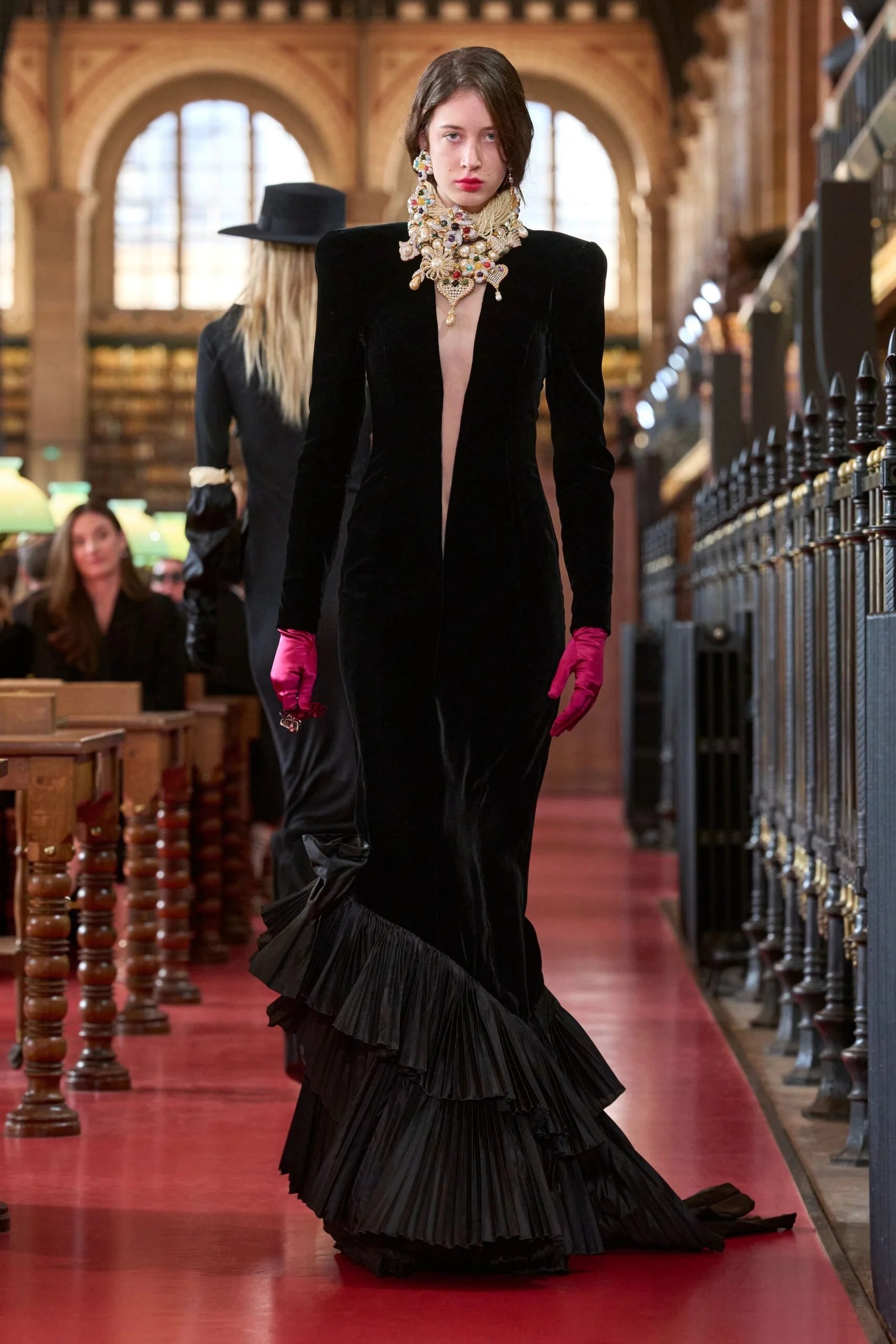
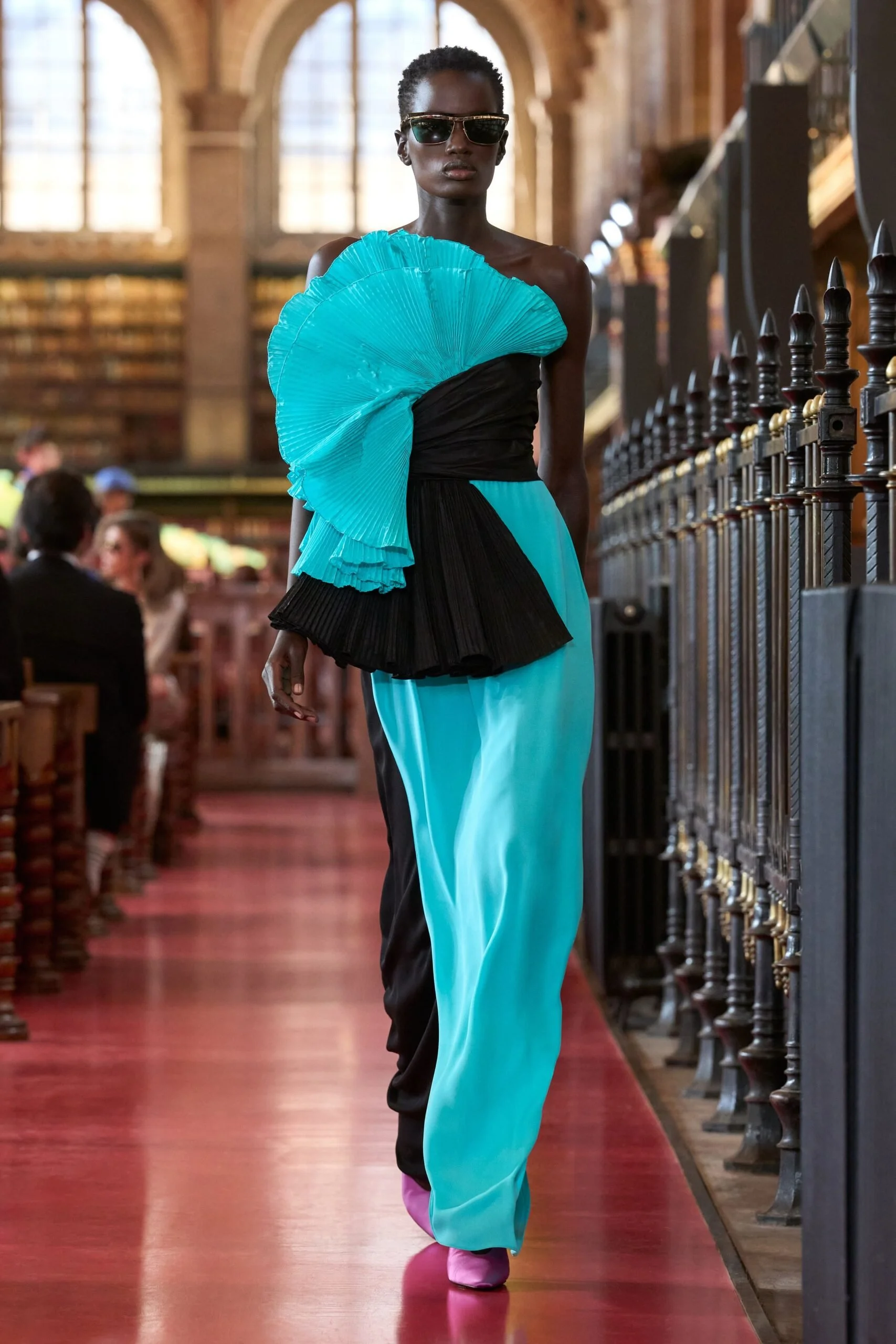
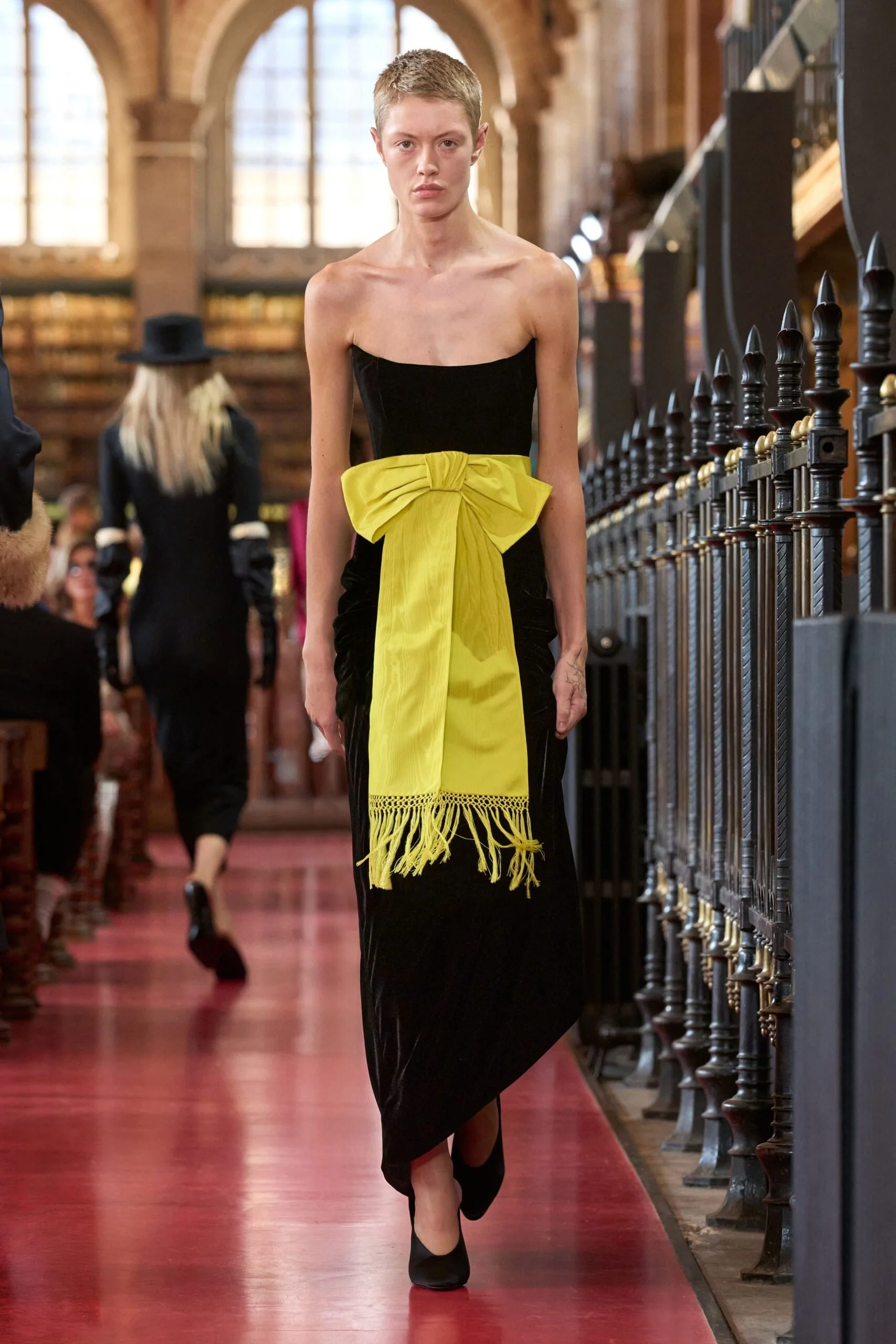
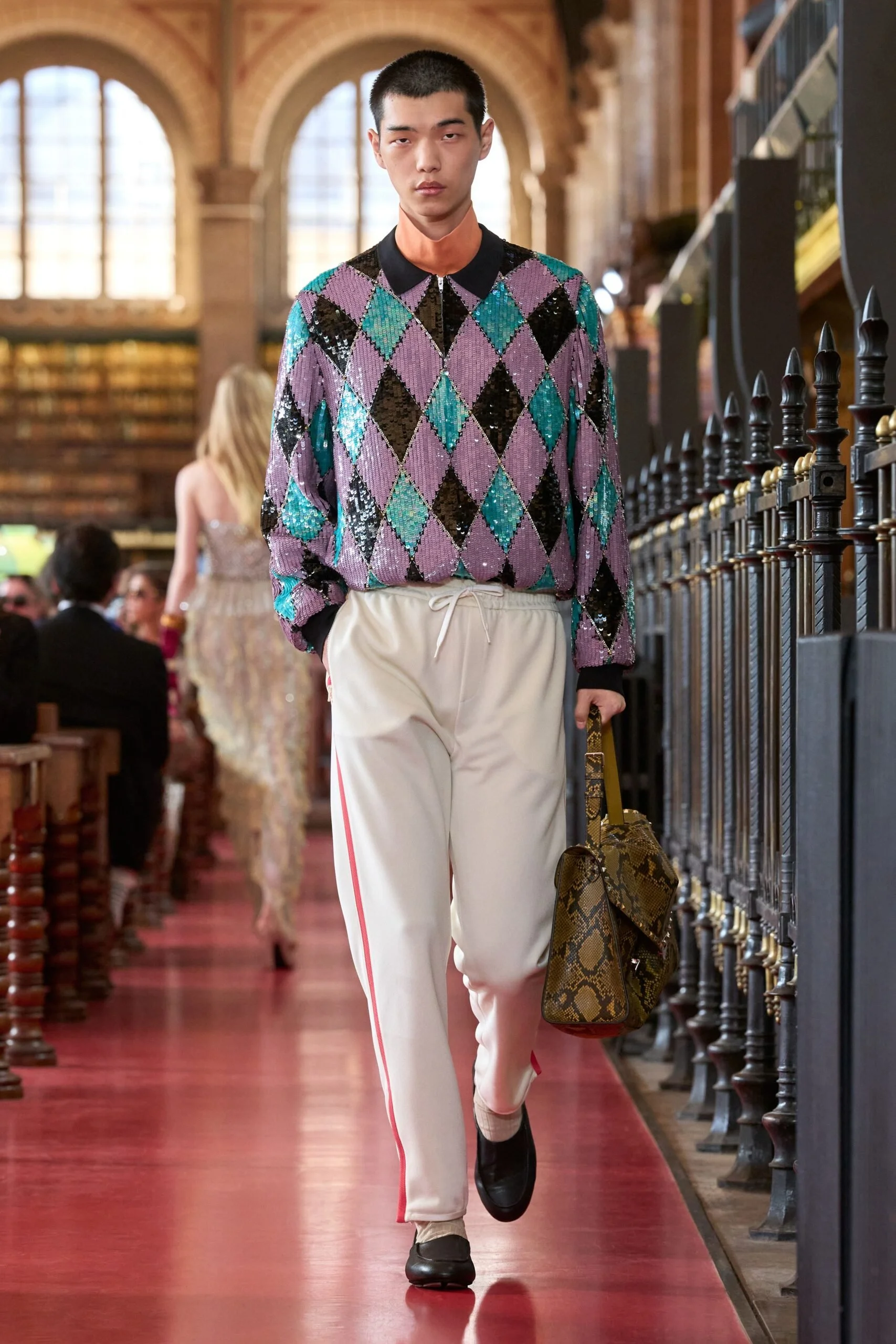
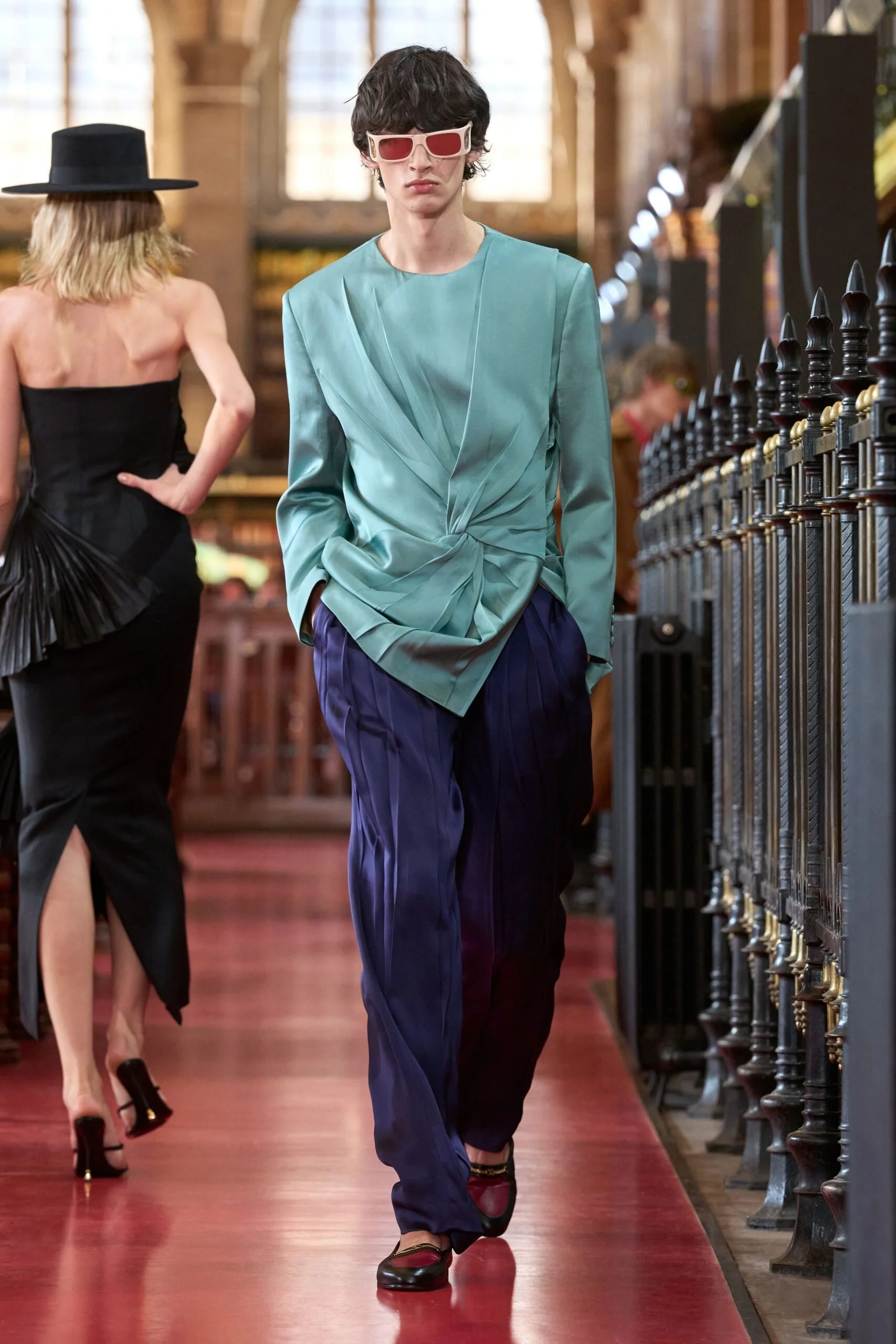
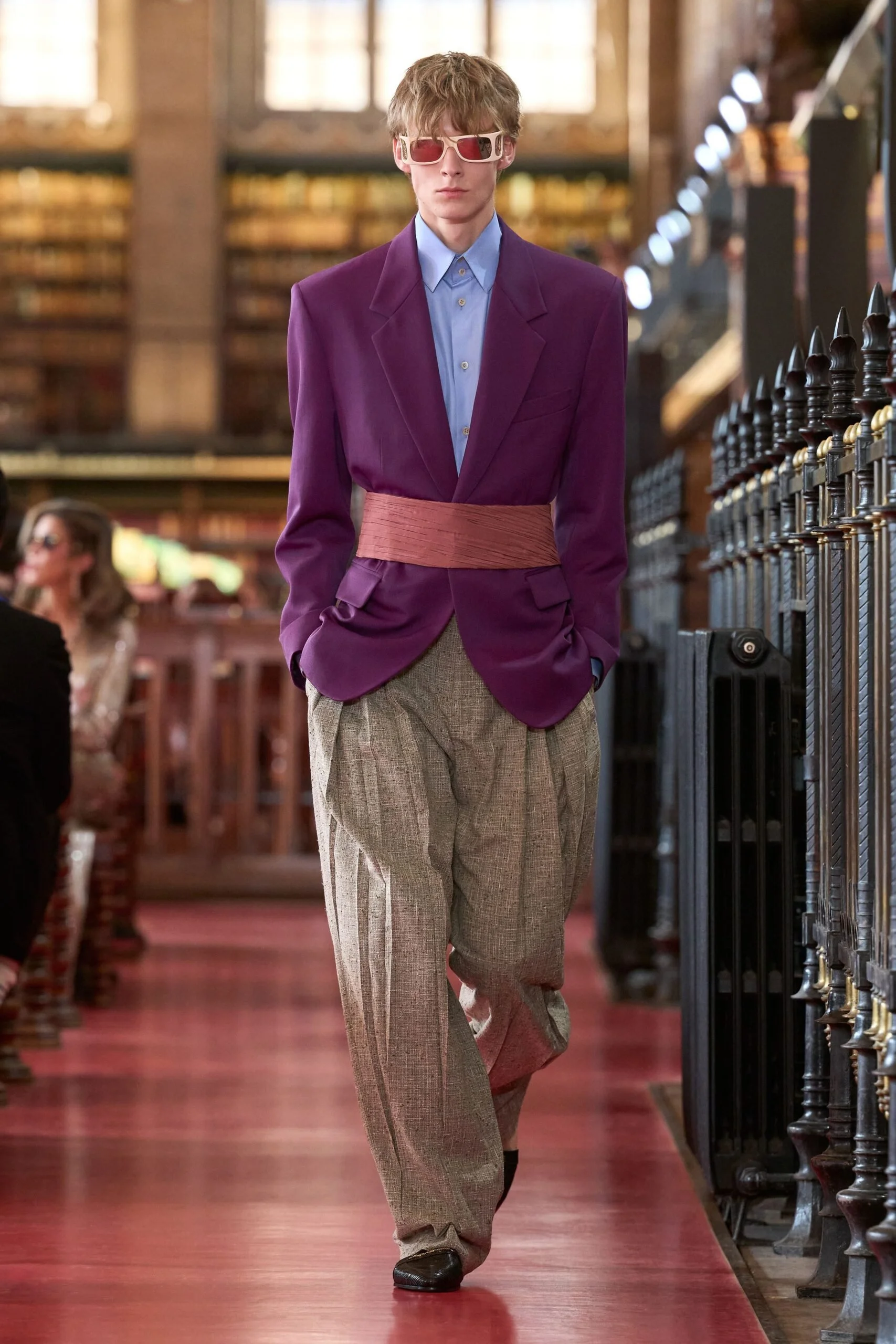
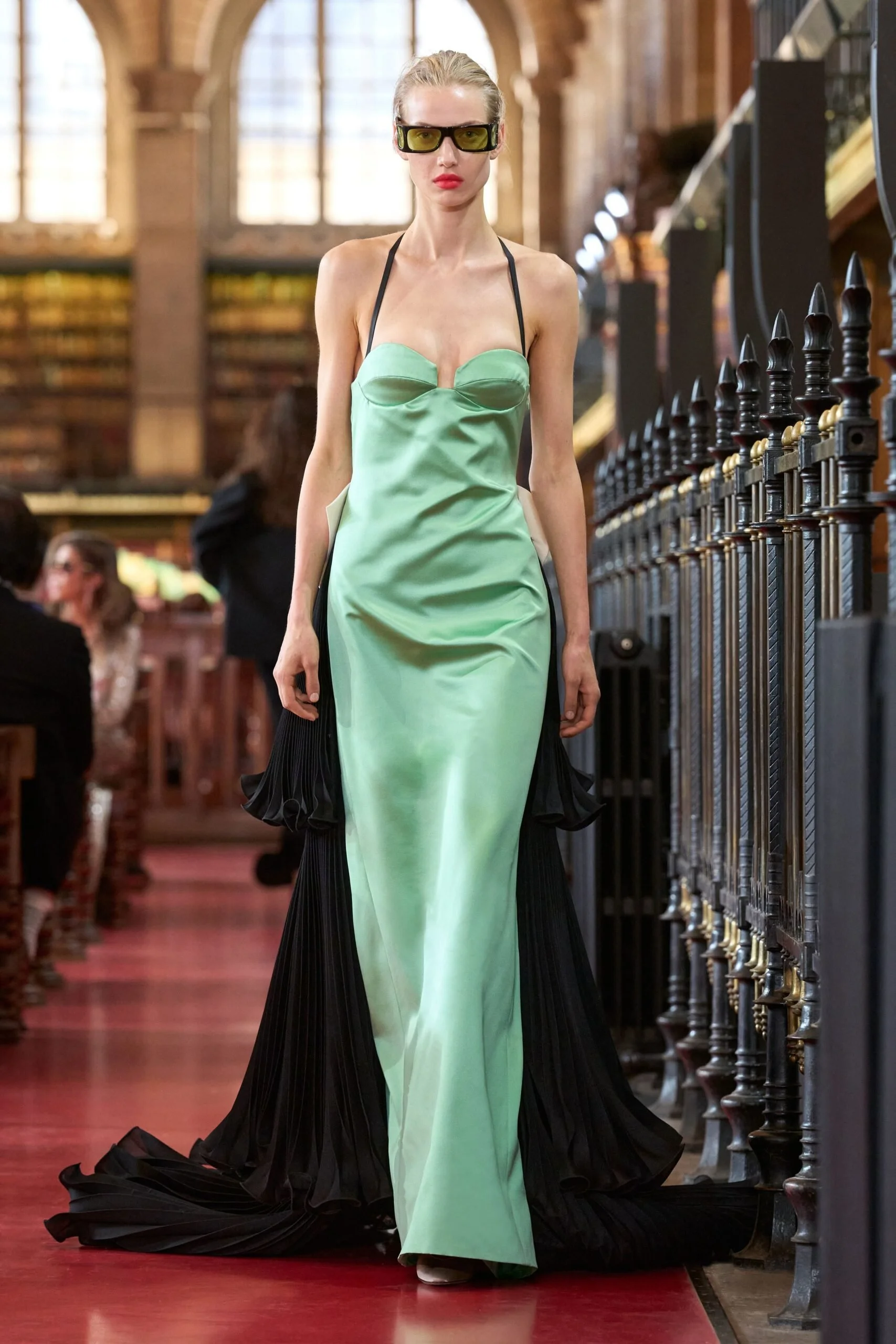
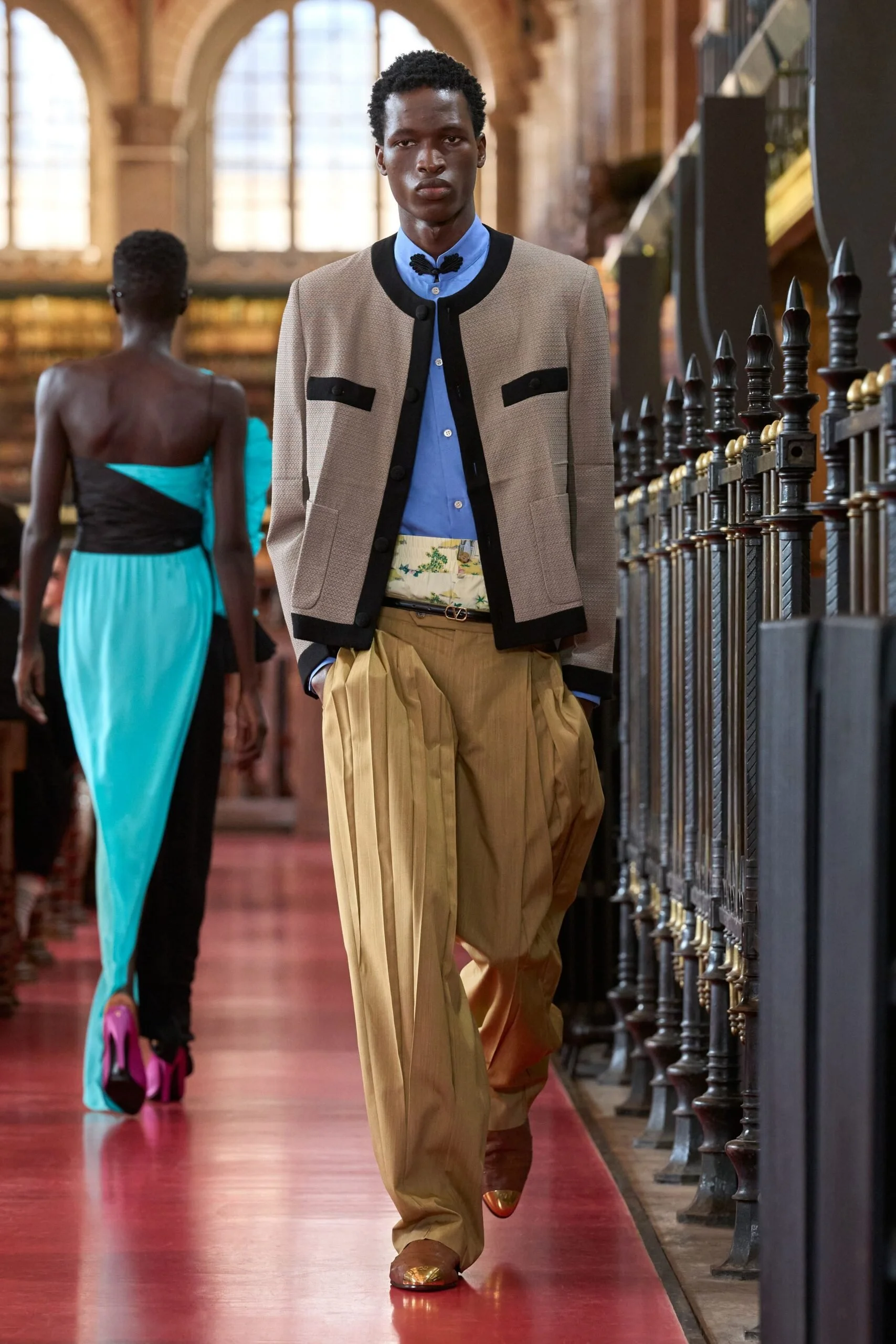
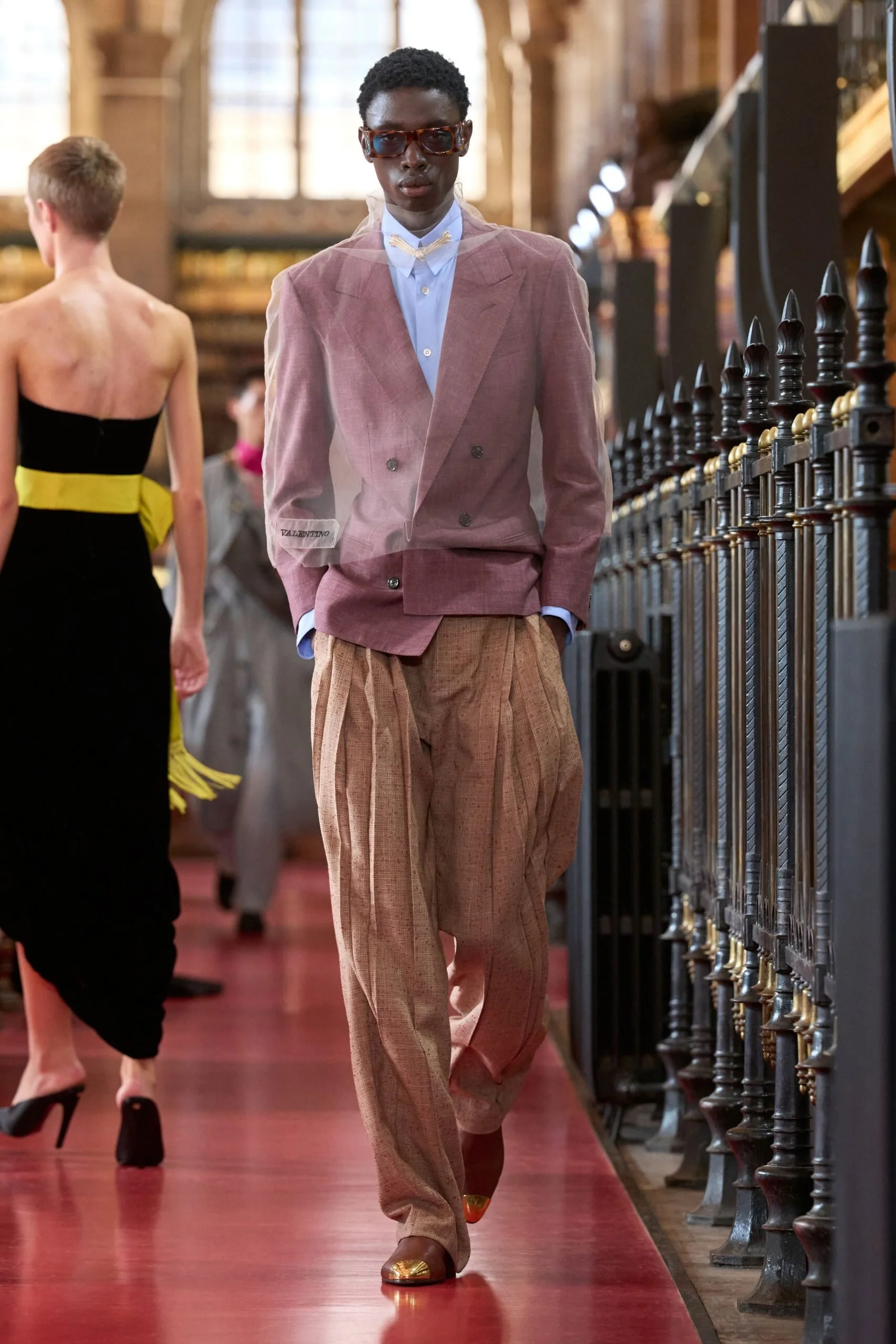
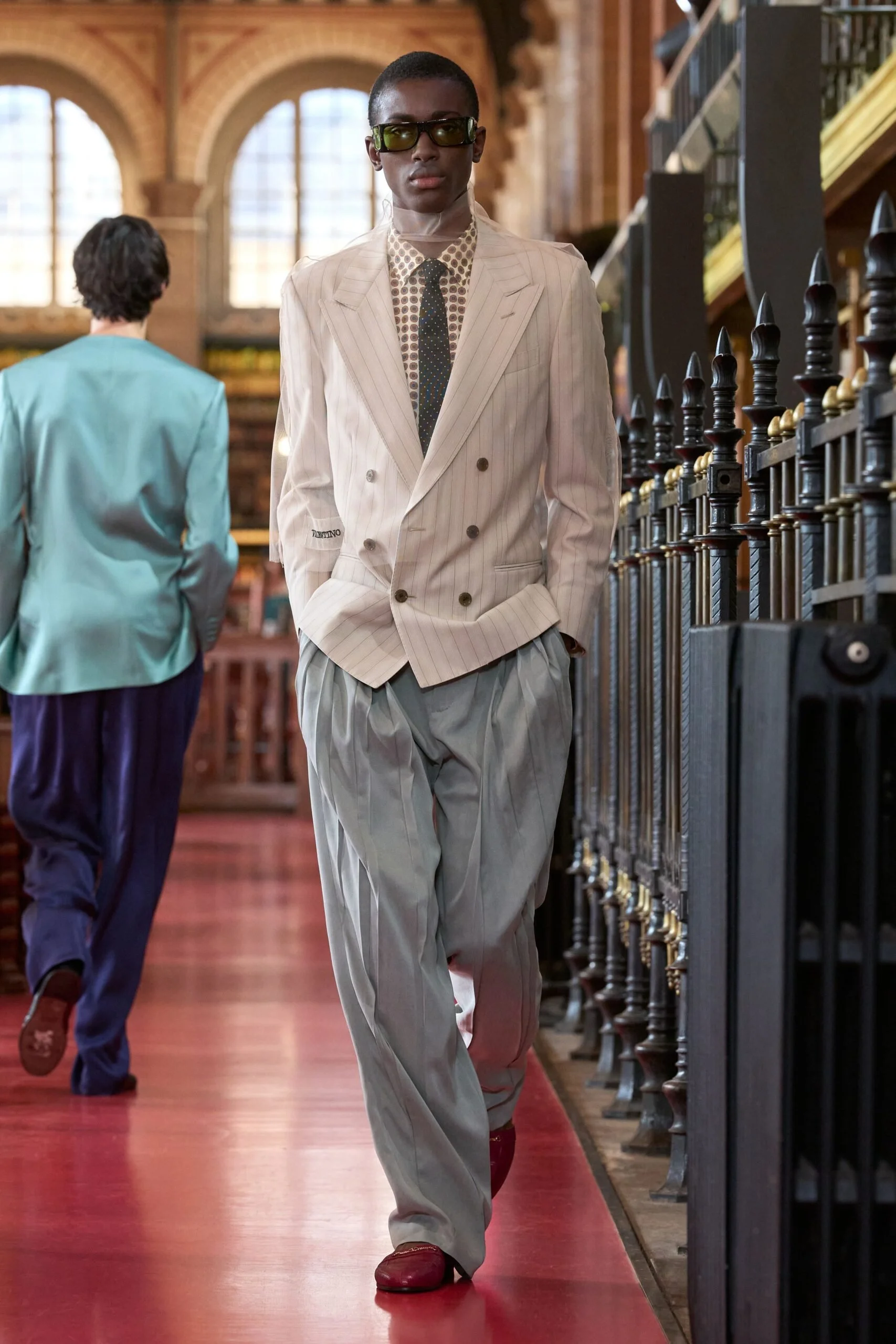
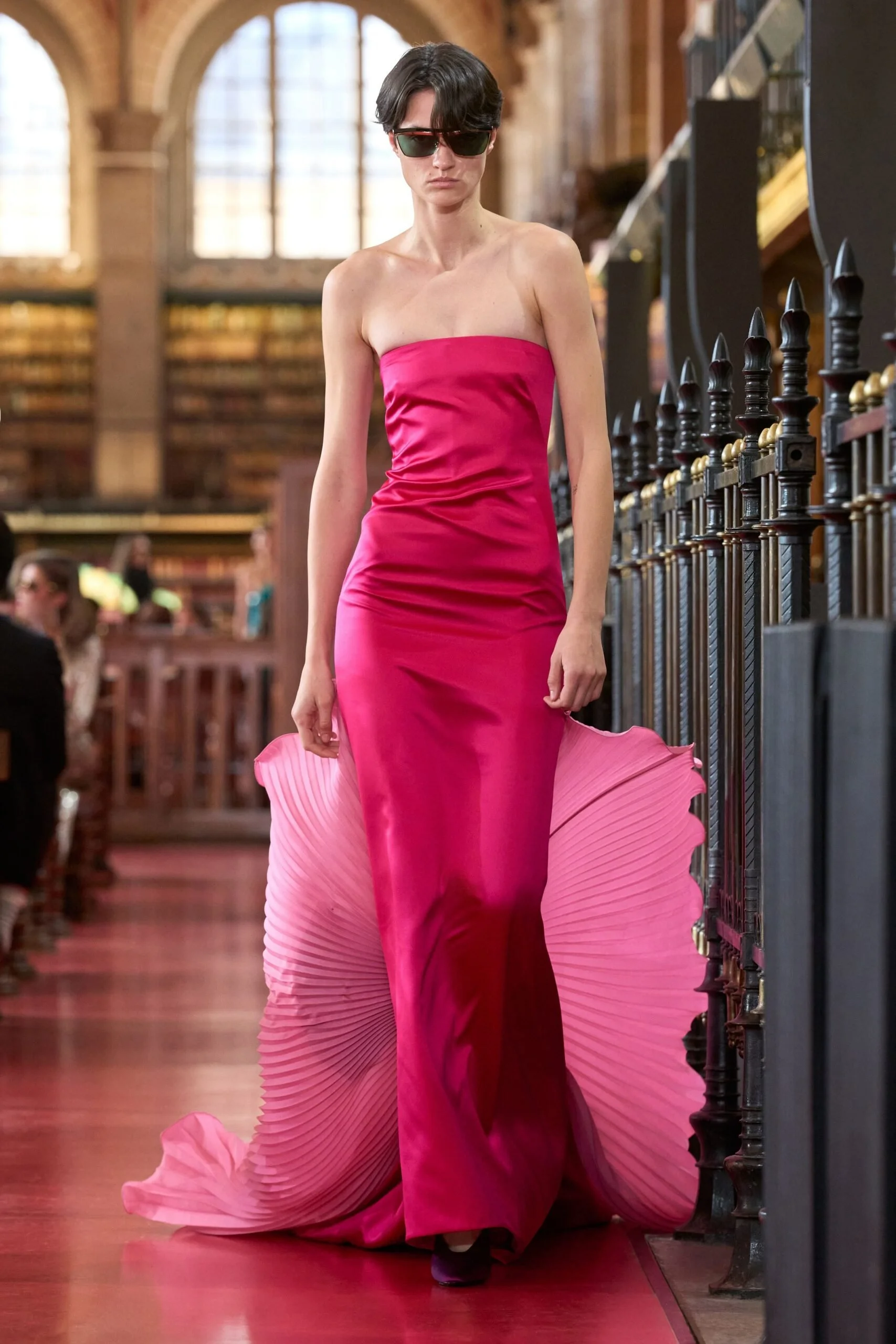
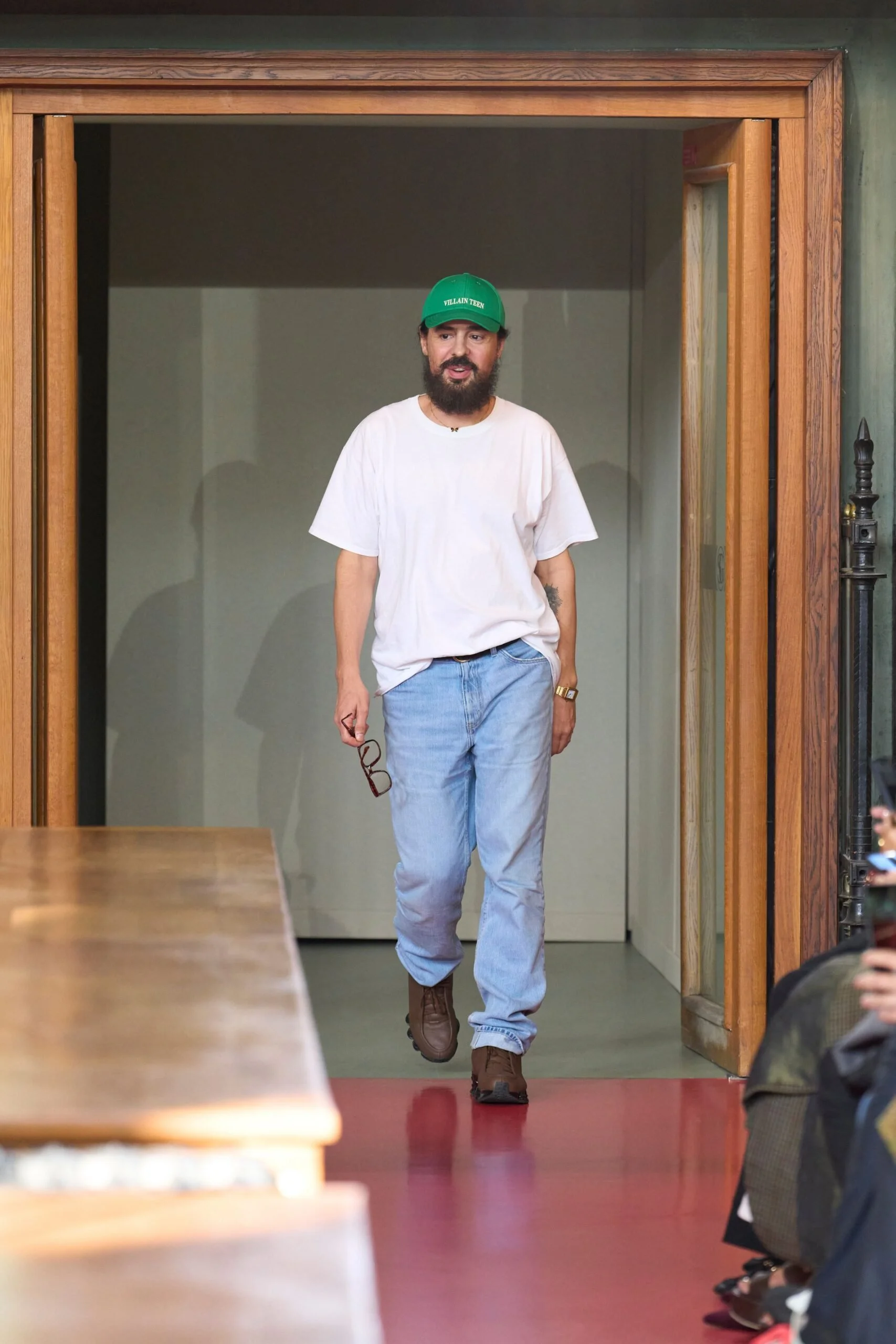
That idea of abundance translated directly into the clothes. Michele’s Valentino remains resolutely maximalist, built around the tension between extravagant eveningwear and a deliberately eccentric interpretation of bourgeois dressing. A fuchsia satin column arrived with an enormous pleated pink rosette trailing behind it, while elsewhere ’80s-style power blazers were paired with lace cycling shorts. Jewel-toned satin bustiers were thrown together with tasseled and embroidered skirts, while a webby mohair cardigan met knobbly wool trousers and gold-tipped shoes. Harem trousers in a purple, tree-bark-like fabric disappeared into elaborately sequined boots. Even the more recognisable pieces, including double-pleated jeans, plaid shirts and baseball caps stamped with “Villain Teen”, were given Michele’s particular sense of theatrical dissonance.
The setting made the collection feel more pointed than it might have in a conventional fashion venue. Michele has made no secret of his unease with the accelerating relationship between fashion, technology and artificial intelligence, and the library offered a natural counterpoint to that world. His comments about not wanting a “second brain” and his insistence that life is about the people and objects surrounding us gave the collection an underlying argument: that the value of fashion lies partly in its irrationality. Would an algorithm put a lace cycling short under an oversized power blazer? Would it understand why a strange cardigan, an embroidered skirt and a pair of ornate shoes somehow belong together? Probably not. The pleasure is precisely that they do not need to make sense.
There is also something rather fitting about this philosophy at Valentino, a house whose current commercial position is considerably less comfortable than its visual world. Michele’s answer is not to simplify everything into something instantly legible. Instead, he is doubling down on the idea that fashion should contain personality, contradiction and excess. The collection felt like a wardrobe assembled by someone who refuses to throw anything away because every object has the possibility of becoming interesting again.
That is perhaps what Michele meant when he spoke about giving back to fashion what fashion has given him. In an industry increasingly obsessed with data, optimisation and AI-generated sameness, Valentino Spring 2027 made a case for the irrational choice. The clothes were not always easy, and they were certainly not designed for everyone. But they felt human. And at a moment when fashion risks becoming increasingly polished by machines, there was something reassuring about a collection that looked as though only a person could have made it.