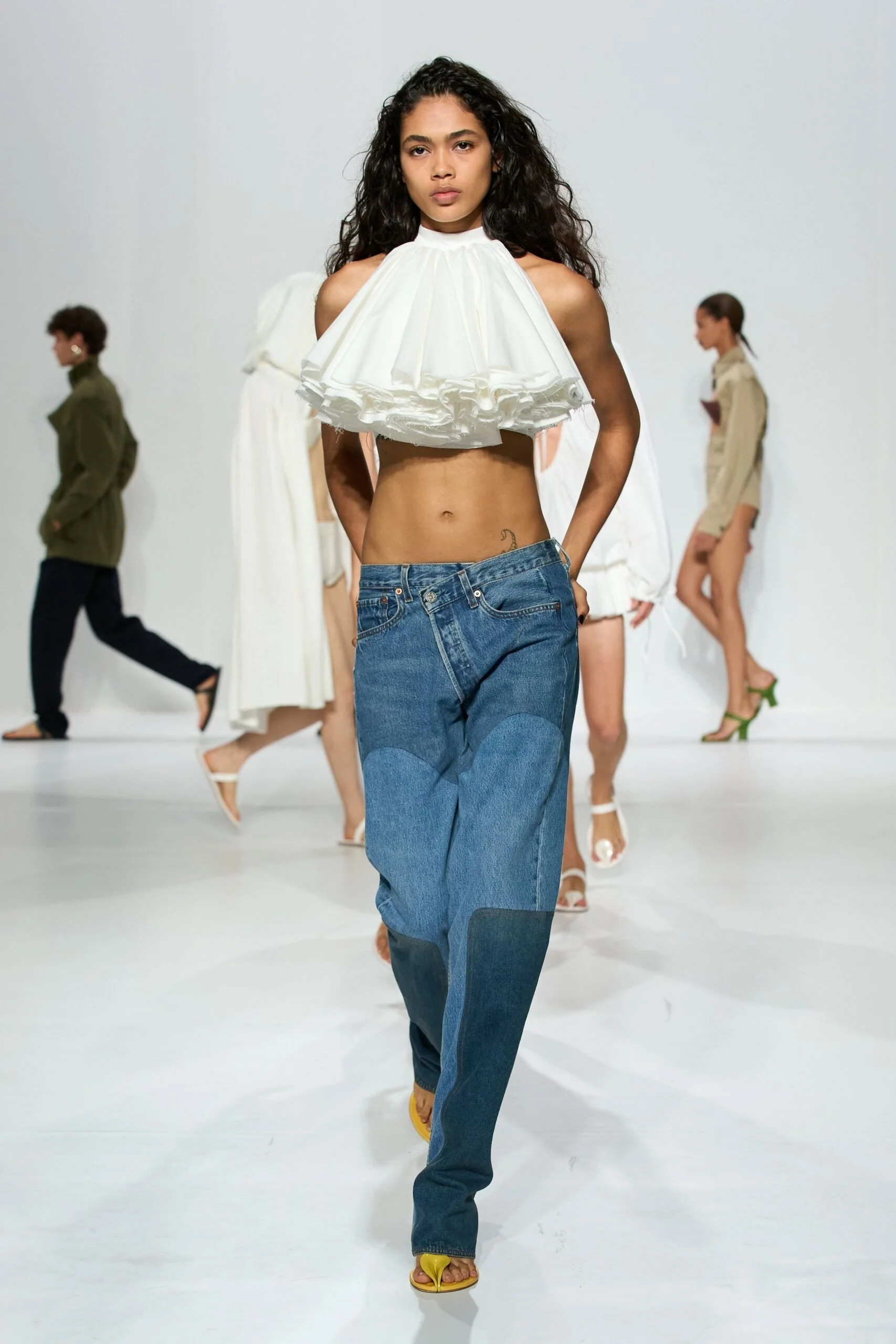
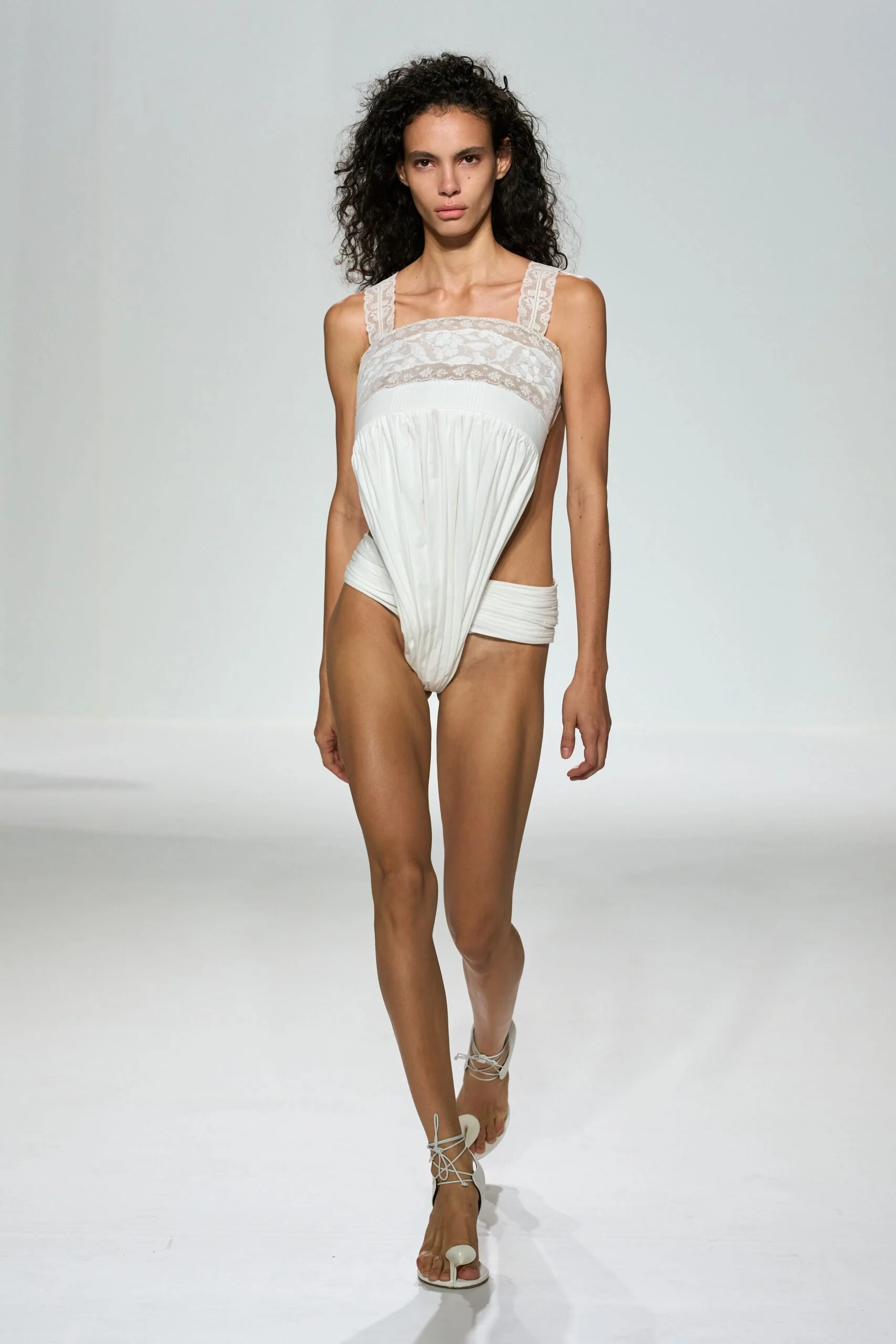
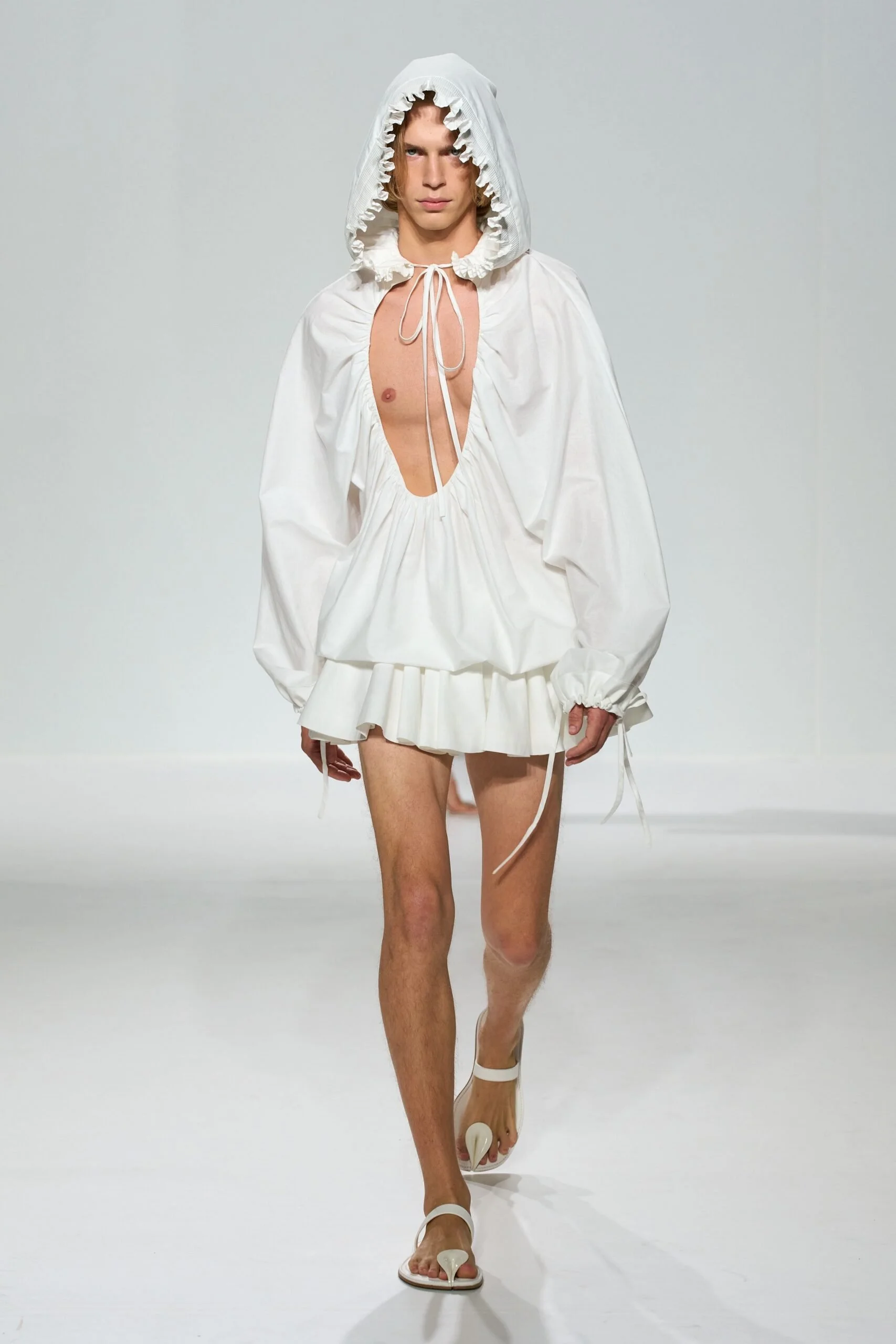
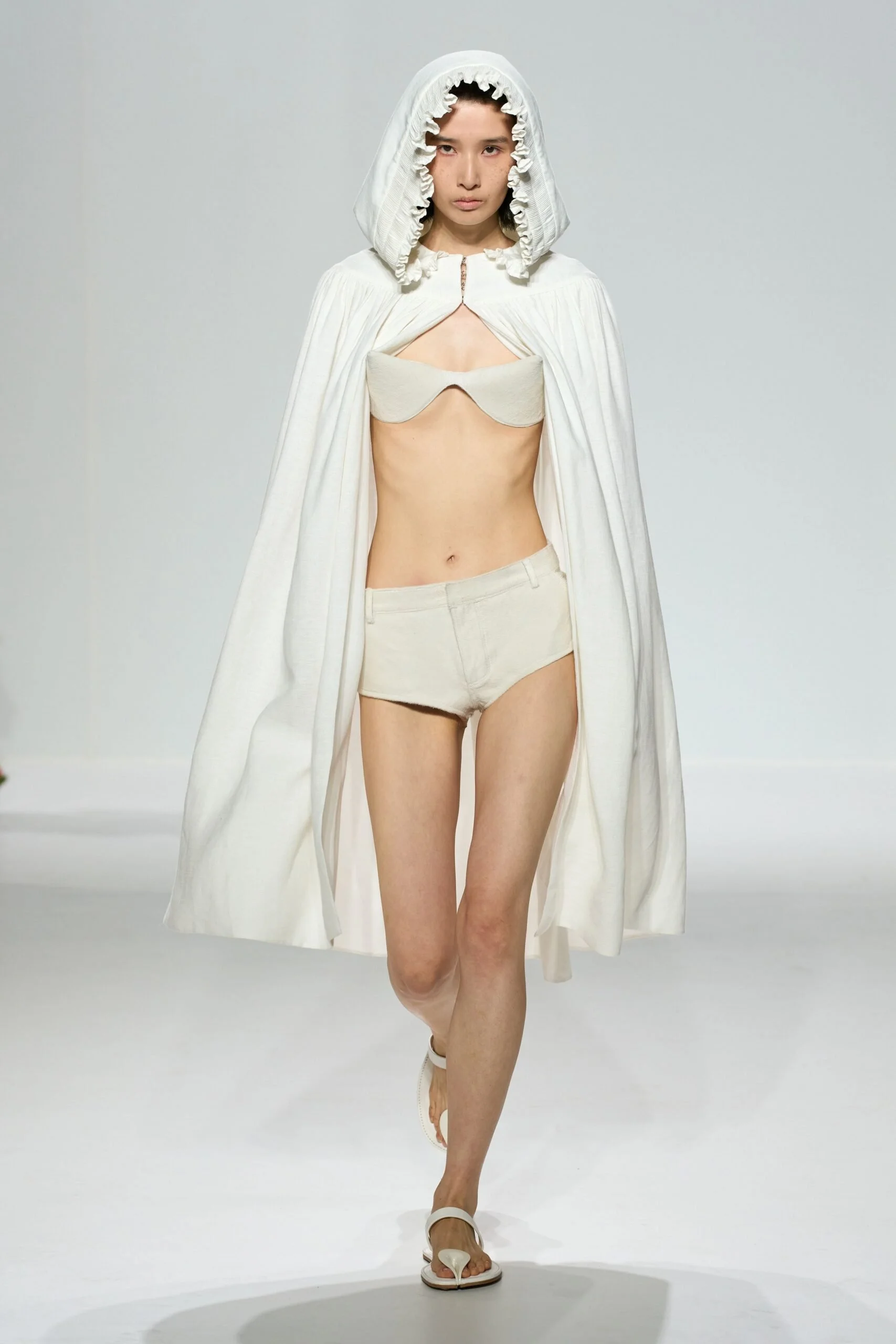
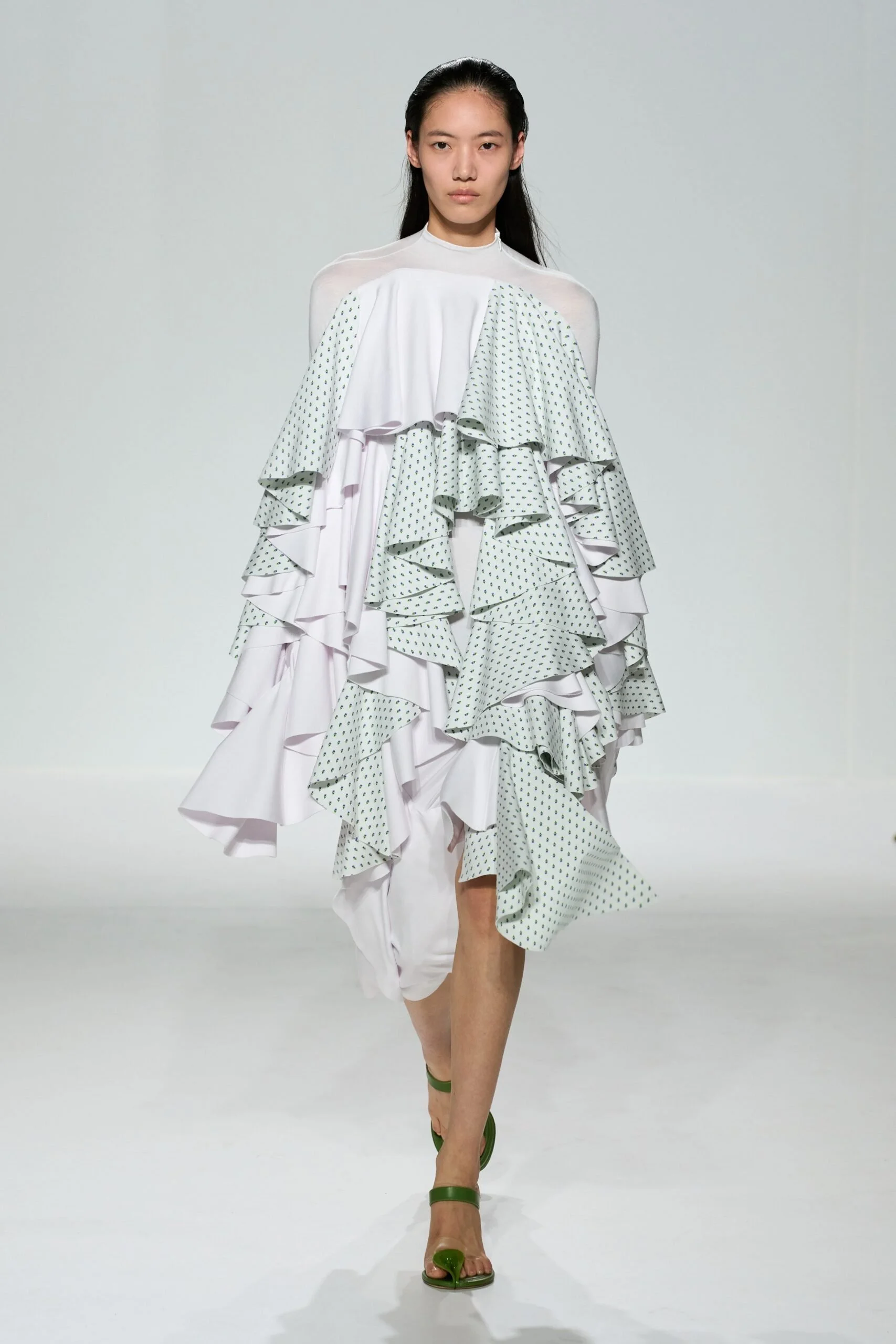
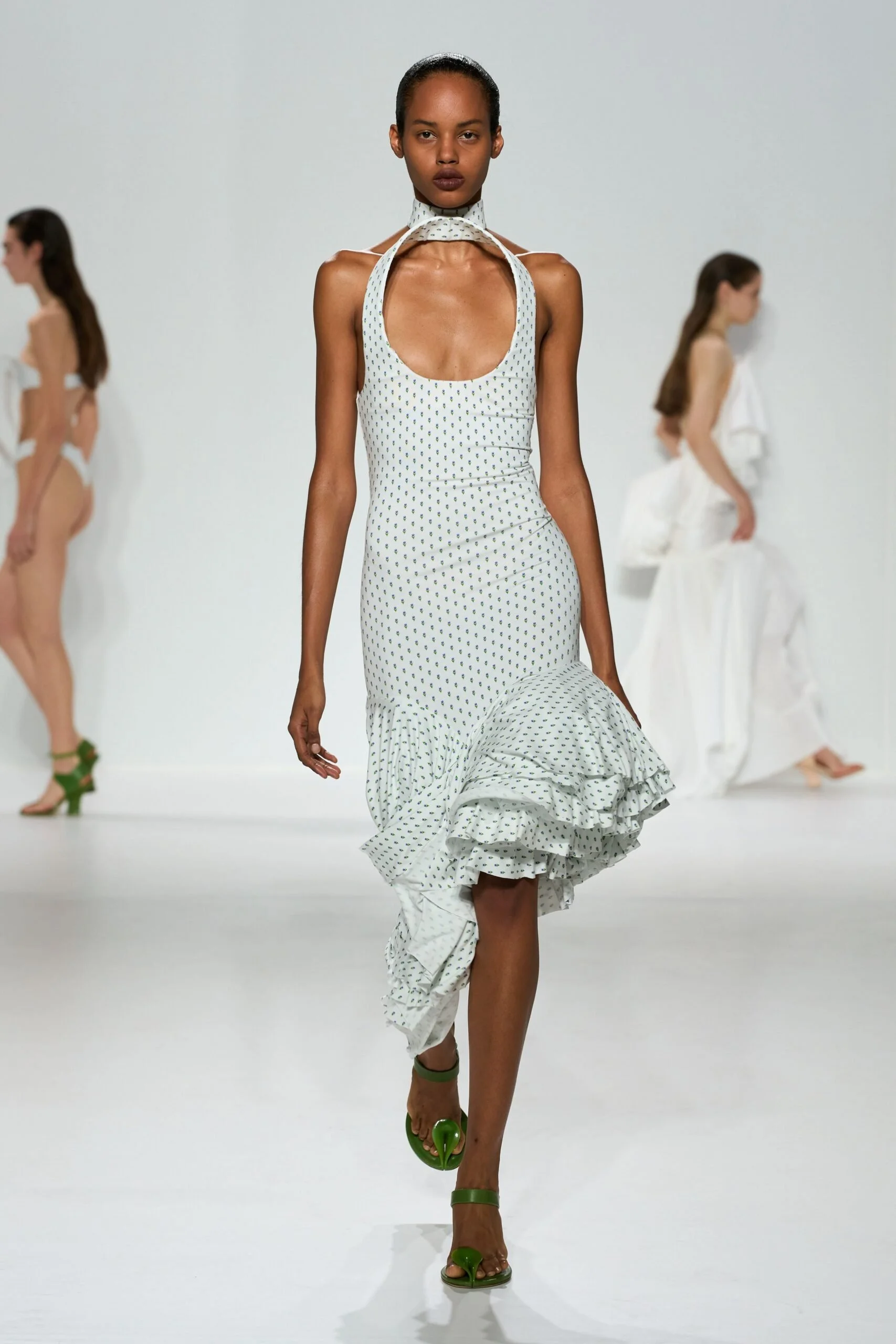
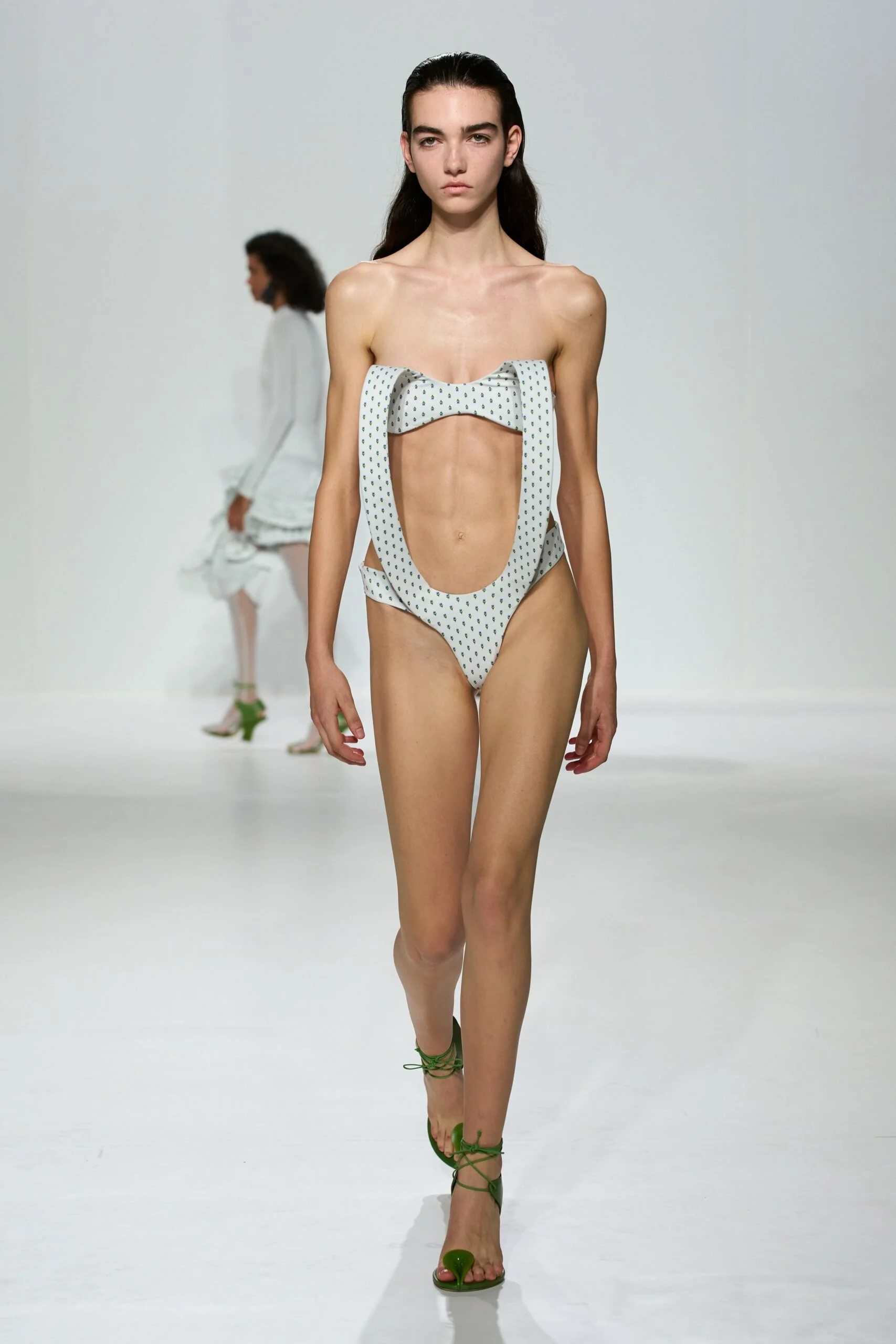
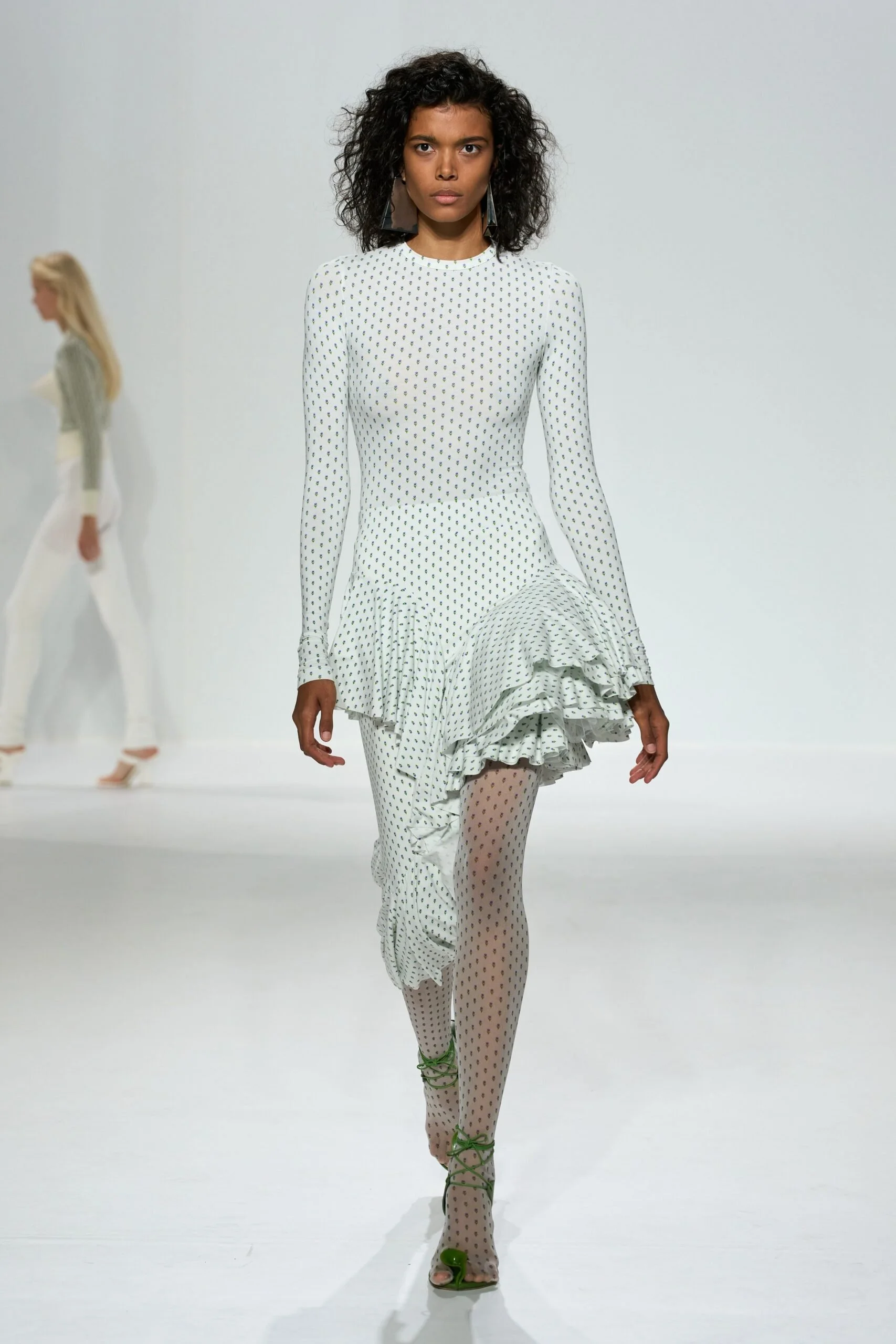
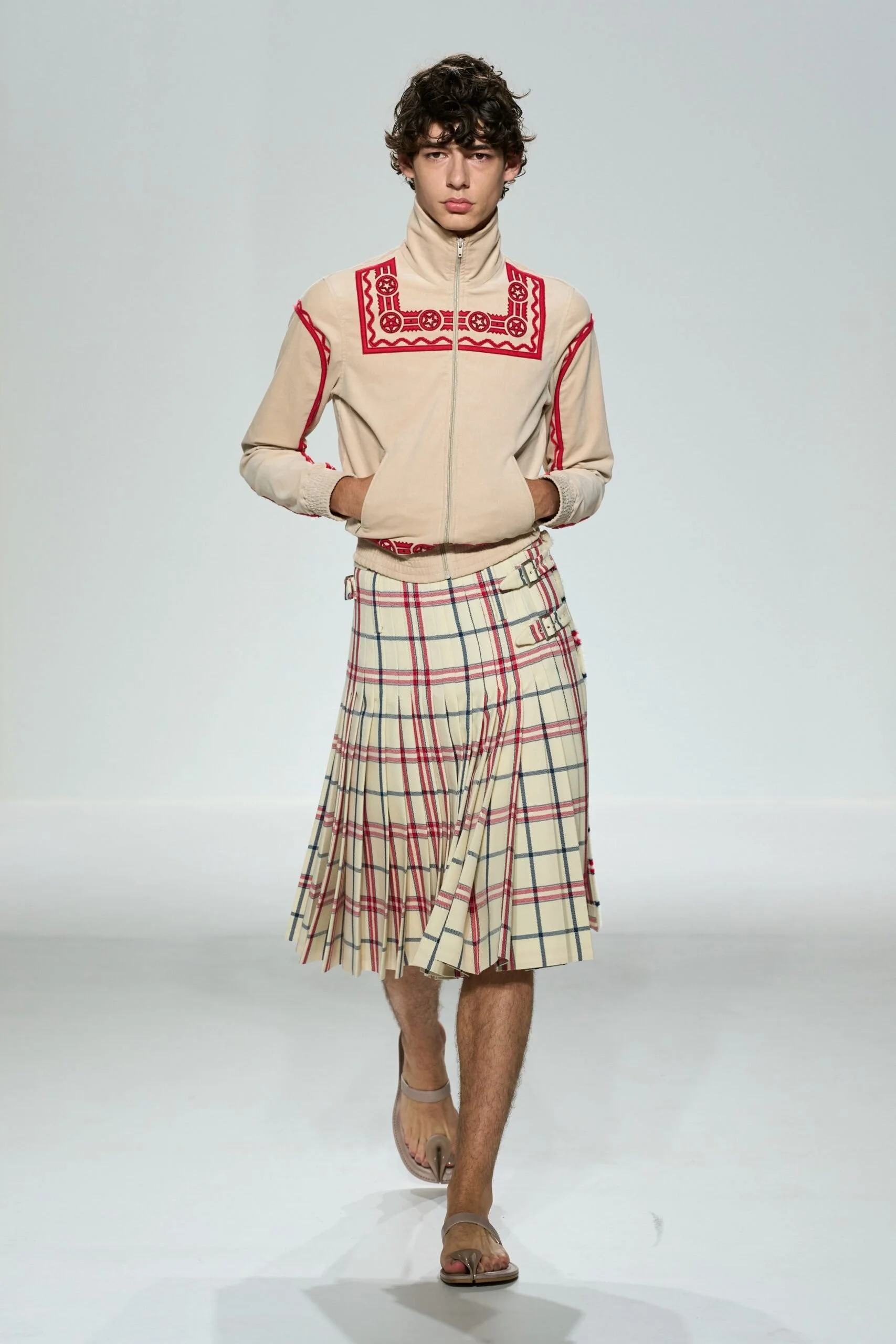
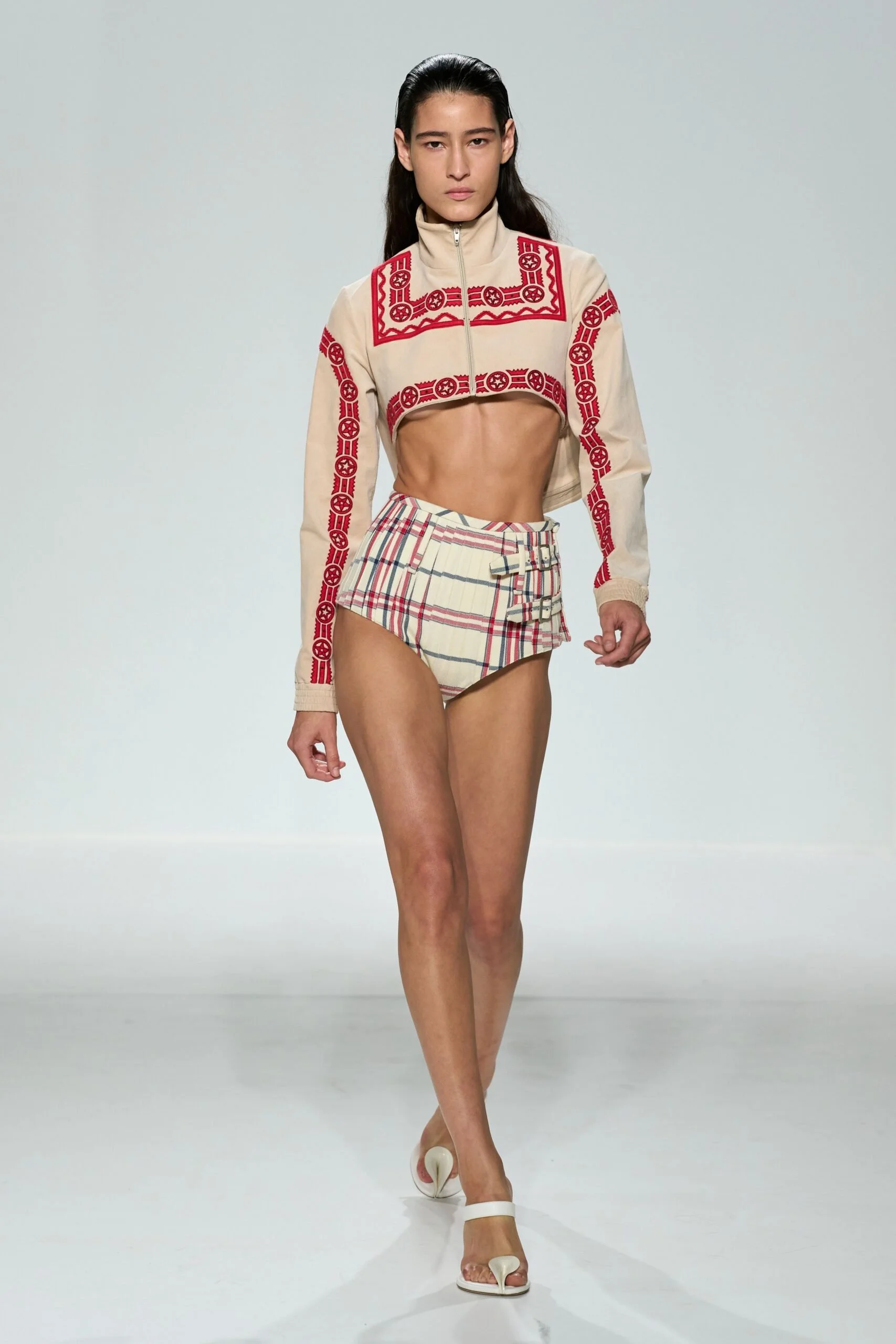
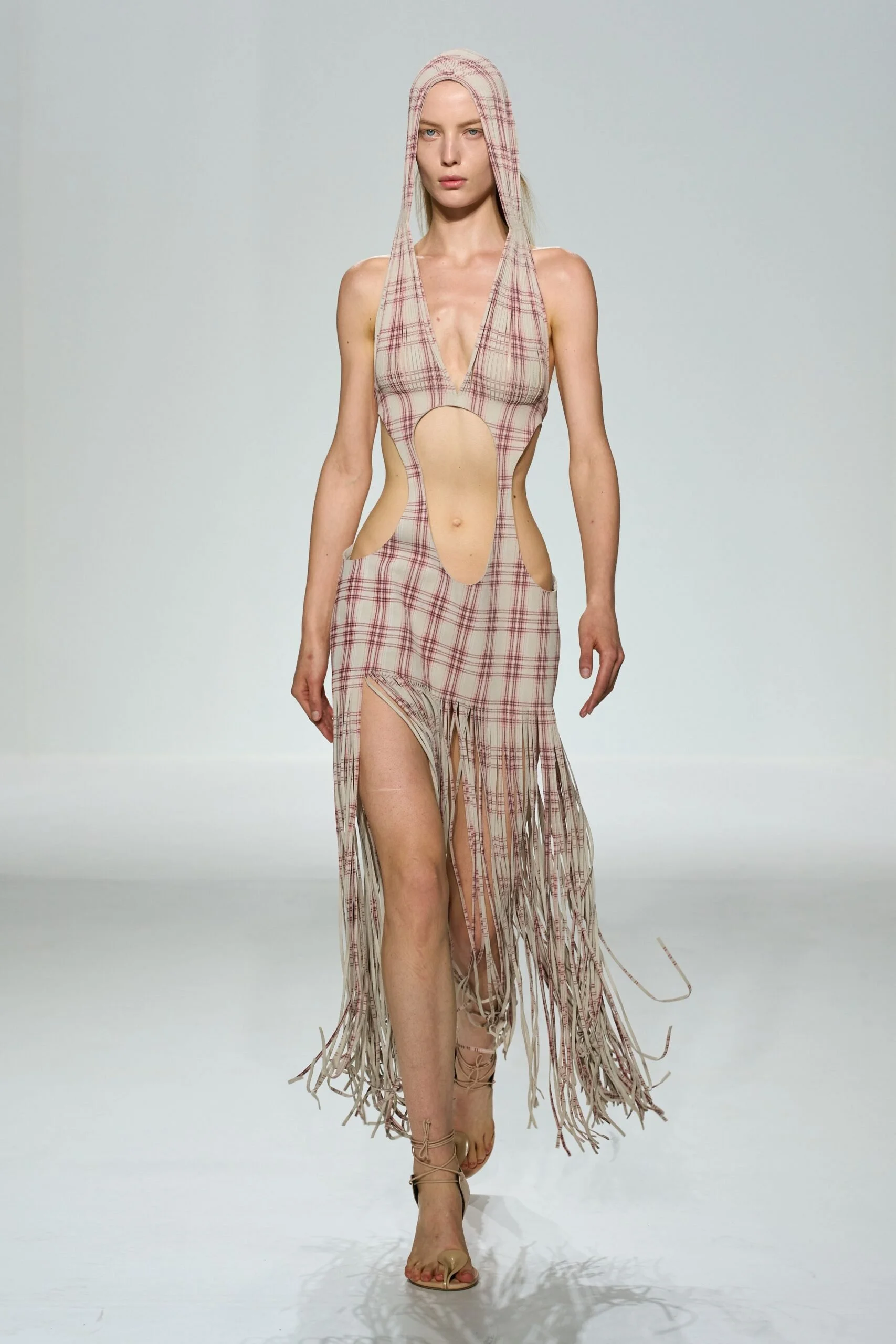
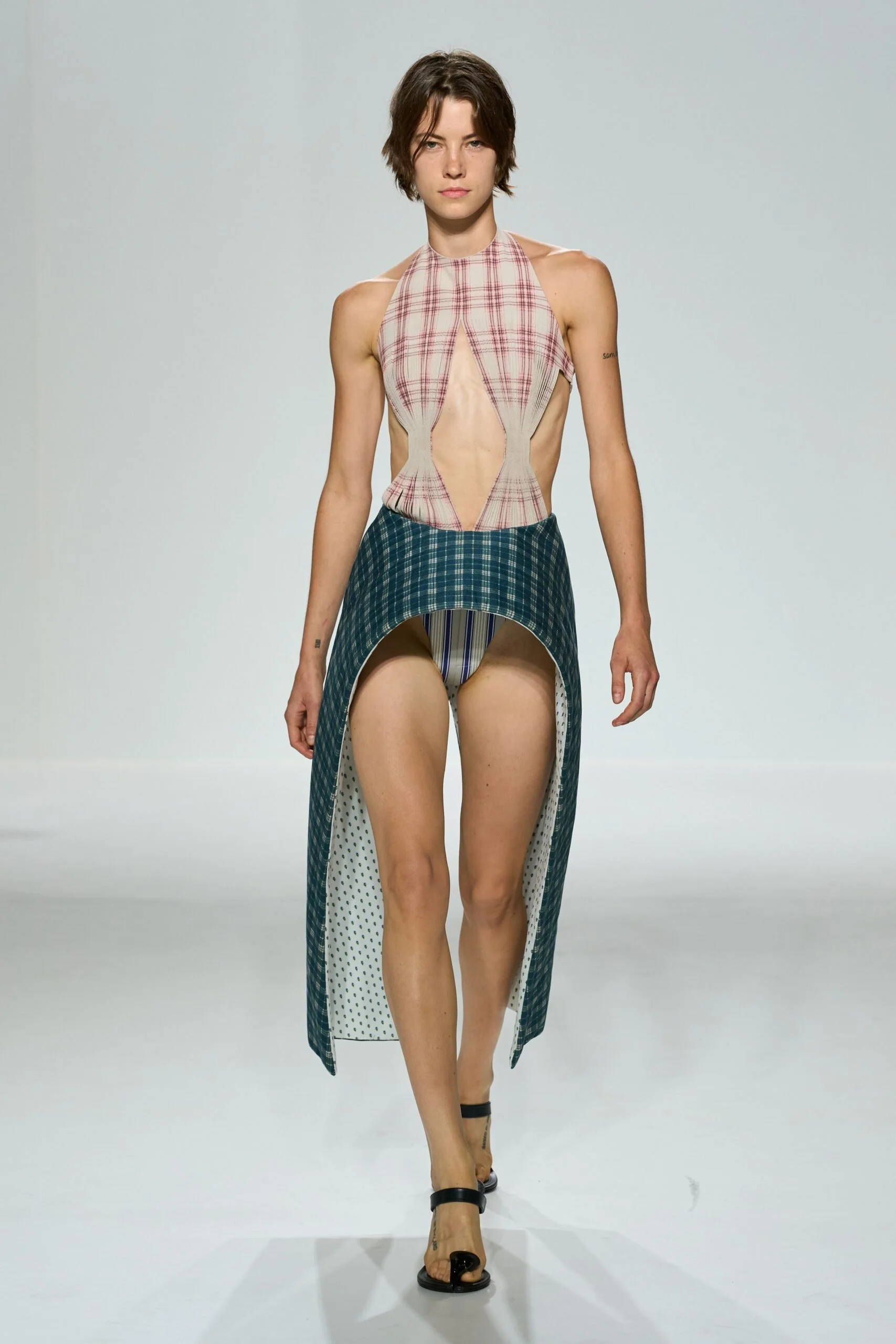
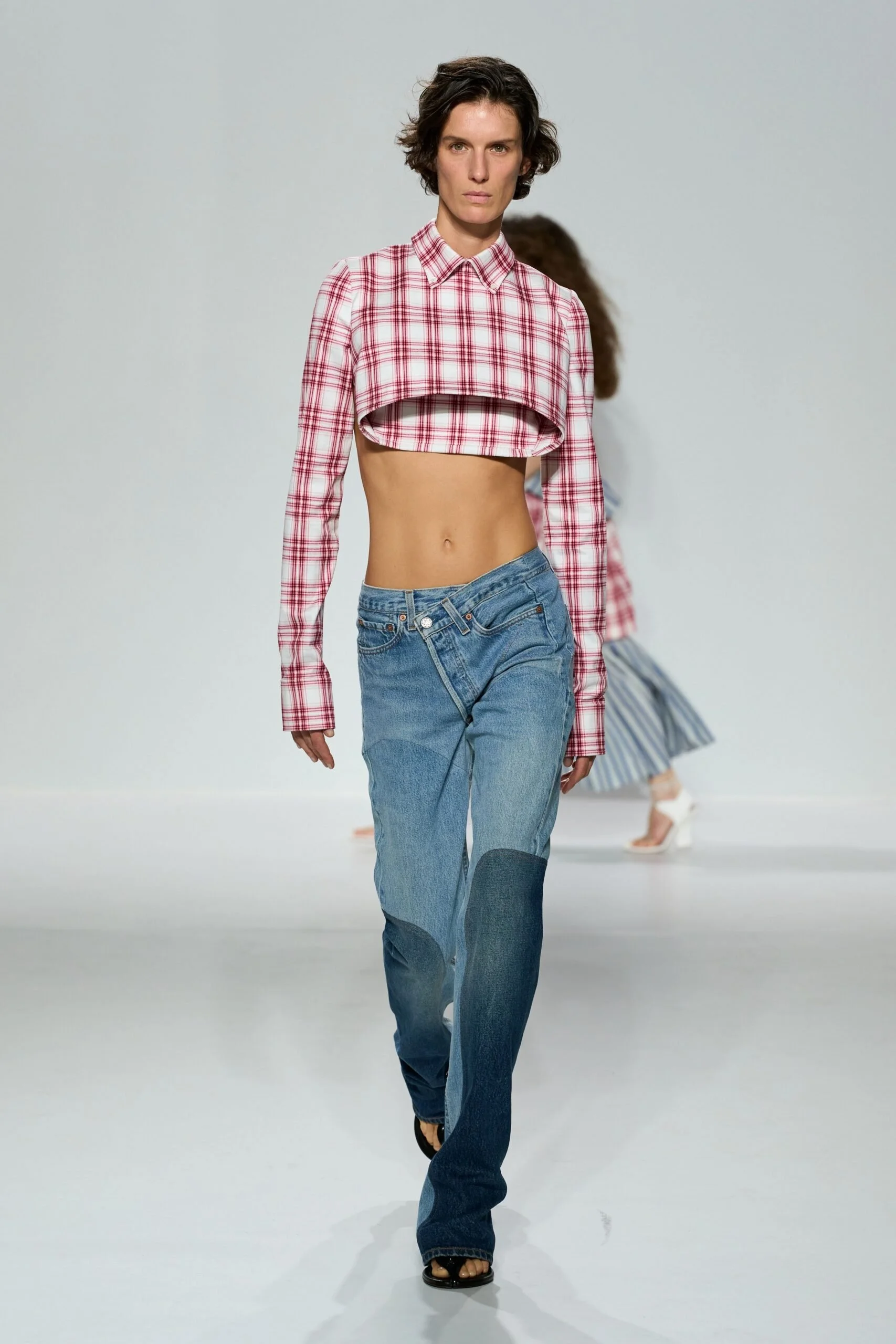
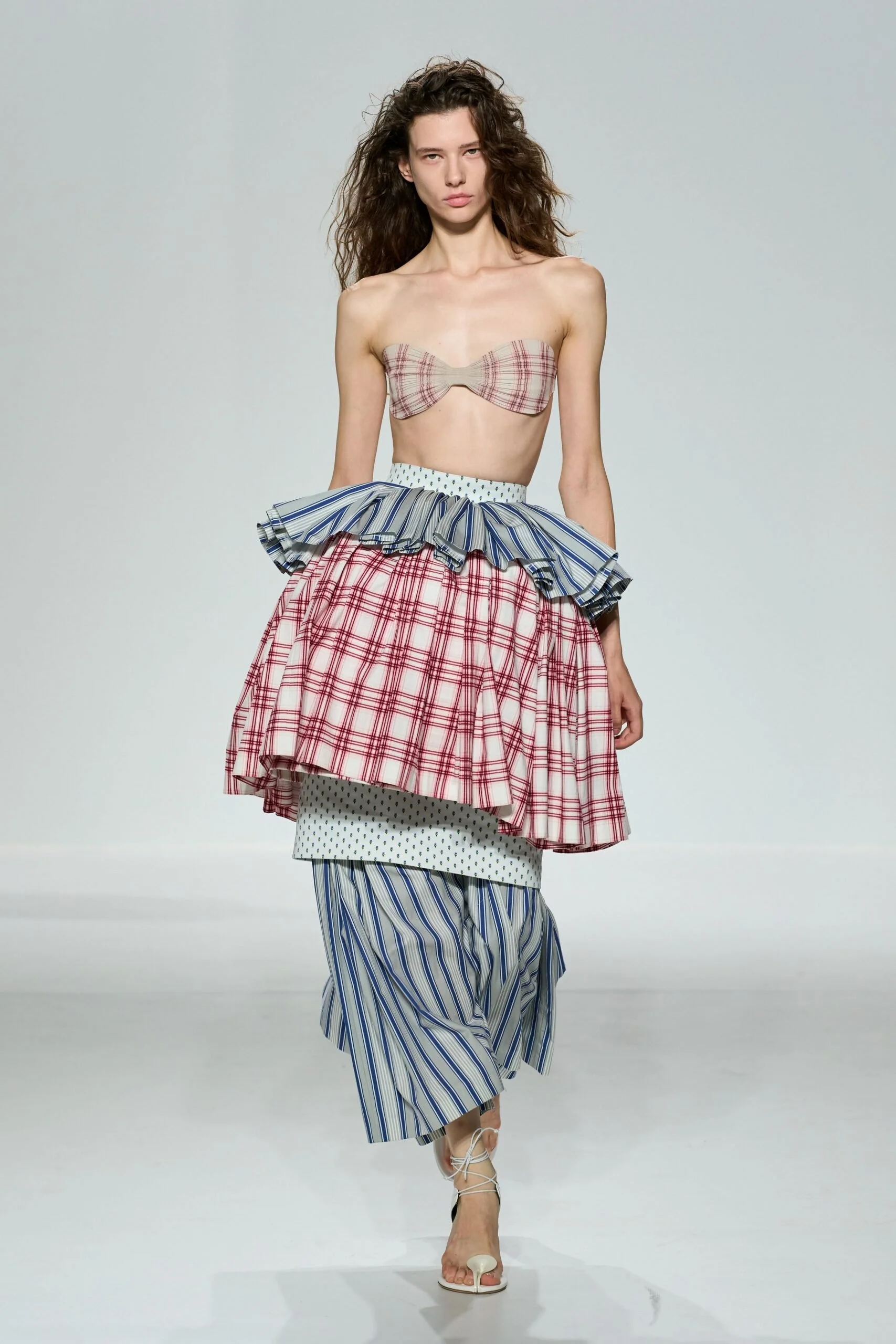
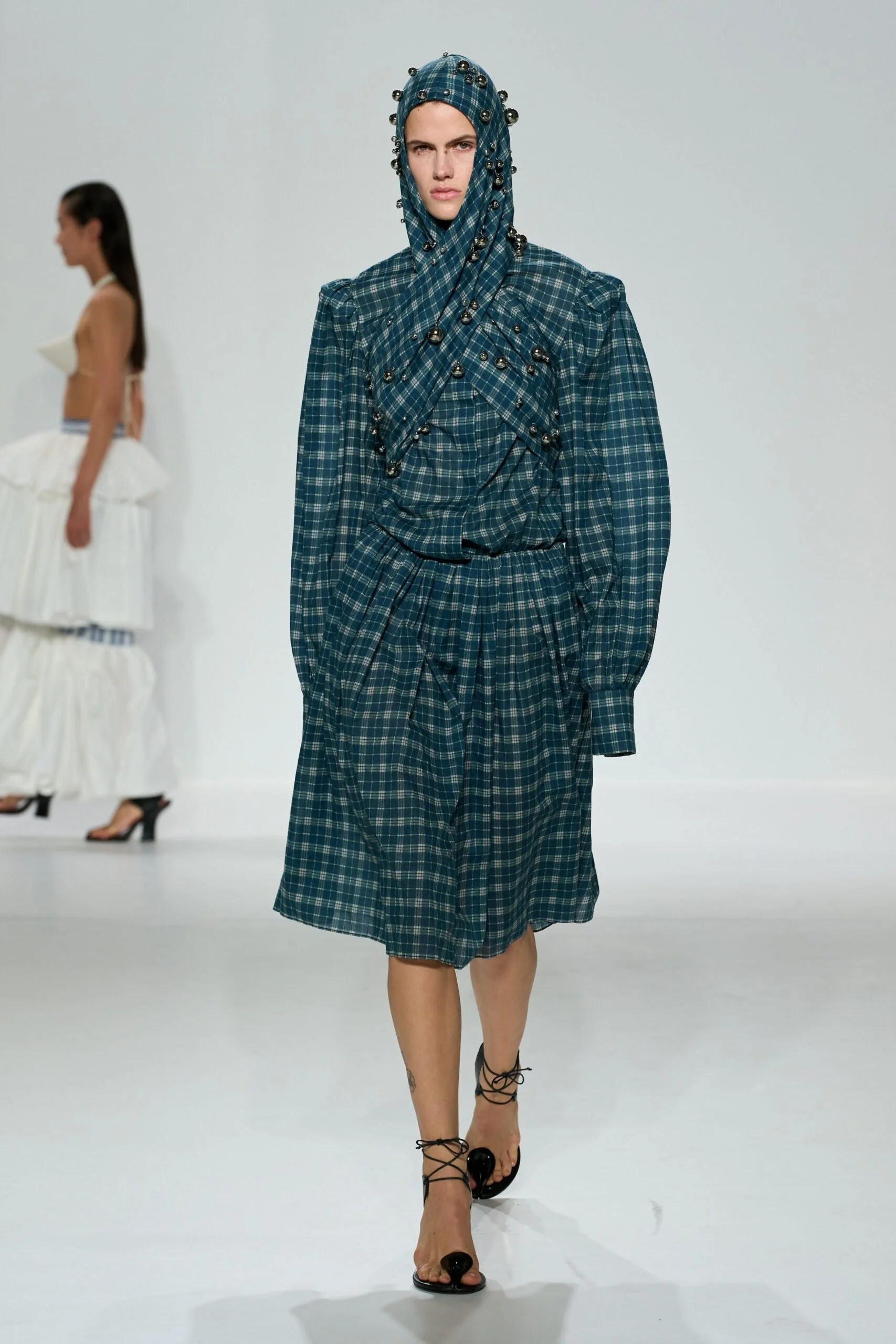
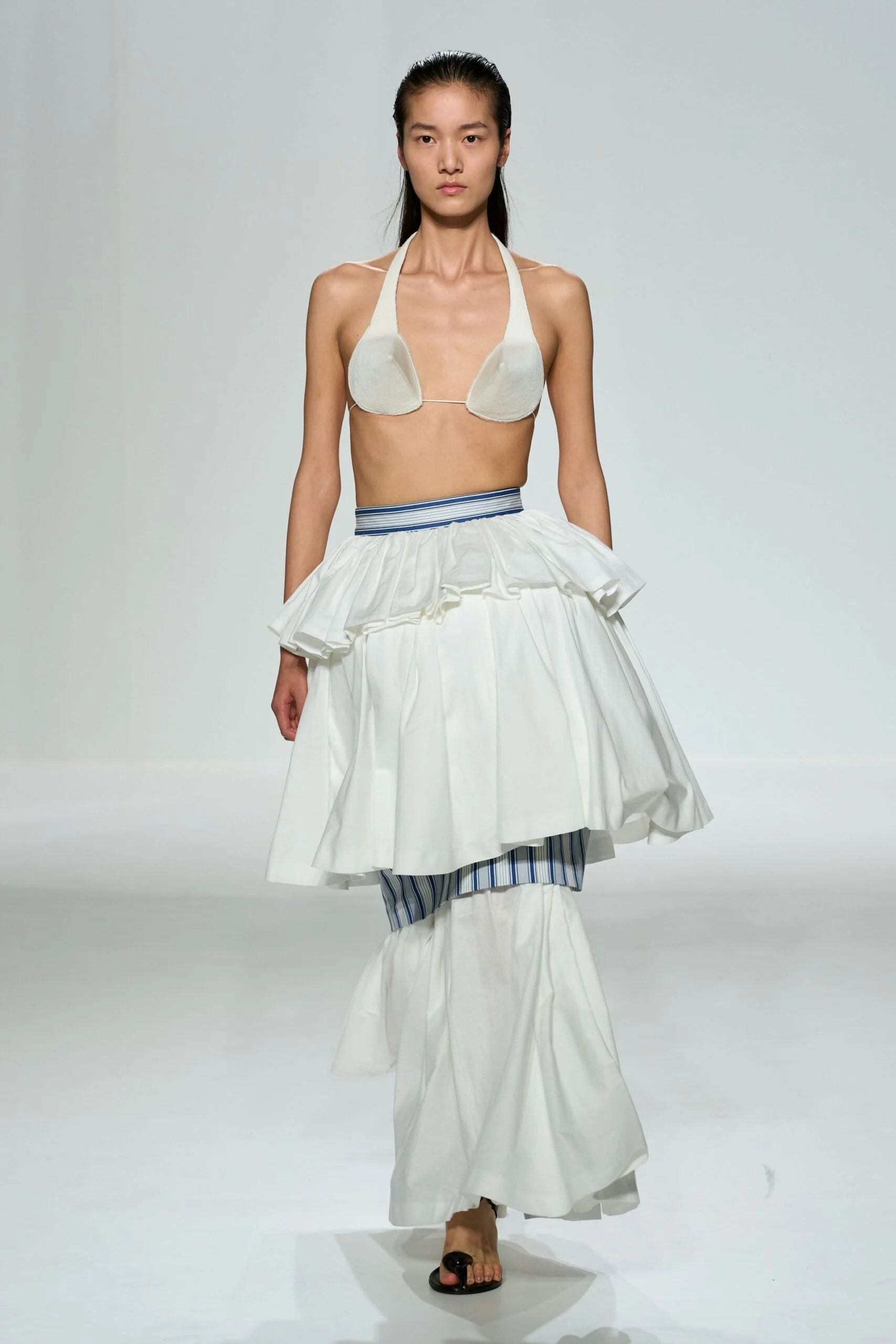
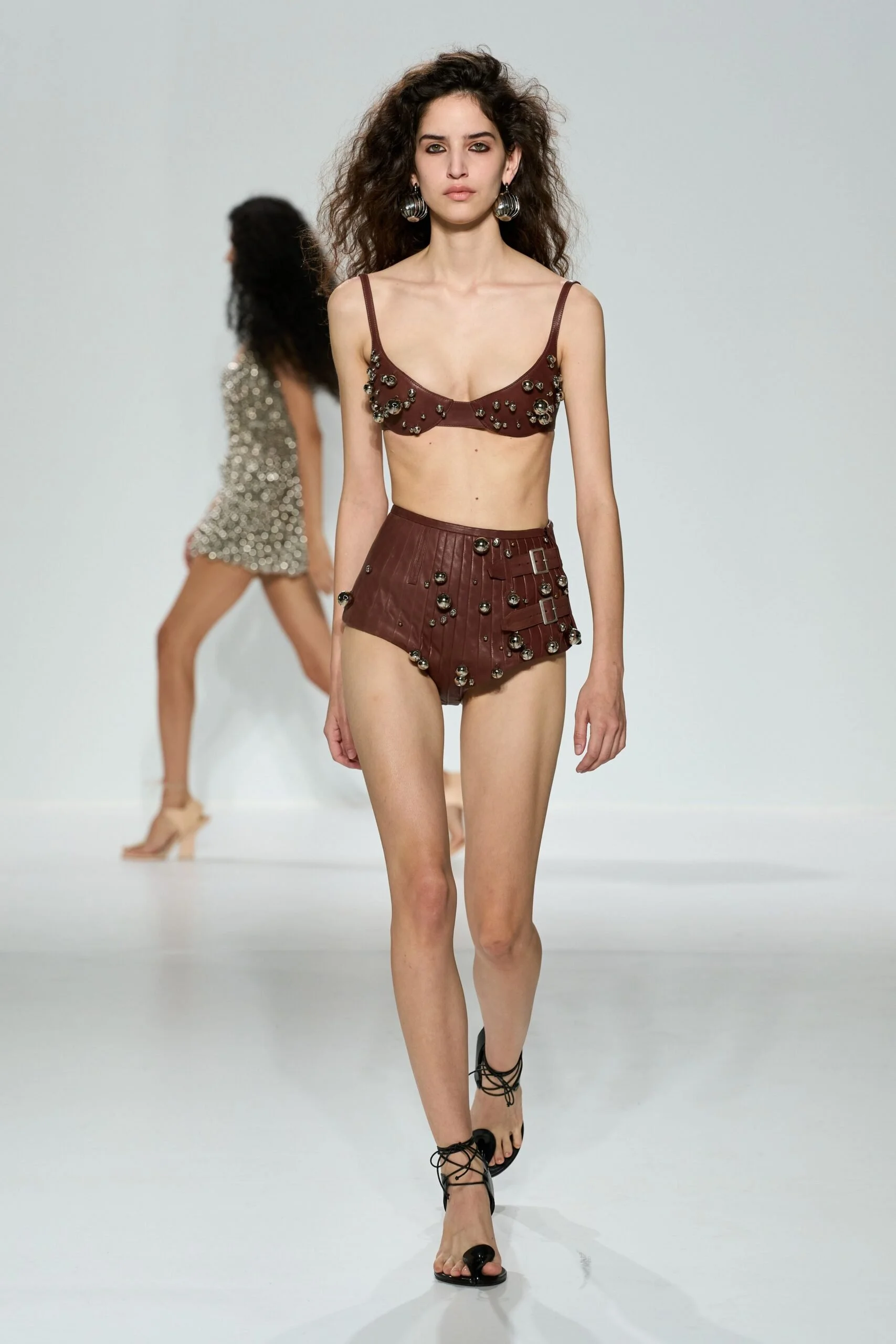
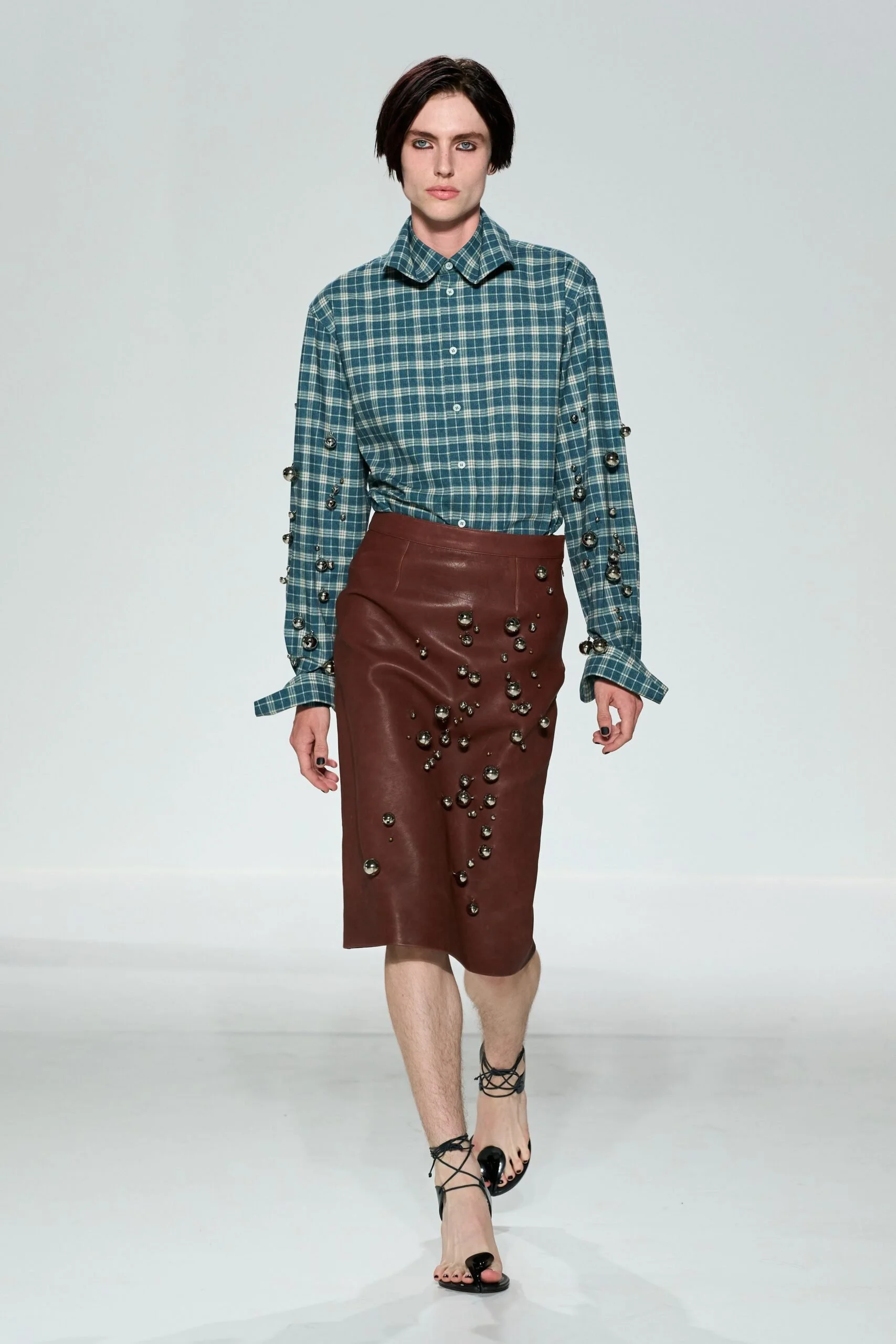
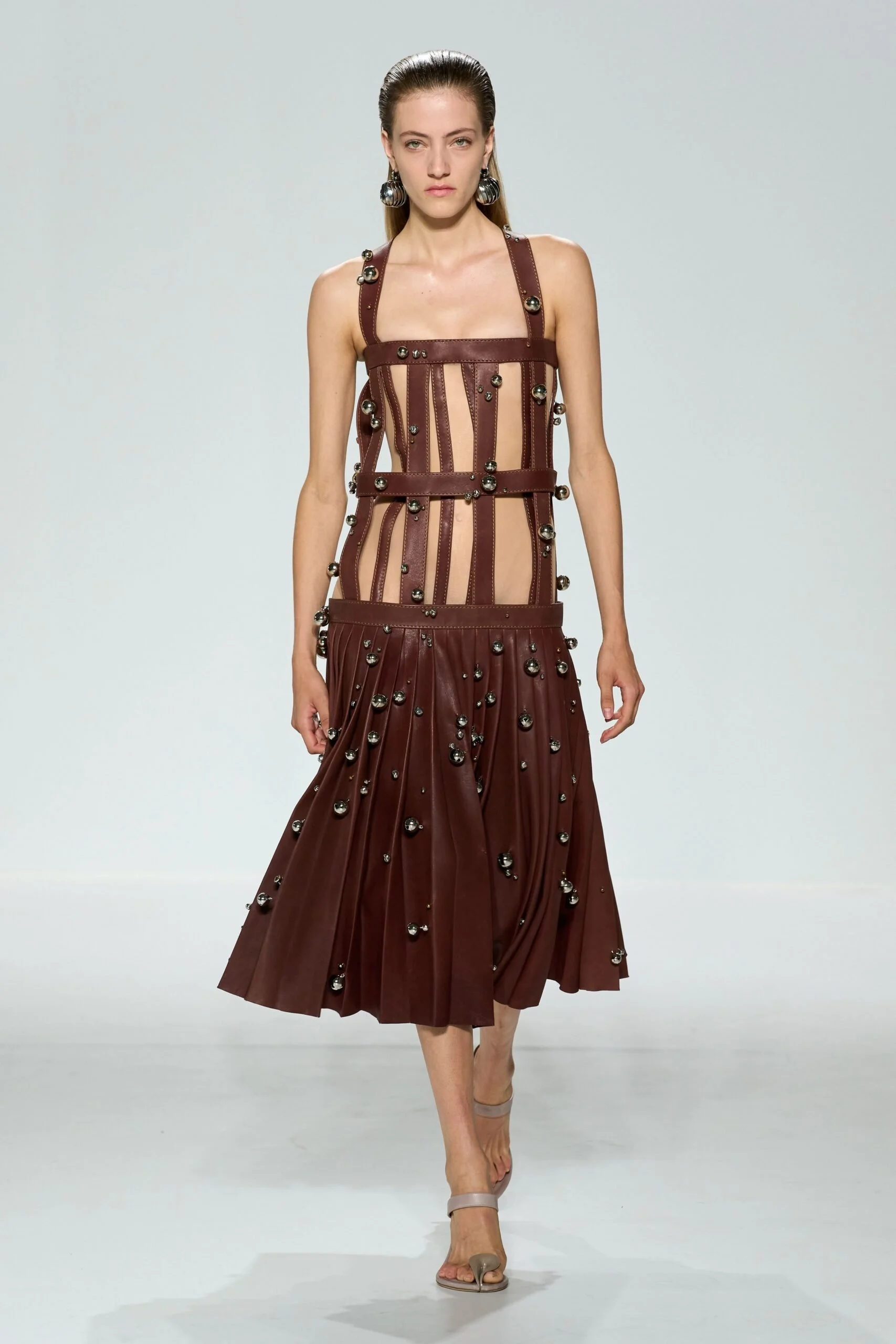
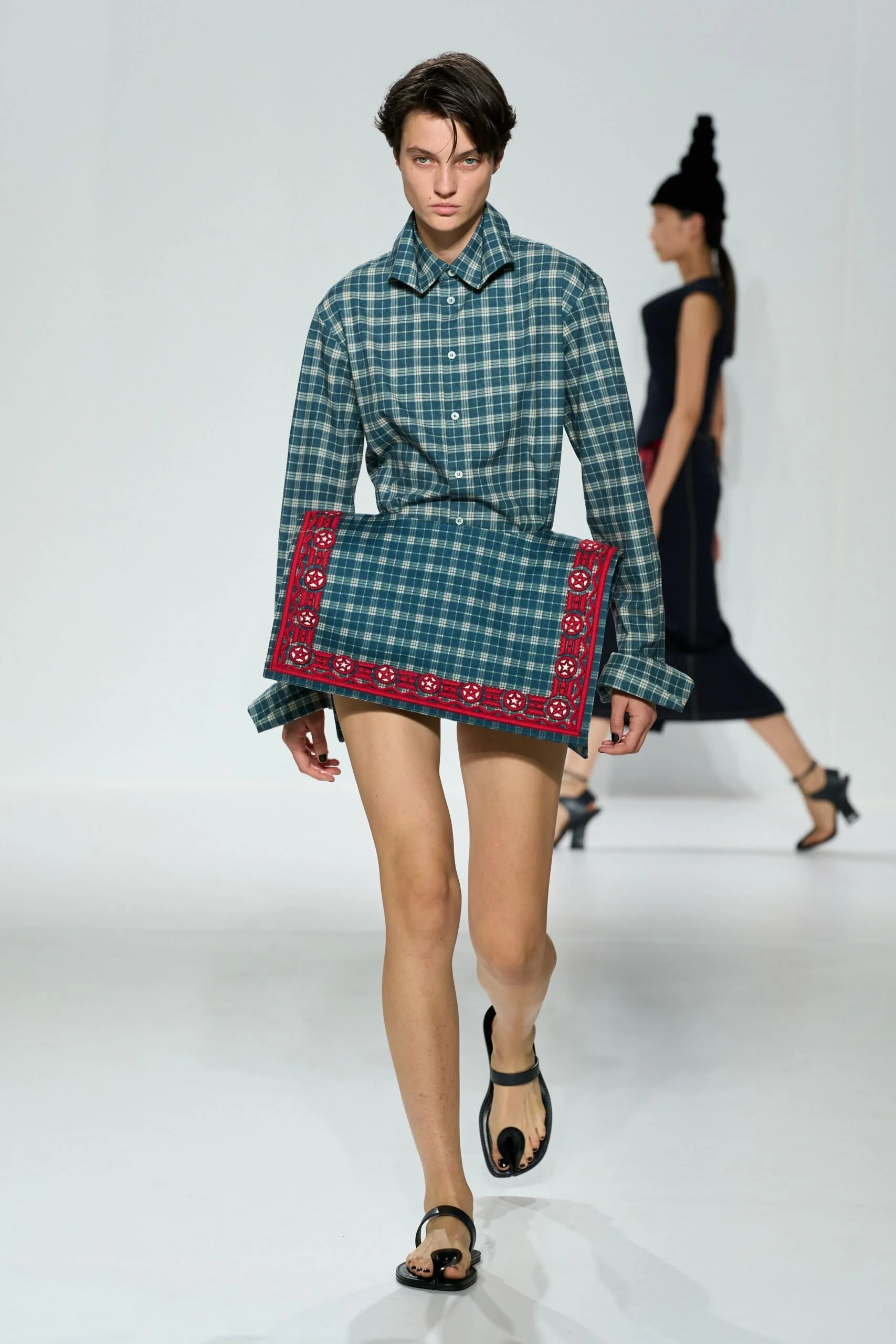
Jean Paul Gaultier Spring 2027
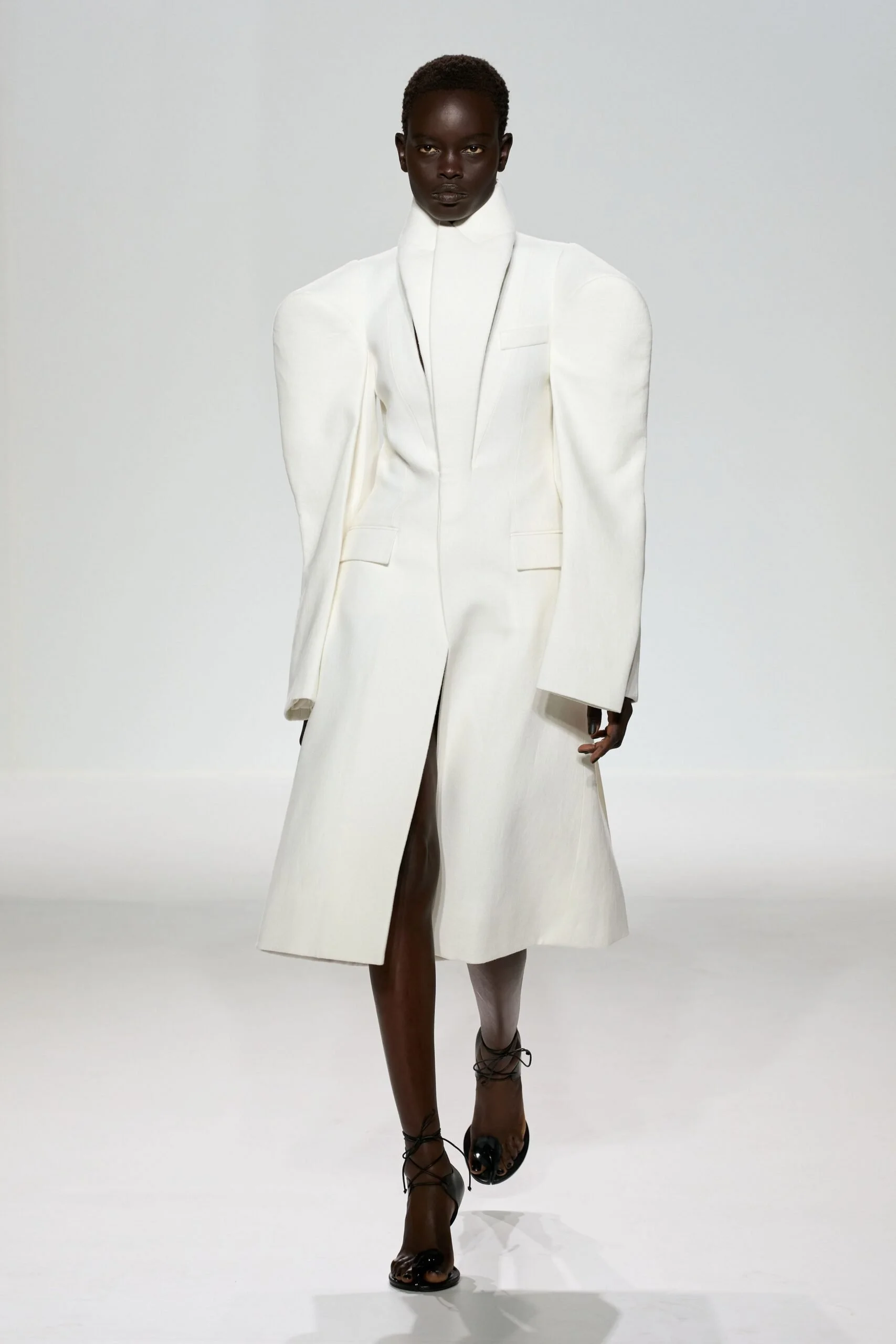
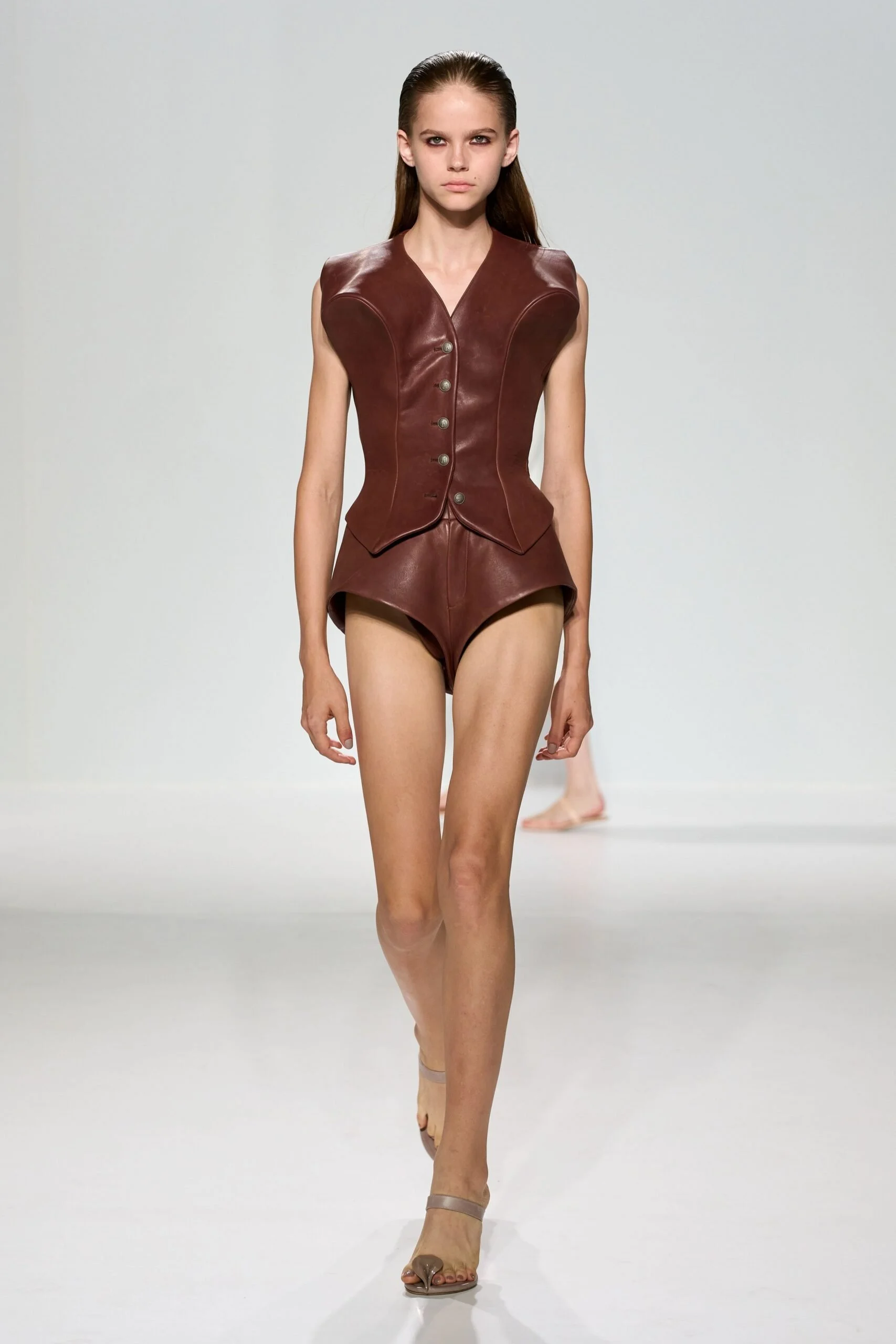
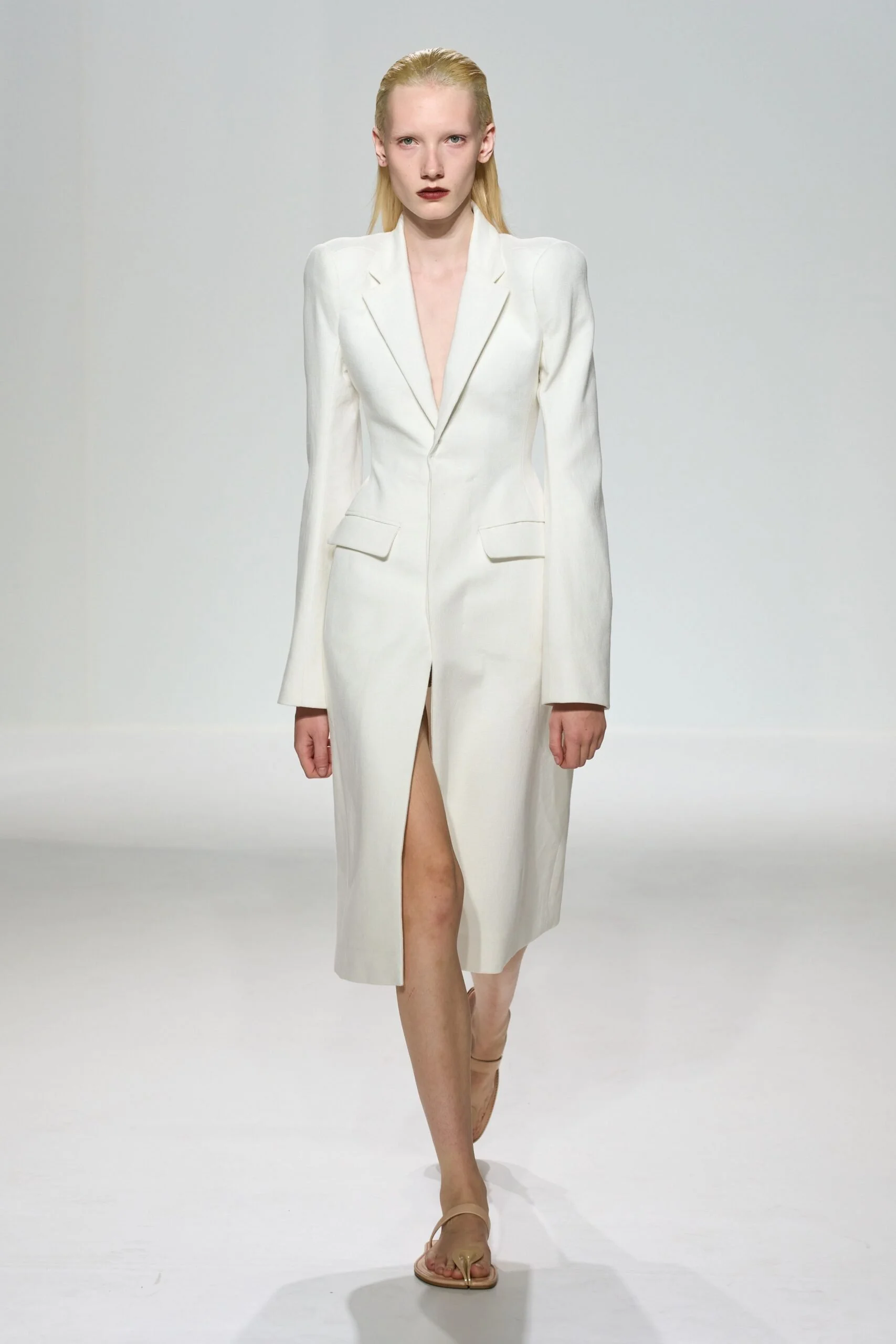
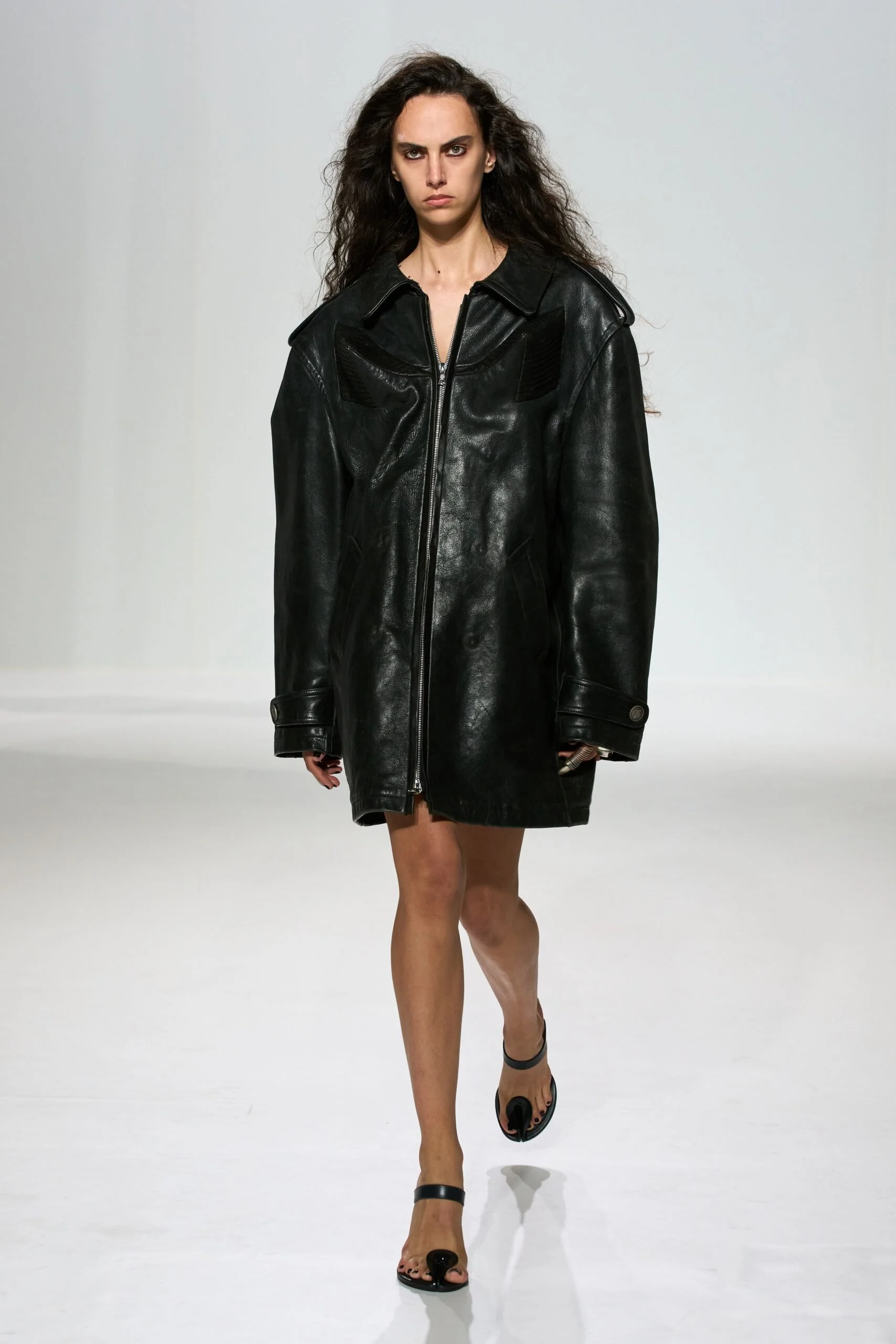
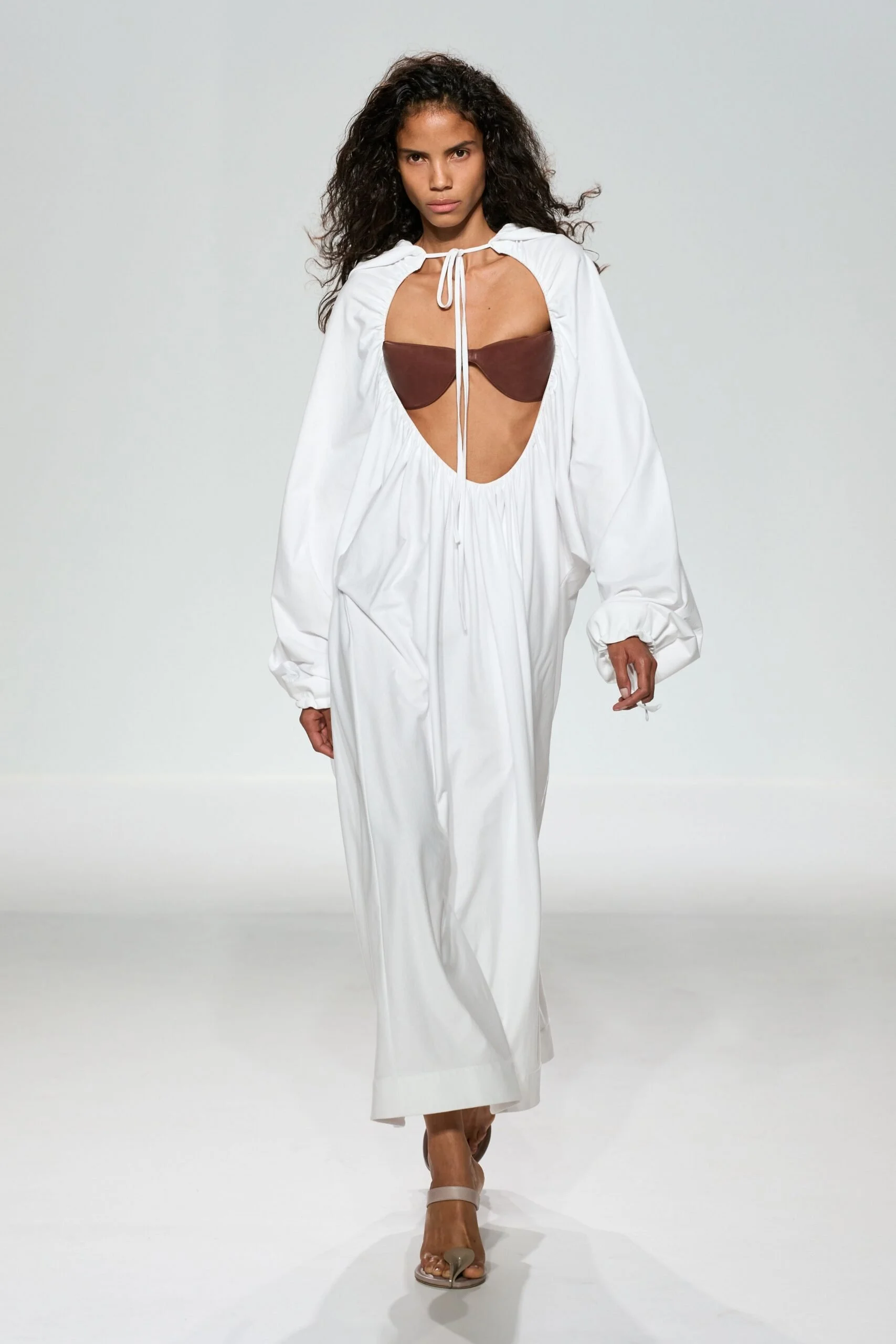
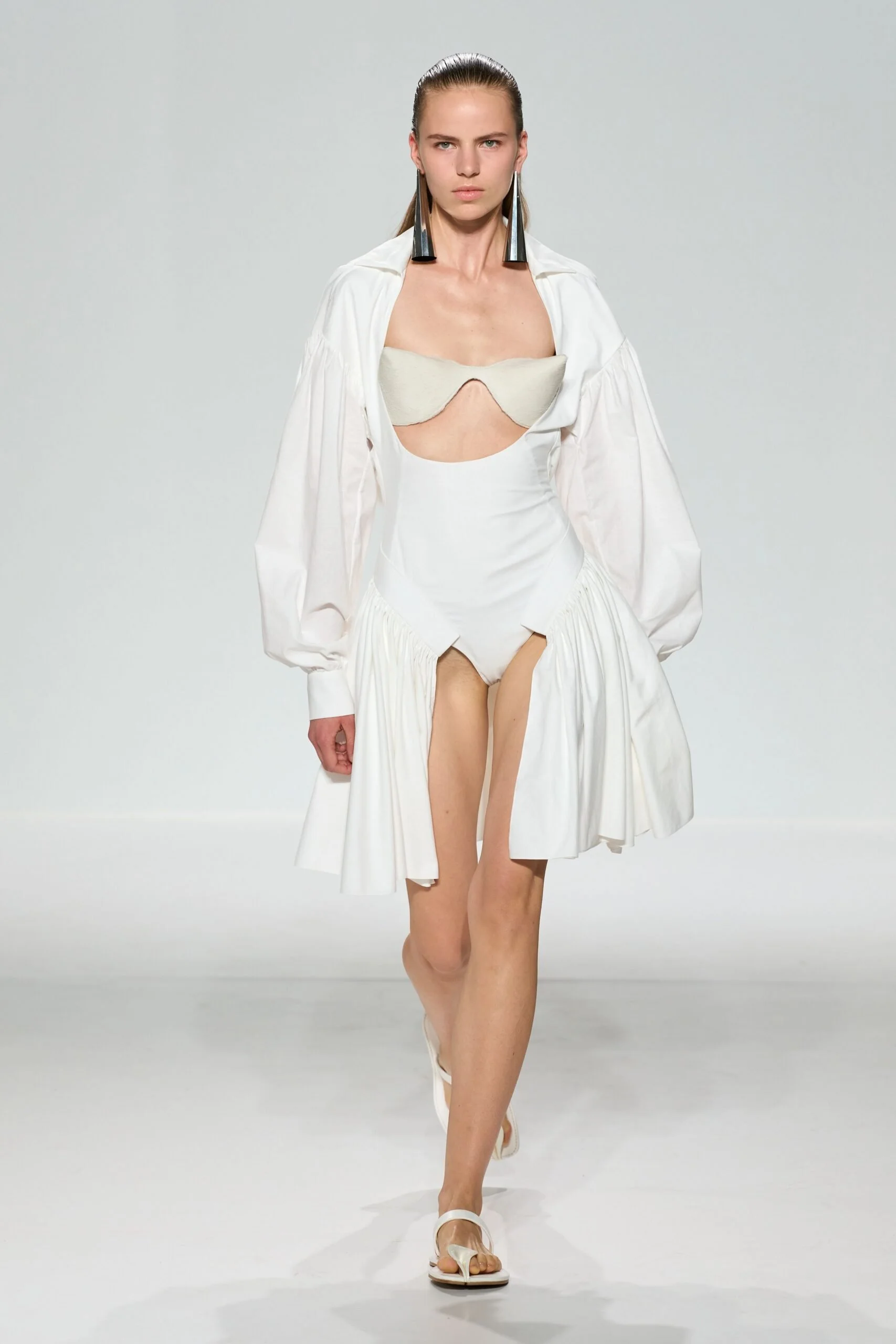
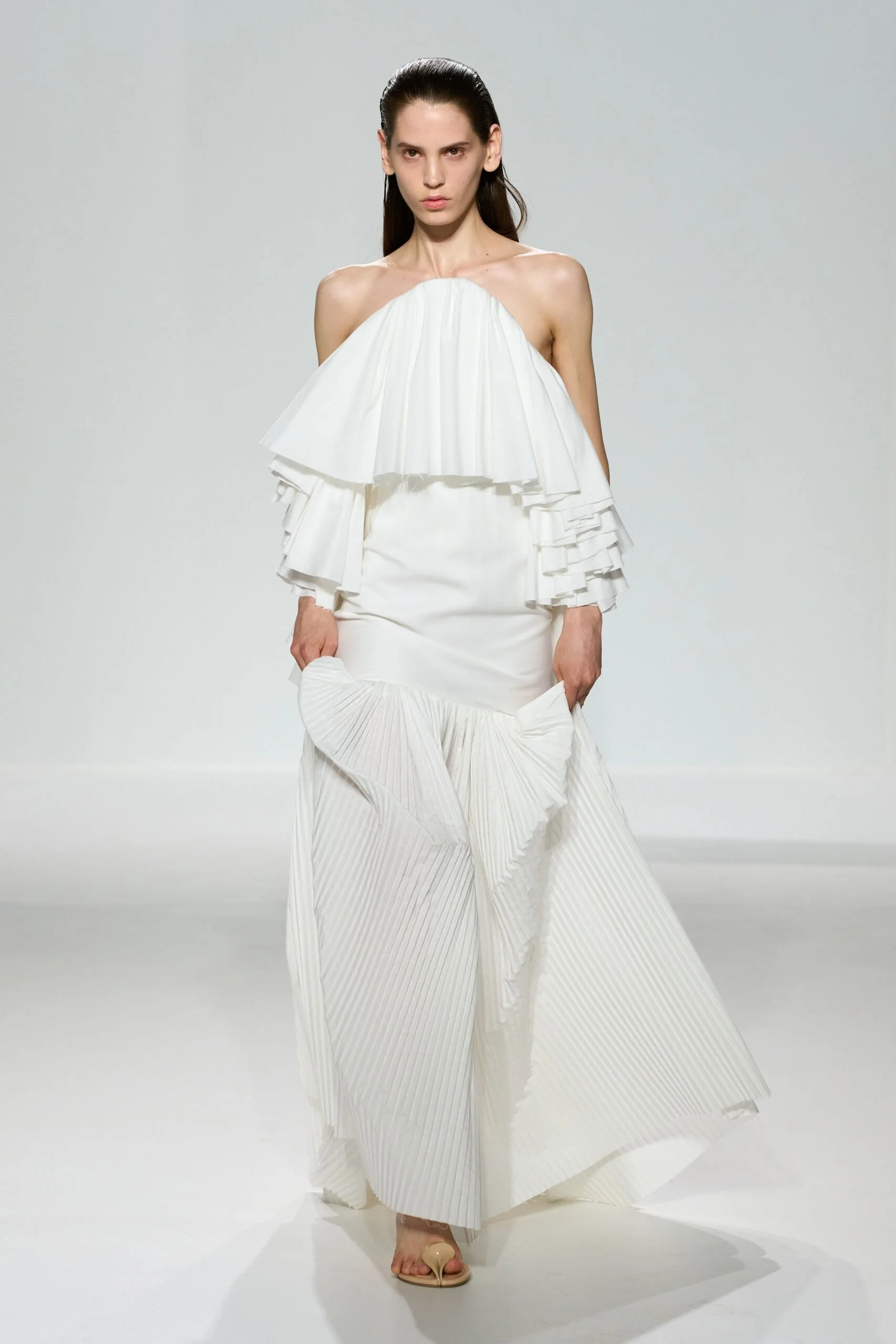
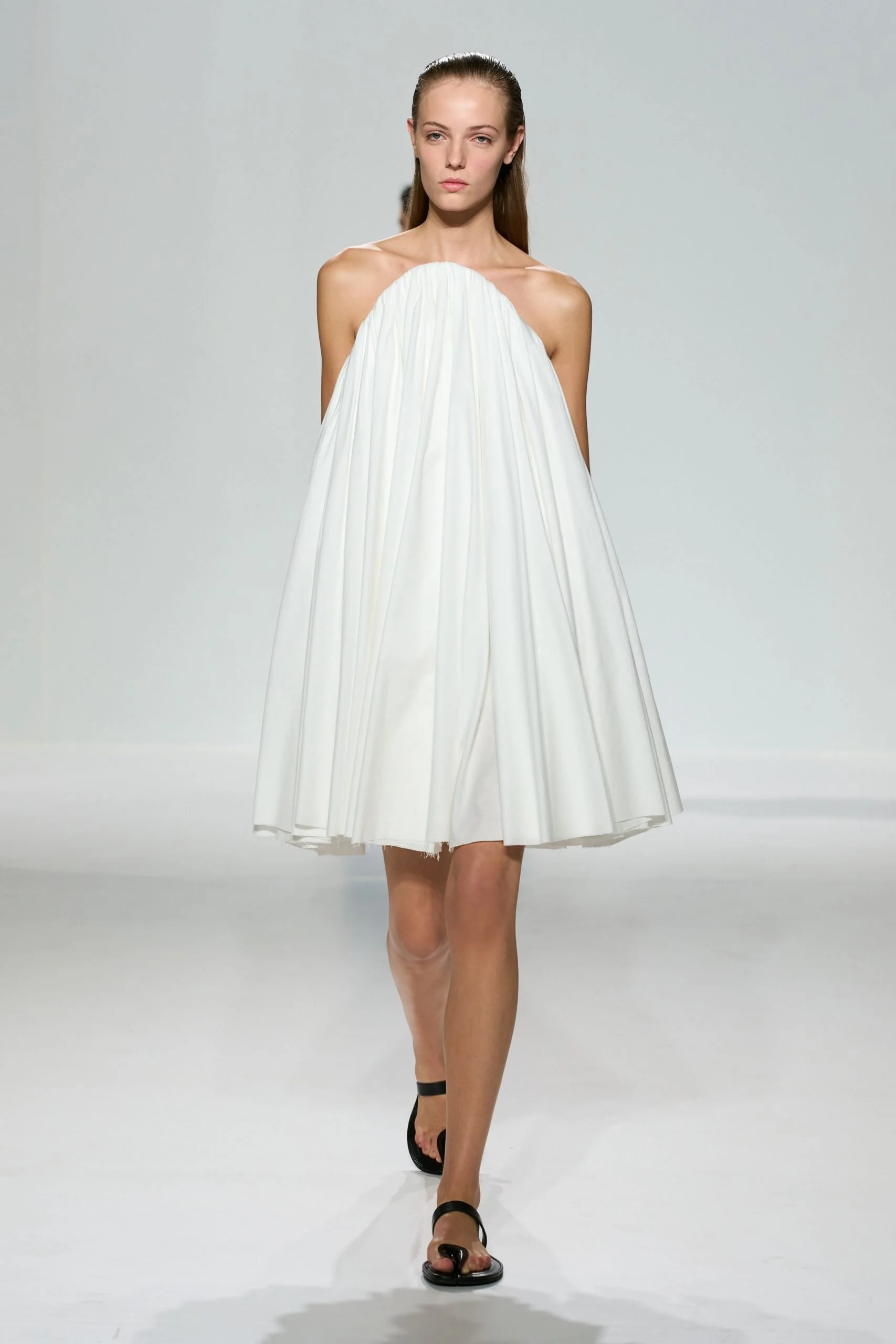
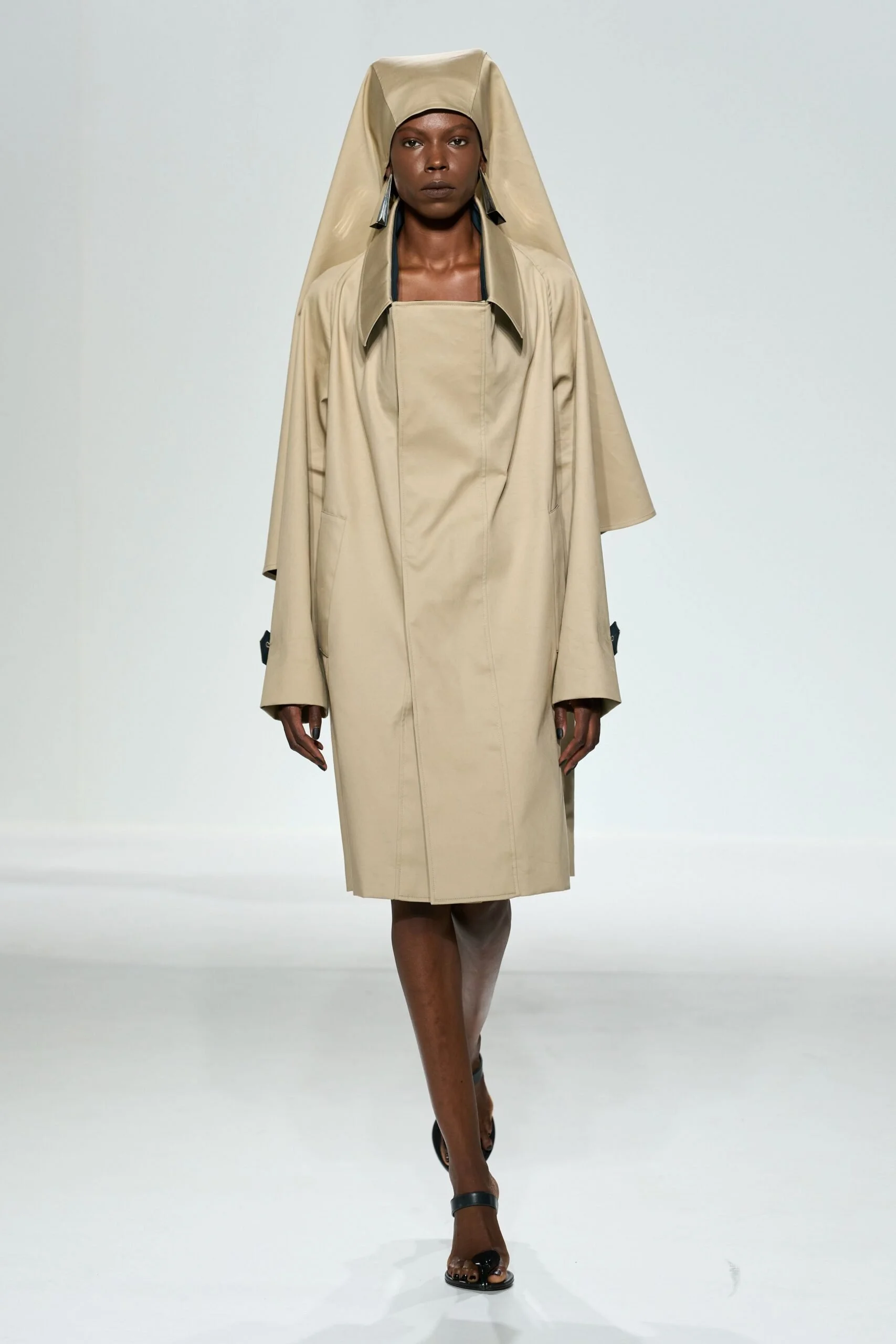
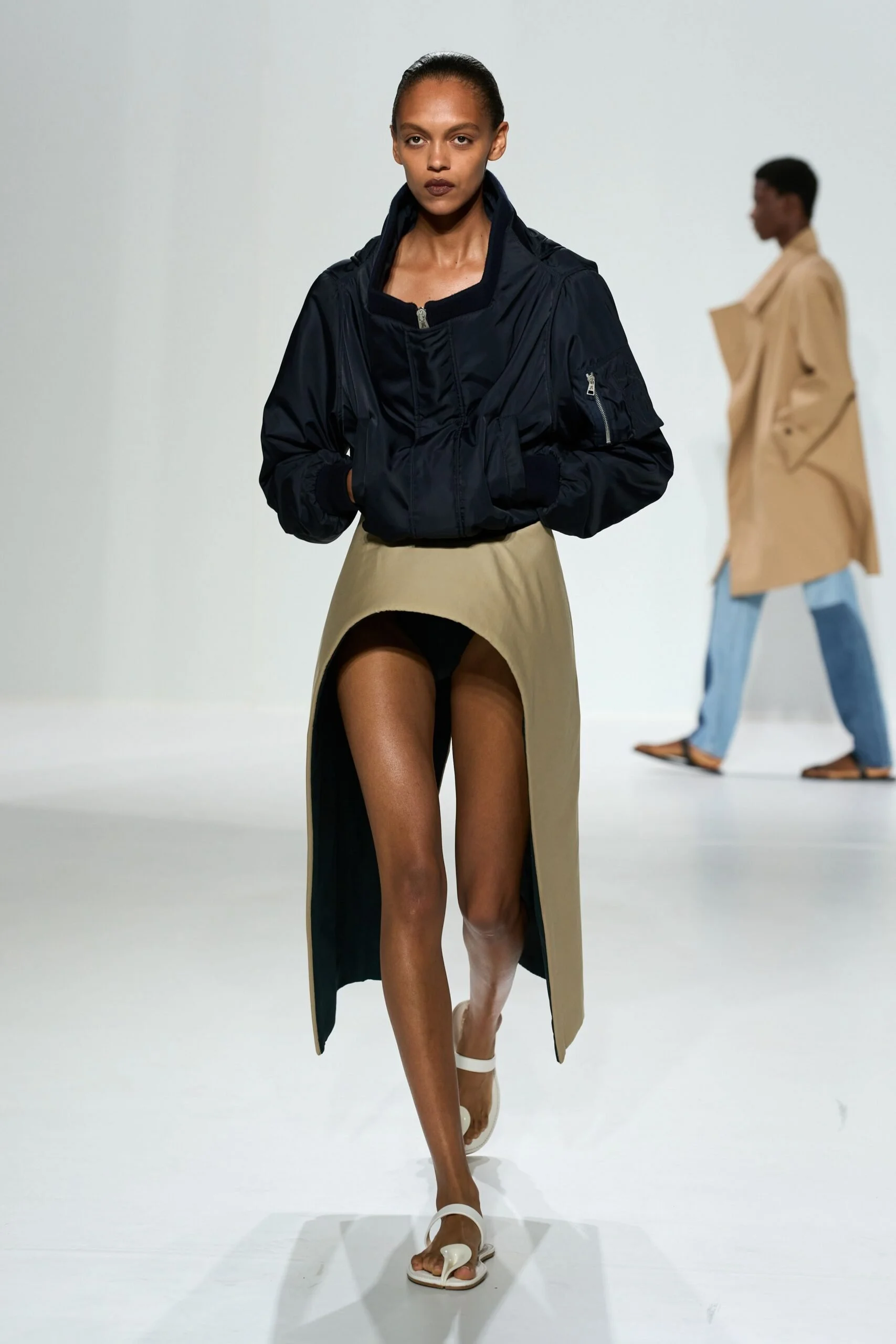
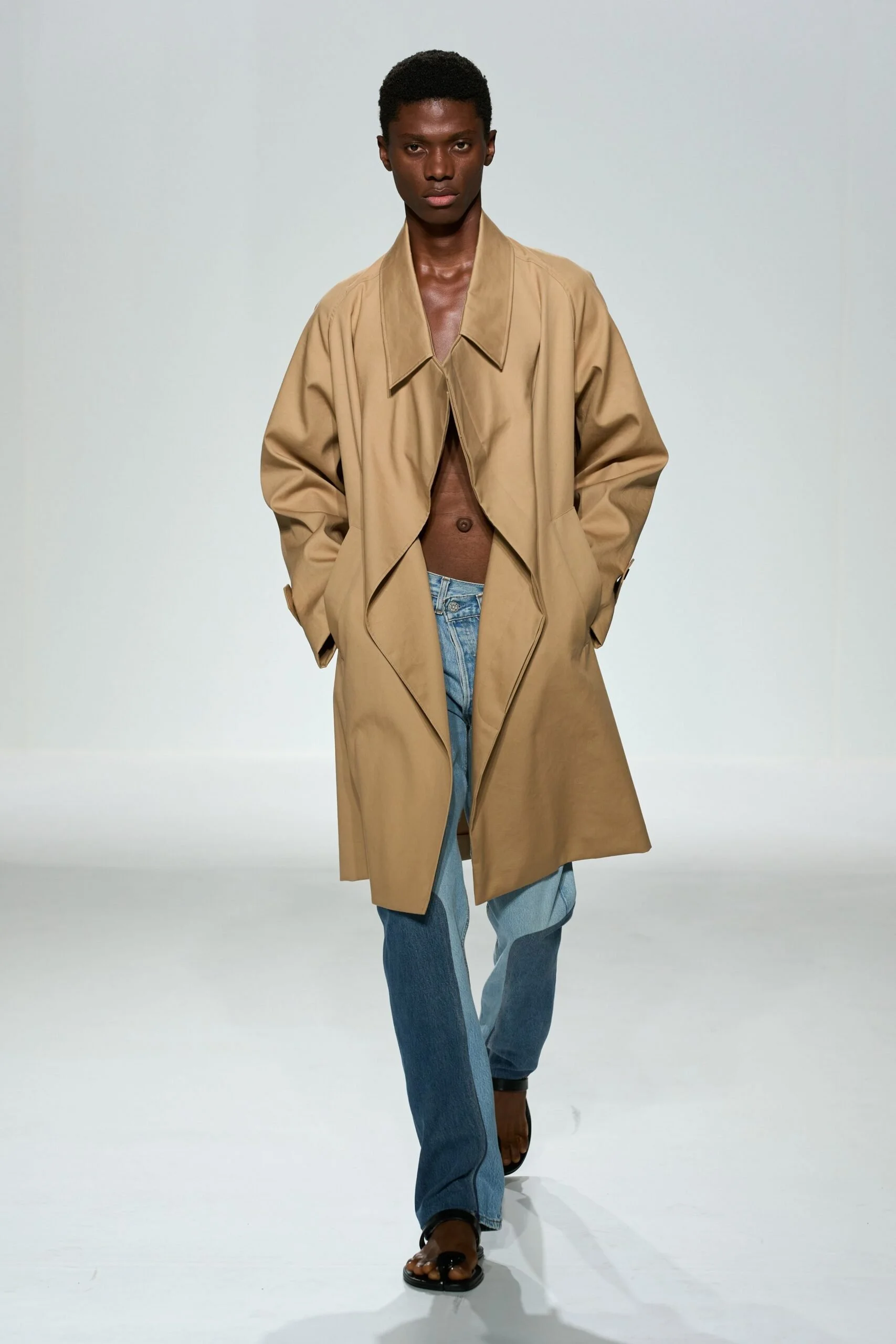
Duran Lantink is still learning how to speak Gaultier. Taking over a house with such an instantly recognisable vocabulary is a little like learning a language as an adult: first comes the grammar, then the vocabulary, and eventually the confidence to bend the rules. For his fourth ready-to-wear collection, Lantink looked towards one of the things he shares with Jean Paul Gaultier himself: an interest in archetypes. But rather than simply reproducing familiar Gaultier references, he wanted to give them greater physical presence, playing with volume, construction and the way clothes change when viewed from different angles.
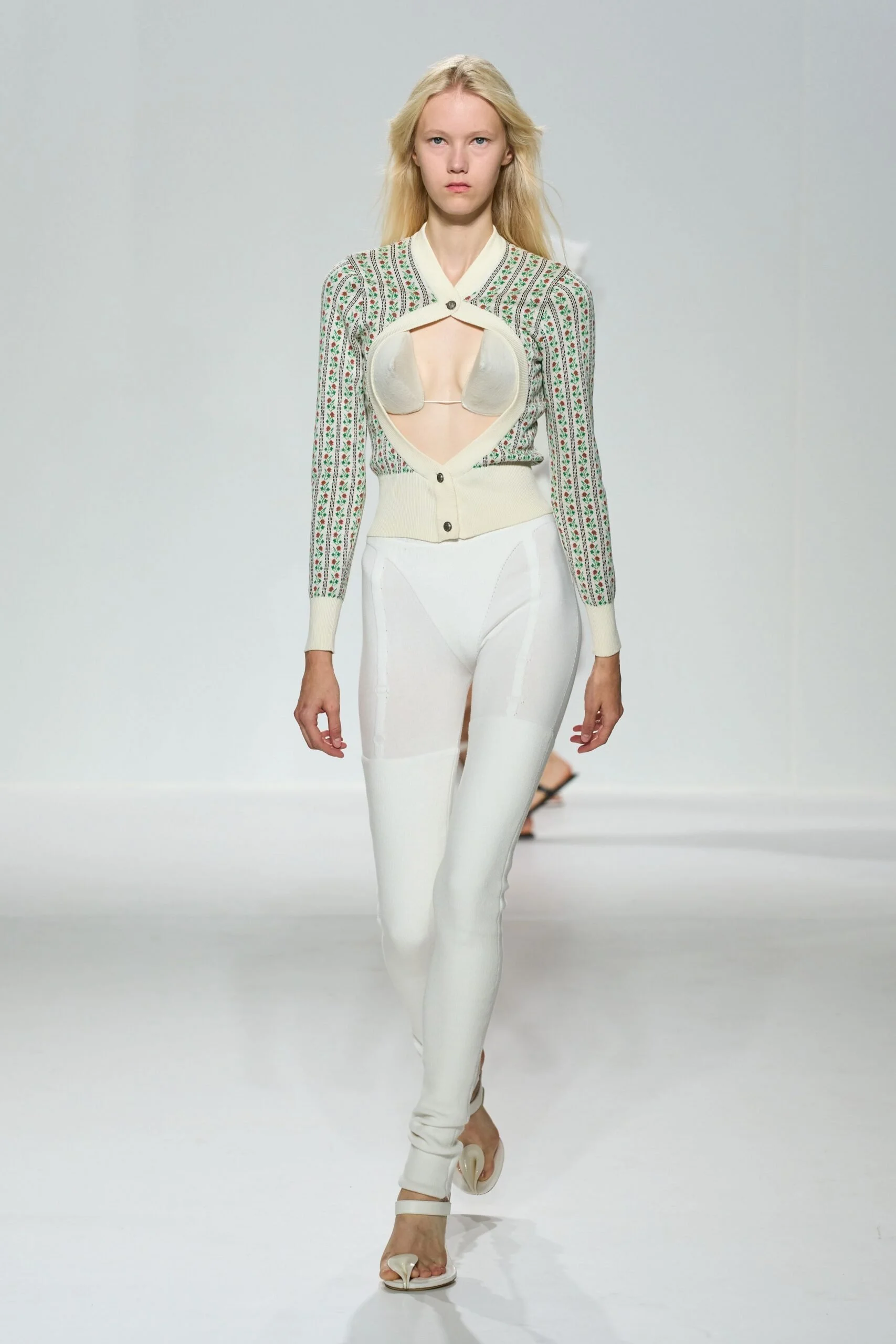
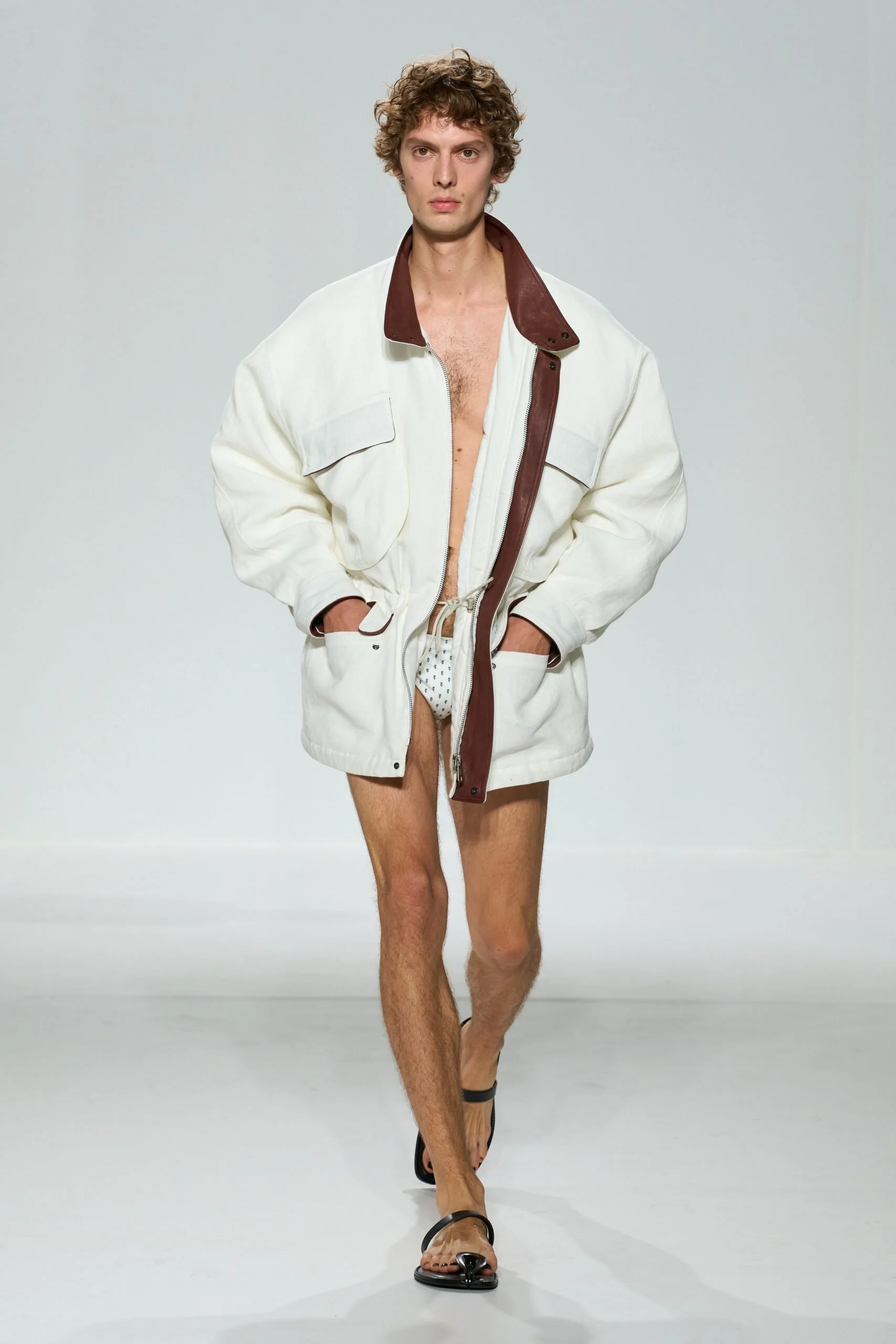
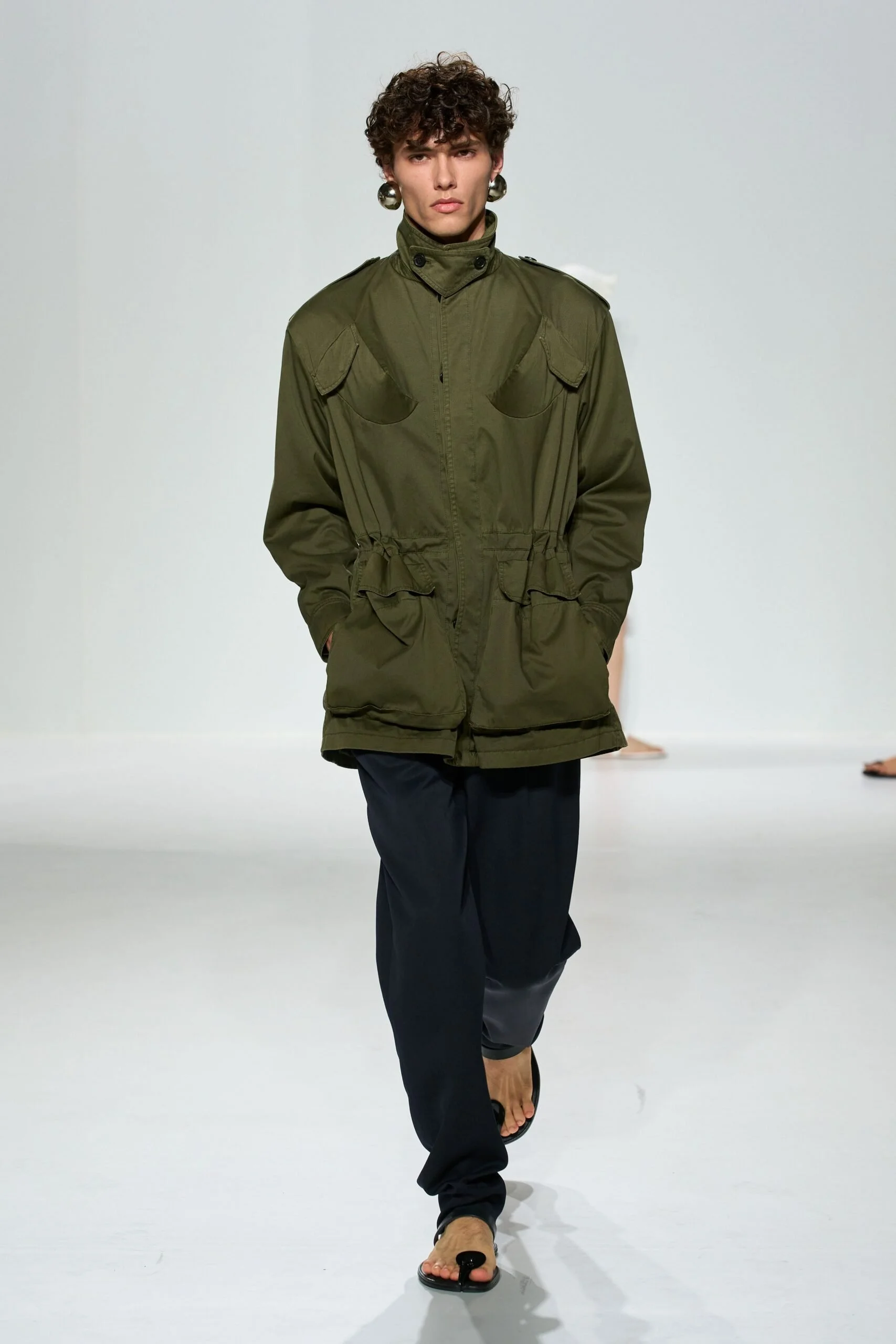
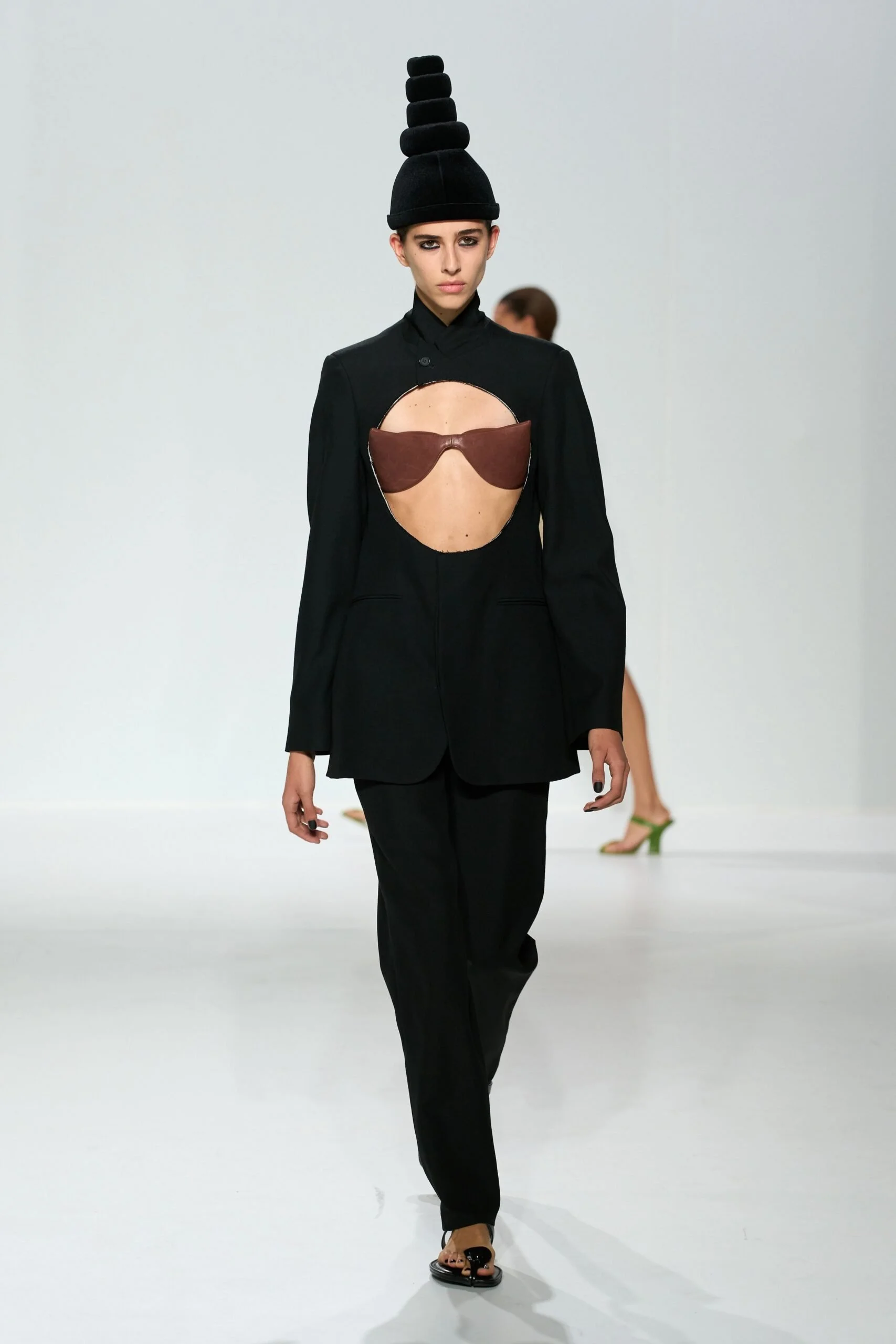
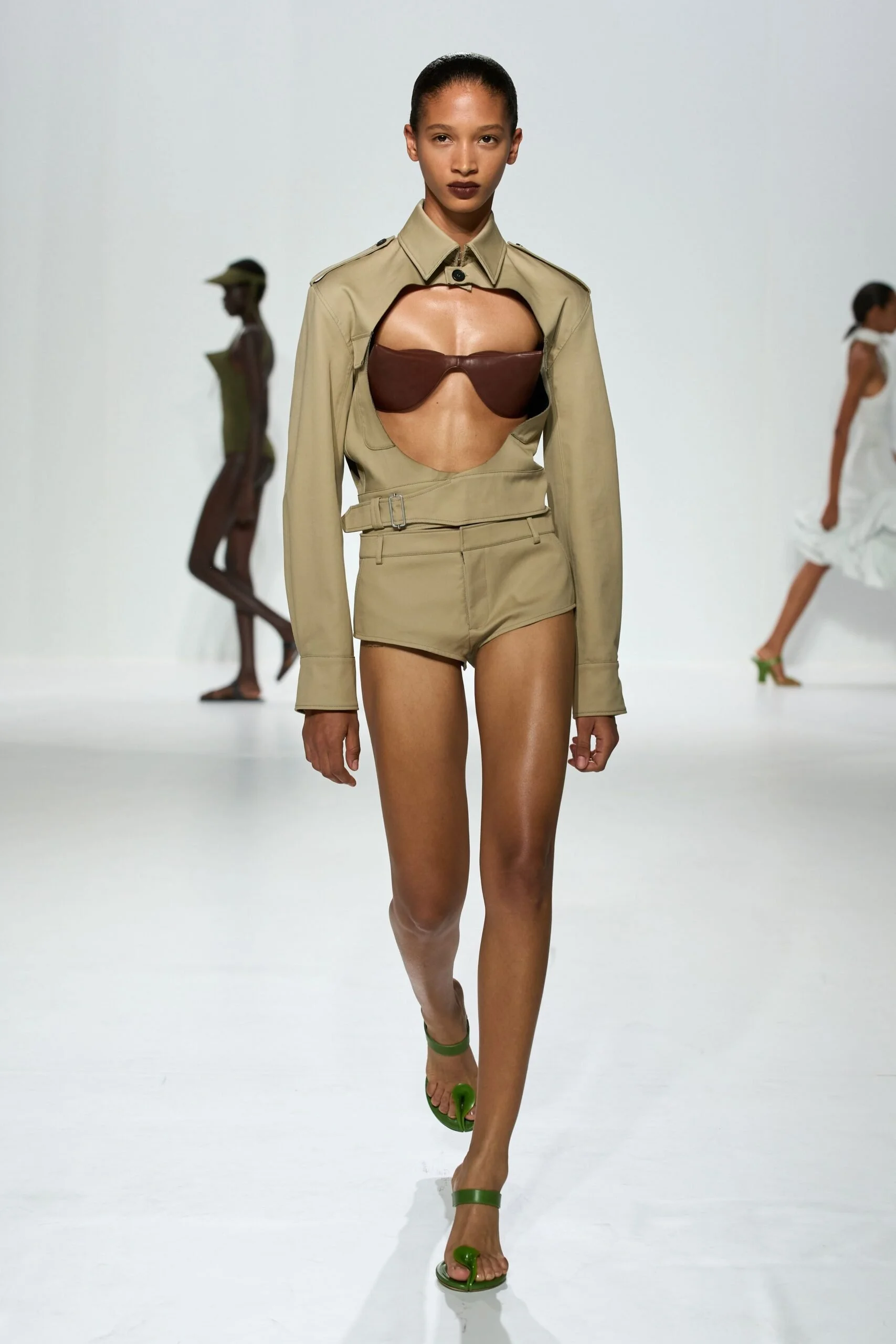
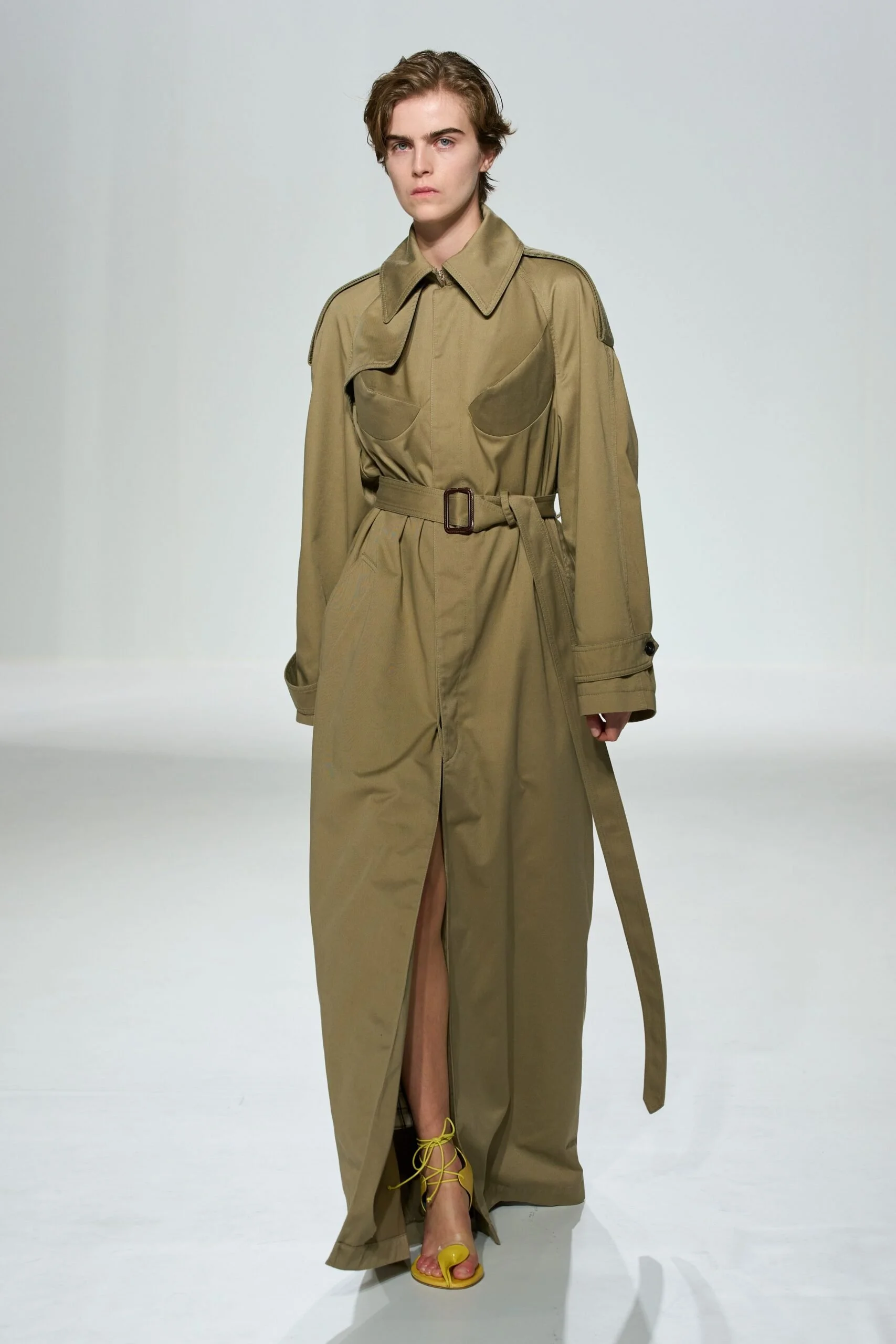
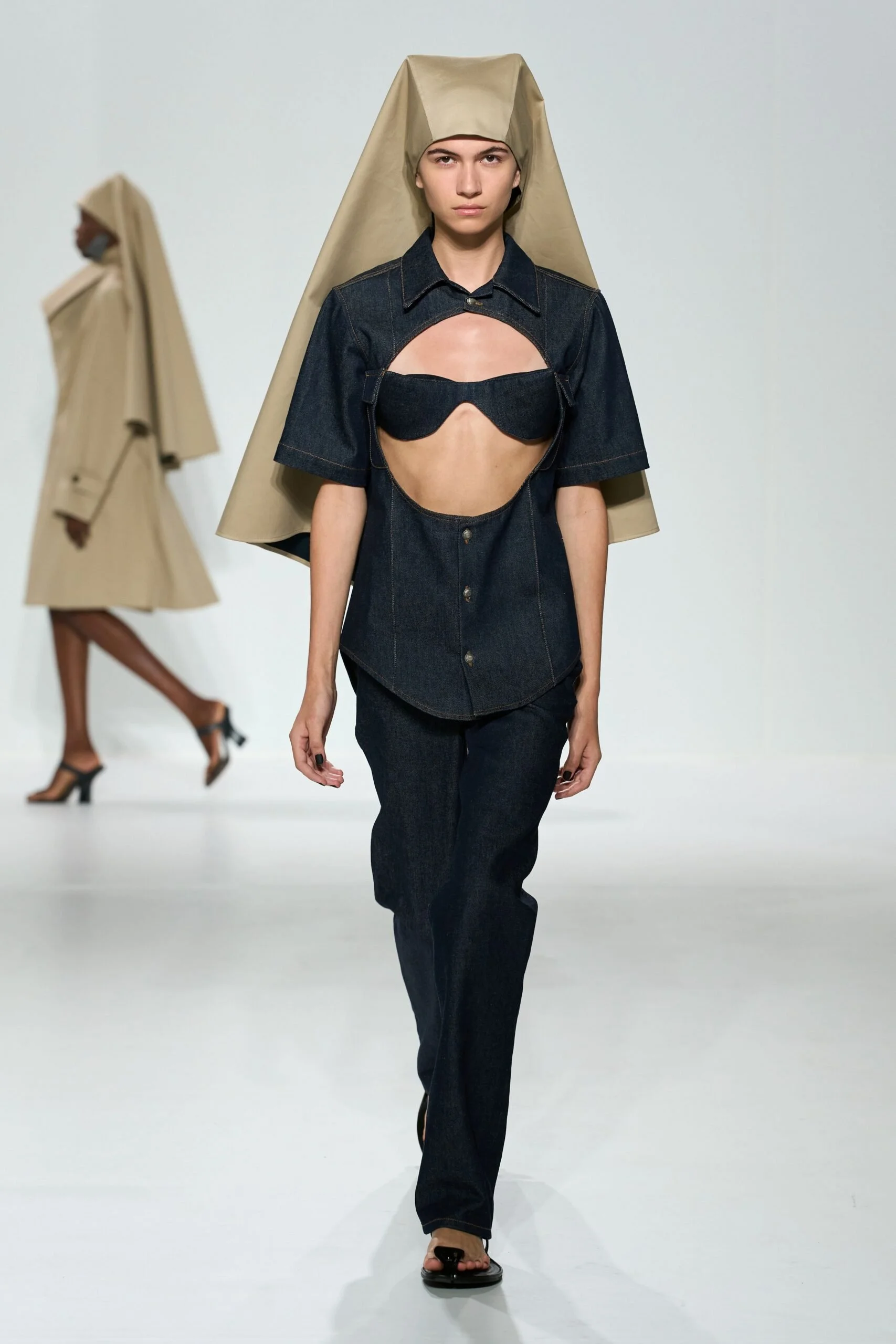
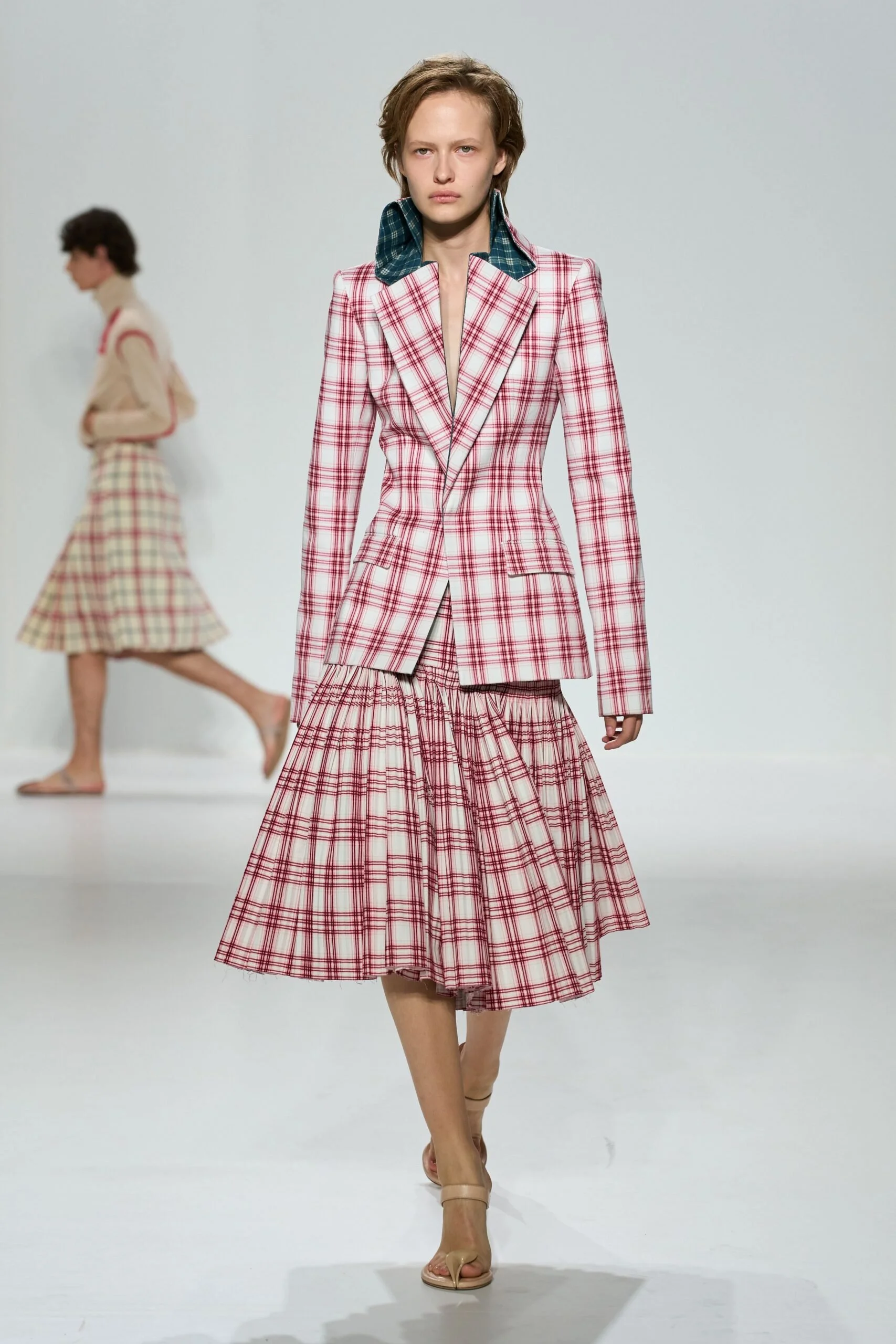
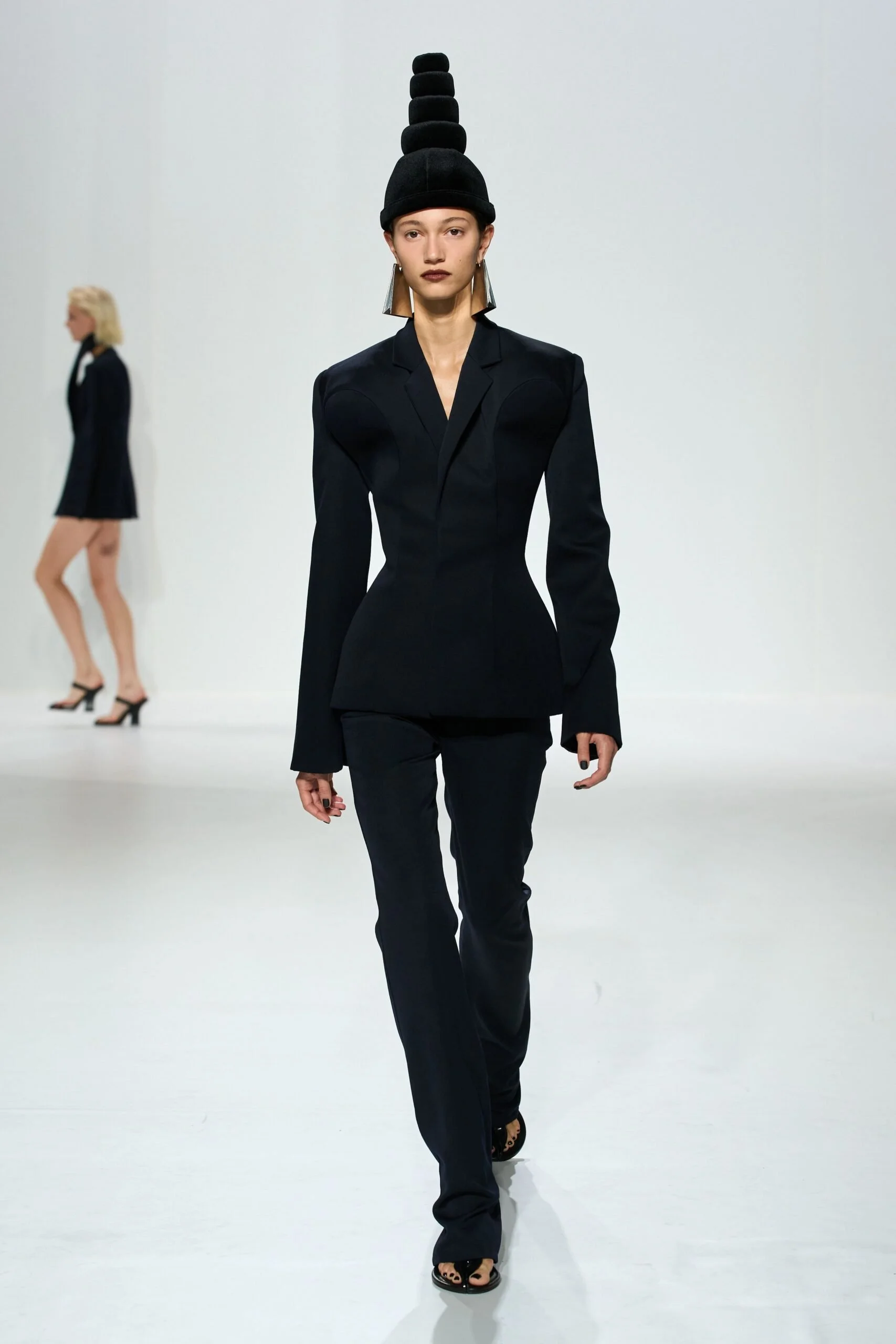
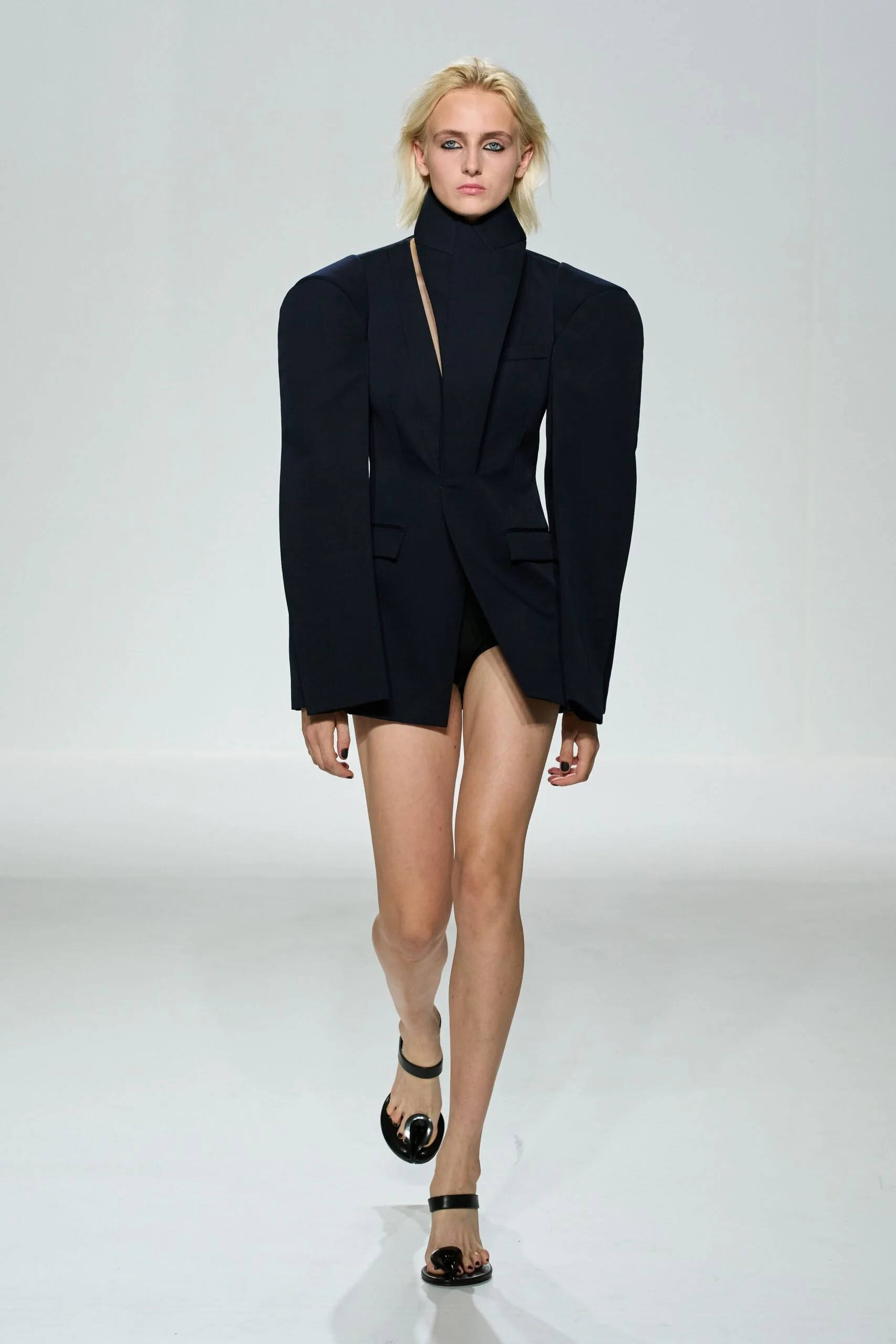
That became particularly apparent in the show space, where mirrors surrounded the runway and exposed the collection's construction from every direction. Jackets were built to reveal themselves gradually. Collars pushed forwards to create unusual necklines that hung open with a slightly debonair attitude, while an apparently conventional hourglass blazer became a jutting sculptural shape once the model moved past. Other jackets featured large porthole openings across the chest, revealing neo-cone bras underneath. Lantink said T-shirts carrying “Junior Gaultier” imagery could also be worn beneath them, giving the more provocative silhouettes a connection to the house's history. The three-quarter view, rather than the traditional front or side, became the most revealing angle.
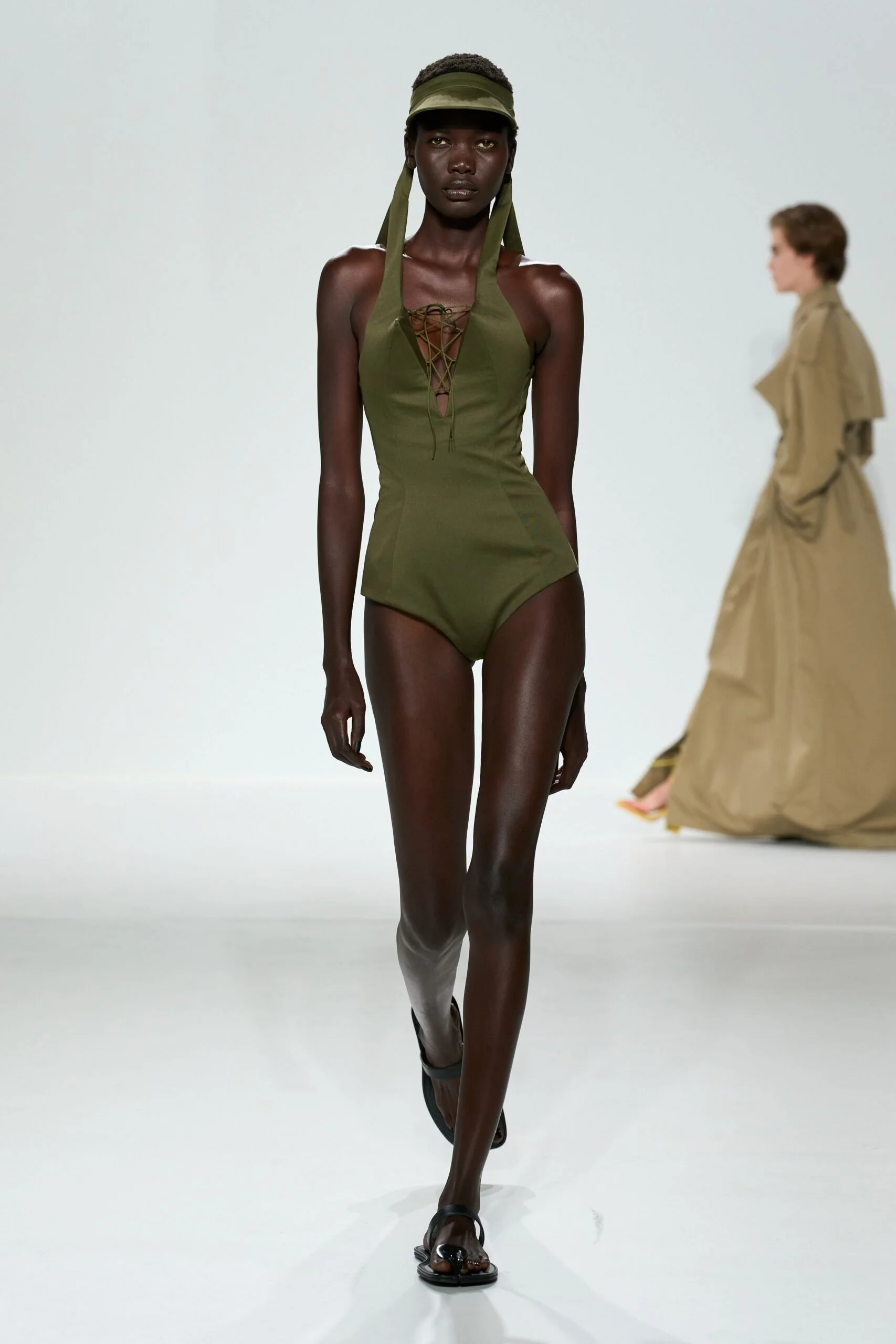
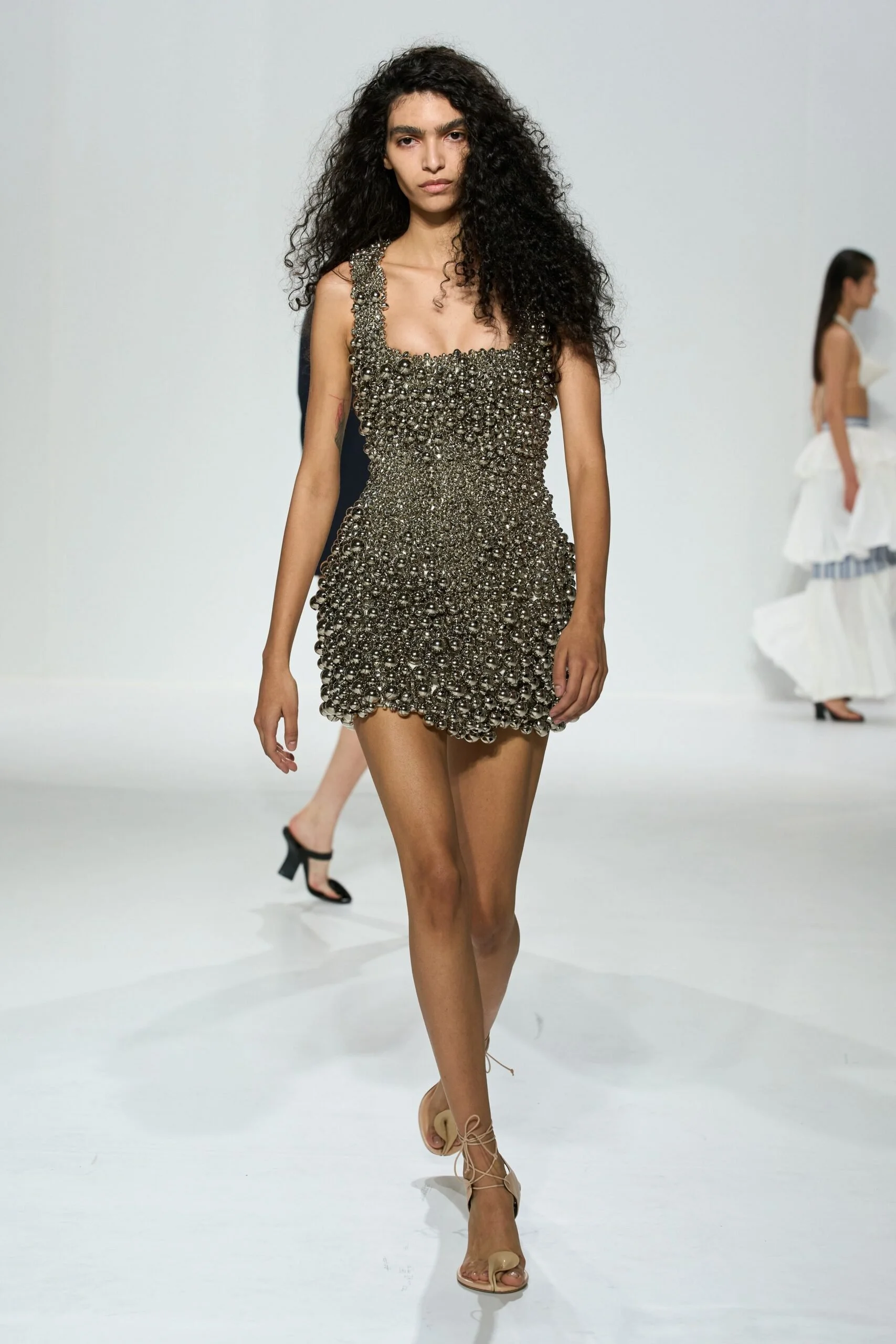
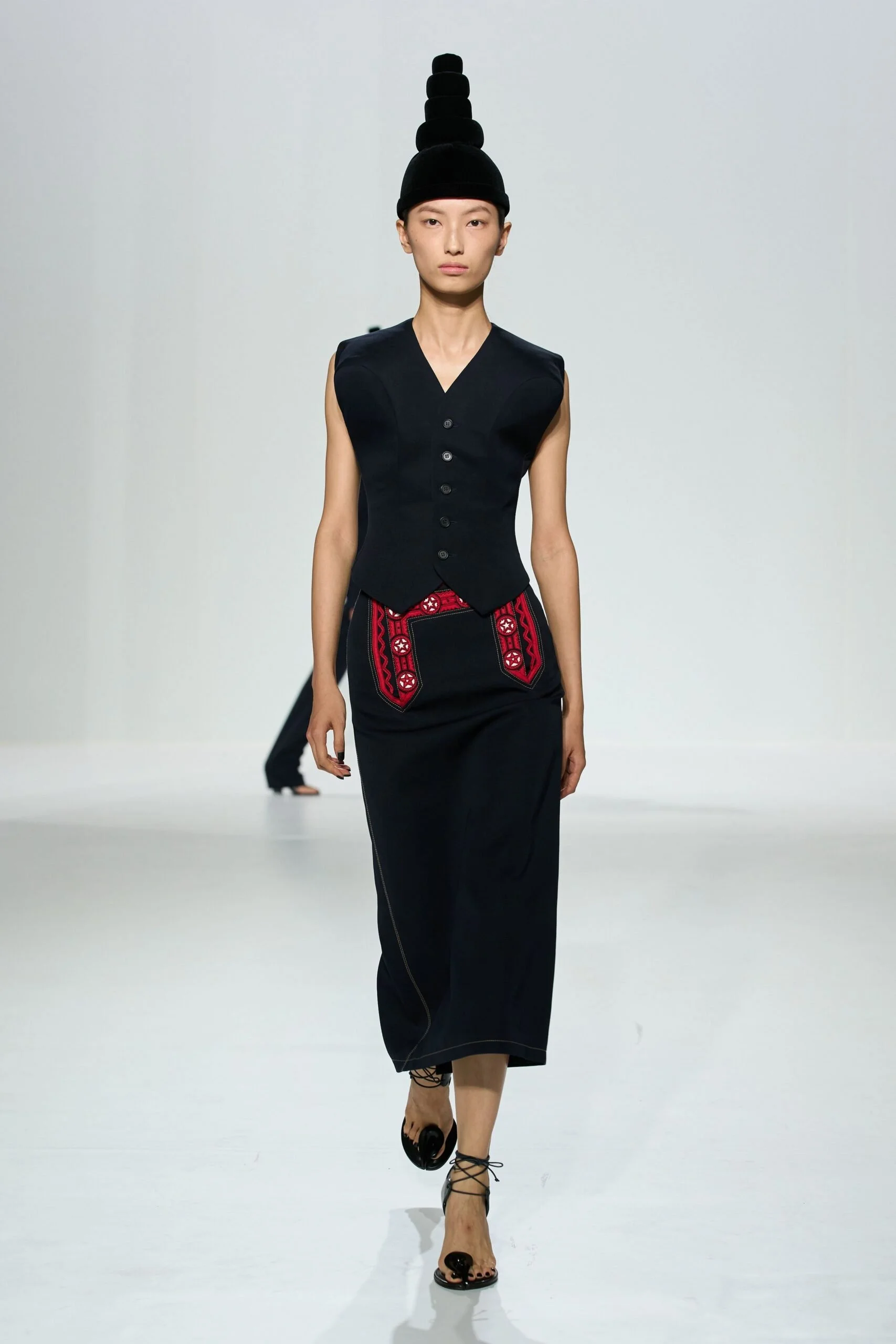
The collection gathered its references from across the Gaultier archive and beyond. Western influences met Gothic details, kilts and a diffuse folkloric language that felt distinctly Alpine. Lanz of Salzburg-style florals appeared in tiny motifs that could almost be mistaken for polka dots from a distance, while bells and decorative elements added to the sense of costume. The tailoring was undoubtedly clever, and there was real pleasure in watching familiar pieces become something more architectural. But the further the collection moved into Gaultier's experimental territory, the more serious it became. What was missing was some of the founder's irreverence: that particular combination of provocation, humour and sheer pleasure that made even the most outrageous Gaultier clothes feel like an invitation to have fun.
That distinction matters as Lantink continues to establish himself at the house. His resort collection in June showed how naturally his own mischievous instincts could work within the Gaultier universe, producing clothes that felt playful as well as commercially sharp. Spring 2027 was more restrained, almost determined to prove that Lantink understood the architecture of the house before allowing himself to dismantle it. There is nothing wrong with taking the language seriously, but fashion is often more convincing when the speaker has a little fun with it. Lantink is clearly getting closer to fluency. The next step may be remembering that Gaultier was never only about speaking correctly. It was about knowing exactly when to misbehave.