Litkovska Spring 2027
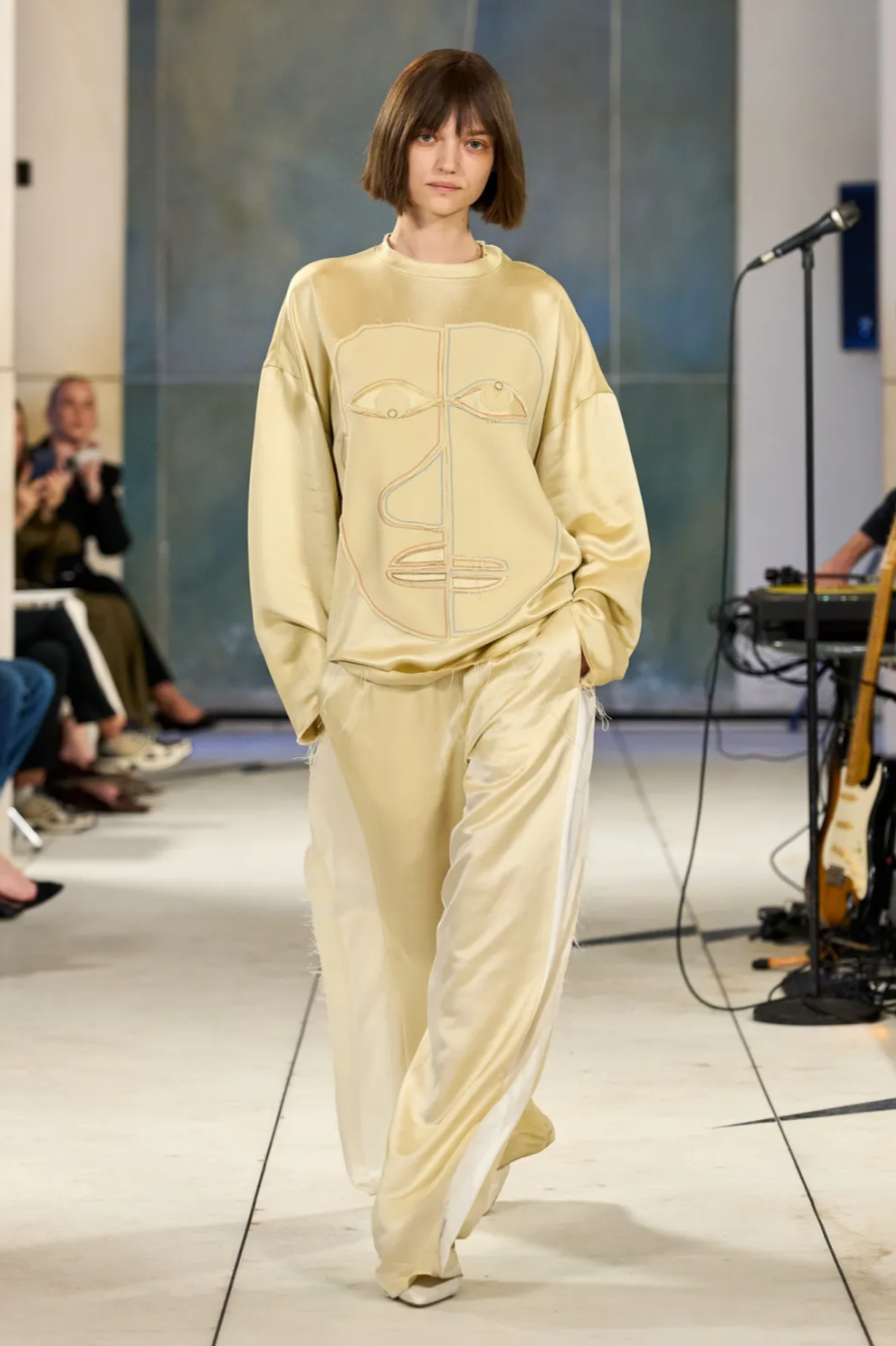
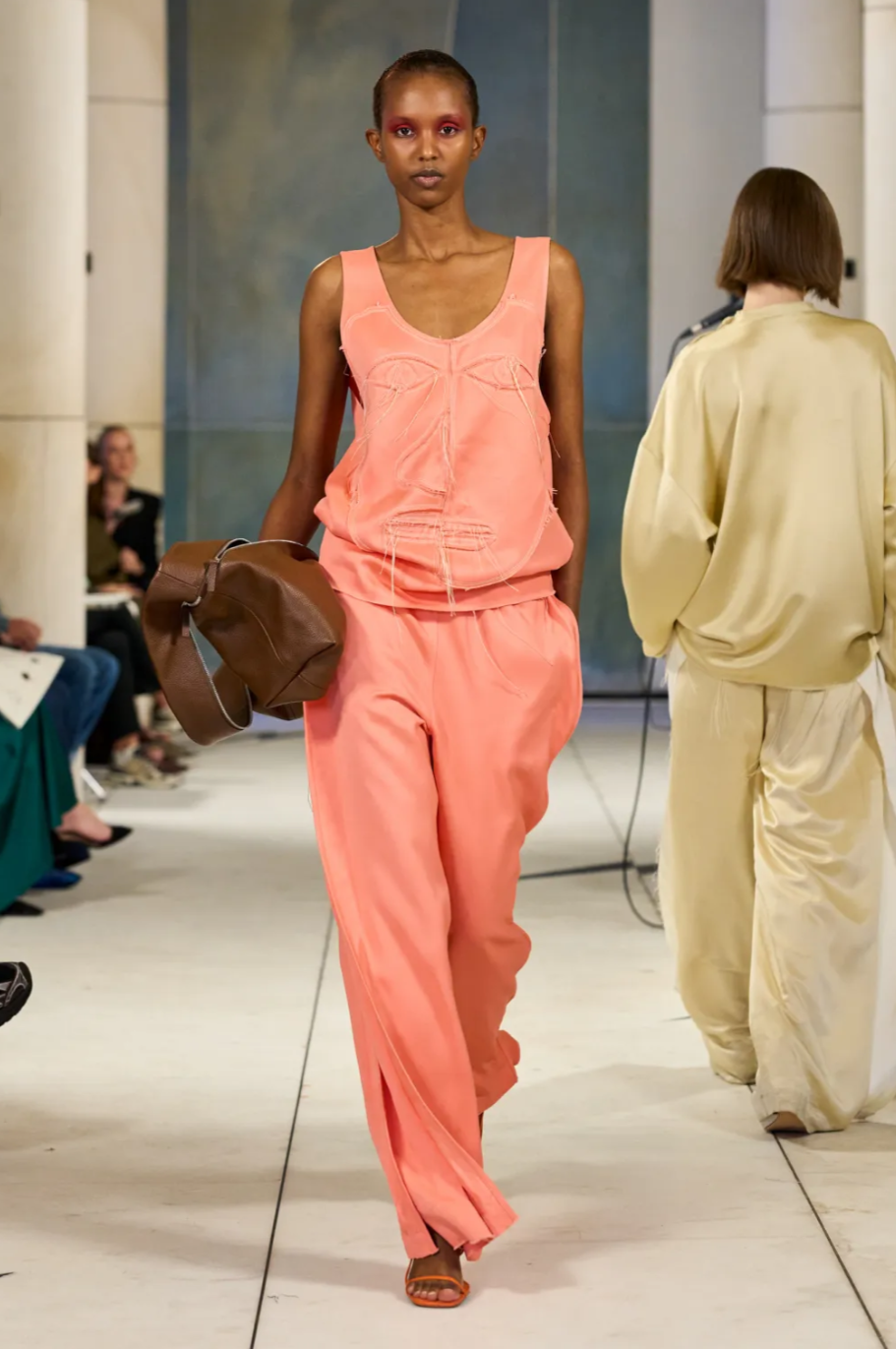
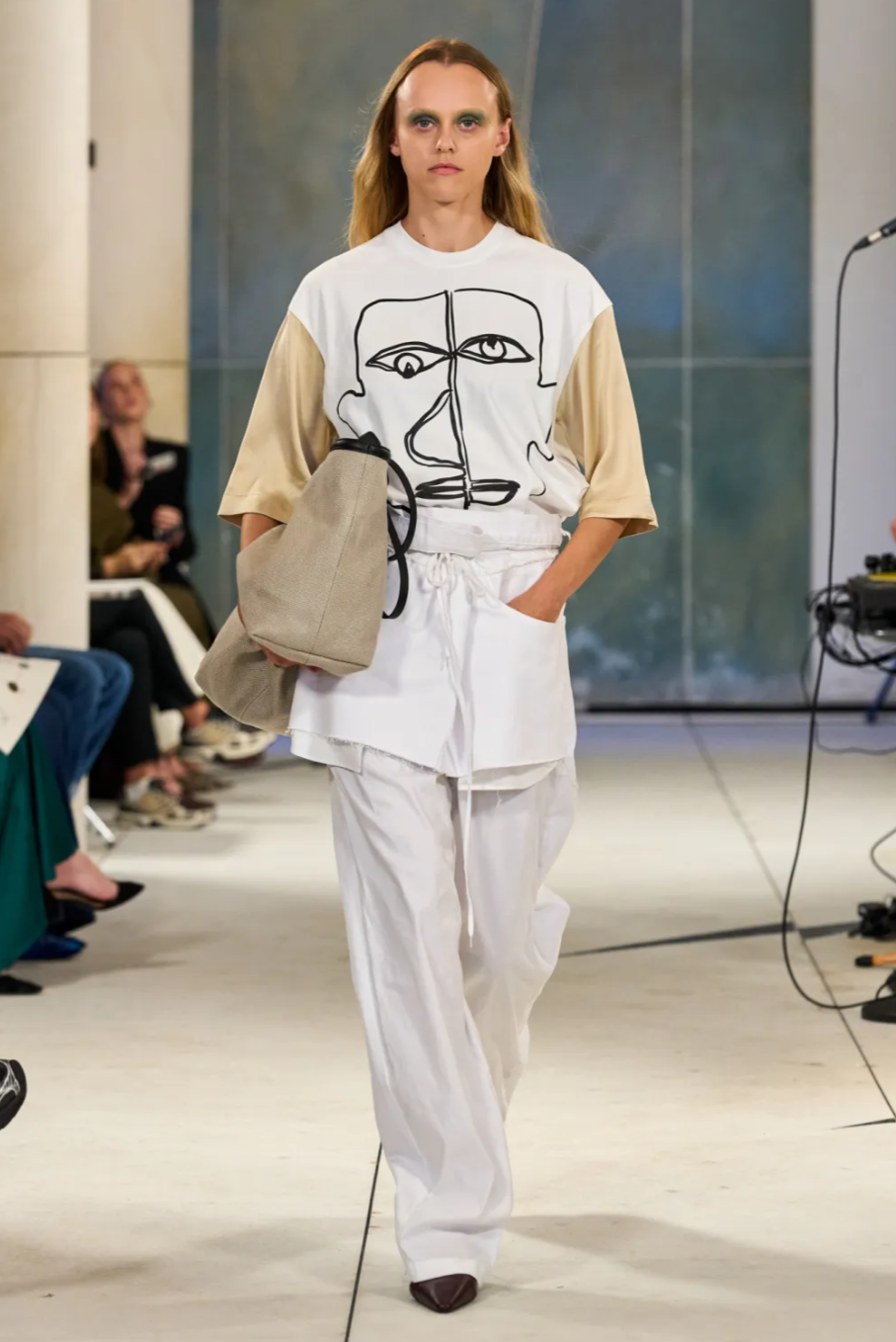
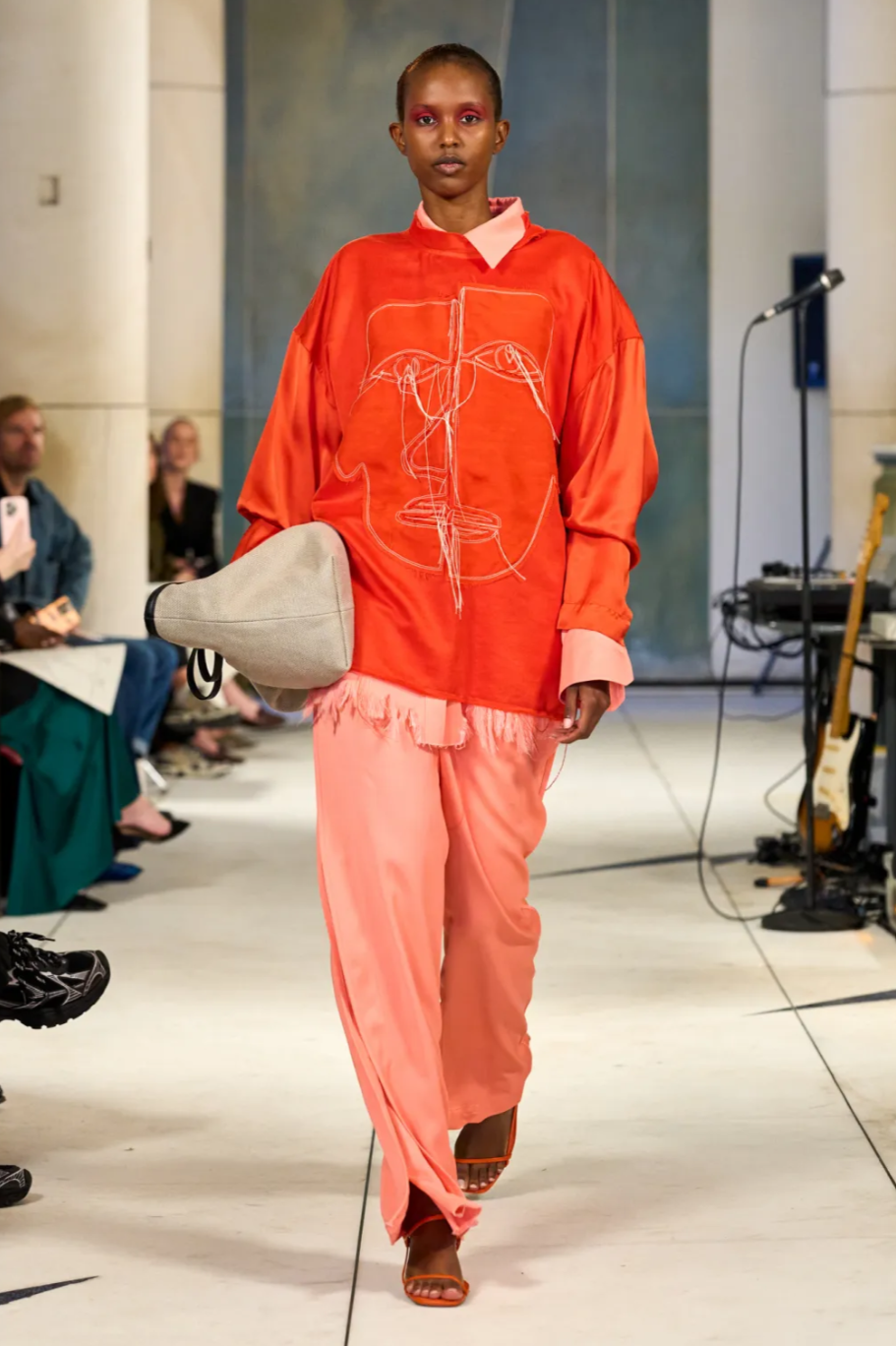
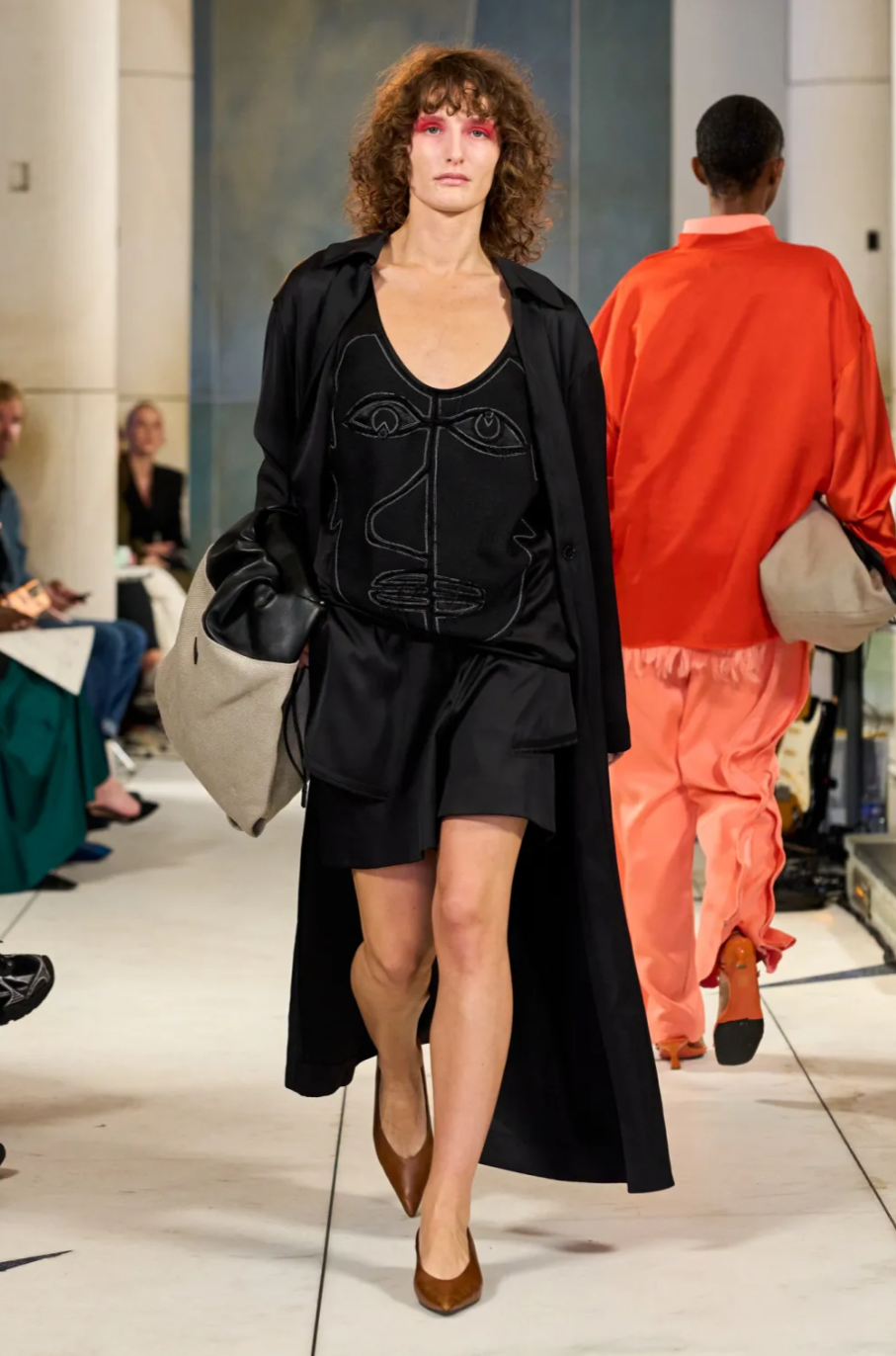
For Lilia Litkovska, fashion rarely exists in isolation. Her presentations tend to operate somewhere between a runway, performance and cultural gathering, and Spring 2027 was no different. Titled “Stricha”, meaning “an encounter” in the Hutsul dialect of her native Ukraine, the collection began over morning coffee at Café Beaubourg, with model Pasha Harulia performing before opening the runway alongside musician Dmytro Novichenko. The idea of meeting extended into the clothes themselves, with Litkovska considering what happens when people, materials and ideas come into contact. One of her starting points was Ukrainian artist Borys Kosarev and his Cubo-Futurist work, translated into embroidered masked faces across satin sweatshirts. But the more interesting reference was the notion of surfaces revealing and concealing what lies beneath, turning the collection into a study of interaction.
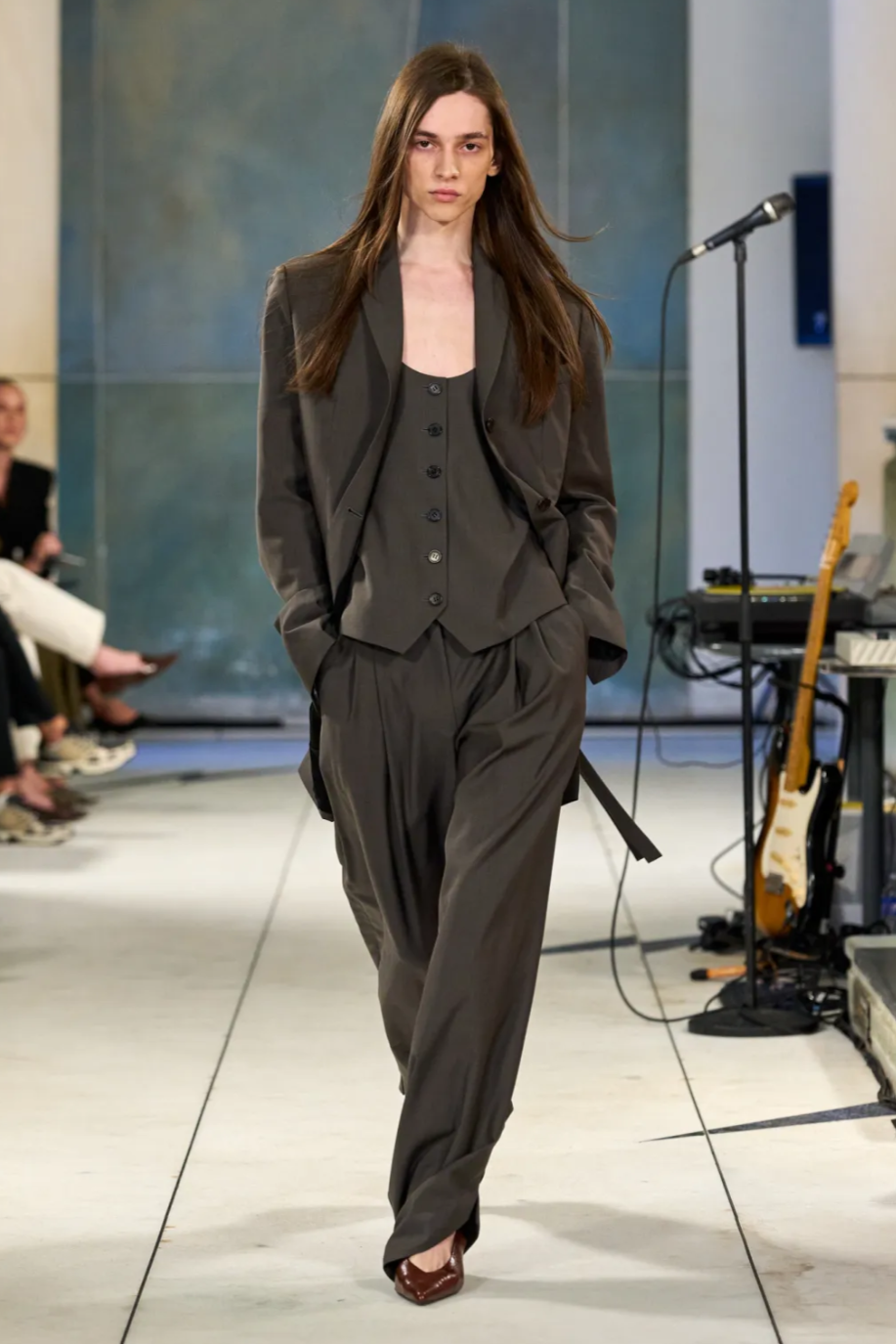
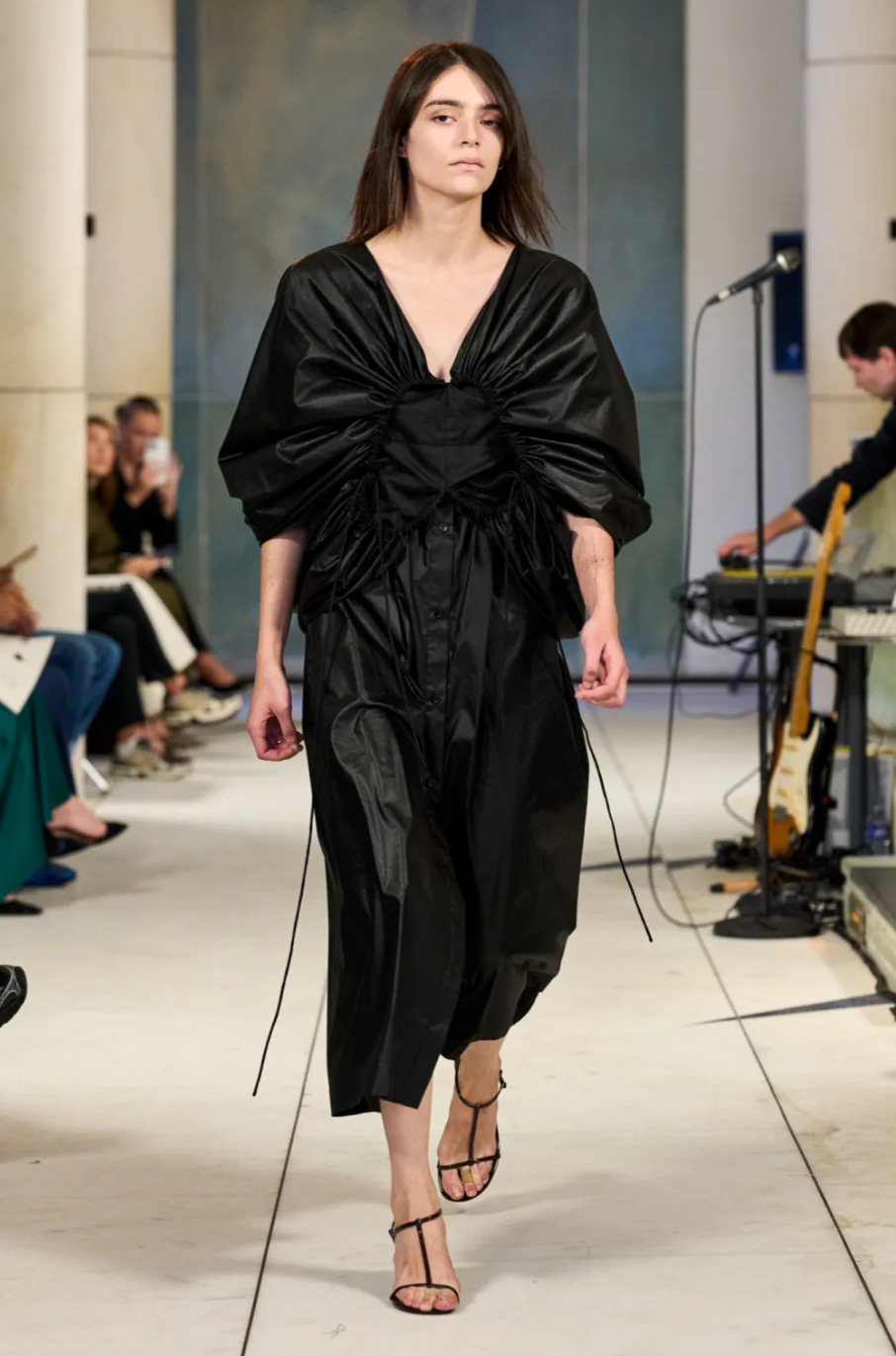
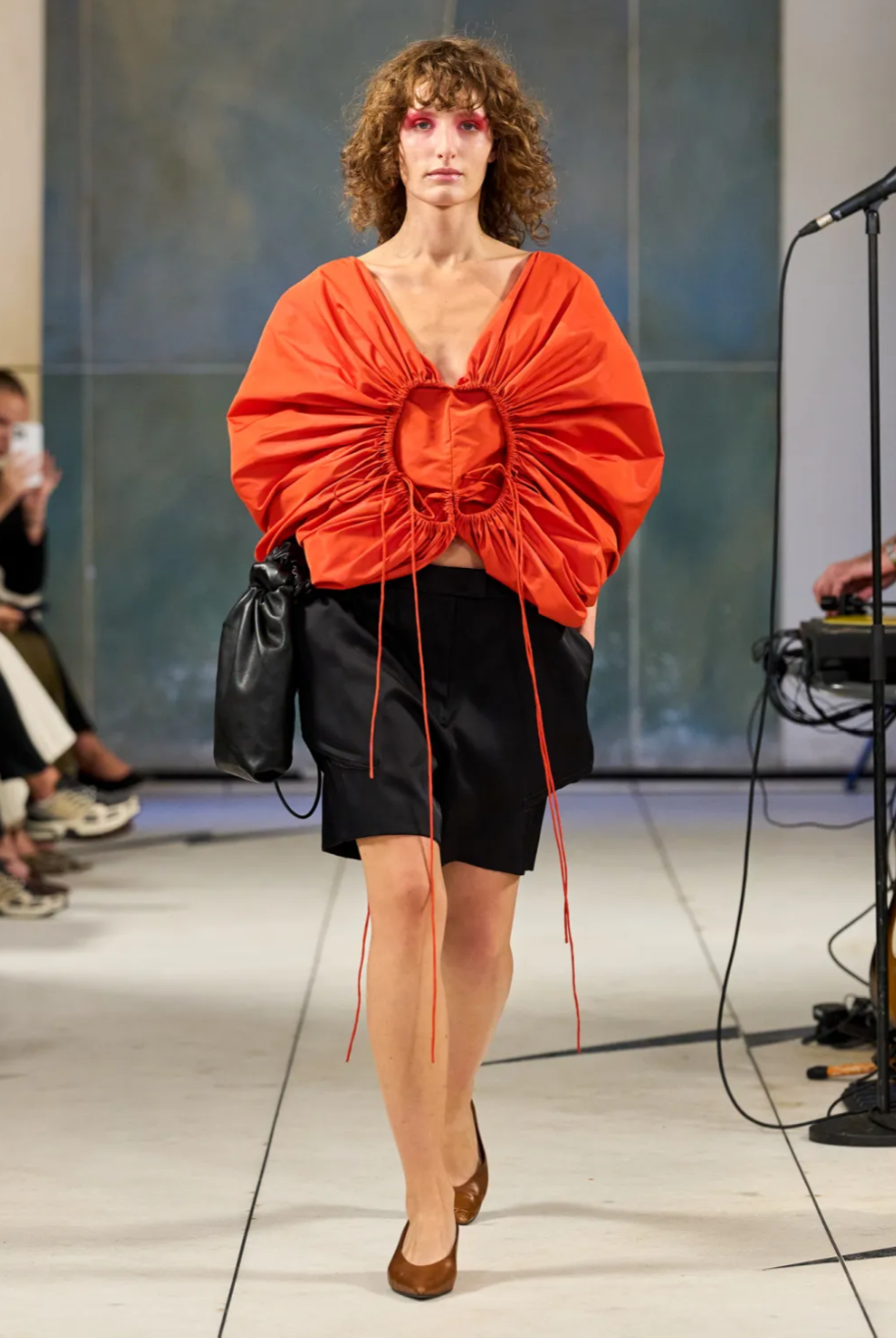
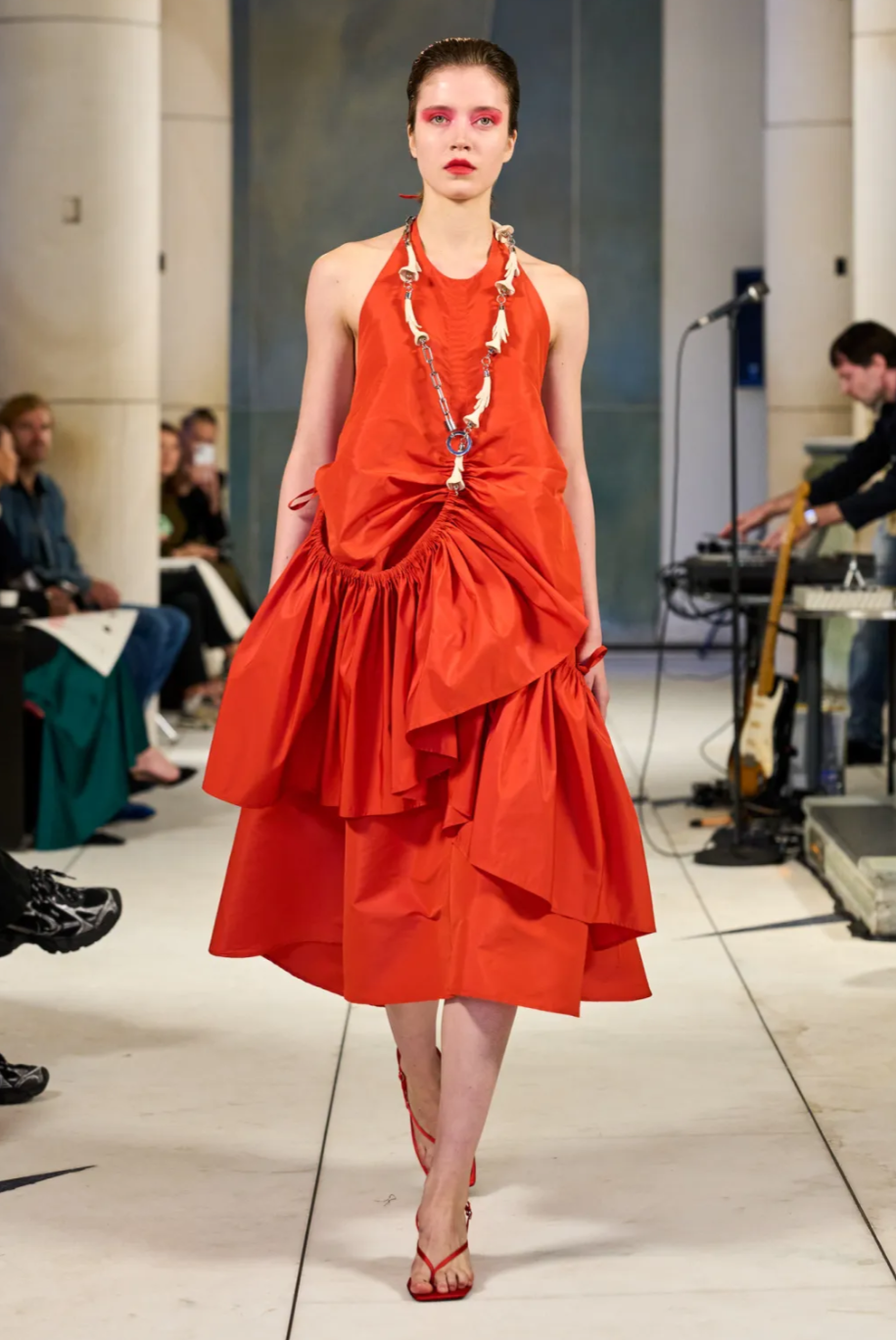
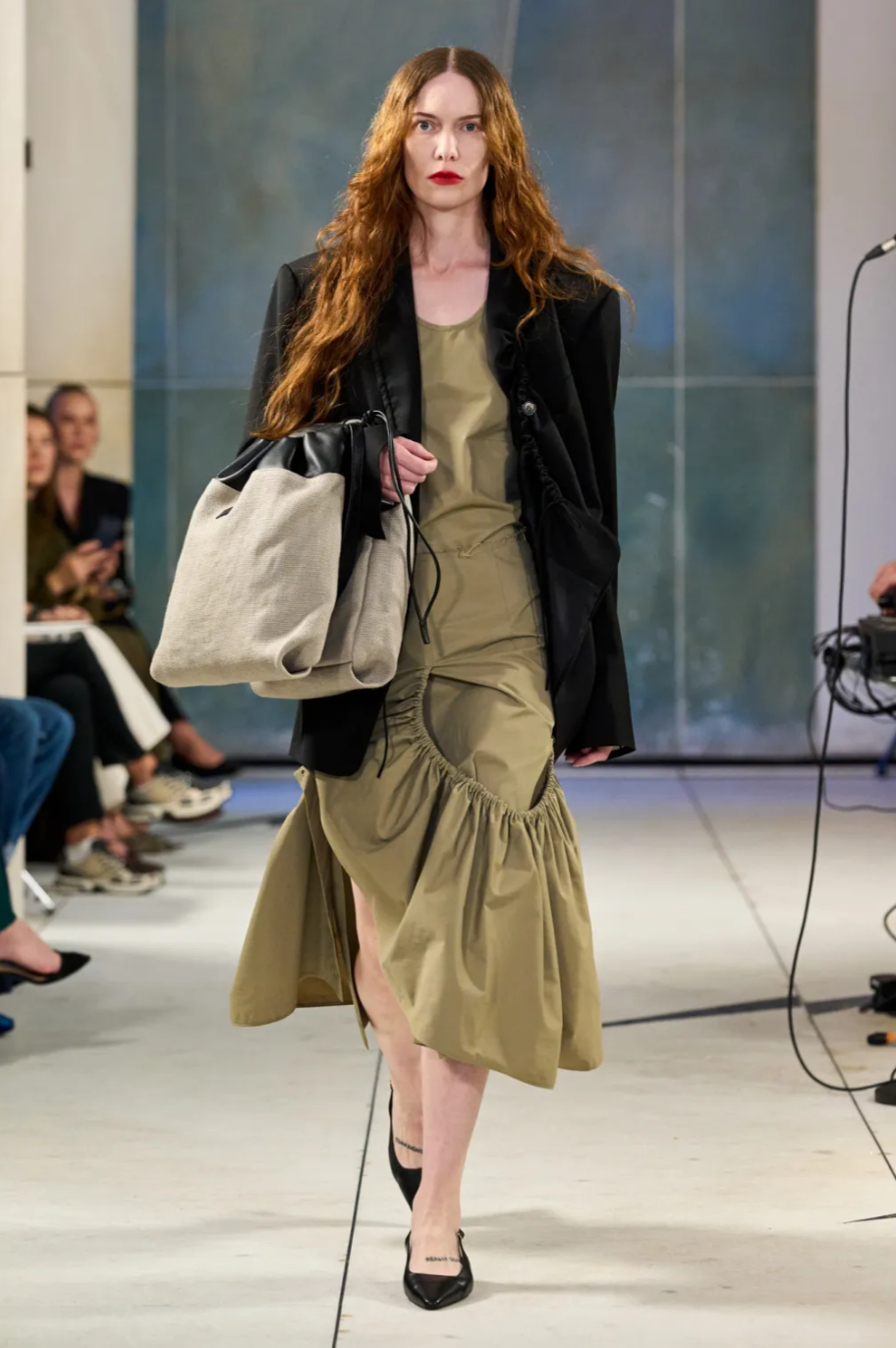
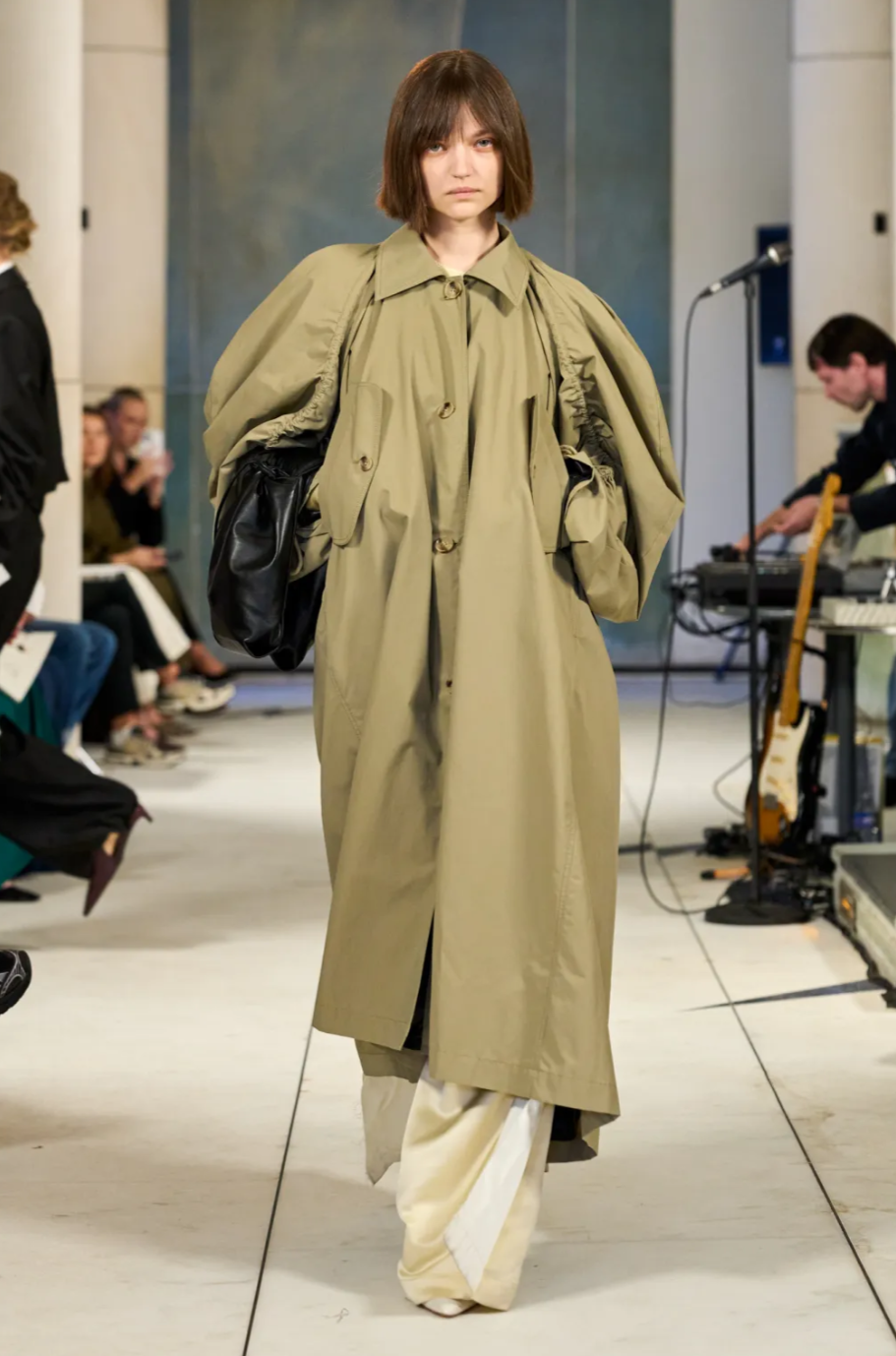
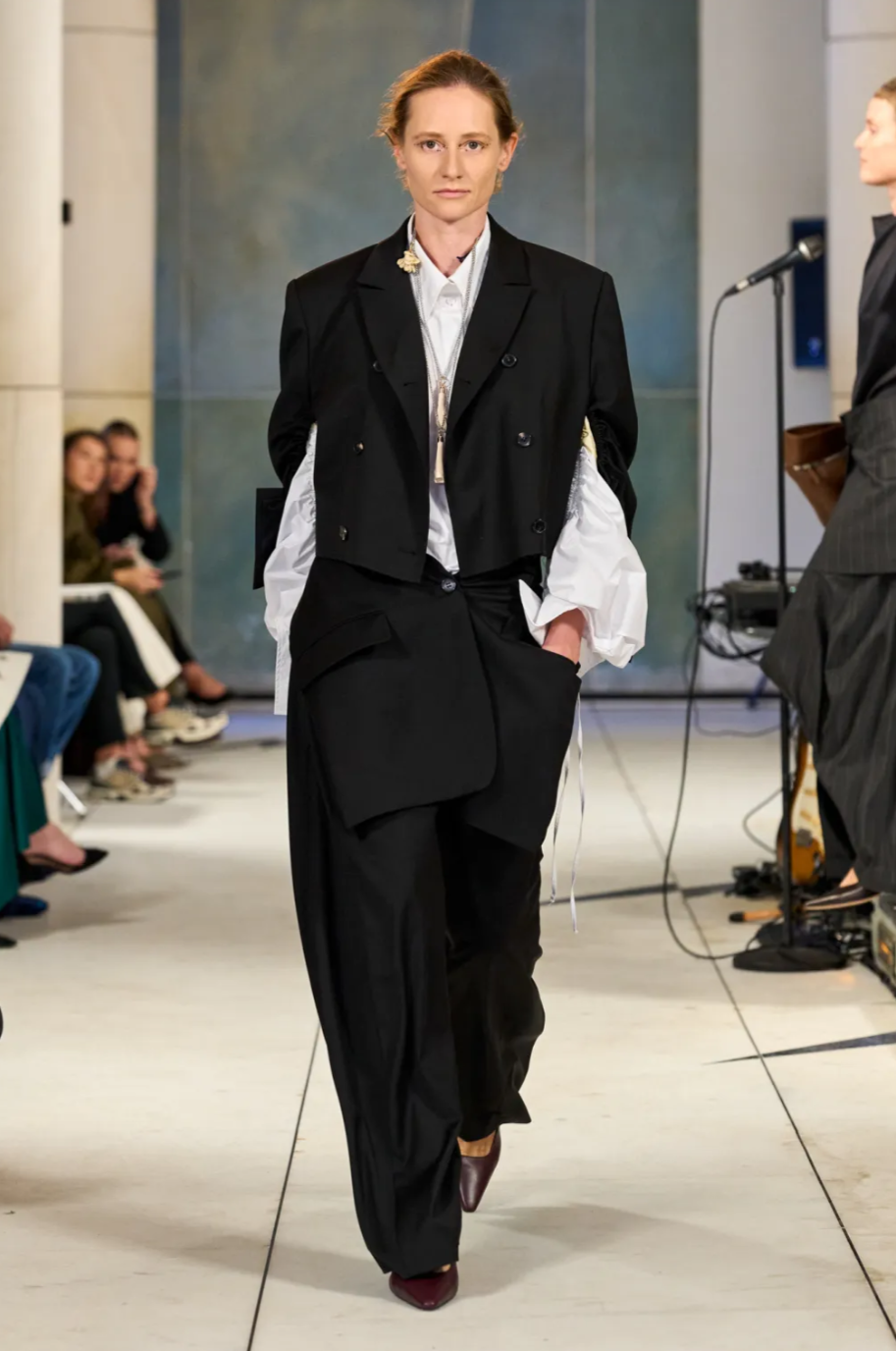
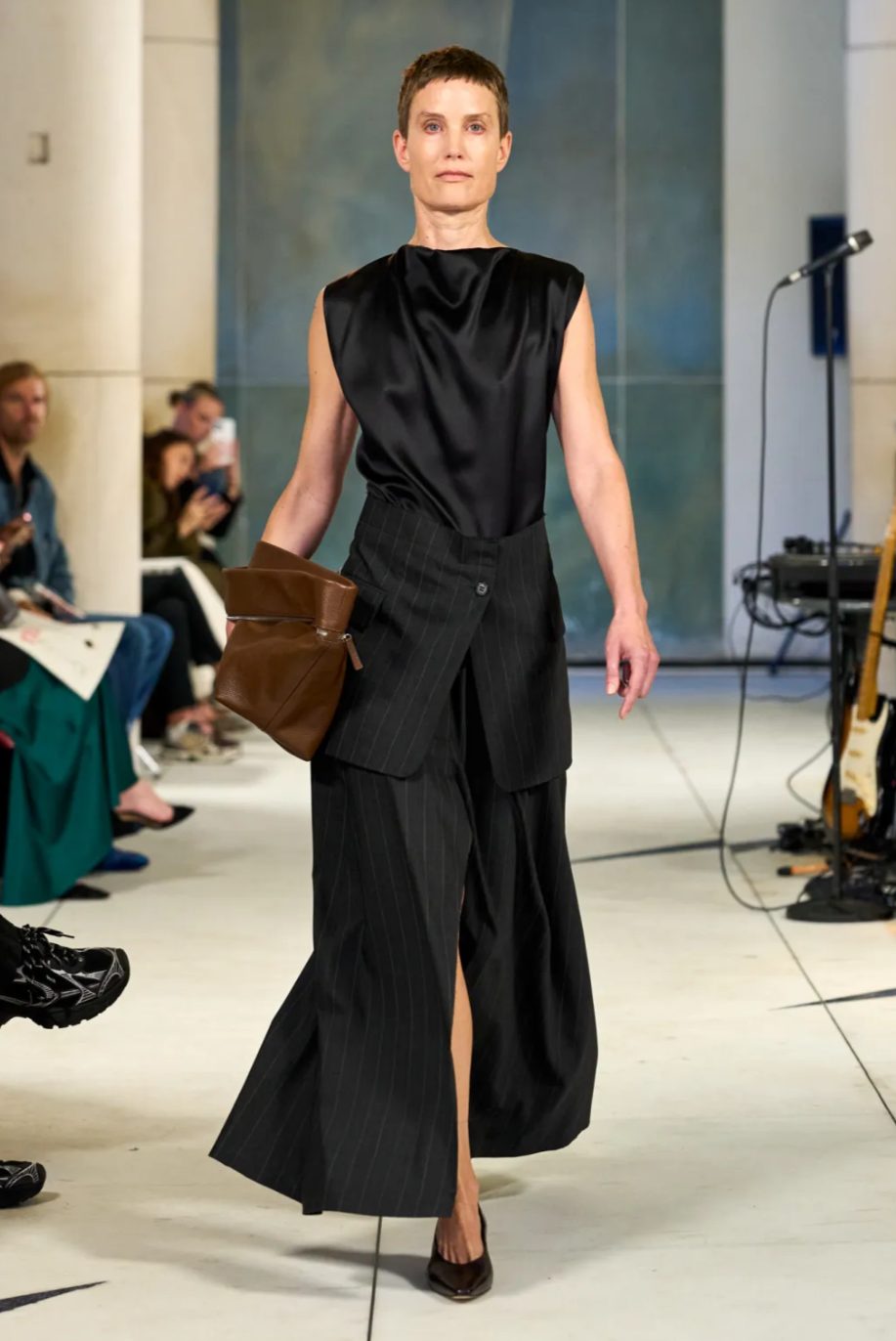
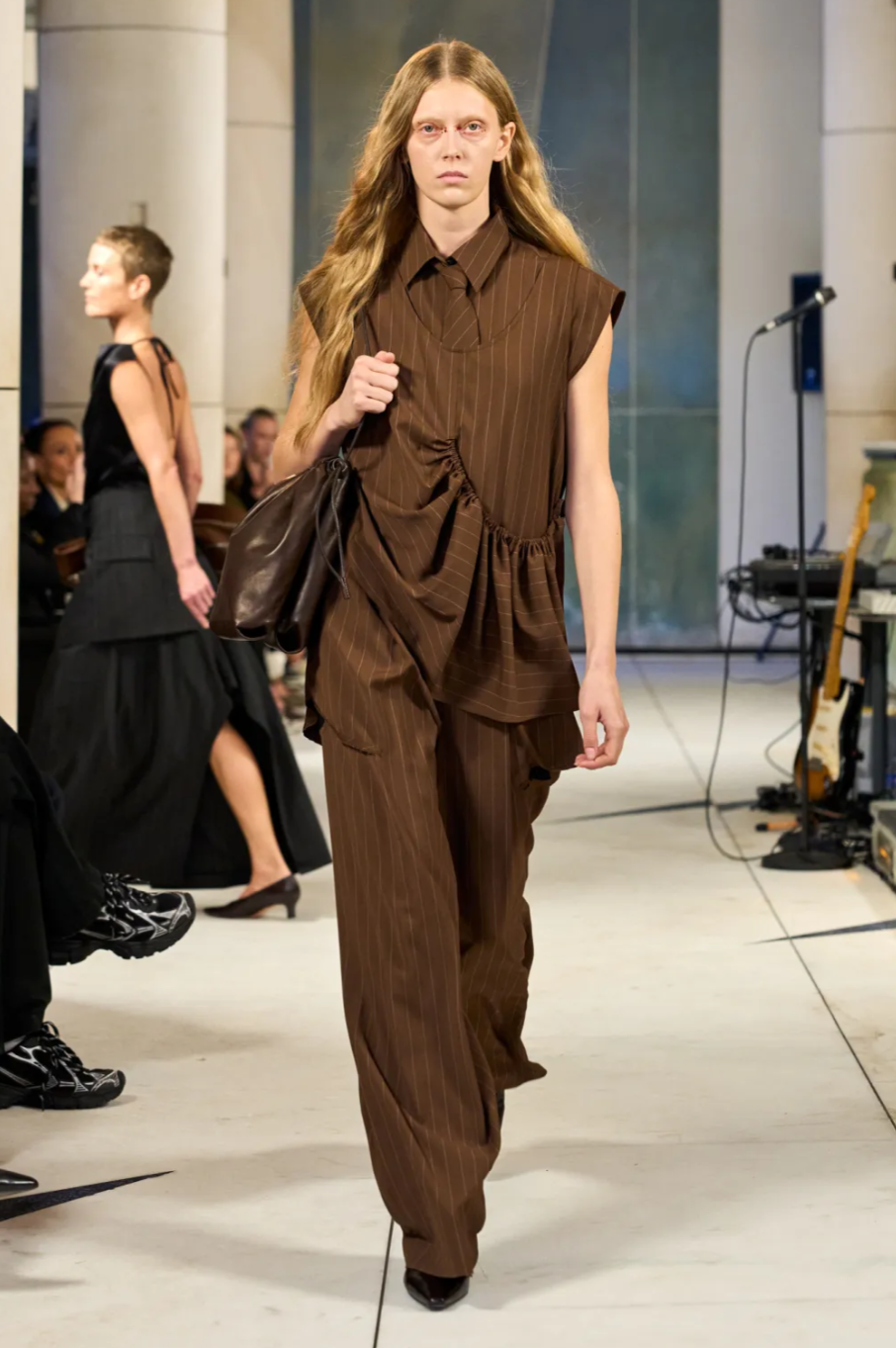
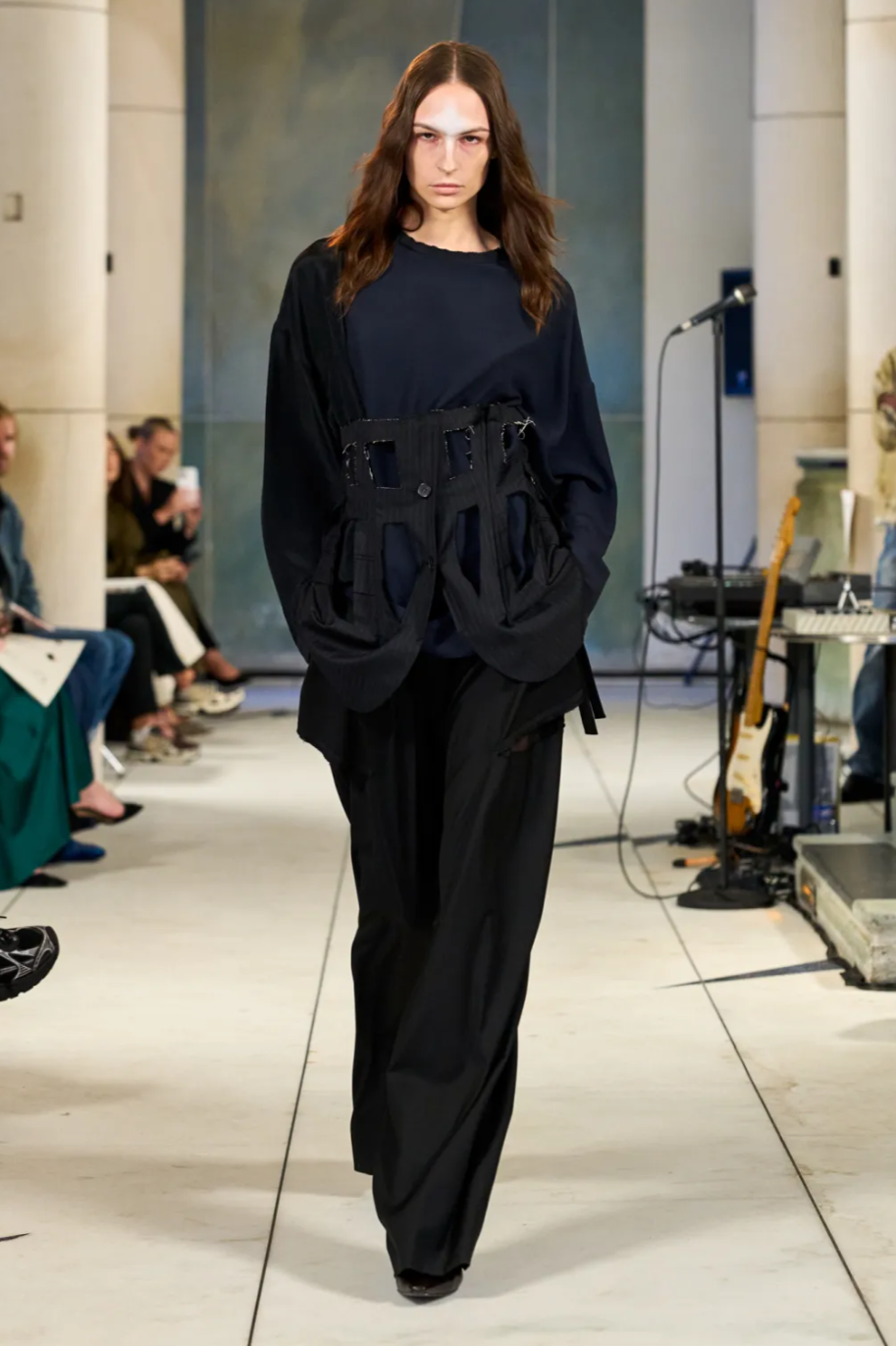
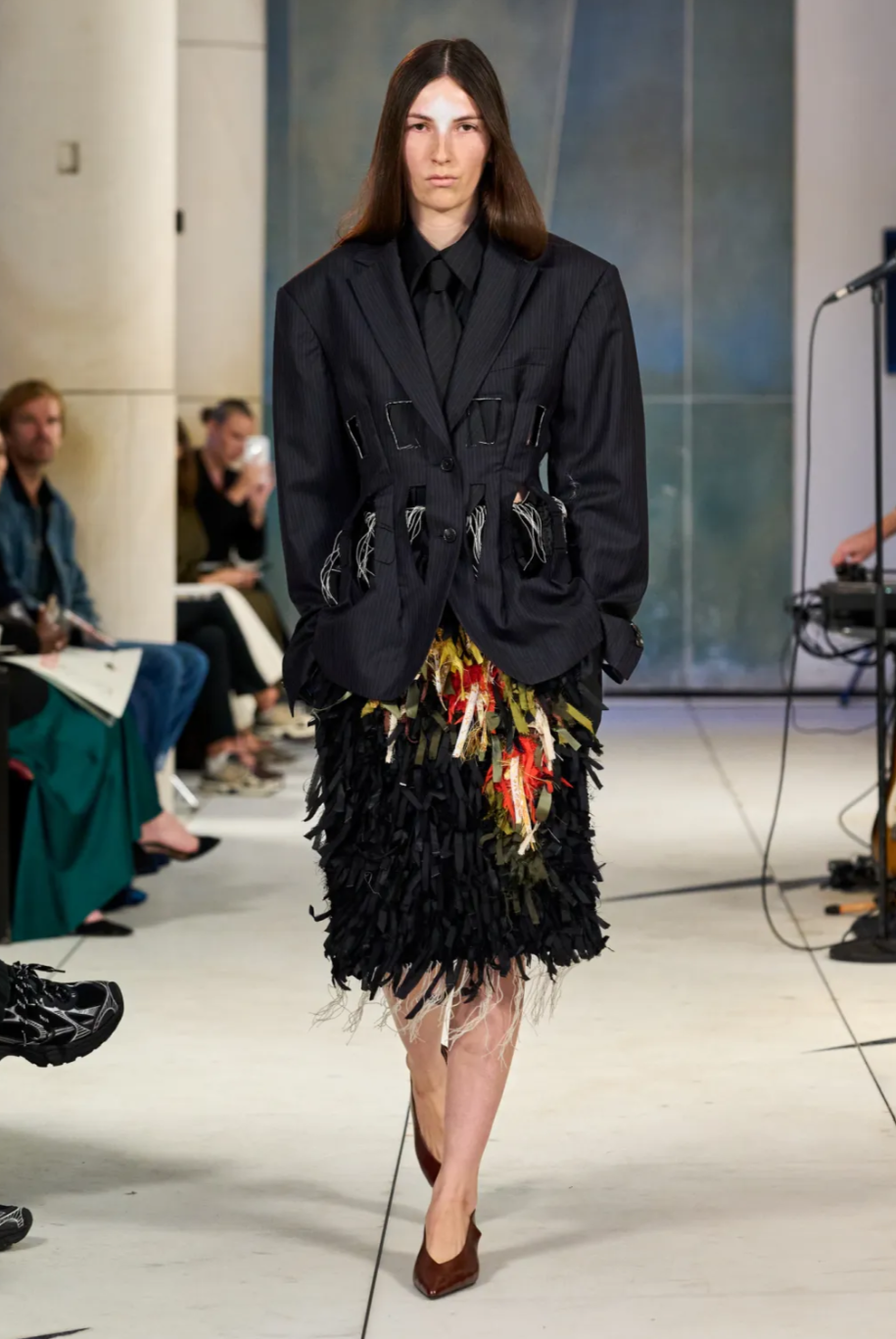
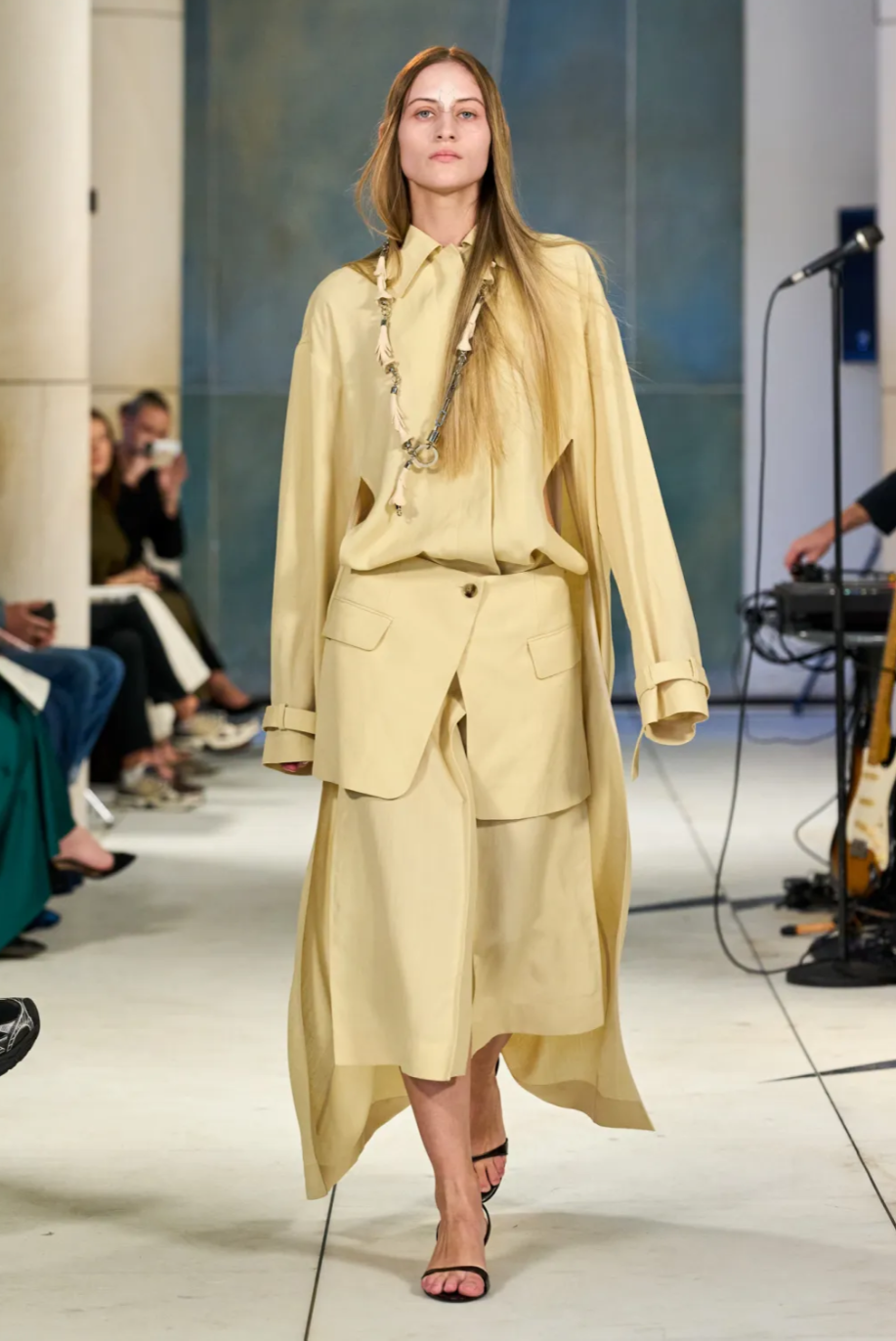
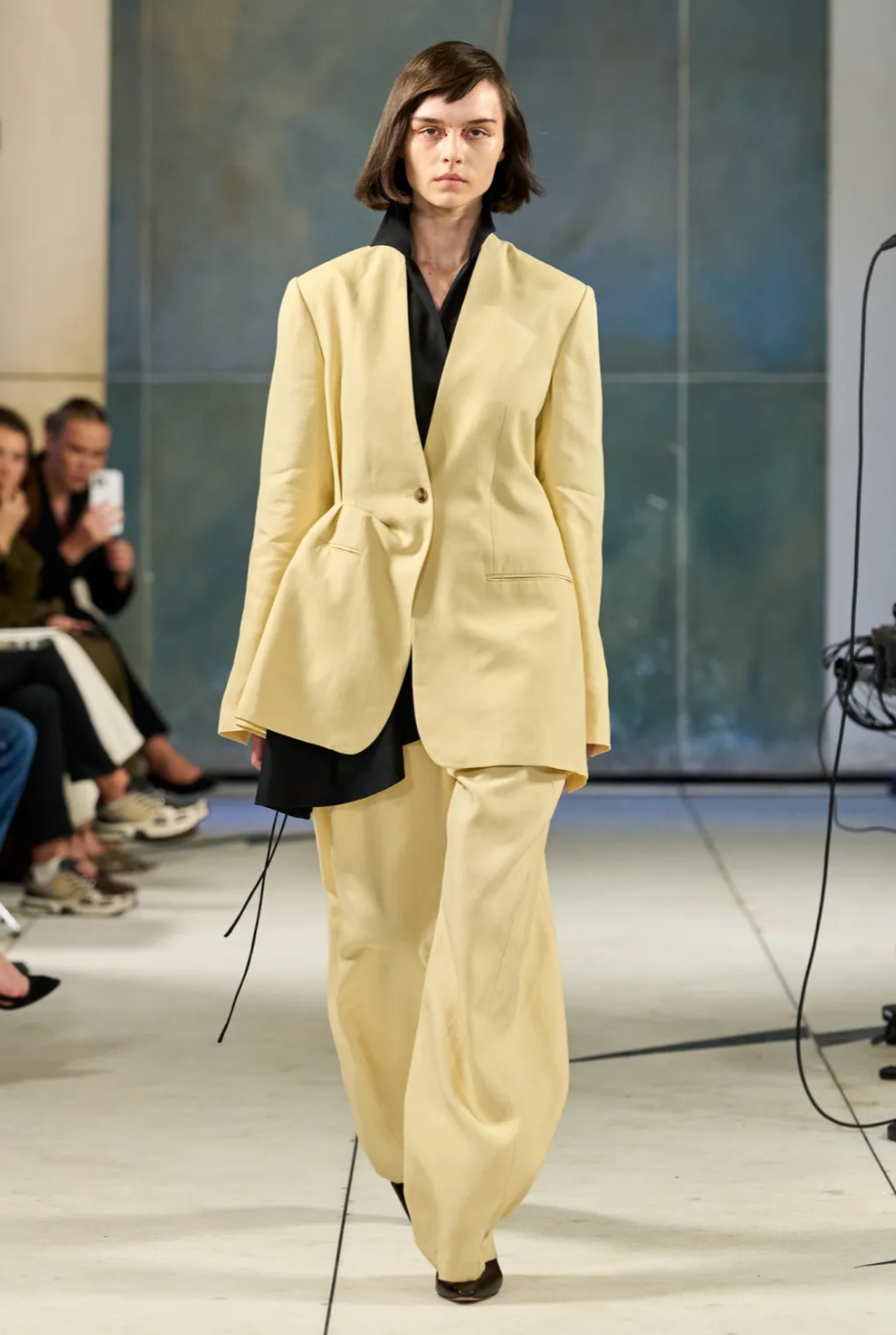
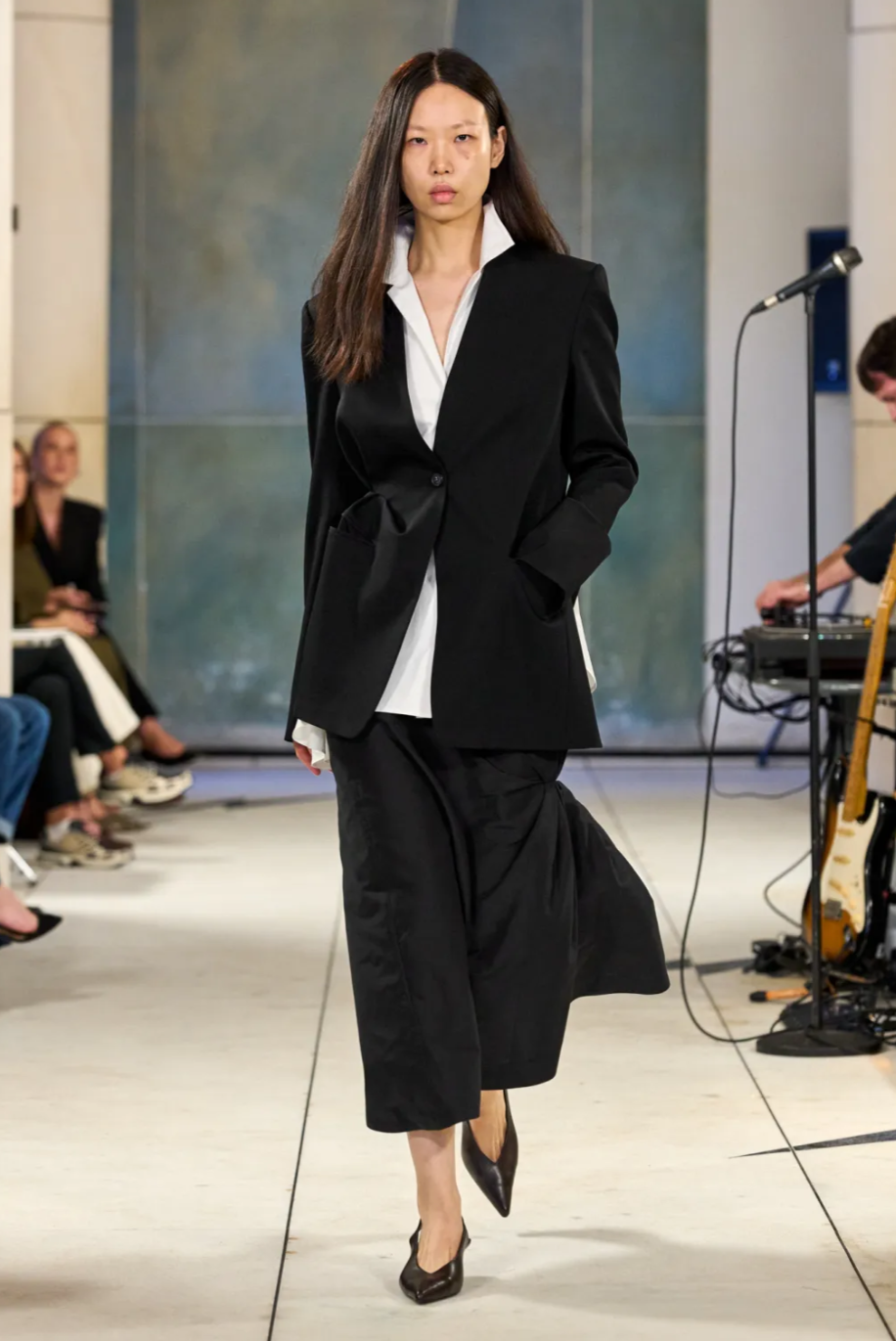
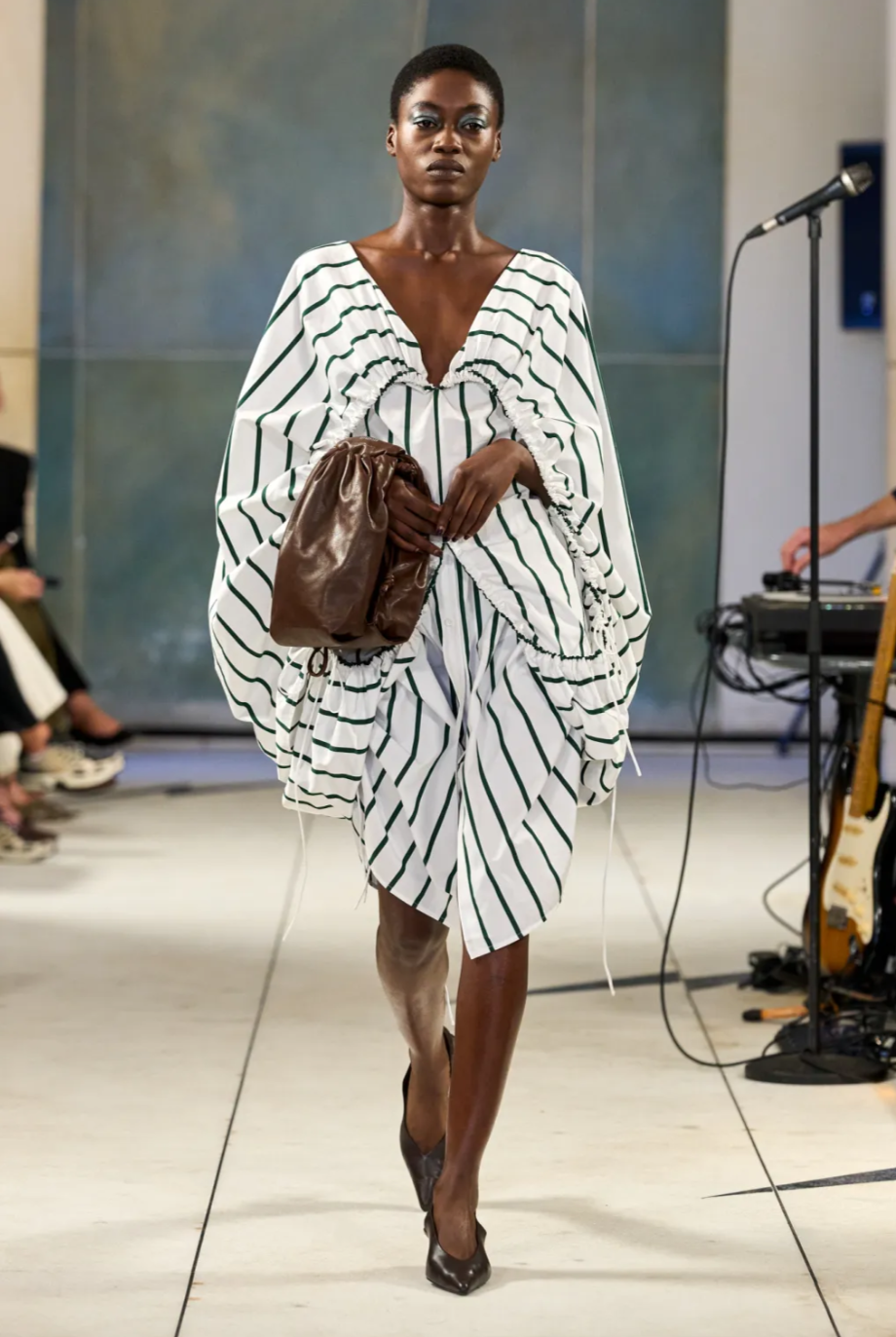
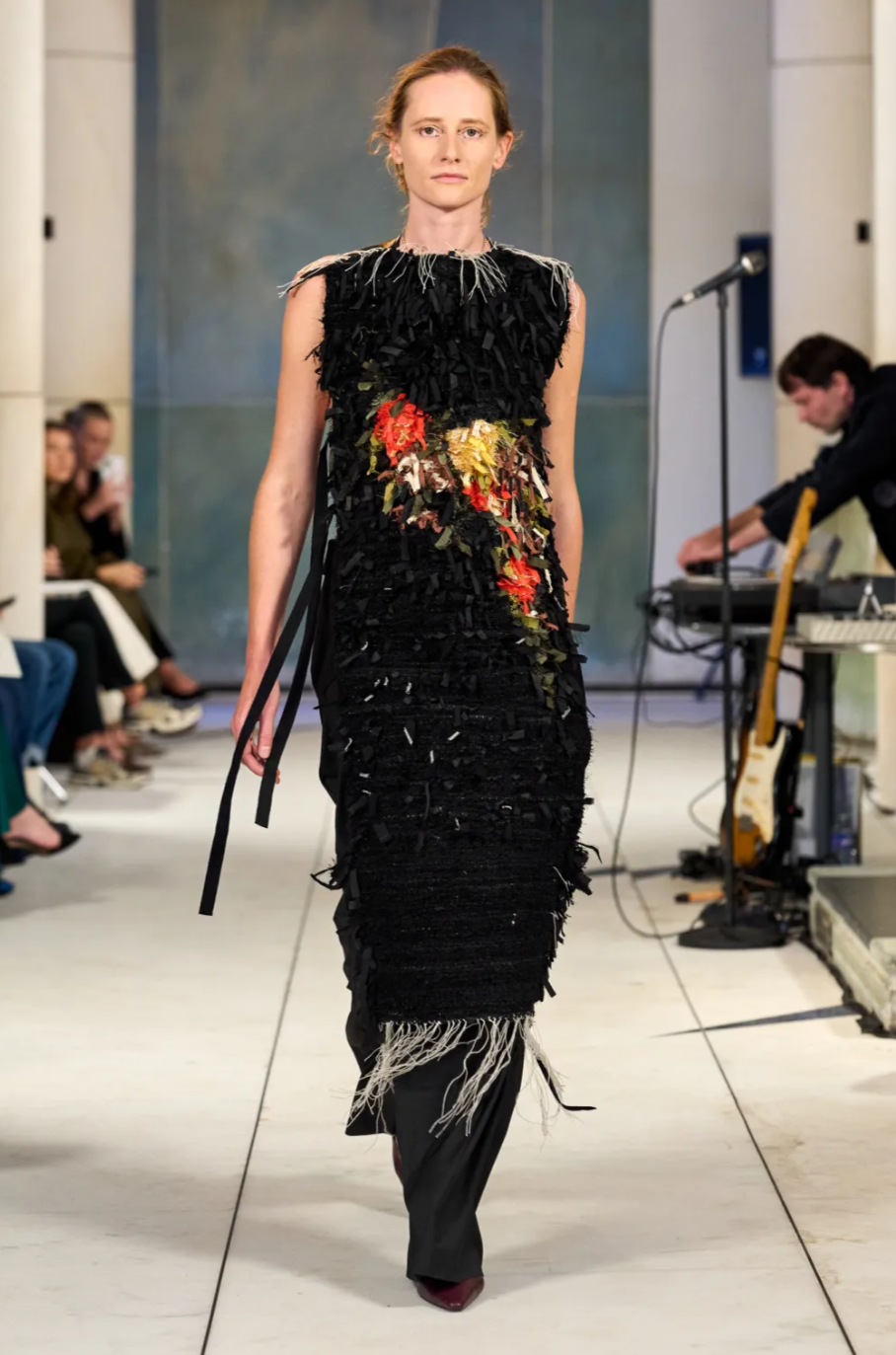
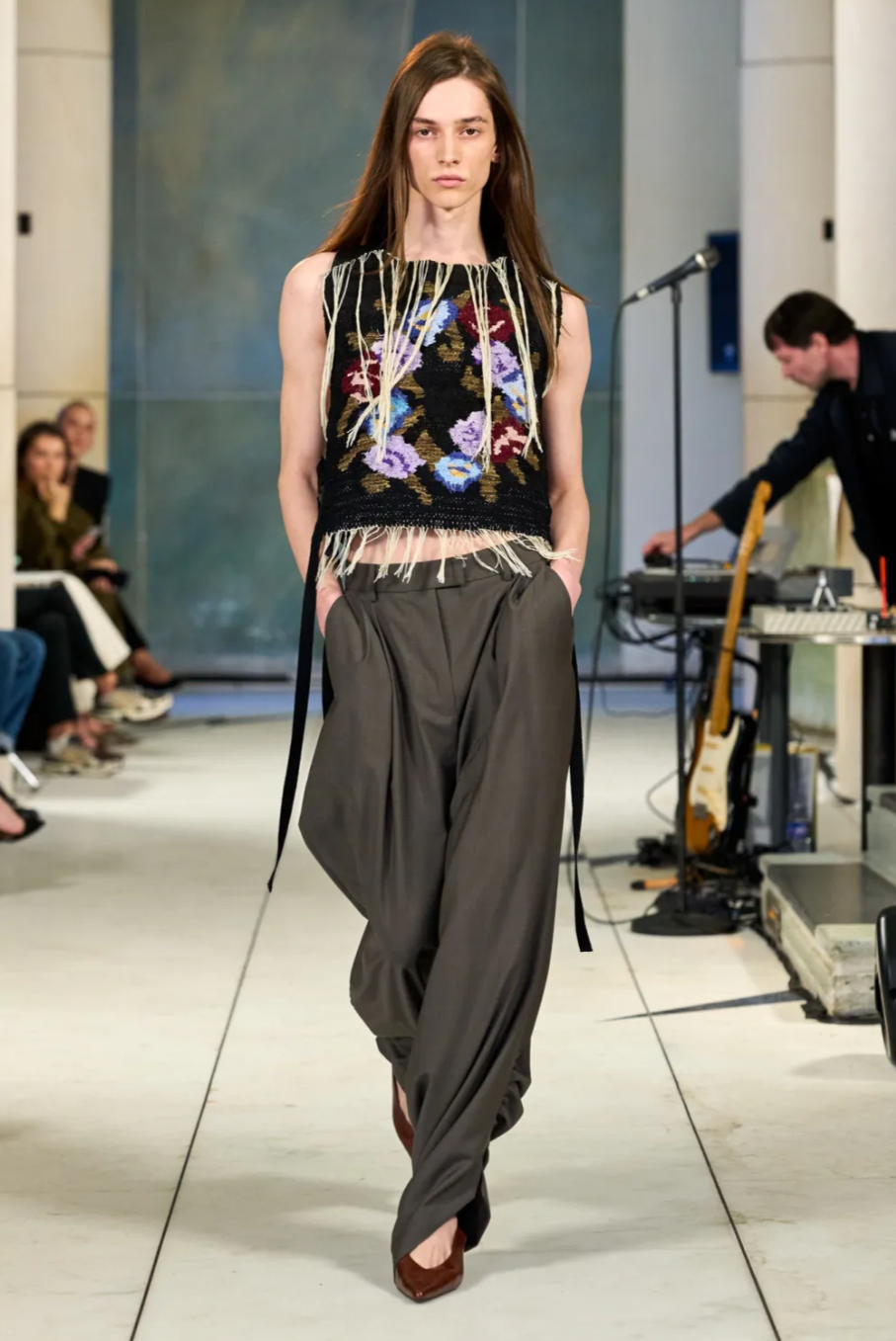
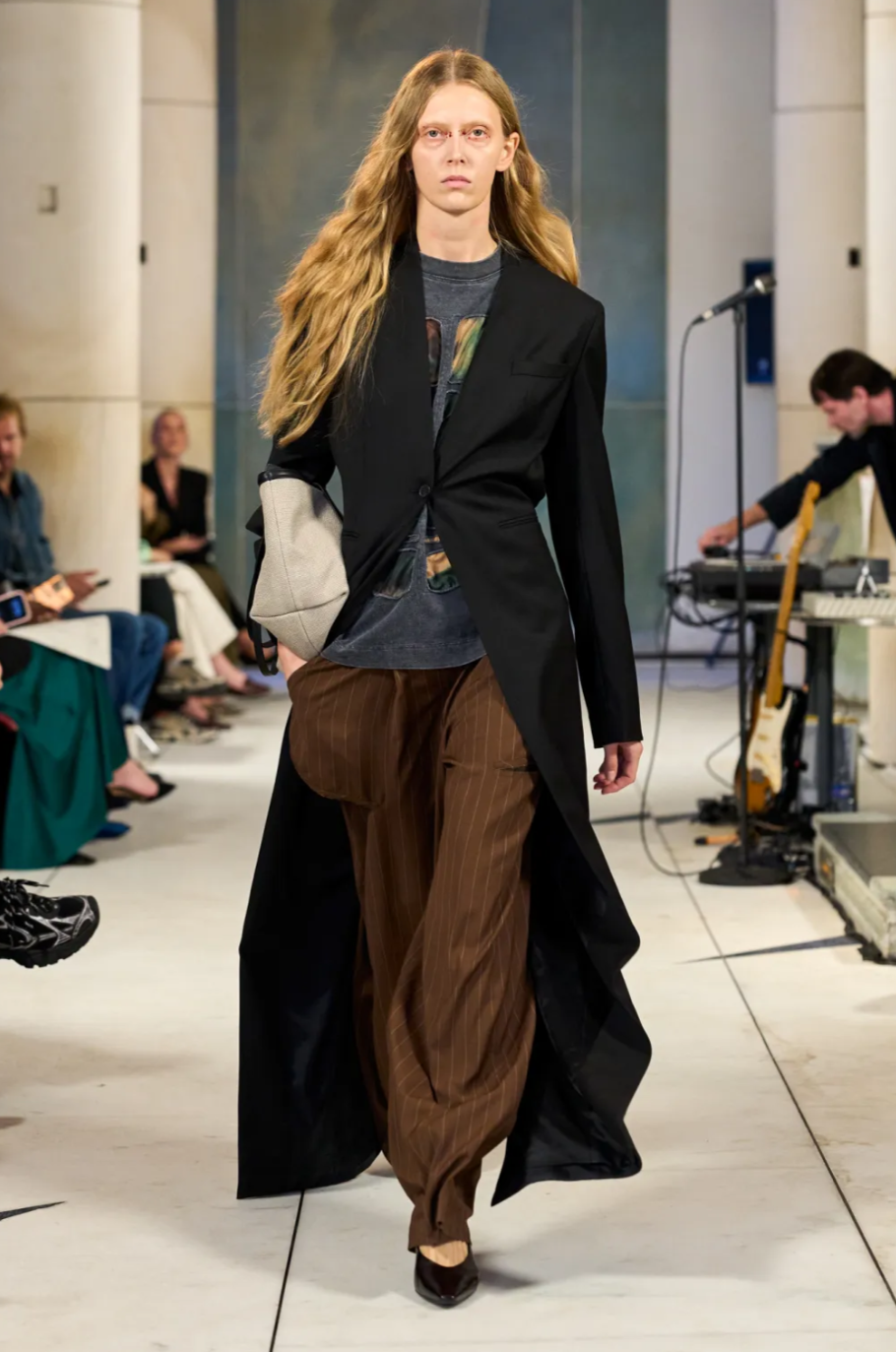
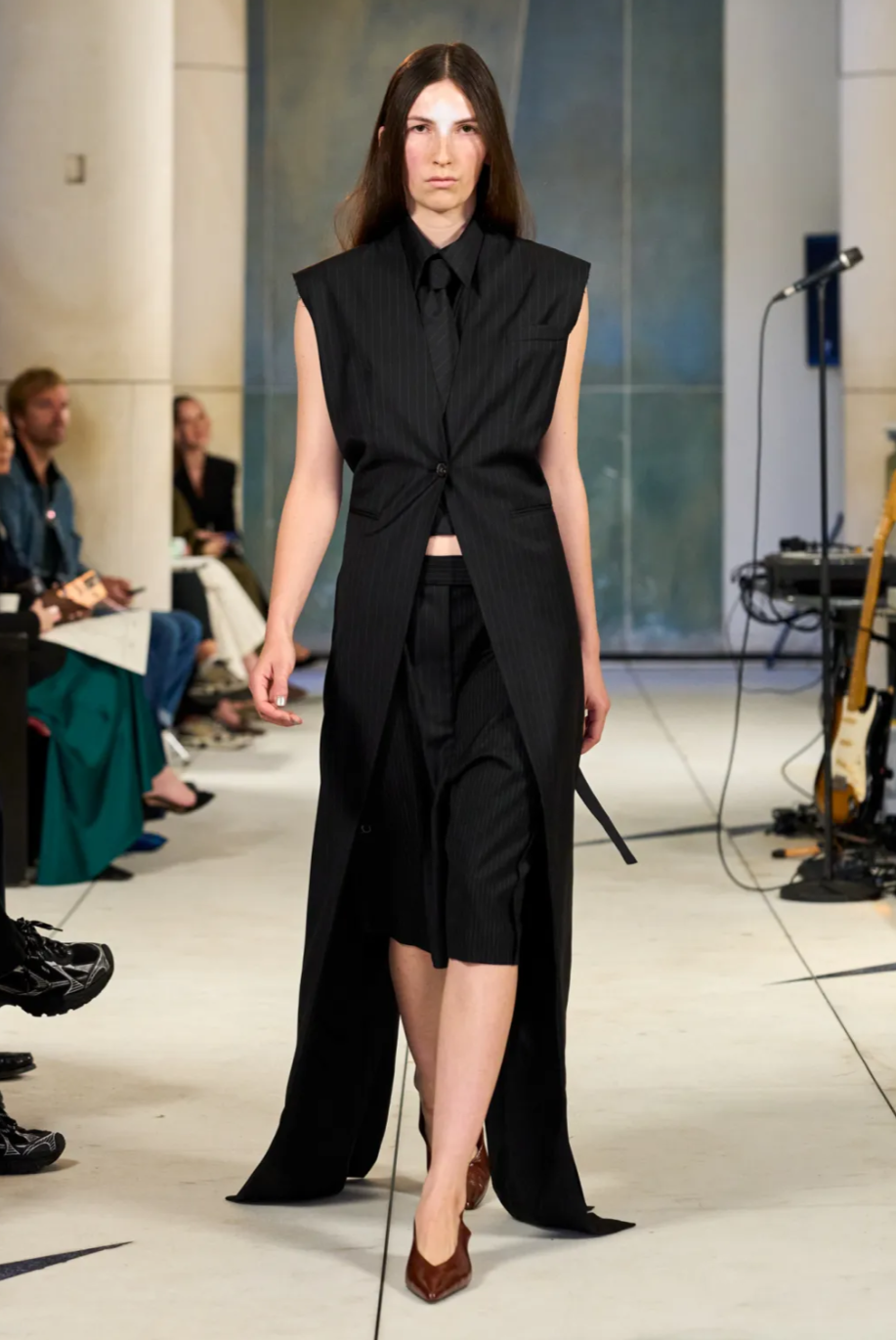
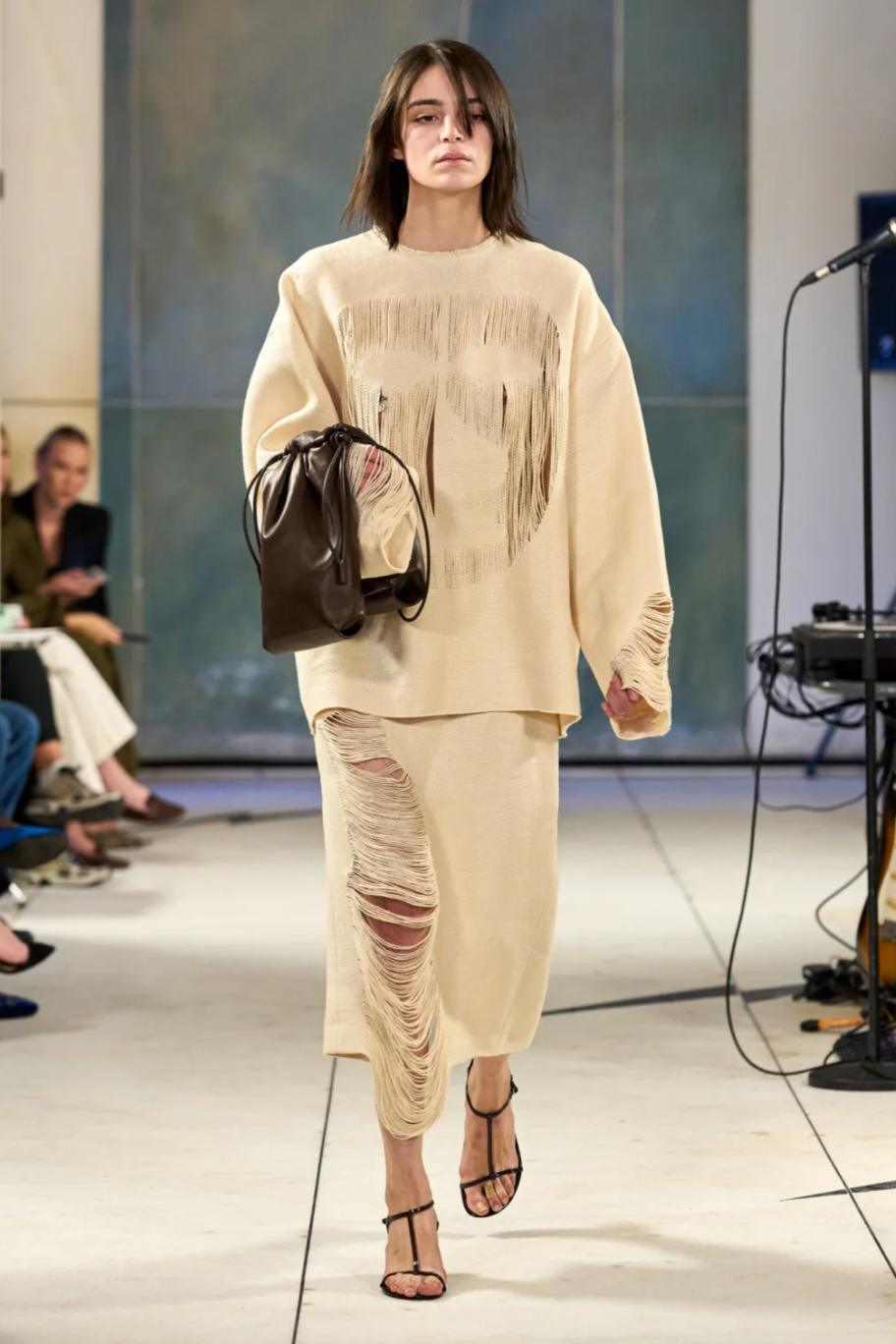
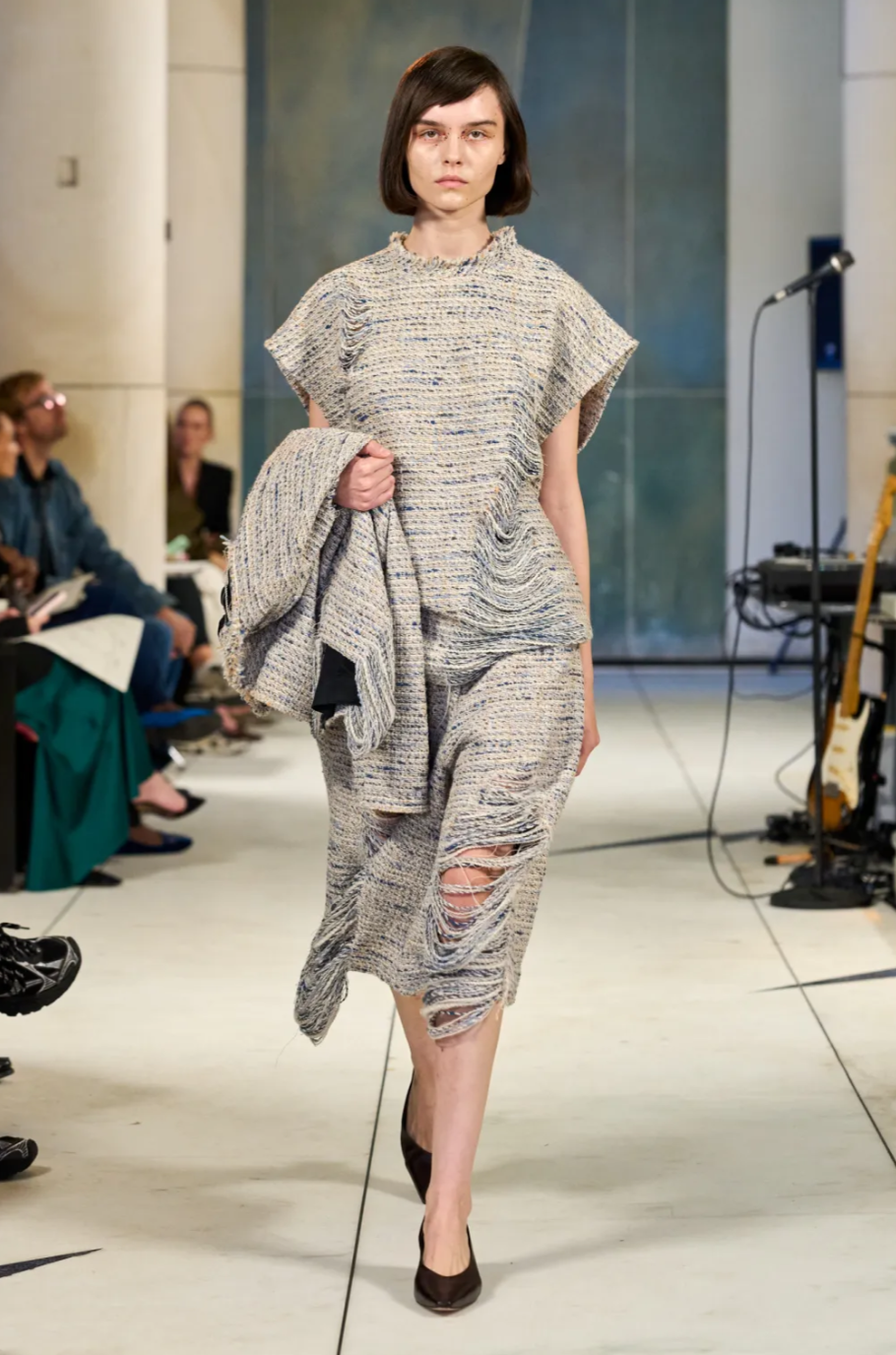
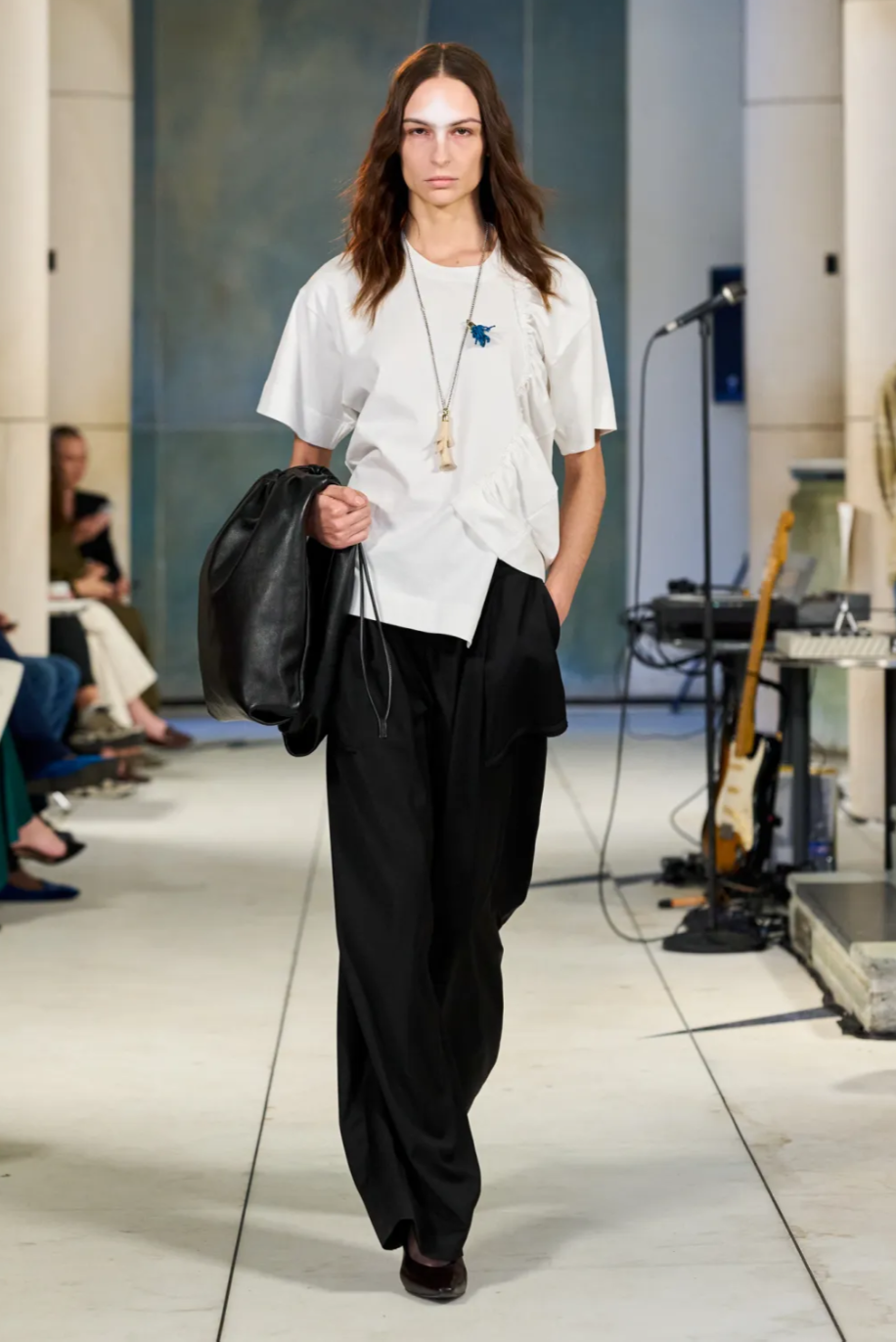
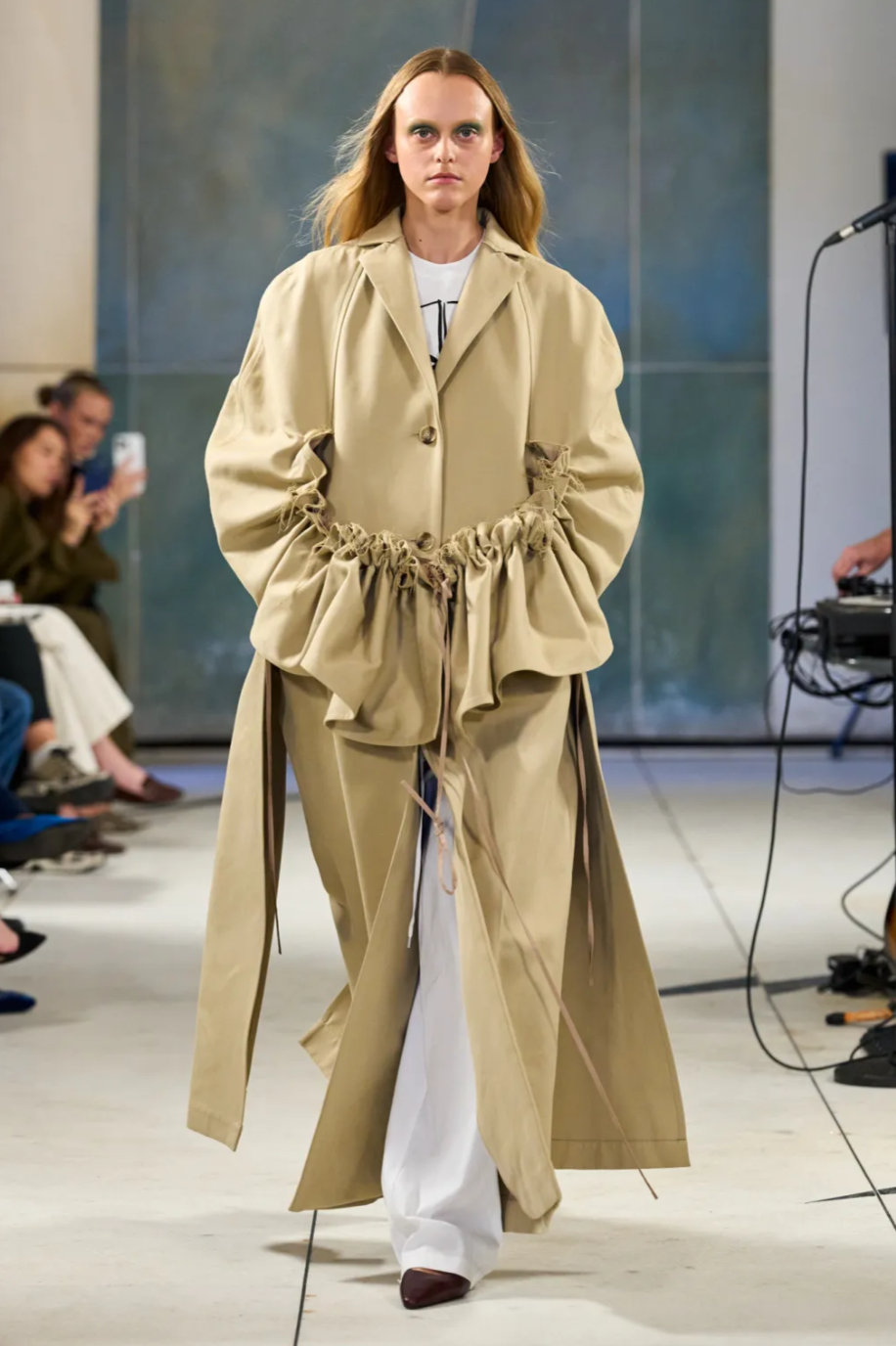
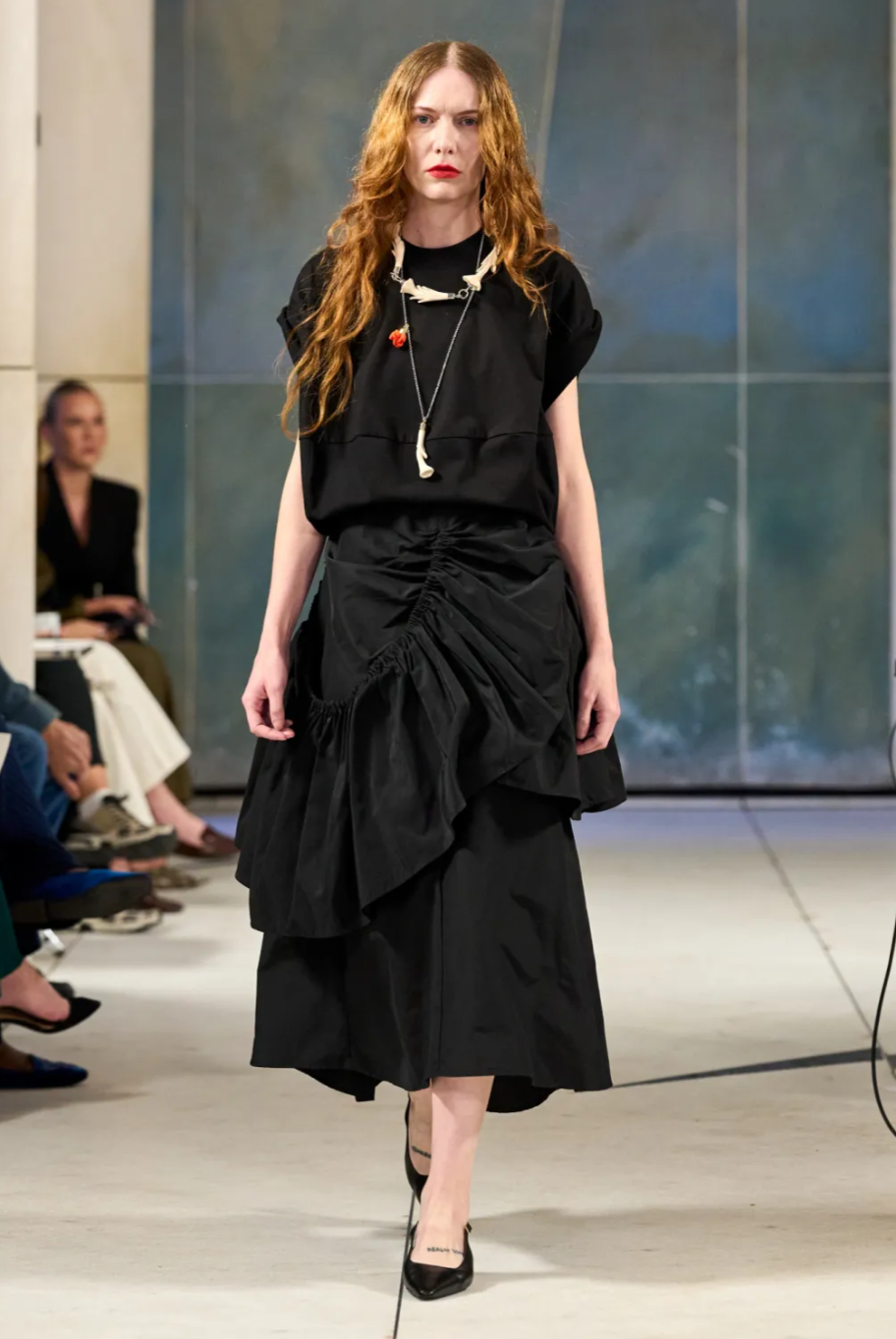
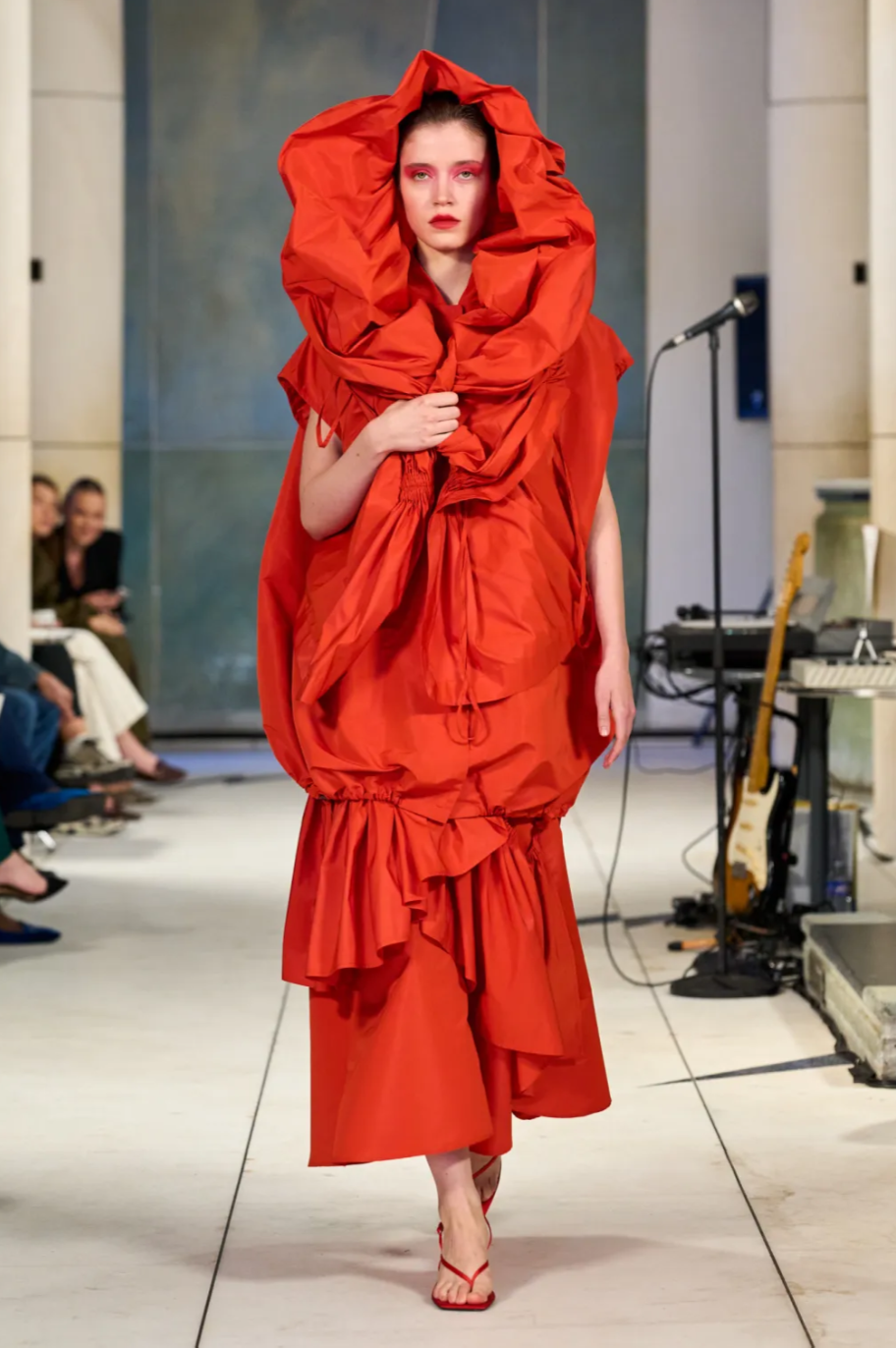
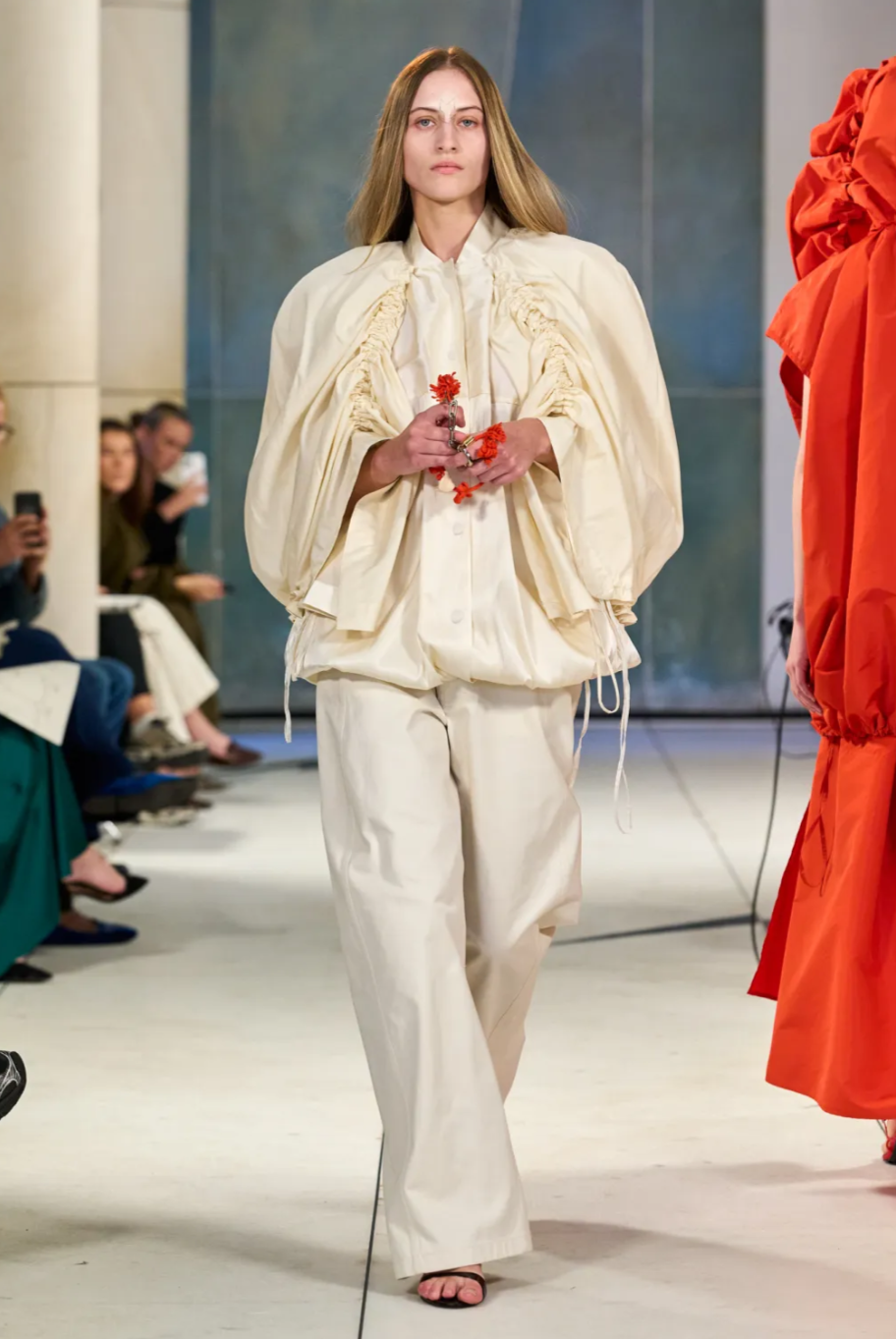
That conversation played out through construction rather than decoration. Seams, frayed edges and contrasting fabrics appeared to push against one another, while drawstrings gave the wearer control over the proportions and shape of dresses and coats. A sporty bomber could be pulled into rounded sleeves; another look shifted between blouse and dress, while a cape became a coat. Tailoring arrived with subtly misaligned seams that introduced movement without disrupting the clothes' functionality, alongside distressed tweed and knitwear that looked deliberately lived-in. A rug-like textured apron dress carried abstract motifs, while a cross-stitched backless top was secured with padded utilitarian straps over simple black tailored trousers. Litkovska's clothes have always had an element of transformation to them, but here the point was less about novelty than possibility: the garment becomes different depending on how it meets the person wearing it.
“Stricha” ultimately made a persuasive case for fashion as a form of encounter itself. The references to Ukrainian modernism, the performance, the music and the tactile construction of the clothes all belonged to the same conversation, with nothing feeling entirely fixed. Even the collection's strongest silhouettes seemed deliberately open-ended, allowing the wearer to alter, tighten, loosen or reinterpret them. In a season increasingly interested in identity and cultural memory, Litkovska offered something more intimate: a wardrobe built around the idea that meaning emerges when things come together. A seam meets another seam, fabric meets skin, one culture meets another, and a garment changes in the process.