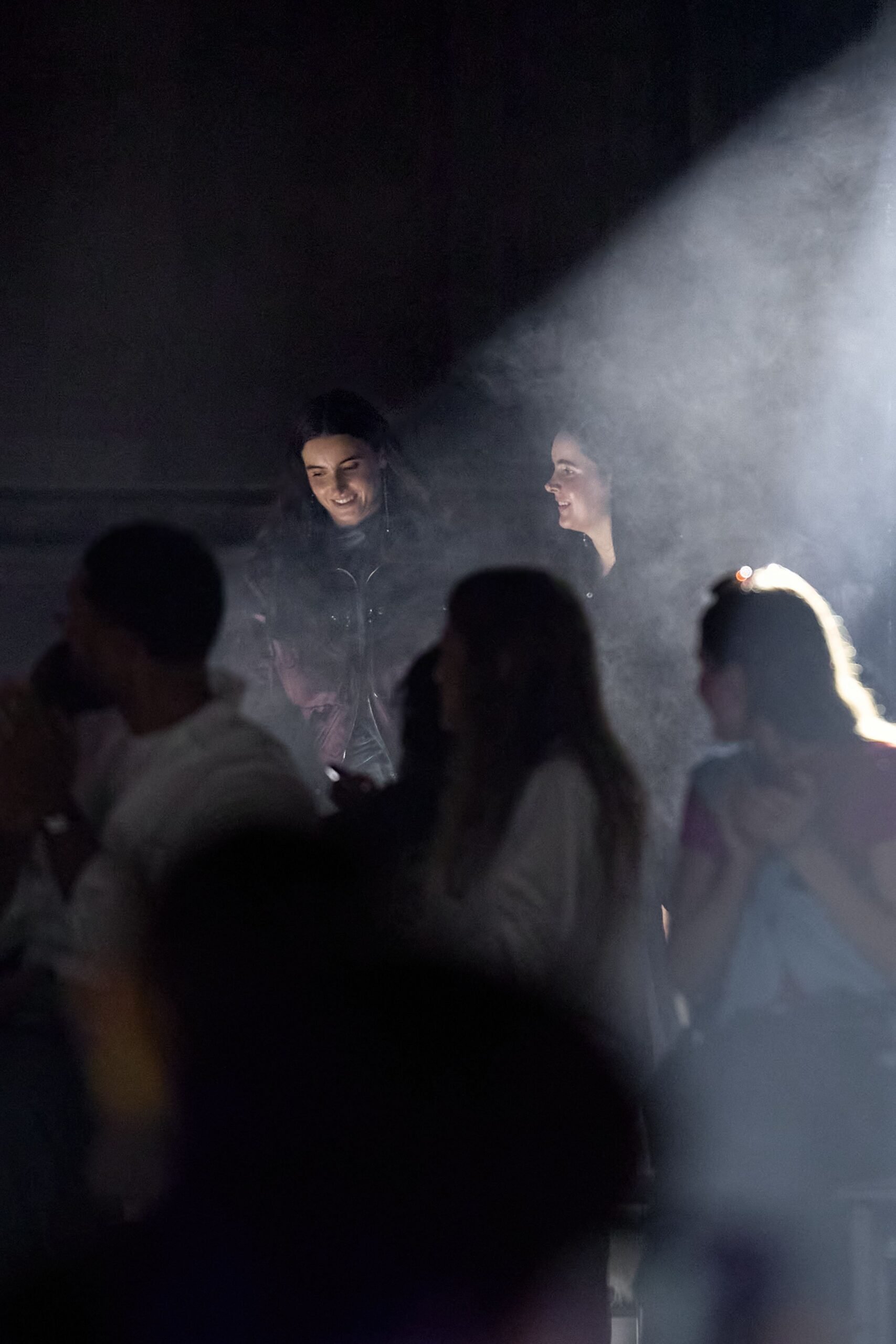
Kiko Kostadinov Spring 2027
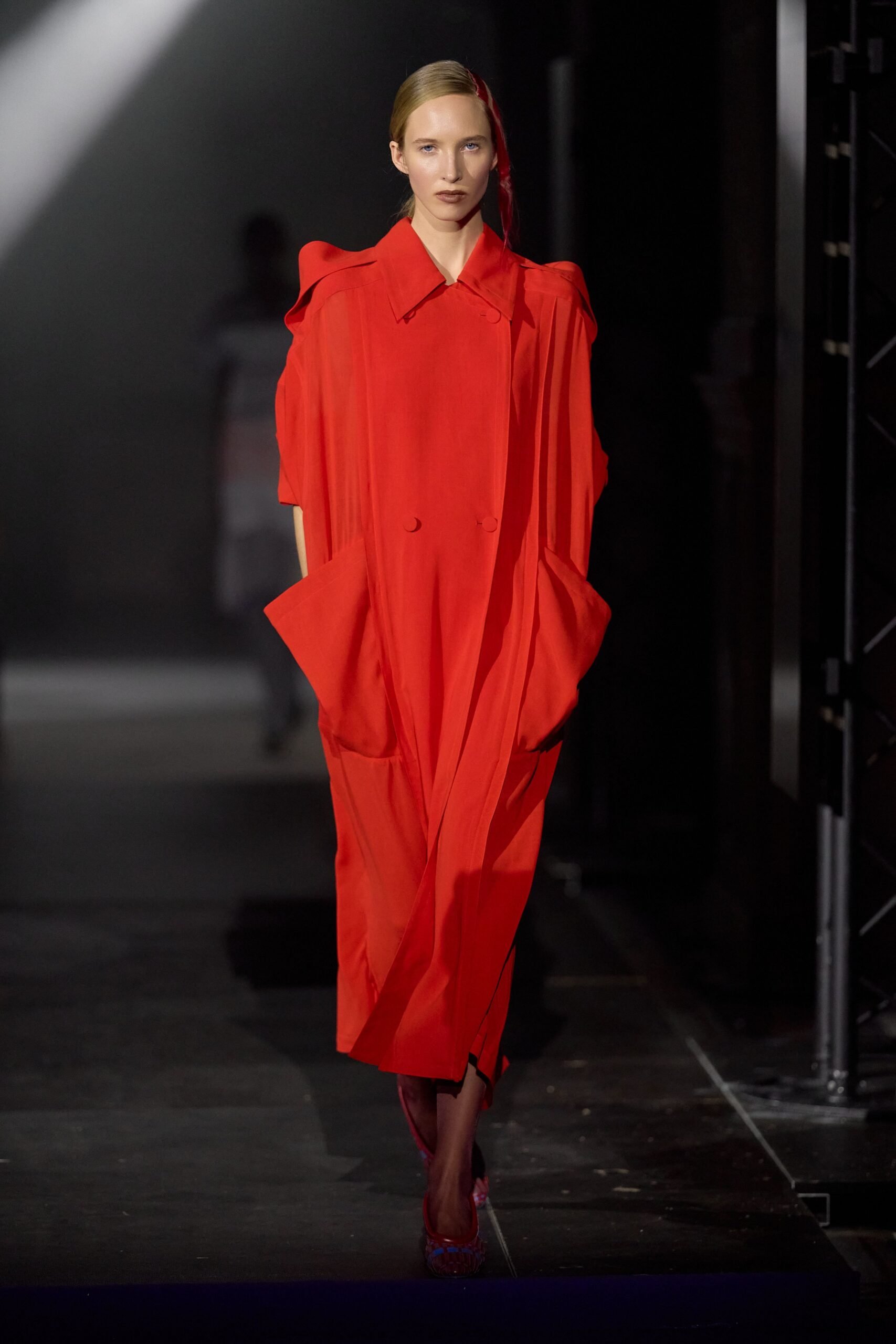
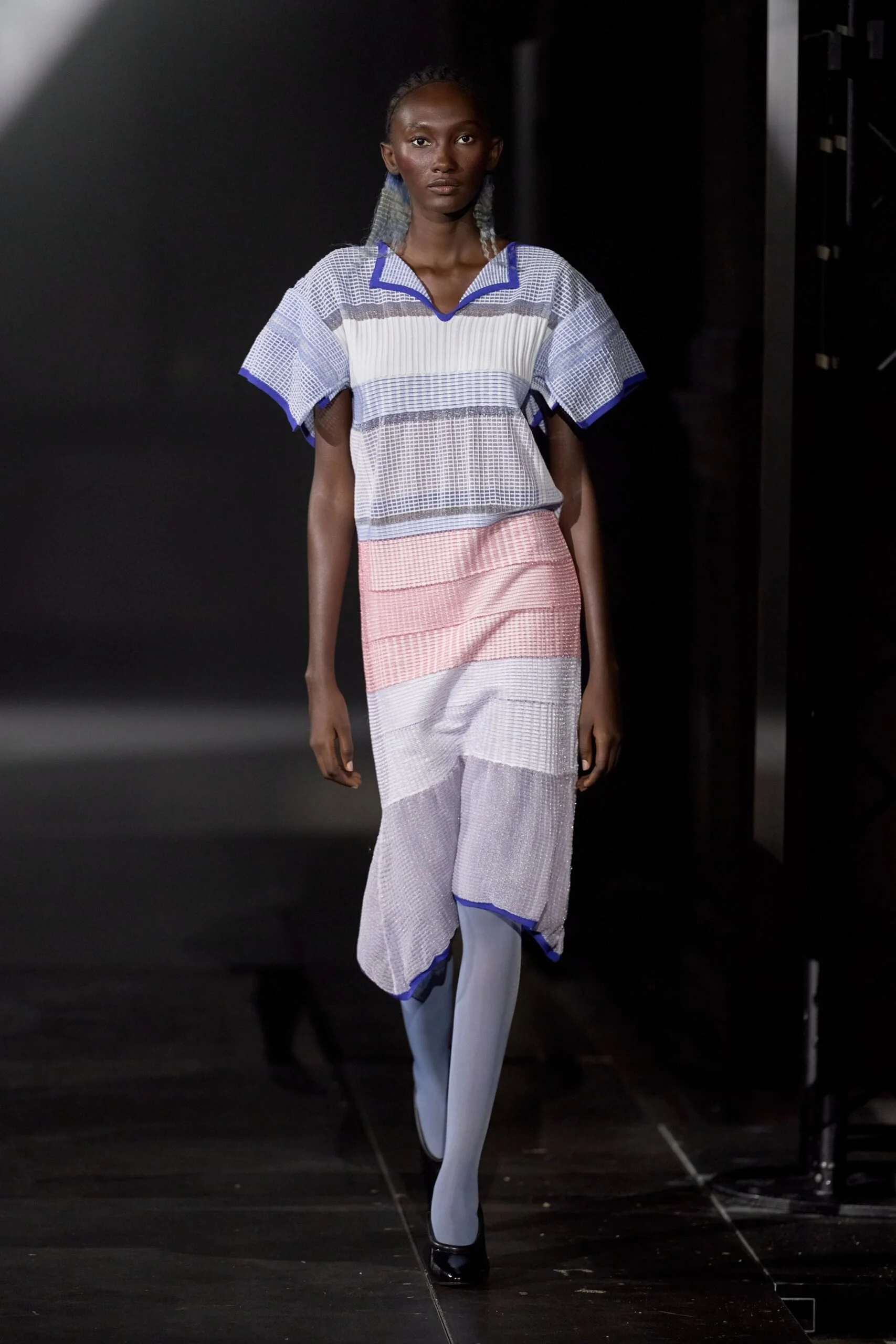
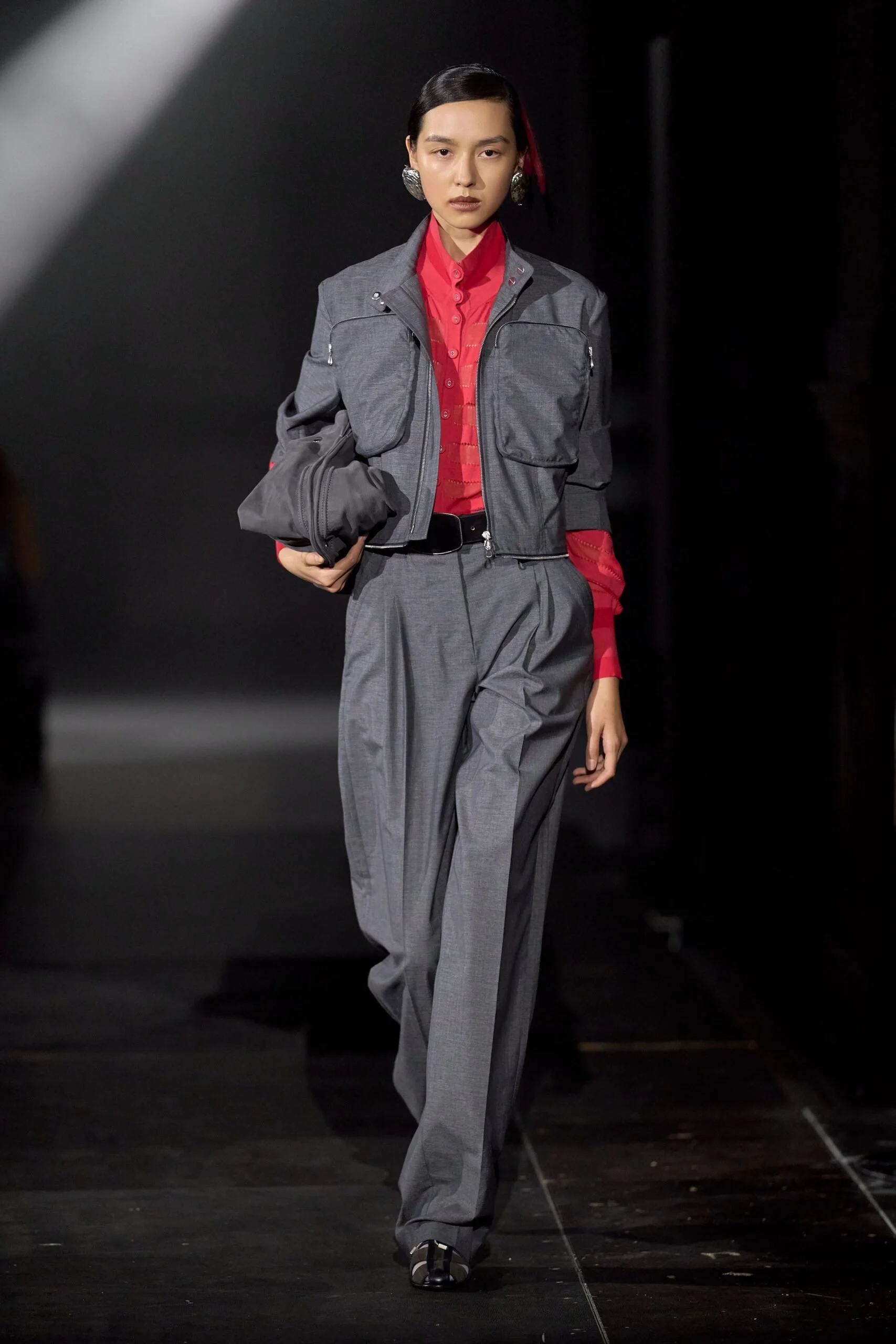
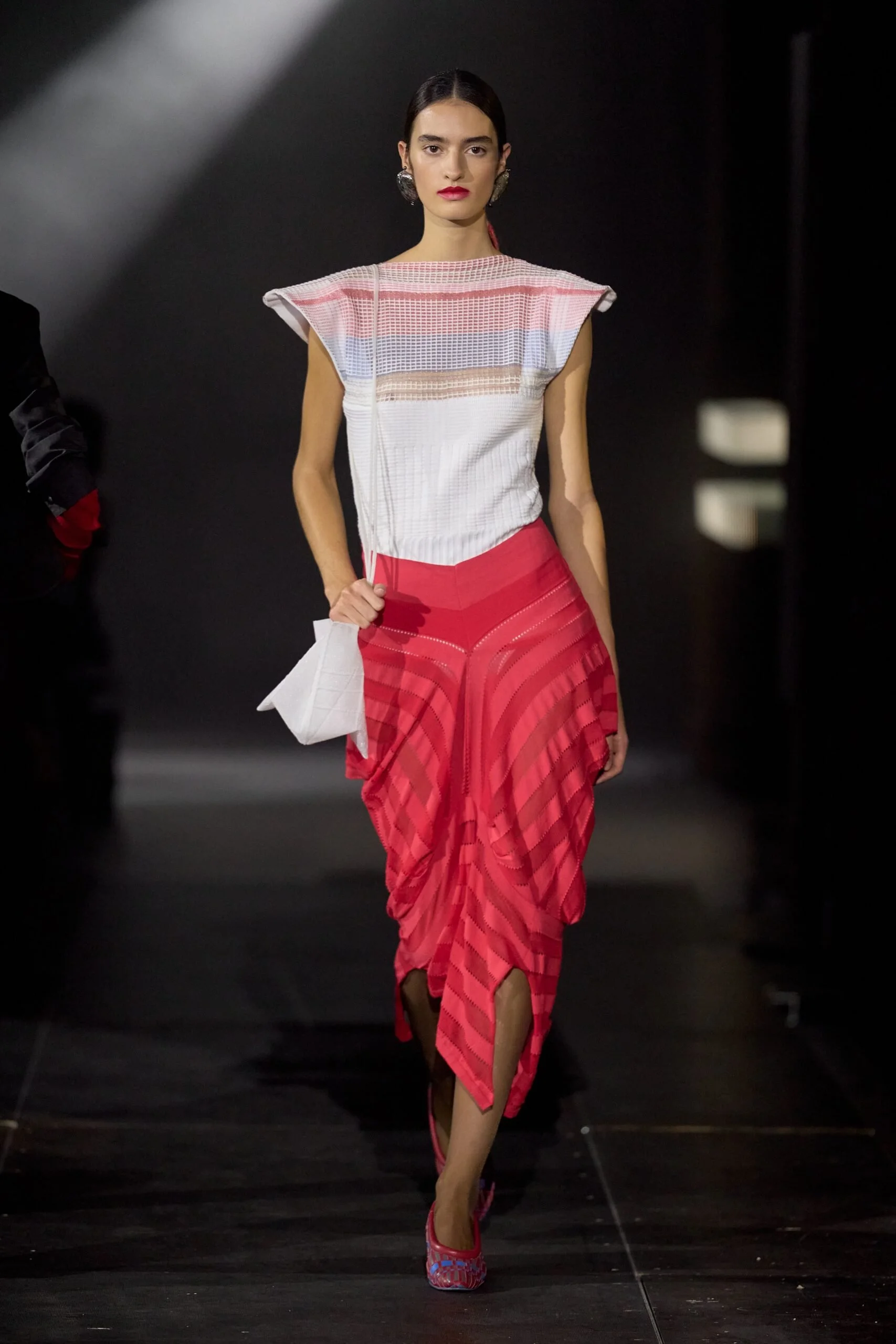
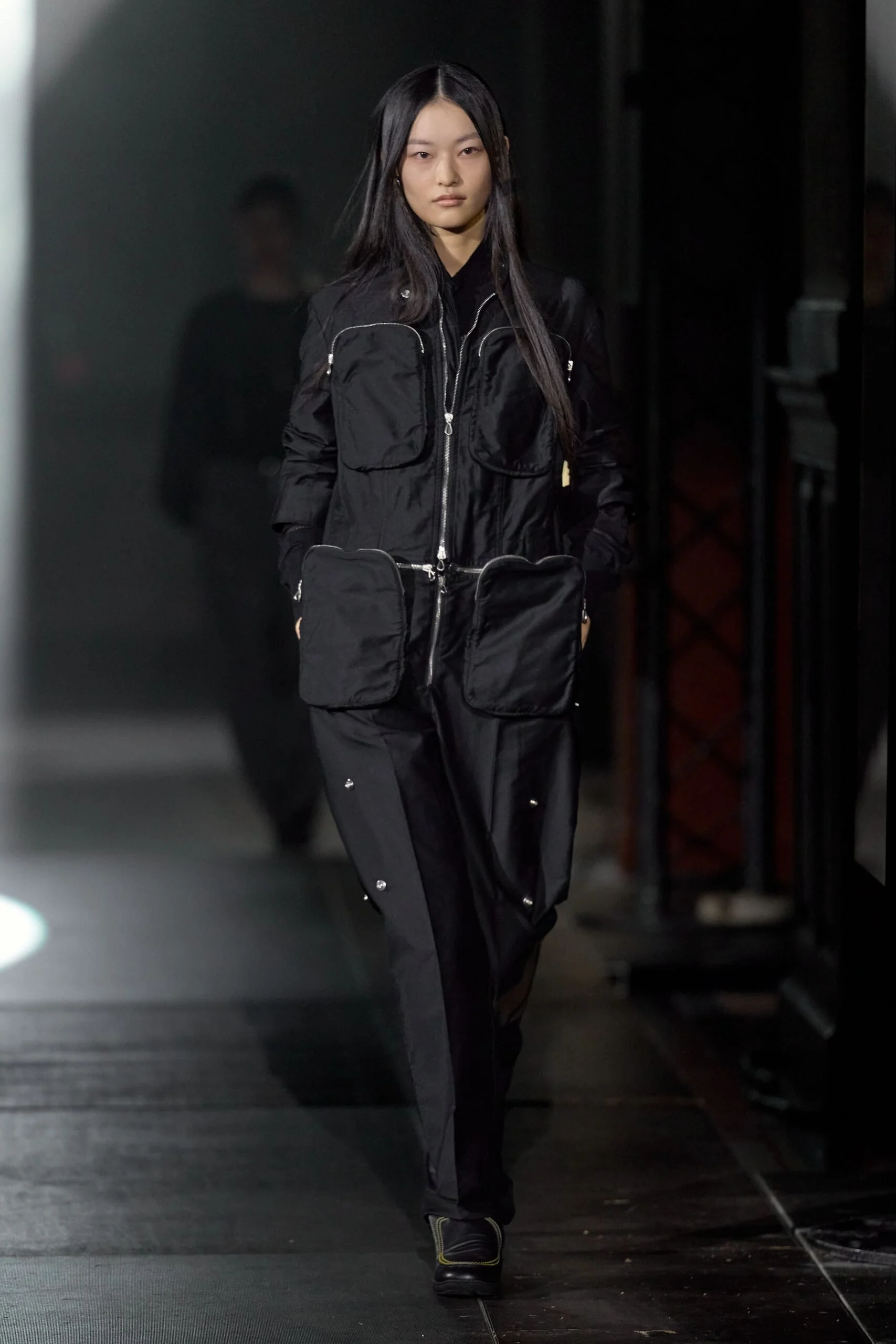
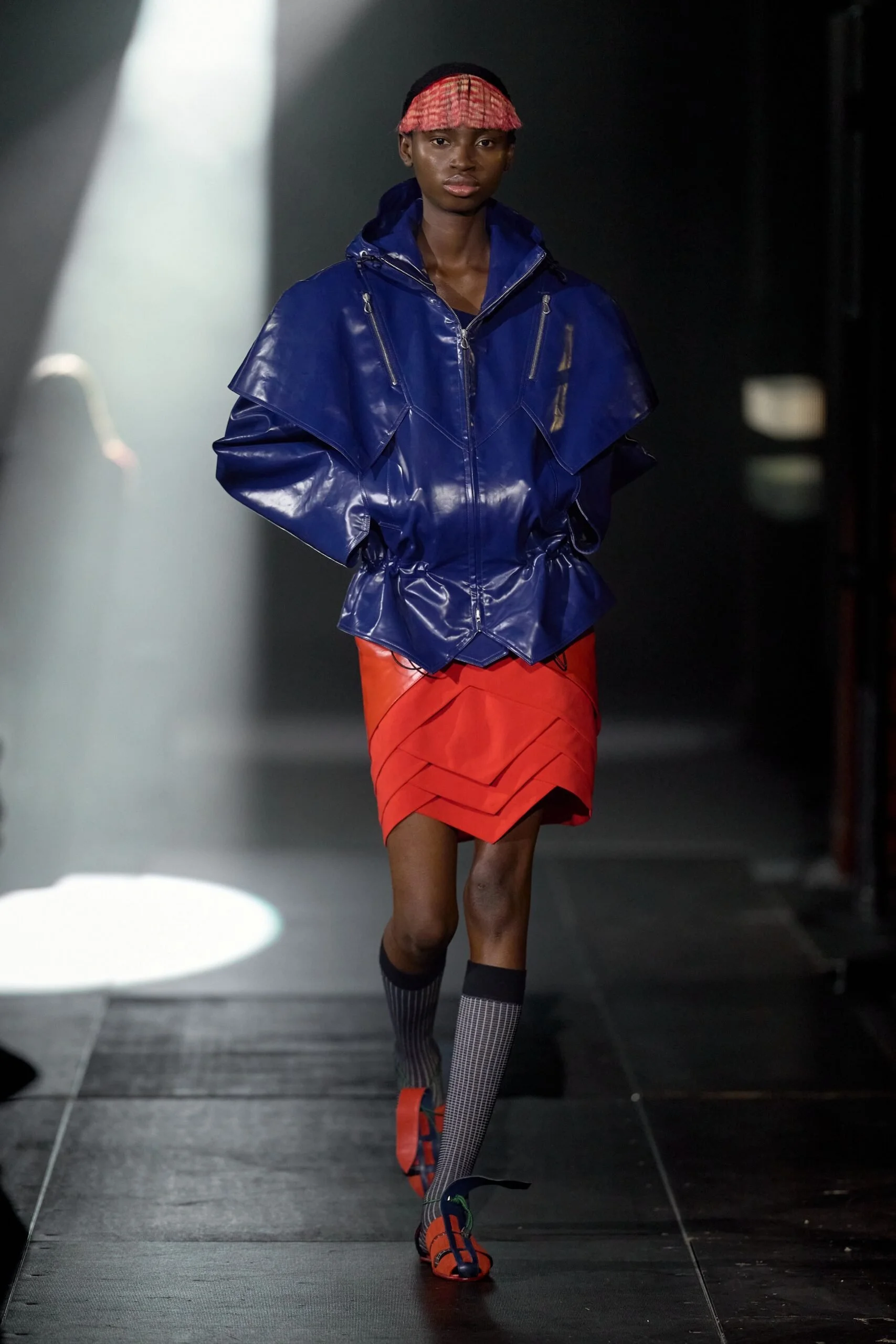
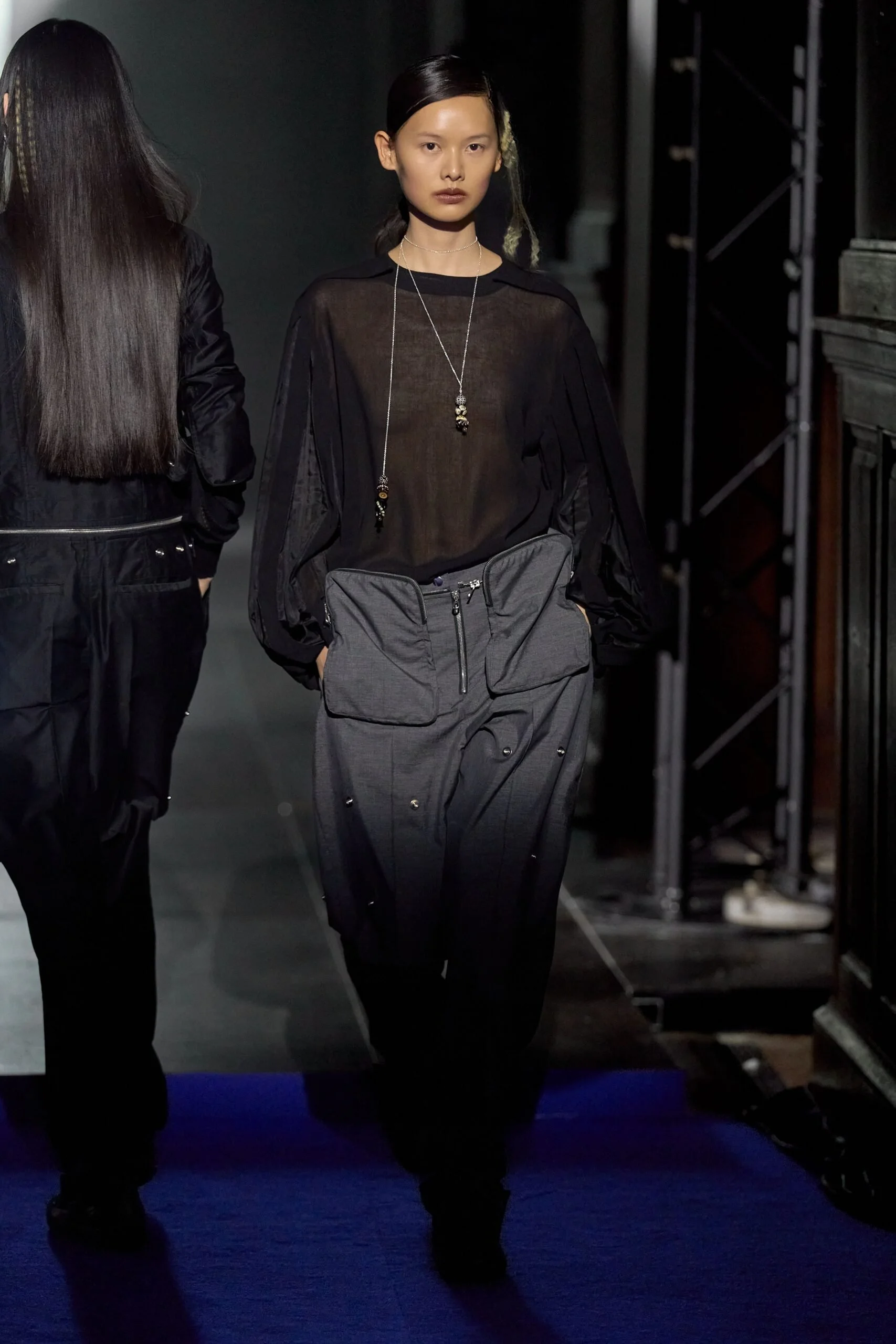
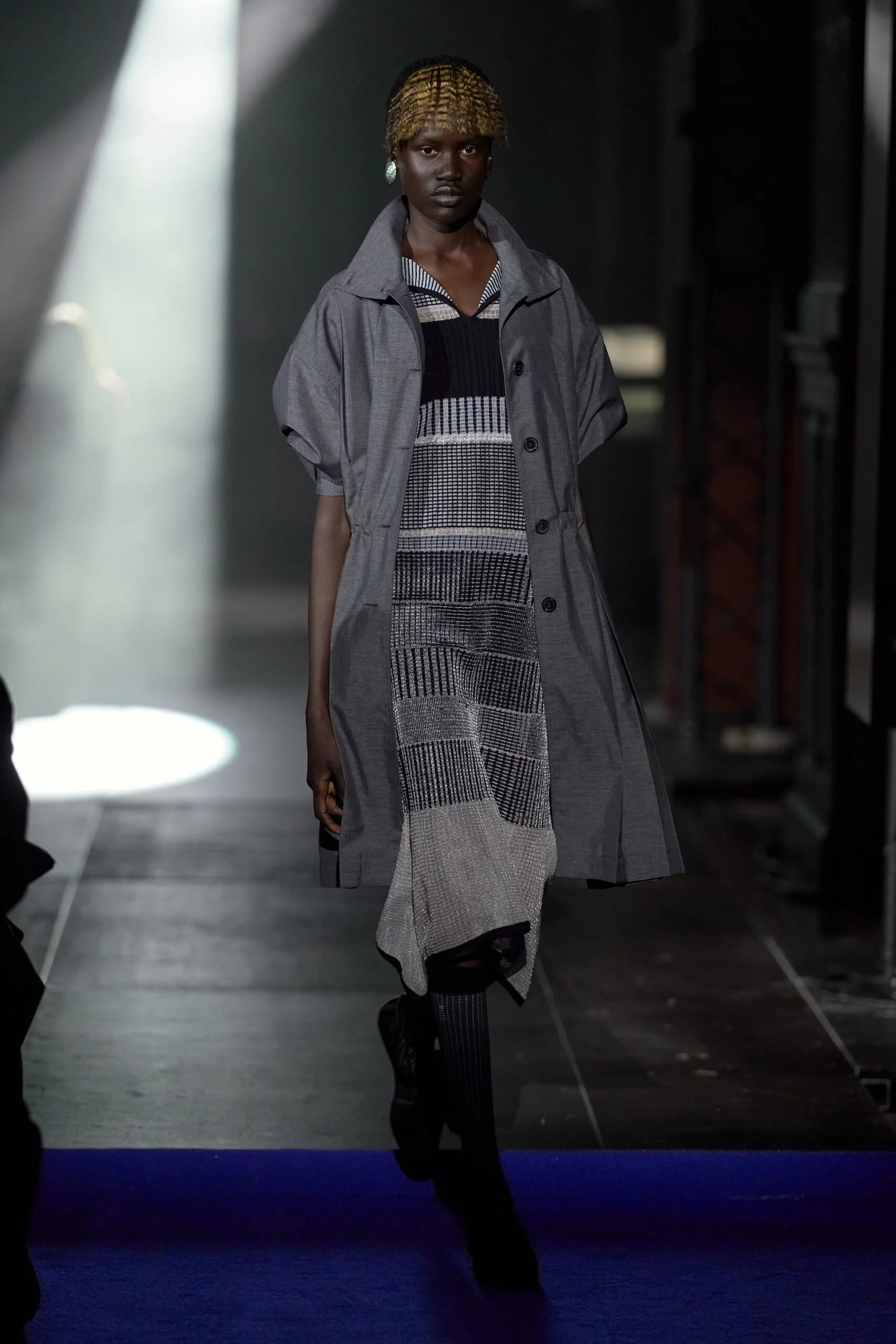
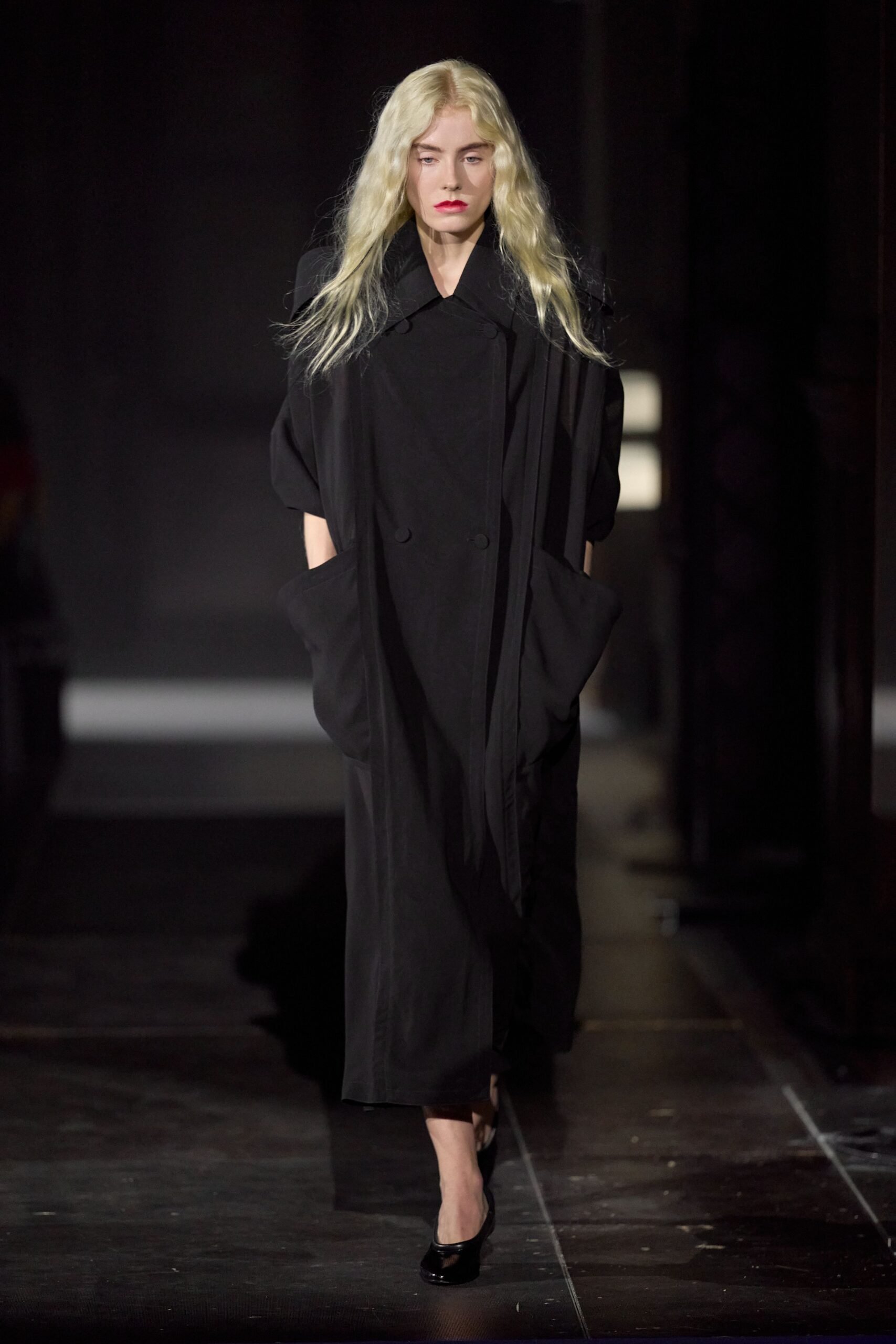
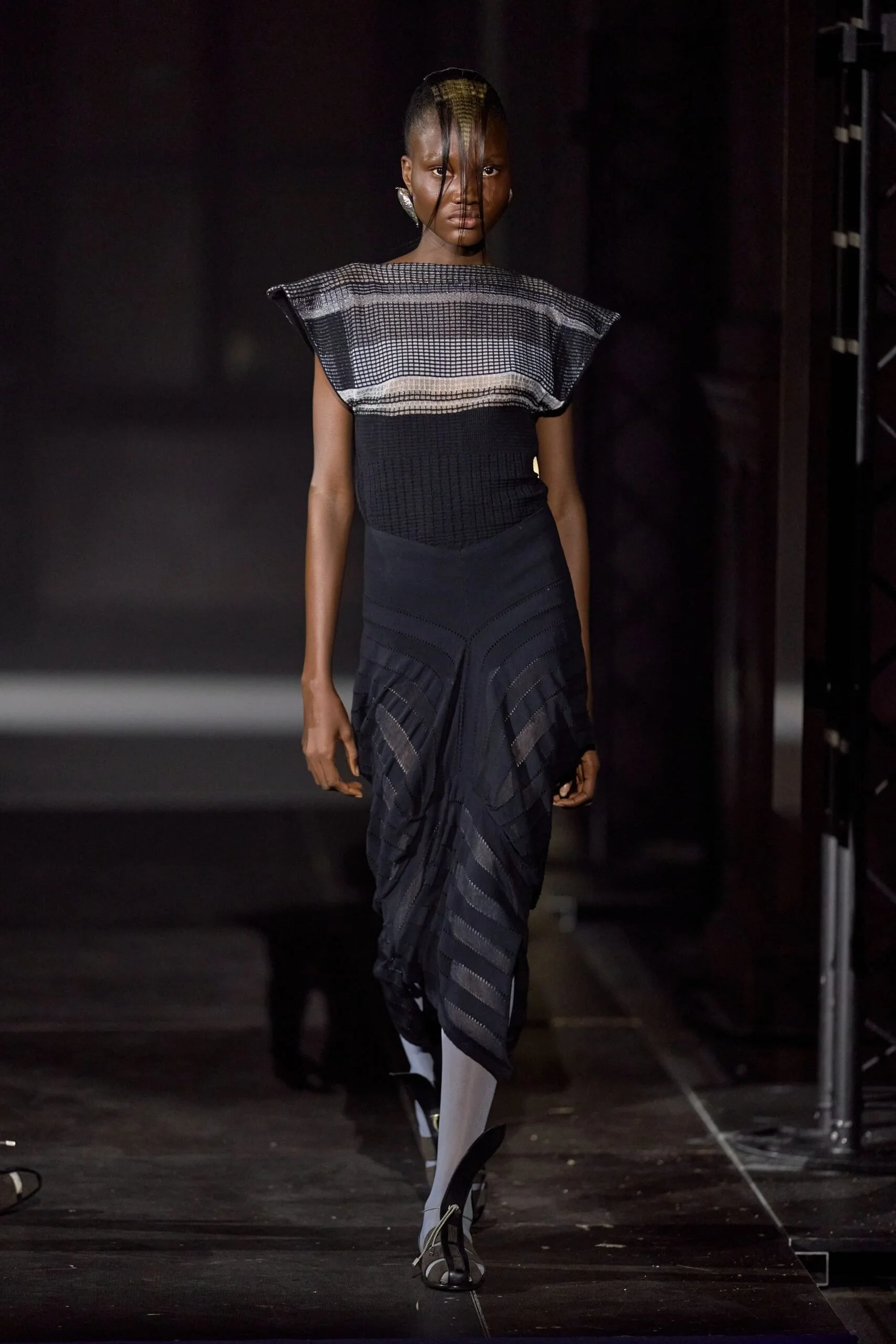
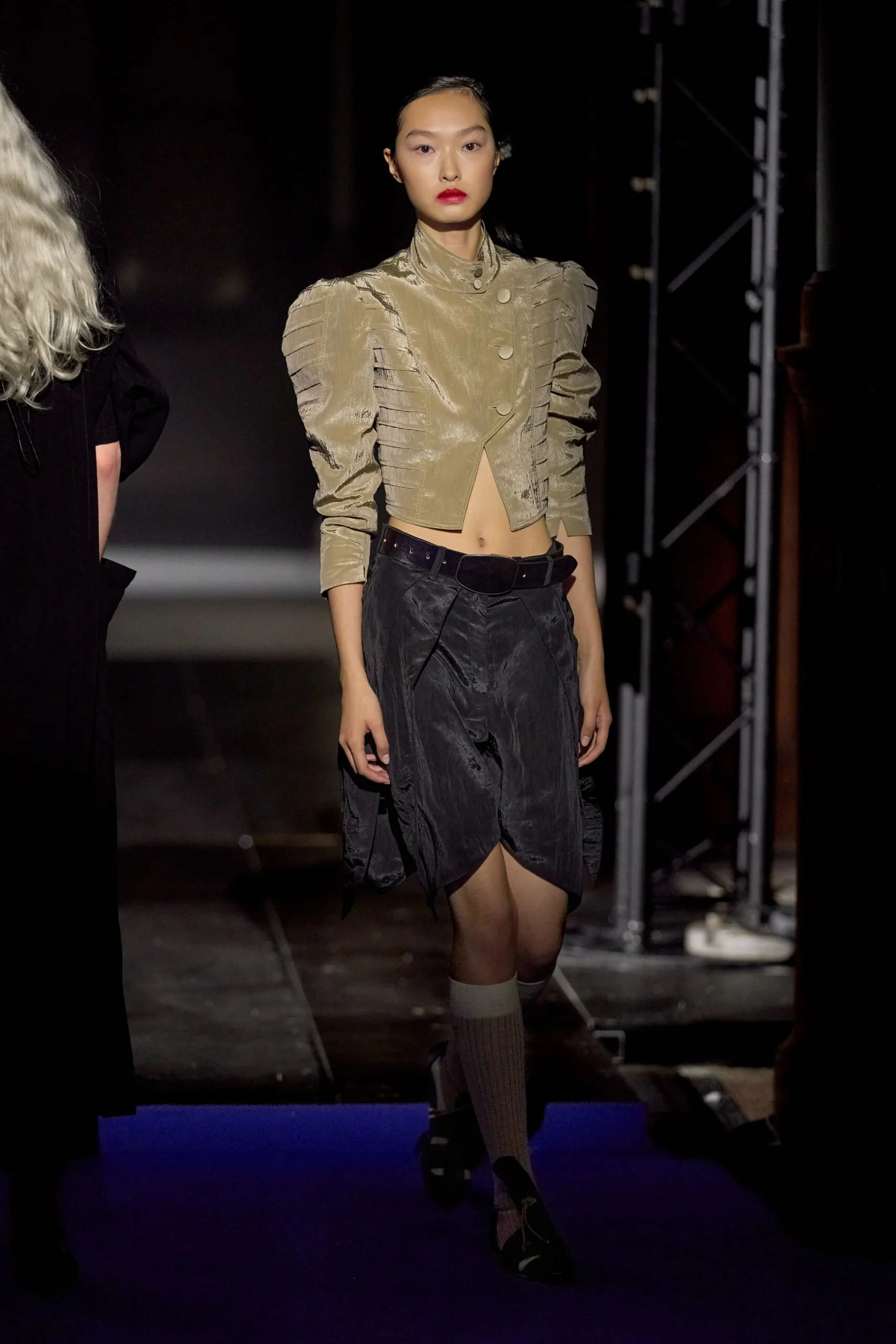
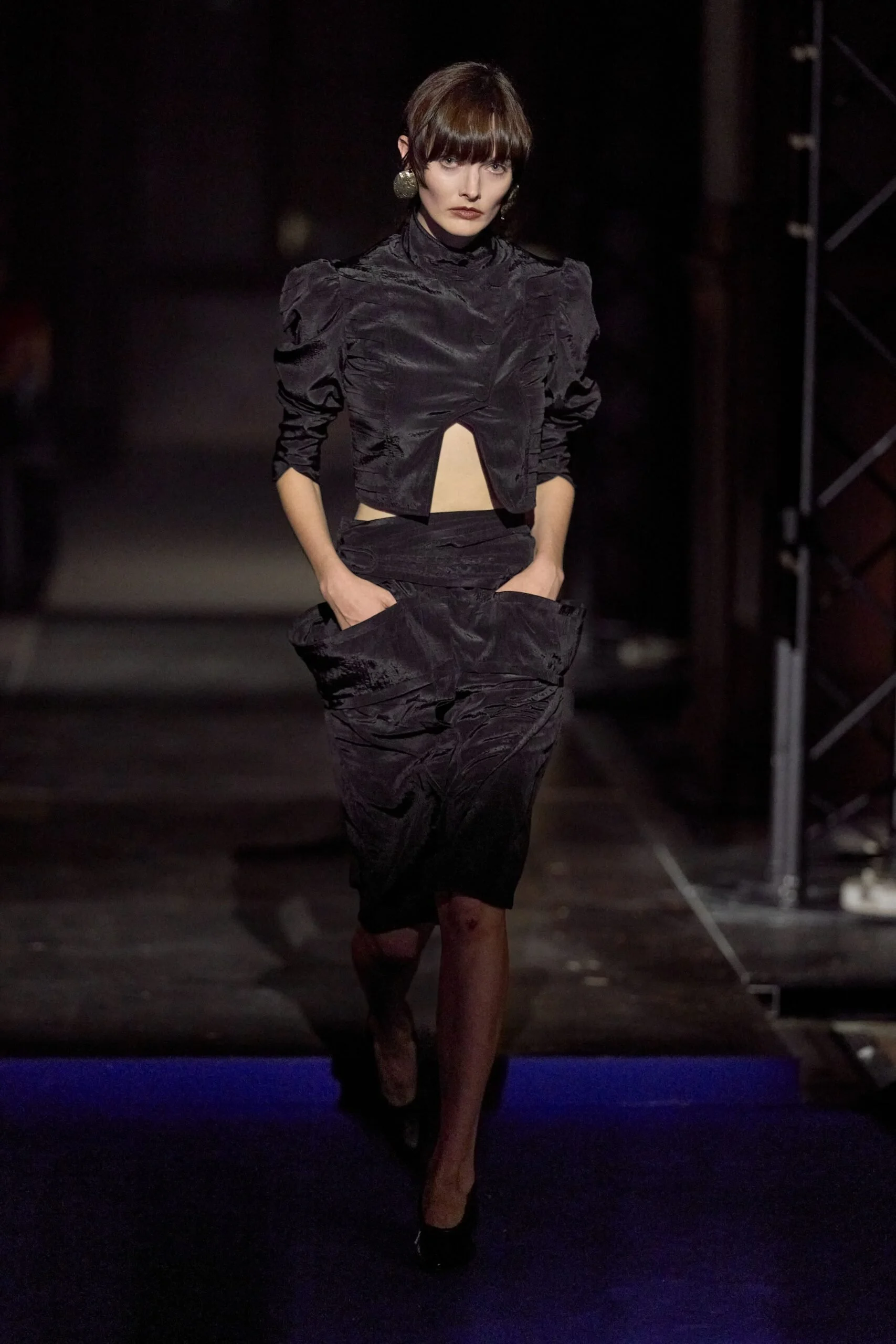
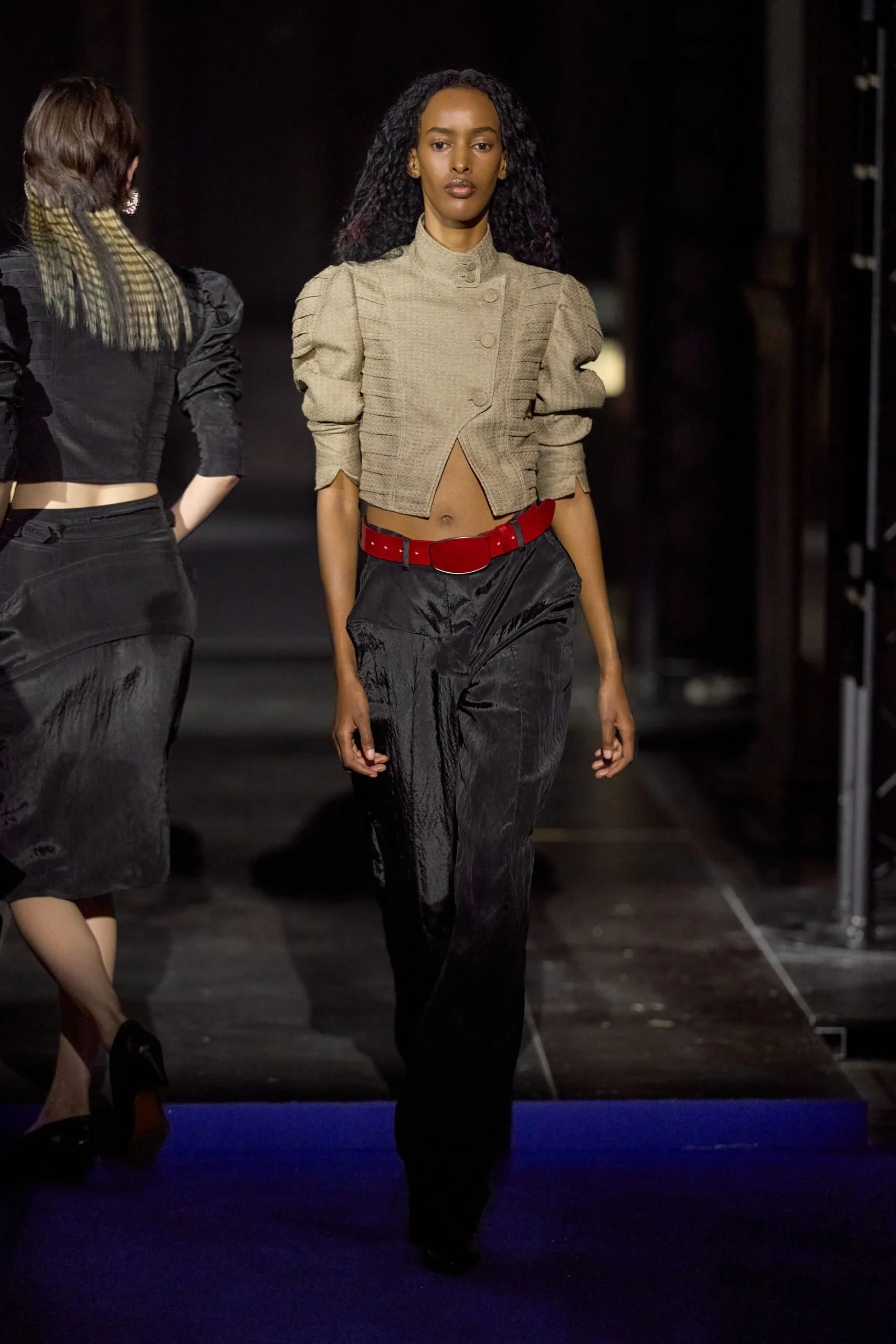
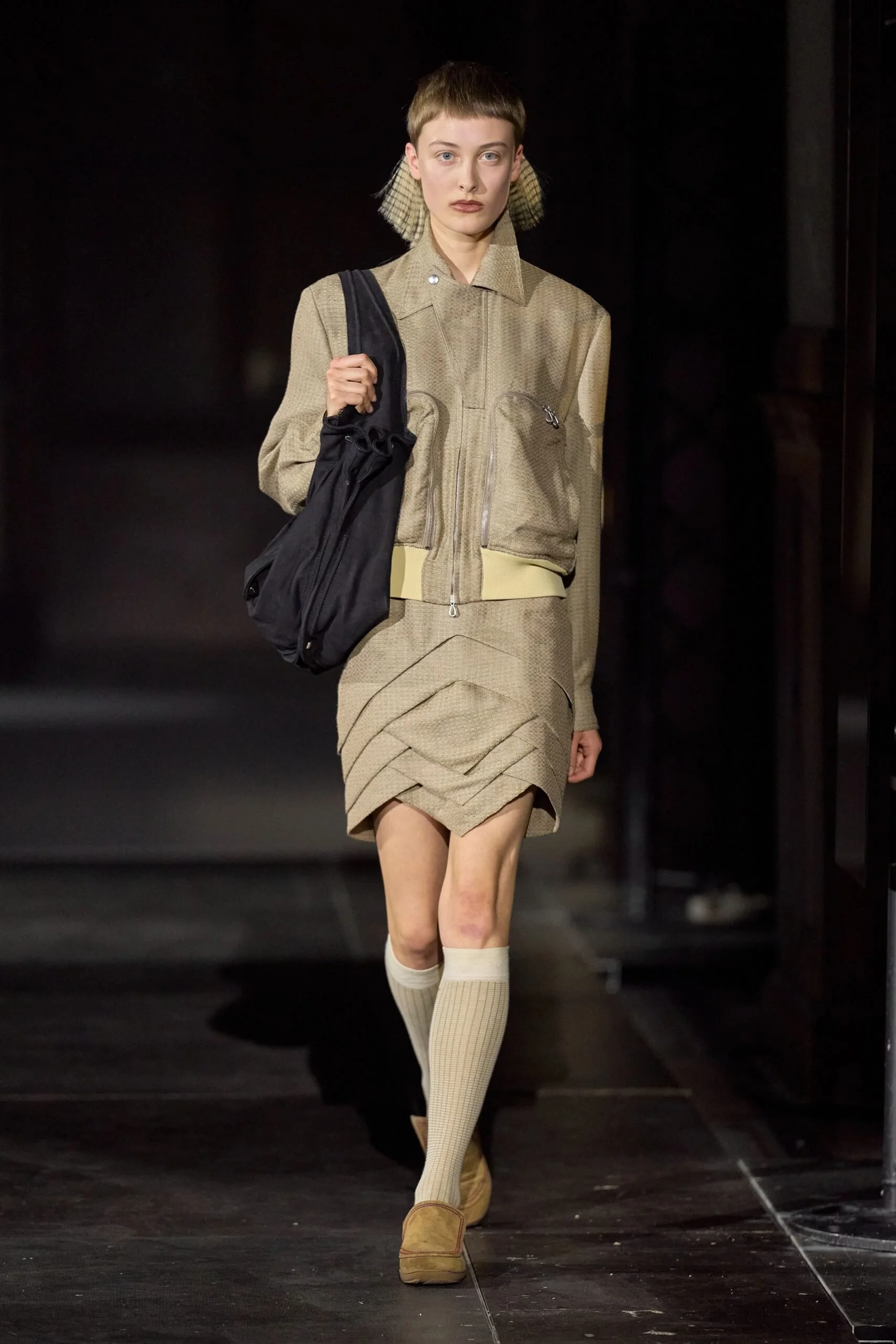
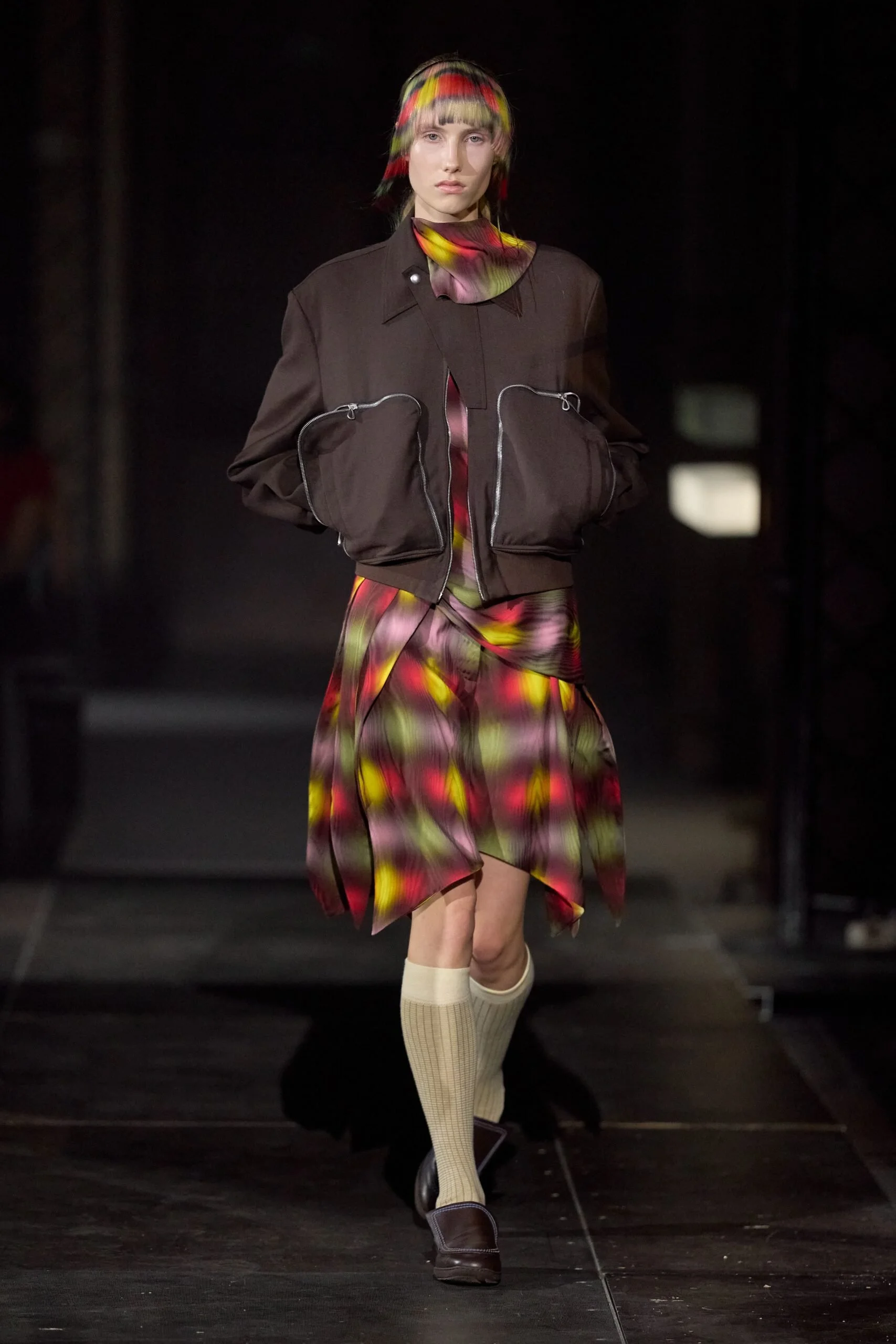
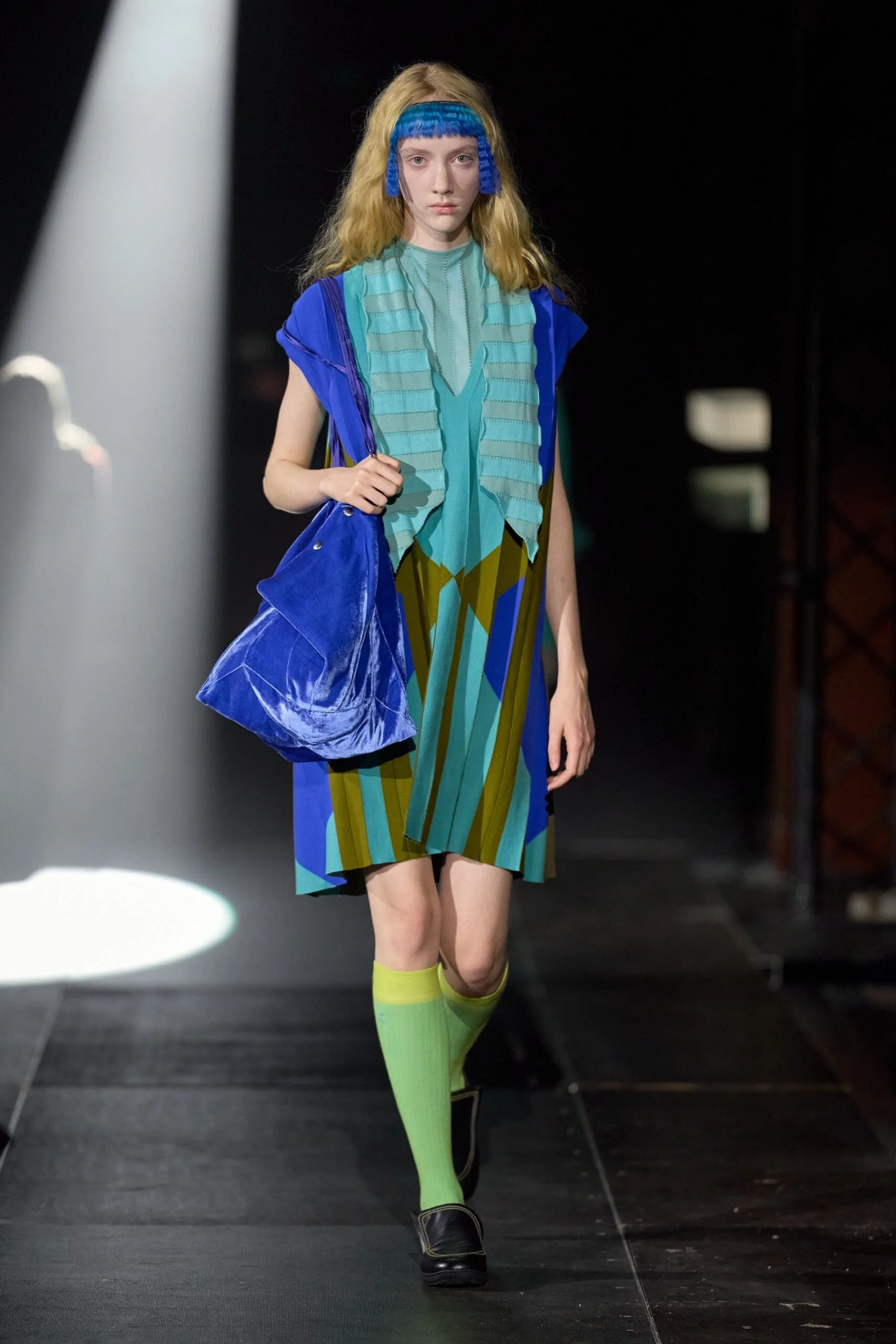
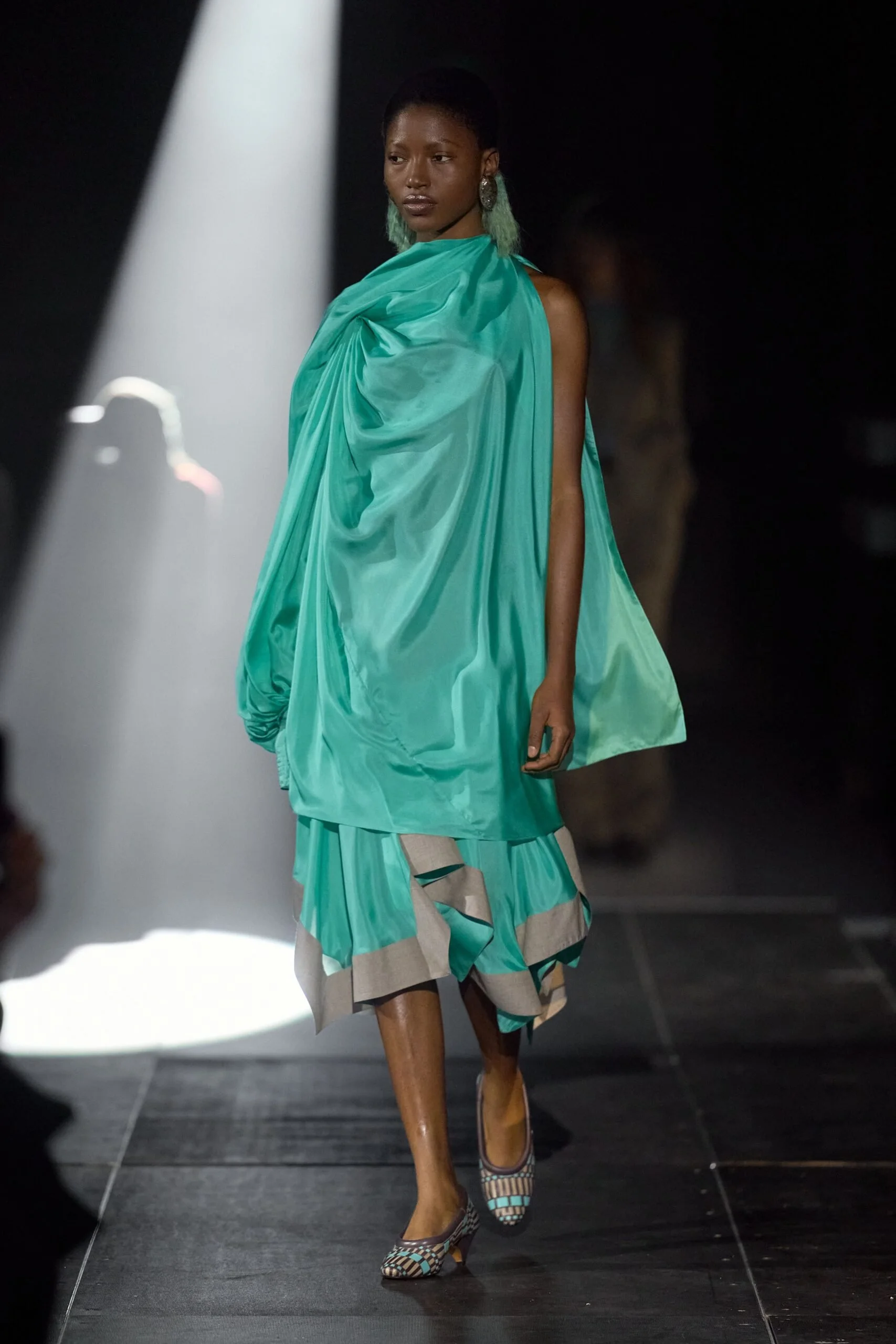
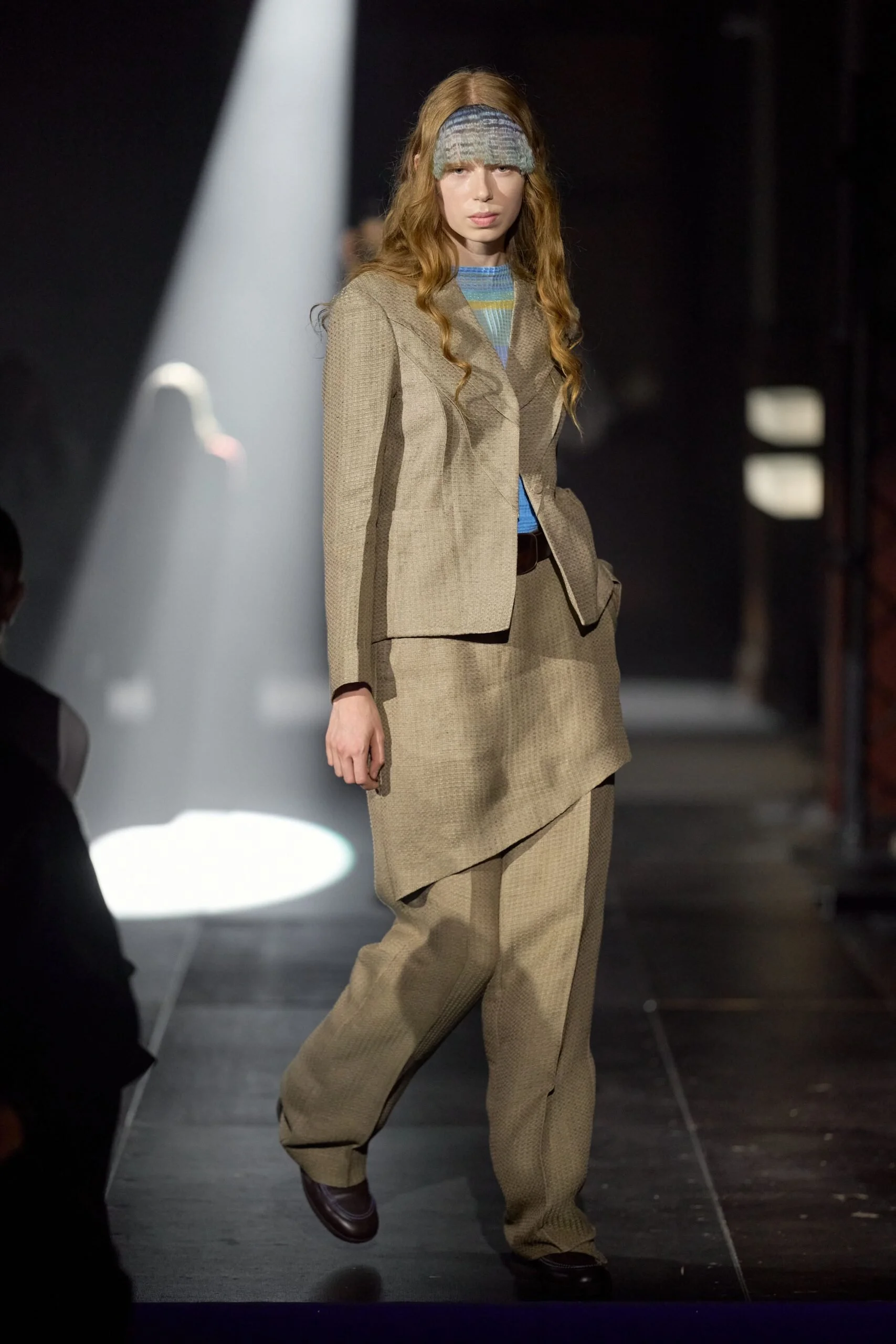
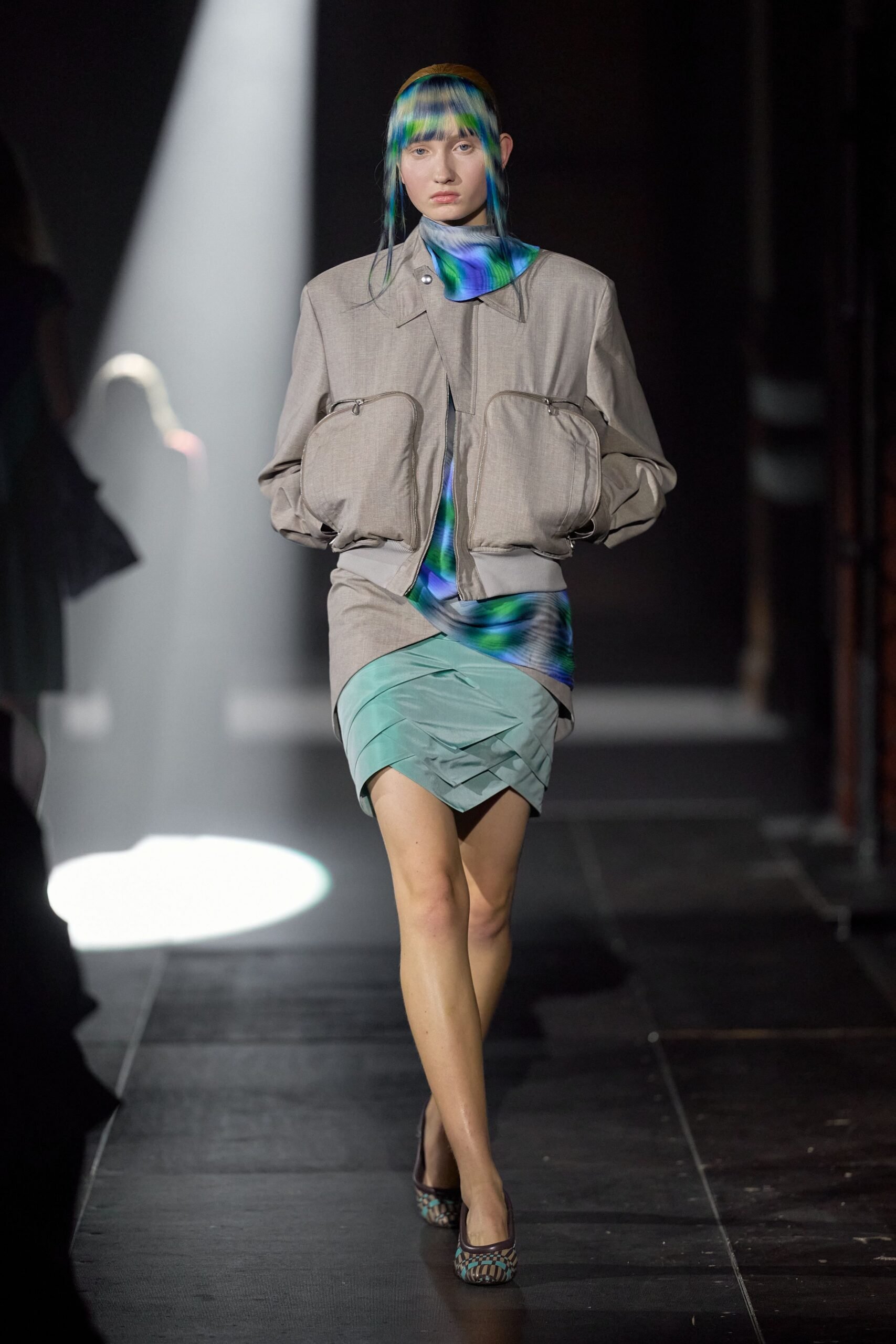
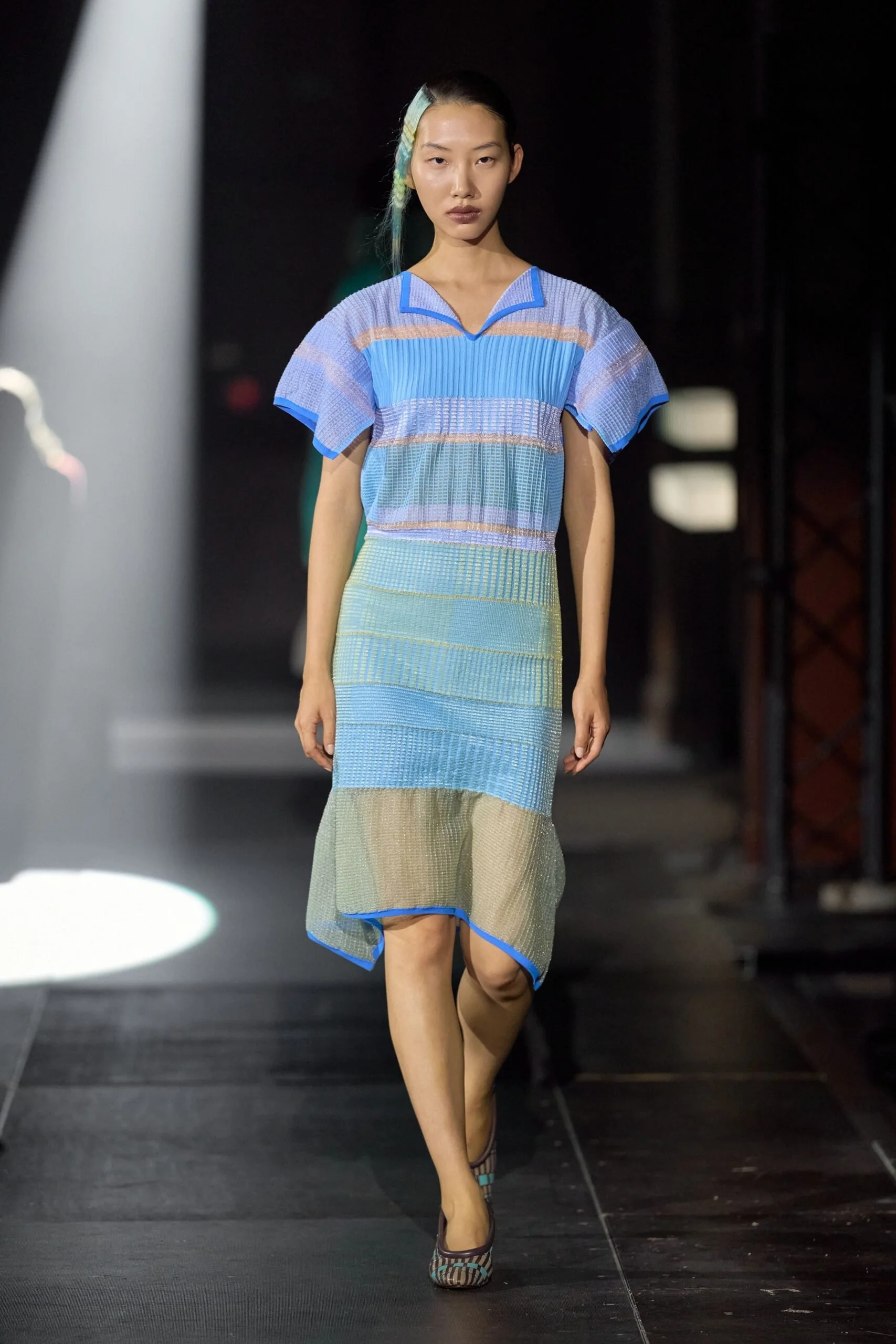
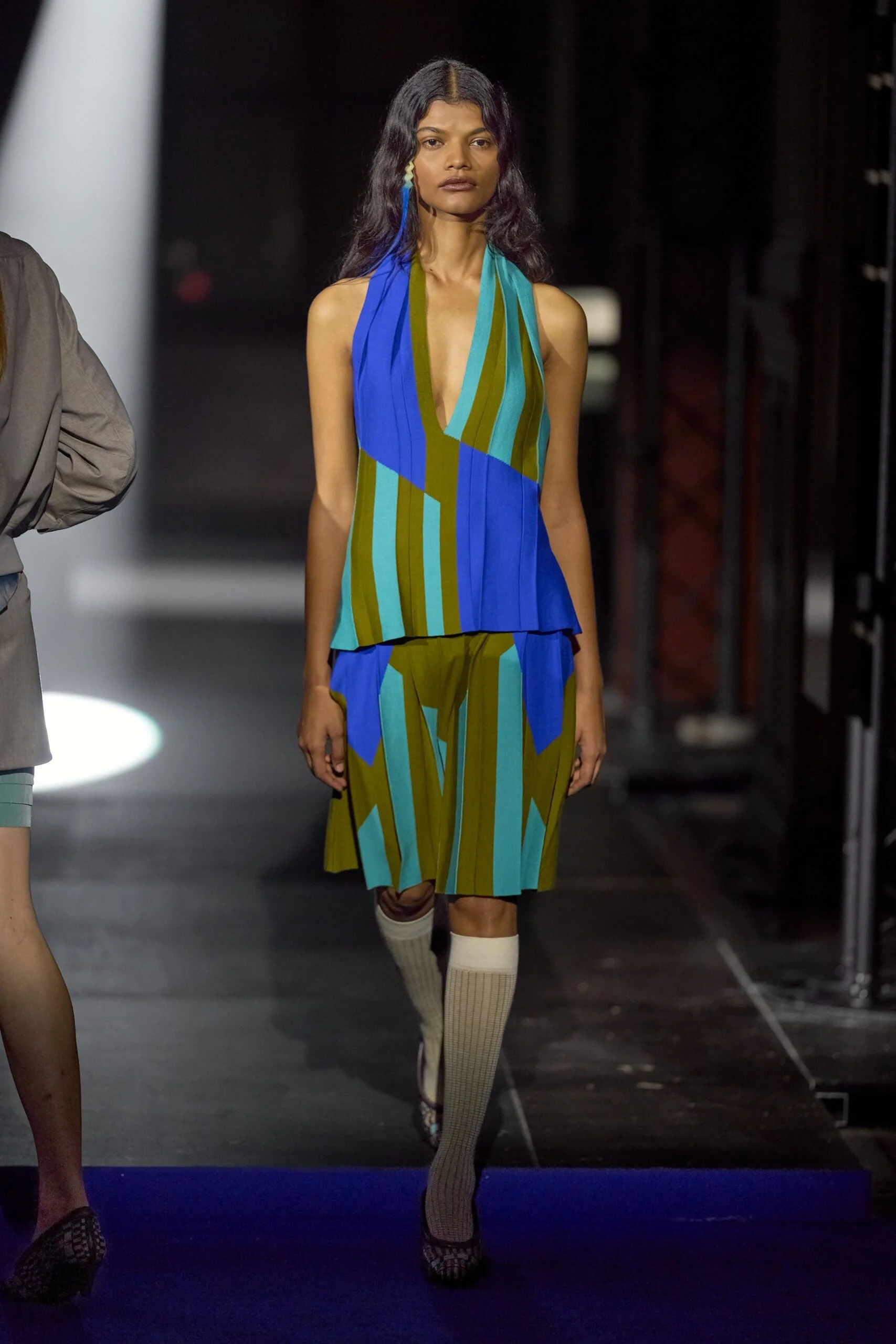
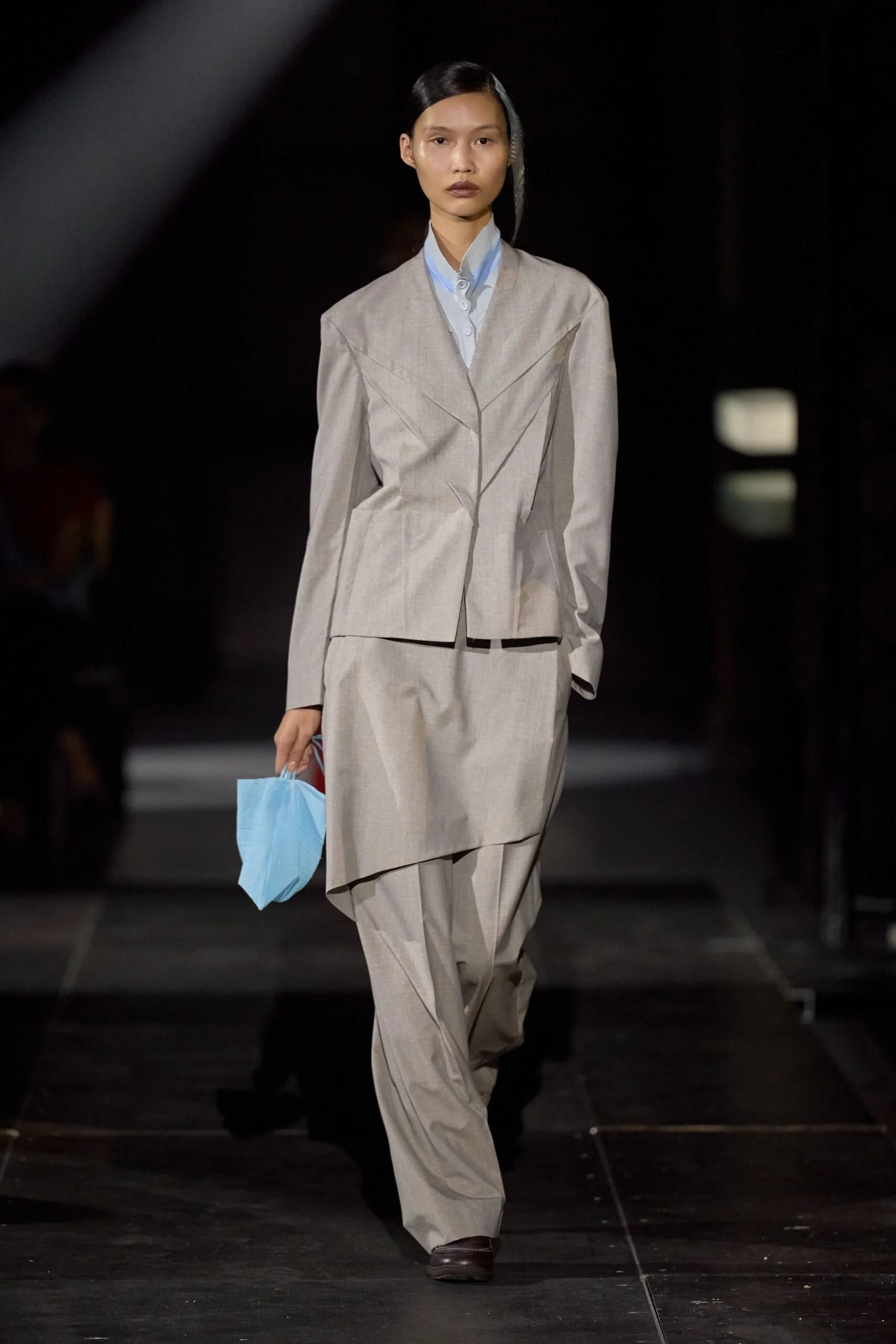
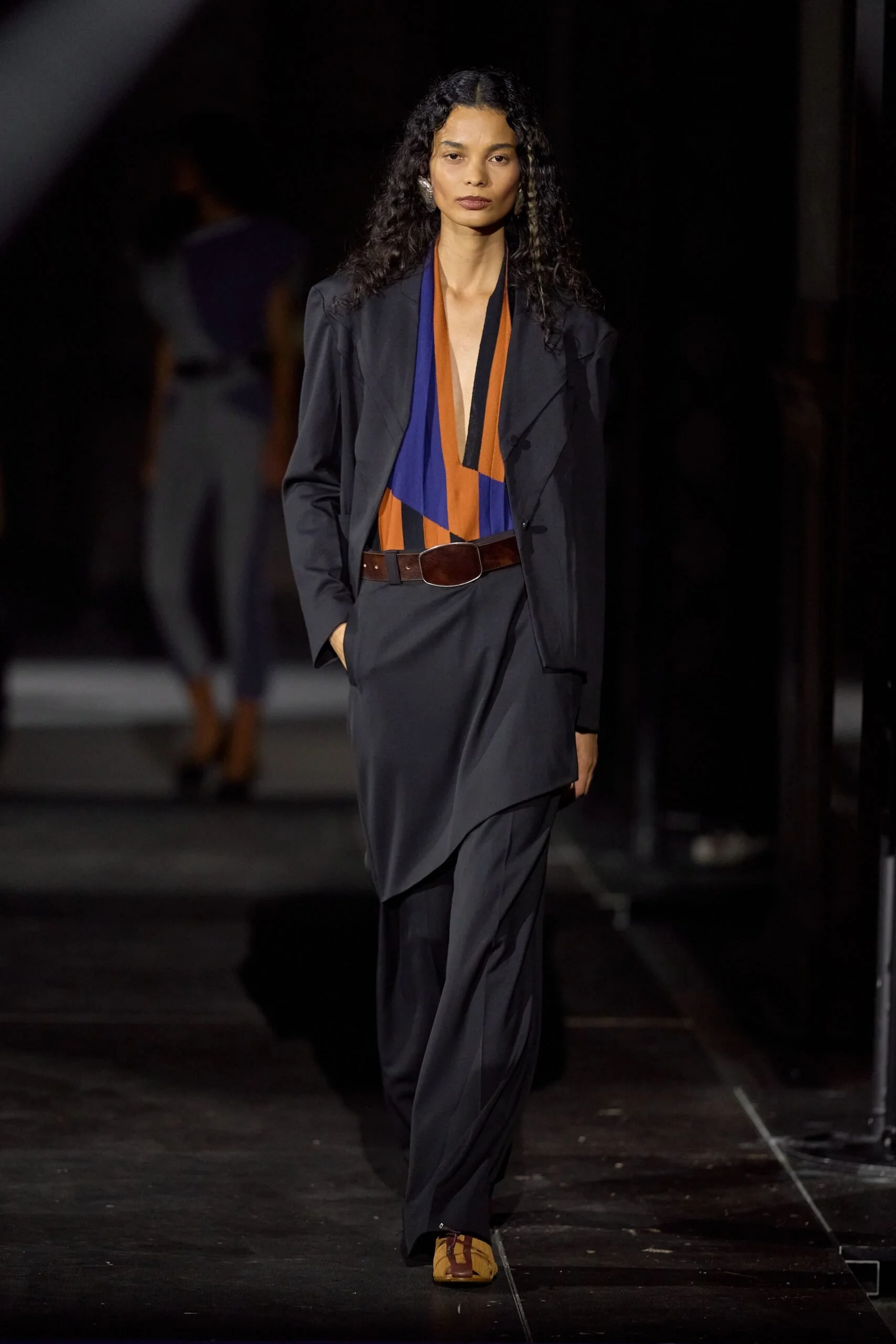
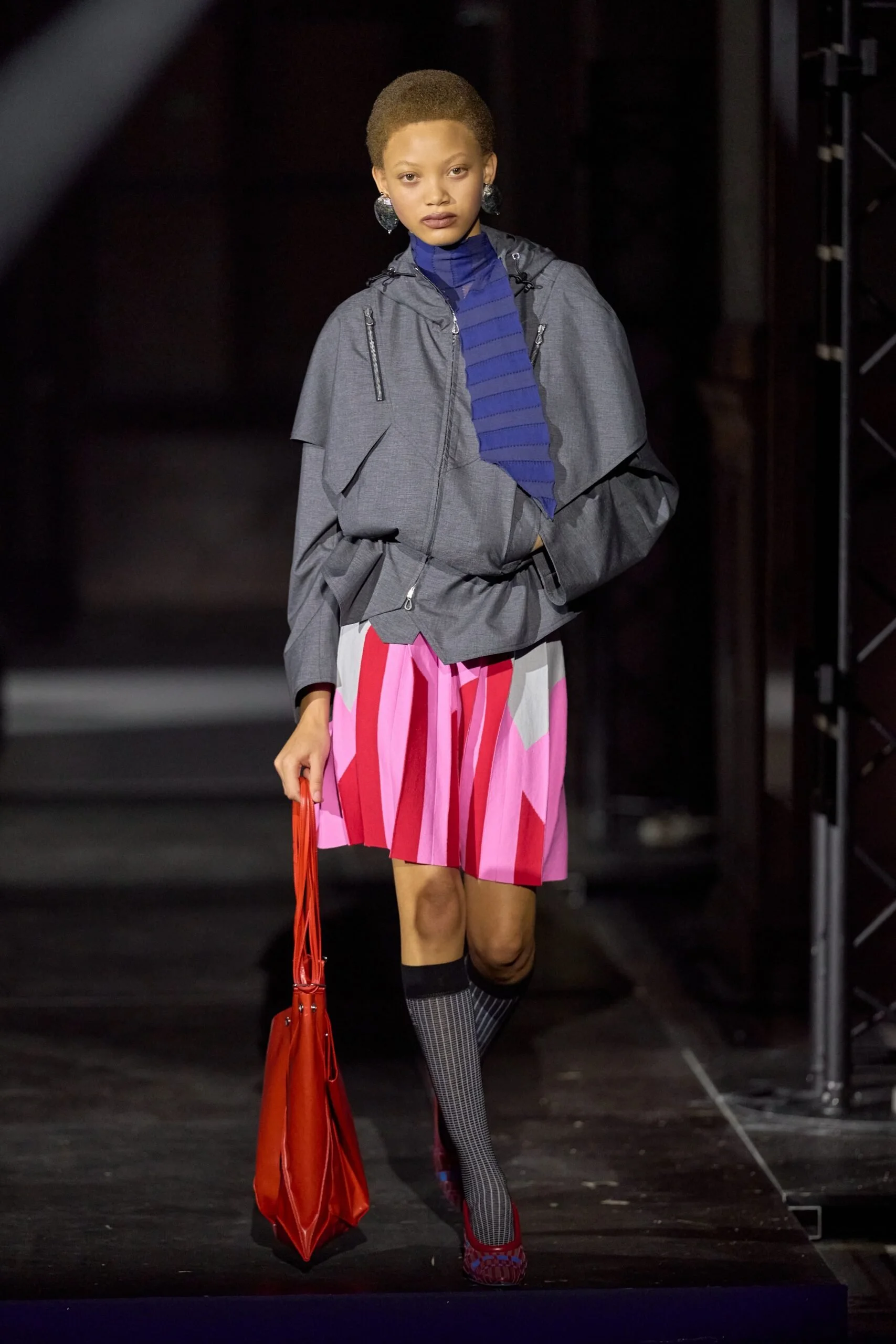
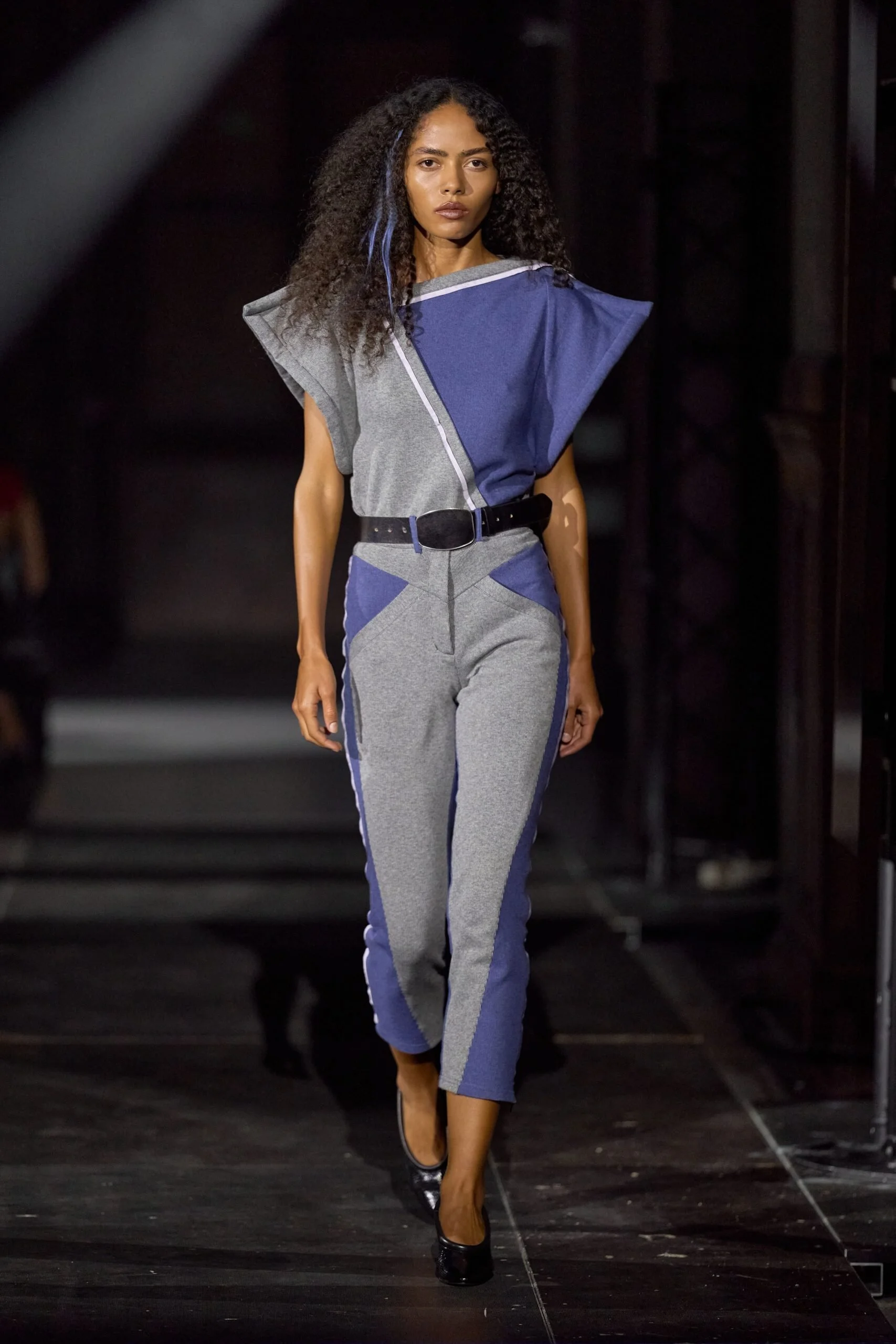
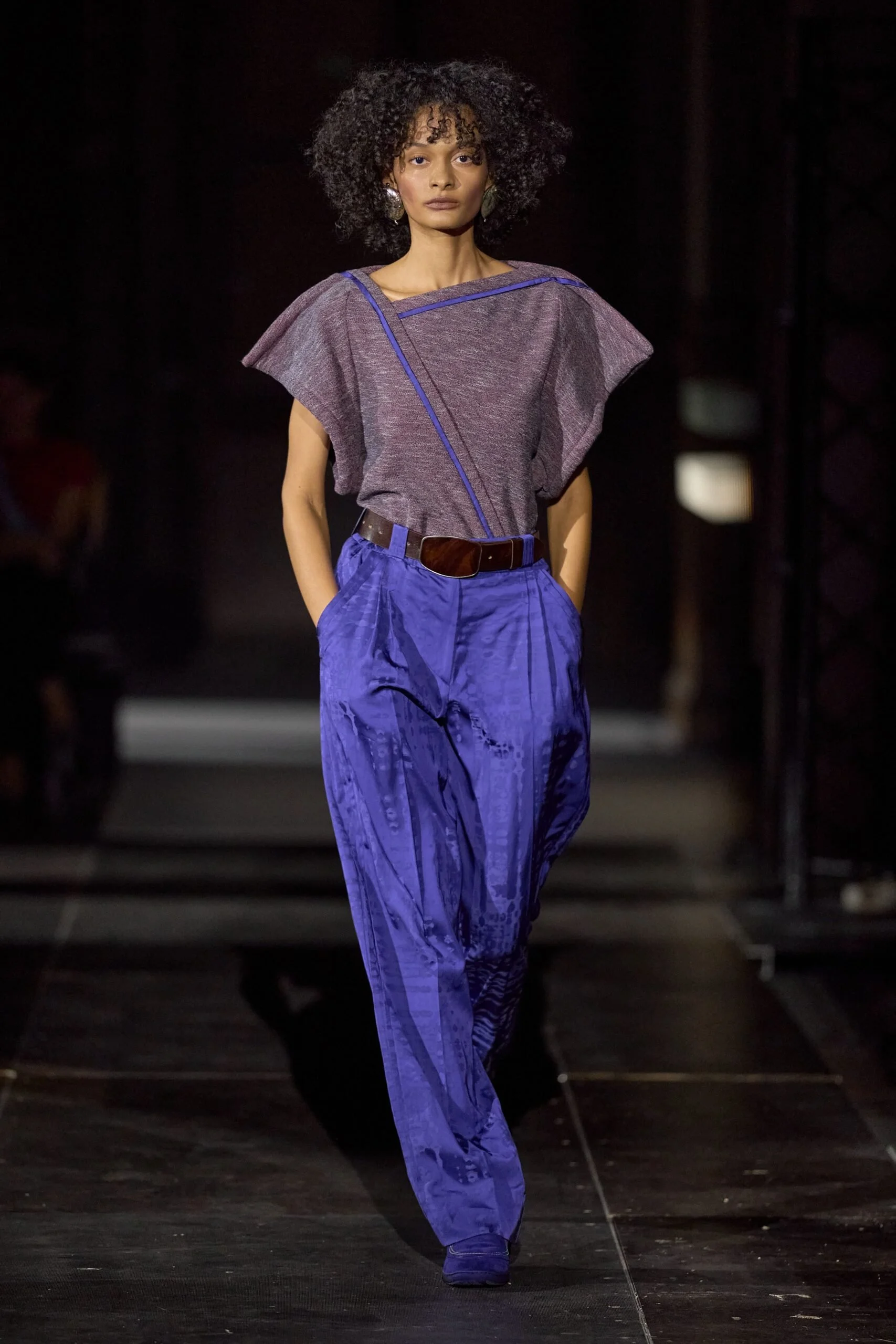
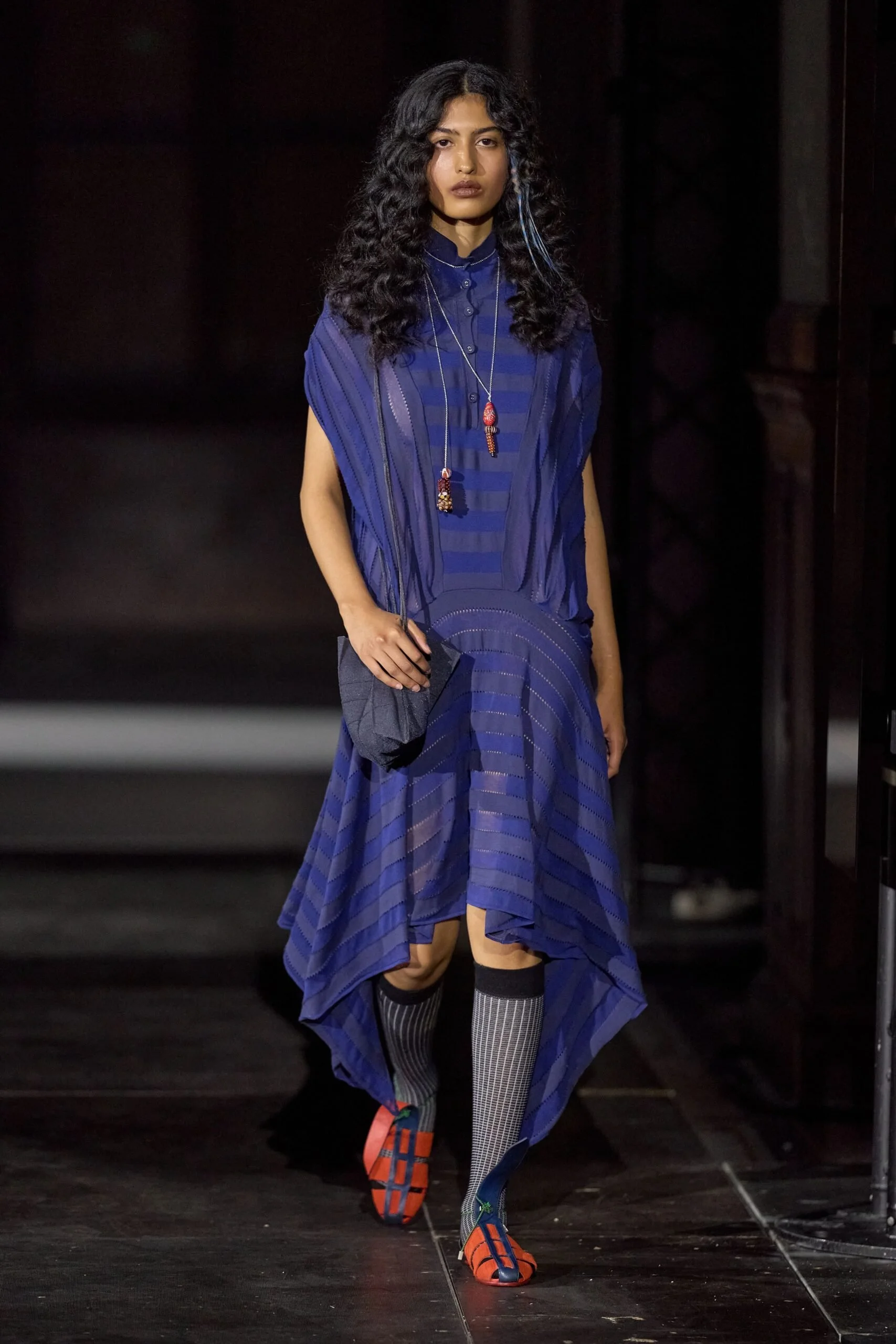
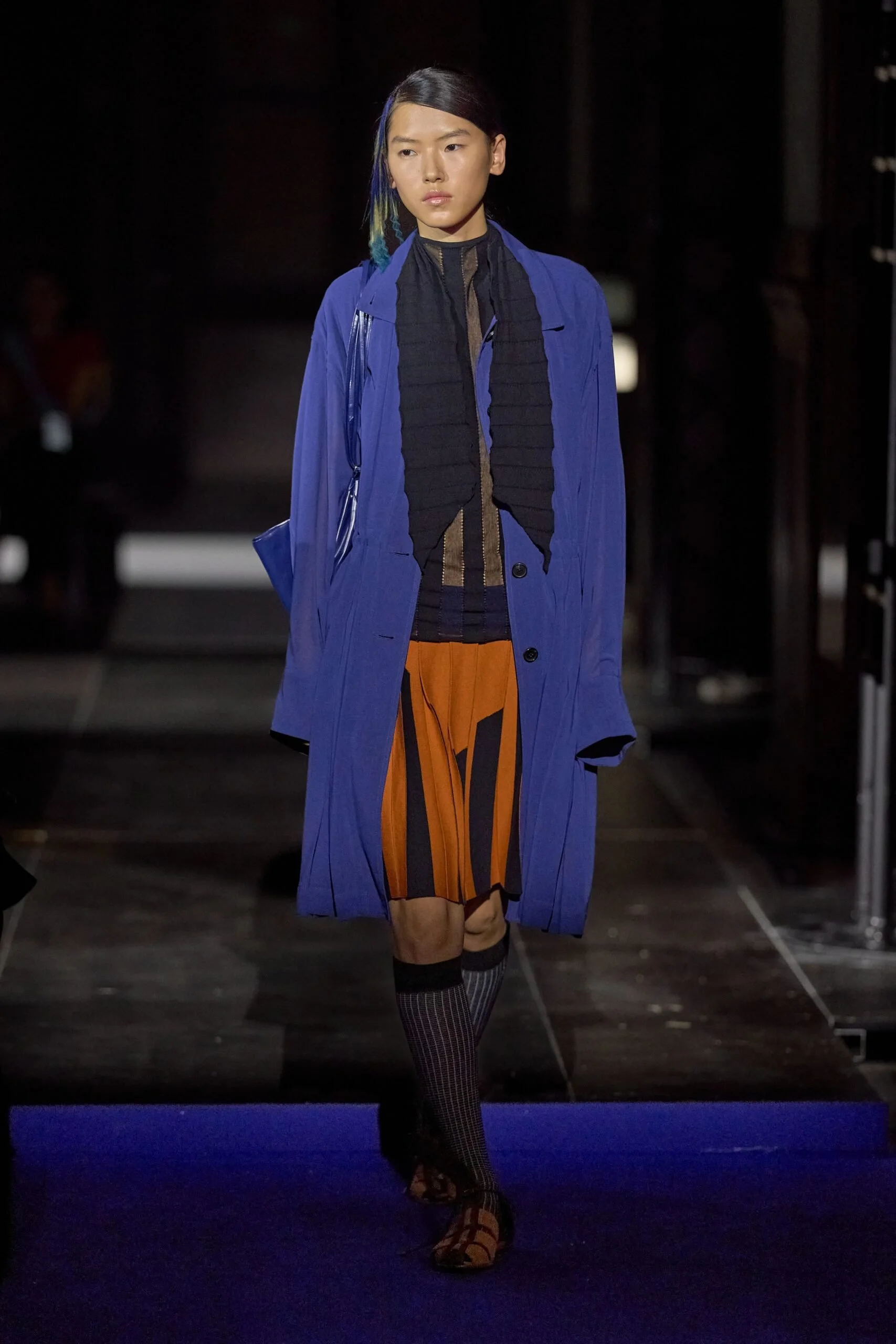
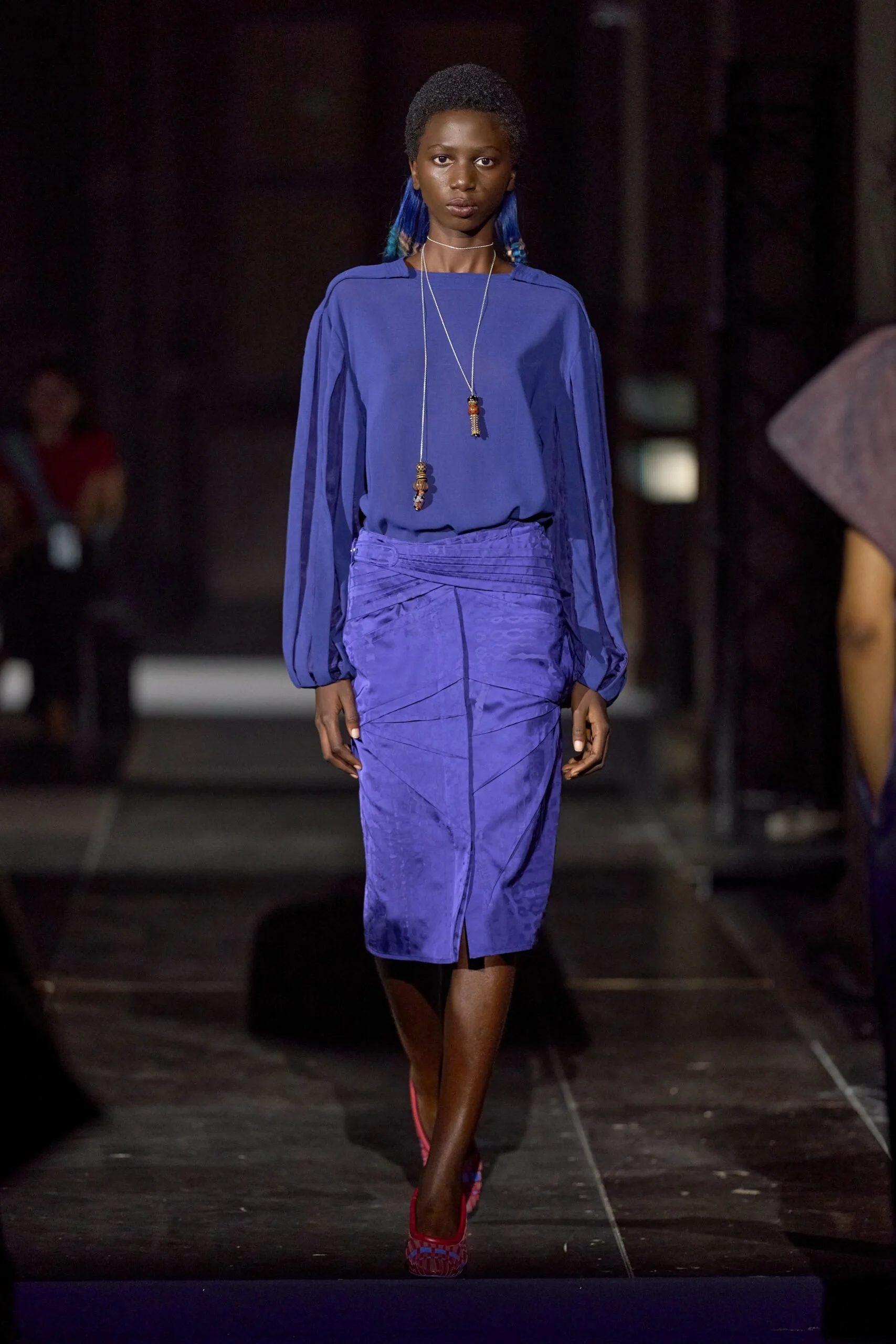
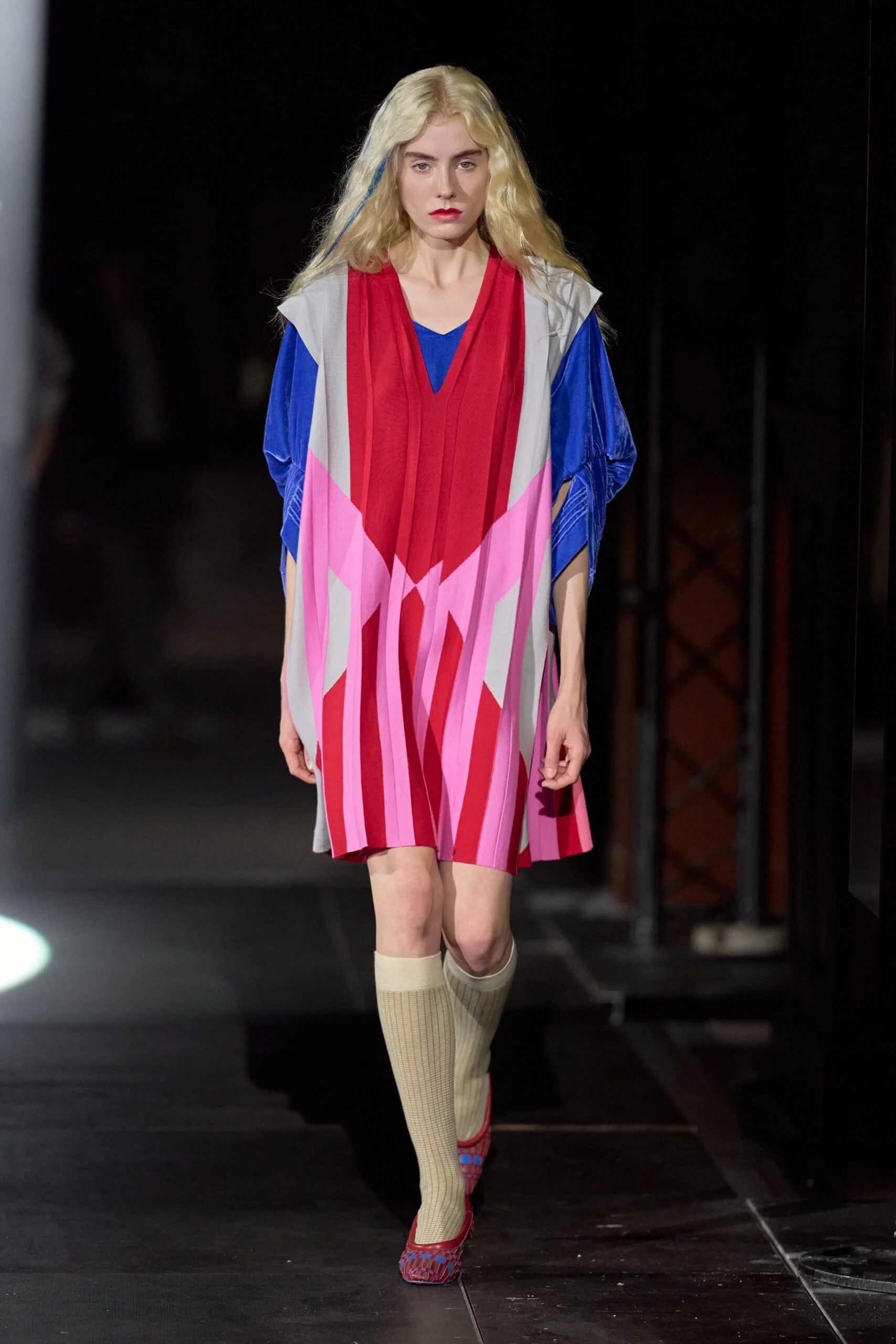
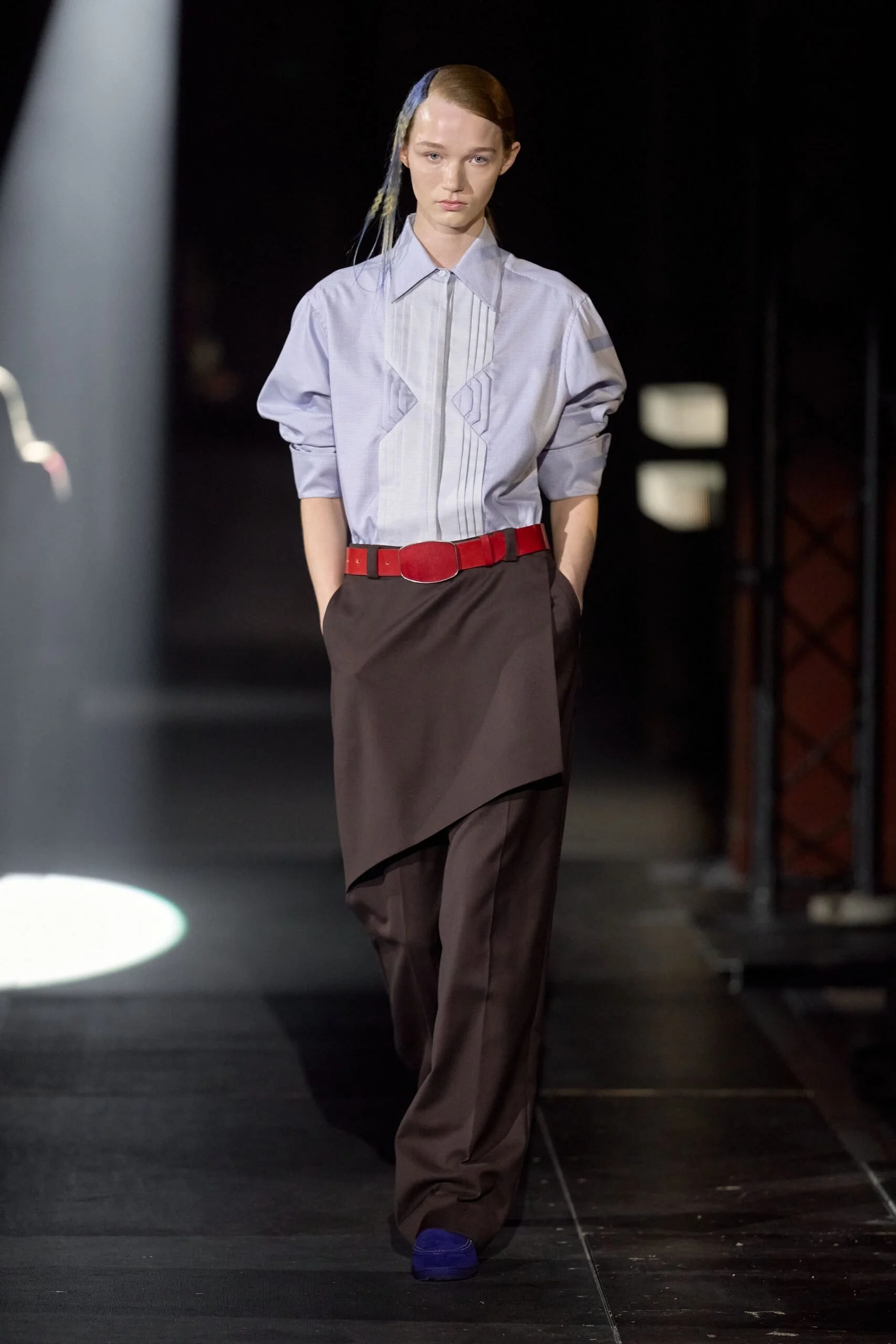
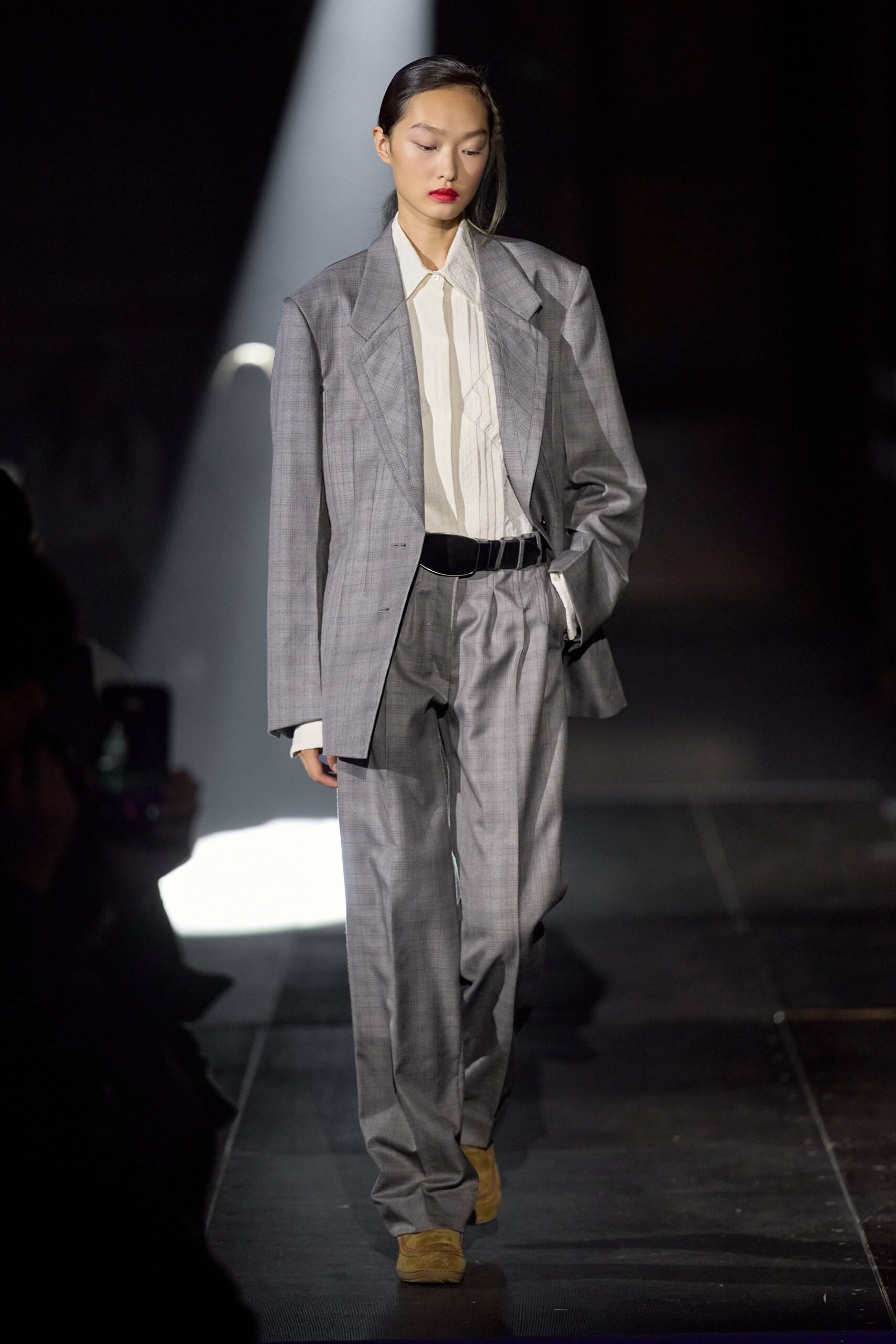
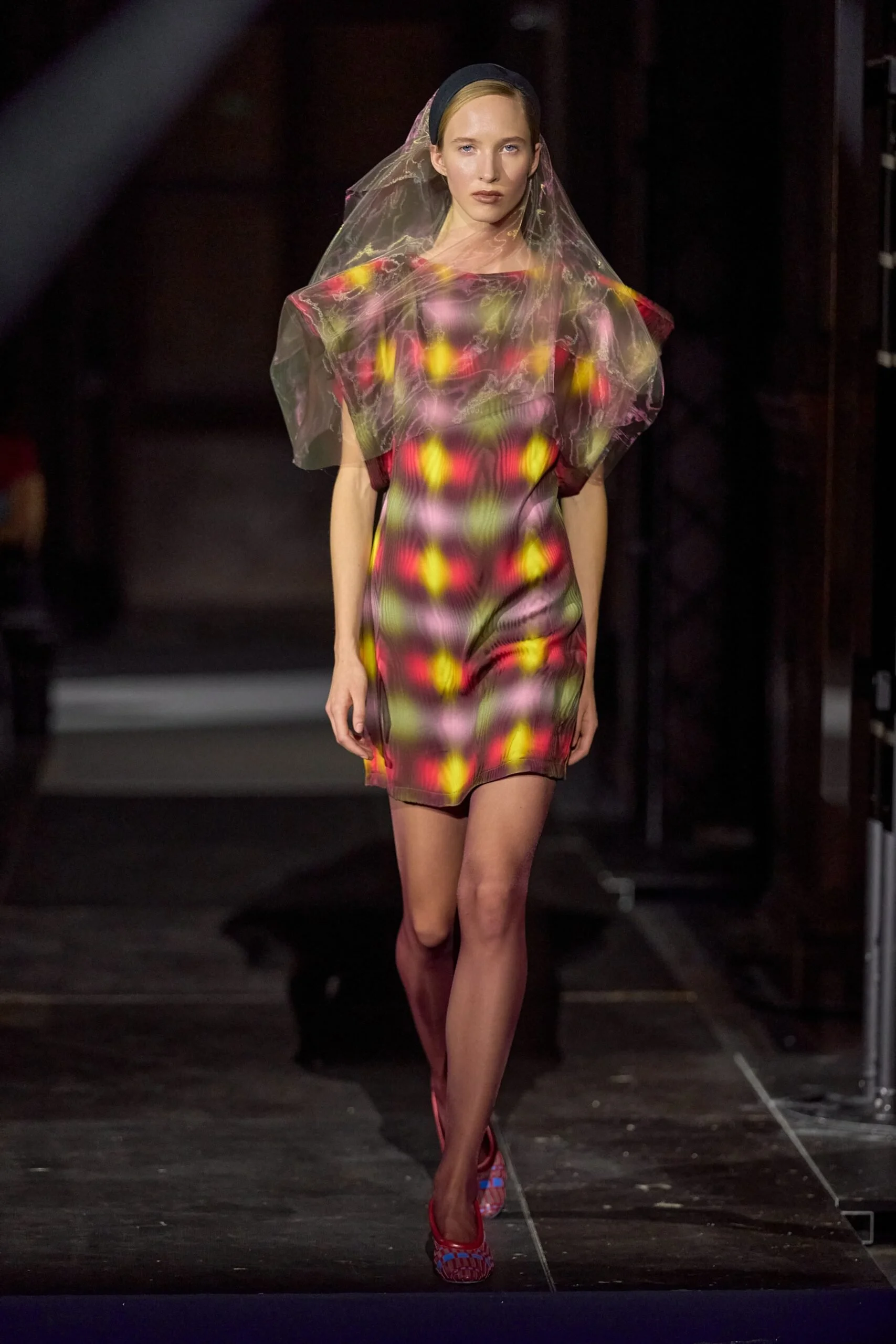
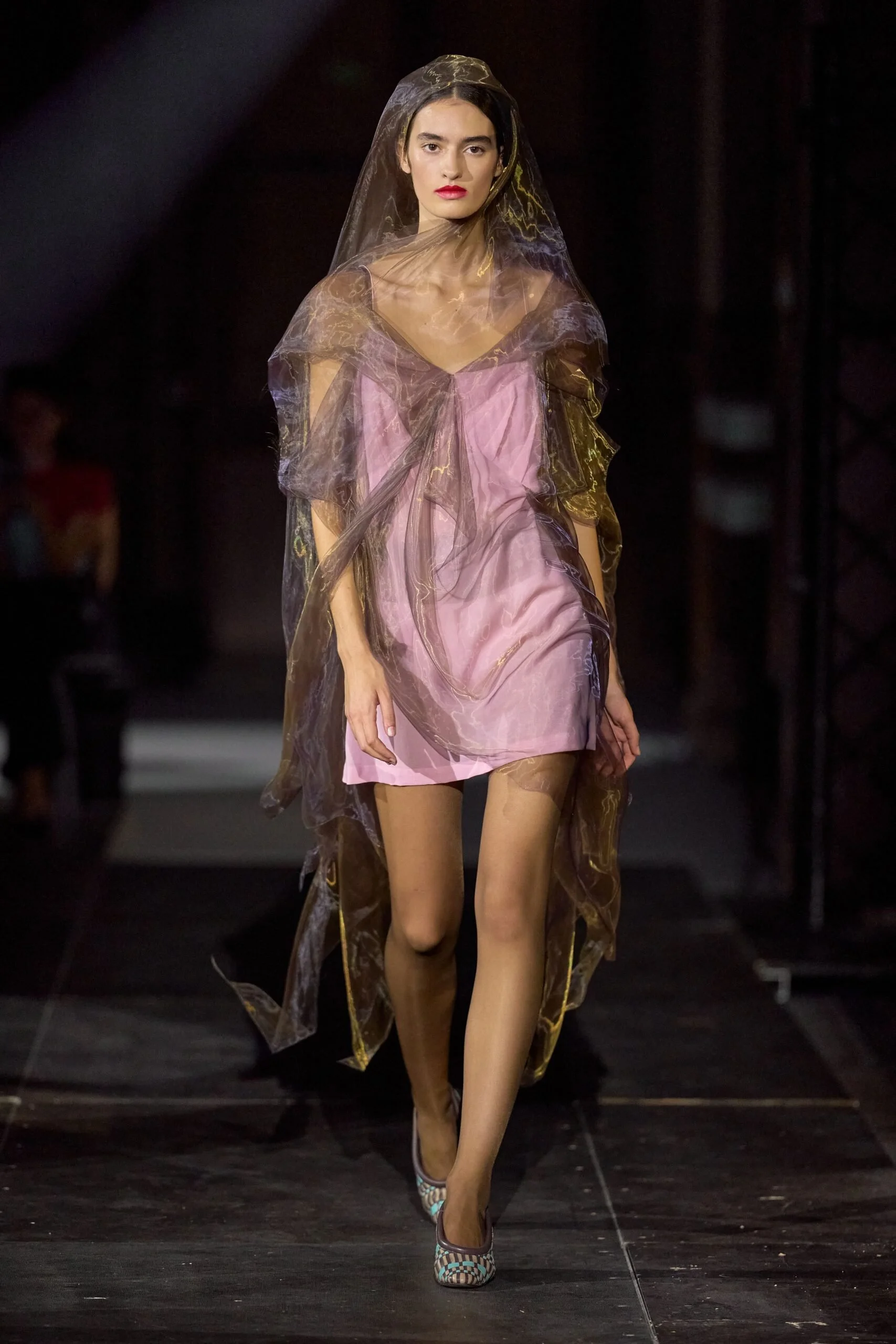
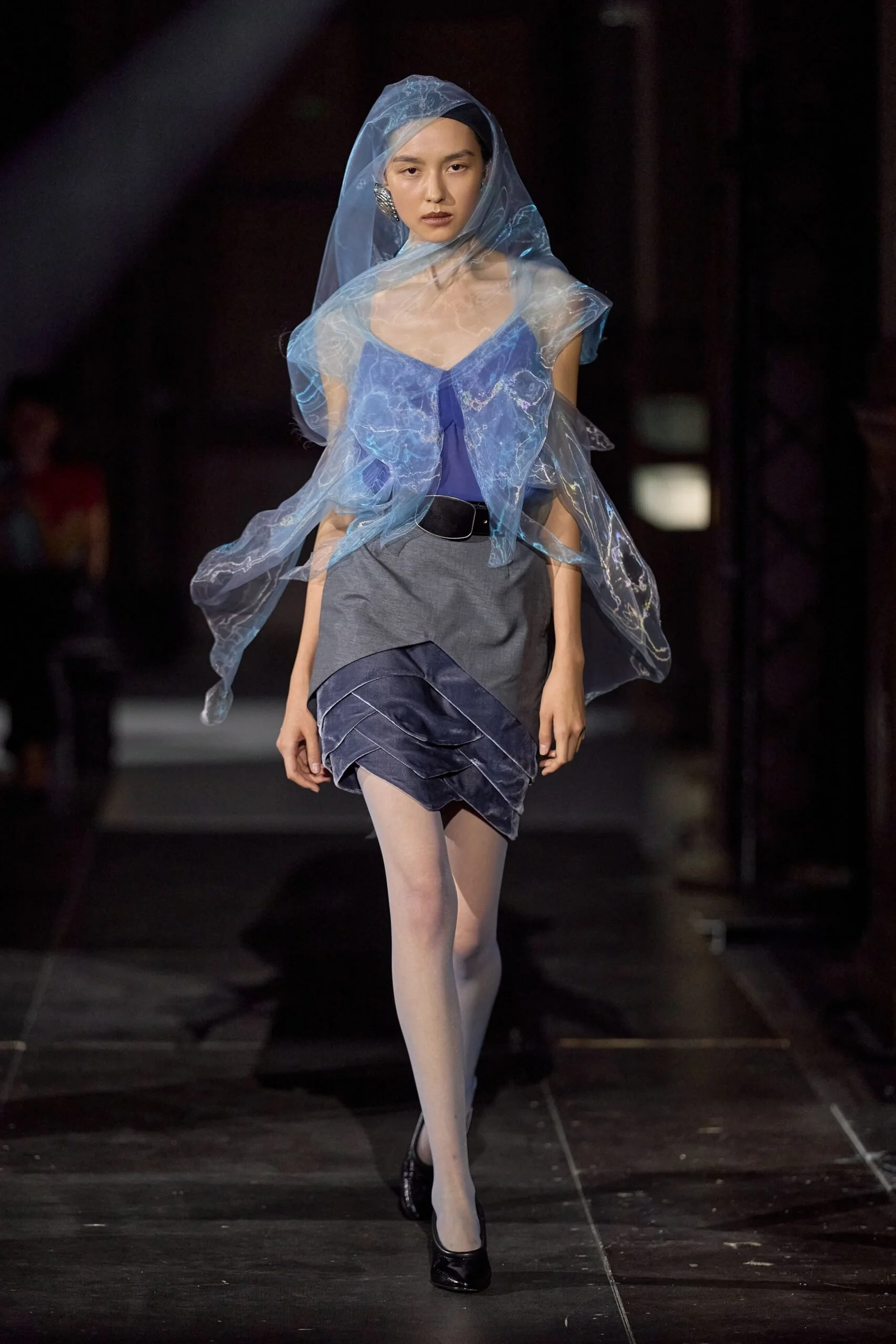
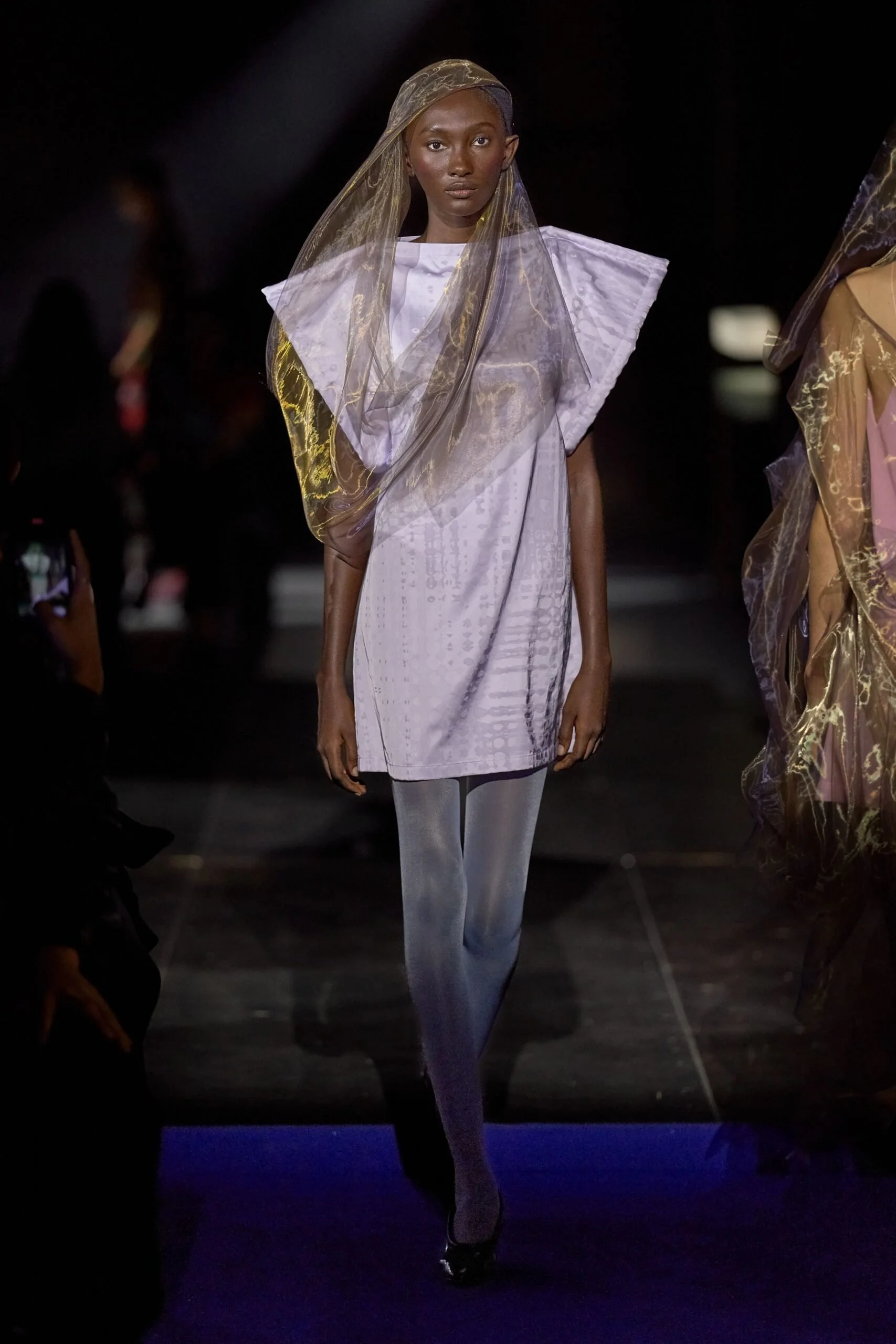
For Spring 2027, Kiko Kostadinov's Laura and Deanna Fanning looked at clothing through the lens of light. Their reference was Nanda Vigo, the late Italian multidisciplinary artist whose work explored light, space and perception, and whose radical approach felt particularly suited to the sisters' own way of treating clothes as objects with depth. Rather than simply translating Vigo's work into prints, they considered how light could move across the body. Cotton and nylon were manipulated into custom knitwear with contrasting shine and roughness, while layers of transparency created shifting surfaces. Grid patterns and geometric forms recalled Vigo's early Chronotope works, appearing through wide shoulders, rectangular coats and structured silhouettes that gave the body a slightly architectural outline.
The collection became increasingly about what happens between the layers. Graphic knitted intarsias referenced Vigo's light works, while pleating created new spaces across the body: knitted pleats, traditional shirt pleats and pintucks worked into velvet each caught the light differently. Moiré fabrics were shaped with darts into triangular forms, while organza was used to soften some of the more rigid constructions. The result was experimental without becoming overly abstract, because the clothes remained recognisable as clothes. There was a satisfying tension between hard geometry and softer movement, with the Fannings allowing transparency, texture and reflection to do much of the visual work.
Vigo's influence also offered something beyond aesthetics. The sisters were drawn to her as a woman who worked radically and without apparent limitations for more than six decades, and that sense of freedom came through in a collection that refused to settle into one visual language. Spring 2027 was not about making fashion look like art, but about borrowing an artist's way of thinking: questioning how space, surface and light can change what we see. At Kiko Kostadinov, the body became the architecture, and the clothes became the light-catching structure around it.