Advisry Spring 2027
For Spring 2027, Keith Herron looked 50 years into America’s past to consider its present, transforming familiar streetwear codes through political history, cinematic references and a cautiously optimistic vision of what comes next.
Keith Herron has spent more than a decade developing Advisry from the graphic T-shirts and hoodies of his teenage years into something considerably more considered. For Spring 2027, that evolution became a conversation with the past through a collection titled “America, Still”. A photograph of Herron’s father as a young boy, taken with his family 50 years ago, appeared on the fans placed on seats, establishing a personal connection to a wider exploration of American identity.
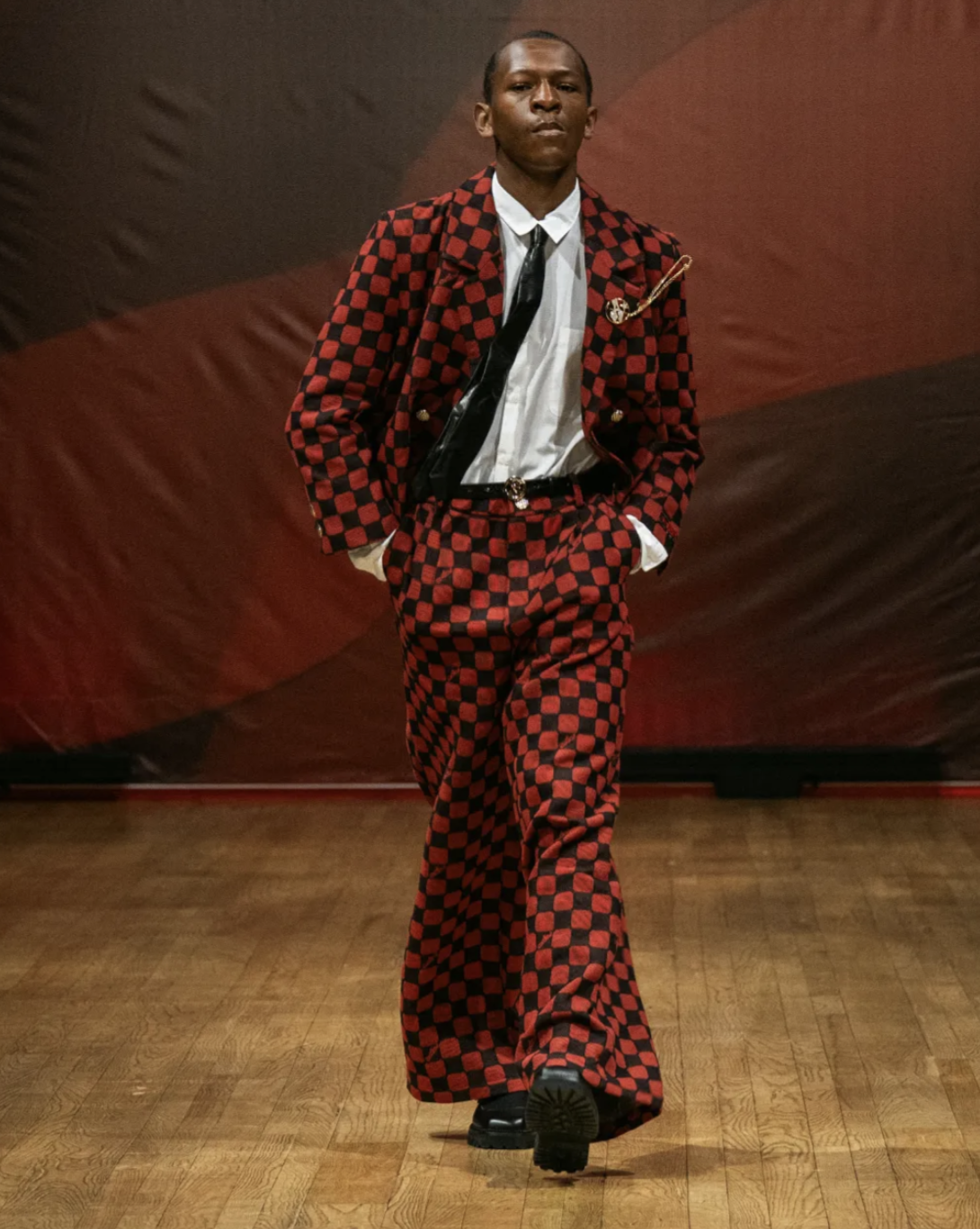
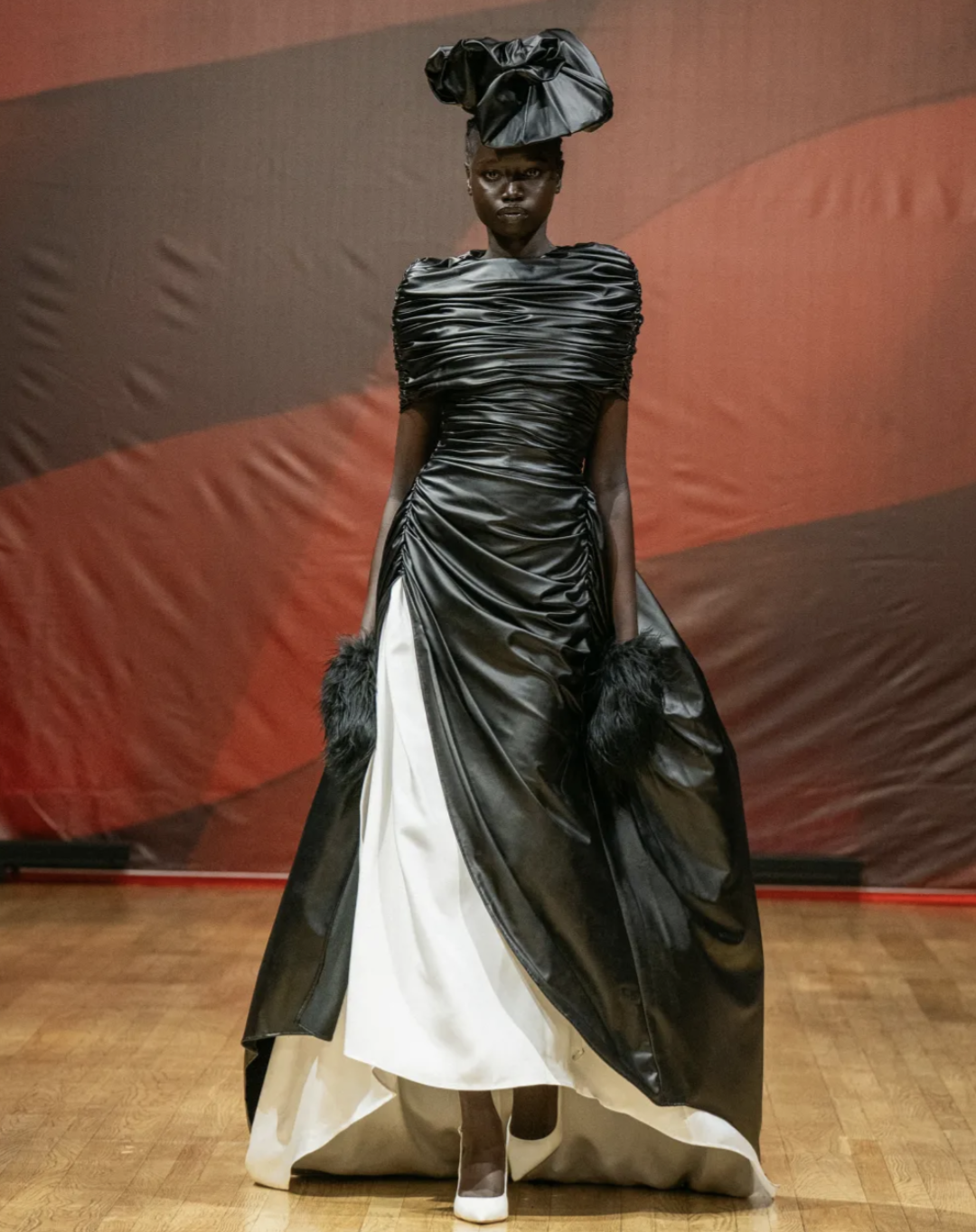
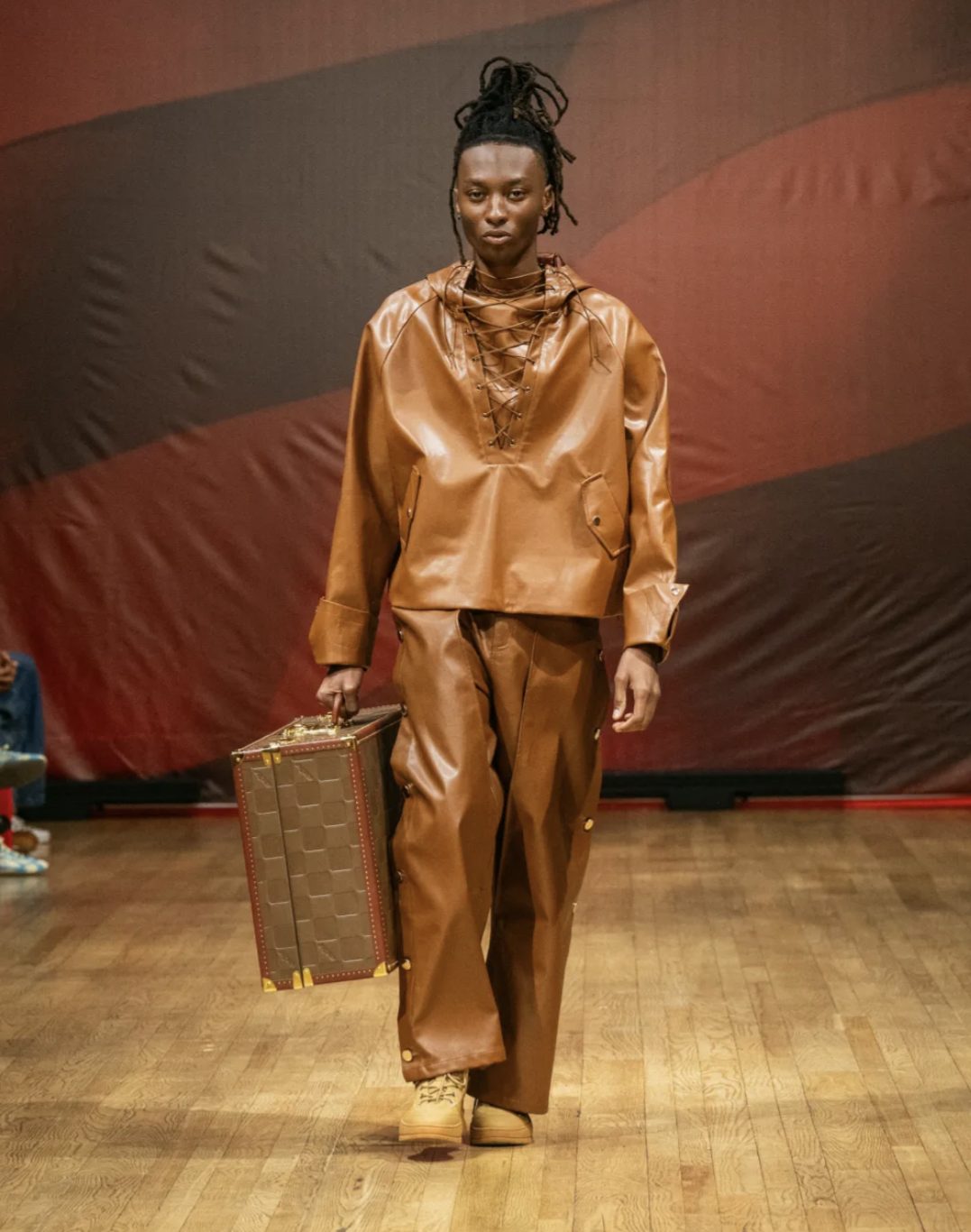
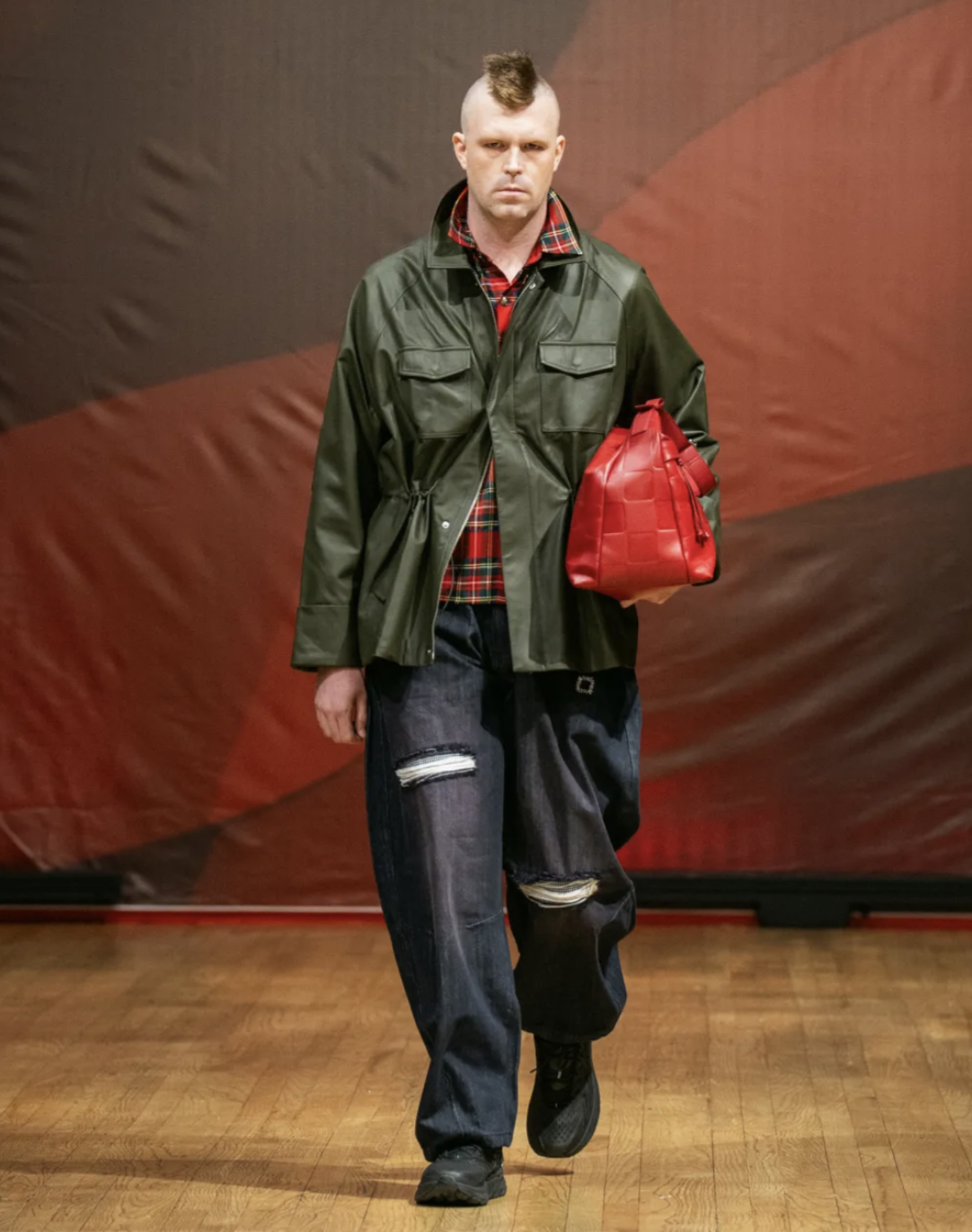
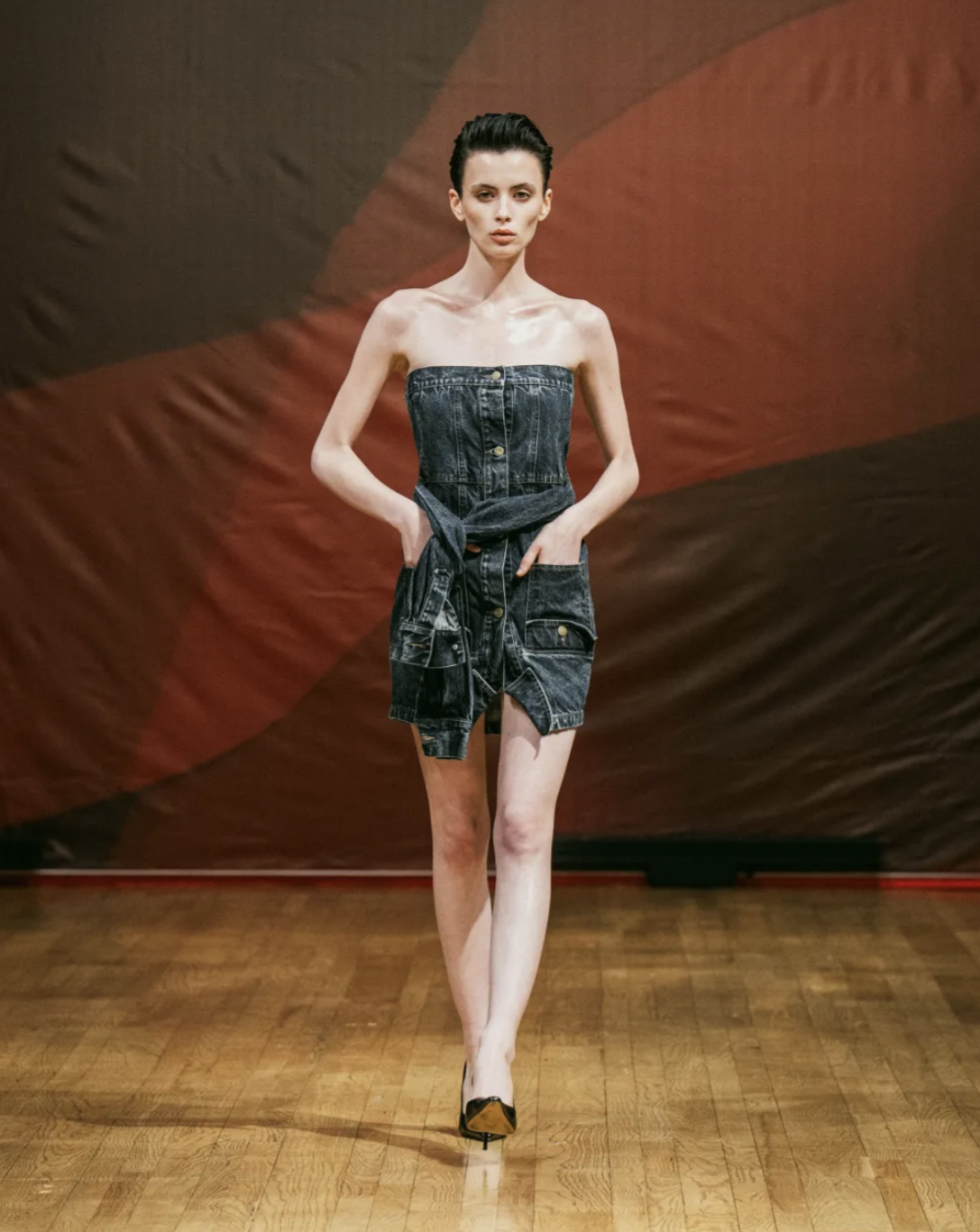
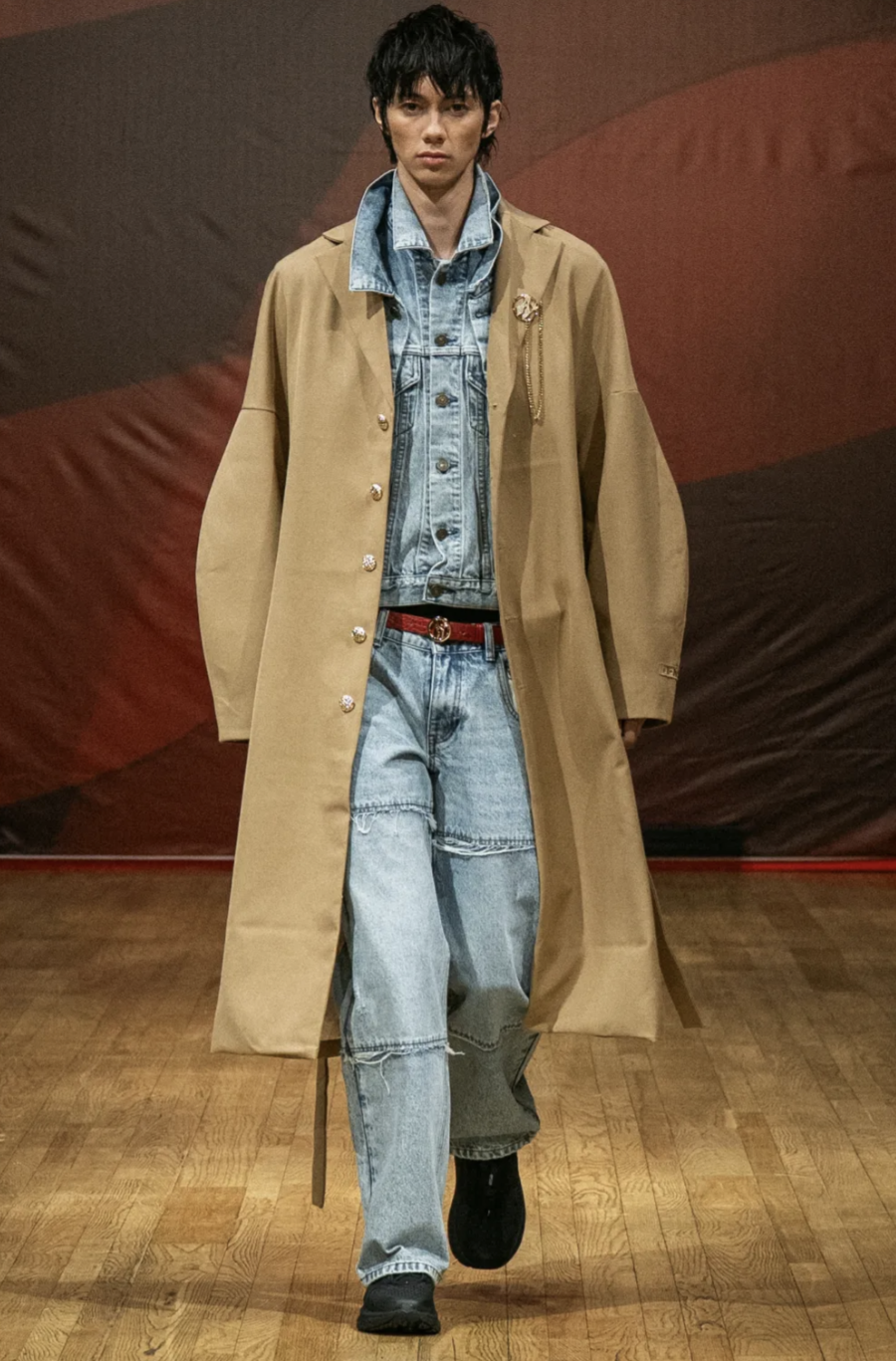
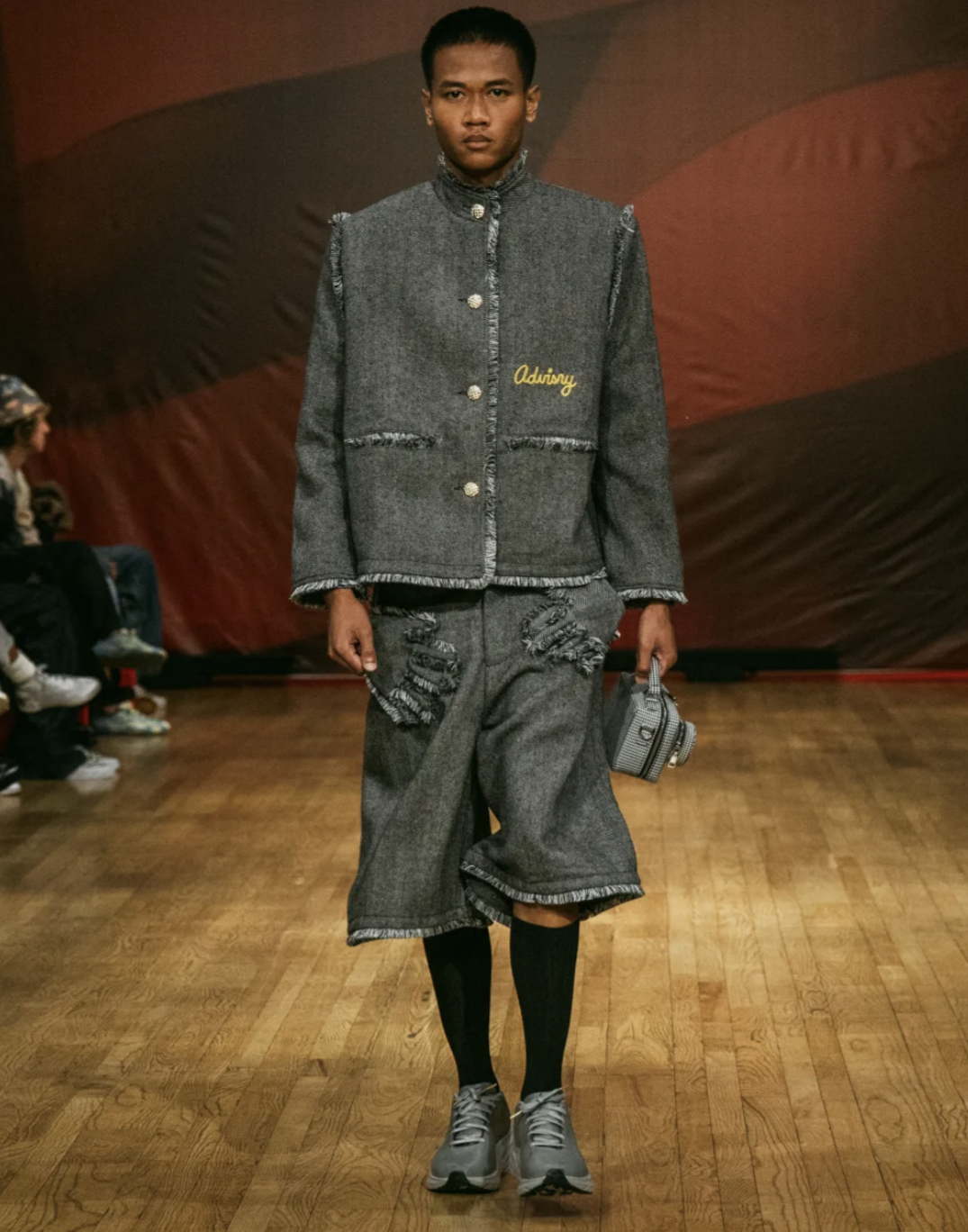
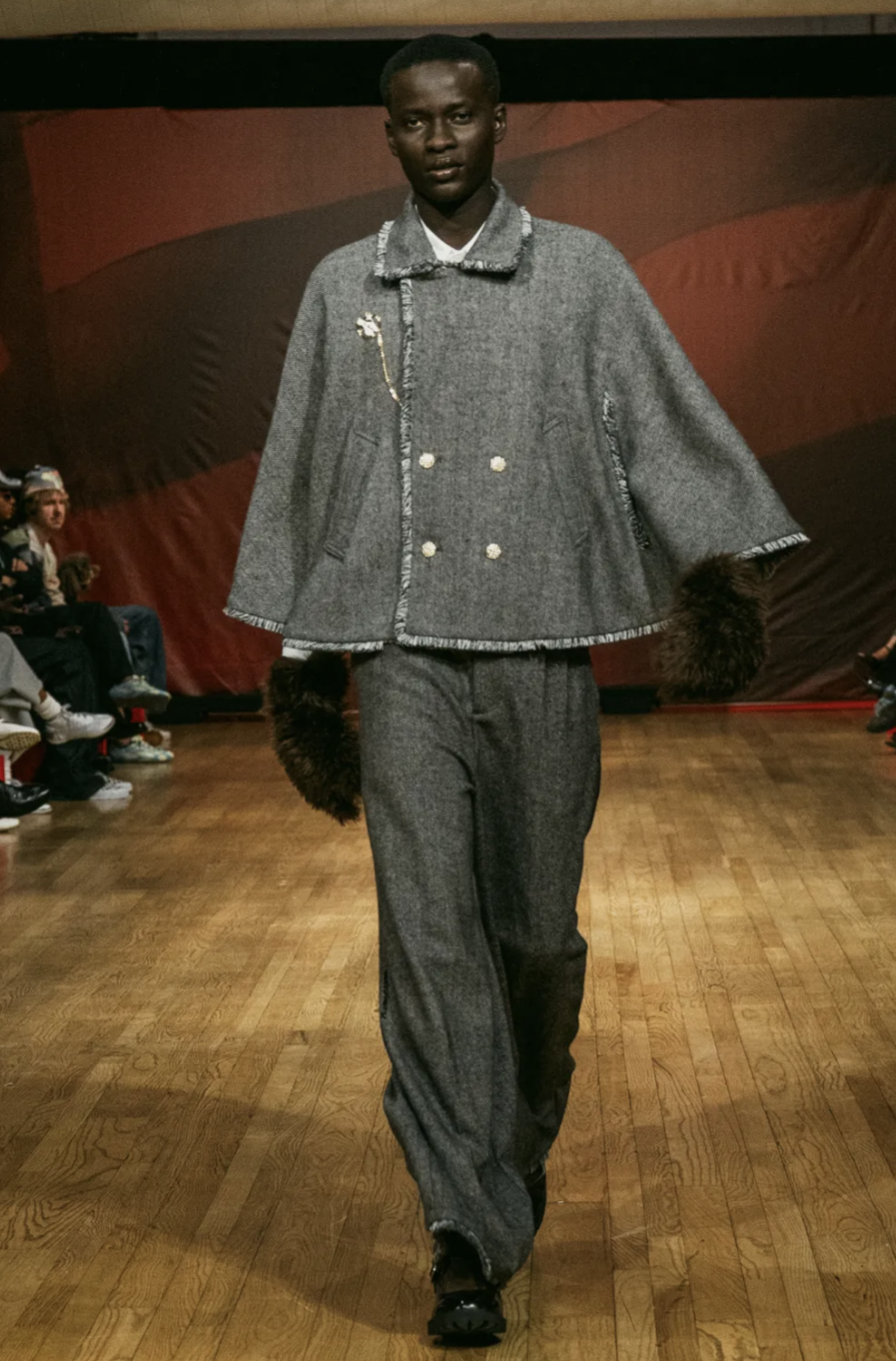
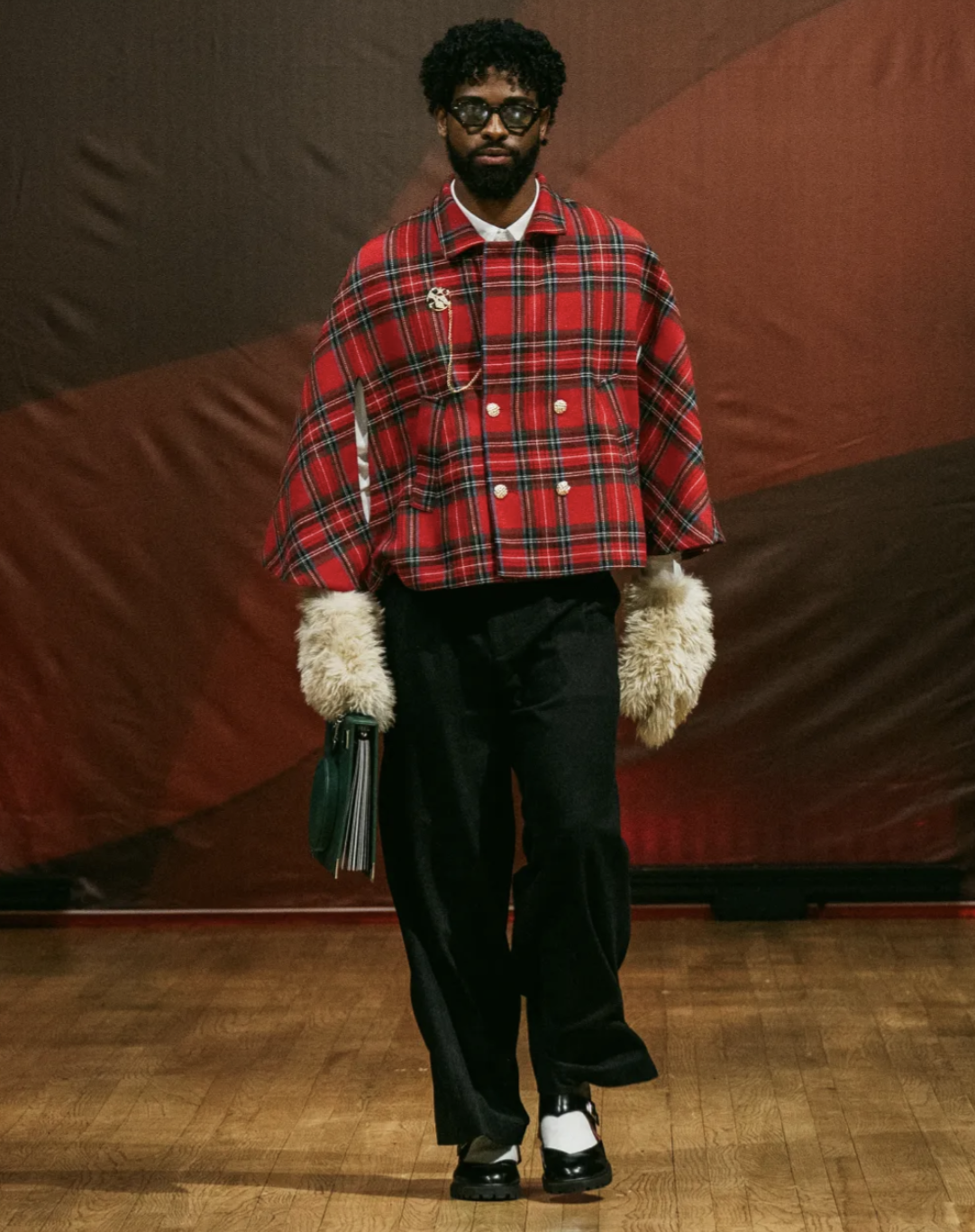
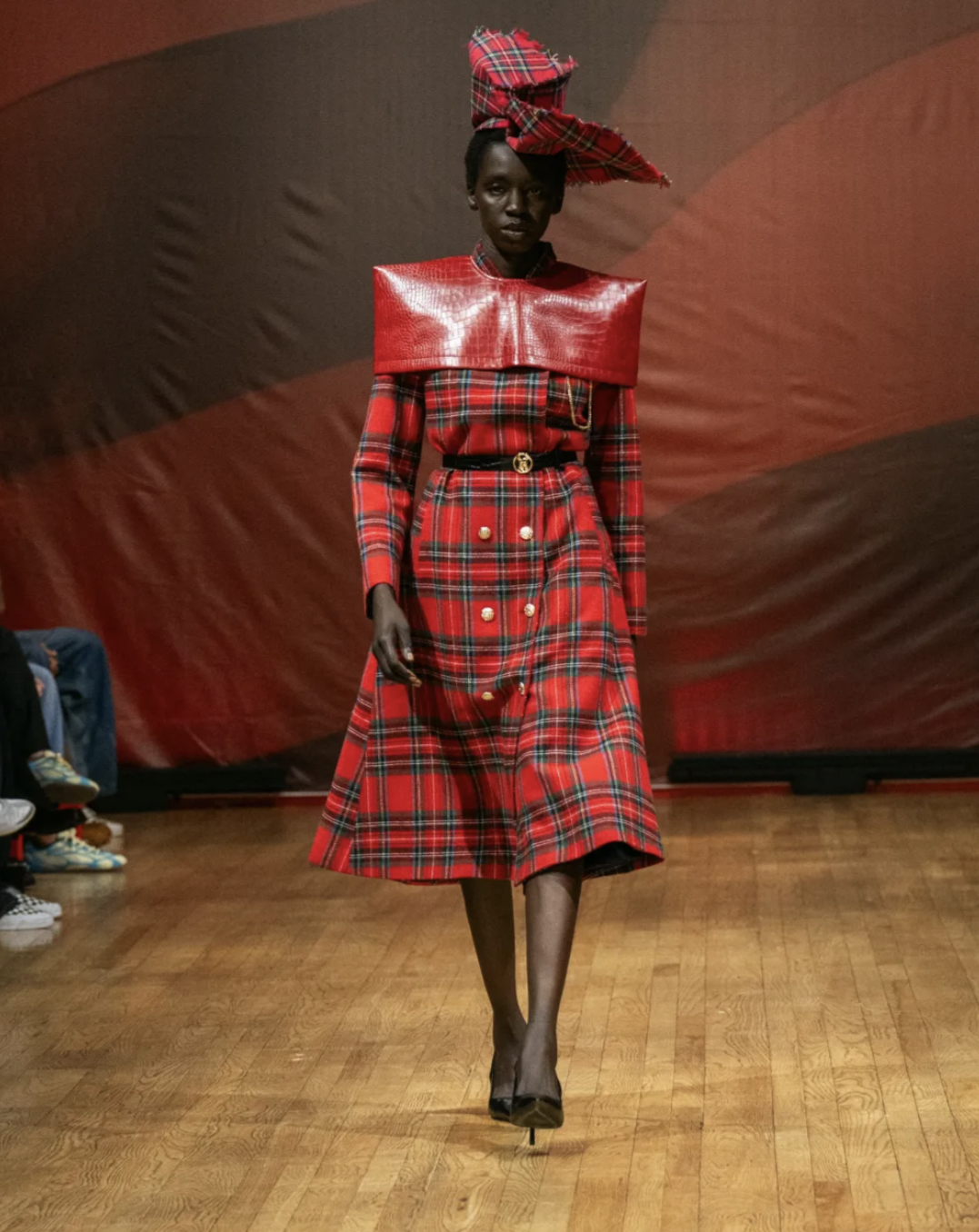
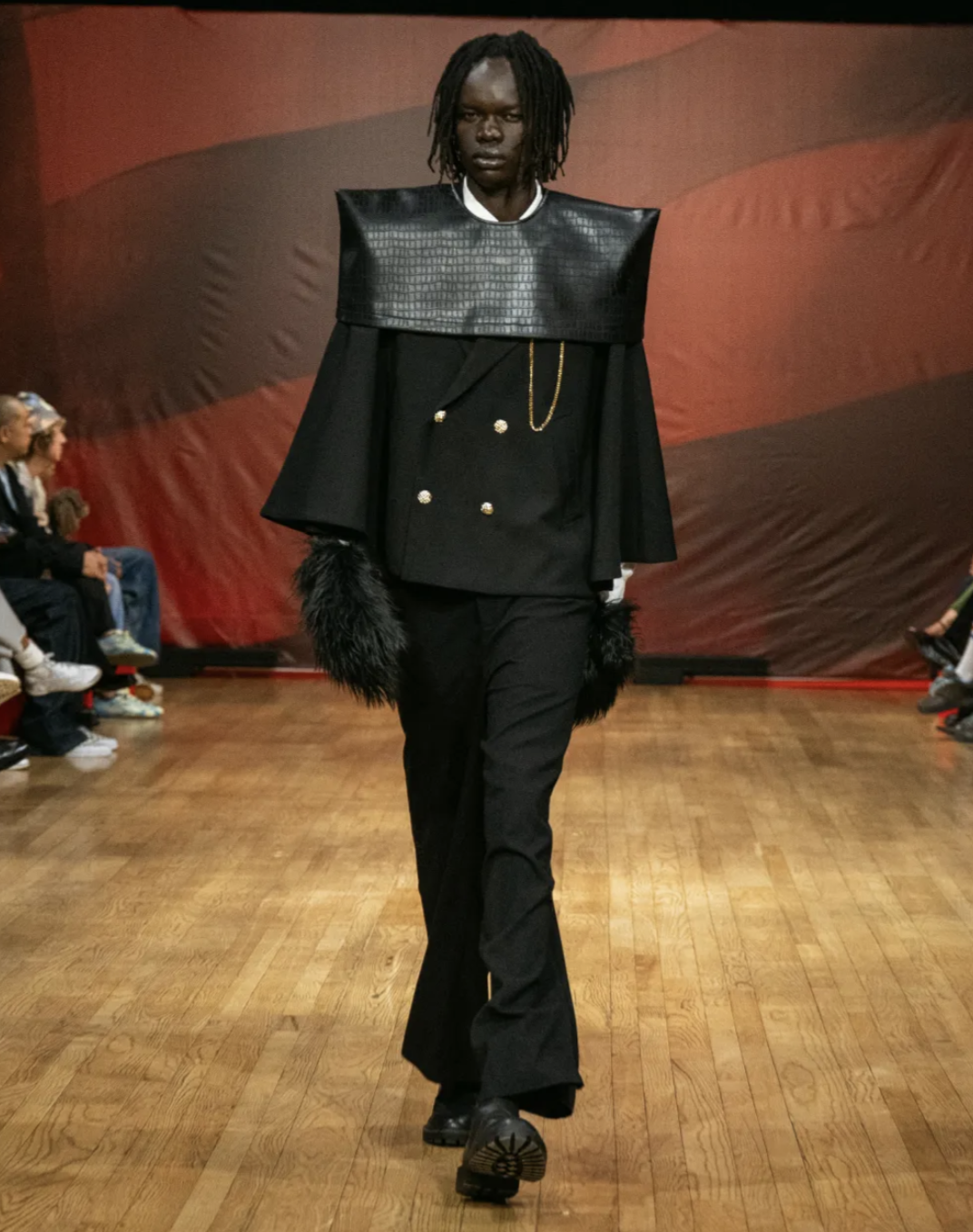
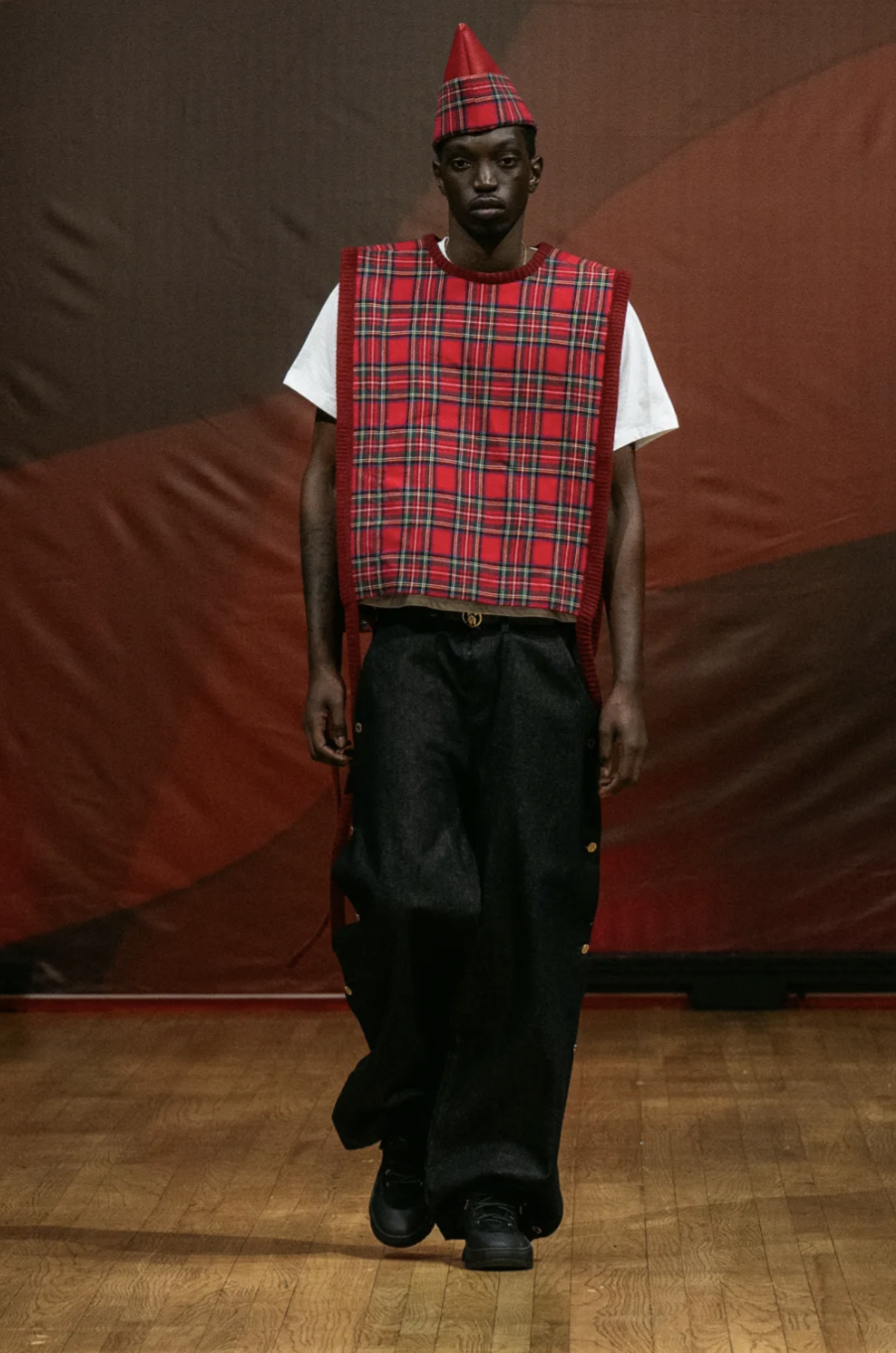
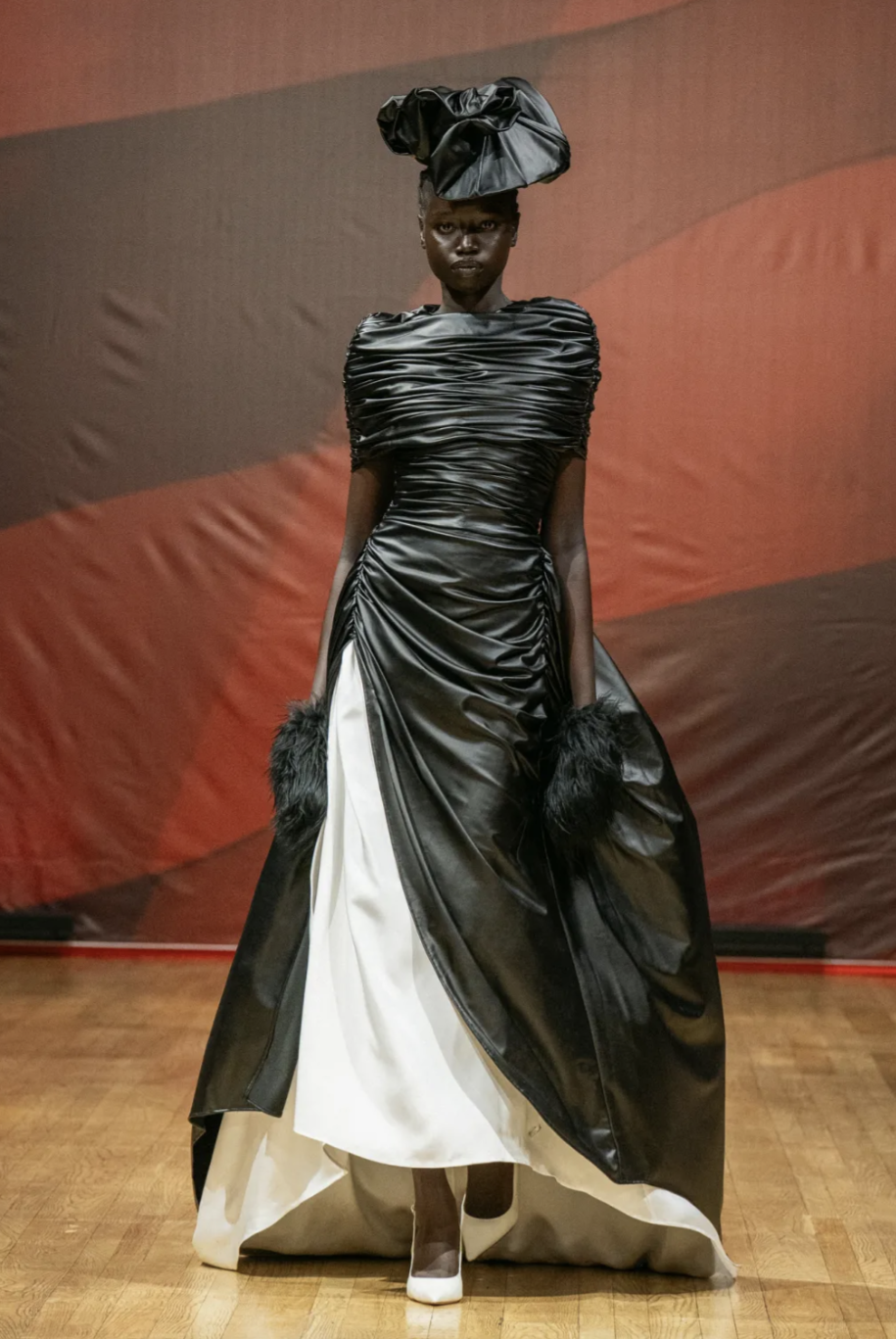
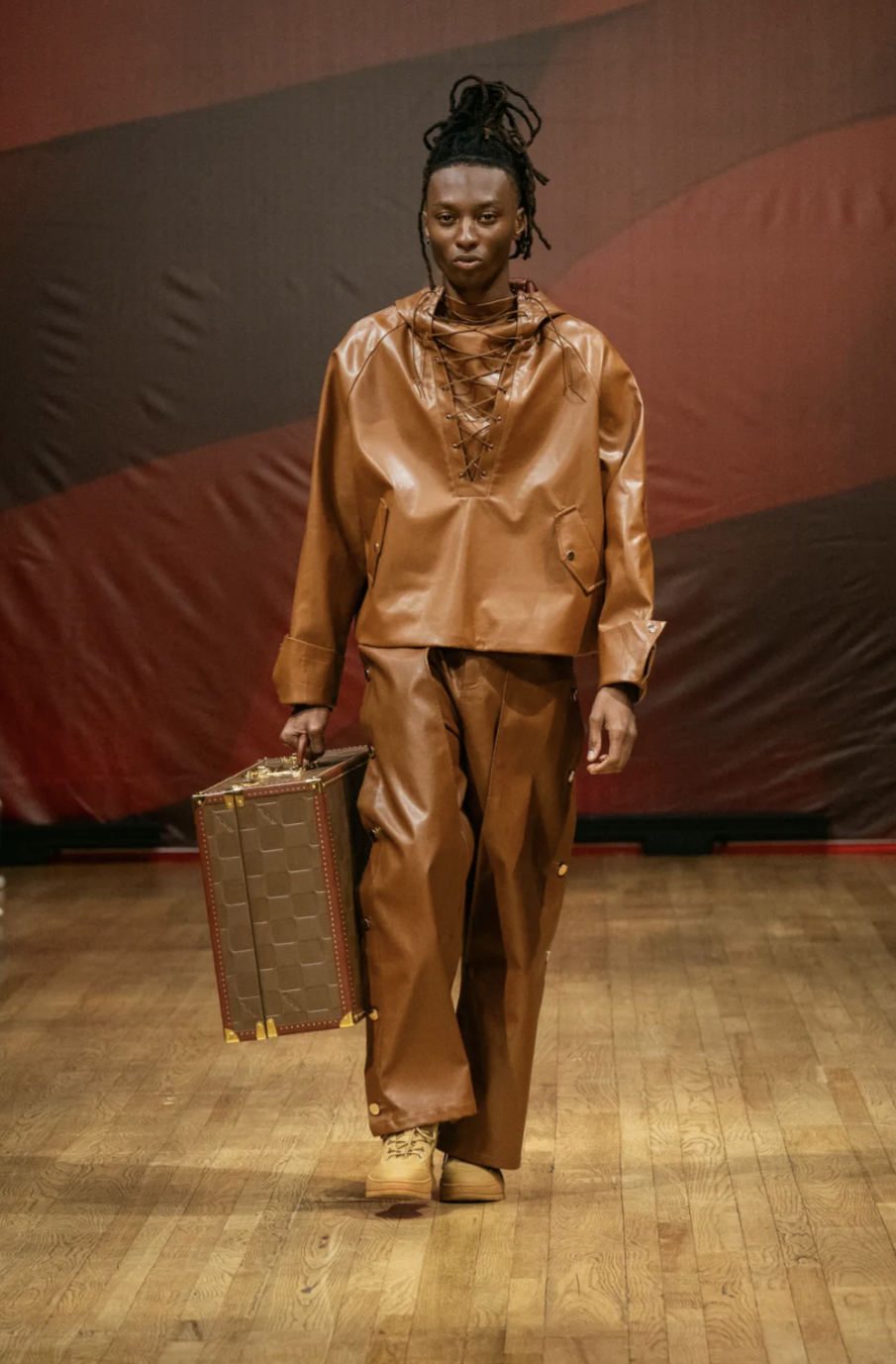
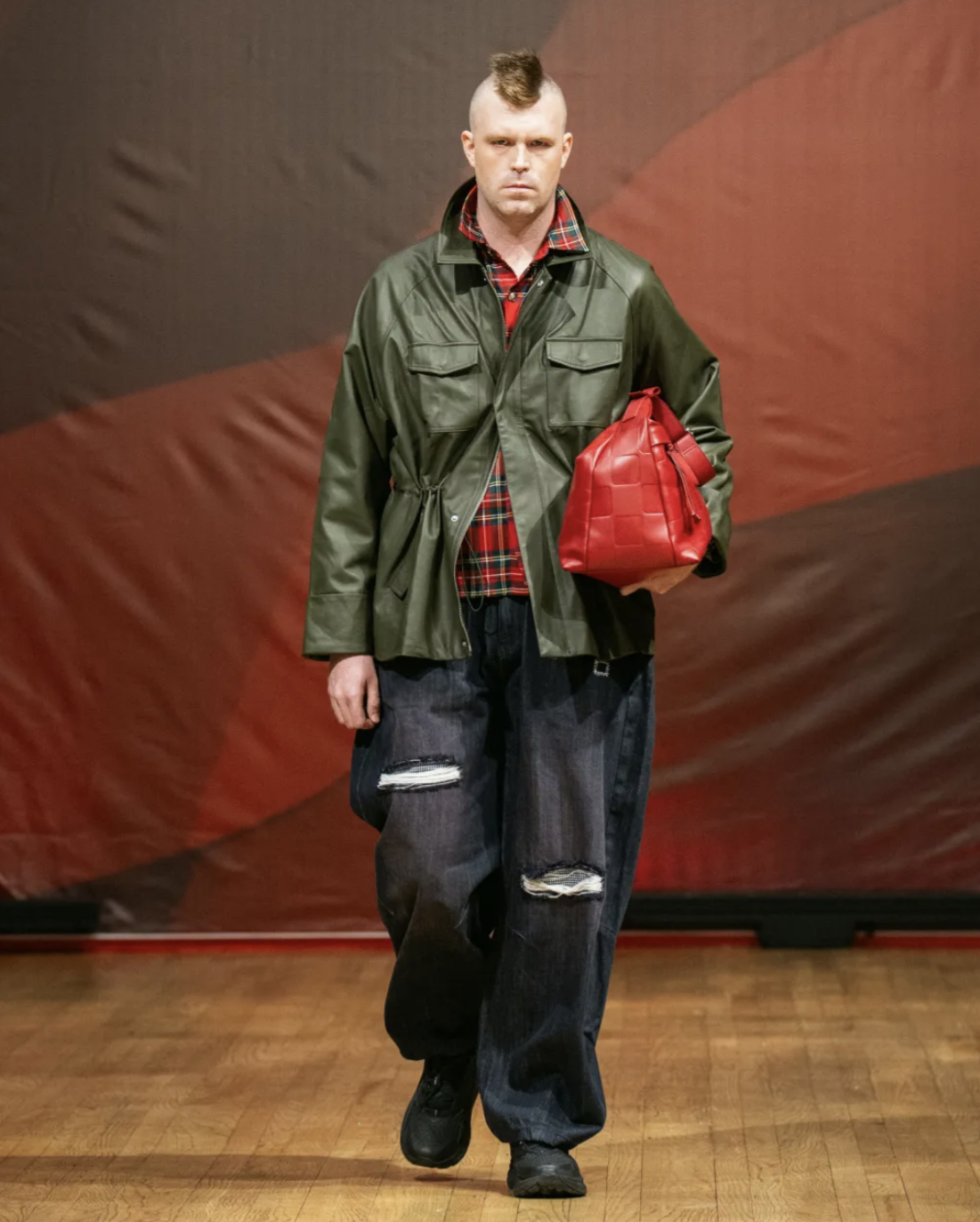
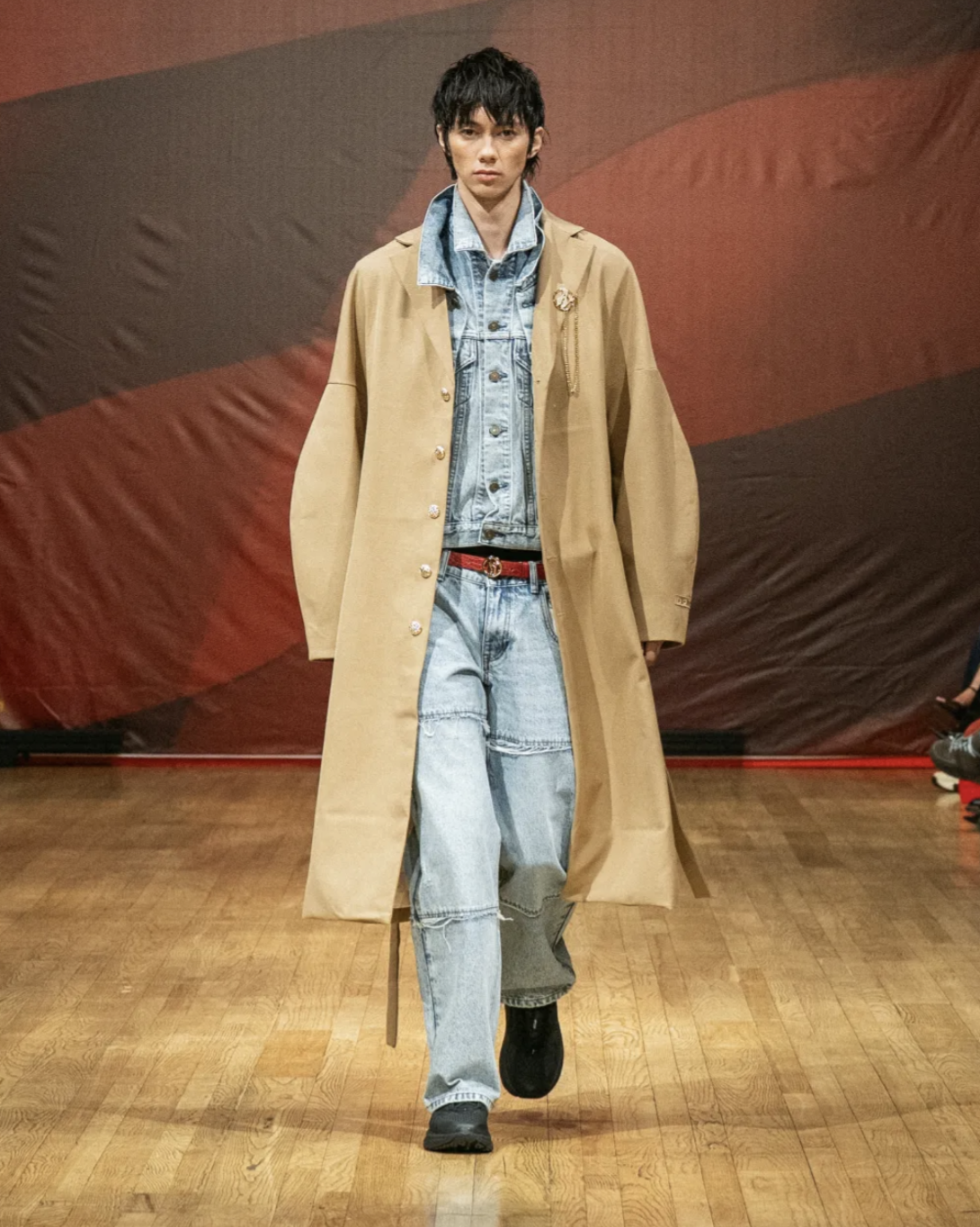
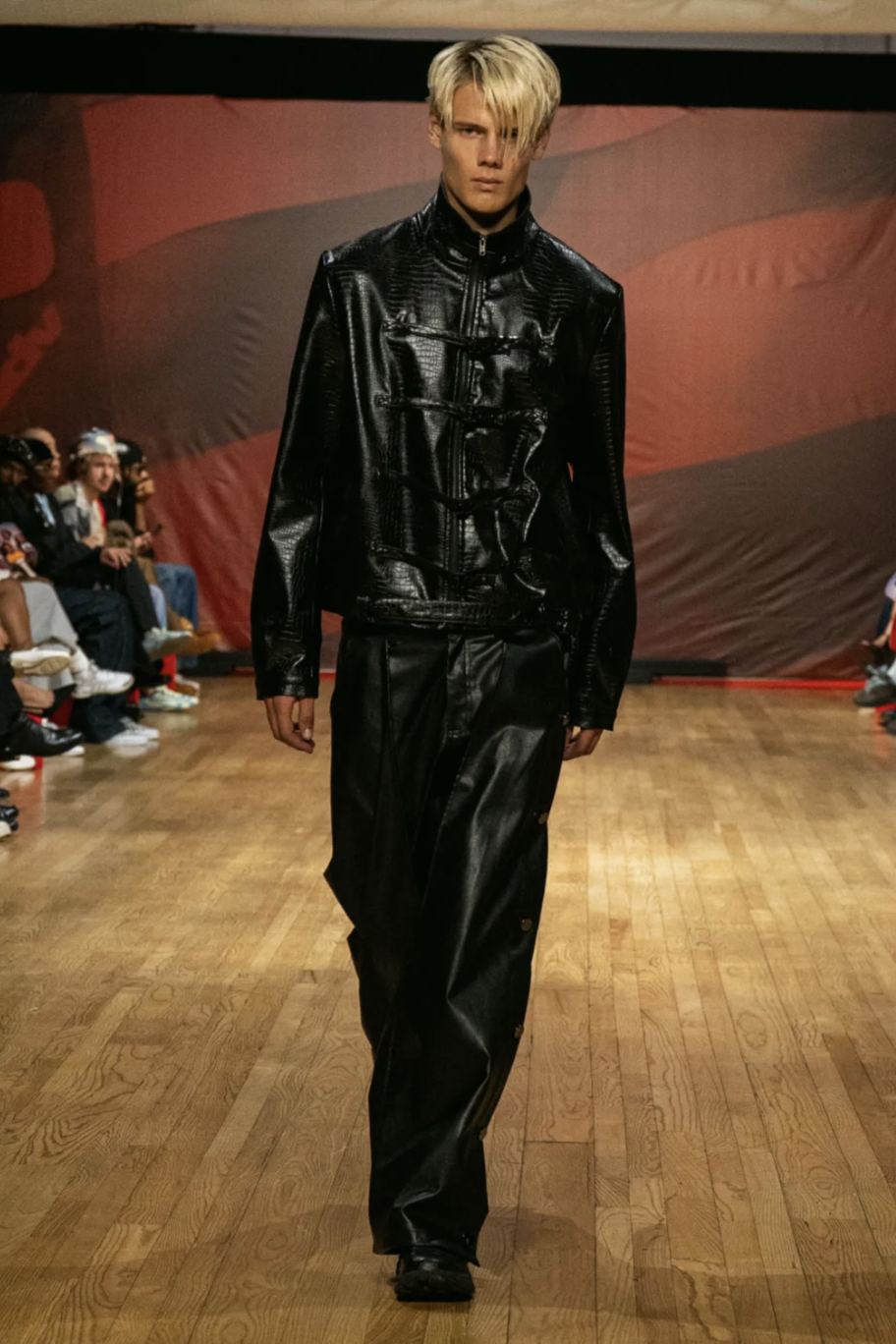
The collection unfolded in three acts, each drawing from a different moment or figure in American culture. The first looked towards Travis Bickle from Taxi Driver, translated through crocodile leather straitjackets, distressed denim and oversized trenches with dropped shoulders. The second shifted to the era of Muhammad Ali and Malcolm X, introducing black tailoring, plaid dresses and red-and-black checkerboard suits, with square-shouldered overshirts embodying the rigidity Herron saw in that period.
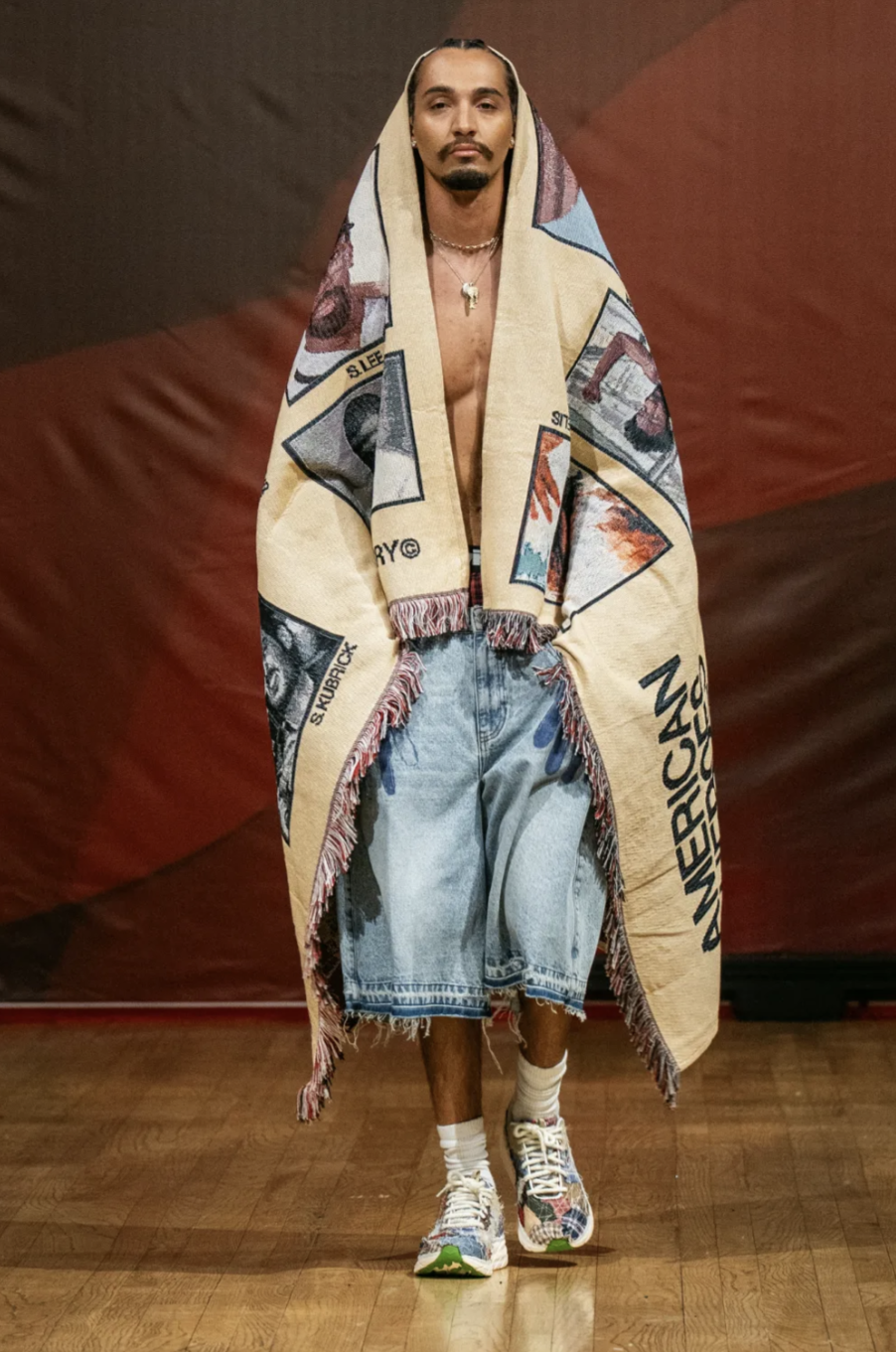
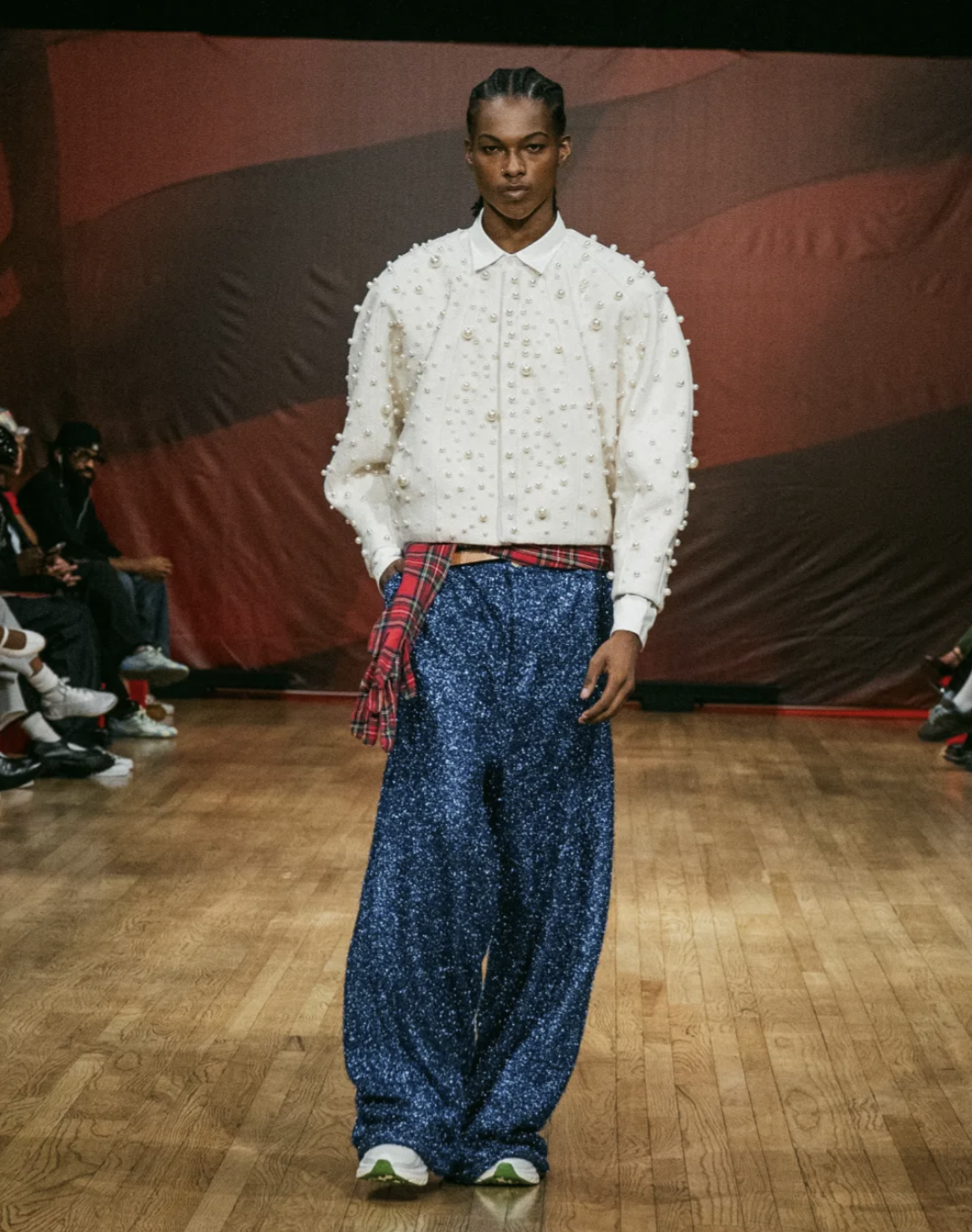
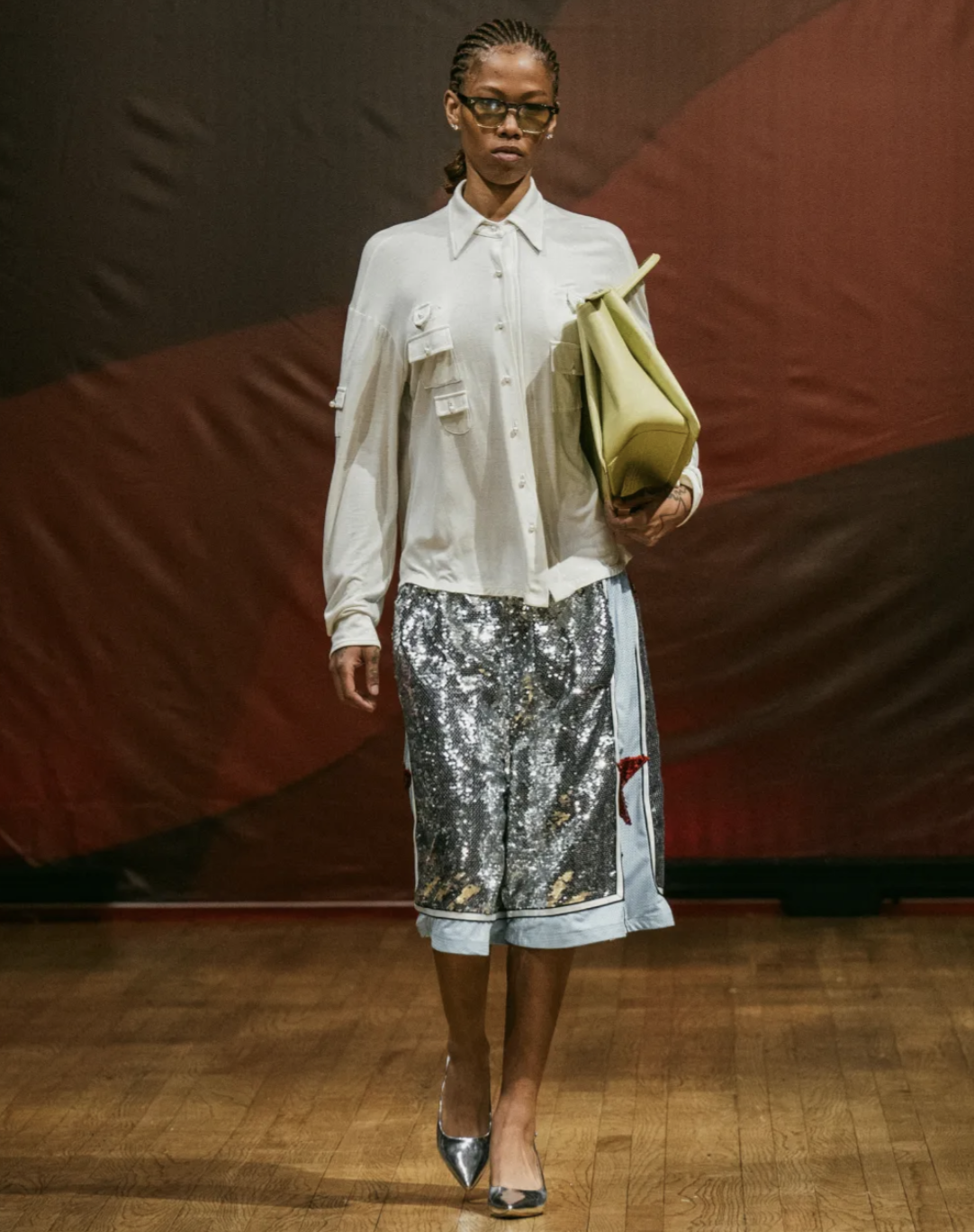
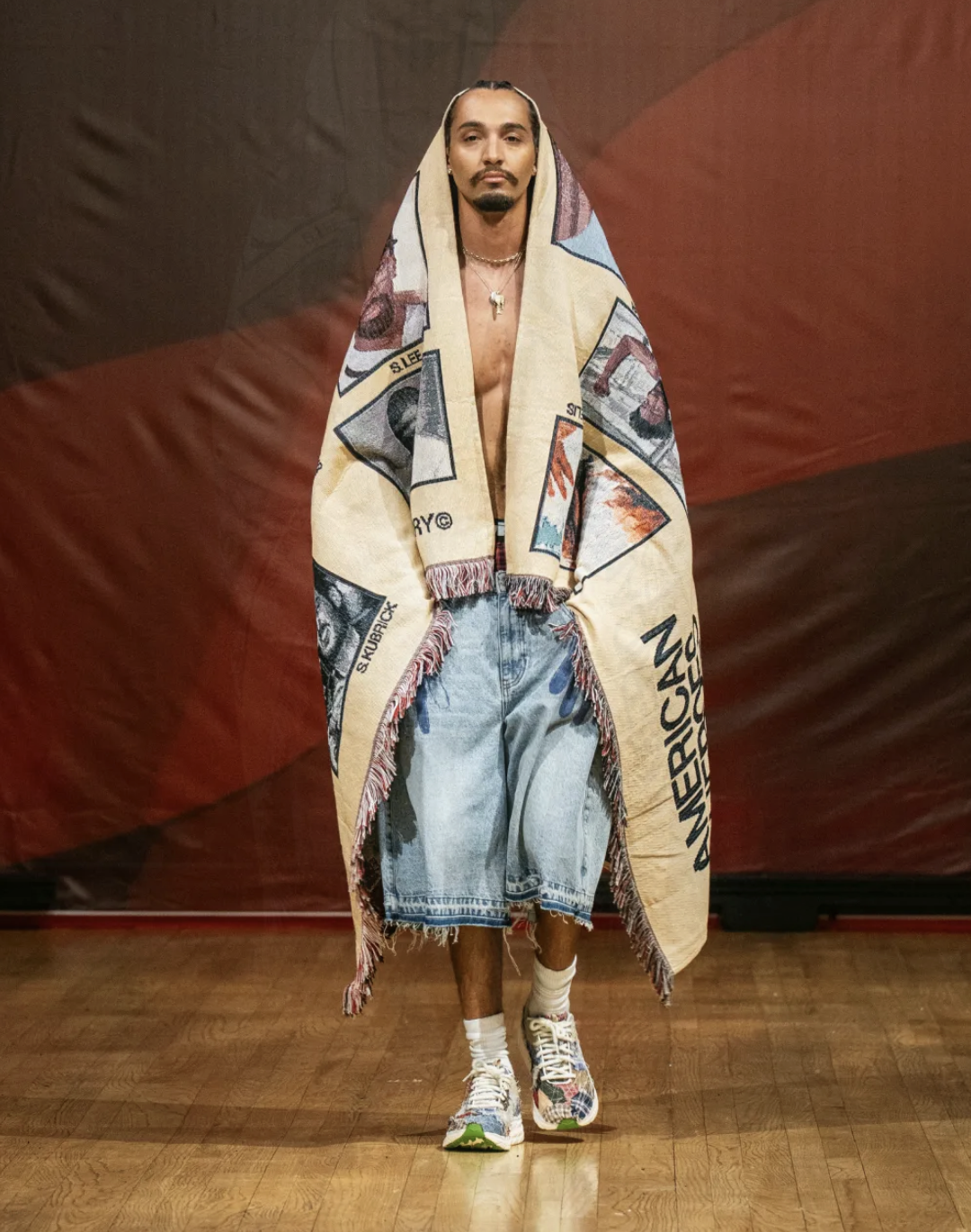
For the final act, the mood changed considerably. Elements from the earlier sections were reworked into more celebratory pieces, with glitter and sequins appearing across sweaters, trousers and oversized shorts. Rather than simply reproducing historical references, Herron used them as building blocks, allowing the clothes to move from darker, restrictive imagery towards something more expressive and open.
That progression gives “America, Still” its sense of purpose. Herron’s streetwear remains rooted in the language that established Advisry, but the collection demonstrates how far that vocabulary can stretch when placed within a broader cultural and personal context. By ending on a more optimistic note, the designer leaves the past behind without pretending it has disappeared, suggesting that looking backwards can be a way of imagining something different ahead.