Nigo: From Japan With Love at the Design Museum London
Nigo: From Japan With Love at London's Design Museum is the first major museum retrospective outside Japan dedicated to the Japanese designer and creative director behind BAPE, Human Made and Billionaire Boys Club. Spanning more than 30 years and 700 objects, the exhibition explores how Nigo transformed streetwear, music and popular culture - and helped establish the blueprint for today's luxury fashion collaborations and hype-driven drop culture. The exhibition is essentially three decades of nostalgia packaged behind glass. There is the early-2000s BAPE obsession, the Bapesta, the camouflage, the cartoon graphics, the impossible-to-get T-shirts and, eventually, the full-blown hypebeast mentality of the 2010s, when a limited capsule drop could send people queuing down streets sometimes overnight, sometimes in tents for the privilege of owning something that everyone else couldn't.
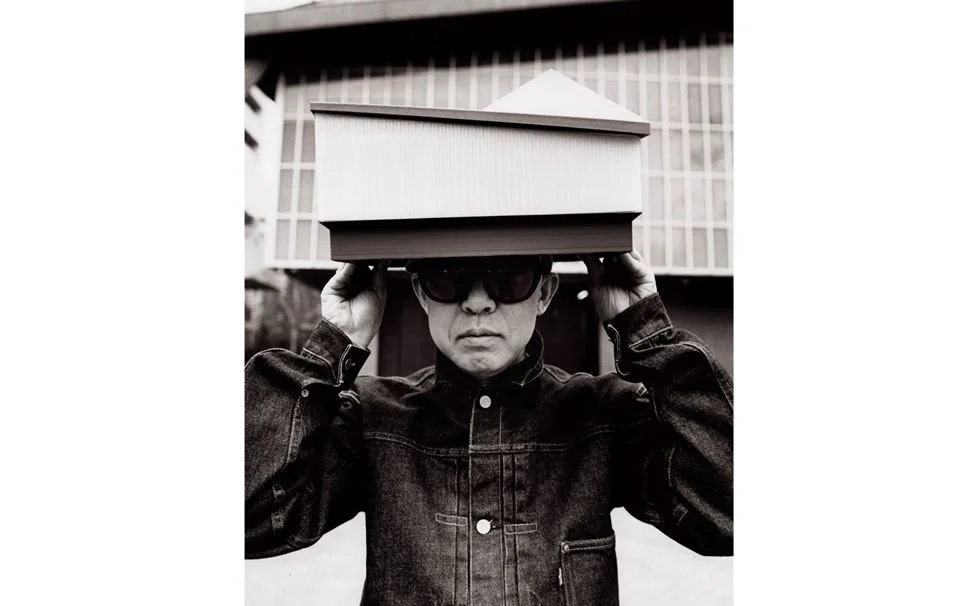
Nigo didn't invent fashion hype, but he understood something that would become enormously valuable: people don't necessarily want what is available to everyone. They want what they might not be able to get.
That idea became one of the defining mechanics of modern streetwear. Small releases created scarcity. Scarcity created desire. Desire created community. And community created a business model that would eventually be adopted by almost everyone, from sneaker companies to luxury houses.
The irony, of course, is that the system worked almost too well.
What began as a subcultural response to the polished machinery of traditional fashion eventually became its own machine. The drop became an industry. The queue became content. The limited-edition T-shirt became an investment. Hype stopped being a side effect of streetwear and became the product itself.
And somewhere along the way, the excitement began to disappear.
That tension hangs over Nigo: From Japan With Love, the Design Museum's first major retrospective of the Japanese creative and one of the most influential figures in contemporary streetwear. Spanning more than 30 years and more than 700 objects, the exhibition traces Nigo's journey from the backstreets of Harajuku to Parisian runways, taking in BAPE, Human Made, Billionaire Boys Club, music, vintage Americana, Japanese craft and, ultimately, his position as Artistic Director of KENZO.

It is an impressive amount of cultural territory to cover. More importantly, it is an attempt to explain how one person's obsessions became the visual language of an entire generation.
The exhibition begins not with a runway, a campaign or a famous collaboration, but with a bedroom.
A recreation of Nigo's teenage room immediately establishes the logic behind everything that follows. There are hip-hop records, a Kangol hat, a lava lamp, Star Wars memorabilia and vintage clothing, including his first vintage purchase: a distressed Levi's Type II denim jacket. It feels less like the beginning of a fashion career than the bedroom of a particularly obsessive teenager — which, in many ways, is precisely the point.
Because Nigo's greatest talent has always been his ability to obsess.
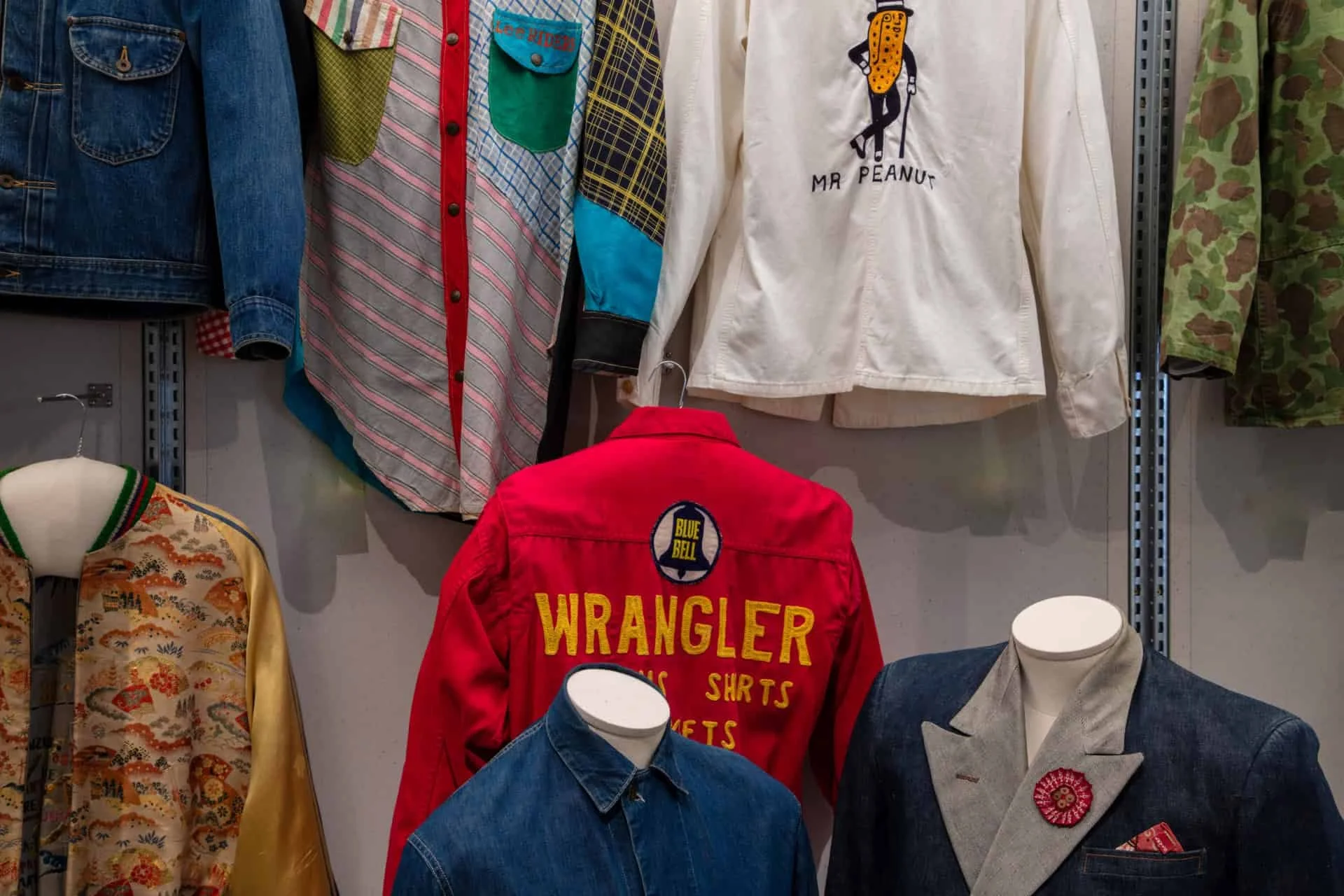
His fascination with vintage Americana, military clothing, workwear, hip-hop and Japanese popular culture did not exist in isolation. He absorbed these references, collected them, rearranged them and eventually turned them into something recognisably his own. The result was a distinctly Japanese interpretation of American culture that would go on to influence fashion far beyond Tokyo.
The next chapter moves into Harajuku in the 1990s, where Nigo and Jun Takahashi established Nowhere in 1993. It was a small shop in the Ura-Hara district, a network of backstreets that would become one of the most important incubators for Japanese streetwear.
Then came A Bathing Ape.
BAPE is the part of the exhibition that will make streetwear obsessives slow down. Early T-shirts, varsity jackets, sweatshirts, camouflage and the instantly recognisable Shark Hoodie are presented almost like archaeological artefacts. There are rare pieces from the brand's early years, offering a glimpse into the period when BAPE was not yet a global commercial phenomenon but a highly localised expression of Tokyo's emerging street culture.
And then there is the Bapesta.
The sneaker — unmistakably indebted to Nike's Air Force 1 silhouette became one of the defining objects of early-2000s streetwear. Its appeal was not simply the shoe itself. It was the knowledge that it was difficult to find, the visual recognition among those who knew what it was, and the cultural credibility attached to owning one.
This was the beginning of a new kind of fashion consumer.
You didn't simply buy the clothes. You knew the references. You knew the collaborations. You knew which stores mattered. You knew when the next release was coming. Fashion became a language, and ownership became a form of fluency.
Nigo understood that exceptionally well.
His early releases were often produced in remarkably small quantities initially, partly as a way of controlling costs but scarcity soon became an integral part of the appeal. The modern 'drop' culture that now dominates streetwear owes much to this approach. What was once an organic way for a small brand to survive became one of the most powerful marketing mechanisms in fashion.
This is where the exhibition becomes most interesting and where it occasionally feels as though it stops short.
For all its impressive objects, From Japan With Love is more interested in Nigo's influence than in interrogating the culture that influence created. The hysteria surrounding BAPE, the psychology of scarcity, the queues, the resellers and the eventual commodification of streetwear are largely absent.
That feels like something of a missed opportunity.
Because Nigo's story isn't only about how he changed fashion. It is also about how fashion changed around him.
The streetwear ecosystem he helped establish eventually became almost indistinguishable from the luxury system it once operated outside of. Limited drops became standard practice. Luxury brands adopted streetwear silhouettes and collaborations. Sneakers became collector's objects. Resale became a parallel economy. And the distinction between a teenager queuing for a BAPE hoodie and a luxury customer waiting for the latest limited-edition handbag became increasingly difficult to define.
Nigo helped build that bridge.
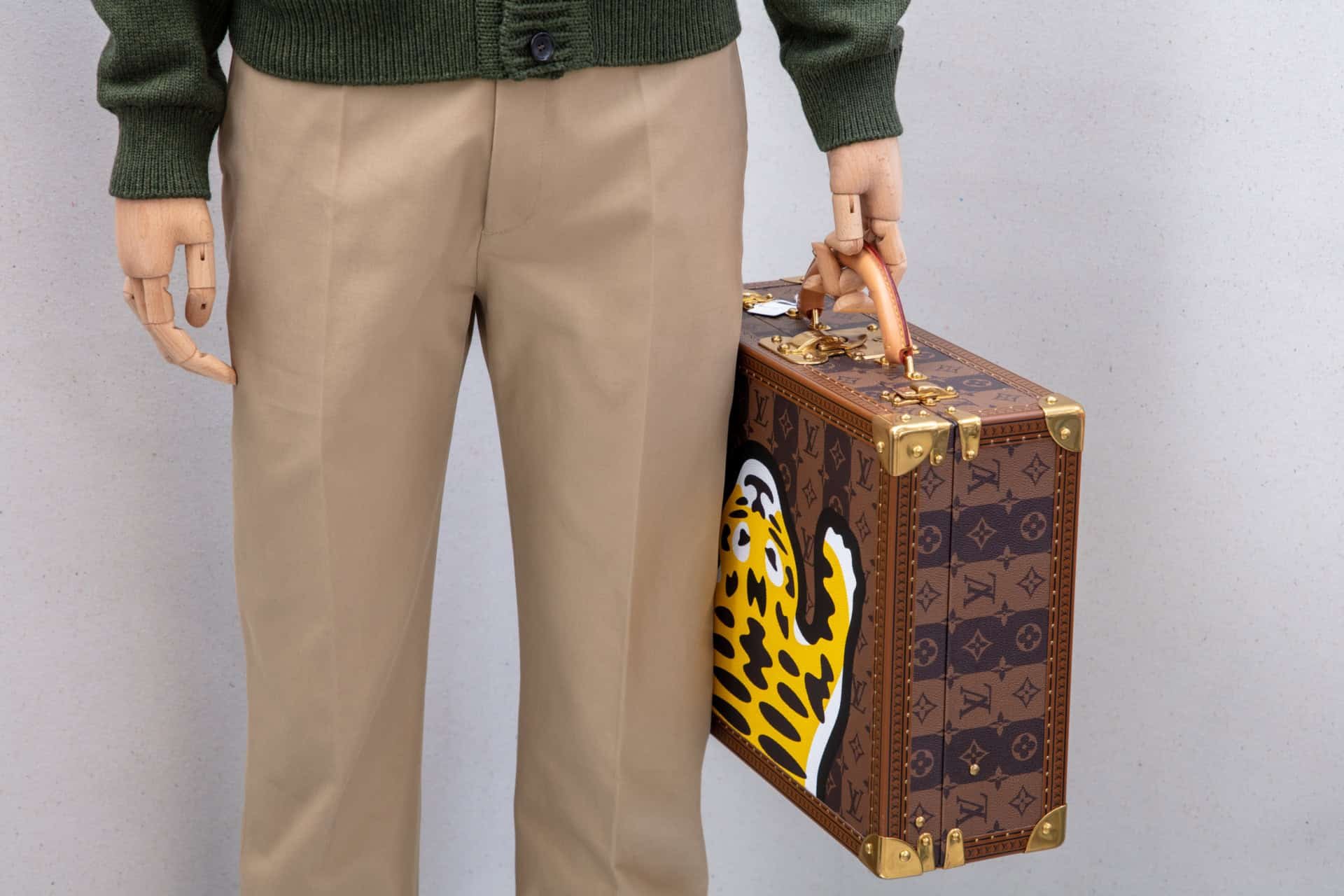
His collaborations with Pharrell Williams, Louis Vuitton, Nike, Marc Jacobs, Disney, Pepsi and Nintendo demonstrate how far his visual language travelled. Music was never separate from the equation. Hip-hop was central to BAPE's cultural expansion, while Nigo's friendship and creative relationship with Pharrell became one of the most consequential partnerships in contemporary fashion and music.
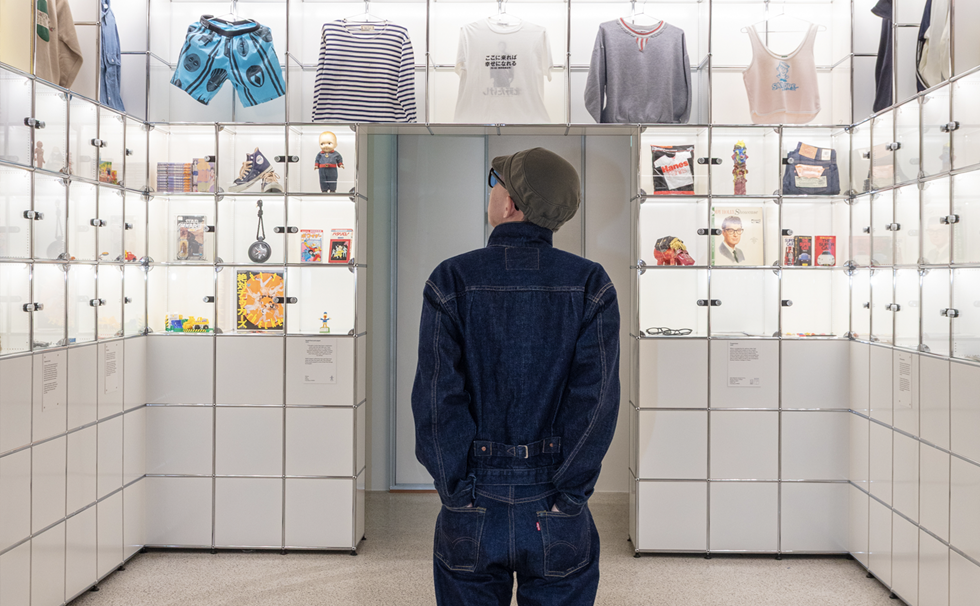
The exhibition captures this sprawling network of references particularly well. Records sit alongside clothing. Toys sit alongside ceramics. Advertising sits alongside fashion. Personal possessions sit beside professional achievements.
It makes one thing clear: Nigo has never really been interested in staying inside one discipline.
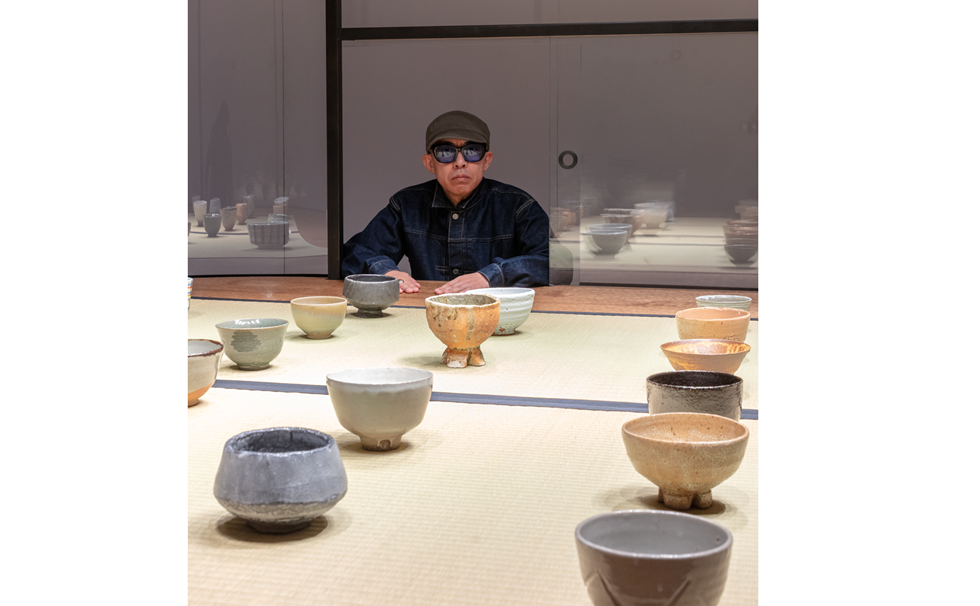
That becomes even more apparent towards the exhibition's final section, New Traditions, where the focus shifts towards Japanese craft and Nigo's growing interest in the tea ceremony. His own handmade ceramics are displayed inside a life-size glass tea house created specifically for the exhibition.
After three decades of American pop culture, hip-hop, sneakers, cartoon graphics and streetwear, it is an unexpectedly quiet ending.
And perhaps that is the most revealing part of the exhibition.
Nigo's legacy isn't really the BAPE Shark Hoodie or the Bapesta, impressive though those objects are. It is his ability to take seemingly disconnected cultural references and make them feel like they belong together. Vintage Americana could sit beside Japanese craftsmanship. Hip-hop could sit beside luxury fashion. A cartoon ape could eventually find itself in the same cultural conversation as KENZO.
That is the Nigo effect.
He understood before much of the fashion industry did that culture was becoming increasingly hybrid. The most interesting designers would not necessarily be those who followed the rules of fashion, but those who understood music, collecting, architecture, retail, nostalgia and popular culture simultaneously.
Today, that idea feels almost obvious.
In the 1990s, it wasn't.
Nigo: From Japan With Love is therefore less a museum exhibition about streetwear than a portrait of the moment streetwear stopped being simply streetwear. It tells the story of how a Japanese teenager's obsessions became a global visual vocabulary and how the underground eventually became the establishment.
There is something slightly strange about seeing the artefacts of hype culture preserved in a museum. The very objects that once depended on scarcity, exclusivity and the thrill of the chase are now arranged neatly behind glass, available for everyone to see.
But perhaps that is exactly where they belong.
Because Nigo didn't just make clothes people wanted.
He helped teach fashion how to make people want things.