Vogue World 2026: Milano
There was something almost too perfect about bringing Vogue World to Milan. After New York, London, Paris and Hollywood, the travelling fashion spectacle arrived in a city where craftsmanship, industry and fashion have spent generations existing side by side. Inside the Galleria Vittorio Emanuele II, the fifth edition of Vogue World set out to celebrate Italian craftsmanship at a moment when technology, particularly artificial intelligence, is rapidly changing the fashion industry. It was a good idea. The problem was that Vogue seemed determined to make the evening bigger than the idea itself.
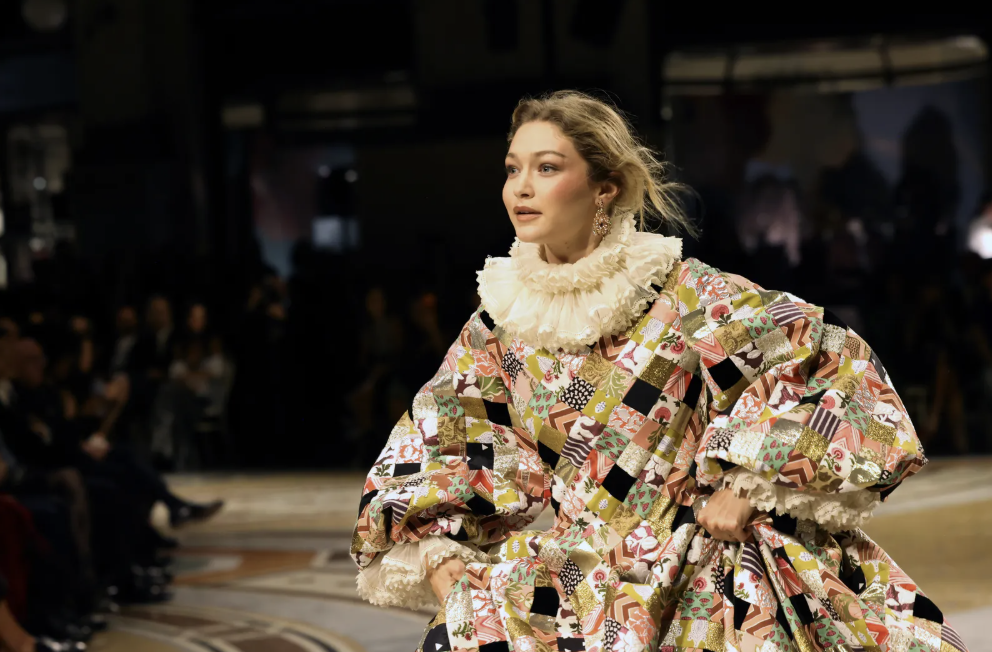
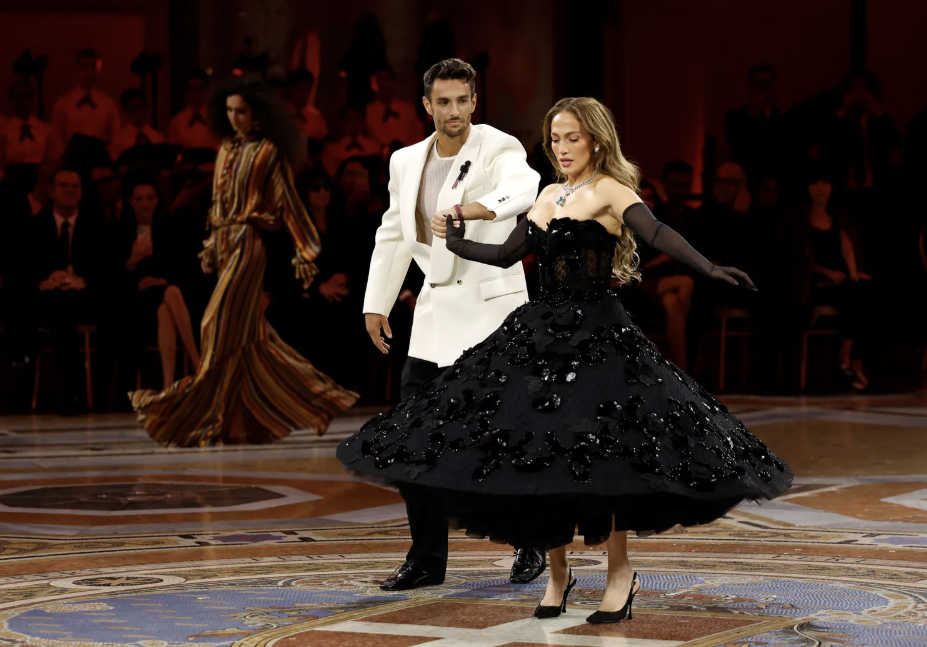
The fashion was often at its best when it stayed close to the premise. Gigi Hadid opened in a Valentino Haute Couture gown made from recycled Venetian quilts, a Renaissance-inspired piece that reportedly took 1,680 hours to complete by hand. Cardi B appeared in a Versace Spring 2018 pop-art look, while Jennifer Lopez brought Hollywood glamour in an embellished Dolce & Gabbana gown and a 74-carat Paraíba tourmaline necklace. Prada, Armani, Ferragamo and Gucci were among the Italian houses contributing to the show, with archival references, couture techniques and new pieces woven through five acts exploring Italy's fashion, industrial and cultural history.
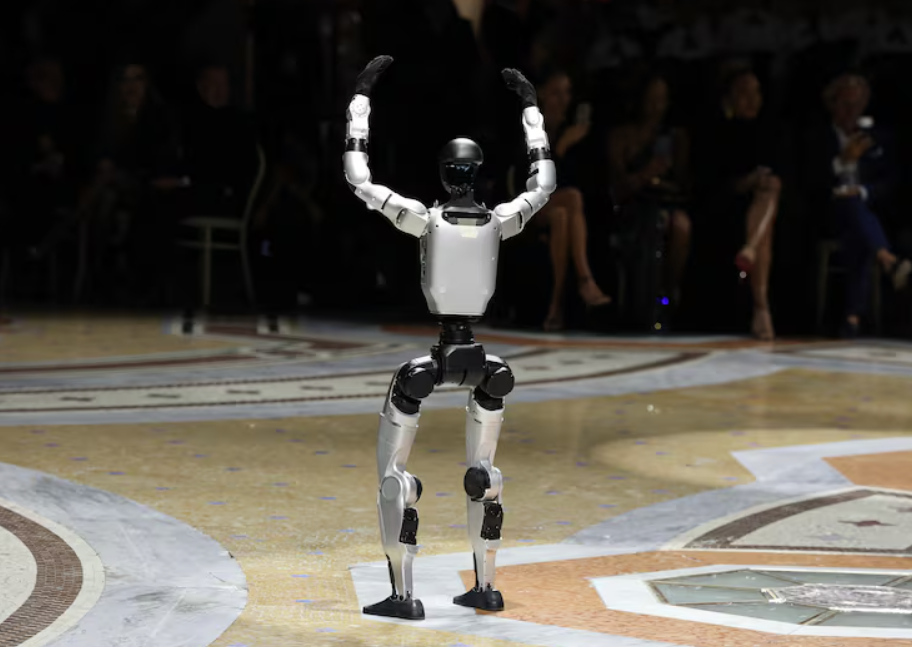
Then came the robots.
It was difficult not to notice the contradiction. Vogue World had spent the evening directing attention towards the artisans, embroiderers, textile specialists and designers whose work gives Italian fashion its identity, before introducing robotic performers into the spectacle. Technology was, of course, part of the show's argument, and Meta was among the presenting sponsors, with Meta Glasses incorporated into the production. But instead of making the relationship between human creativity and technology feel more nuanced, the robots rather bluntly illustrated the tension. After all that talk of human hands, Vogue asked us to watch machines dance.
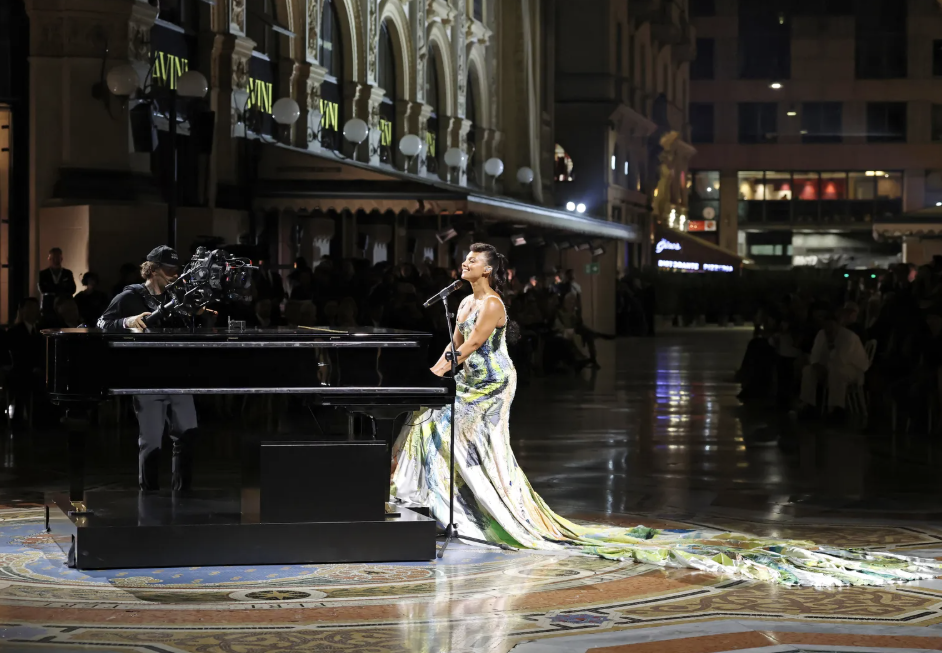
Alicia Keys provided another slightly surreal moment. Closing the show from the centre of the Galleria, she performed Donna Summer's I Feel Love at her piano, surrounded by models in white and wearing a hand-painted Francesco Risso dress. It looked beautiful enough, but the performance never quite settled into the song. As we put it in our Instagram recap: Alicia: I Feel… Something. It was funny, but it also captured something about the evening: the image was often stronger than the moment itself.
That is perhaps the strange thing about Vogue World. It is no longer quite a fashion show, gala, concert or awards ceremony. It is a travelling spectacle that collects fashion, celebrity, music, technology and culture and asks them all to compete for attention at once. Milan was an especially interesting setting because the city and the country already have a compelling story to tell. The network of Italian artisans, manufacturers, textile producers and specialist craftspeople behind the country's fashion industry is fascinating without needing much embellishment.
The strongest moments of Vogue World: Milano were consequently not always the loudest ones. They were the hours of handwork behind a couture gown, the archival pieces, the craftsmanship embedded in a garment and the sight of different generations sharing the same runway. Those details carried the message more convincingly than the production around them ever could.
Vogue World wanted to ask what human creativity means in an age of artificial intelligence. It is a worthwhile question, particularly for fashion. But perhaps the evening offered an accidental answer of its own: when everything is designed to become a spectacle, even something genuinely special can start to feel like part of the show.