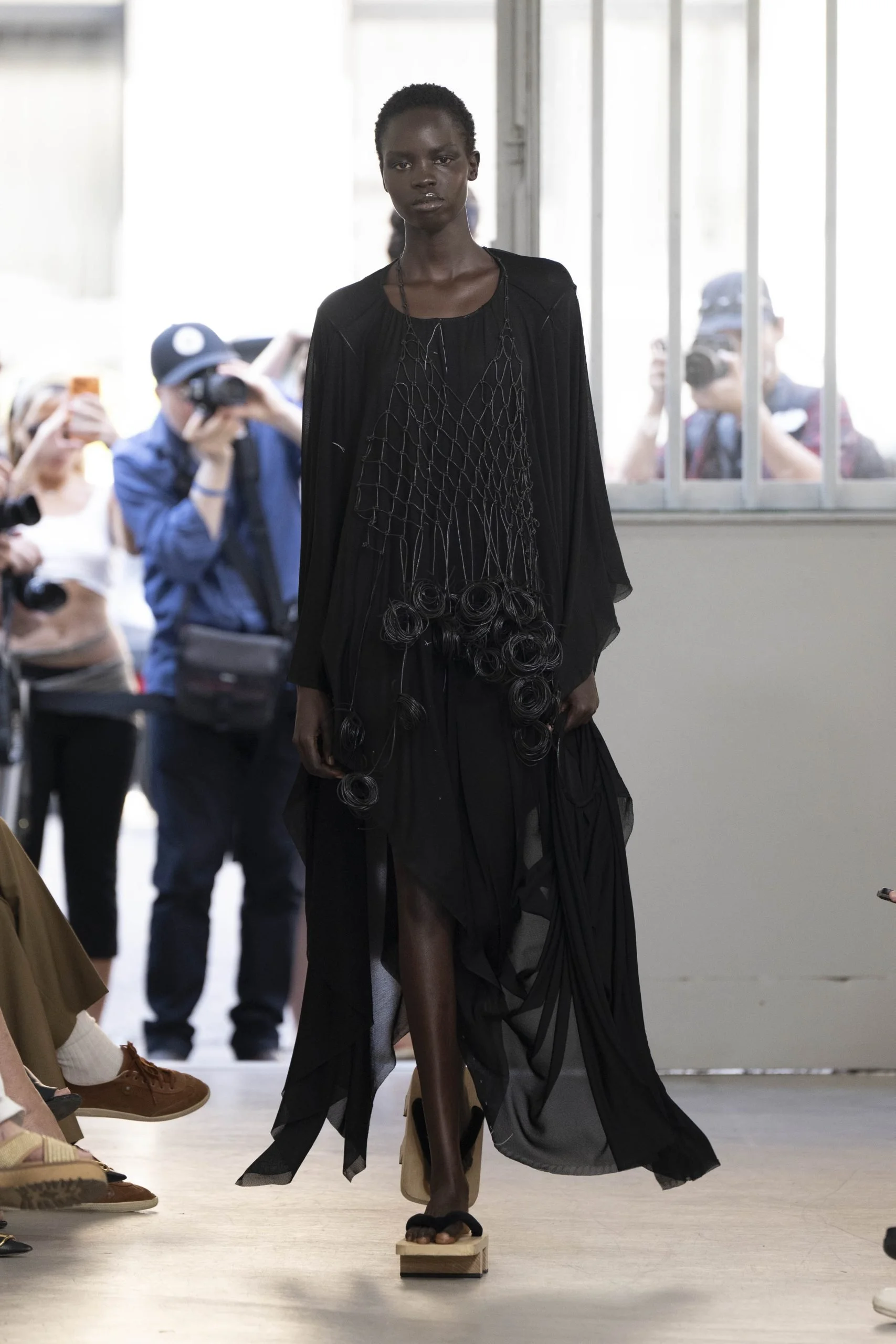
Setchu Spring 2027
Since winning the inaugural LVMH Prize for Young Designers, Satoshi Kuwata has steadily established Setchu as one of fashion's most intellectually engaging labels. His work has always balanced Japanese craftsmanship, British tailoring and Italian textile expertise with remarkable precision, but for Spring/Summer 2027 the designer widened his creative scope even further.
Presented during Milan Men's Fashion Week, the collection explored the many passions that shape Kuwata's creative world—from traditional Japanese knotting techniques and Savile Row tailoring to Italian fabric innovation and one of his favourite pastimes: fishing. The result was a thoughtful, craft-led collection that blurred the boundaries between fashion, sculpture and artisanal design without sacrificing wearability.
Fishing as Creative Inspiration
Unlike many designers who reference travel merely as an aesthetic backdrop, Kuwata's fascination with fishing has become an essential part of his design process.
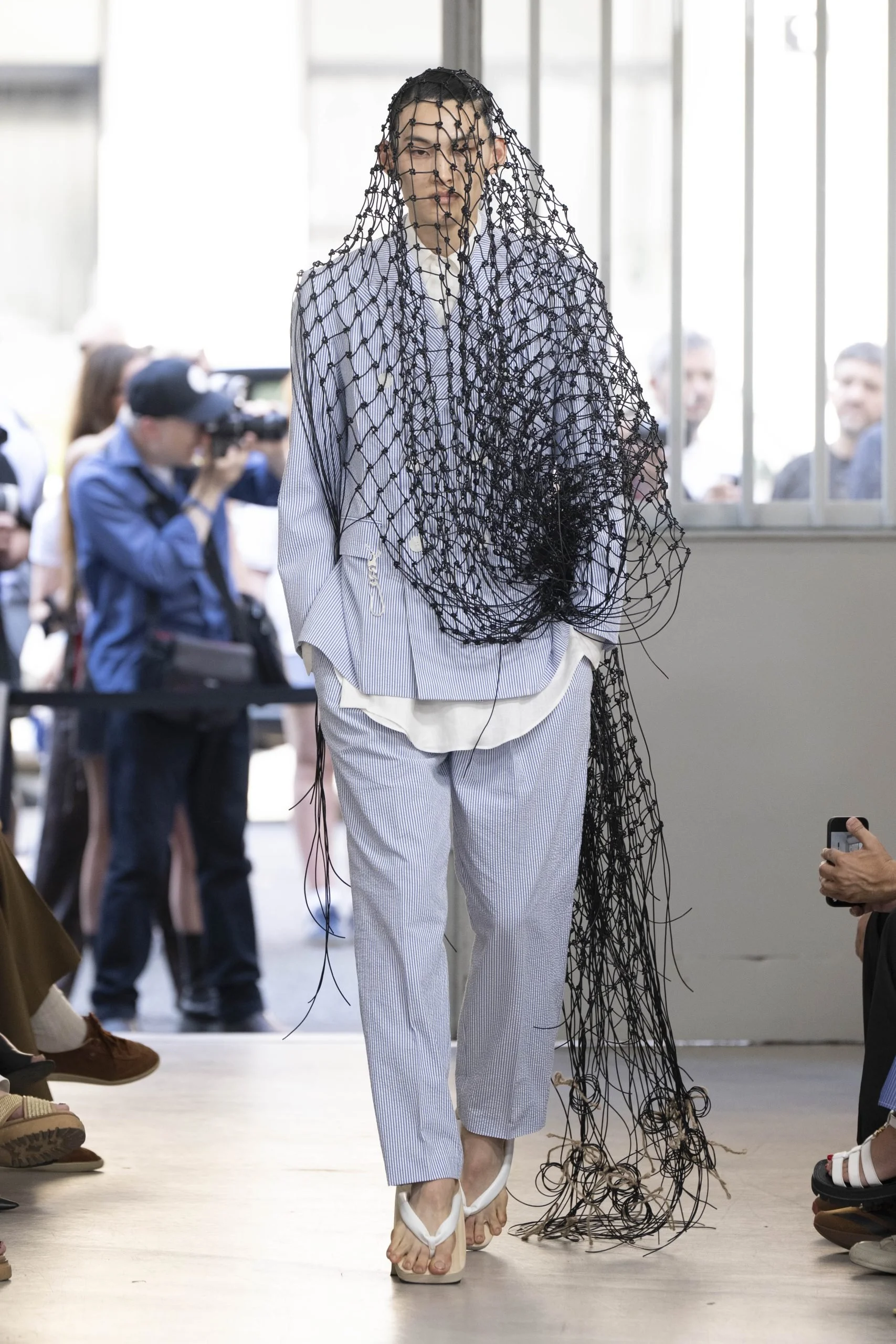
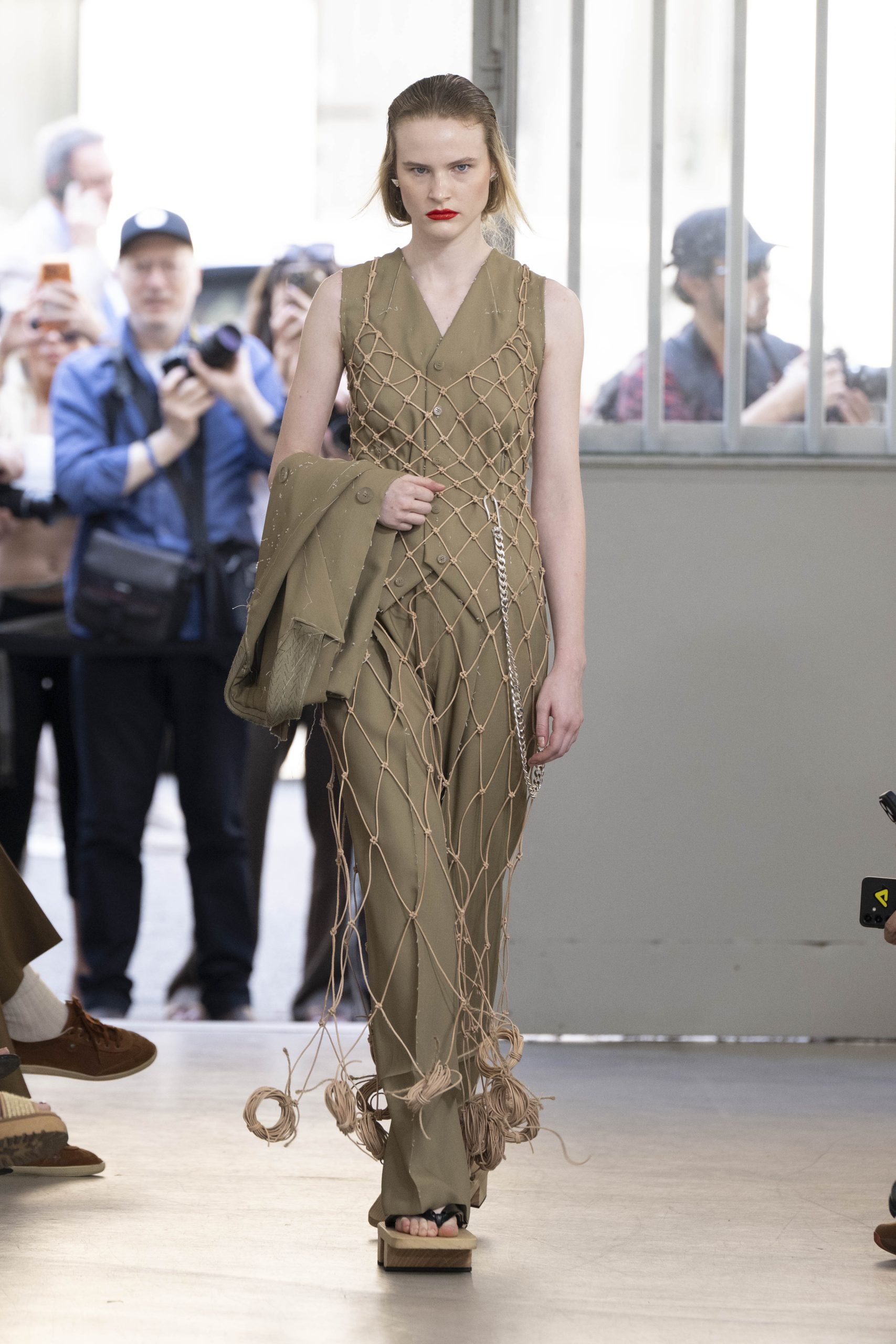
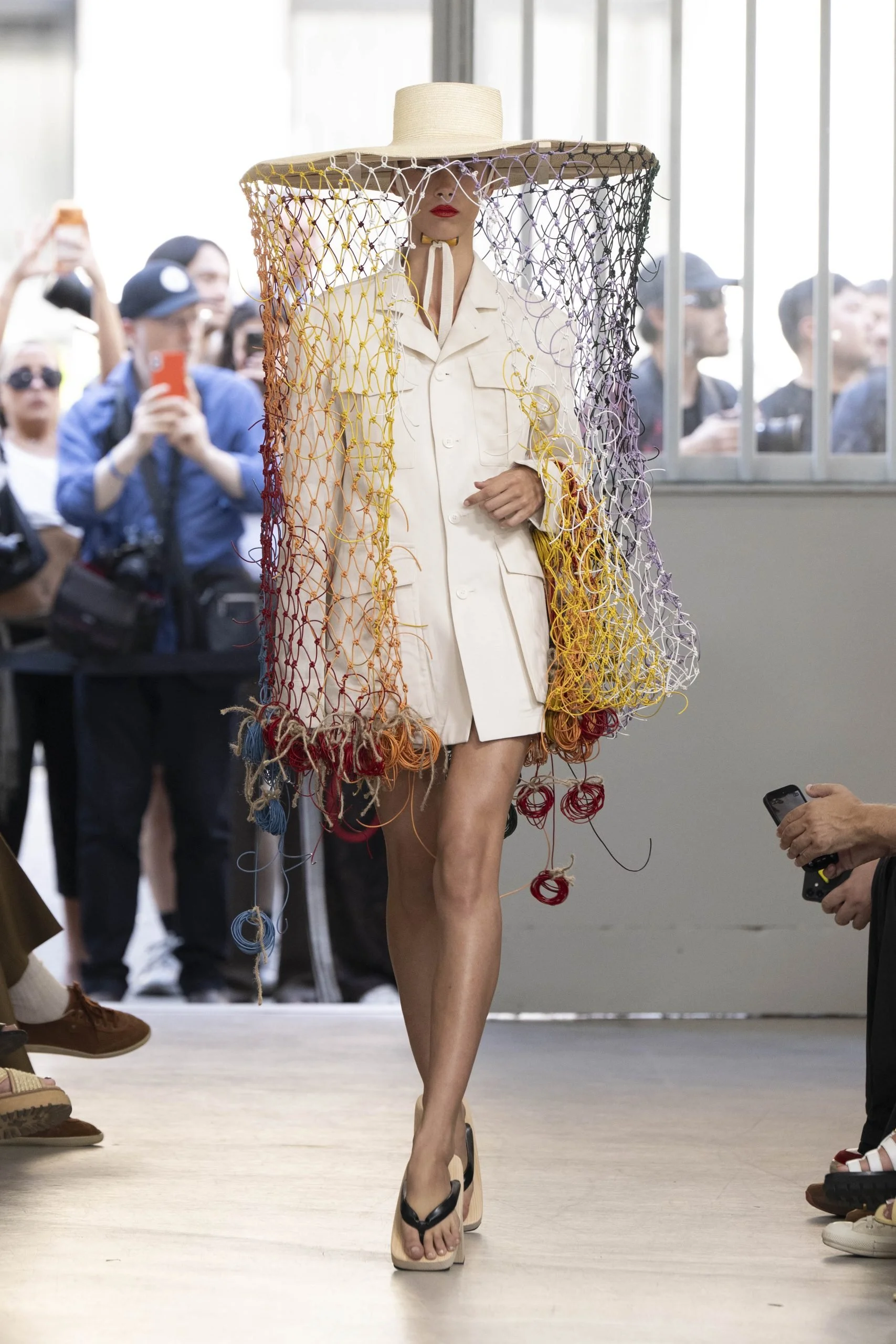
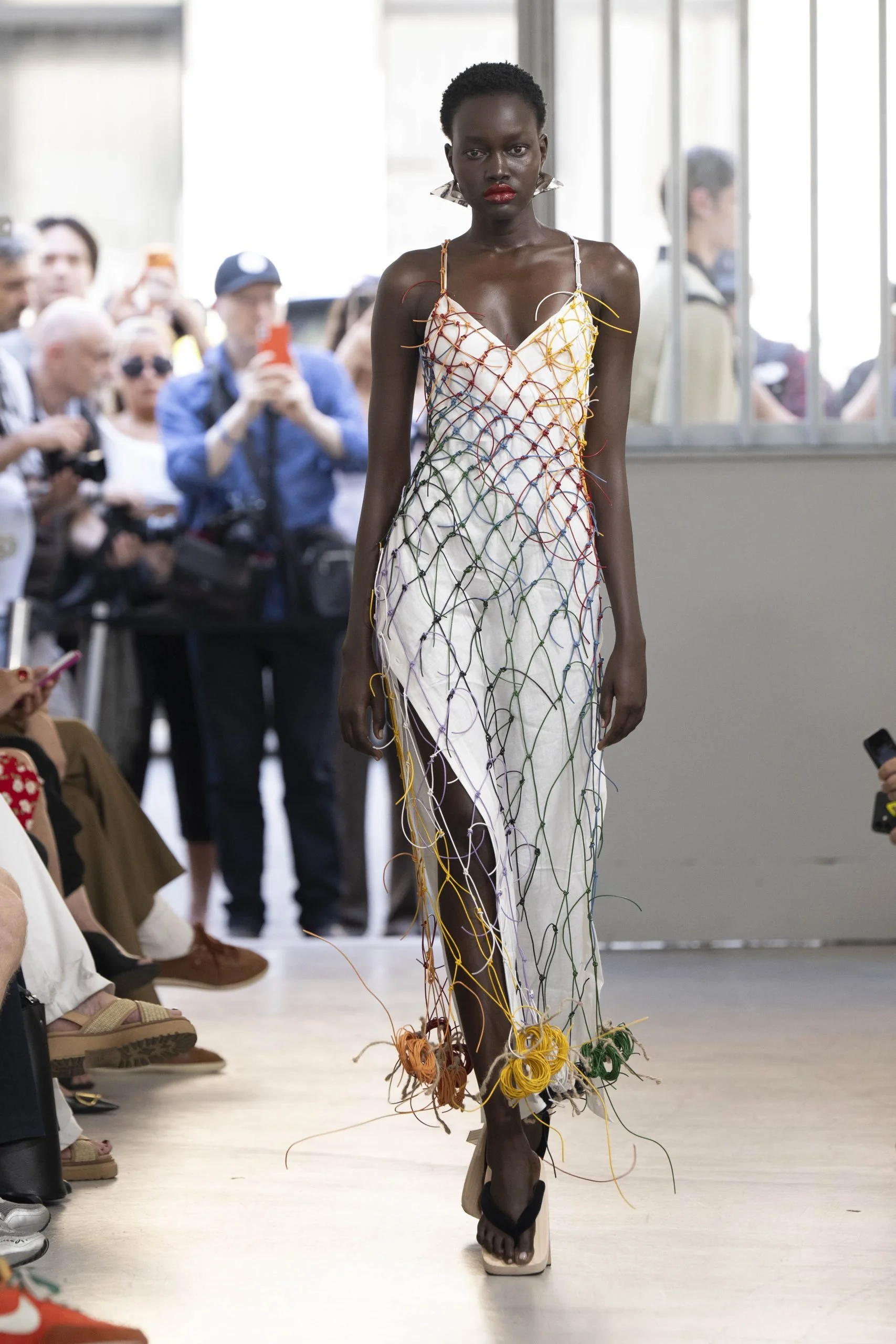
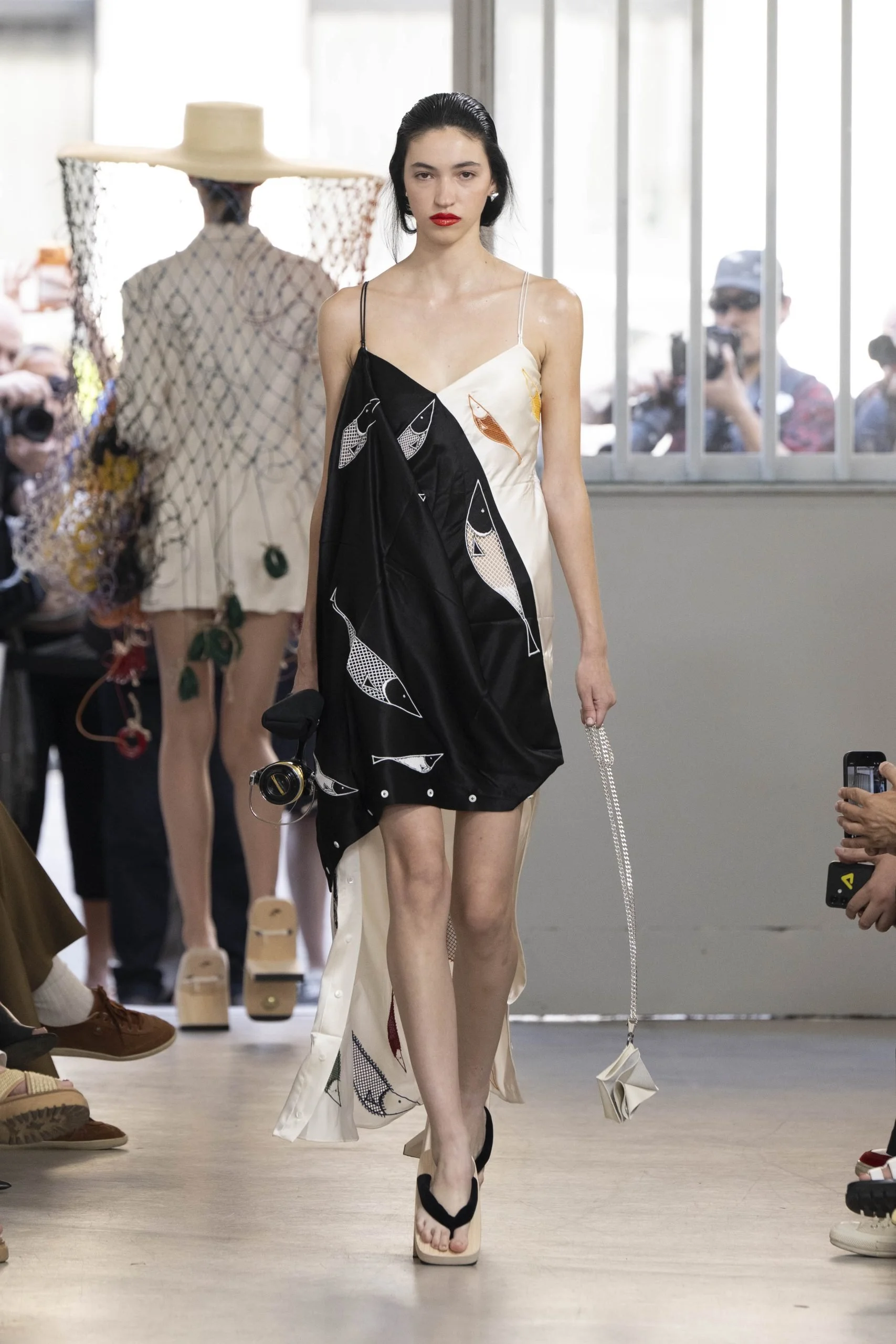
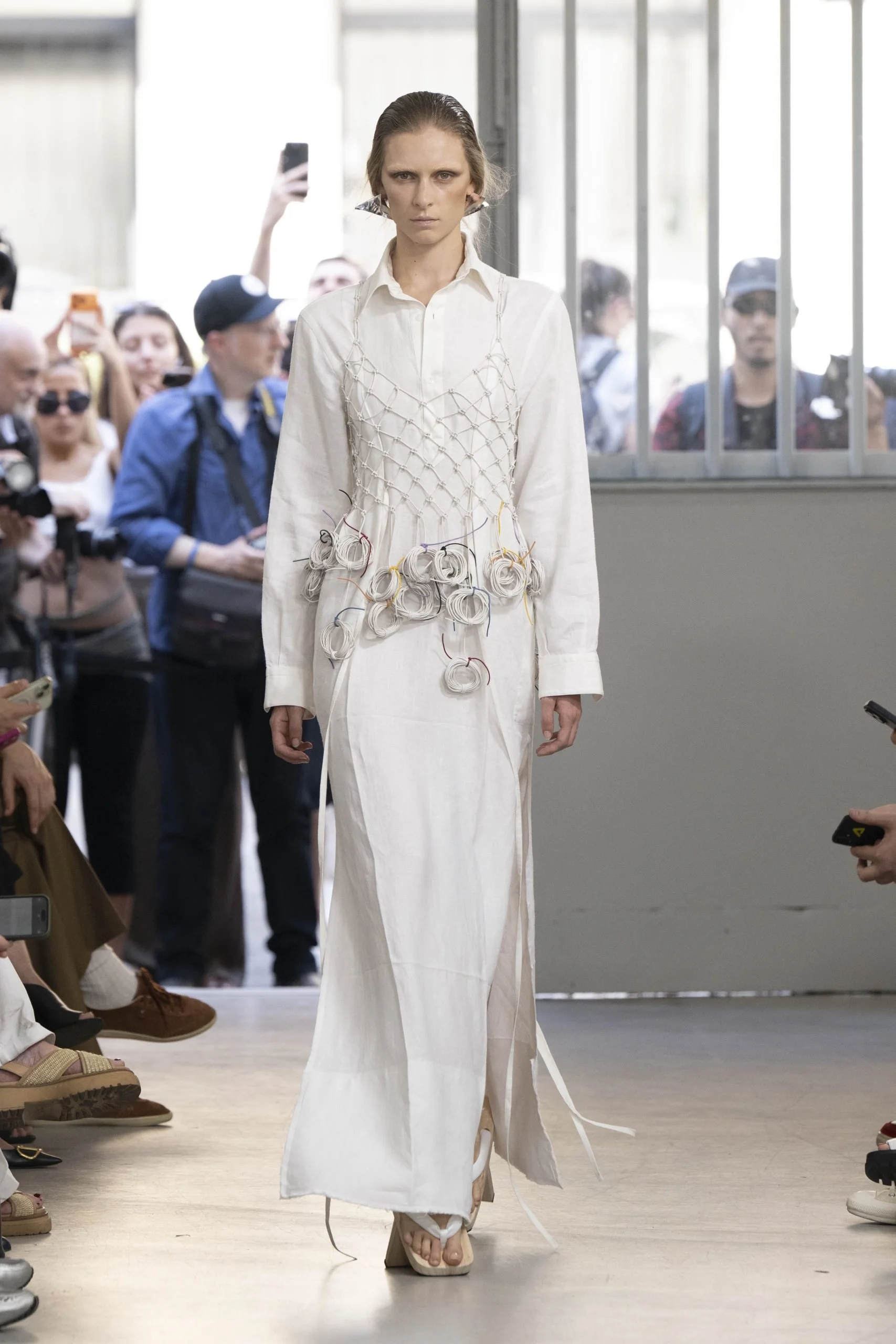
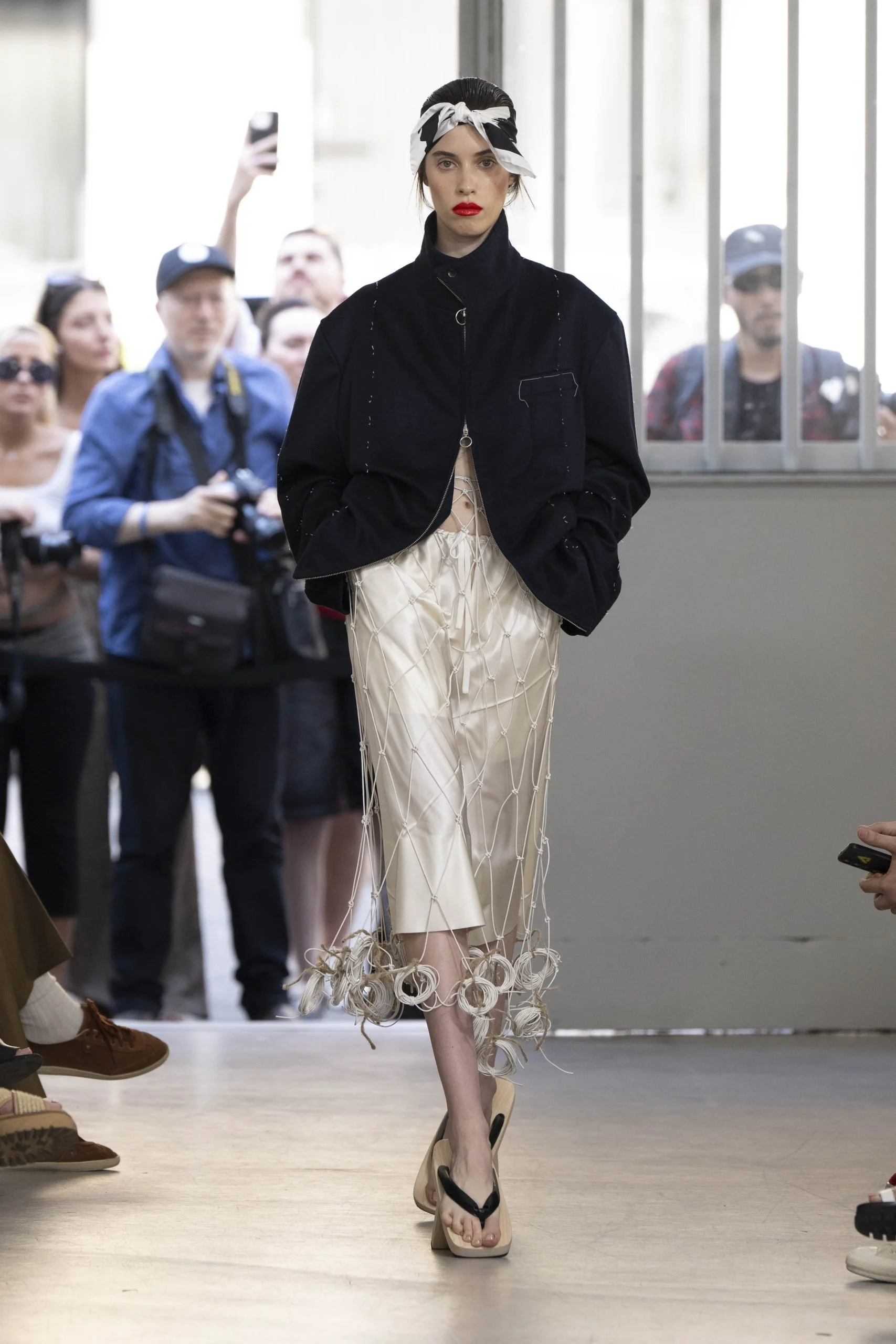
The hobby regularly takes him across the globe, exposing him to different cultures, techniques and materials that gradually find their way into his collections. For Spring/Summer 2027, fishing moved from inspiration to construction, with intricately hand-knotted leather nets becoming one of the collection's defining visual motifs.
Rather than functioning purely as decoration, the woven structures demonstrated the patience and craftsmanship that underpin both traditional fishing techniques and couture-level garment making.
It was a poetic reminder that creativity often emerges from unexpected places.
Japanese Craft Meets European Tailoring
Setchu's greatest strength continues to be its ability to unite seemingly contrasting design traditions into a cohesive whole.
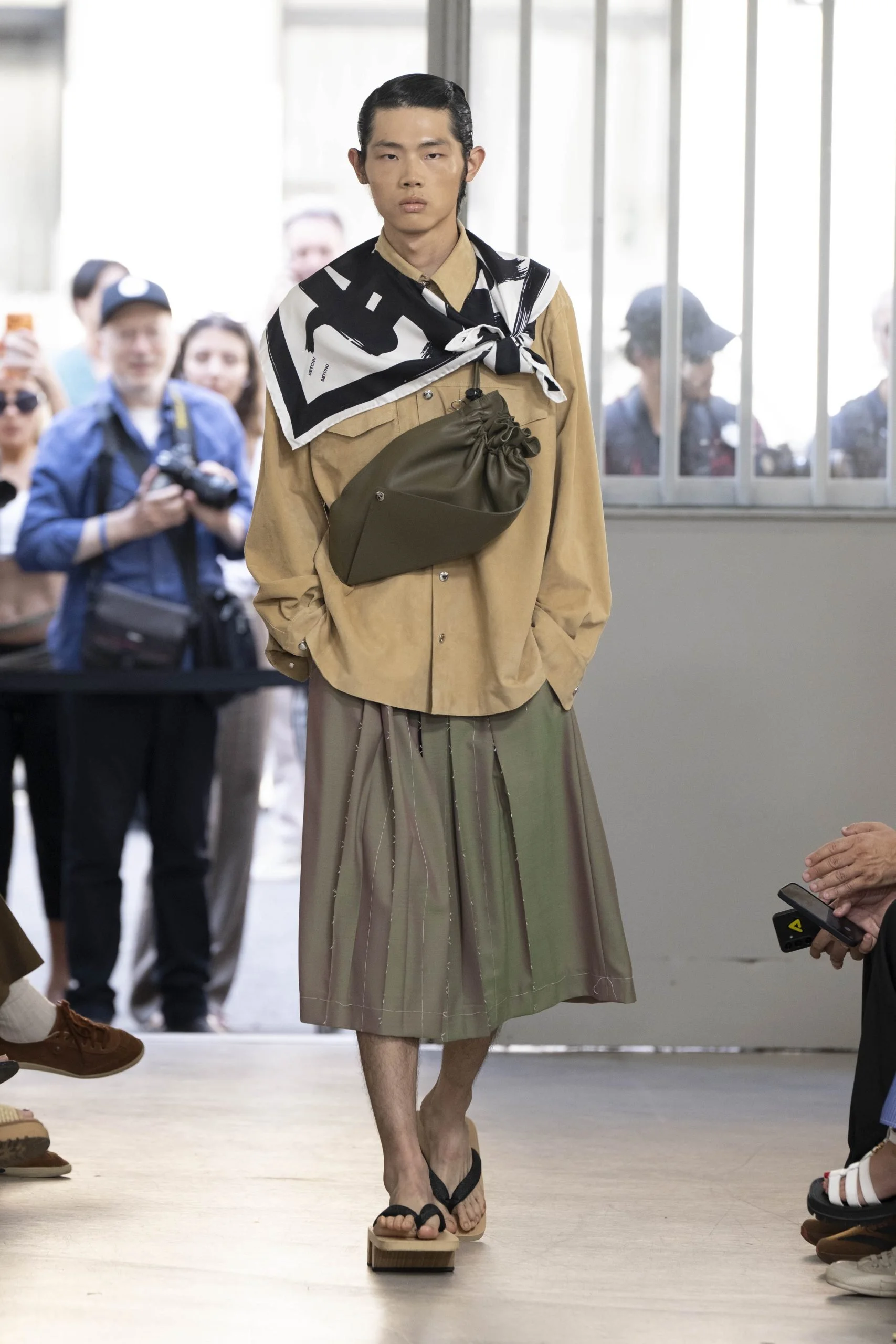
This season, Kuwata layered leather net constructions over softly tailored jackets, fluid dresses, pleated skirts and relaxed suiting, creating garments that felt architectural yet remarkably light. The handcrafted square-knot technique, rooted in Japanese craftsmanship, introduced texture without overwhelming the elegant silhouettes beneath.
Alongside these artisanal details, classic tailoring remained central to the collection.
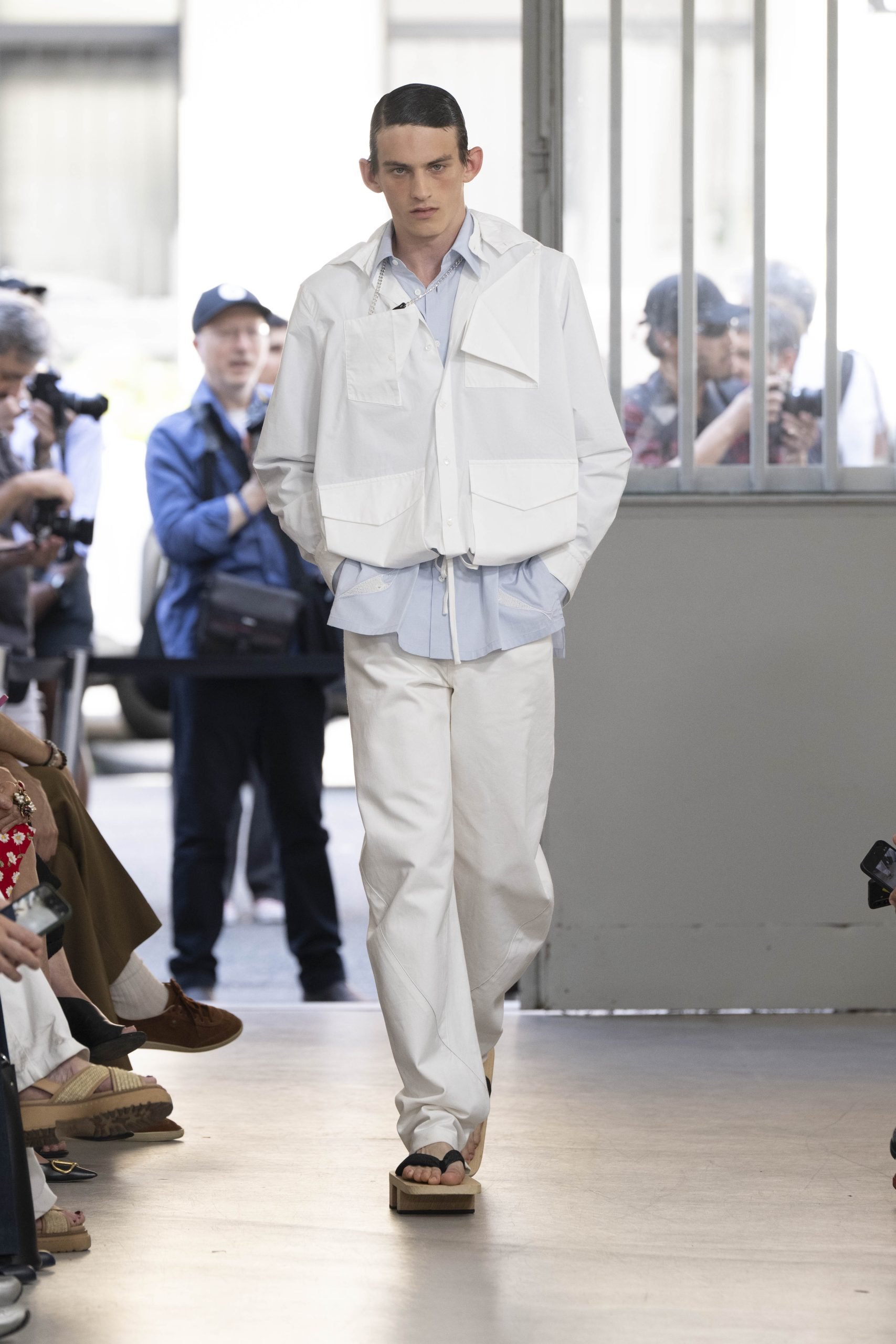
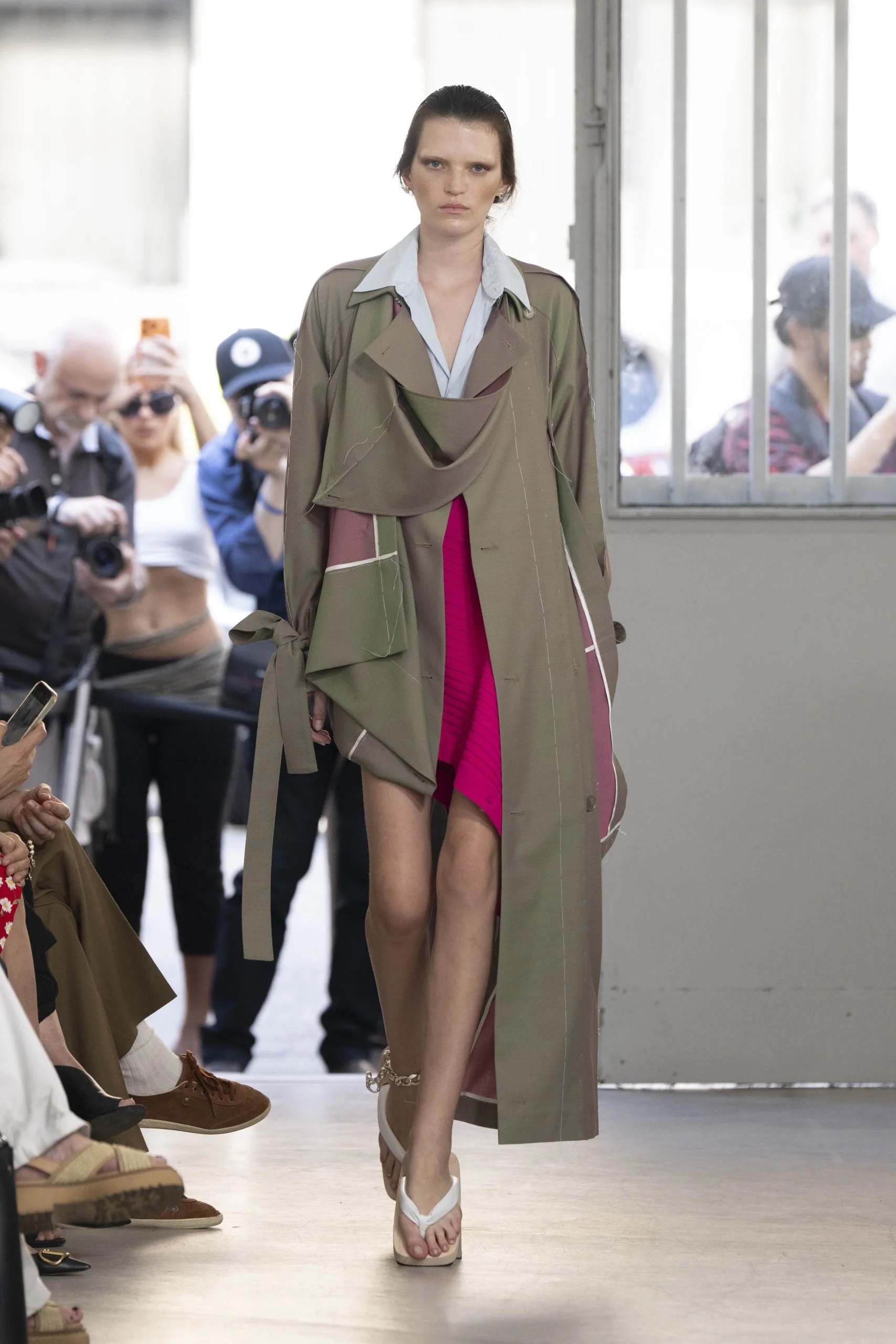
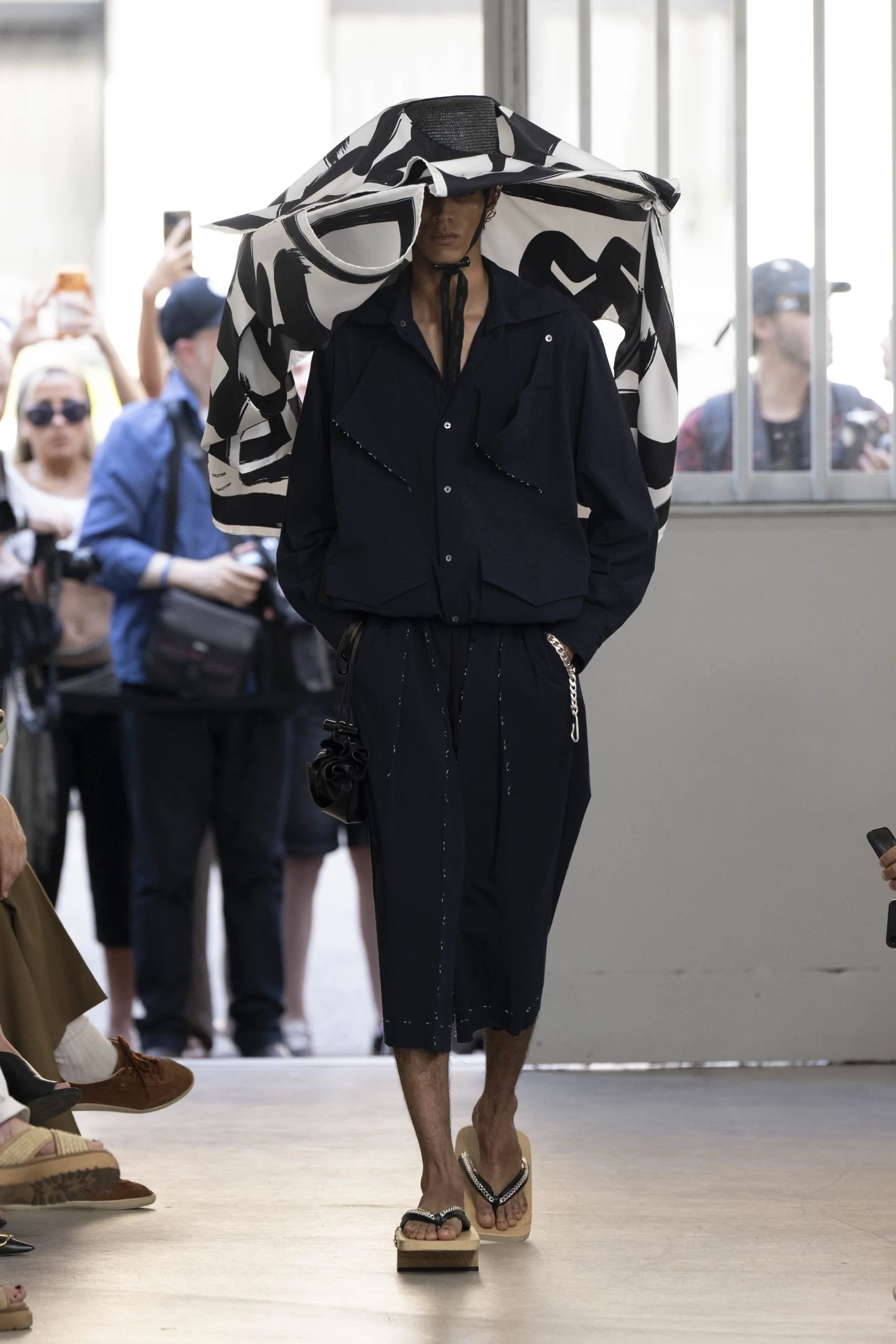
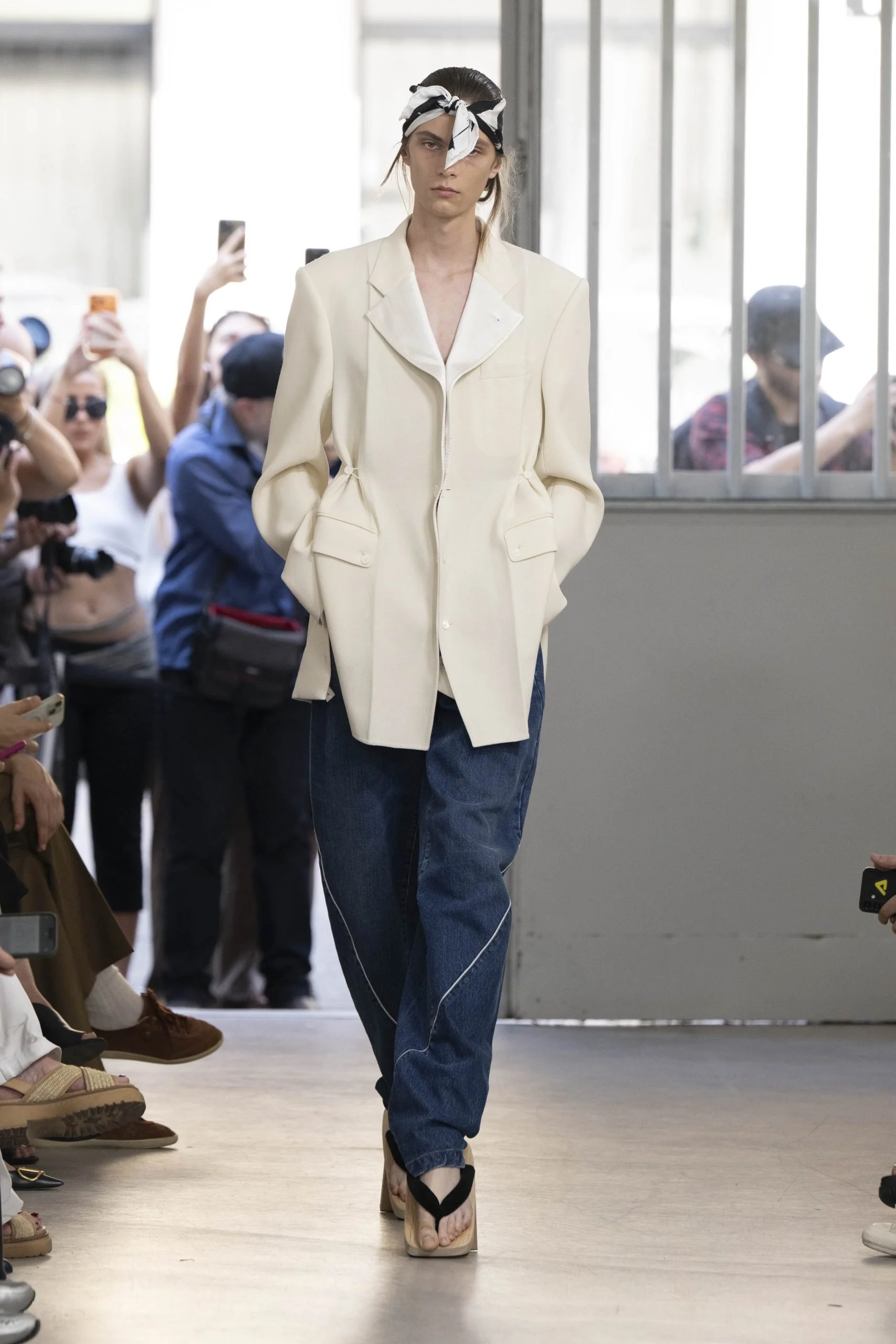
Blazers featured elongated proportions and innovative side-button constructions that subtly reshaped familiar silhouettes, while precisely cut trousers demonstrated the influence of Savile Row's disciplined approach to tailoring.
The dialogue between East and West remained seamless.
Experimentation Without Losing Wearability
Although several runway looks leaned towards conceptual fashion, the collection consistently returned to practical wardrobe pieces.
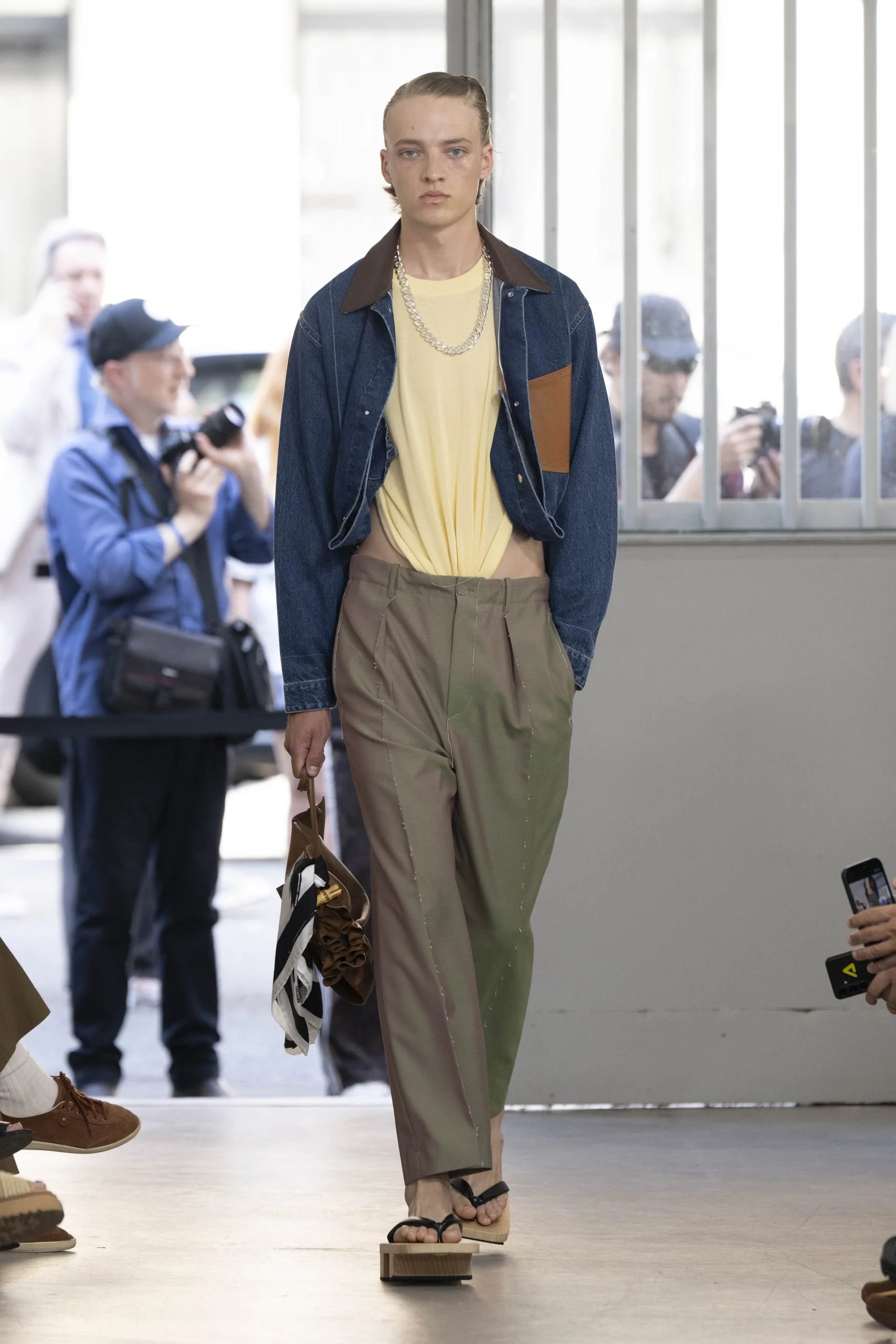
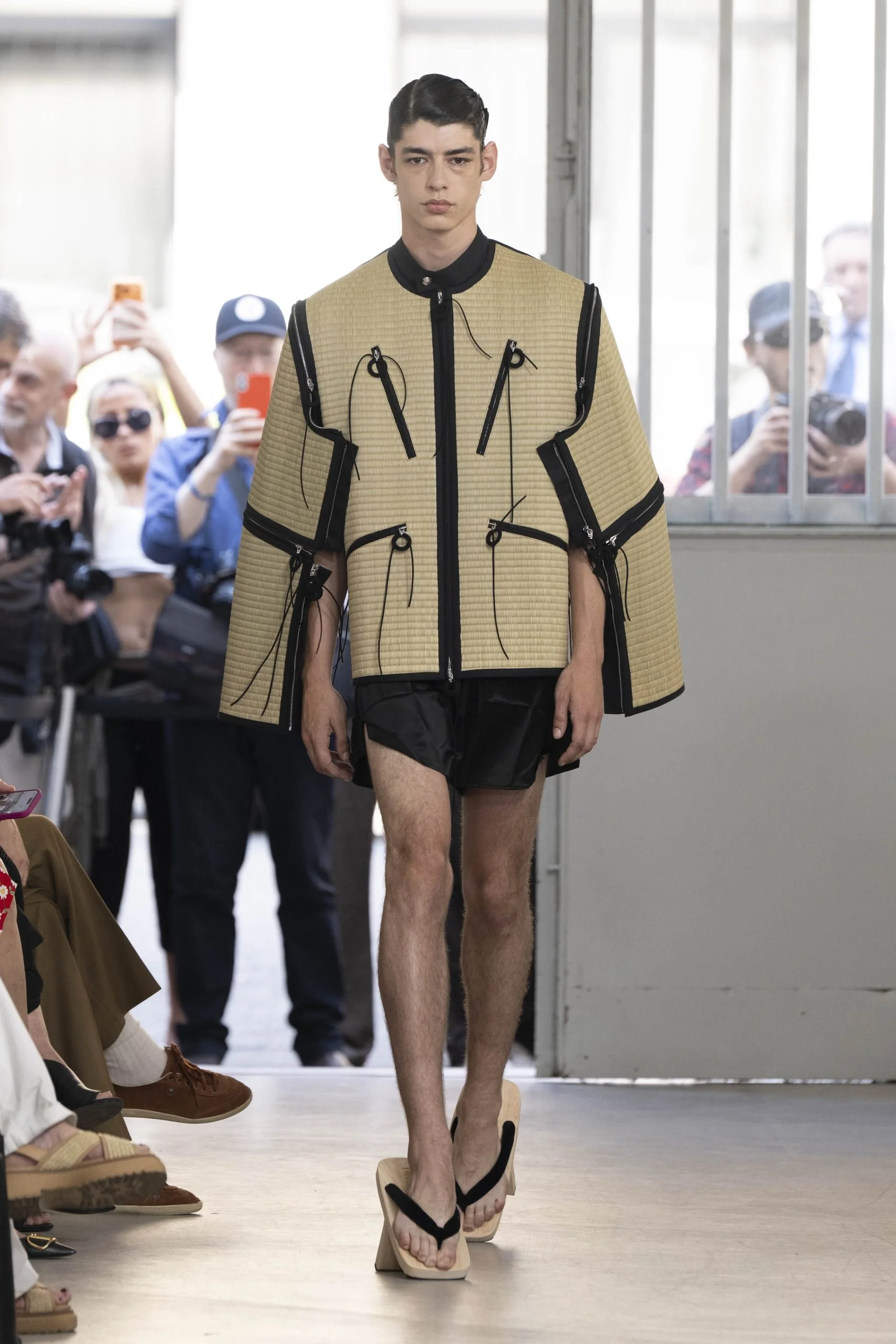
Iridescent tailoring fabrics transformed classic trousers and skirts into quietly futuristic staples, while lightweight blousons featured subtle exposed stitching that celebrated construction rather than concealing it.
These restrained interventions proved especially effective.
Rather than overwhelming garments with excessive decoration, Kuwata introduced craftsmanship through thoughtful details that rewarded closer inspection.
The result was experimental fashion grounded in everyday elegance.
Challenging the Everyday
Perhaps the collection's most intriguing idea emerged from something the designer openly dislikes.
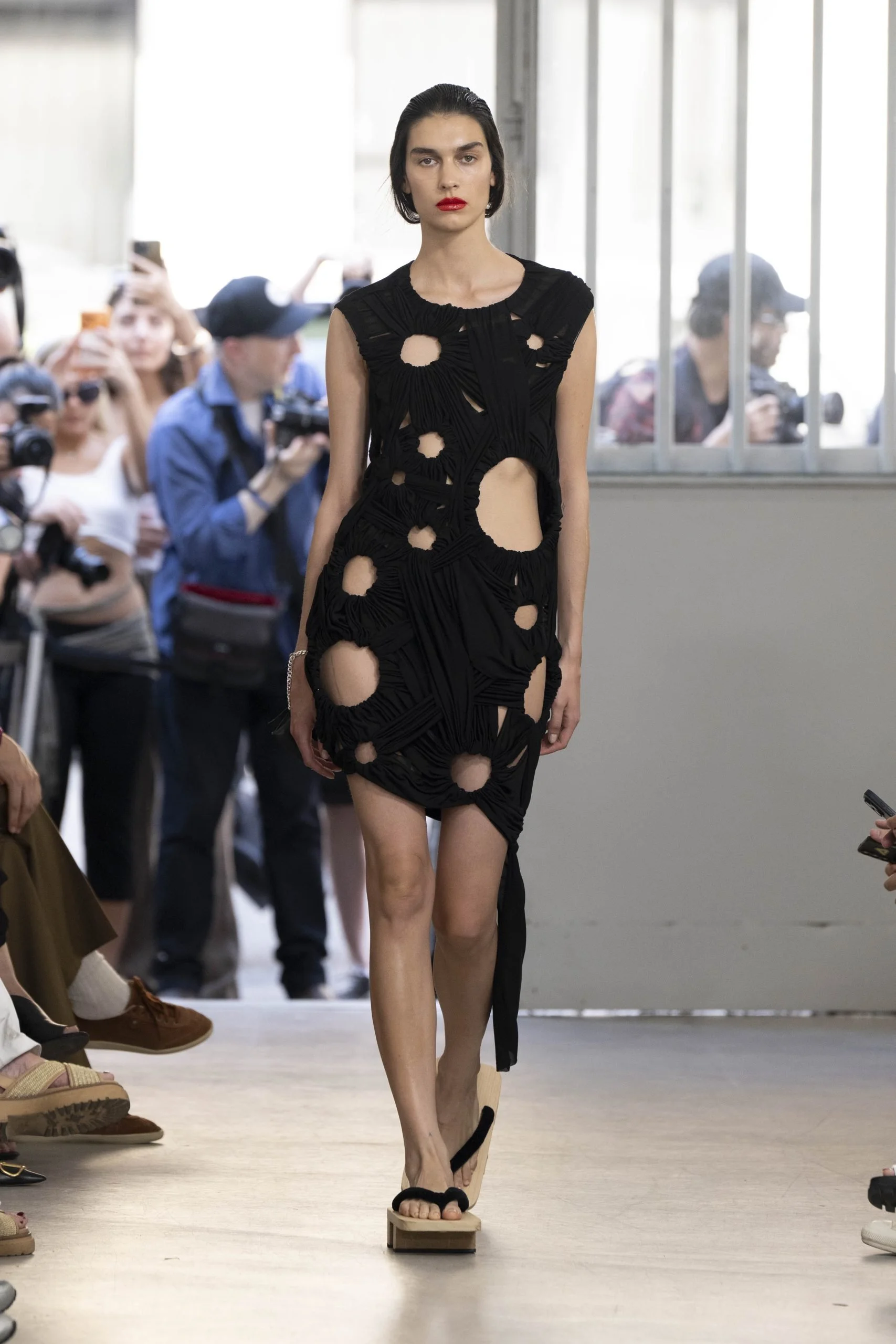
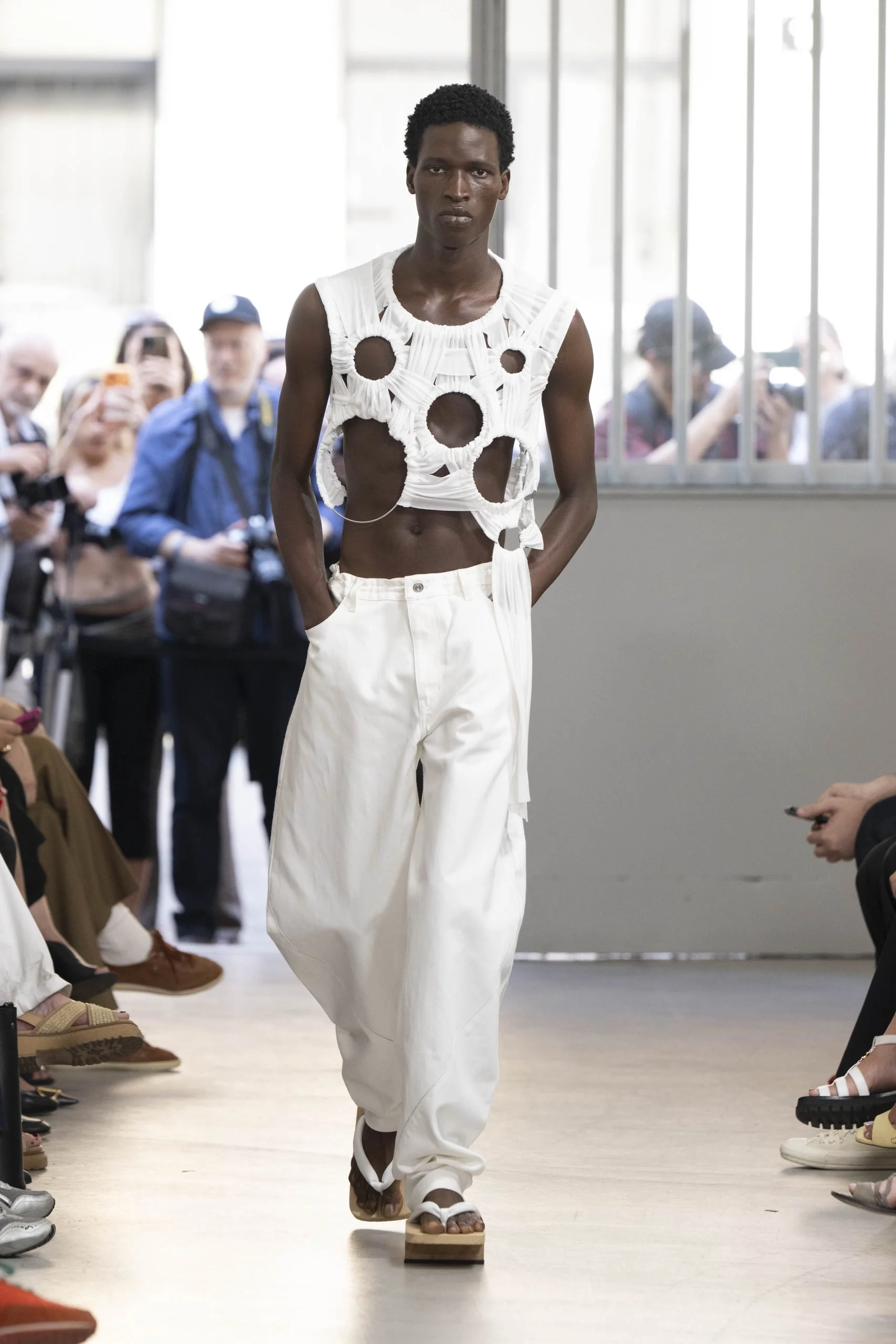
Backstage, Kuwata explained his longstanding aversion to circular forms, describing them as symbols of industrial mass production visible everywhere from plastic bottles to aluminium drink cans.
Rather than avoiding circles altogether, he chose to reinterpret them through labour-intensive craftsmanship.
Handmade metallic discs were individually connected using soft jersey strips to create sculptural tops and dresses that transformed an ordinary industrial shape into something unexpectedly artistic.
It was an intelligent act of creative disruption, questioning how familiar forms can acquire entirely new meaning through artisanal processes.
Material Innovation Defines the Collection
As with previous Setchu collections, textiles remained central to the narrative.
Italian fabric expertise provided luxurious foundations, while handcrafted leather, metallic components and technical jersey introduced contrasting textures throughout the collection. The careful combination of rigid and fluid materials allowed garments to maintain both sculptural structure and natural movement.
Every material choice reinforced Kuwata's ongoing fascination with precision, functionality and craft.
Nothing appeared accidental.
Setchu Continues to Define Its Own Path
Spring/Summer 2027 reaffirmed why Setchu has become one of the most compelling independent voices in contemporary fashion.
While many emerging brands rely on spectacle or trend-driven styling, Satoshi Kuwata continues to build collections through thoughtful research, exceptional craftsmanship and genuine curiosity about the world around him.
Fishing, tailoring, Japanese tradition and Italian manufacturing all became equal contributors to a collection that felt deeply personal without becoming overly autobiographical.
It was an elegant expression of creative freedom.
Craftsmanship as the Future of Luxury
Setchu's Spring/Summer 2027 collection suggested that the future of luxury lies not in louder branding or increasingly elaborate runway theatrics, but in the thoughtful intersection of culture, technique and material innovation.
By combining artisanal craftsmanship with contemporary tailoring and experimental construction, Kuwata delivered one of Milan Men's Fashion Week's most intelligent collections.
Like the fishing nets that inspired it, every thread served a purpose, proving once again that the strongest fashion stories are often woven patiently, one careful knot at a time.