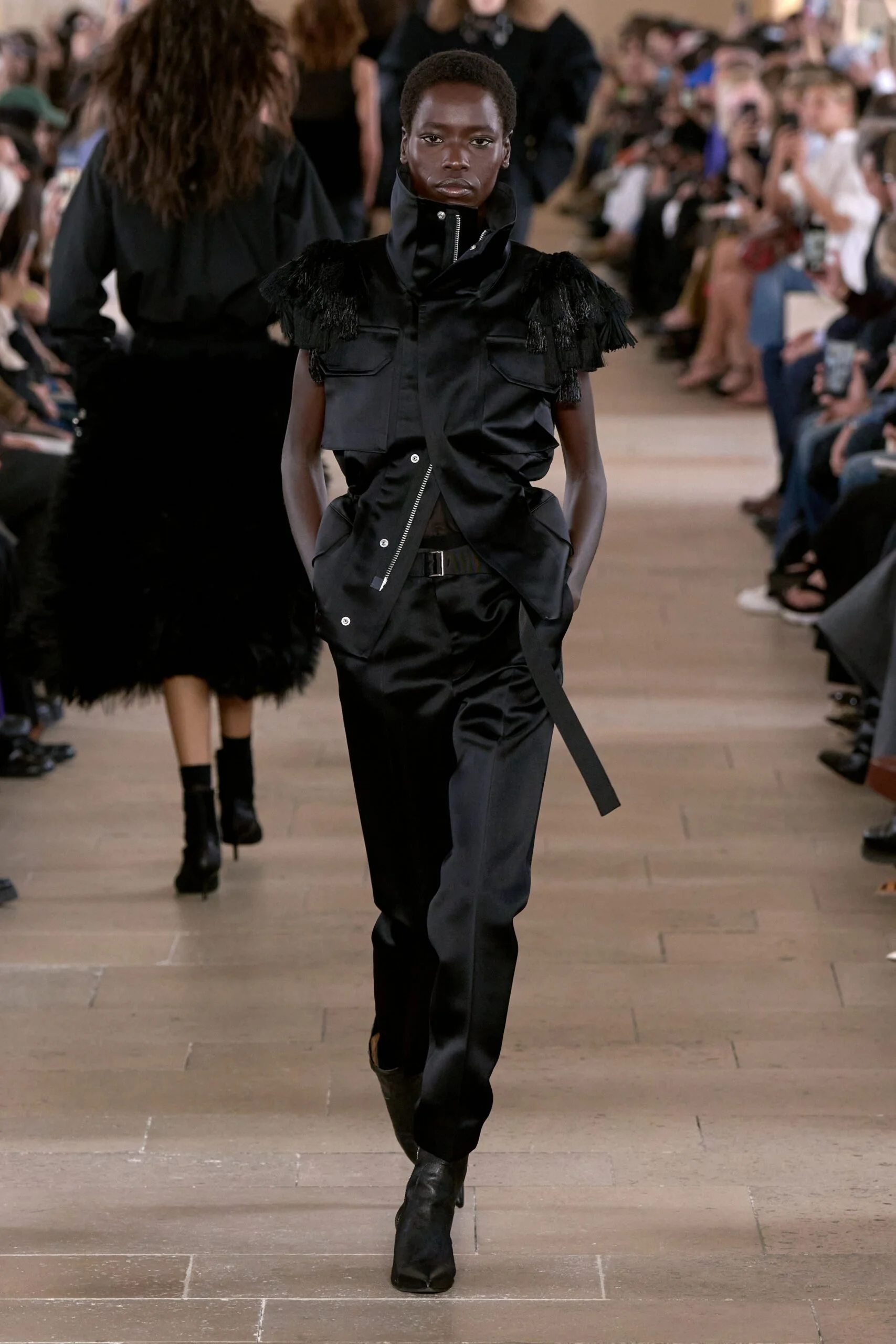
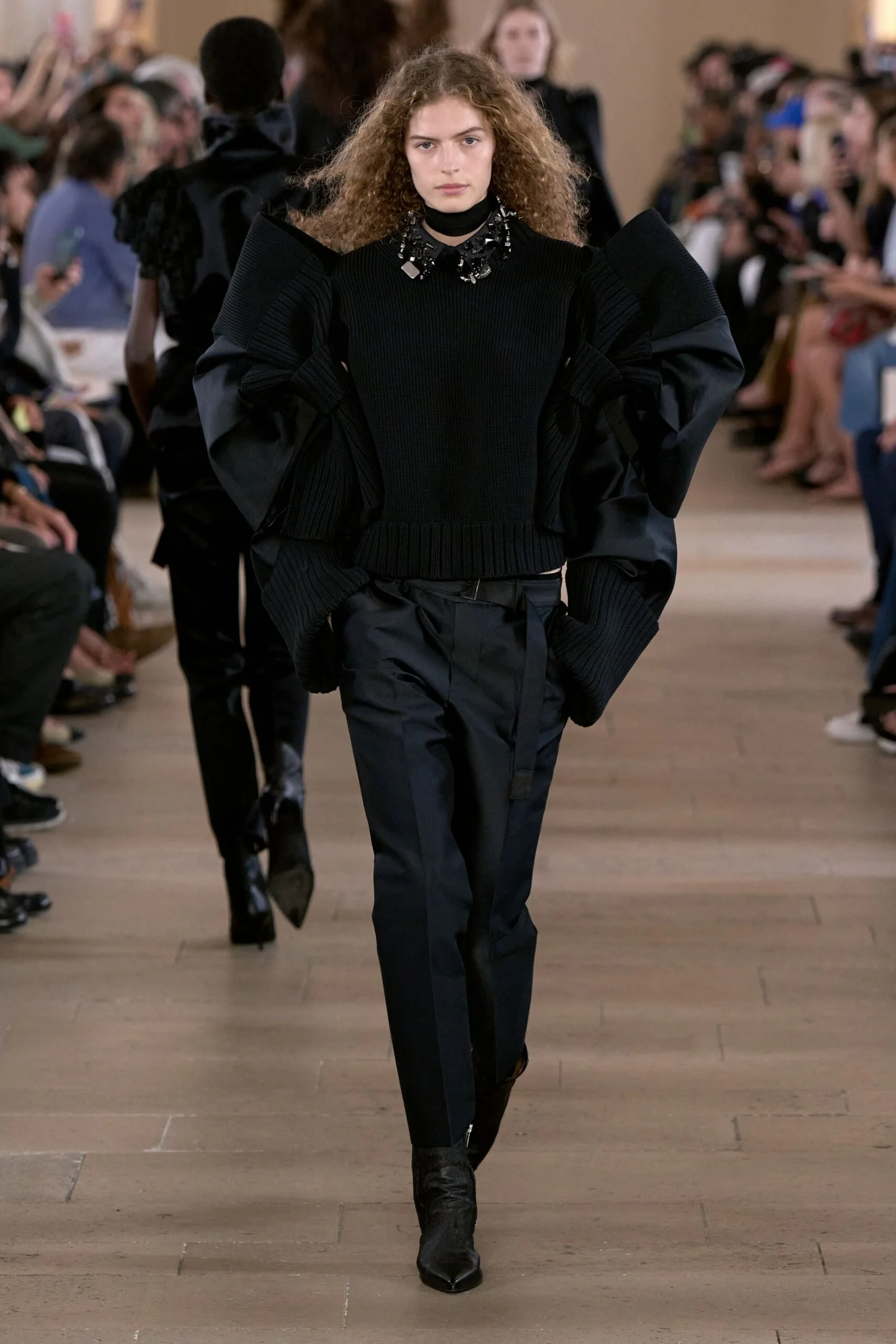
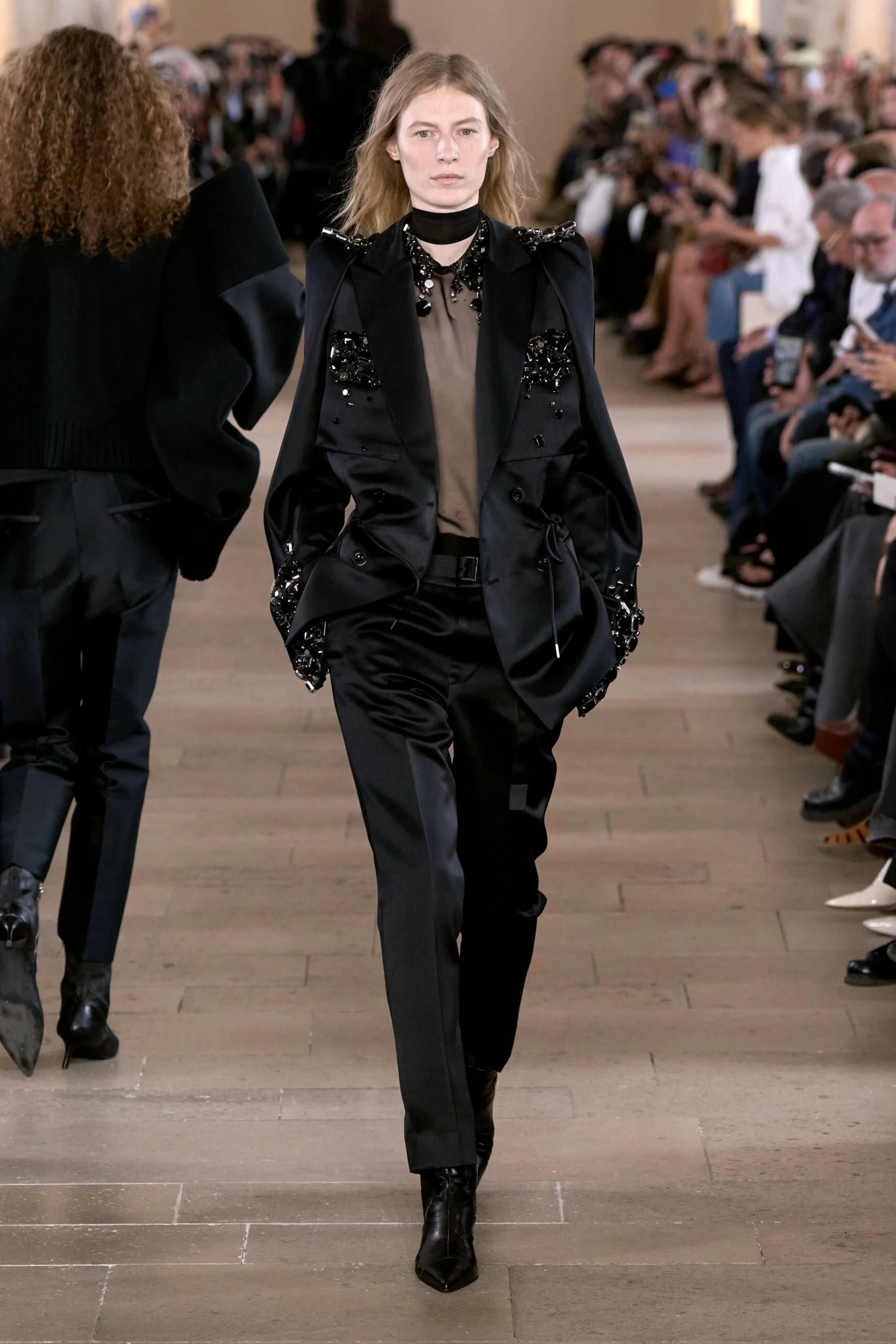
Sacai Spring 2027
Change is usually described as a process: something gradual, inevitable, eventually visible. But Chitose Abe has always seemed more interested in the moment before the decision is made, when several possibilities can exist at once. For Sacai Spring 2027, that uncertainty became the collection’s starting point. Abe spoke backstage about wanting to express “both the good and bad parts inside” people, and the clothes reflected that contradiction without trying to resolve it.
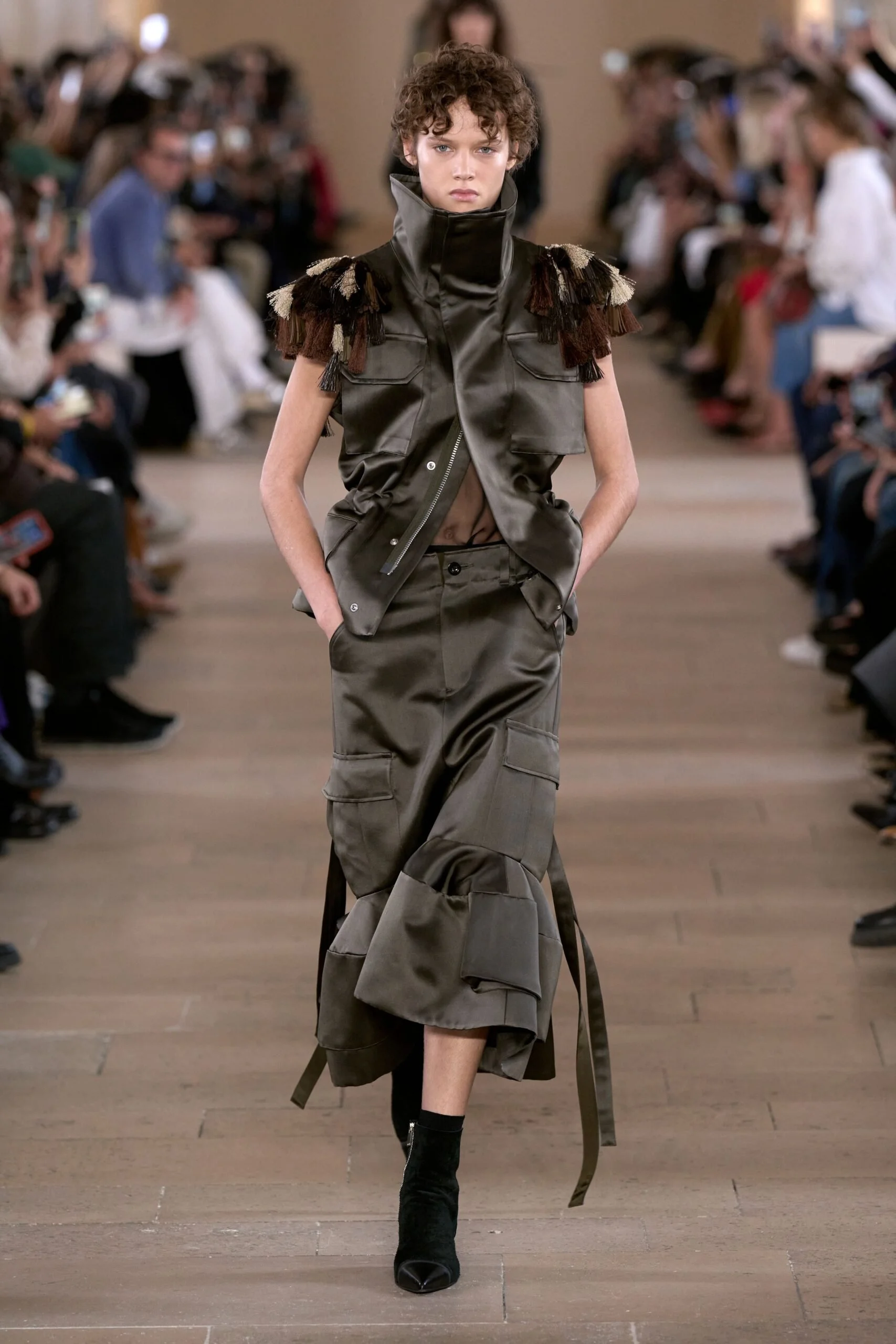
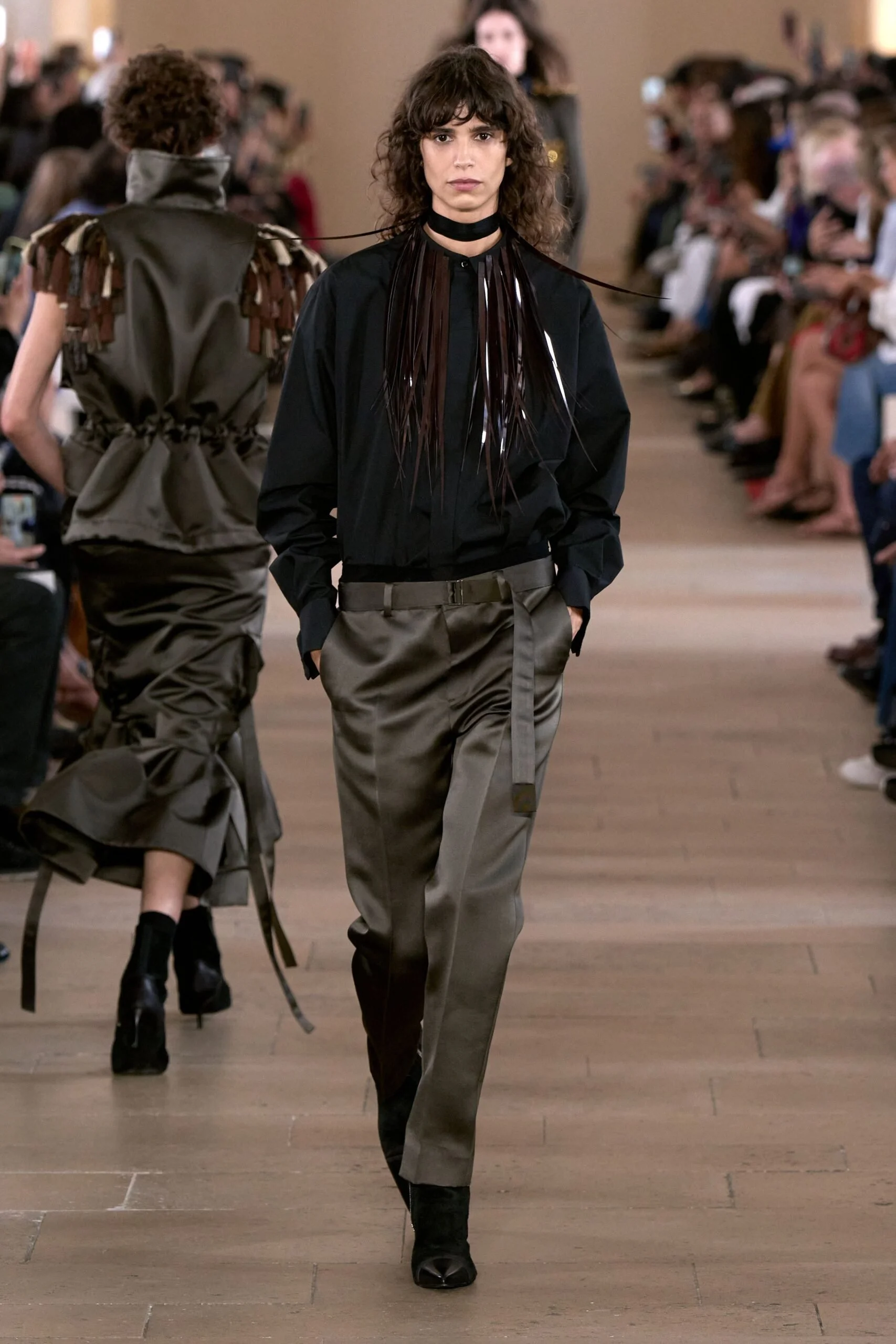
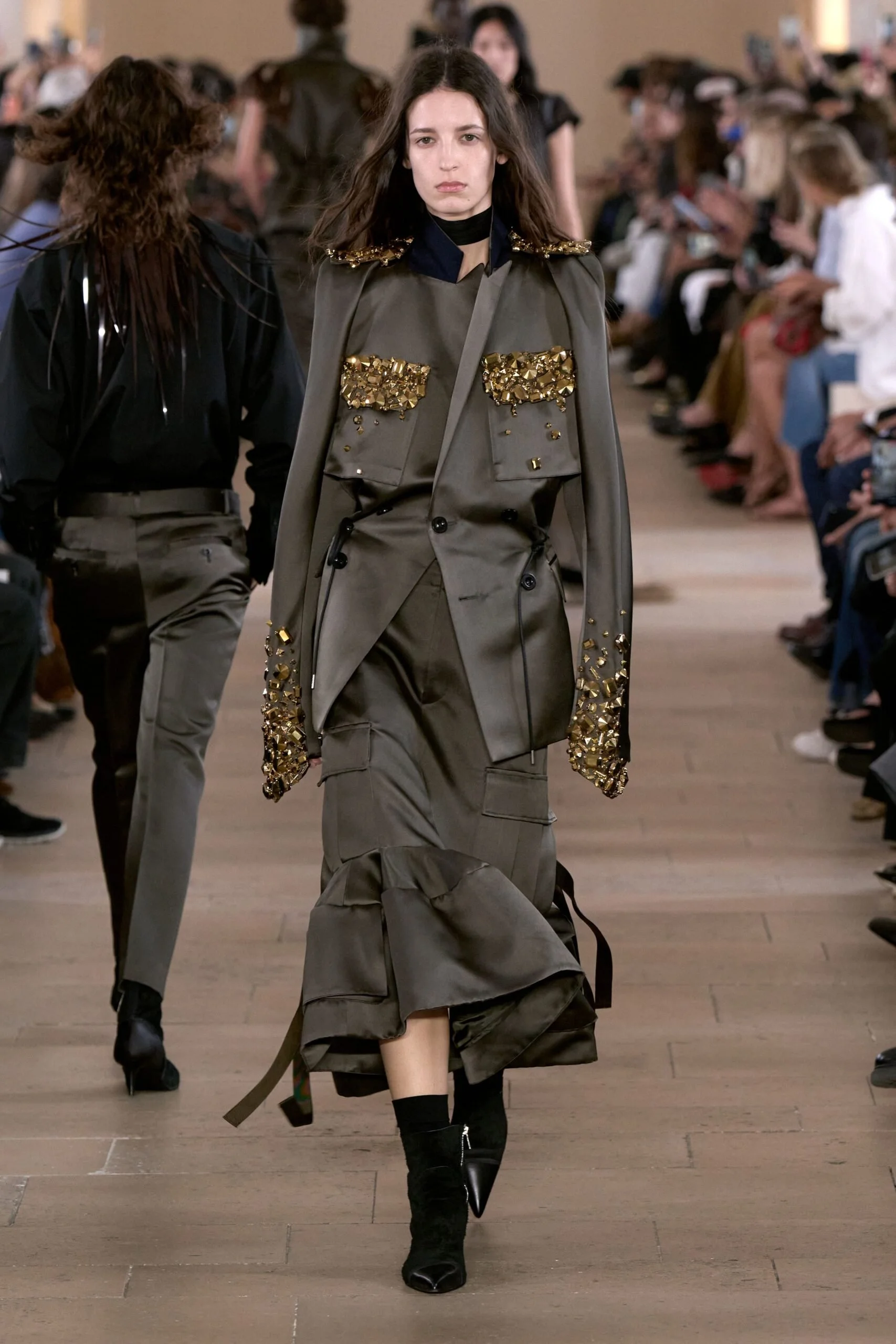
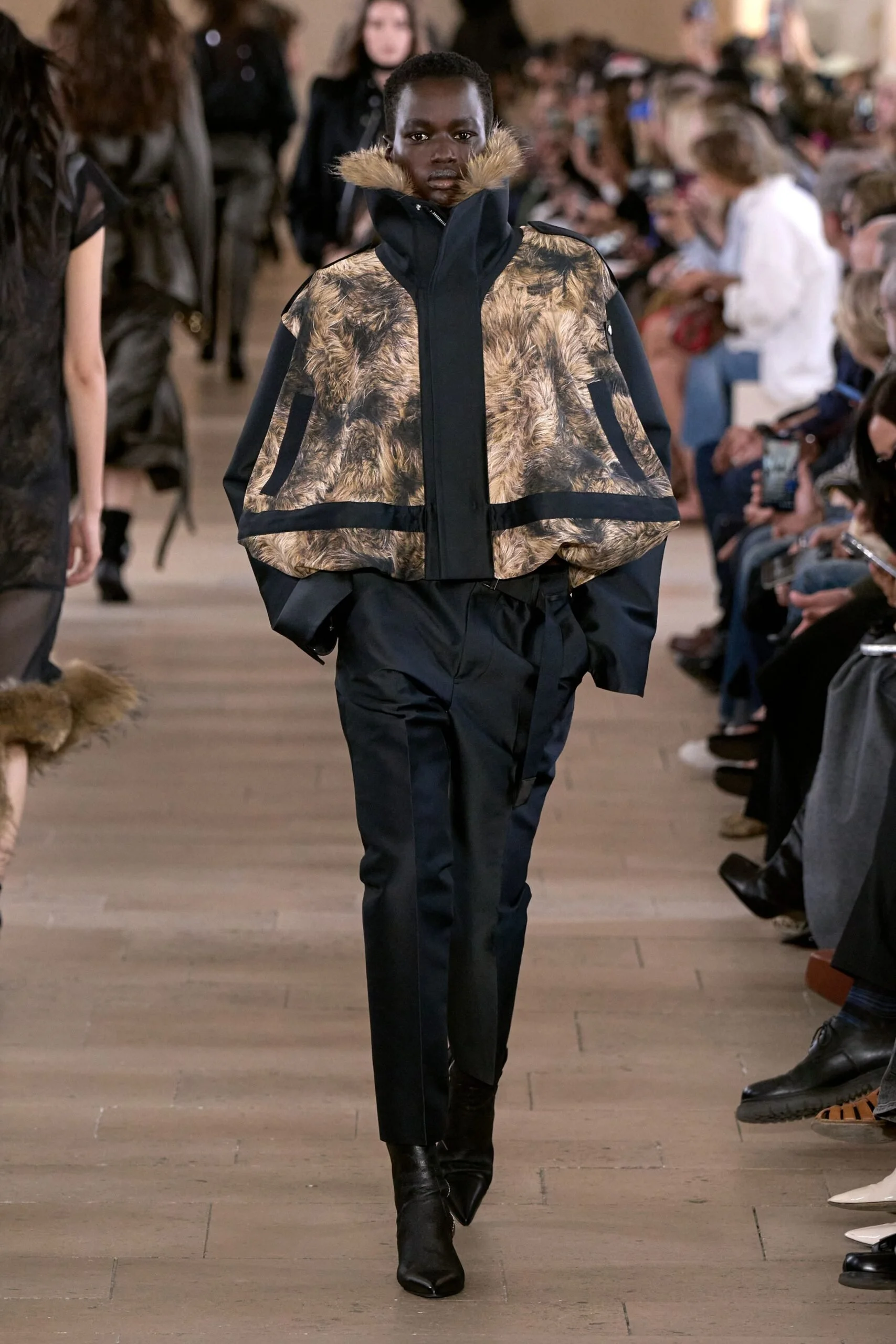
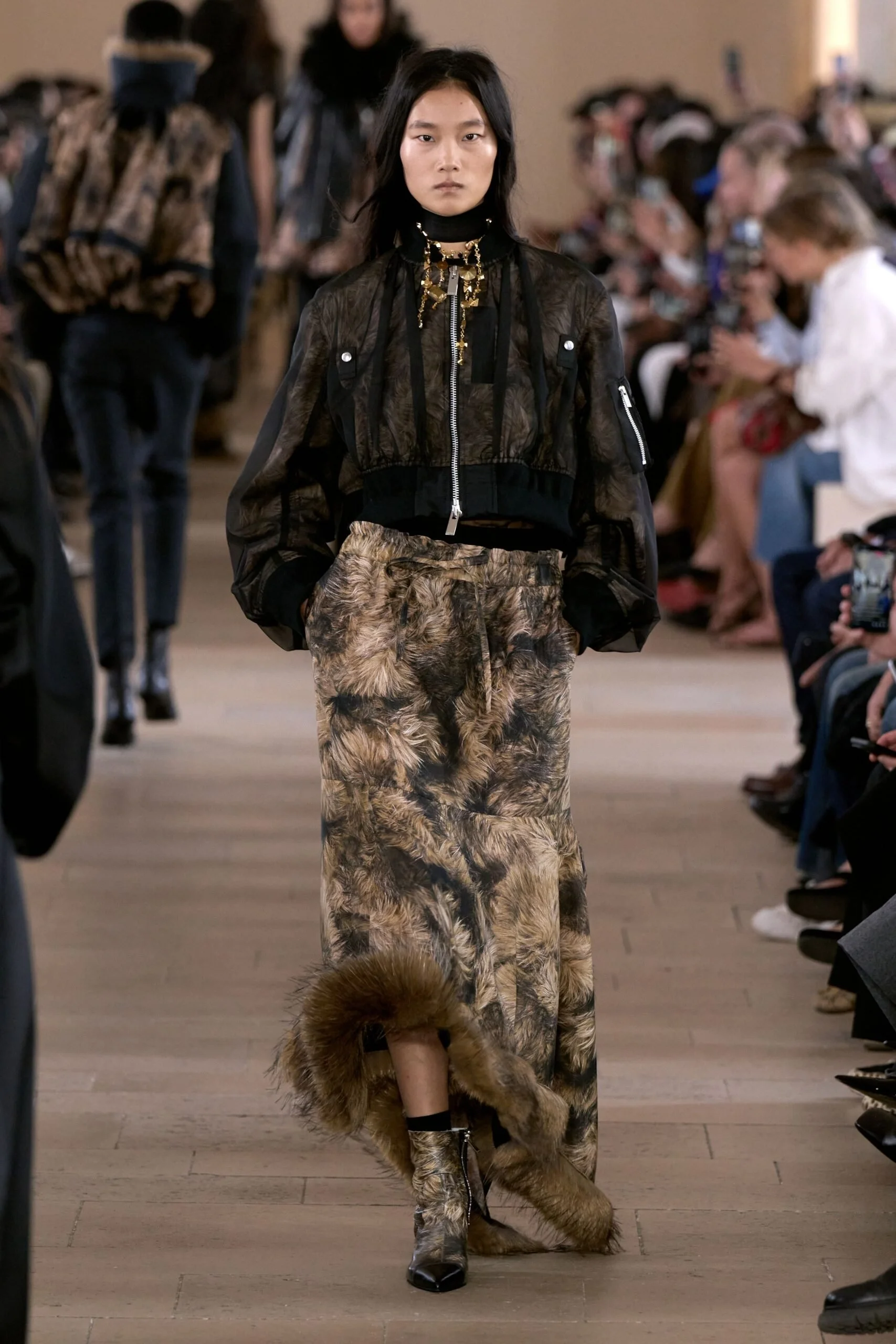
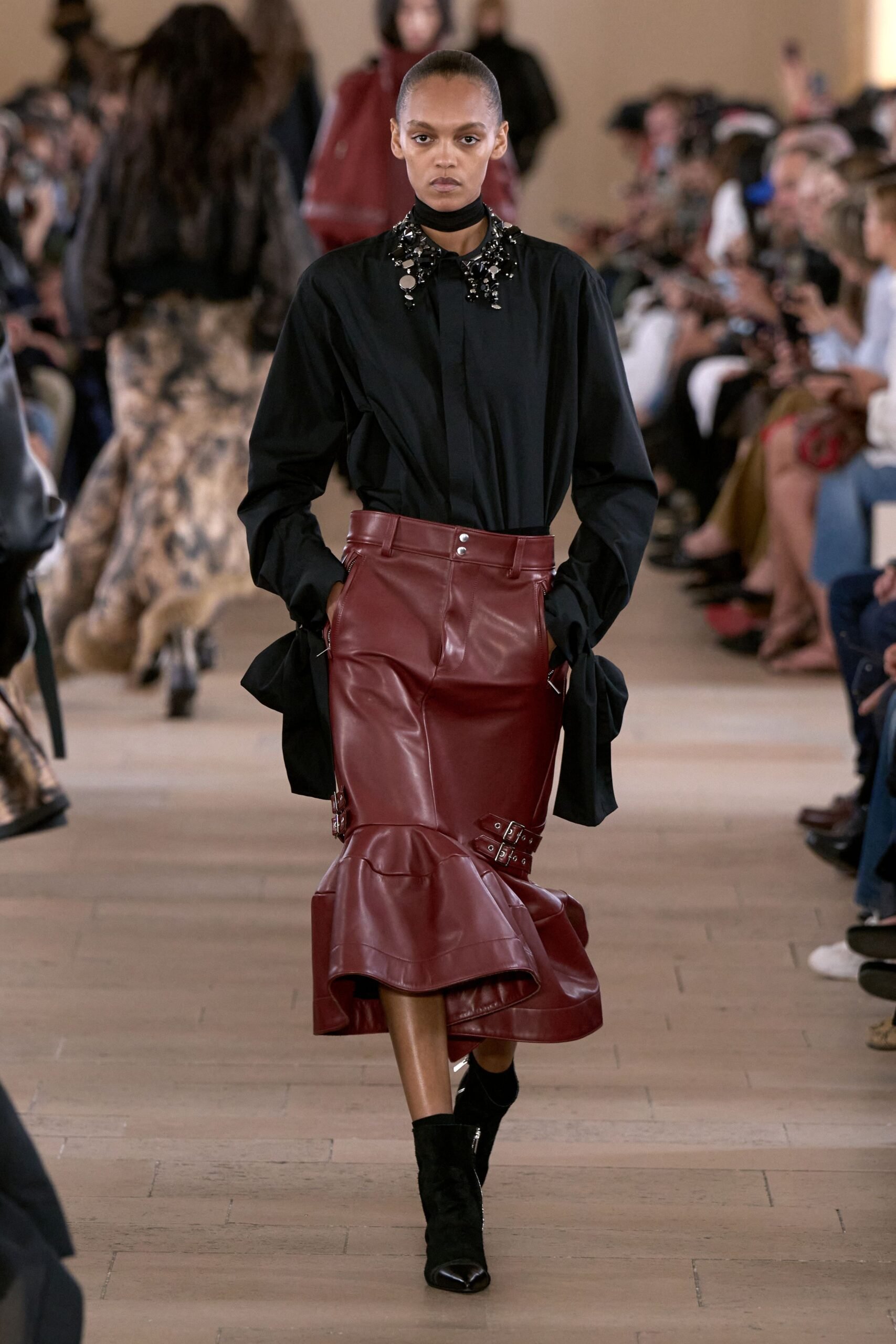
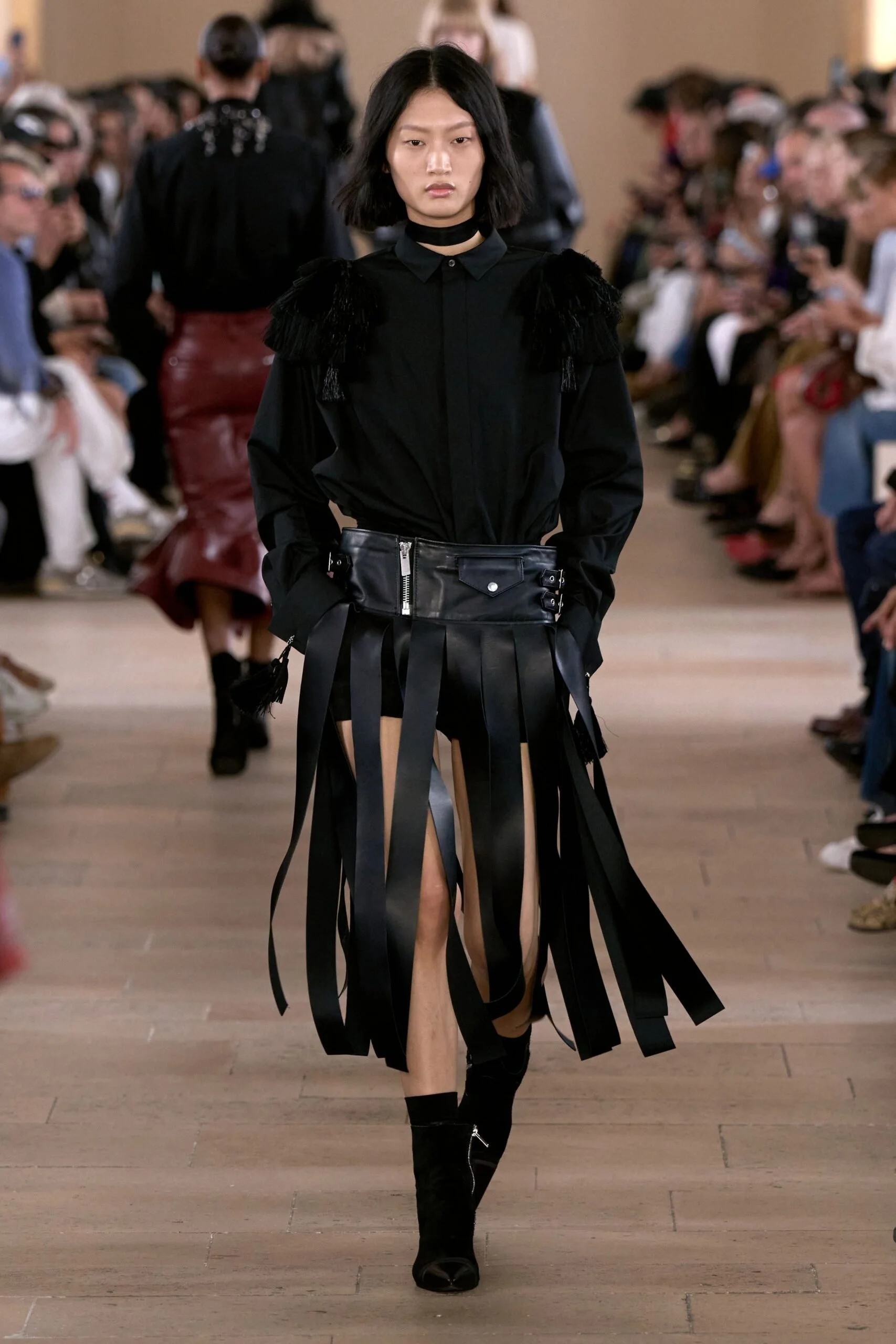
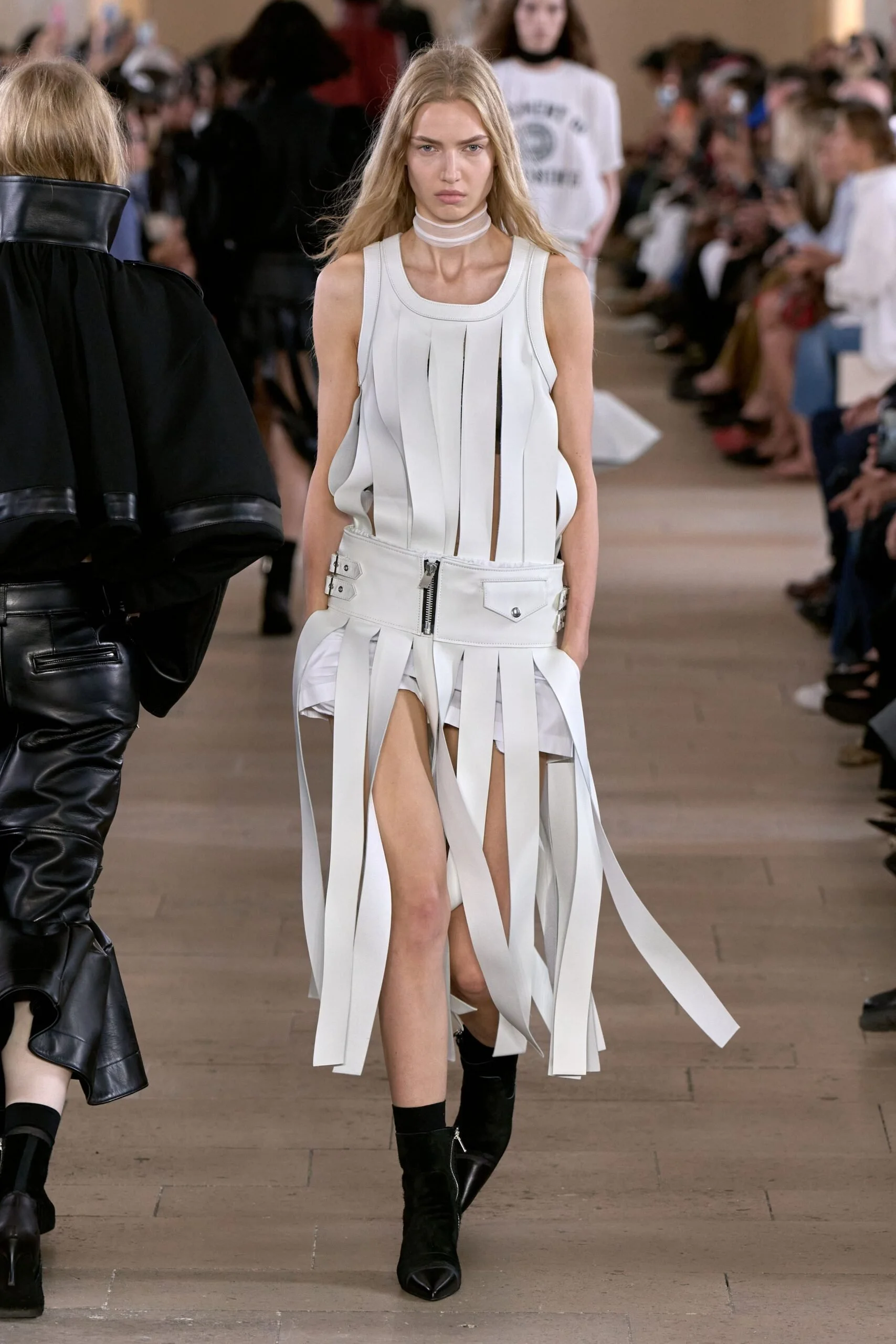
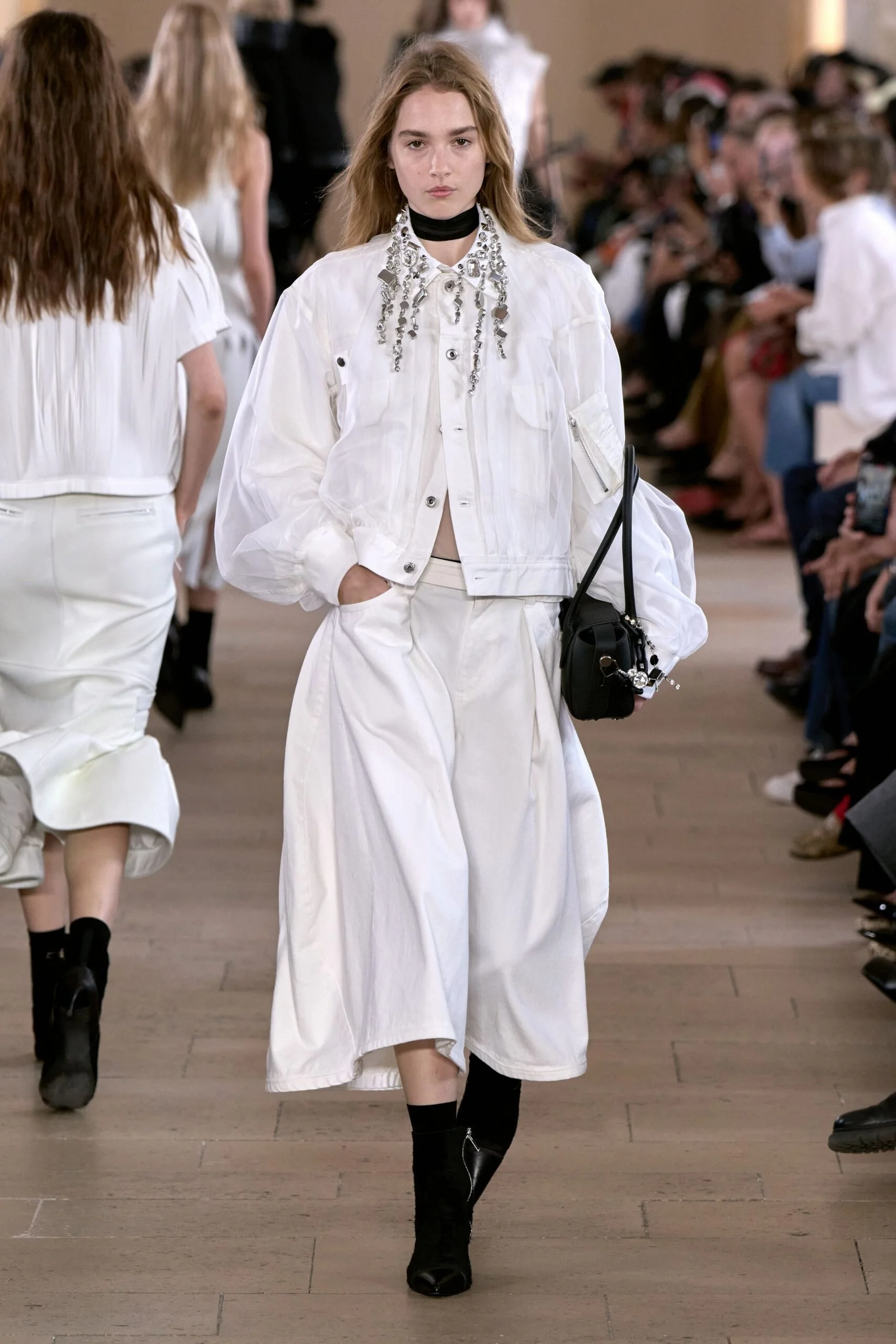
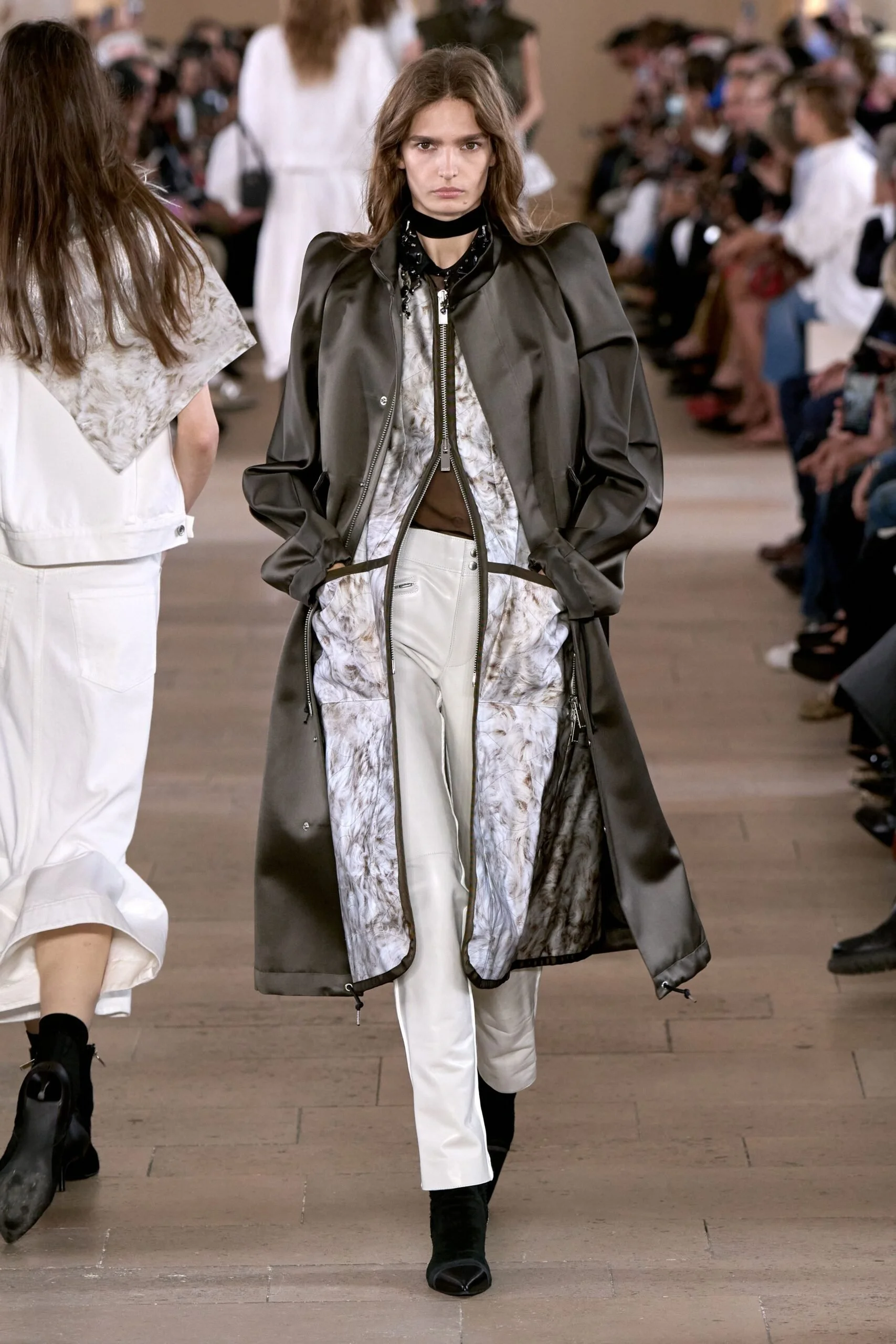
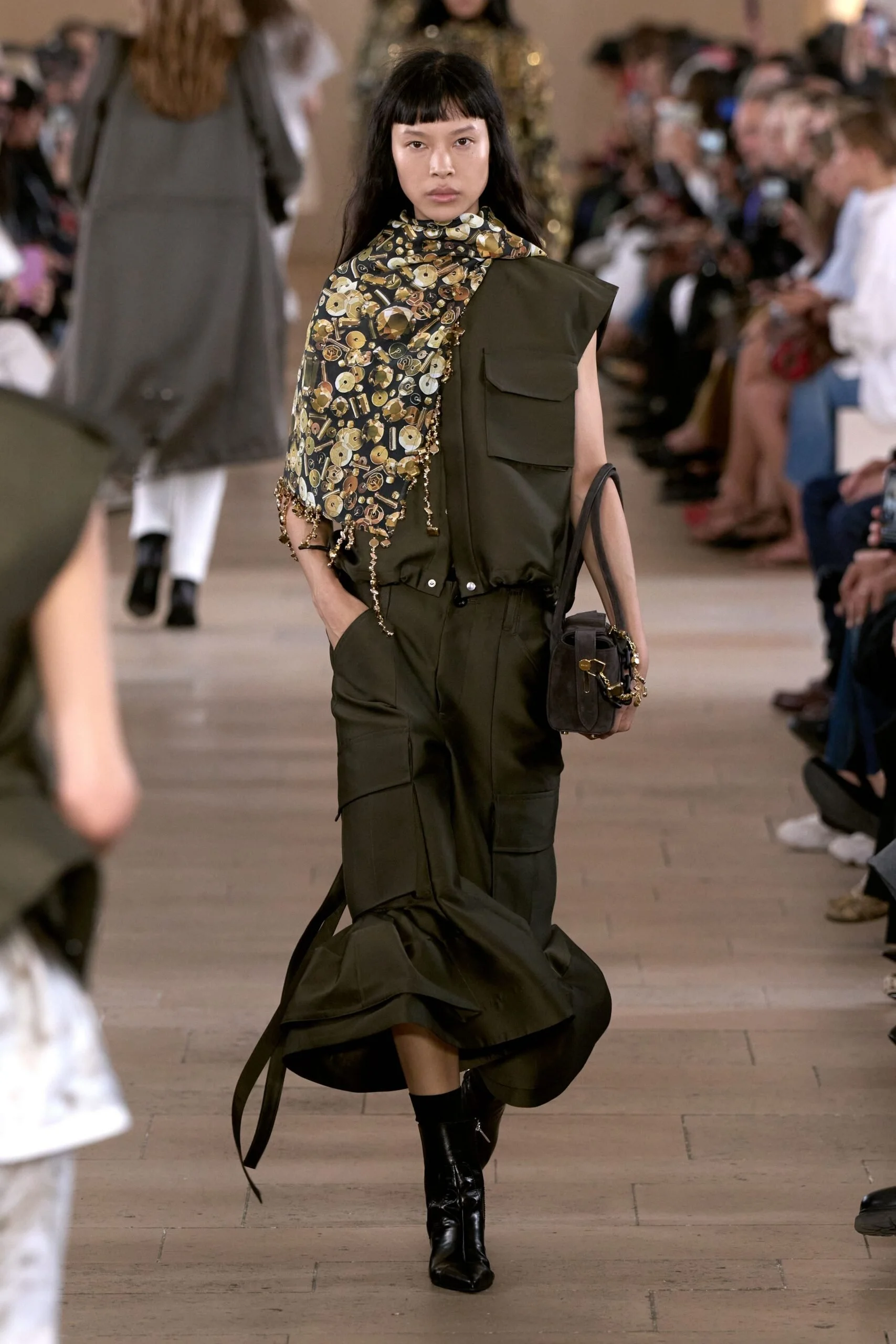
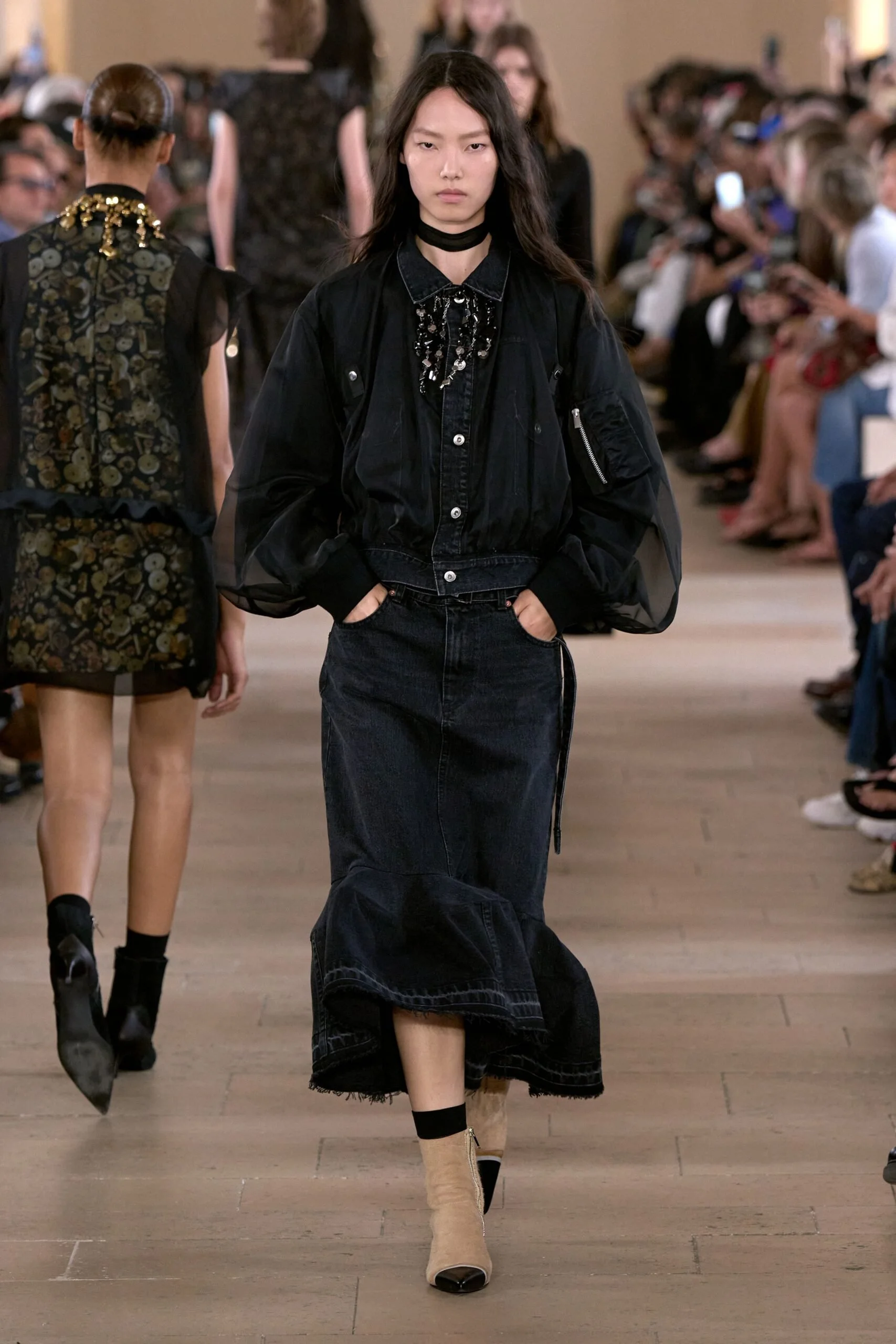
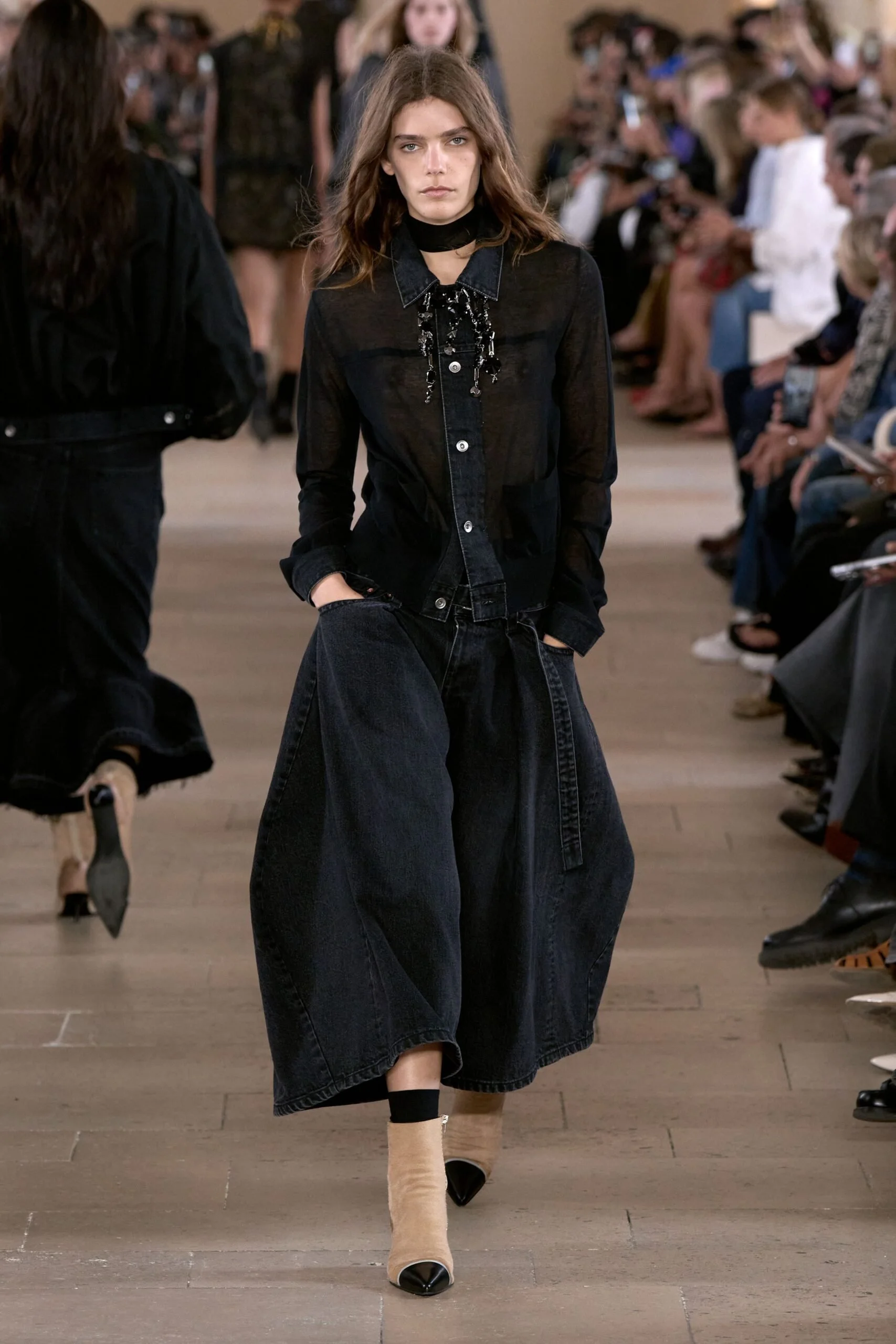
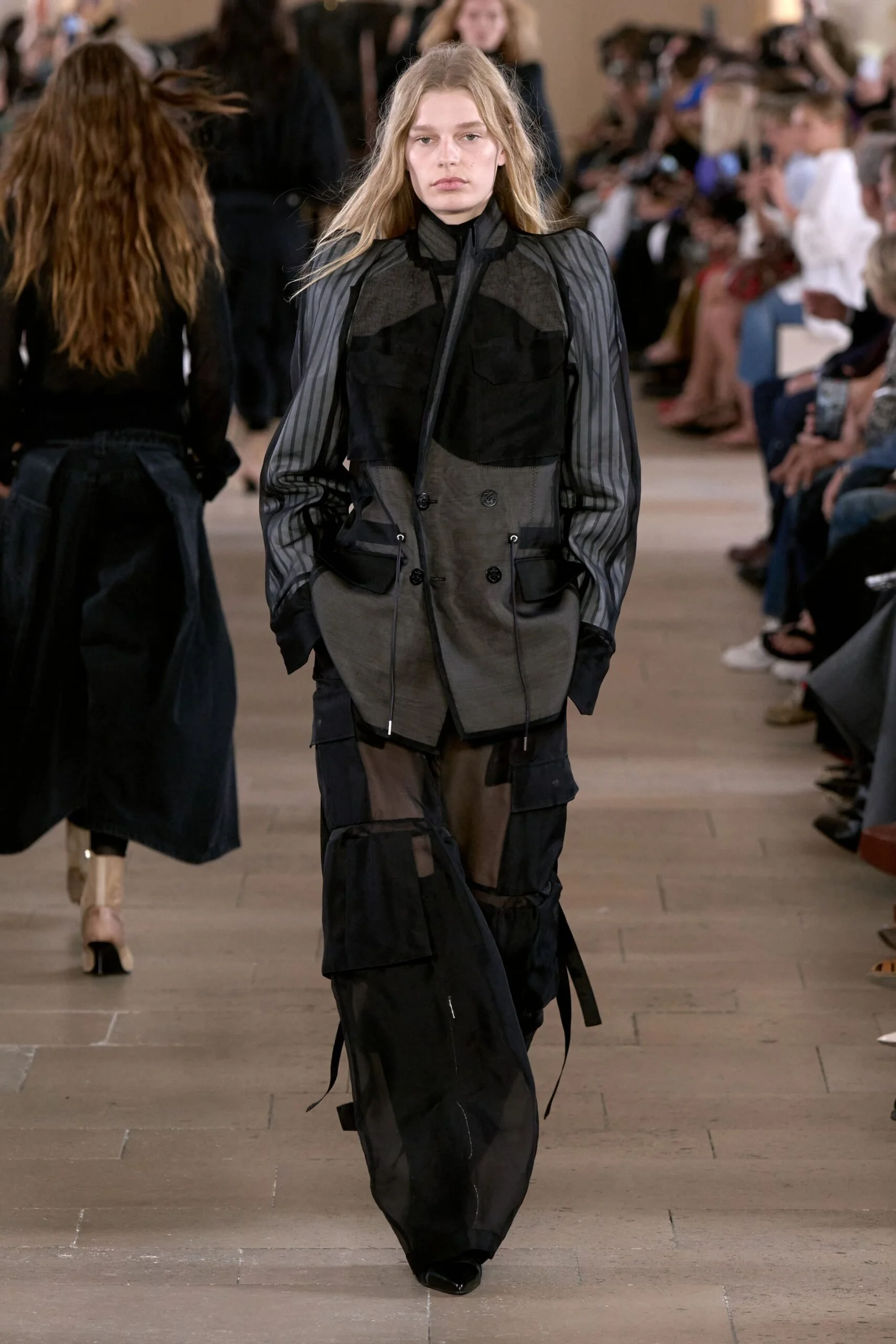
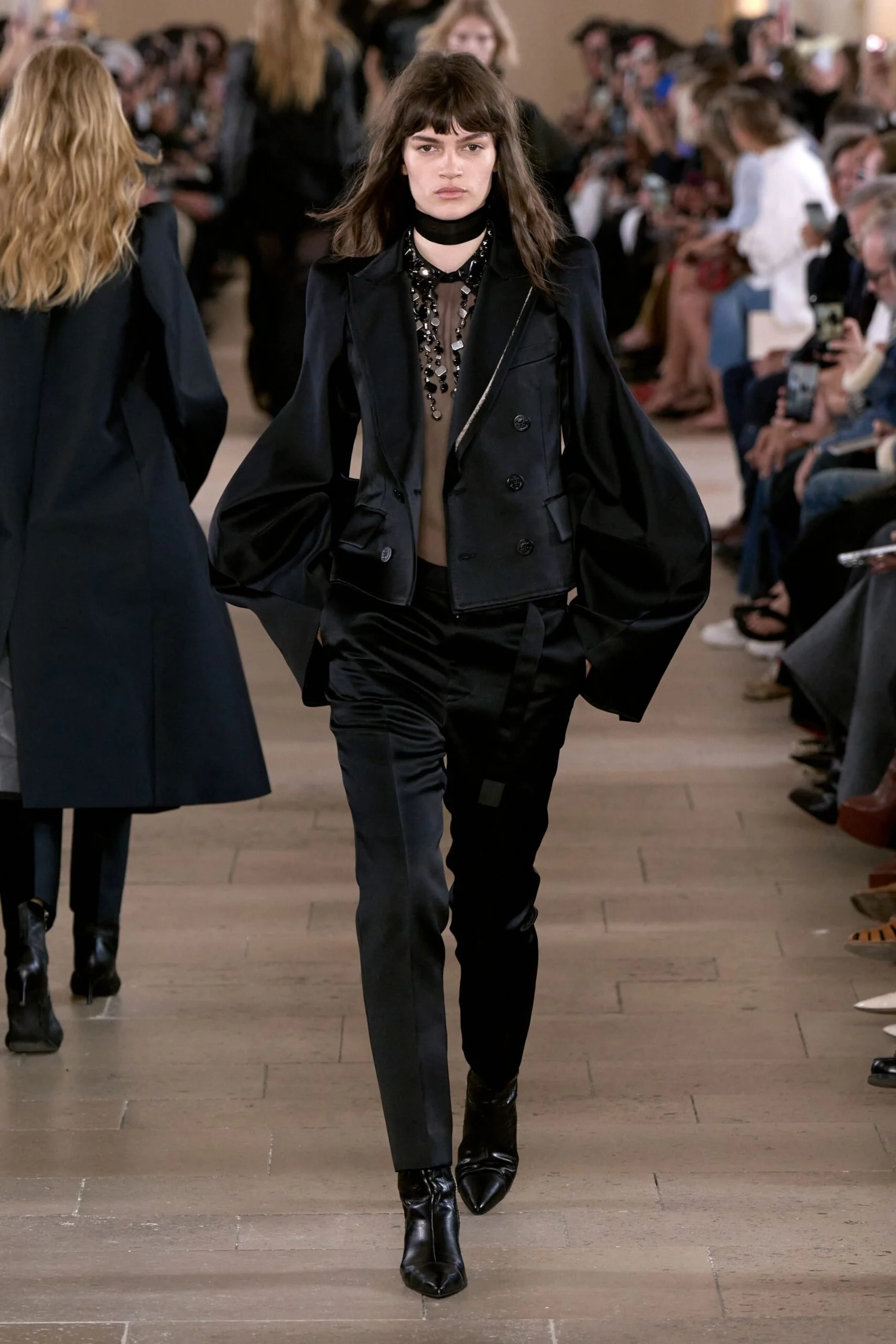
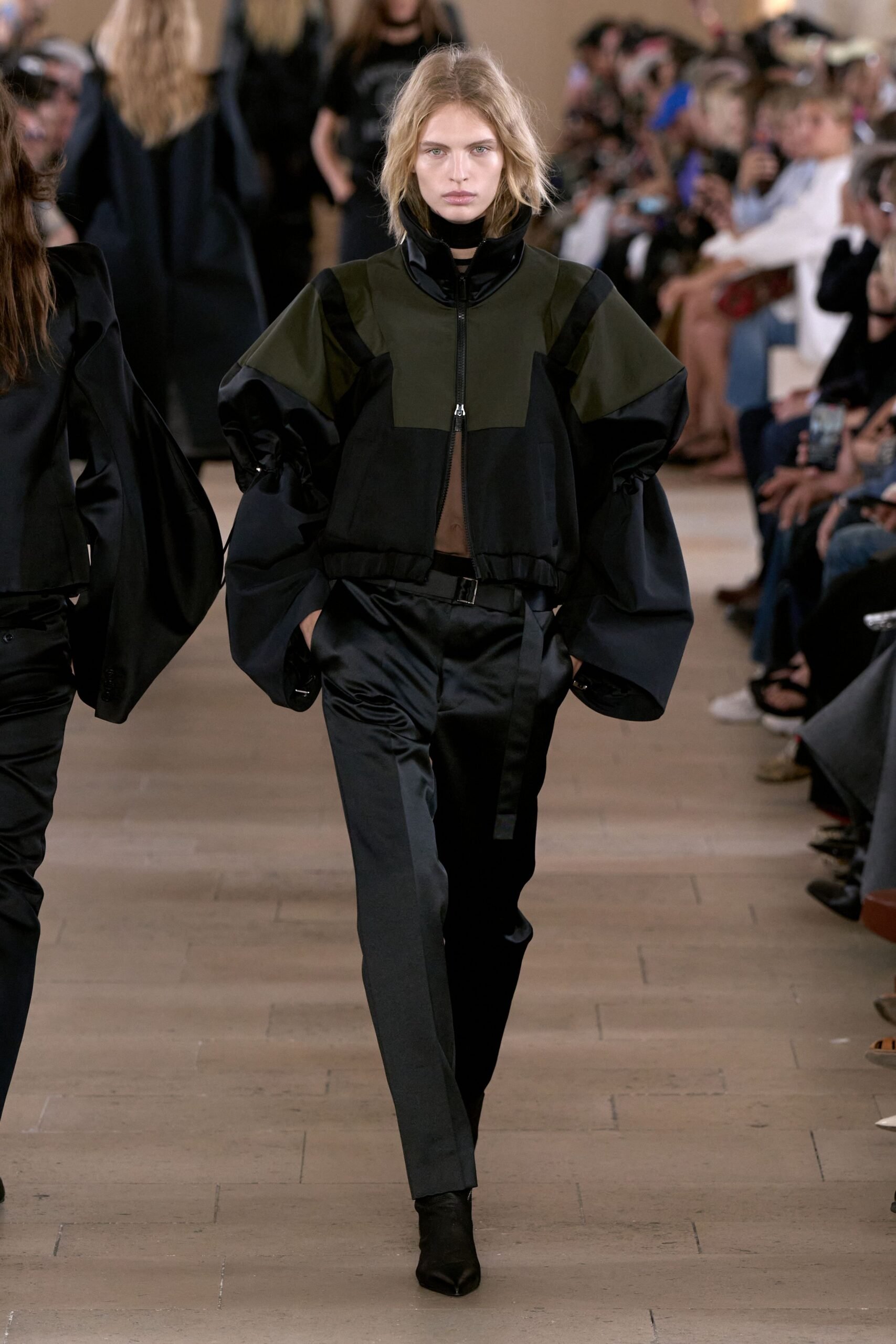
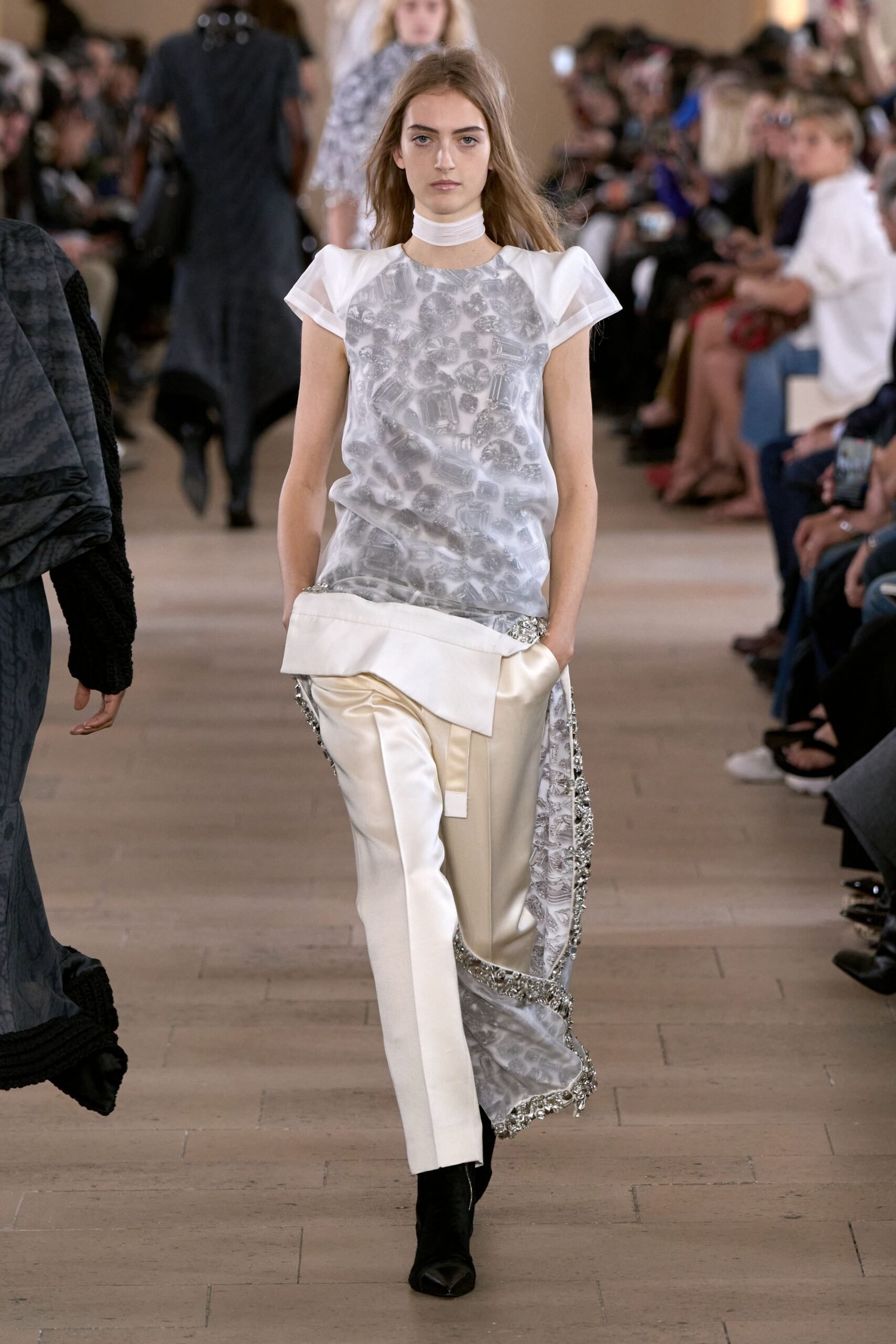
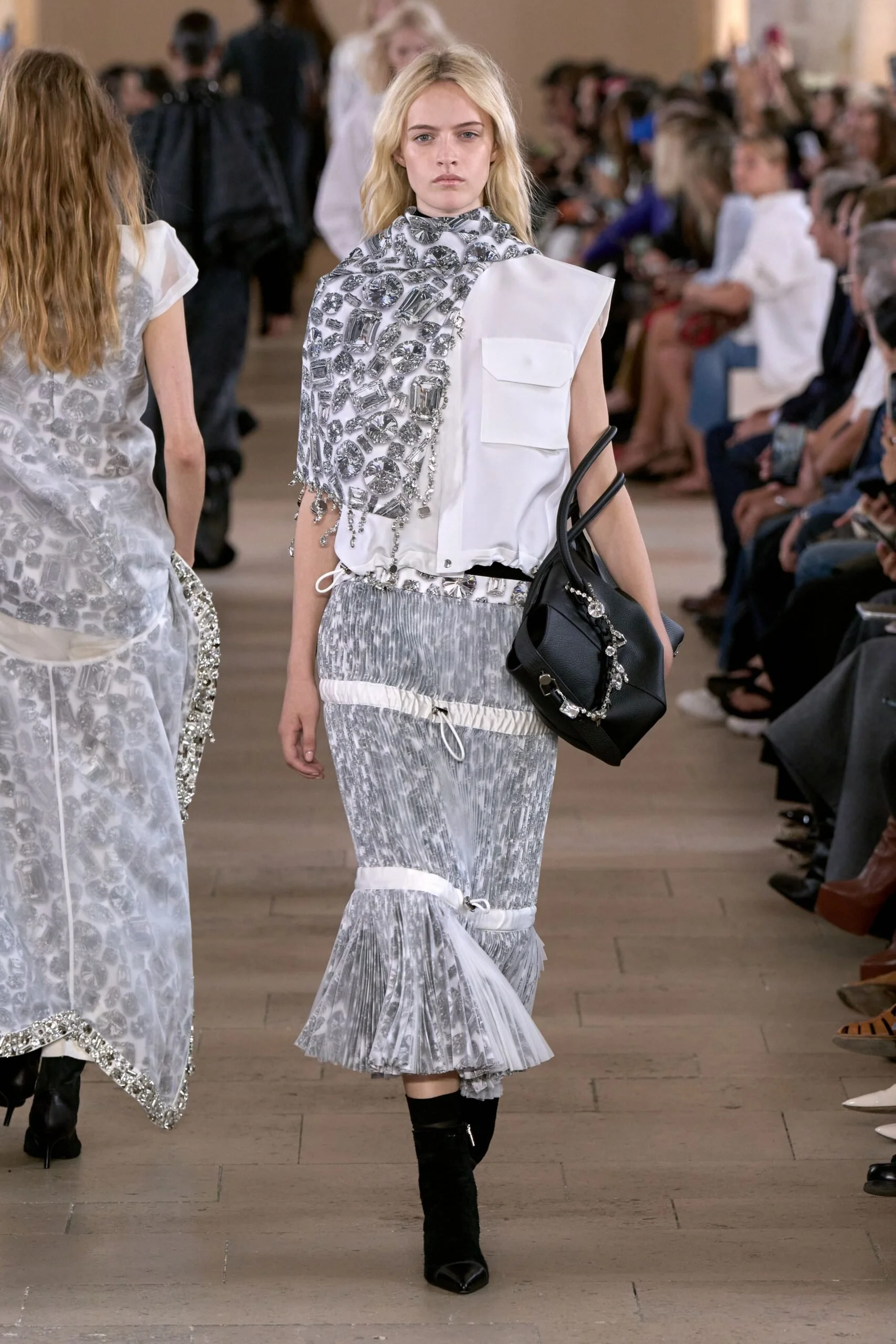
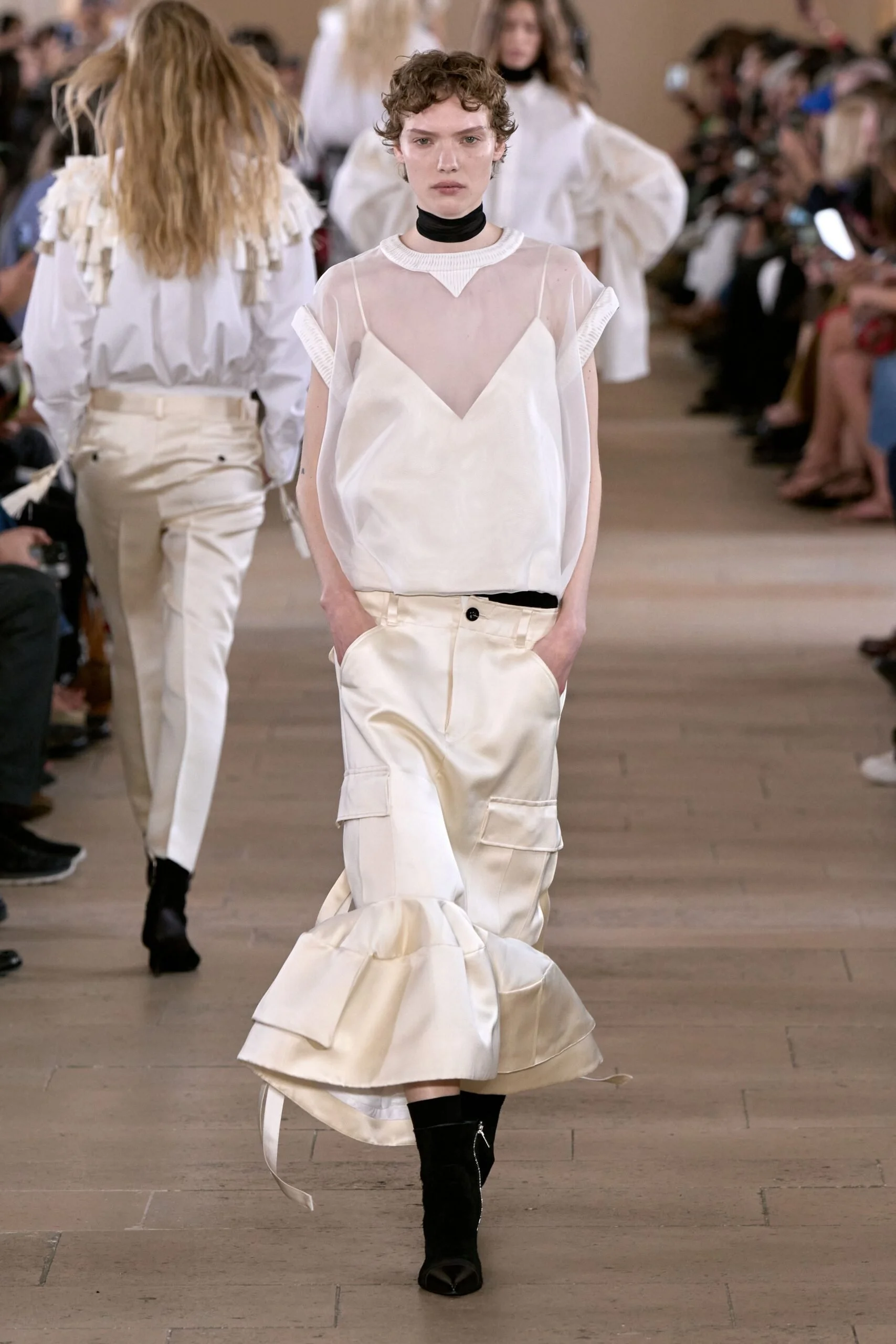
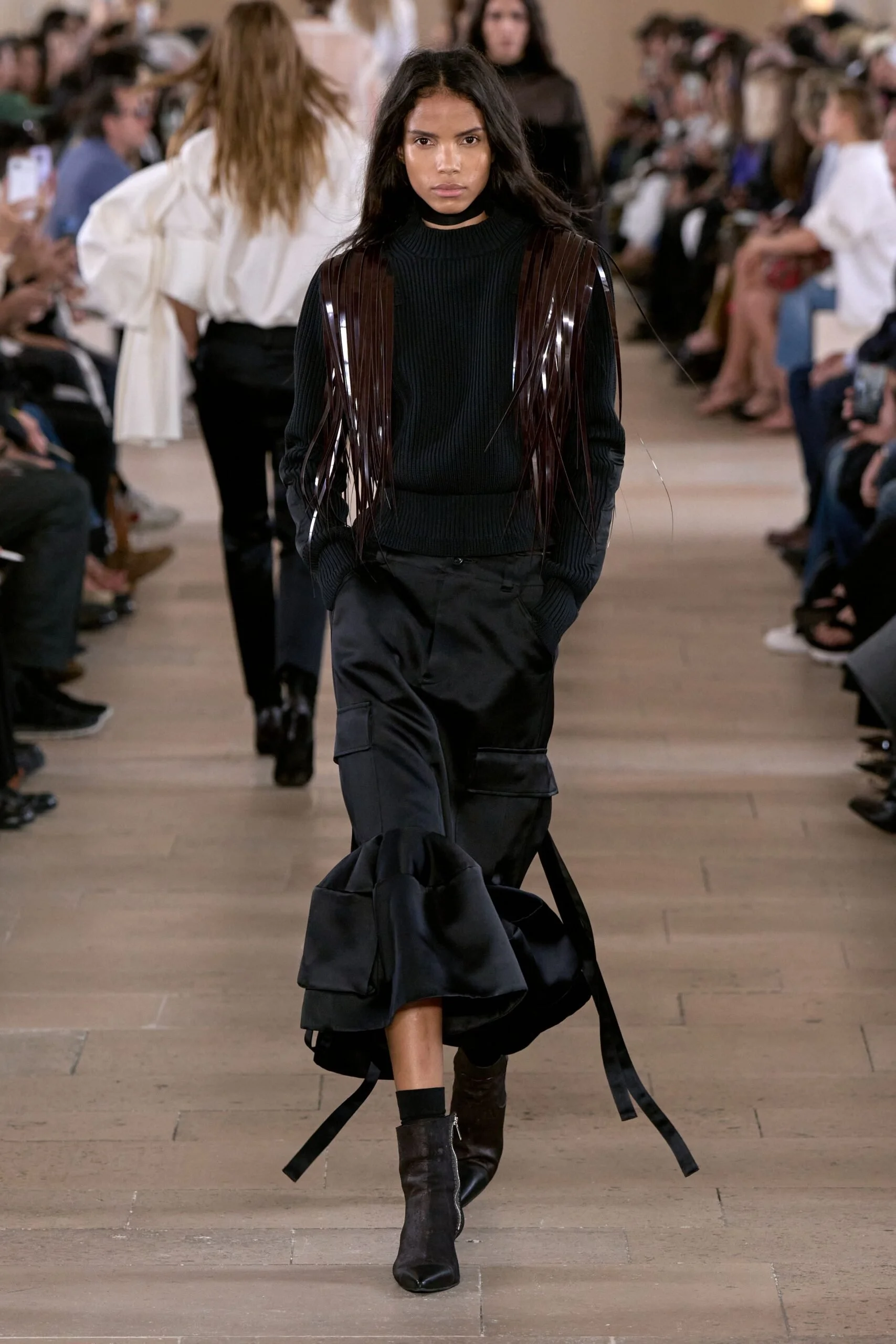
Sacai has always thrived on opposites. This season, hard-wearing denim and precise suiting were placed against chiffons, satins and softer, more decorative fabrics. Military references appeared almost playfully, with pompons standing in for traditional epaulettes, while cropped trousers finished with ruffles introduced a slightly historical, almost romantic note. Structured jackets and practical outerwear gave the collection its sense of purpose, but delicate details kept disrupting that practicality. These were clothes that looked ready for action, even when their construction was quietly extravagant.
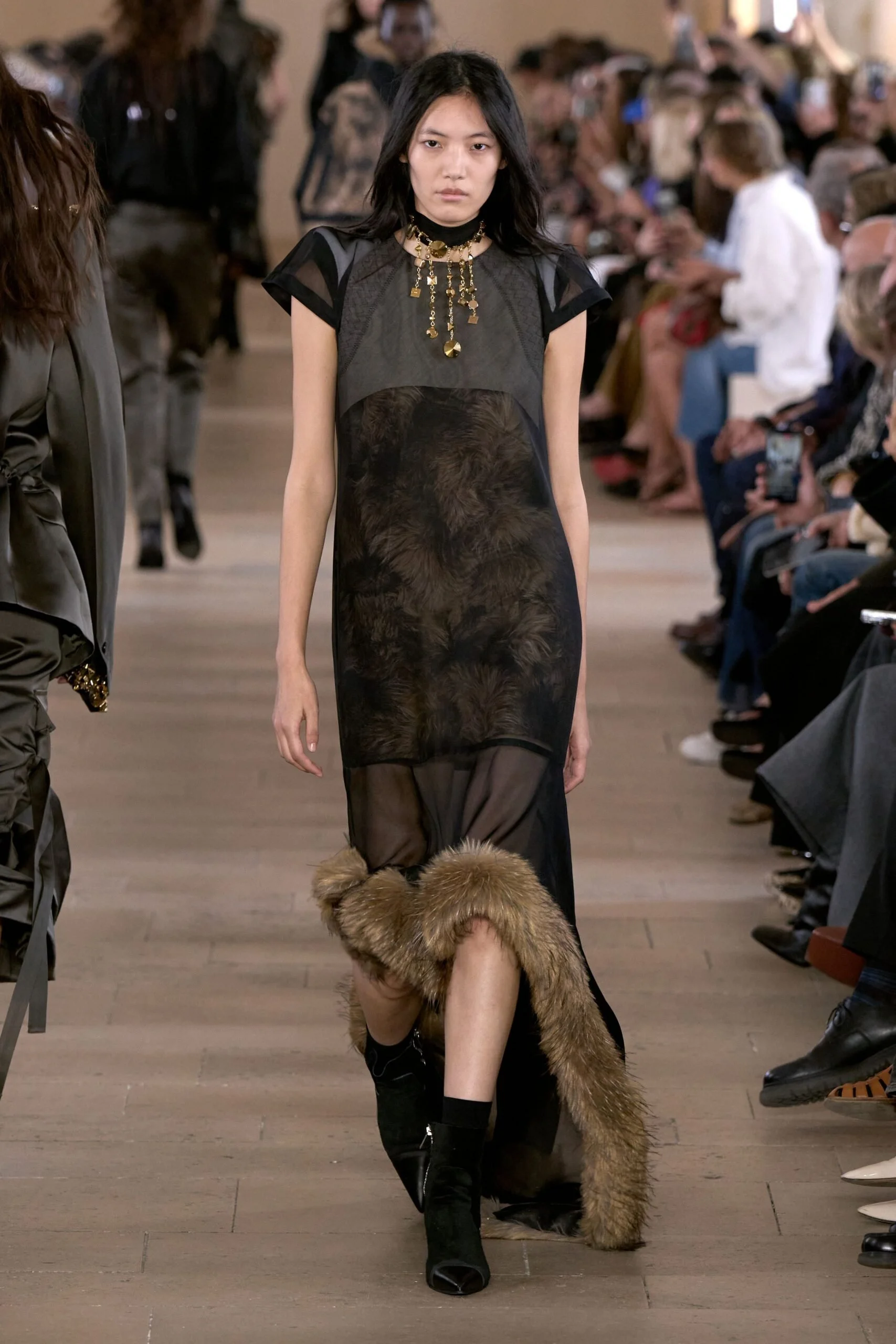
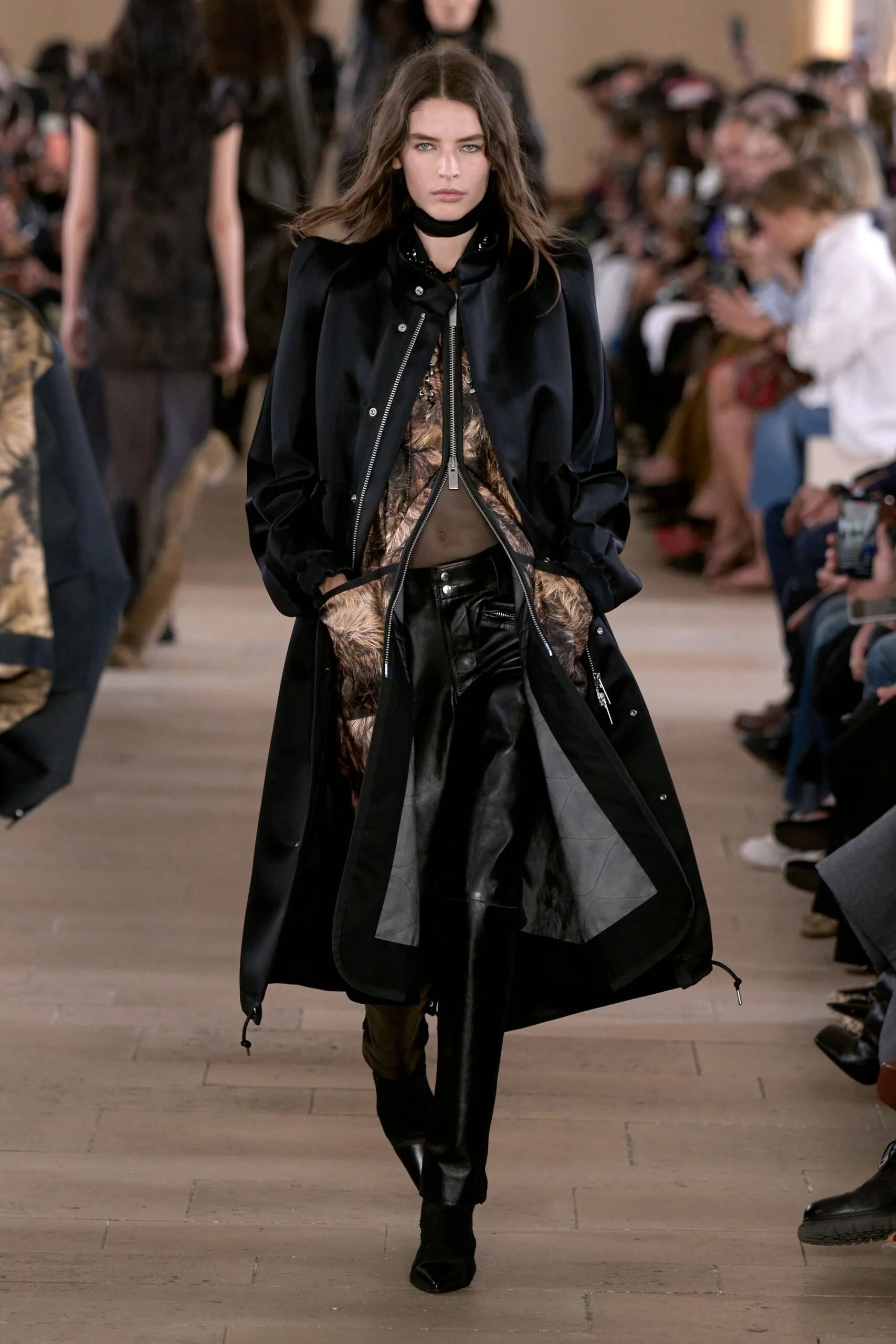
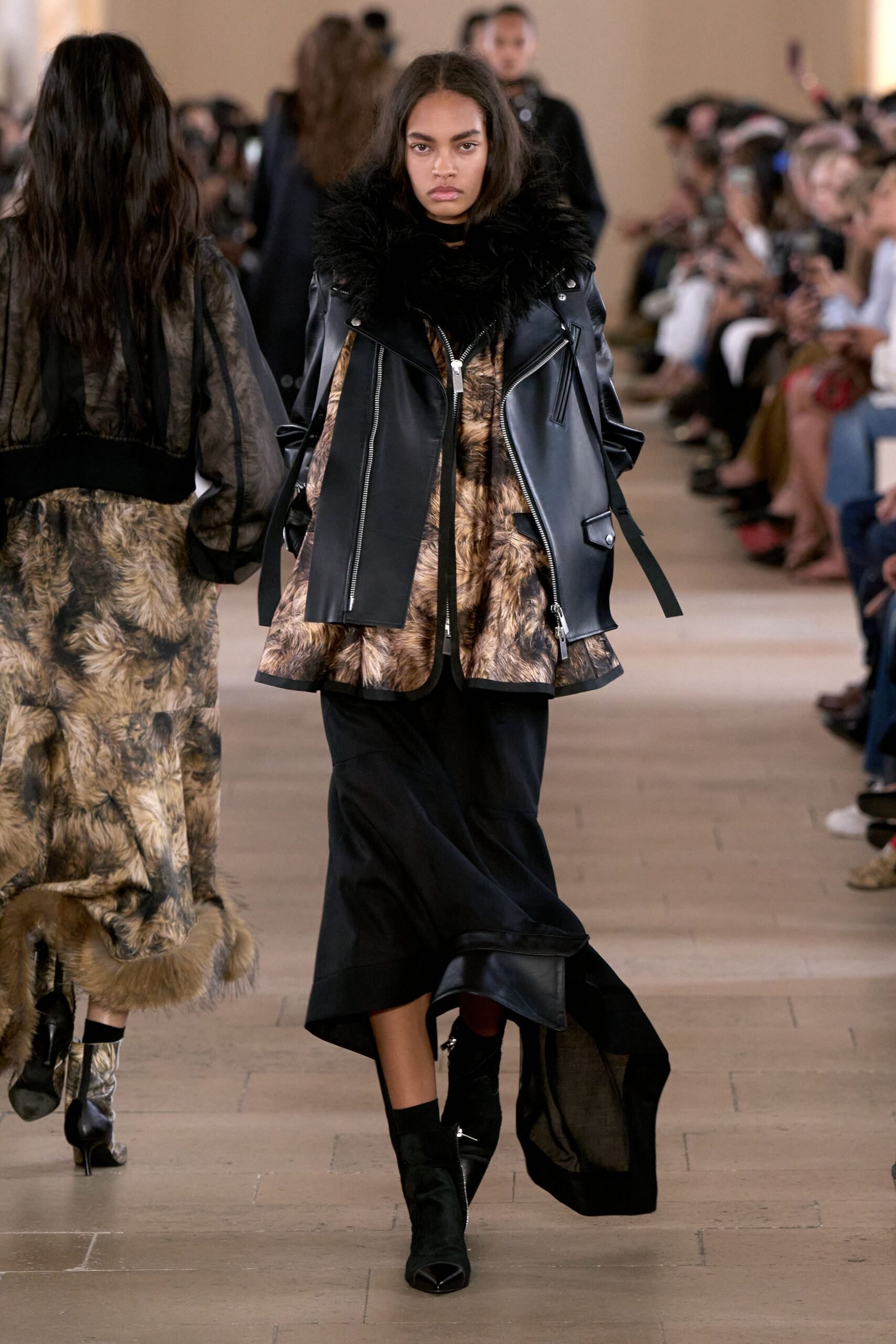
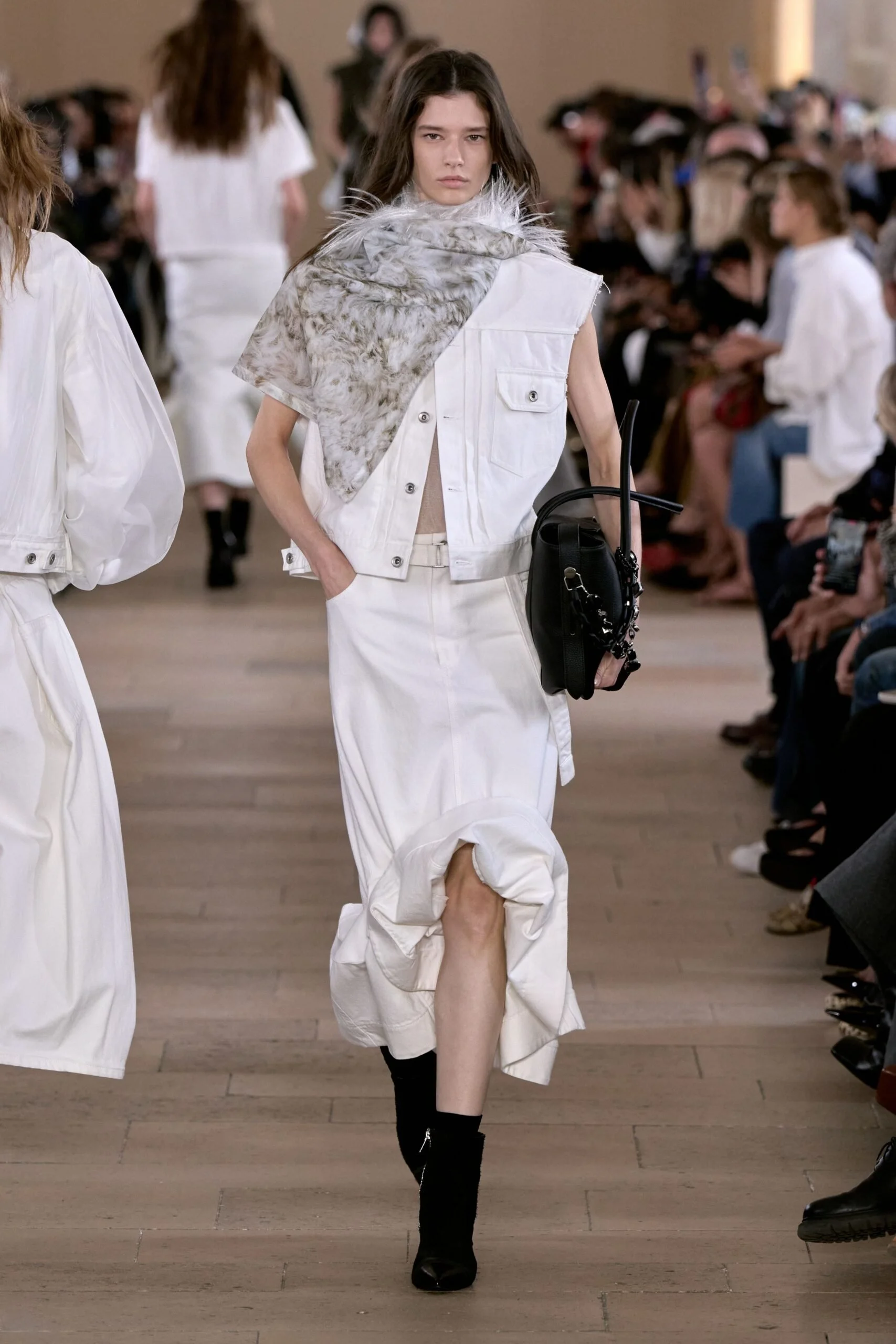
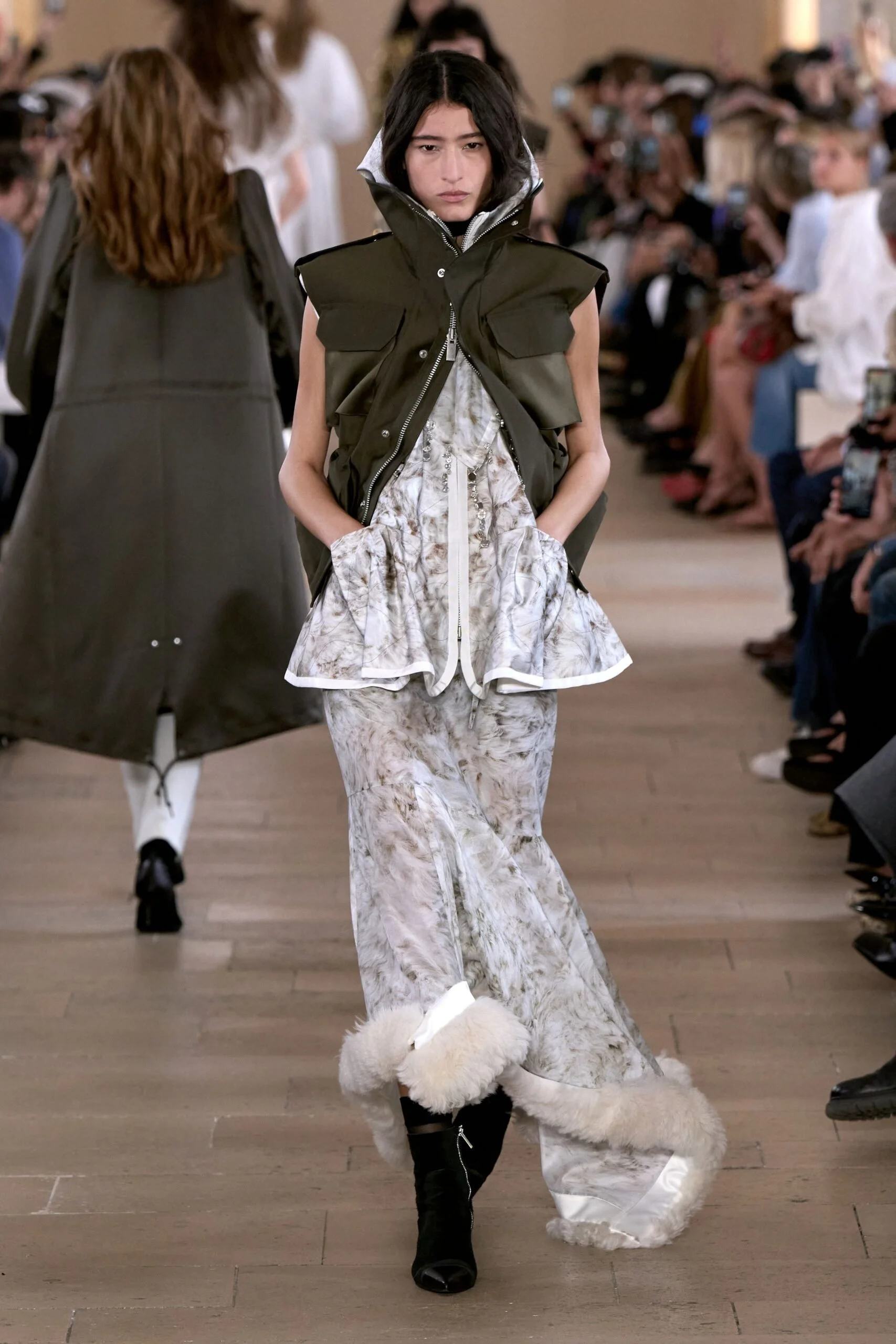
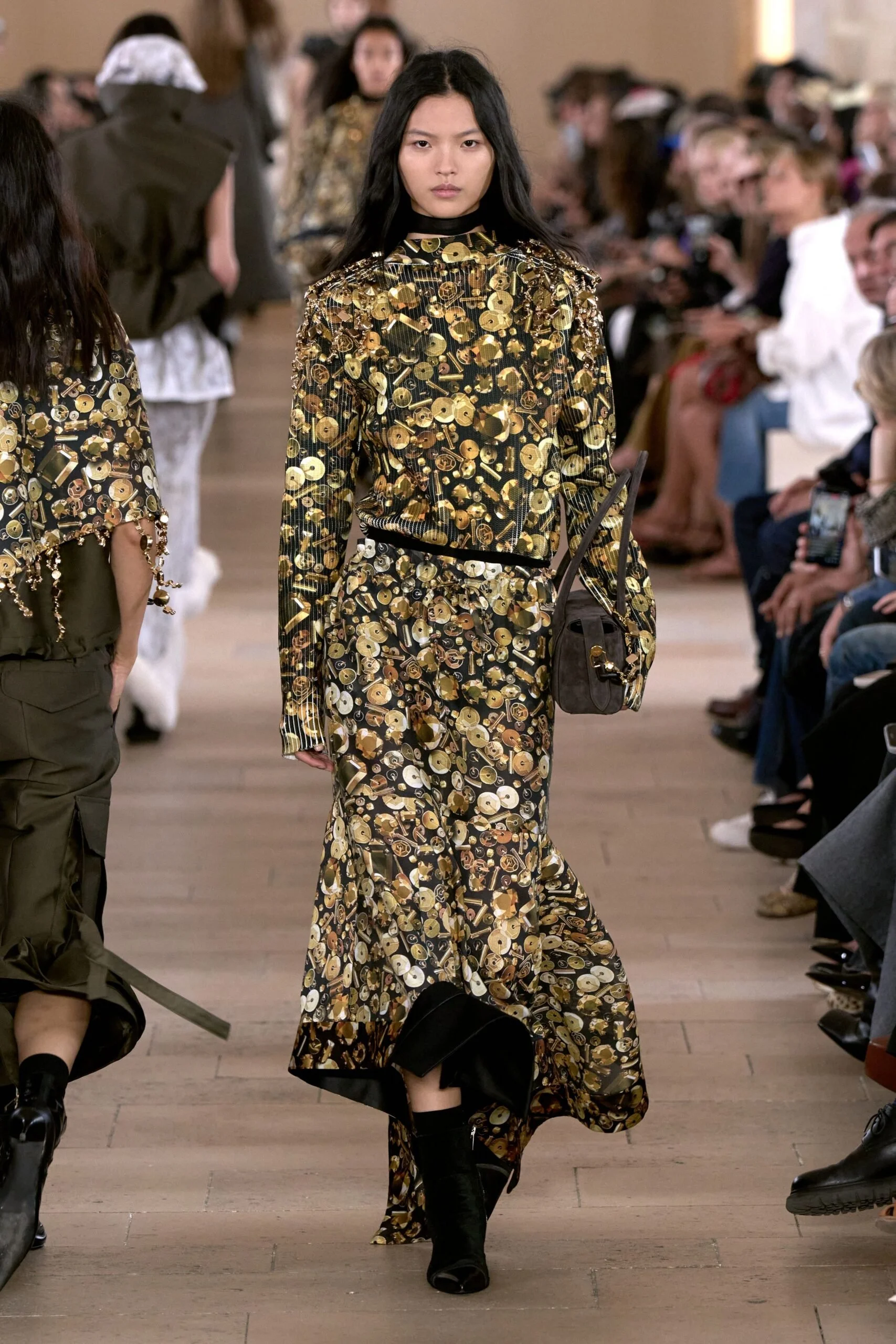
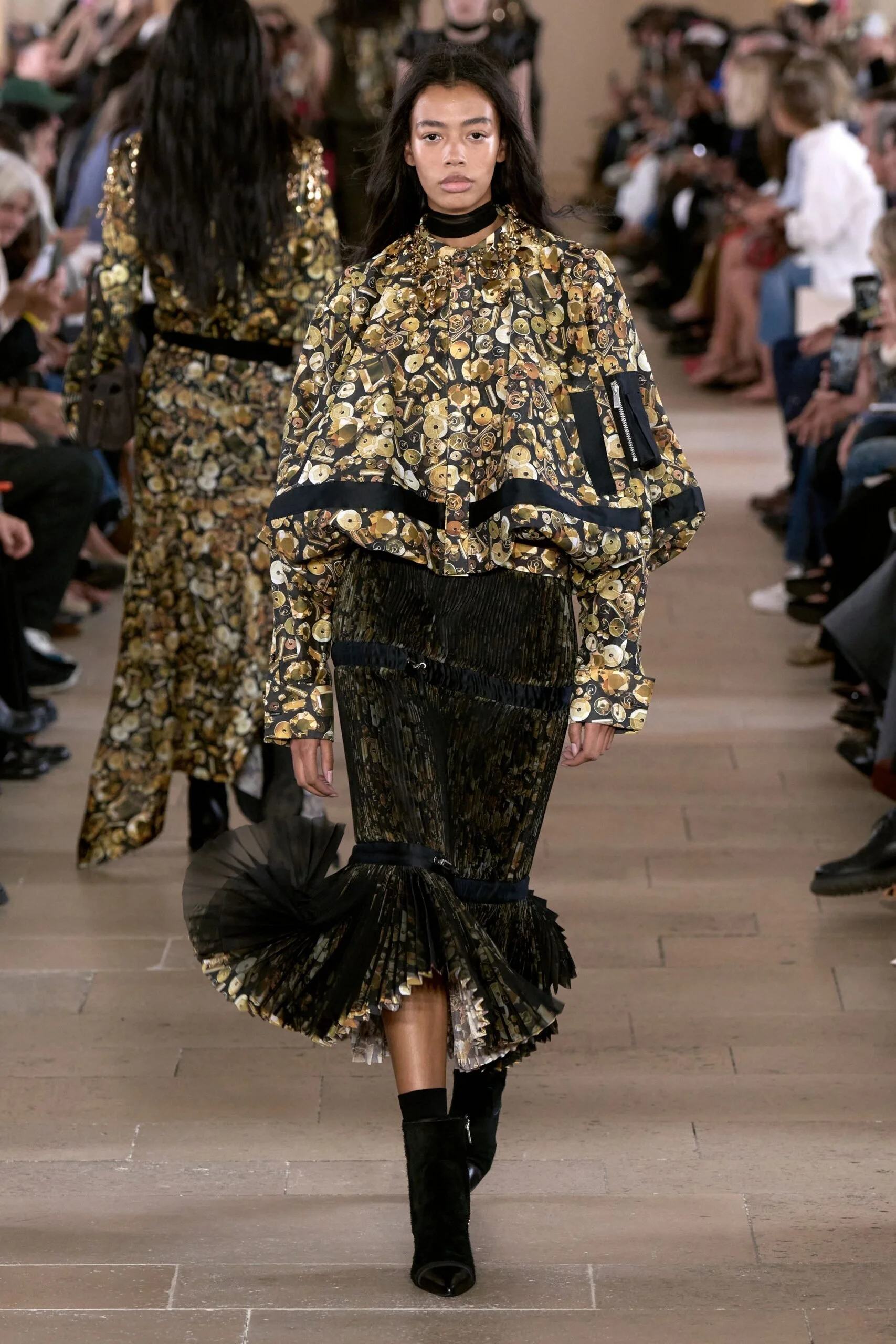
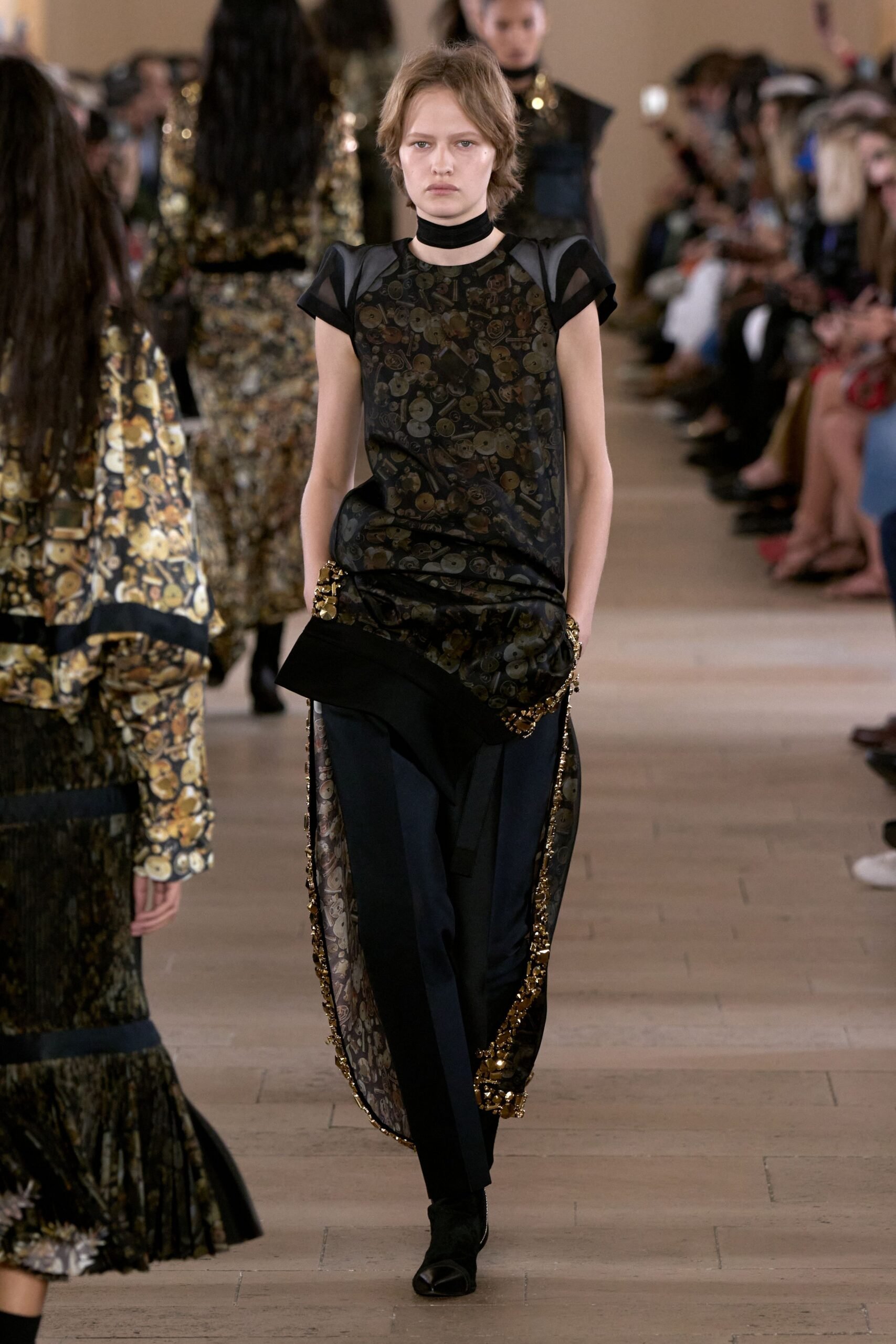
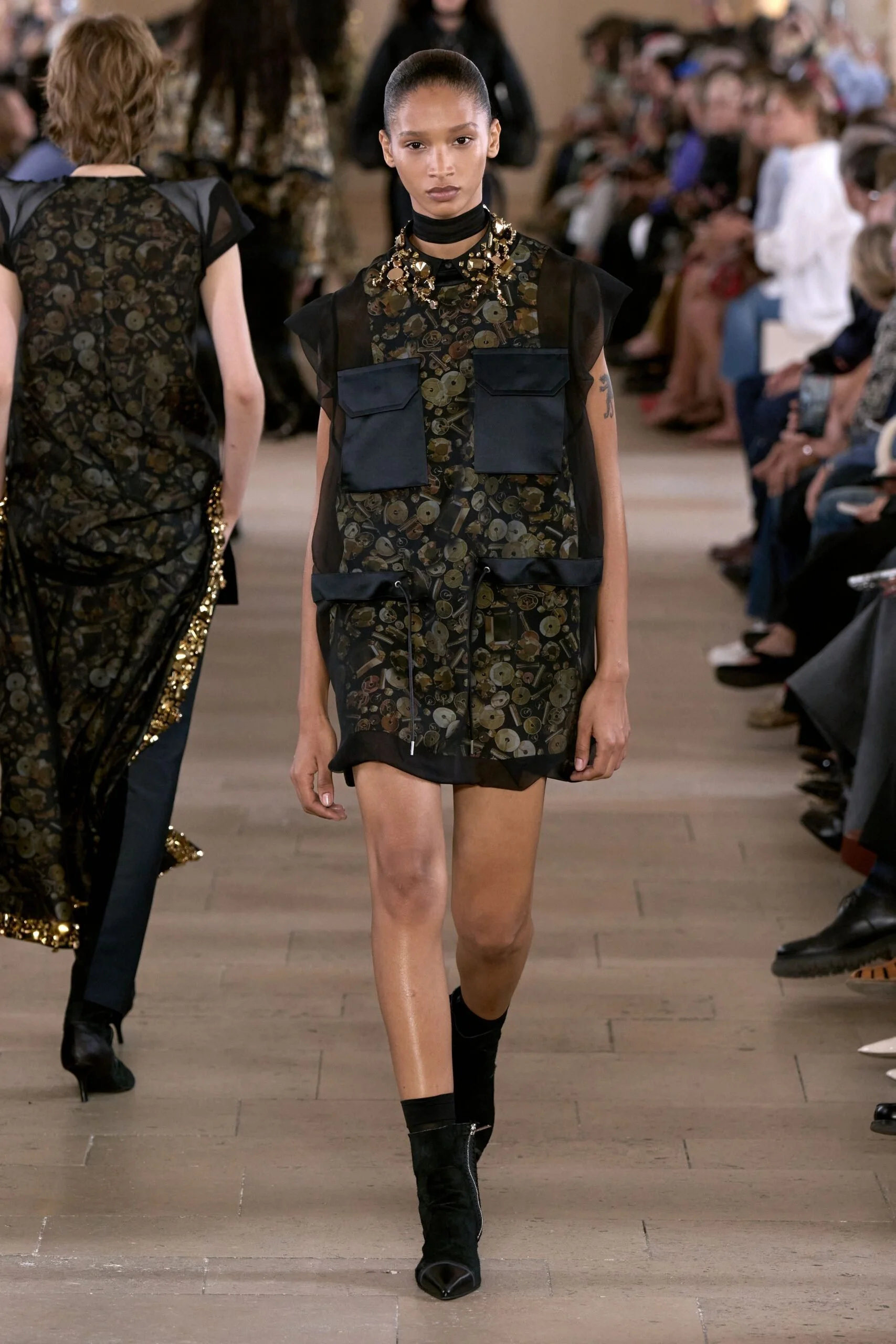
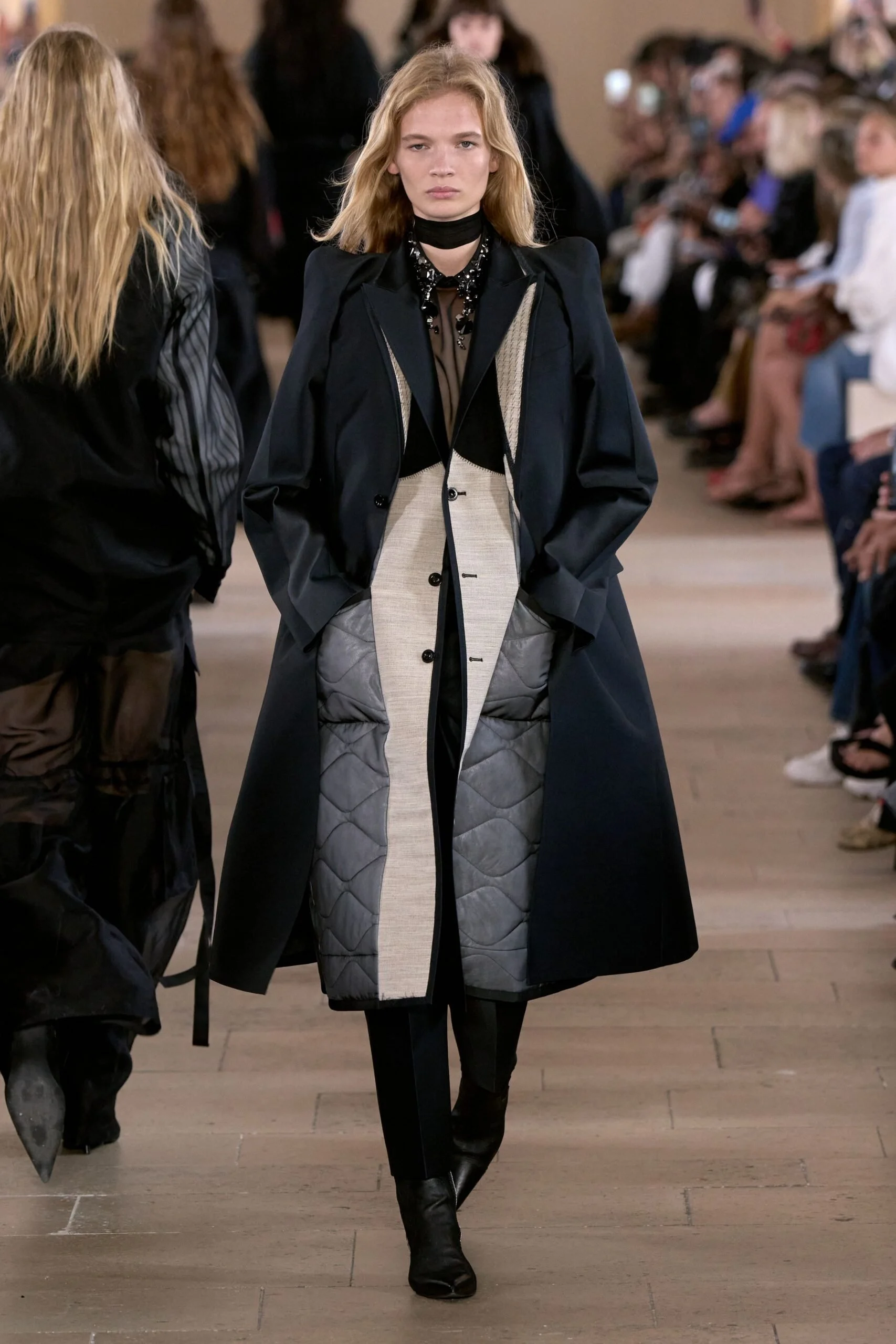
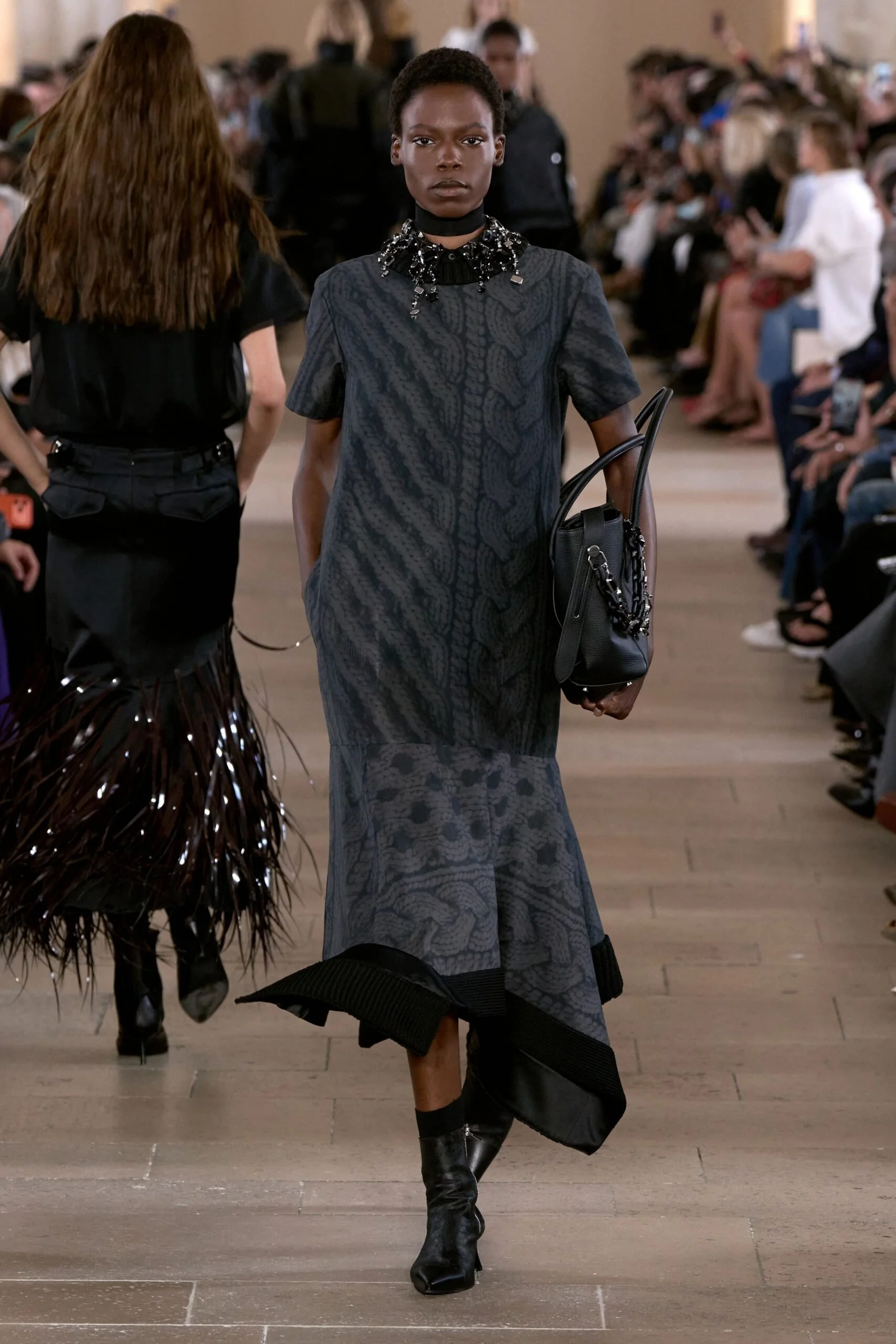
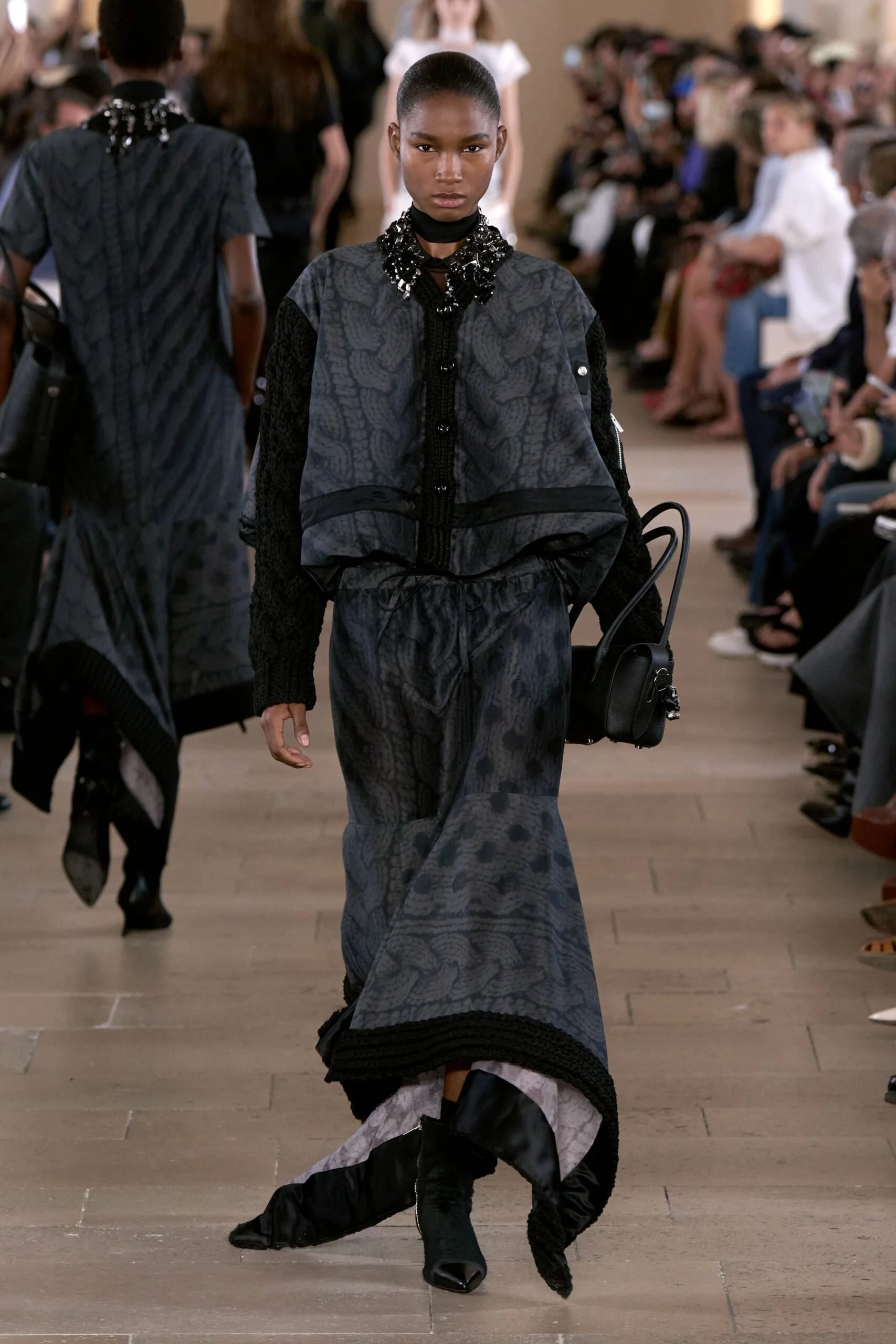
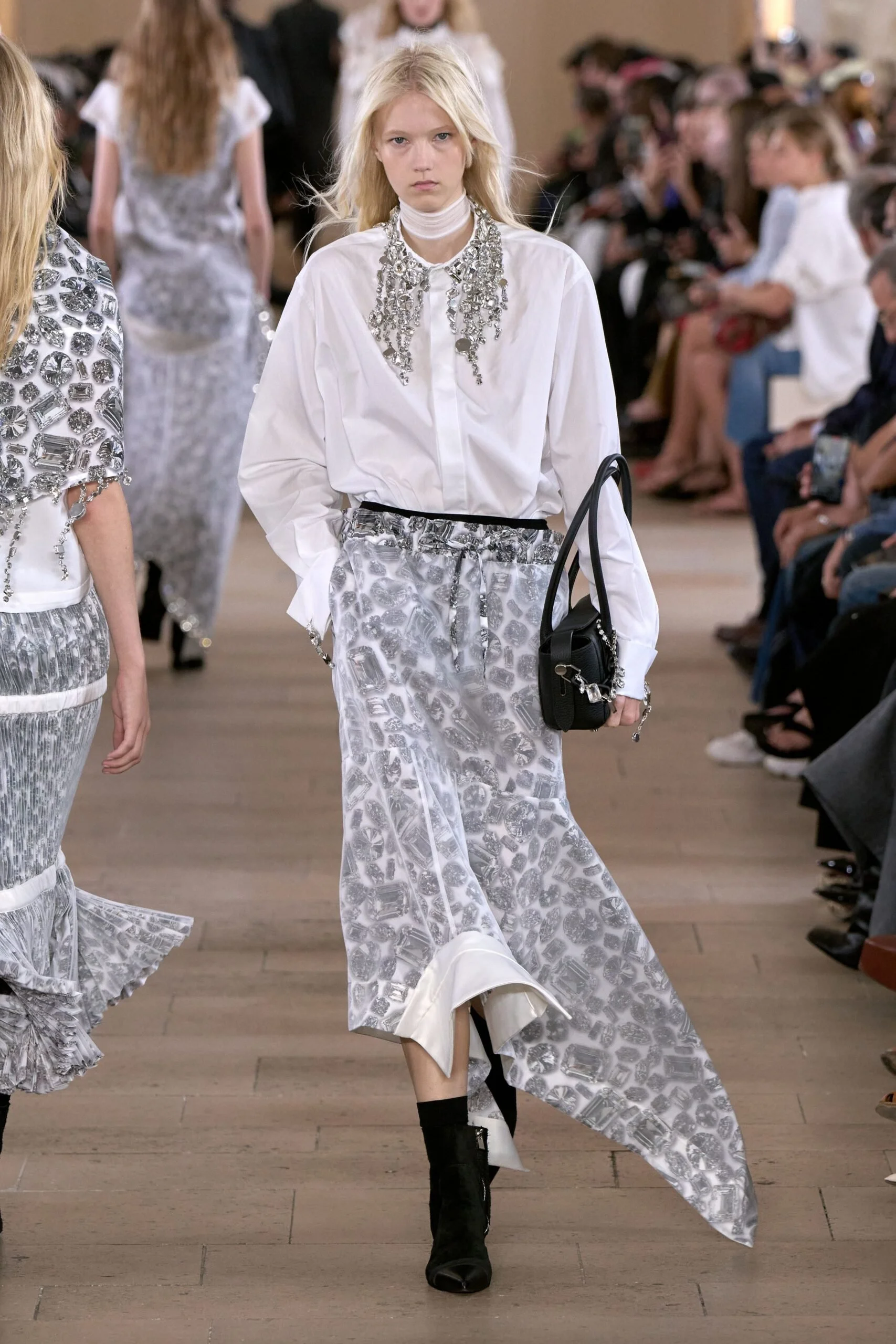
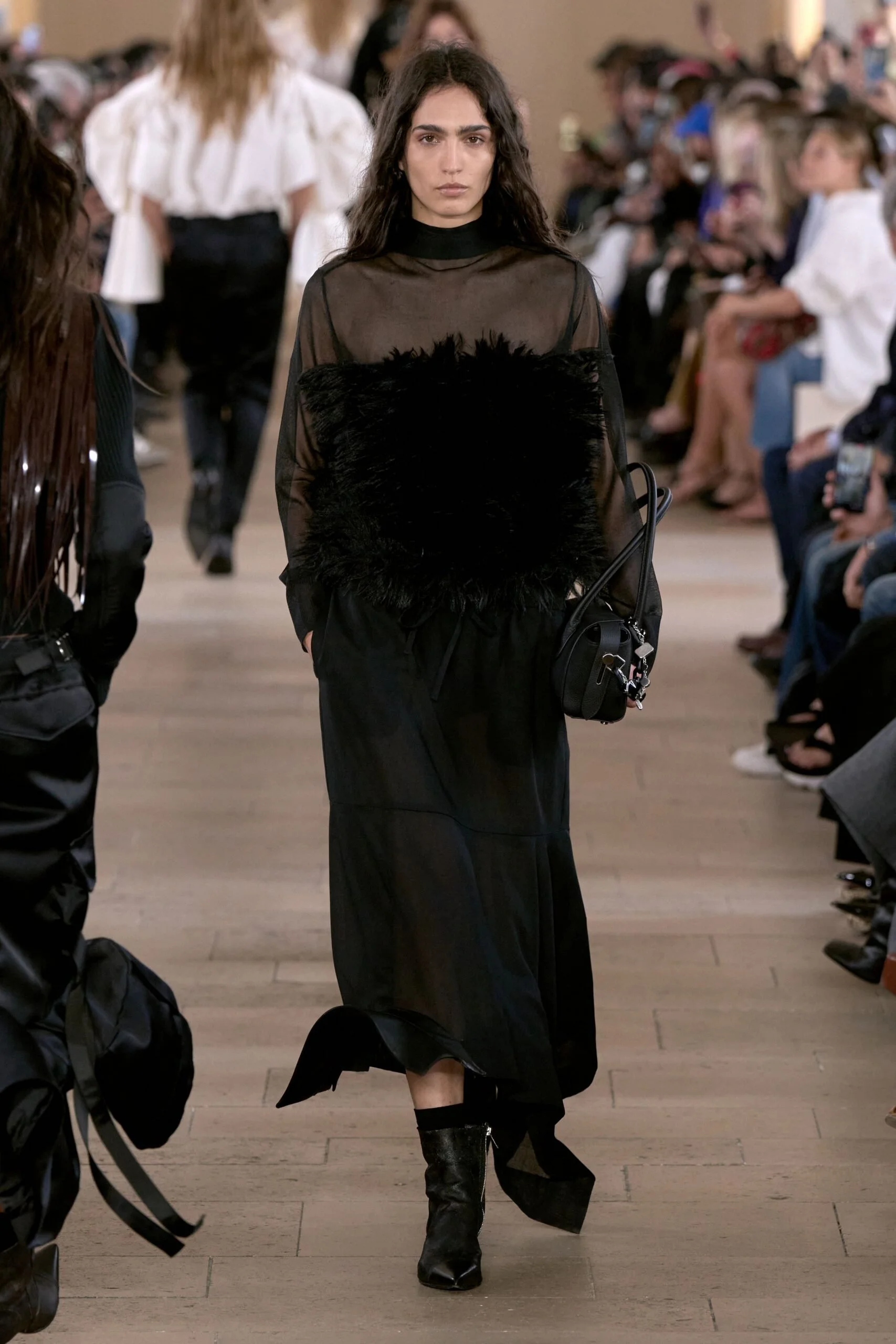
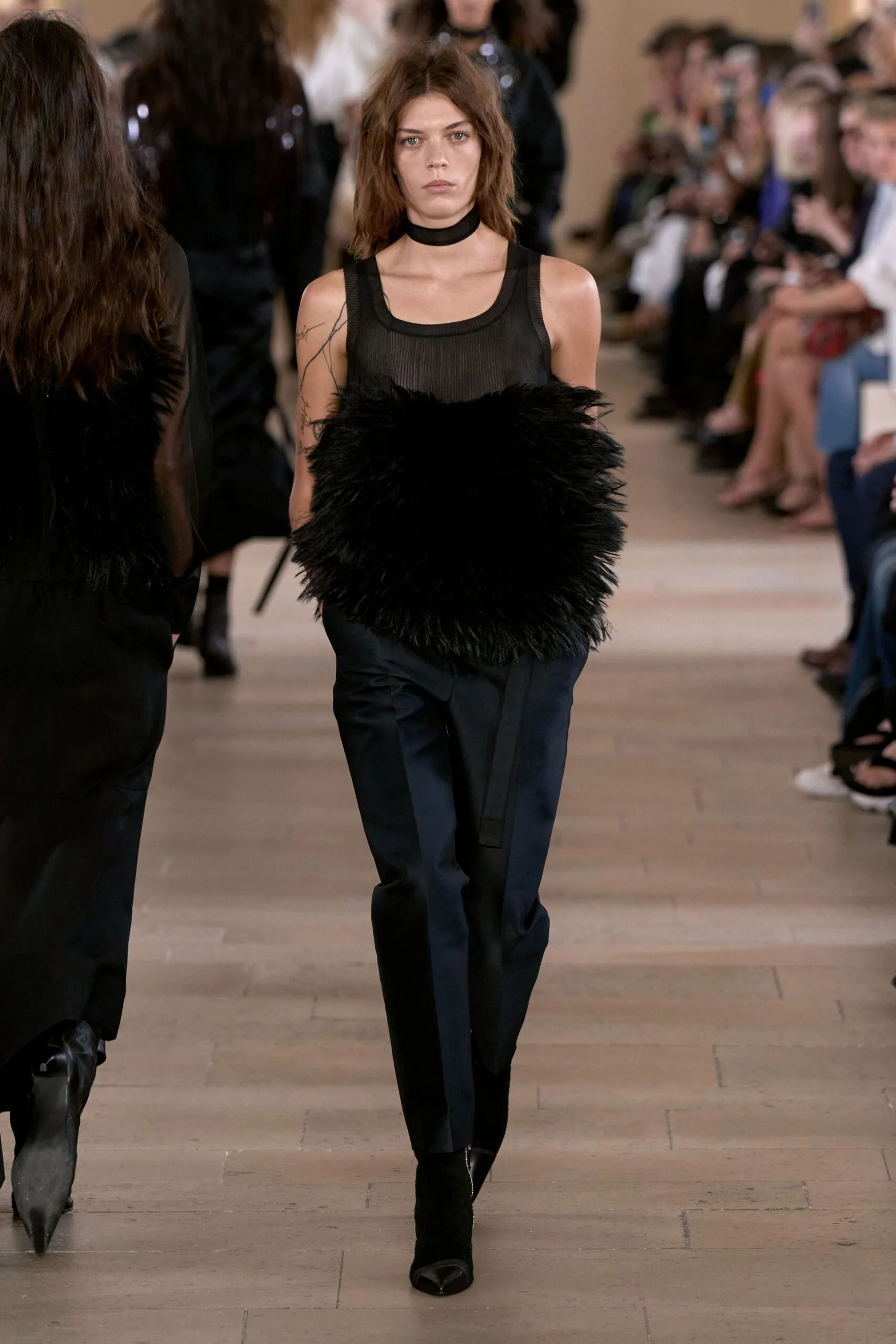
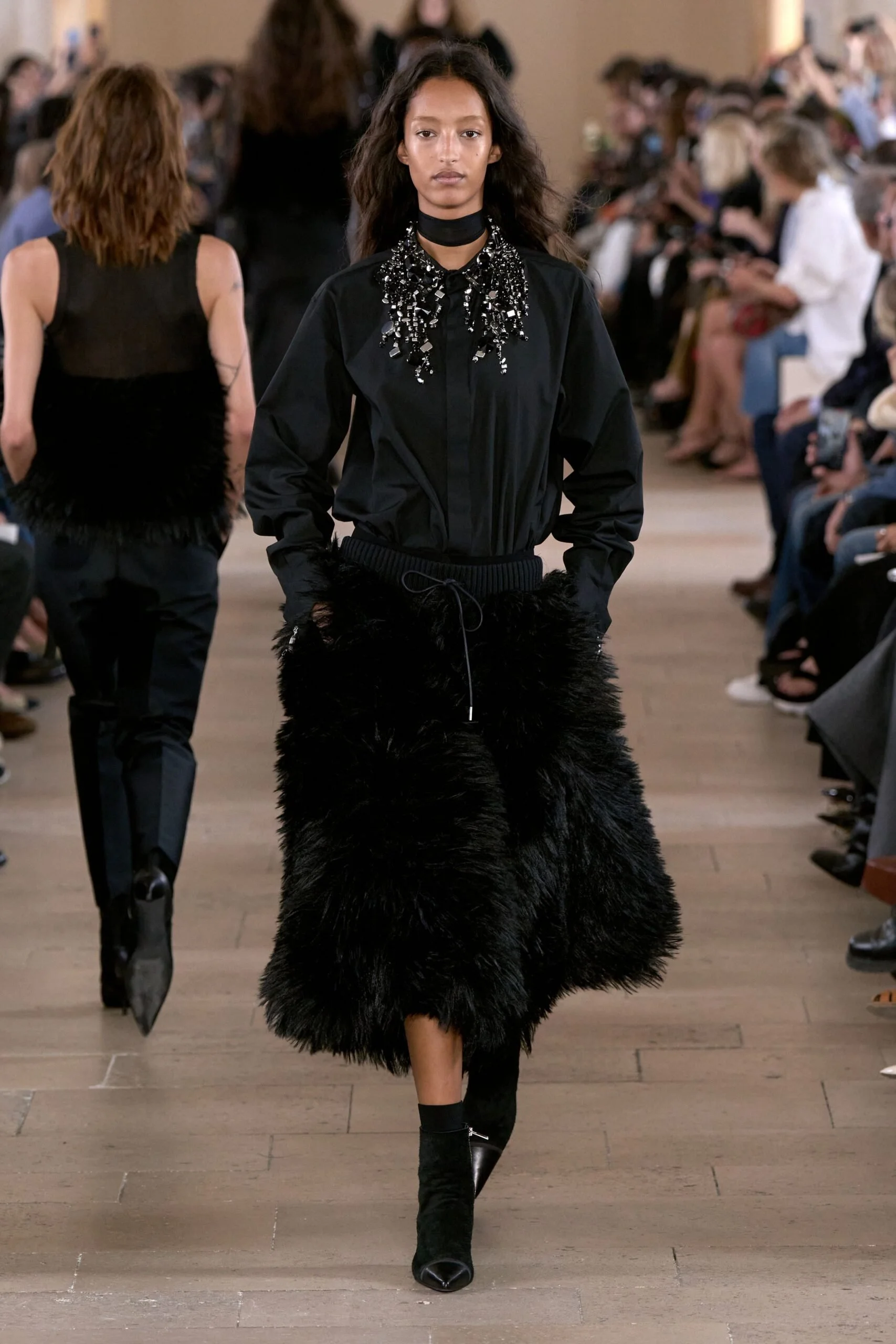
The idea of becoming was made literal in some of the collection’s more inventive pieces. A parka was constructed with two layers that mimicked the process of attaching a lining, turning something usually hidden inside a garment into part of its visual language. Sheer outer layers revealed the structures beneath them, while loose sequins and rhinestones were transformed into trims, panels and embellishments. Fur prints and motifs resembling trays scattered with glittering stones played with the idea that what looks beautiful can also be slightly unruly. For Abe, the contradiction is the point: human beings contain both sides, and there is no particular reason to disguise either.
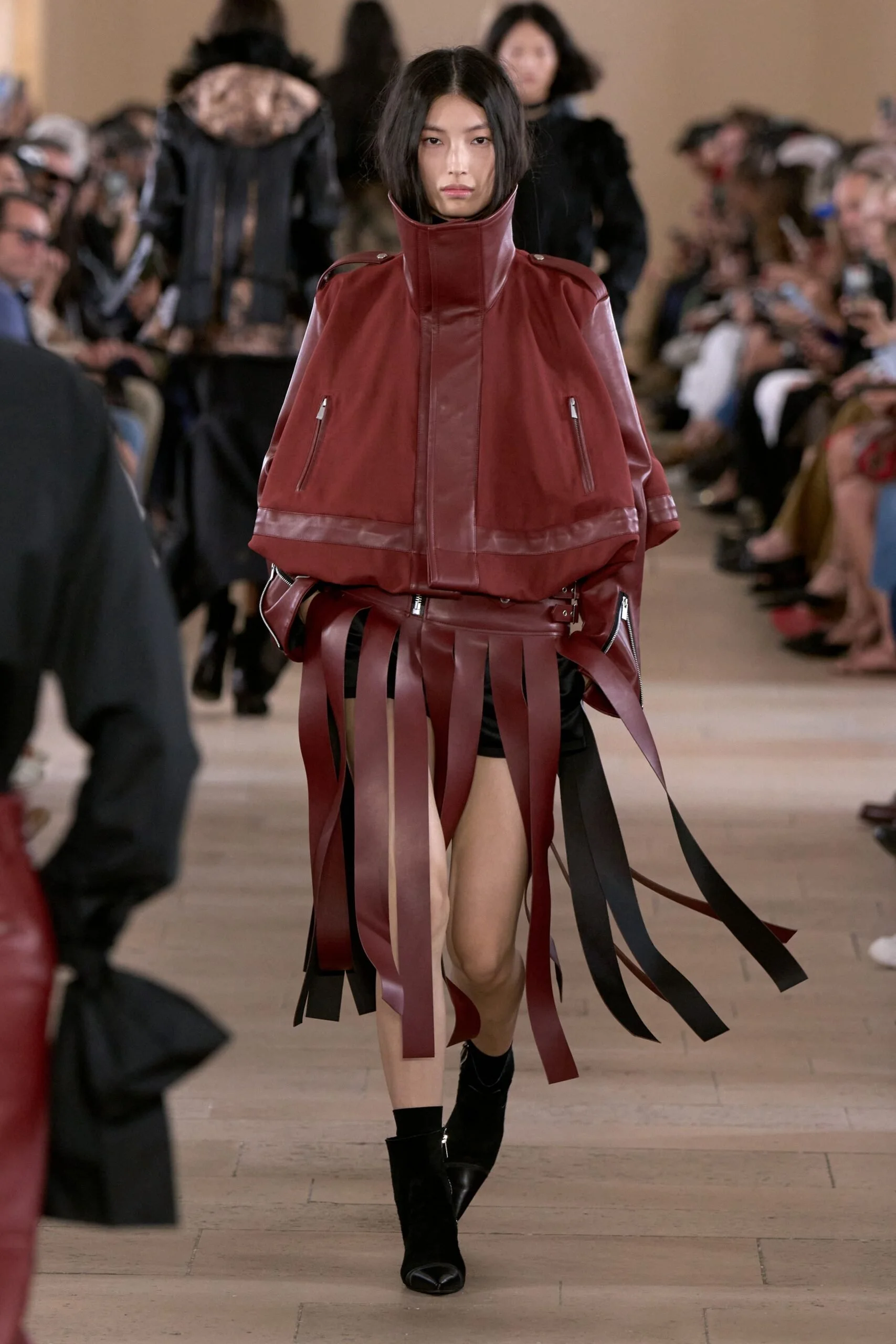
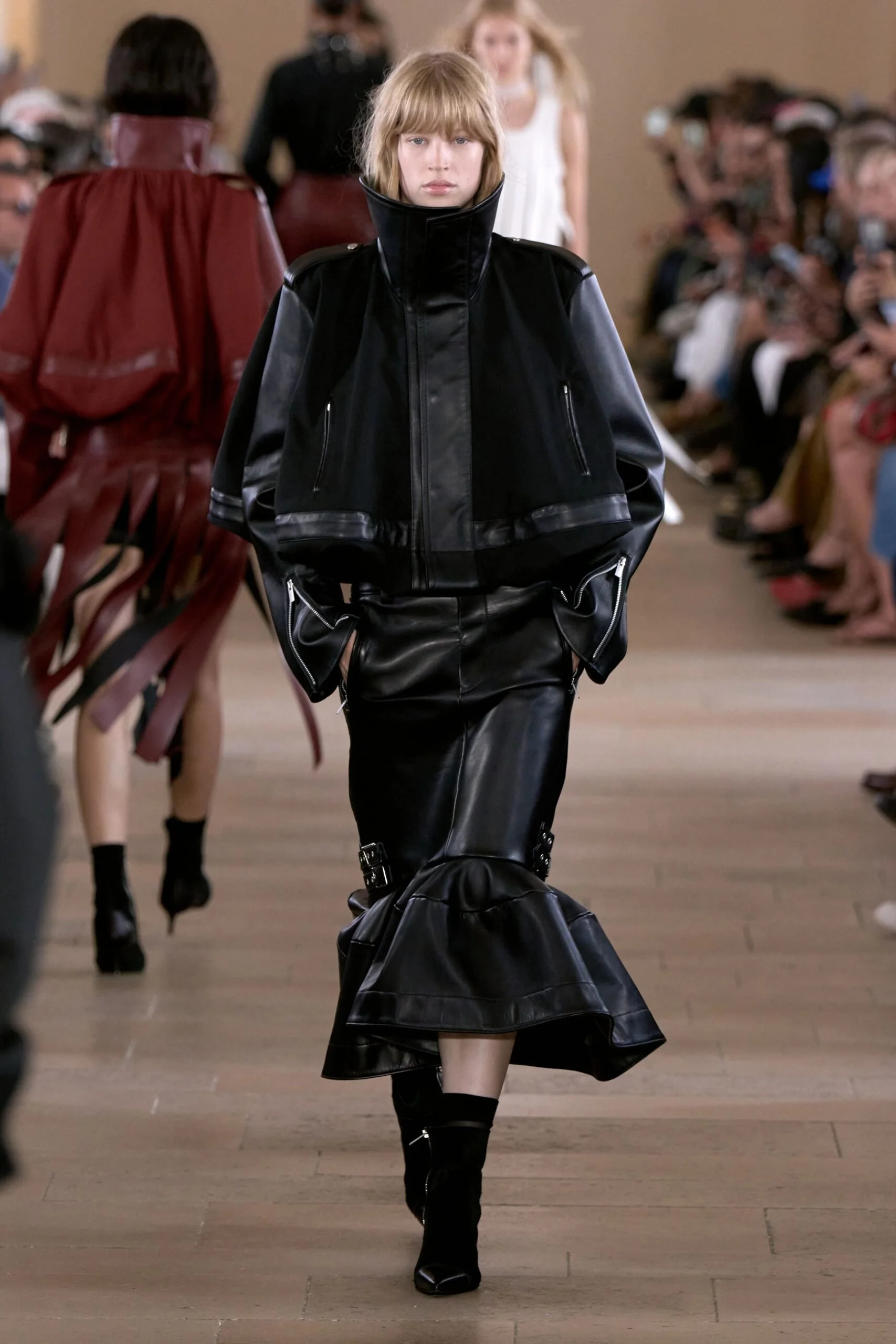
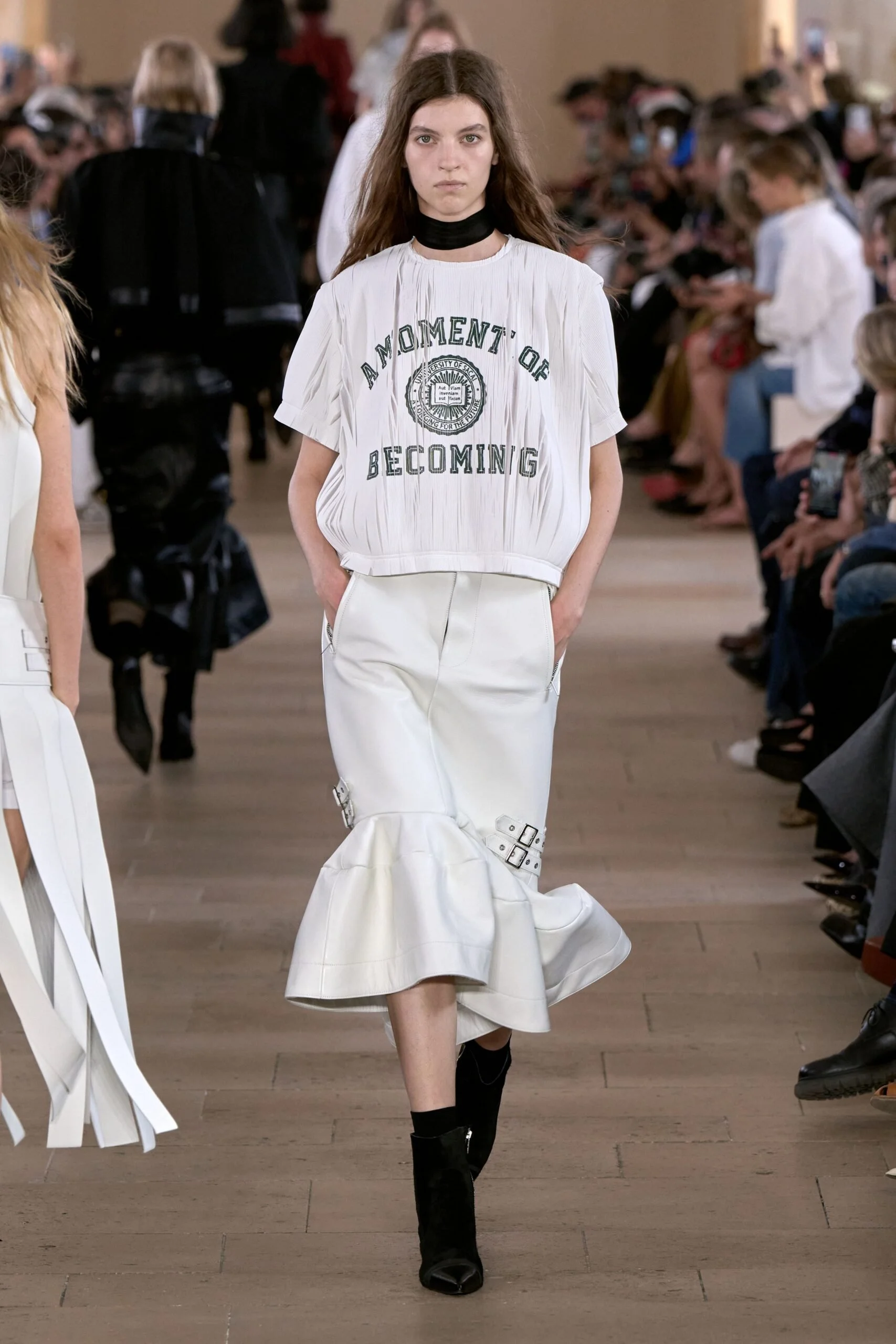
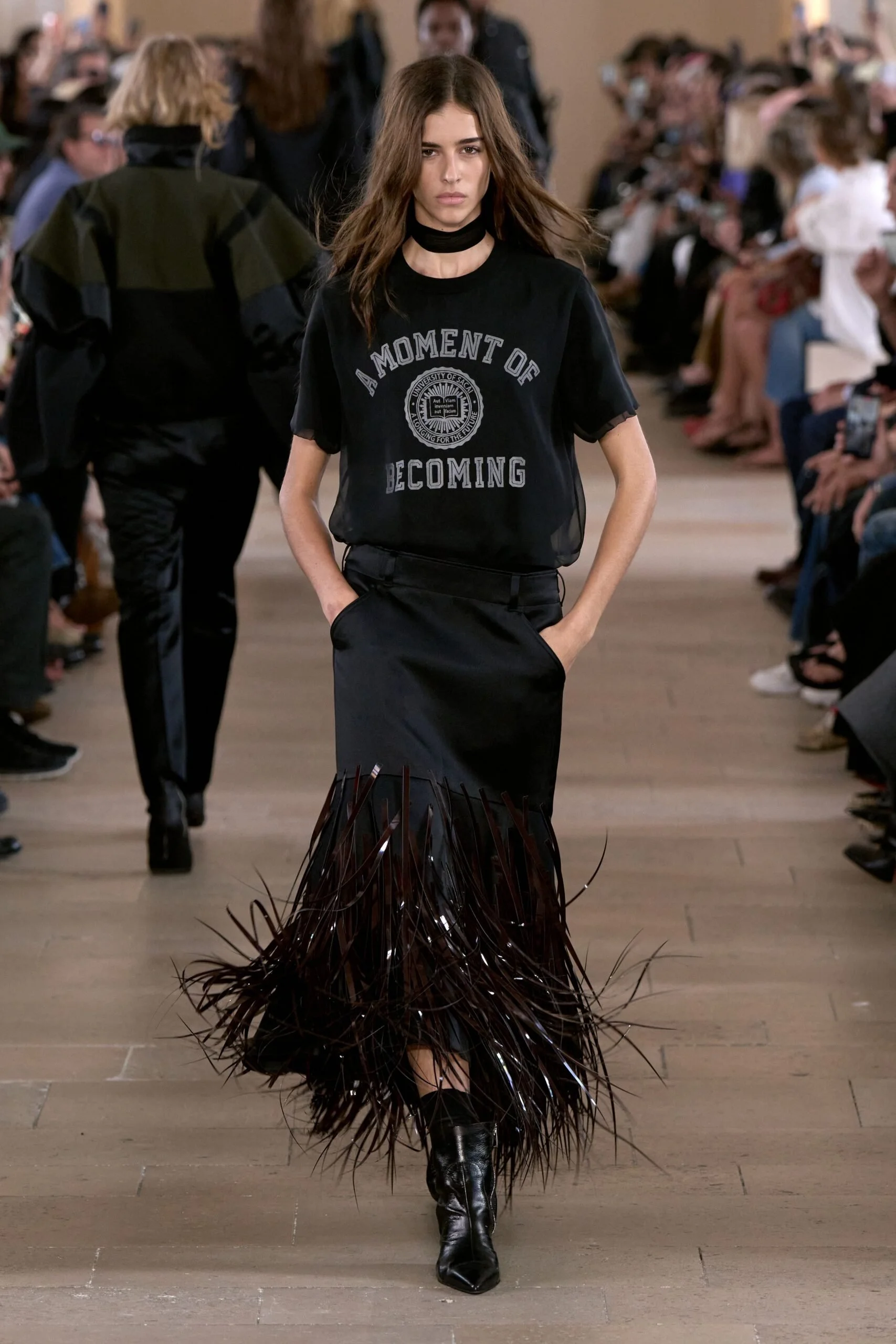
That thinking also appeared in the simpler pieces. A voluminous lampshade jacket with a high collar gave an otherwise practical silhouette an exaggerated shape, while a tightly pleated midi pencil skirt ended in a deliberately energetic kick. Sweatshirts carrying the words “A Moment of Becoming” and a collegiate-style crest offered the collection's thesis in its most direct form, but the clothes themselves were more persuasive. Abe does not need to explain every construction trick when the garment can reveal it for her.
The pleasure of Sacai is increasingly found in this process of discovery. A jacket looks straightforward until its layers begin to separate; a practical piece reveals something fragile; an embellishment becomes part of the construction rather than simply decoration. Spring 2027 continued Abe's long-running conversation between utility and delicacy, but with a particularly human tension running through it. Change, after all, does not always mean leaving one thing behind for another. Sometimes it means allowing contradictory versions of ourselves to exist at the same time. Sacai has always understood that clothes can do exactly that.