Louis Vuitton Spring 2027
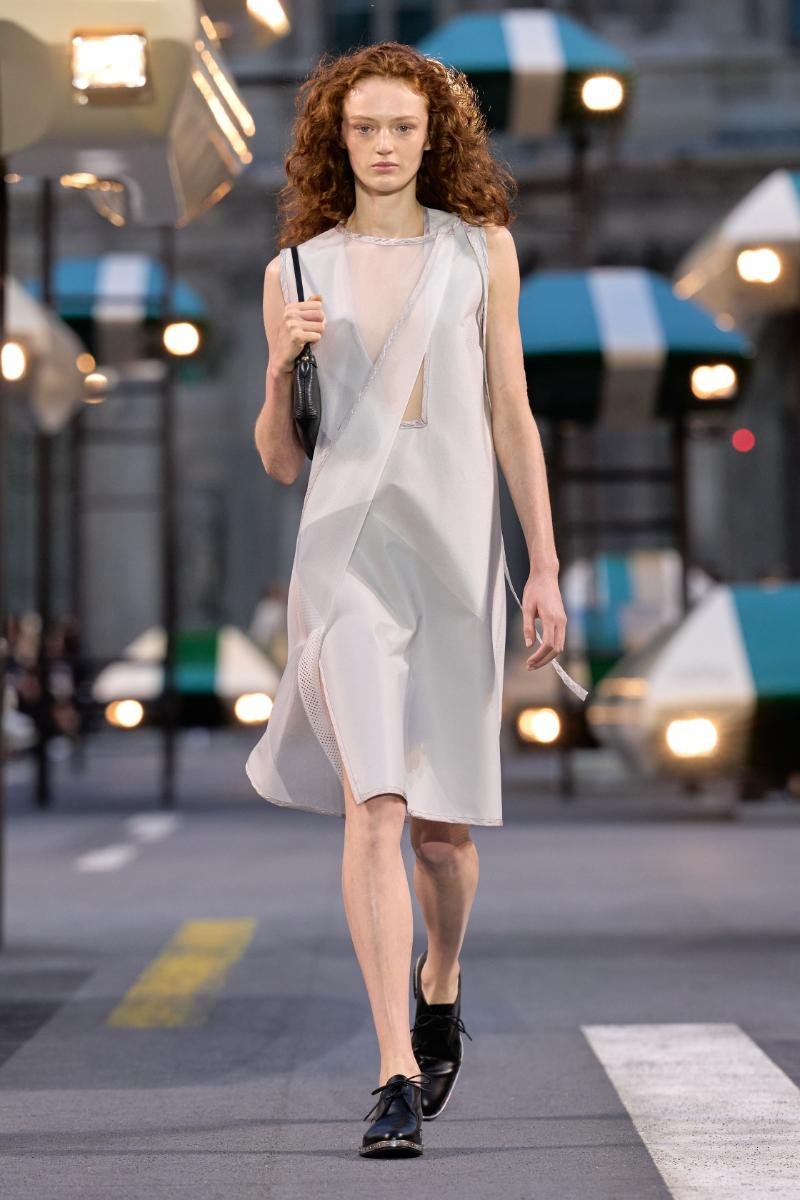
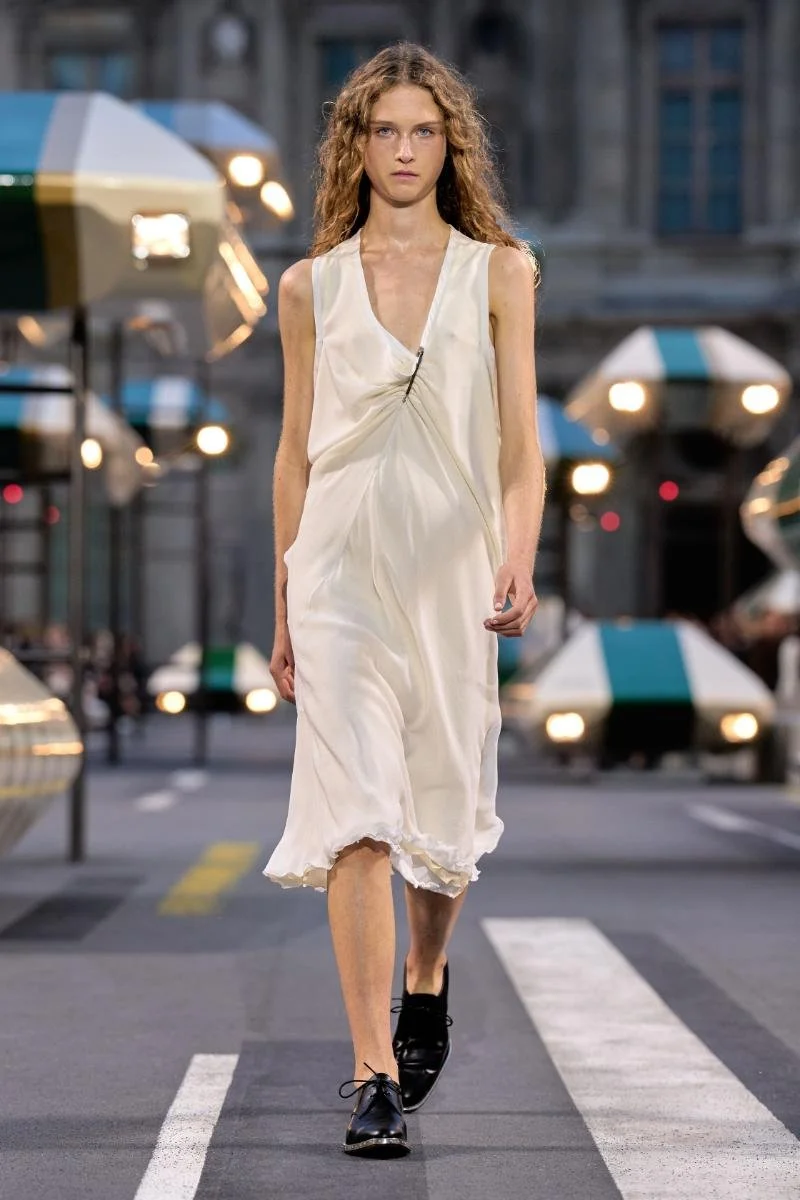
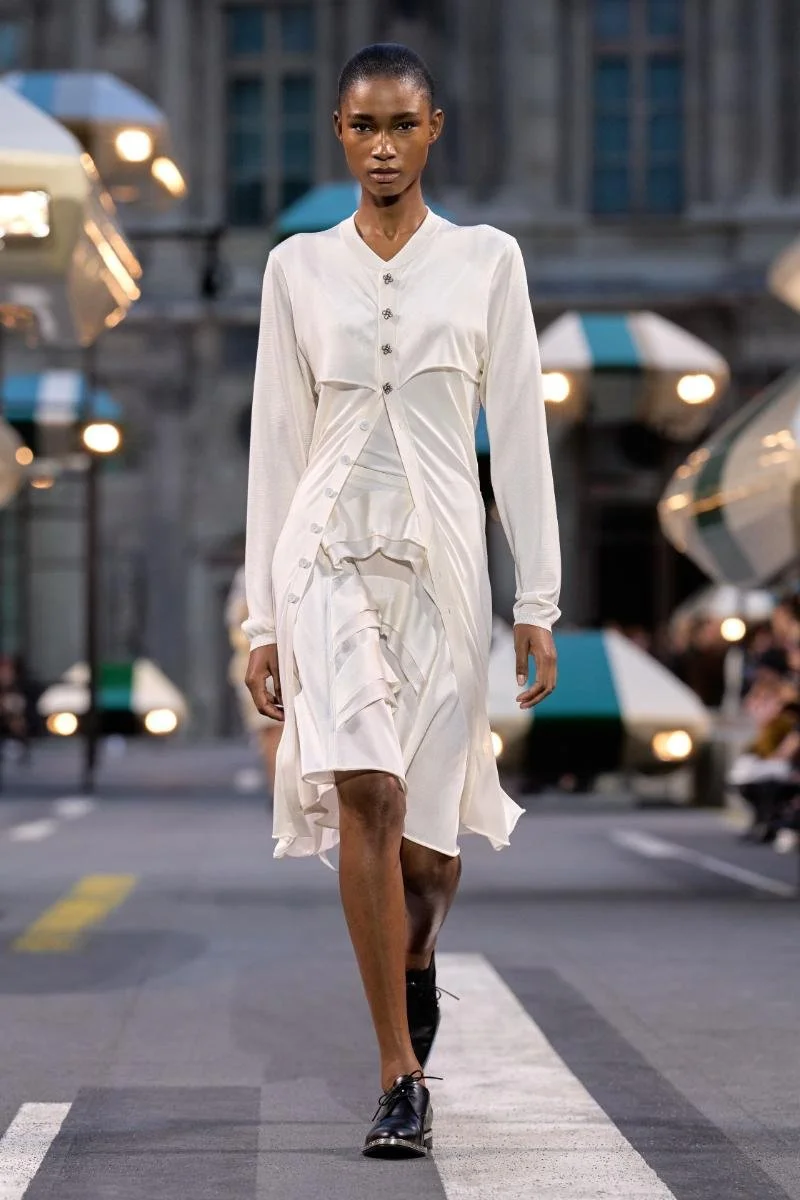
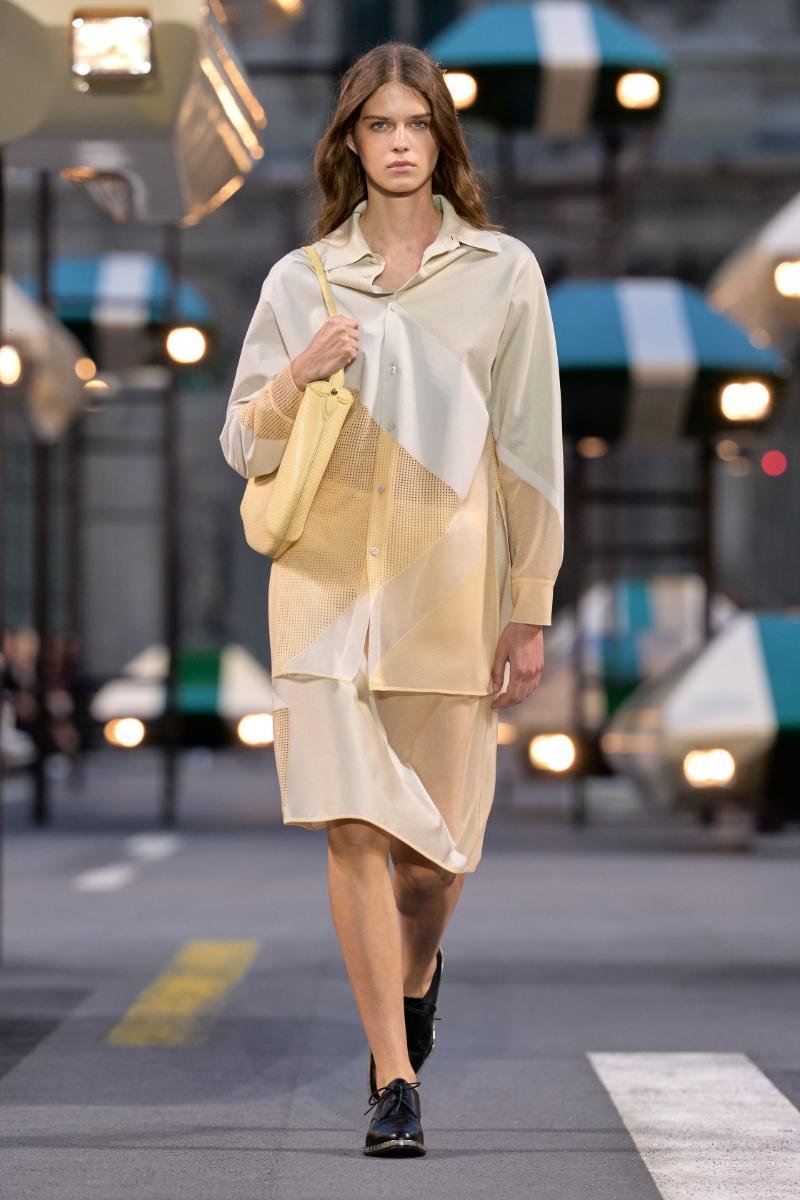
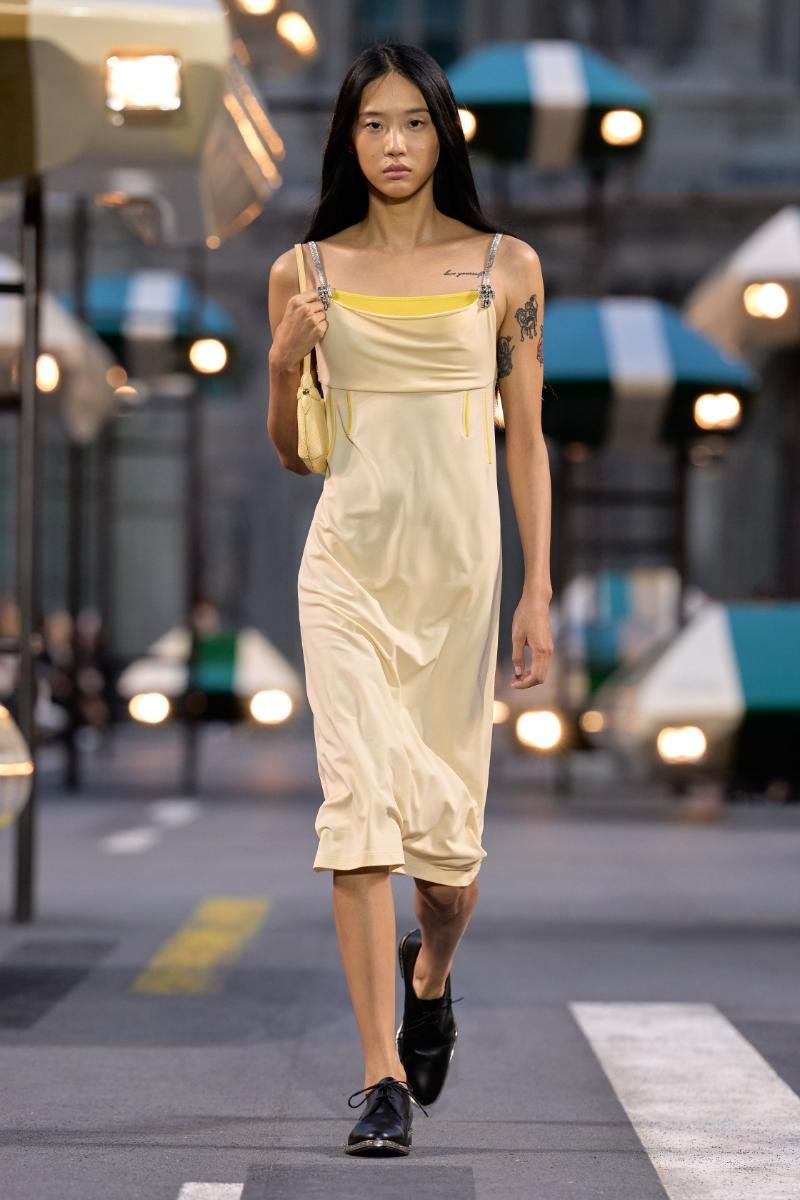
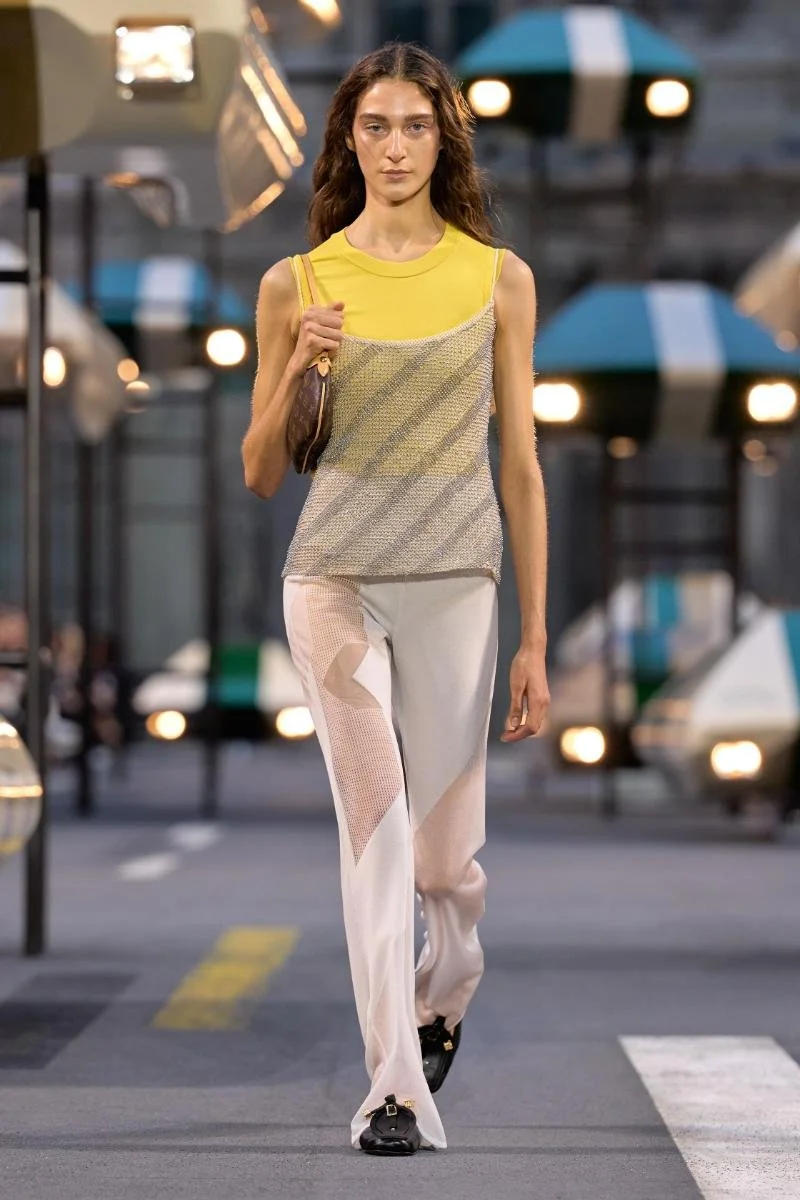
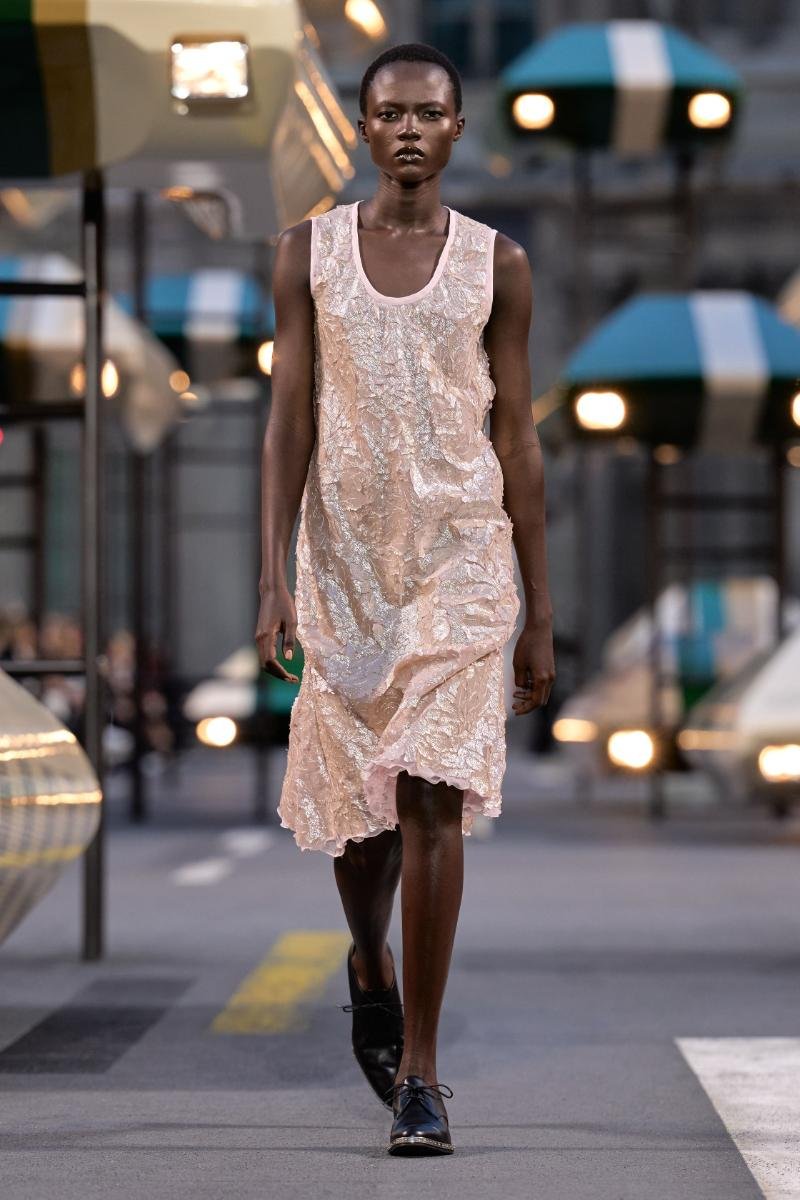
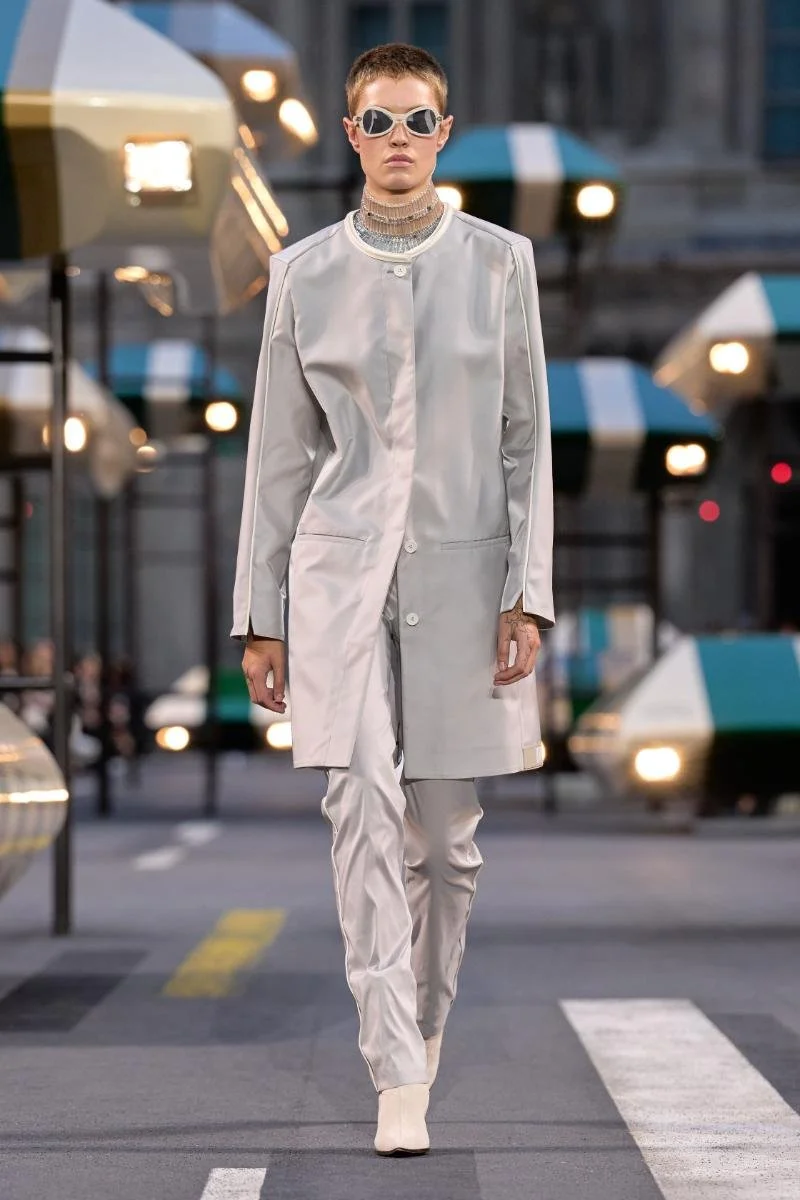
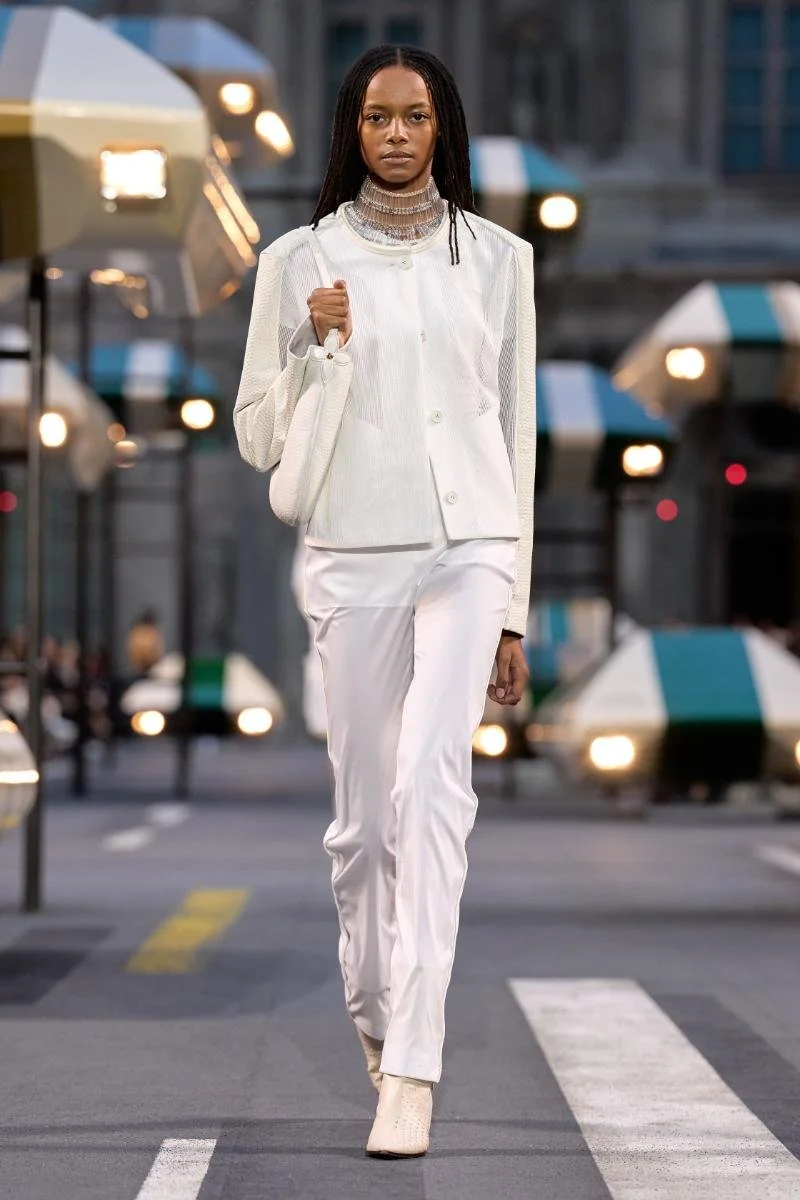
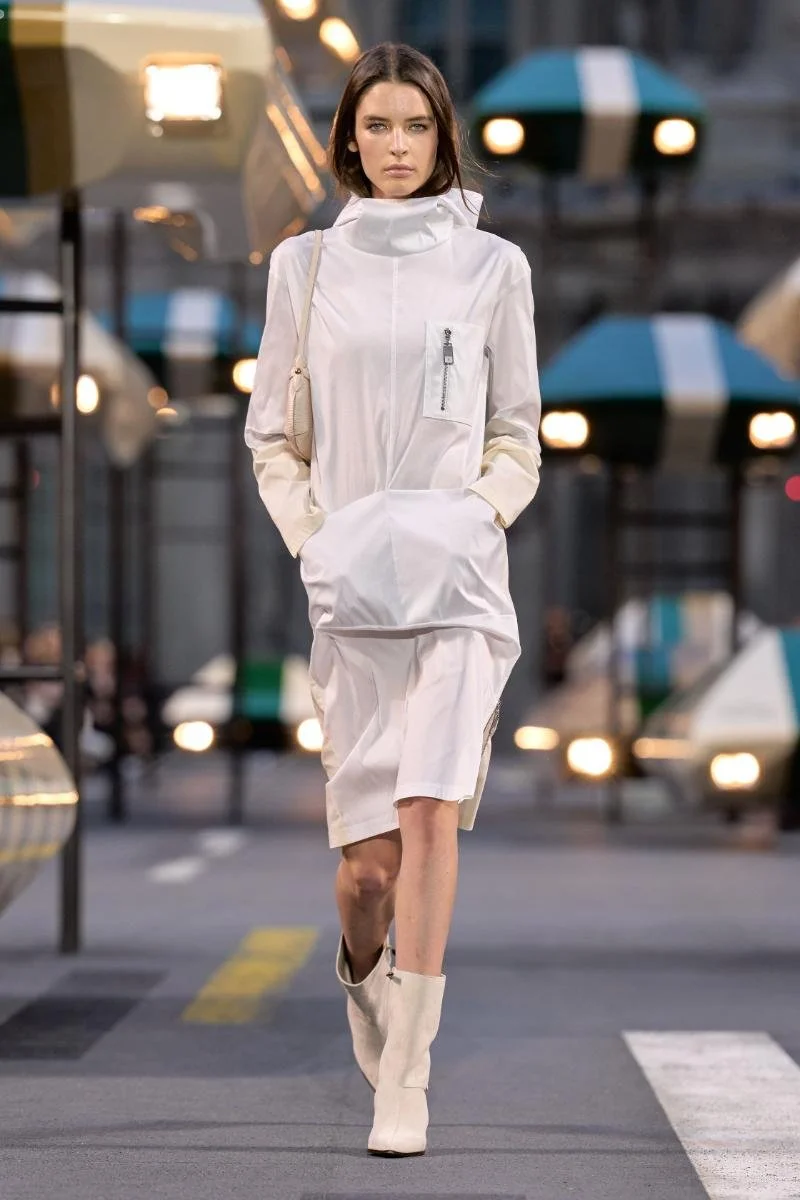
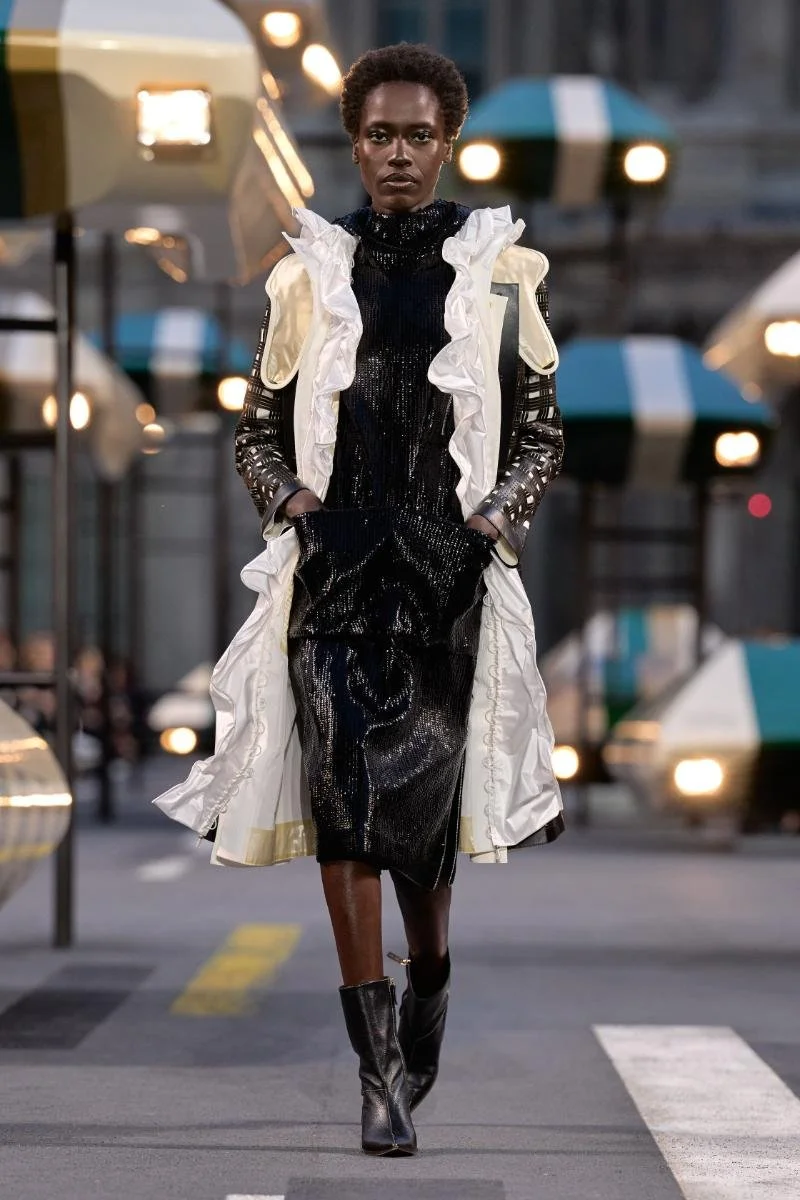
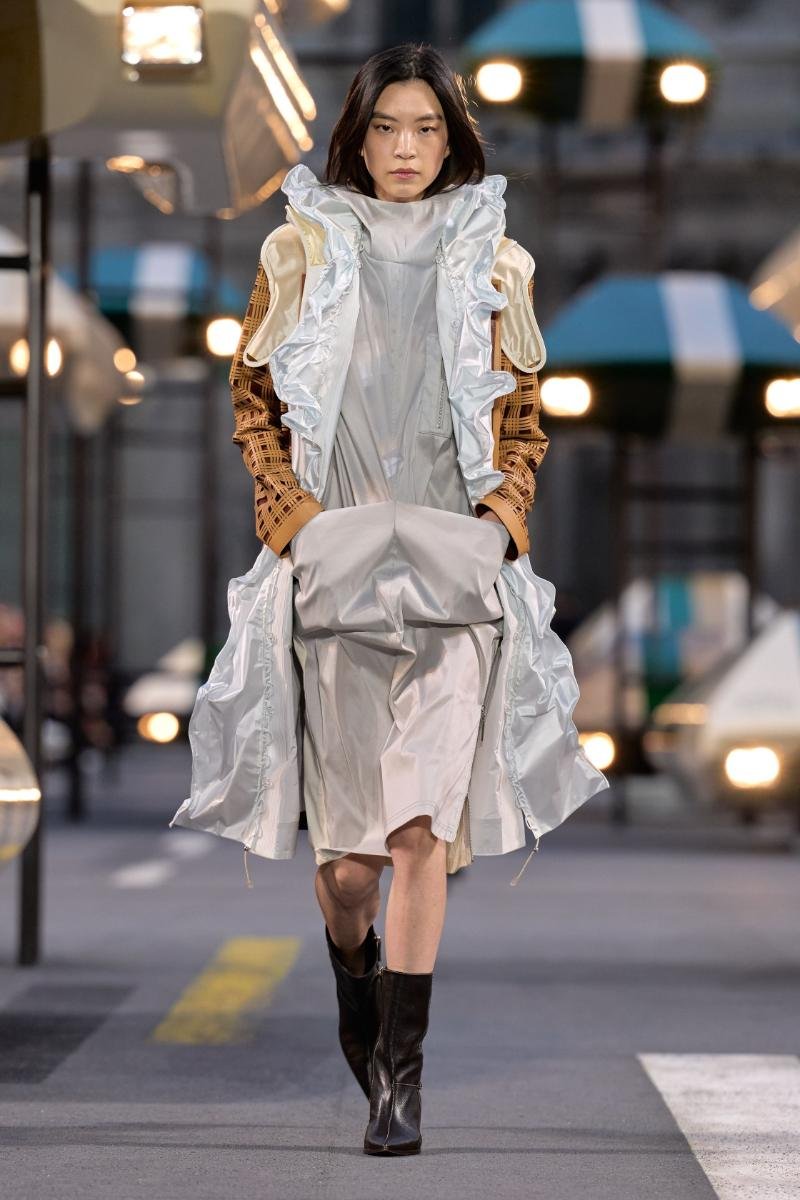
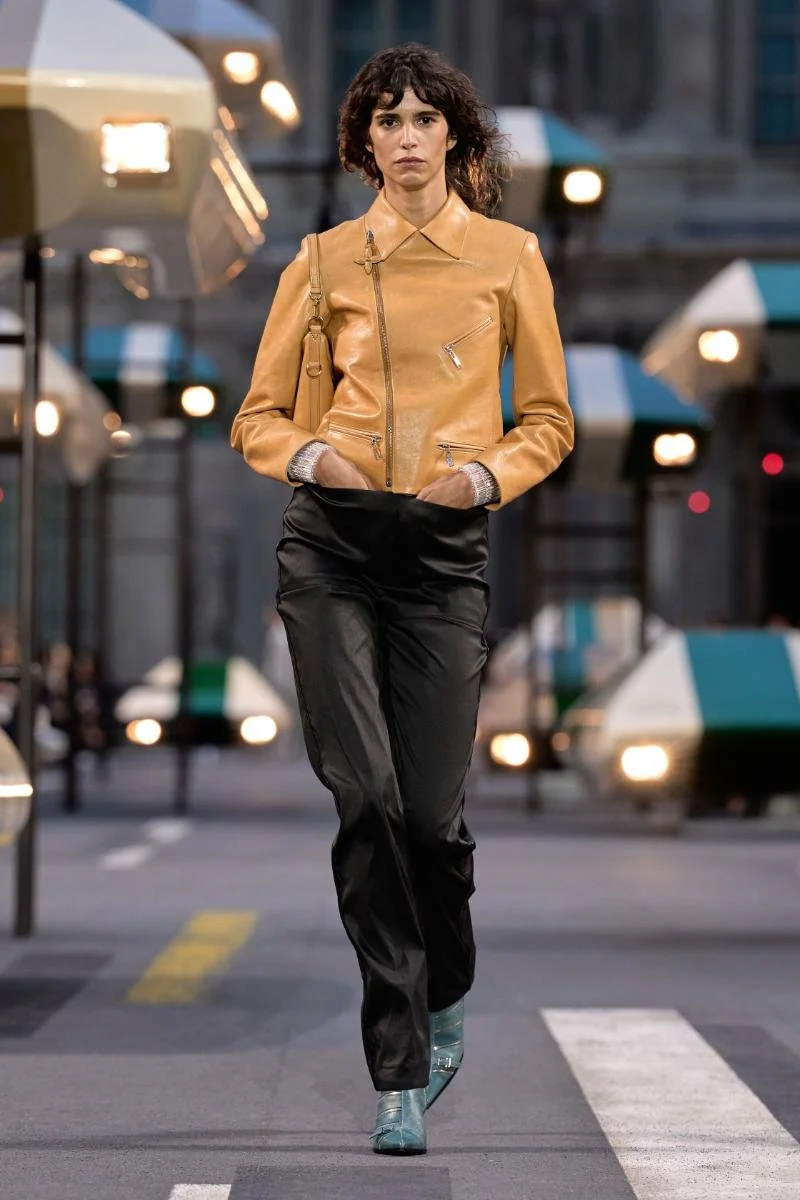
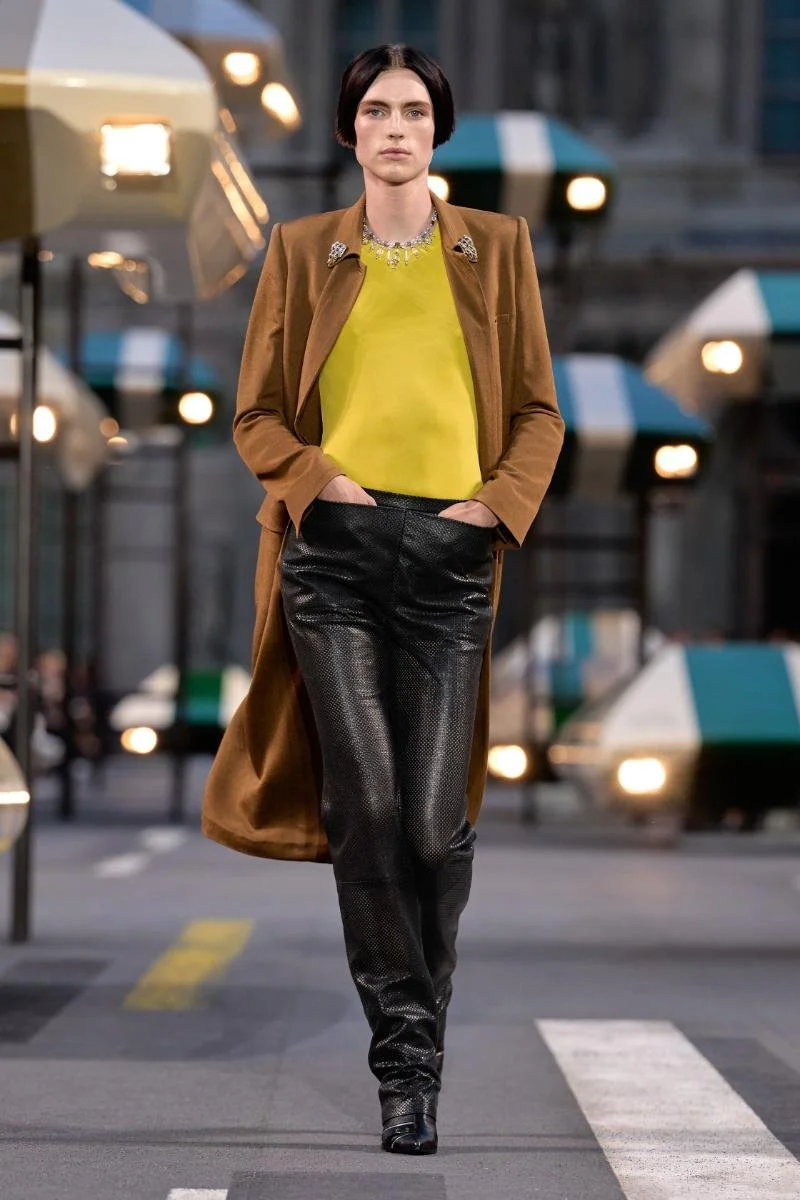
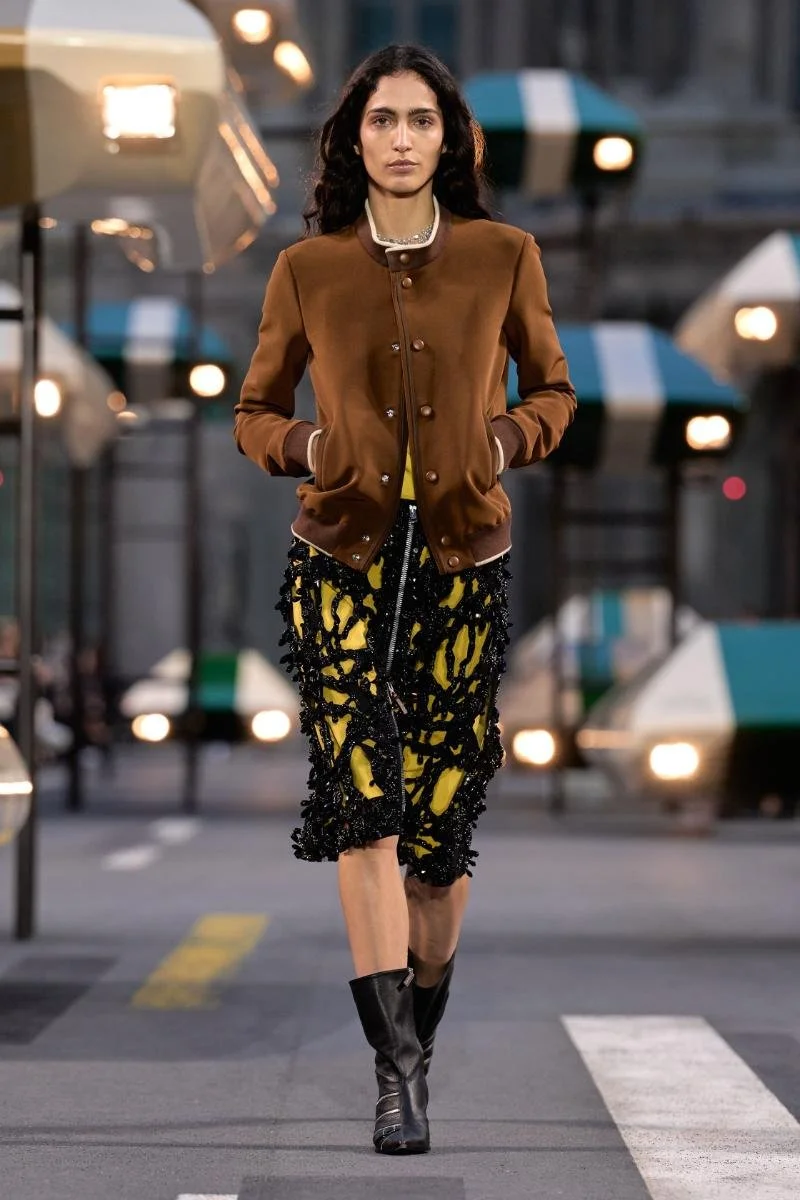
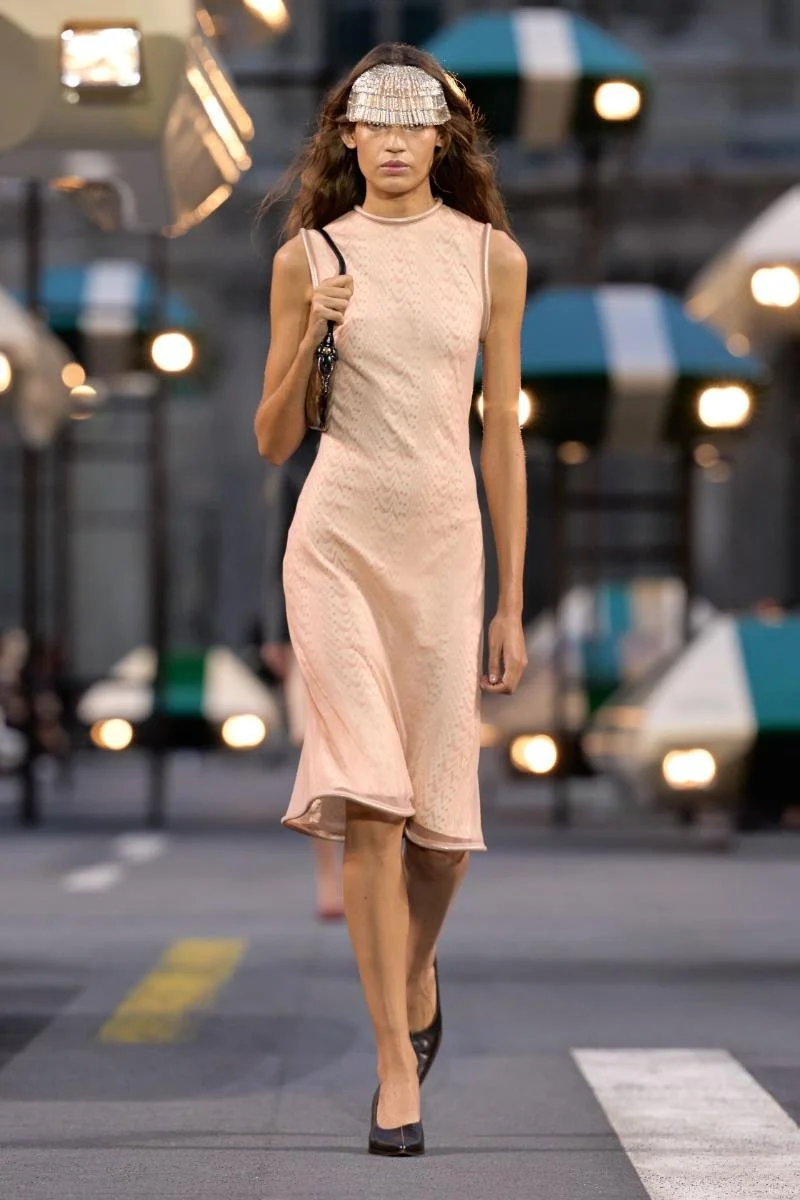
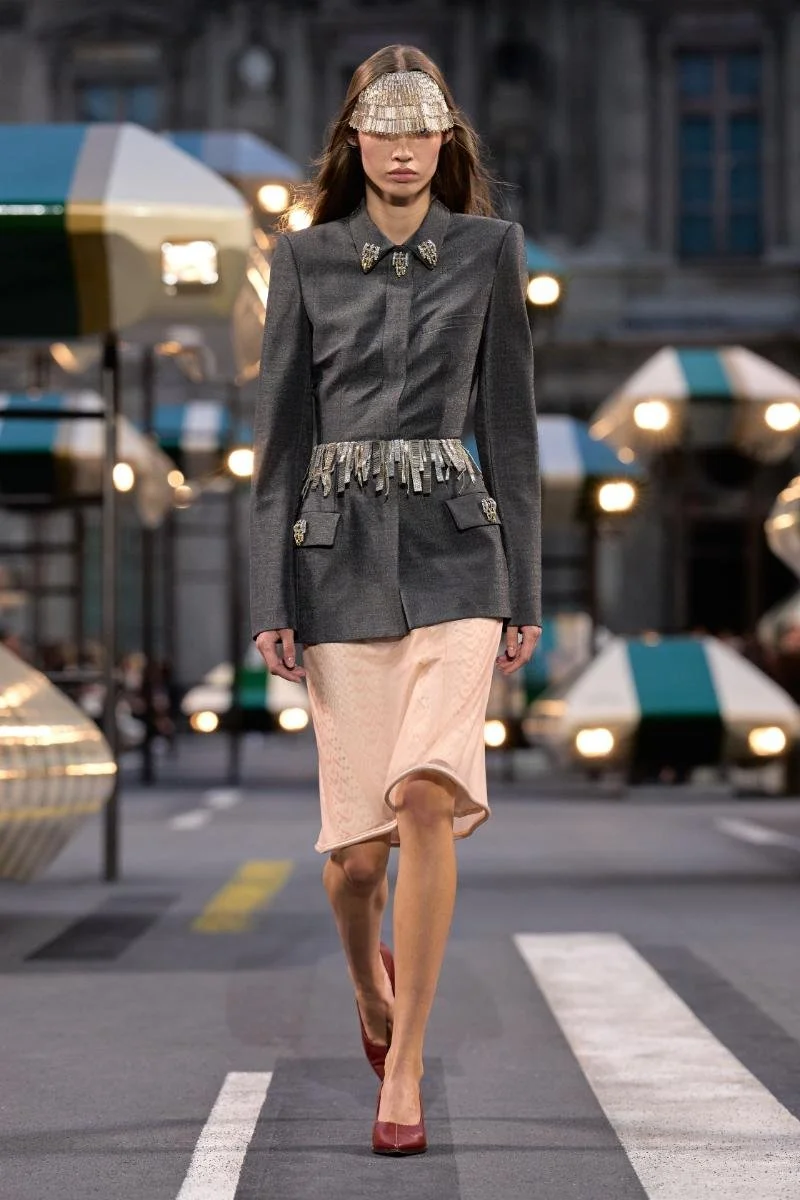
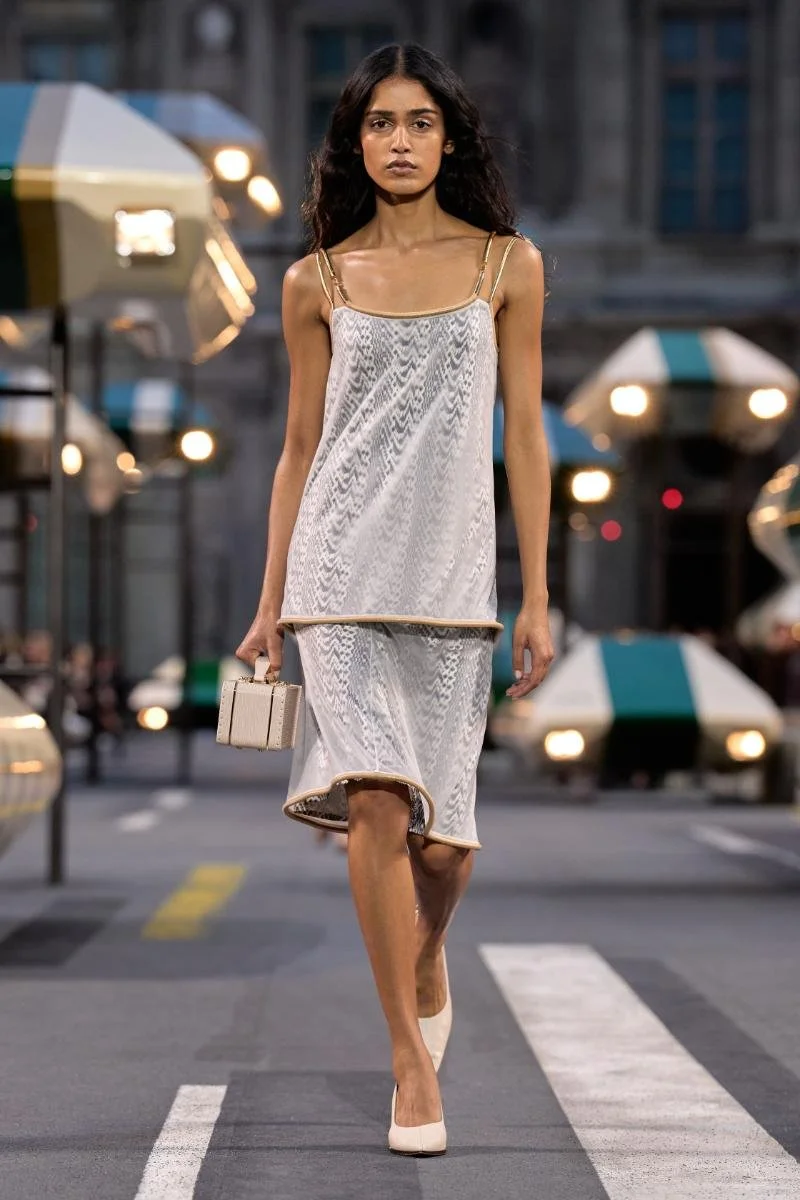
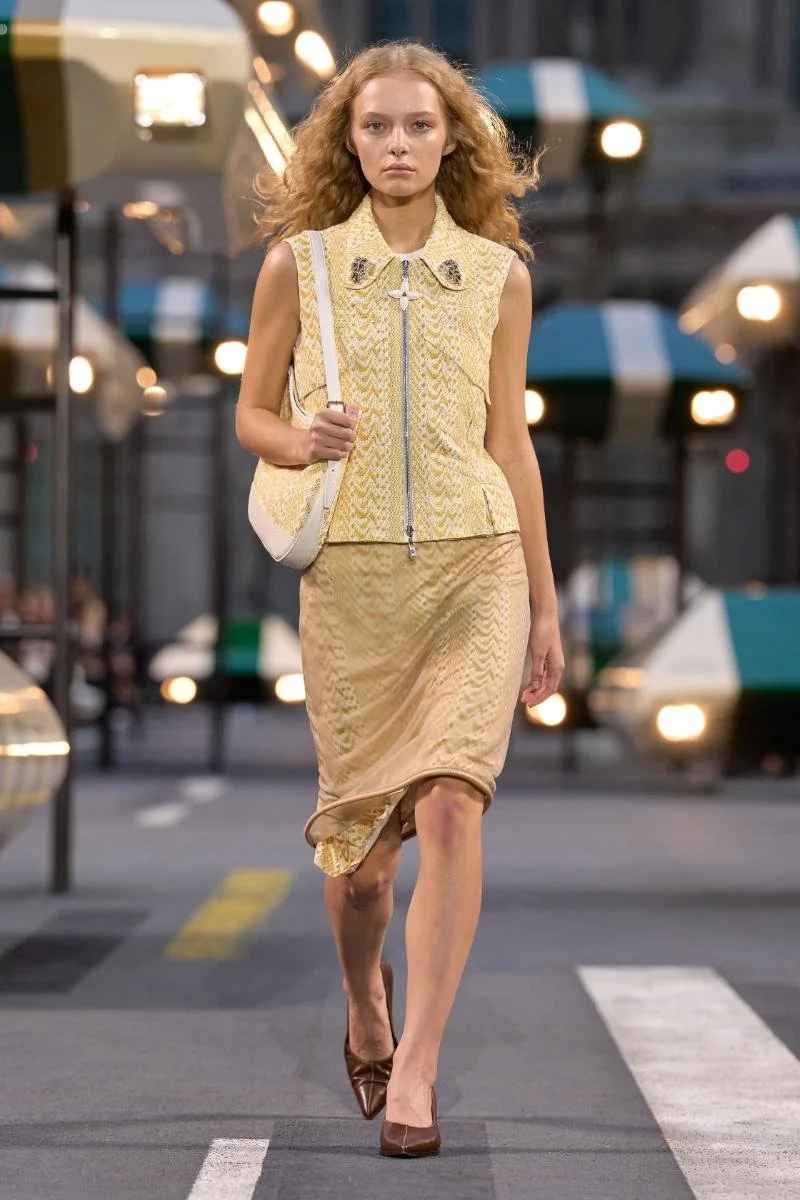
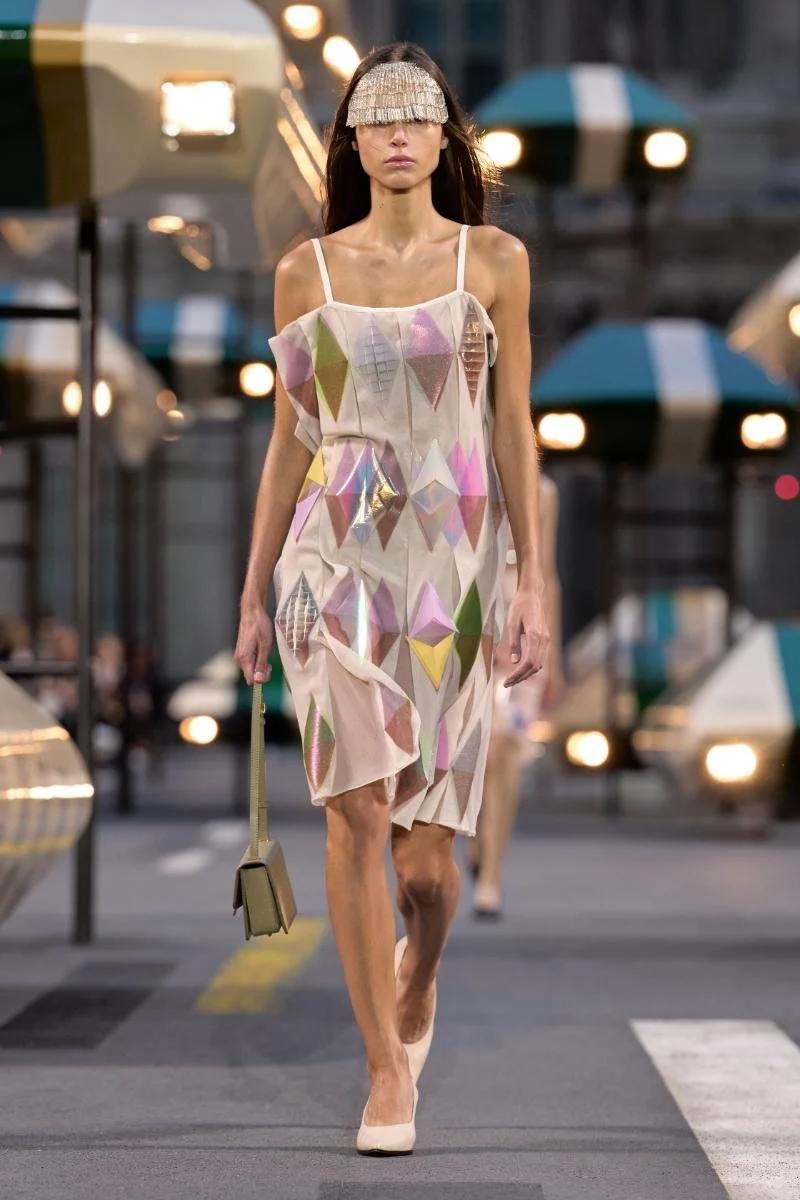
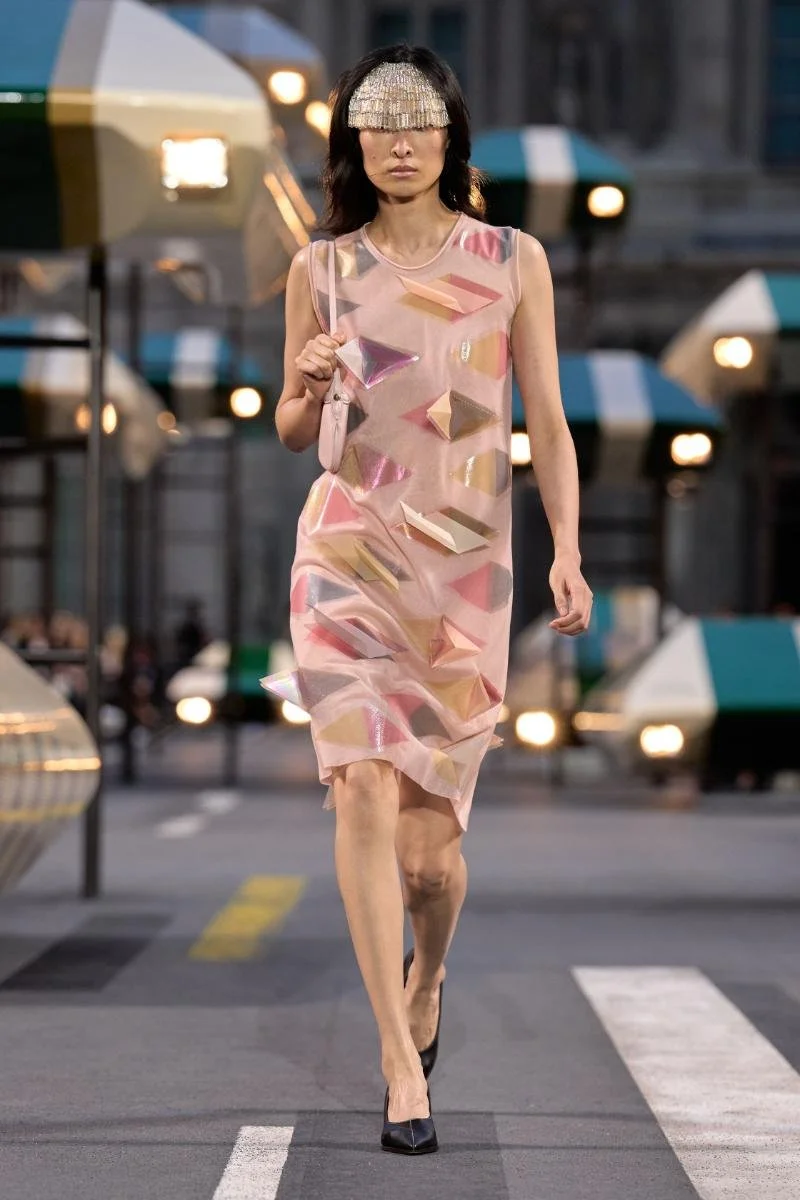
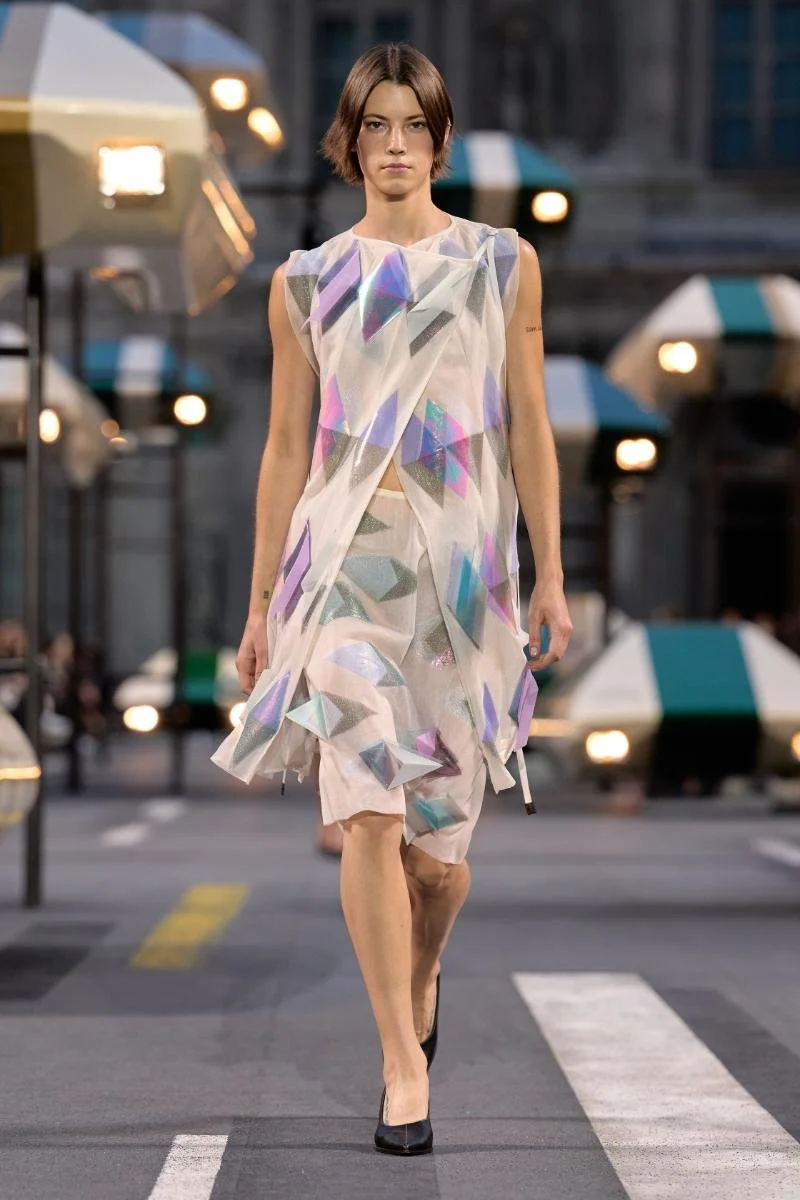
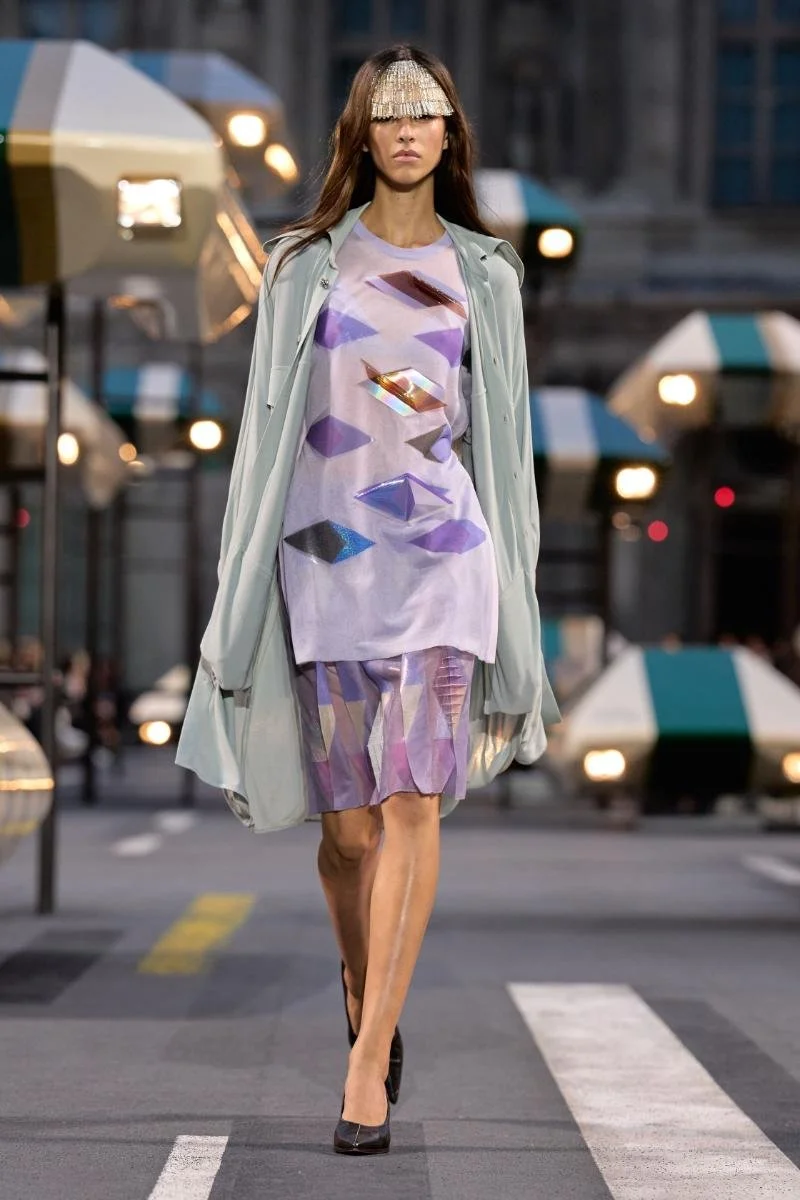
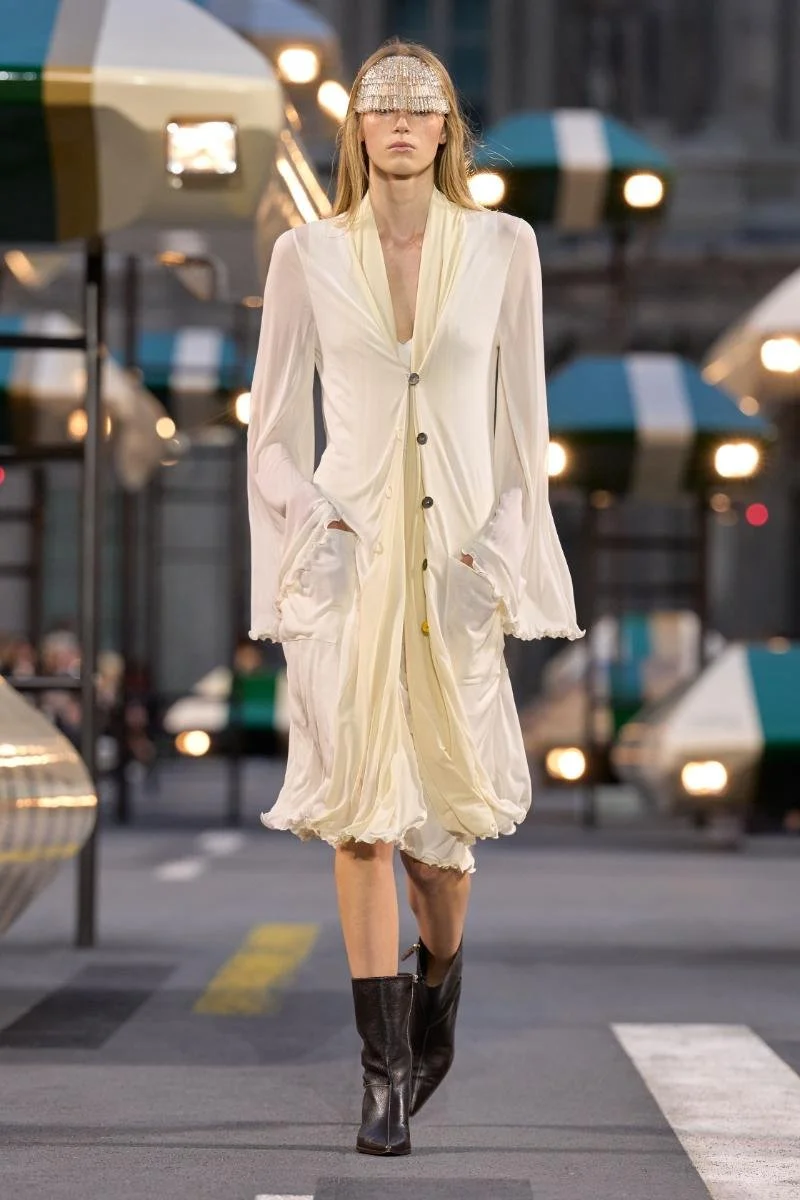
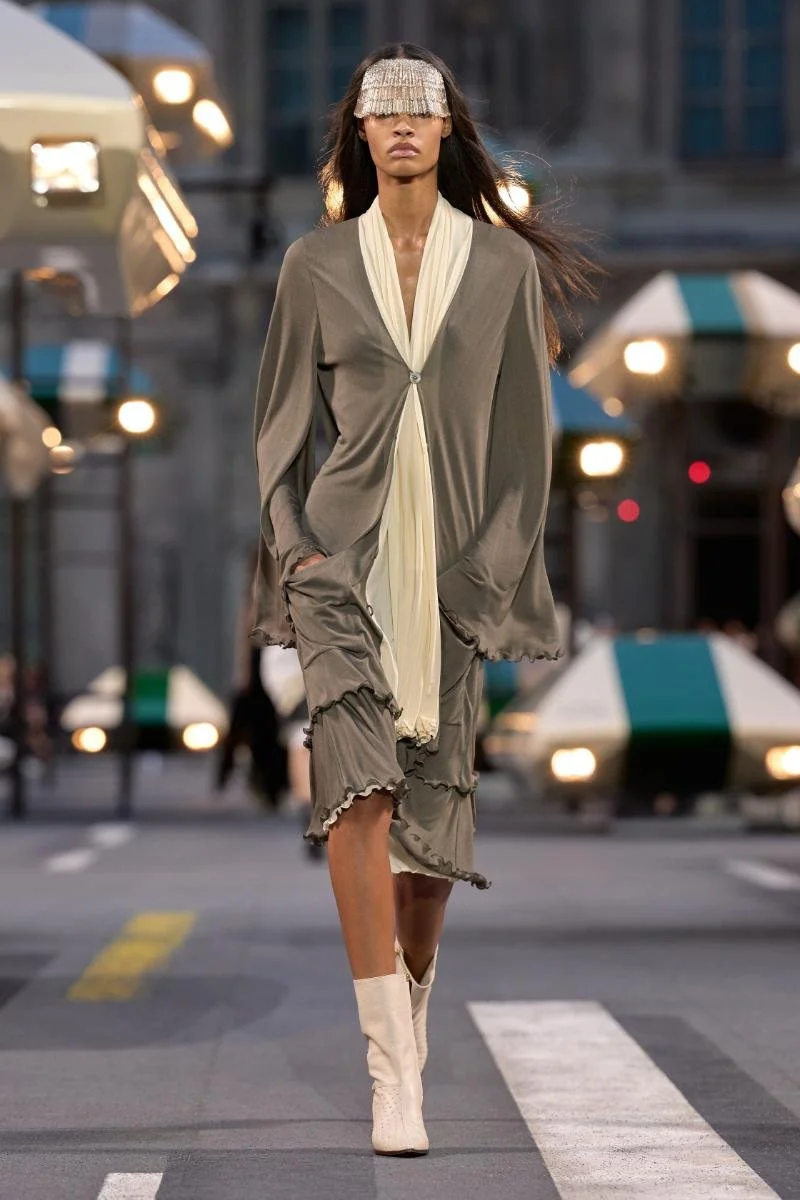
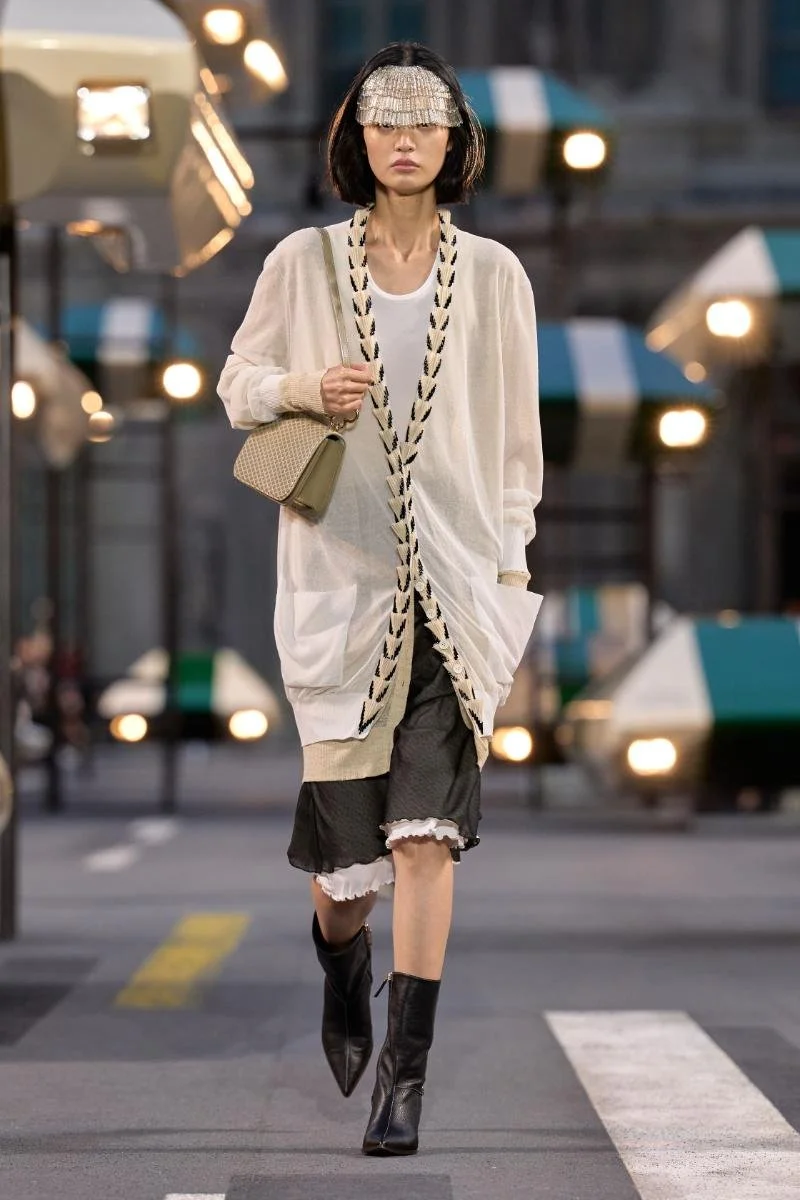
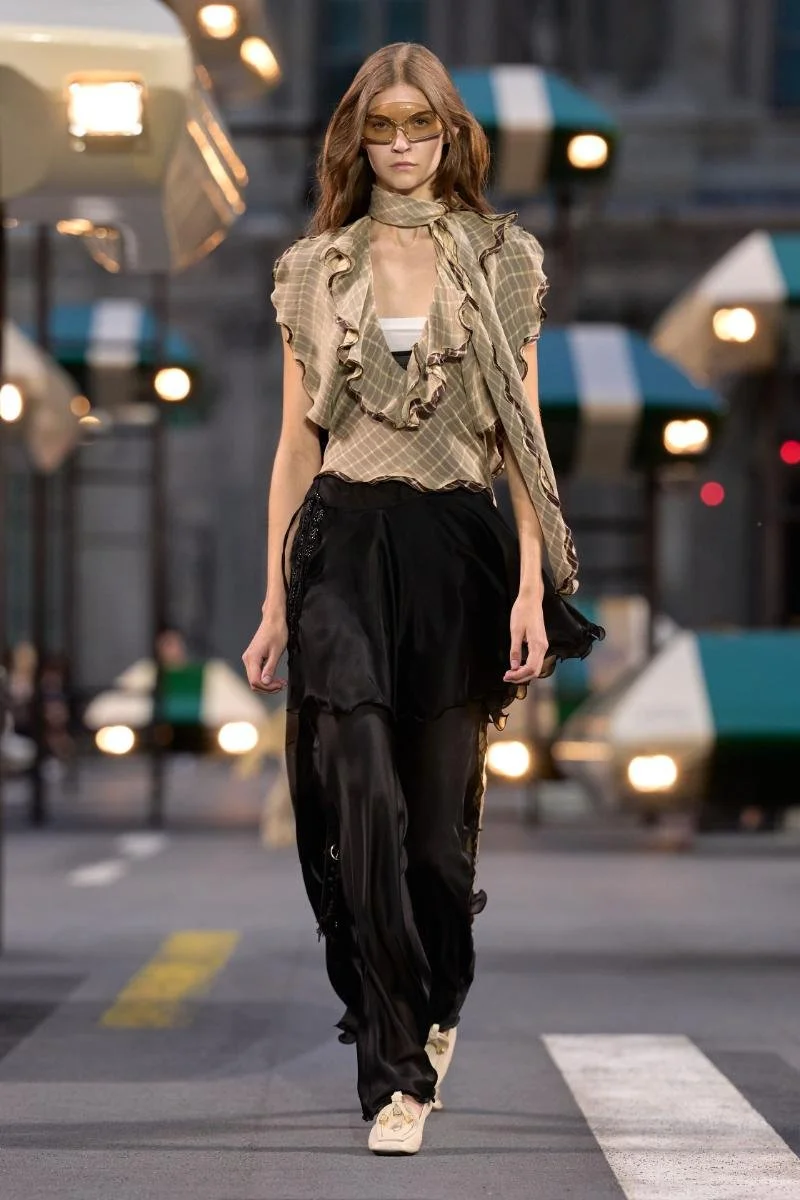
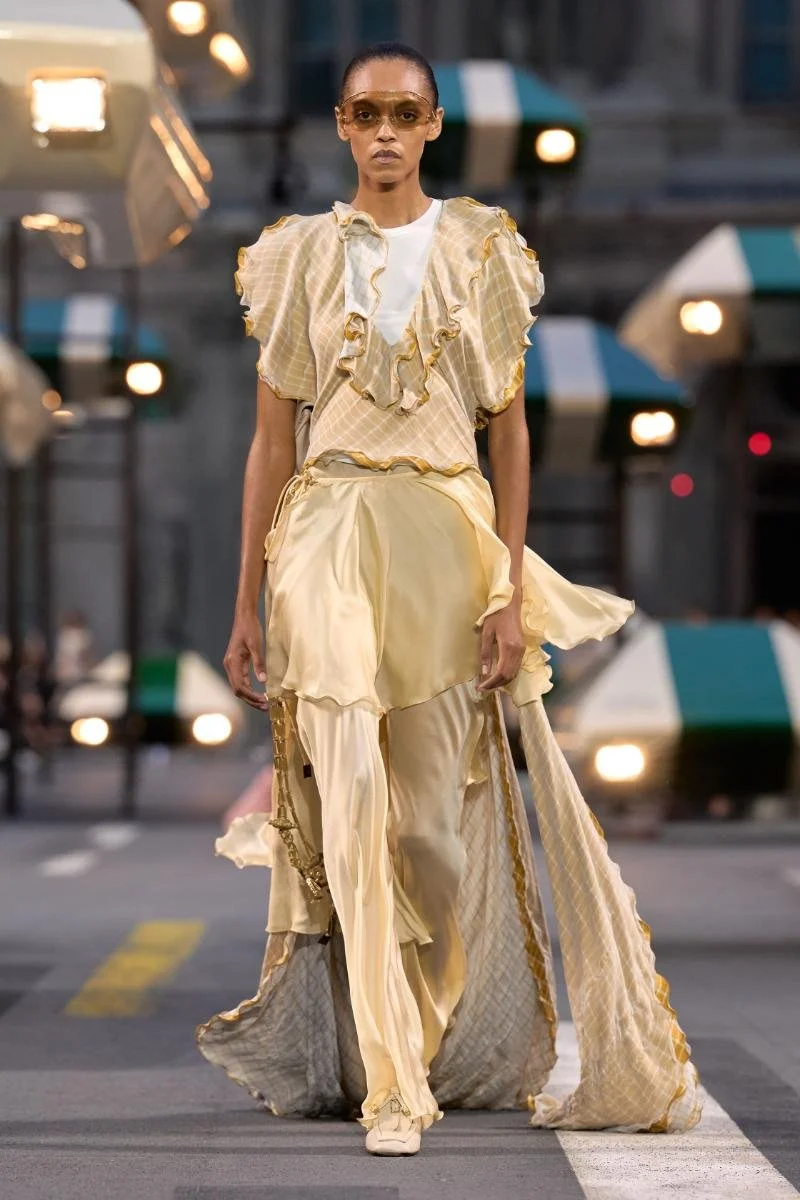
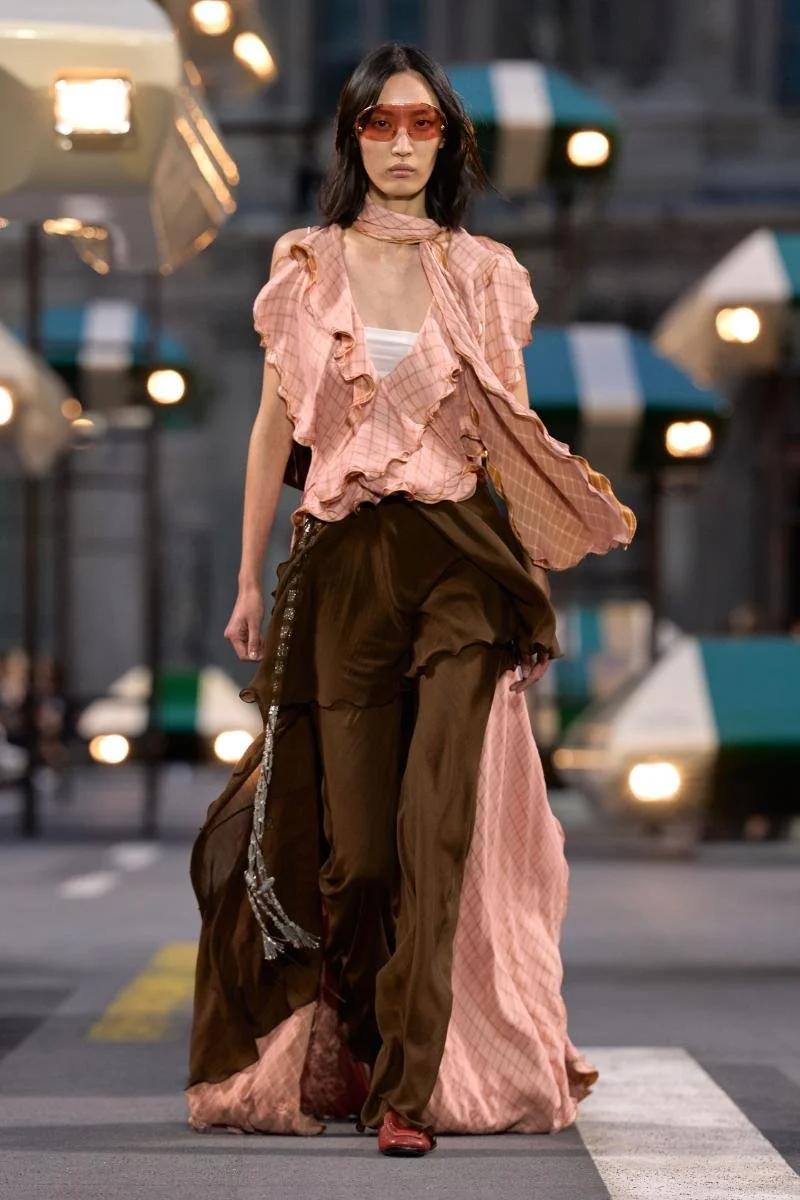
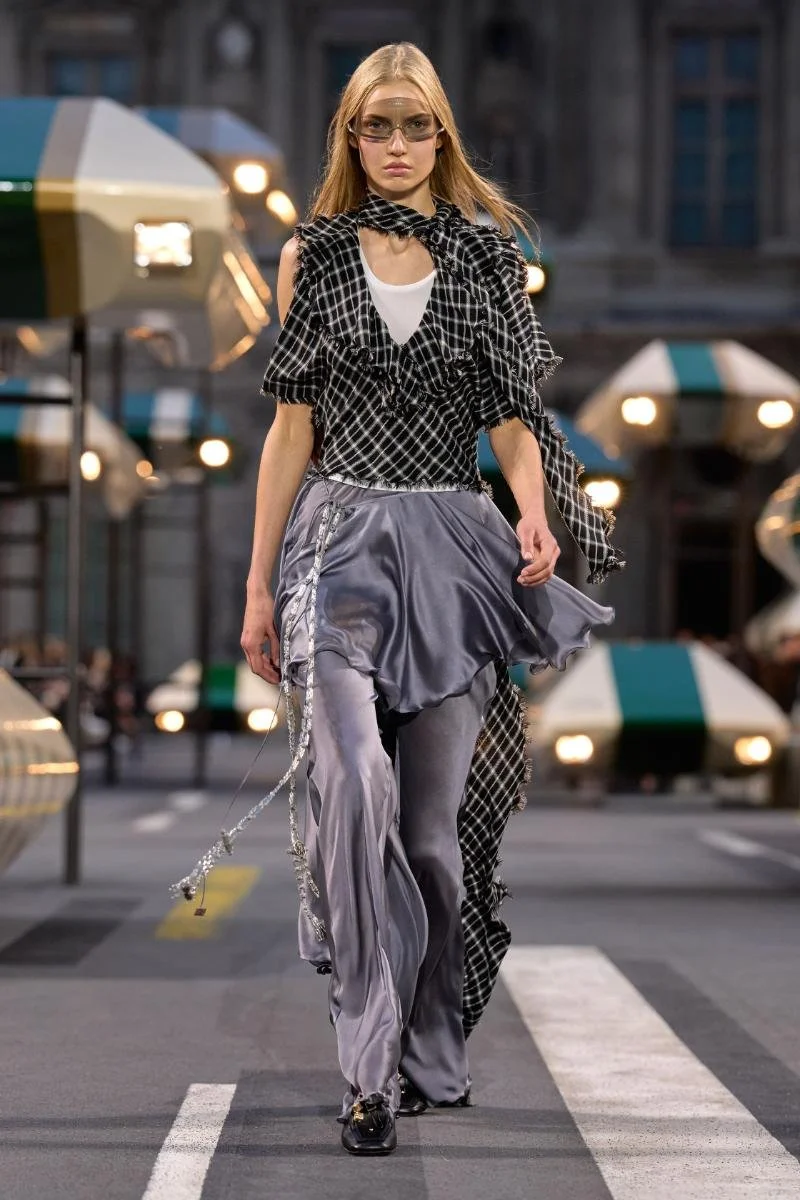
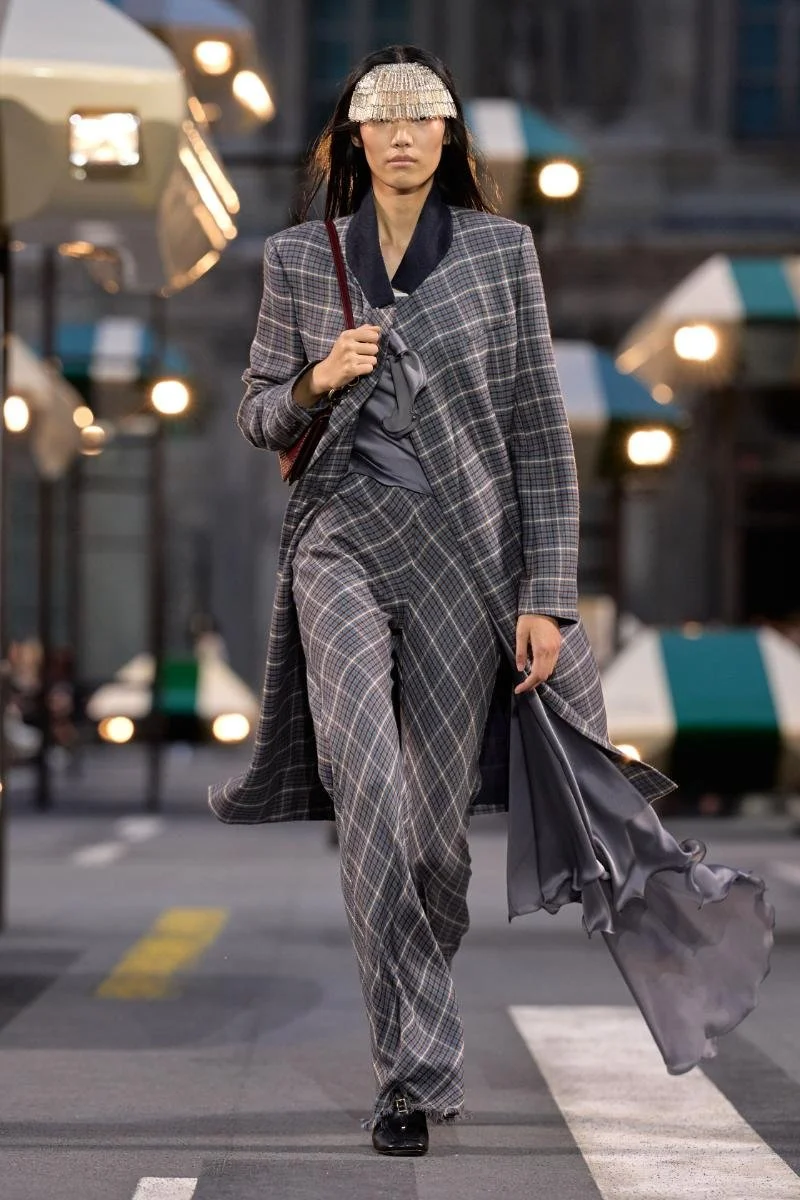
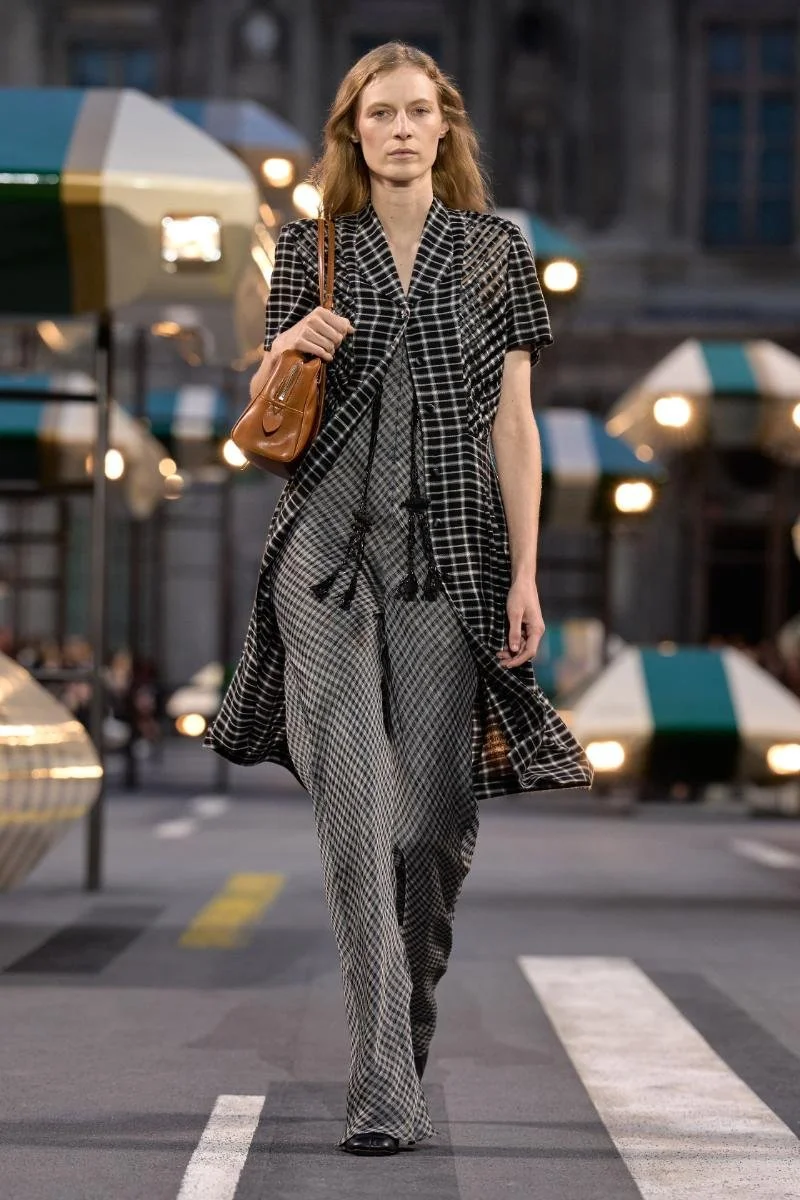
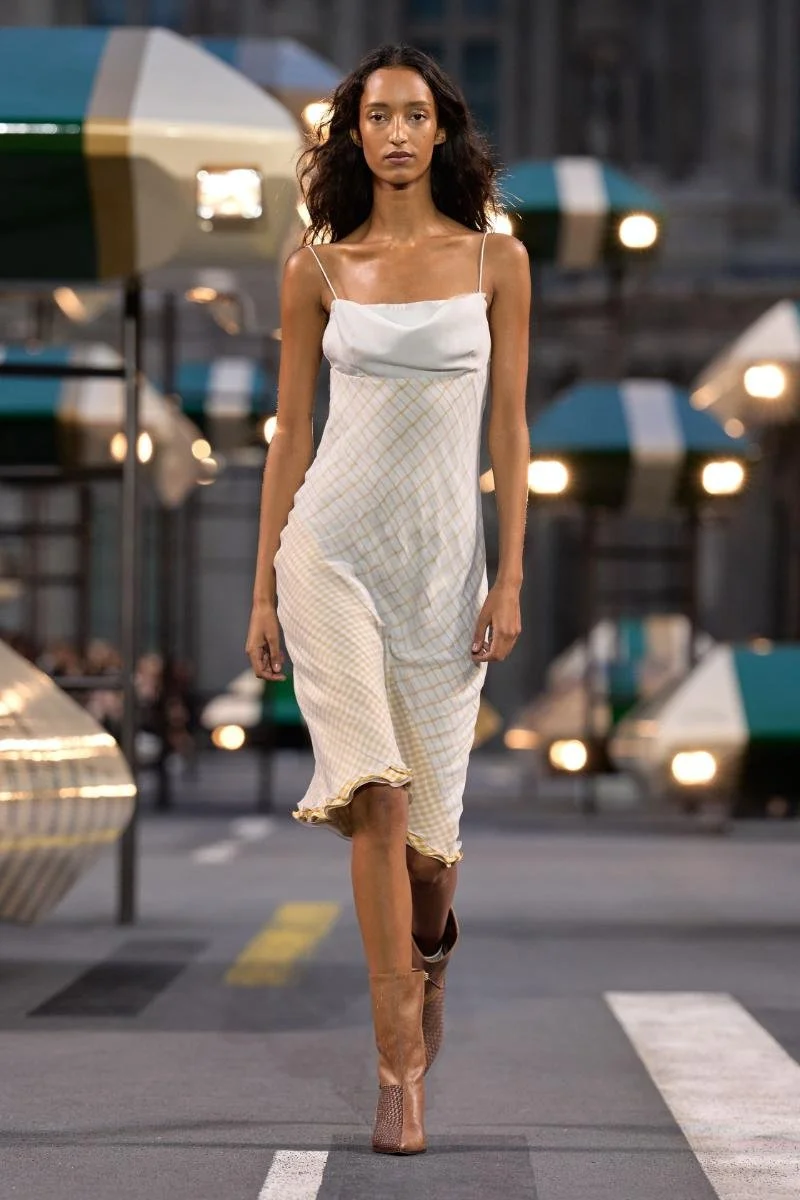
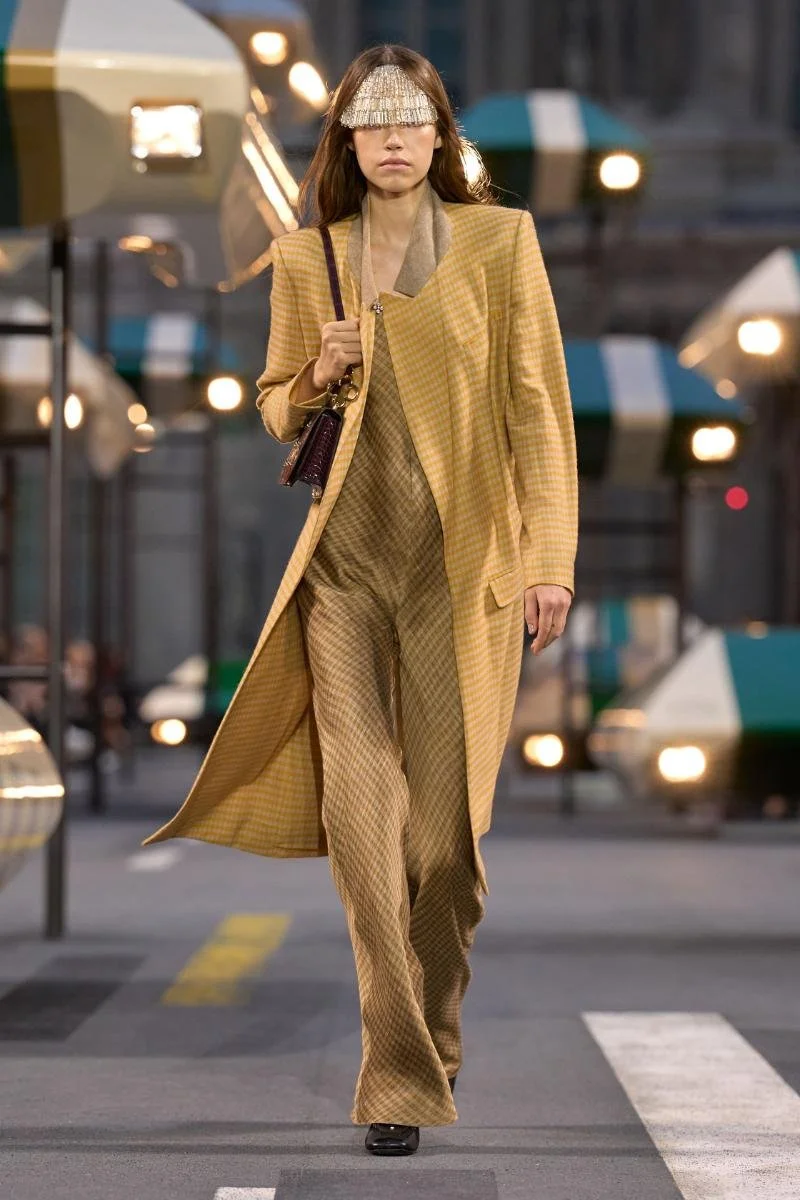
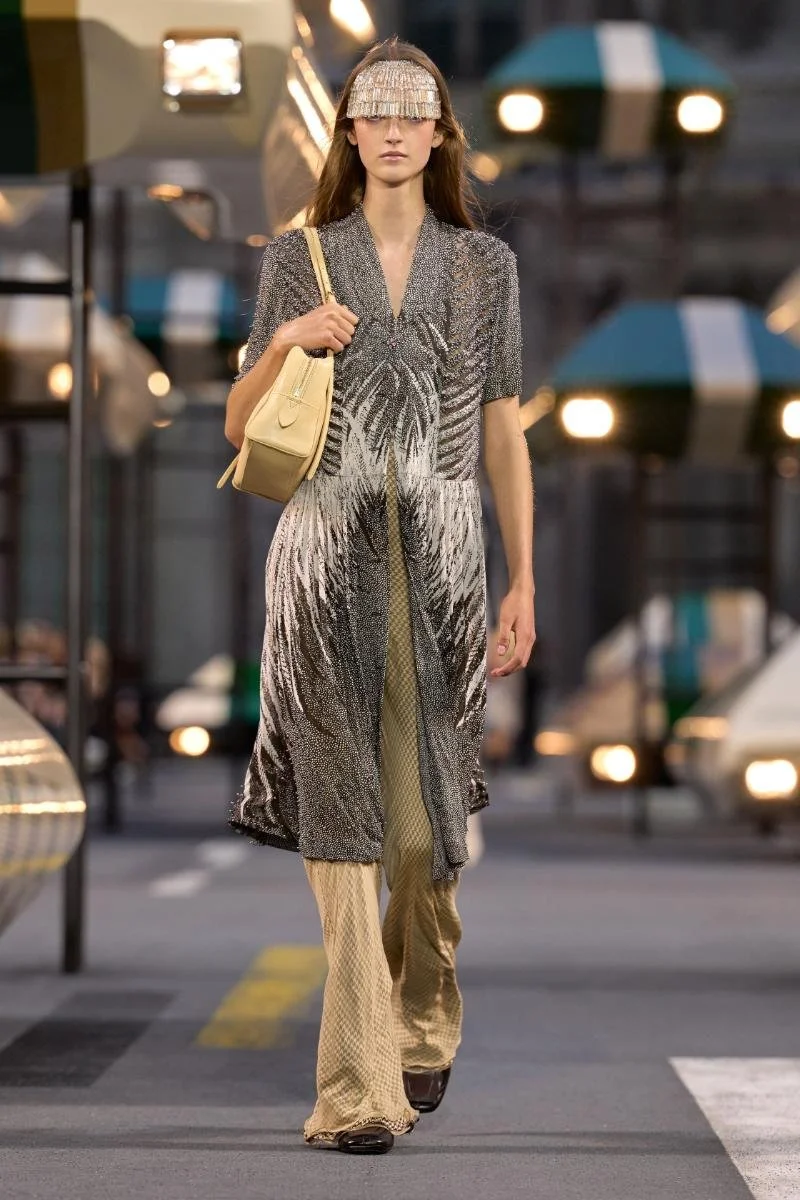
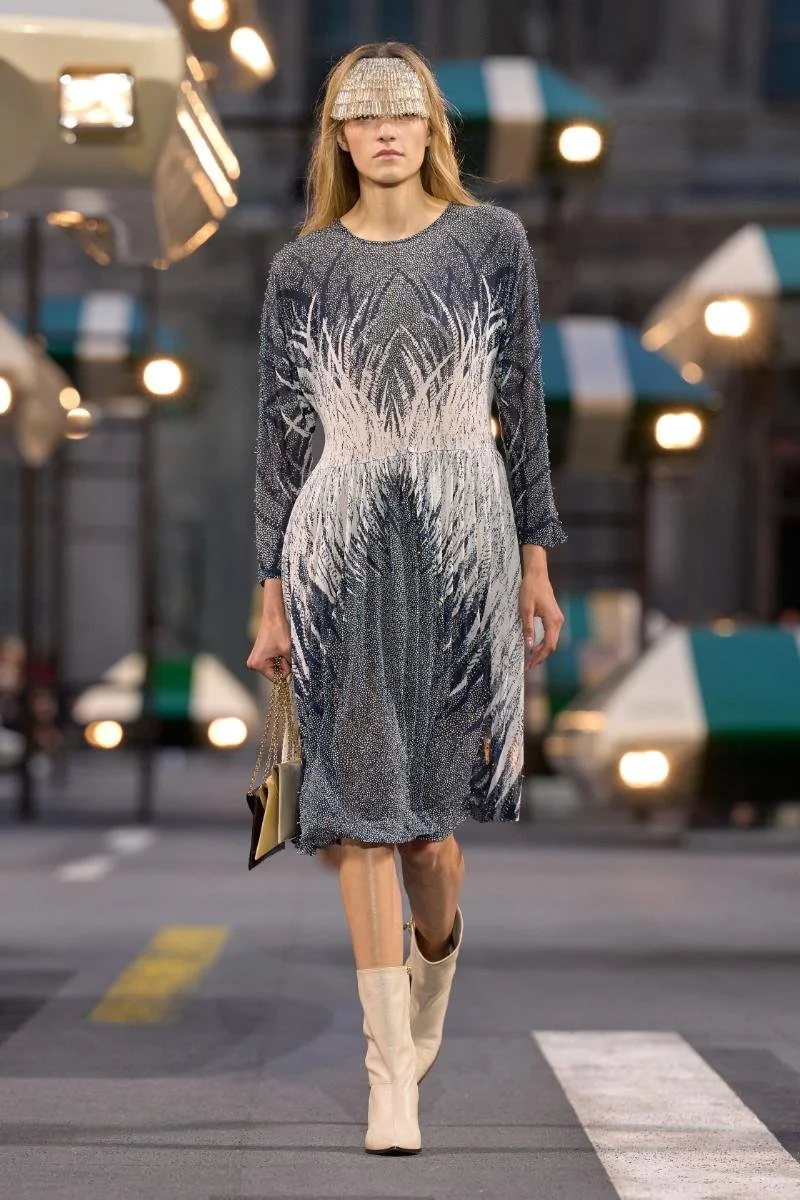
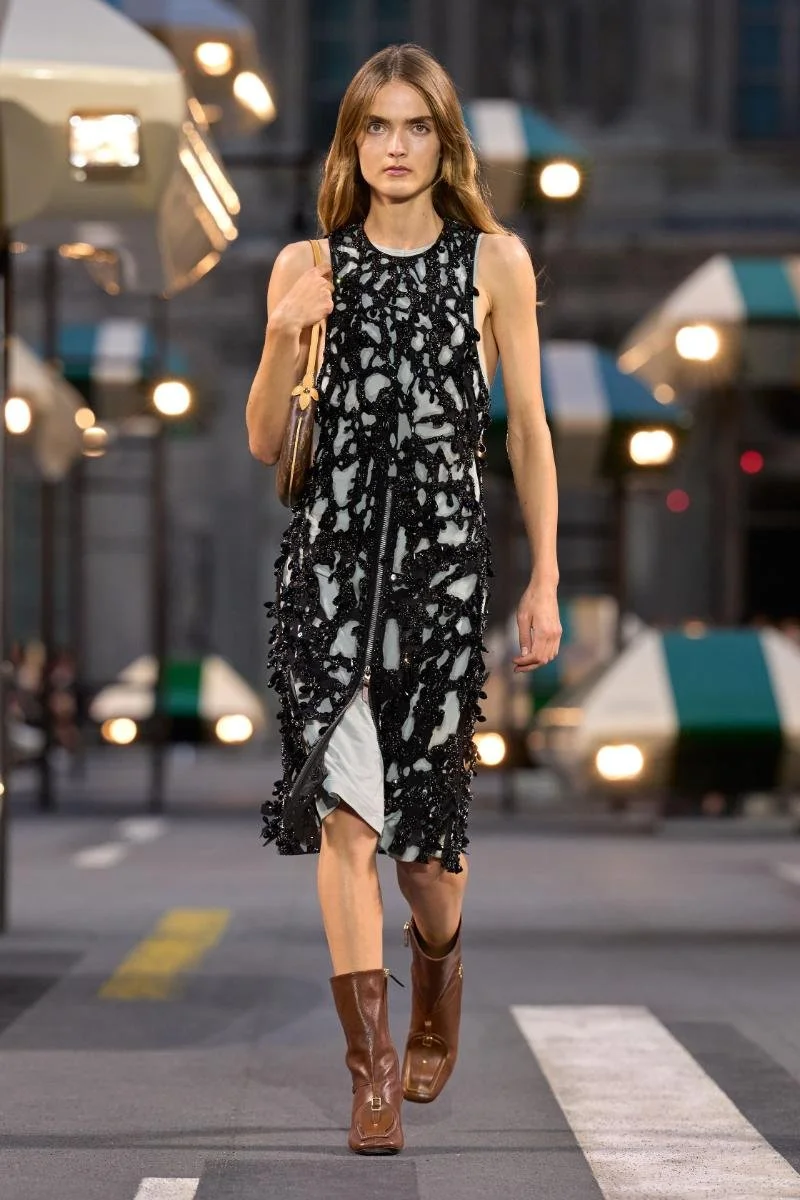
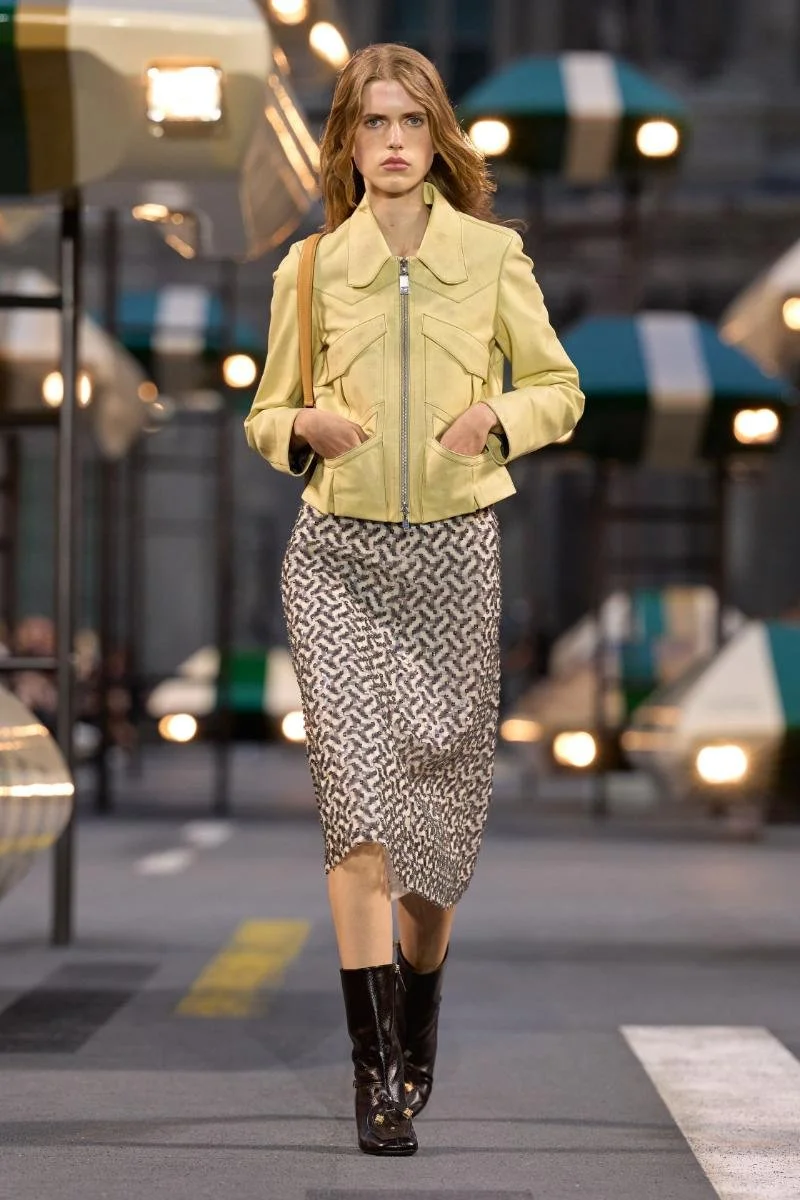
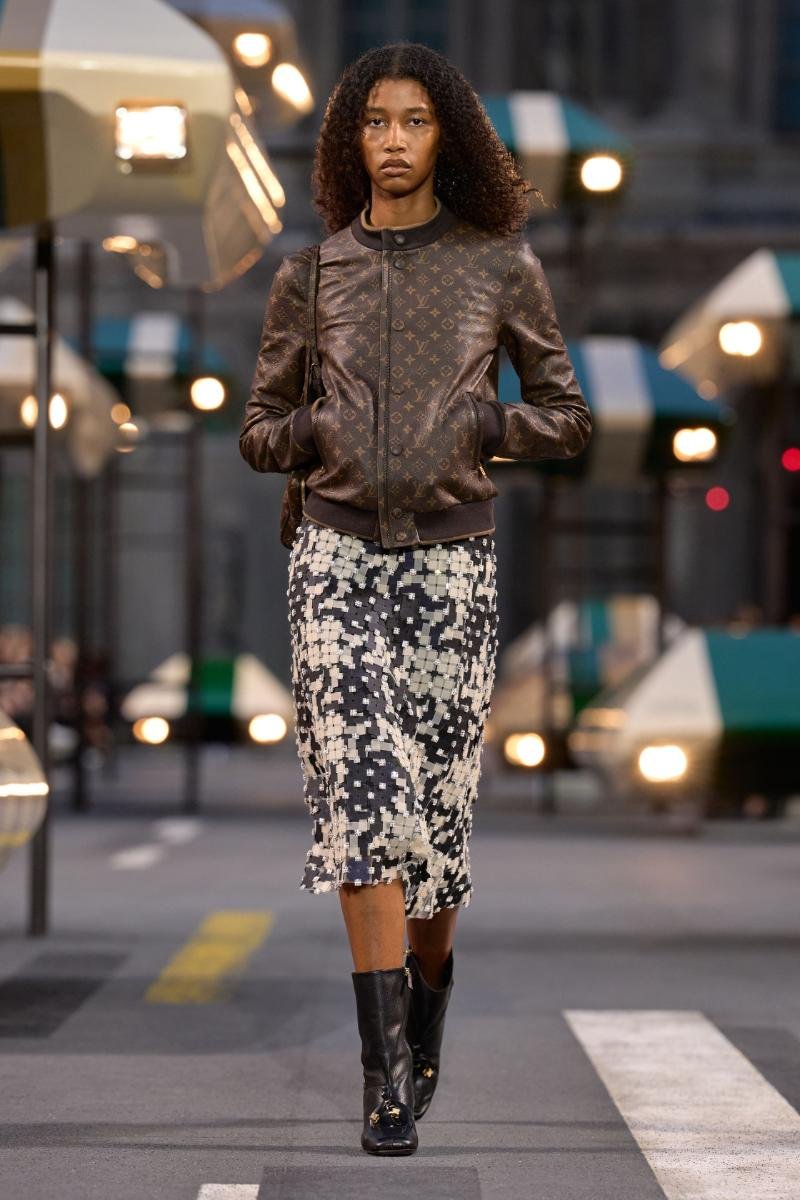
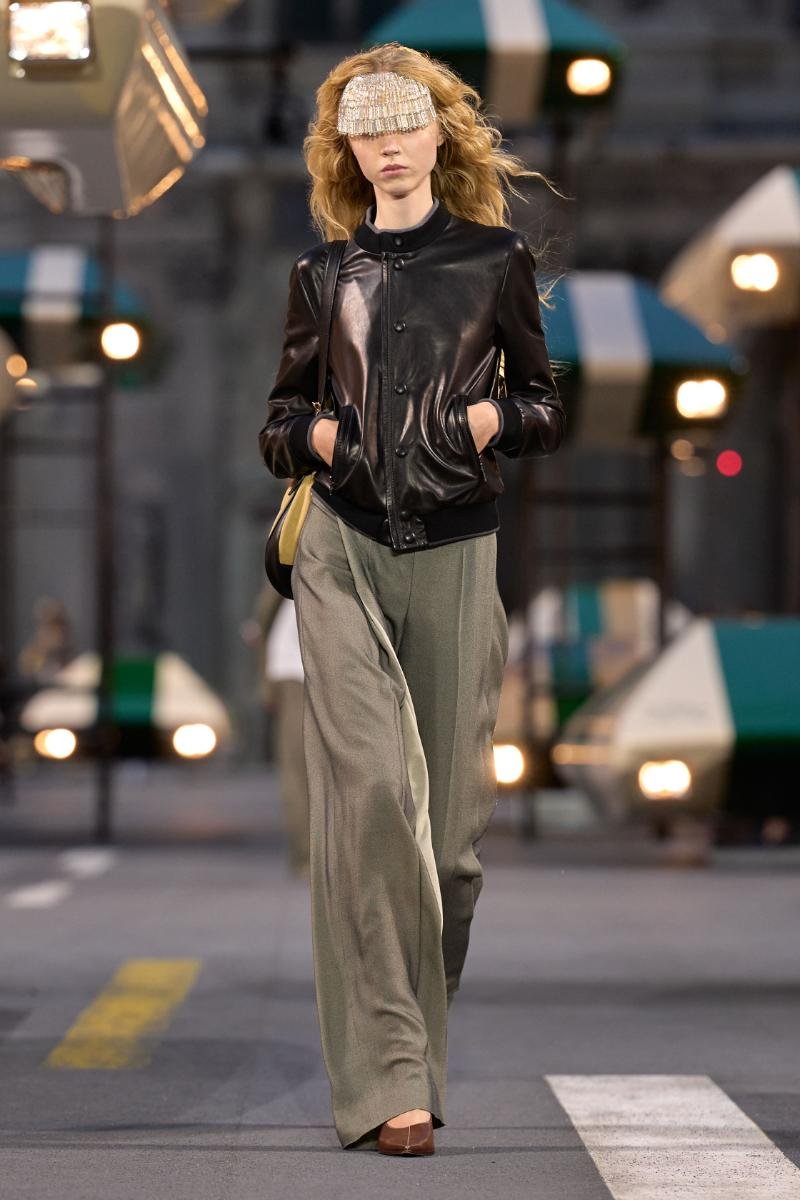
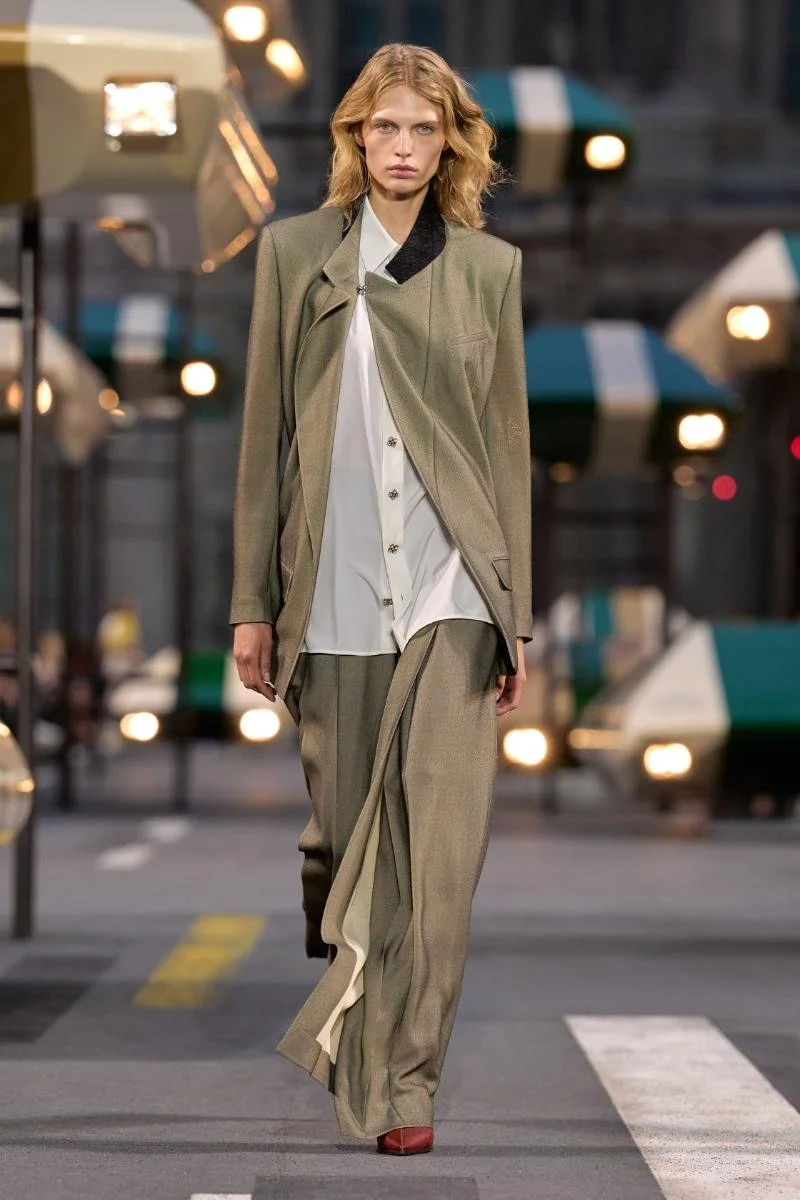
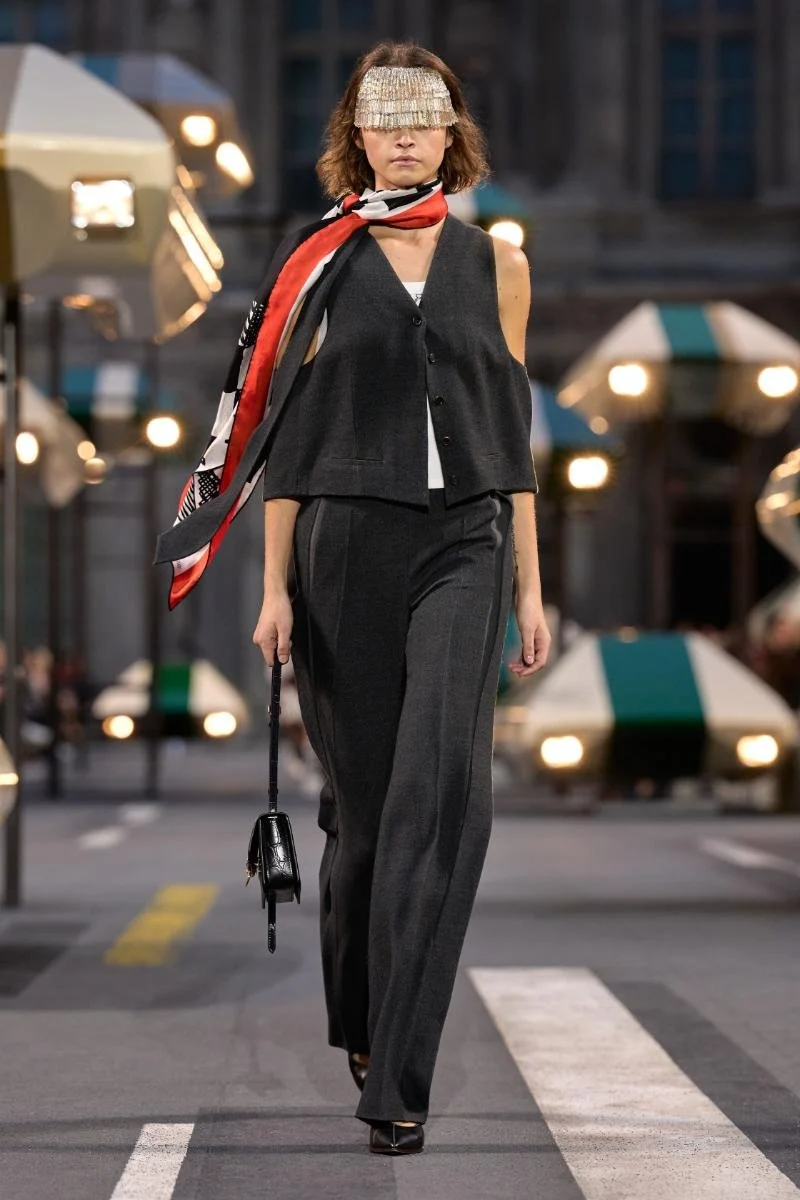
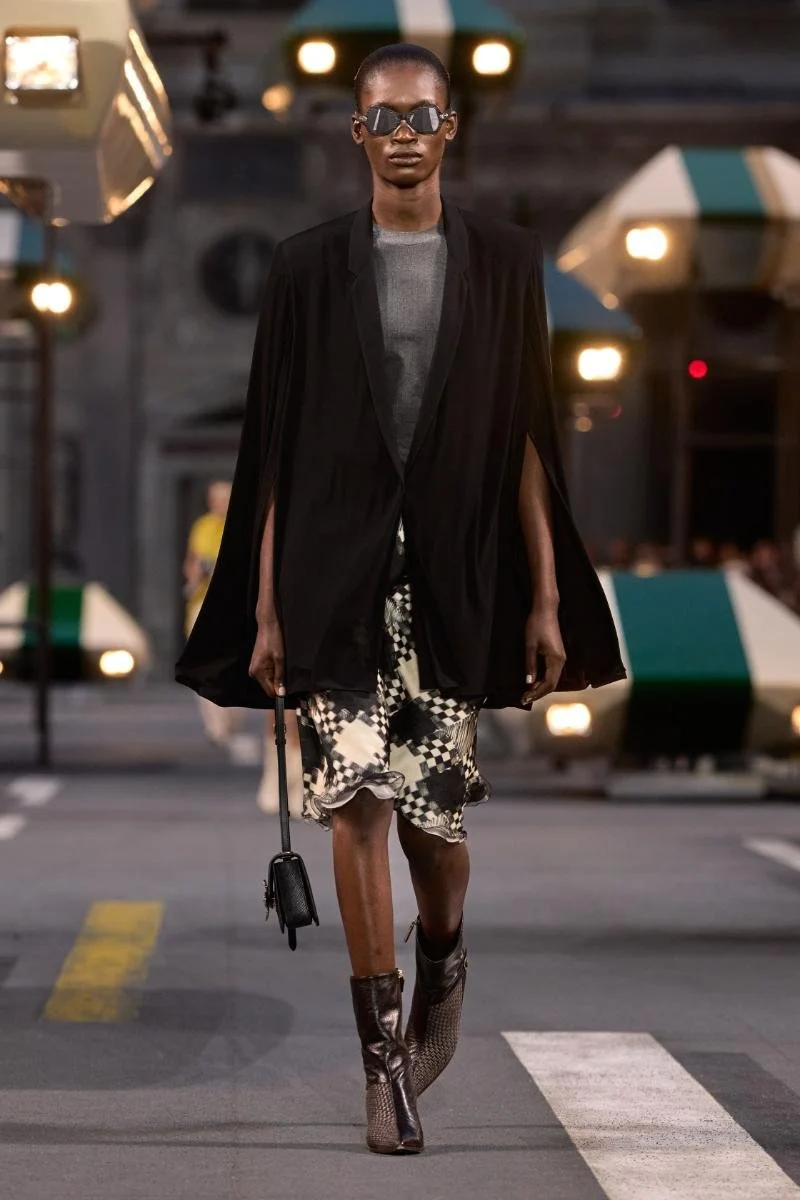
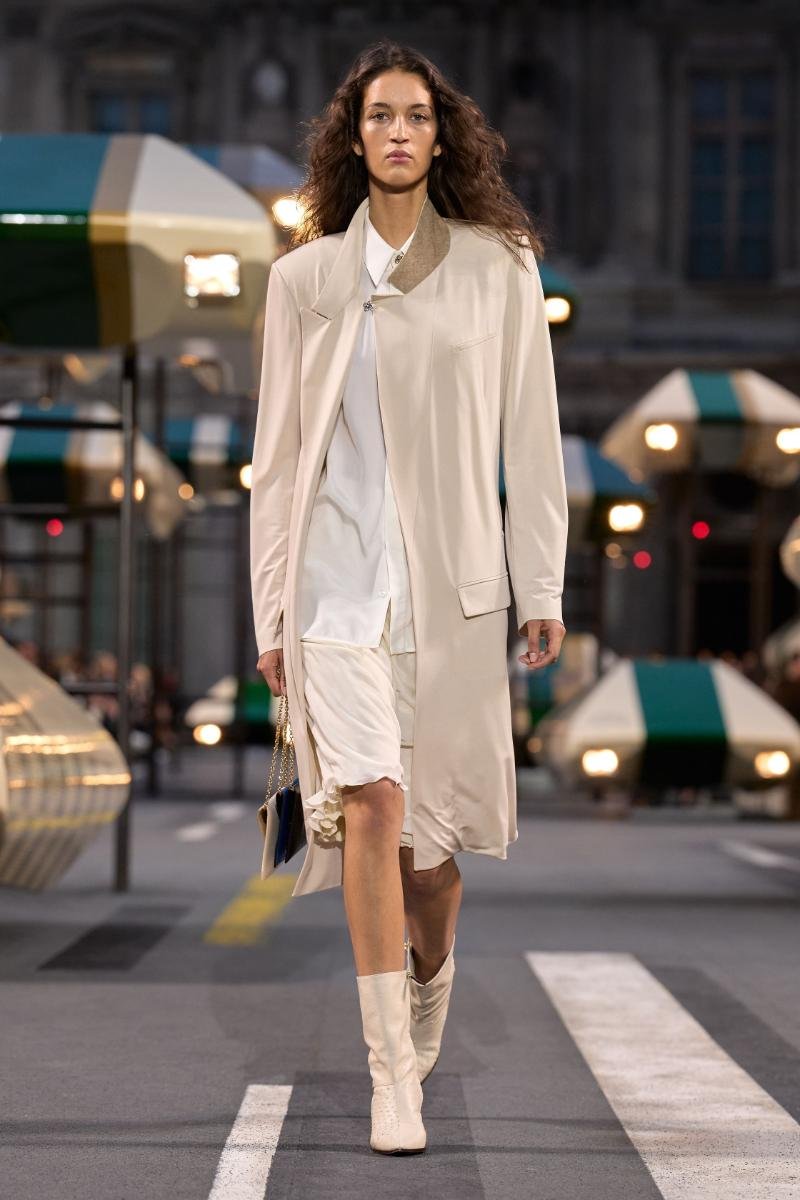
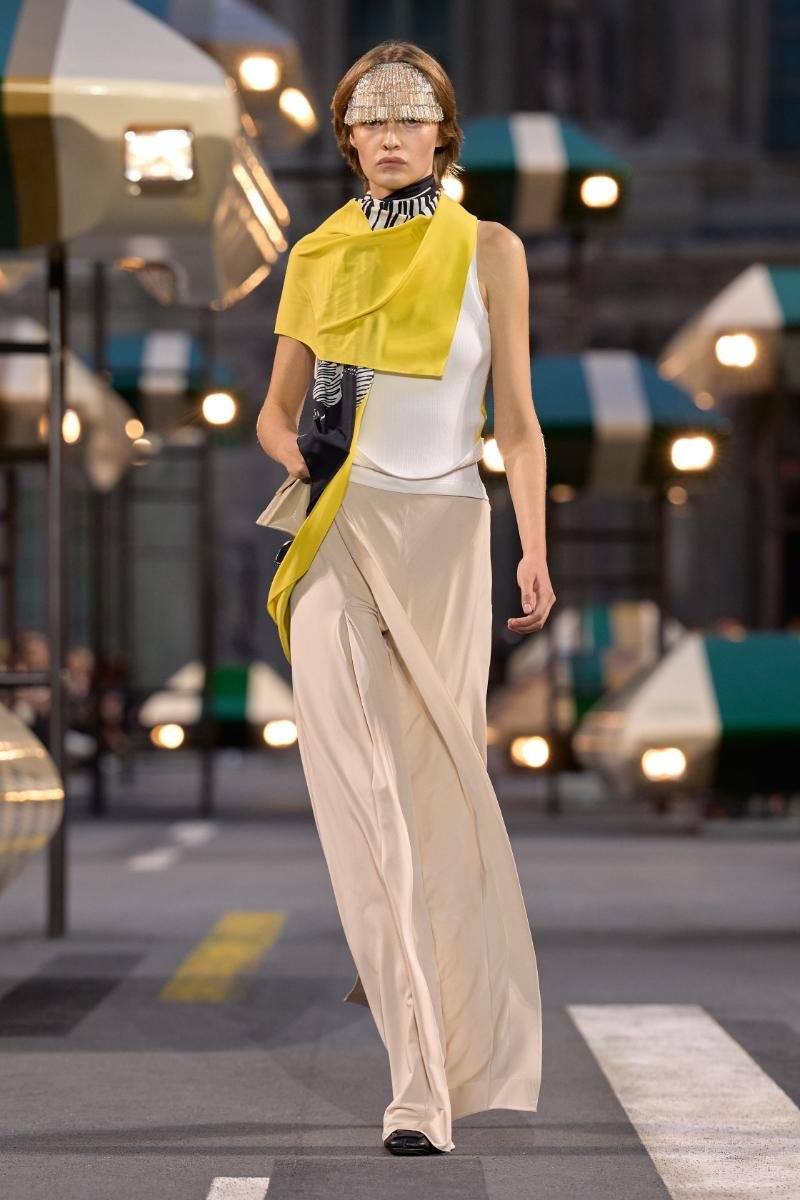
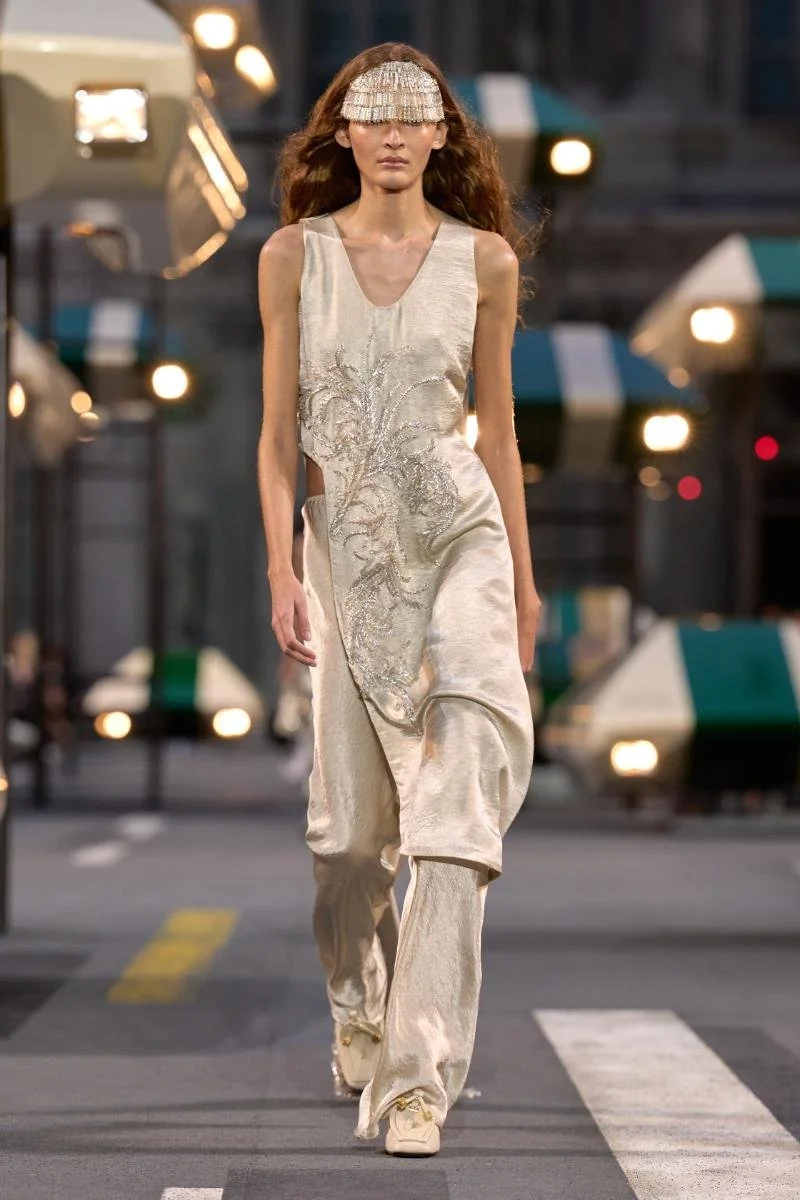
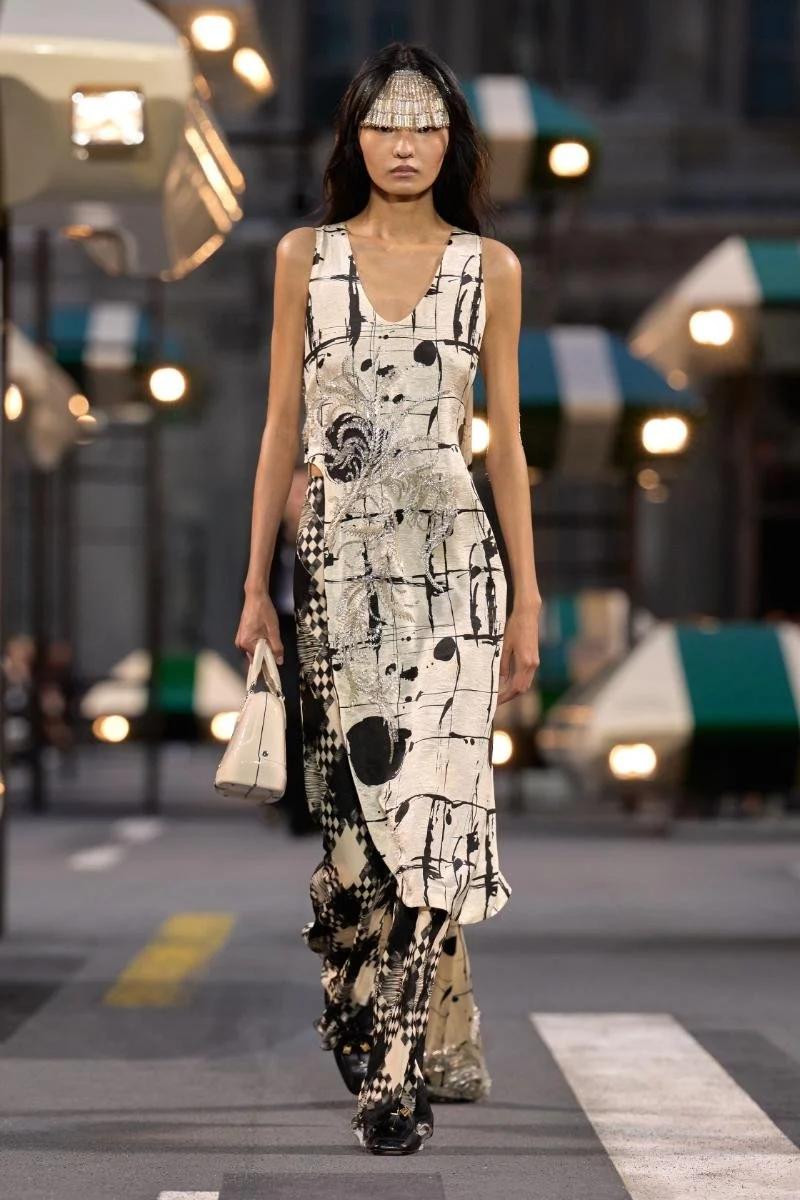
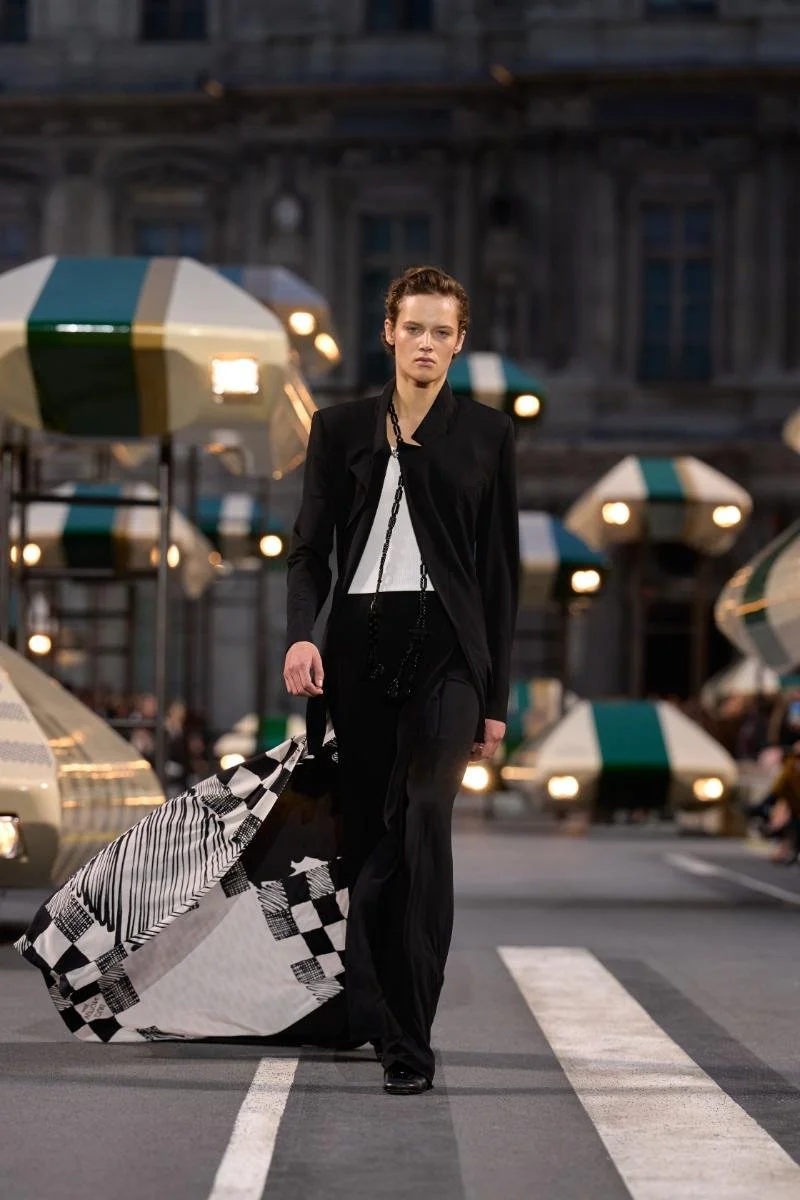
Nicolas Ghesquière has never been particularly interested in subtlety, which made the lightness of Louis Vuitton Spring 2027 all the more intriguing. Above the asphalt runway stretching through the Louvre's Cour Carrée, a fleet of wedge-shaped flying vehicles hovered like something lifted from a futuristic film, their ’70s-style headlights and blinking navigation lights turning the courtyard into a scene from Blade Runner. The theatrical set suggested a city navigating an overheated, turbulent world, but the clothes offered the opposite response: ease, fluidity and a sense of being unencumbered. Ghesquière built the collection around familiar archetypes including three-hole dresses, cardigans, blousons and reefer coats, stripping them of their usual weight and reconstructing them in gauzy, papery and almost weightless fabrics. Colours were pale, prints blurred and embroidery deliberately restrained, creating a collection that felt surprisingly quiet for a designer whose vocabulary has so often involved armour.
That apparent simplicity concealed an extraordinary amount of technical work. Mesh panels appeared inside translucent shift dresses and slinky trousers, leather blousons were subtly dimpled, while tailoring was largely reimagined in jersey and knit fabrics that allowed the clothes to bounce and move rather than hold rigidly to the body. Double-face coats came in scarf-weight checkered cashmere, while other outerwear was made from fabrics even thinner than chiffon. Ghesquière, who has spent much of his career exploring robot leggings, industrial neoprene, Lego-like shoes and architectural capes, joked that he has long been “a specialist in armor”. Here, however, the armour had almost disappeared. Most strikingly, coats were reportedly lighter than a T-shirt, turning the engineering behind the collection into something the wearer could barely feel.
There was a larger idea behind that weightlessness. Ghesquière has always treated fashion as a way of imagining the future, but Spring 2027 suggested that the future might not need to look hard or metallic to feel advanced. The collection's progress came through fabric research, construction and movement rather than visual futurism, with clothes that seemed to float, shudder and drift as the models crossed the Louvre. Even the spectacular flying machines were ultimately a backdrop to a wardrobe concerned with making movement easier. At a moment when fashion can feel increasingly burdened by its own history, Ghesquière proposed something unexpectedly radical: not more, but less. Louis Vuitton Spring 2027 was about defying gravity, both literally and sartorially.