Julie Kegels Fall 2026
For Julie Kegels, fashion is not simply about form — it’s about perception. Her Fall 2026 collection, staged in Antwerp to the dissonant sound of plucked violins, was a meditation on how we construct and control our image in an age of constant visibility. Titled Face Value, the show explored what happens when we strip back the performance. Models moved slowly, almost ritualistically, forcing the audience to look — really look — at the garments themselves. It was a deliberate rejection of the social-media spectacle, the kind of show that reminds you fashion can still ask questions rather than simply trend.
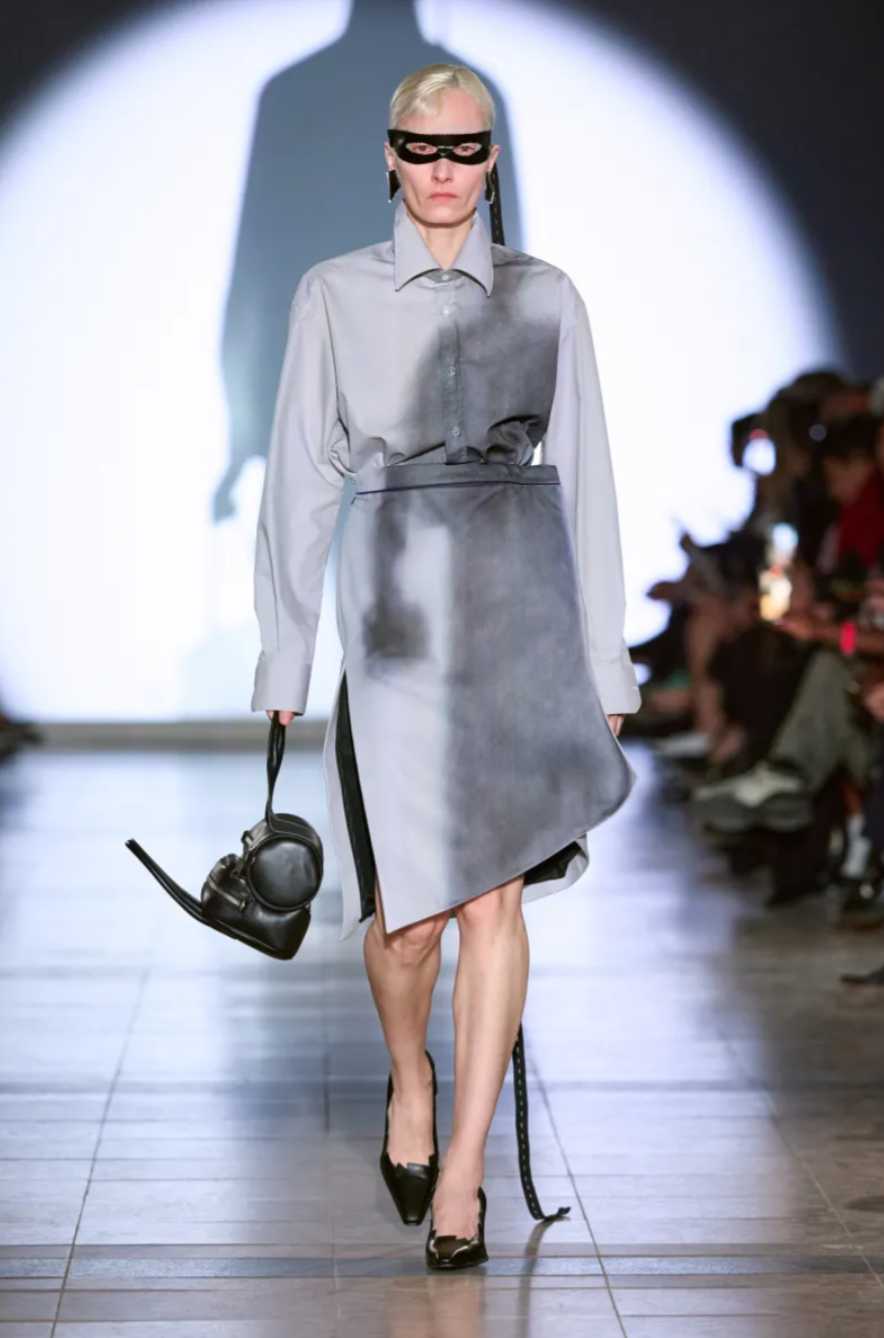
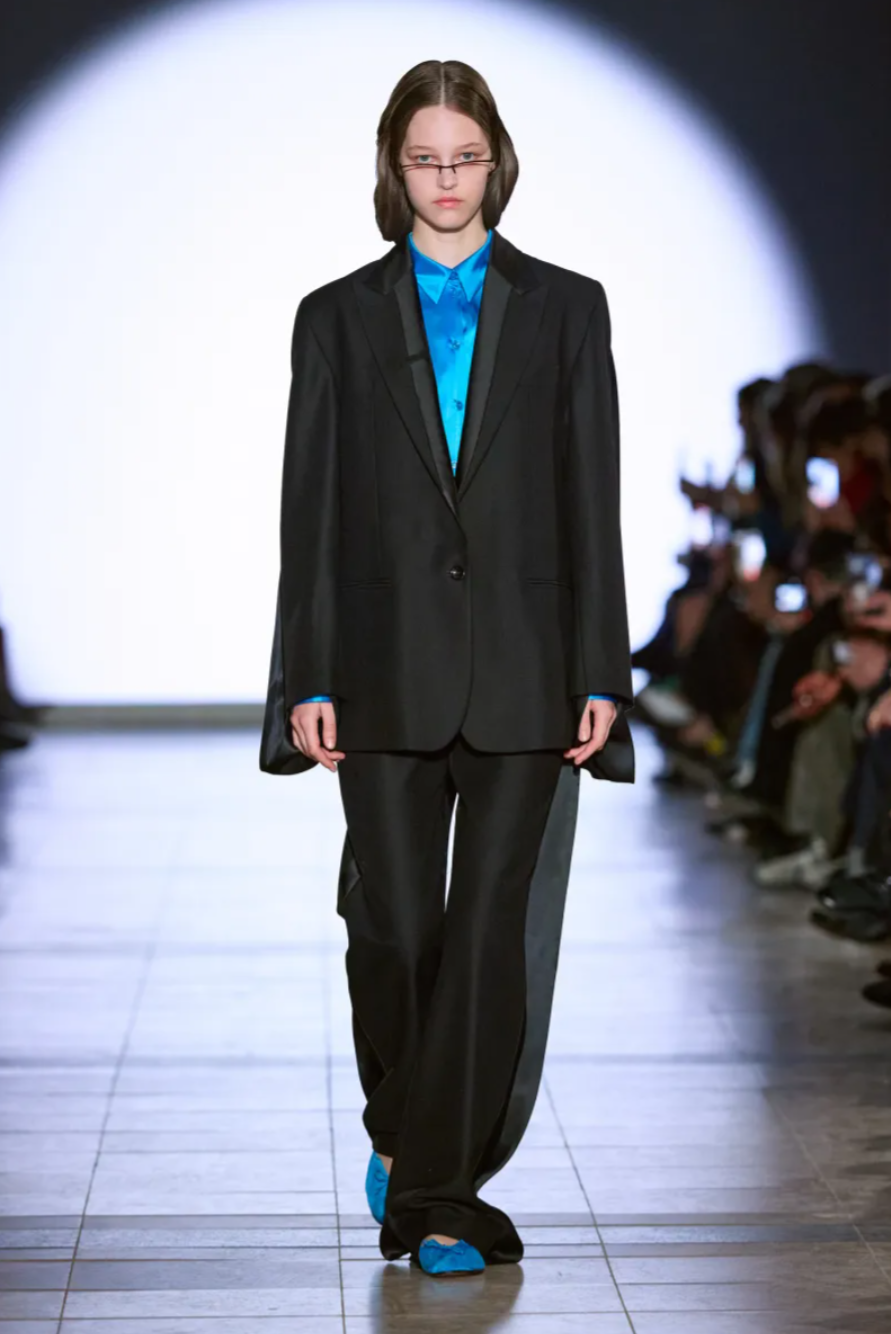
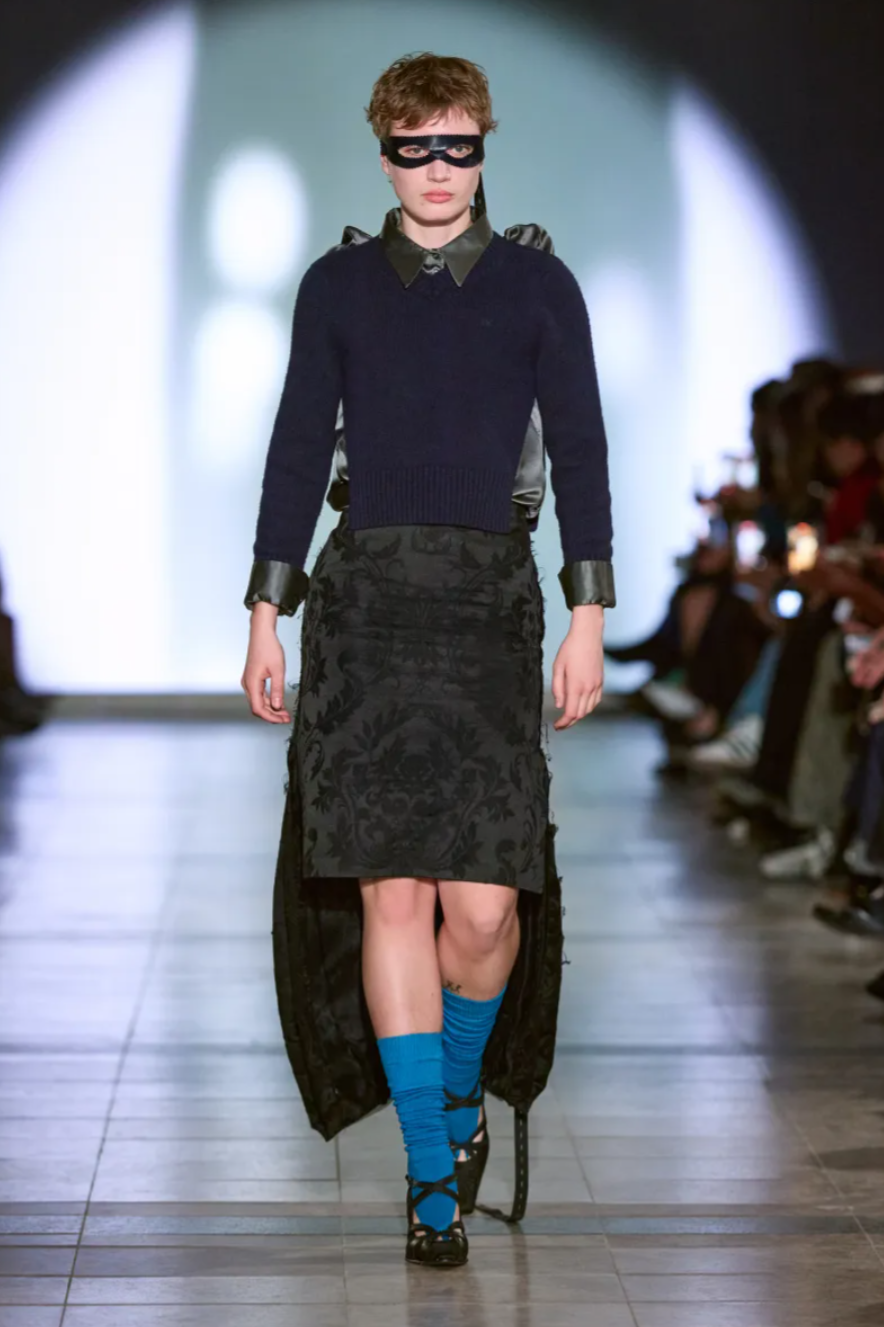
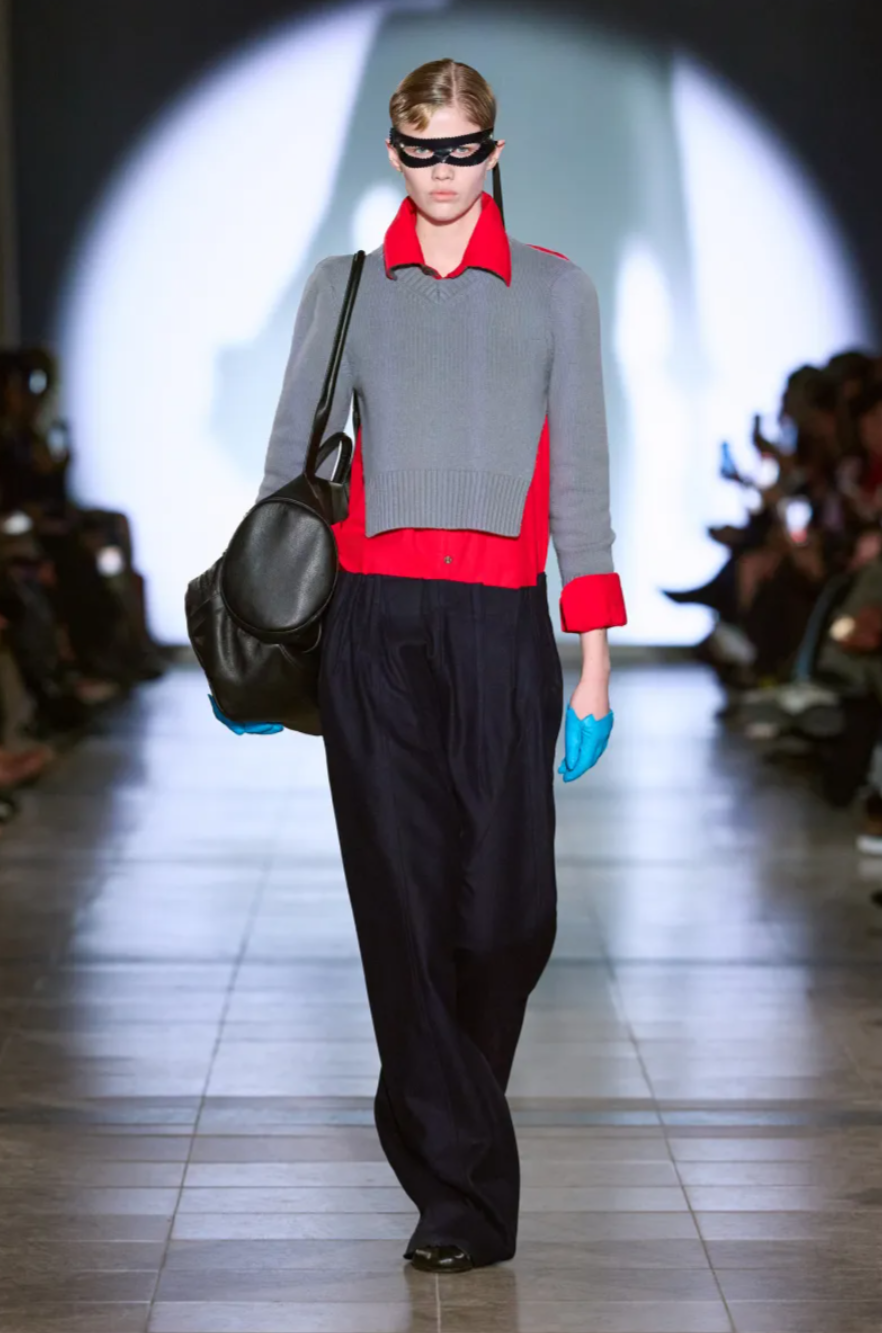
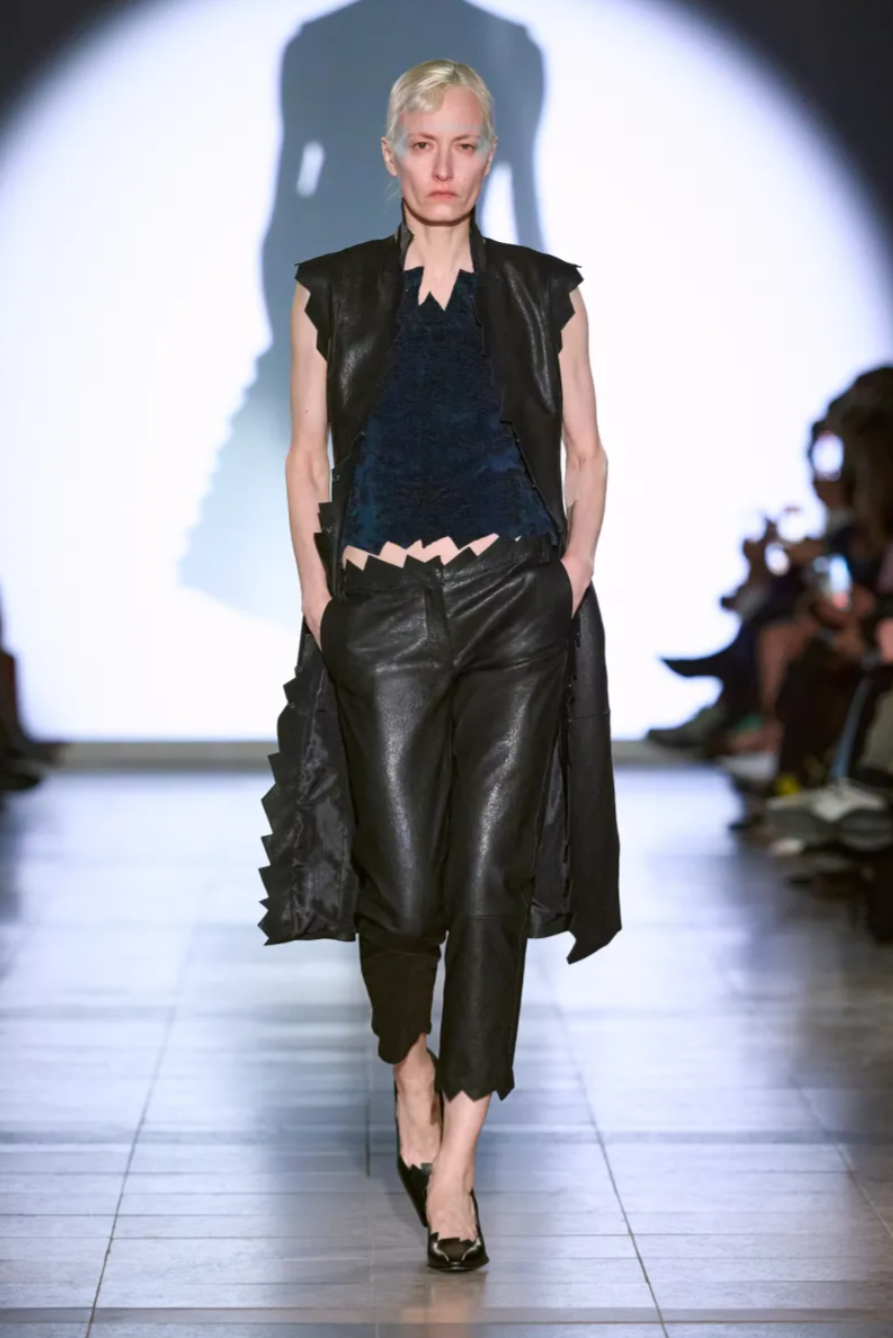
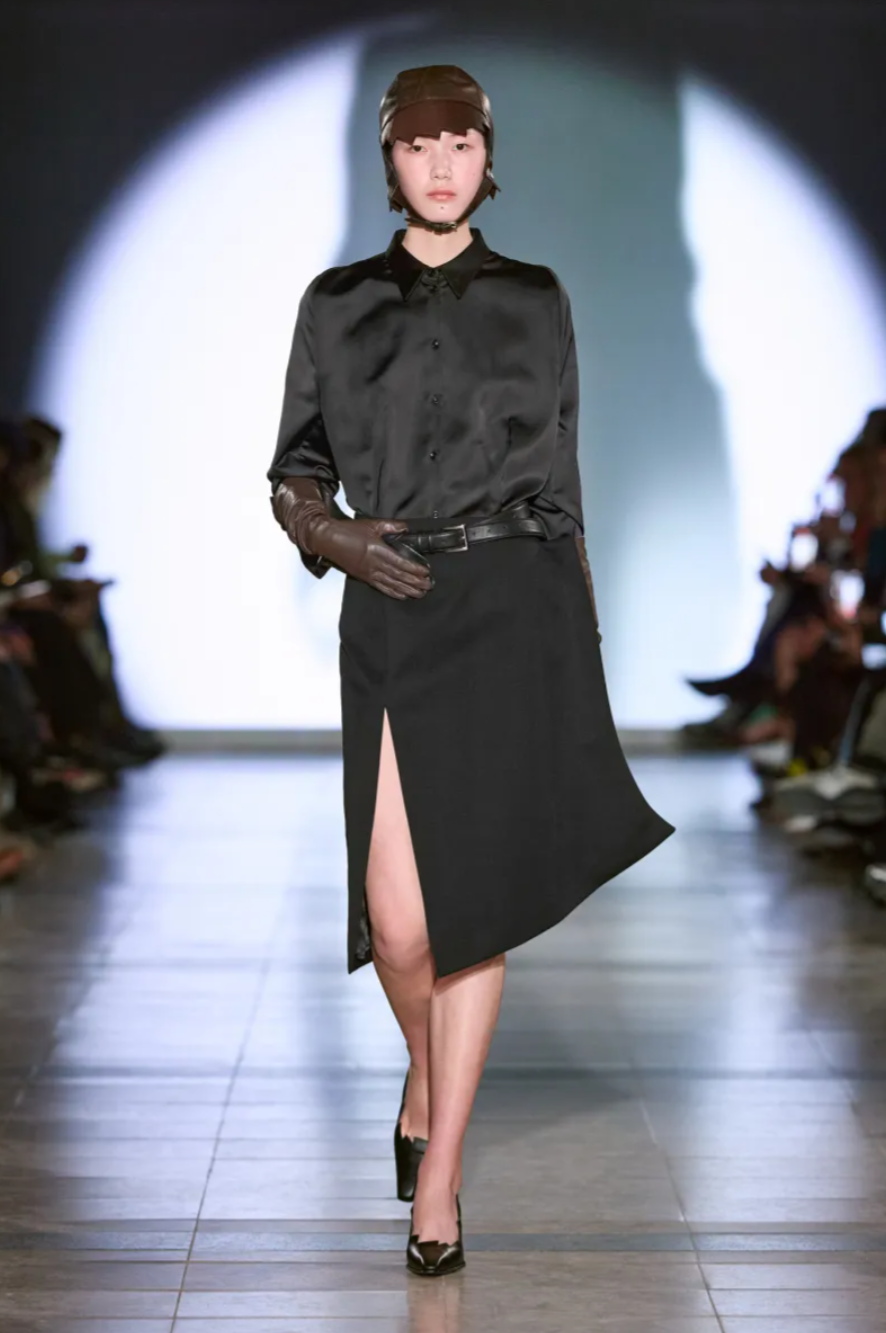
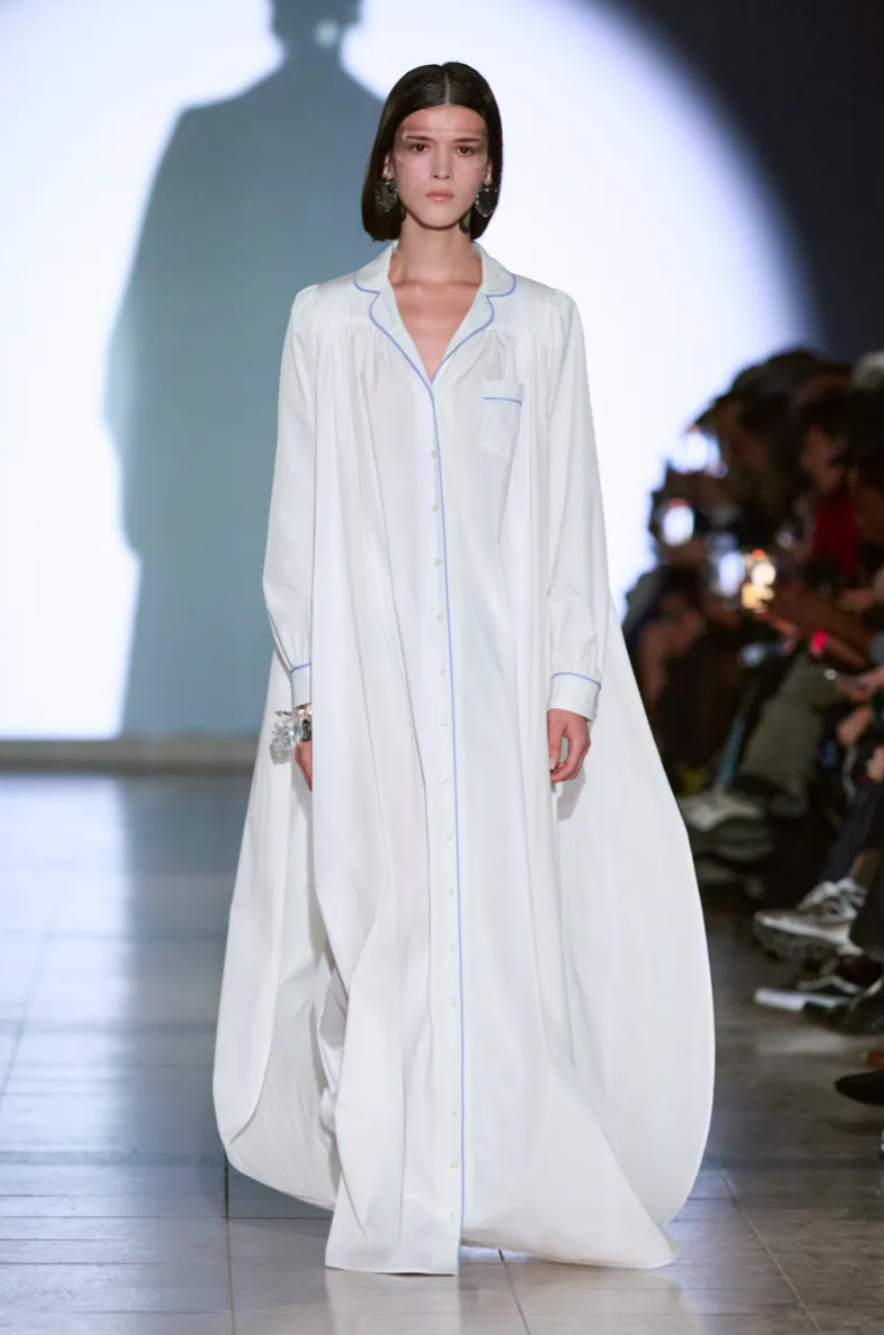
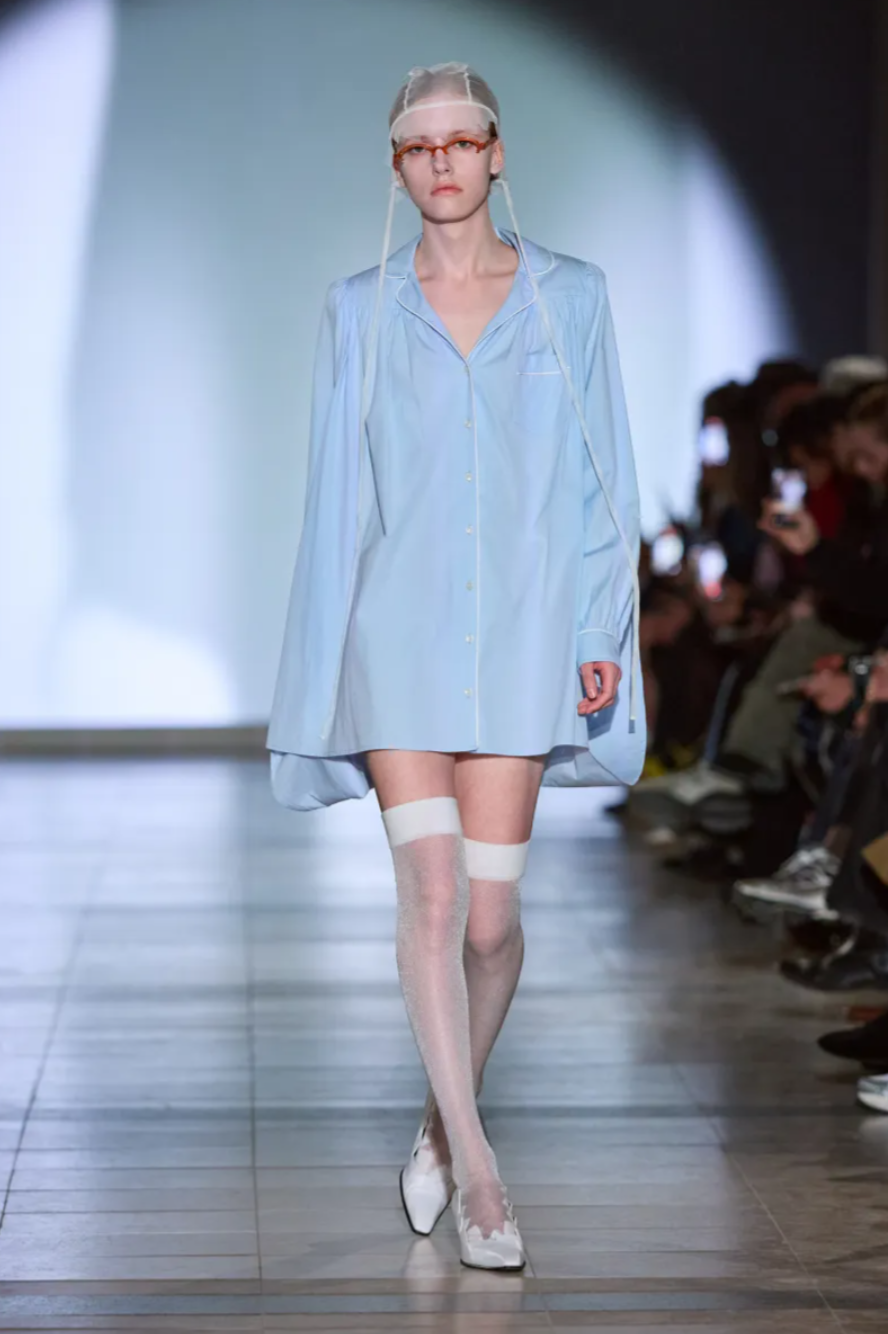
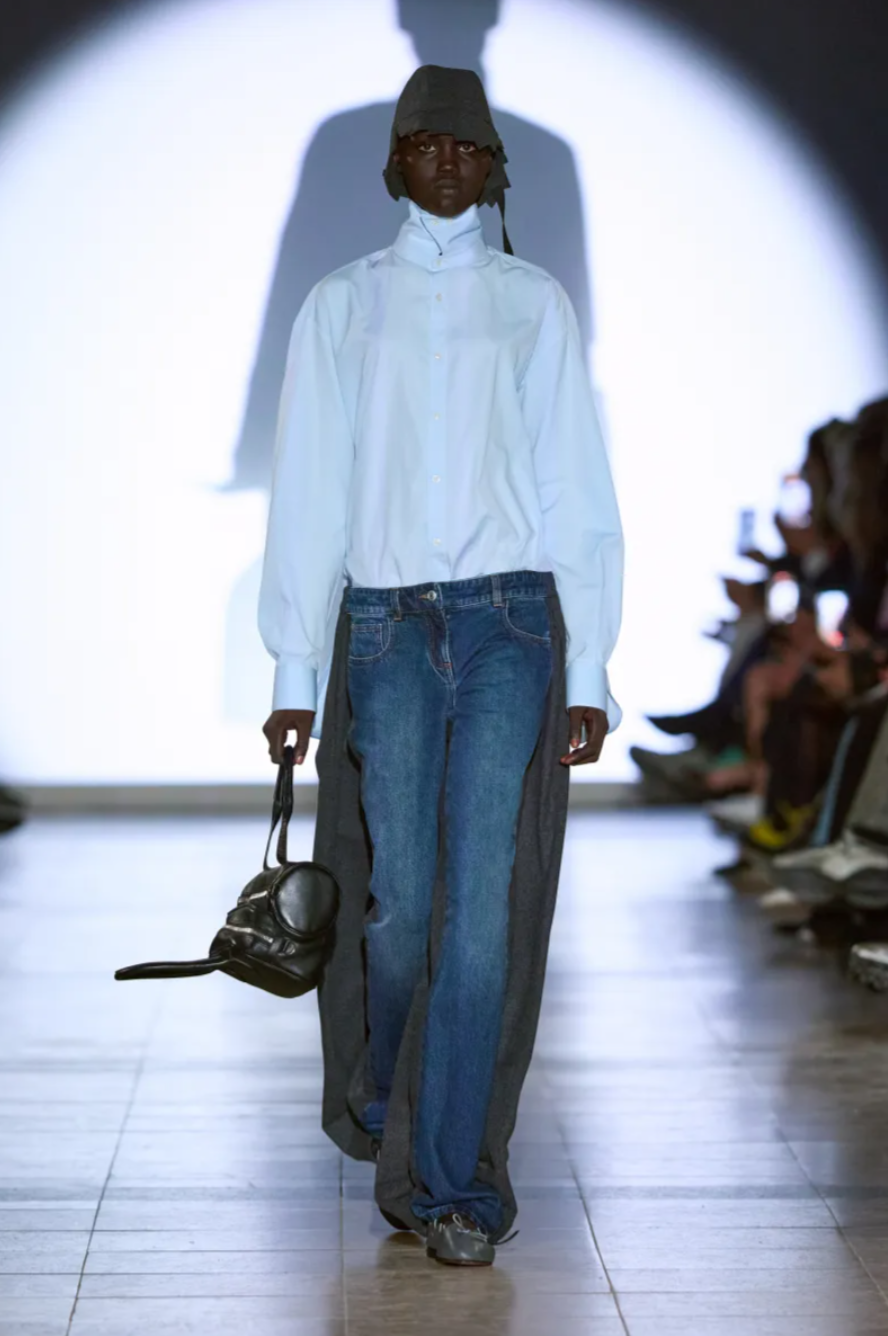
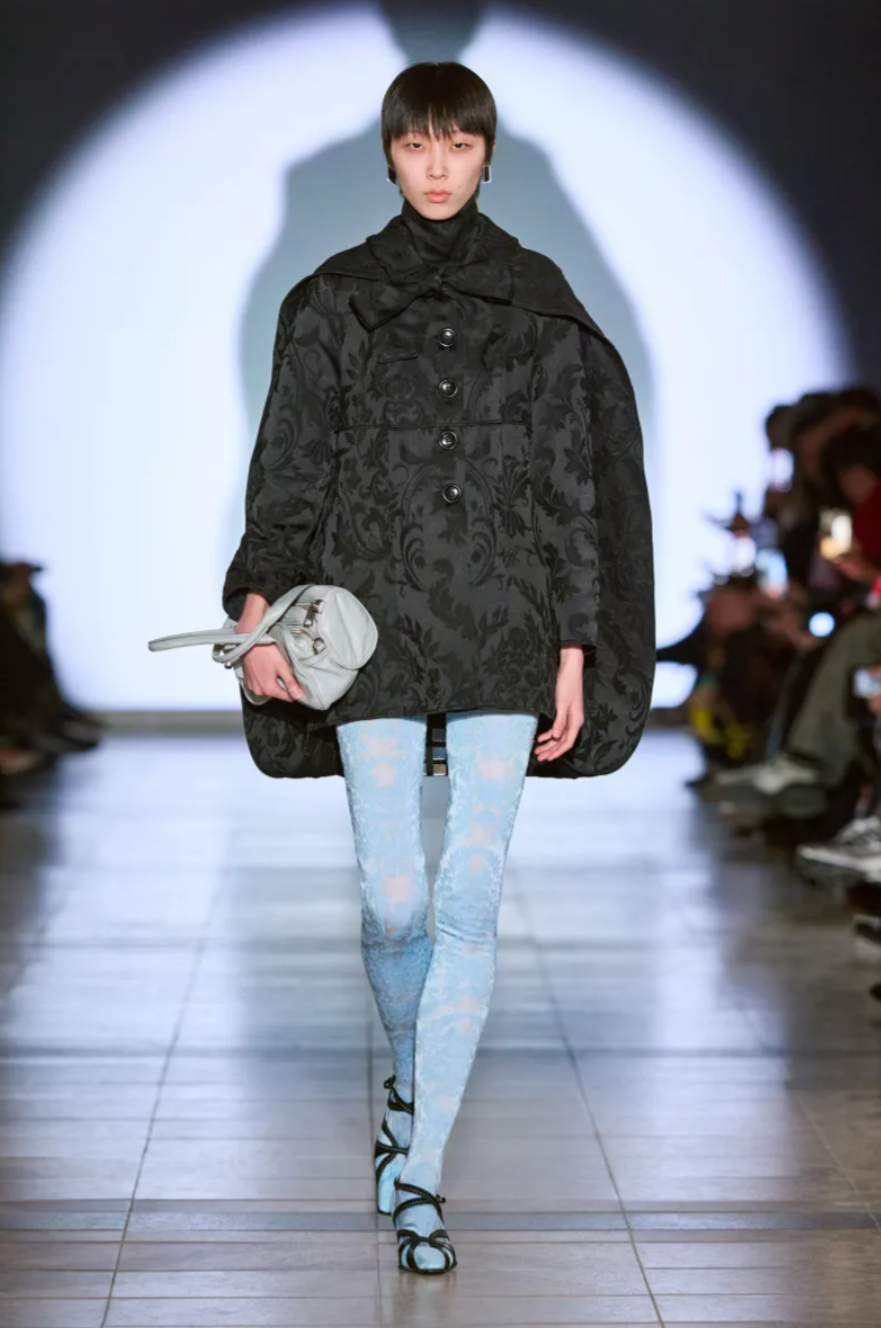
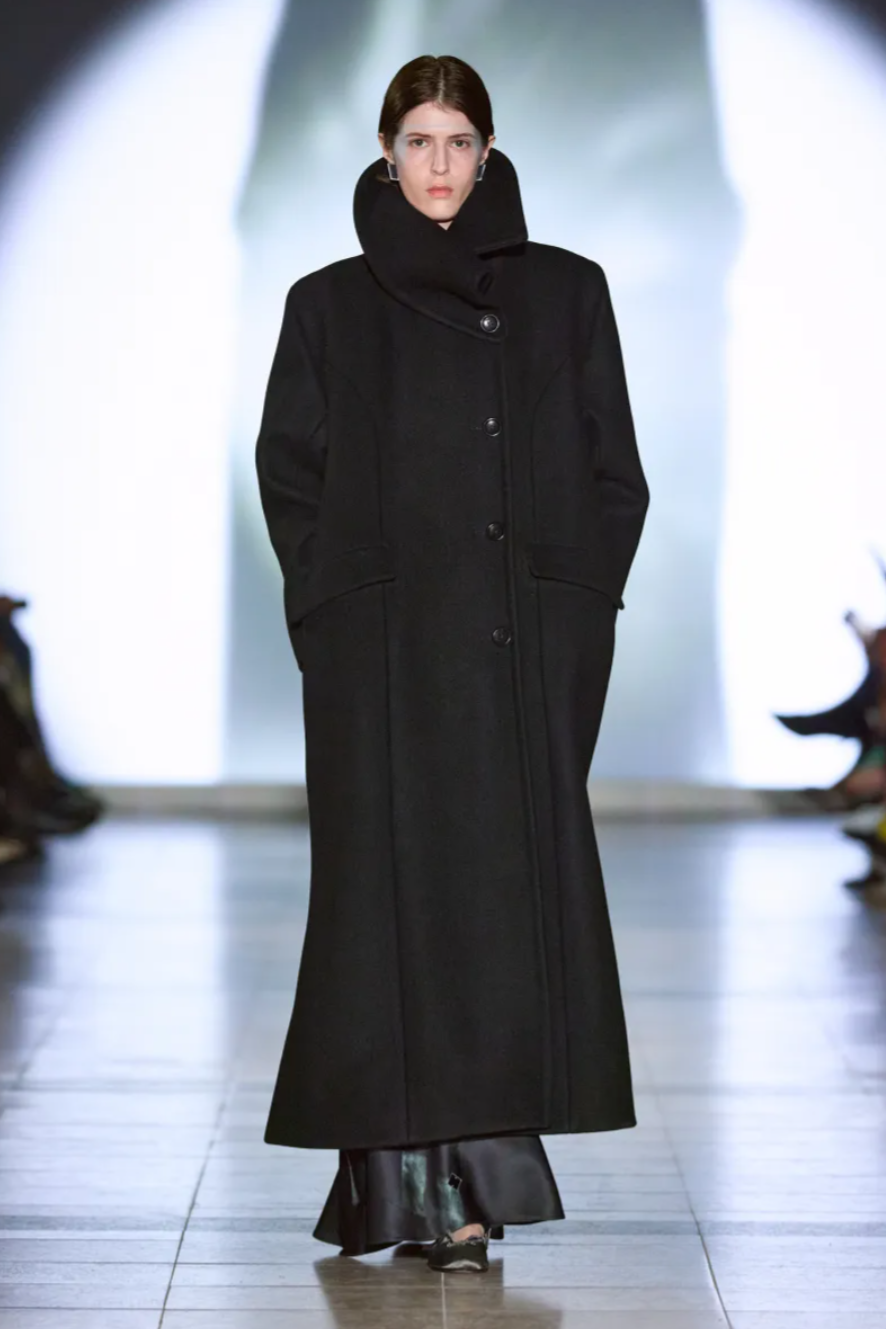
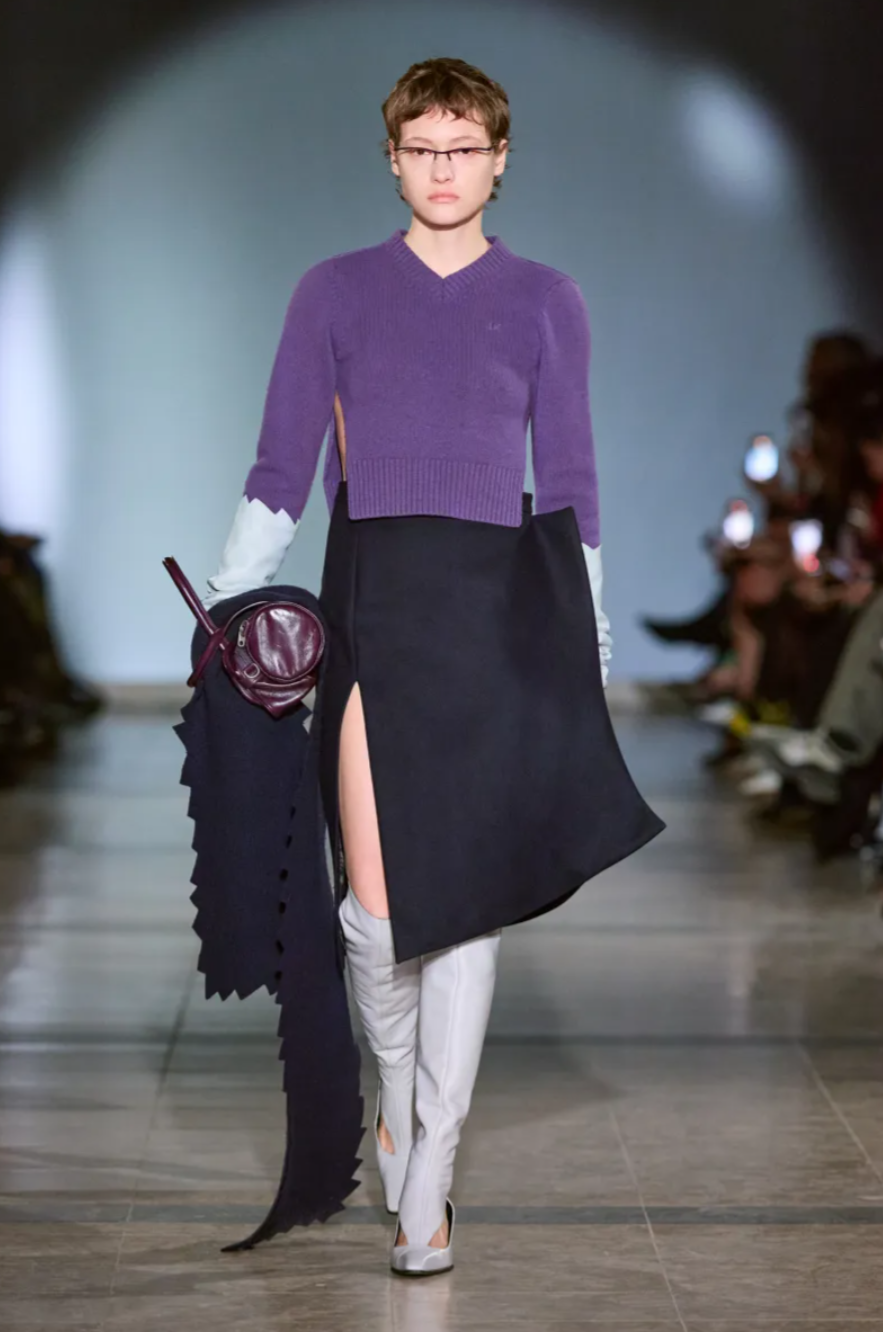
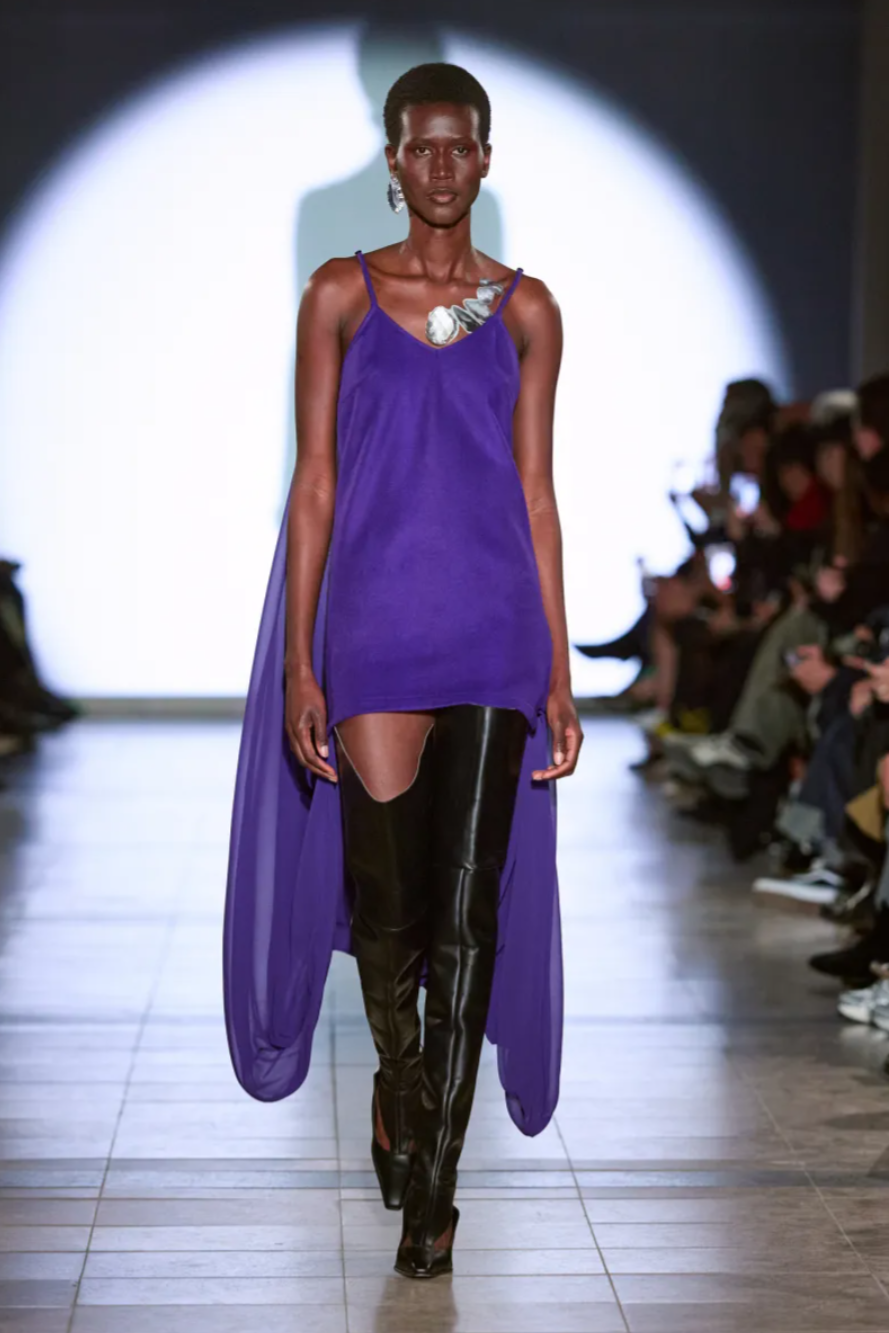
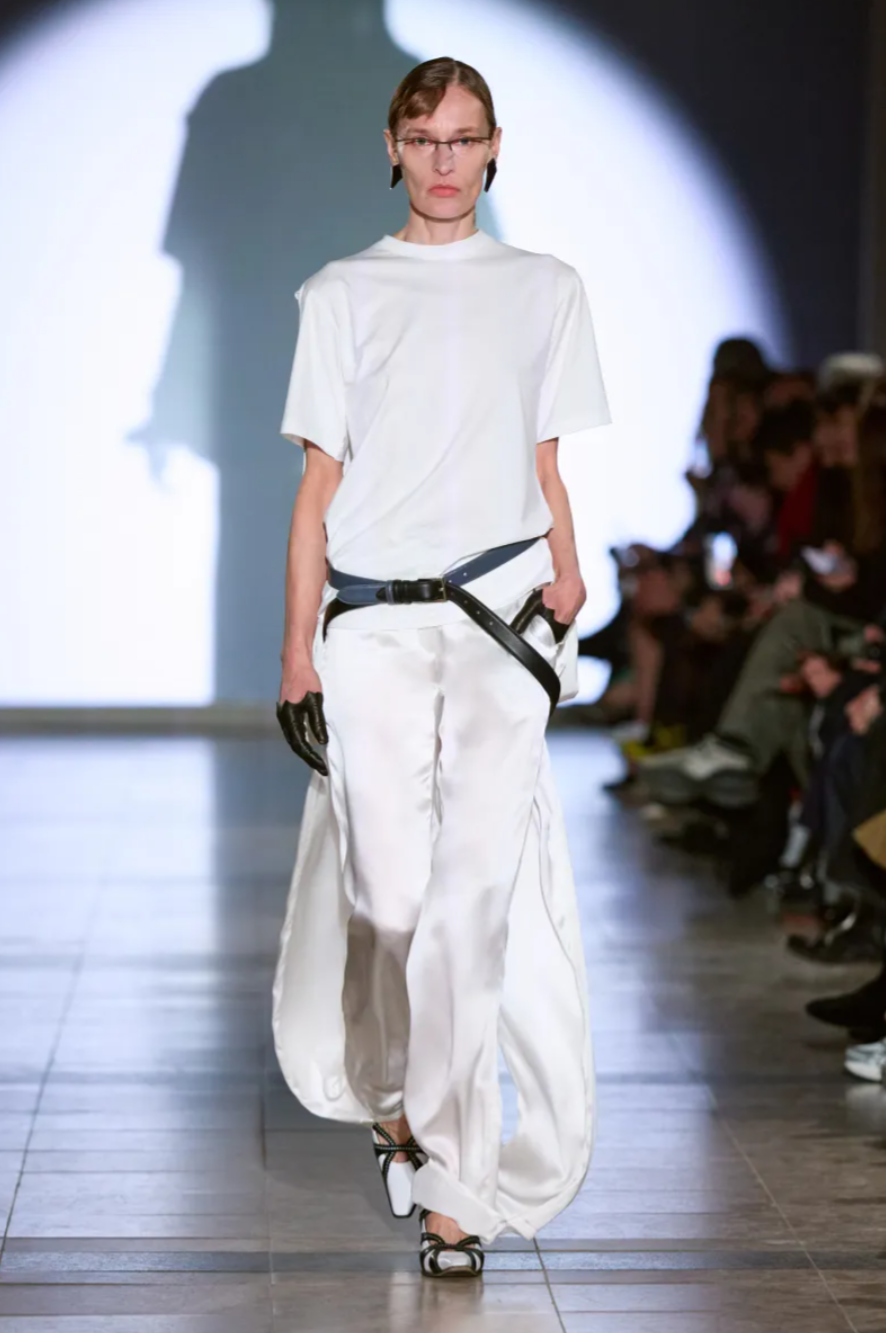
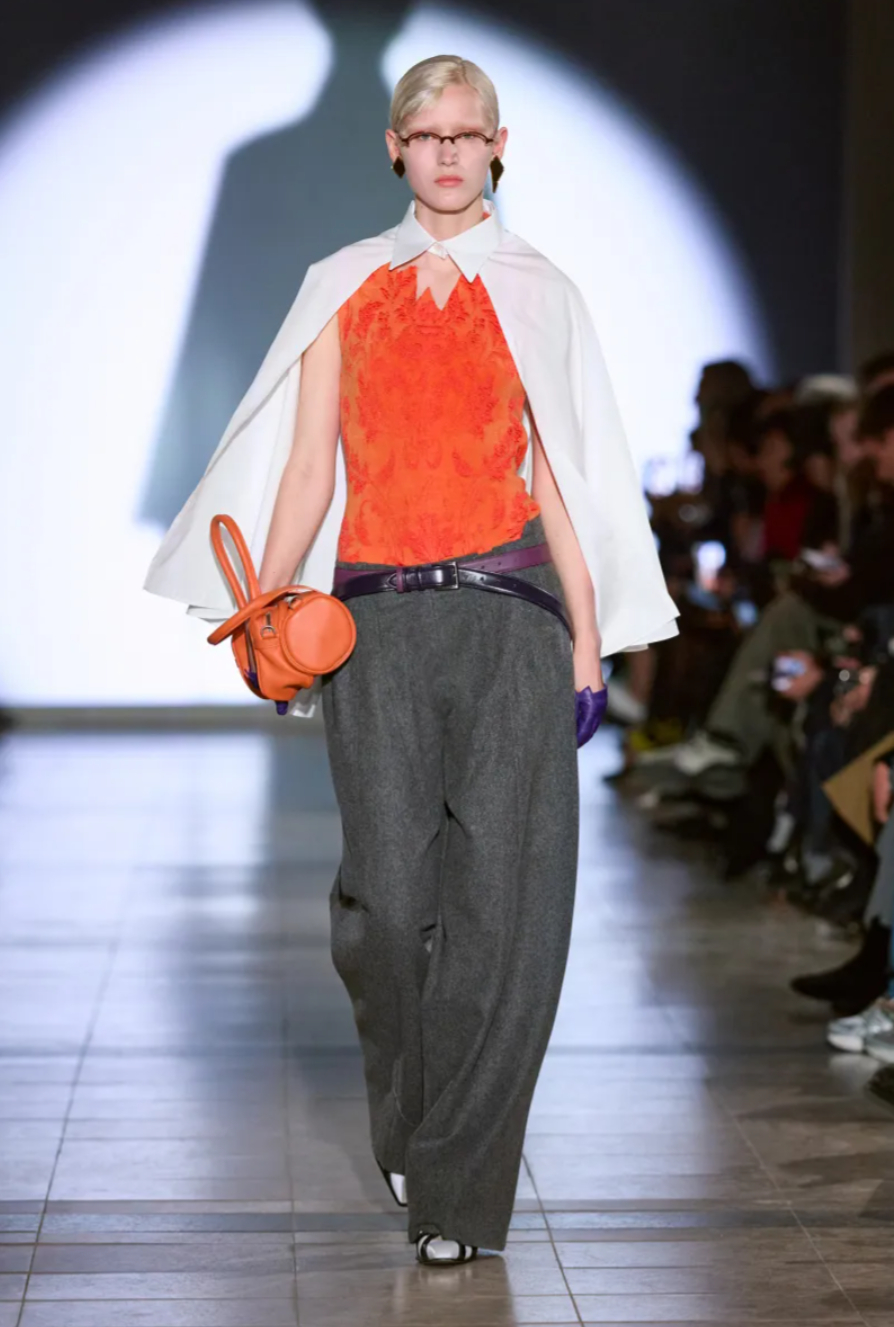
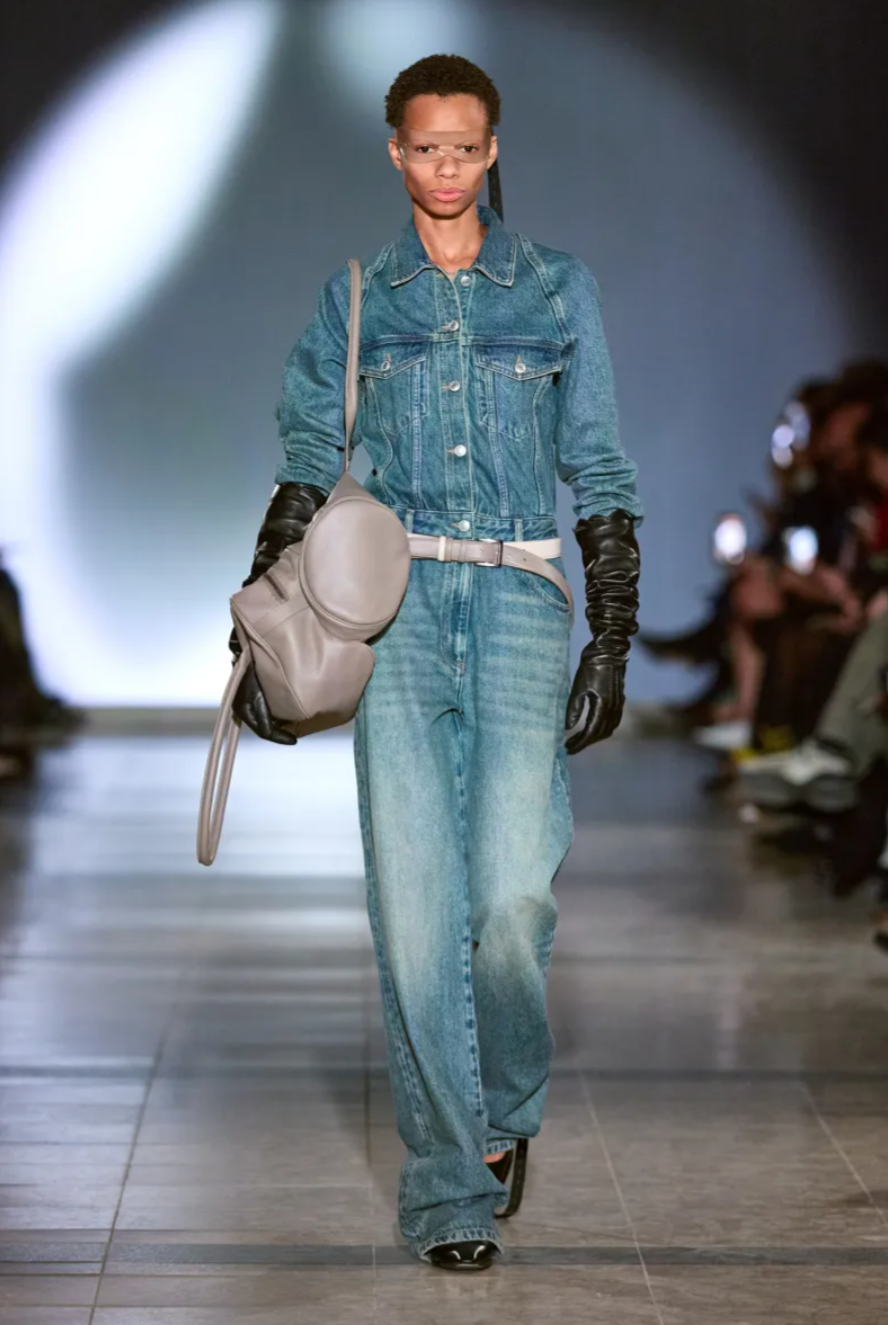
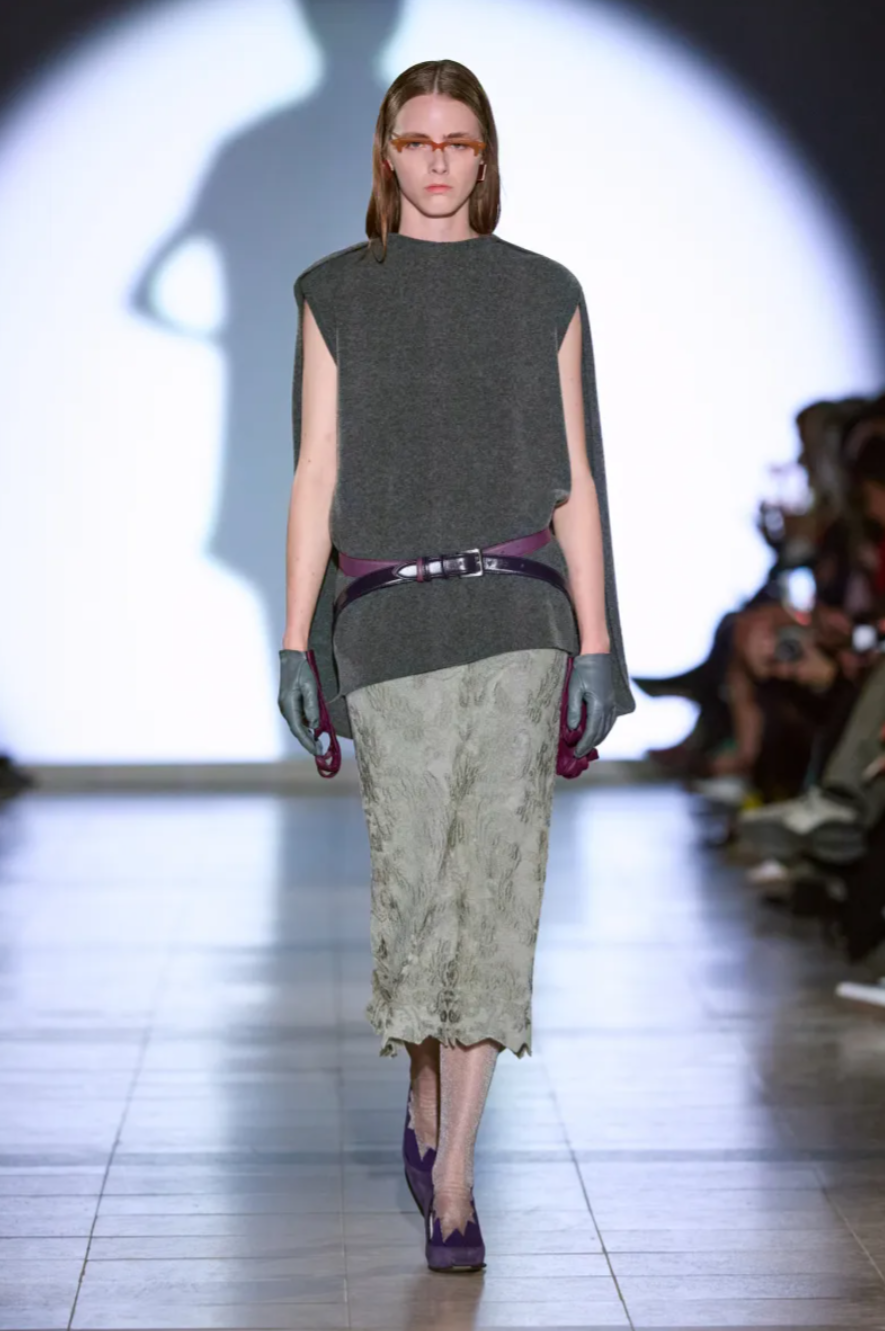
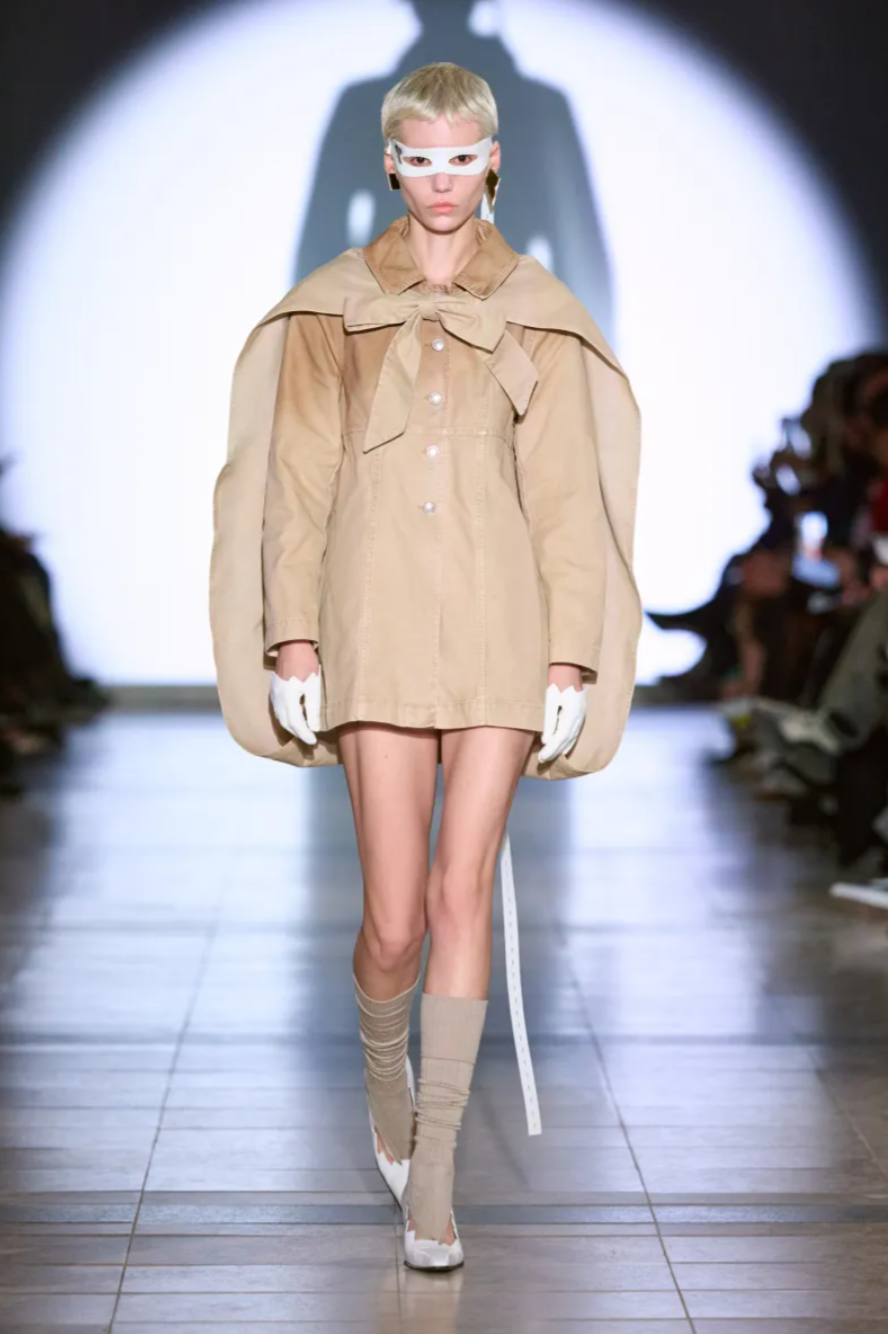
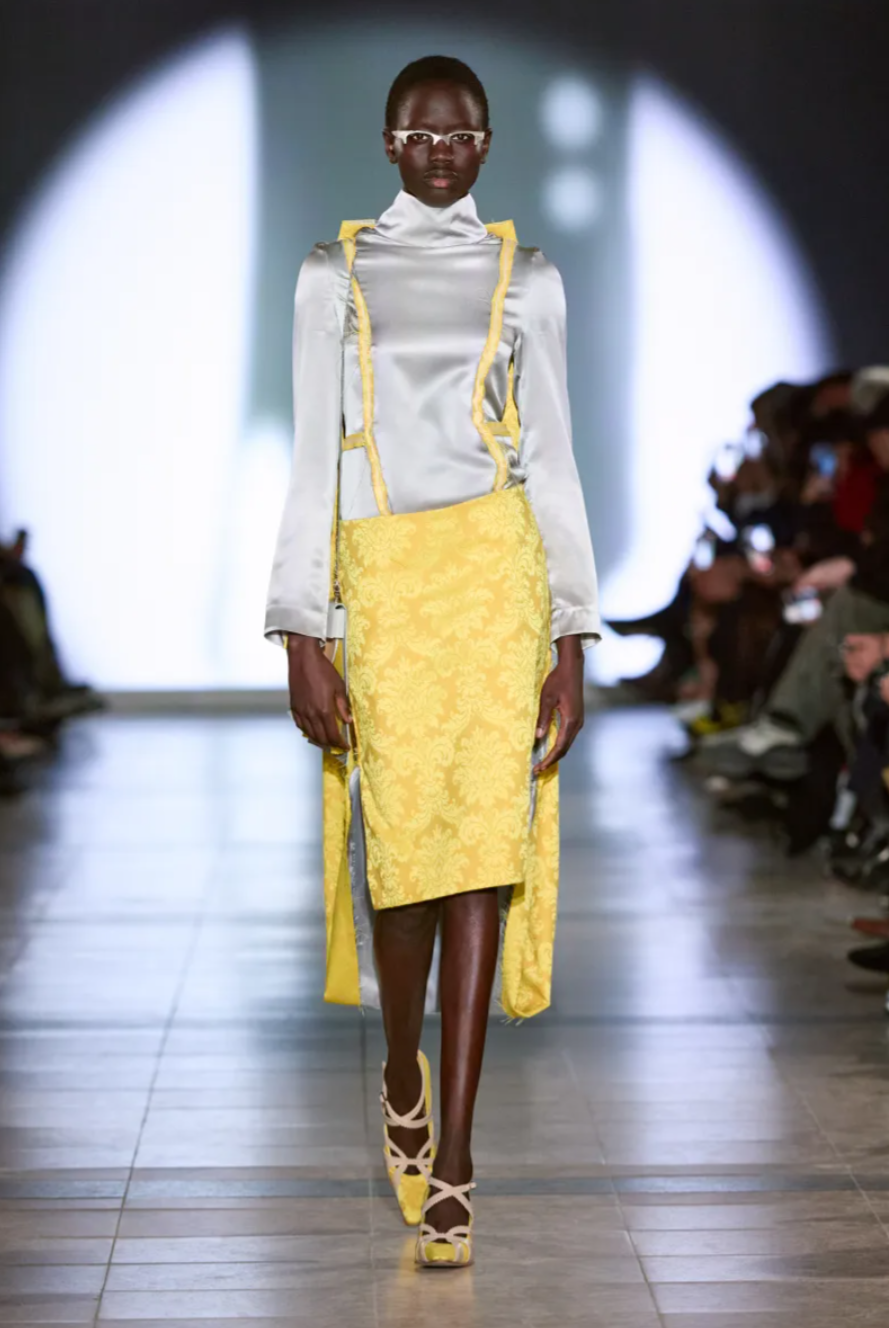
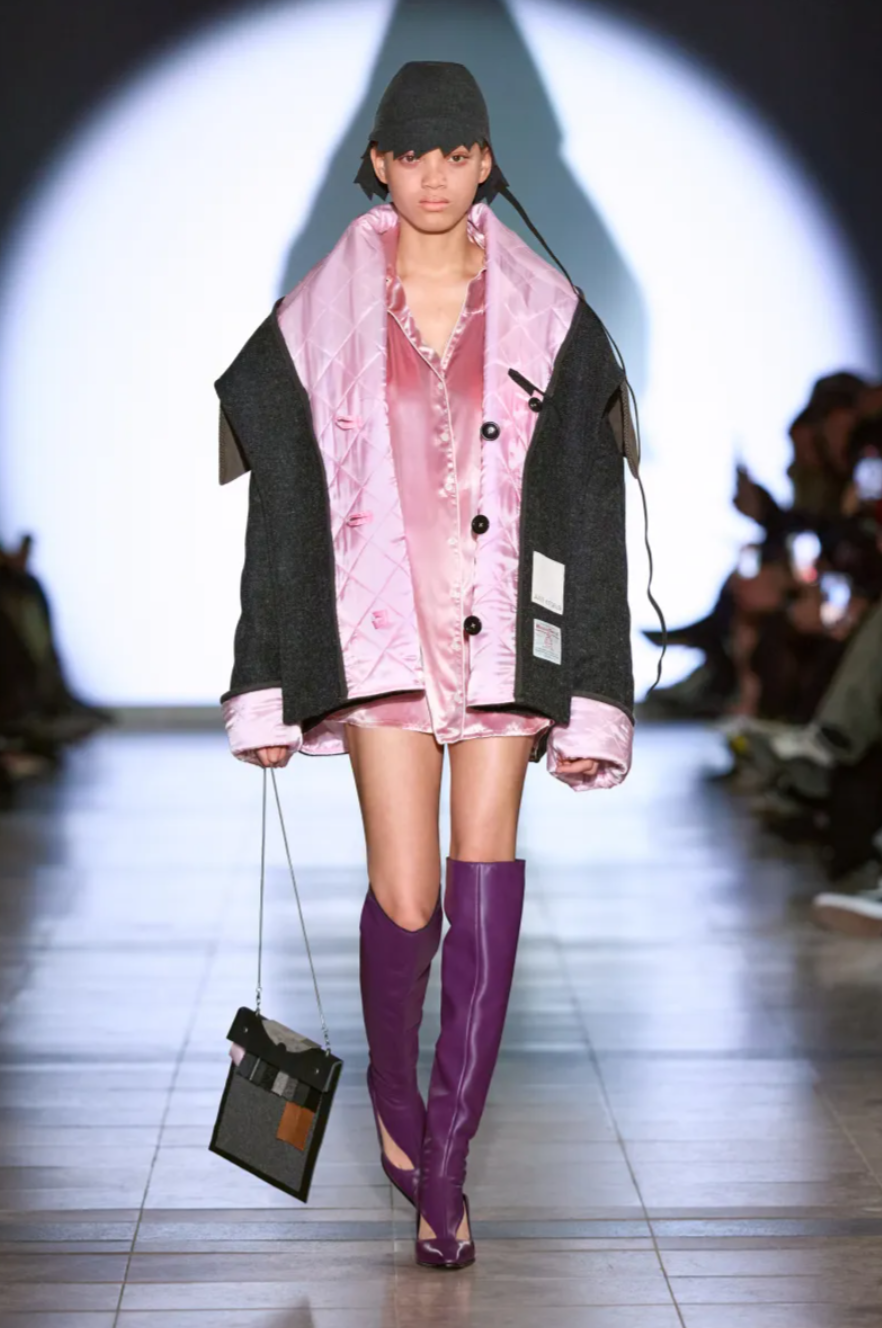
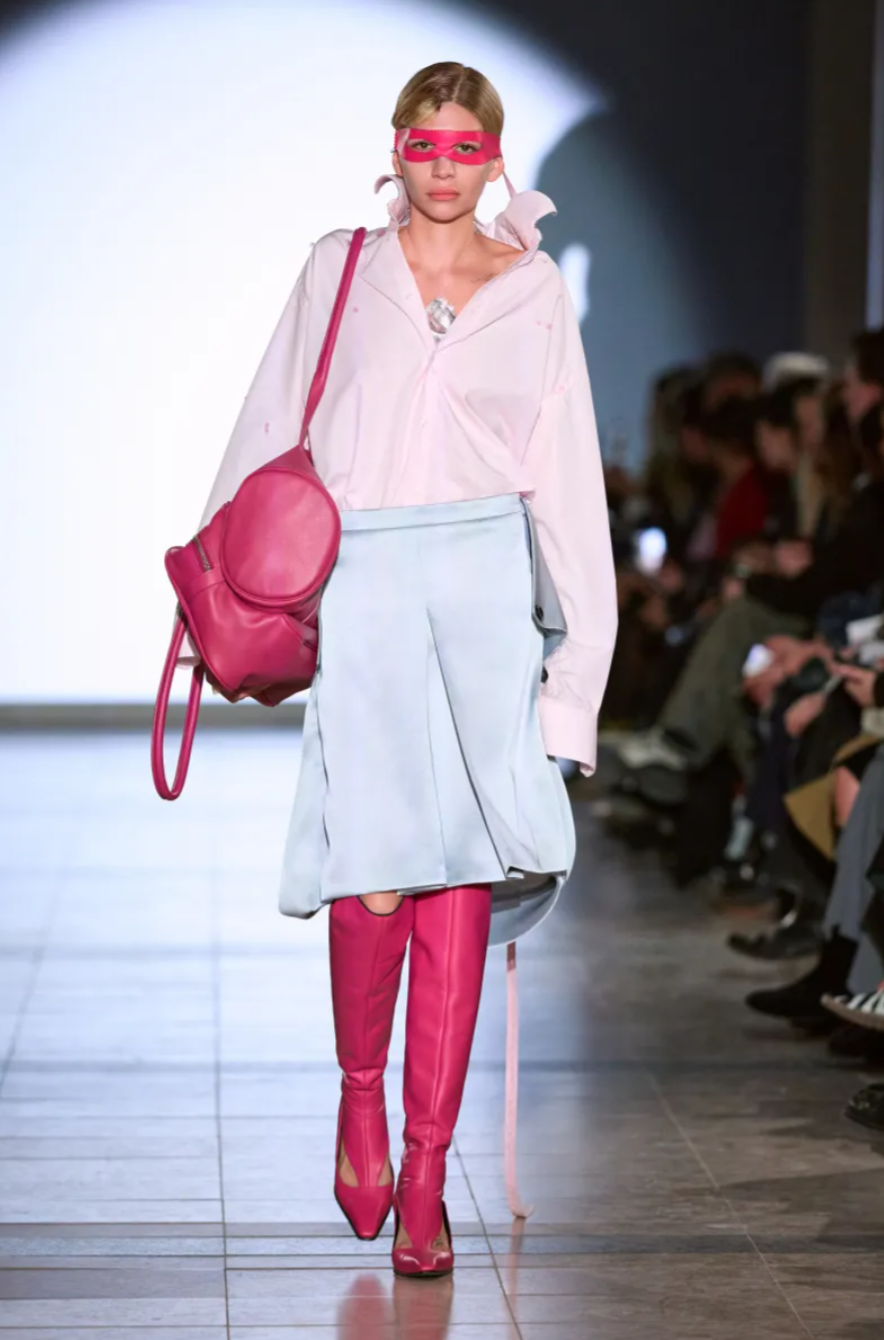
The collection drew on Andy Warhol’s notion of aura and the long-exposure portraiture of Korean artist Kyungwoo Chun, whose work considers the tension between visibility and essence. Kegels turned that concept into clothing that blurred shadow and substance. Capes fastened subtly behind the ankles to create ghostly silhouettes; shirts fell apart only to reform as capes; pajama tops ballooned into gowns. In her Antwerp atelier, she photographed garments under dramatic lighting and used those distorted shadows as blueprints for new shapes — a poetic merging of image and material.
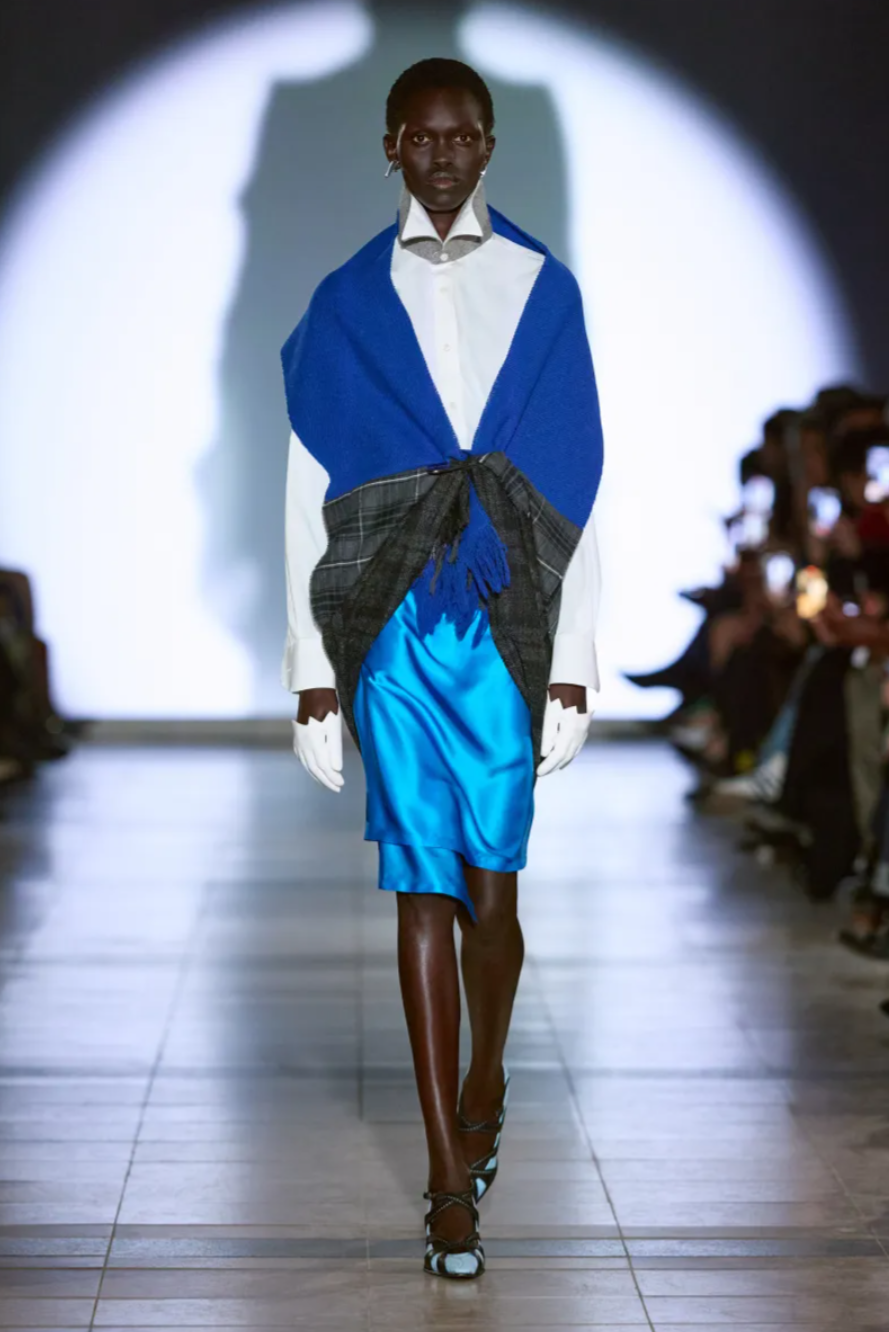
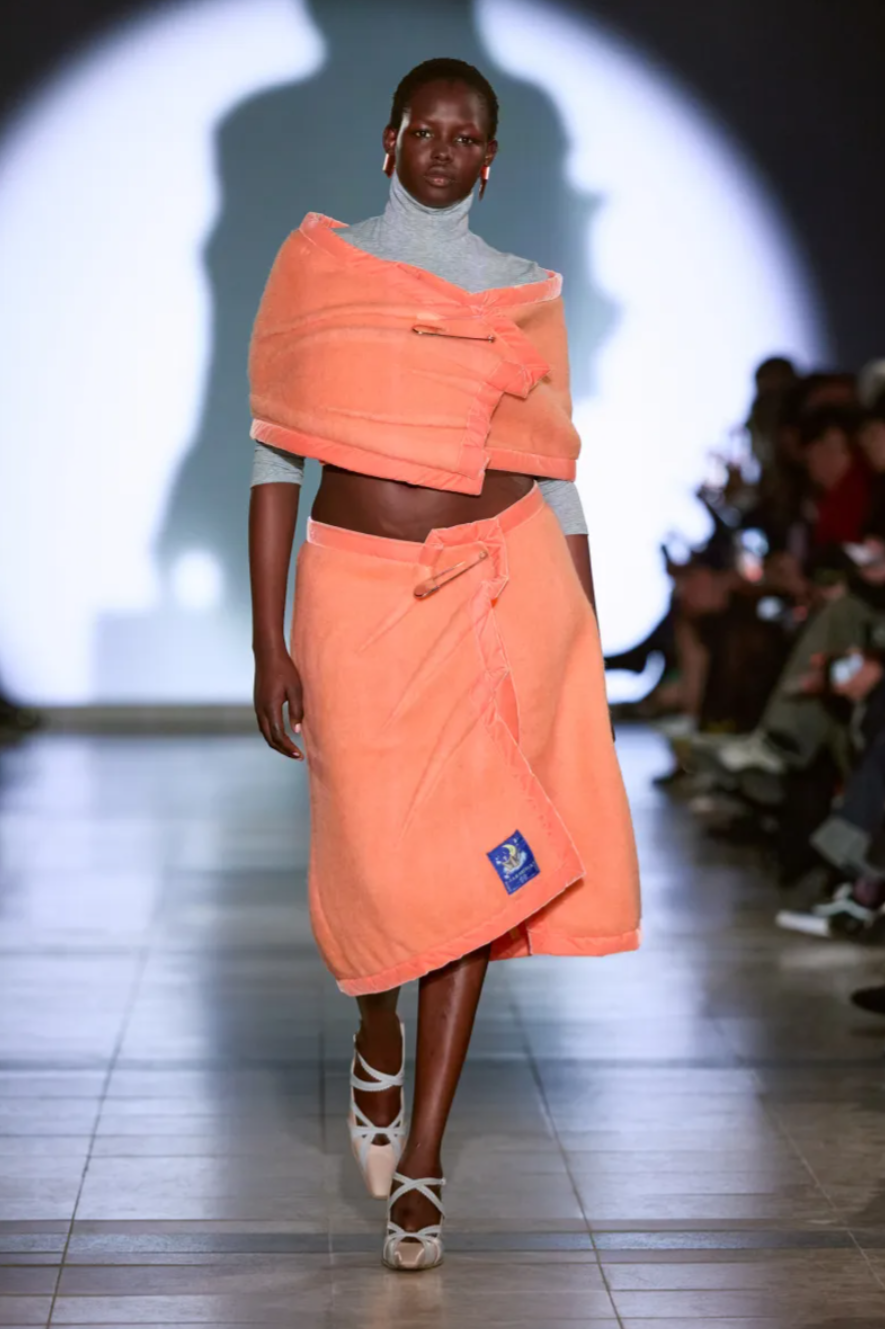
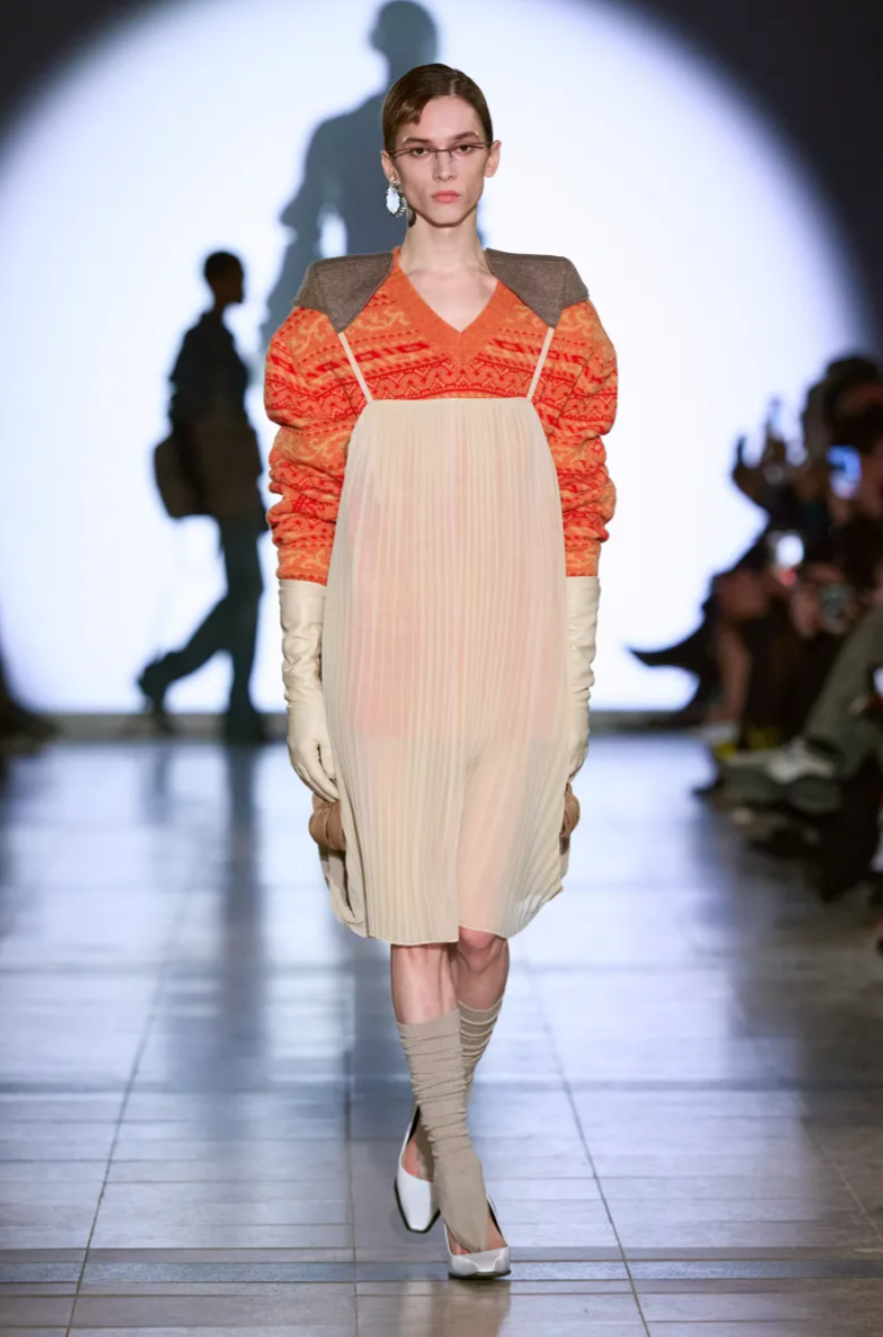
Kegels’s “forced tailoring” guided the body into assertive poses, sleeves pushing forward like armour, while tiny jumpers split open at the shoulders to reveal flashes of colour. Exposed seams and jagged hats hinted at imperfection, later softened by childlike details — baby blankets transformed into wrap skirts, a wink to Calimero’s broken shell. “The aura is a shield,” she said backstage. “We always have an appearance, but maybe the appearance is not true to what there is inside.” It was a deeply human reflection rendered in fabric — proof that in Kegels’s hands, clothing can still hold the space between who we are and who we wish to be.