HUBING SELECTS Spring/Summer27: URBAN GRACE
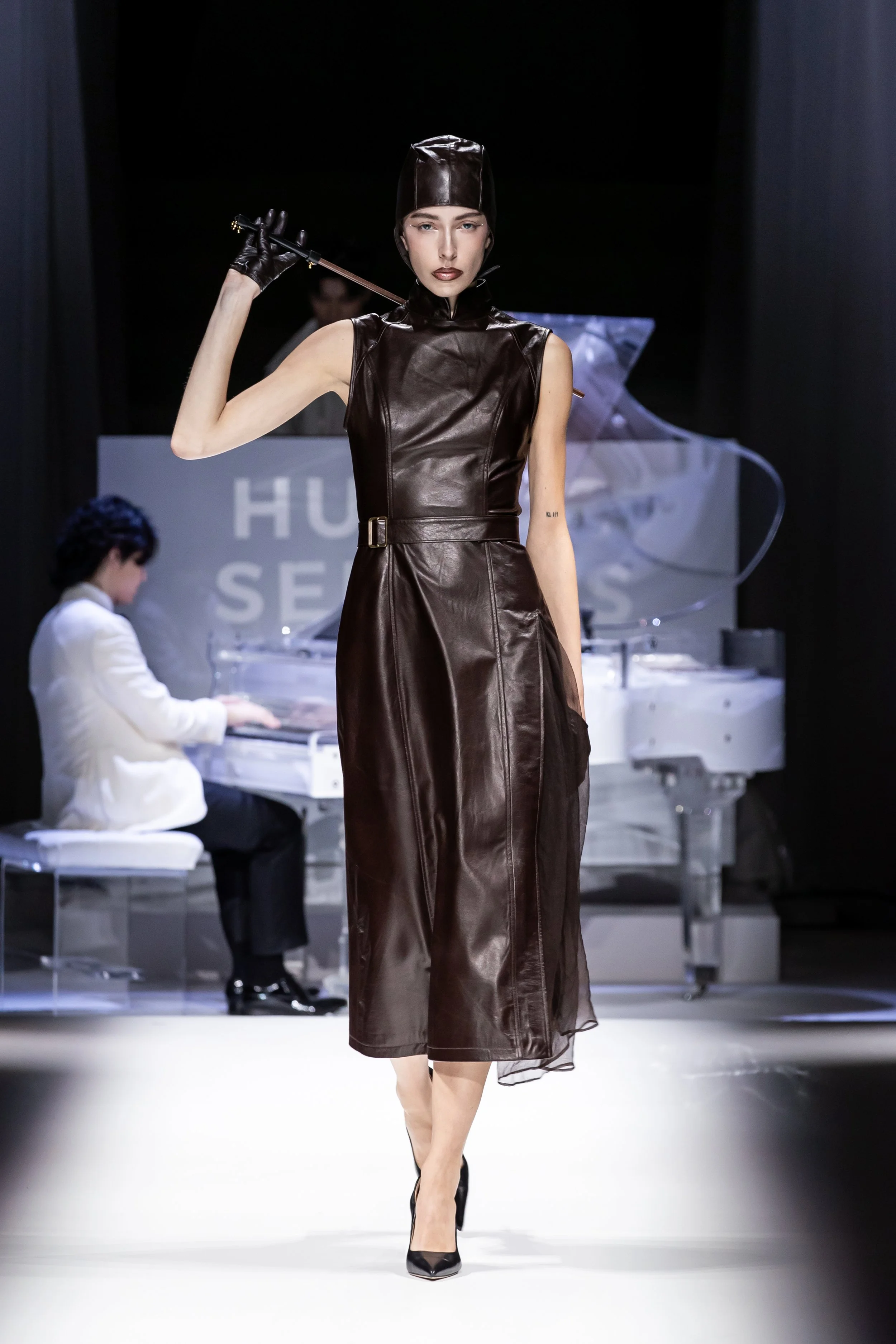
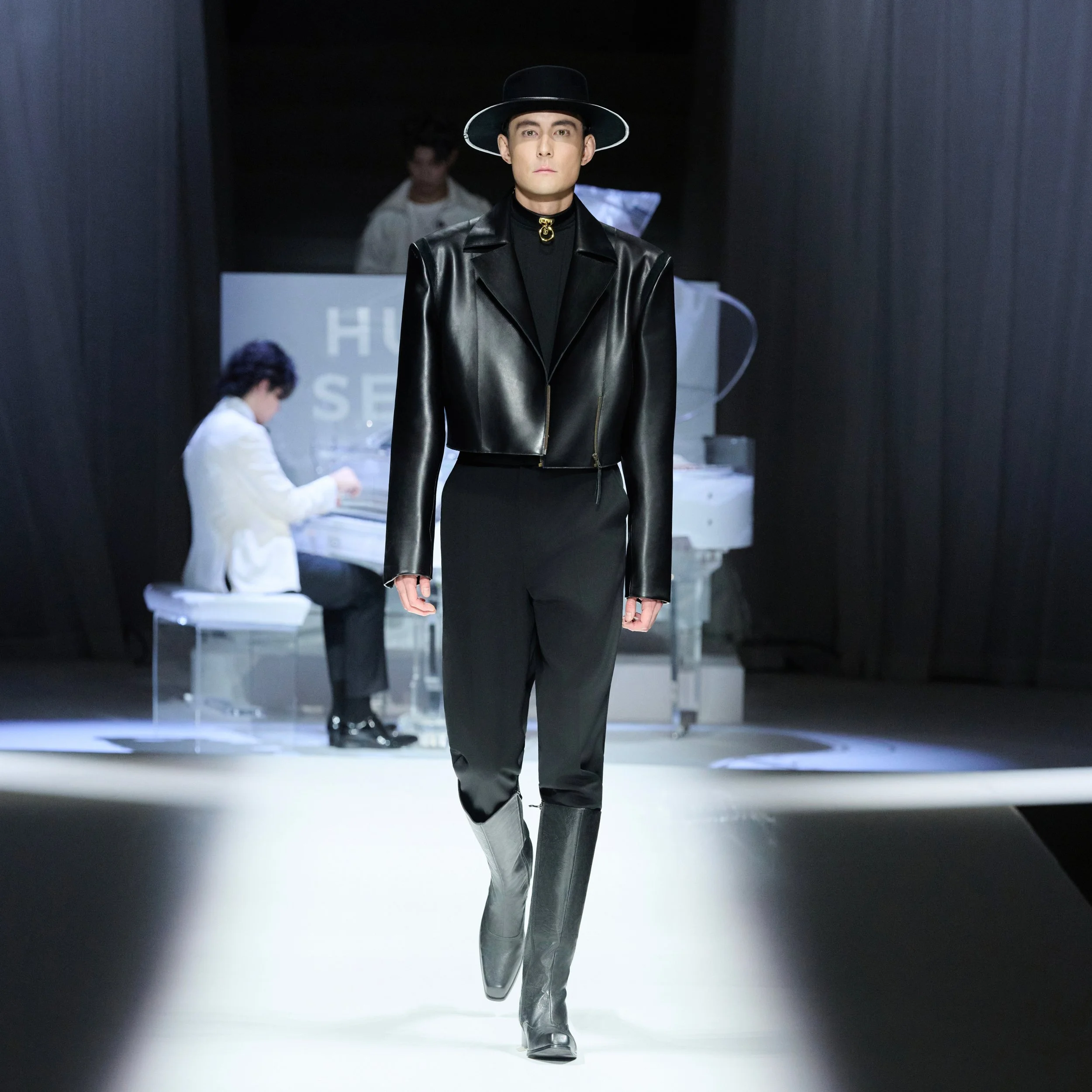
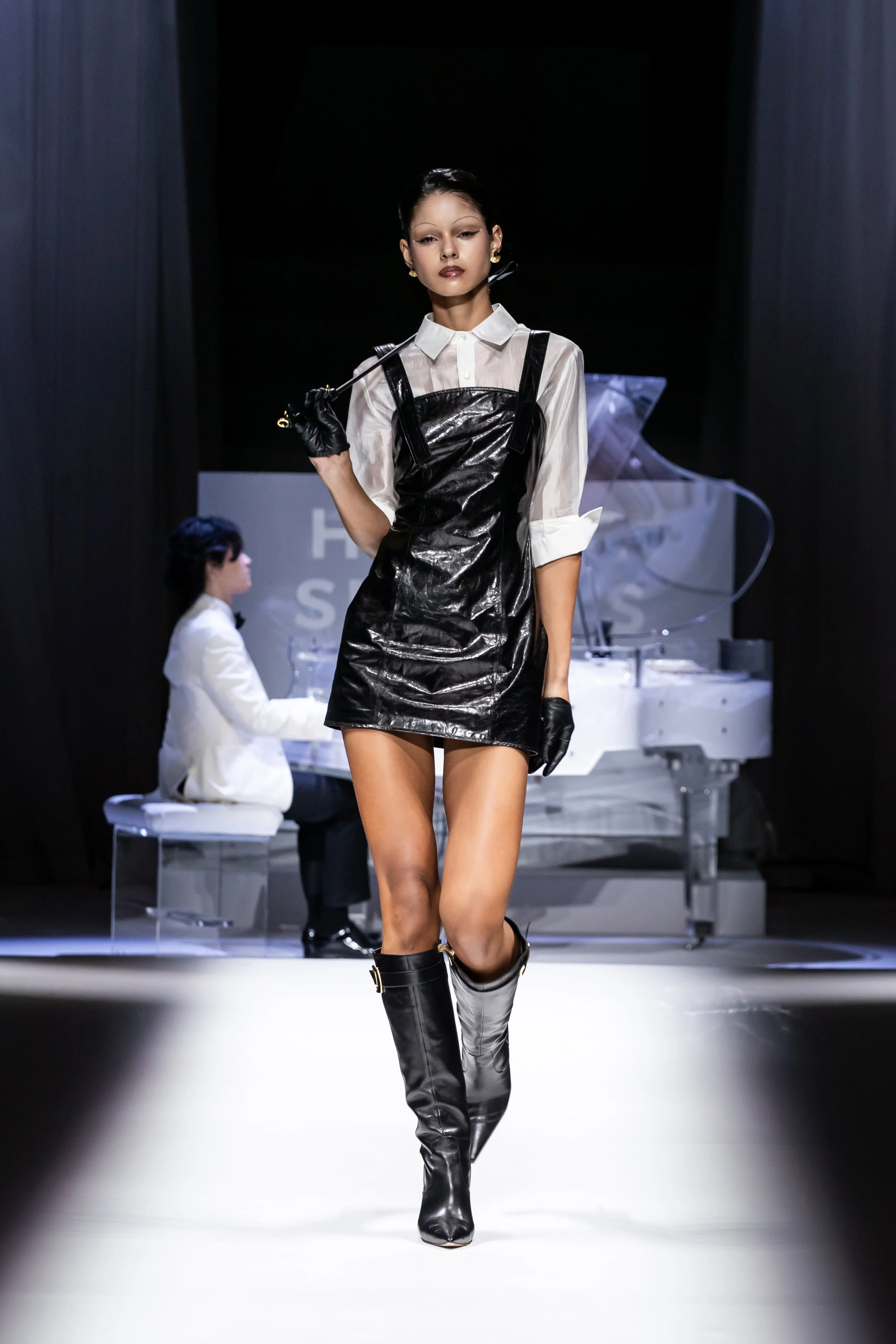
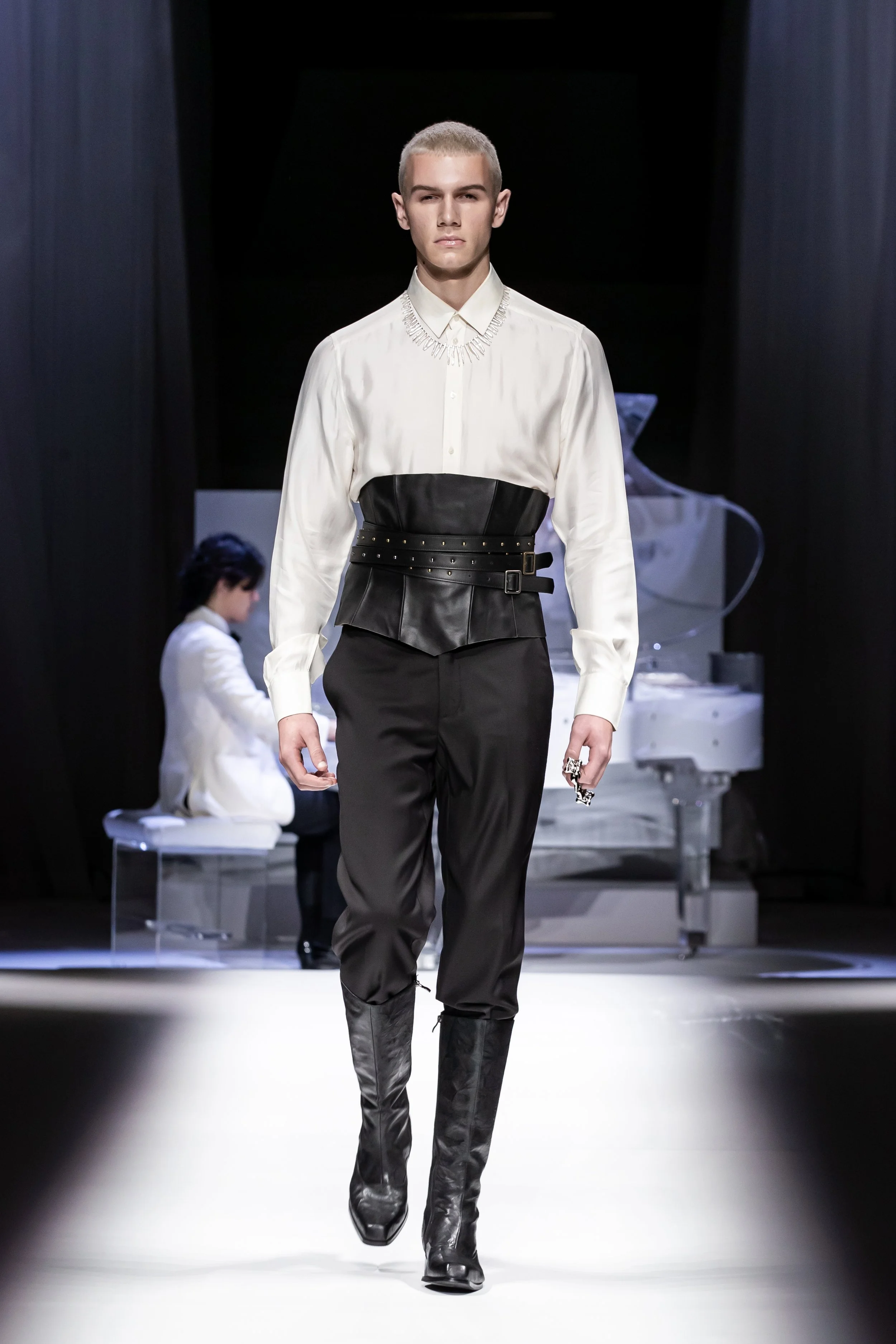
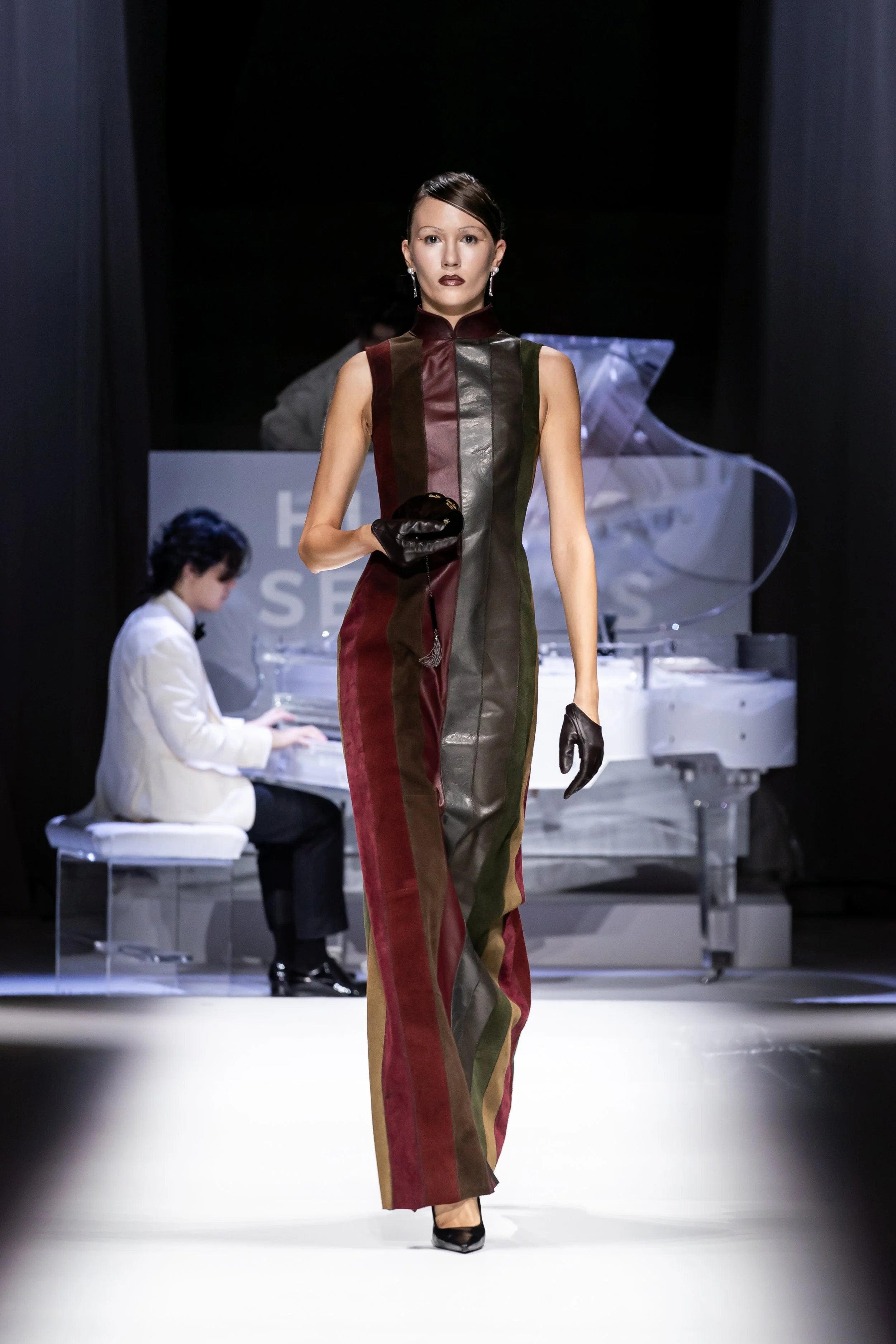
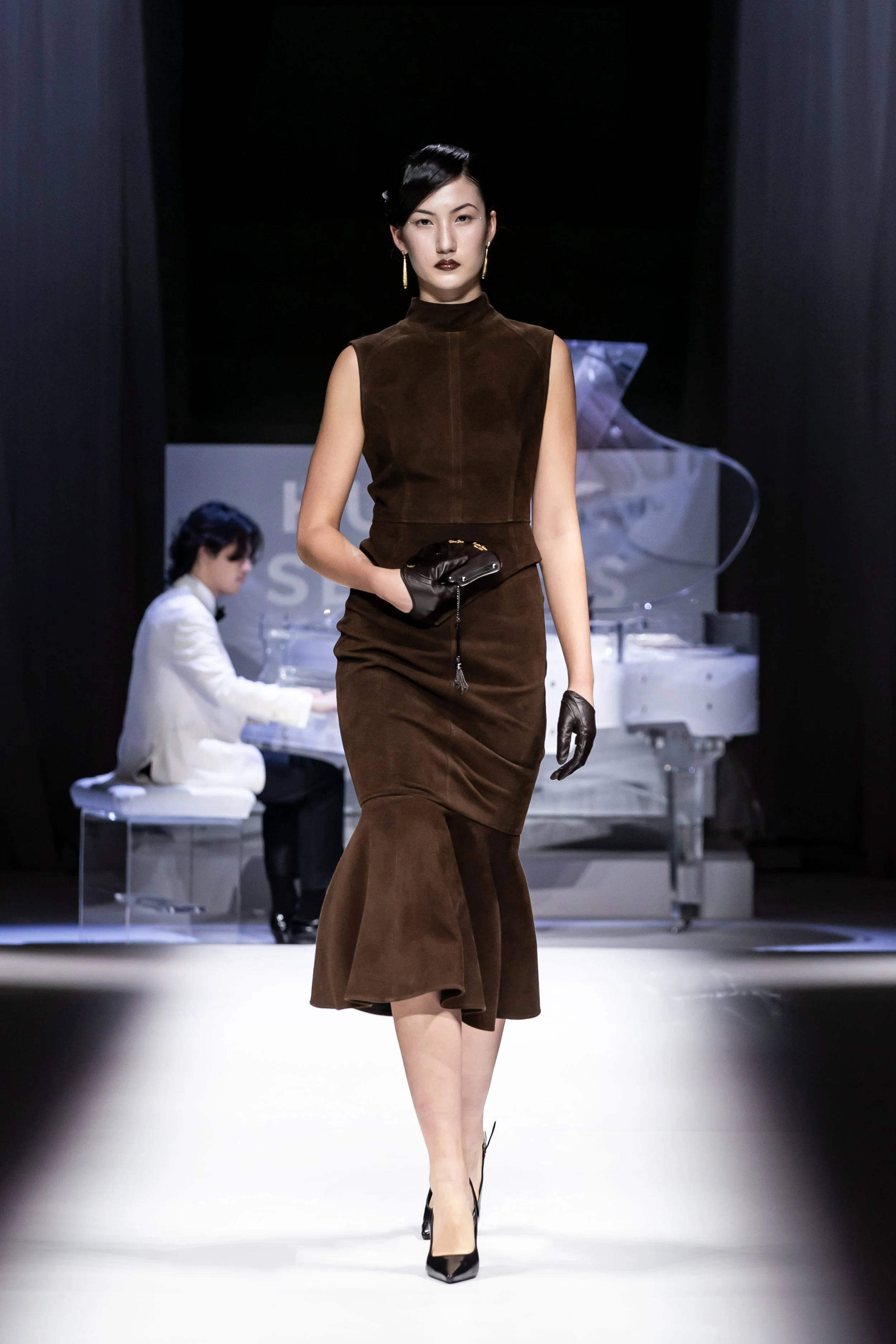
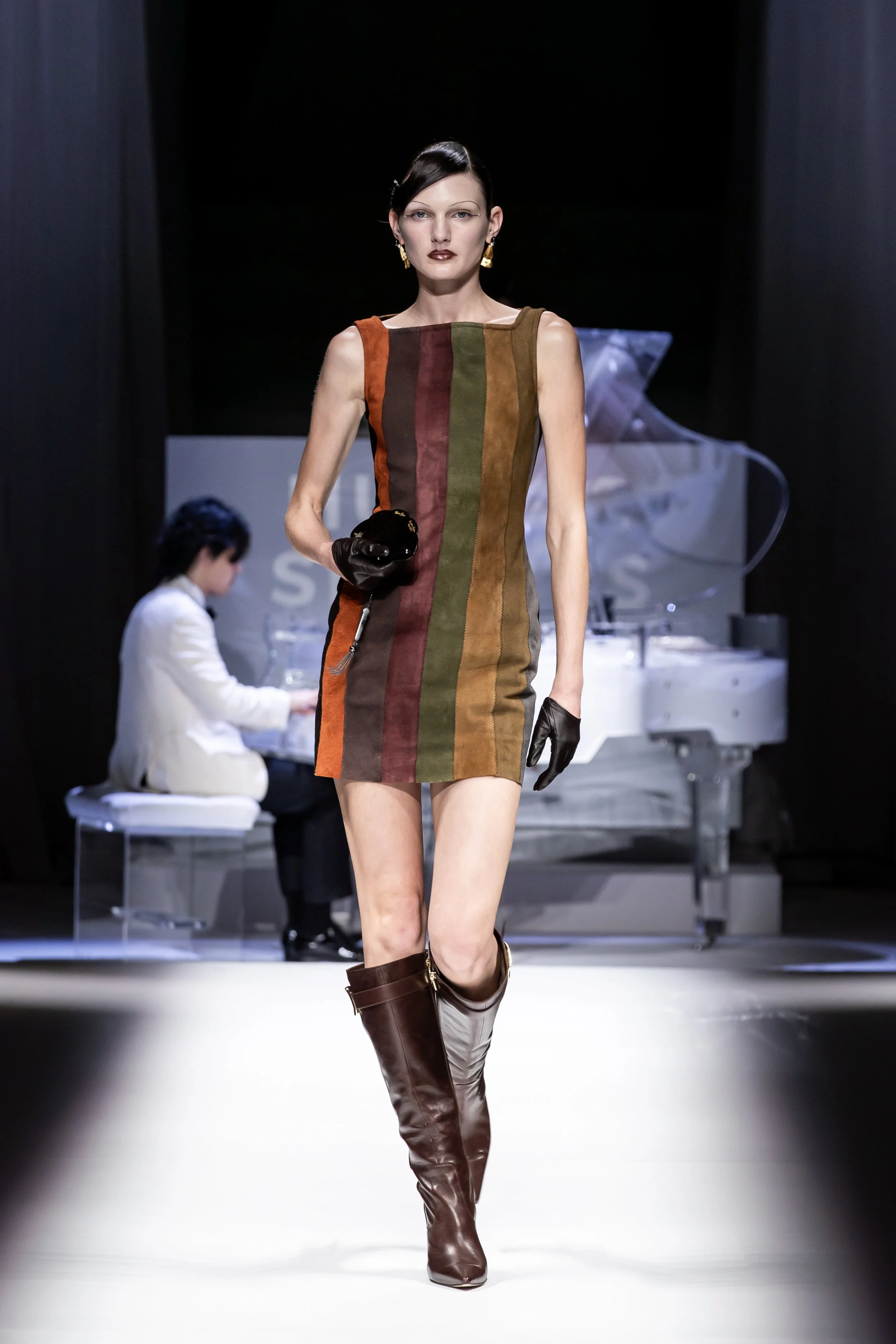
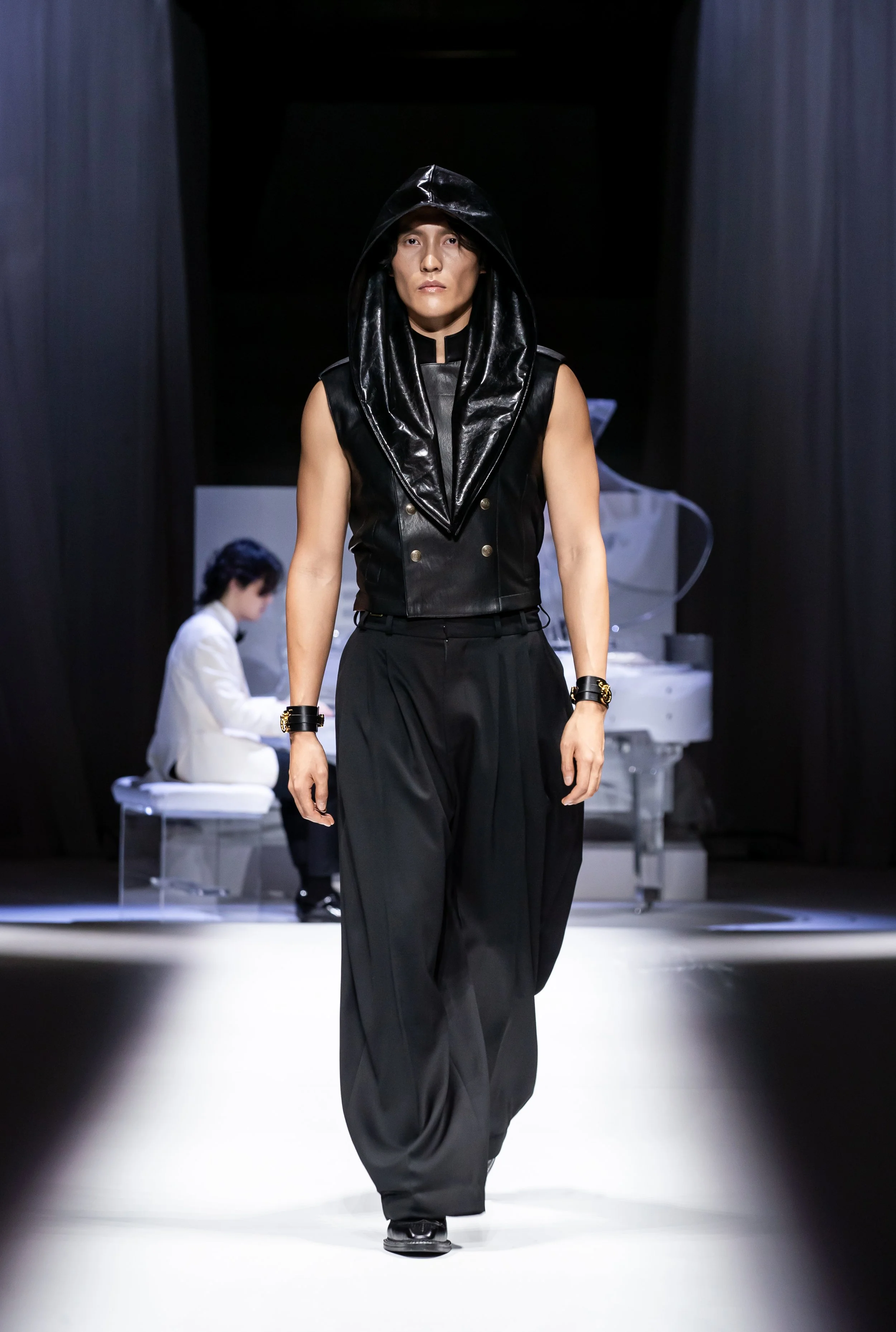
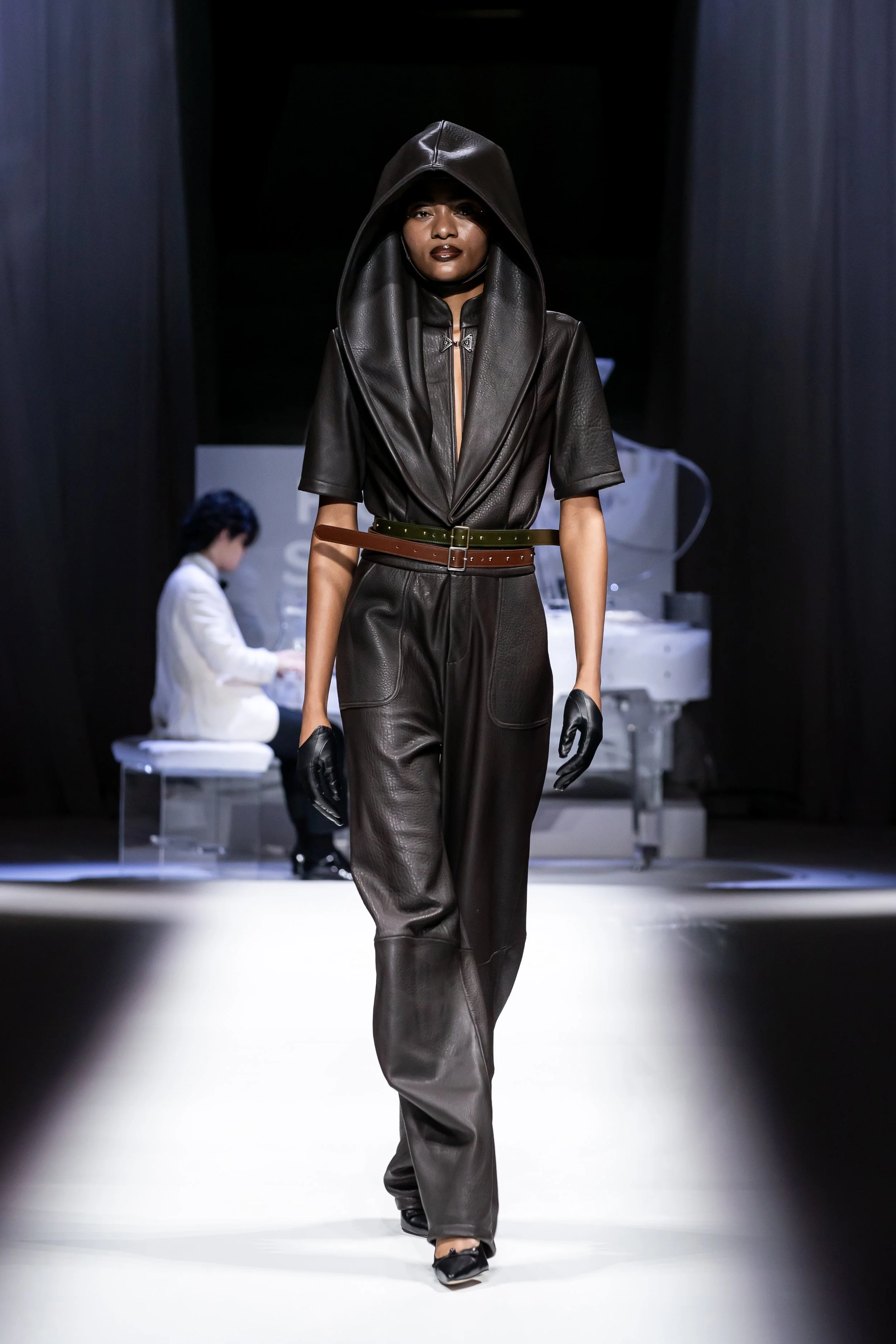
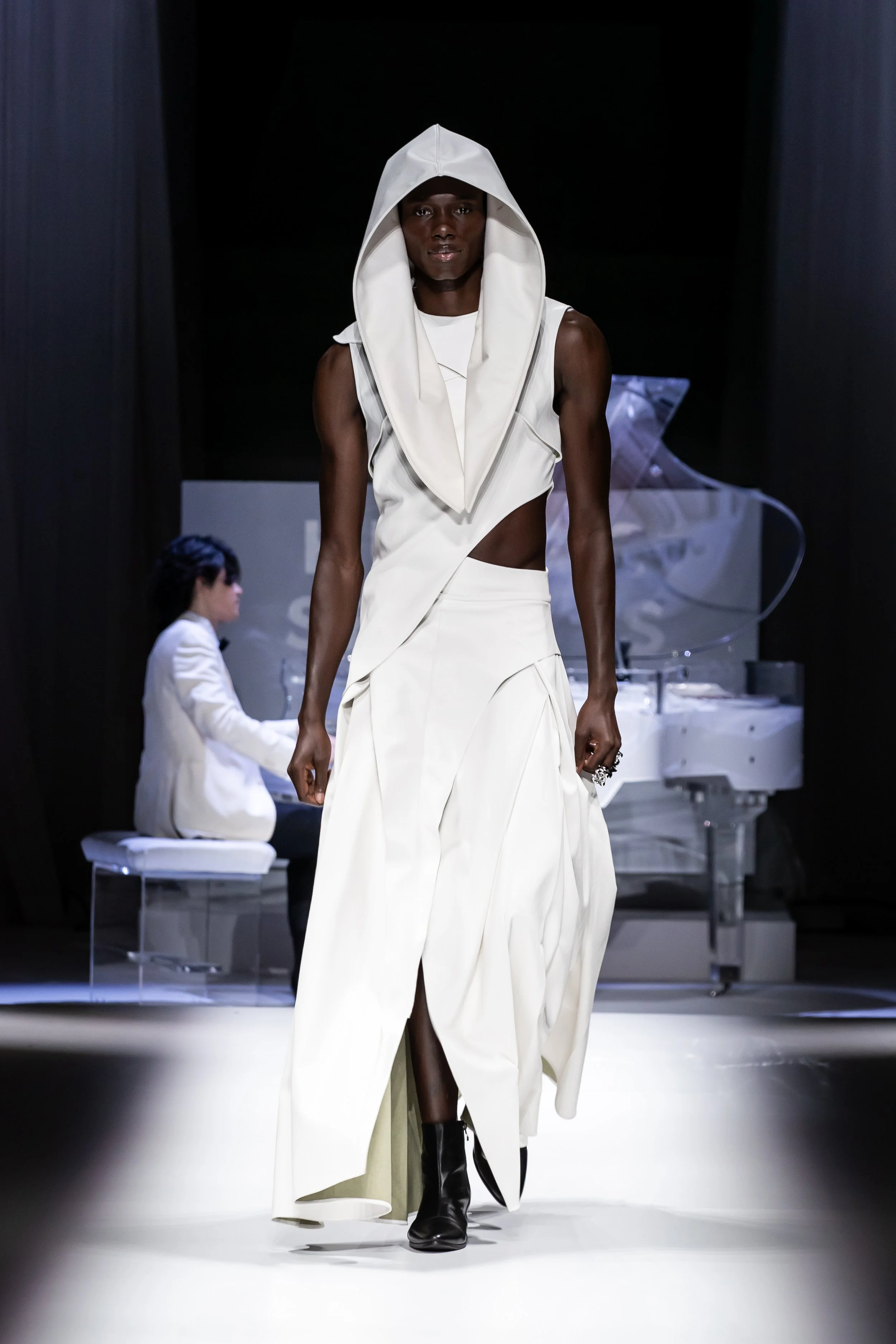
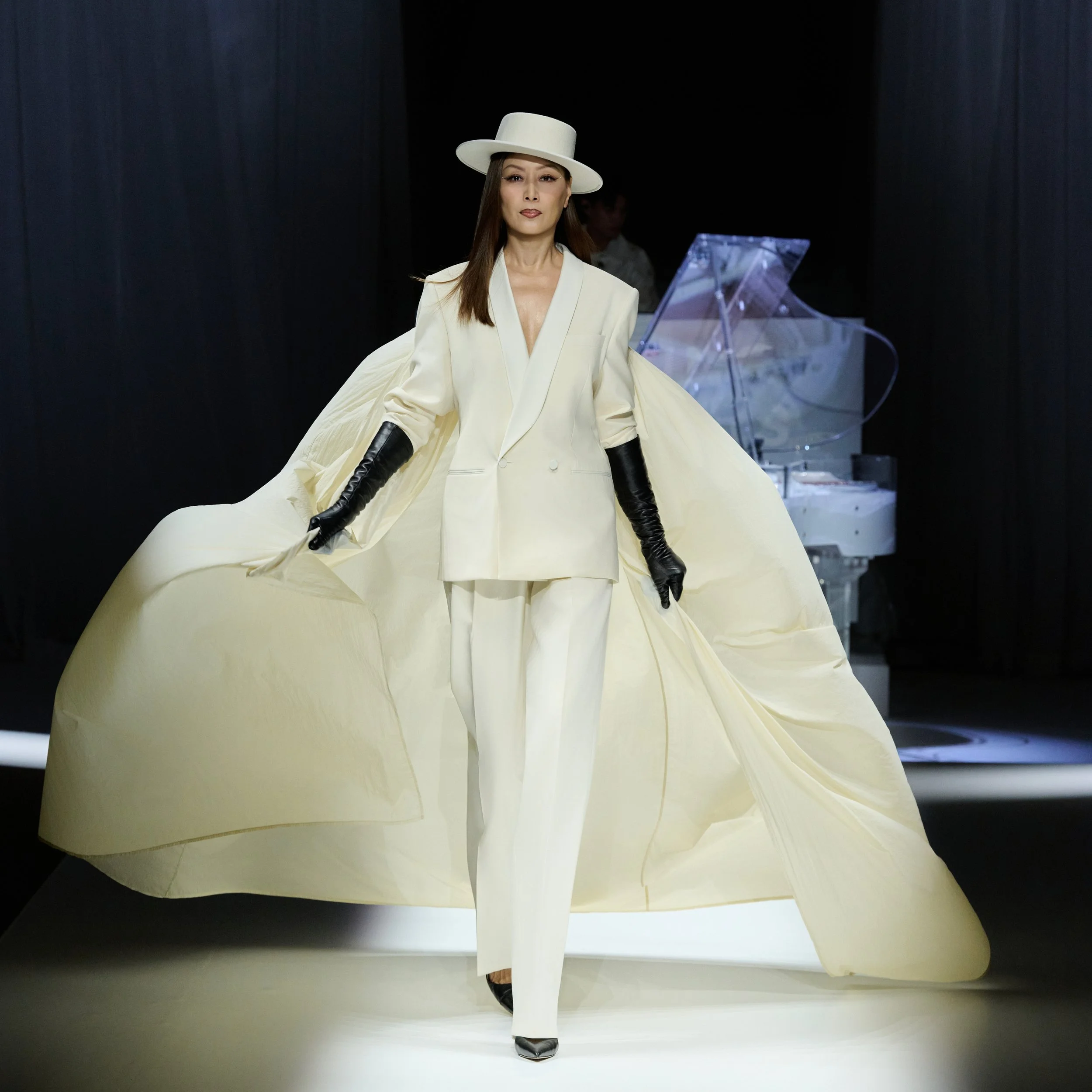
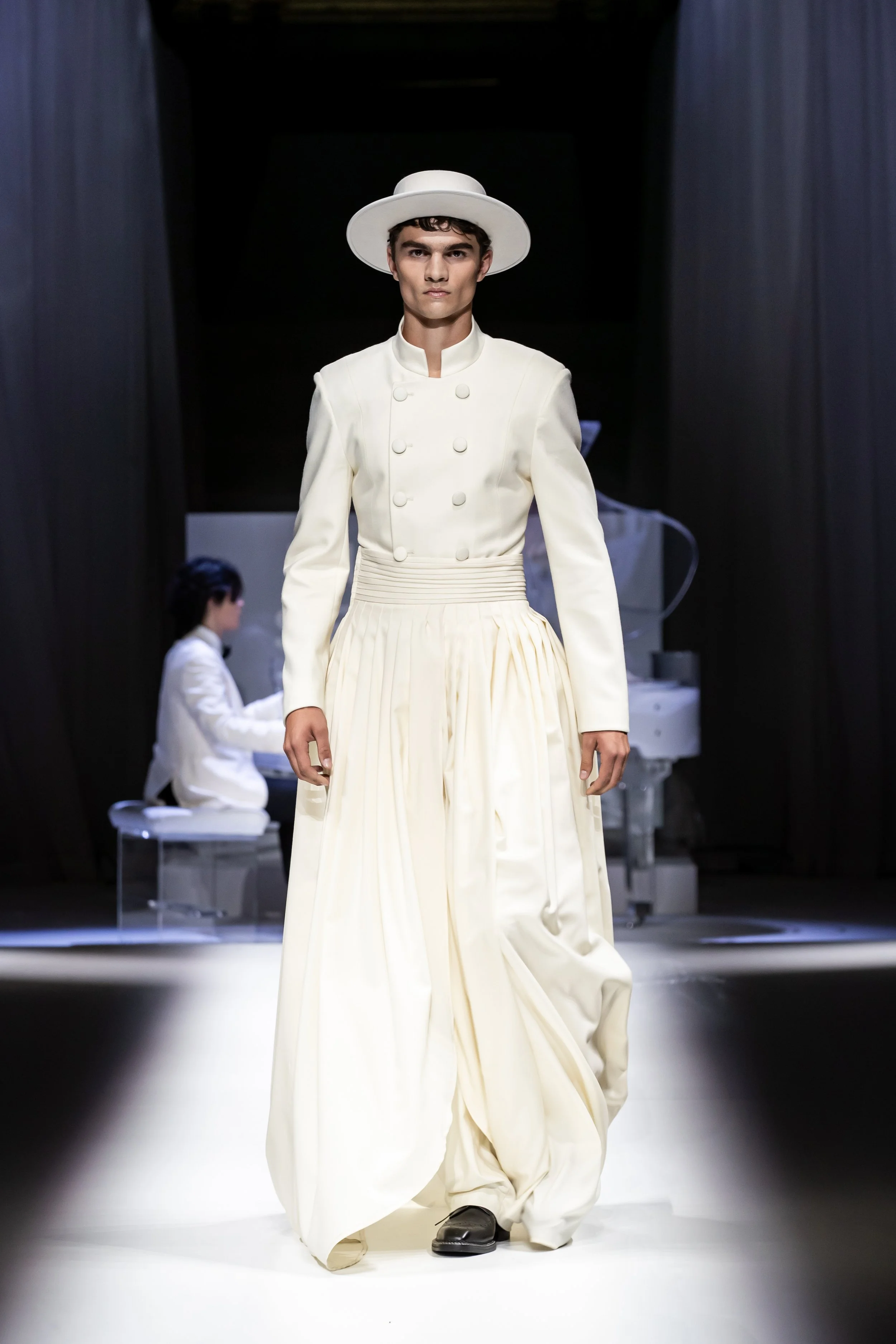
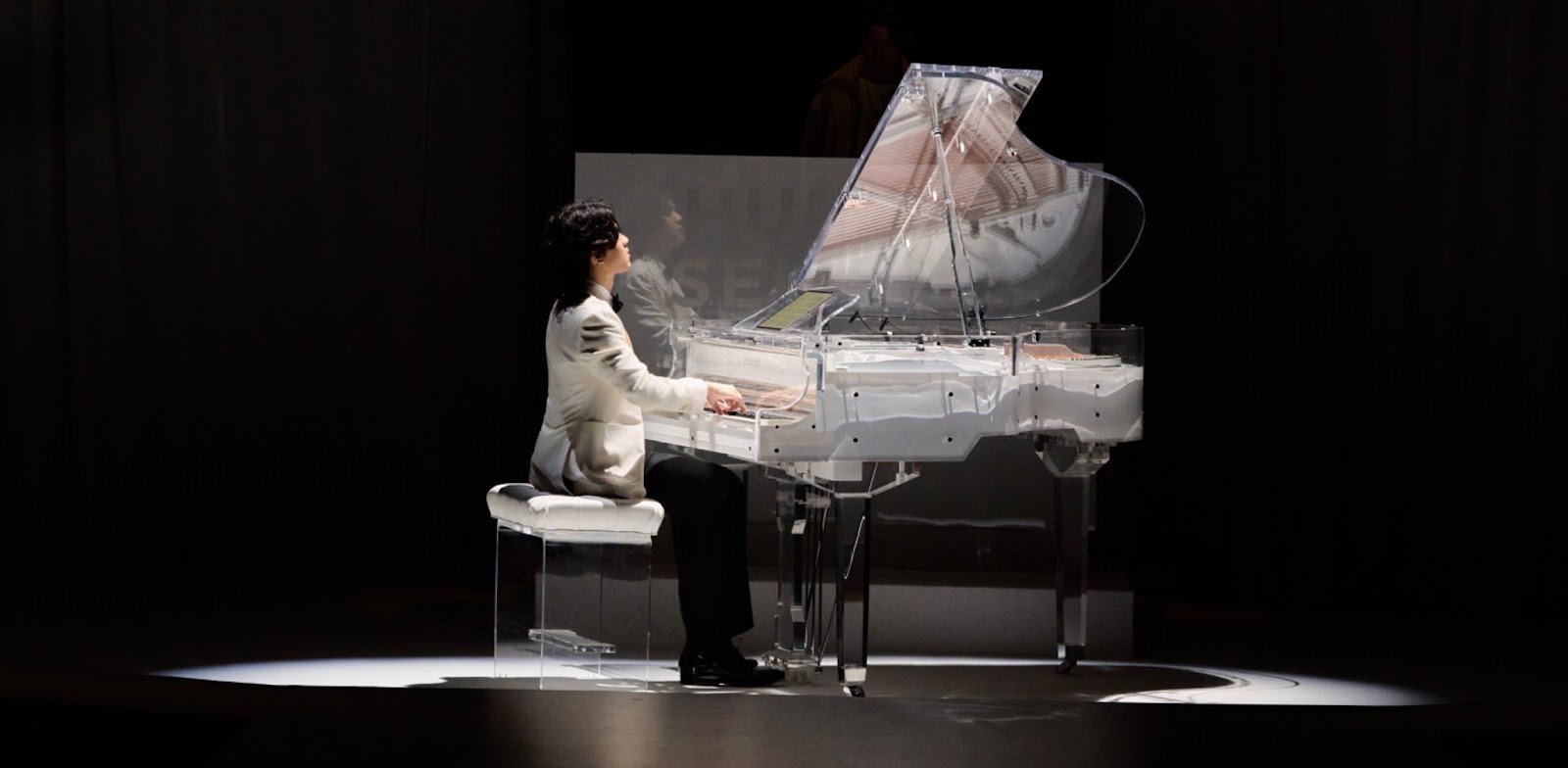
Hu Bing’s URBAN GRACE: Leather & Light opened with the sound of Chinese pianist Yangyang Ruan playing classical music alongside the distant rumble of an underground train. It was an unexpectedly effective pairing: the piano gave the room a sense of ceremony, while the familiar sounds of London’s commute brought everything back to the present. The collection moved between 1930, 2030 and 3030, but the show felt less interested in literal futurism than in the passage of time - the people, places and encounters that disappear almost as quickly as they arrive.
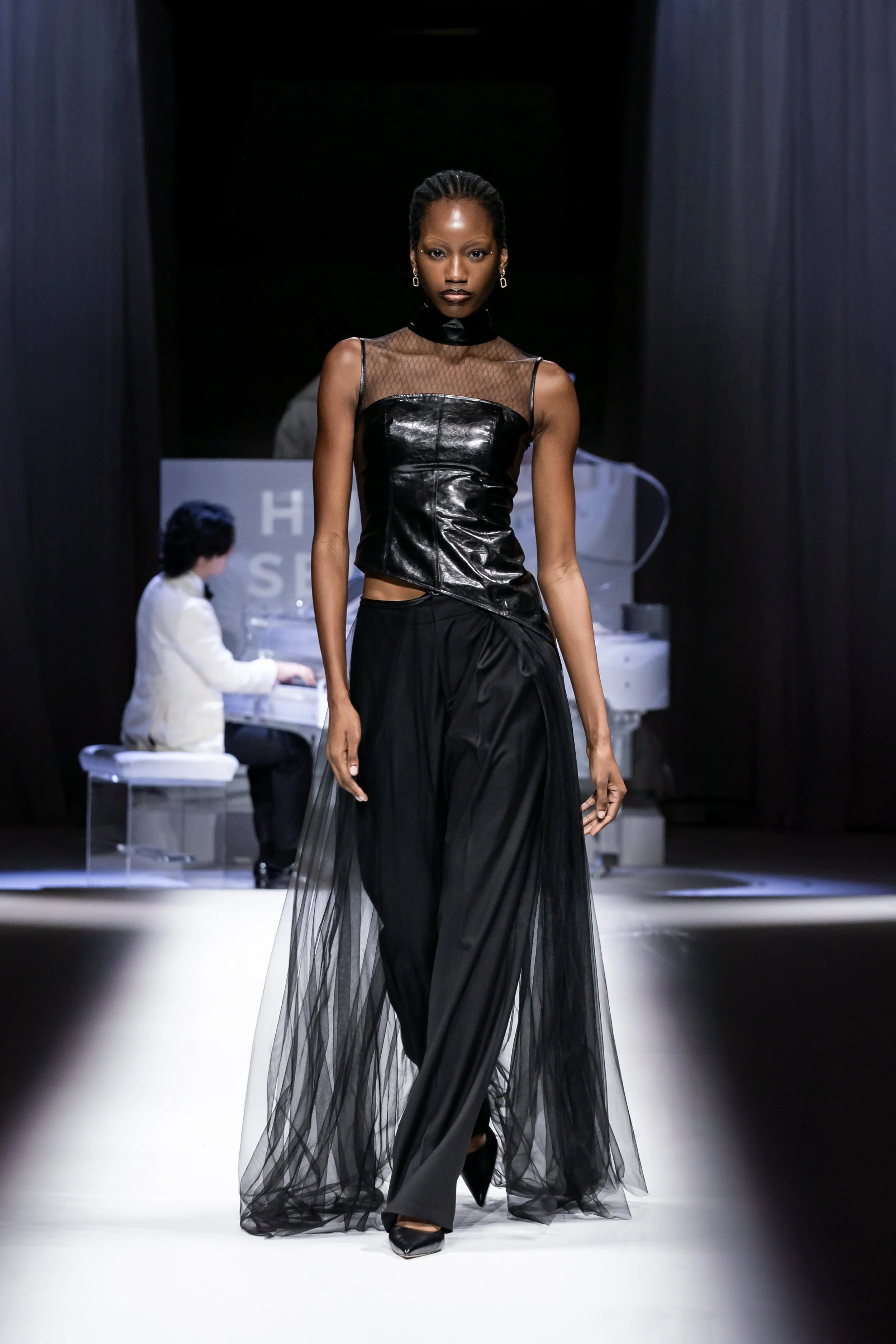
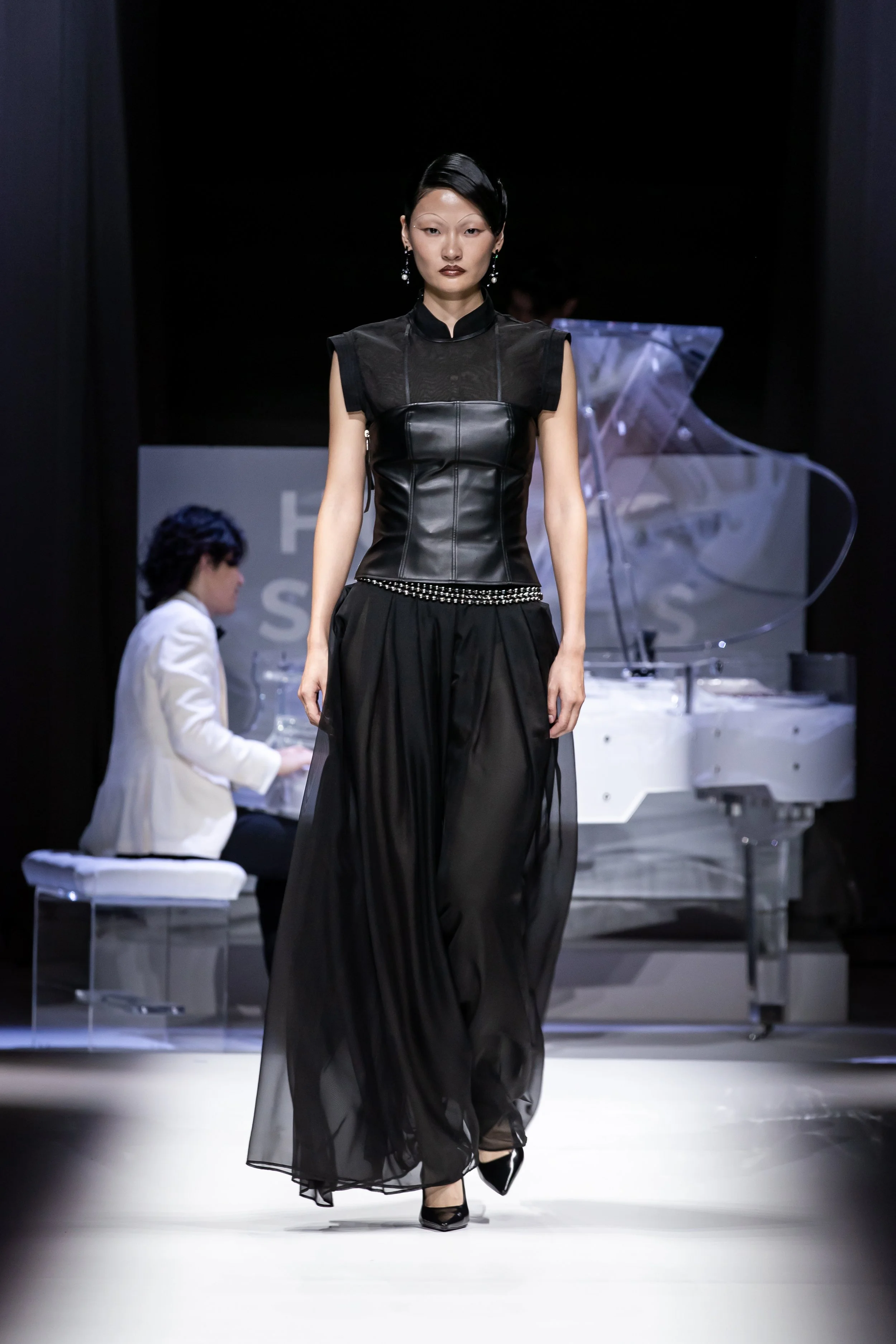
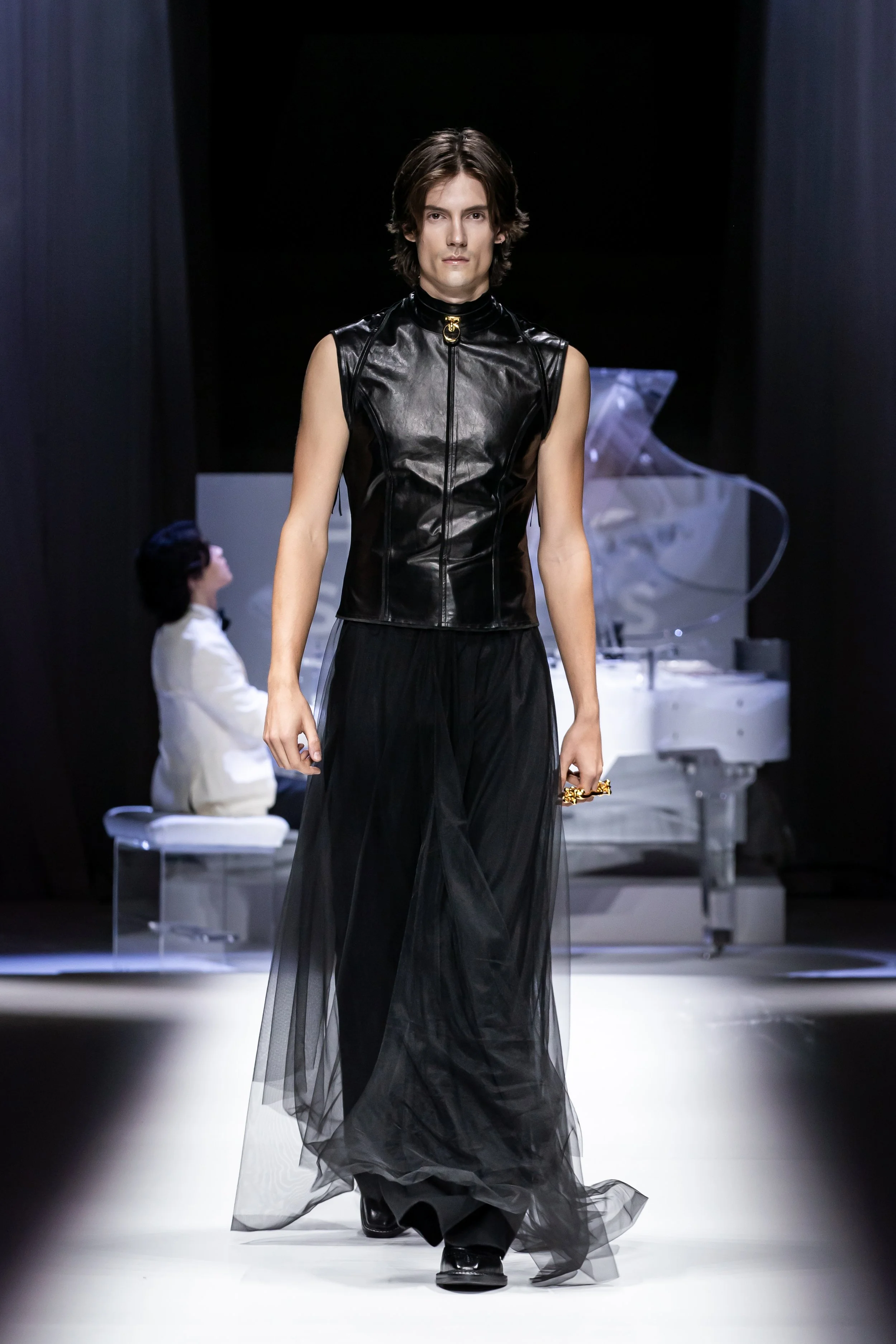
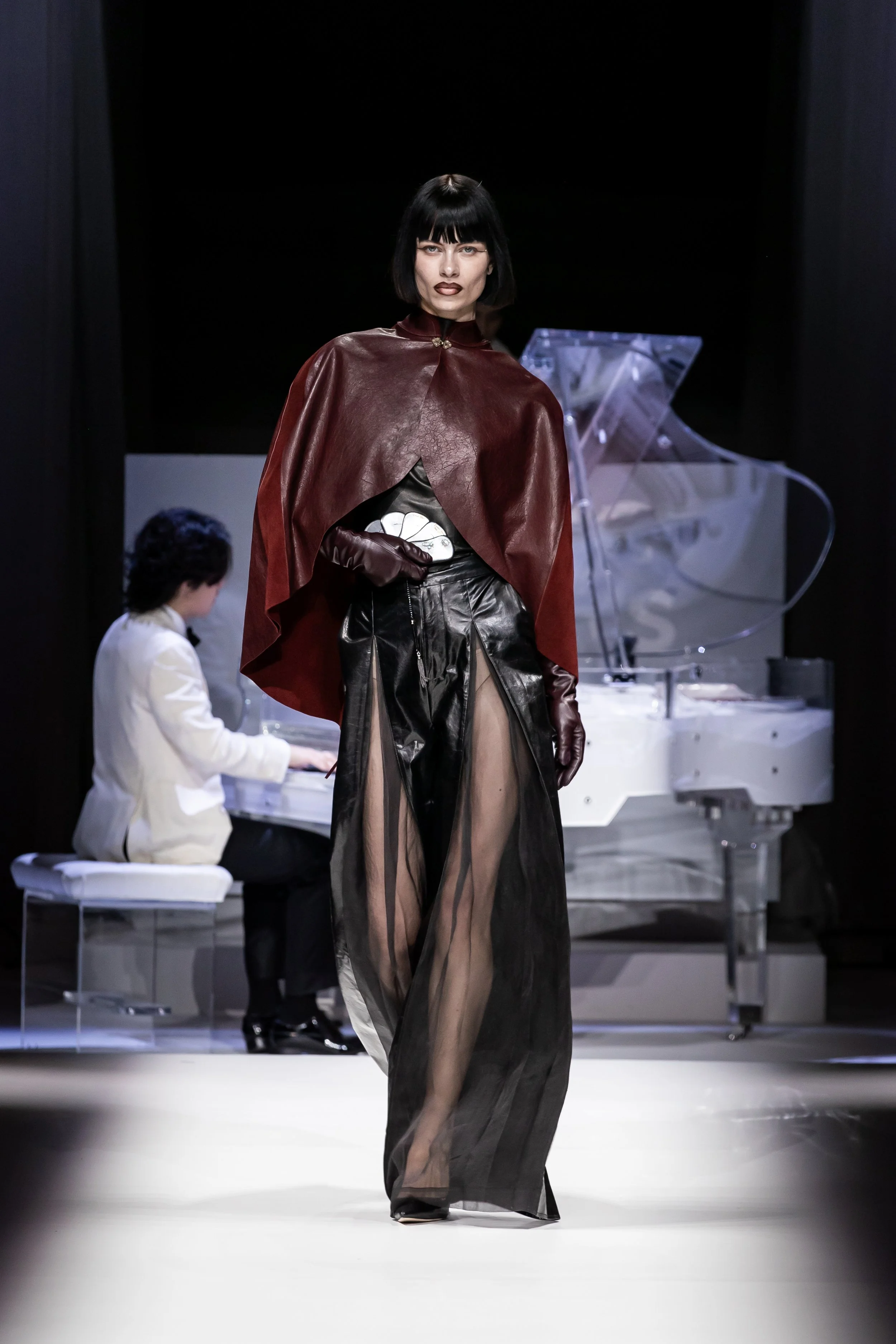
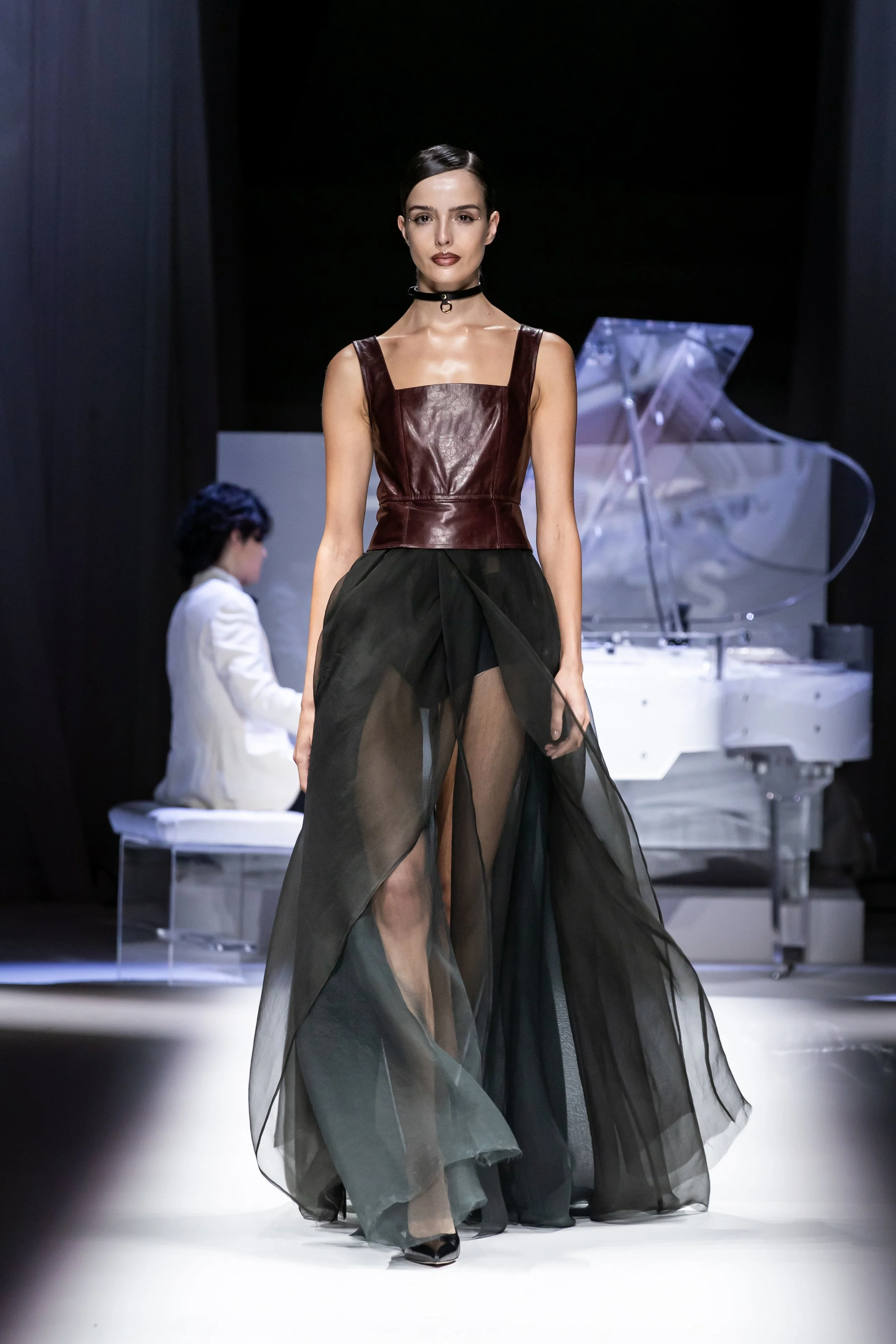
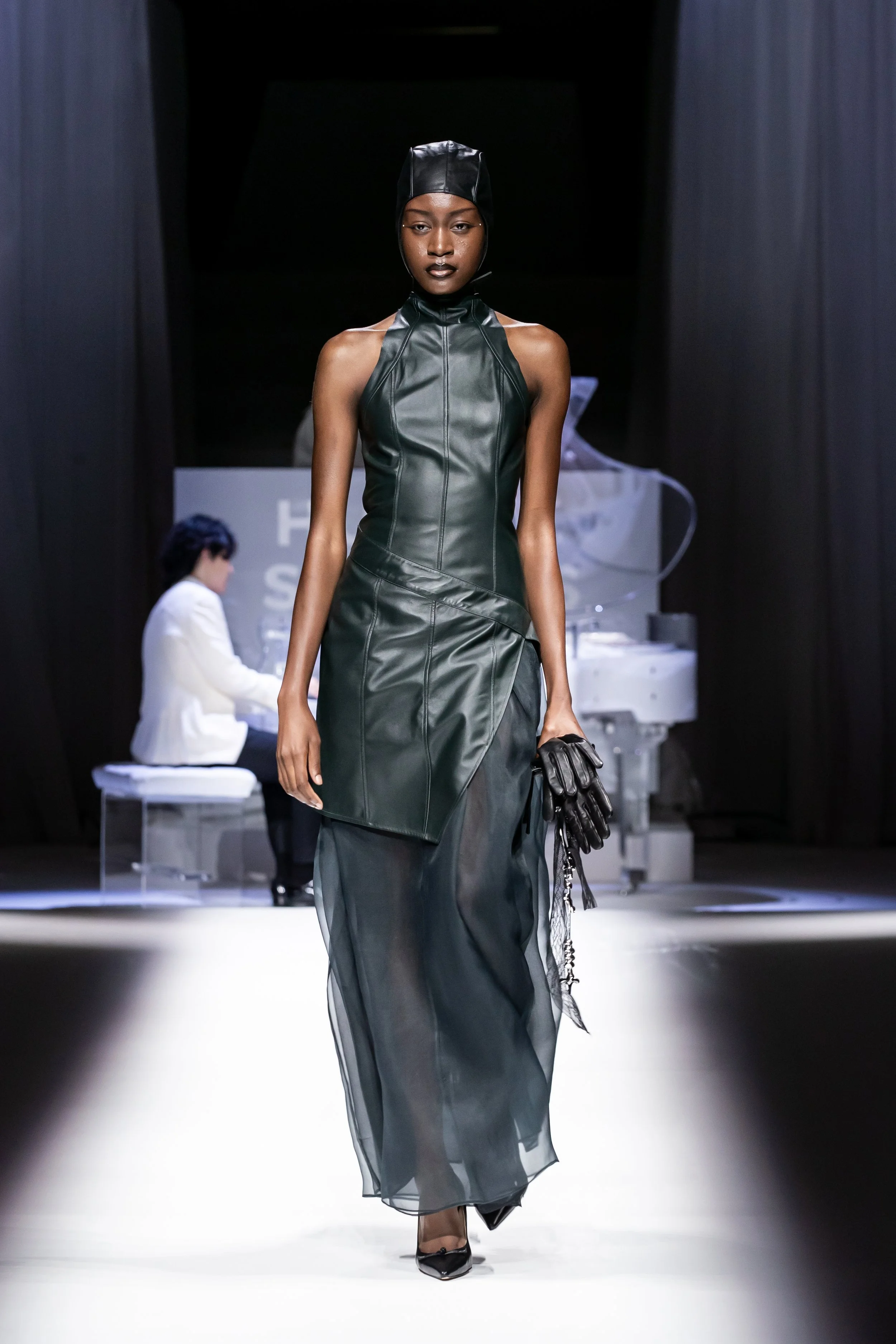
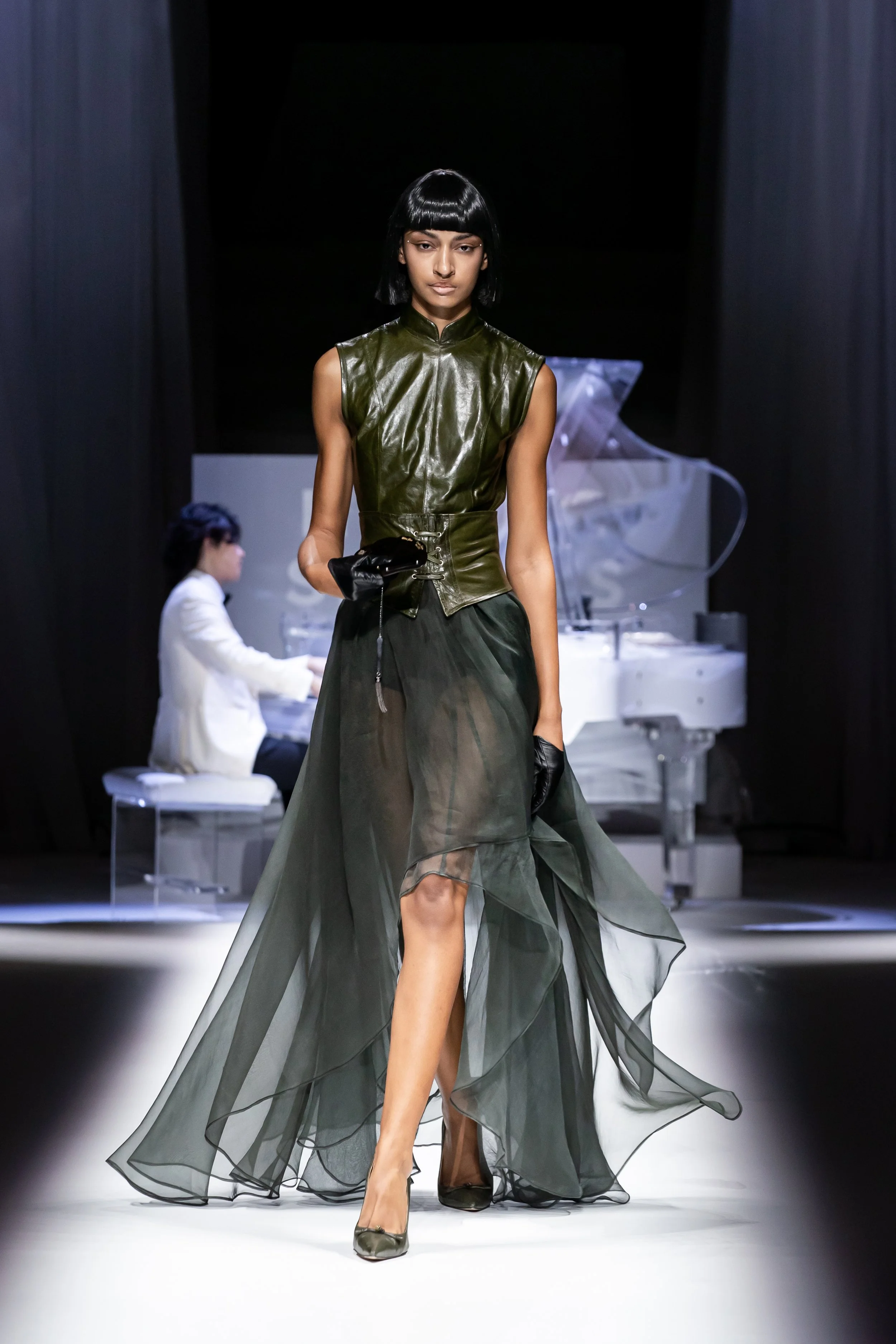
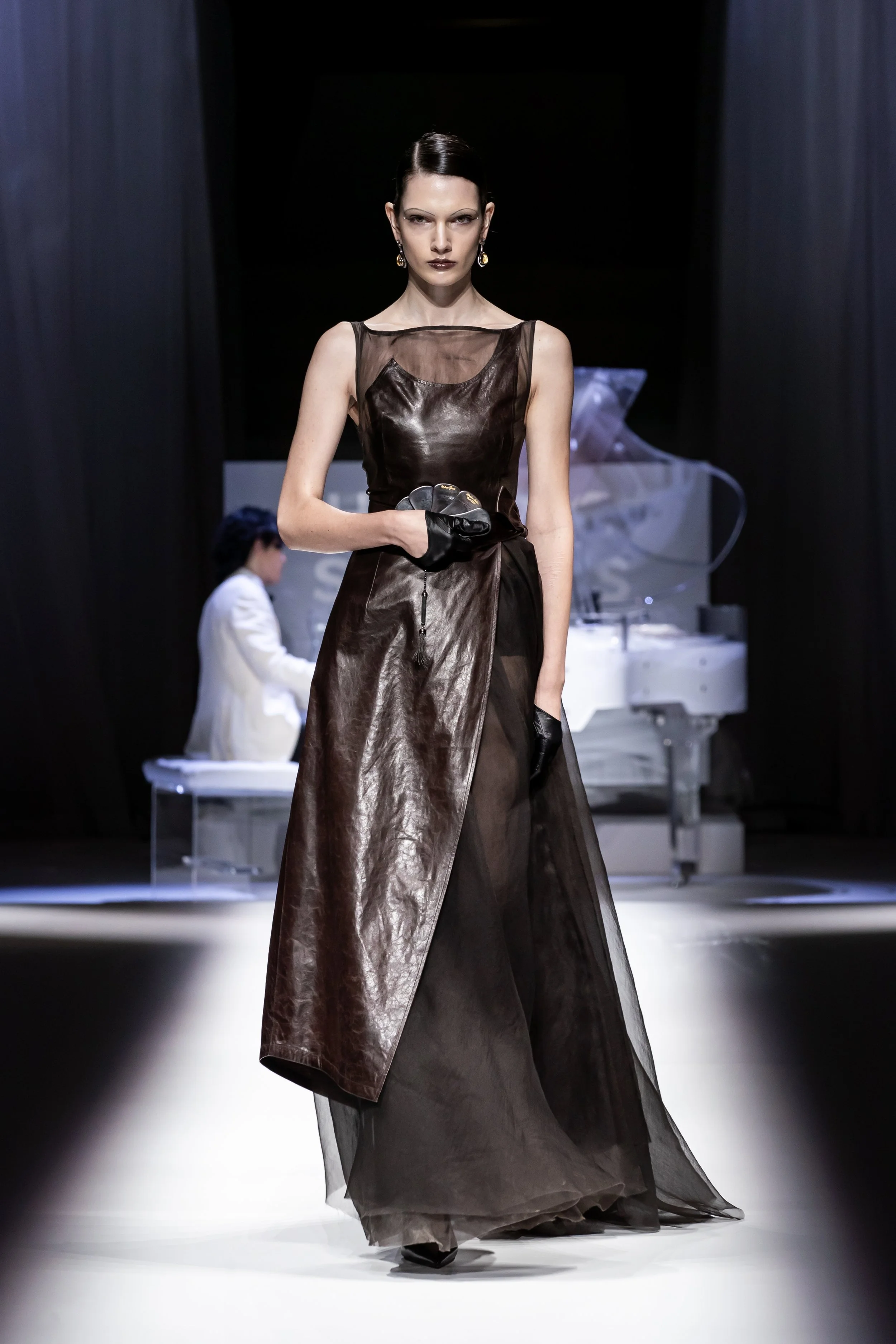
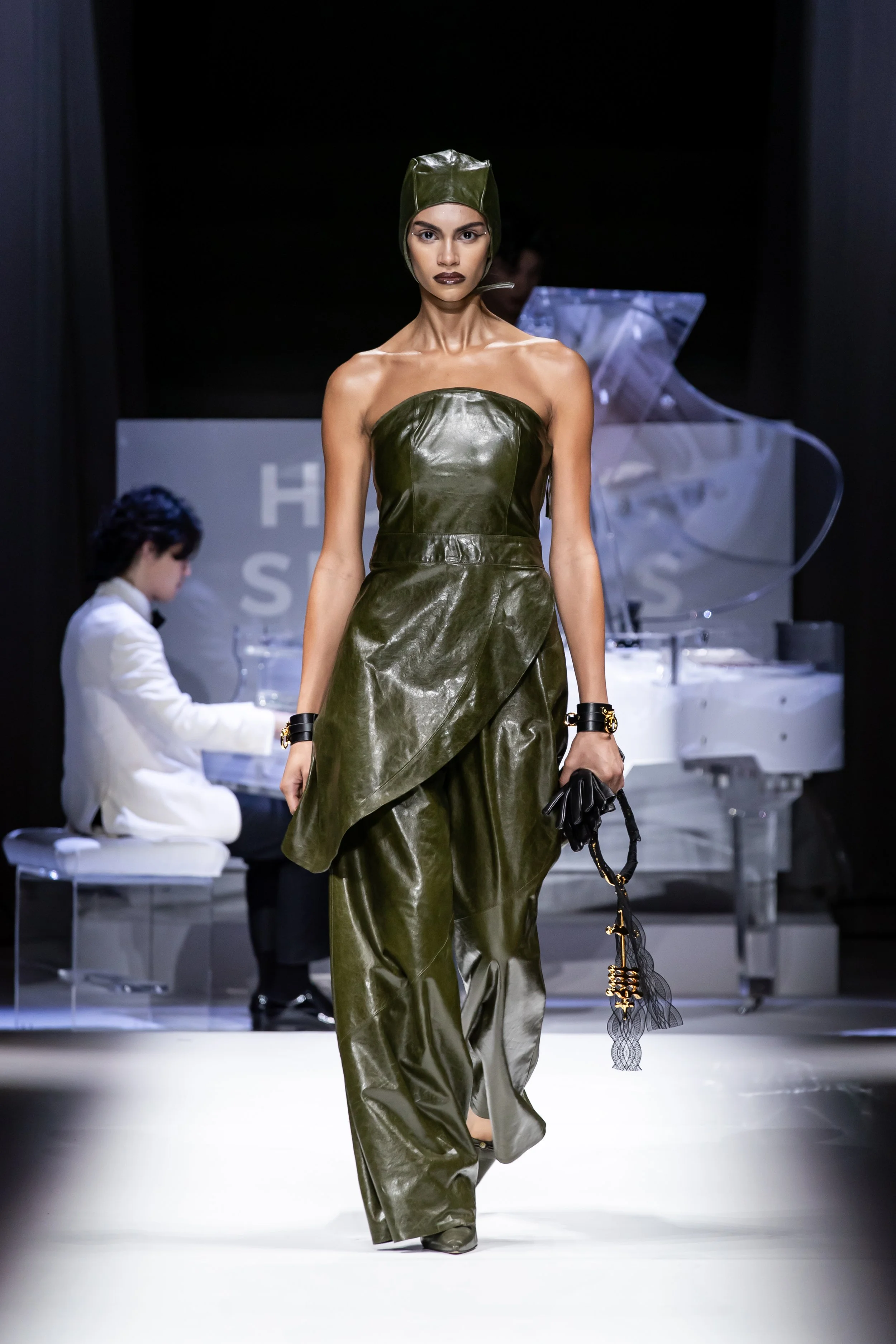
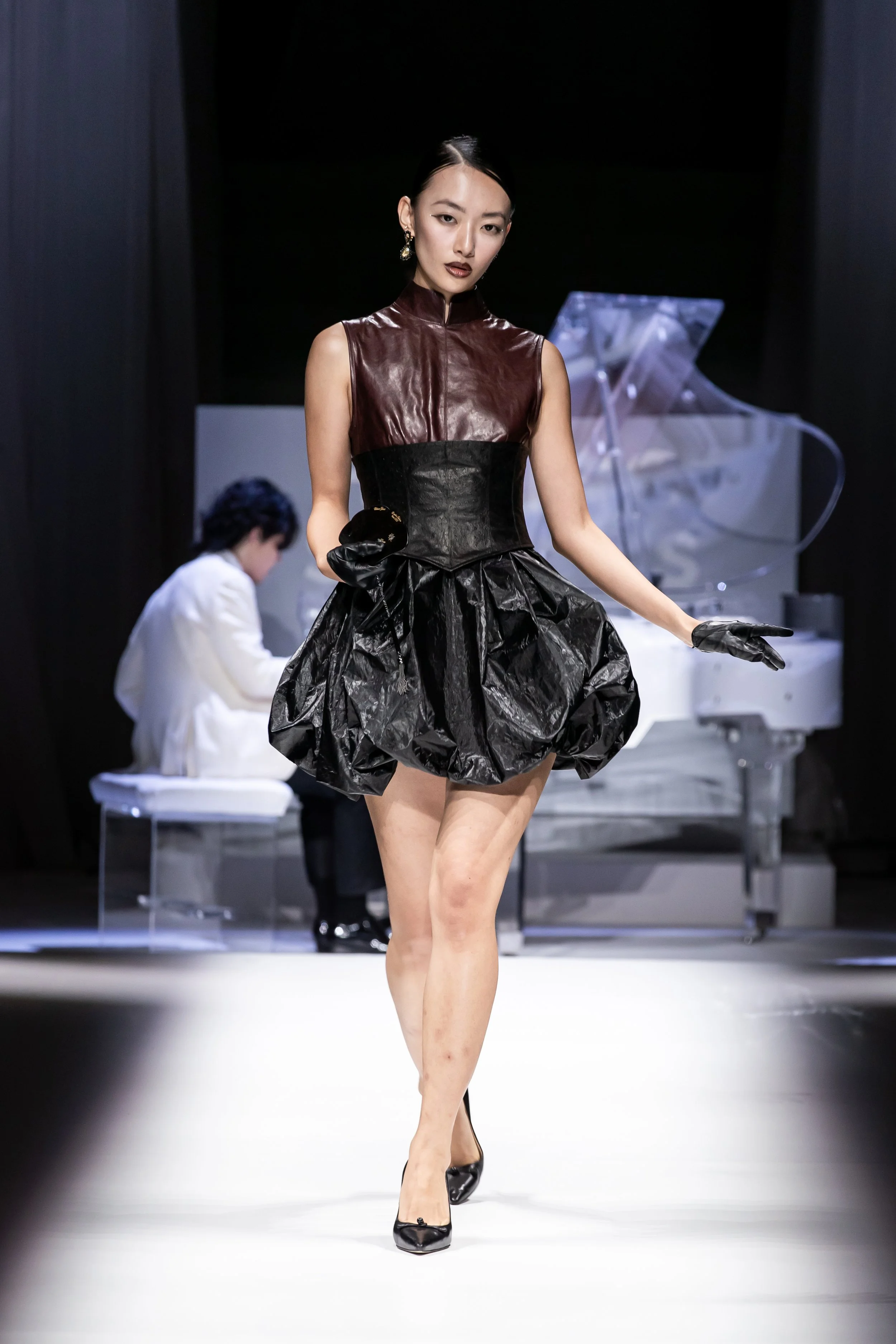
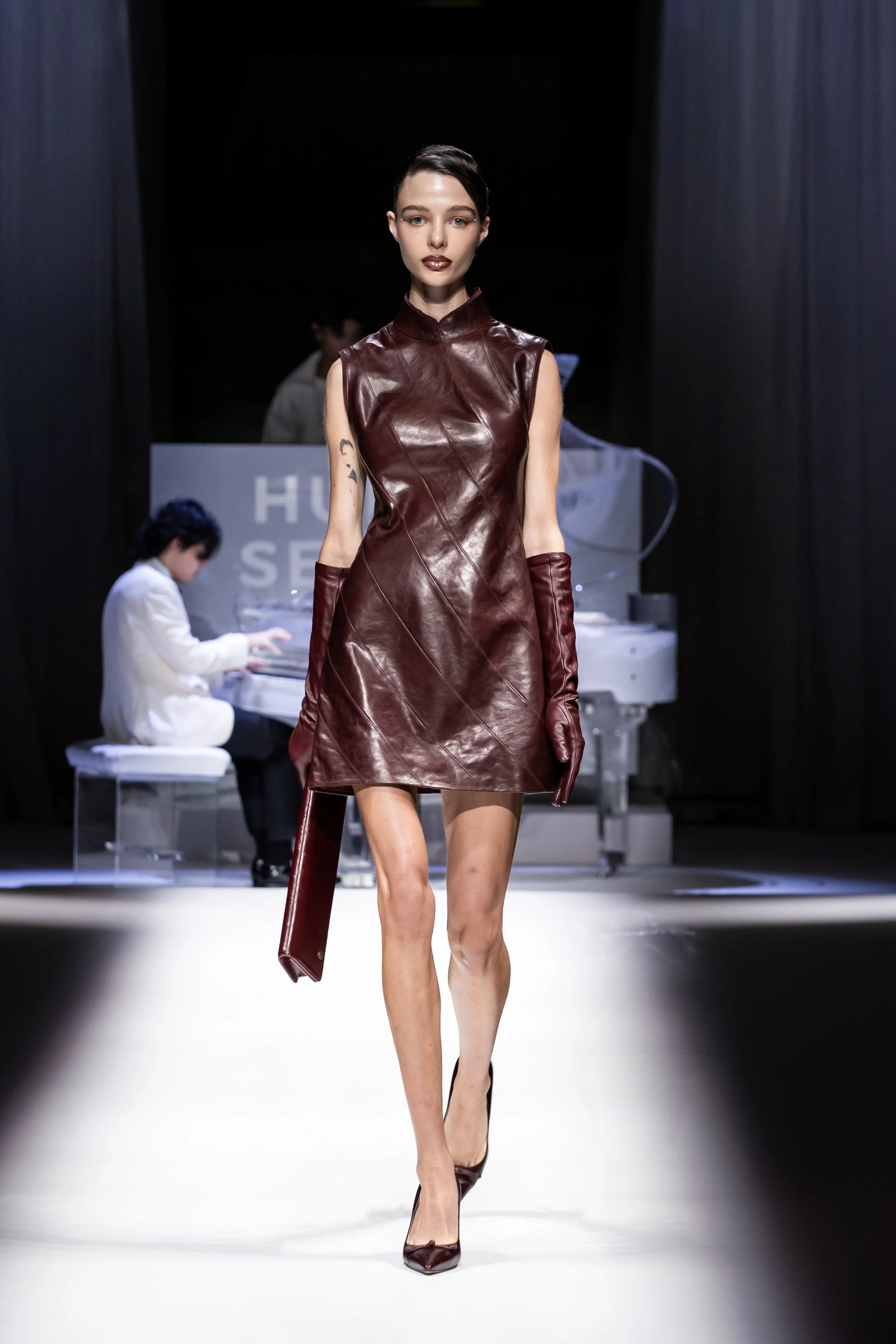
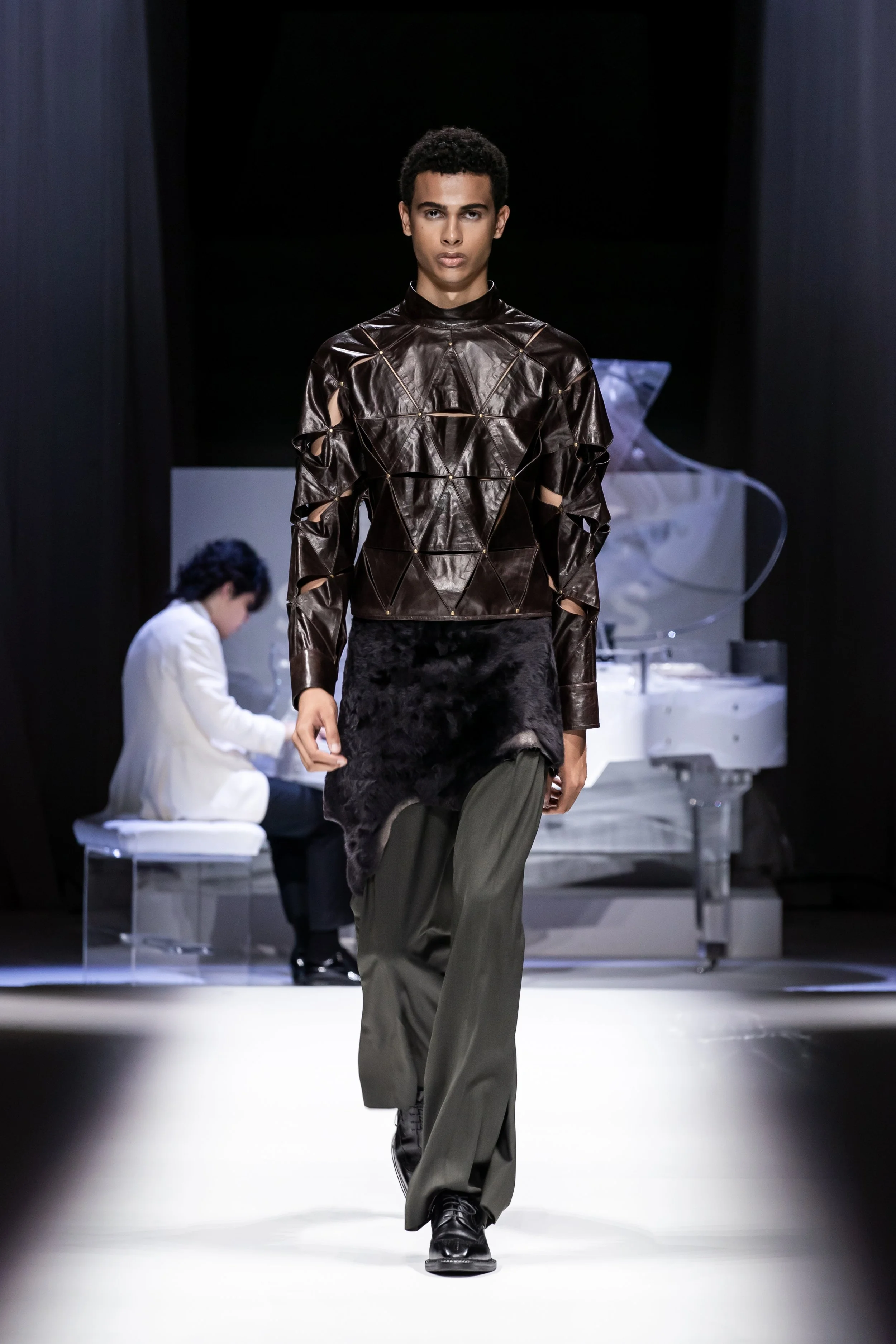
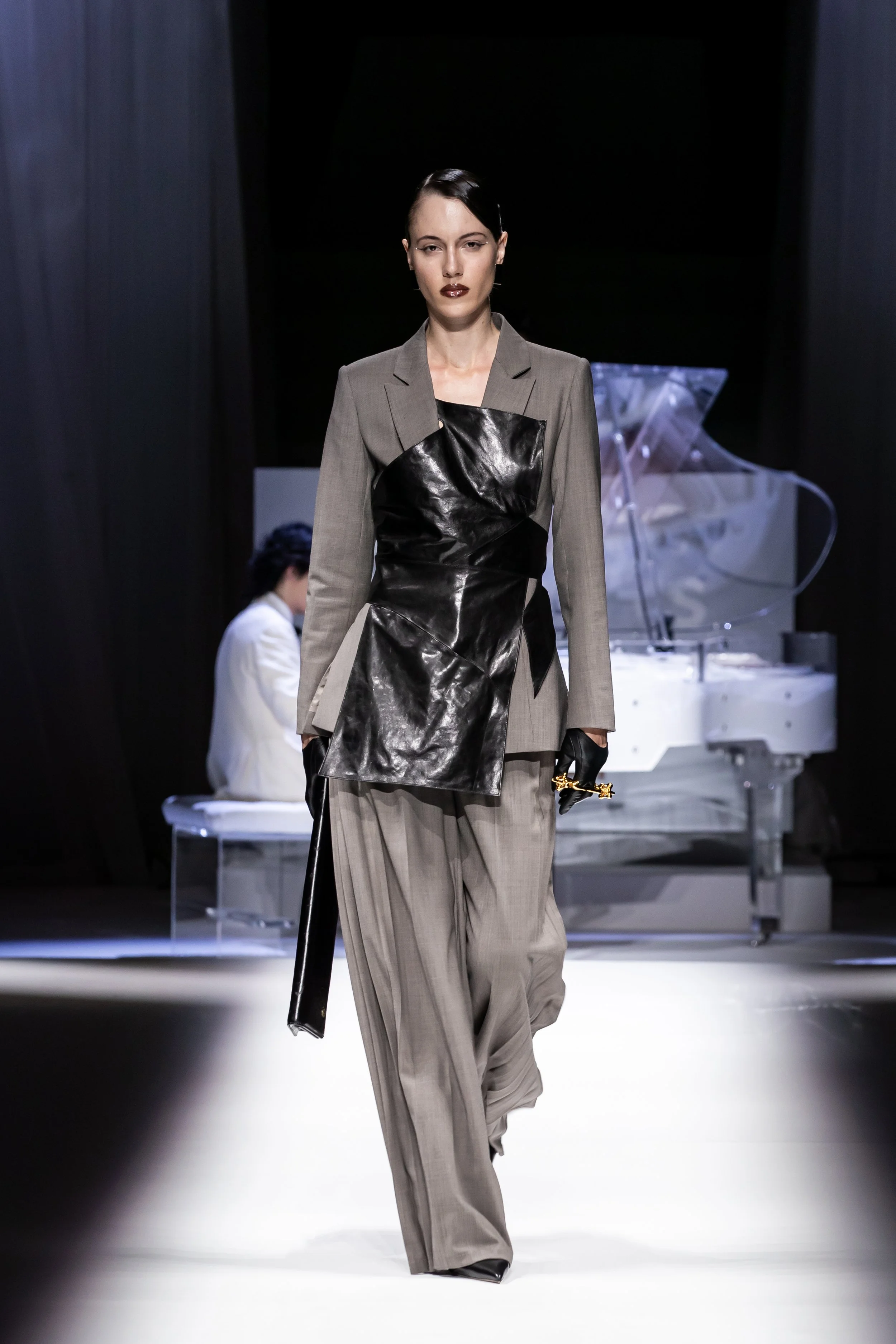
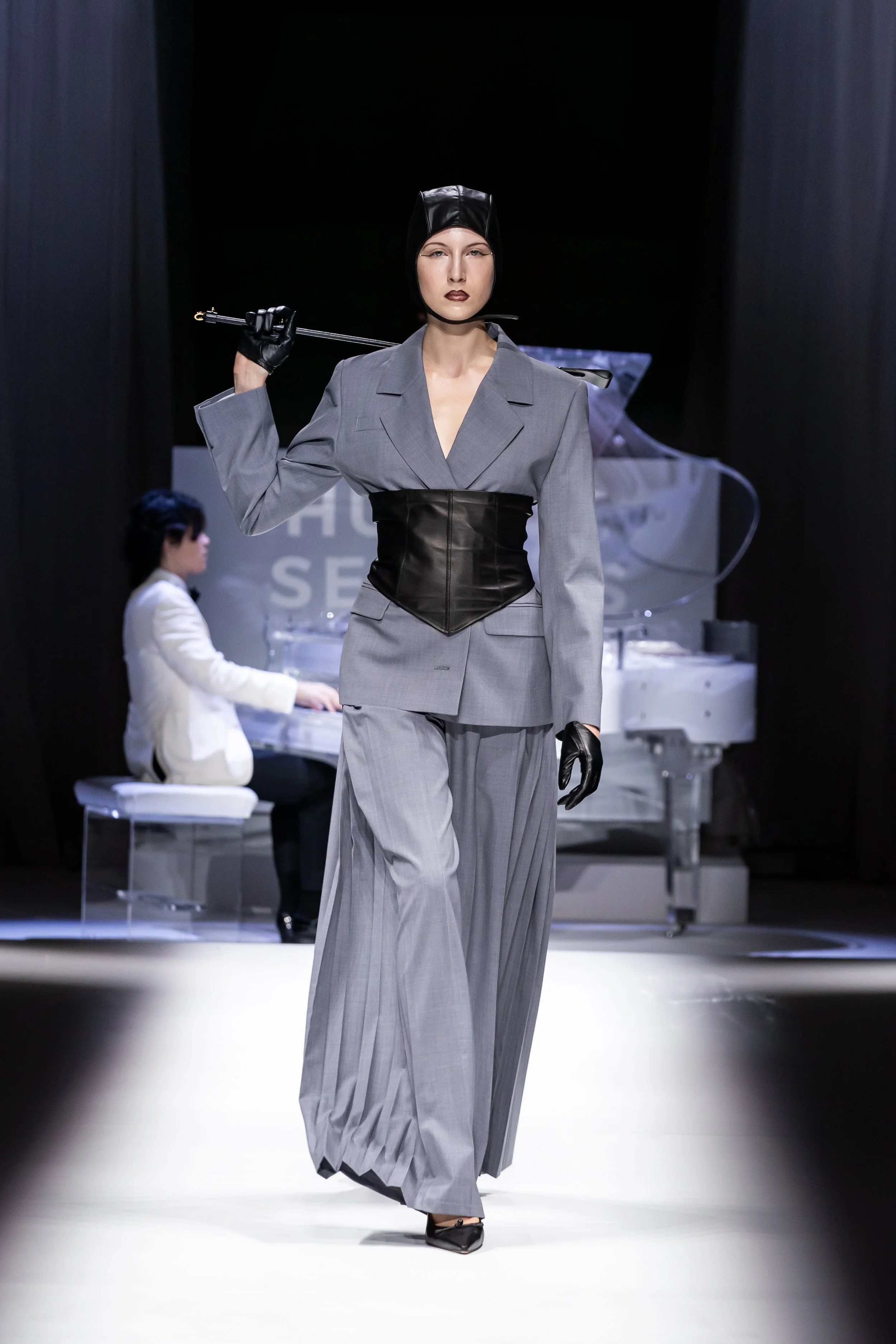
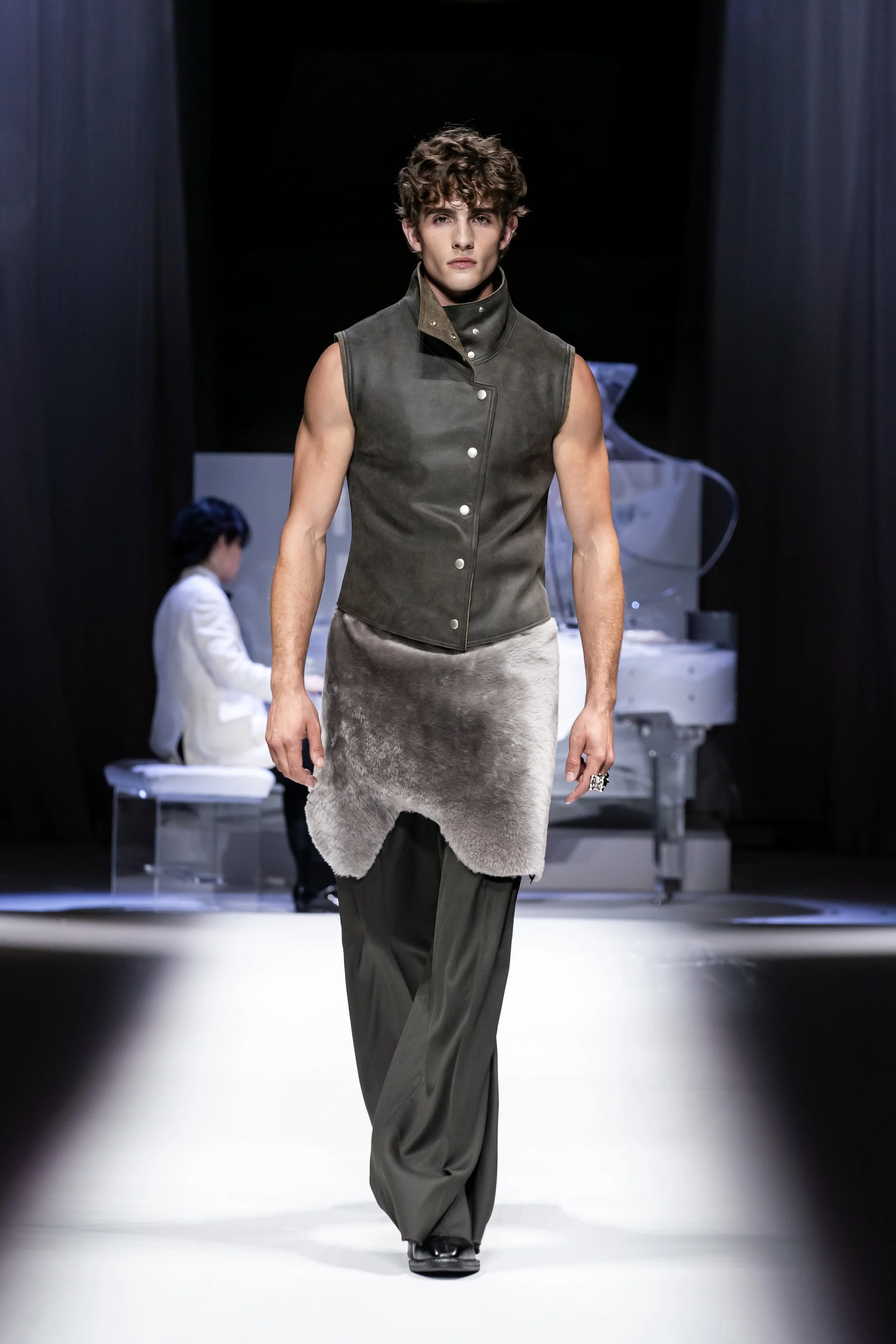
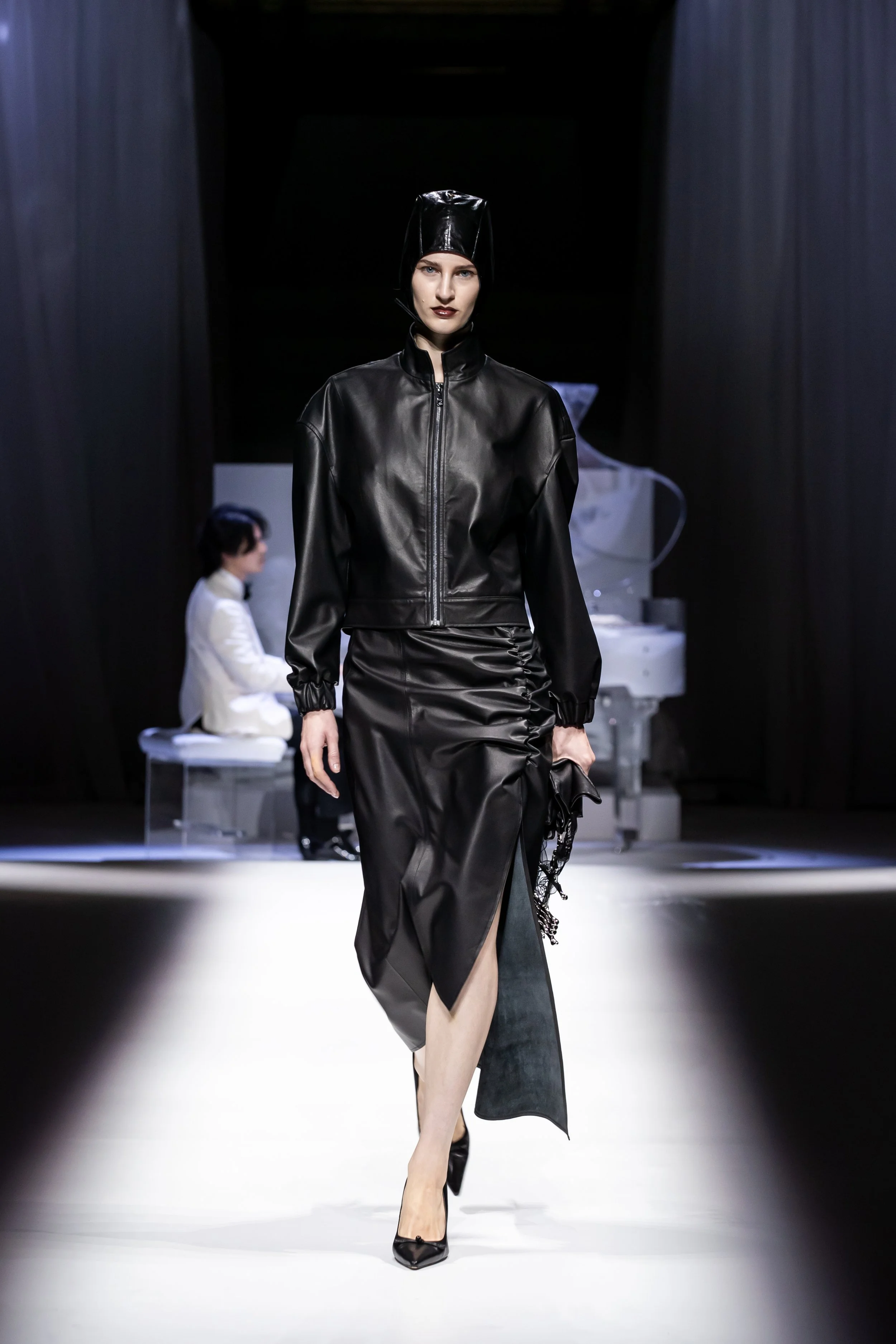
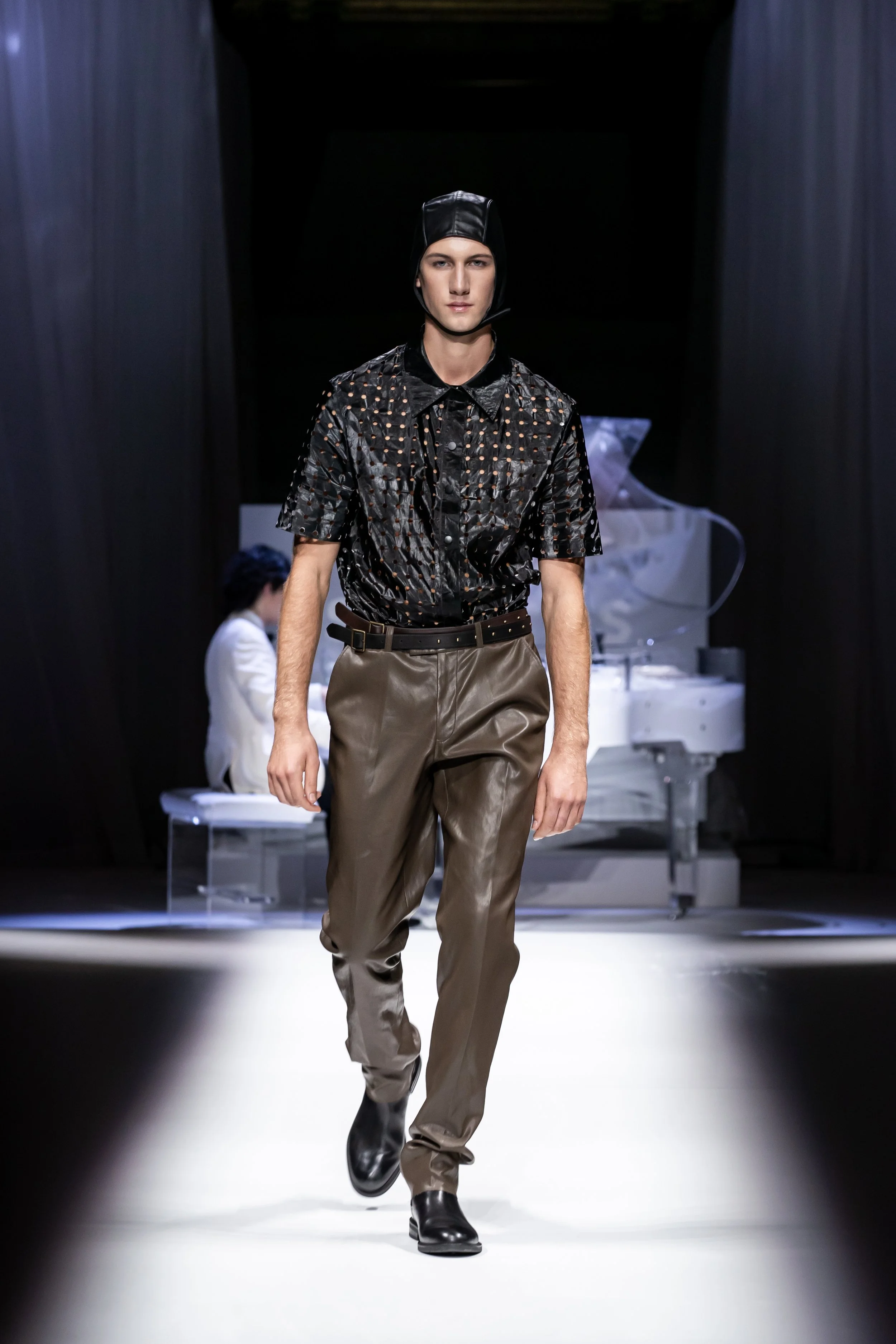
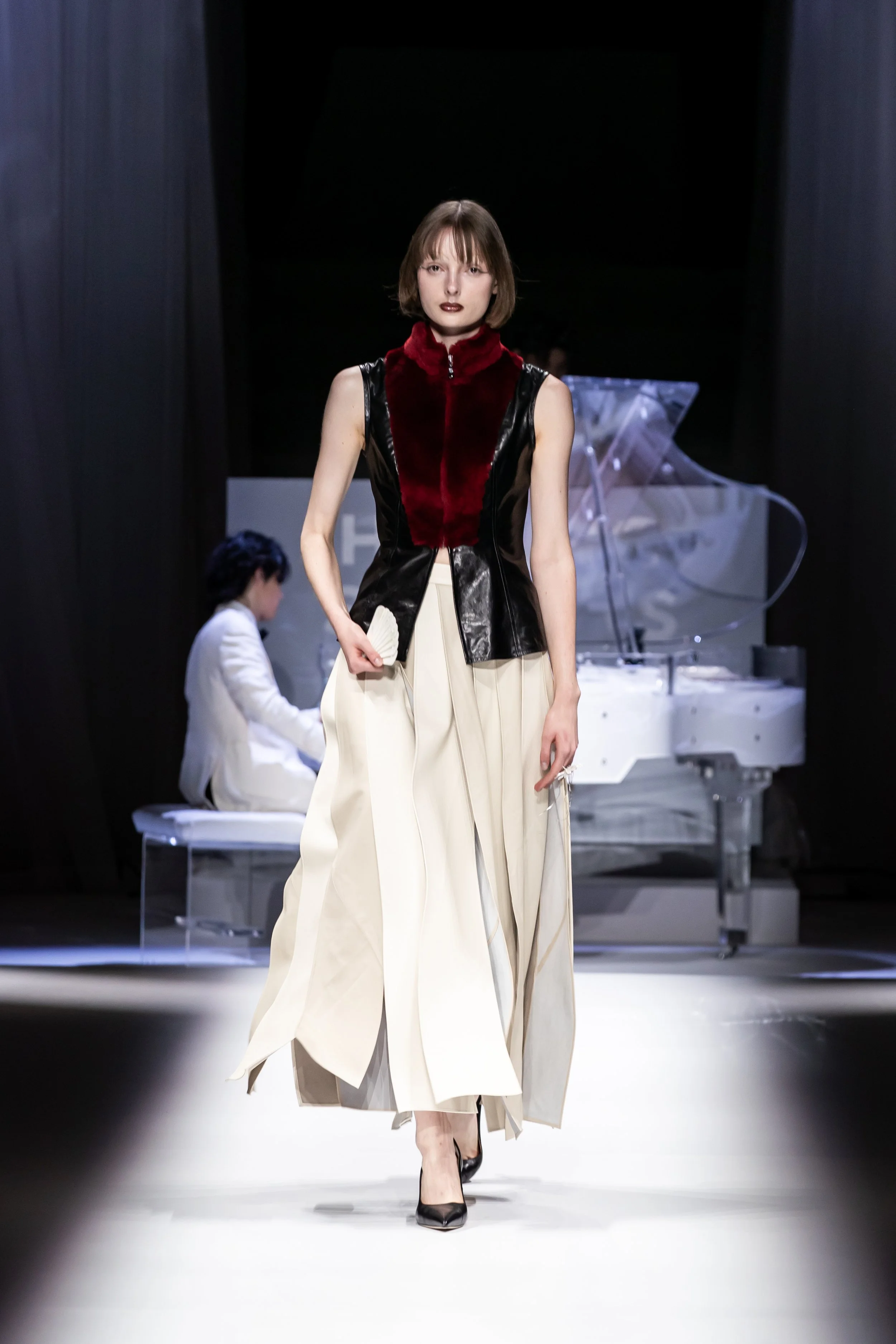
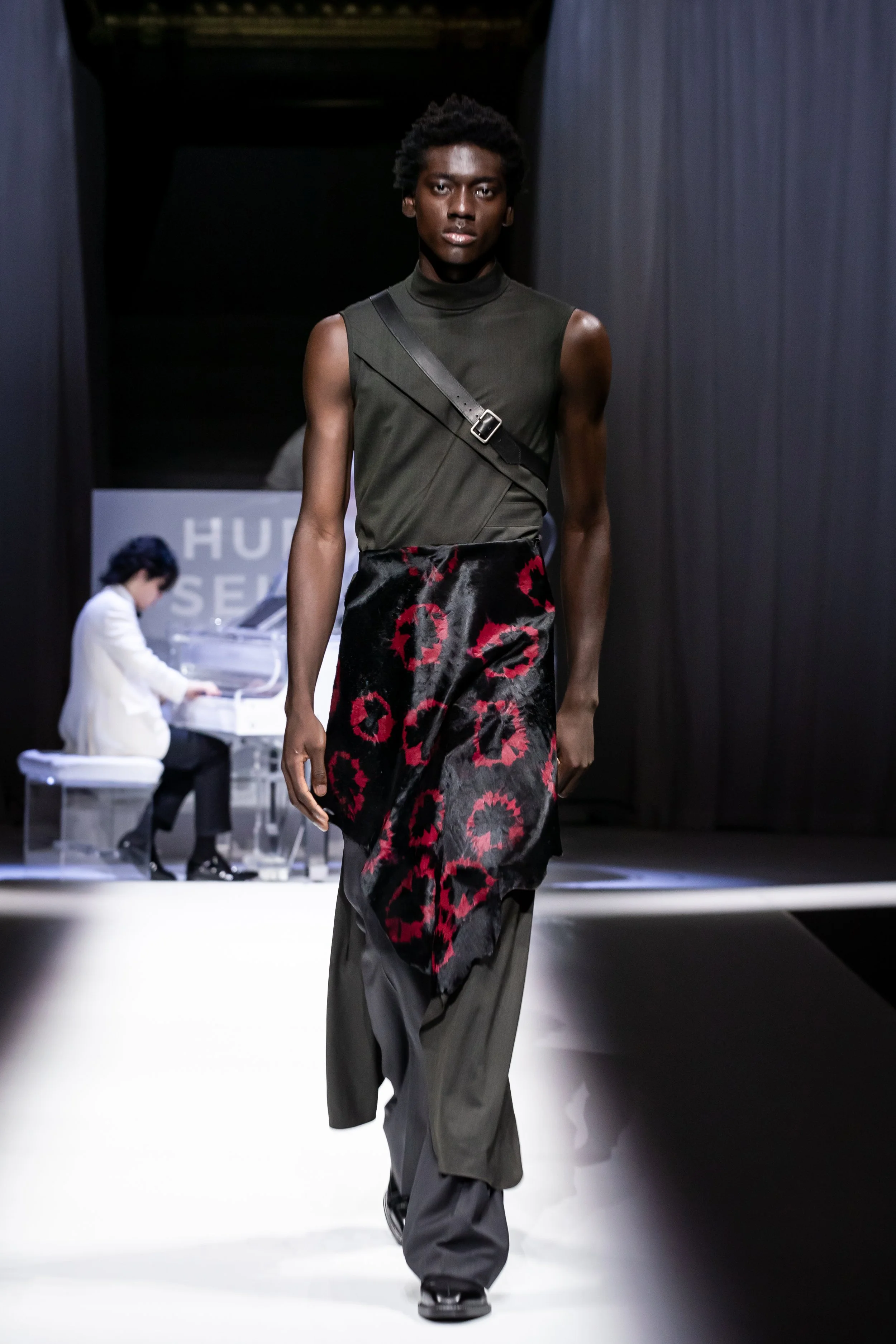
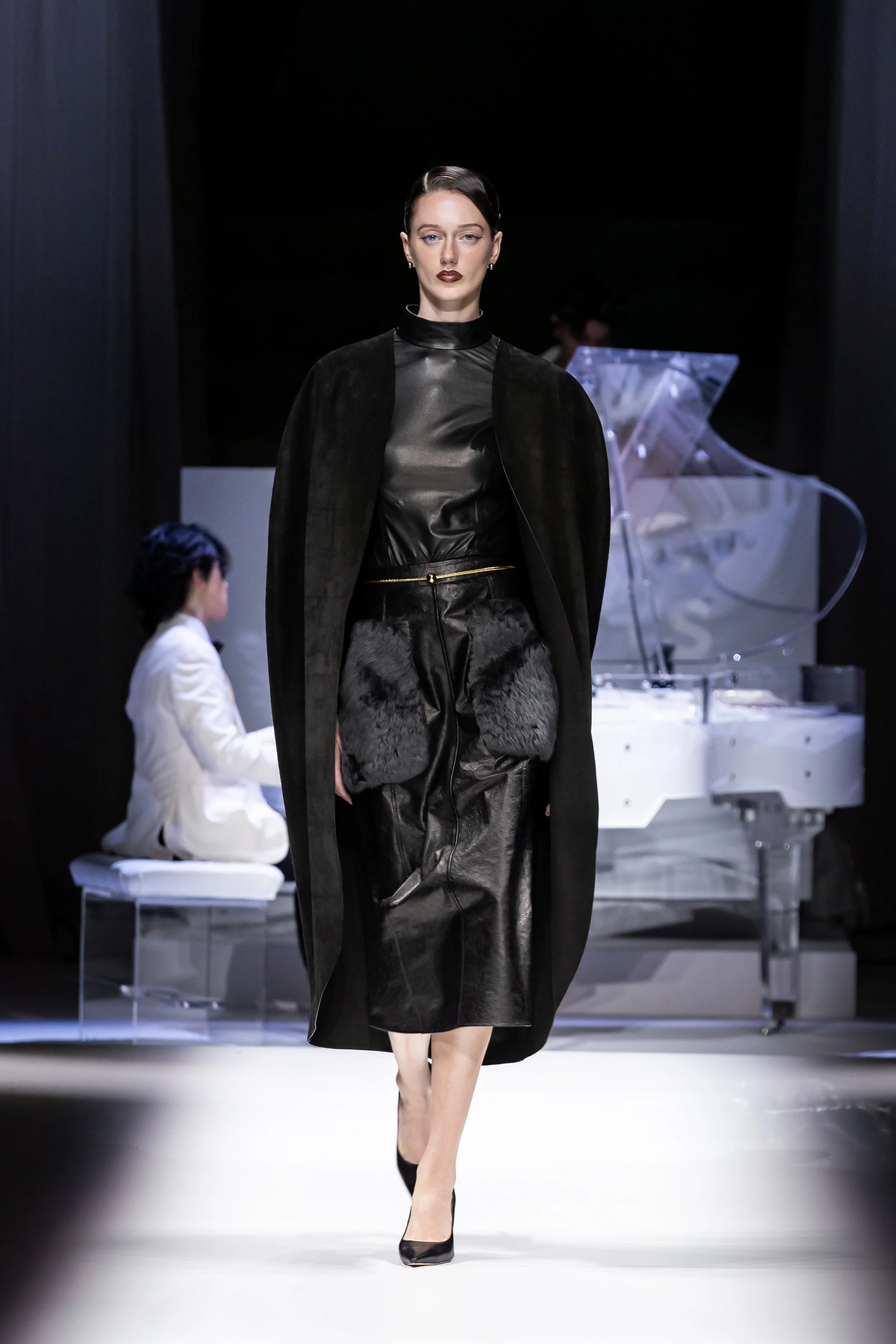
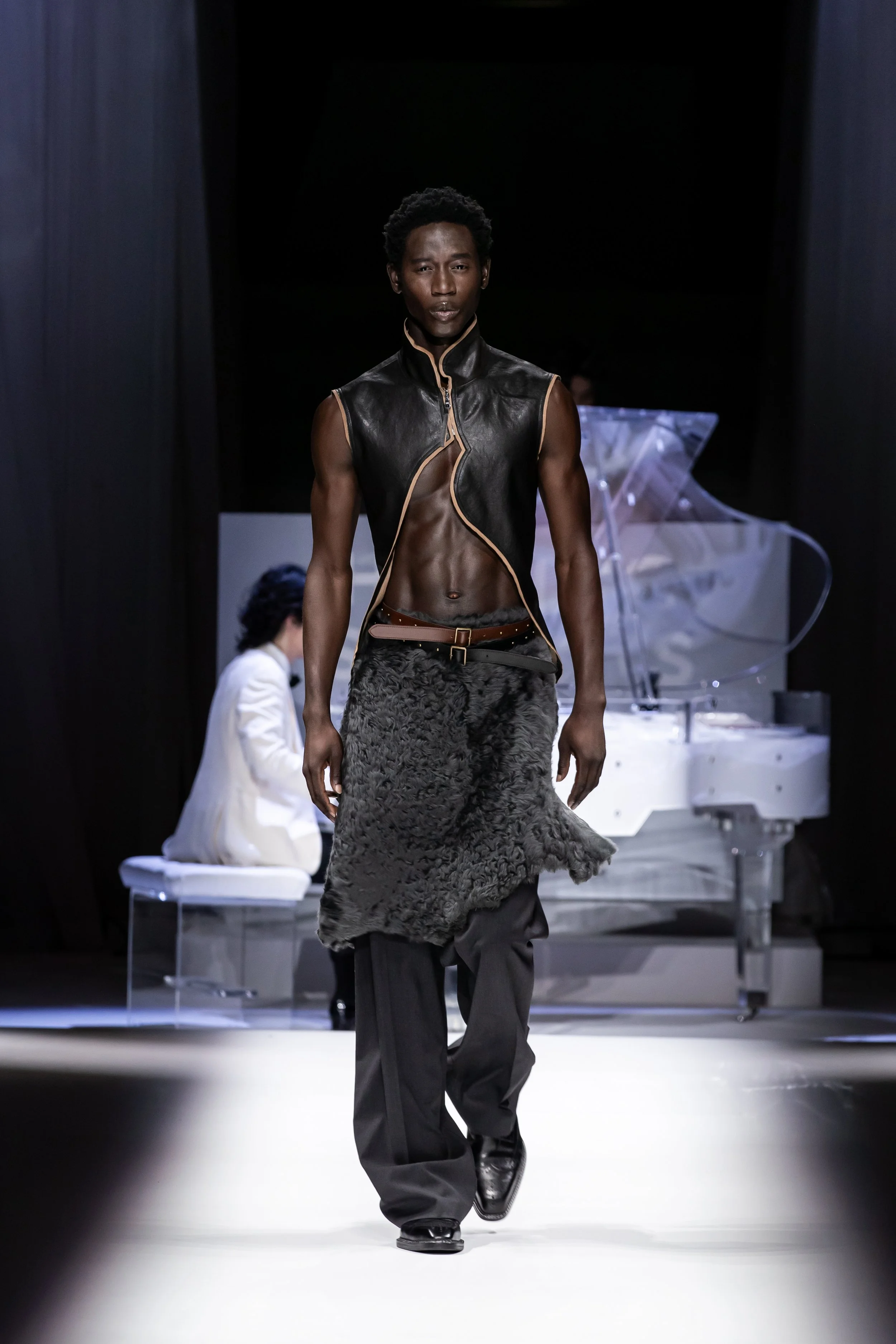
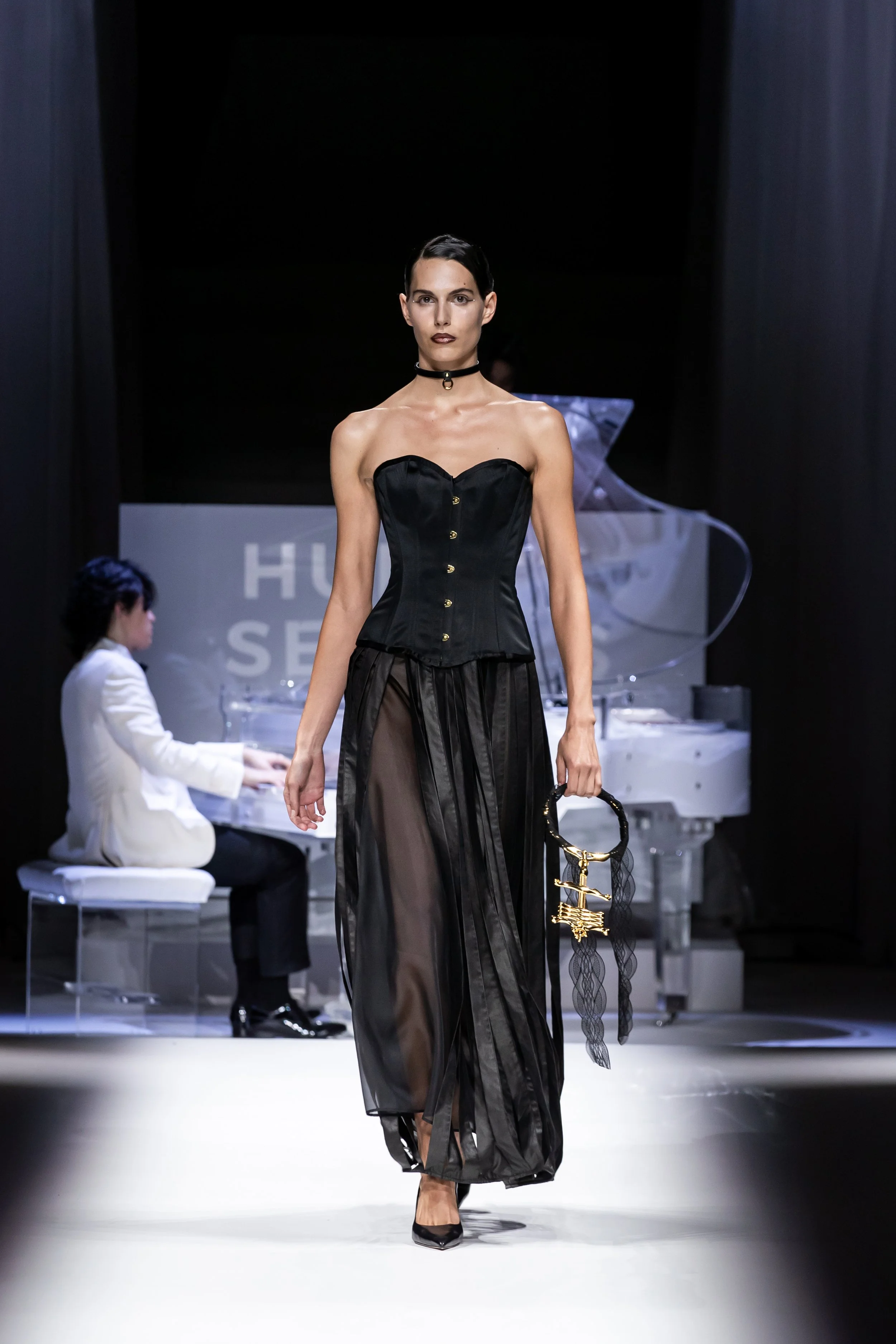
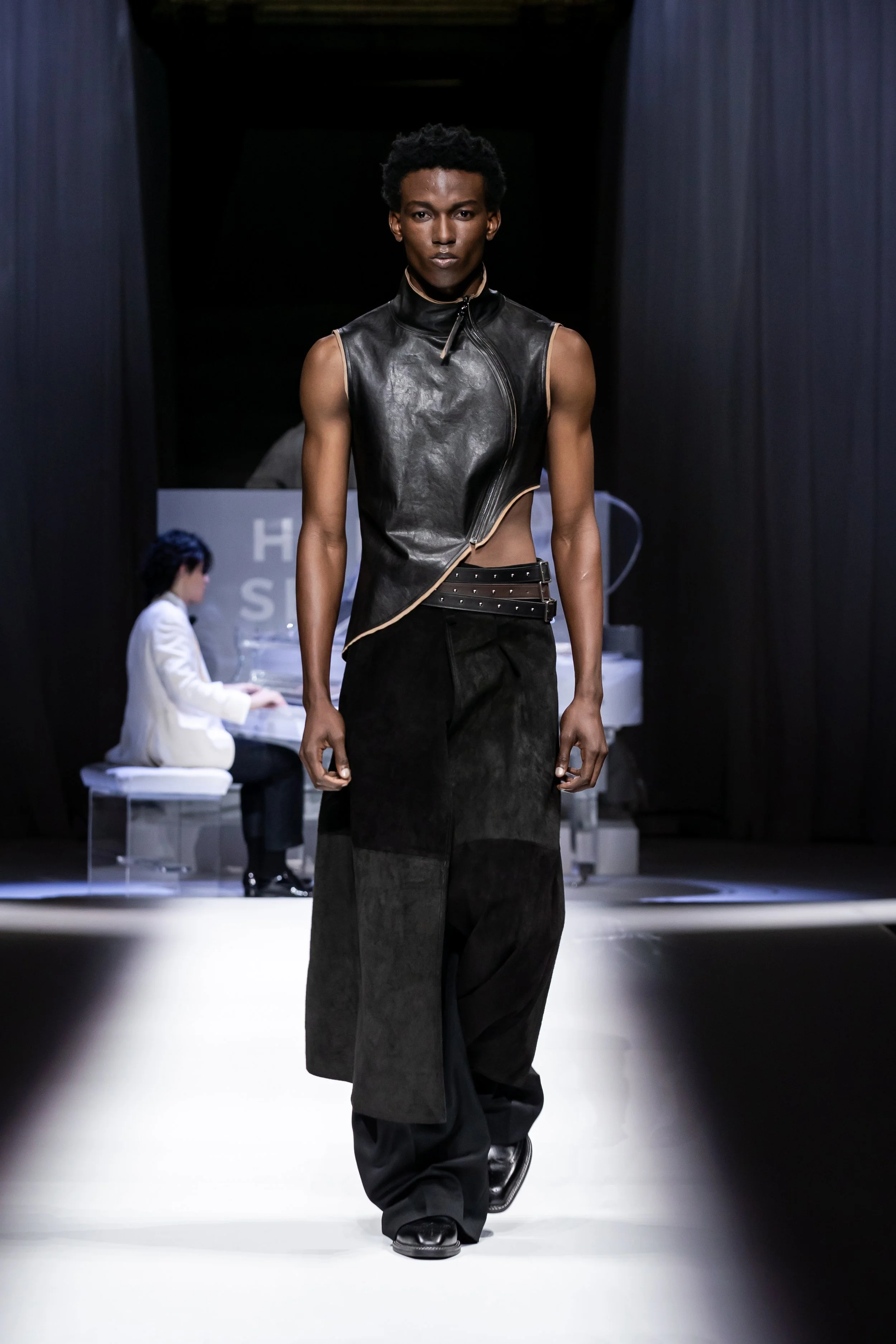
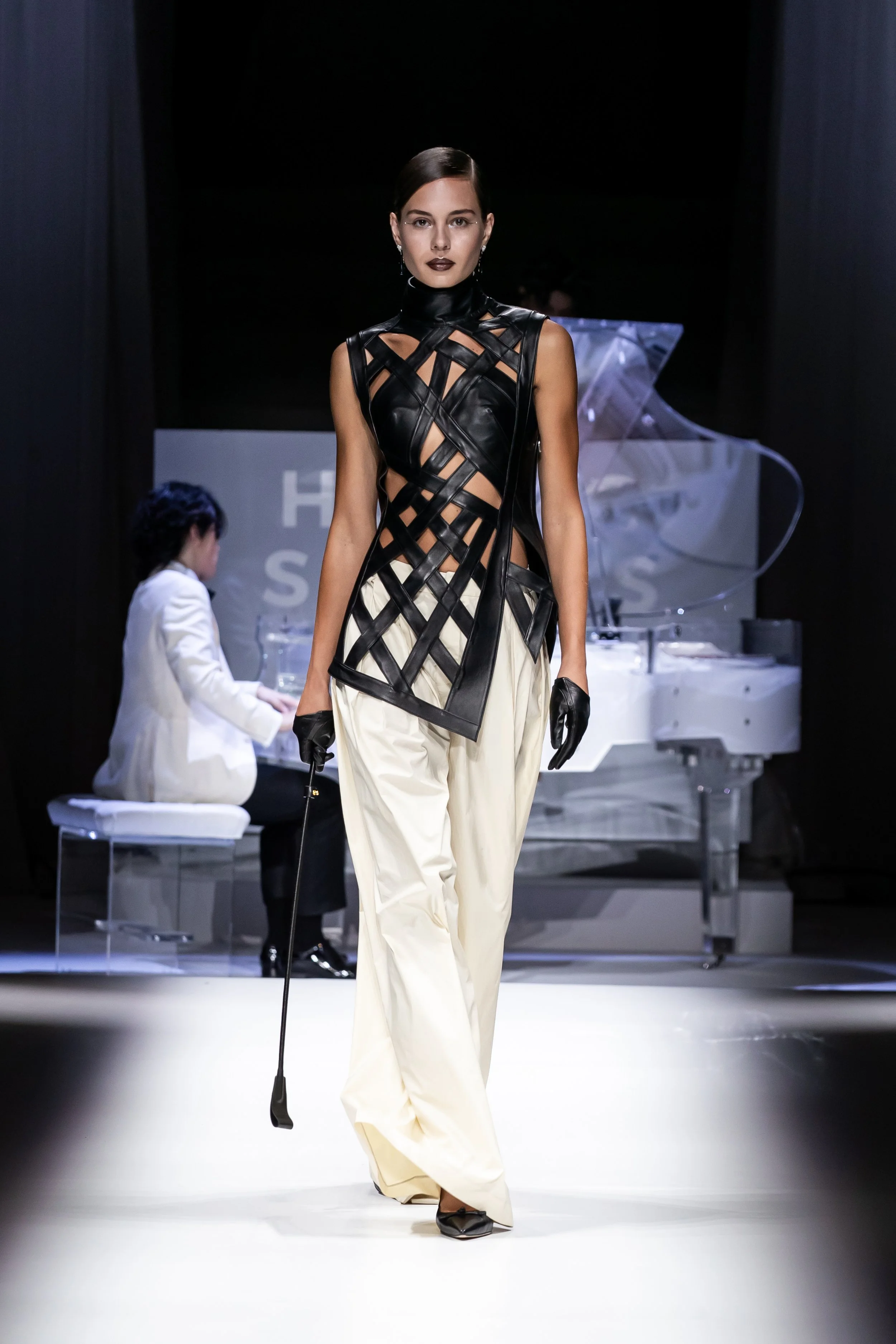
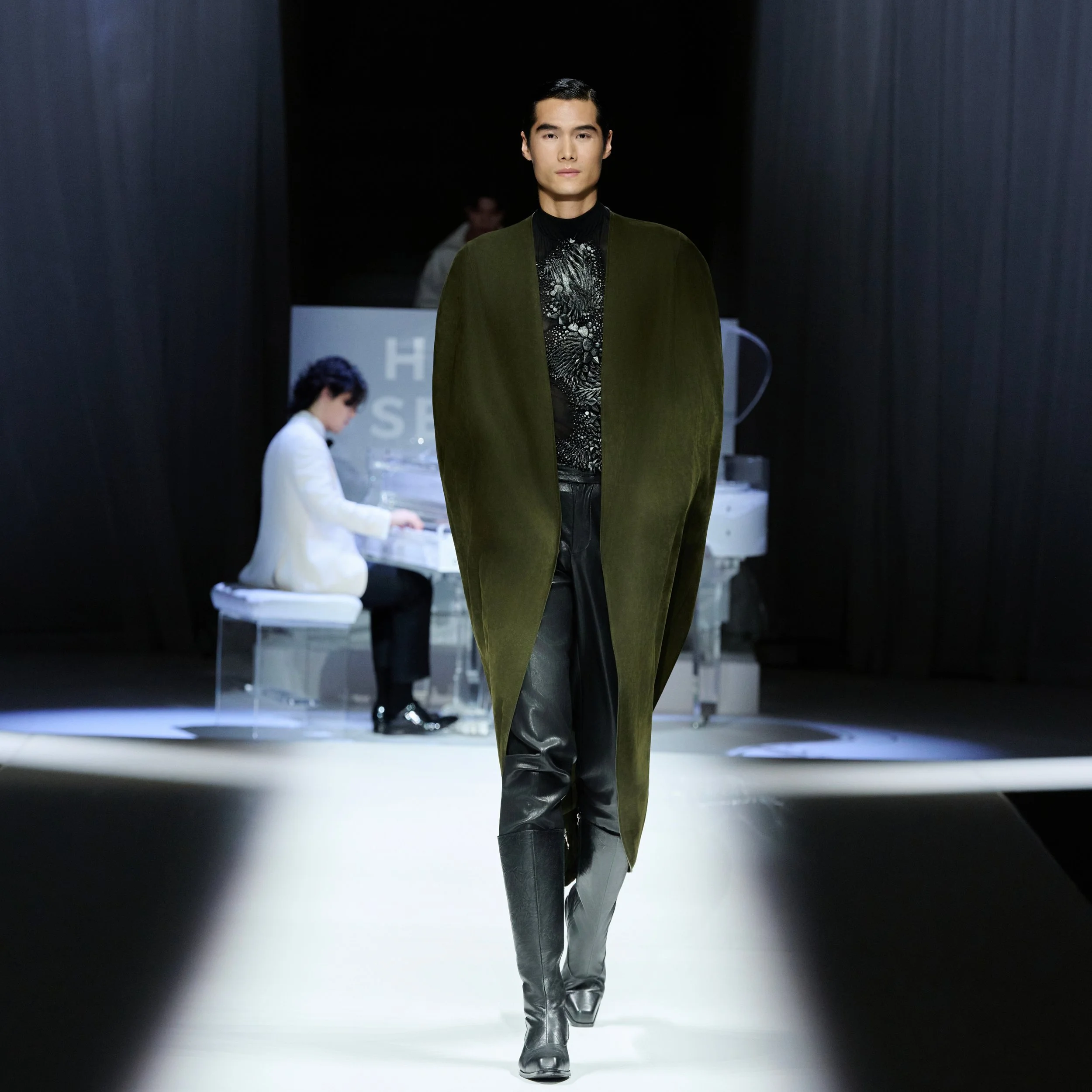
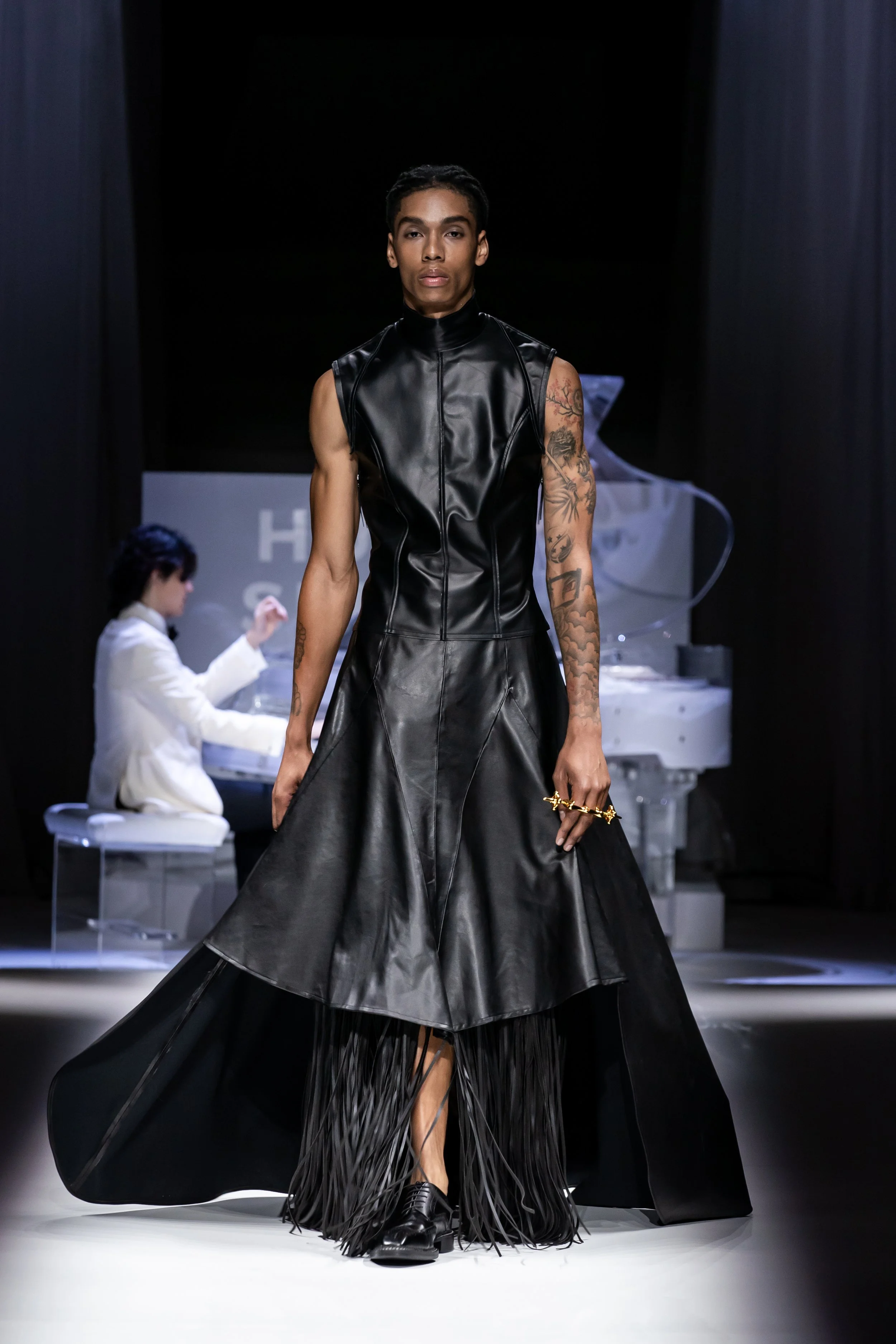
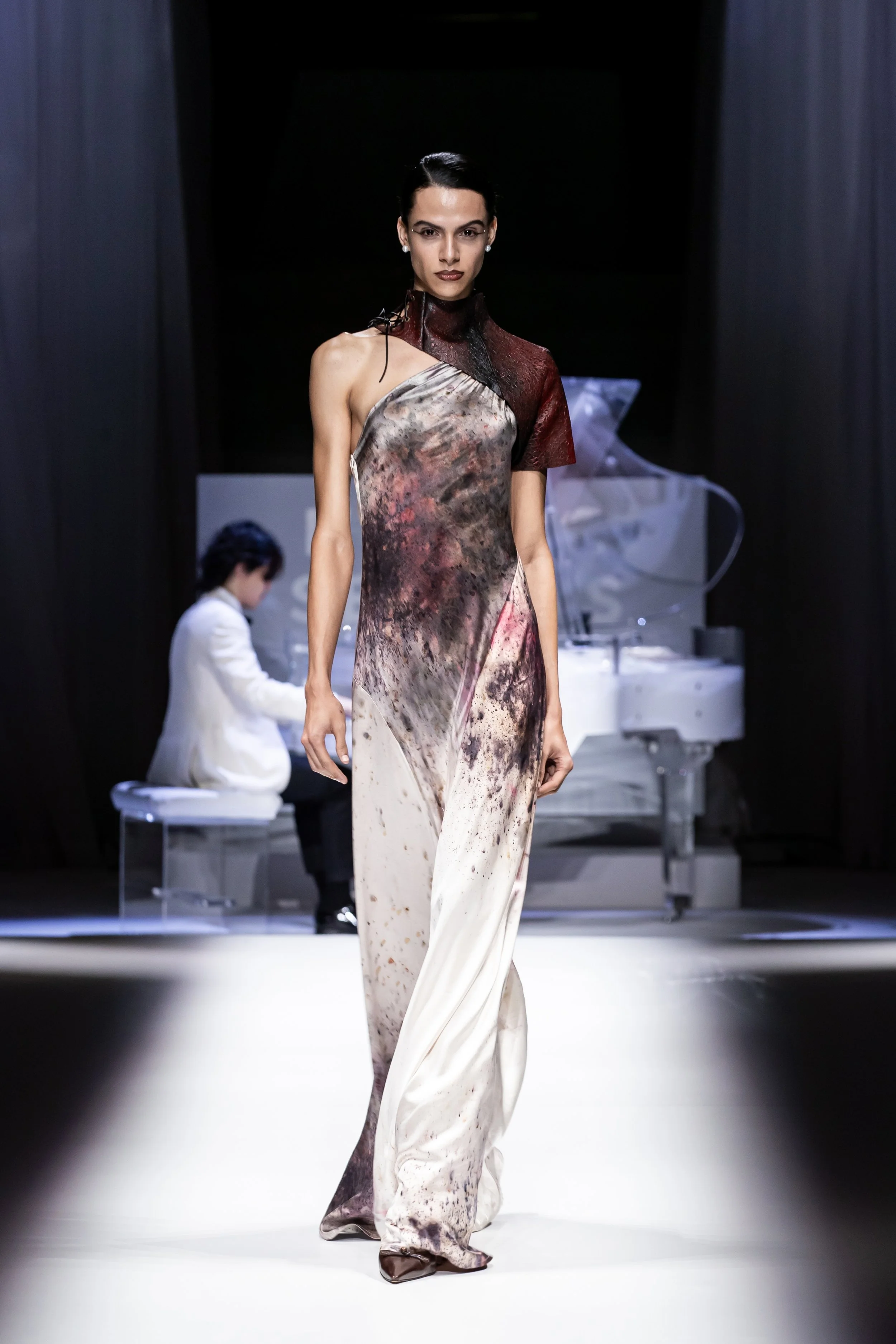
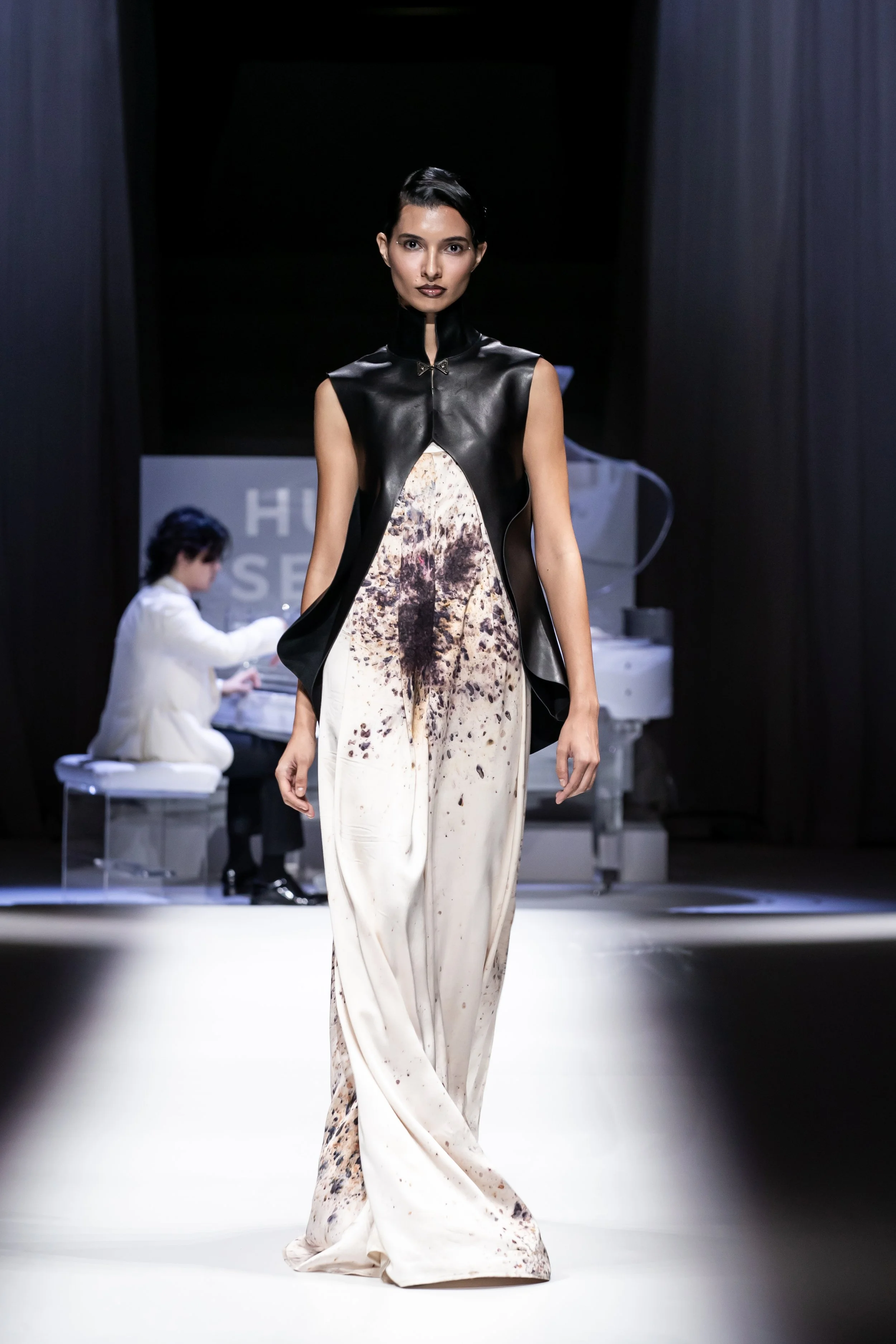
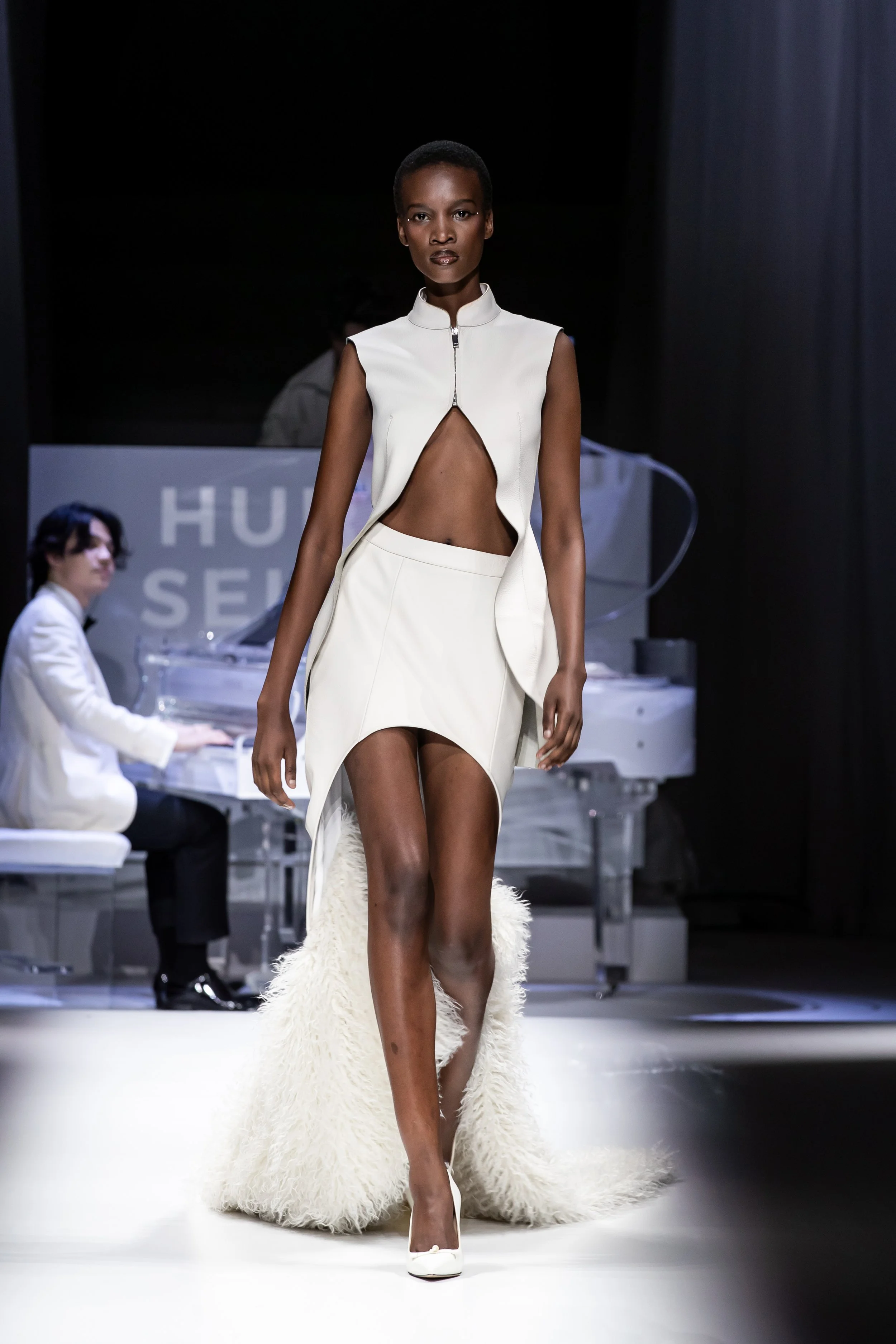
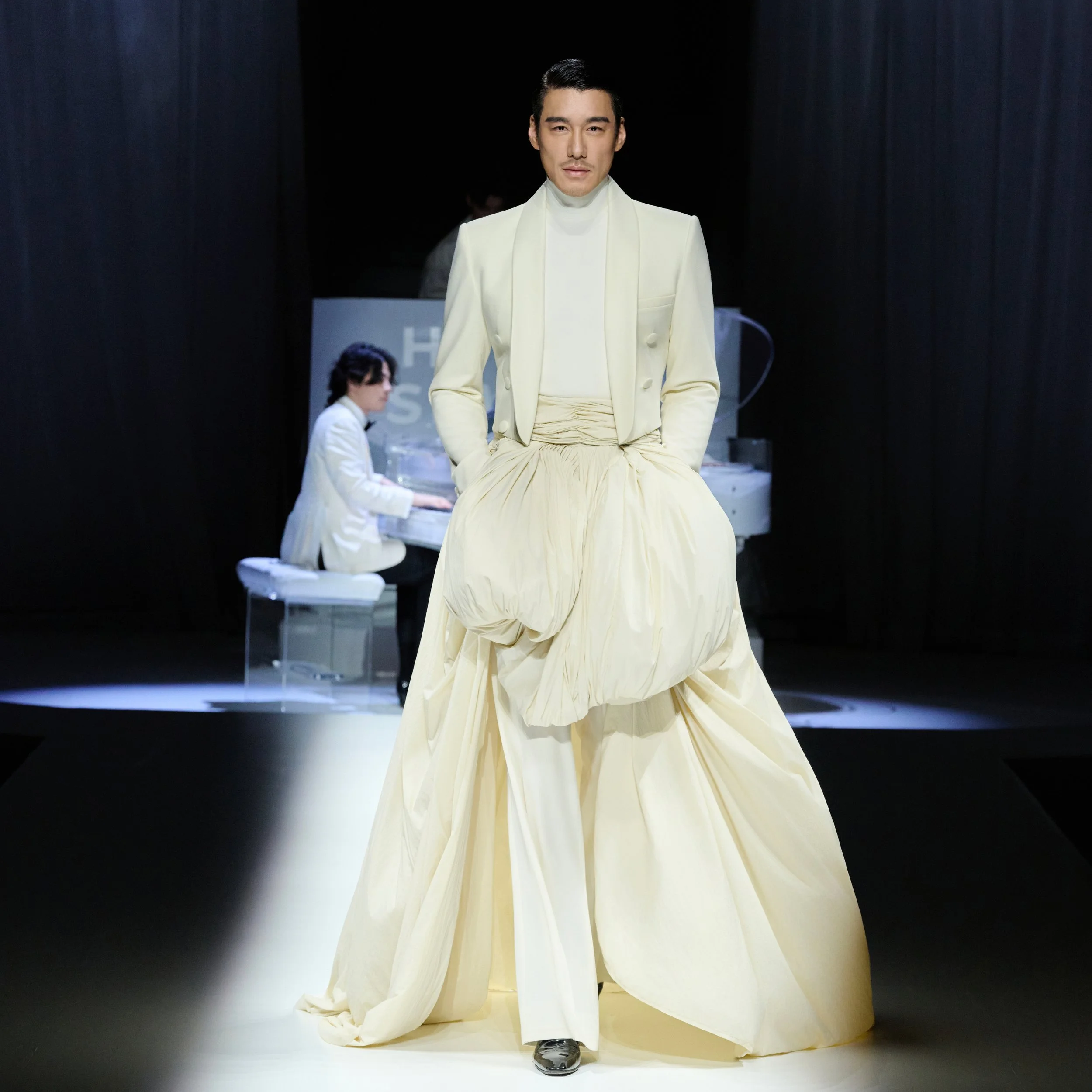
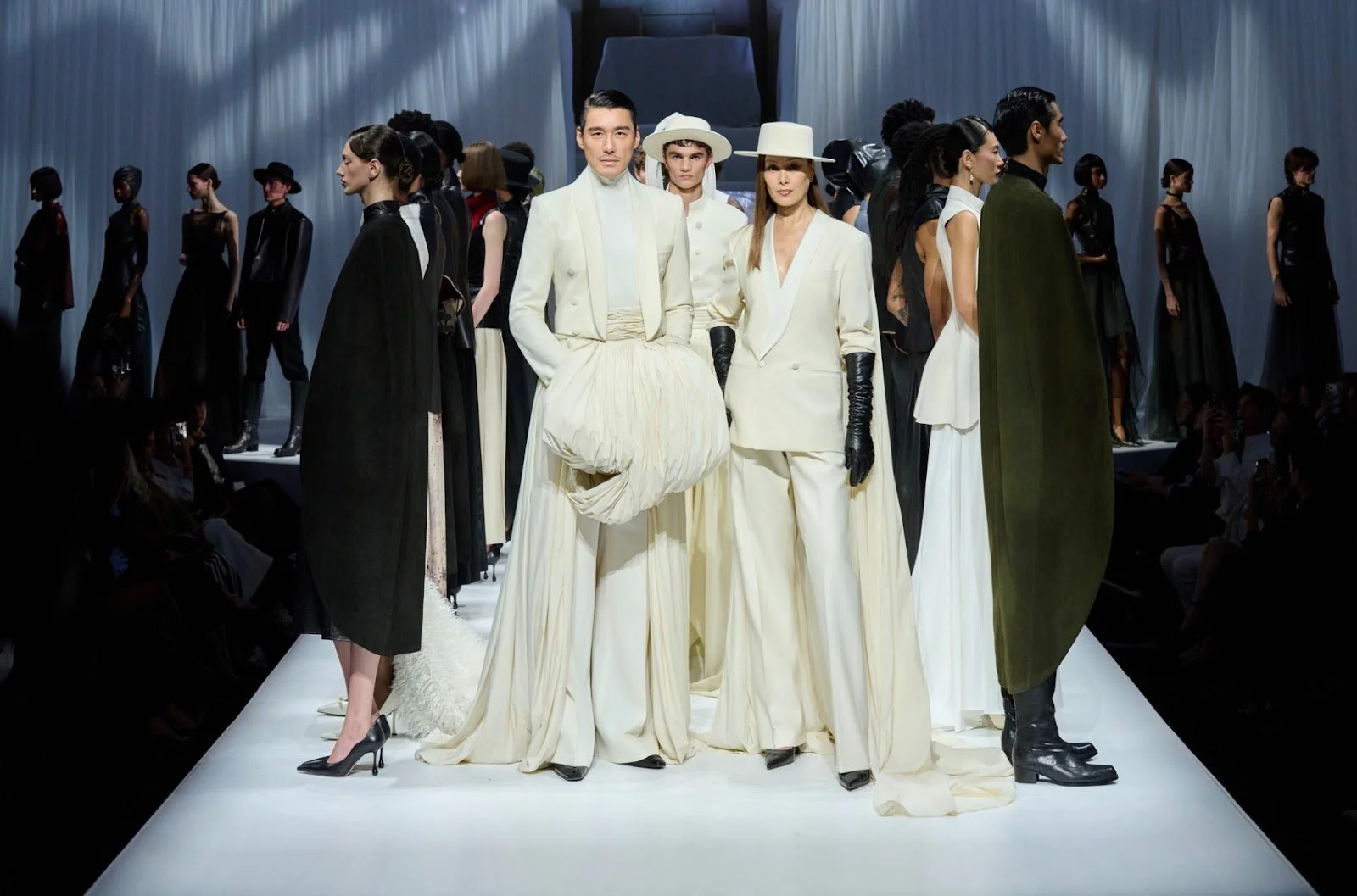
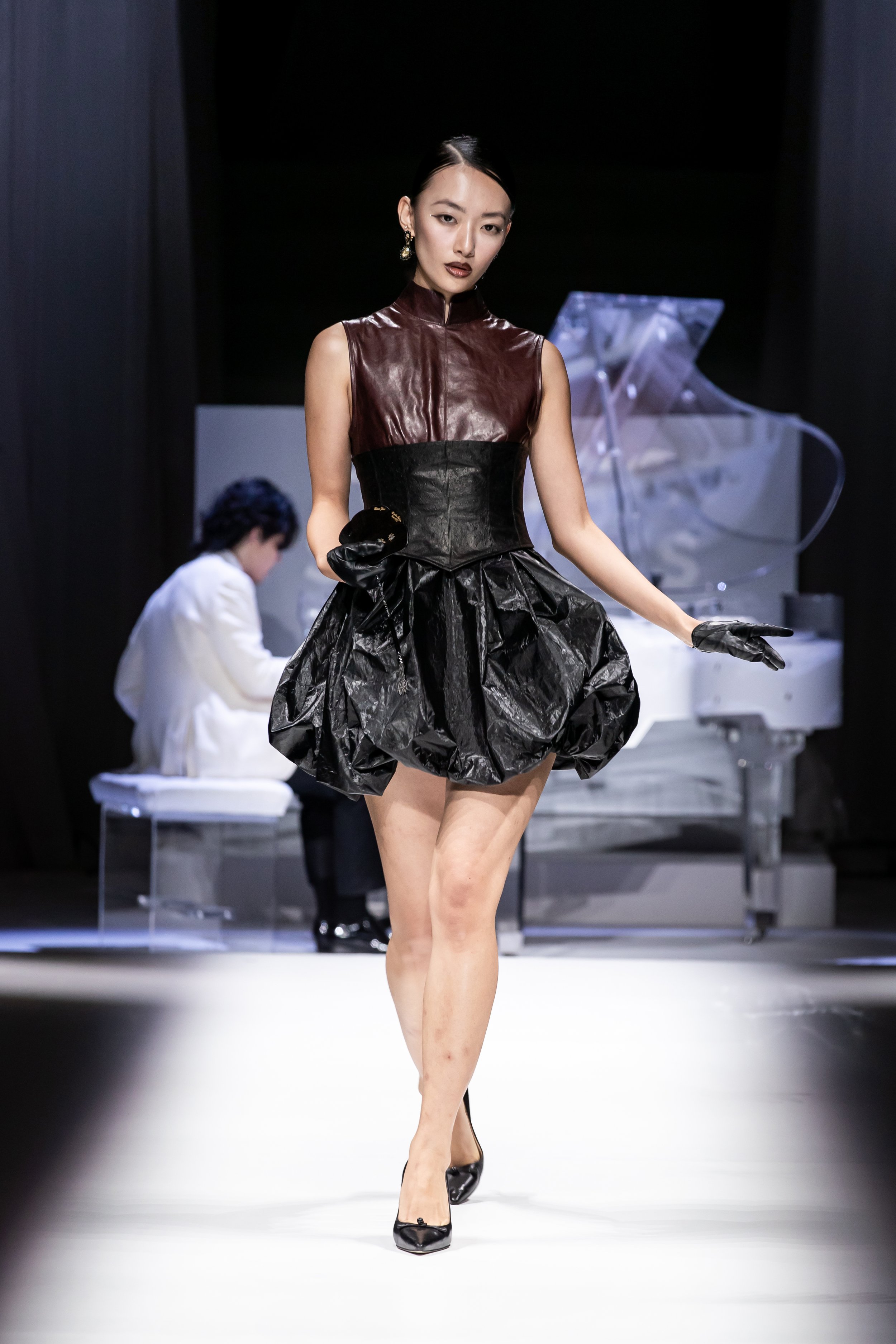
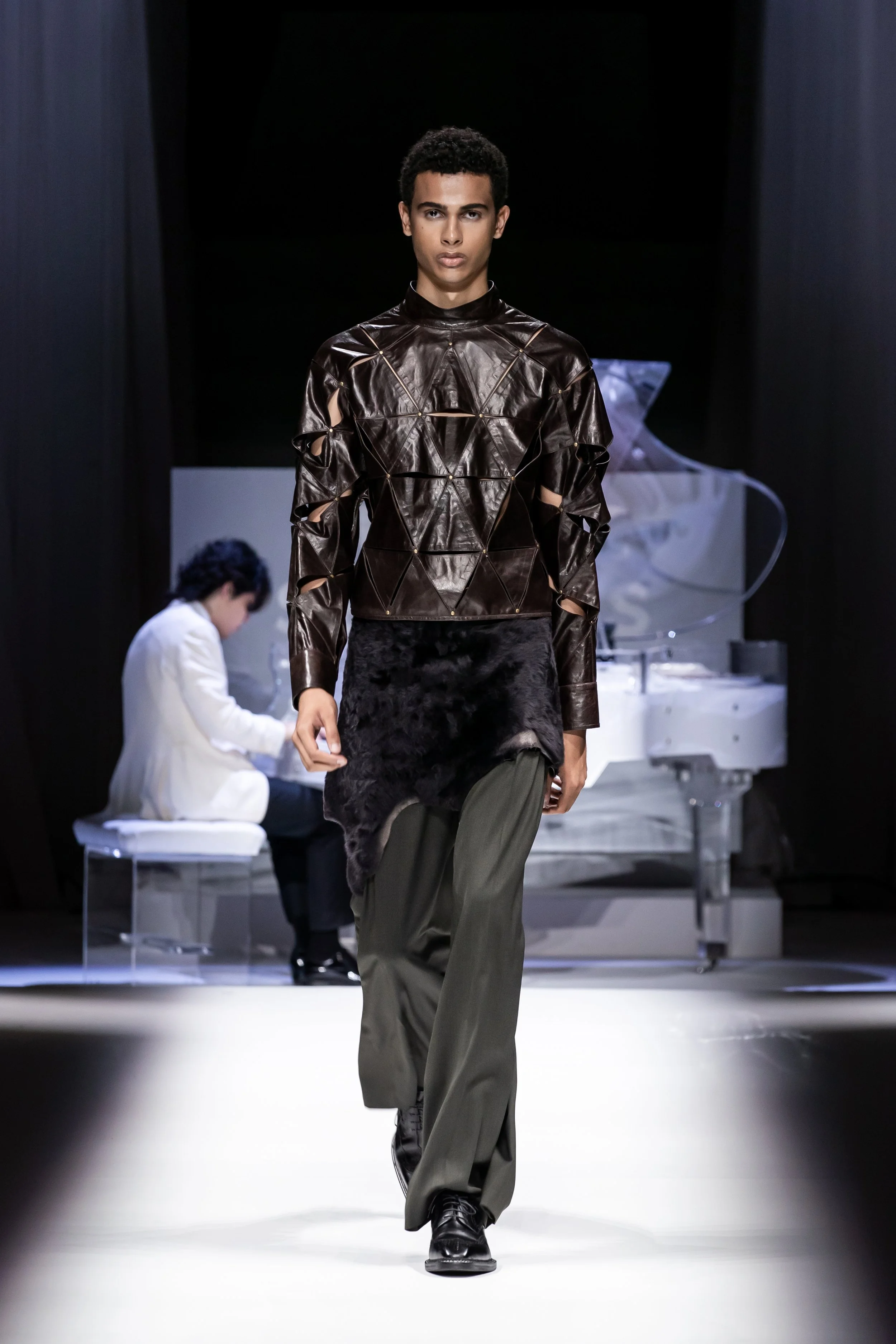
Leather was the obvious constant, developed through a series of increasingly fluid interpretations. It is a notoriously unforgiving material on a runway, particularly when sculpted tightly around the body, but the execution here was notably precise. Structured leather gowns were softened by silk, gauze and organza, creating a useful tension between protection and exposure. Look 14 was particularly effective: a burgundy-brown leather vest layered over a black corset and a short, ballooning organza skirt, the materials moving from dense and architectural into something almost weightless. The effect sat somewhere between a retro silhouette and a futuristic experiment. Elsewhere, Look 16 took leather somewhere more playful, with an origami-like top assembled from triangular cut-outs, sections deliberately missing, worn with a fur detail and oversized moss-green trousers.
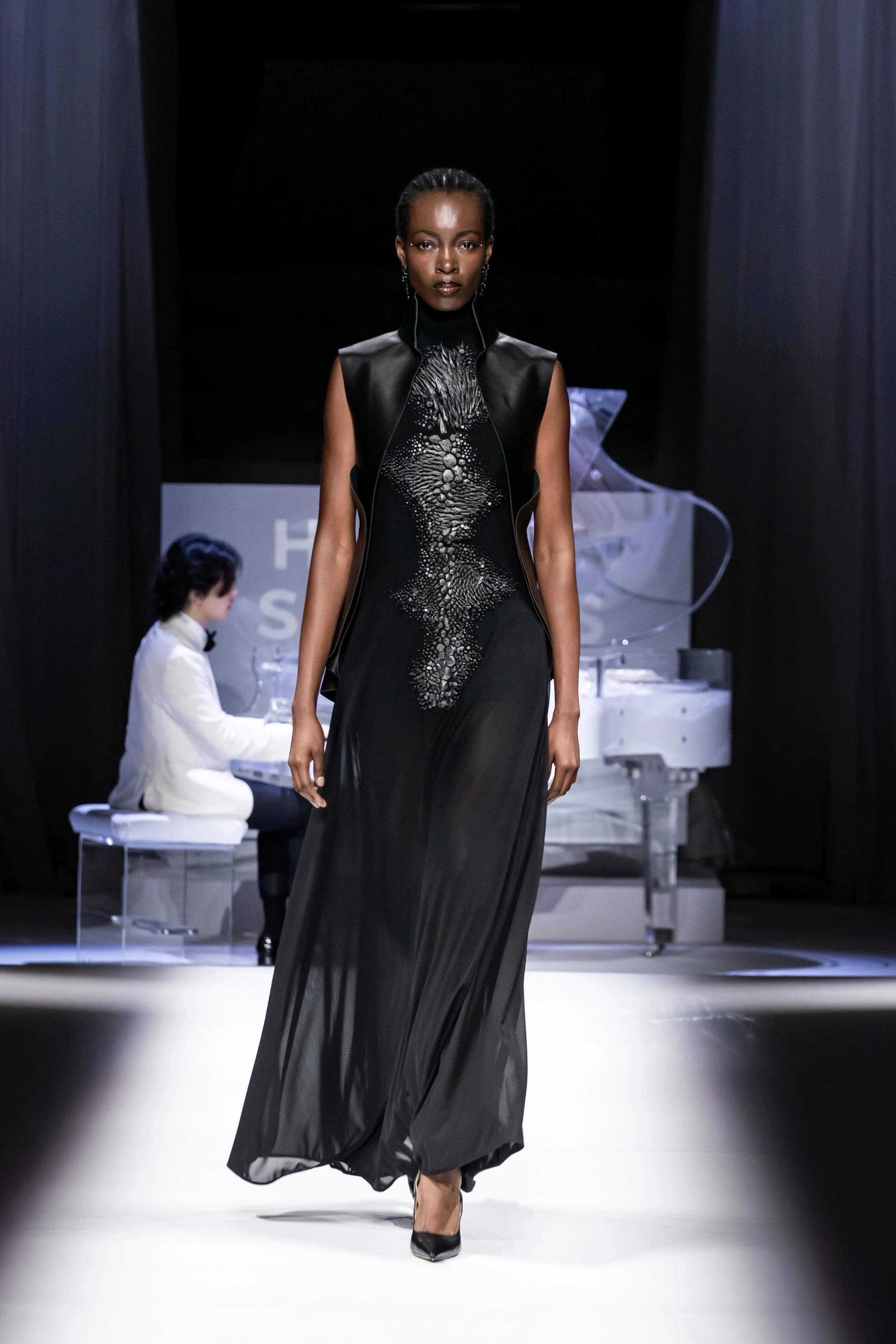
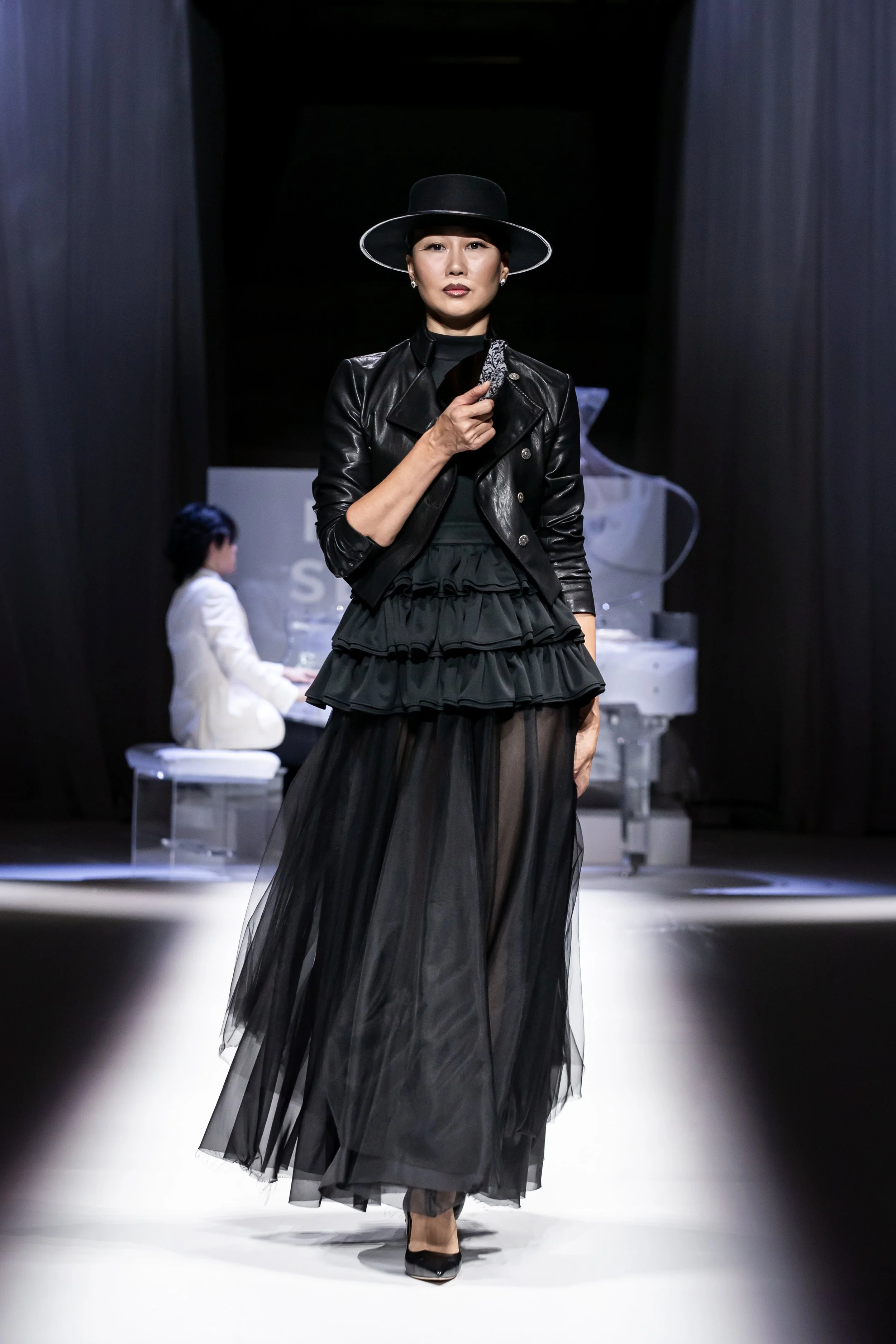
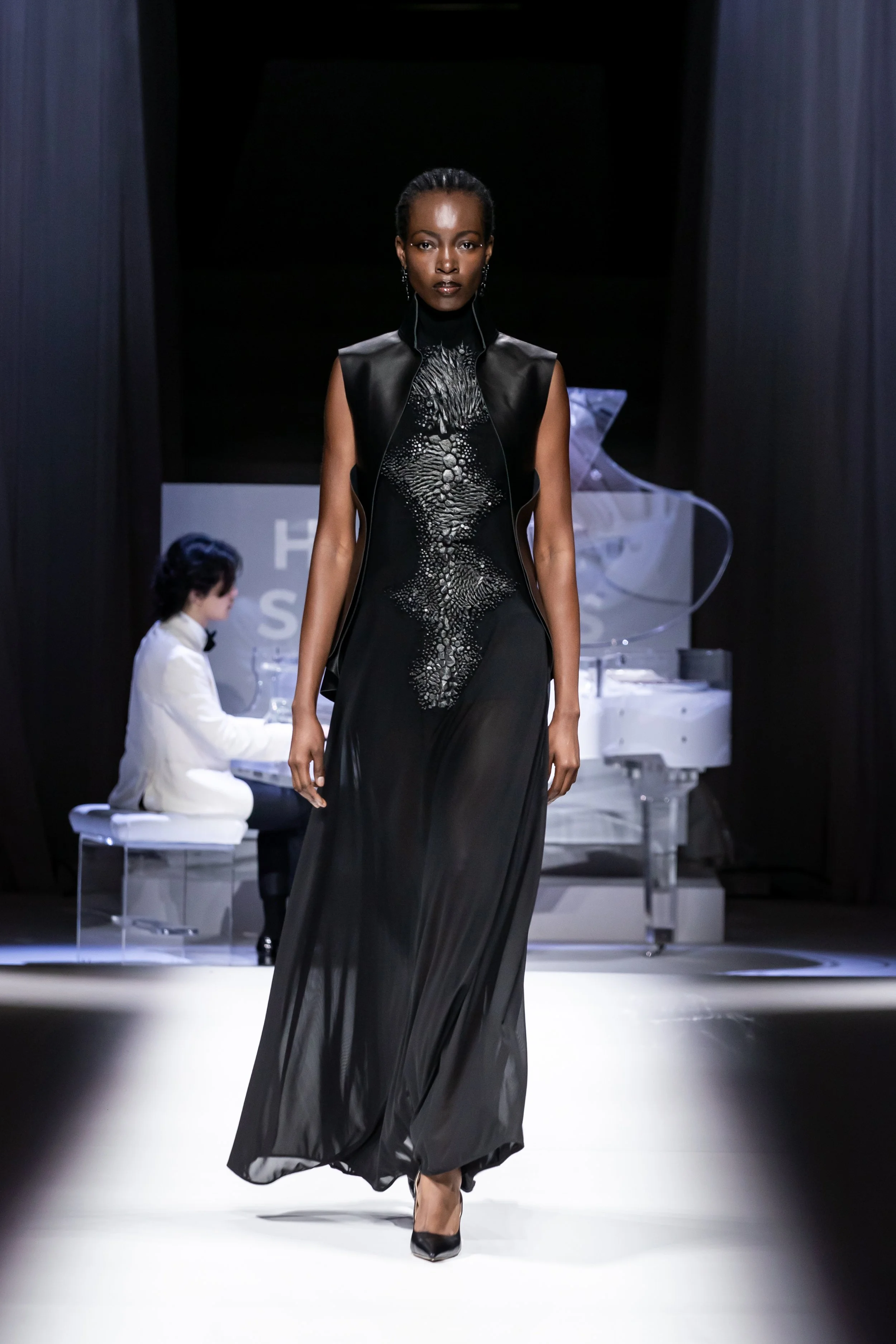
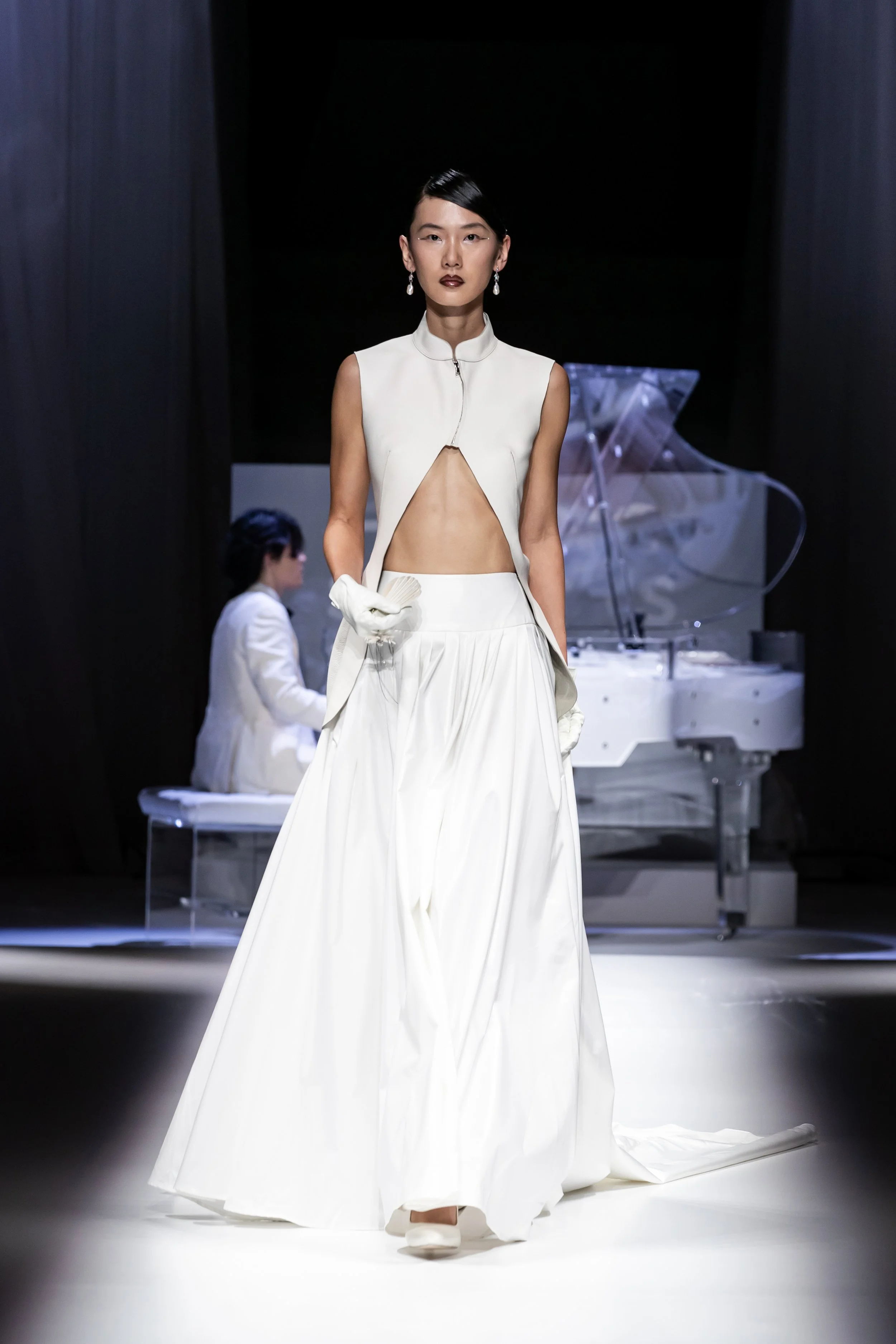
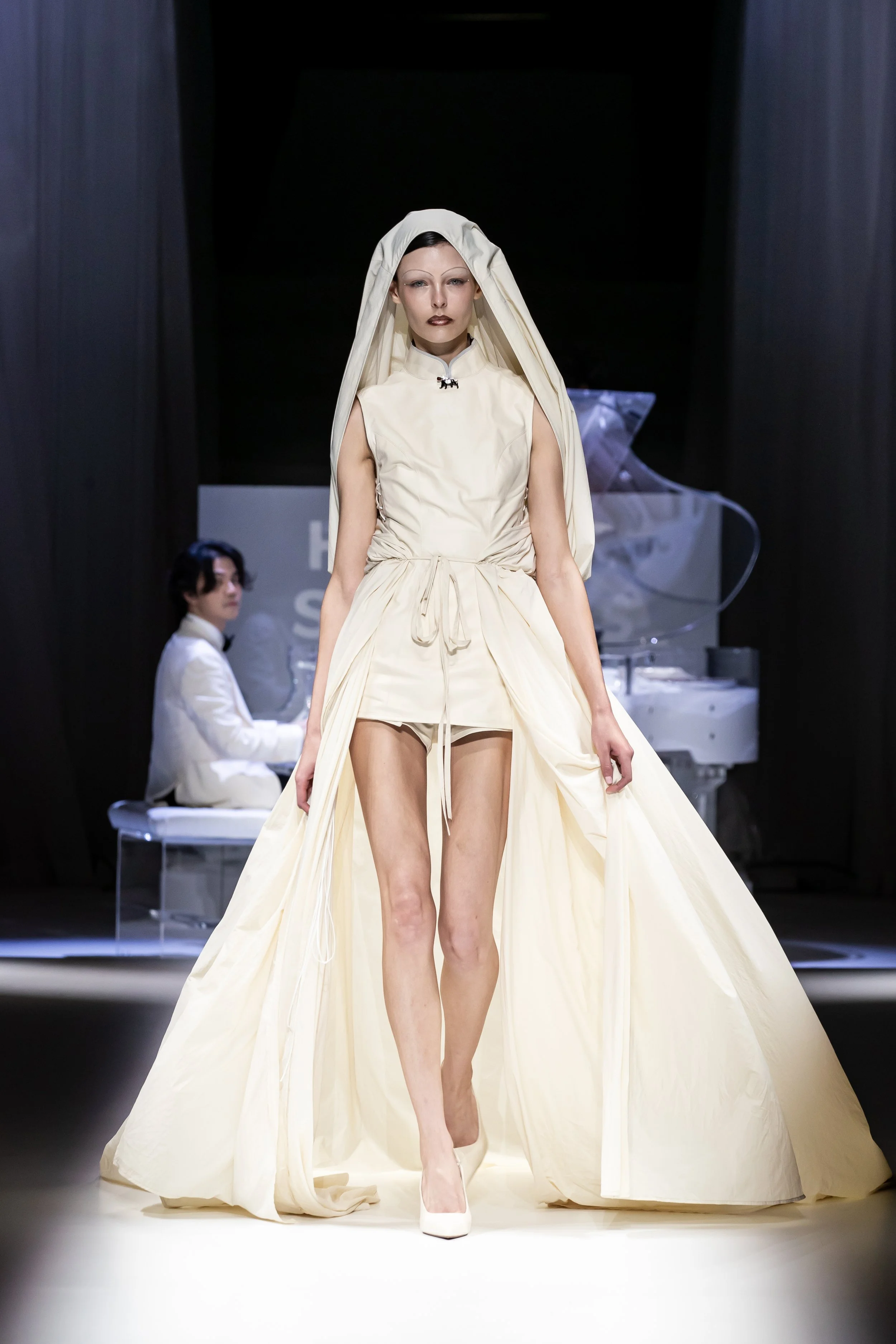
The collection became most interesting when those contrasts were allowed to remain slightly unresolved. Look 36 paired a long, soft black dress with an open leather vest from which spikes and bubble-like forms emerged, an almost mischievous interruption to an otherwise restrained silhouette. Another standout was the silk look finished with a long white train, which prompted a noticeable wave of phones from the audience as it moved towards us. It was one of the quieter looks in the collection, but perhaps for that reason it made an impression: after the heavier leather and sculptural constructions, its movement felt almost weightless.
Behind the clothes was Hu Bing’s idea of “Finishing in China”, developed through Haining’s leather supply chain in Zhejiang. Rather than treating manufacturing as something separate from design, the proposition places emphasis on the technical decisions and craftsmanship involved in bringing a garment to its final form. That idea was most convincing when visible in the clothes themselves - in leather made lighter, softer and more malleable than its usual associations suggest. URBAN GRACE ultimately worked best not as a prediction of what fashion will look like in 3030, but as a reminder that innovation can also mean knowing exactly what a material is capable of becoming.