Francesco Murano Spring/Summer 2027
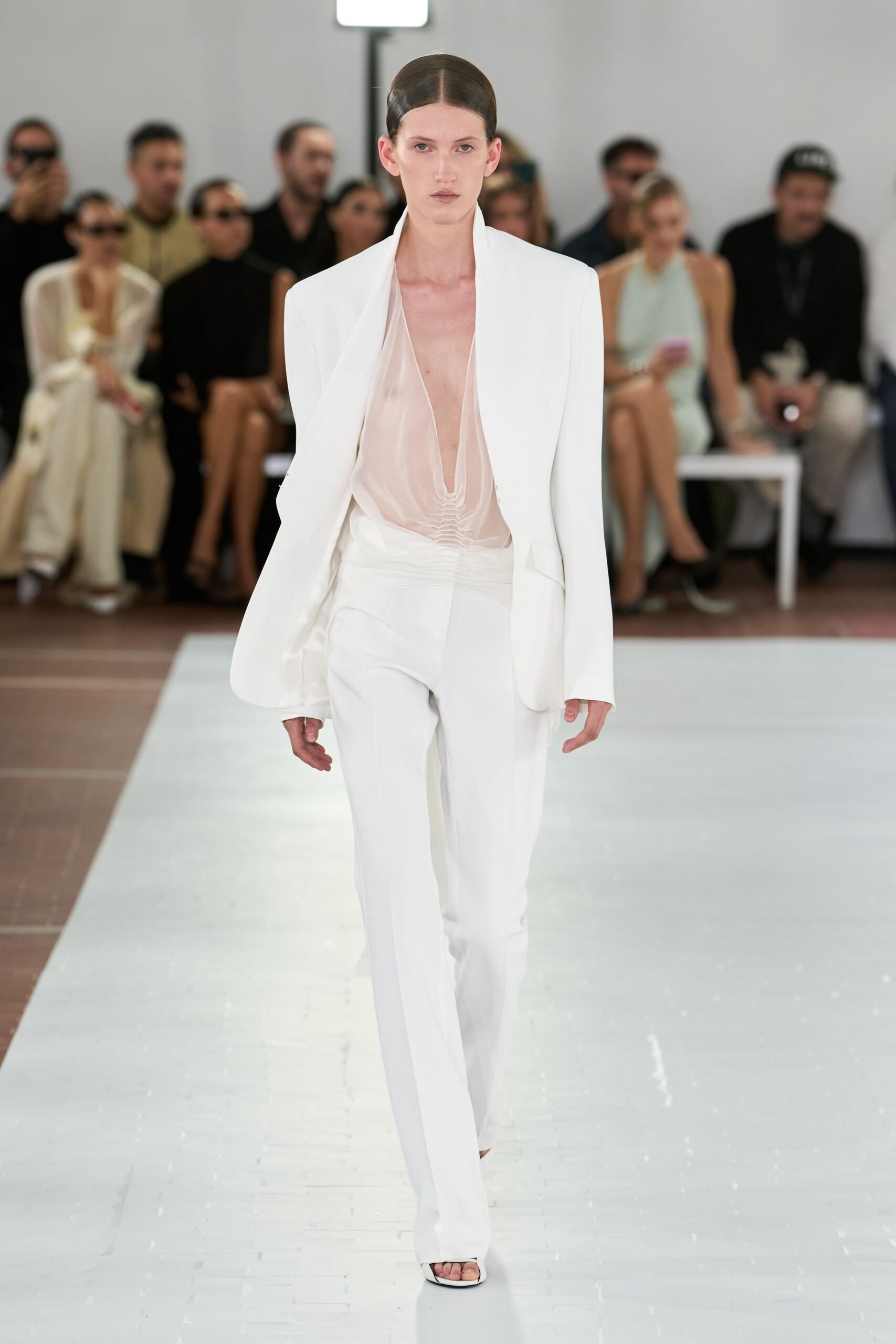
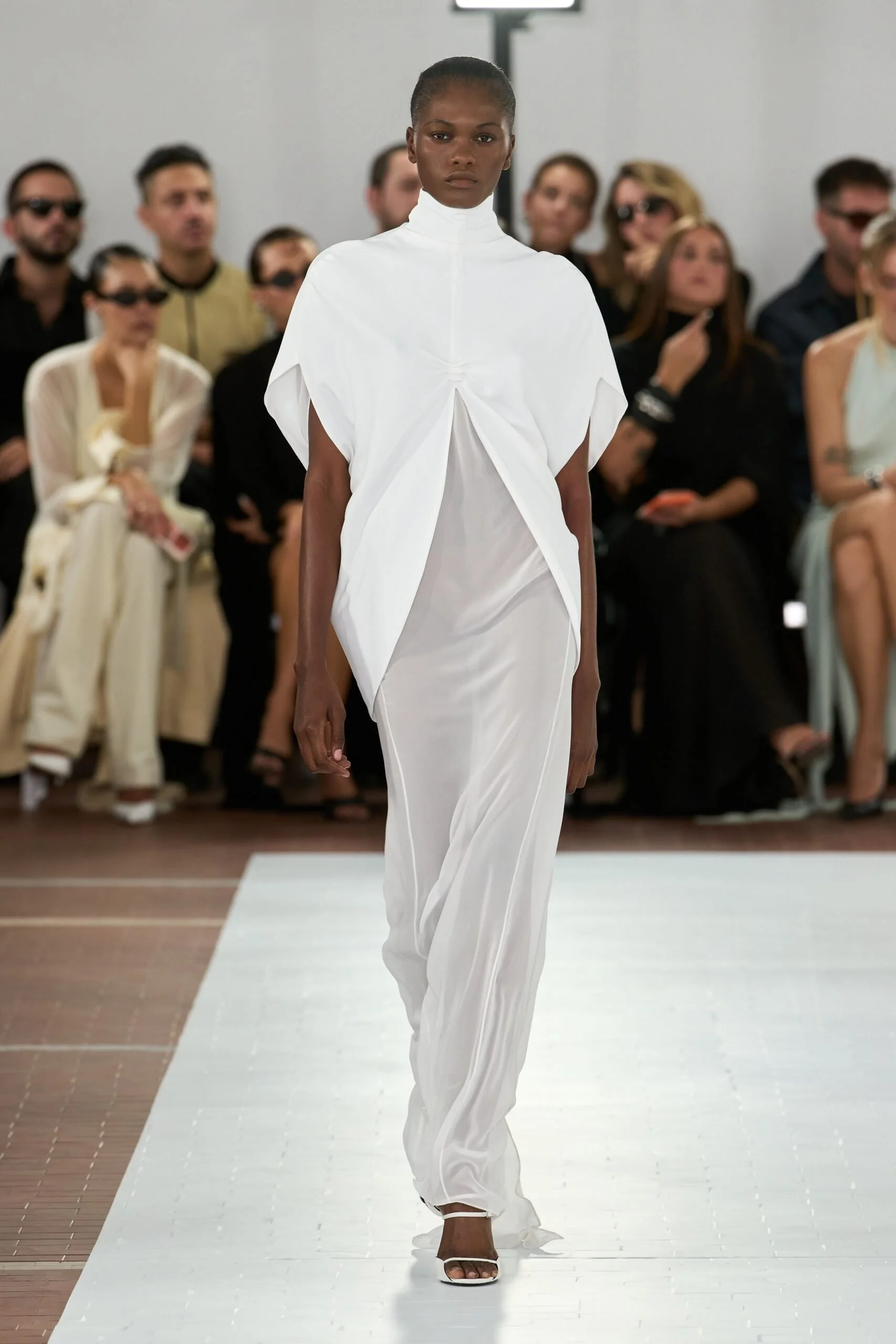
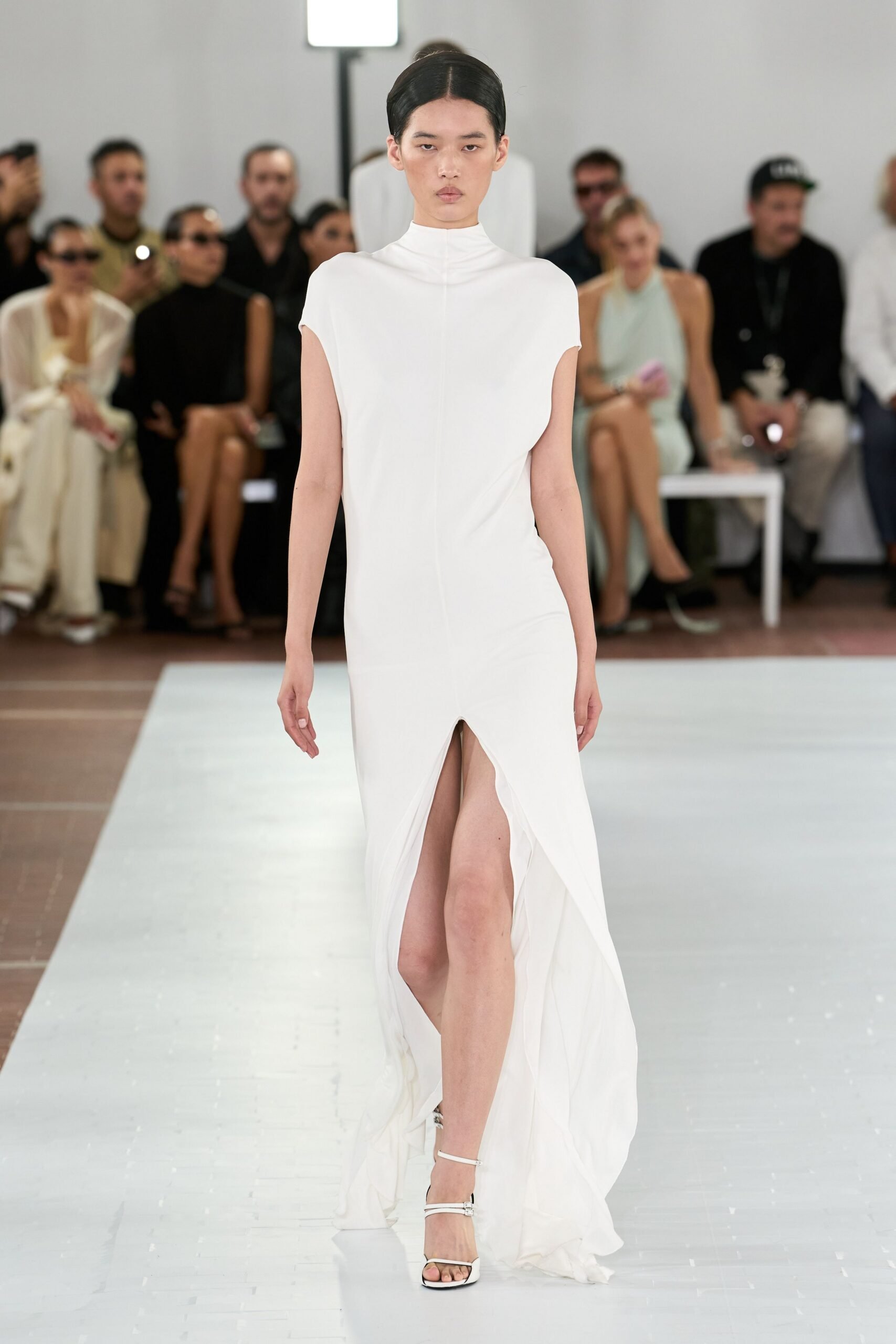
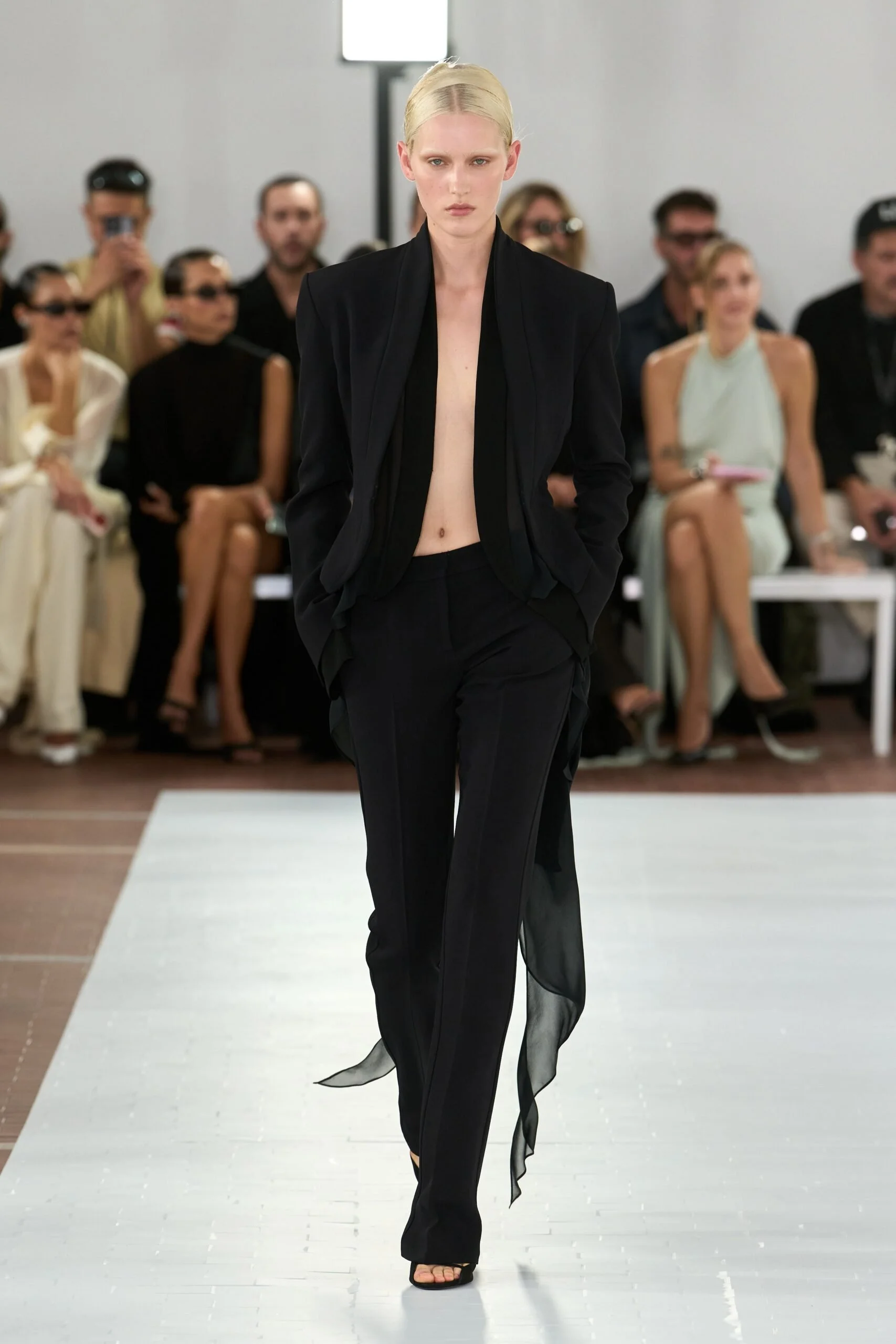
Francesco Murano’s Spring/Summer 2027 collection, titled Éidola, takes its cue from Fritz Lang’s Metropolis and the year 2026 that the 1927 film imagined as its futuristic present. Rather than attempting a literal translation of the film, Murano focuses on its two Marias: the human figure and her seductive mechanical counterpart. That duality becomes a useful framework for a collection built around opposing qualities — rigid and fluid, covered and exposed, engineered and sensual.
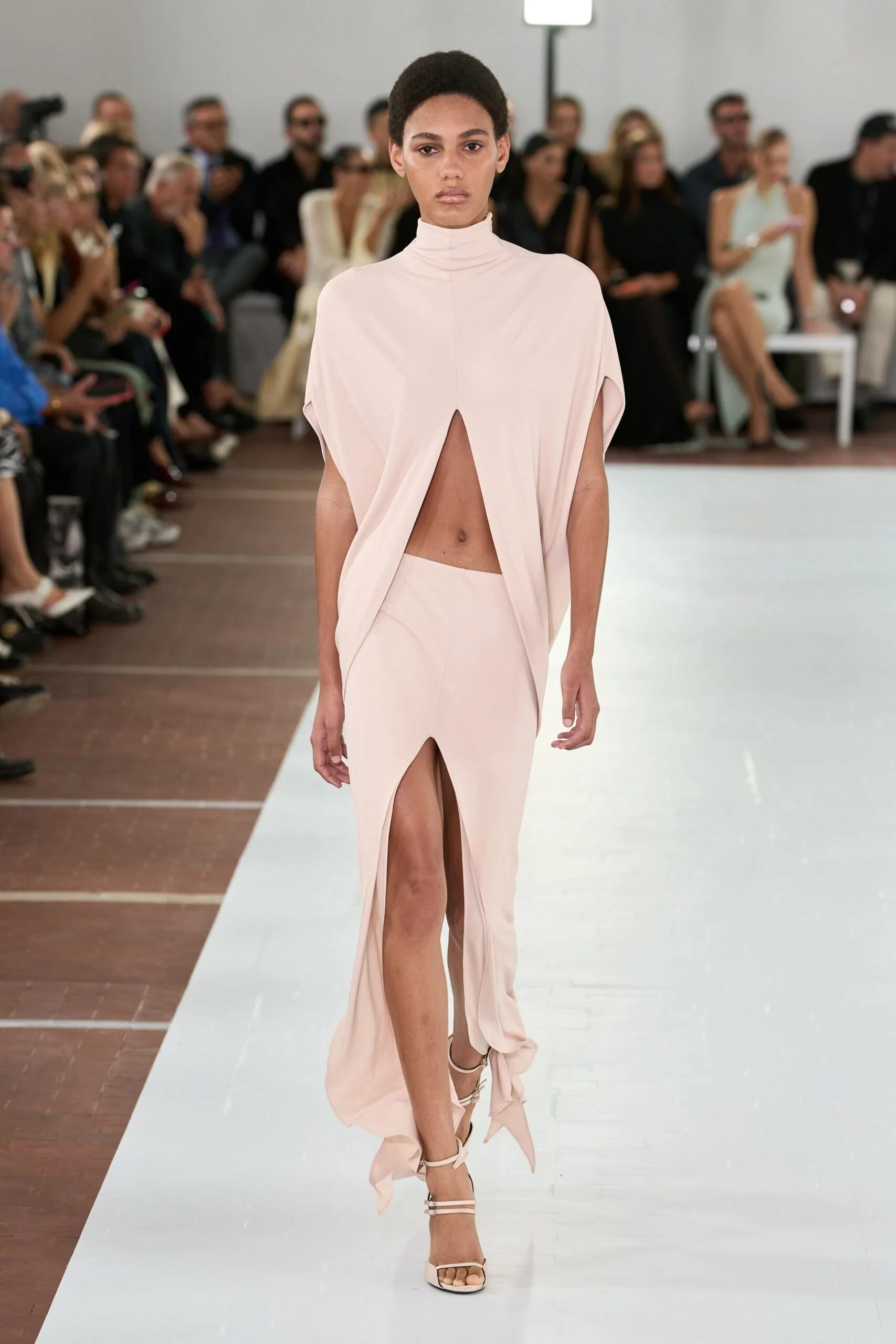
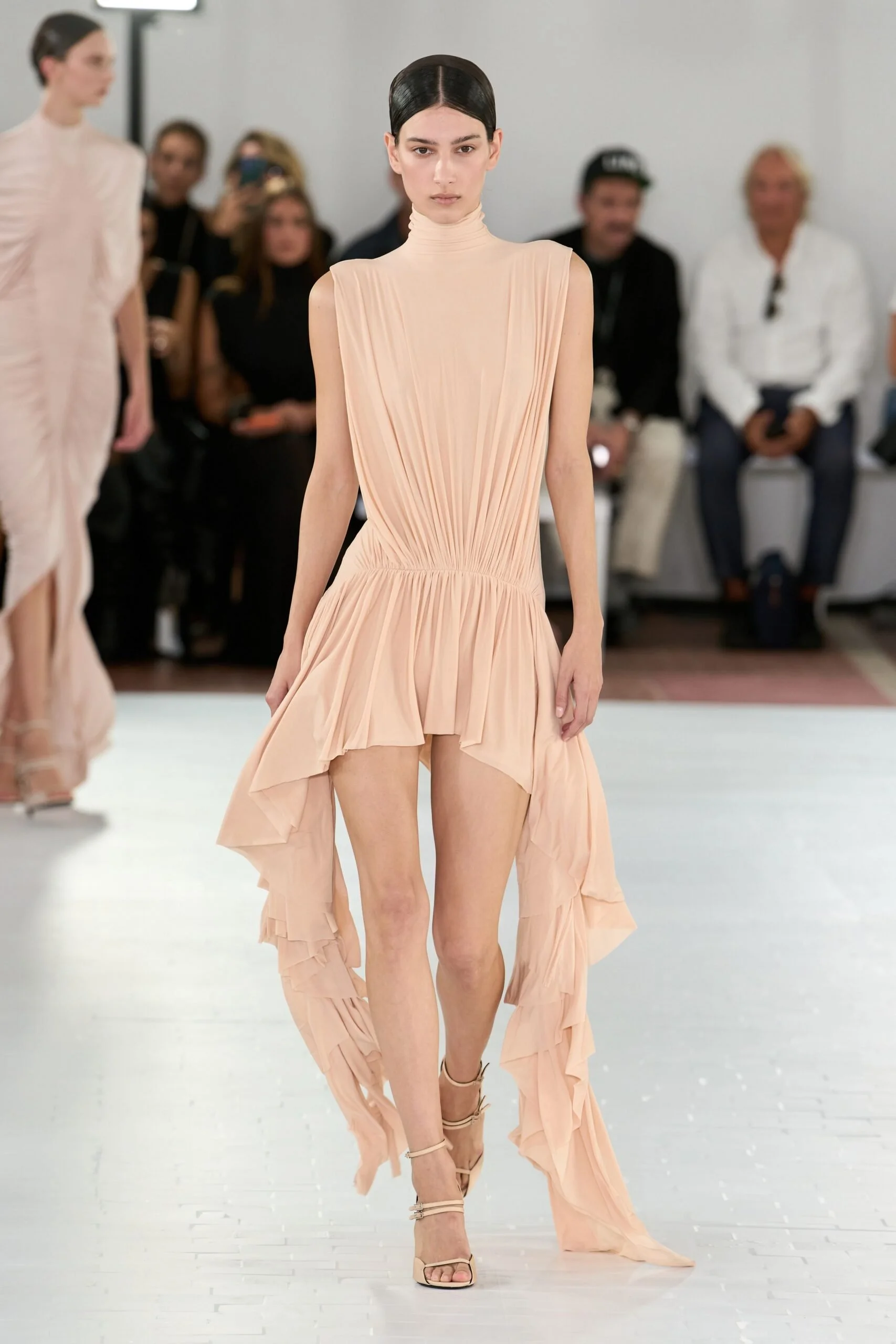
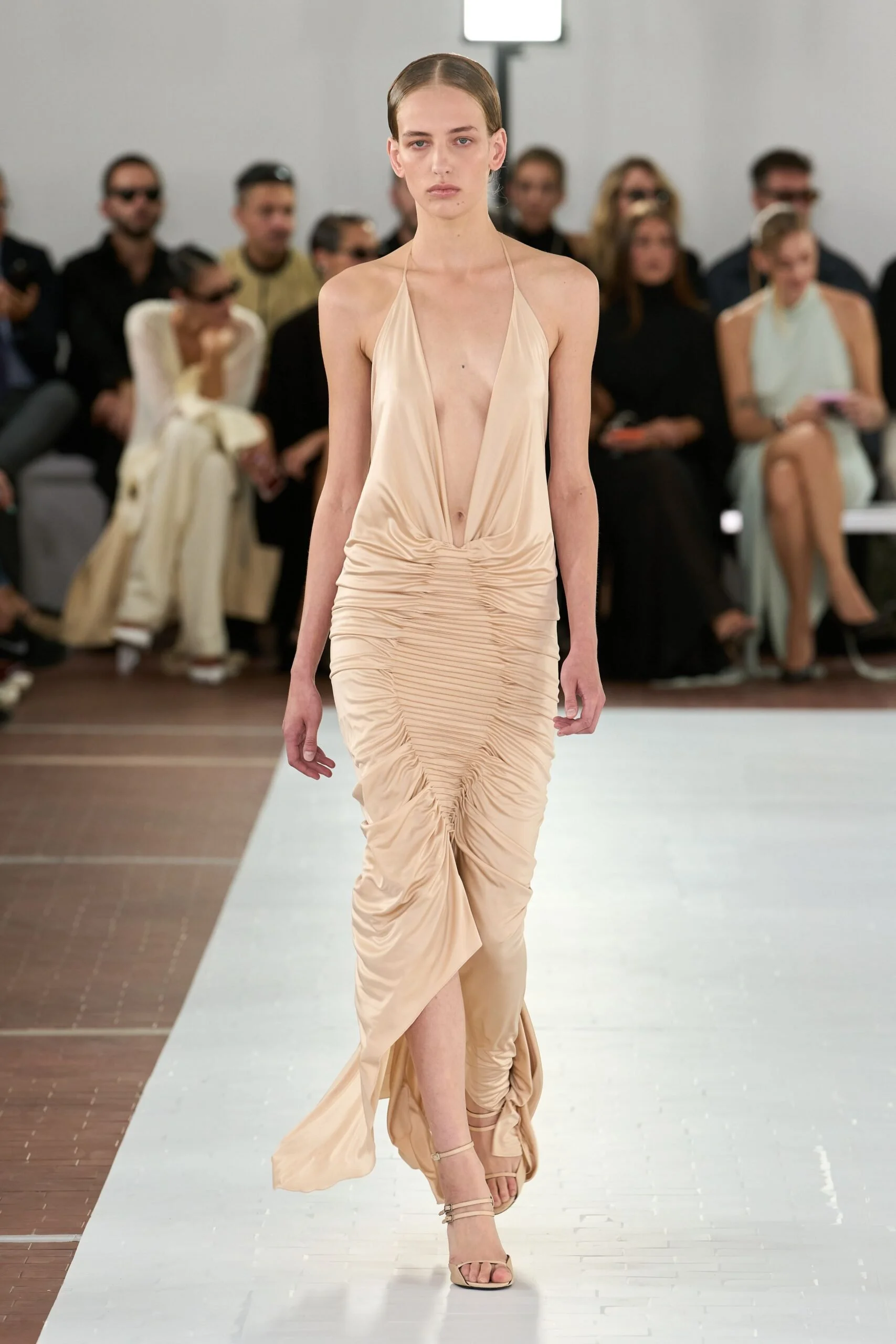
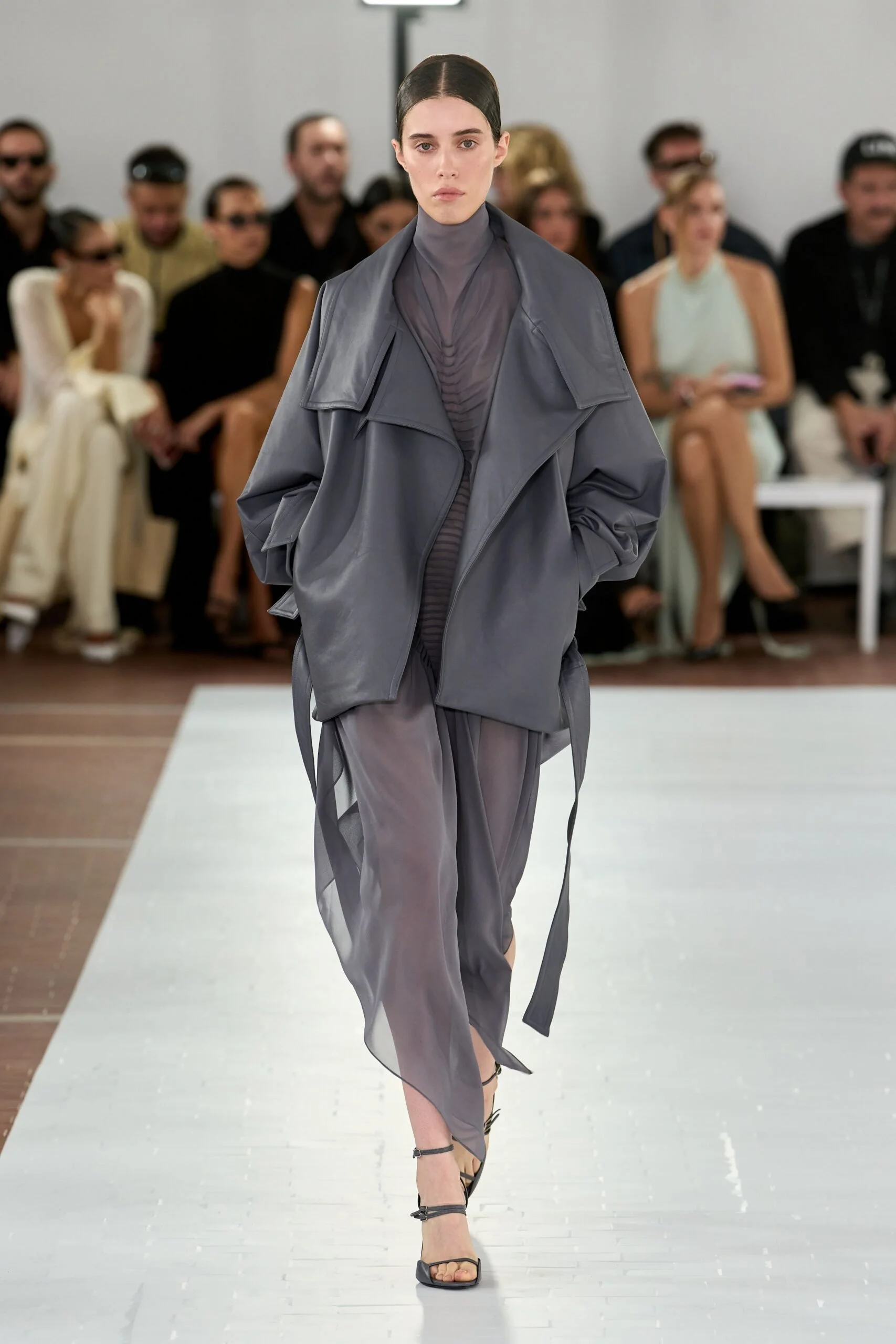
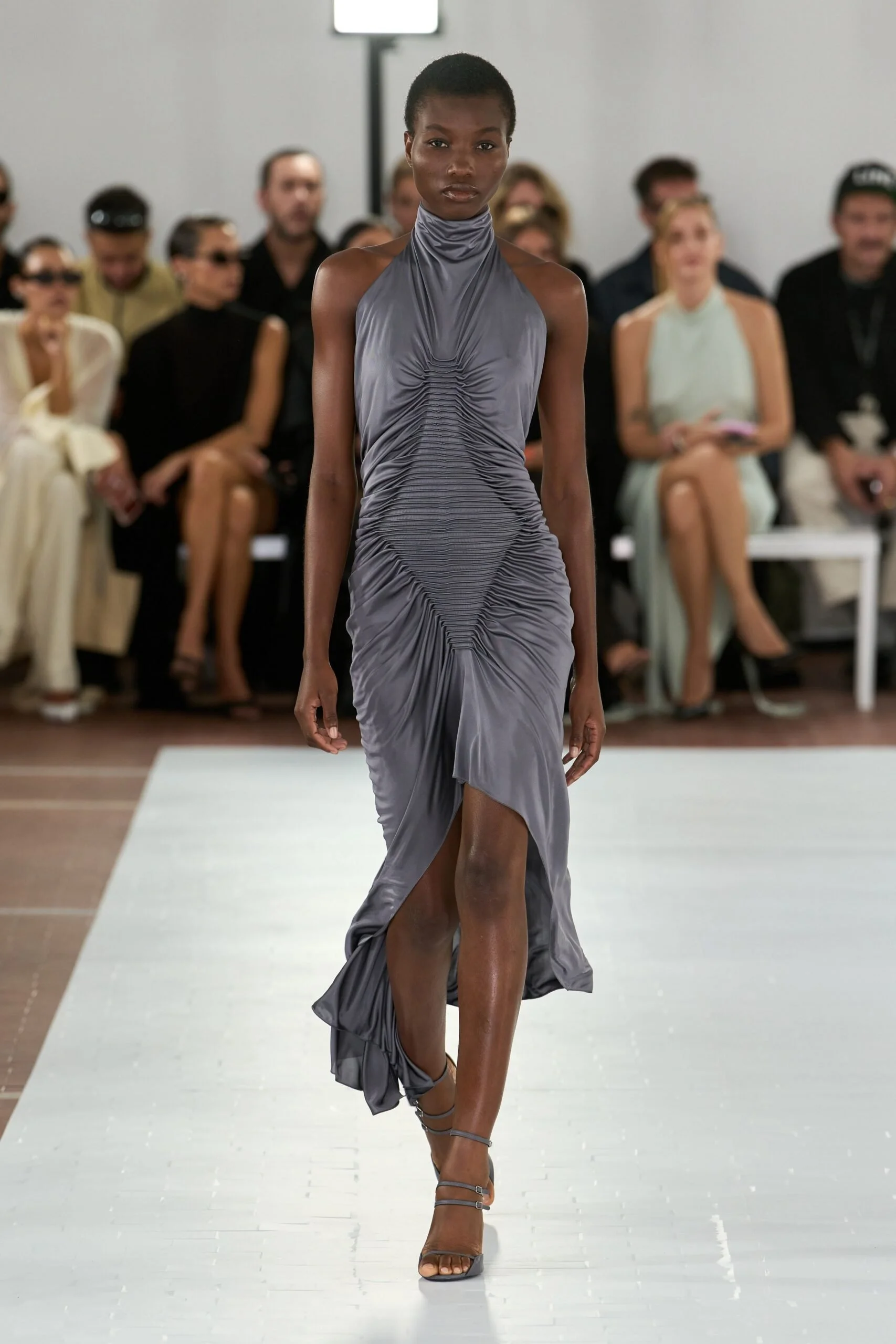
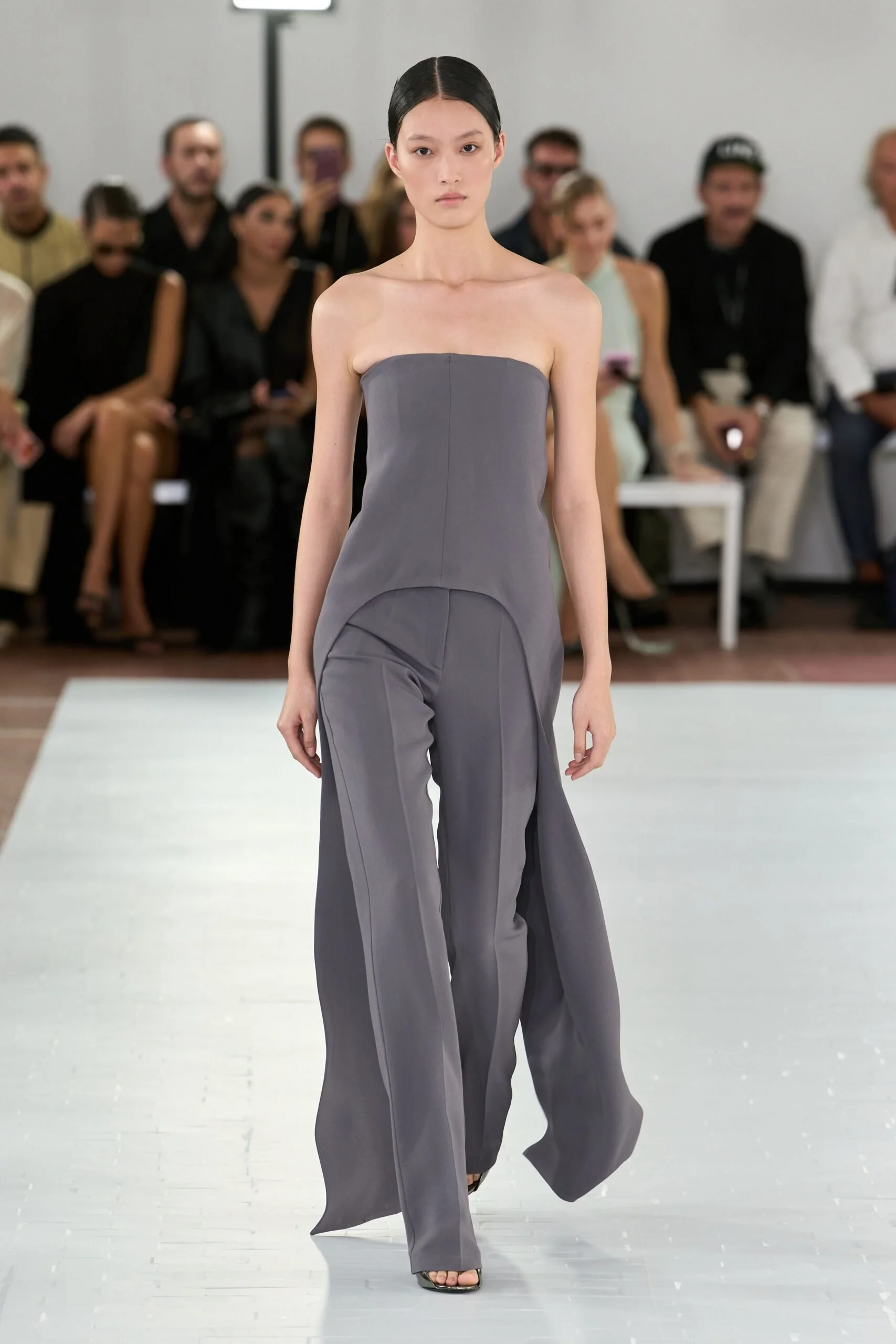
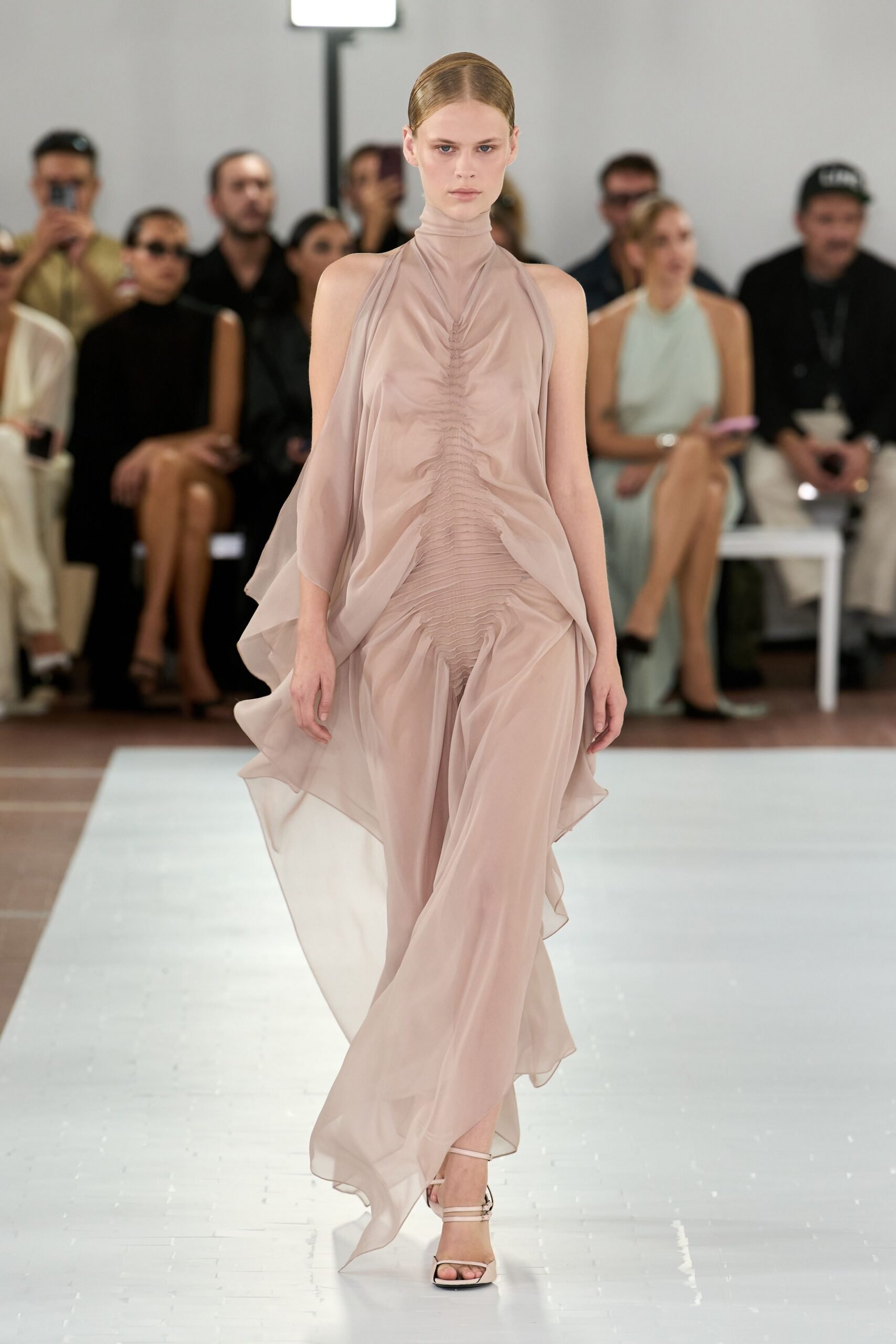
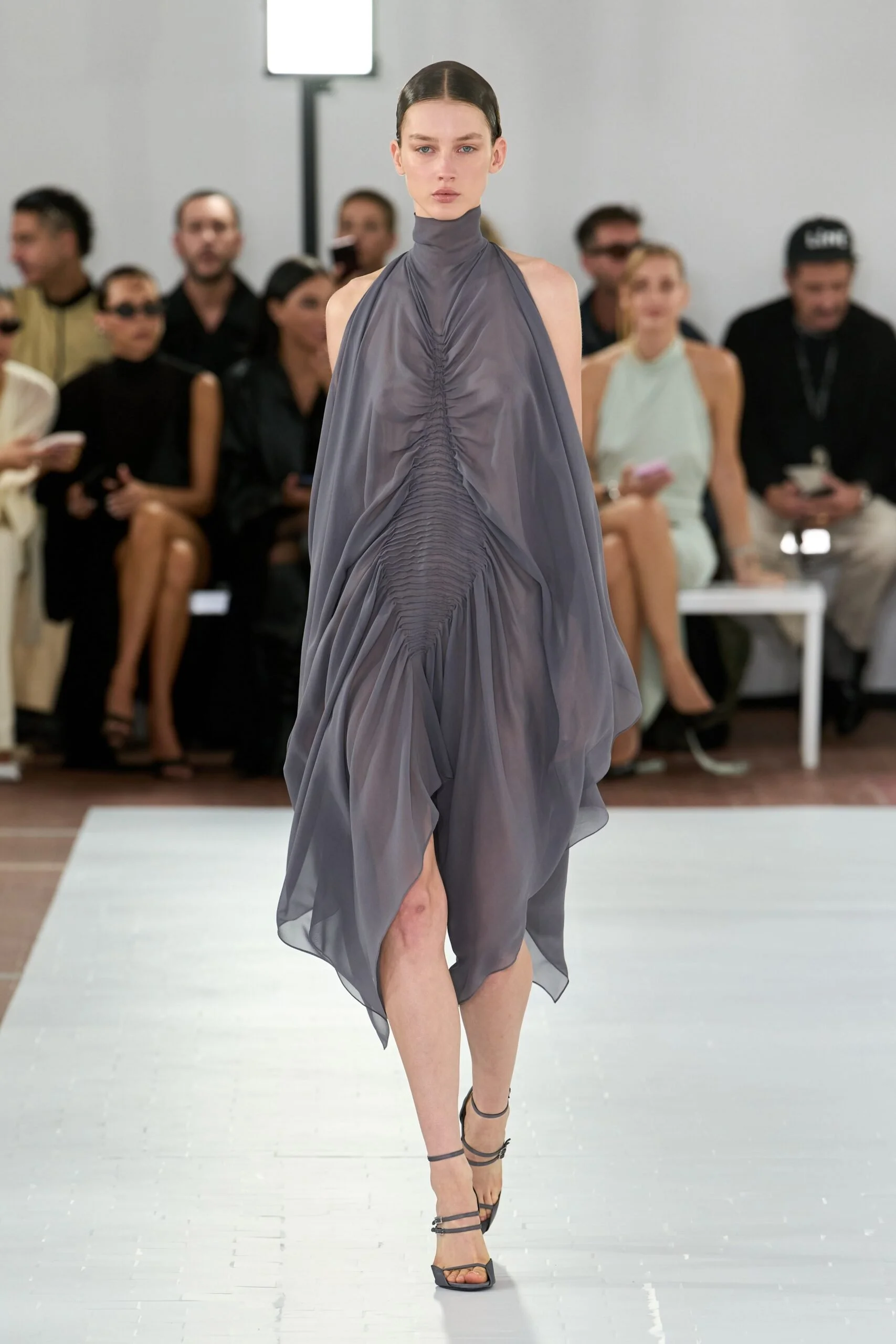
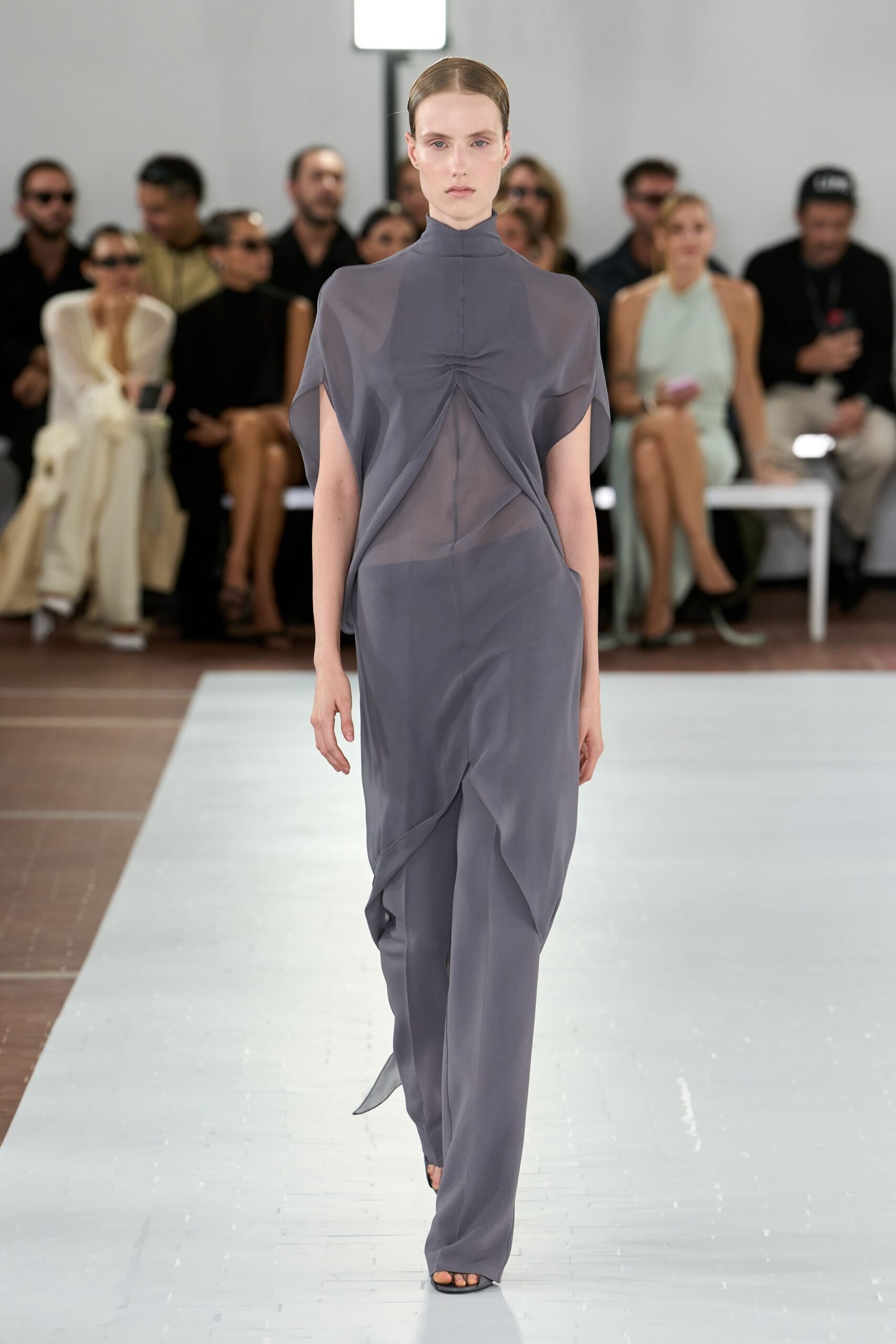
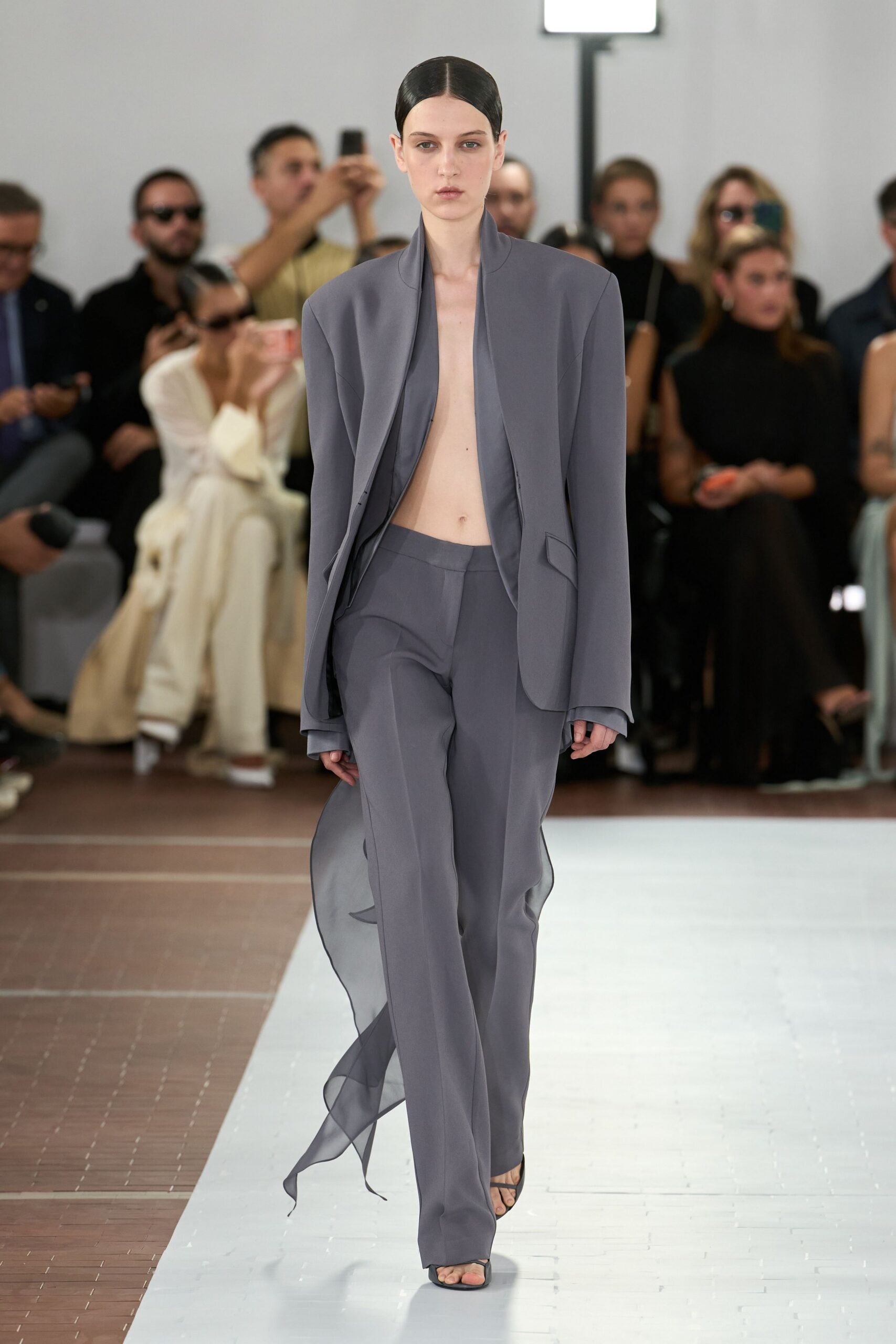
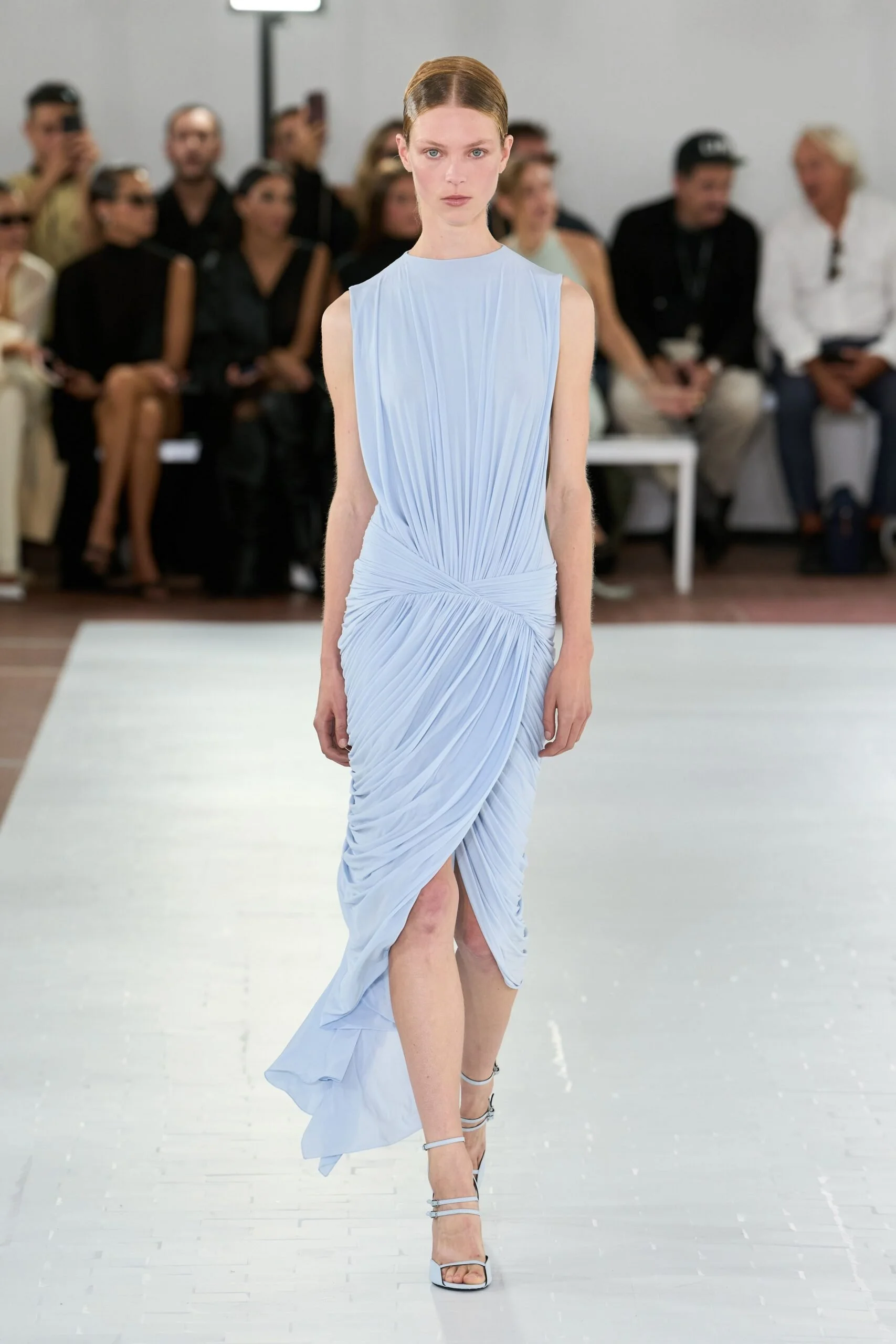
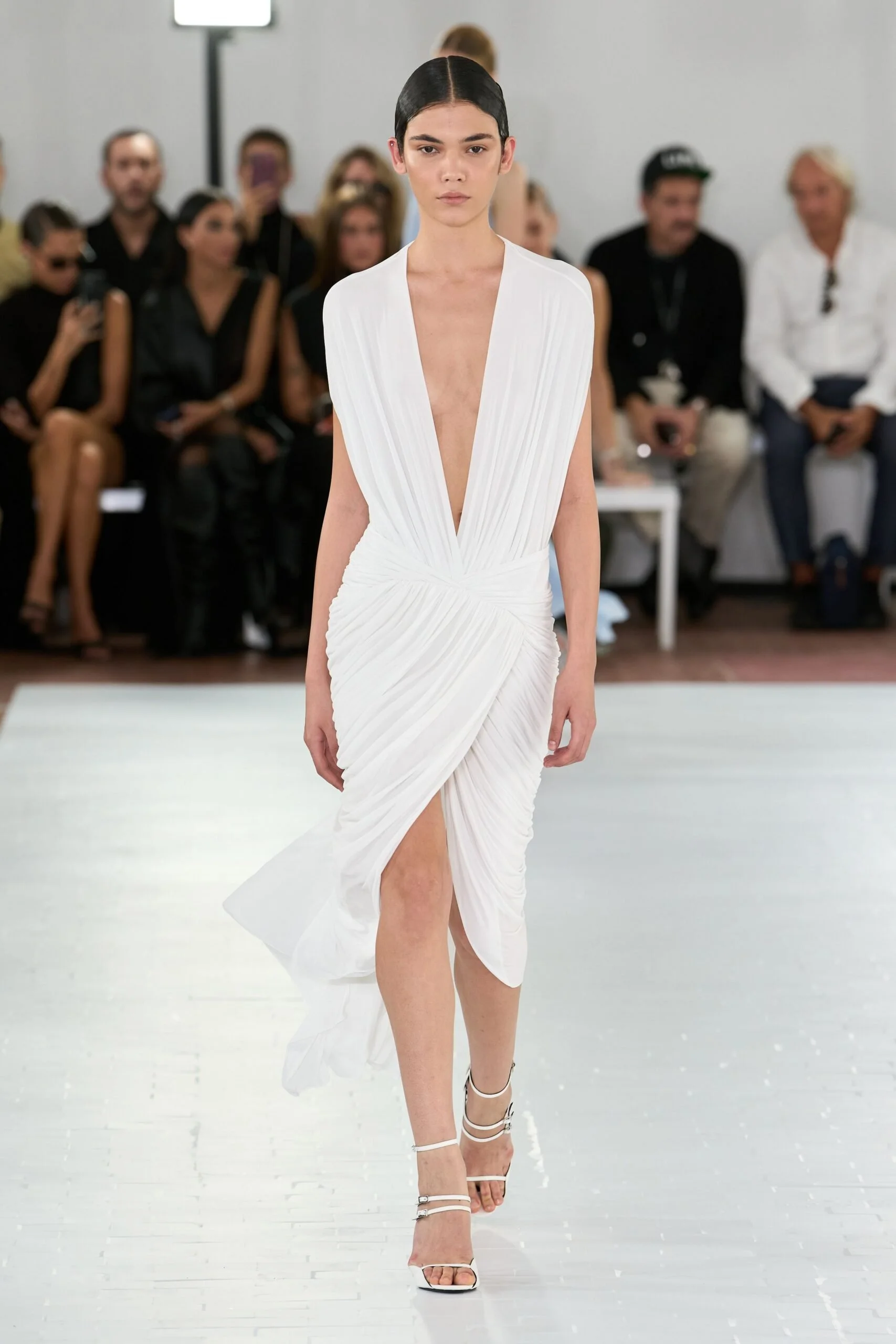
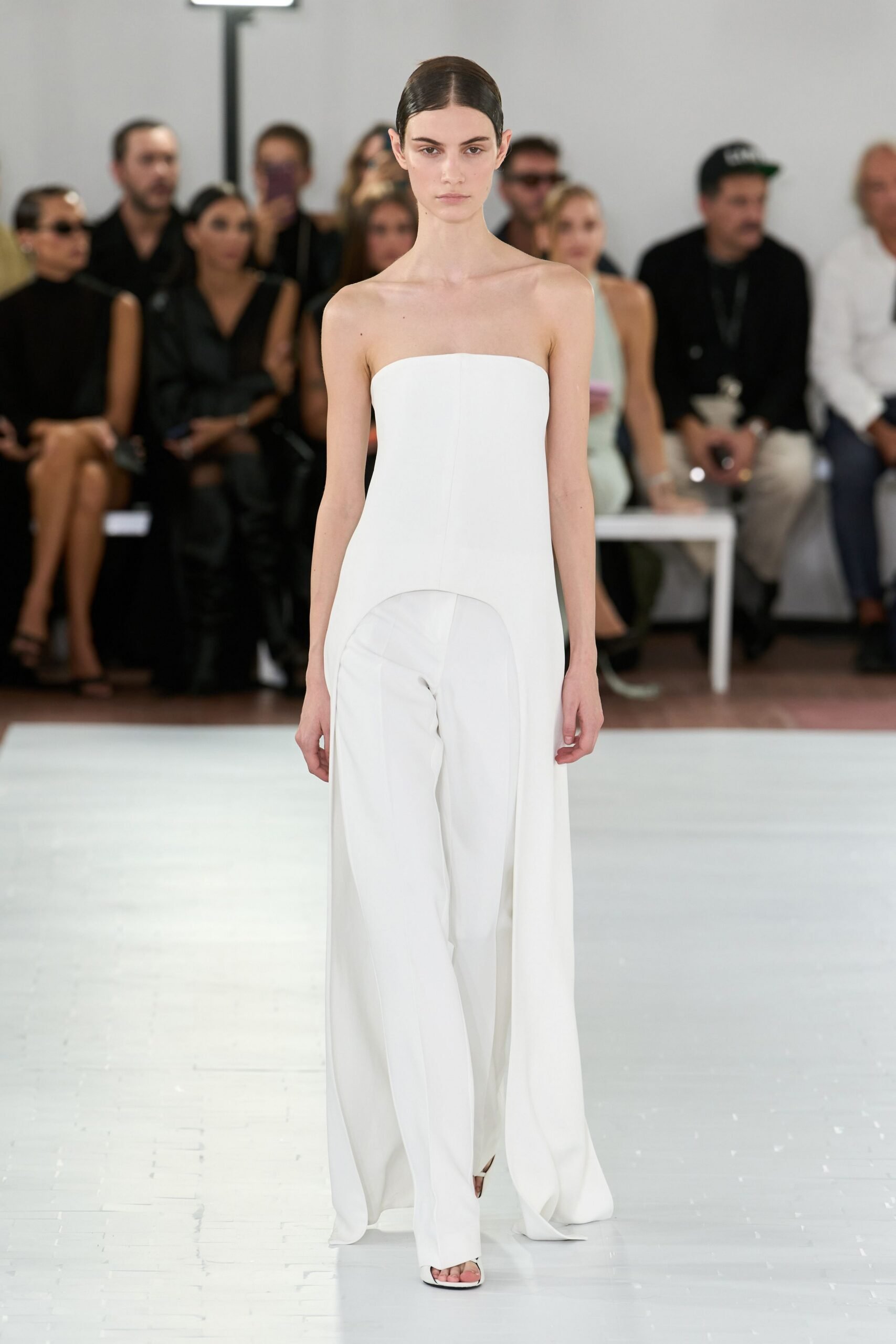
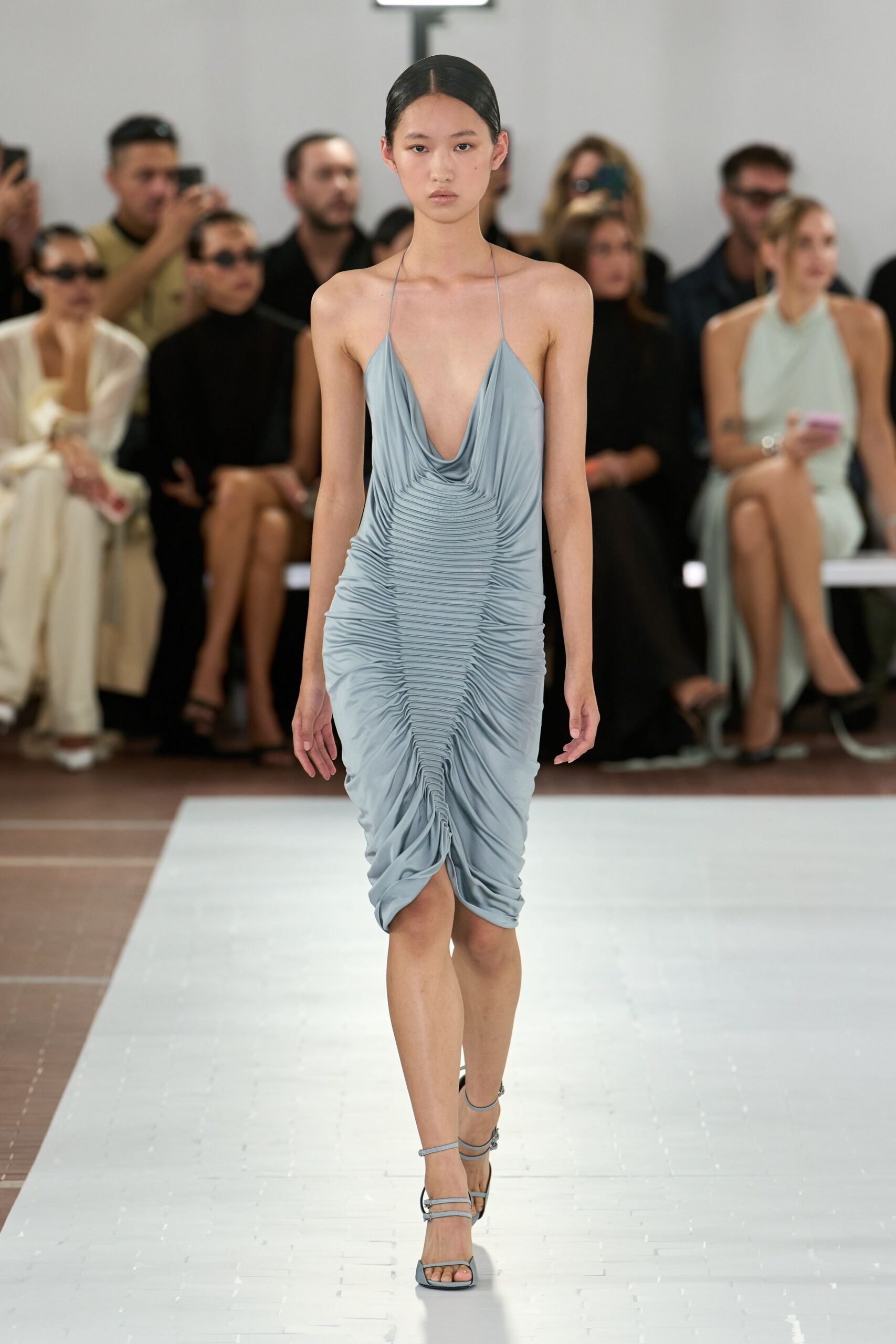
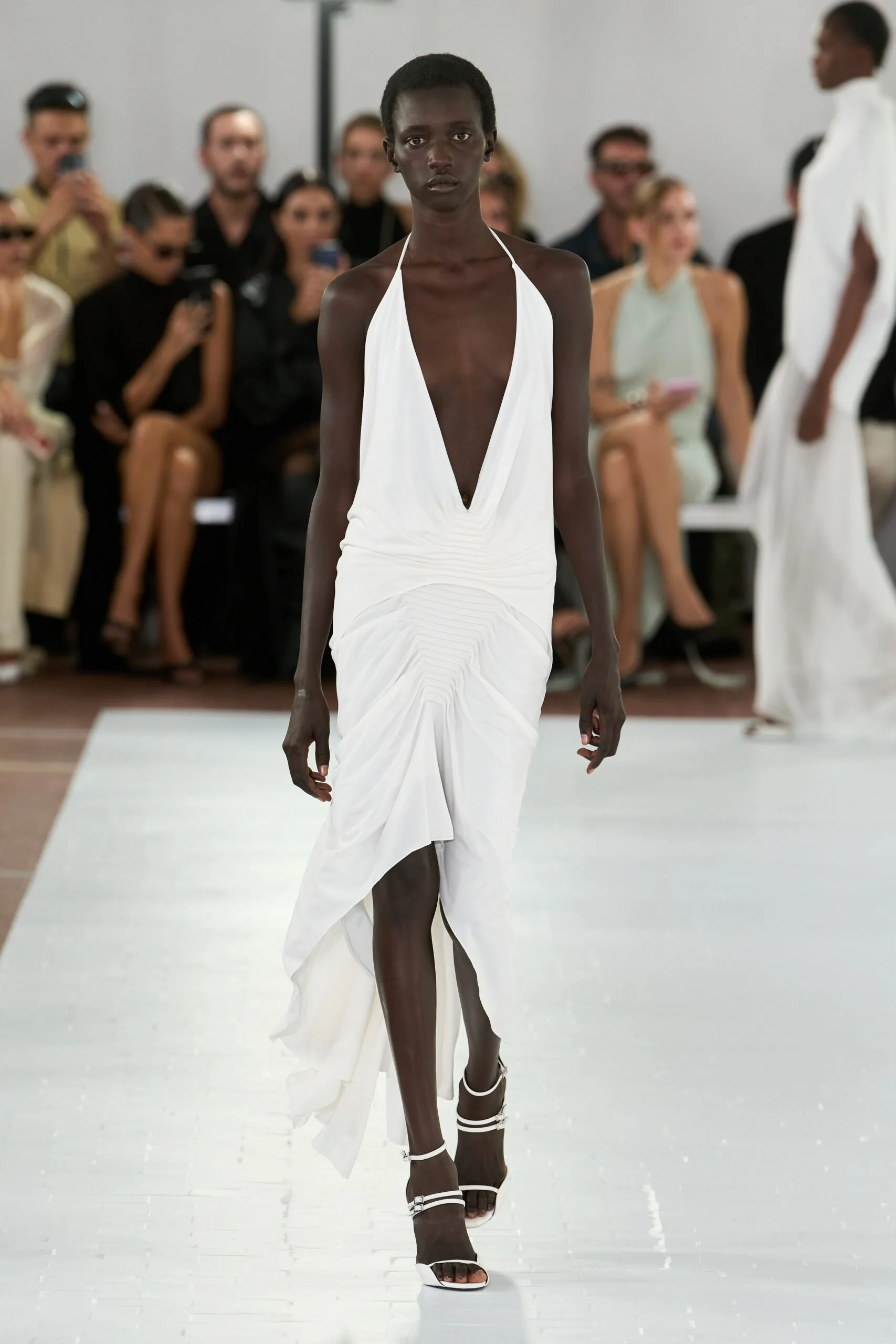
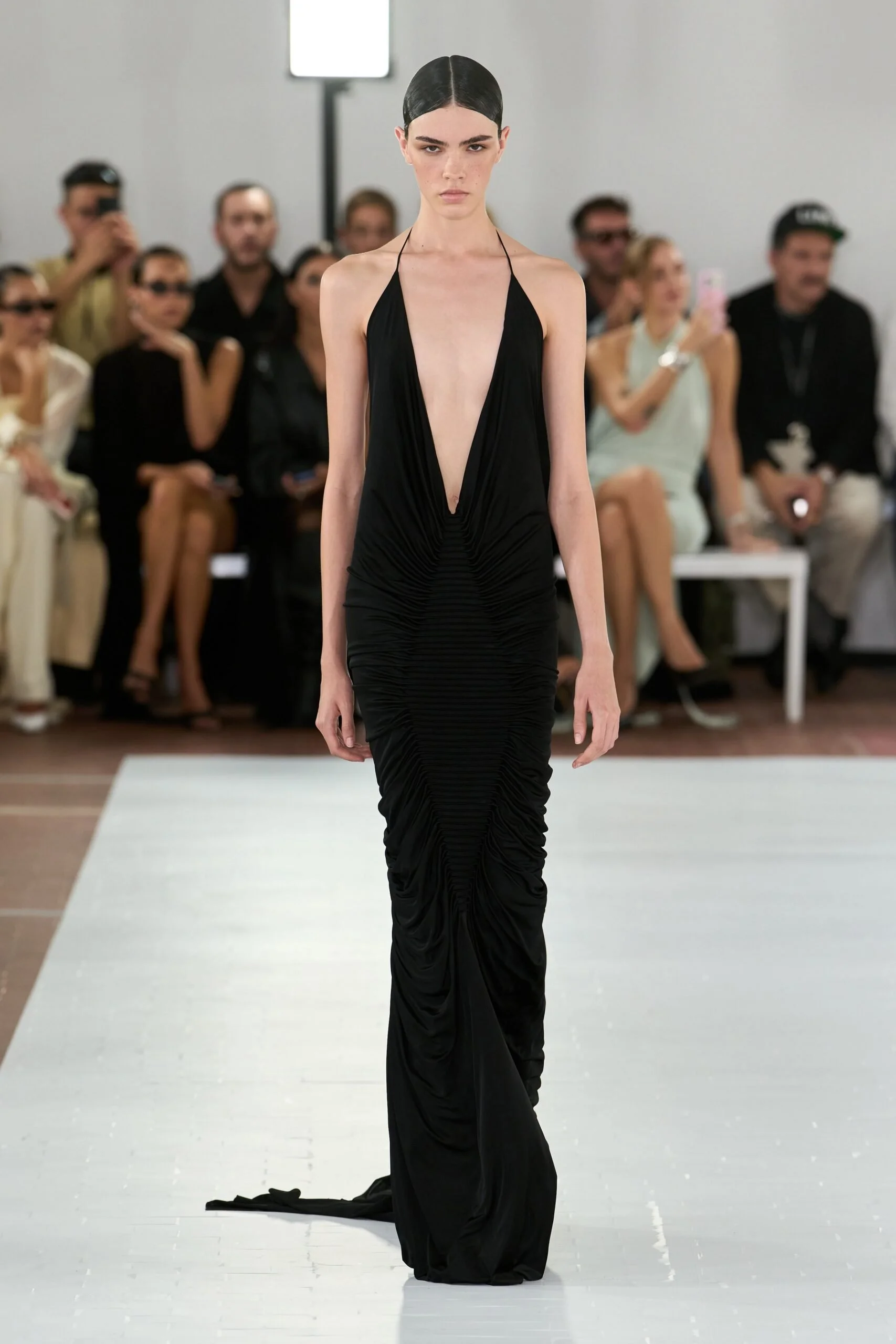
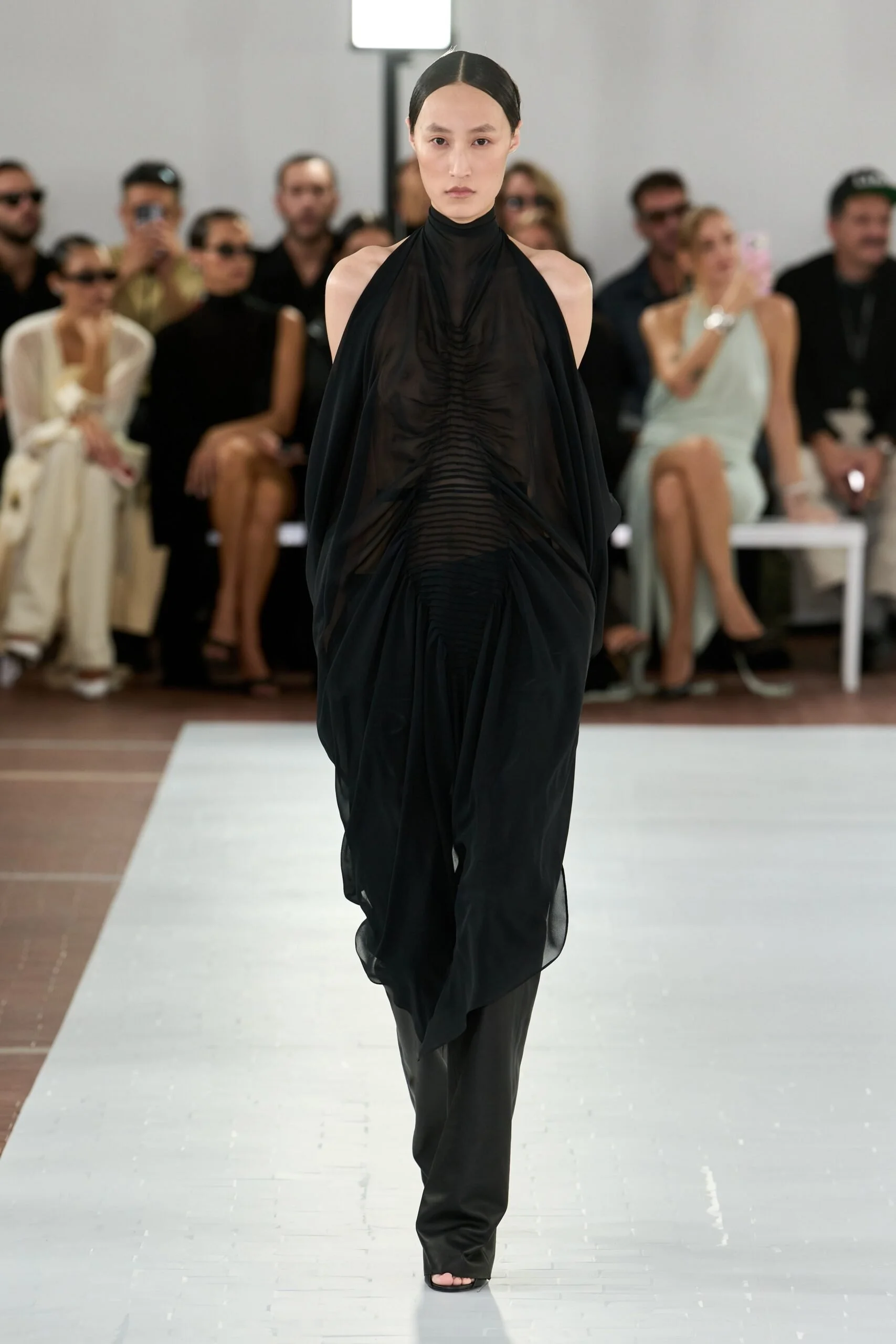
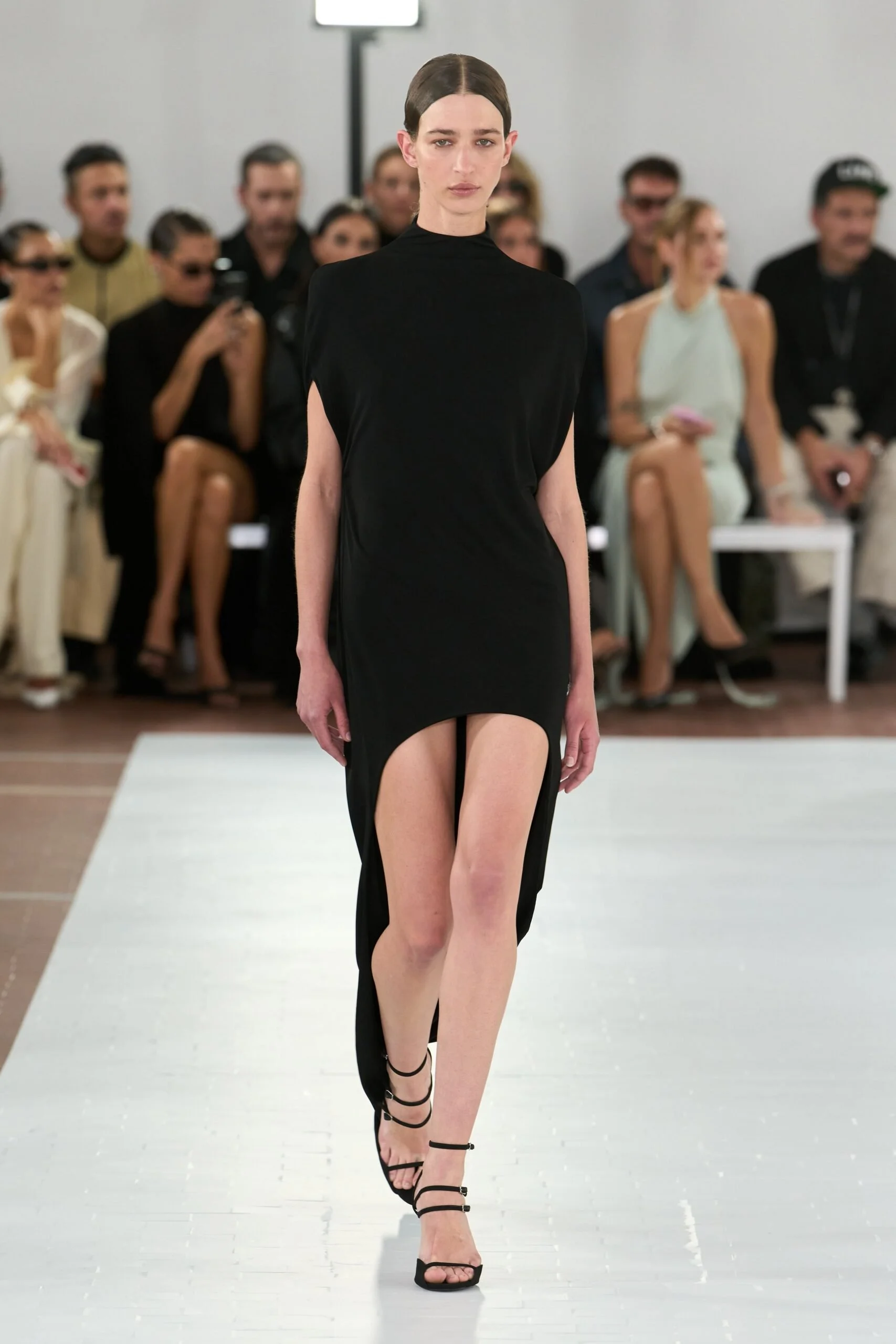
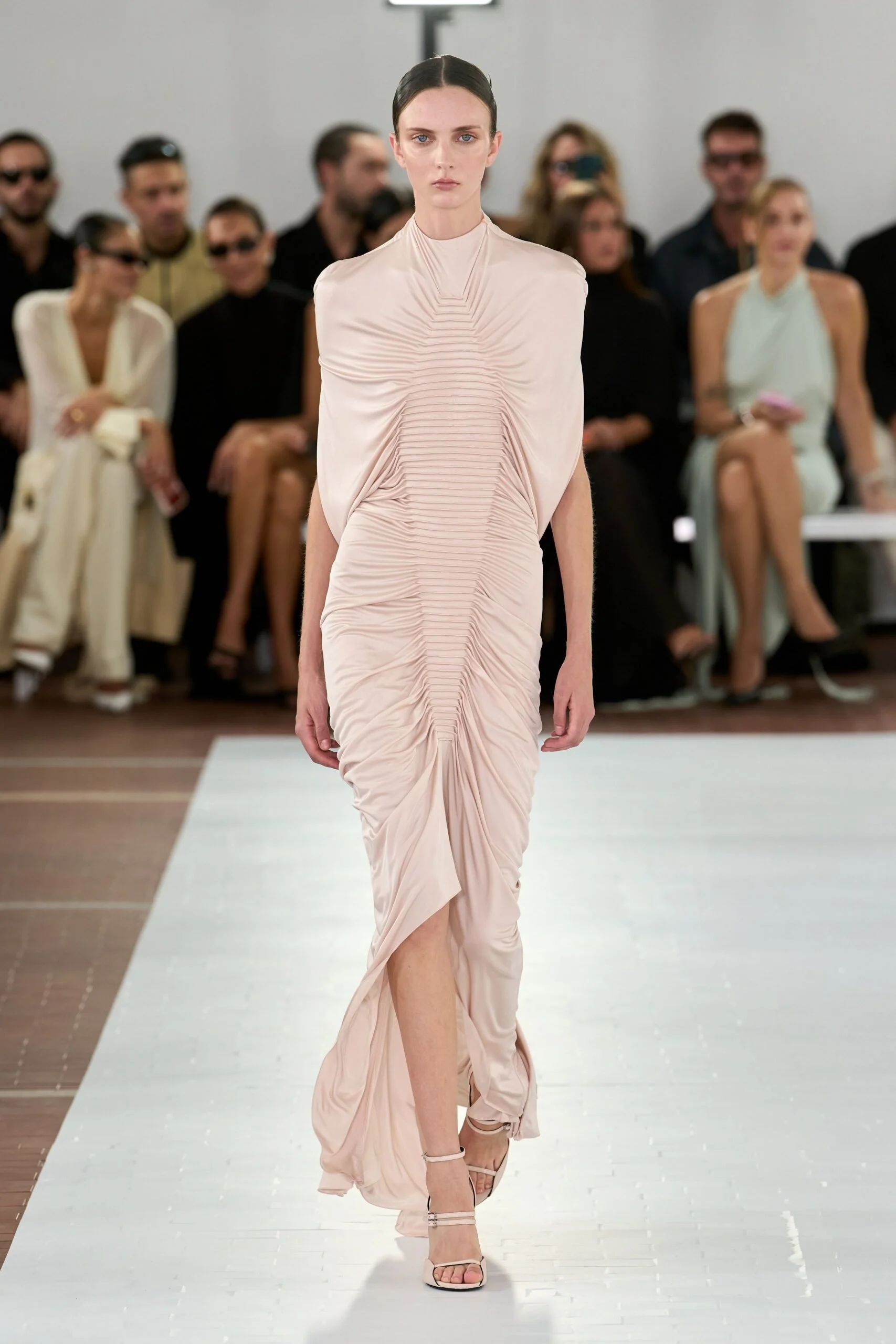
Structure is where the mechanical side of the collection comes through most clearly. Murano’s draping is usually associated with softness and movement, but here it is given architectural discipline. Glossy jersey is worked into sharp pleats that fan across the body before gradually loosening, while geometric panels create silhouettes that appear almost suspended. A slate-grey strapless tunic opening into a long train over wide trousers is particularly effective because its simplicity disguises the complexity of its construction. There is no unnecessary decoration to distract from the cut.
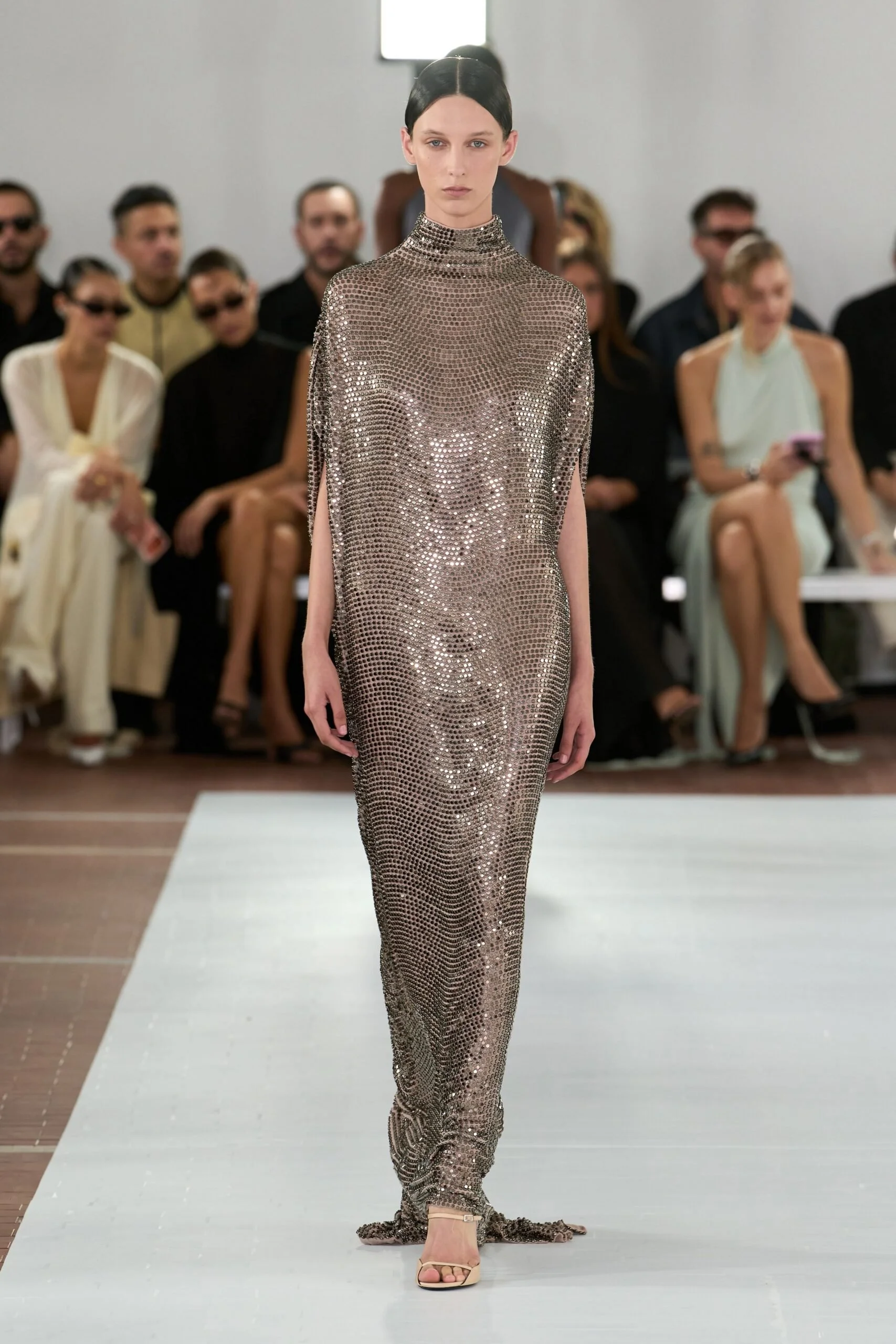
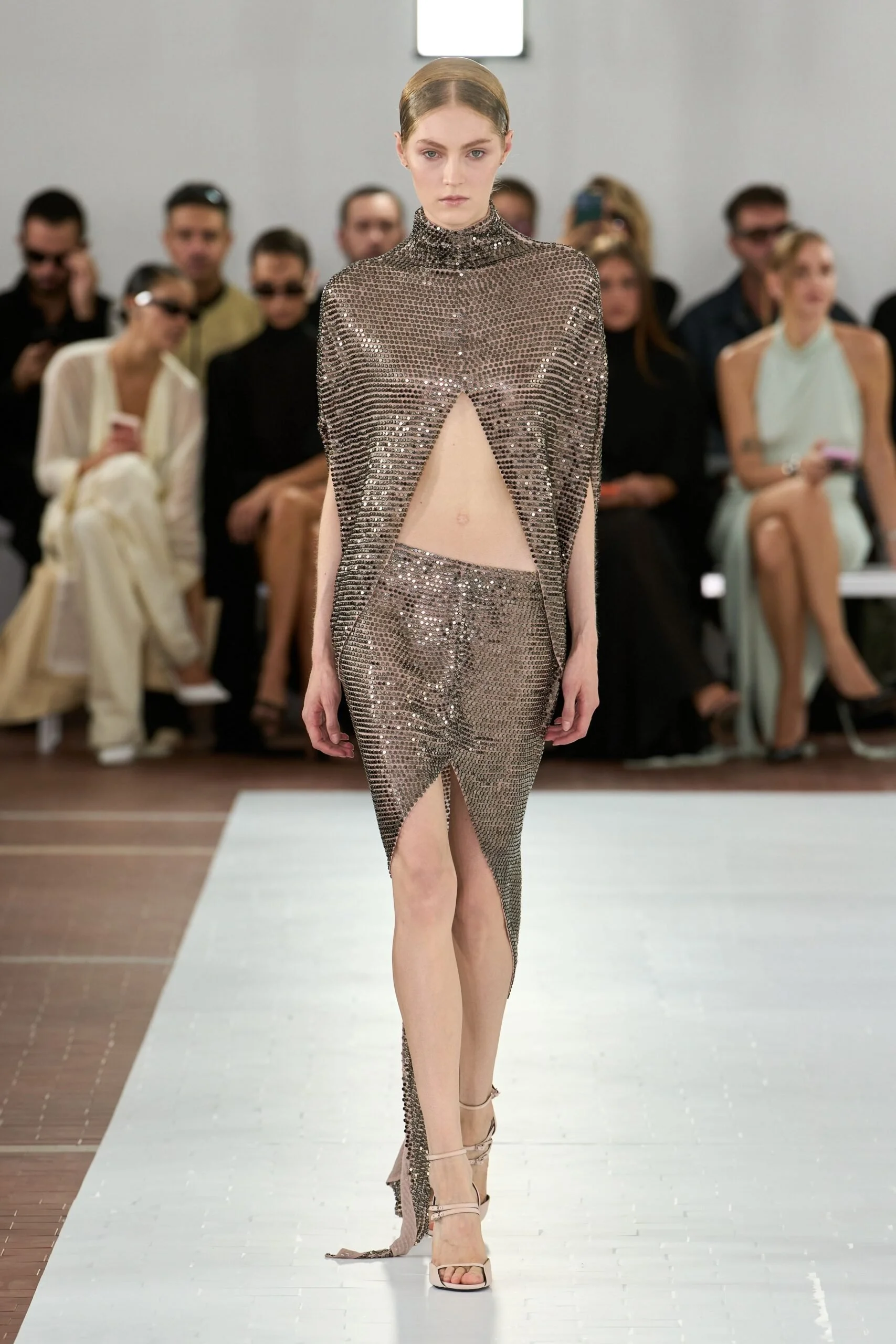
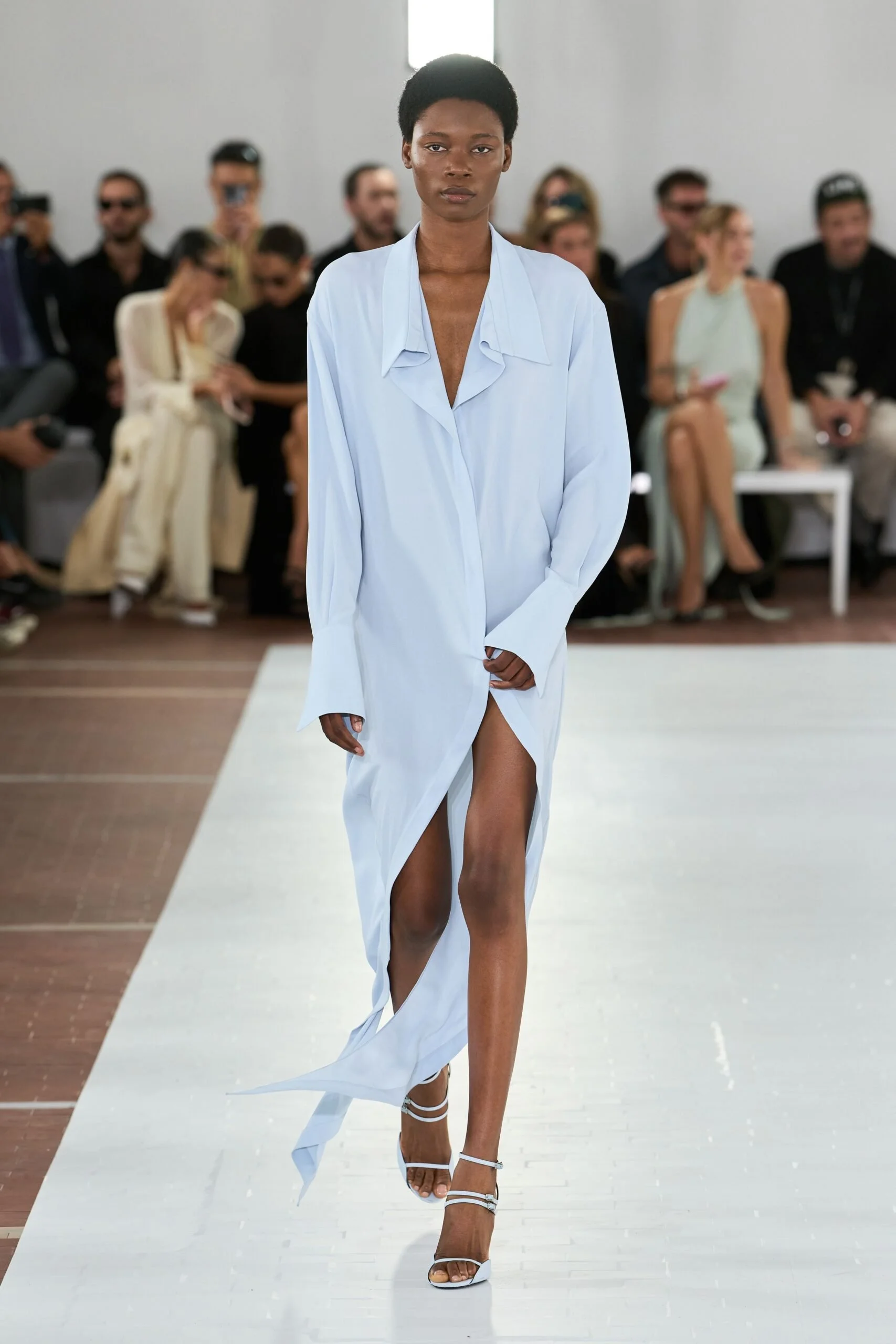
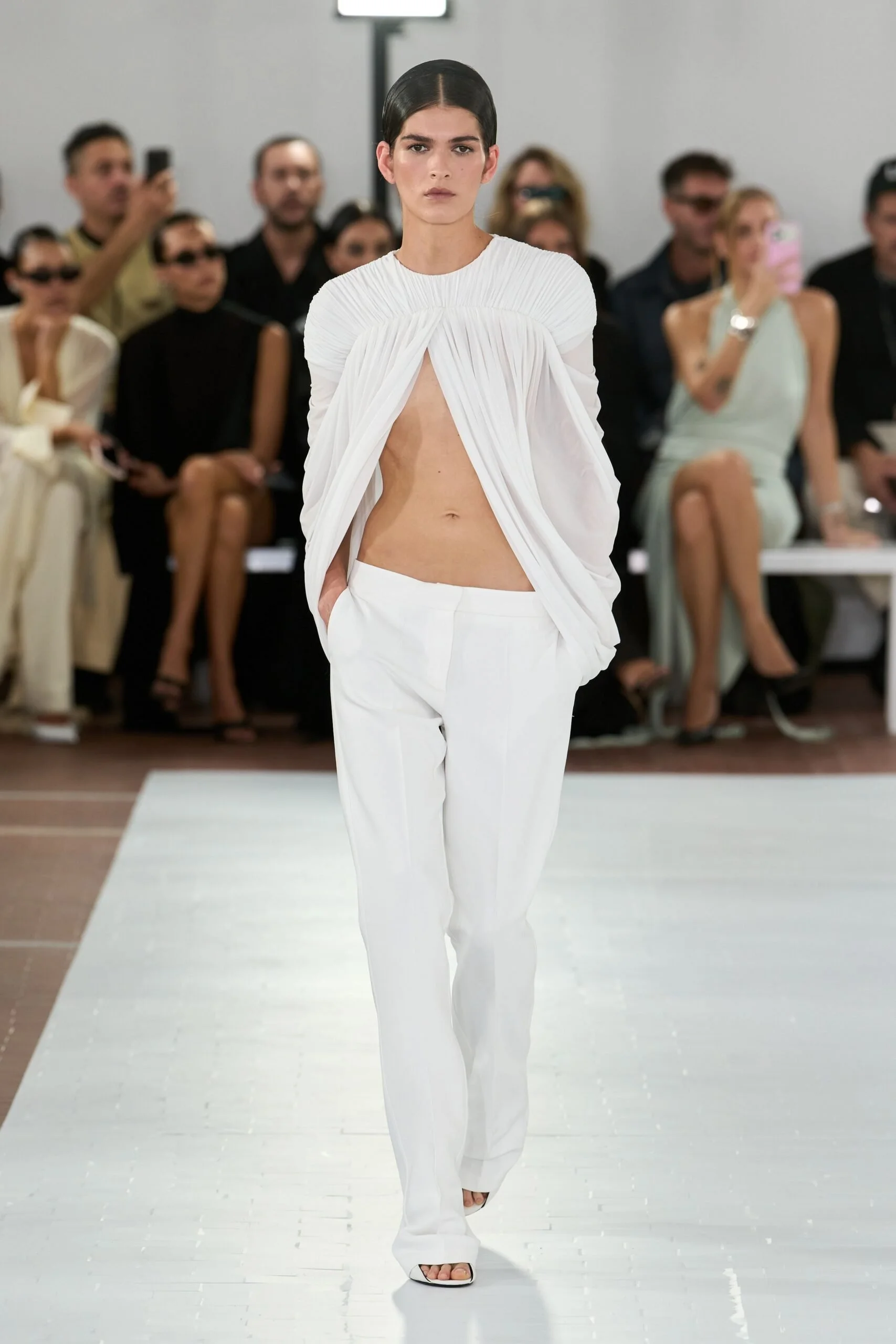
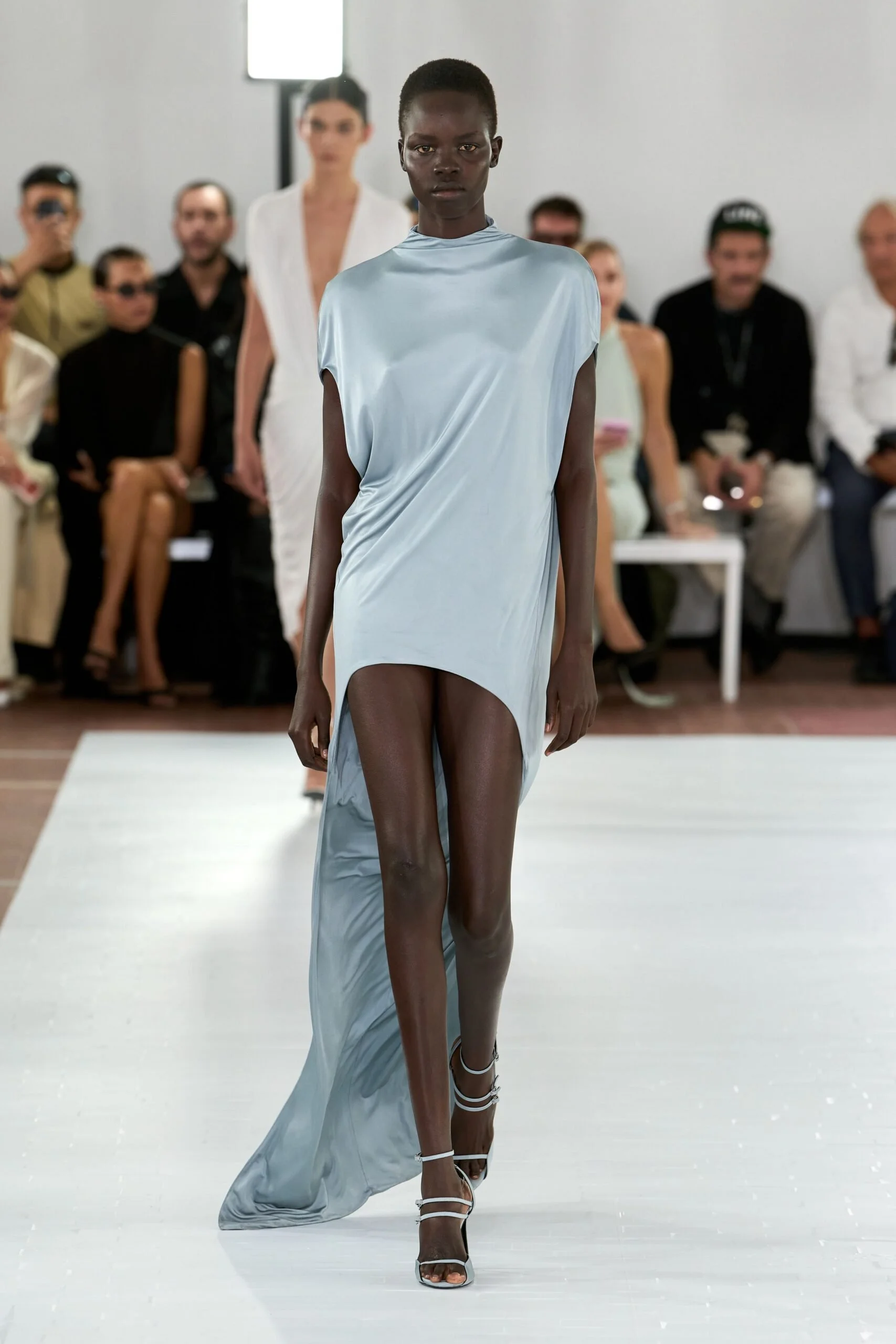
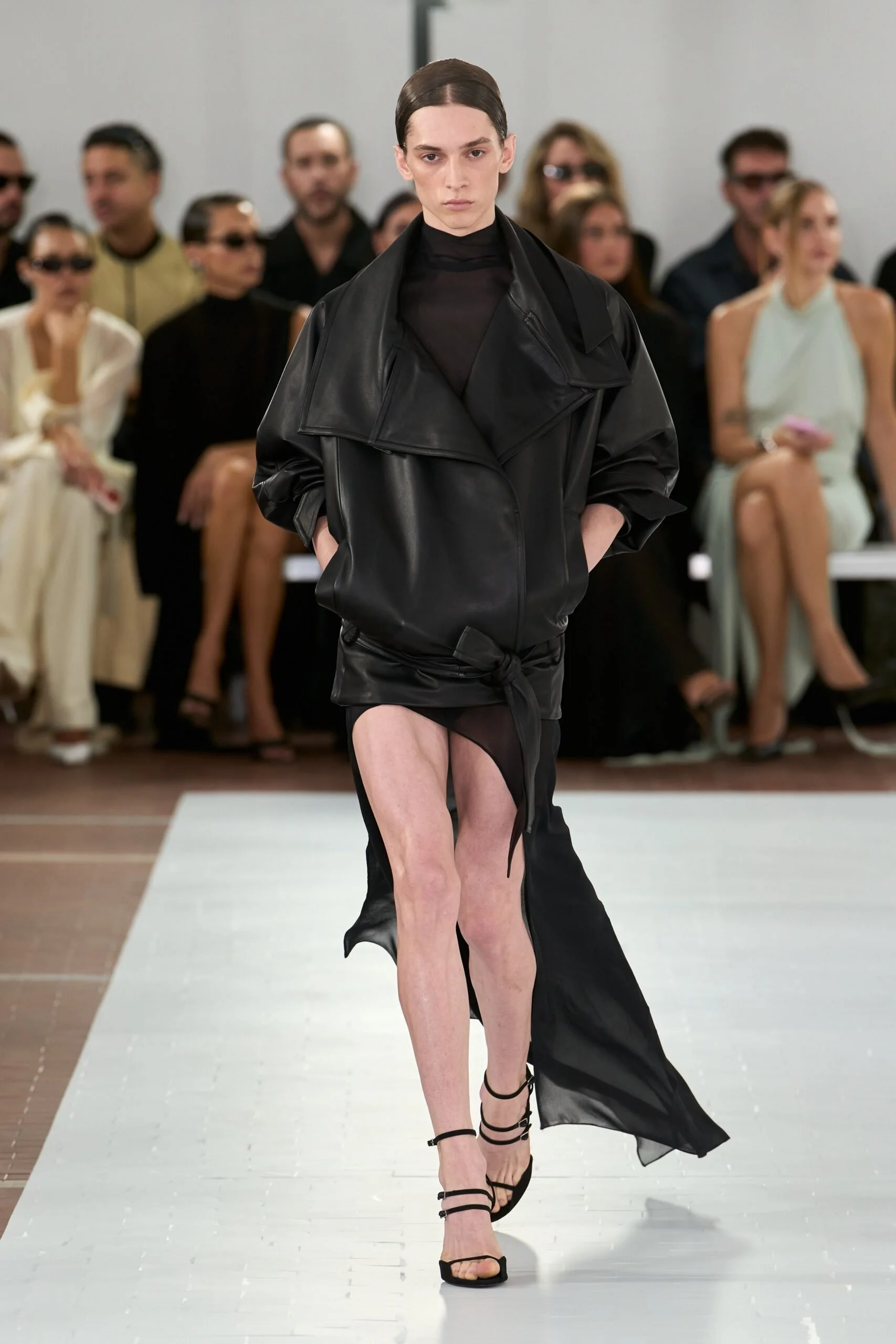
That severity is balanced by a more controlled sensuality. Capes wrap around the shoulders before opening at the back, while halternecks, deep plunges and uneven hems reveal the body without turning exposure into the collection’s sole proposition. The most successful looks are those where the two sides of the concept genuinely overlap. Georgette covered in small metal studs creates a chain-mail effect, but its long, fluid columns and cape sleeves keep the armour soft. Protection becomes something almost seductive, and the contradiction feels materially convincing rather than merely conceptual.
Art Deco, German Expressionism and the warrior-goddess archetype provide additional context, but Murano wisely keeps them subordinate to the clothes. Éidola is ultimately less about imagining a futuristic wardrobe than about demonstrating what traditional craftsmanship can still achieve when pushed into unfamiliar territory. Murano treats draping almost as architecture, constructing shapes that appear weightless only after considerable technical intervention. The result is a collection where the future feels less like technology and more like a new way of making the human body move through clothes.