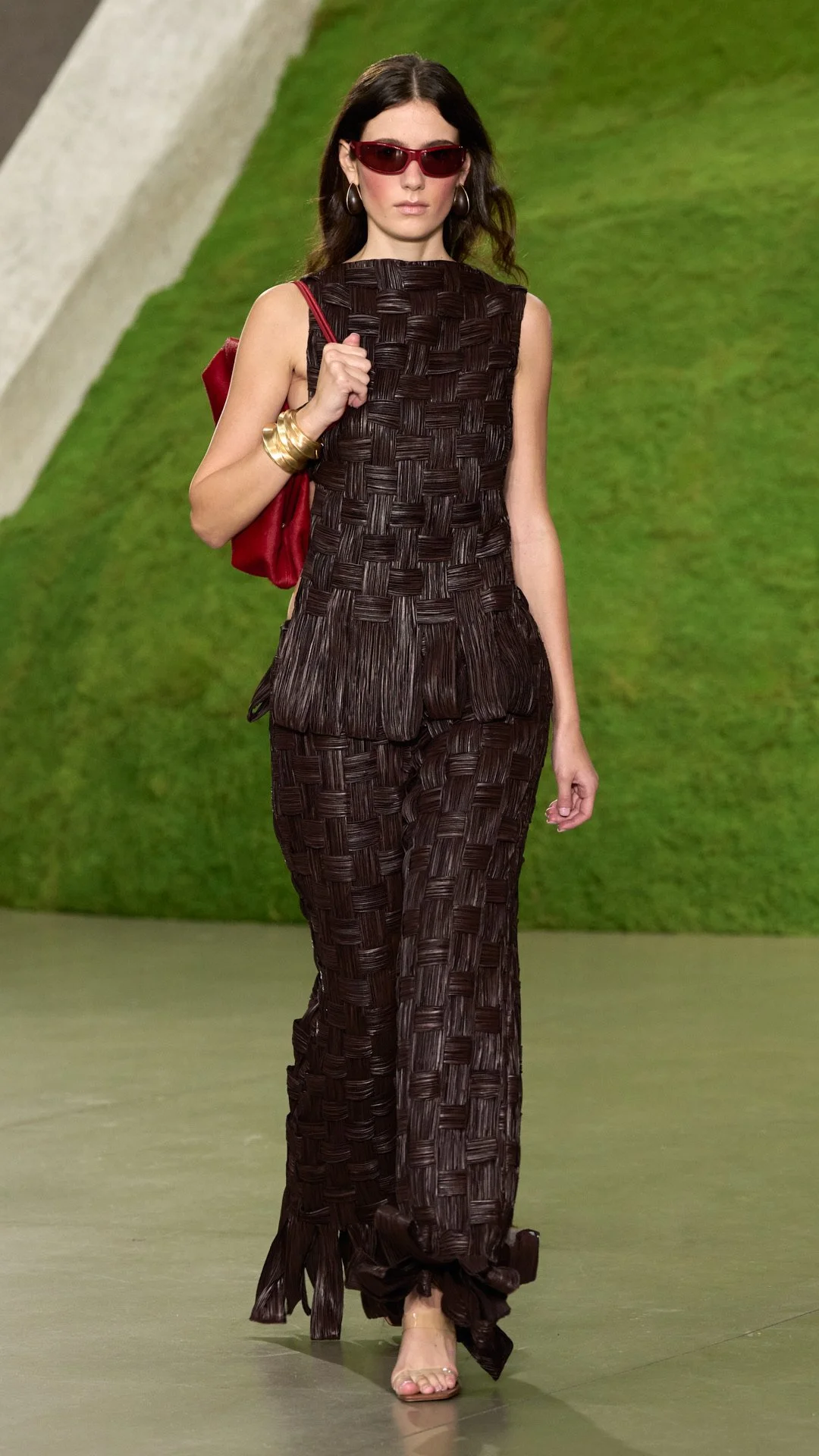
Cult Gaia Spring 2027
asmin Larian Hekmat’s Spring 2027 collection, “Behesht”, turns grief into something lighter, moving from austere tailoring to metallic glamour, sheer summer dressing and spectacular feather-like silk gowns.
There is usually something immediately recognisable about a Cult Gaia collection. The clothes are made to move, catch the light and be noticed, whether that comes through a sculptural handbag, a barely-there dress or an elaborate metallic detail. But for Spring 2027, founder and designer Jasmin Larian Hekmat gave that familiar visual language a more personal starting point.
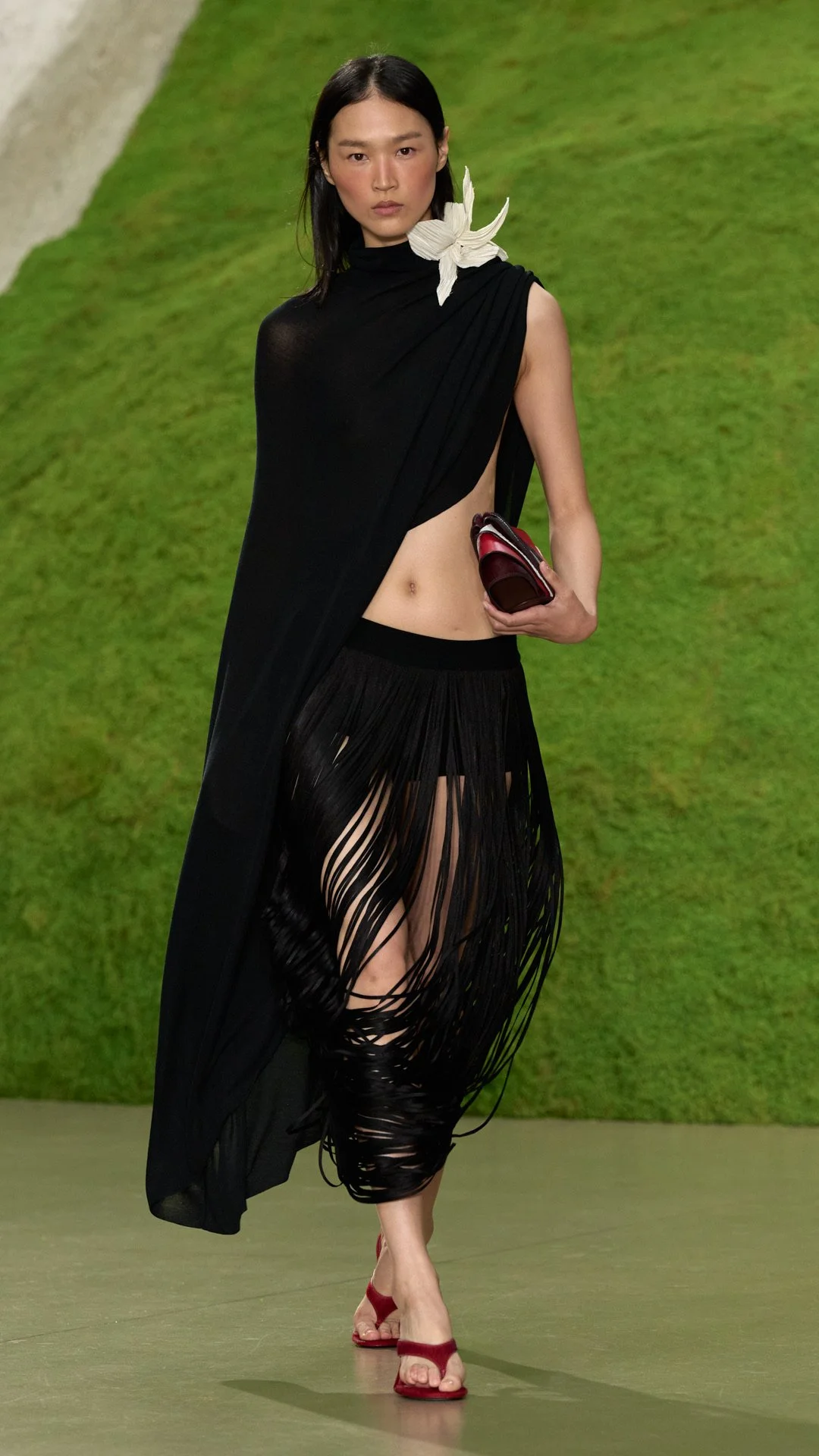
Presented in New York on September 9, the collection was titled “Behesht”, the Persian word for heaven, and was shaped by the designer’s experience of losing her grandmother, Mommy Aghdas, earlier this year. Rather than treating grief as something purely dark, Hekmat explored the possibility that mourning and celebration can exist alongside one another. The result was a collection that began in a more restrained, sombre place before gradually opening into colour, movement and unabashed glamour.
It is a surprisingly effective premise for a brand as inherently optimistic as Cult Gaia. Instead of abandoning the fantasy that has defined the label, Hekmat slowly transformed it.
From Shadow to Light
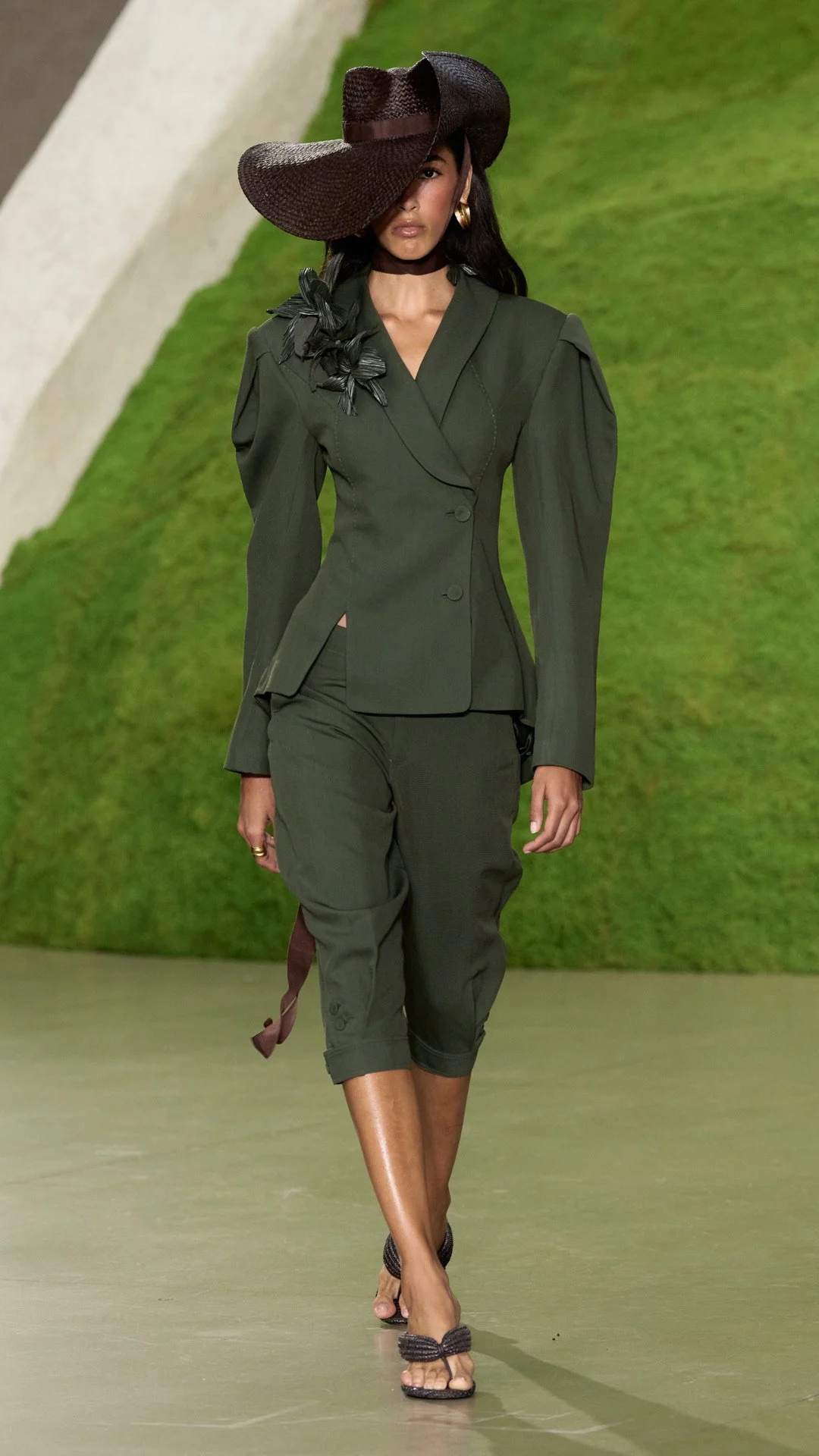
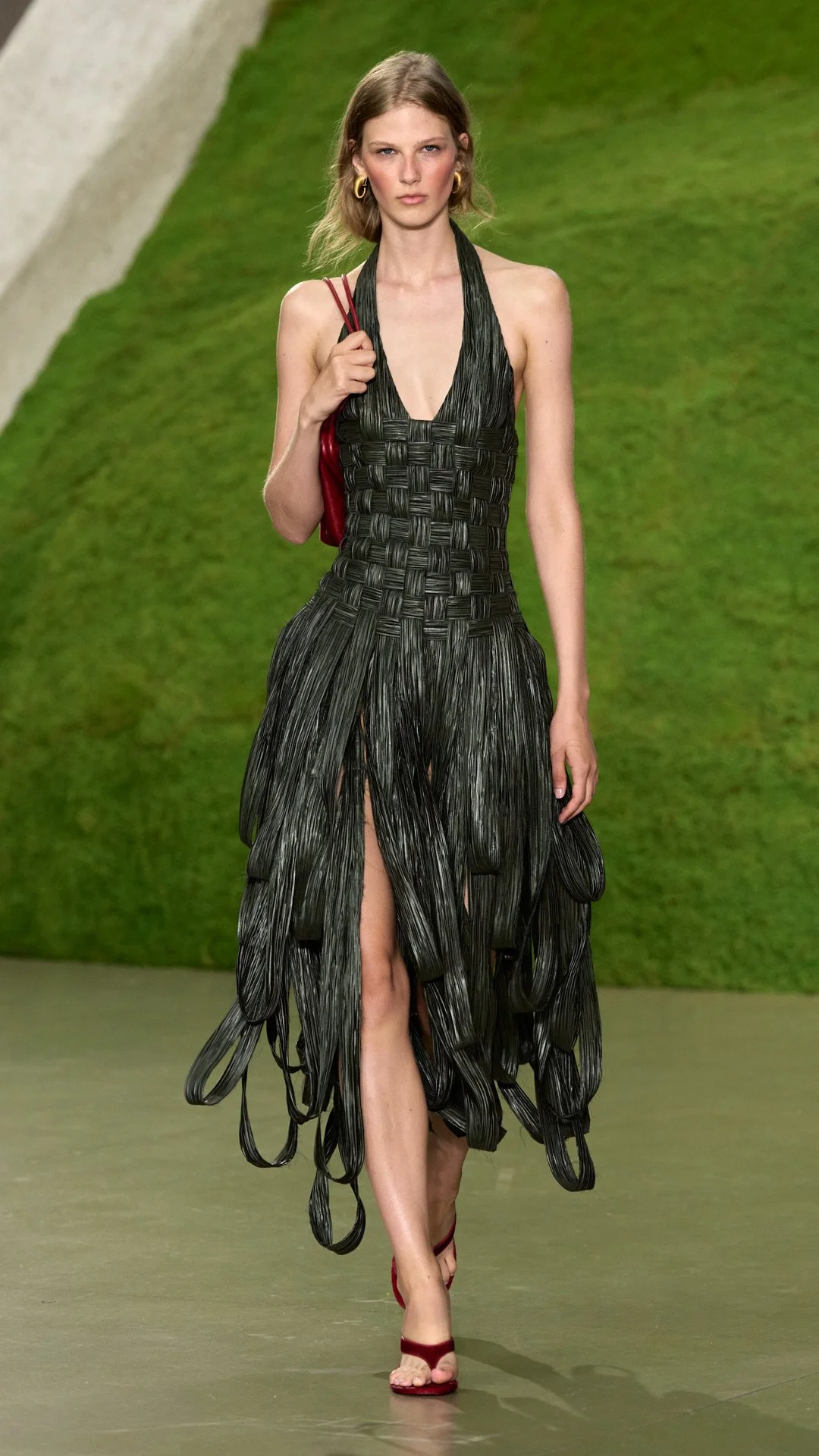
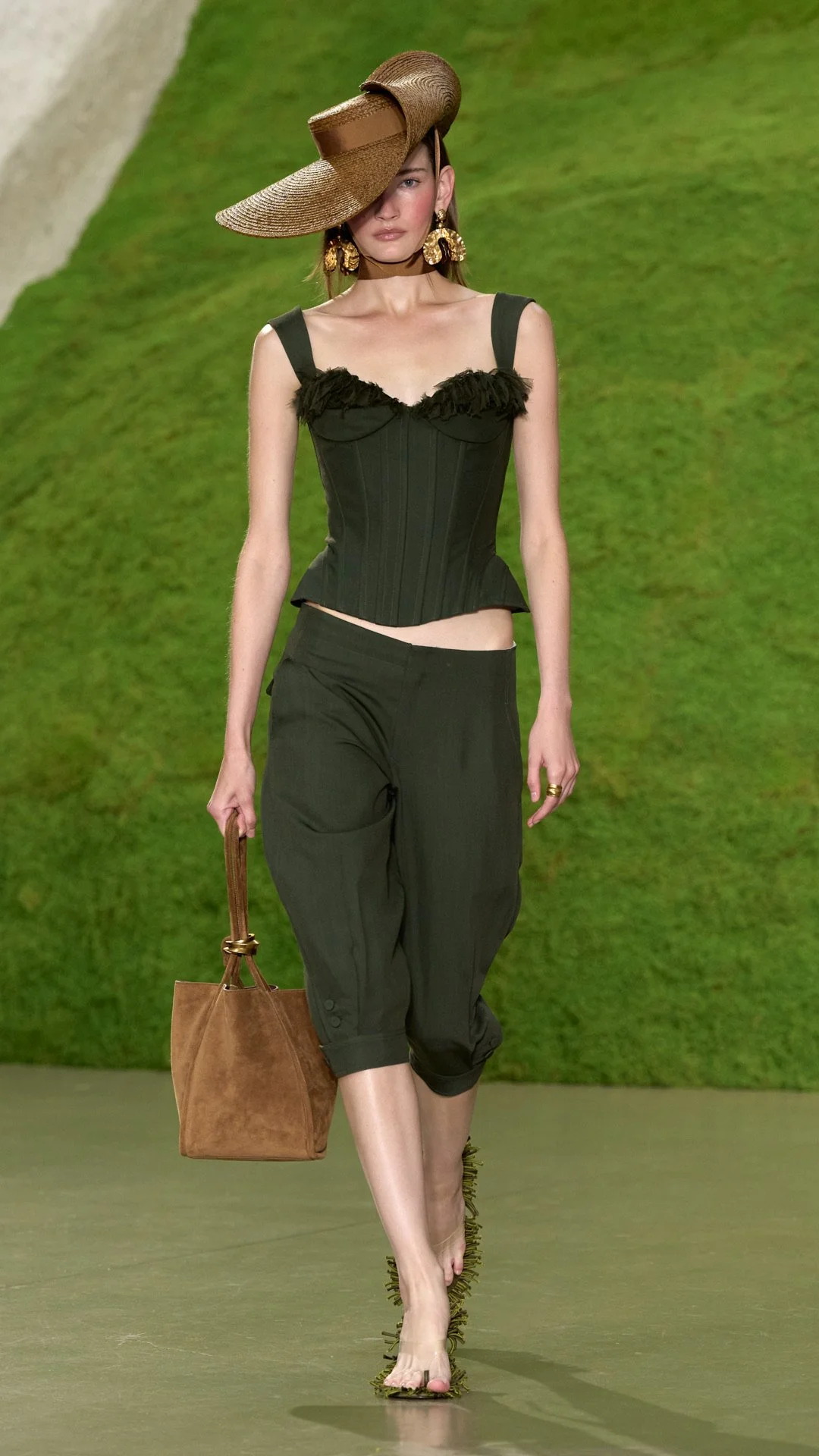
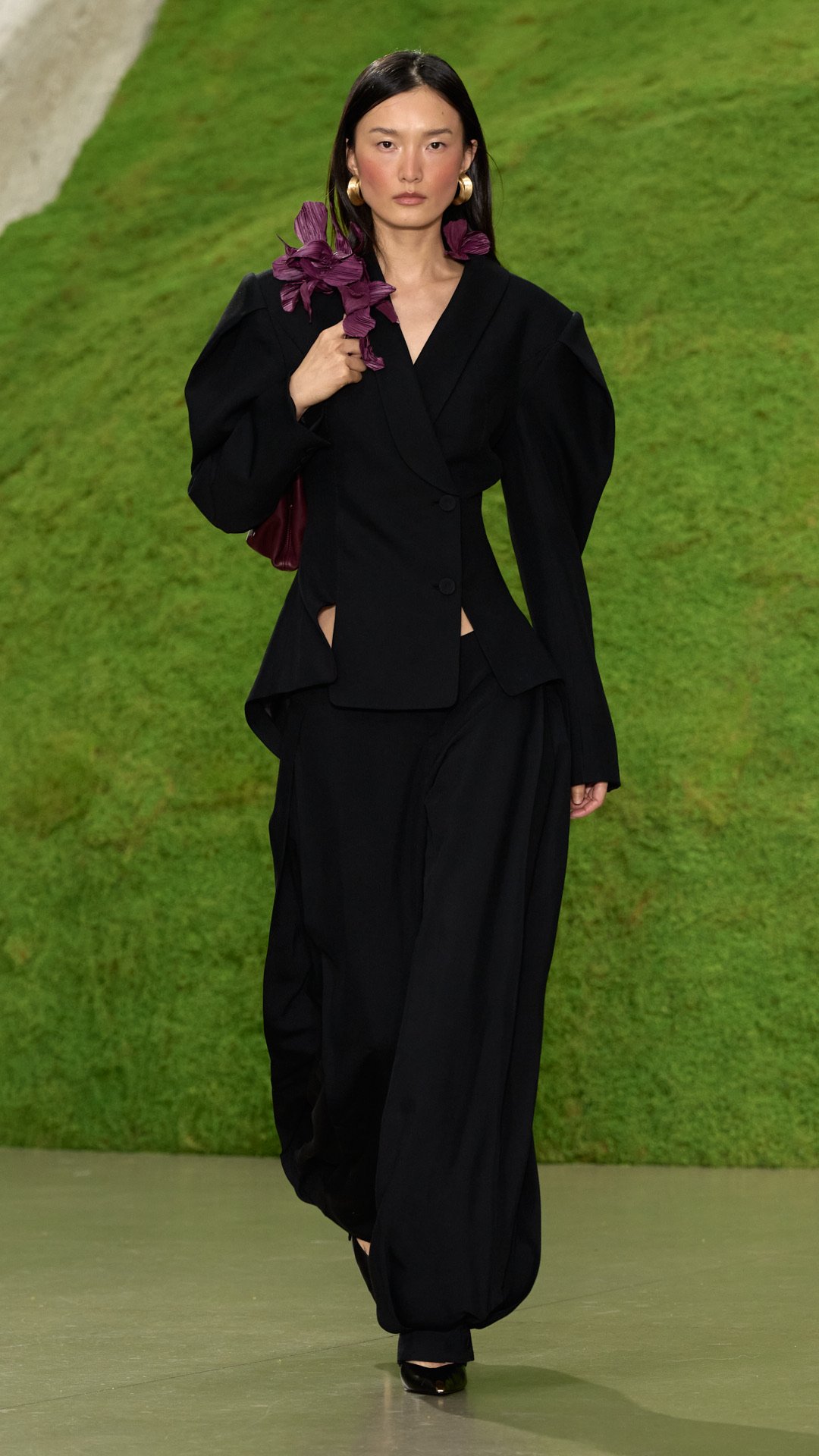
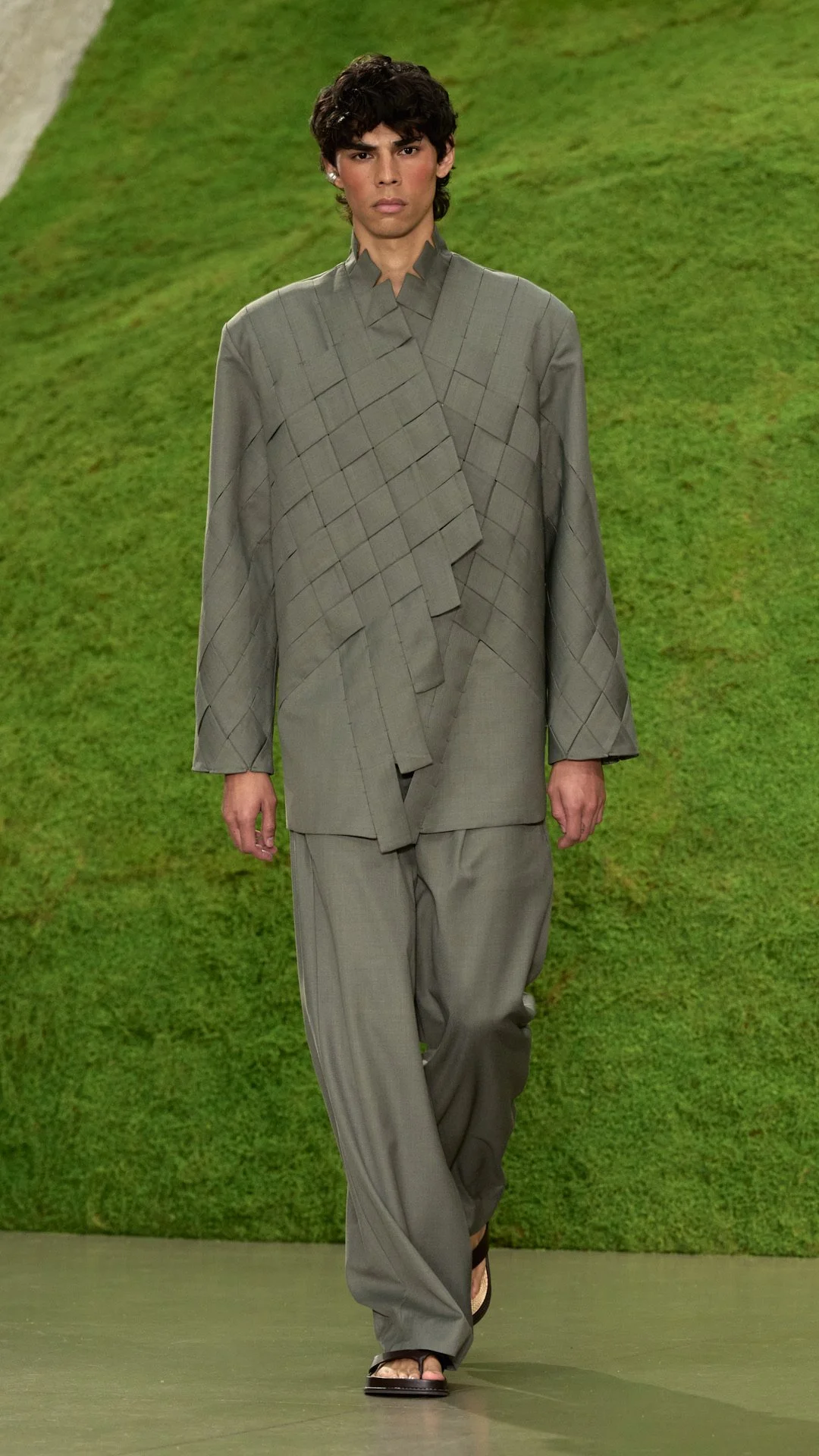
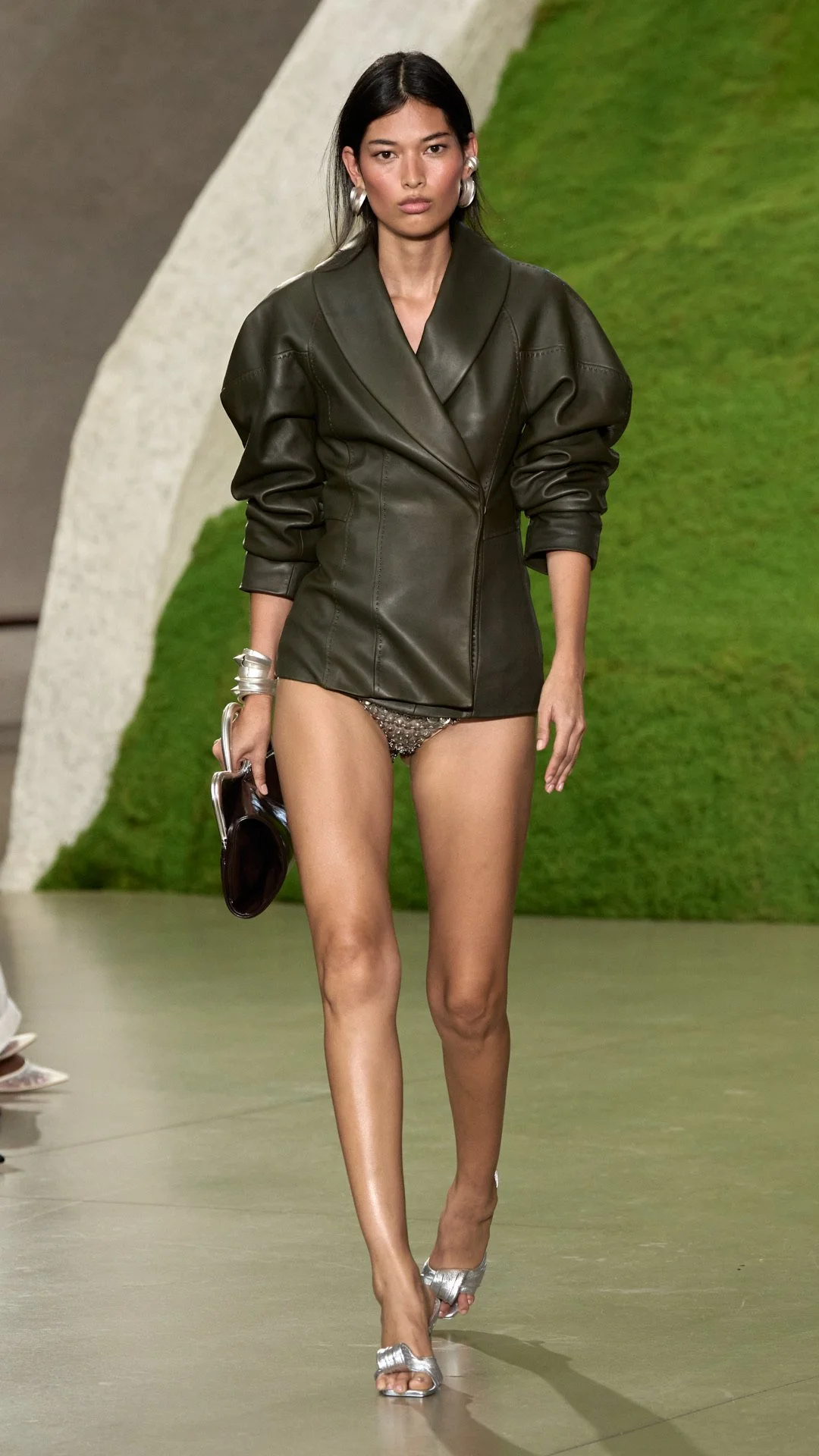
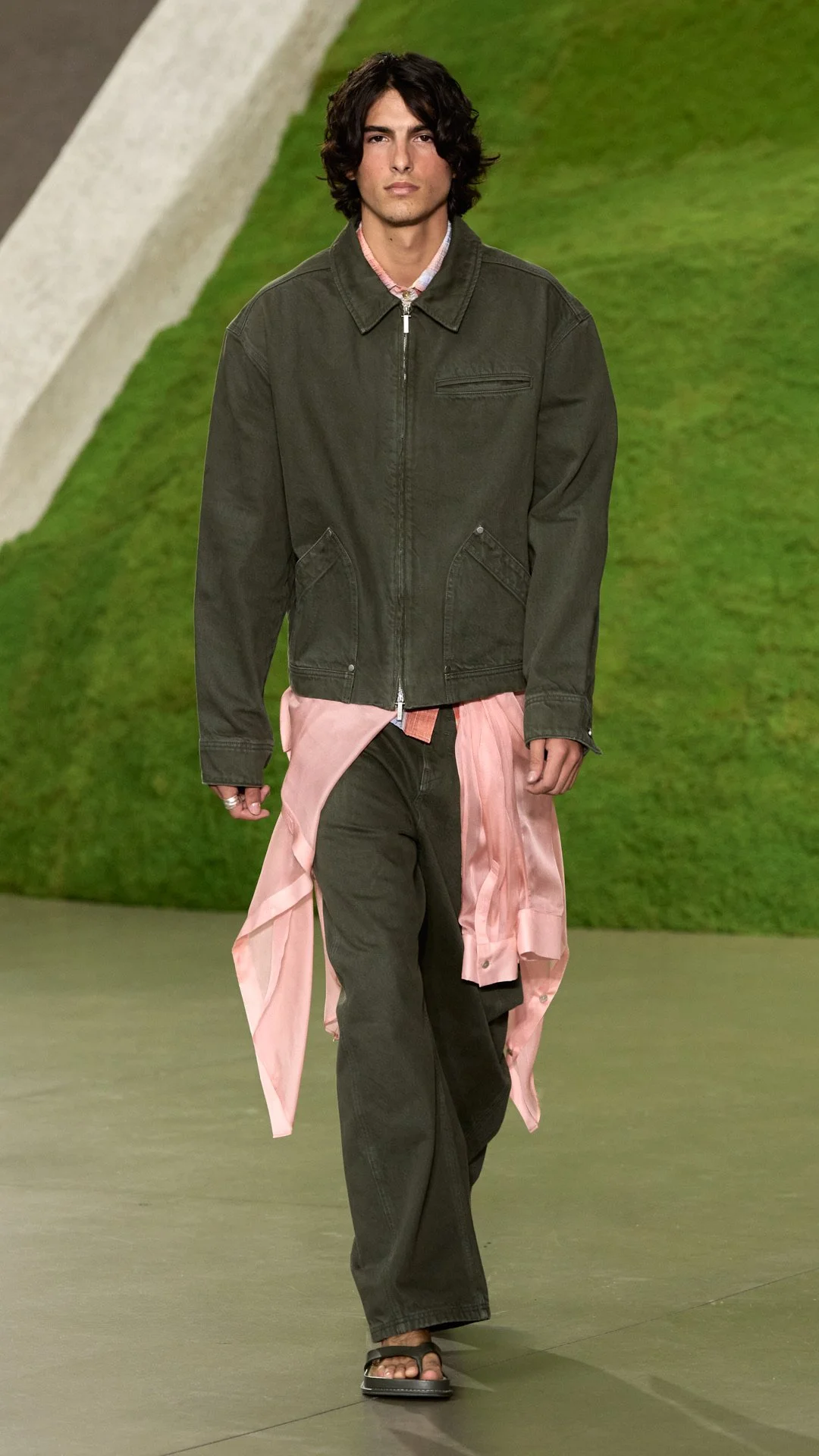
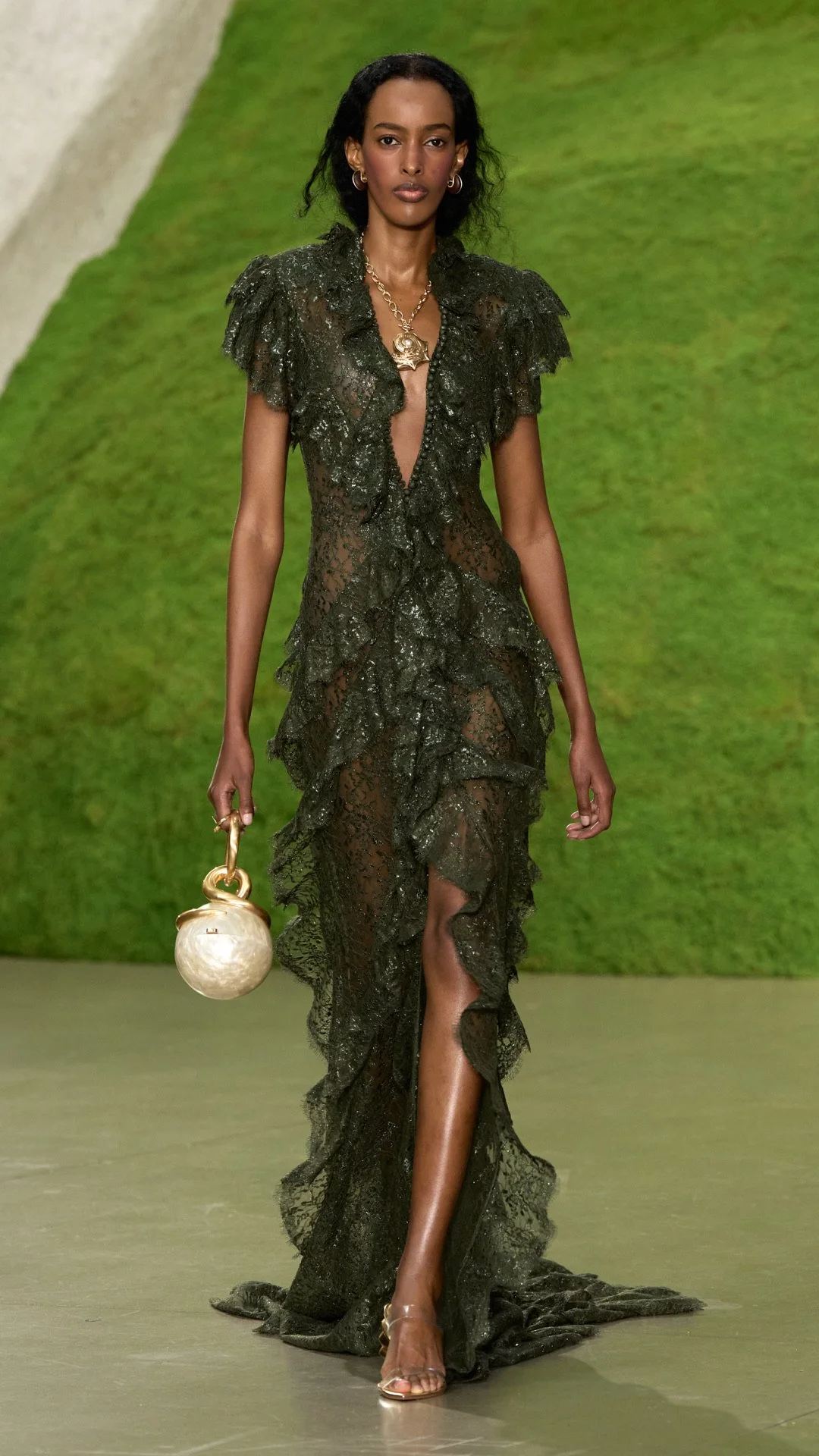
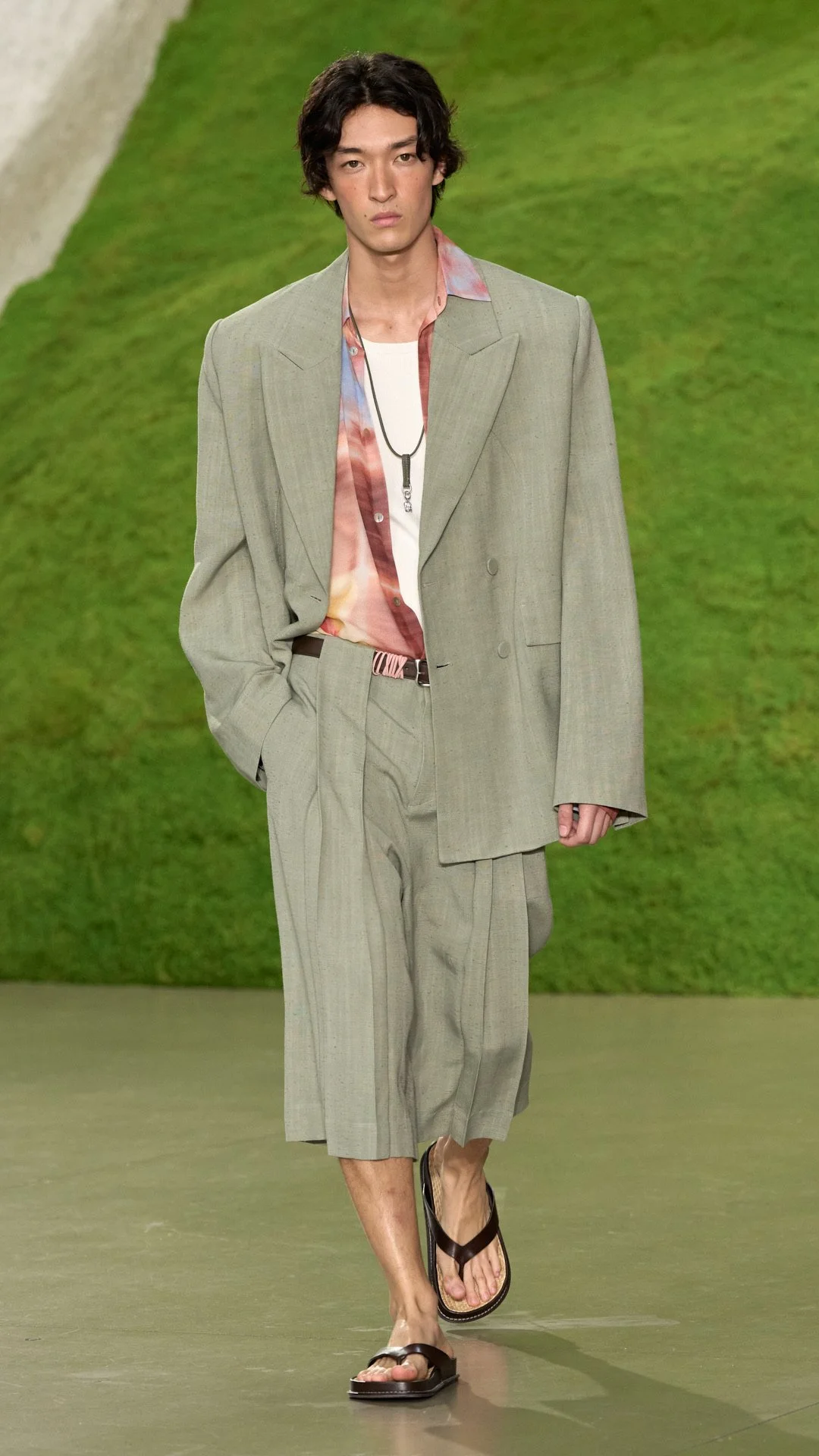
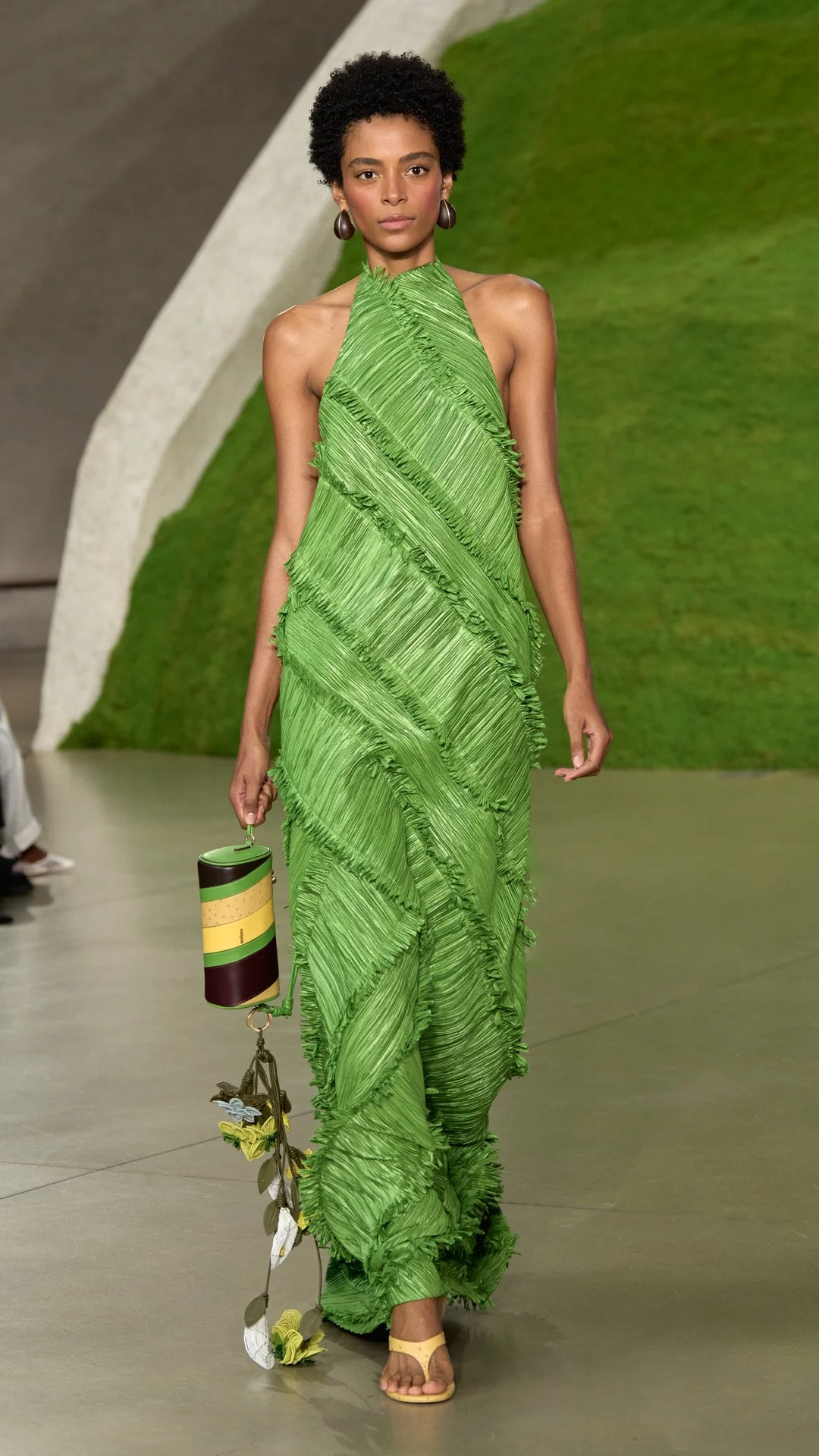
The opening looks were noticeably more austere than the easy, holiday-ready dressing usually associated with Cult Gaia. A deep olive-green suit opened the show, its exaggerated shoulders paired with cropped capri trousers, followed by a matching plissé dress with a fluid, swaying hem.
The effect was sharper and more controlled than the brand’s usual approach to summer dressing. There was still sensuality in the silhouettes, but it had been deliberately held back.
That restraint made the transition that followed more effective.
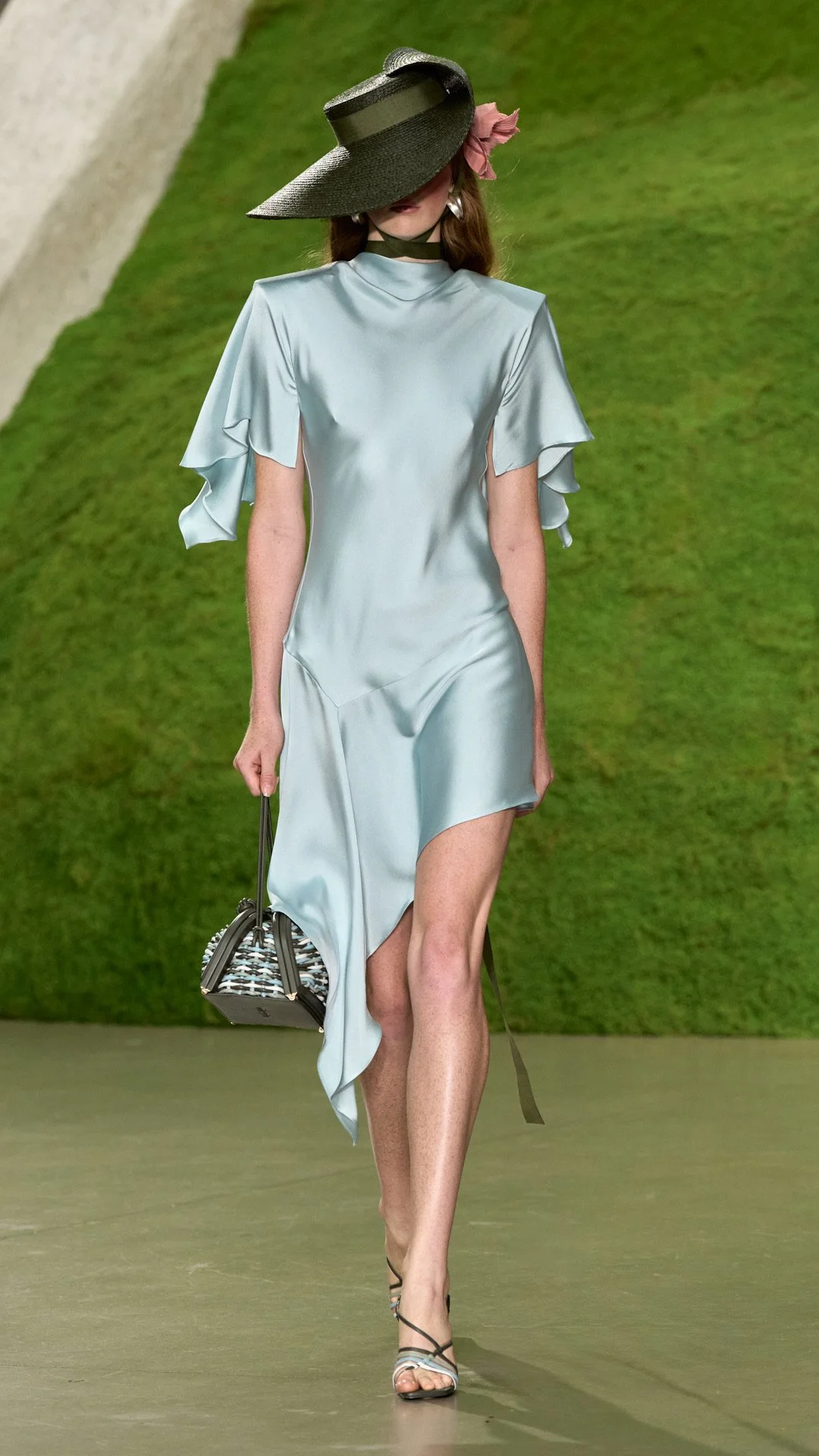
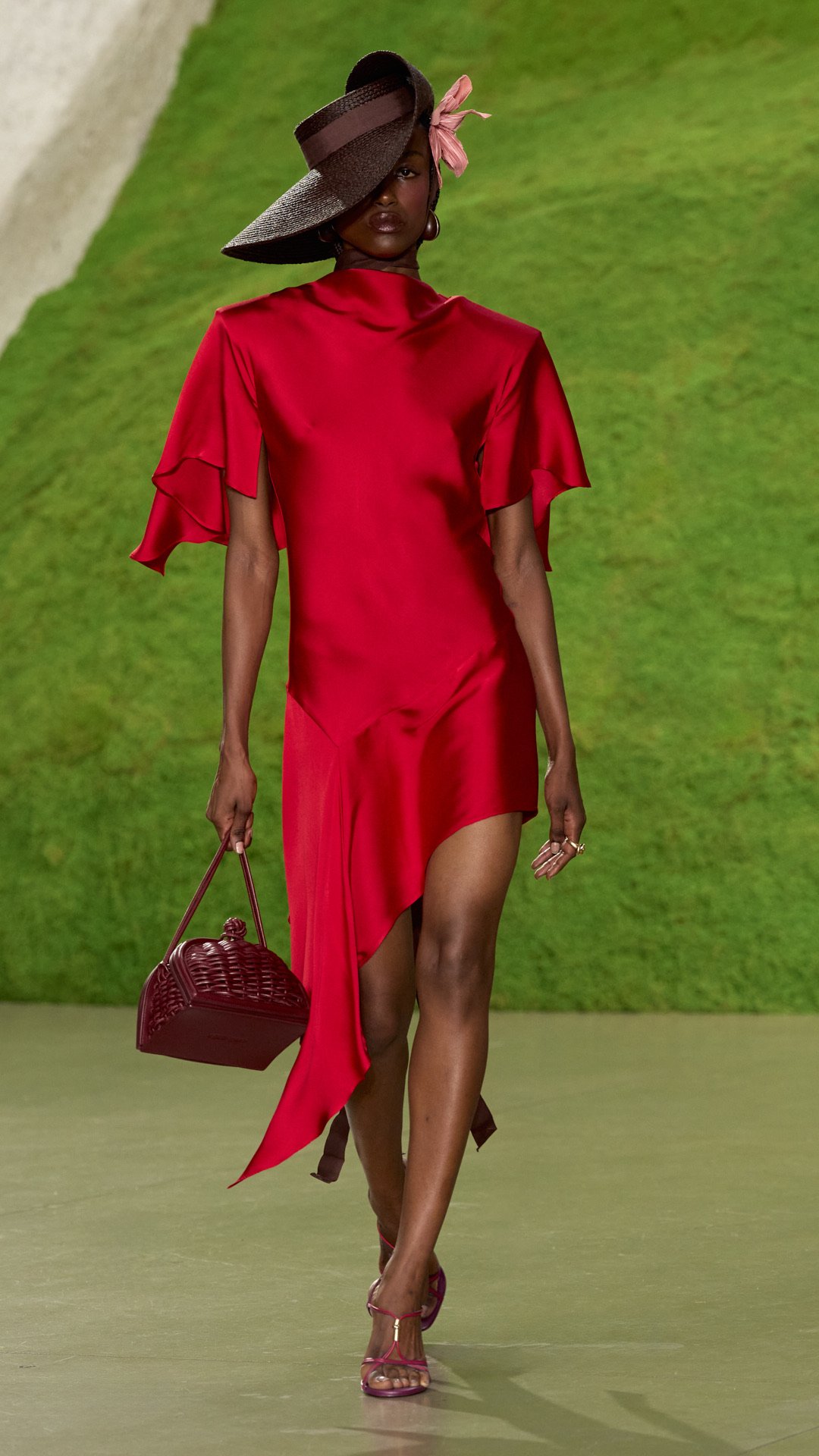
As the collection progressed, the mood became lighter. Softer fabrics appeared alongside more playful proportions, while colour and movement gradually returned to the runway. The clothes began to feel less like an examination of grief and more like an acceptance of what comes afterwards.
It was a collection built around contrast: rigid against fluid, dark against light, structure against movement.
And that tension is where Spring 2027 becomes most interesting.
Cult Gaia Gets Serious About Tailoring
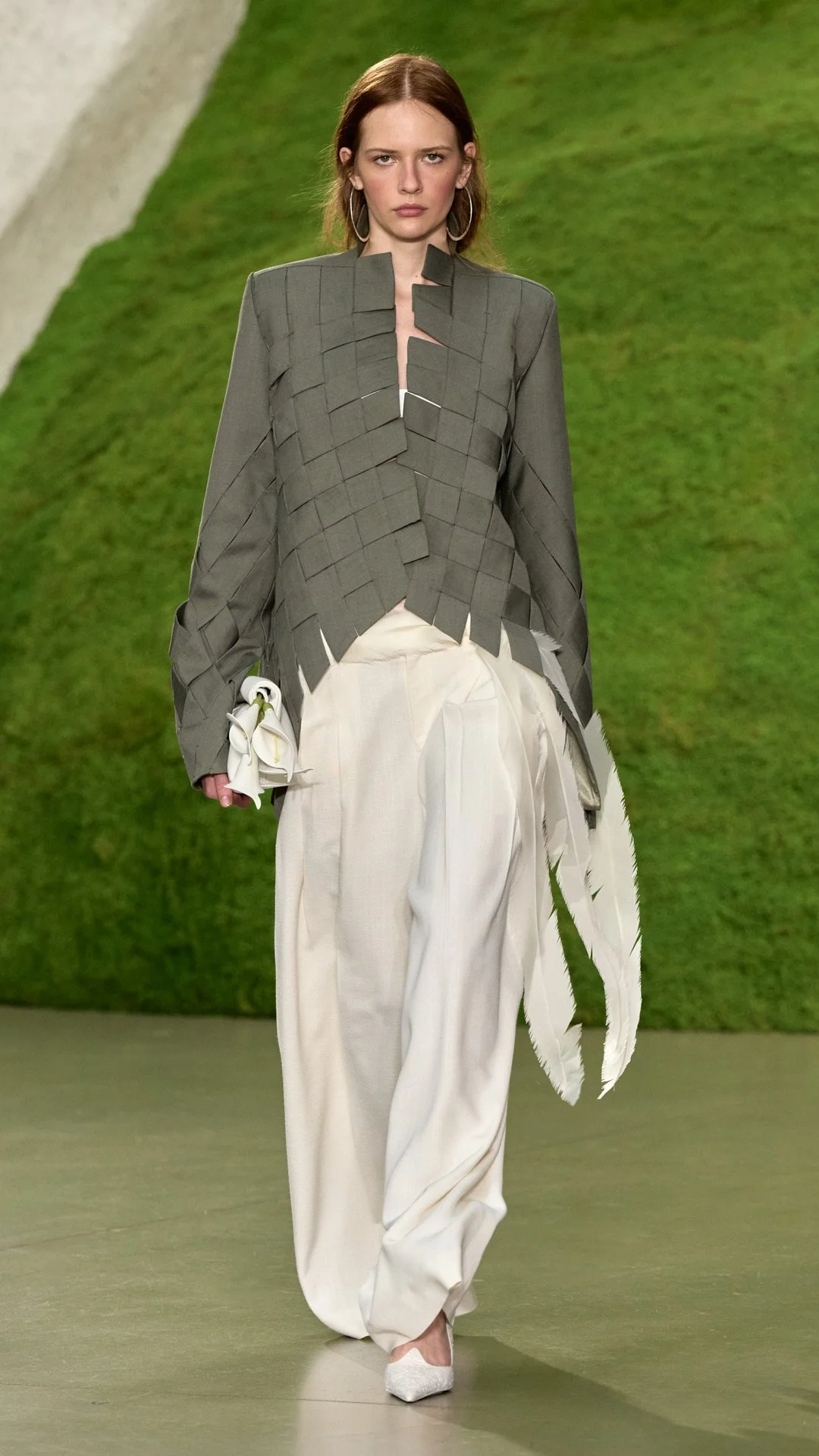
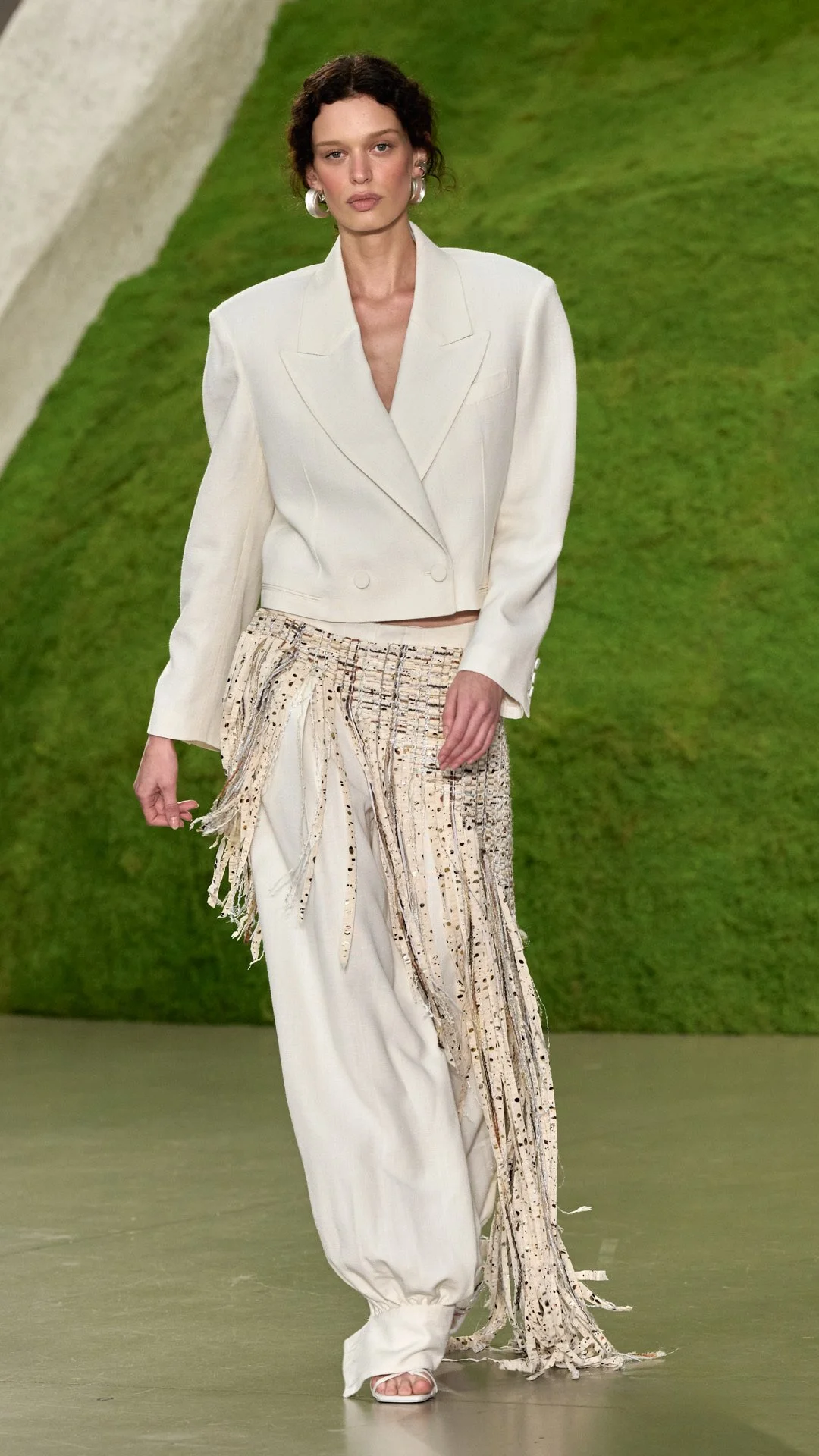
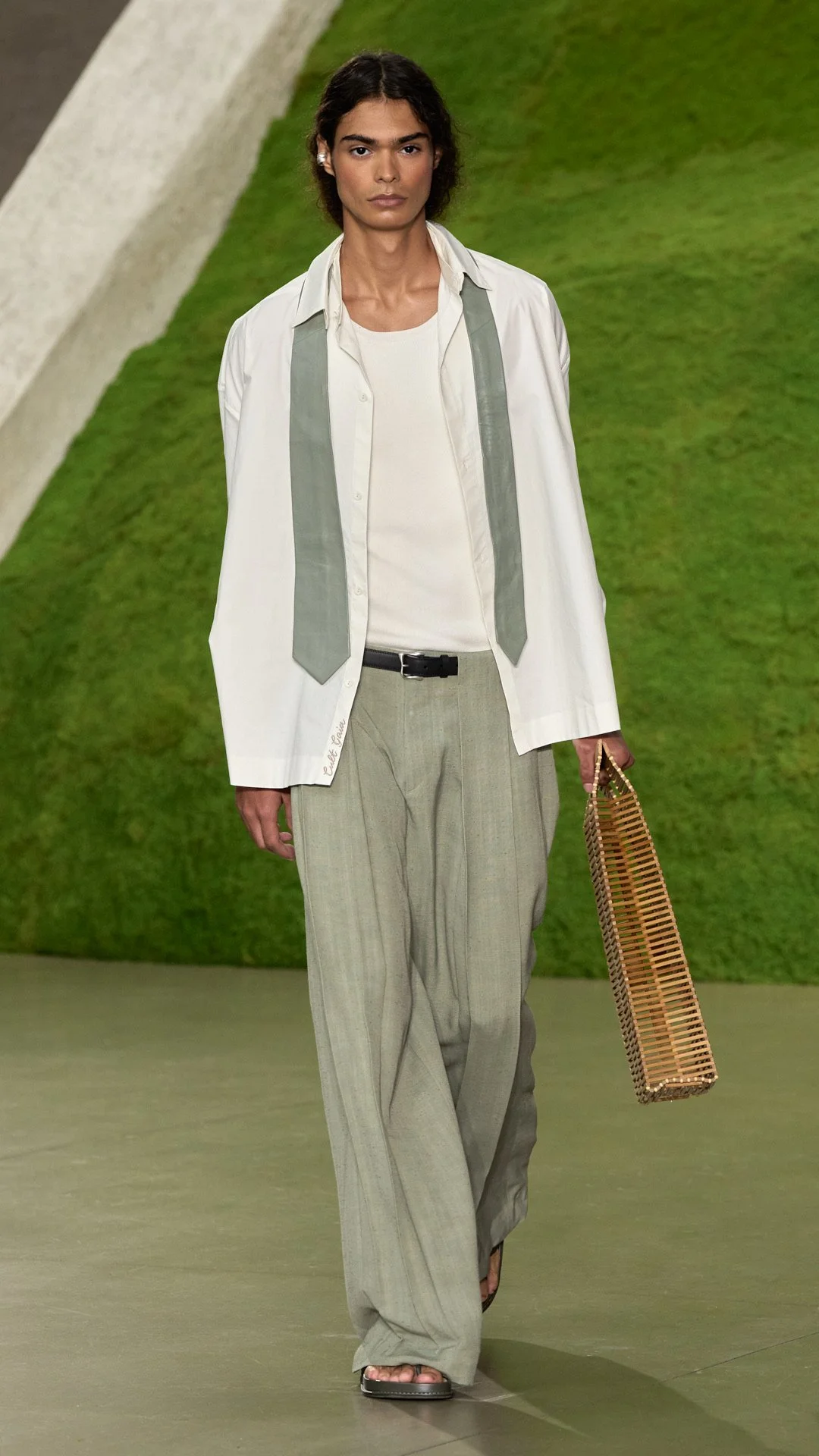
One of the clearest developments was Hekmat’s increasingly confident use of tailoring.
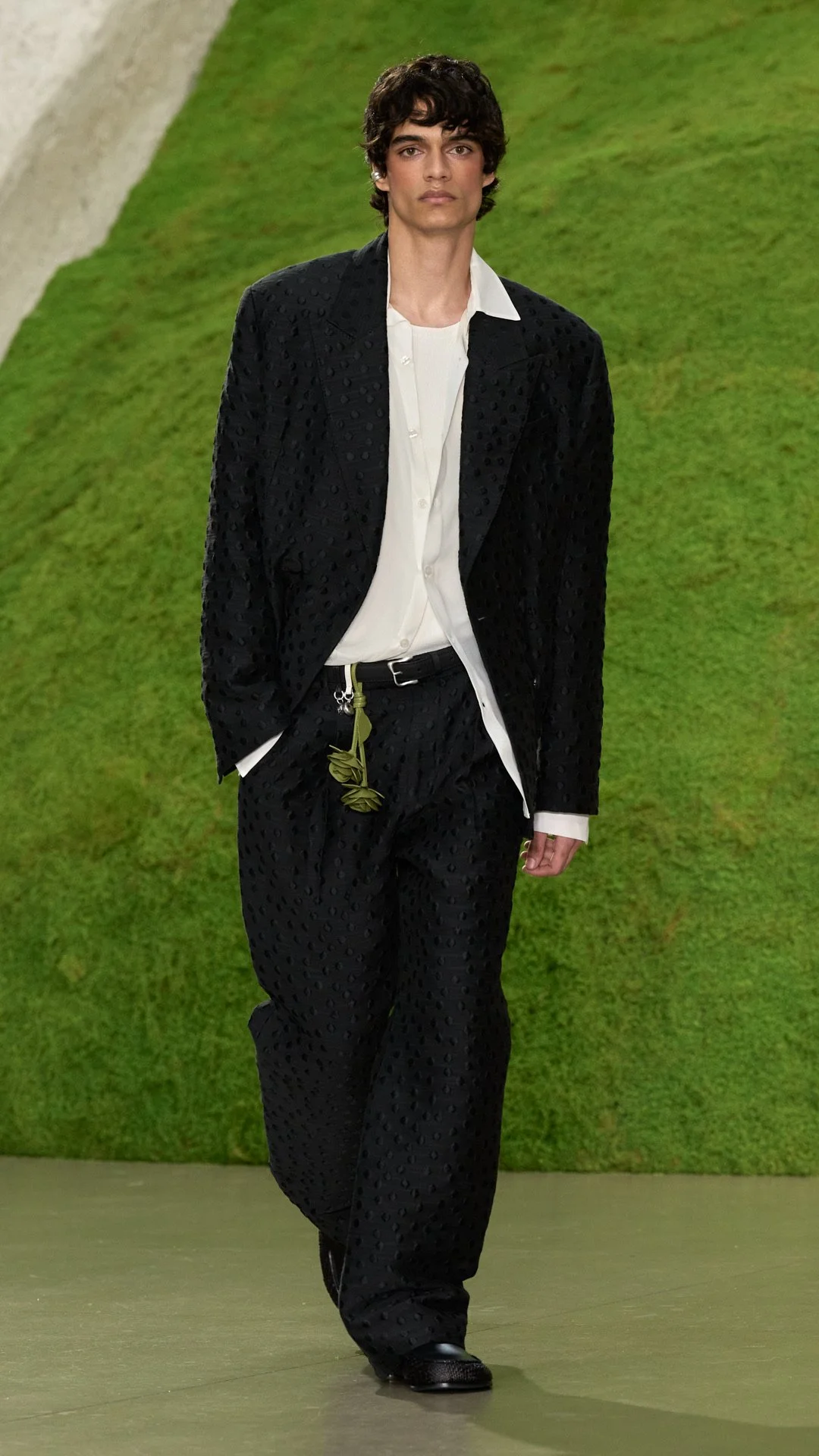
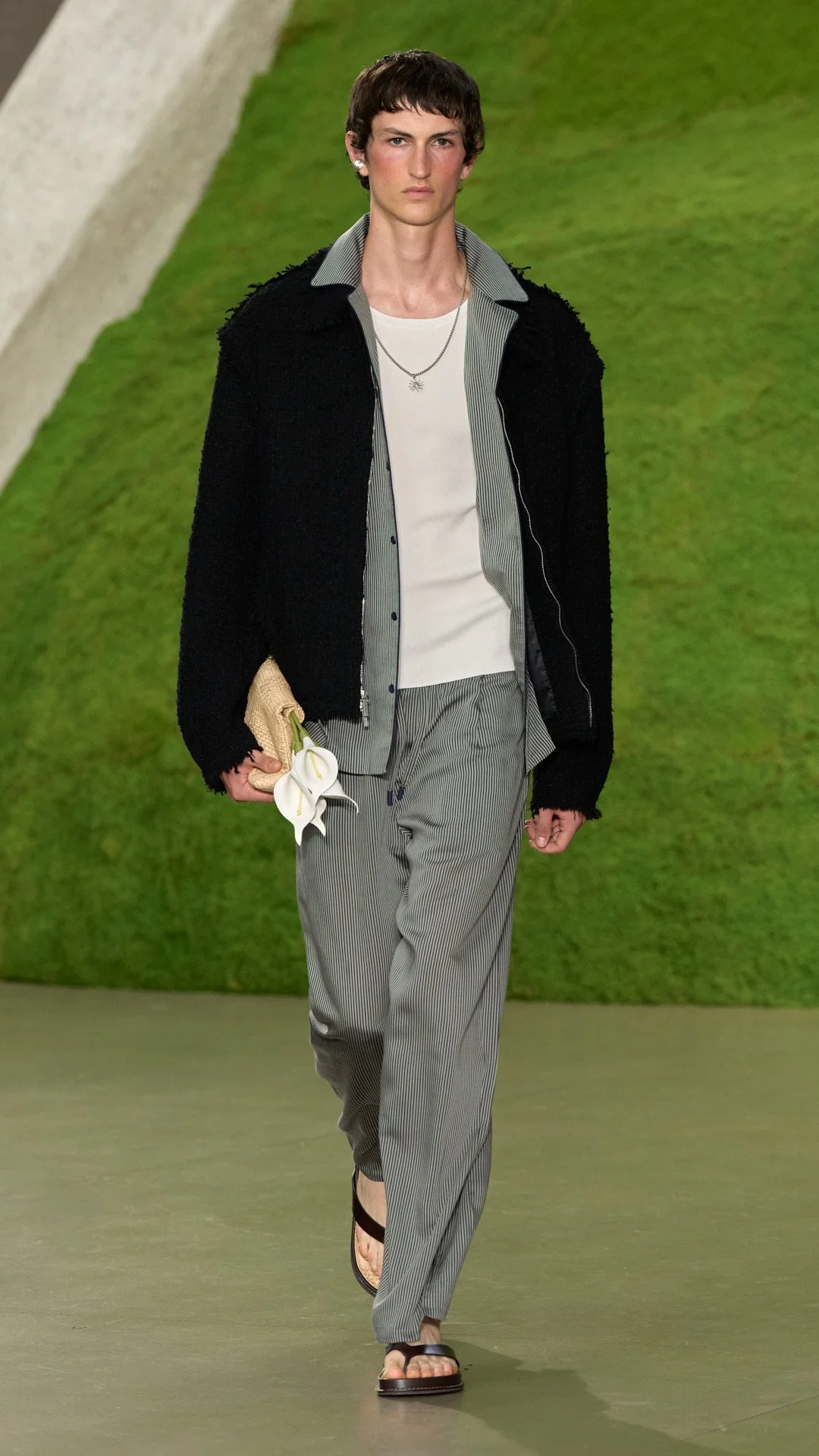
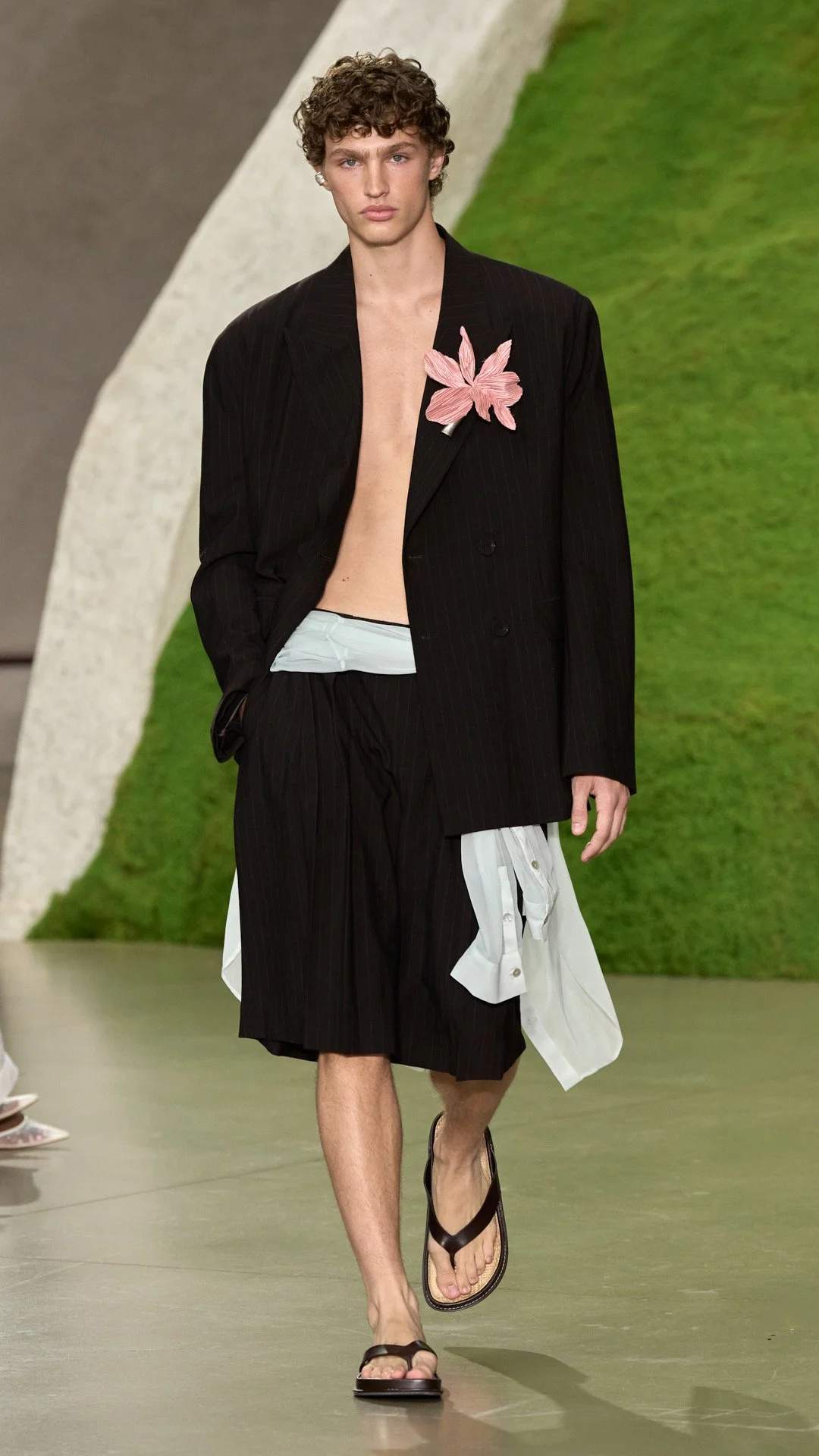
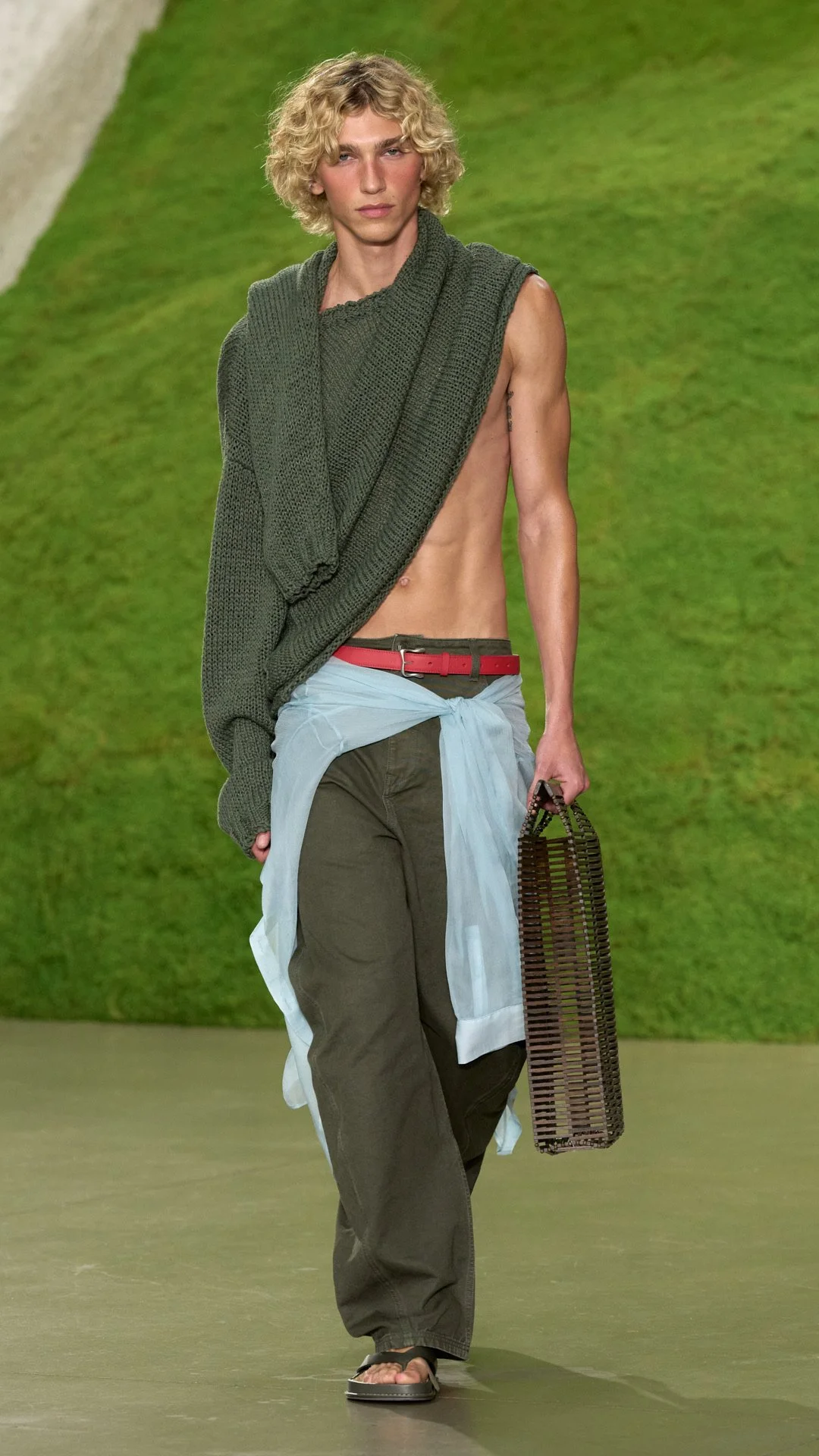
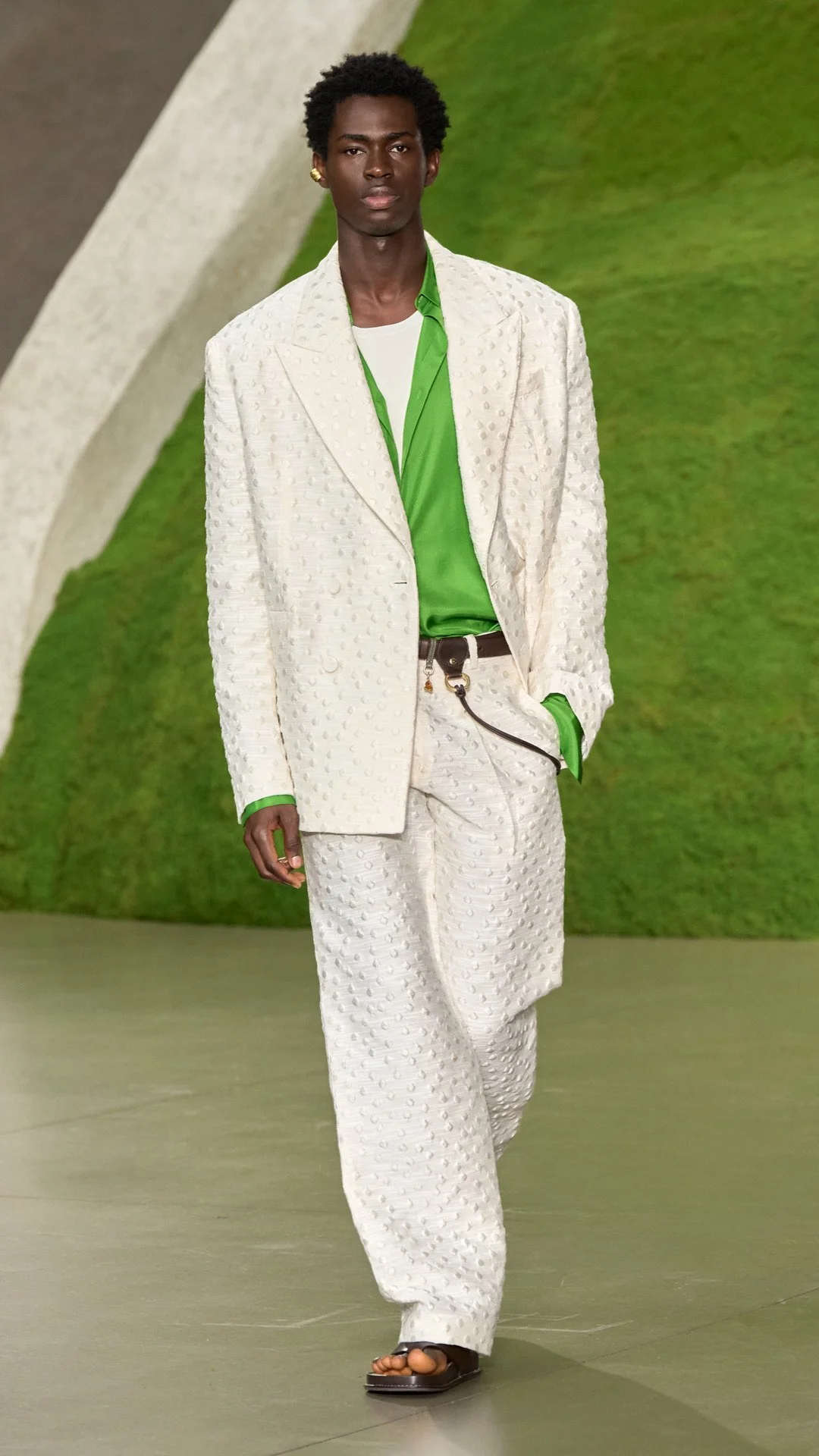
The black linen suit was boxy and deliberately relaxed, with the kind of slouch that made traditional tailoring feel considerably less formal. Rather than presenting the suit as corporate dressing, Hekmat treated it as another form of sensuality.
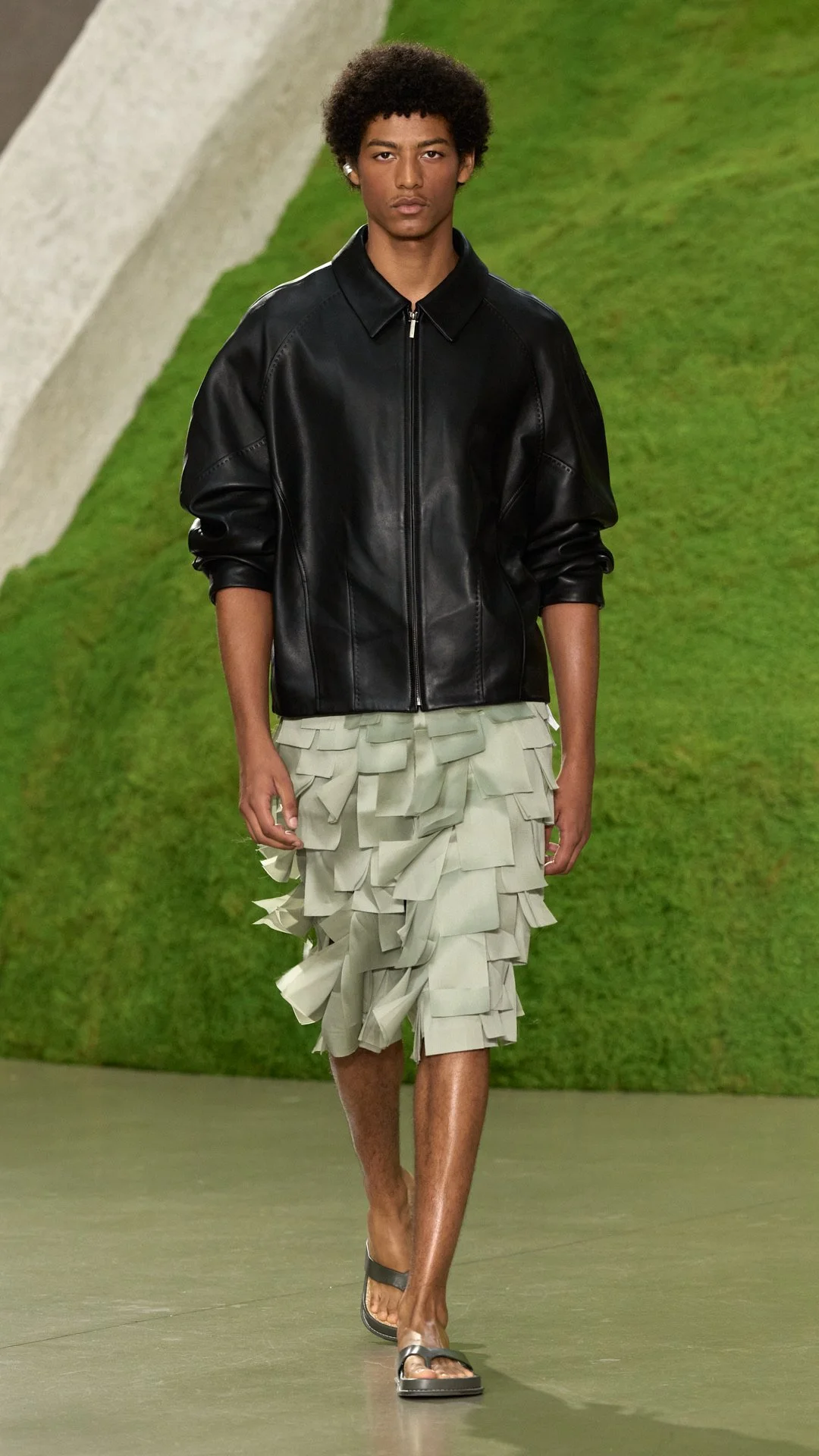
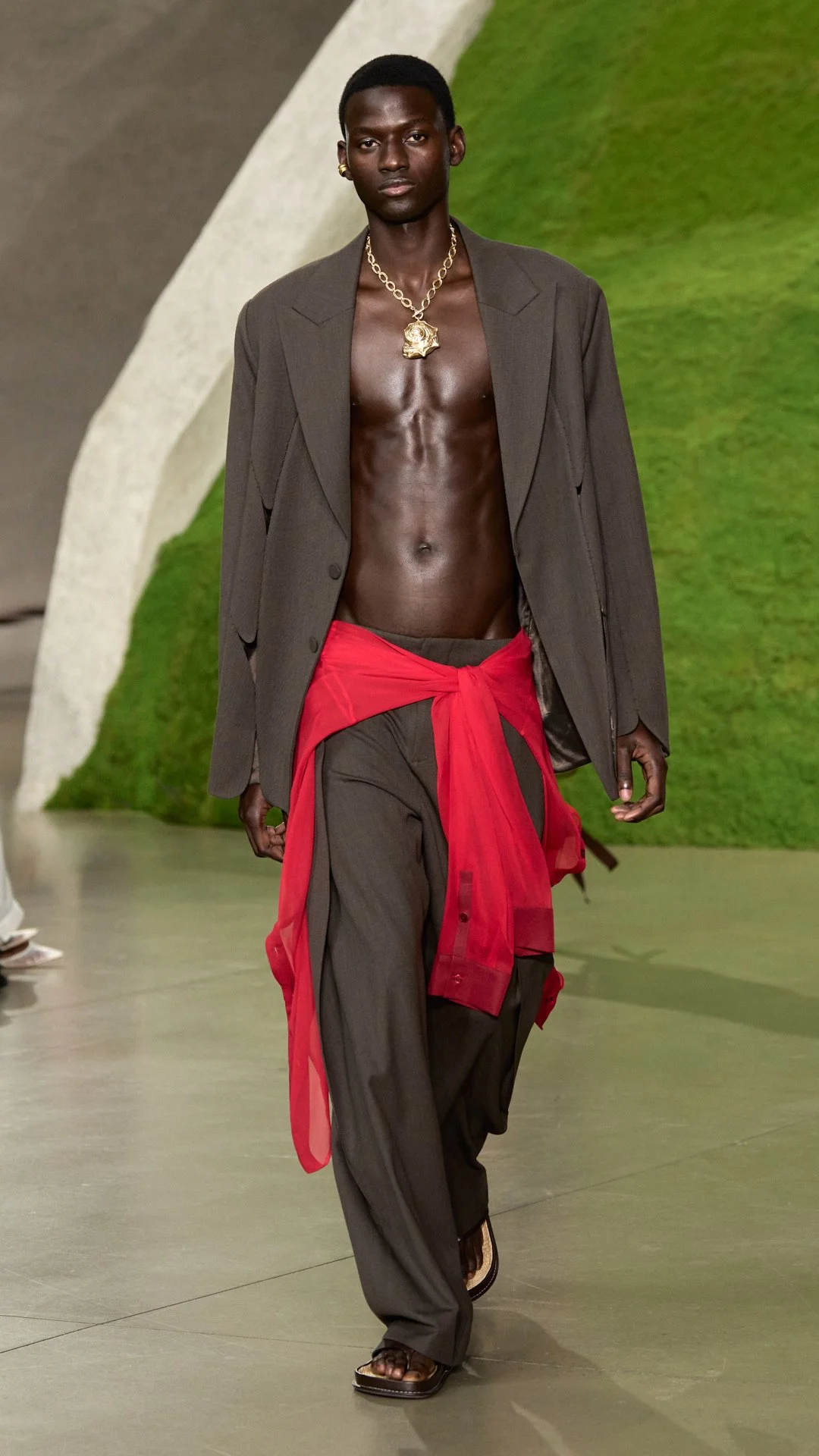
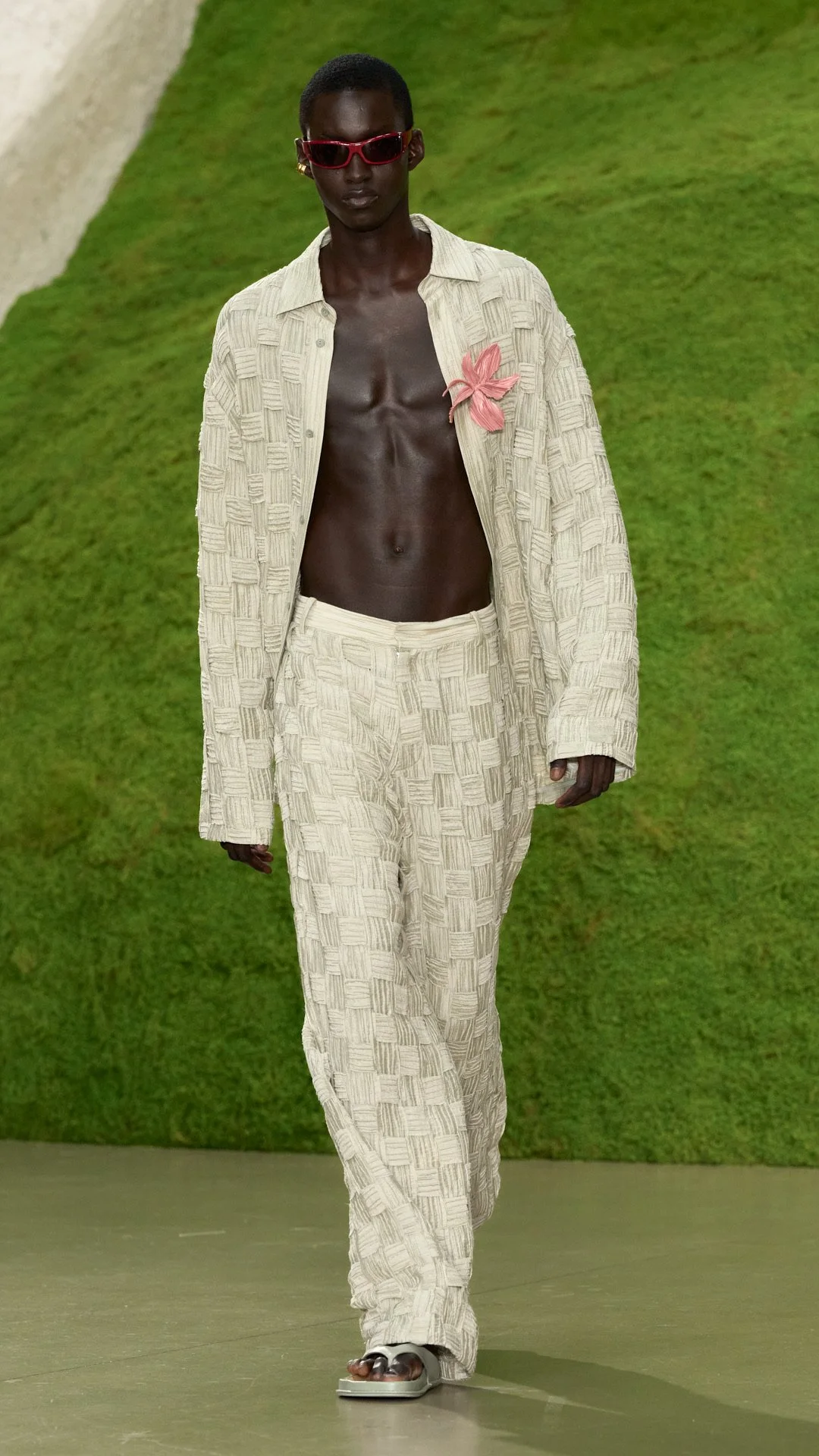
The same attitude carried into the collection’s growing menswear offering.
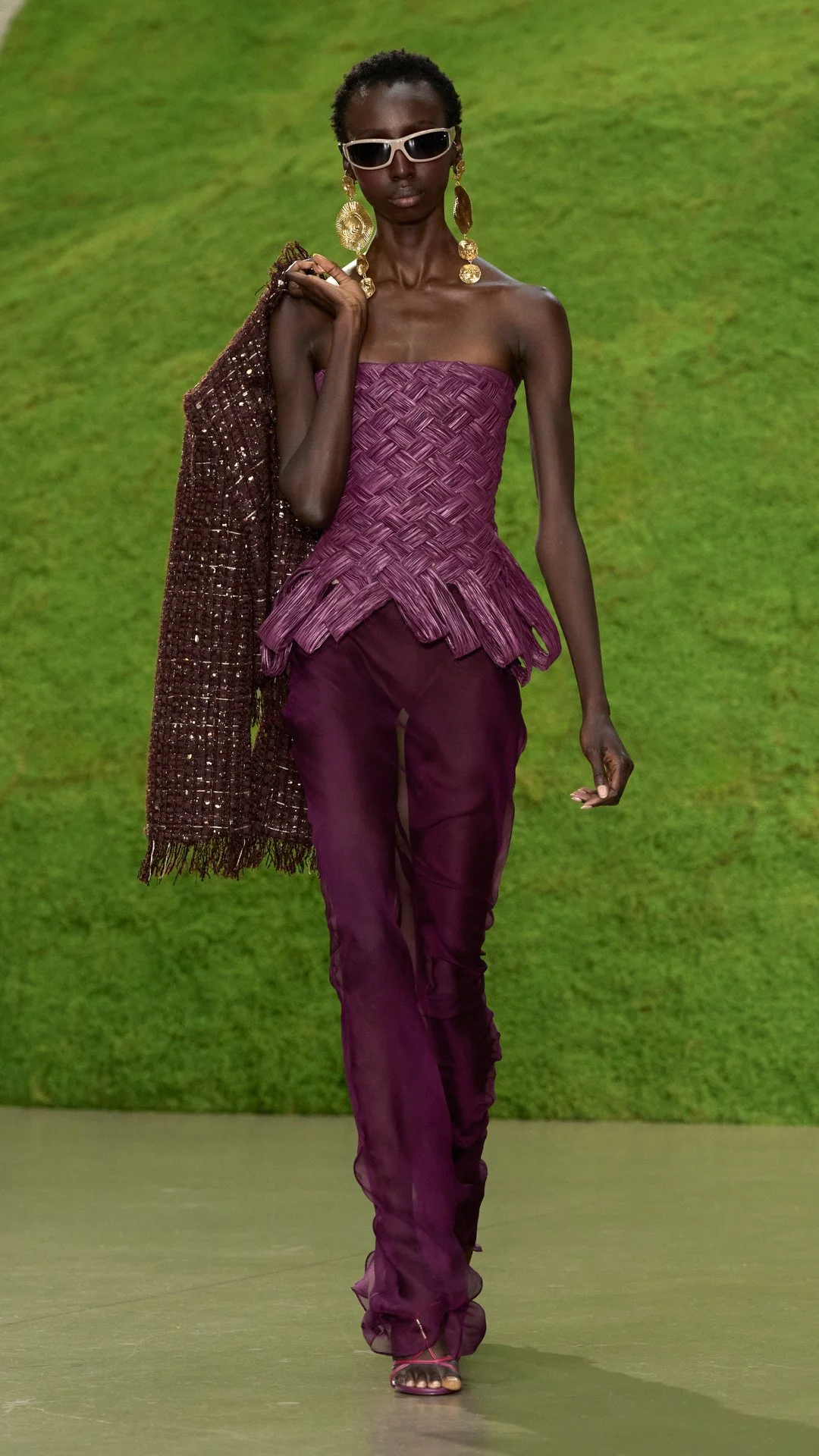
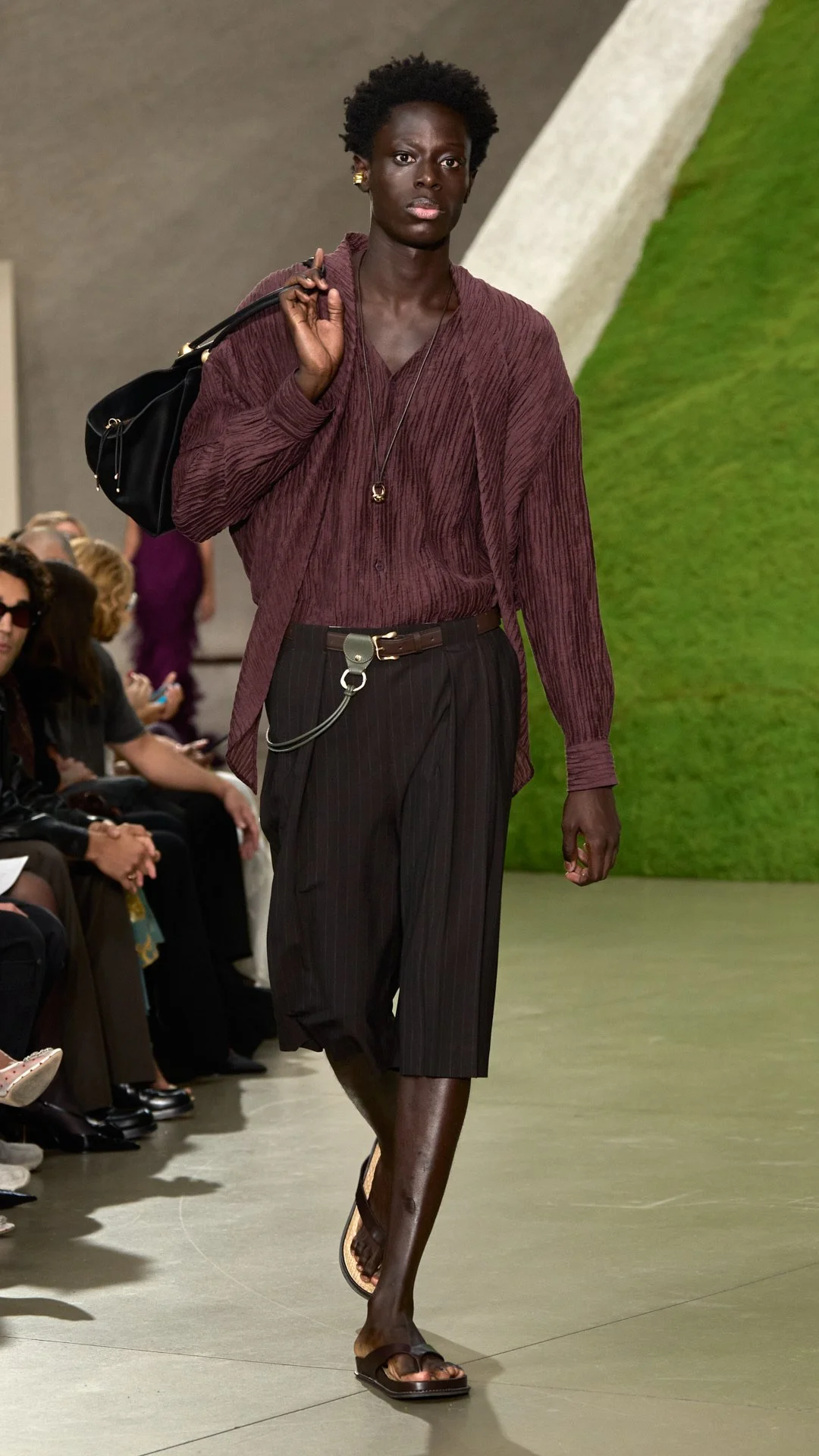
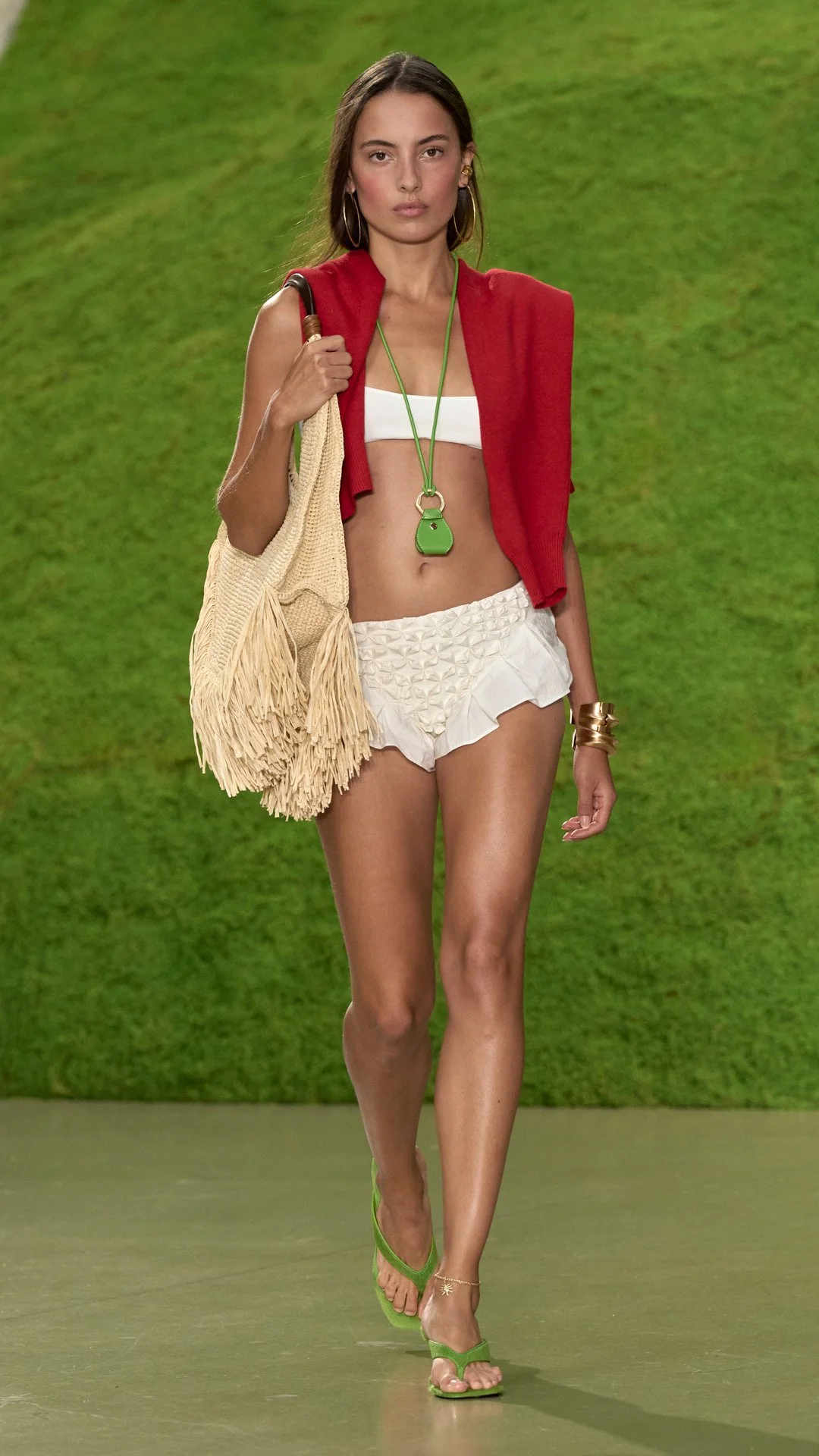
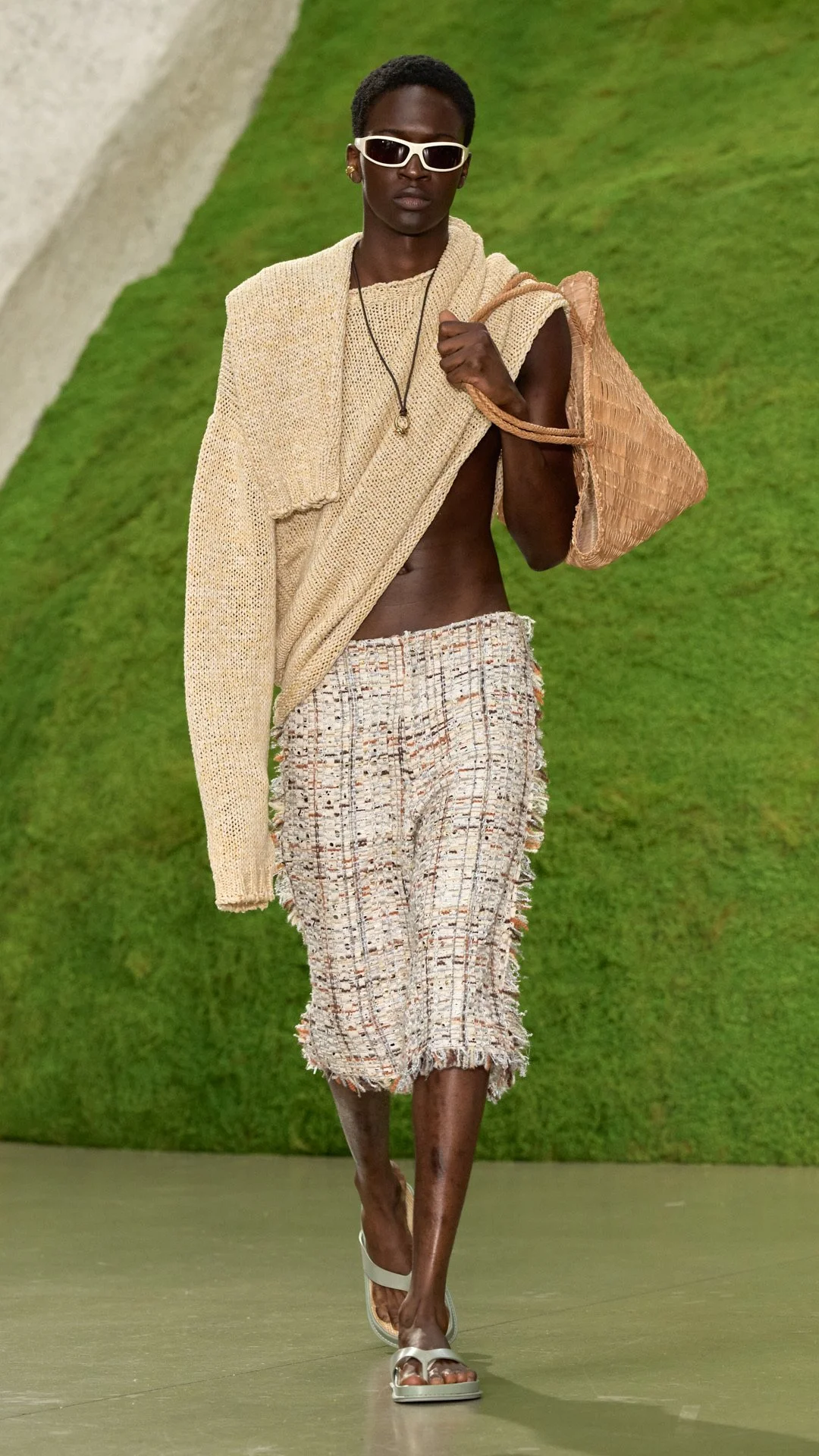
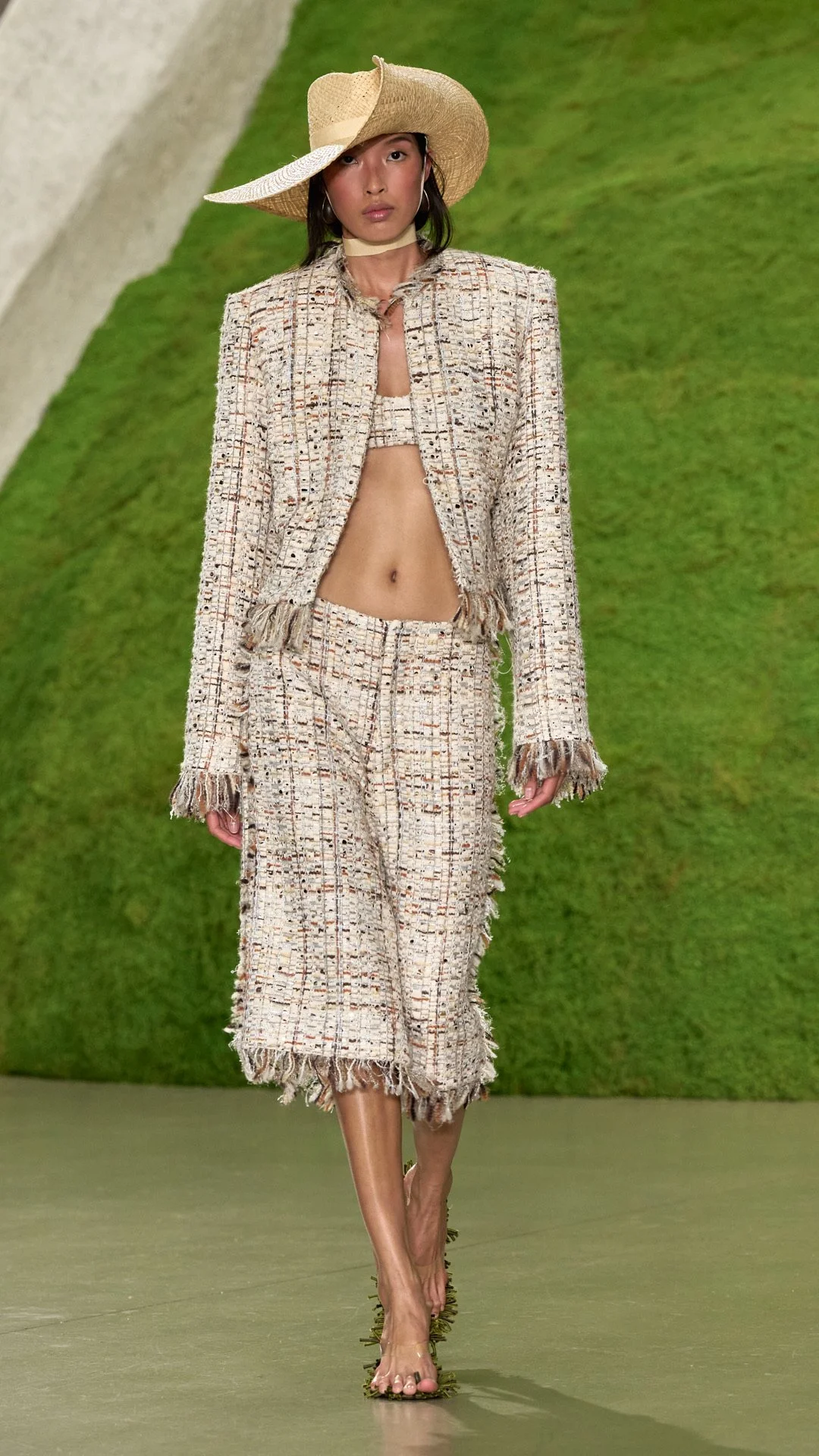
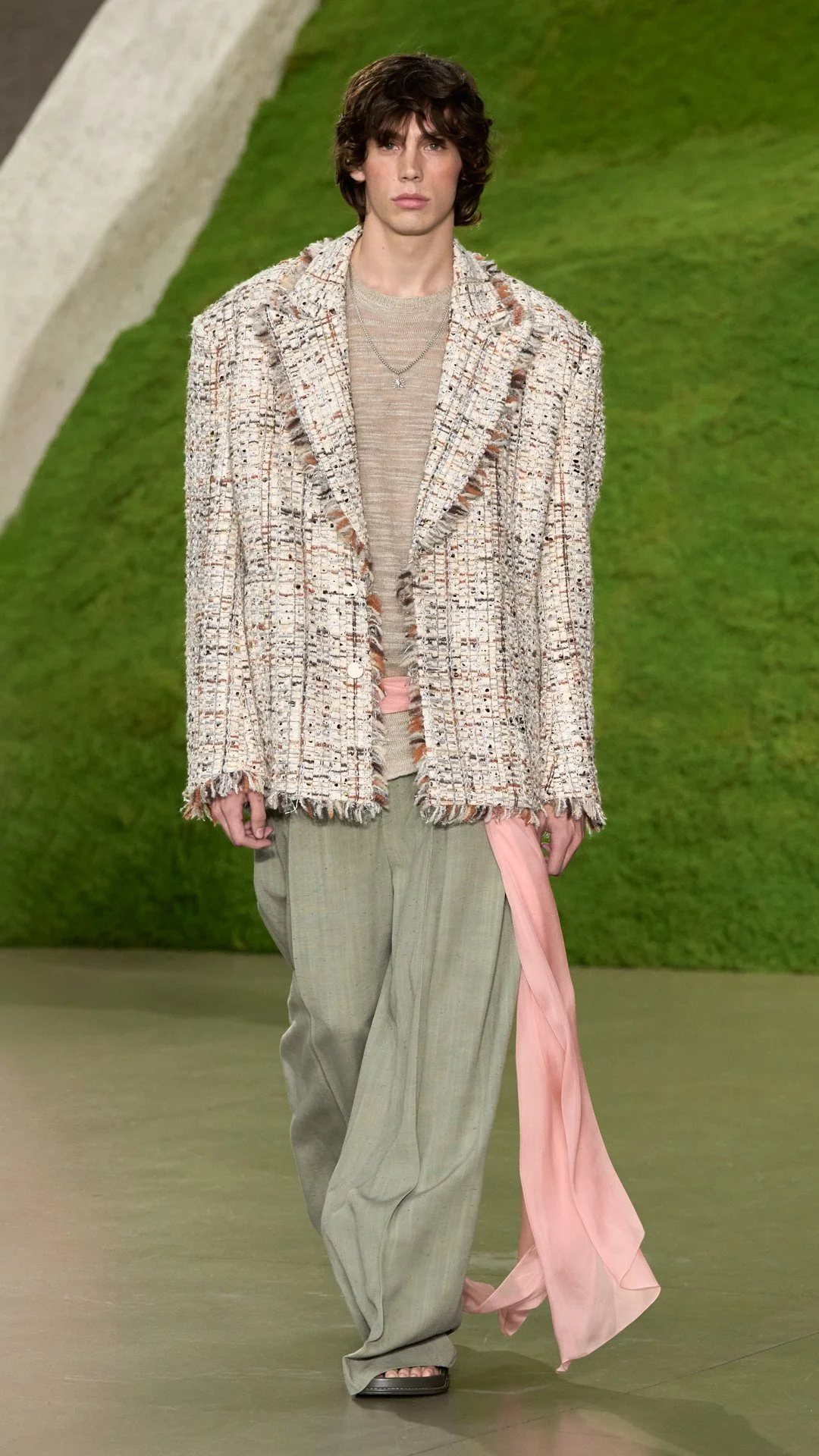
A pair of fringed tweed board shorts brought an unexpected dose of playfulness, while a plum-coloured plissé shirt came complete with an integrated necktie. These were not simply women’s clothes translated into menswear. They had their own proportions and personality, and suggested that Hekmat is becoming increasingly interested in what Cult Gaia can offer beyond its established feminine wardrobe.
That feels significant for the brand.
Cult Gaia began with accessories and became known for objects that were almost as important as the clothes themselves. As the ready-to-wear offering has expanded, the challenge has been creating a complete wardrobe without losing that sense of fantasy.
Spring 2027 suggests Hekmat is getting closer to that balance.
The Return of Cult Gaia Glamour
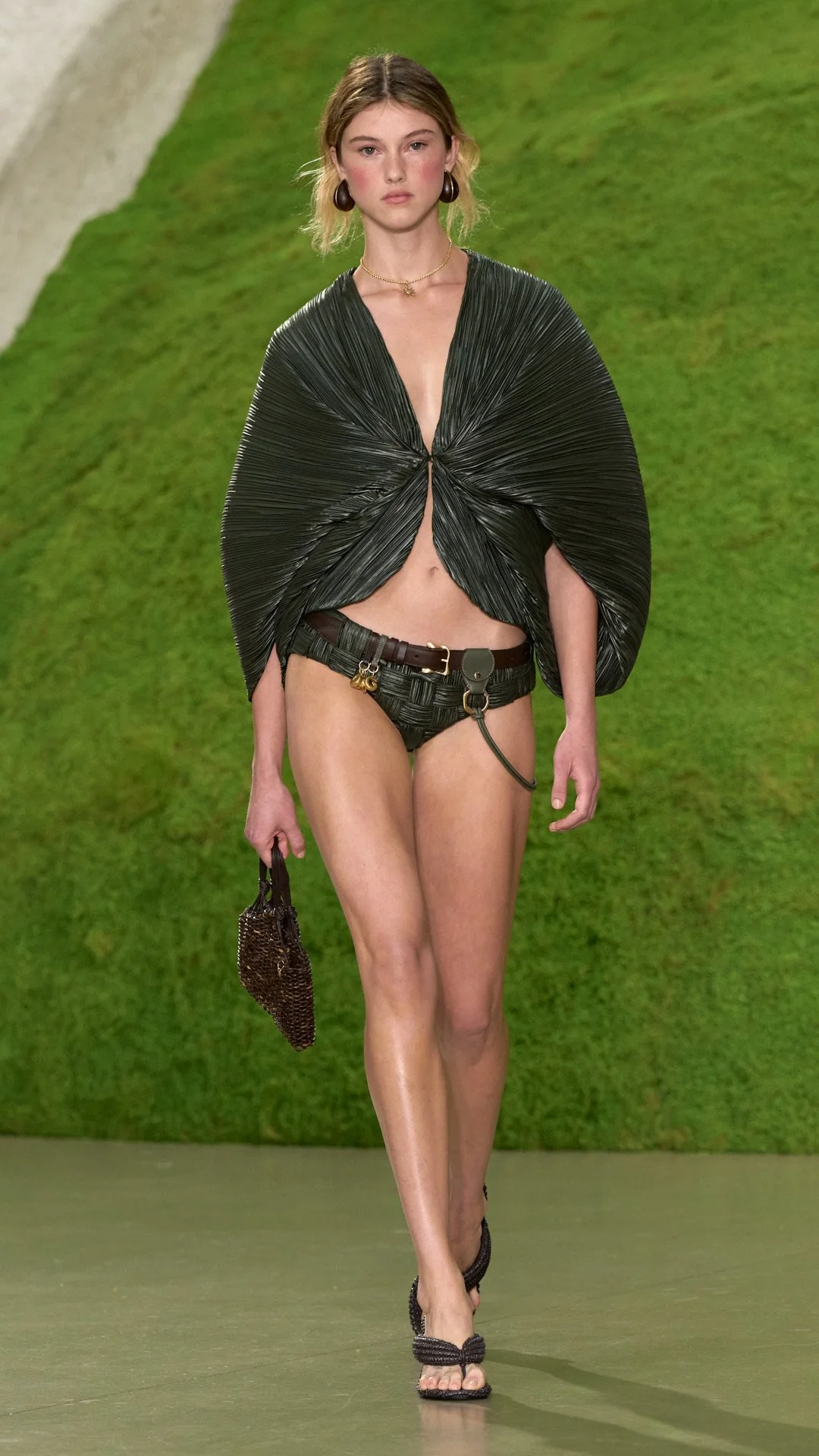
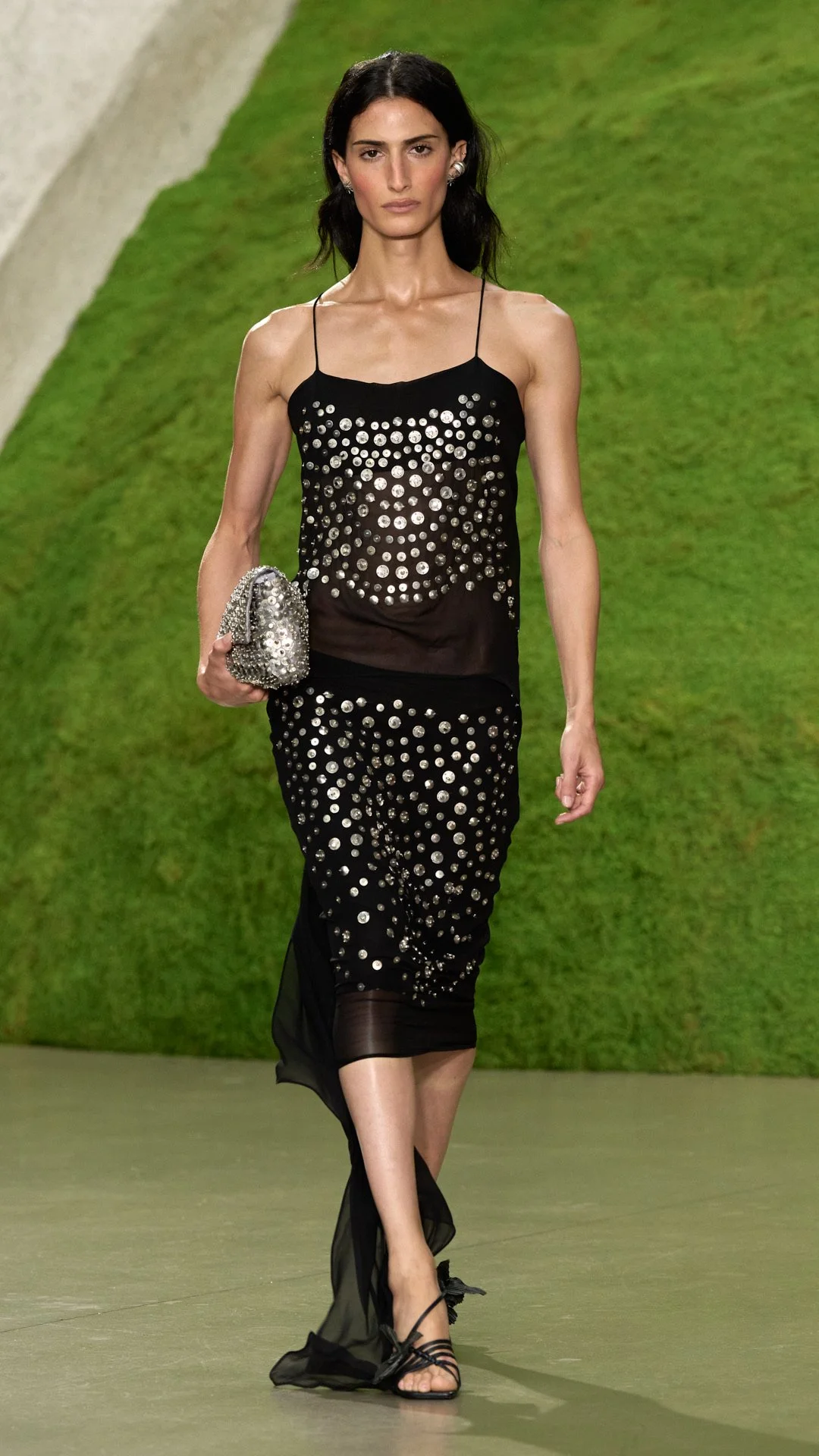
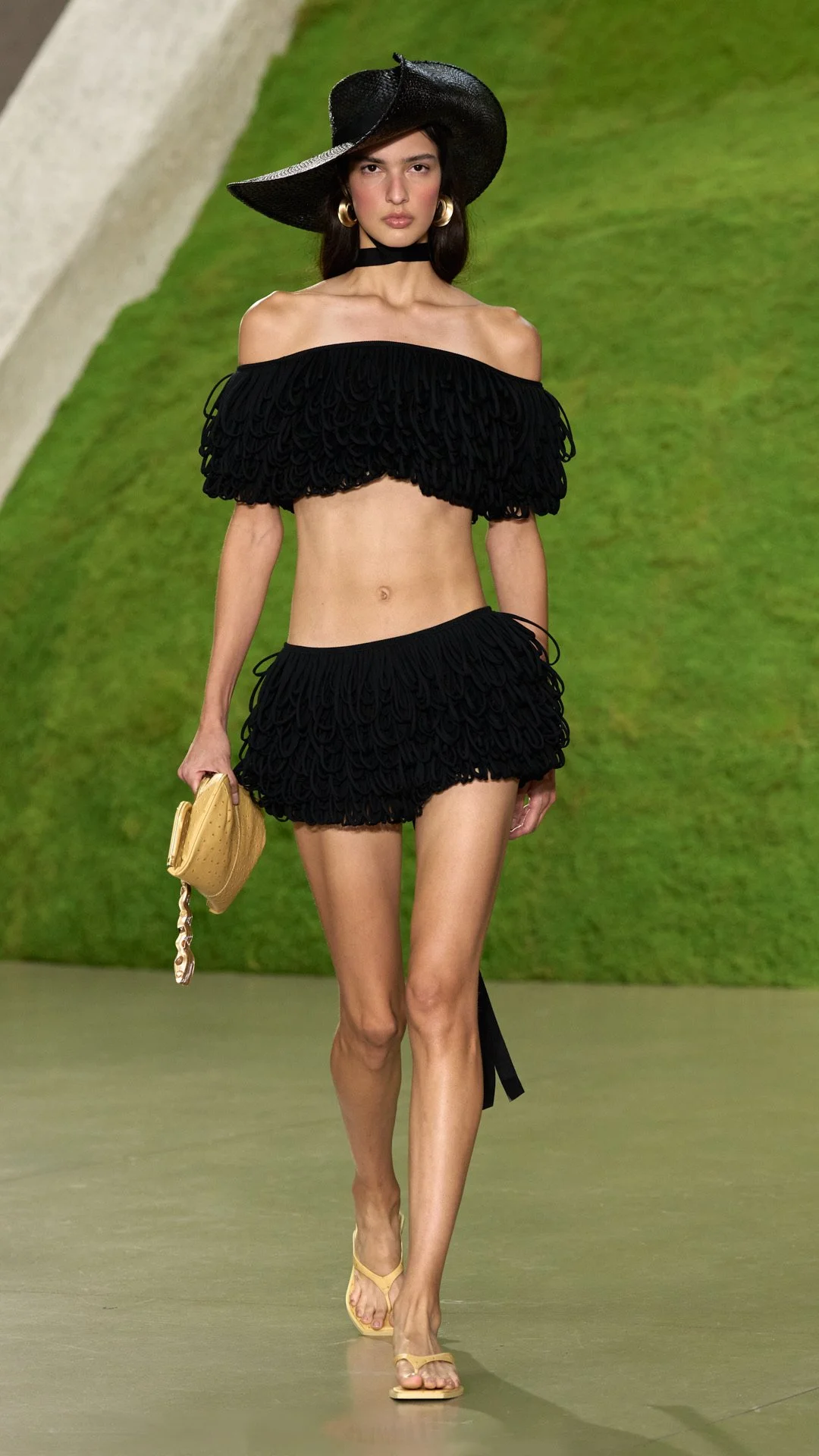
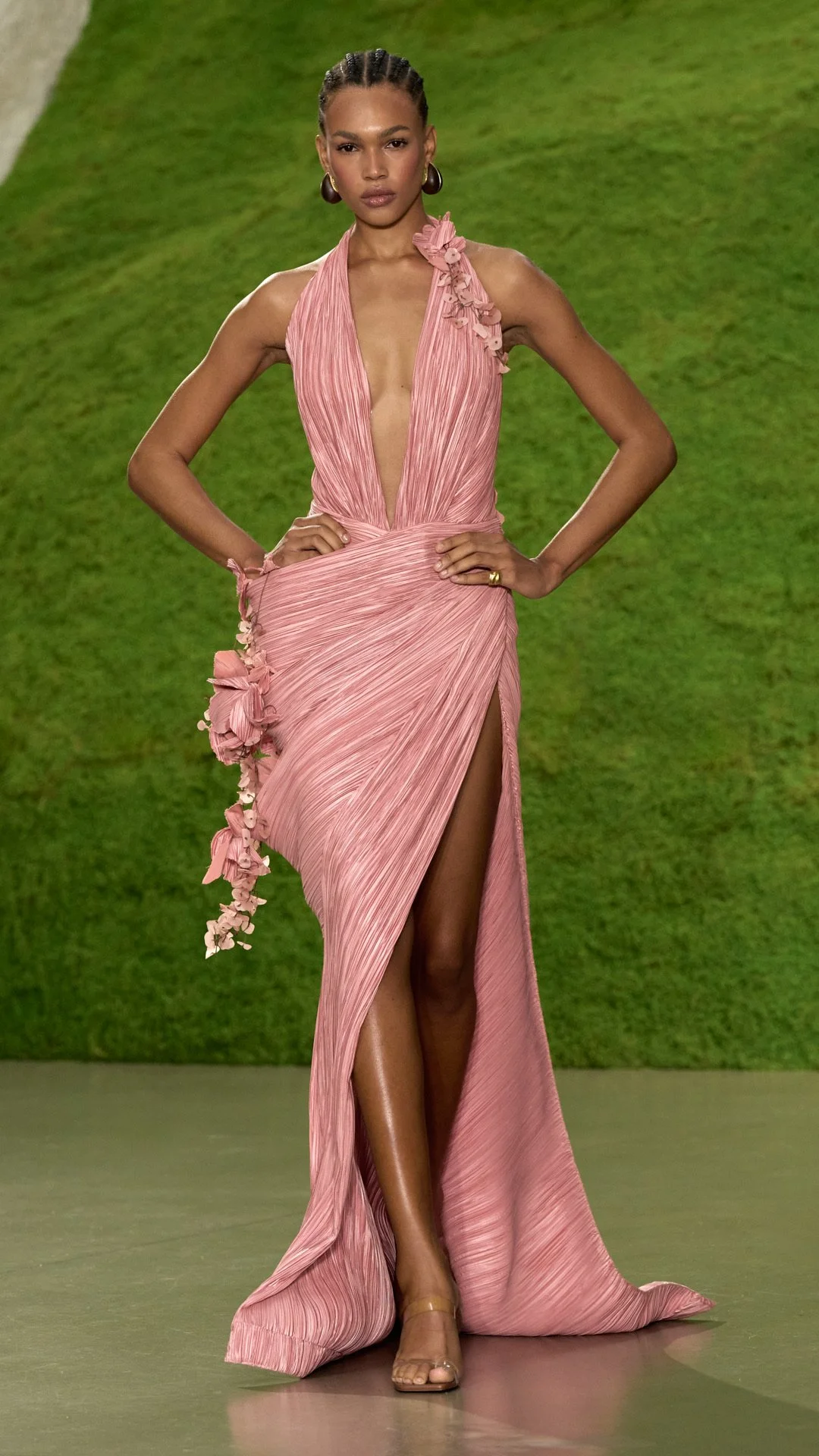
Once the collection moved beyond its darker opening, the familiar Cult Gaia vocabulary returned — but with considerably more impact.
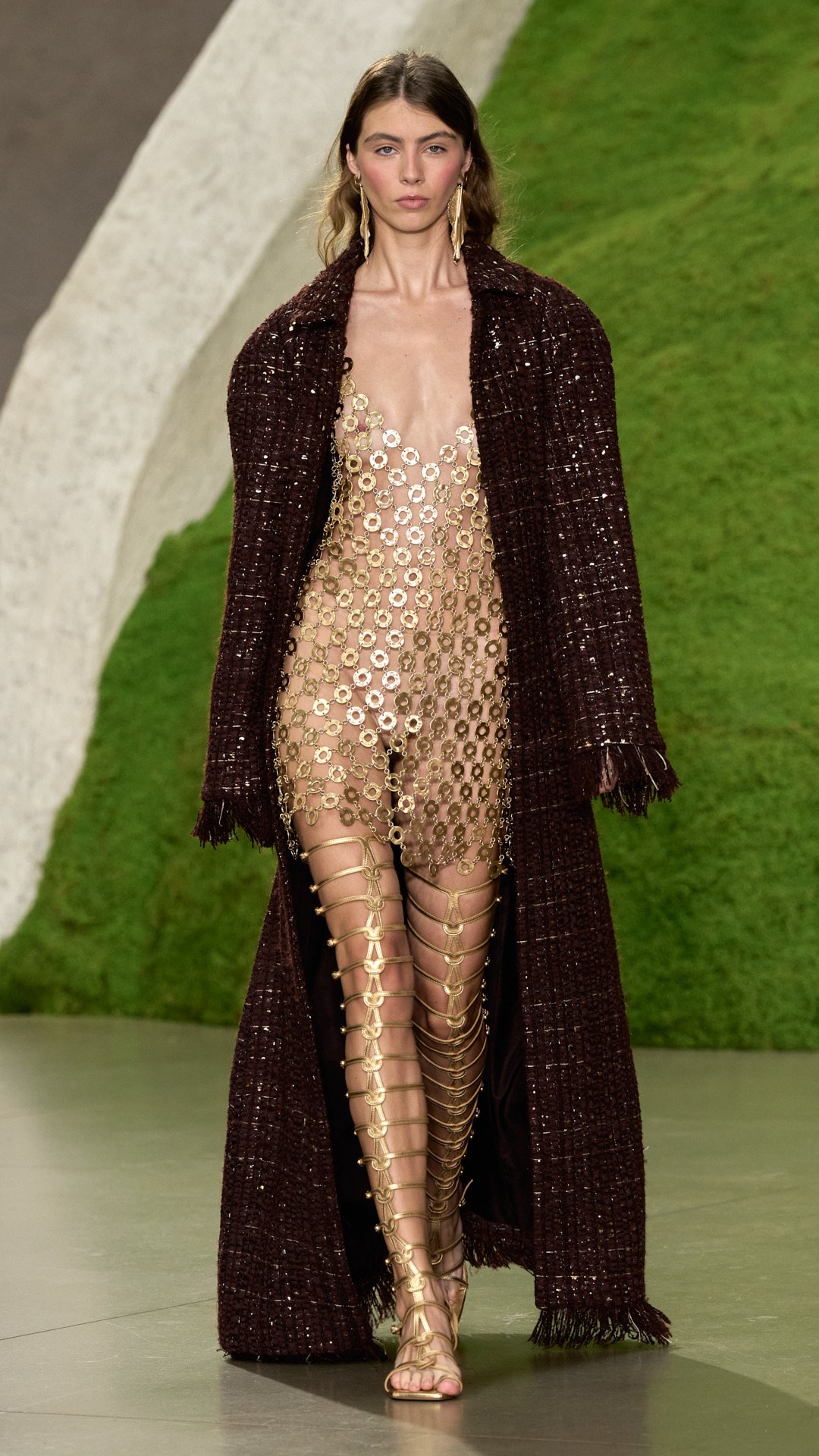
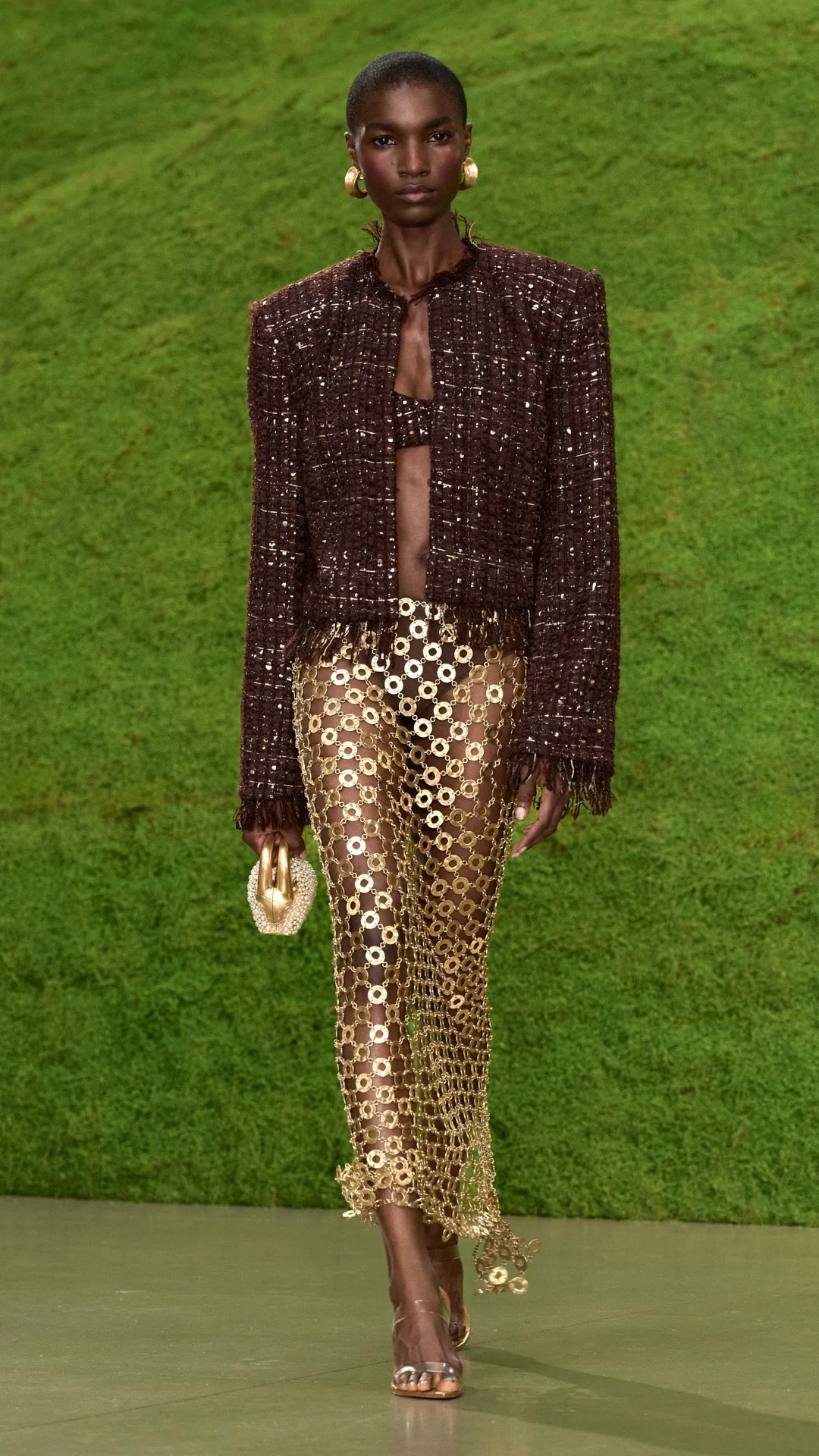
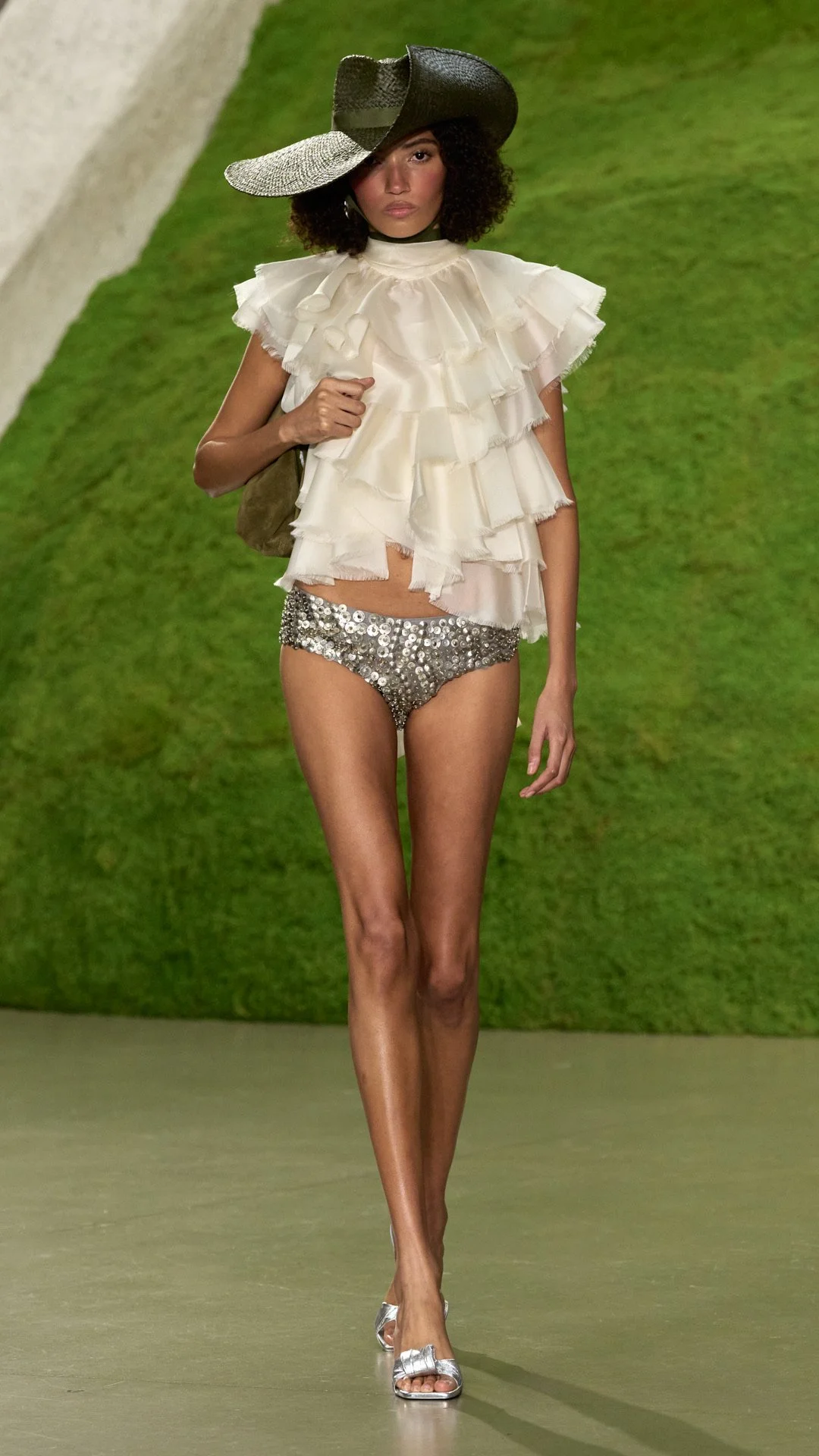
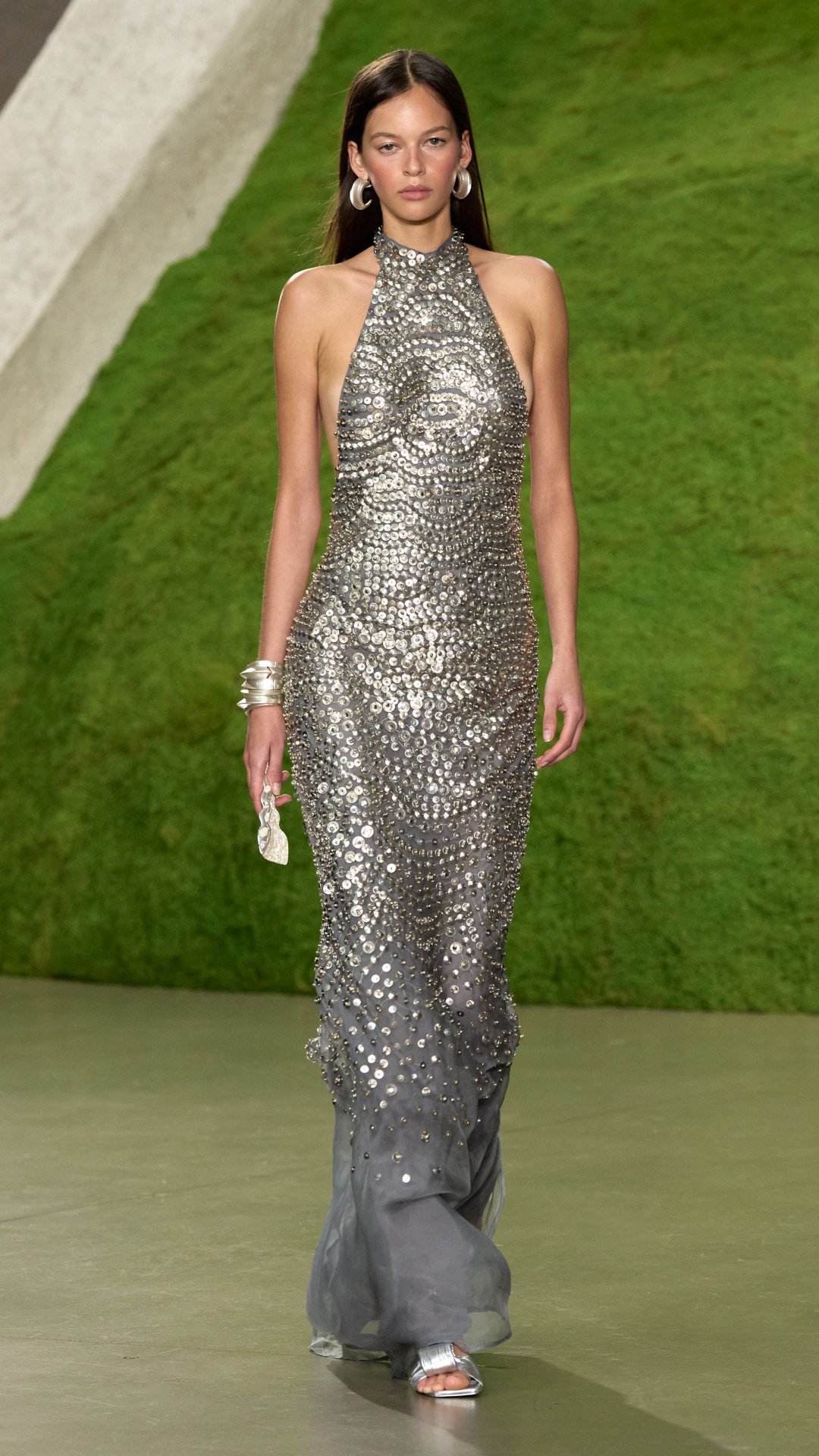
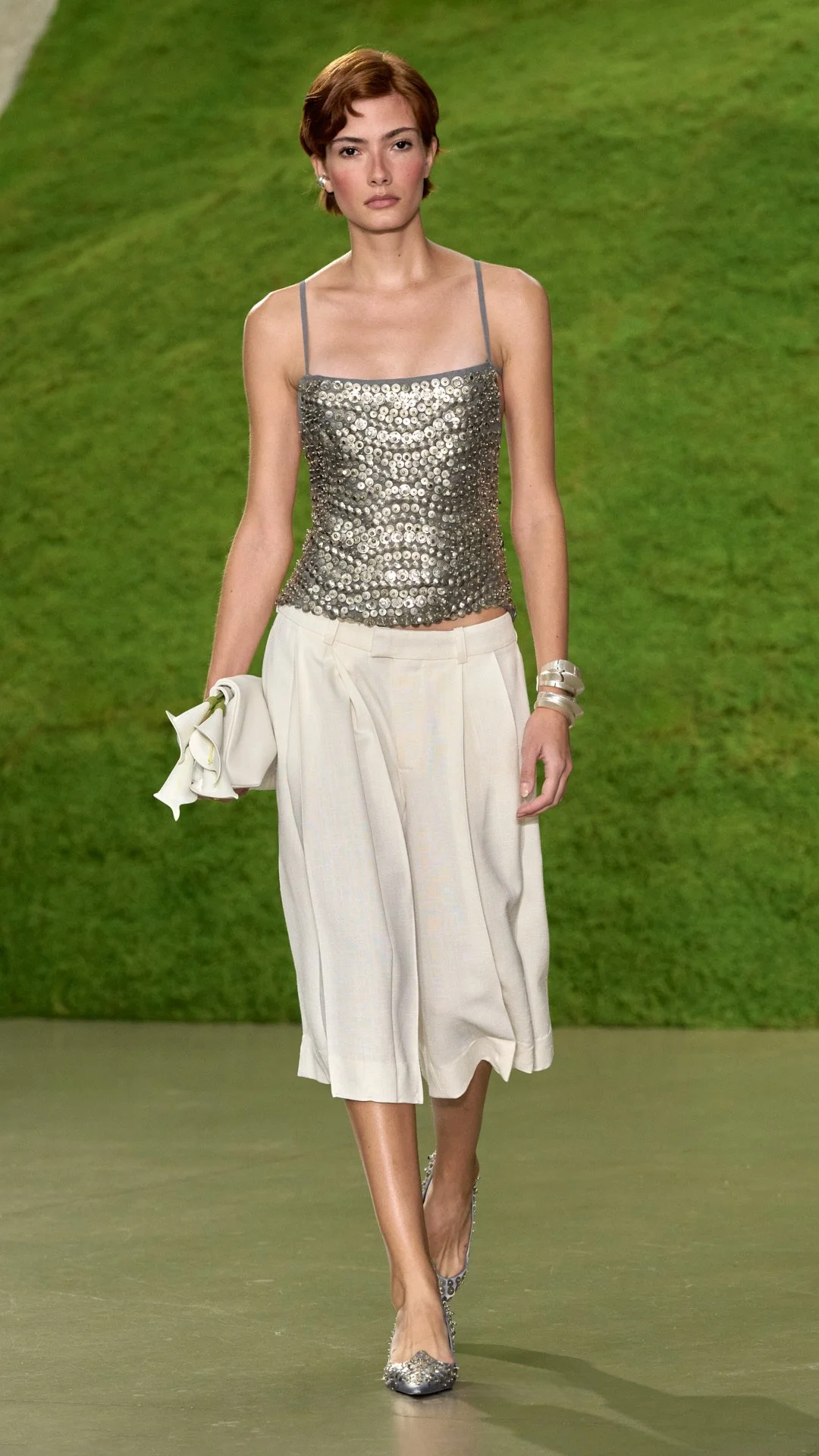
A golden chainmail skirt was constructed from countless small metal rings, creating a garment that moved and sounded with every step. It had the drama of jewellery but functioned as clothing, which is exactly the sort of territory Cult Gaia understands particularly well.
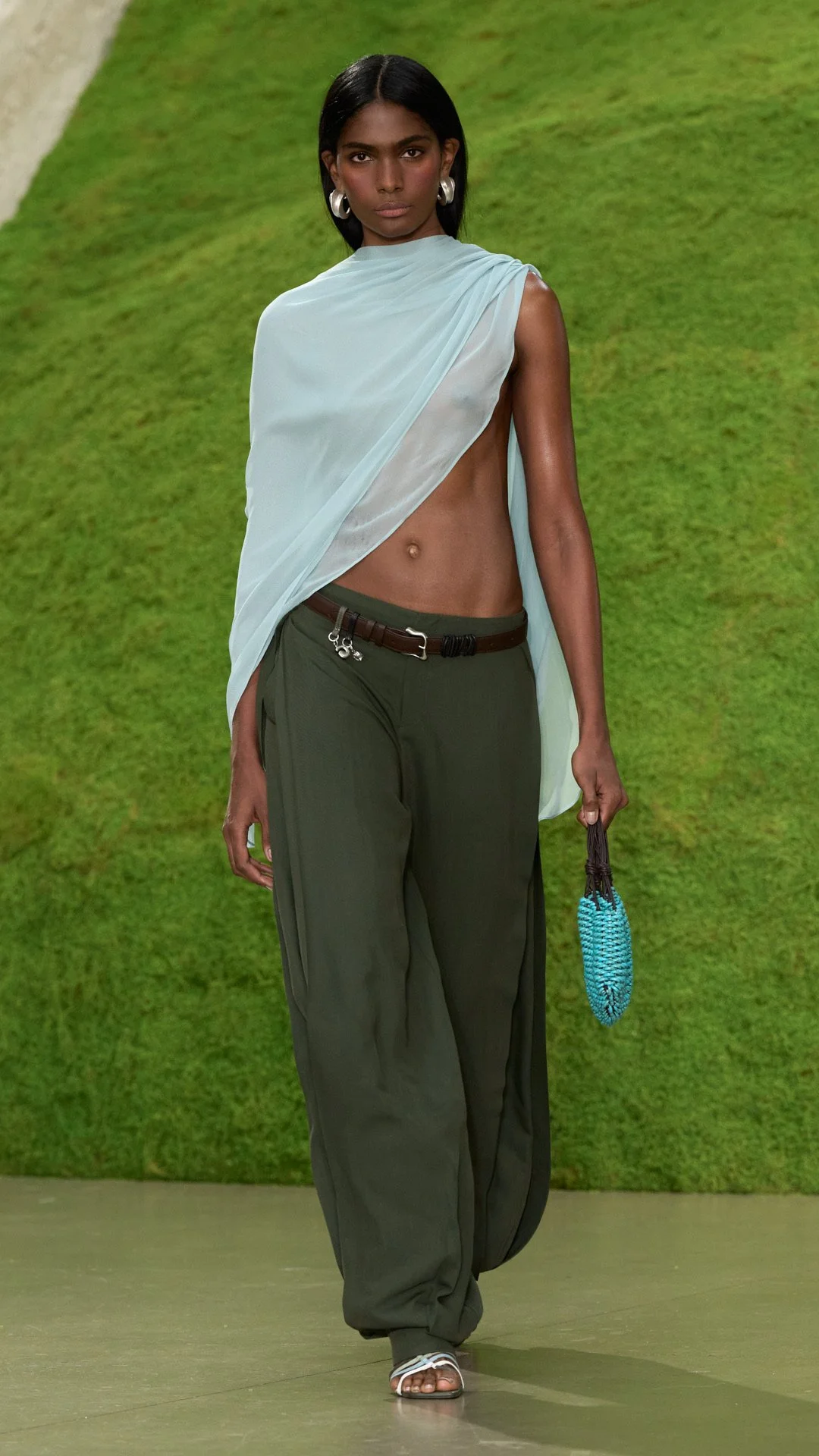
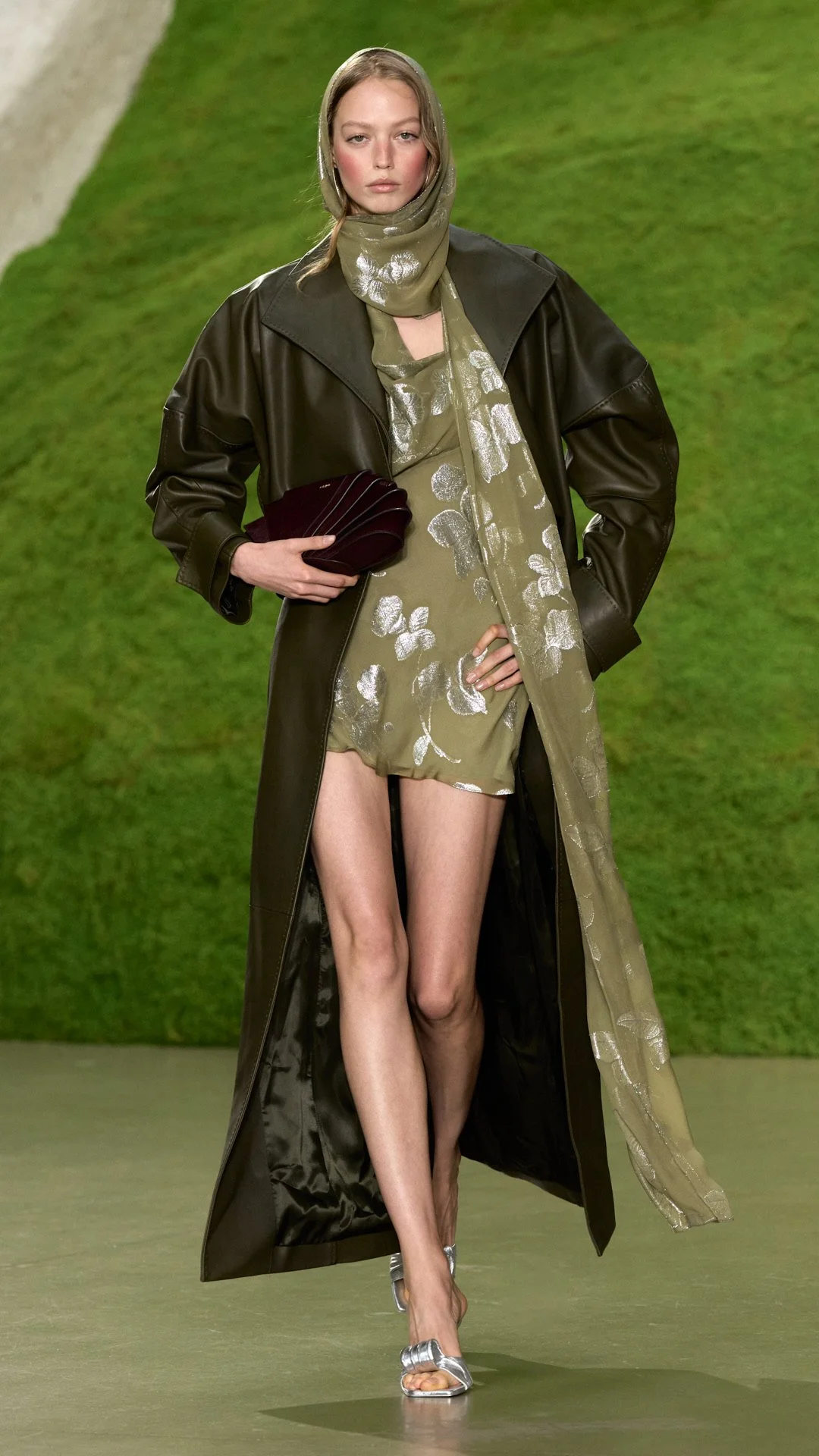
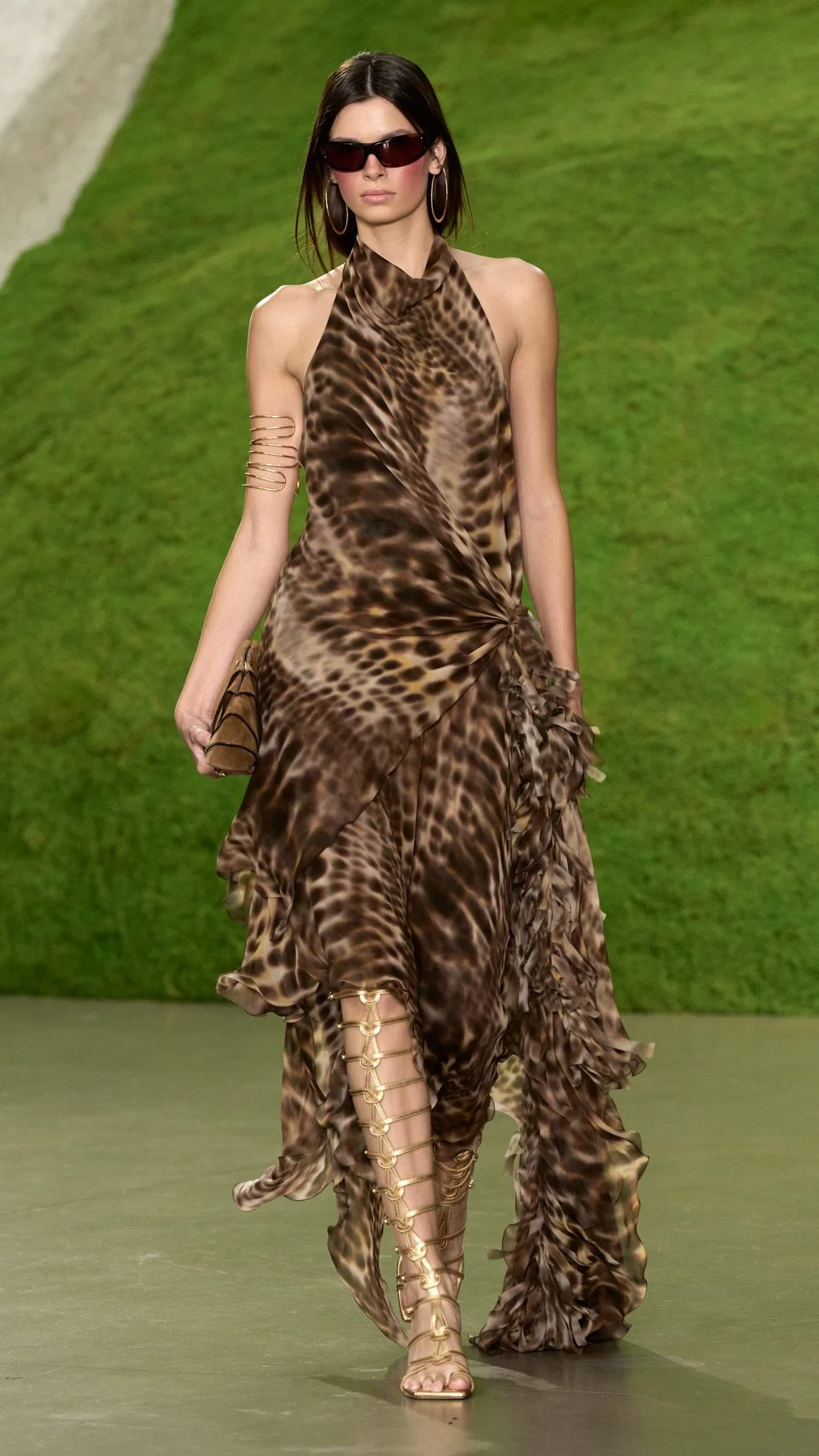
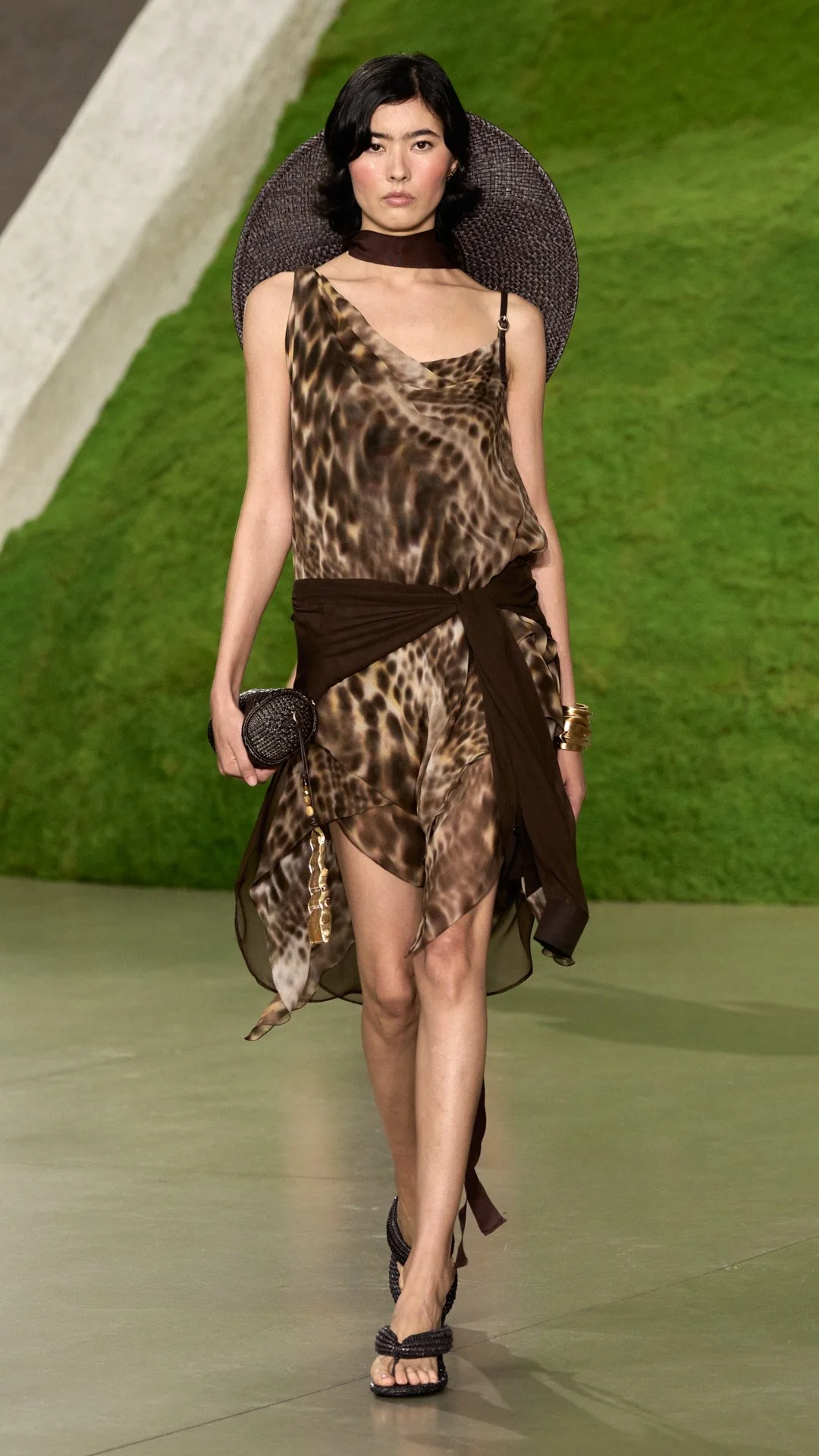
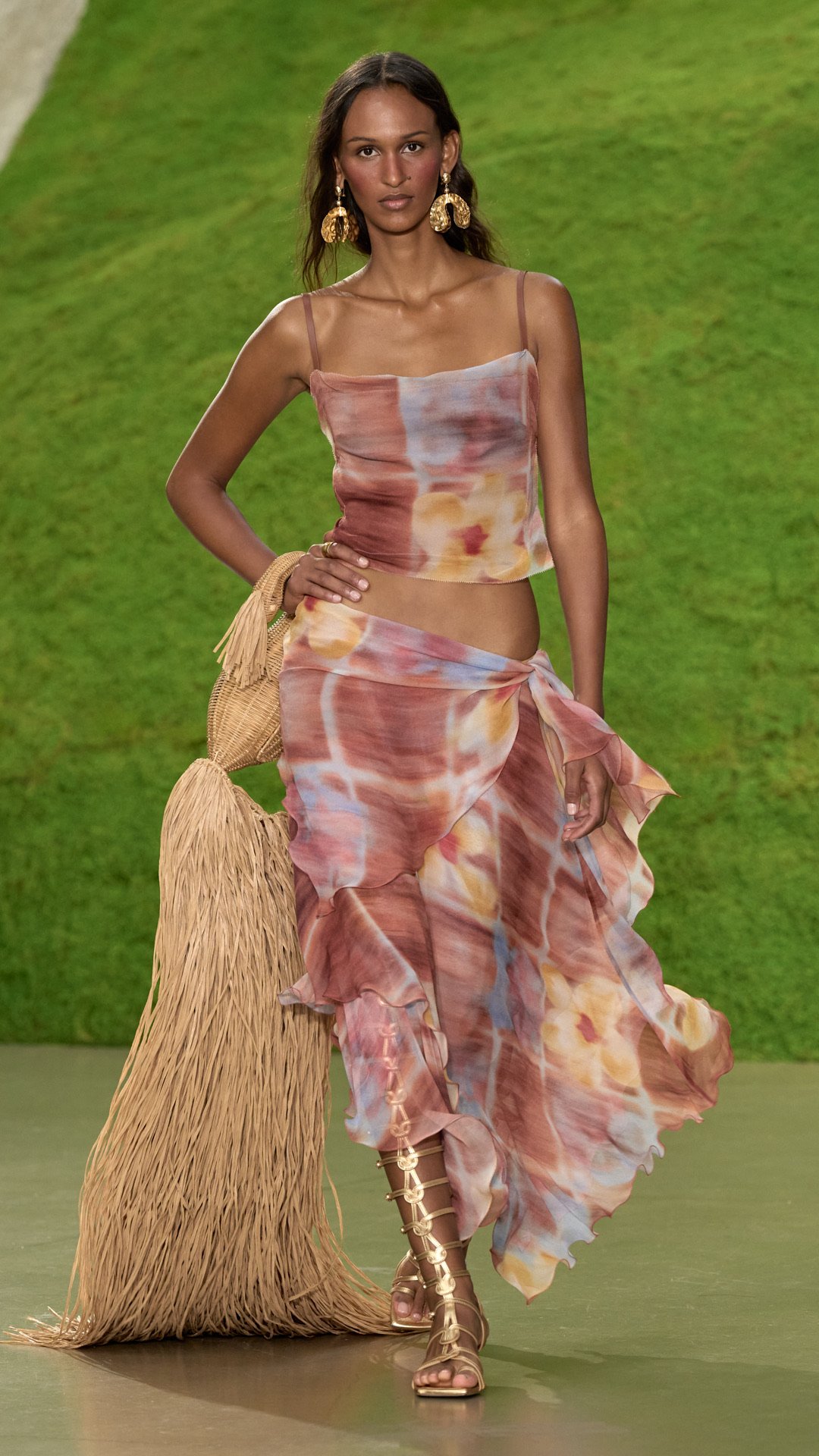
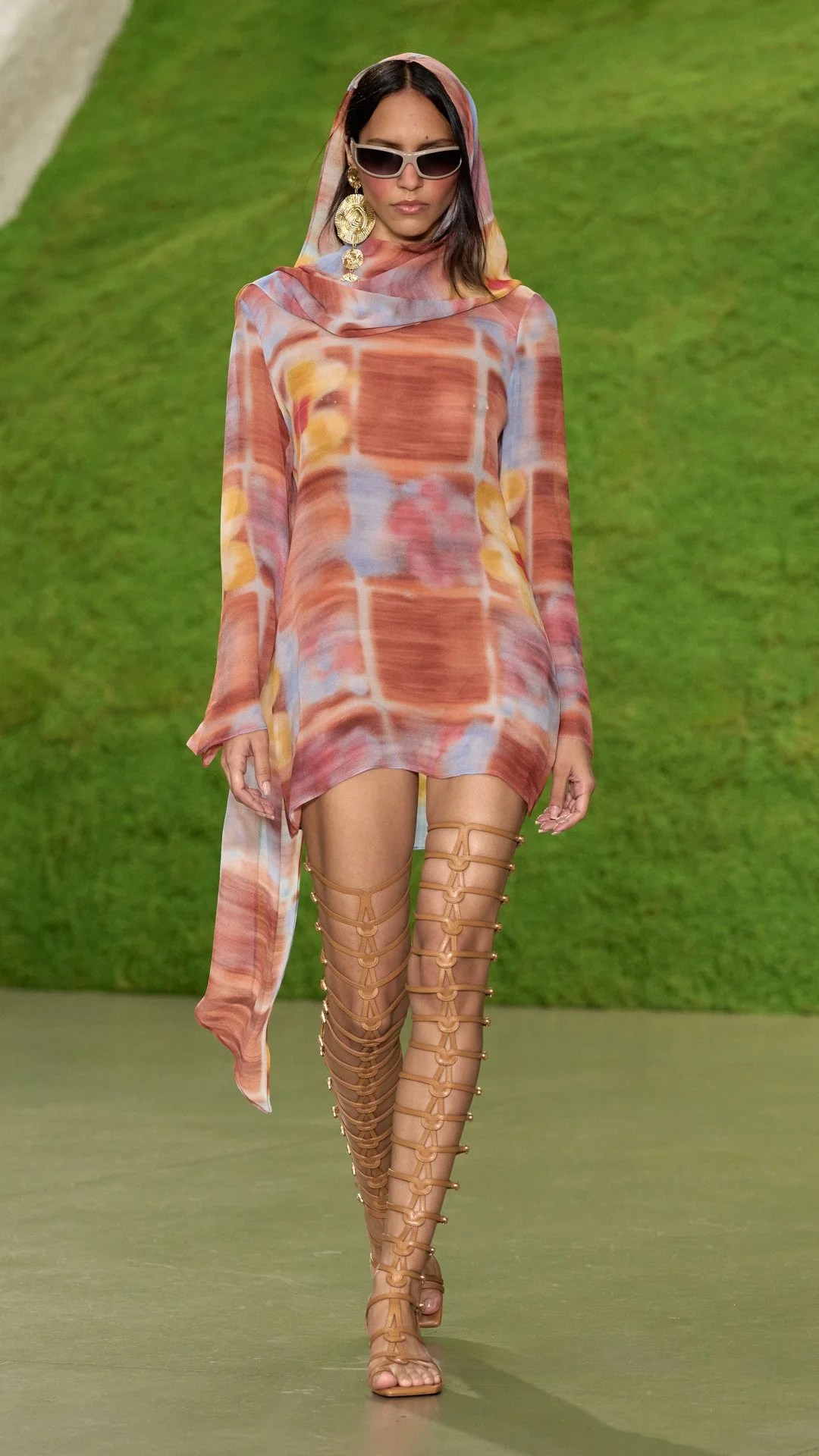
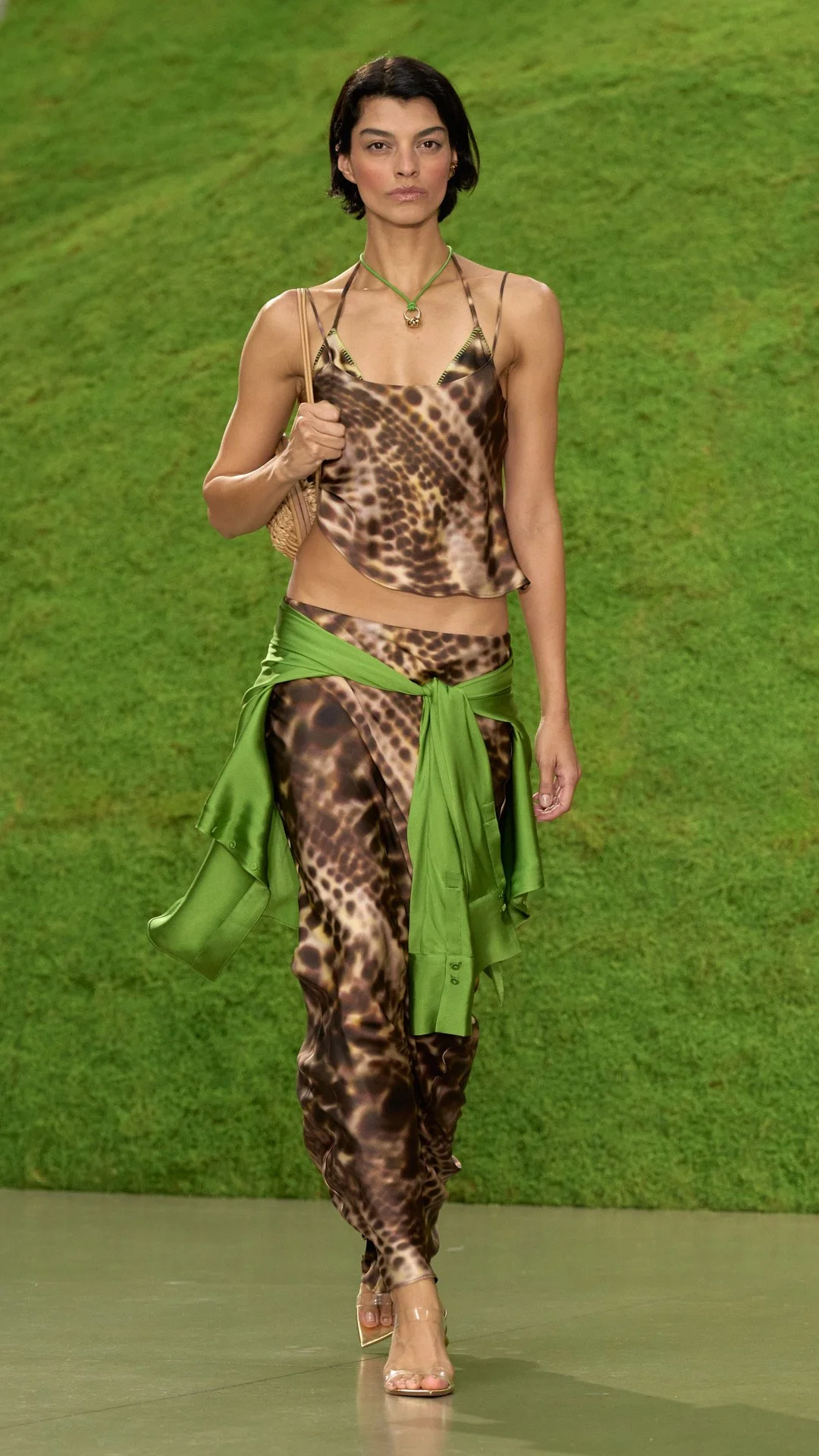
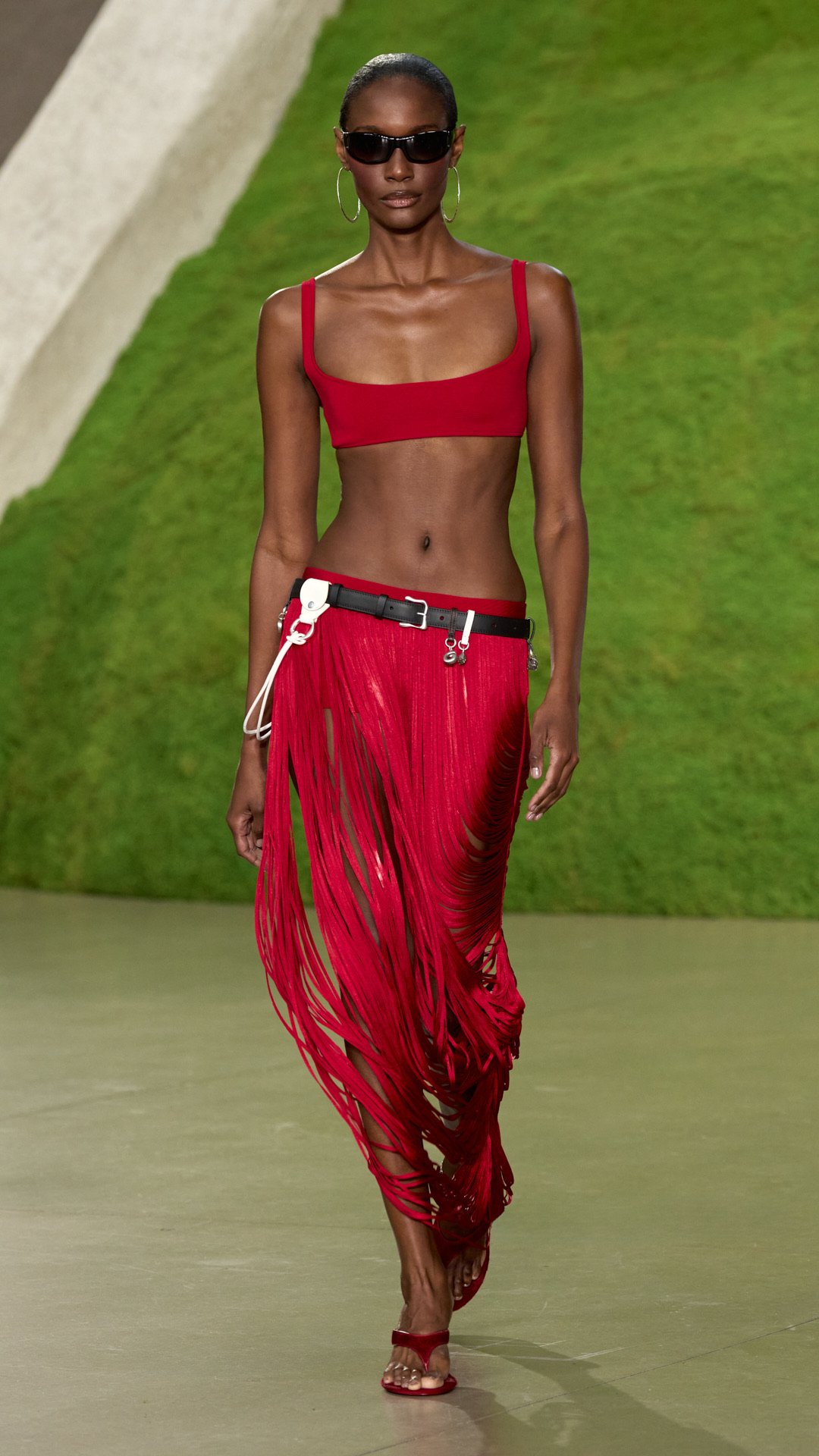
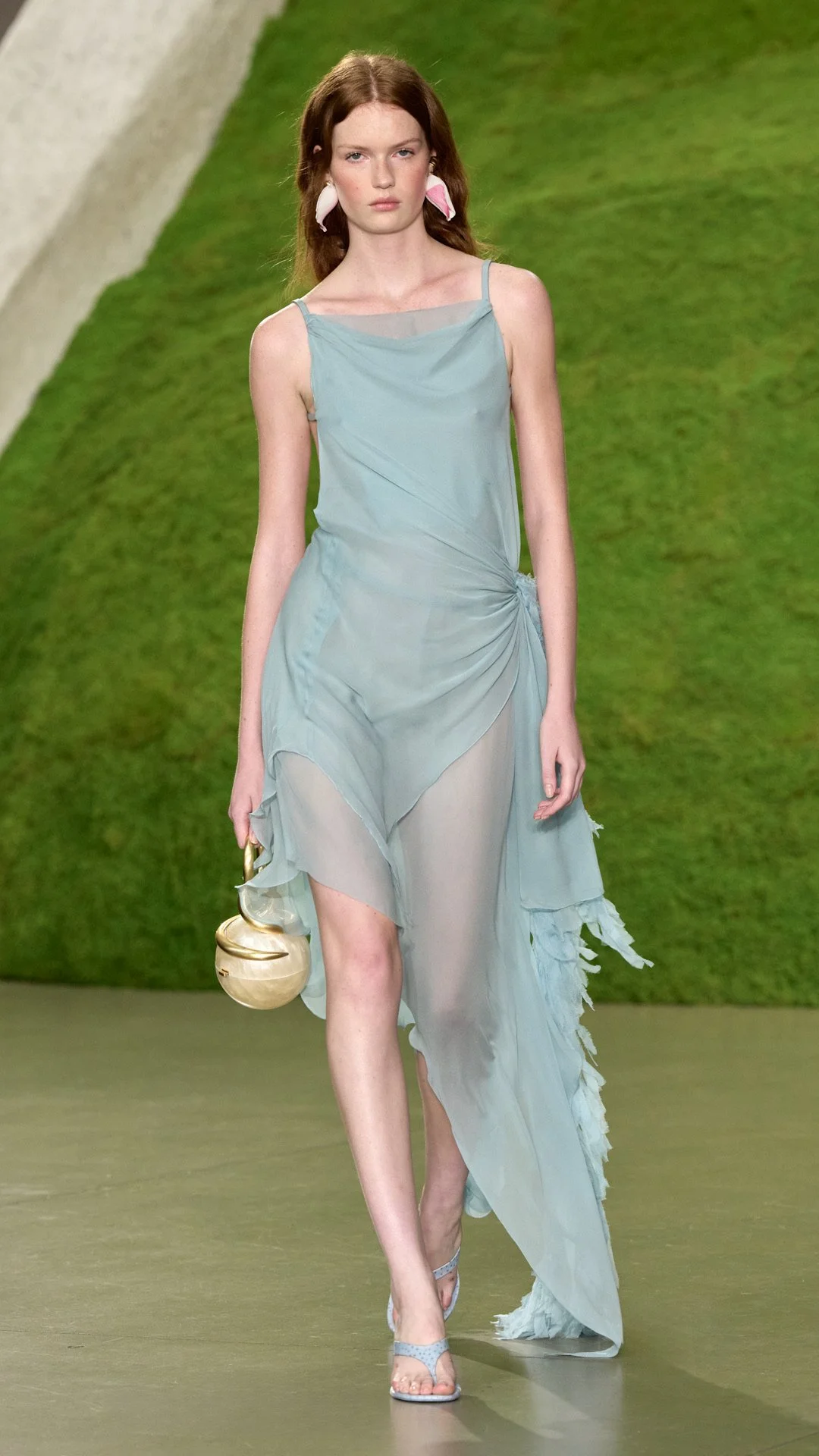
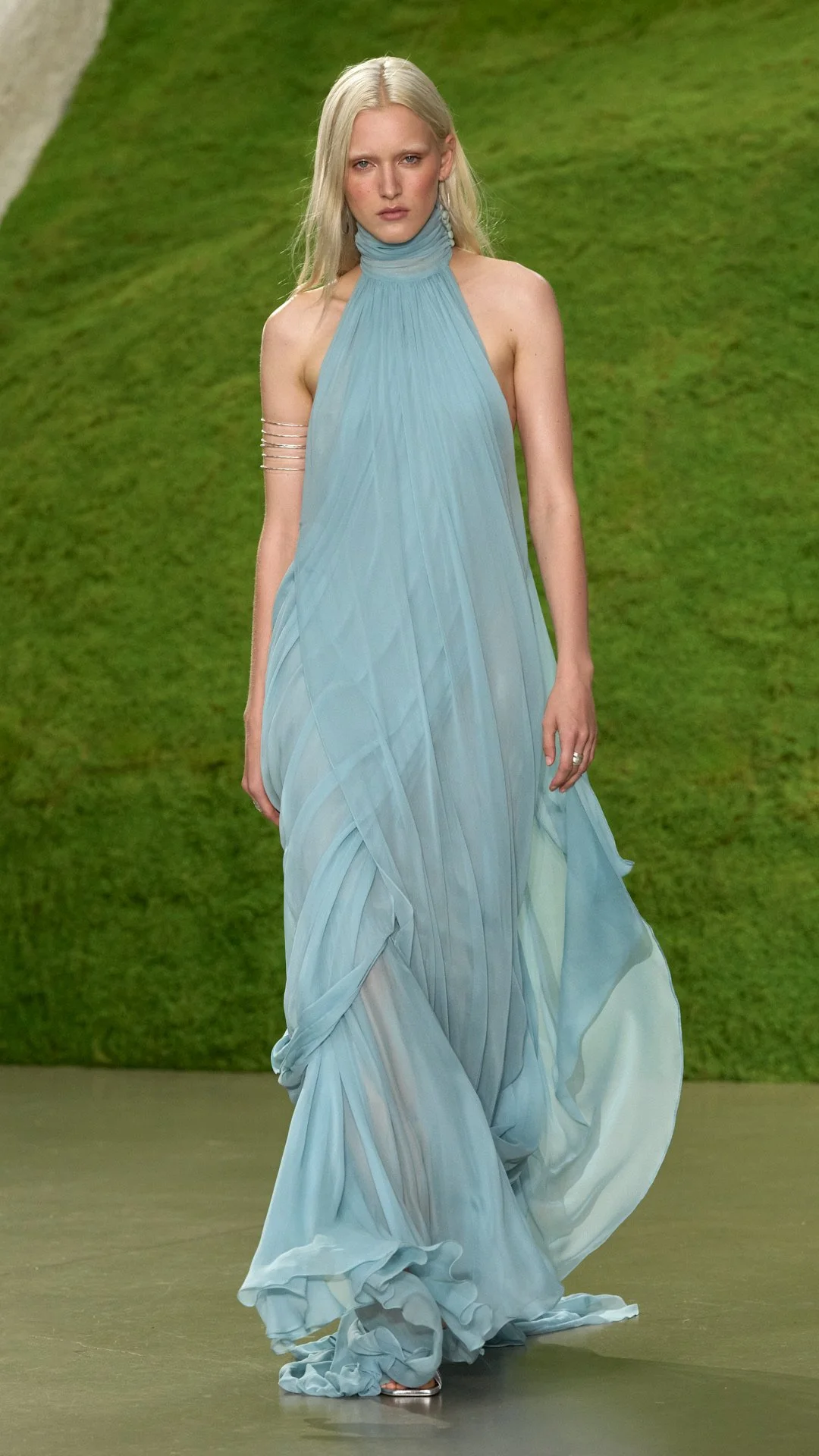
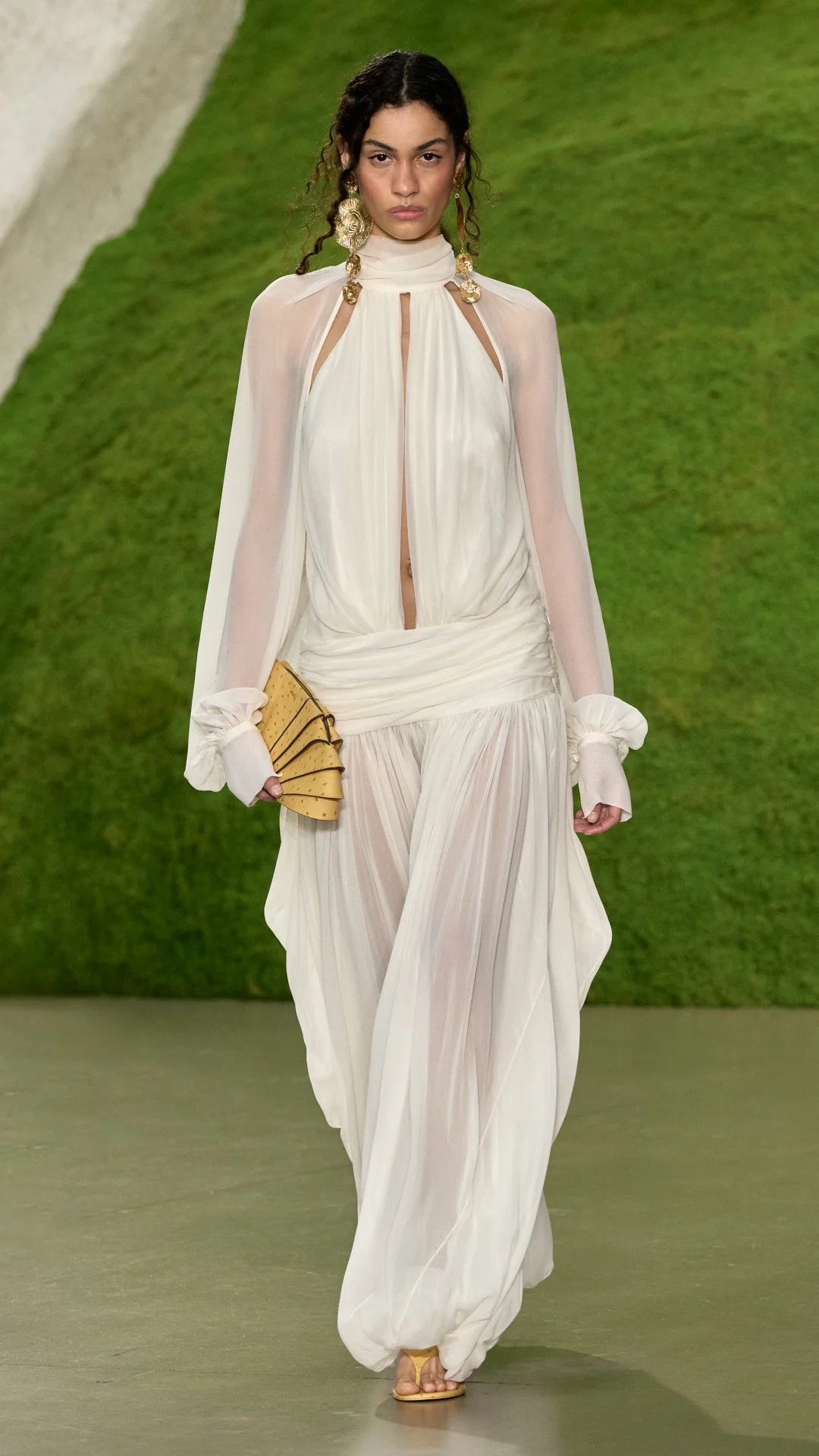
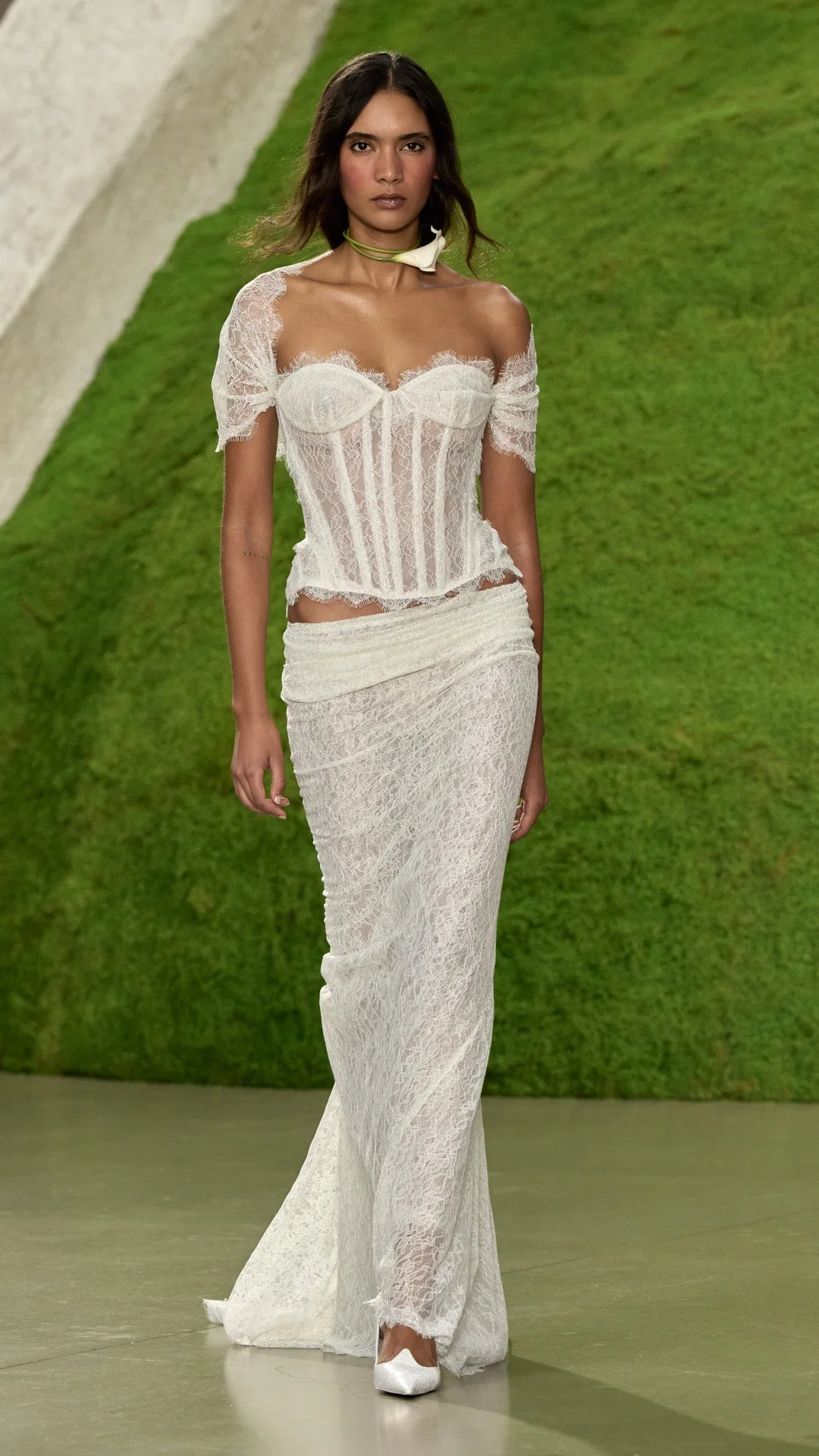
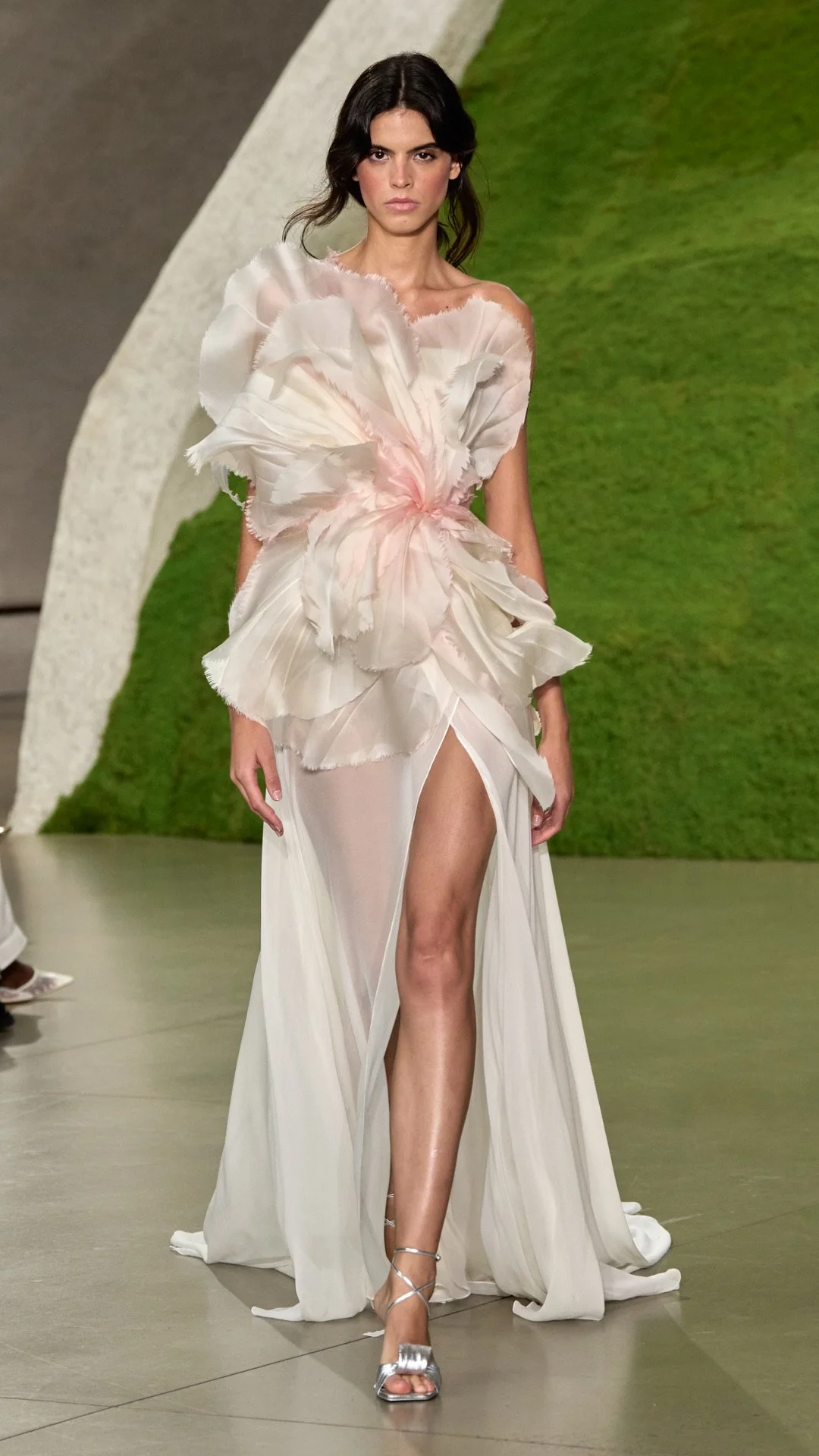
Elsewhere, sheer chiffon, floral motifs and fluid separates brought back the idea of the Cult Gaia holiday wardrobe. A translucent floral two-piece looked destined for a Mediterranean summer, while gold gladiator sandals pushed the styling into more theatrical territory.
There is something refreshing about the fact that Hekmat did not attempt to make the collection too tasteful.
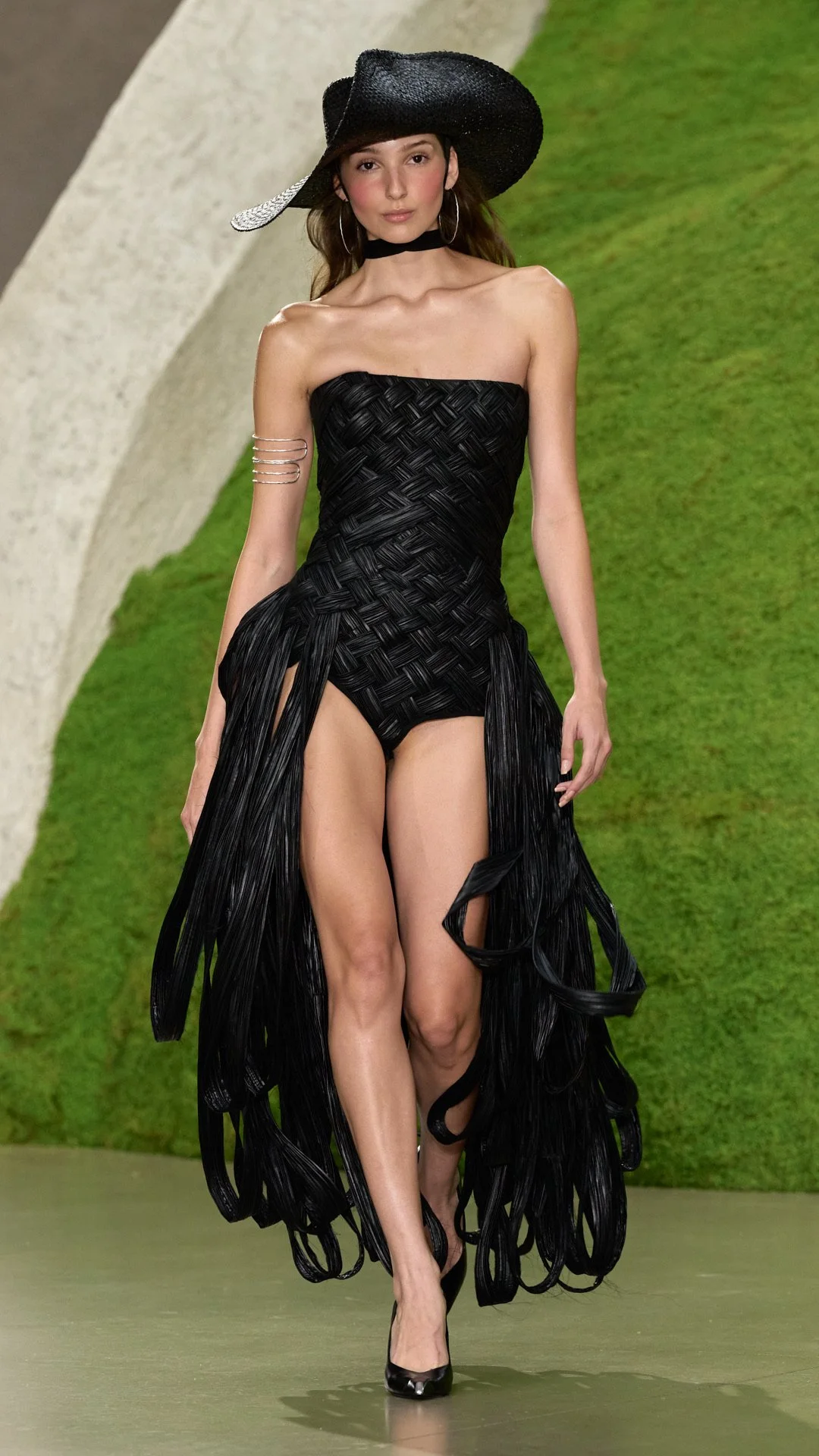
Cult Gaia works best when it allows itself to be a little excessive. The gold, the transparency, the movement and the sculptural accessories are part of what makes the label recognisable. The difference this season is that those elements sit within a more considered narrative.
The Feather Dresses That Aren't Feathers
The finale delivered the collection's most memorable illusion.
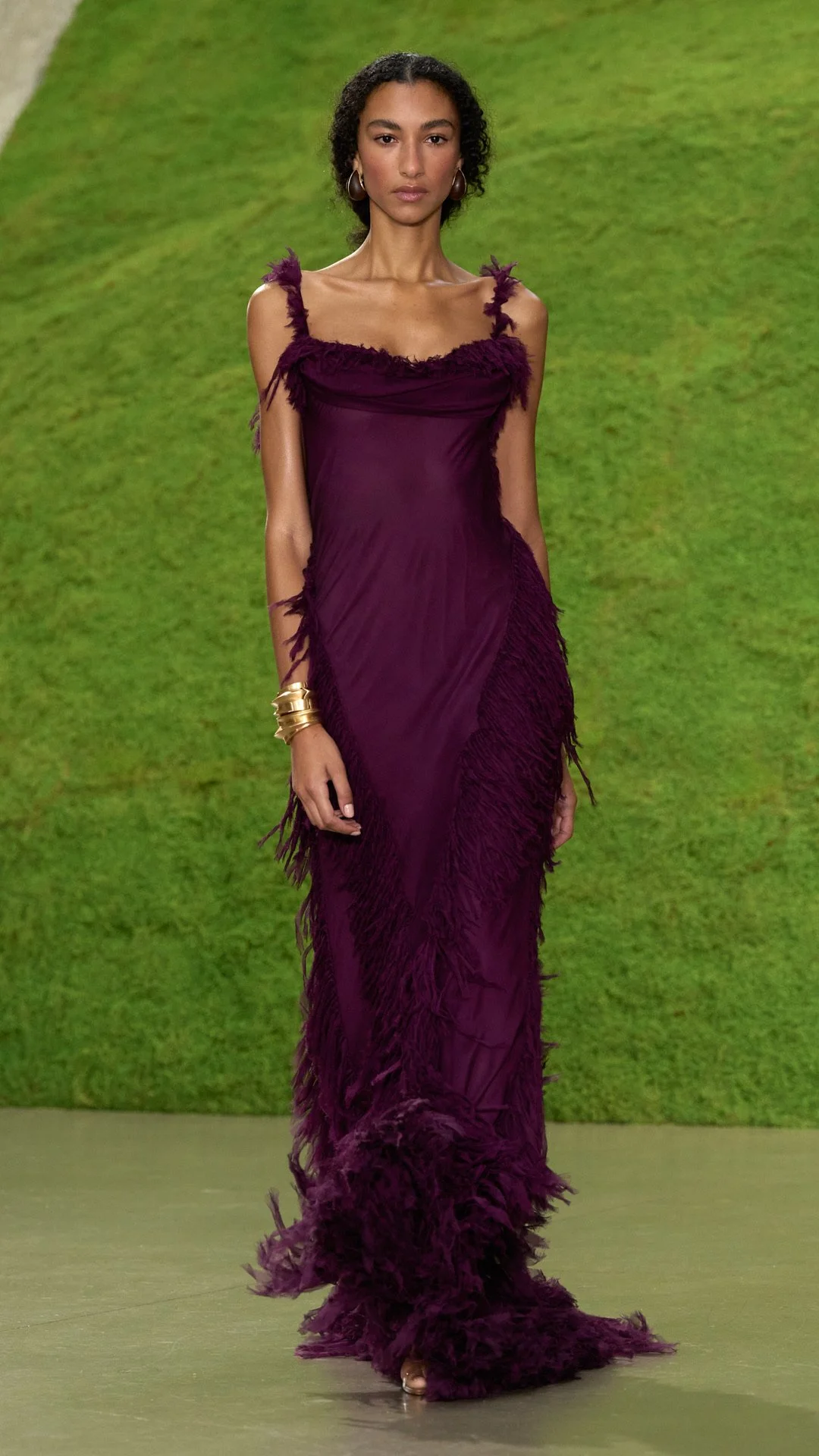
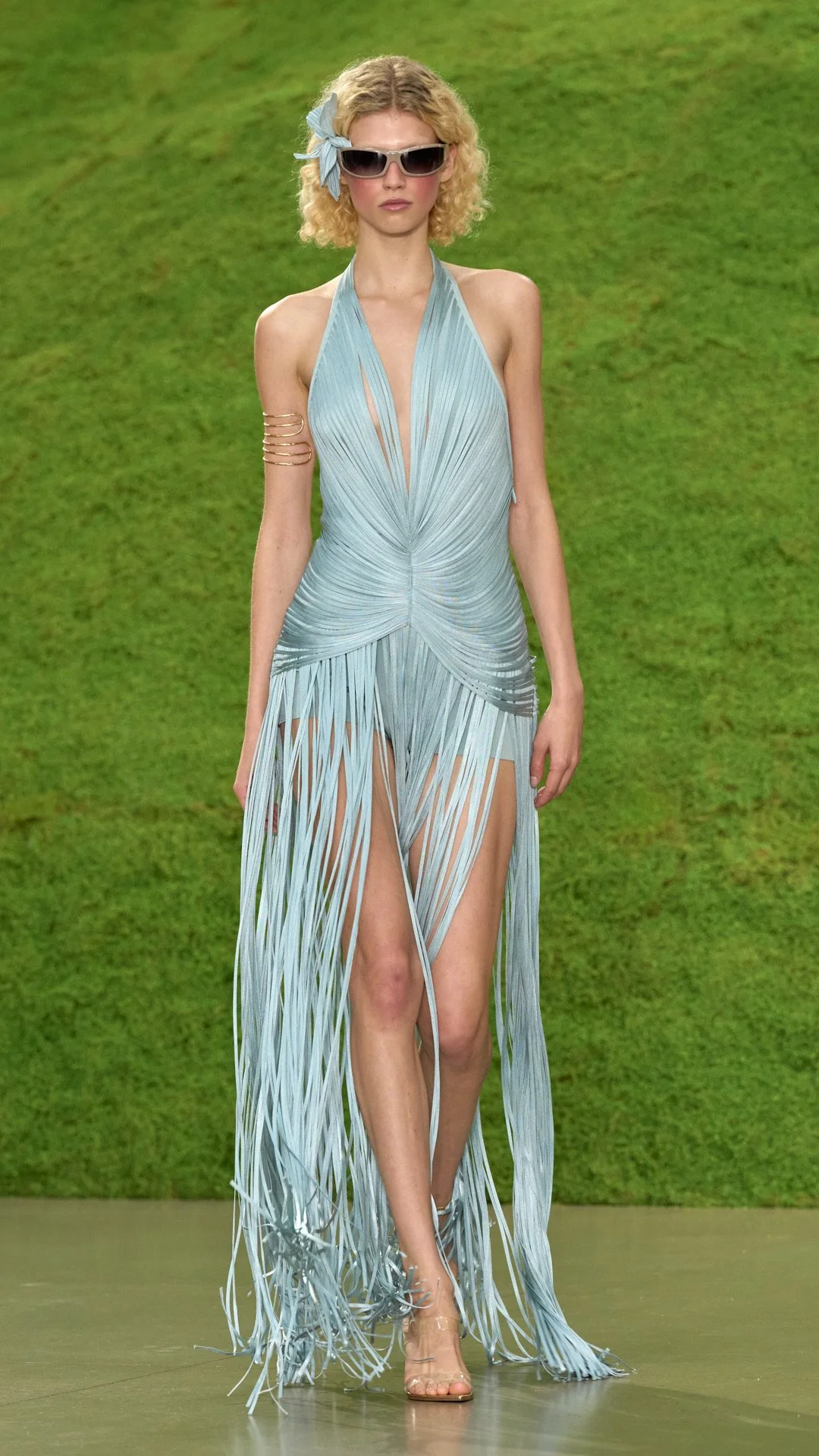
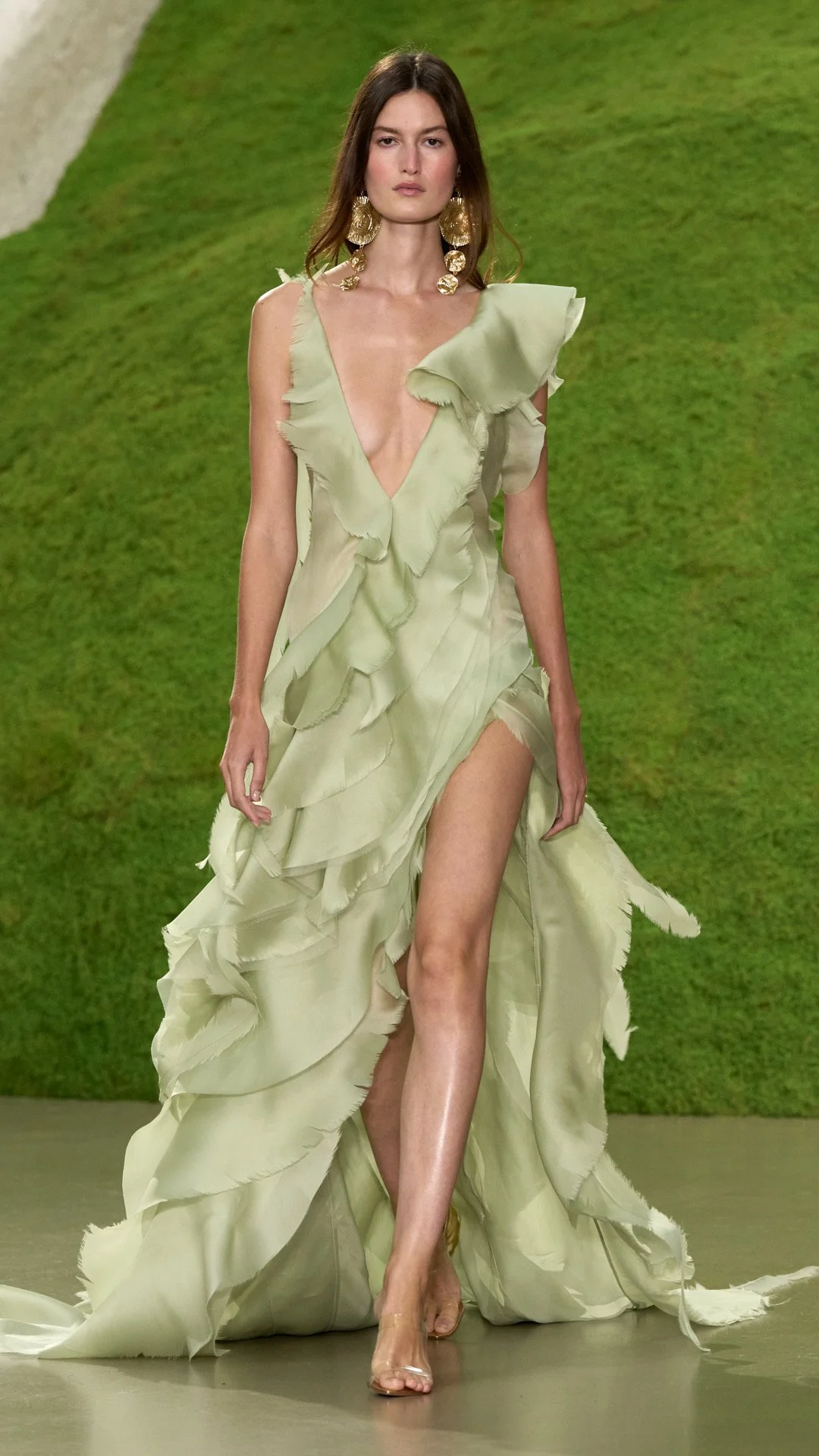
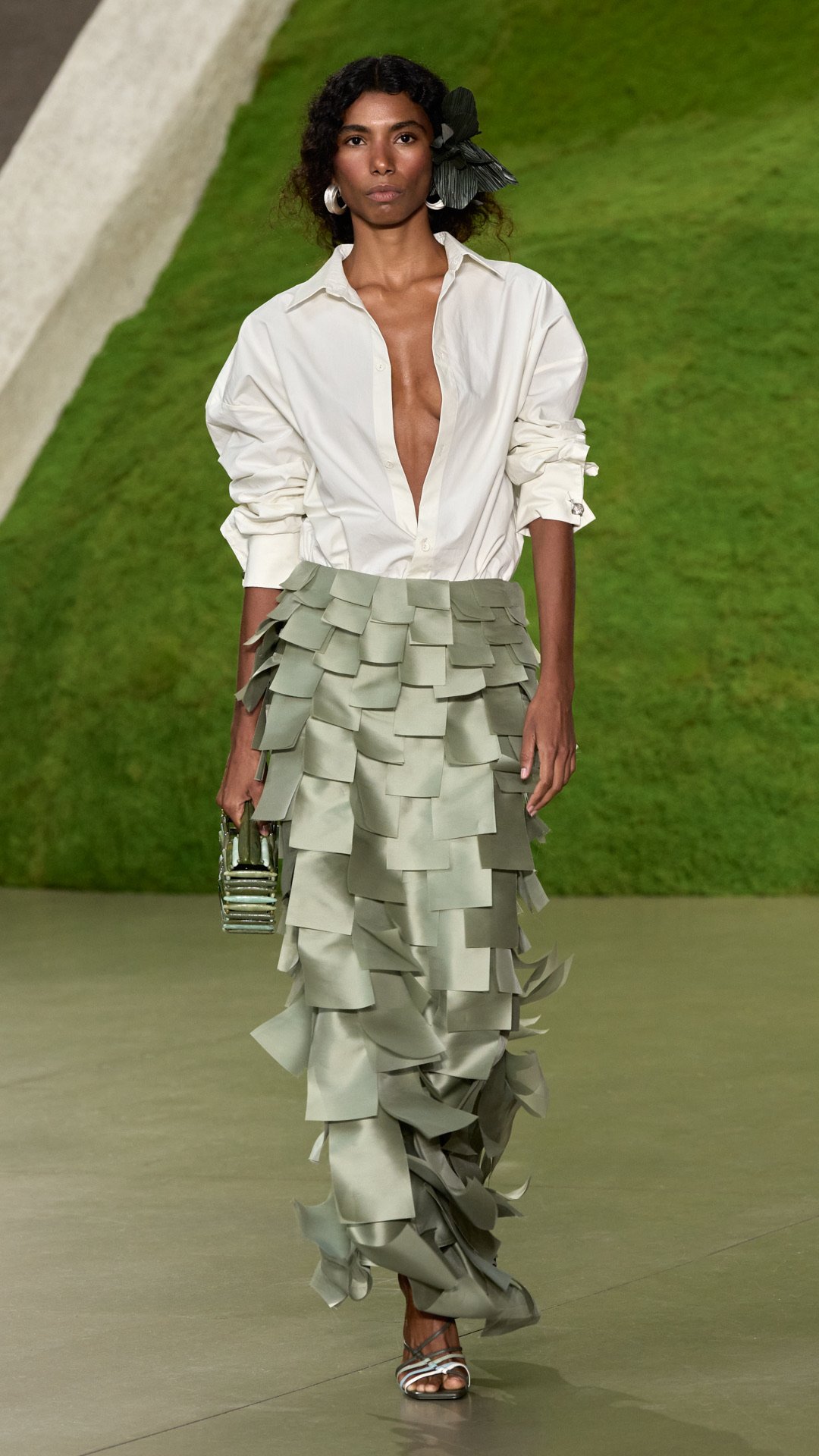
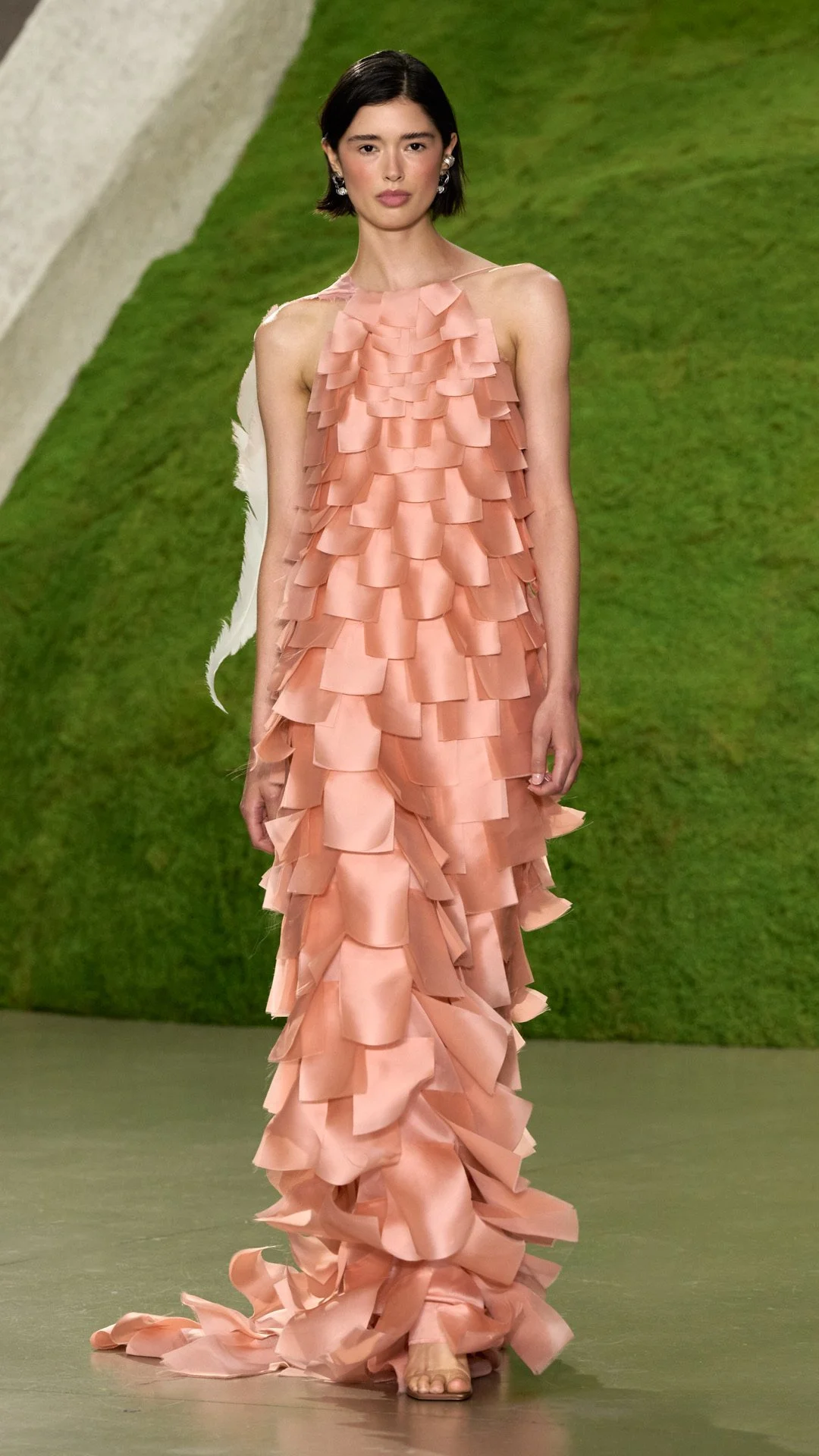
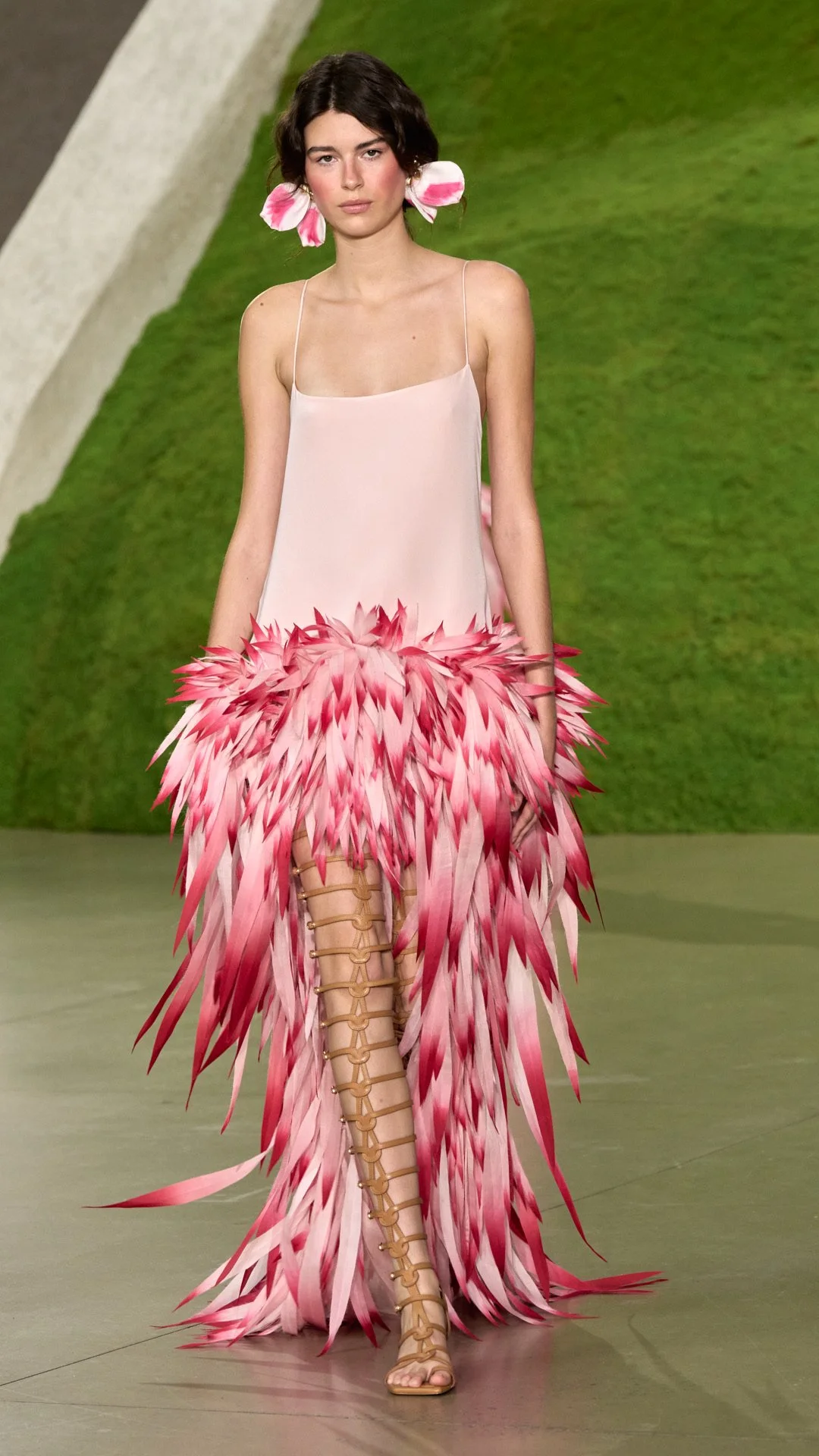
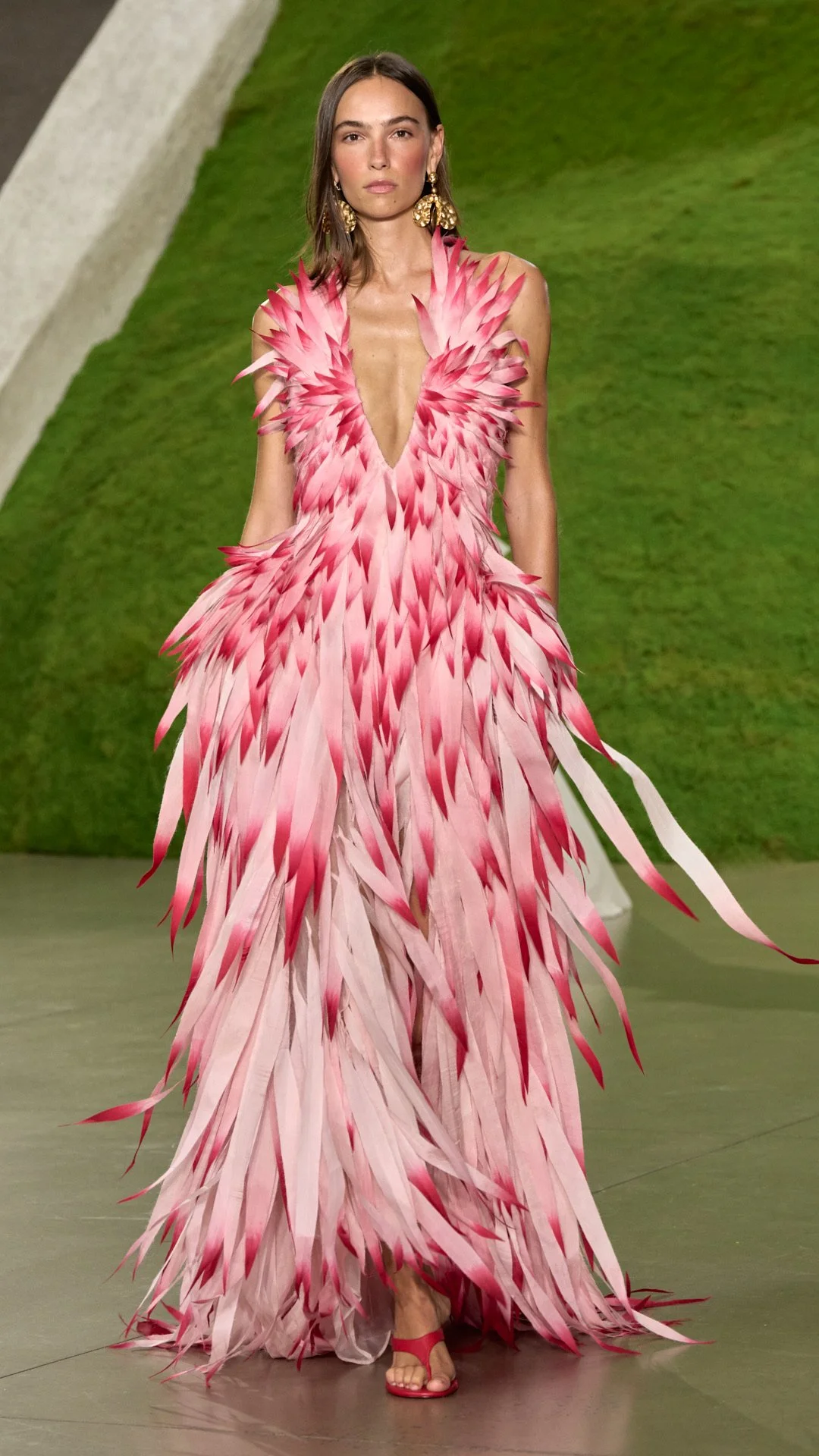
Several hand-painted silk gowns appeared to be covered in long, soft feathers. Look closer, however, and the effect was created through strips of silk that had been dip-dyed and manipulated to produce the appearance of feathers.
It is exactly the sort of fashion trick that works particularly well for Cult Gaia: instantly recognisable from a distance, but considerably more interesting once you understand how it was made.
As the models moved, the fabric separated and shifted, making the illusion even more convincing. The gowns had the drama of feathered eveningwear without actually relying on feathers, and their movement gave them an almost floating quality.
They also felt like an indication of where Cult Gaia is heading.
These were not simply spectacular dresses designed to perform well in photographs. The construction itself was the spectacle.
A Finale About Celebration
Then came the flowers.
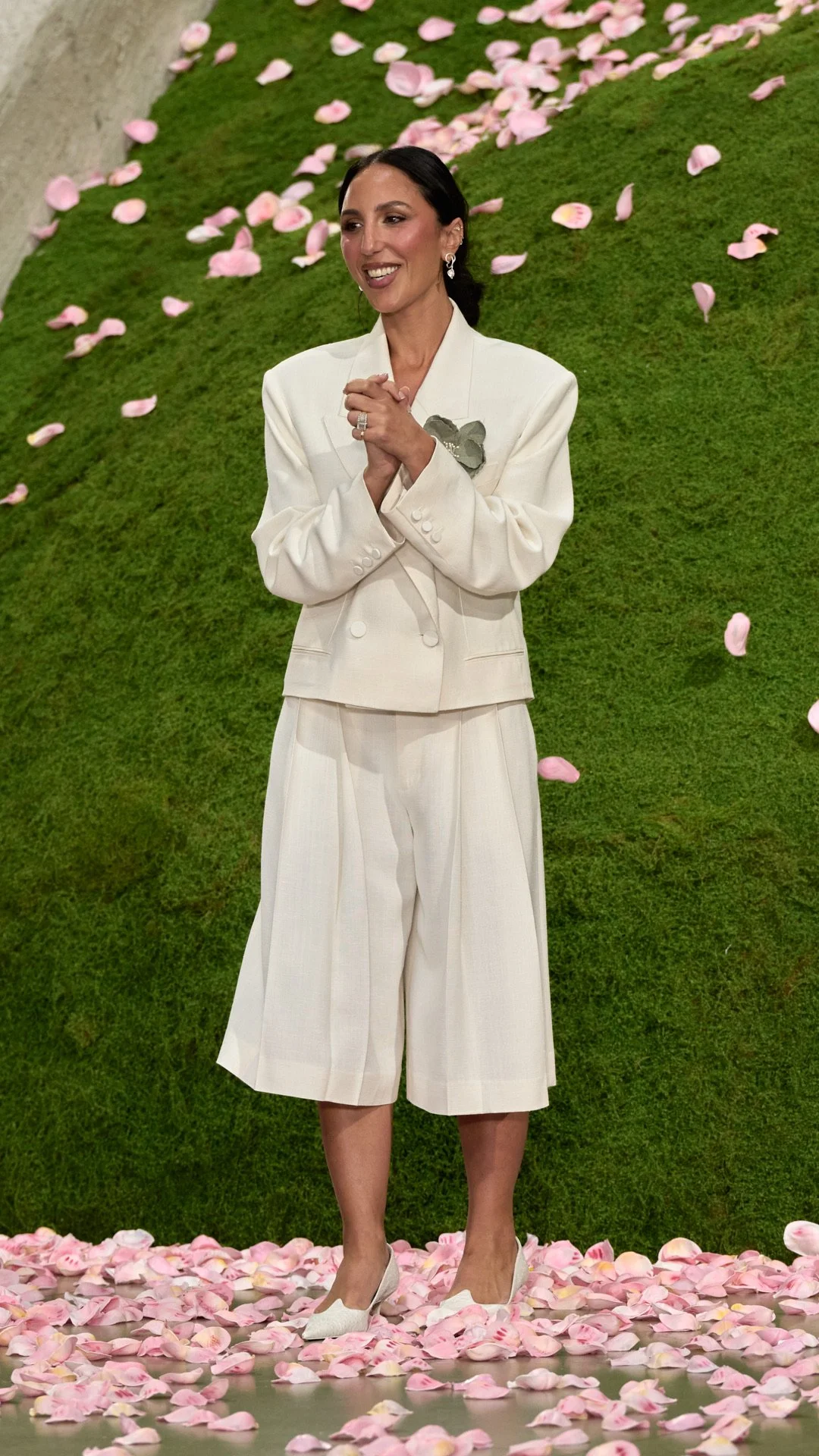
As the final looks appeared, real pink petals fell from above, covering the runway and the audience. It was undeniably theatrical, but in the context of the collection, the gesture made sense.
The show had started in darkness and restraint. It ended in colour, movement and something approaching joy.
That progression gave the collection an emotional structure that many runway shows don't necessarily need, but which here made the clothes feel more connected to one another.
“Behesht” was not an attempt to make grief fashionable. It was an exploration of what happens when grief begins to change shape — when memory remains, but life becomes lighter again.
A More Grown-Up Cult Gaia
What makes Spring 2027 worth paying attention to is not simply the feather illusion or the gold chainmail. Cult Gaia has always been capable of producing the kind of pieces that stop a runway show in its tracks.
The more interesting development is happening underneath those obvious moments.
Tailoring is becoming more important. Menswear is gaining its own identity. Eveningwear feels more sophisticated. And the clothes increasingly rely on construction, fabric manipulation and proportion rather than simply surface decoration.
At the same time, Hekmat has not lost the elements that made Cult Gaia recognisable in the first place. There is still the holiday fantasy, the sheer dressing, the gold, the sculpture and the sense that a woman wearing the clothes should be noticed when she enters a room.
That combination is probably the collection's biggest success.
Cult Gaia doesn't need to become minimalist or restrained to mature. It simply needs to give its excess more purpose.
Final Verdict
Cult Gaia Spring 2027 is a collection about transformation, but it is also a collection about the brand itself.
“Behesht” begins with grief and gradually moves towards celebration, translating that emotional journey into darker tailoring, fluid plissé, metallic chainmail, sheer florals and increasingly elaborate eveningwear. The final silk gowns, designed to look like feathers, provided the most memorable visual statement, while the falling pink petals brought the collection's movement from darkness to light to a theatrical close.
For Cult Gaia, the significance lies in what happens between those headline moments. Hekmat is building a more complete fashion proposition around a label that was once best known for its accessories and instantly recognisable vacation pieces.
The result still looks like Cult Gaia. It just feels as though there is more behind it now.
And perhaps that is the most fitting response to a collection about grief: not becoming something entirely different, but finding a new way to look at what was already there.