Luxury fashion has quietly expanded beyond wardrobes and runway schedules into something far more immersive: hospitality. What once lived in the margins of brand storytelling — a seasonal pop-up, a beach club activation, a branded spa has become one of the most persuasive expressions of modern luxury.
Across the Mediterranean, in Aspen, and increasingly in the Gulf, designer houses are no longer just dressing guests for the season. They are designing the environments in which the season is lived. Hotels have become canvases, beach clubs have become lookbooks, and travel itself has become a curated extension of a brand’s creative direction.
These are not traditional collaborations. They are fully formed atmospheres — temporary worlds where architecture, fashion, leisure and identity blur into one carefully staged experience.
The Riviera as Luxury’s Most Powerful Stage
If there is a single geography that understands this shift instinctively, it is the French Riviera. For nearly a century, it has been a backdrop for wealth, art, leisure and reinvention — a place where glamour is both inherited and constantly redefined.
This approach reflects a wider shift in hospitality toward wellness-led travel experiences, where hotels are designed as immersive environments rather than places to stay. The same desire for exclusivity seen in London’s private members’ clubs is now being reinterpreted through hotel collaborations and seasonal brand takeovers.
It is here that luxury fashion has found its most natural testing ground: the hotel takeover.
Burberry at Hôtel Belles Rives
British Codes on the Côte d’Azur
The former home of F. Scott Fitzgerald, Hôtel Belles Rives has occupied a prime stretch of coastline in Cap d’Antibes since the 1920s. Its Art Deco façade faces a crystalline Mediterranean that has long drawn artists, writers and socialites — Picasso, Hemingway, and the Kennedy family among them.
On any given summer day, Juan-les-Pins hums with a particular kind of Riviera choreography: waterskiers cutting across the bay (the sport was born here), elderly women carrying woven baskets through narrow streets, and ice cream melting faster than it can be eaten in the heat.
But this summer, the hotel shifts tone.
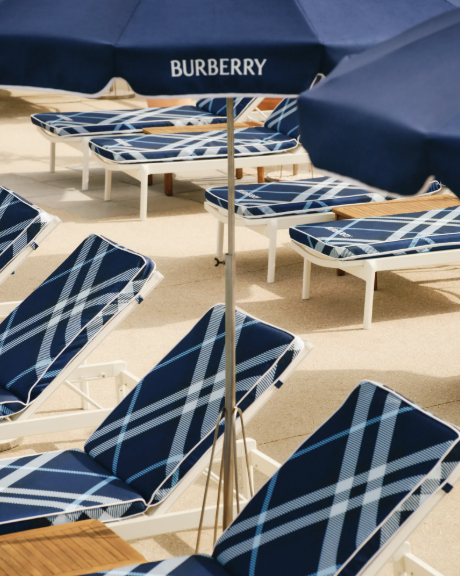
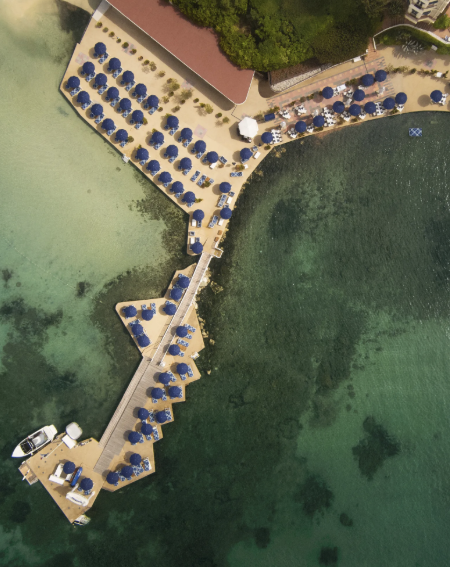
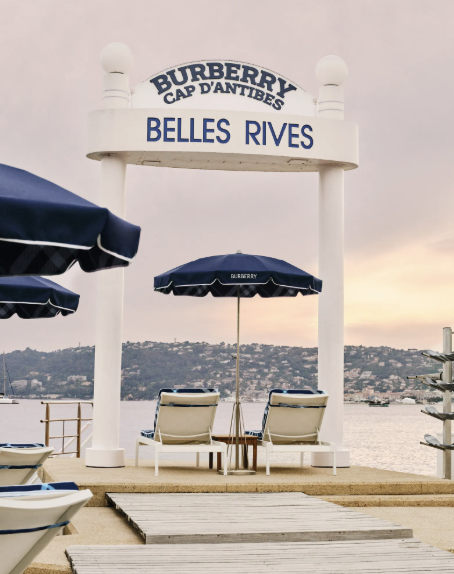
From June through September, Burberry has taken over Hôtel Belles Rives and its beach club, introducing a distinctly British sensibility to one of the Riviera’s most storied addresses. The lift — the original 1920s cage elevator — is wrapped in Burberry check. Sunbeds along the pier are dressed in navy monogram prints, while parasols repeat the same visual language across the waterline.
The effect is not loud. It is precise.
Inside the rooms, subtle interventions continue the narrative. At the terrace restaurant, the brand’s presence is folded into the setting rather than imposed upon it. Even the history of the hotel quietly supports the collaboration: Fitzgerald himself began writing Tender Is the Night here, and in the novel, his protagonist wears a Burberry coat — a detail that feels almost too neatly aligned with the present moment to be accidental.
Days unfold in a soft rhythm of Riviera leisure: tuna Niçoise at lunch, Burberry-branded ice lollies by the water, guests in Hunza G x Burberry swimwear reclining on striped loungers, reading, talking, drifting between shade and sun. Later in the summer, waterskiing sessions and curated experiences will extend the activation further, but the logic remains the same: this is not a hotel stay. It is a brand environment.
Dior
The Architecture of the Riviera Summer
If Burberry brings a literary Britishness to the Côte d’Azur, Dior has become something closer to an annual migration pattern.
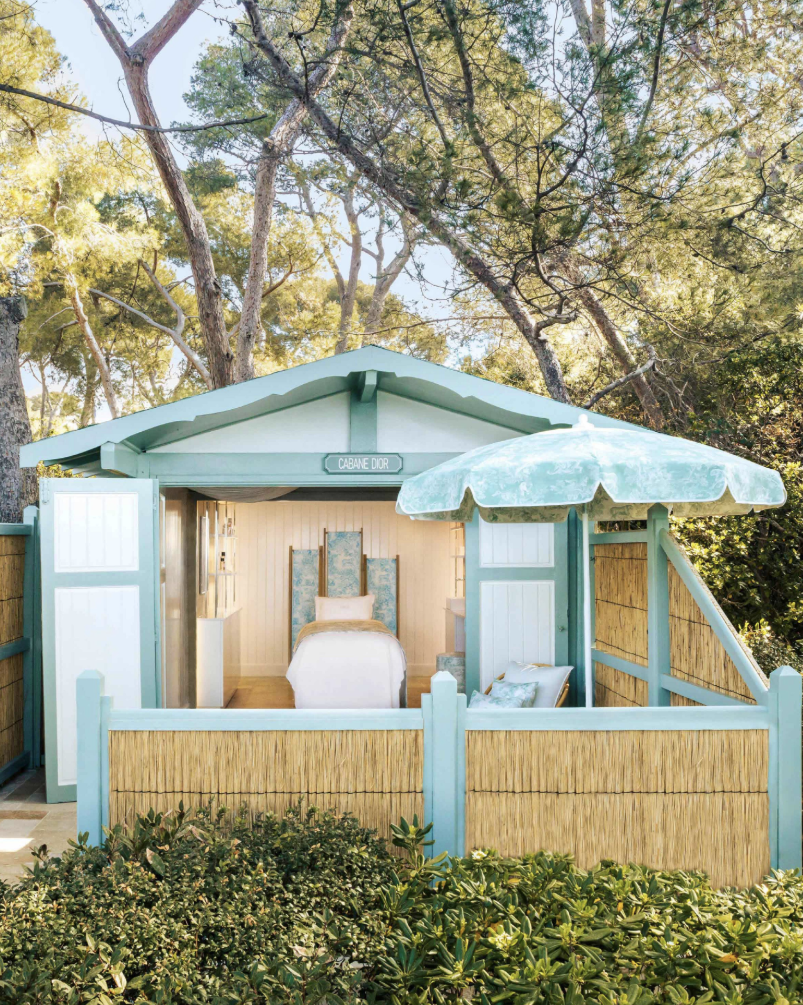
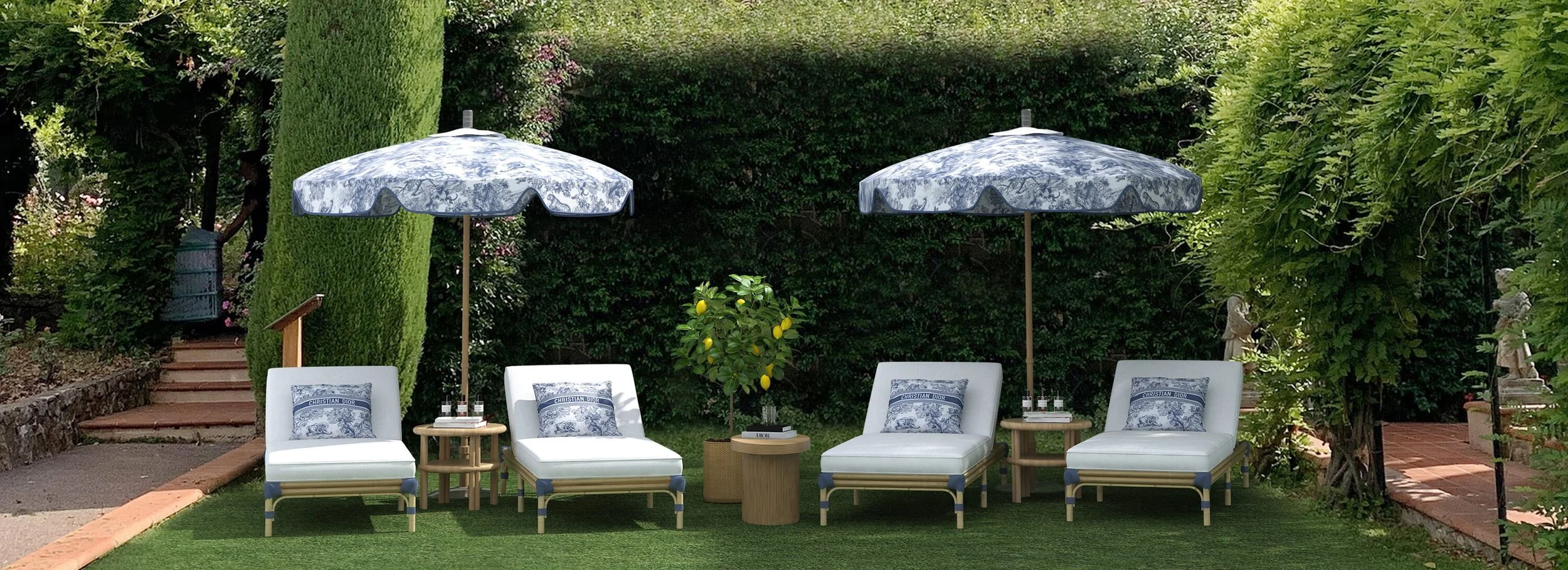
Across Saint-Tropez, Portofino, and Monte-Carlo, the house has built a recognisable summer language: toile de Jouy prints stretched across beach clubs, soft beige-and-white palettes on sun loungers, and pop-up boutiques that appear and disappear with the season.
At the heart of it is the Dioriviera universe — a travelling aesthetic rather than a fixed location. It is less about transforming a single hotel and more about creating continuity across destinations. Wherever Dior arrives, the Riviera is reinterpreted through its lens.
Guests move through spaces that feel both familiar and staged: spa treatments at coastal hotels, limited-edition accessories available only on-site, shaded terraces where everything from towels to tableware carries the same visual signature. It is luxury designed not to be collected, but experienced in real time.
Jacquemus at Monte-Carlo Beach
Minimalism Meets Mediterranean Geometry
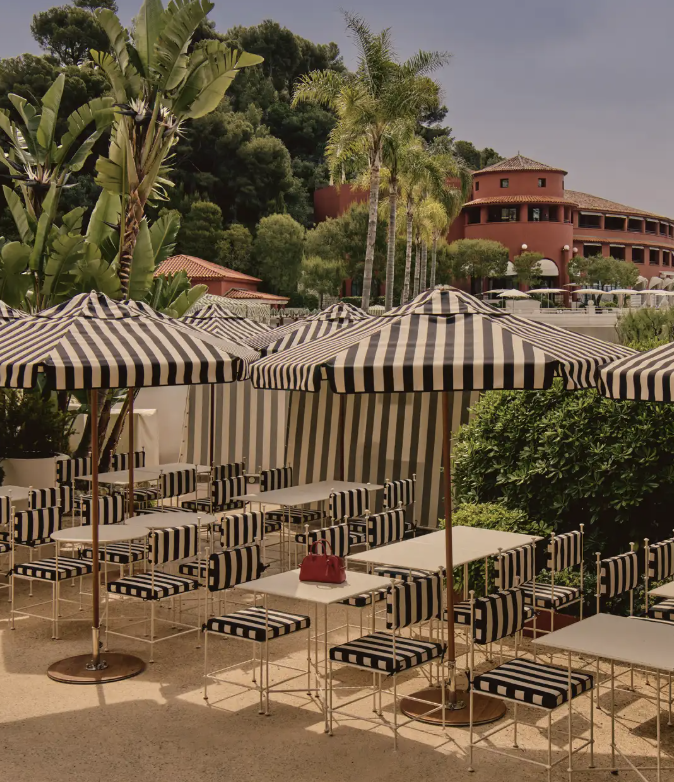
Simon Porte Jacquemus has built an entire brand identity around the idea of sun-drenched simplicity, and nowhere does that feel more literal than Monte-Carlo Beach.
Here, the collaboration translates into a pared-back visual language: clean lines, soft neutrals, sculptural furniture and the unmistakable feeling of a summer reduced to its essential elements — light, water, and form.
Where other fashion houses layer pattern and heritage, Jacquemus edits. The result is less a takeover and more a recalibration of space. The Riviera, in this interpretation, becomes geometric.
Dolce & Gabbana at Hotel Cala di Volpe
Maximalism as Destination
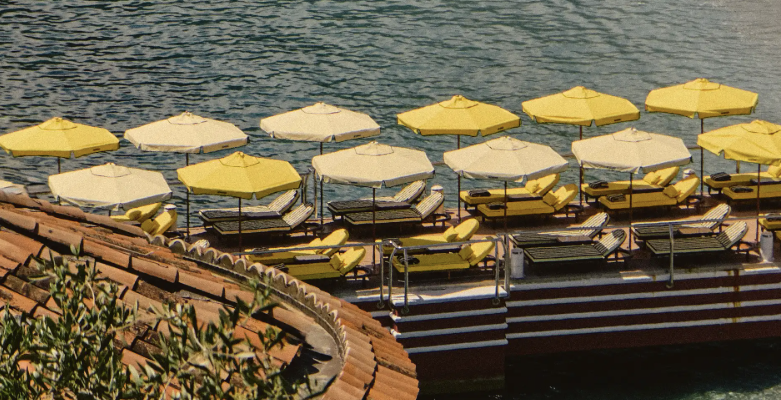
Further along the coast in Sardinia, Dolce & Gabbana approach hospitality with a very different instinct.
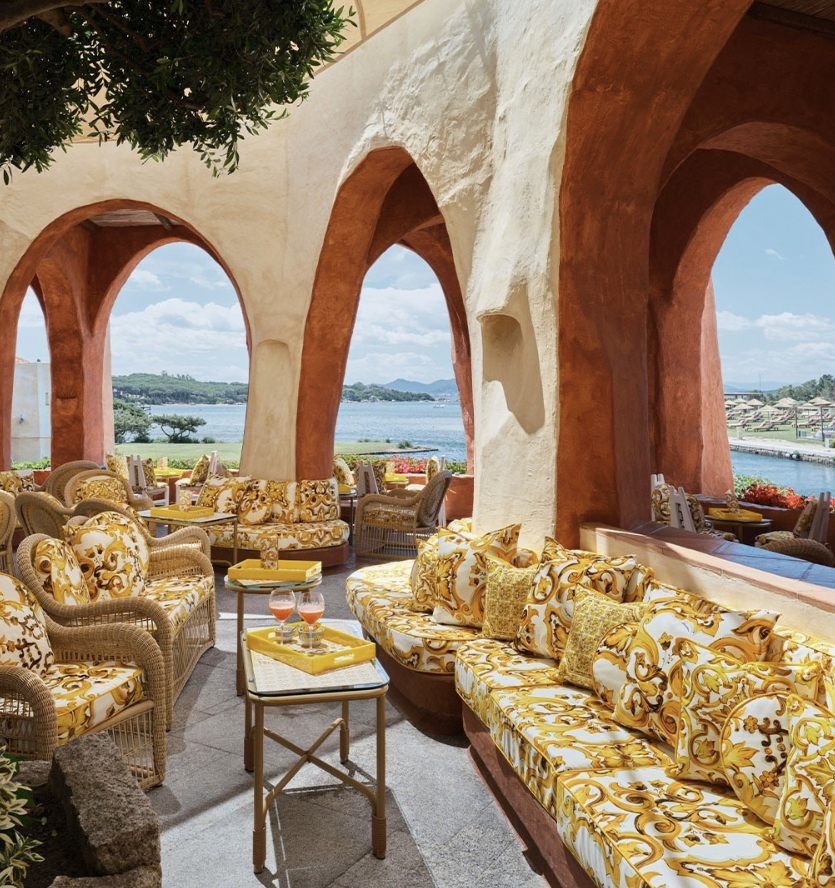
At Hotel Cala di Volpe, the brand has transformed one of Europe’s most recognisable poolscapes into a saturated world of Sicilian print, hand-painted ceramics, and bold upholstery. The hotel’s already theatrical saltwater pool becomes even more cinematic under the weight of Carretto Siciliano motifs.
This is luxury as spectacle. Umbrellas, towels, and decorative objects carry the same visual intensity, turning the entire environment into a stage set for summer excess.
If Jacquemus is reduction, Dolce & Gabbana is amplification.
Fashion Hospitality Goes Global
While the French Riviera remains the symbolic heart of fashion-led hospitality, the model has expanded far beyond the Mediterranean coastline. What was once a summer ritual in Saint-Tropez or Cap d’Antibes is now a global system — adapted to wellness resorts, alpine retreats, city hotels, and even branded residential developments.
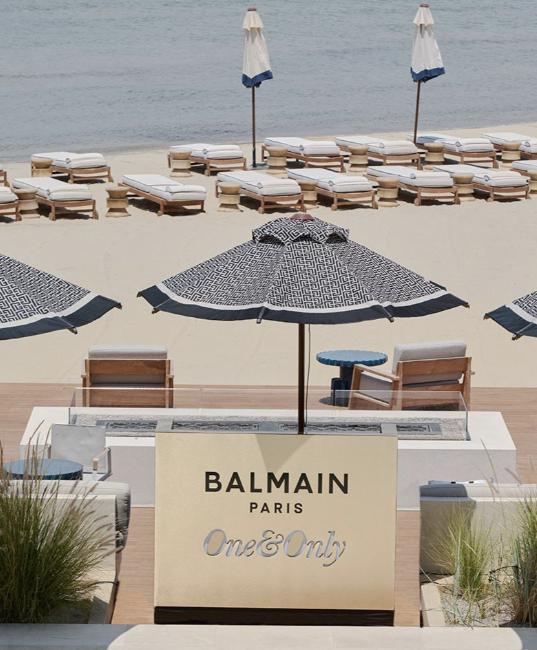
One&Only Aesthesis x Balmain
In Athens, One&Only Aesthesis has partnered with Balmain, transforming its beachfront into a high-gloss extension of Olivier Rousteing’s visual world. The poolscape becomes instantly recognisable: monochrome labyrinth motifs across sunbeds, towels and parasols, and a limited-edition Balmain x One&Only handbag sold exclusively on site. It is fashion not as decoration, but as full environmental design.
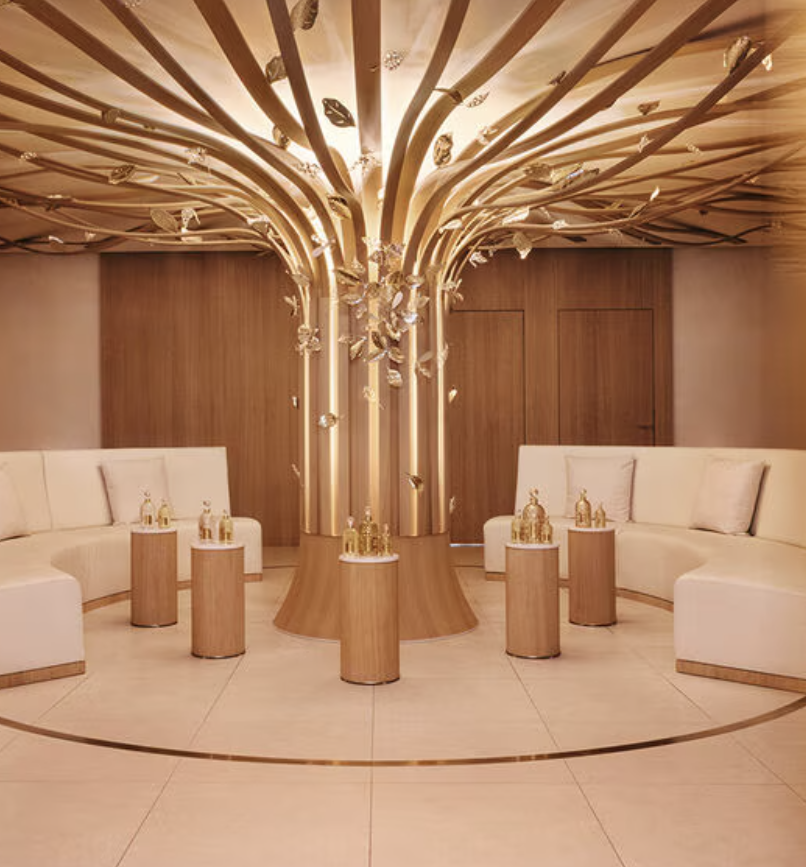
Beau-Rivage Palace x Guerlain Spa
In Switzerland, luxury hospitality takes a more restrained form. At Beau-Rivage Palace in Lausanne, Guerlain’s spa collaboration reflects a quieter translation of brand identity — focused less on spectacle and more on ritual, scent and restoration. Here, fashion’s influence is not visual but sensory, embedded in treatment menus and wellness architecture.
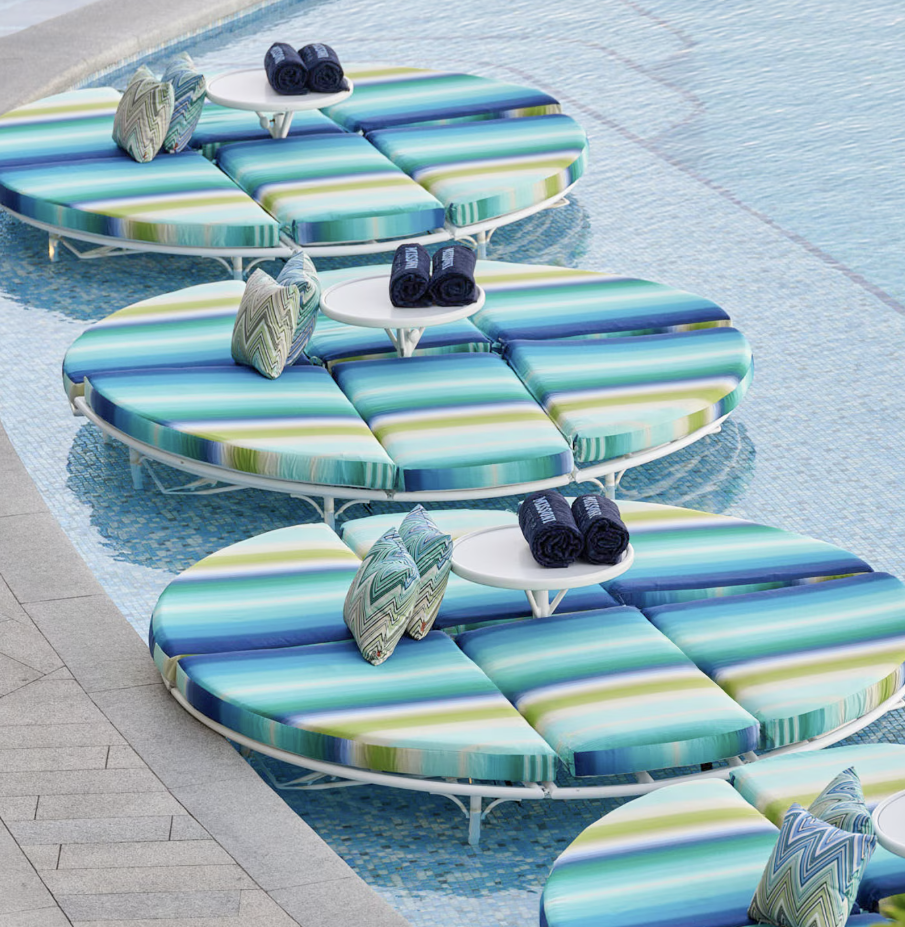
Crown Sydney x Missoni
Missoni brings its unmistakable chromatic language to Crown Sydney, extending its heritage knitwear aesthetic into hospitality interiors where pattern becomes atmosphere rather than accent.
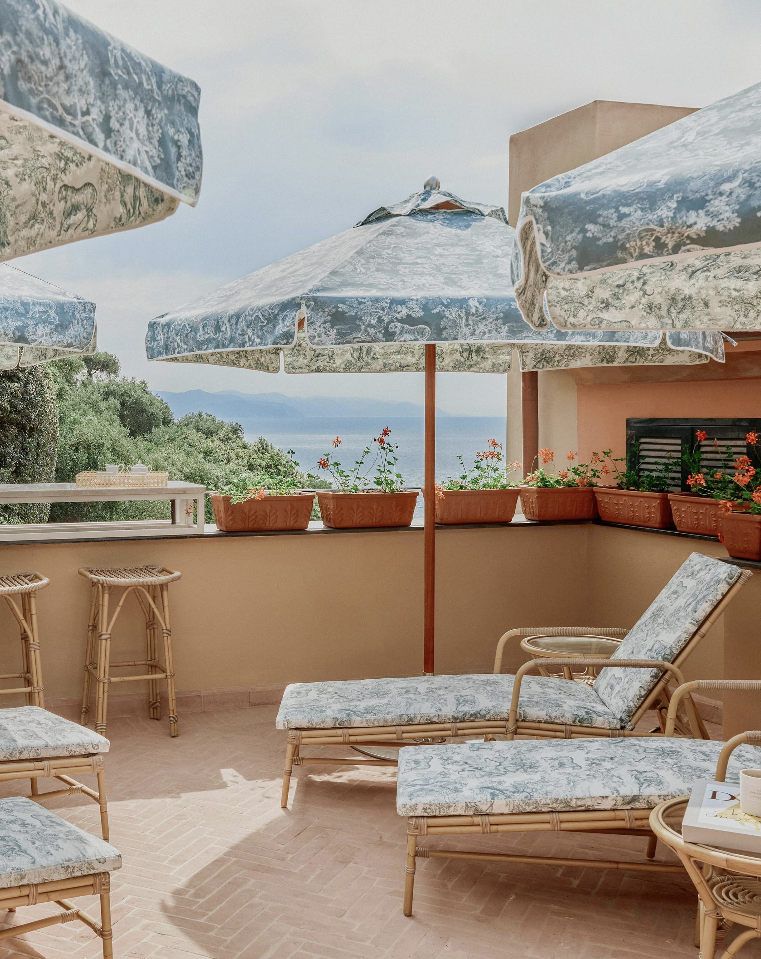
Splendido Portofino x Dior Spa
Further north in Portofino, Dior’s presence at the Belmond properties continues to evolve through its spa universe — most notably at Splendido, where Dior Spa treatments extend the brand’s Riviera footprint into one of Italy’s most iconic hotel landscapes.
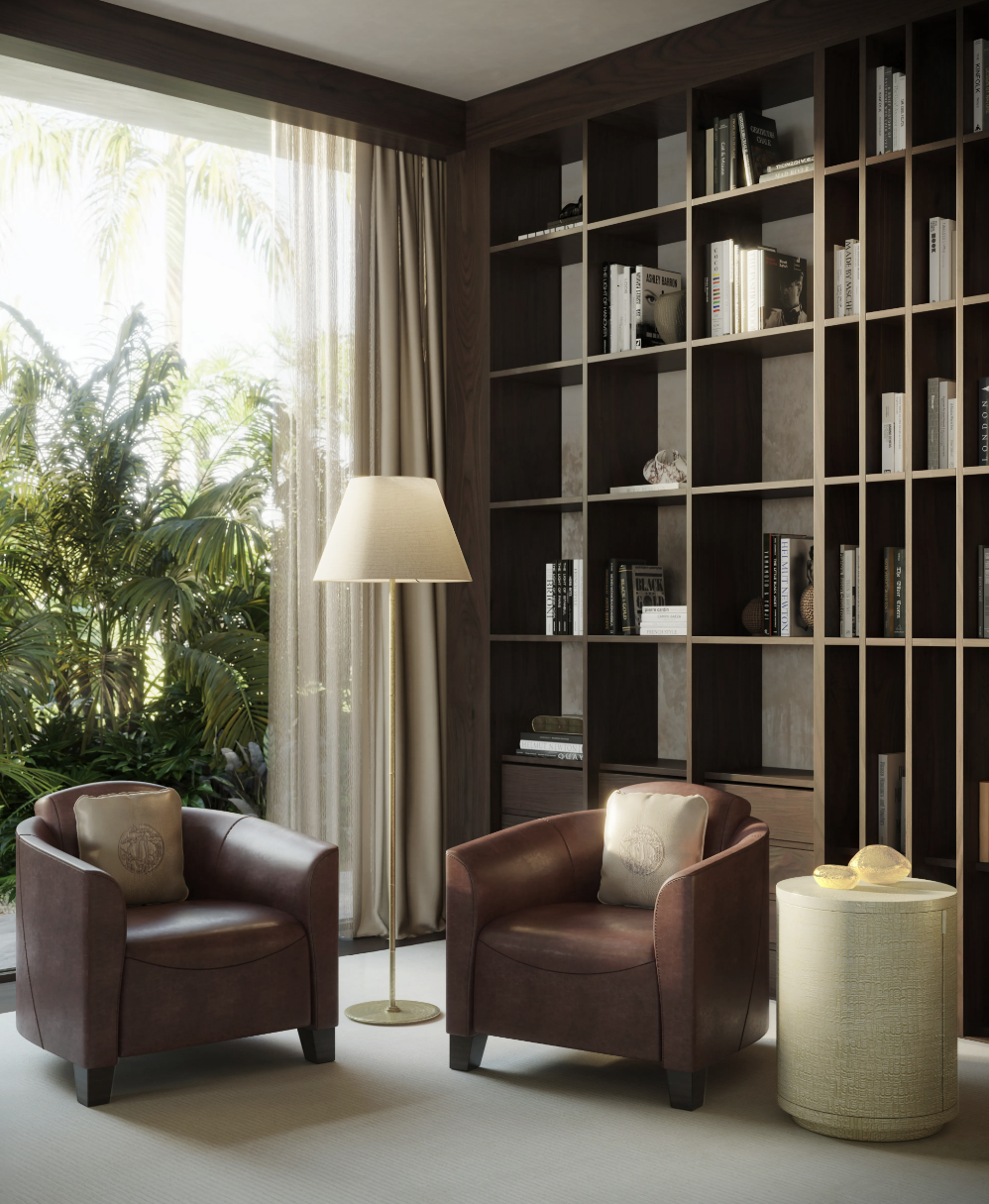
Armani Villas in Ras Al Khaimah
In the Middle East, Armani’s expansion into branded villas and residences in Ras Al Khaimah signals another evolution entirely — from temporary activation to permanent lifestyle infrastructure. Here, hospitality is no longer a seasonal gesture but an architectural identity.
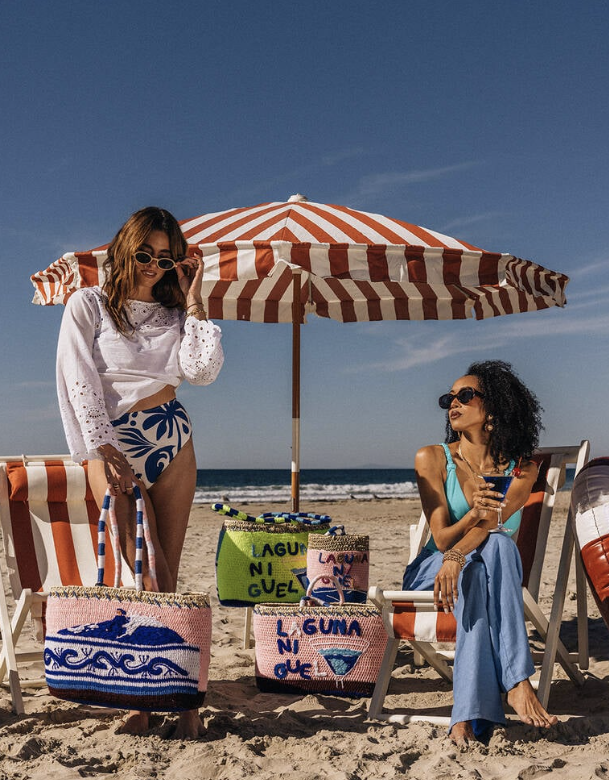
Ritz-Carlton x Kilometre
And in Paris, collaborations such as Ritz-Carlton x Kilometre quietly extend fashion into ultra-specific travel storytelling, where even the idea of movement becomes part of the brand narrative.
Across all of these examples, the logic remains consistent. Whether expressed through a beach club in Athens, a spa in Switzerland, or a villa in the UAE, luxury fashion is increasingly moving toward environments that can be lived in, not just worn.
The Expansion Beyond the Riviera
While the Mediterranean remains the epicentre of fashion hospitality, the model is no longer geographically contained.
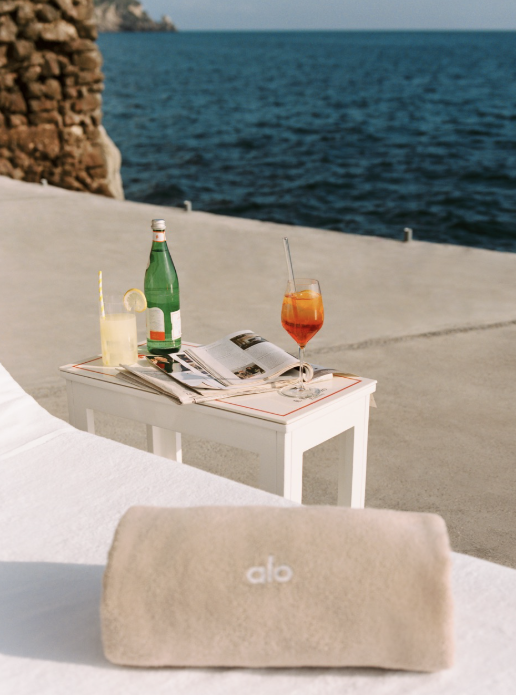
In Cannes, ALO’s yacht activation reframes wellness as a floating social environment — part gym, part lifestyle showroom, part content studio. In Ras Al Khaimah, Armani’s branded residences extend the idea further into permanent living, where hospitality becomes architecture. In Aspen, Ralph Lauren’s long-standing presence at Hotel Jerome continues to define winter luxury through Americana codes. And collaborations such as Fairmont Century Plaza x Canada Goose blur the line between performance wear and hotel experience entirely.
Much like recent luxury brand collaborations in culture such as F1 × Gentle Monster × Disney, hospitality is becoming another stage for fashion storytelling.
What connects them is not location, but logic: fashion is no longer dressing travel. It is designing it.
Why Fashion Wants Hotels
The appeal is not difficult to decode.
Hotels offer something fashion has always struggled to fully control: immersion. A runway show lasts minutes. A campaign lasts weeks. A hotel takeover lasts an entire season — and unfolds across multiple sensory dimensions at once.
They also offer something more contemporary: content density. Every corner becomes a photograph. Every detail becomes shareable. Every object carries dual function — practical and promotional.
In a landscape where attention is fragmented and aspiration is increasingly experiential, hotels provide what traditional advertising no longer can: time.
From Pop-Up to Permanent
What began as temporary activations is now moving toward permanence. The question is no longer whether fashion belongs in hospitality, but how far it will go.
Will luxury houses eventually operate their own hotels outright? Will branded resorts become as central to identity as flagship stores once were? And at what point does a stay become indistinguishable from a campaign?
For now, the most interesting spaces exist in between — seasonal, ephemeral, and highly curated. They disappear just as quickly as they arrive, leaving behind only images, memories, and a shifting definition of what luxury travel looks like.
In that sense, the hotel is no longer just a destination.
It is the new front row.