Shinyakozuka Men’s Spring 2027
For his Milan Fashion Week runway debut, Japanese designer Shinya Kozuka invited audiences to look at the world through unfocused eyes. Rather than chasing novelty through spectacle, the Spring/Summer 2027 collection explored how familiar places can feel entirely new when viewed from a different perspective—or, in Kozuka's case, without wearing his prescription contact lenses.
The result was one of the season's most poetic collections, transforming ordinary memories, neighbourhood walks and childhood sounds into softly layered tailoring, translucent fabrics and painterly prints that blurred the line between reality and imagination.
It was less about seeing clearly than learning to appreciate the beauty of uncertainty.
Inspiration Found on the Walk Home
Kozuka has developed a reputation for finding inspiration in everyday rituals.
Following last season's collection, inspired by abandoned gloves discovered during his journey home from his Tokyo atelier, Spring/Summer 2027 turned its attention to another familiar experience: navigating streets he knows by heart while his vision remains slightly out of focus.
Rather than viewing blurred sight as a limitation, the designer embraced it as an opportunity to rediscover ordinary surroundings.
The familiar became unfamiliar once again.
Landscapes Painted Like Memories
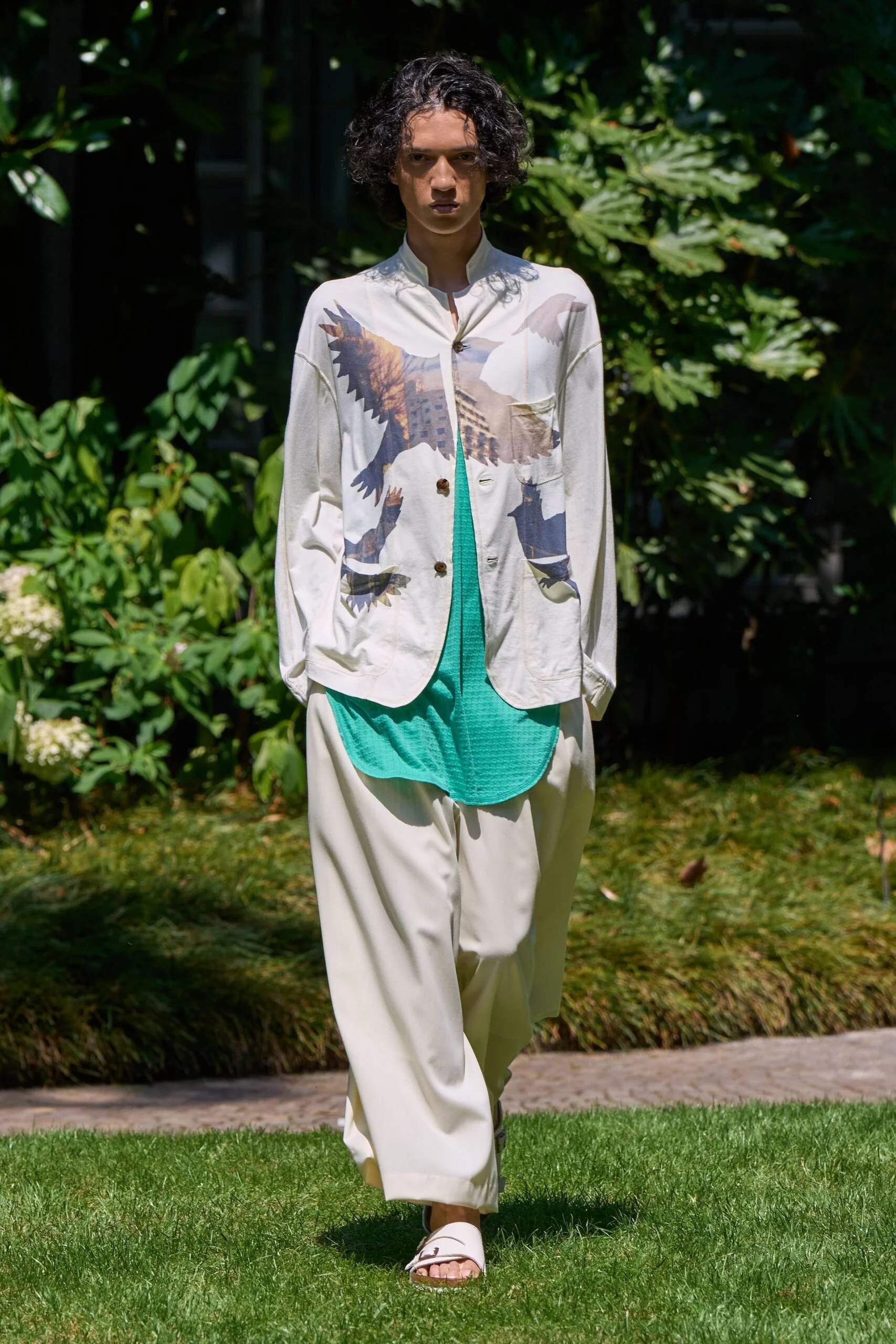
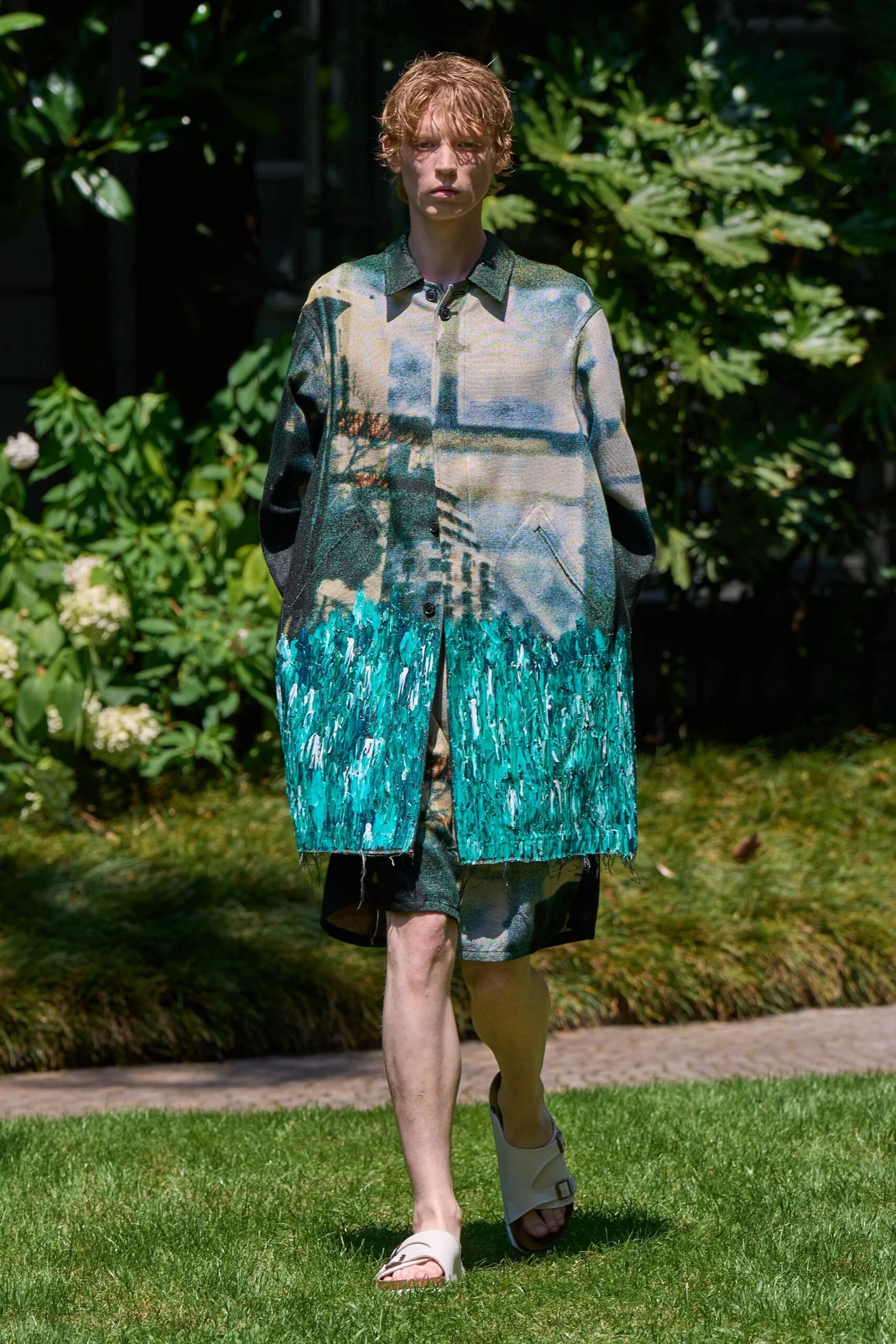
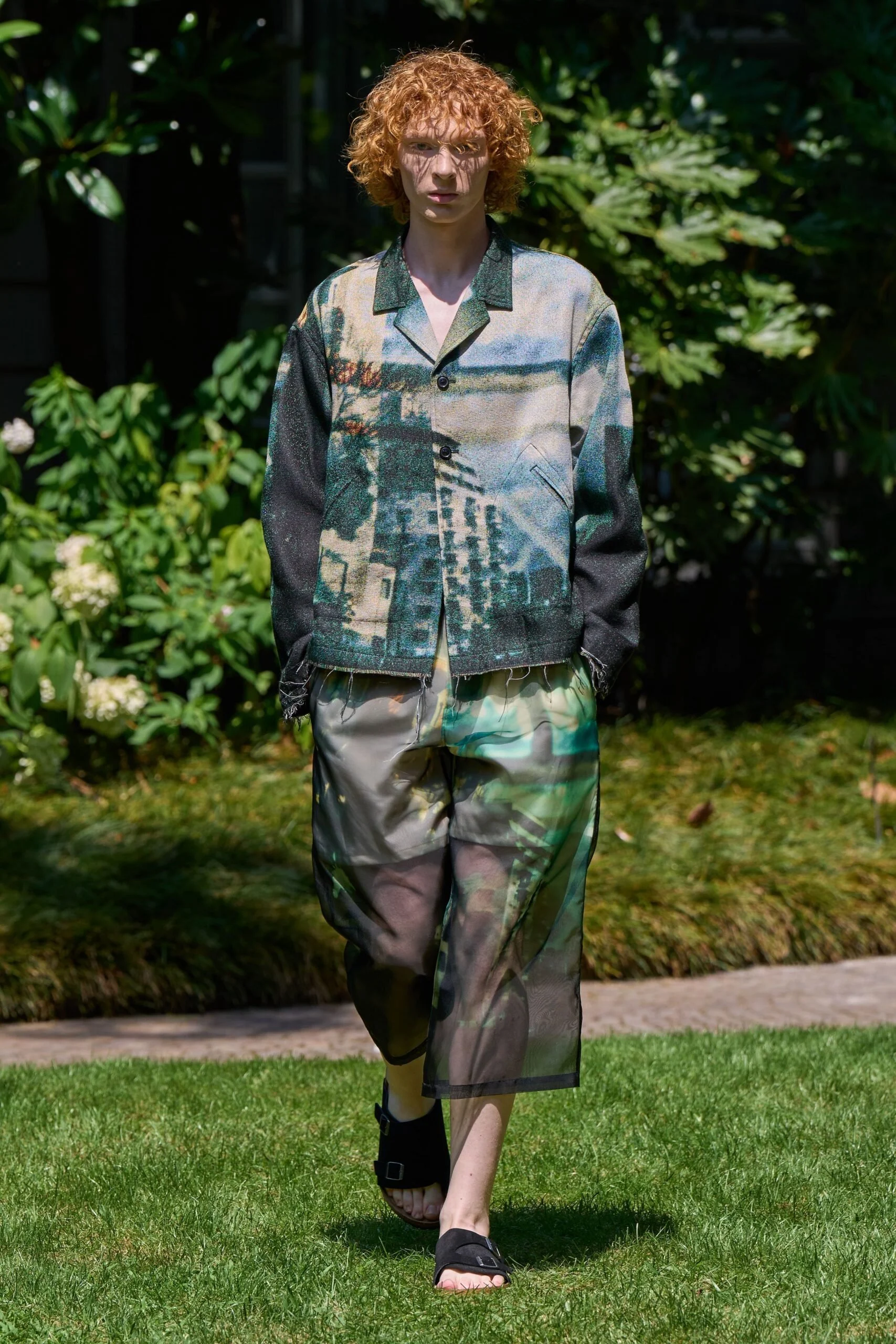
That softened perspective appeared throughout the collection in delicate landscape prints inspired by Kozuka's Tokyo neighbourhood.
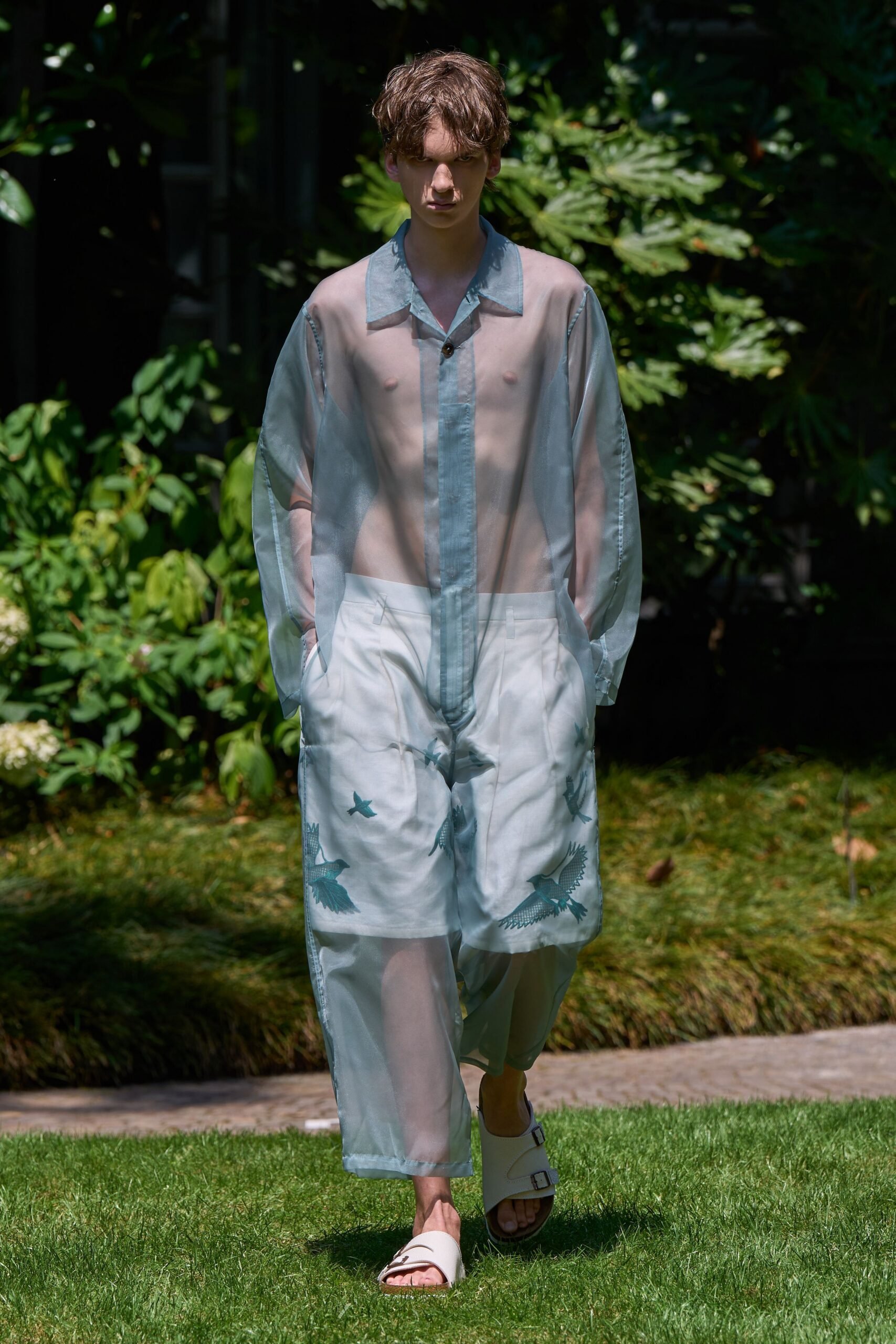
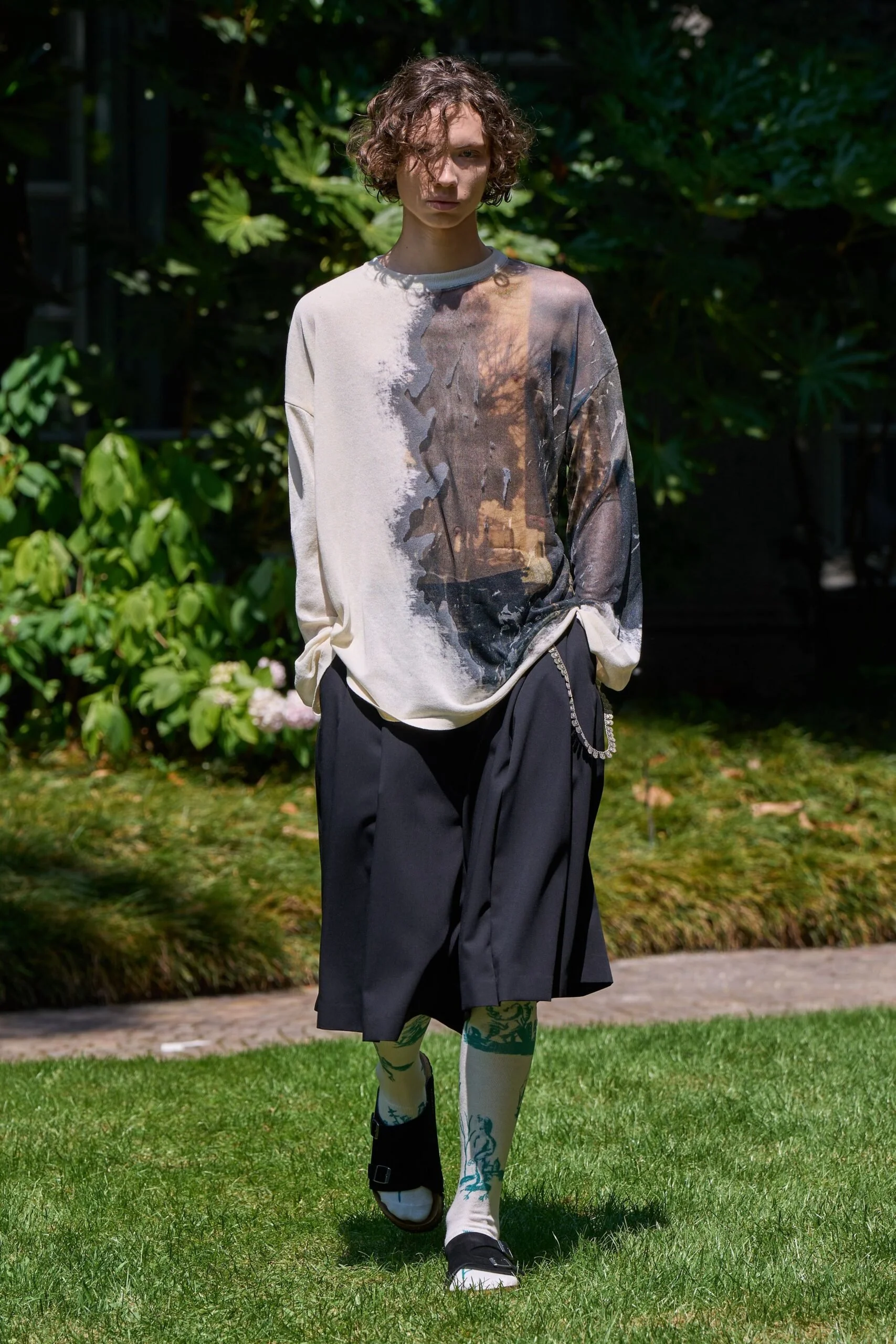
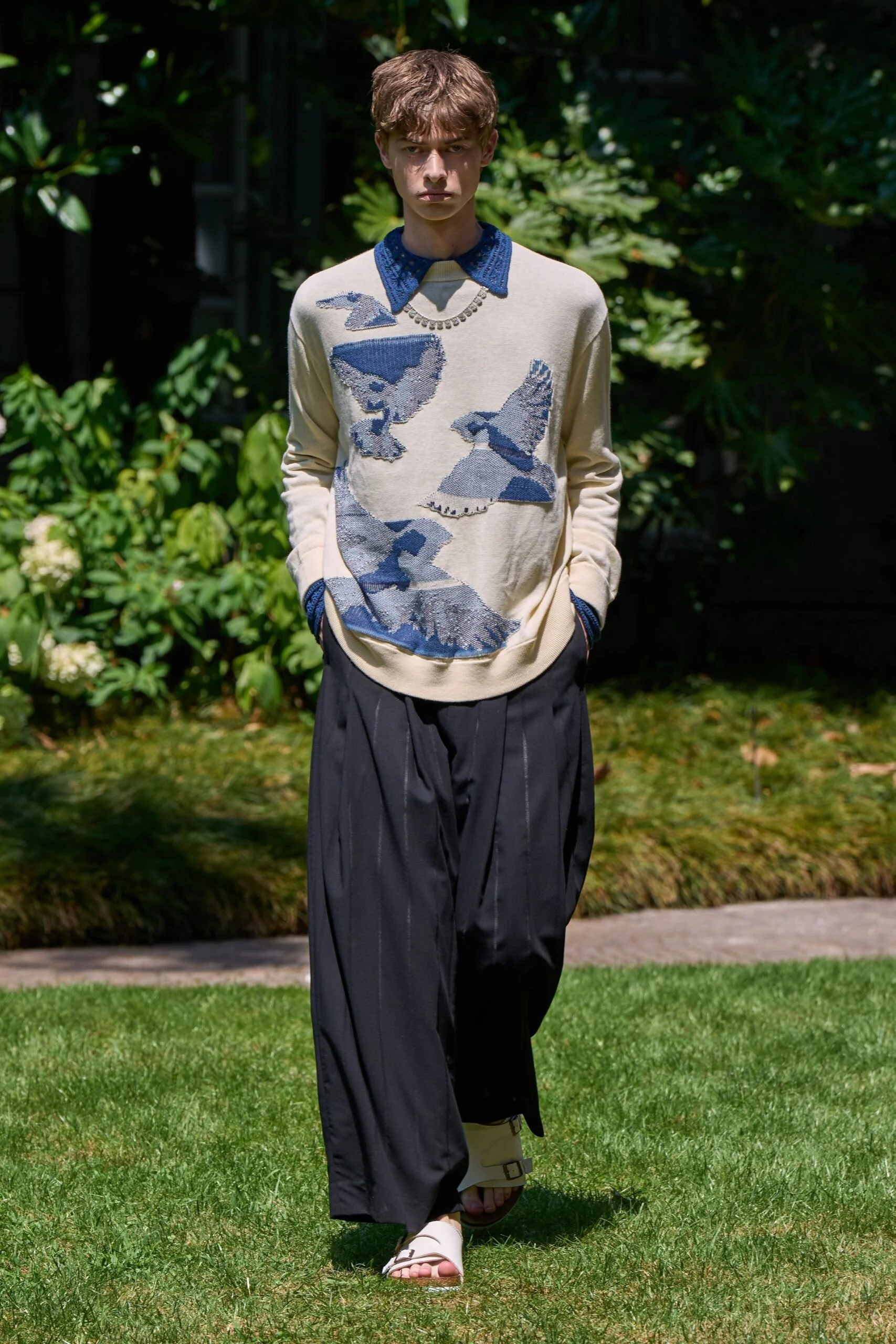
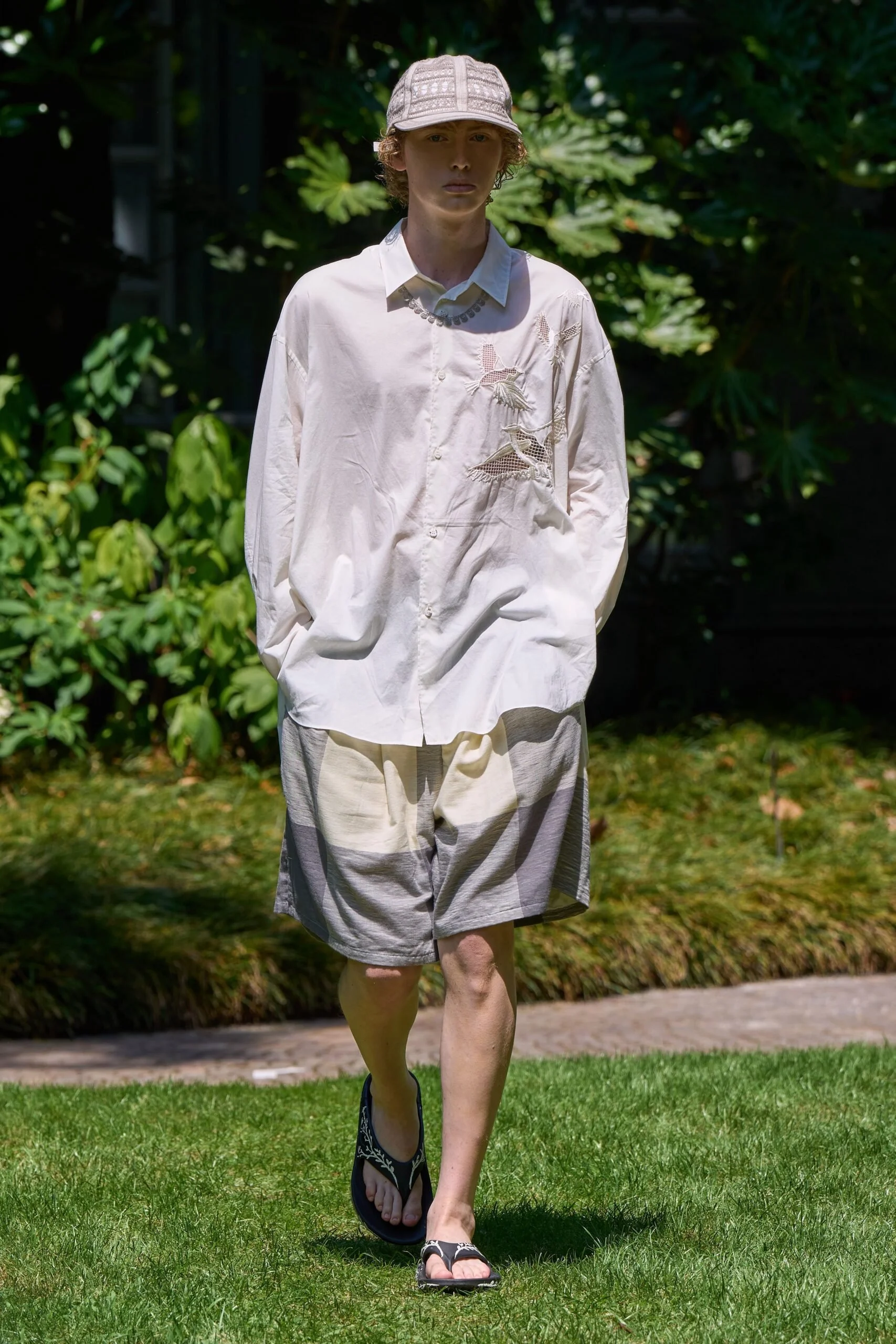
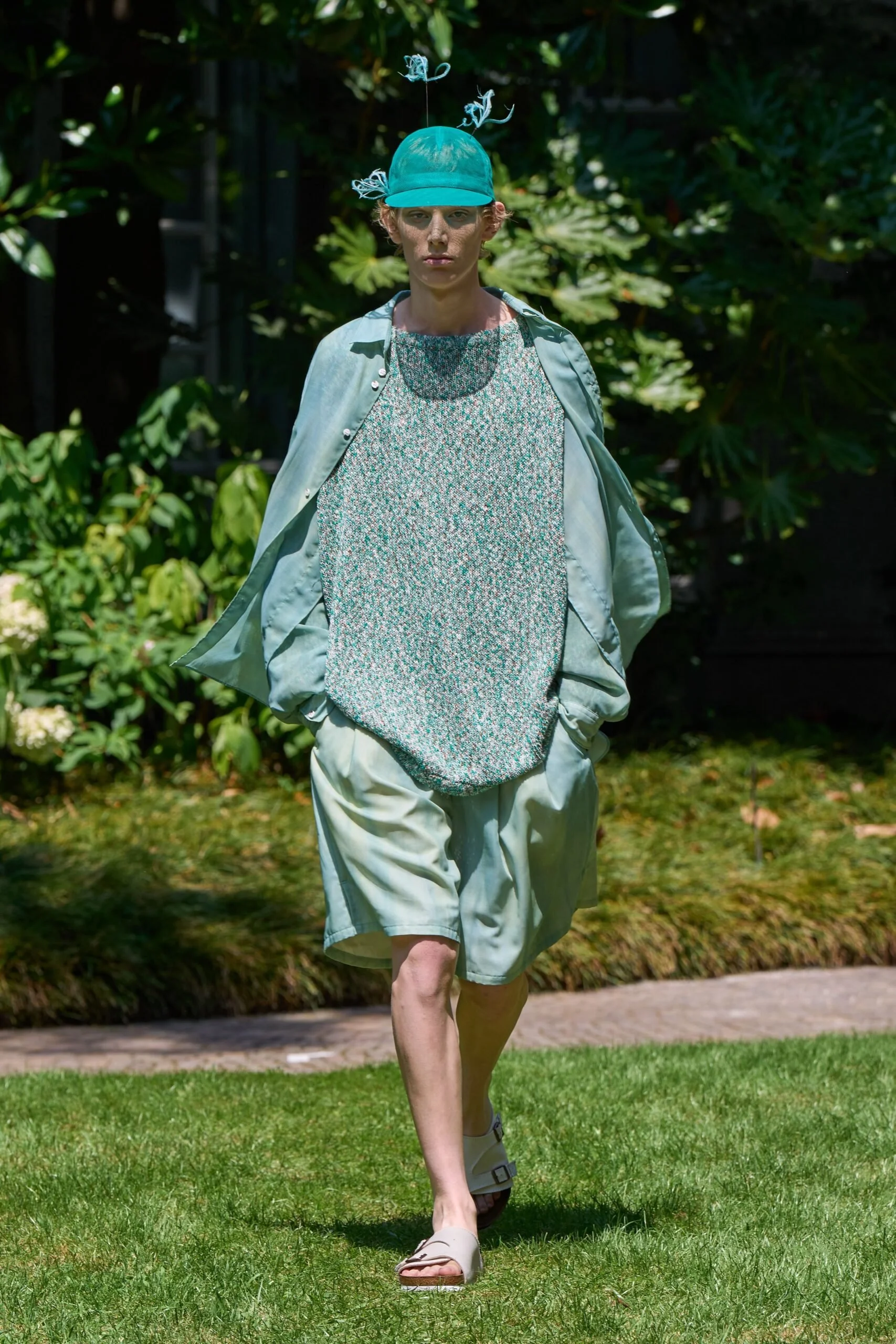
Rendered with the hazy quality of watercolours and loosely referencing the photographic work of Uta Barth, the prints drifted across fluid pyjama-inspired tailoring, oversized overshirts and relaxed Bermuda shorts. Several garments gradually dissolved into sheer organza panels, creating the illusion that the city itself was quietly disappearing into the distance.
The effect felt dreamlike without becoming overly sentimental.
Transparency and Lightness
Sheer fabrics played a central role throughout the collection.
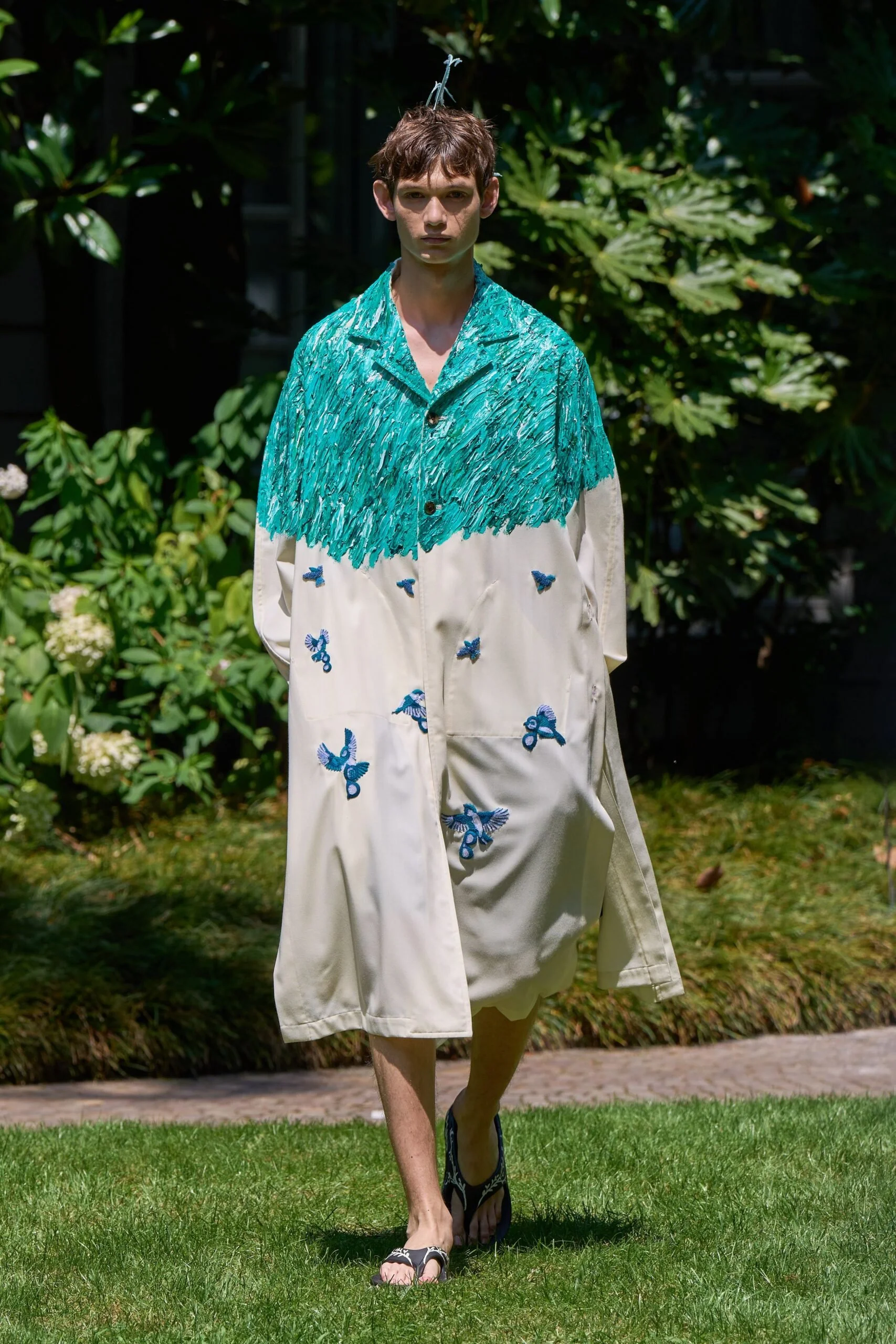
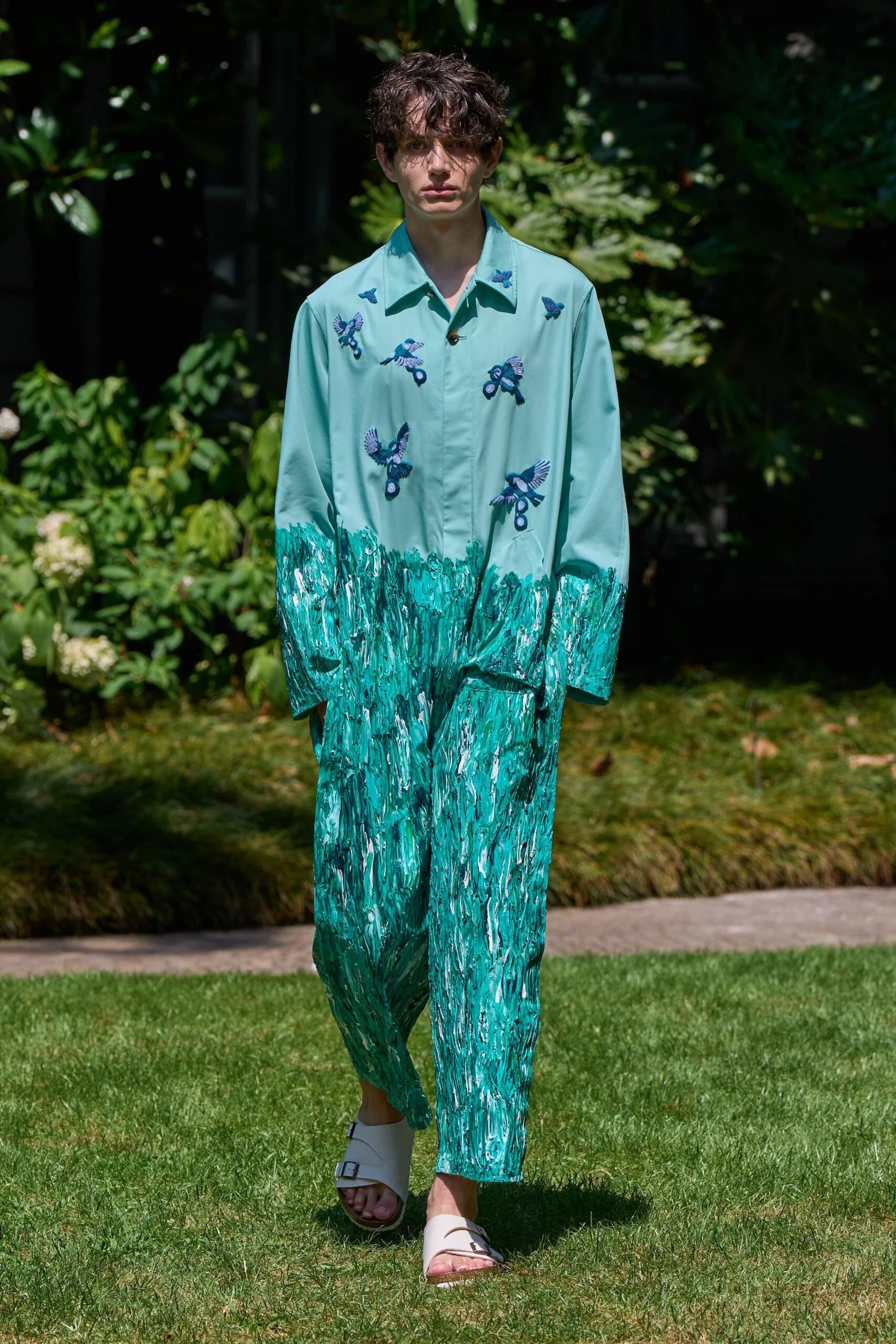
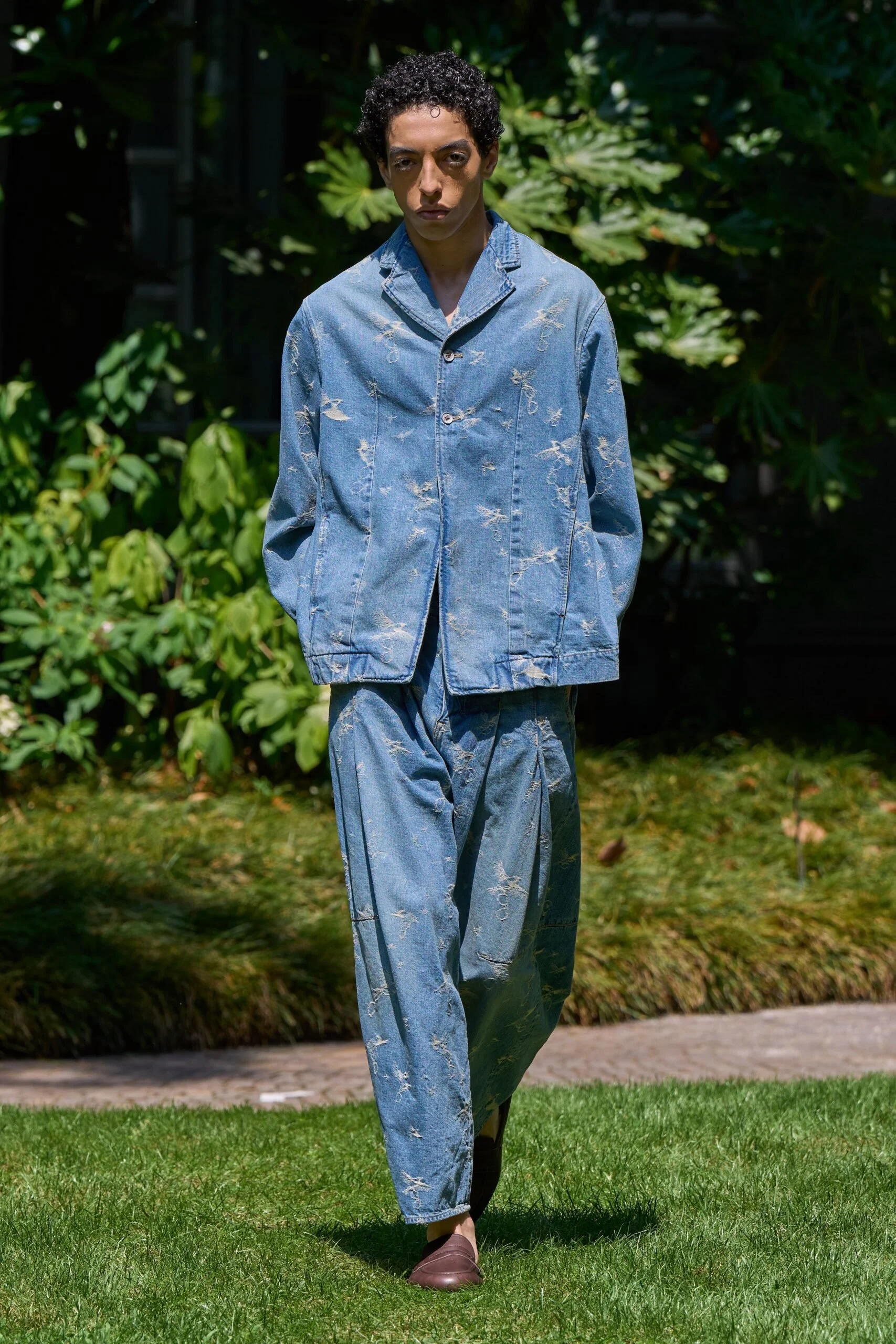
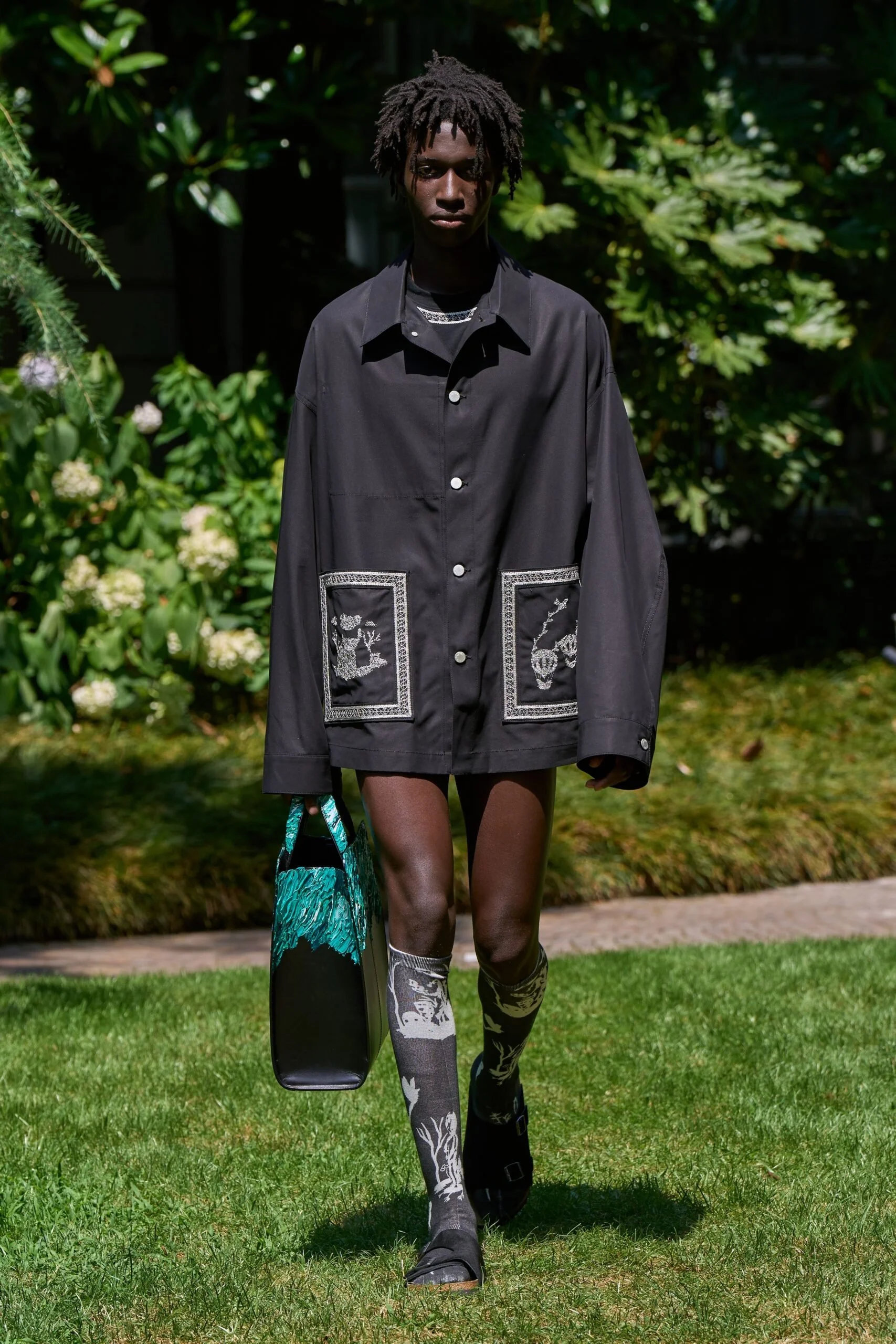
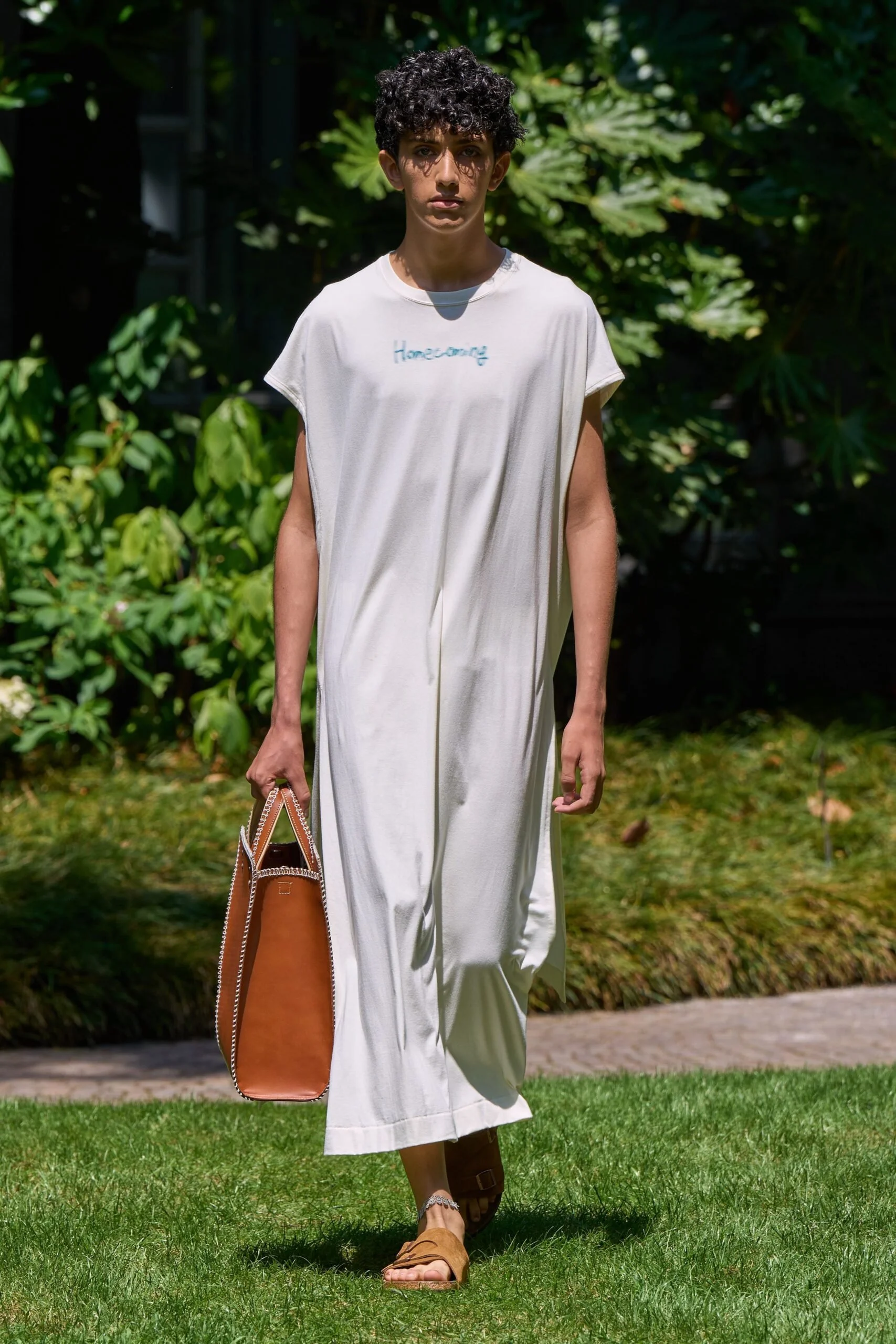
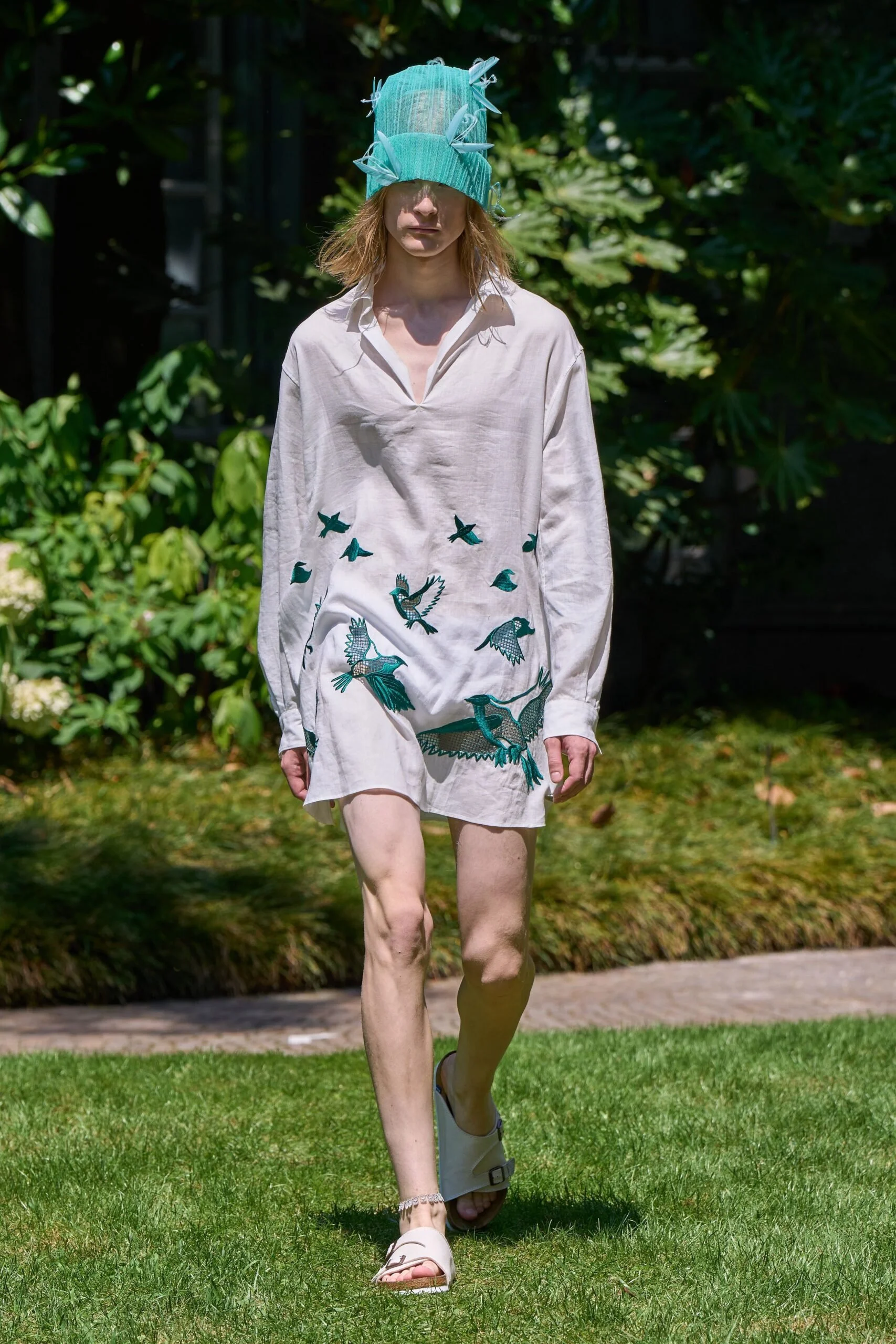
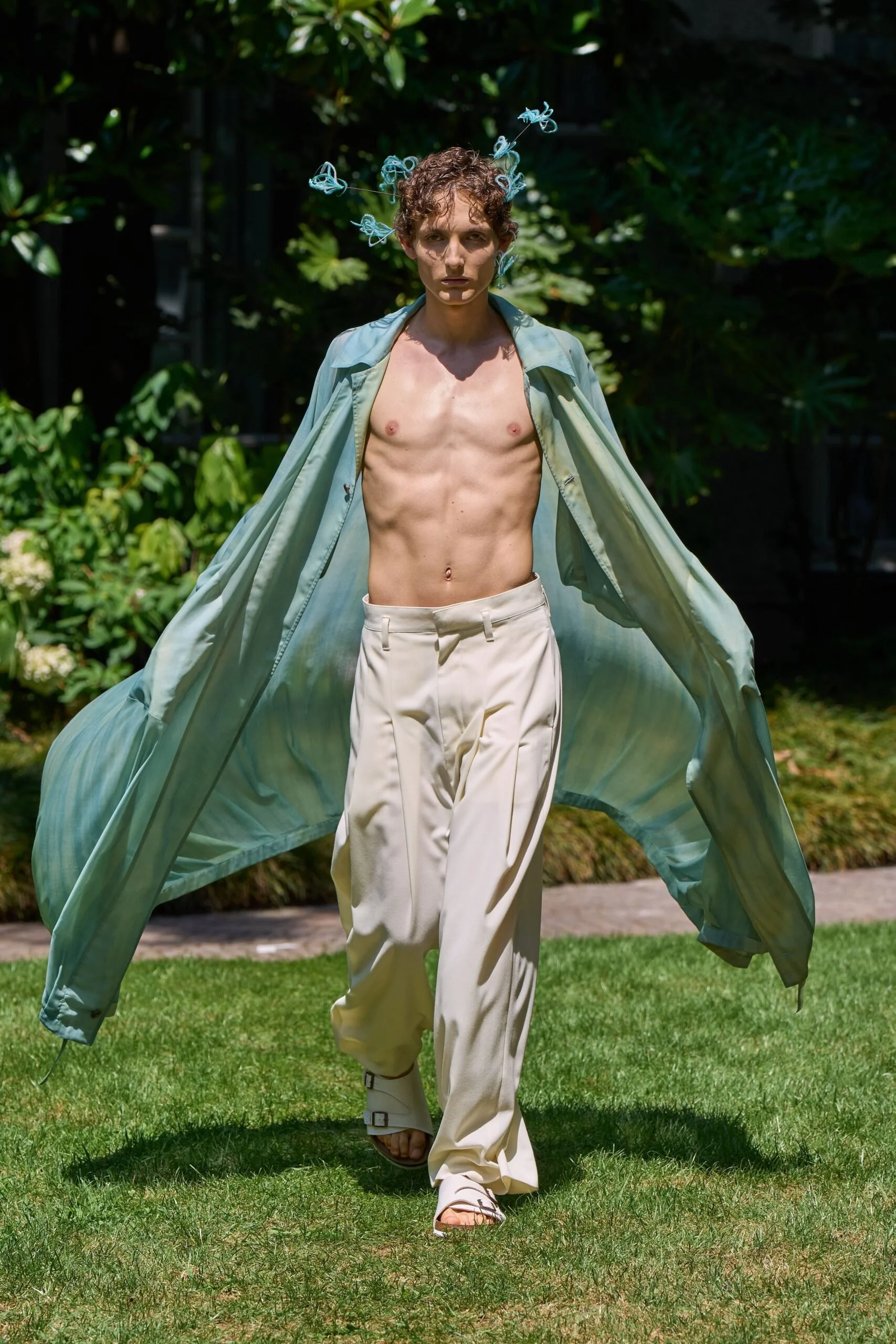
Paper-thin nylon parkas floated around the body, while translucent organza overtrousers layered effortlessly over tailored shorts and relaxed trousers. Many of these delicate garments featured embroidered sparrows, a subtle reference to the birdsong that reminded Kozuka of traditional whistling melodies from his childhood.
The transparency never felt decorative for its own sake.
Instead, it reinforced the collection's central theme of partial vision and shifting perspectives.
Painterly Textures and Quiet Experimentation
Elsewhere, Kozuka continued his exploration of fabric manipulation.
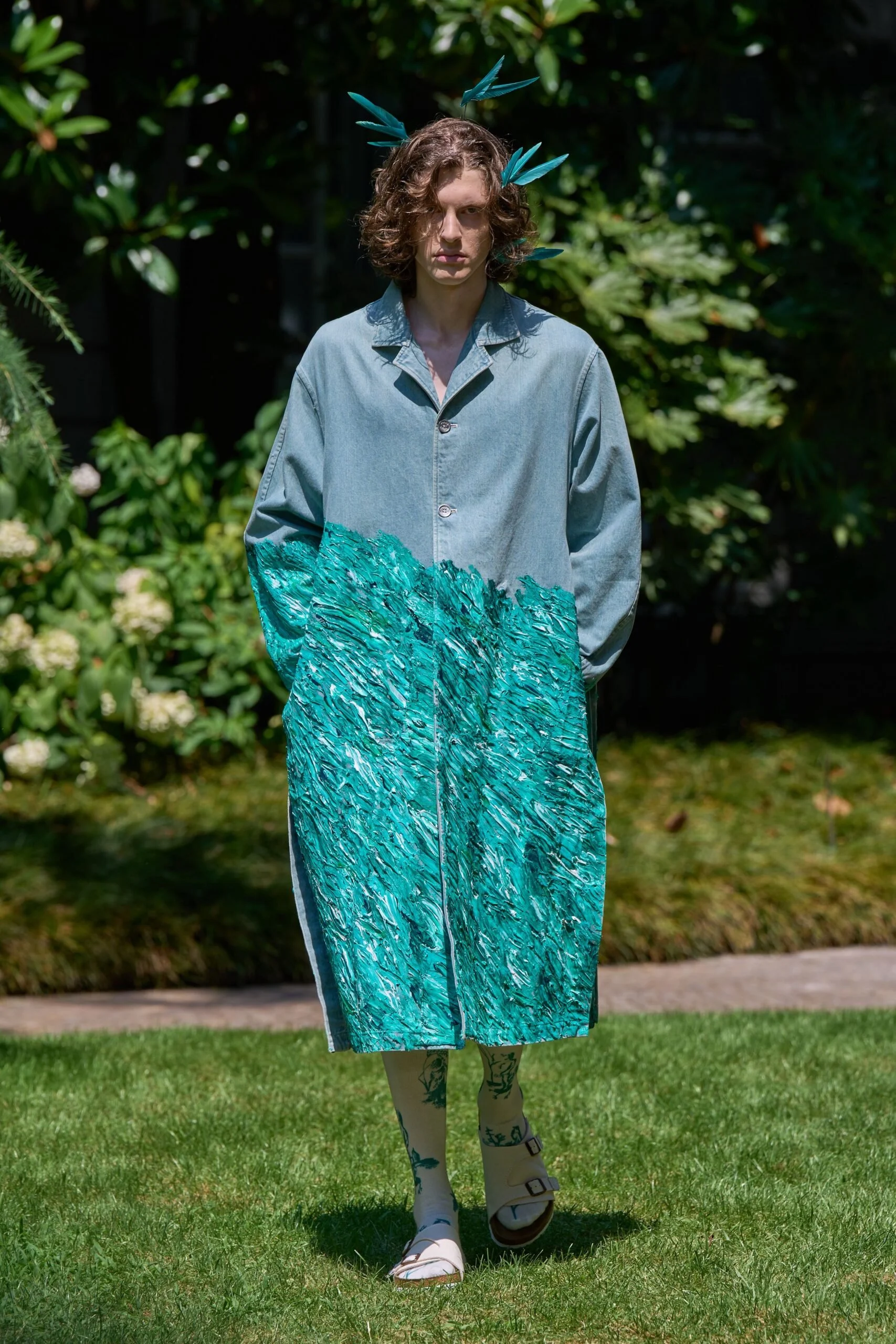
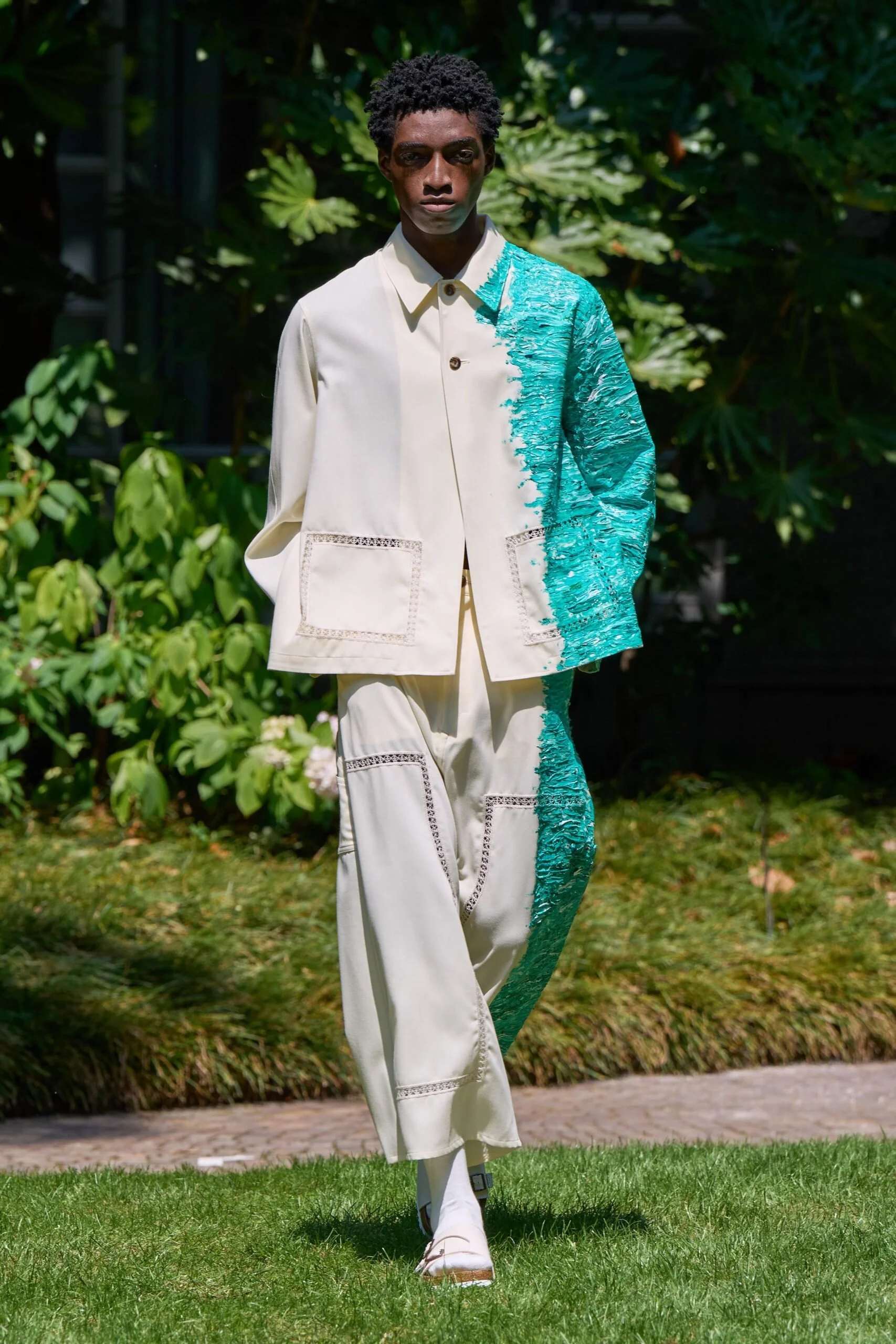
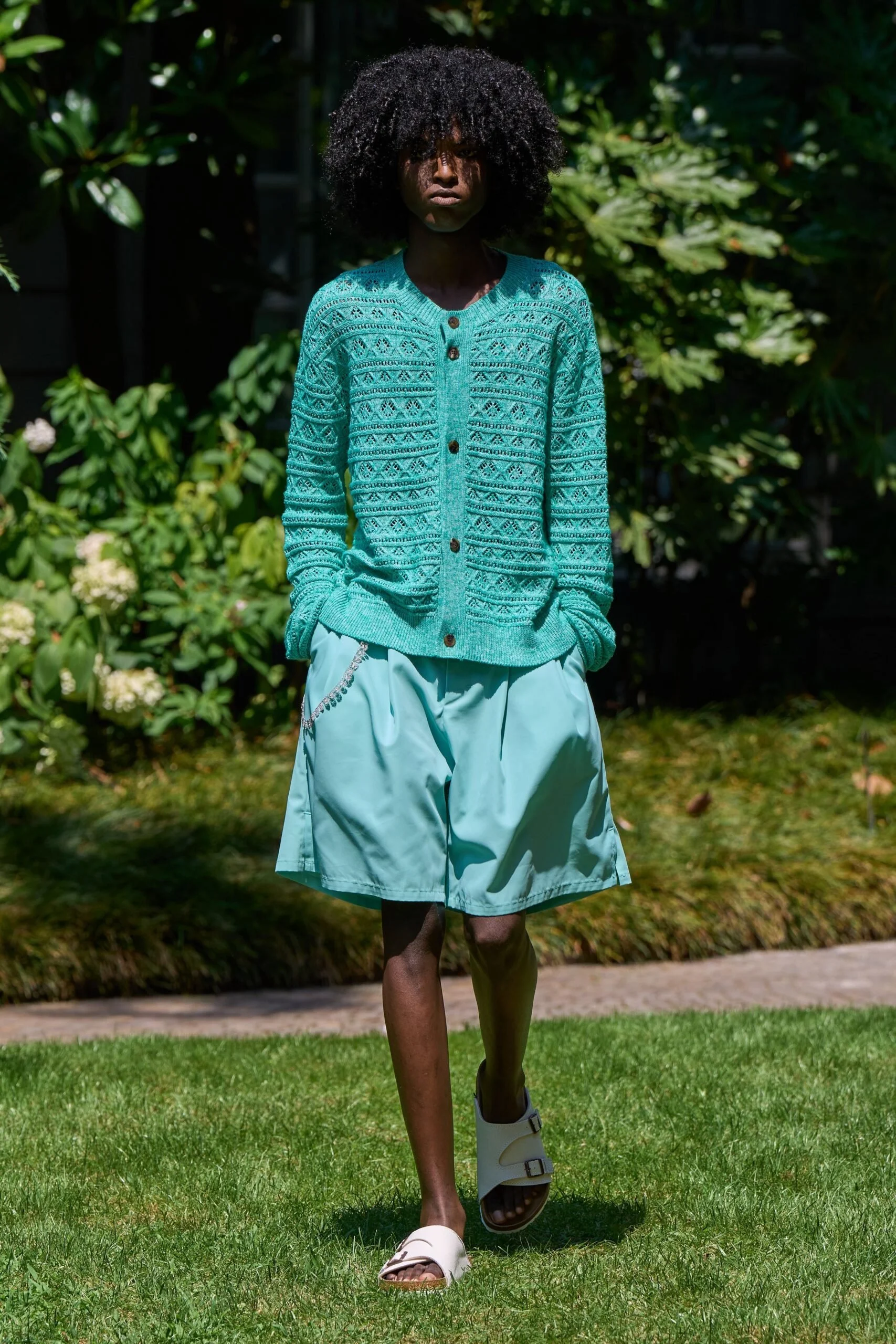
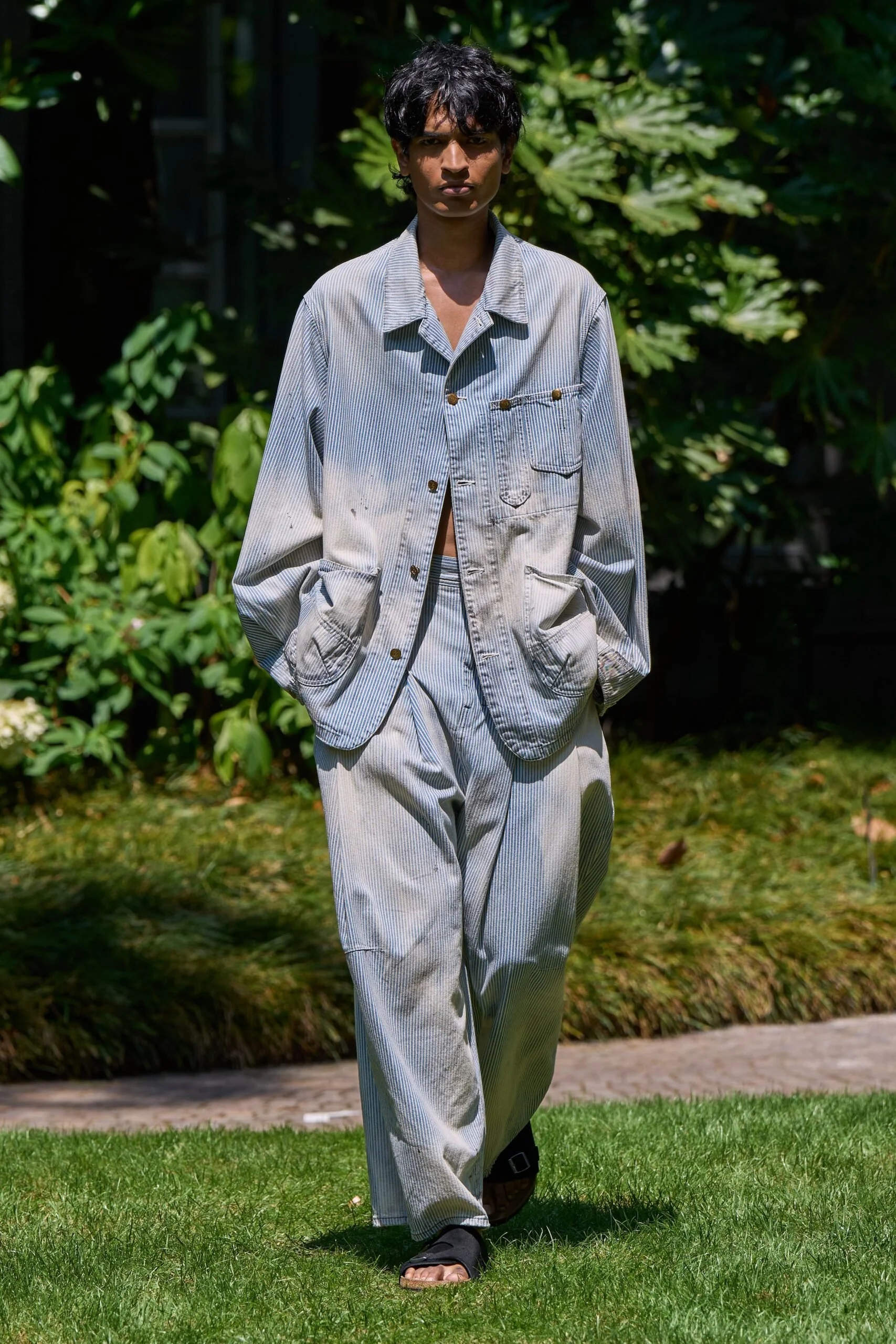
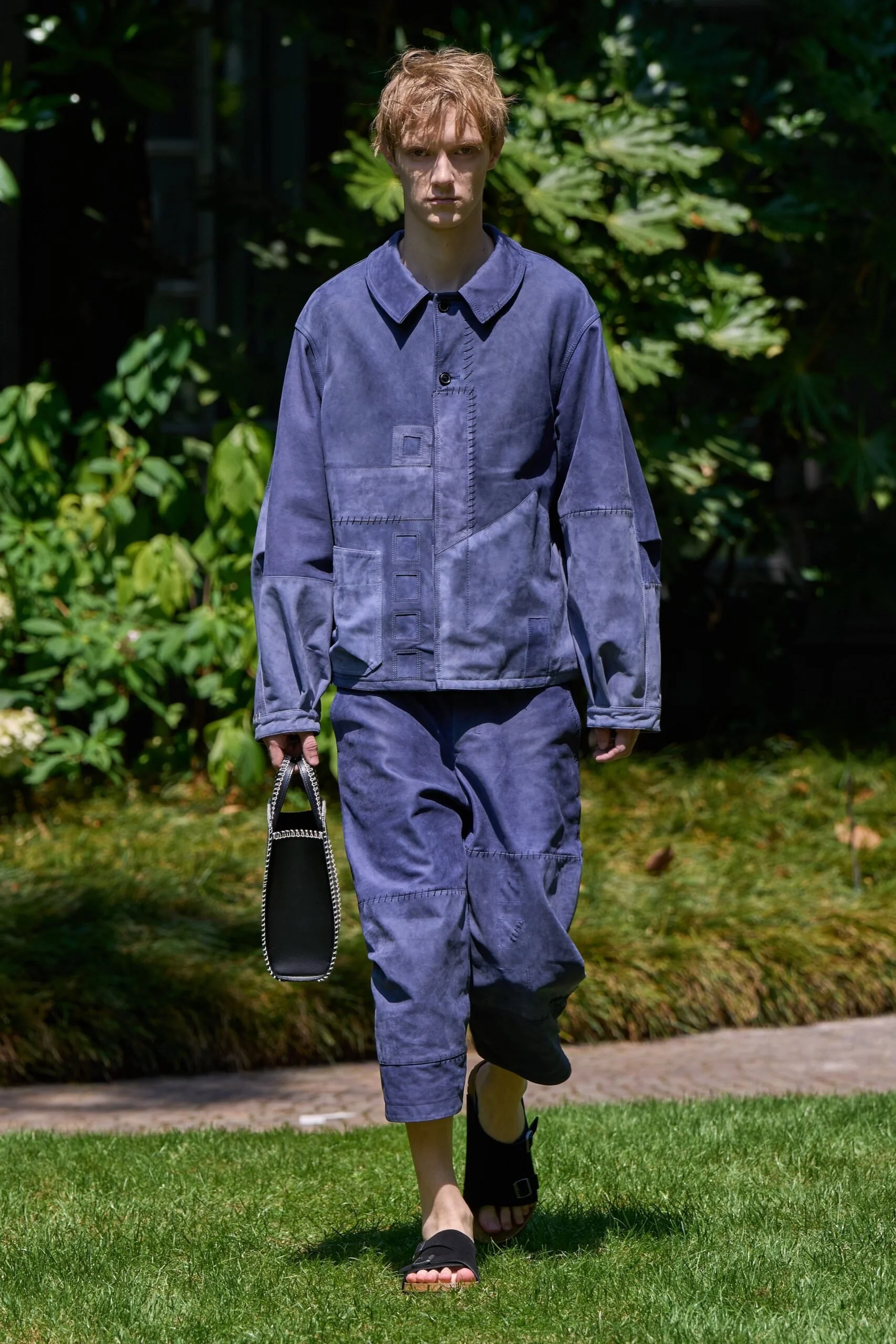
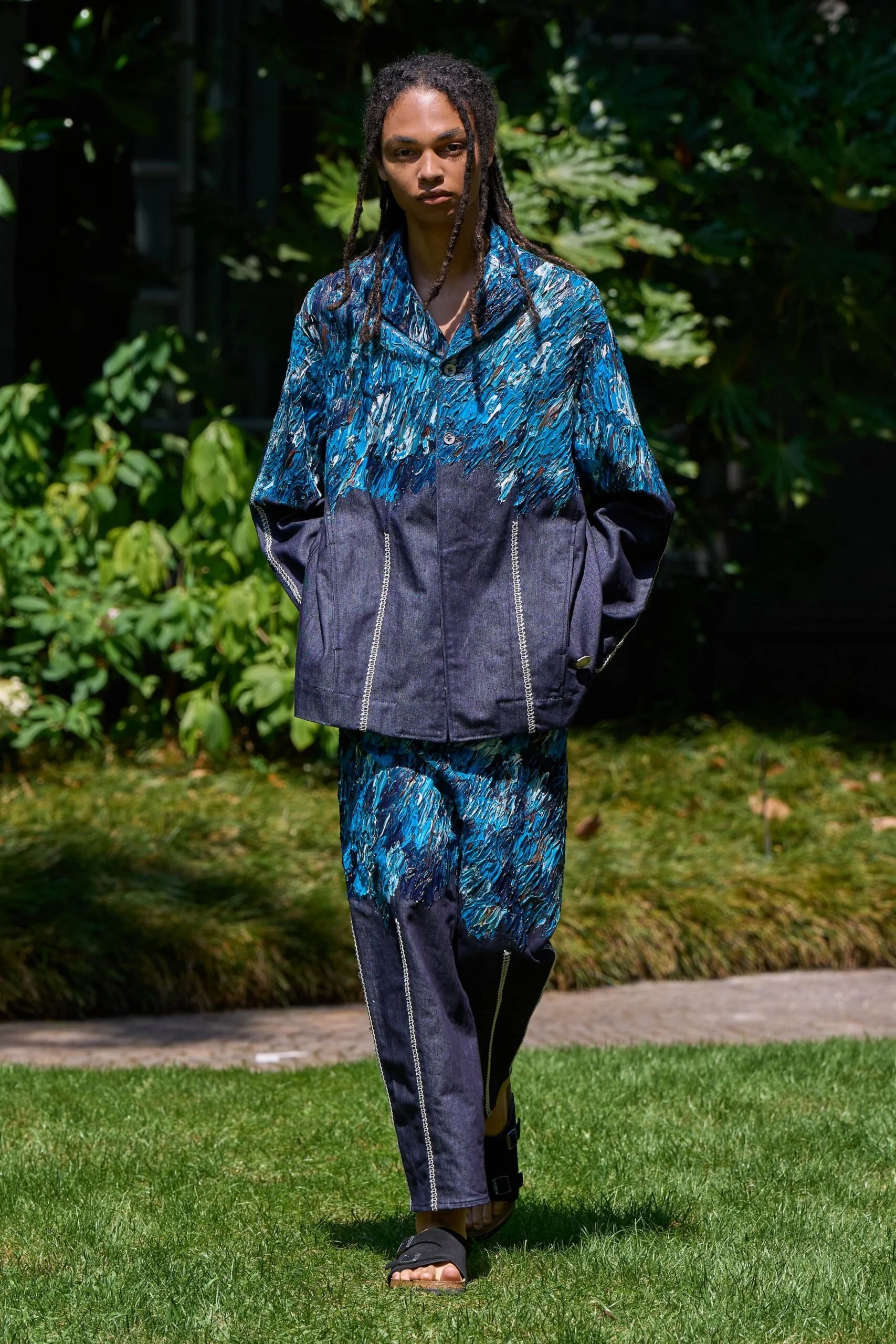
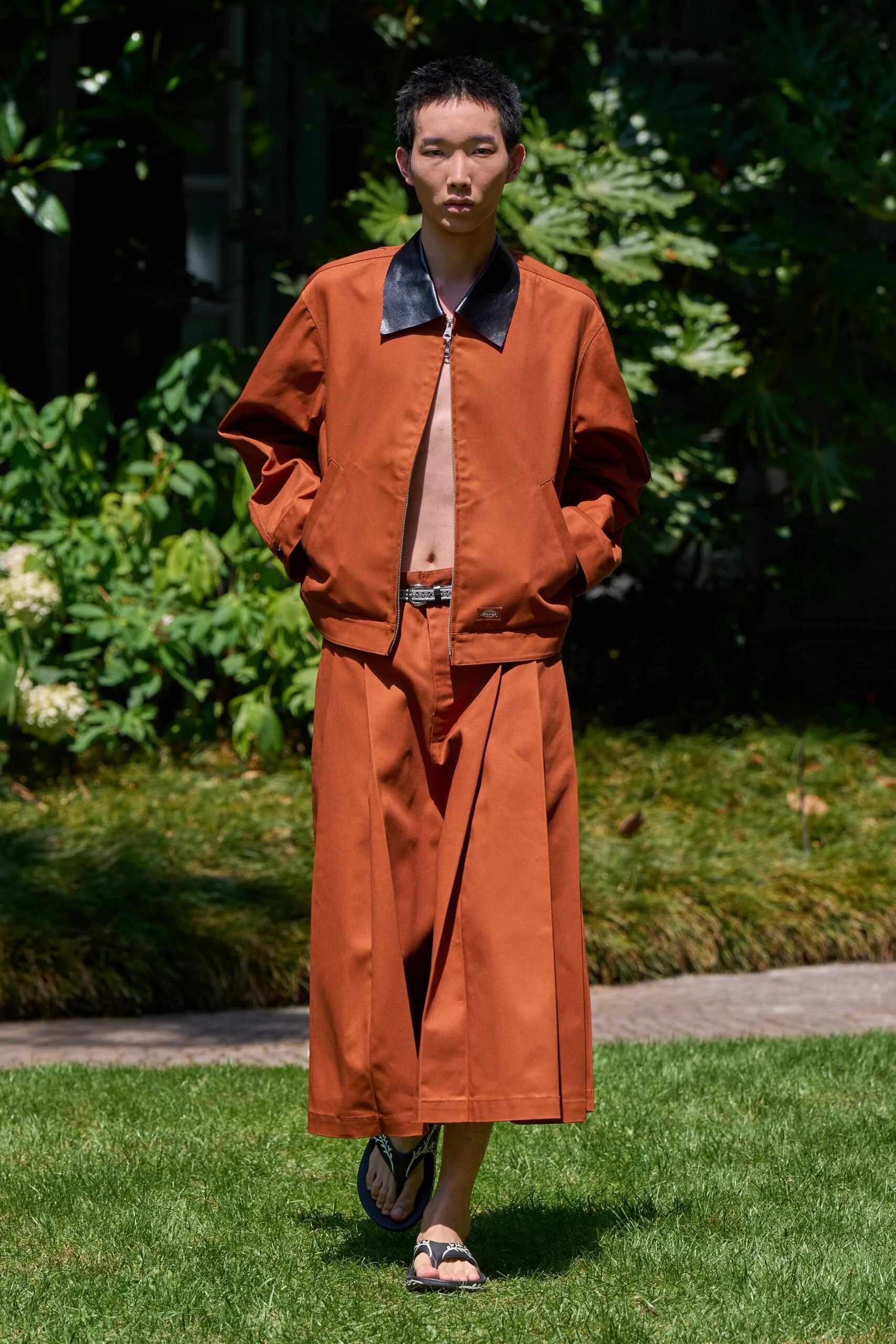
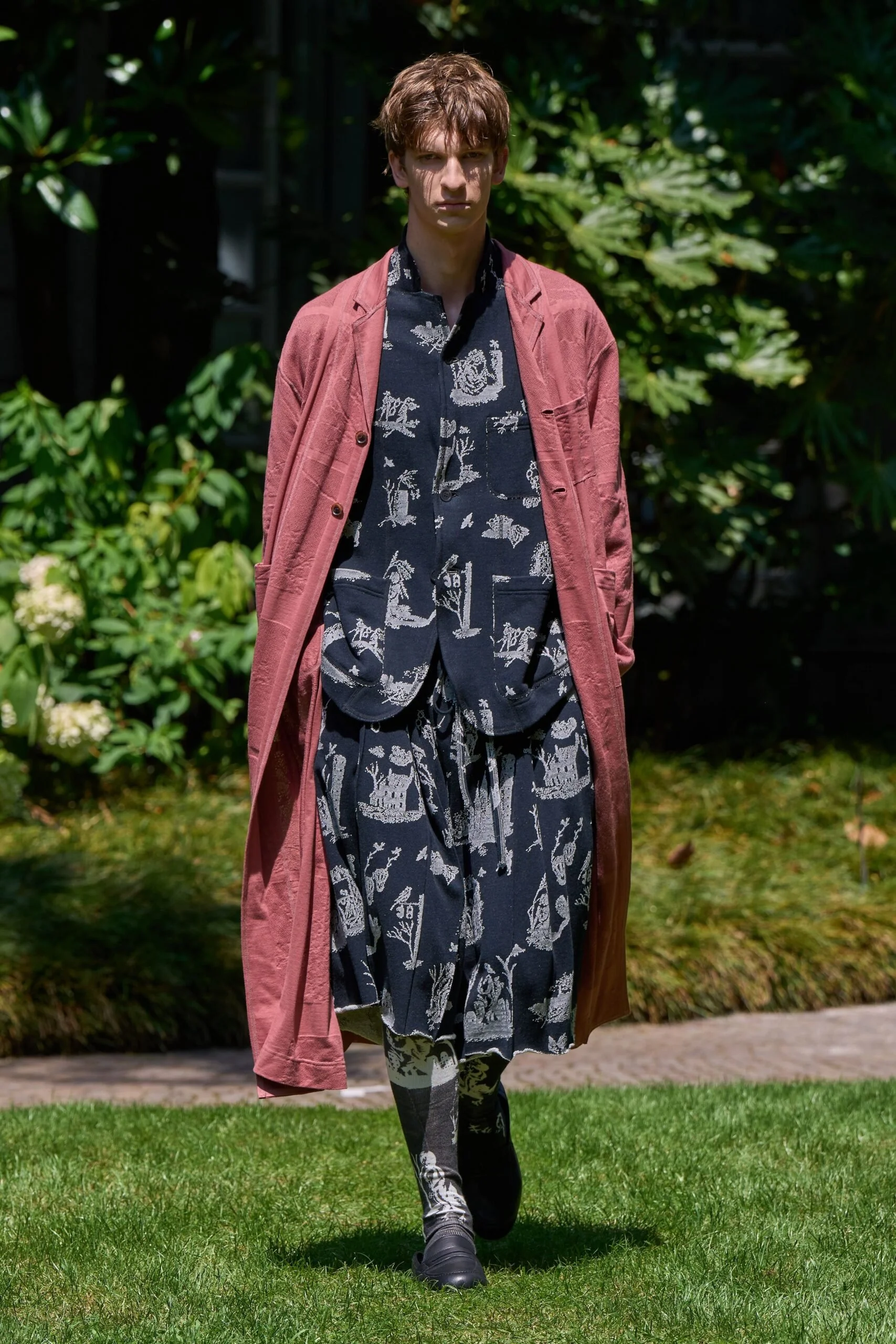
Hand-painted brushstrokes animated long dusters and tailored jumpsuits, while crinkled textiles, patchwork constructions and gentle tie-dye treatments added depth without disrupting the calm mood of the collection. Although experimental in execution, the silhouettes themselves remained grounded and highly wearable, balancing artistic expression with everyday practicality.
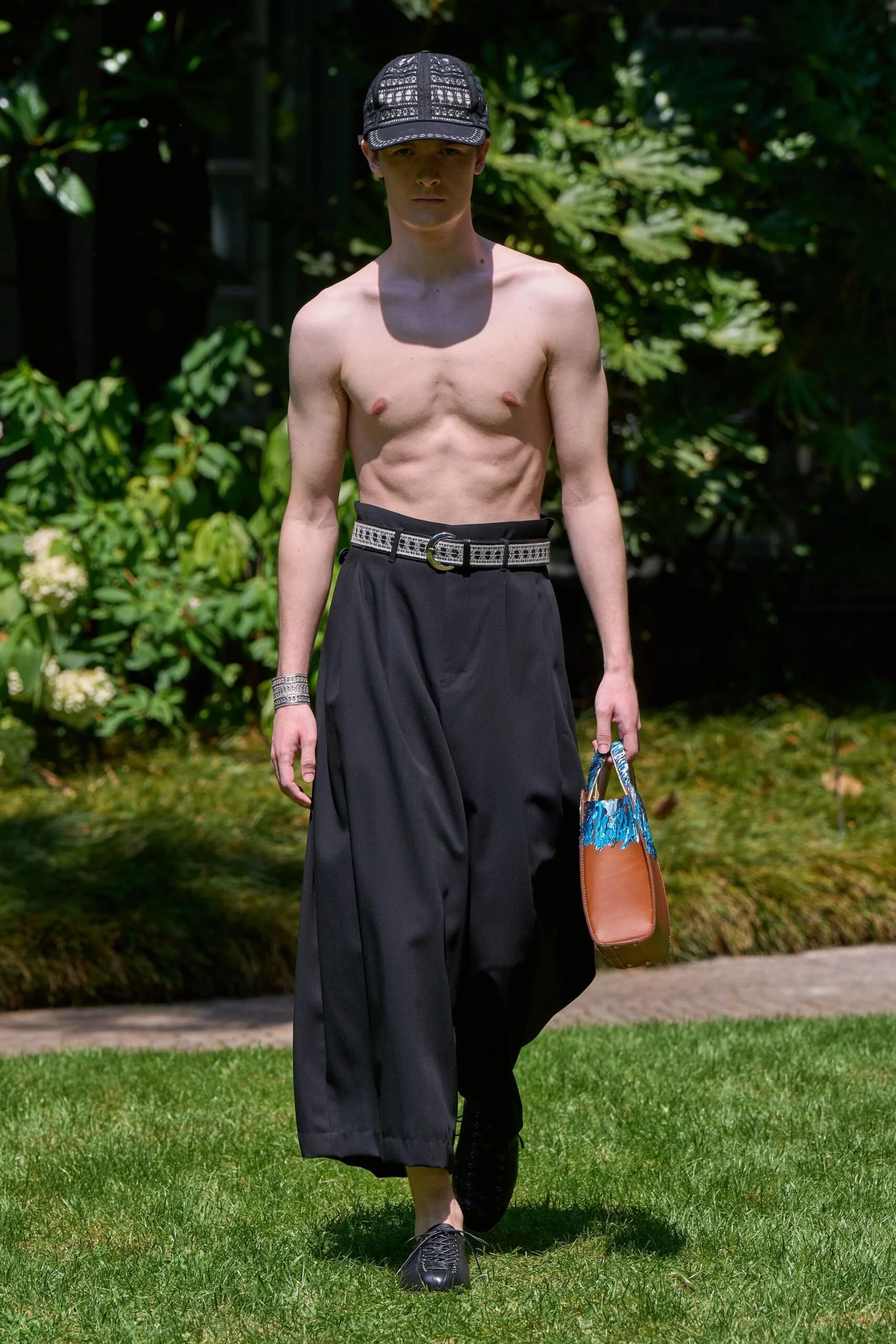
Stephen Jones' sculptural hats completed many of the looks, adding another layer of visual intrigue without overwhelming the understated elegance of the clothing.
Finding Newness in the Ordinary
Backstage, Kozuka reflected on the constant pressure within fashion to produce something entirely new each season.
His response was refreshingly simple: instead of inventing new worlds, he chose to adjust his focus on the one already around him. That philosophy runs through every aspect of the collection, where ordinary neighbourhood streets, fleeting memories and familiar routines become fertile ground for creativity.
It is a reminder that innovation often begins with observation rather than reinvention.
A Thoughtful Milan Debut
Spring/Summer 2027 marked an assured first appearance for Shinyakozuka on Milan's official calendar.
Rather than relying on theatrical concepts or headline-grabbing statements, Kozuka presented a deeply personal collection built on subtle storytelling, refined craftsmanship and emotional nuance. His quiet approach stood apart from many of the week's louder presentations, offering one of Milan's most contemplative moments.
Sometimes the most original perspective comes simply from looking at familiar things differently.
For Shinya Kozuka, blurred vision has never looked so clear.