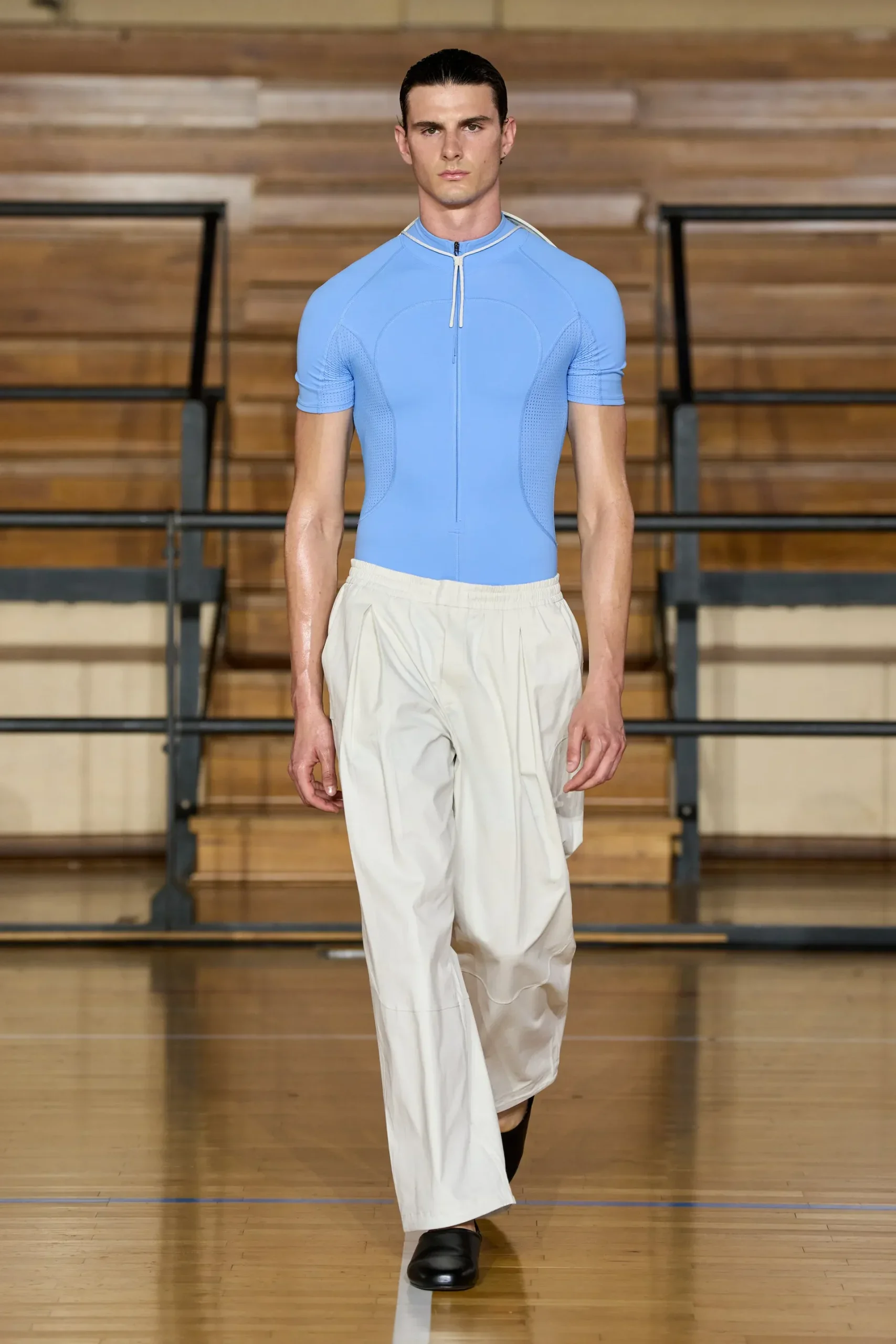
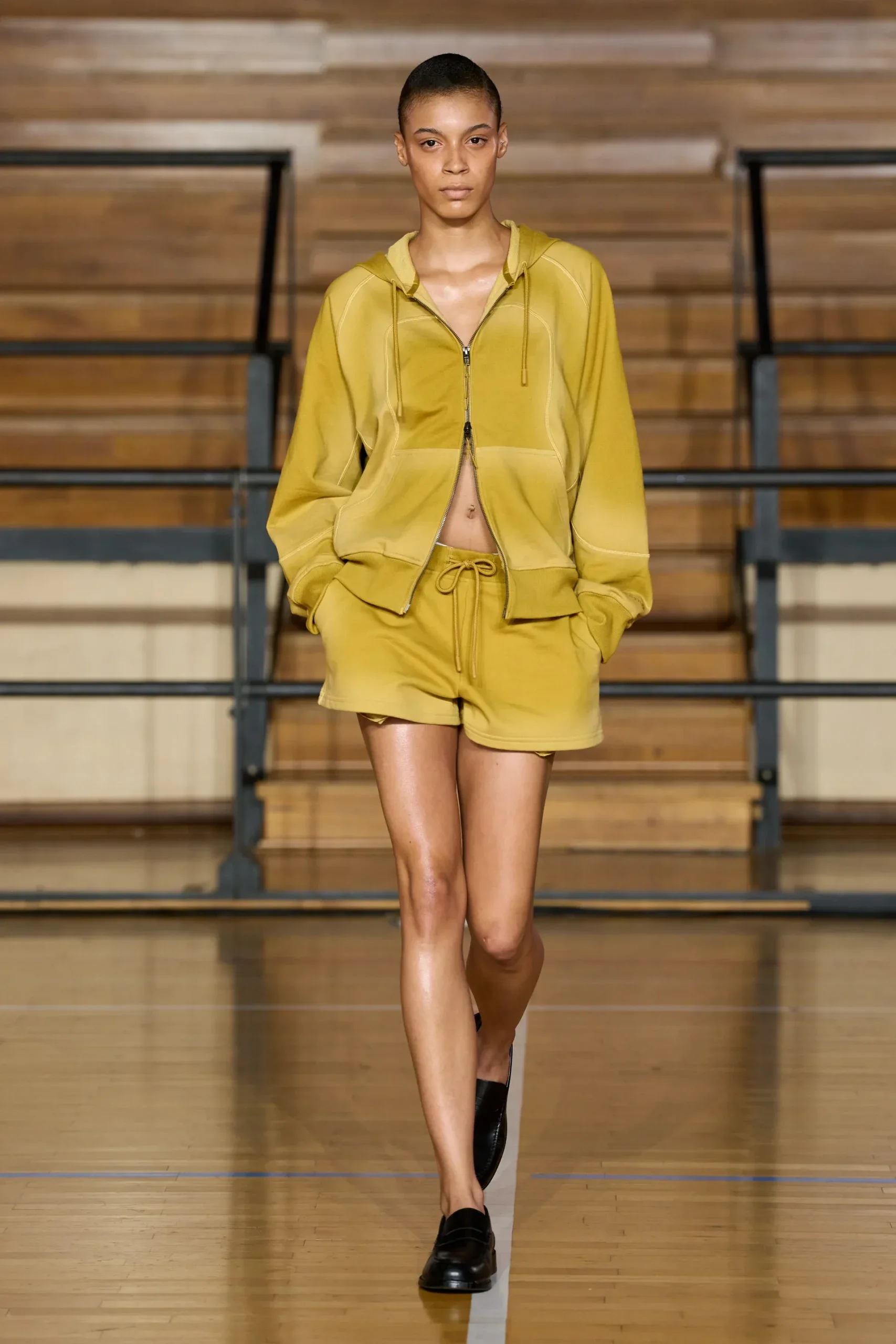
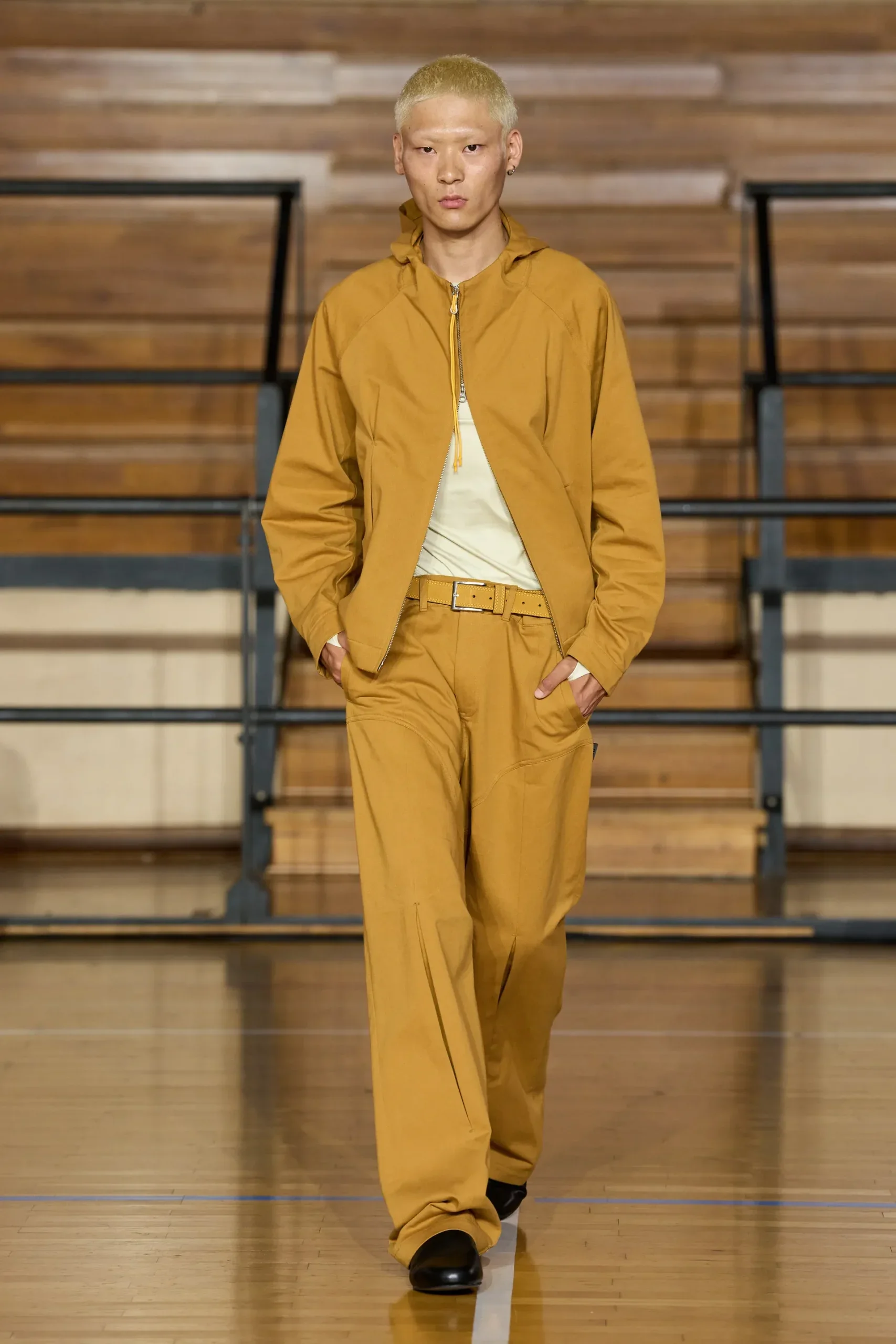
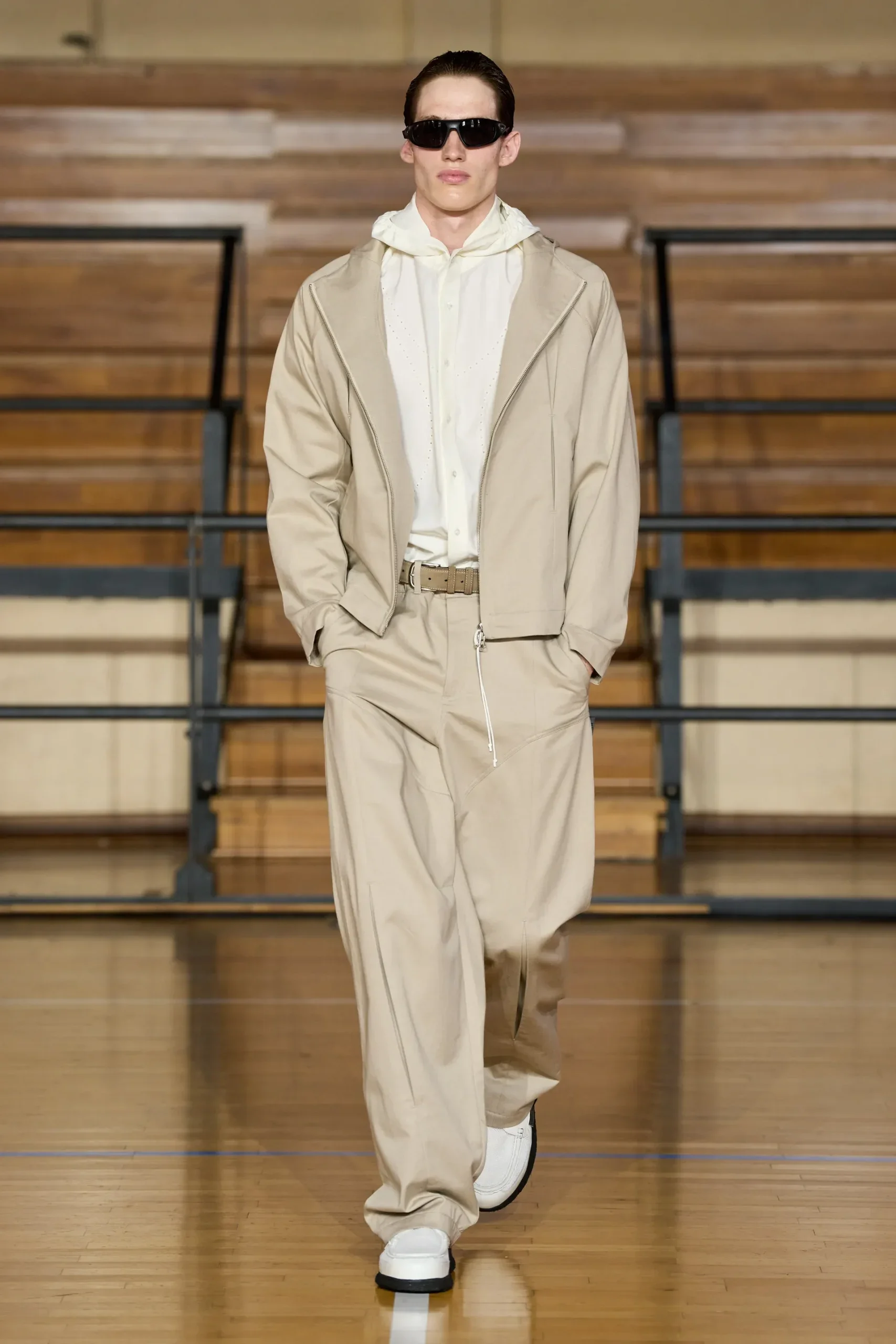
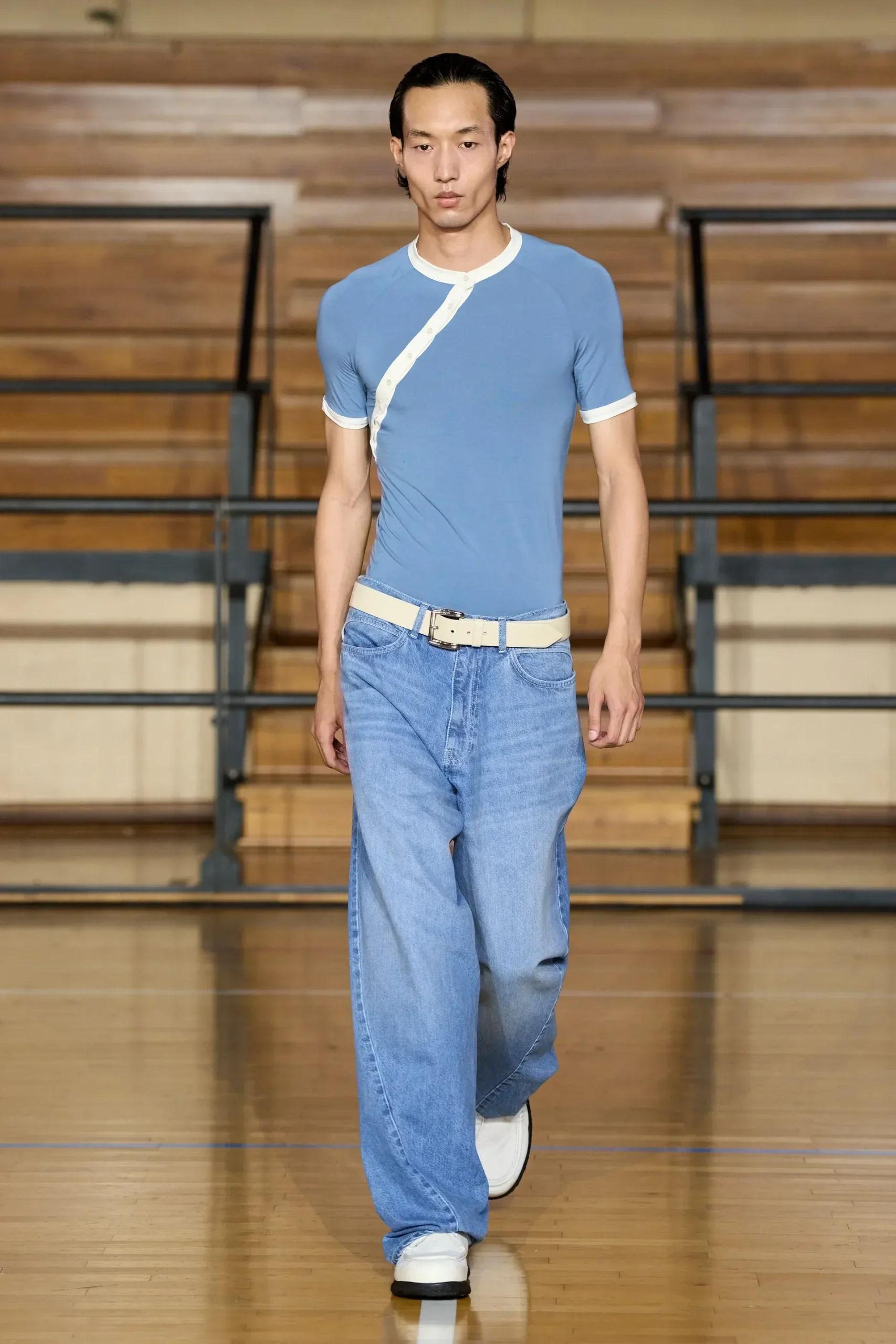
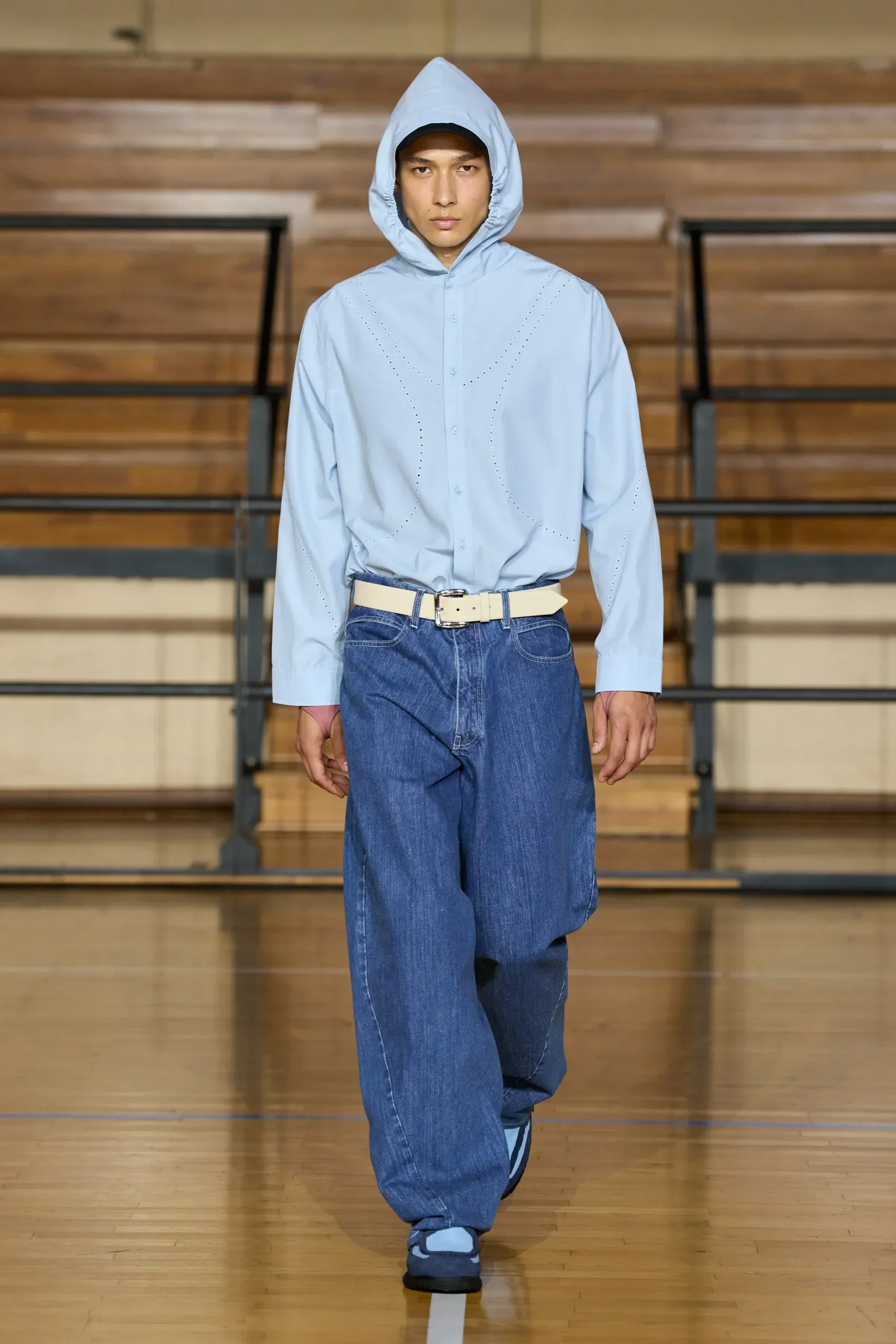
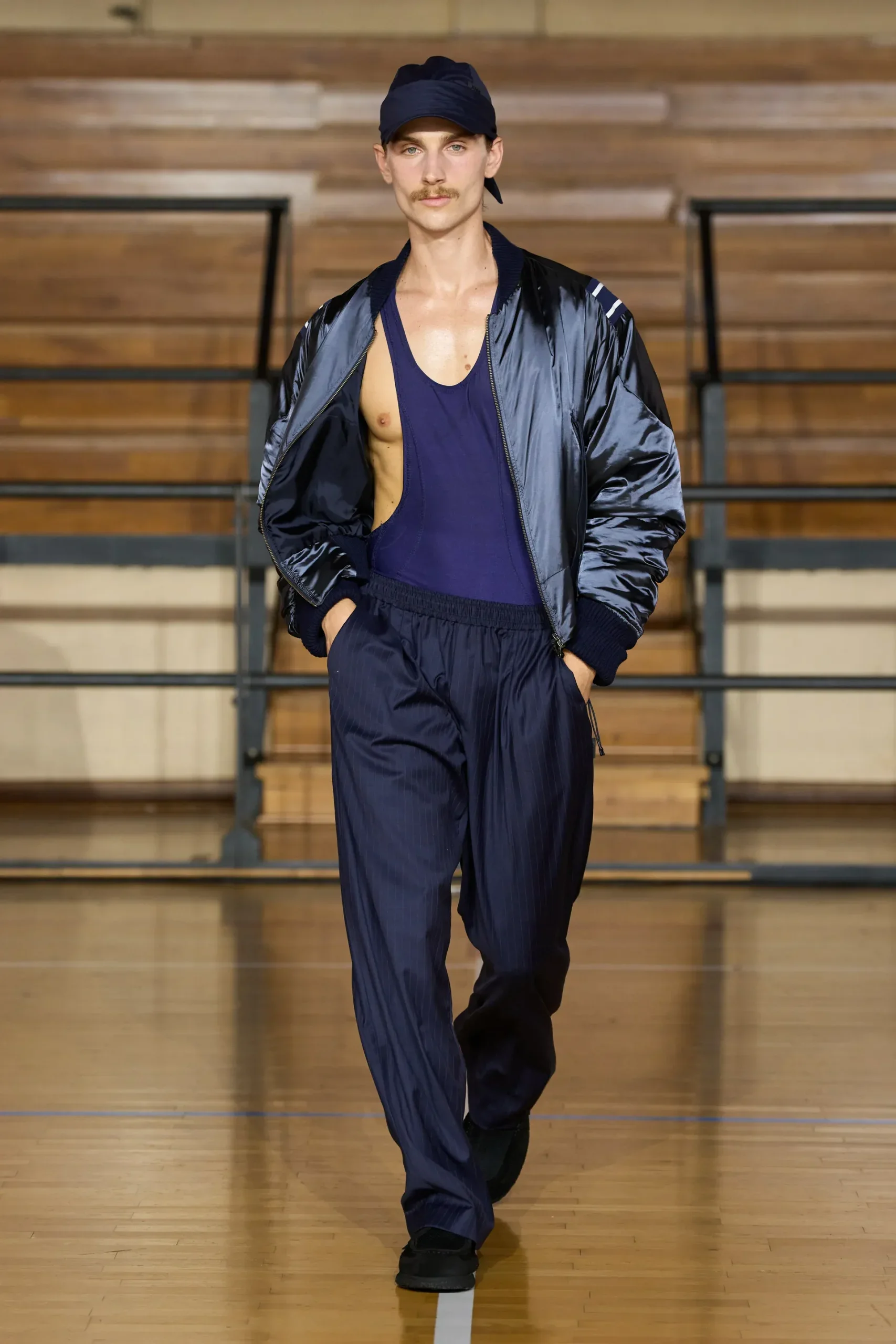
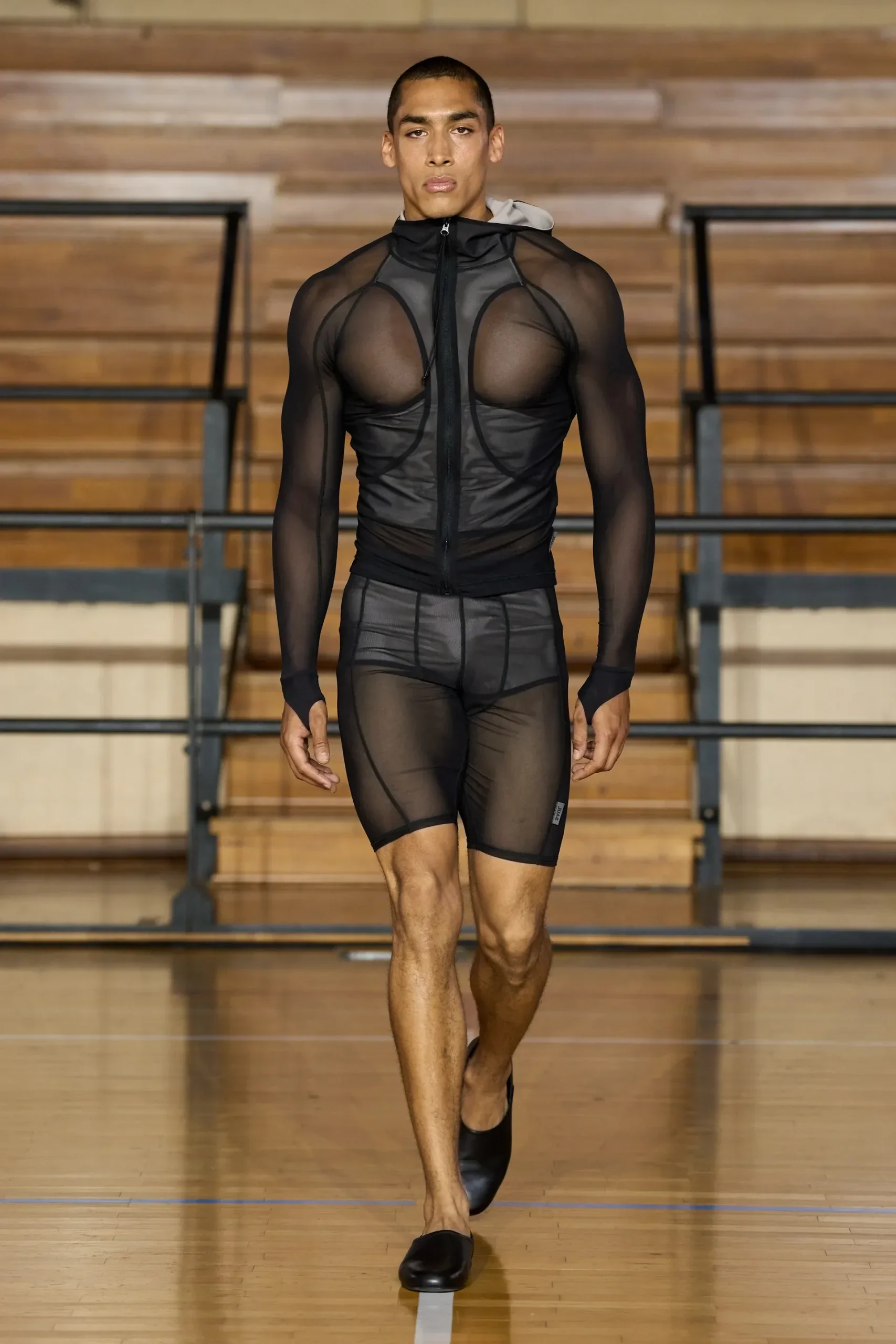
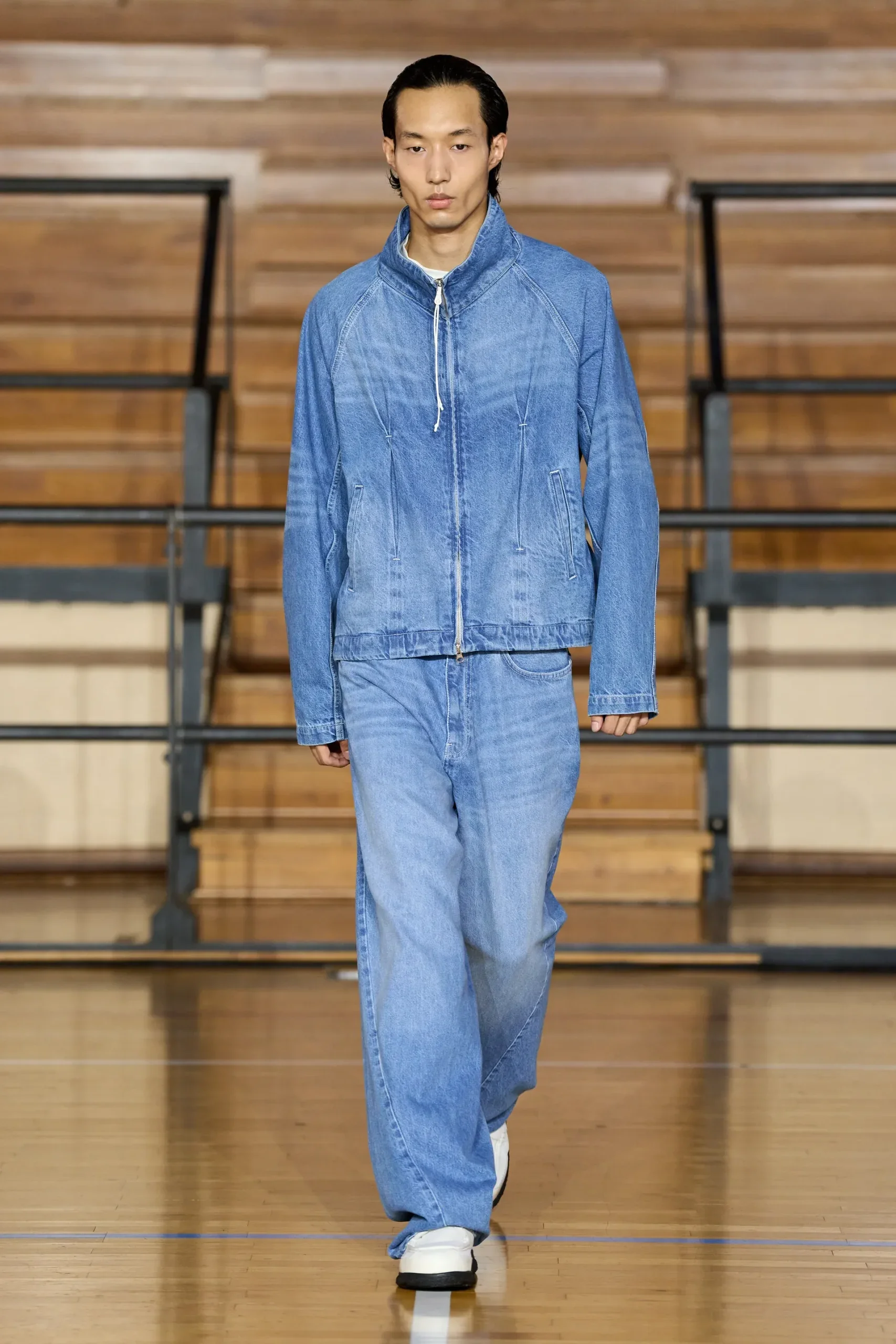
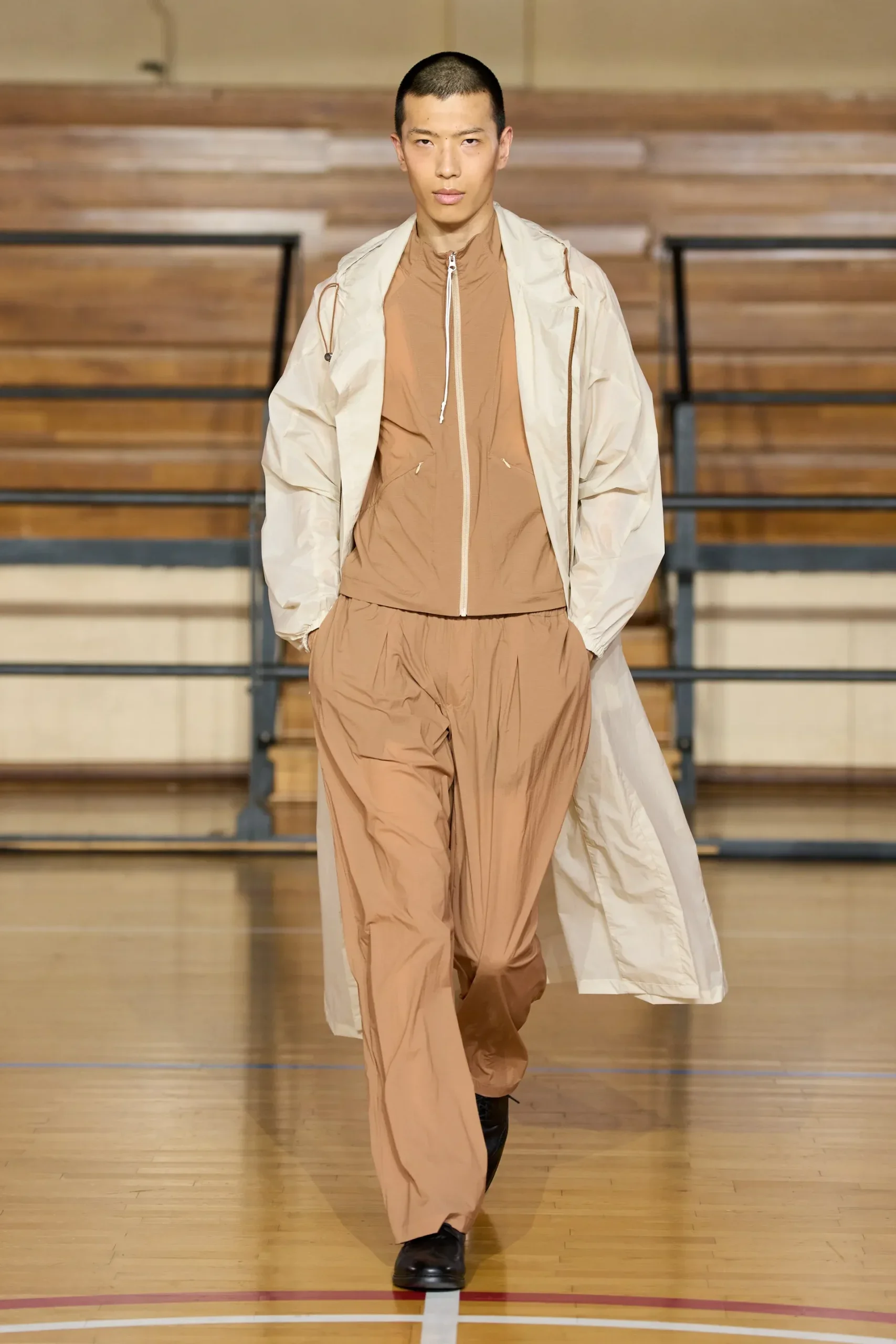
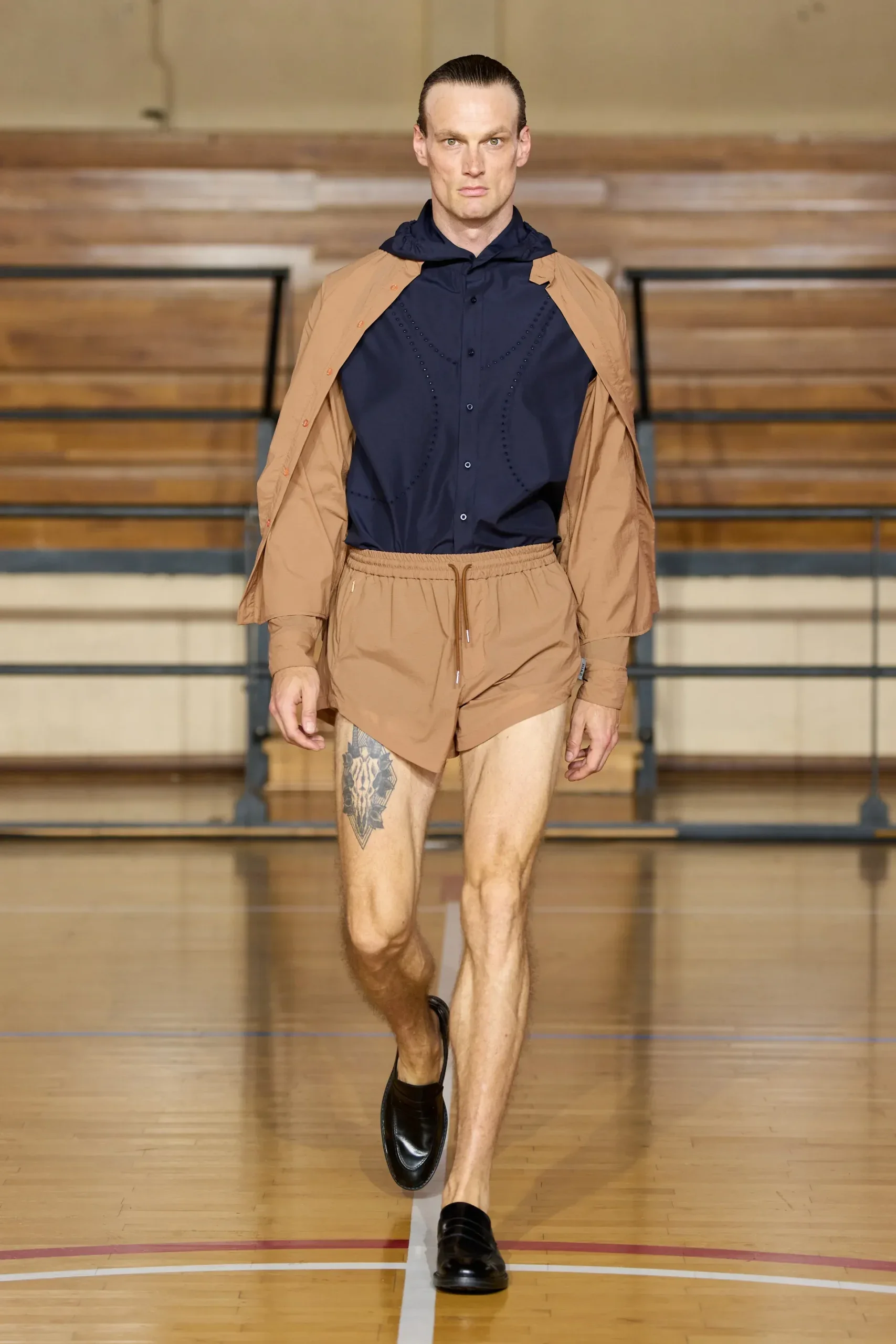
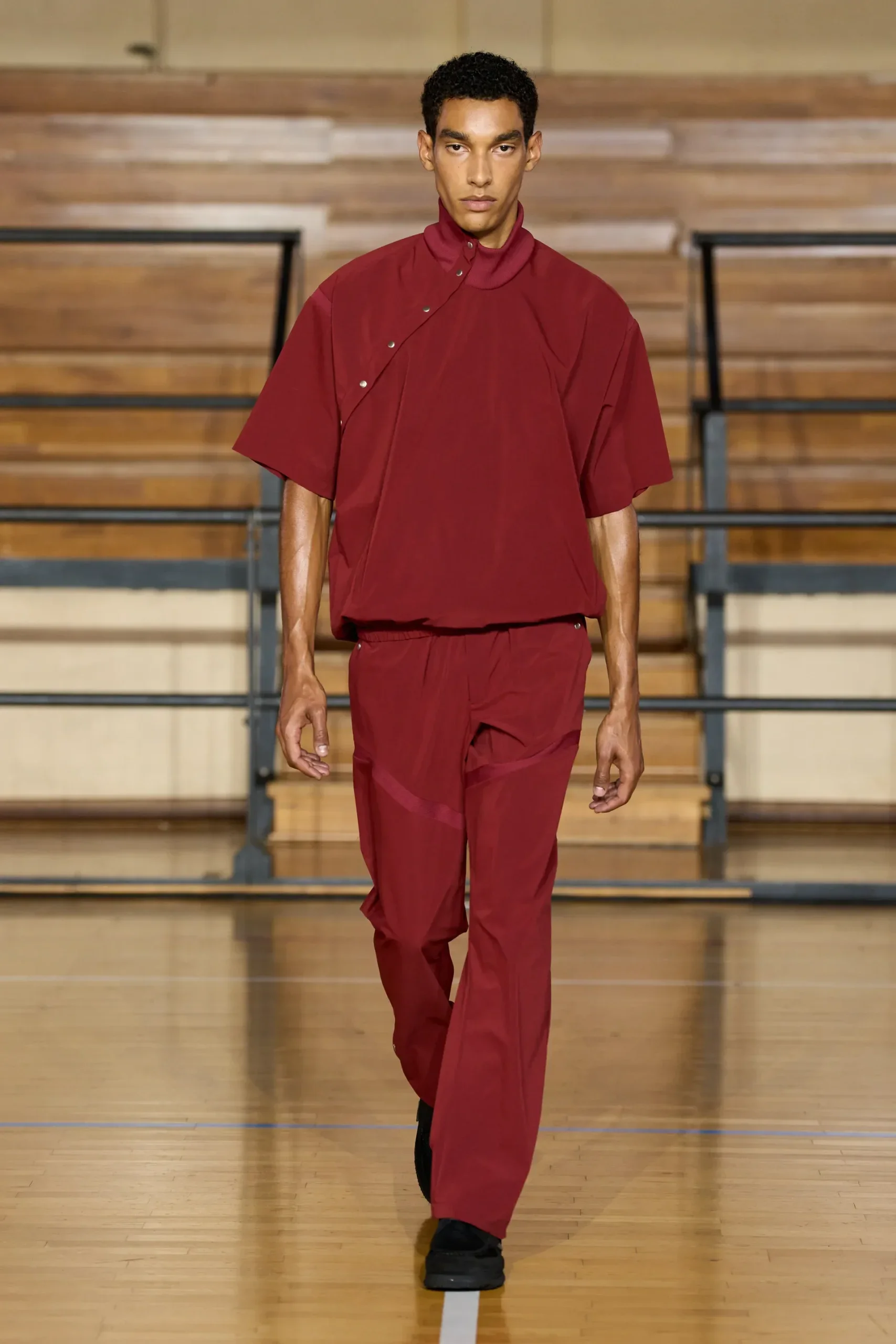
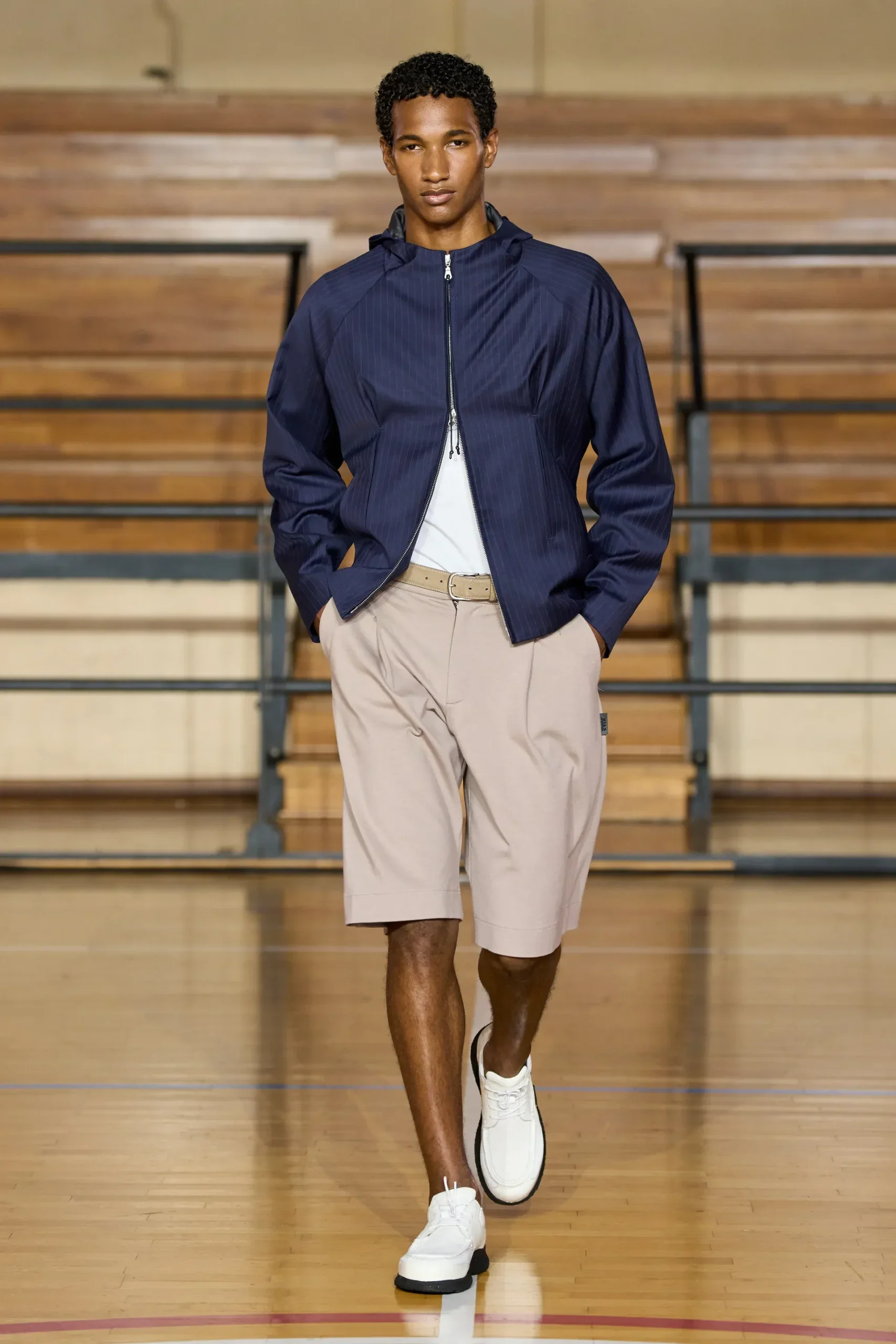
Saul Nash Men’s Spring 2027
Few designers understand the relationship between clothing and the human body as instinctively as Saul Nash. Trained as both a fashion designer and choreographer, the British-Guyanese creative has built his reputation on garments that move with the body rather than restrict it. For Spring/Summer 2027, presented during Milan Men's Fashion Week, Nash expanded that philosophy by exploring an unexpected source of inspiration: vintage corsetry and the history of body-conscious dressing.
Rather than recreating traditionally feminine silhouettes, the designer examined how garments shape confidence, posture and identity, drawing parallels between mid-century pin-up fashion and contemporary athletic uniforms. The result was a collection that blurred the boundaries between tailoring, sportswear and performance clothing while continuing to challenge conventional ideas of masculinity.
Reimagining the Pin-Up
The collection began with a provocative question: was corsetry ever truly restrictive, or could it also be empowering?
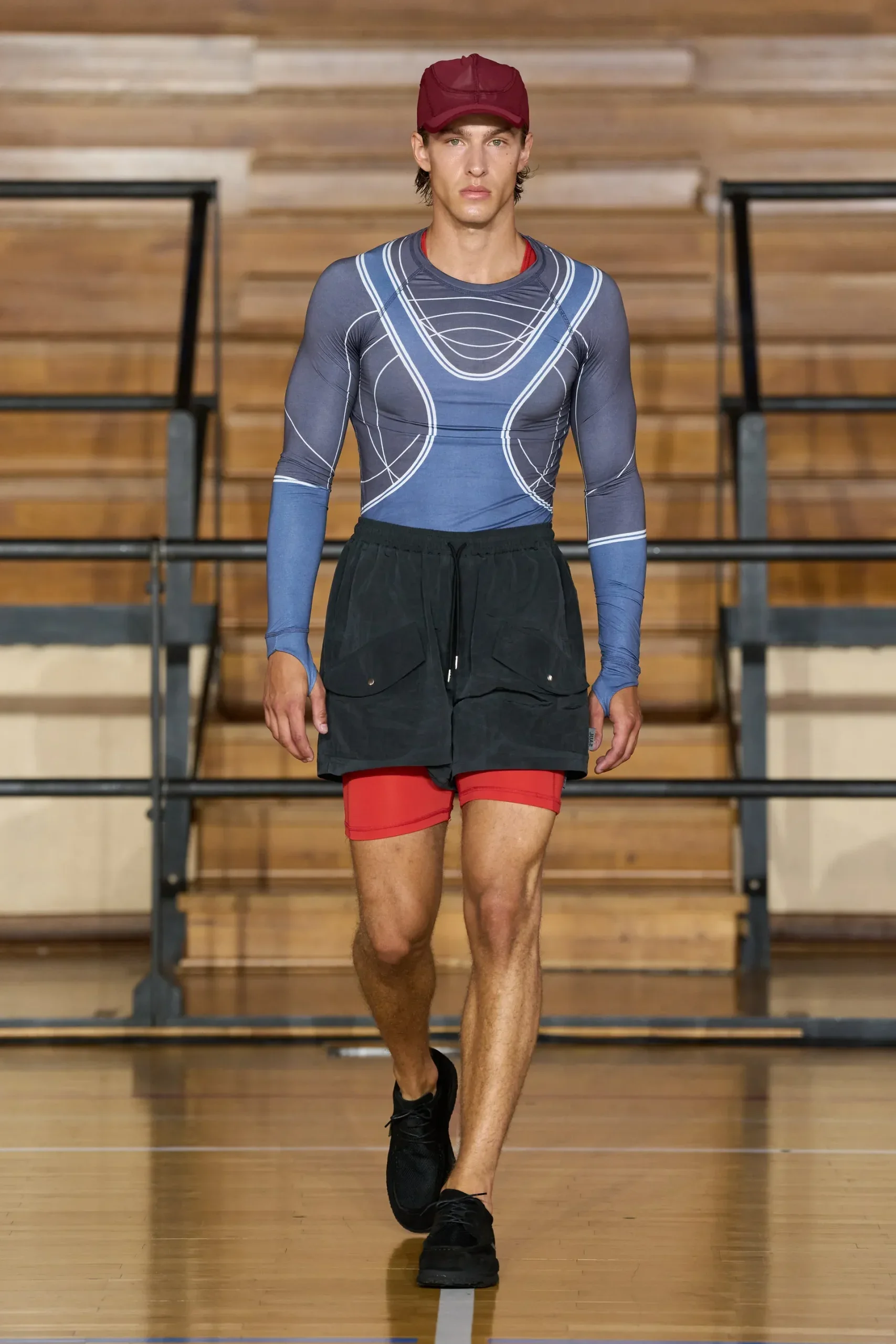
Rather than providing a definitive answer, Nash translated the conversation into menswear, exploring how modern sports uniforms similarly sculpt and celebrate the body. Compression garments, ergonomic cuts and technical construction all share surprising similarities with historical shapewear, albeit designed today for movement and athletic performance.
The comparison felt timely.
In an era increasingly defined by fitness culture and body consciousness, Nash invited audiences to reconsider how clothing influences both physical performance and personal confidence.
Sportswear Built for Movement
Movement has always been central to Saul Nash's work, and Spring/Summer 2027 continued that commitment.
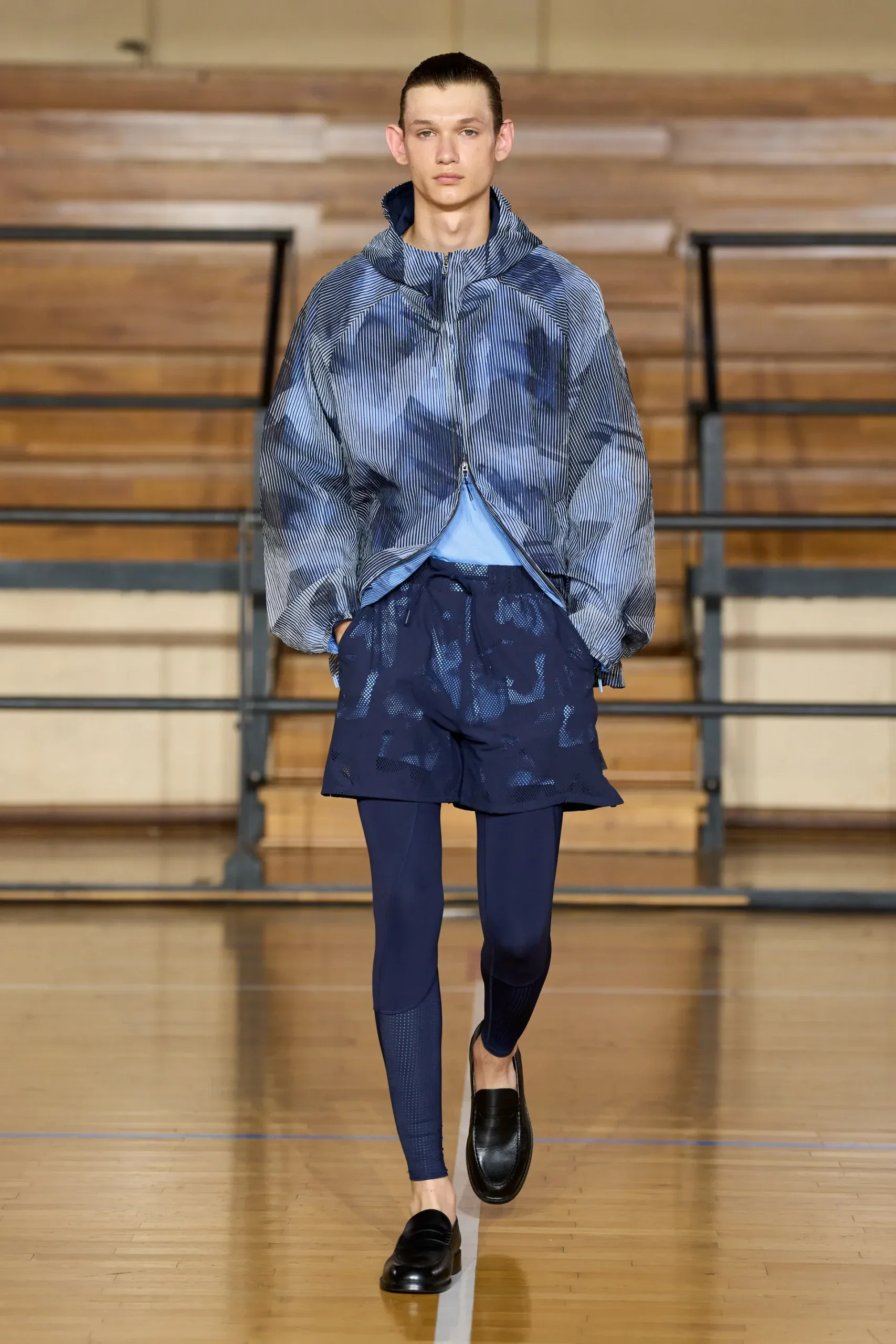
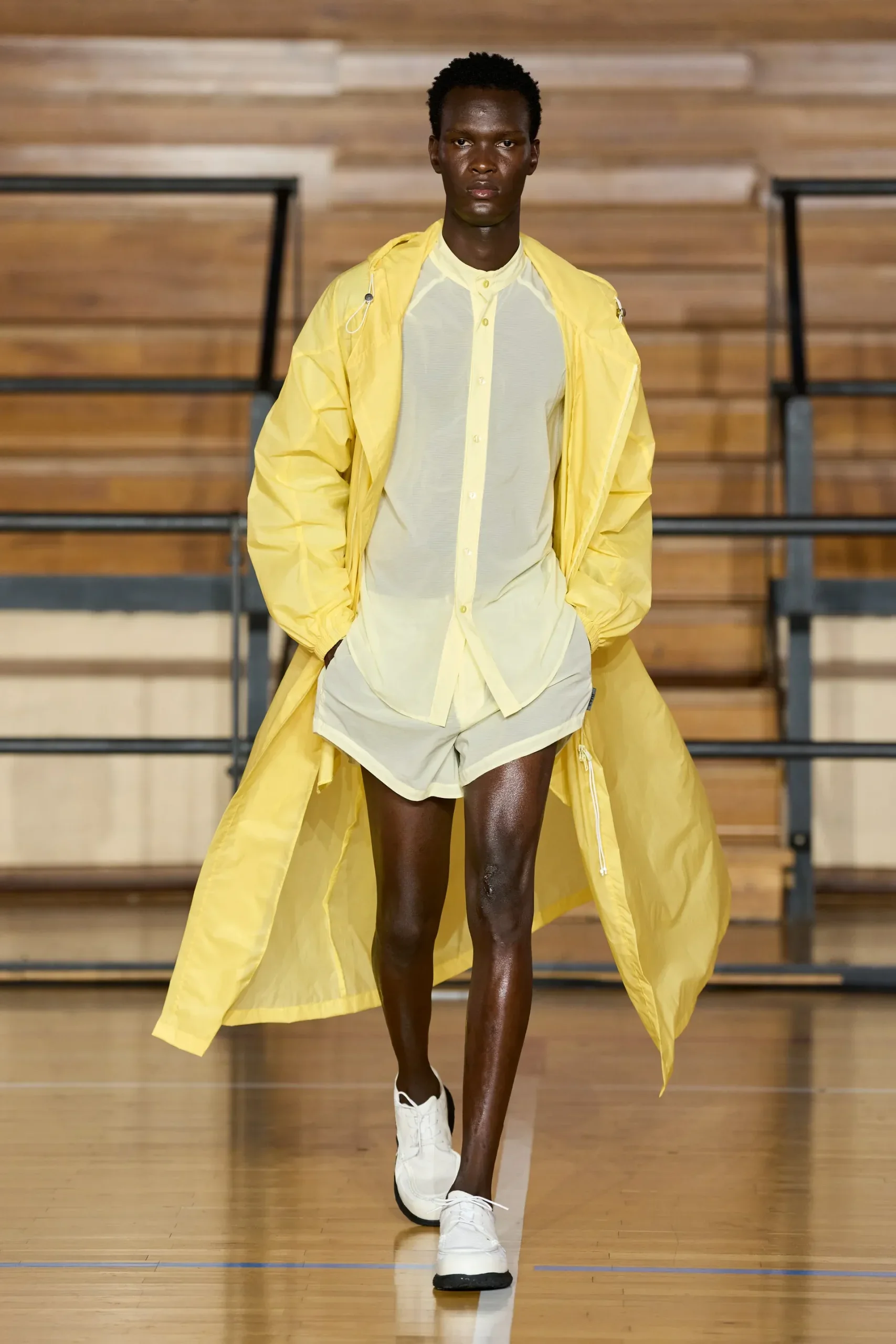
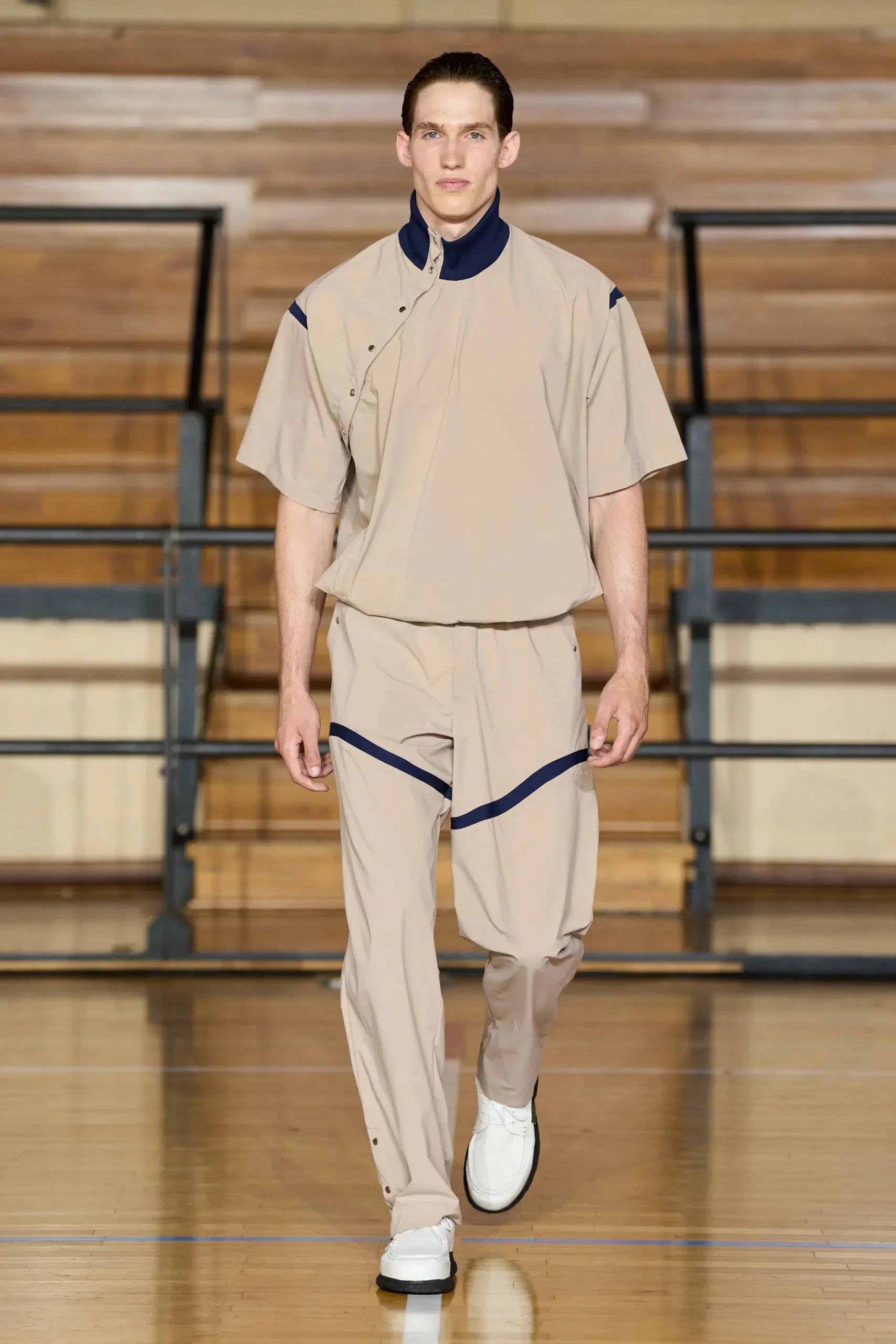
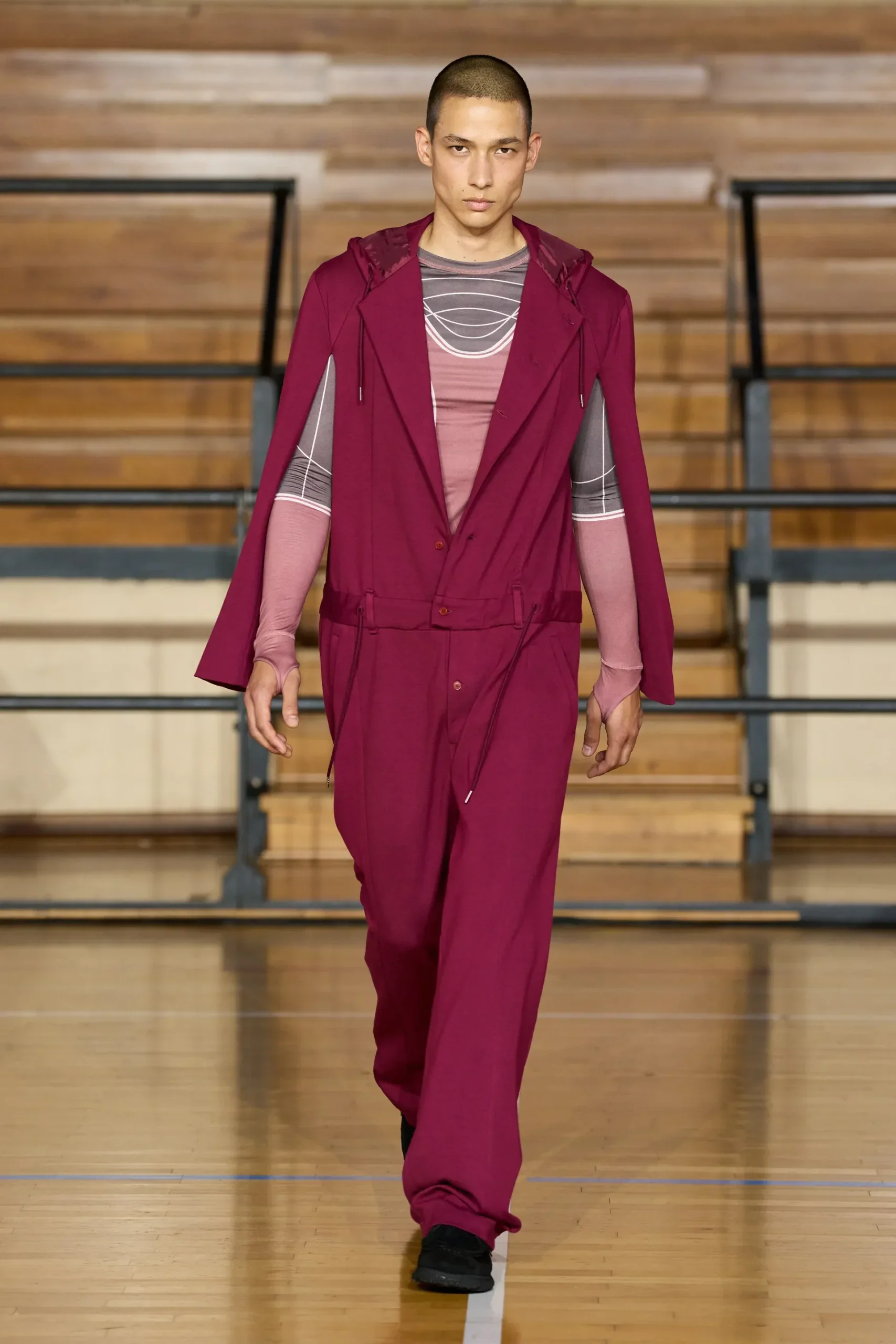
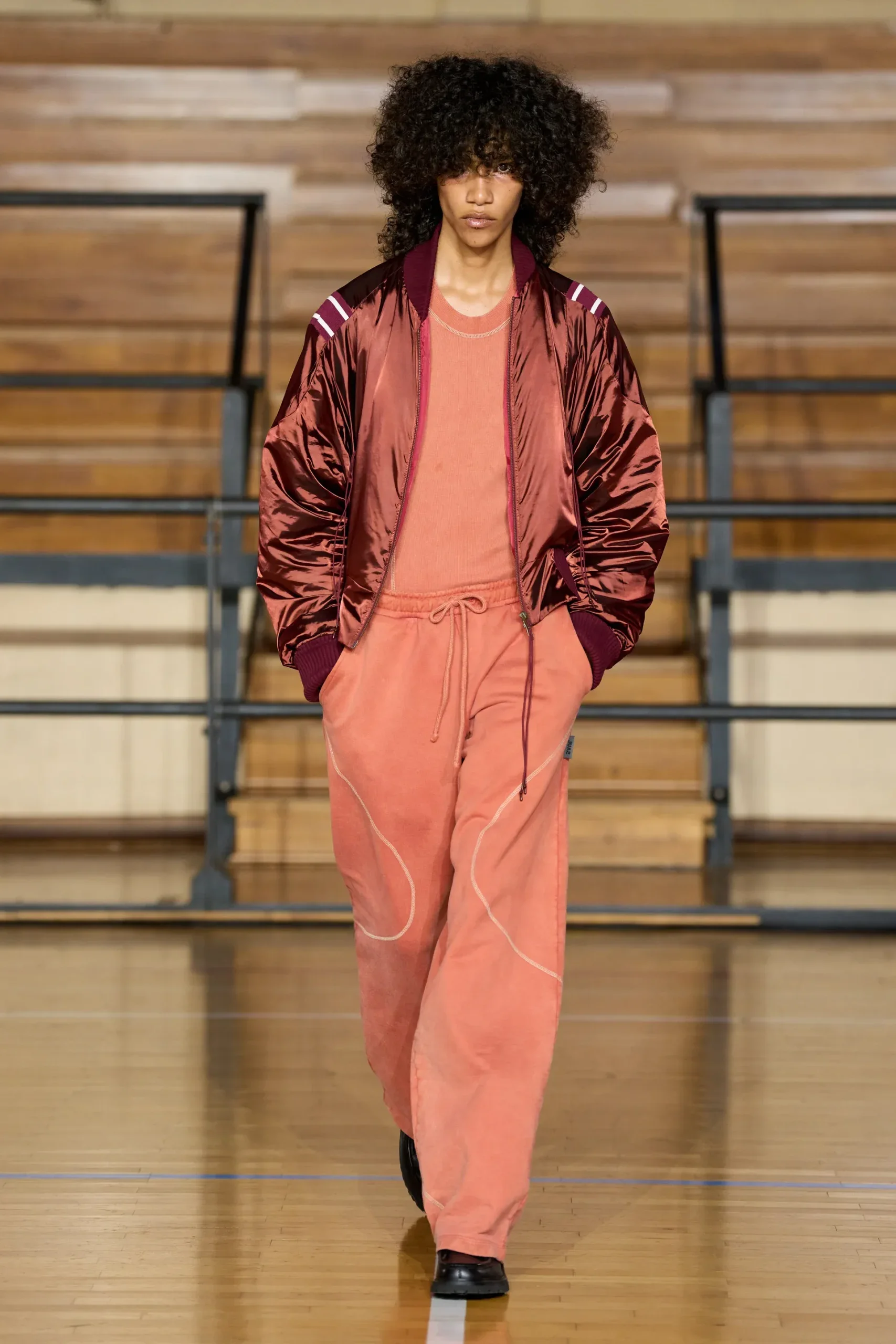
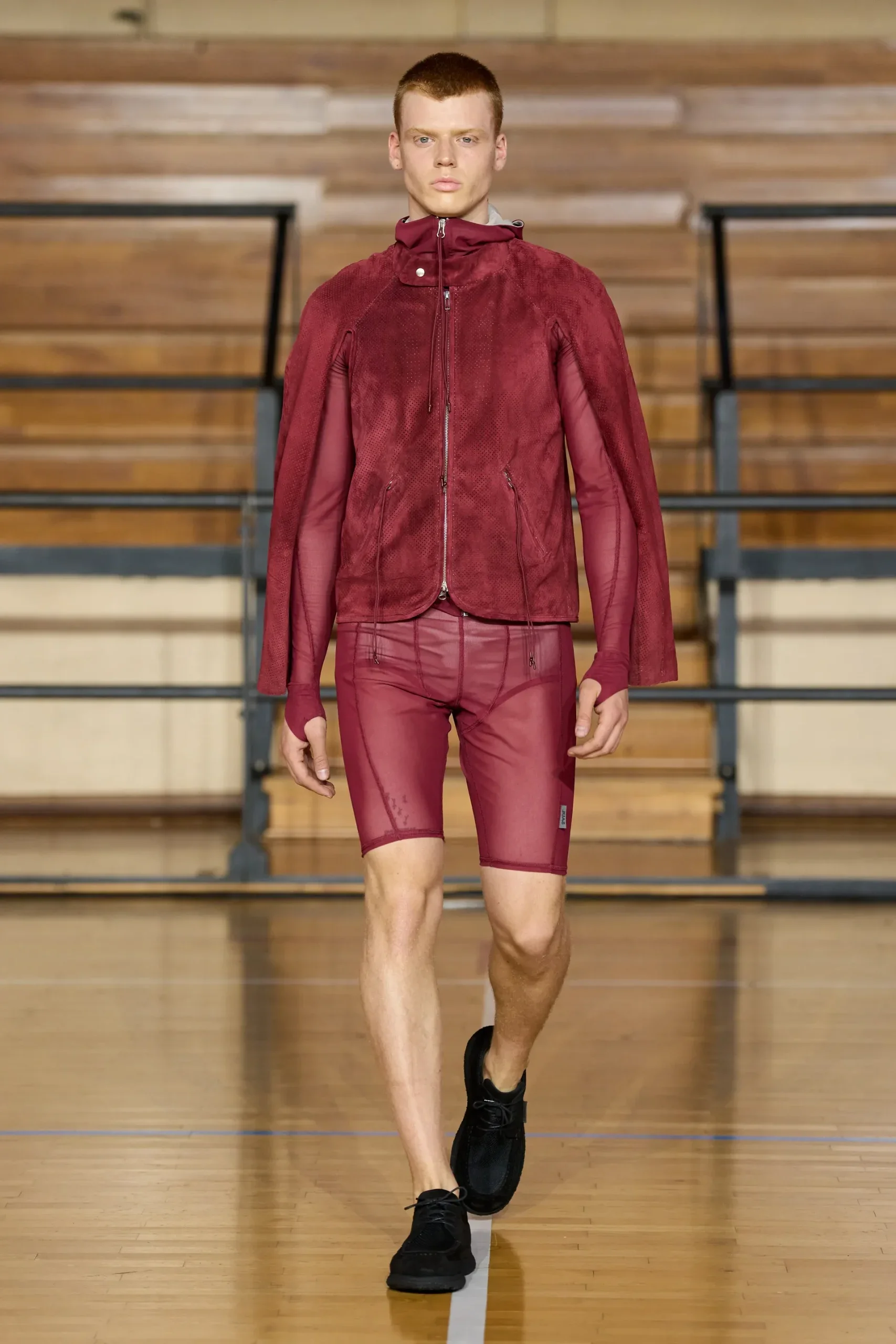
Athletic short shorts layered over leggings created elongated silhouettes that balanced functionality with contemporary styling. Lightweight hooded windbreakers and paper-thin nylon outerwear floated effortlessly around the body, while technical fabrics allowed garments to respond naturally to movement rather than resist it.
The result was sportswear that appeared engineered for real performance without sacrificing visual impact.
Comfort remained as important as aesthetics.
Tailoring Meets Athletic Performance
One of the collection's strongest achievements was its seamless fusion of traditional tailoring with technical sportswear.
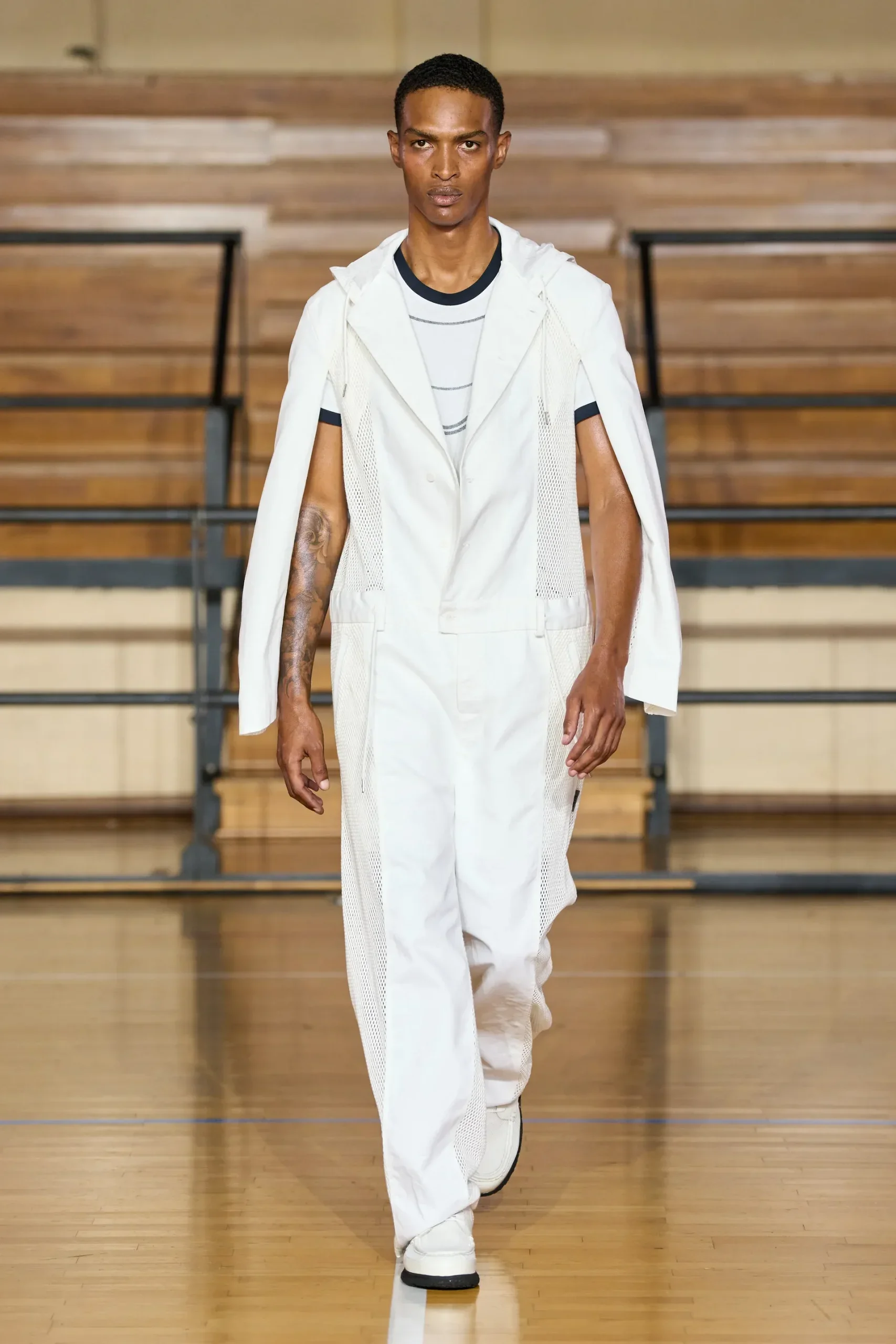
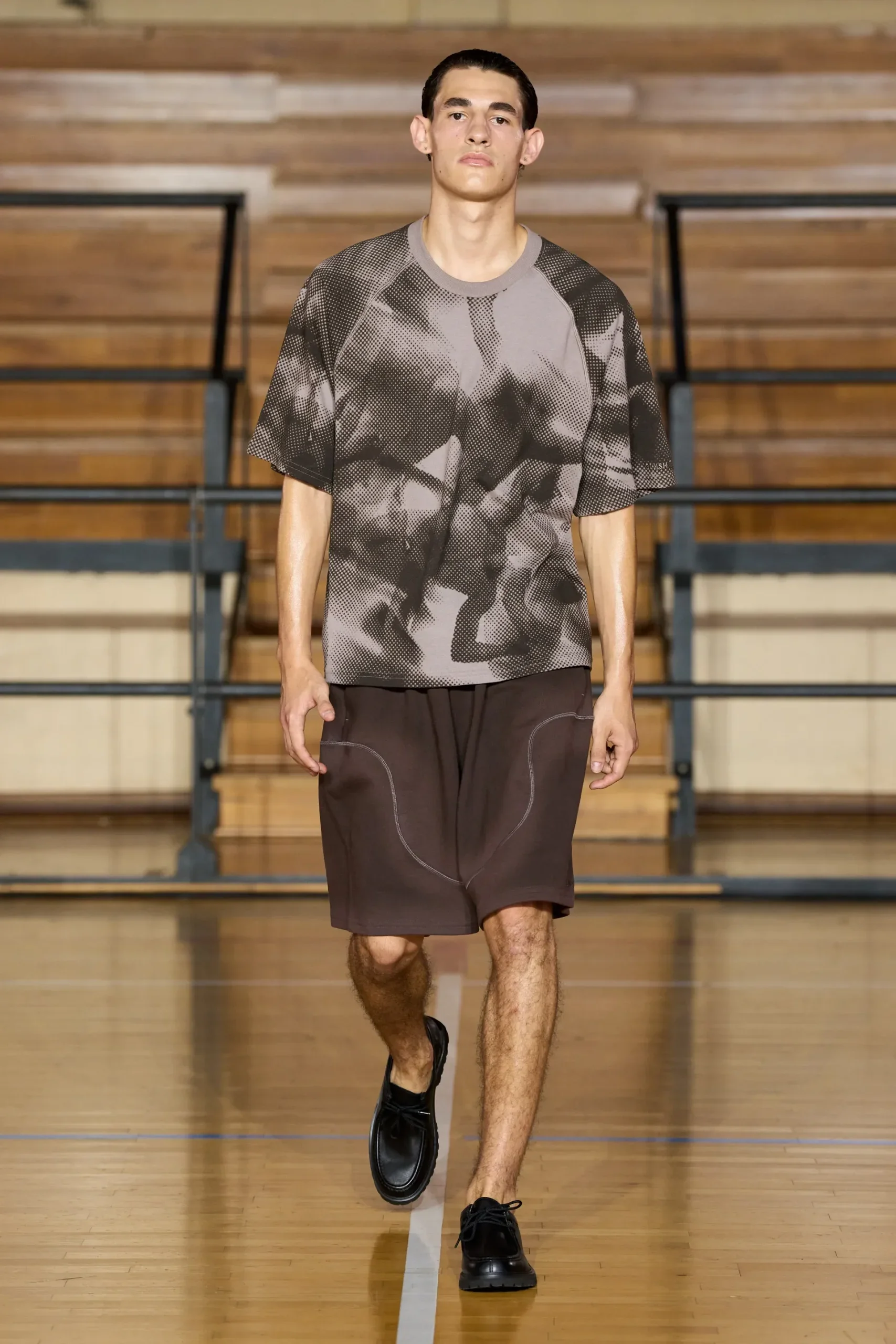
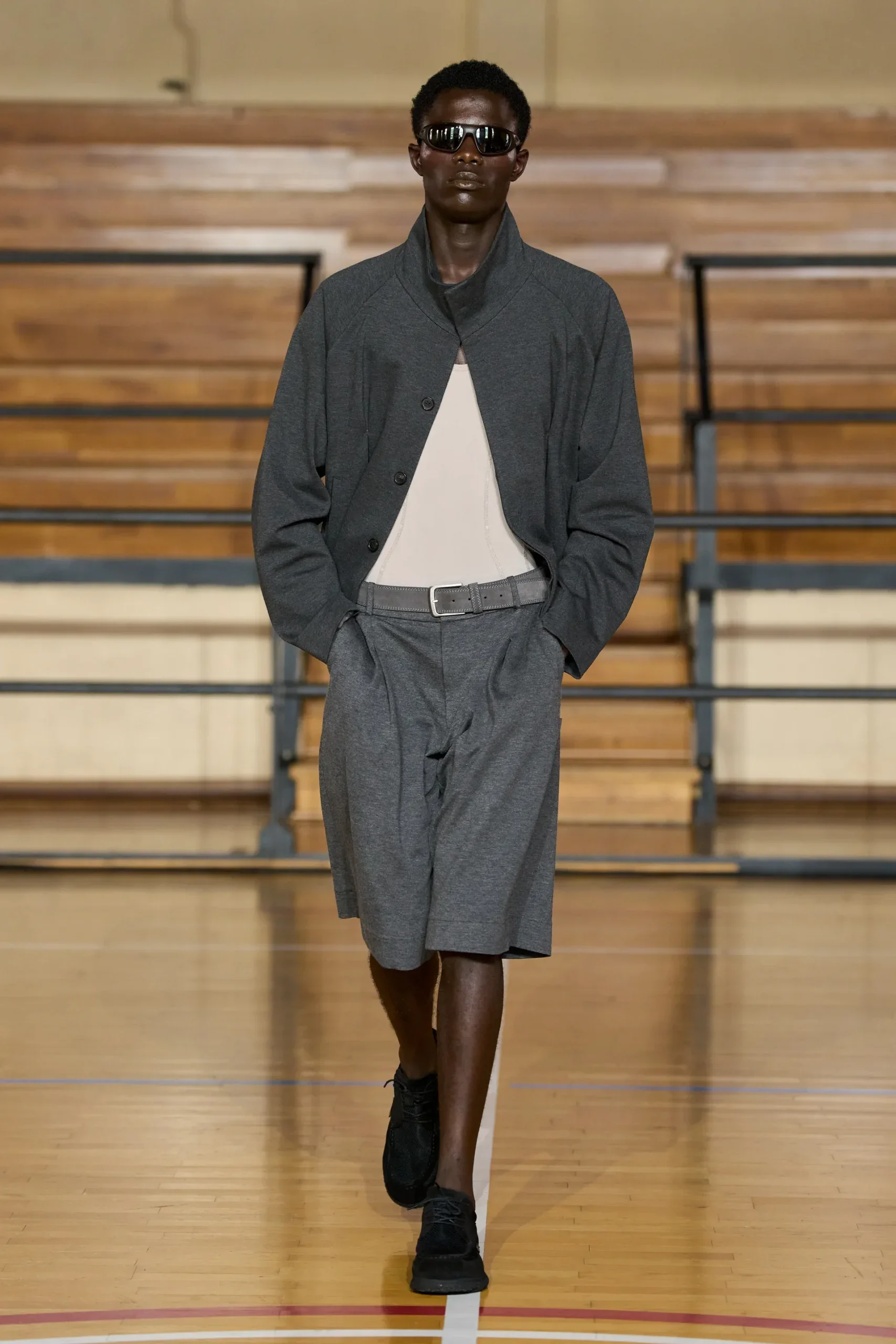
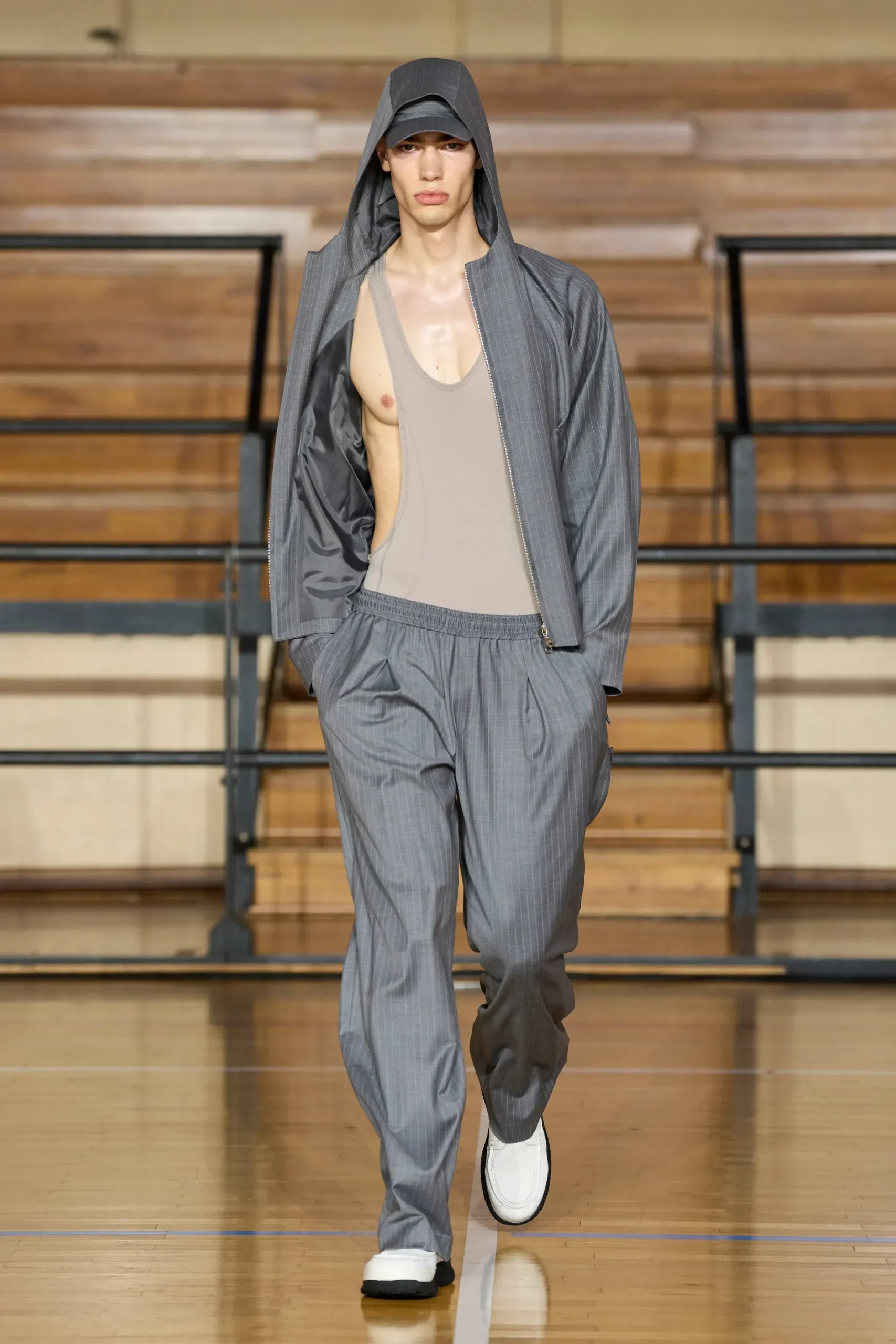
Pinstriped wool blazers incorporated gathered backs inspired by equestrian competition jackets, introducing flexibility without compromising structure. Tailored jackets appeared with integrated hoods, while Bermuda shorts replaced conventional trousers to create a wardrobe equally suited to the runway and everyday city life.
High-waisted trousers and shorts subtly referenced riding apparel, reinforcing the collection's dialogue between athletic function and sartorial elegance.
Rather than competing with one another, tailoring and sportswear became complementary design languages.
The Body as Design Inspiration
Throughout the collection, the body remained visible without feeling objectified.
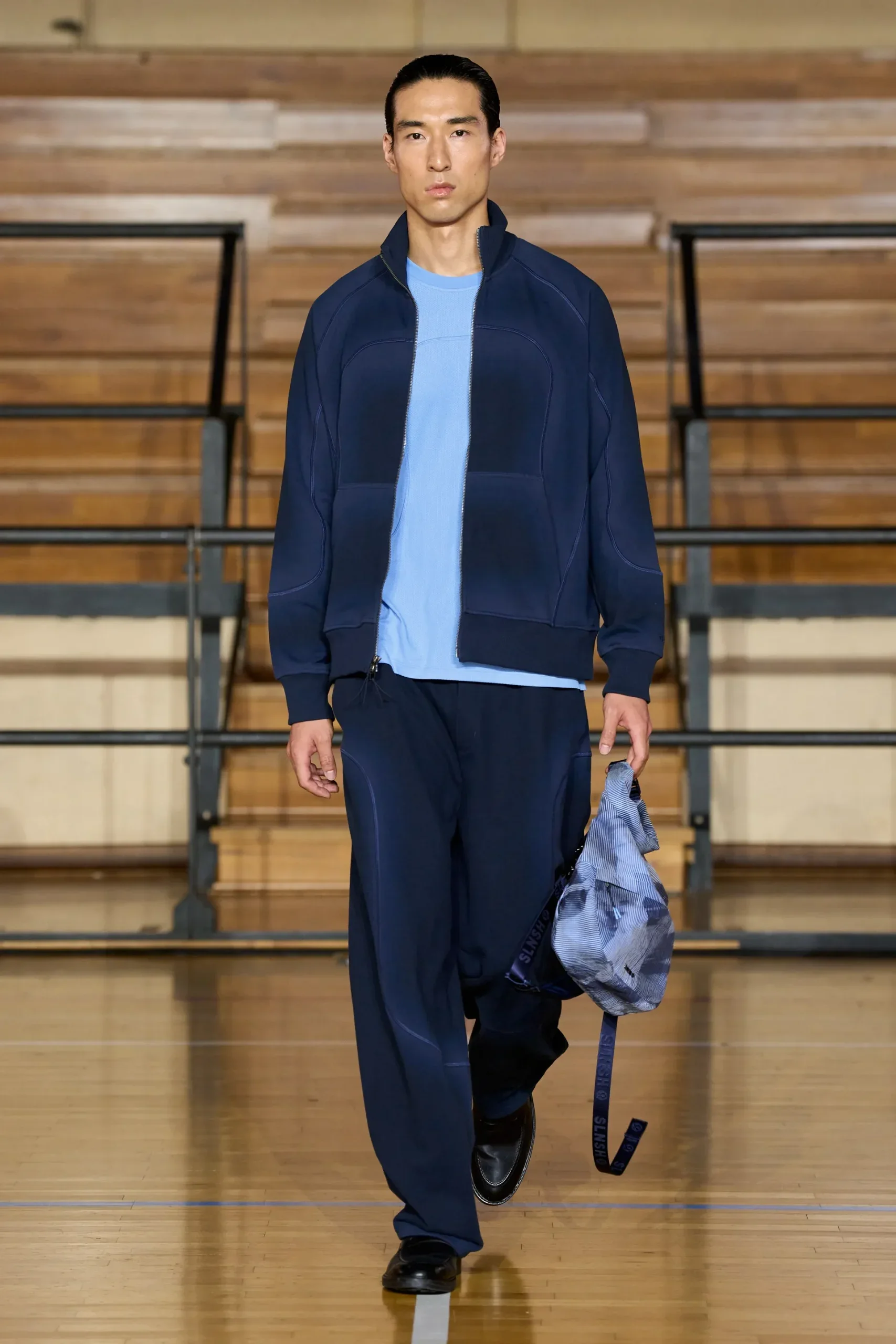
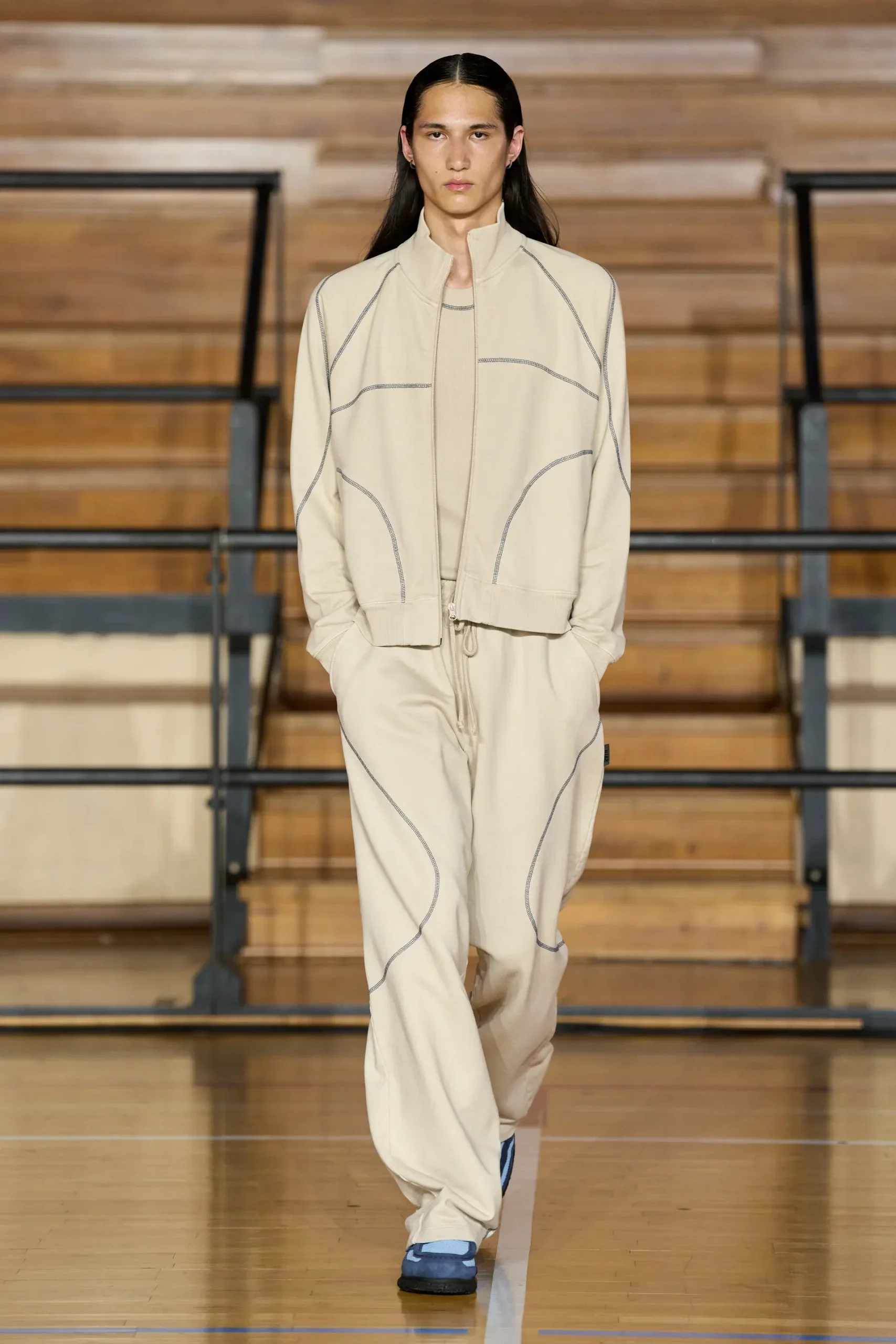
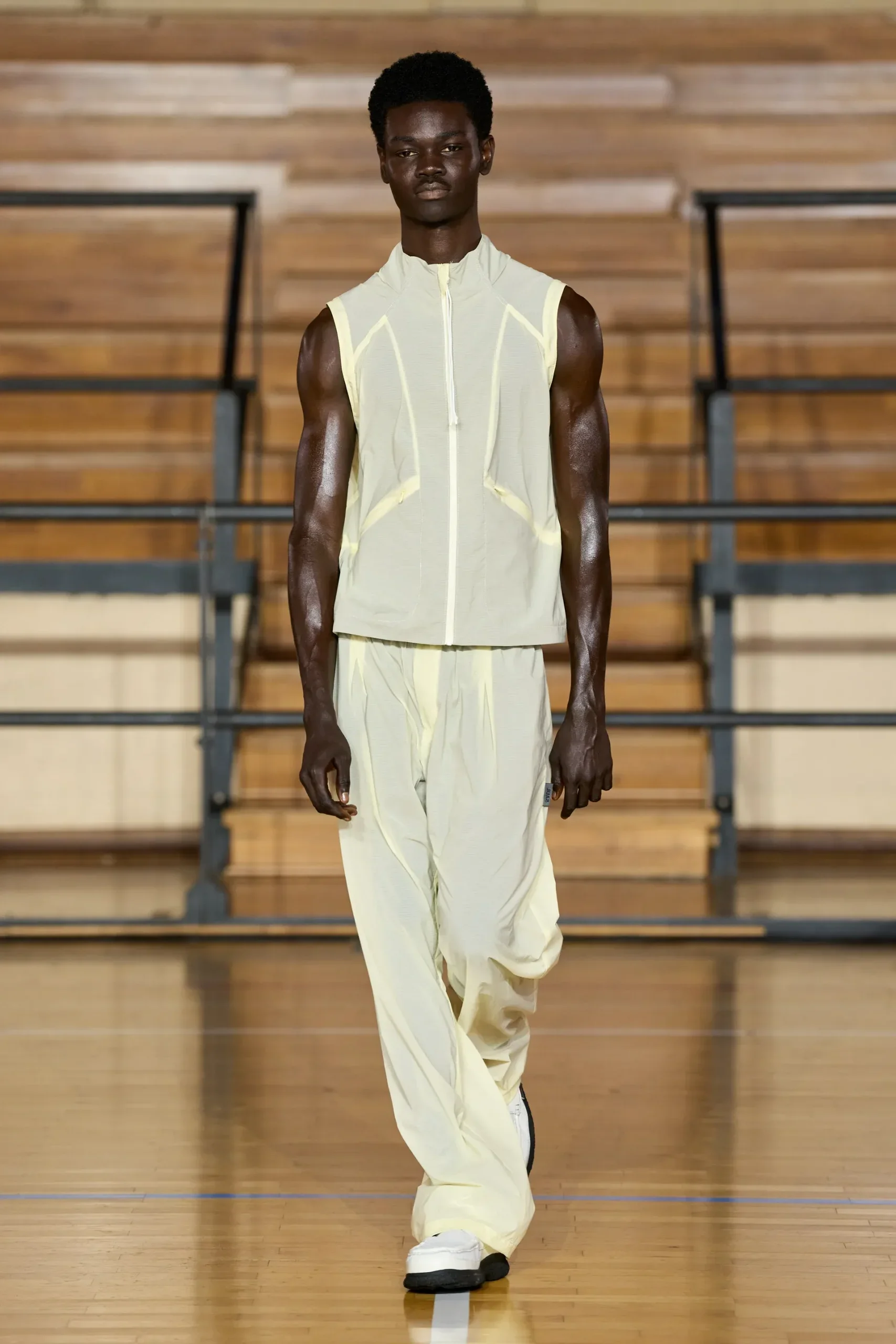
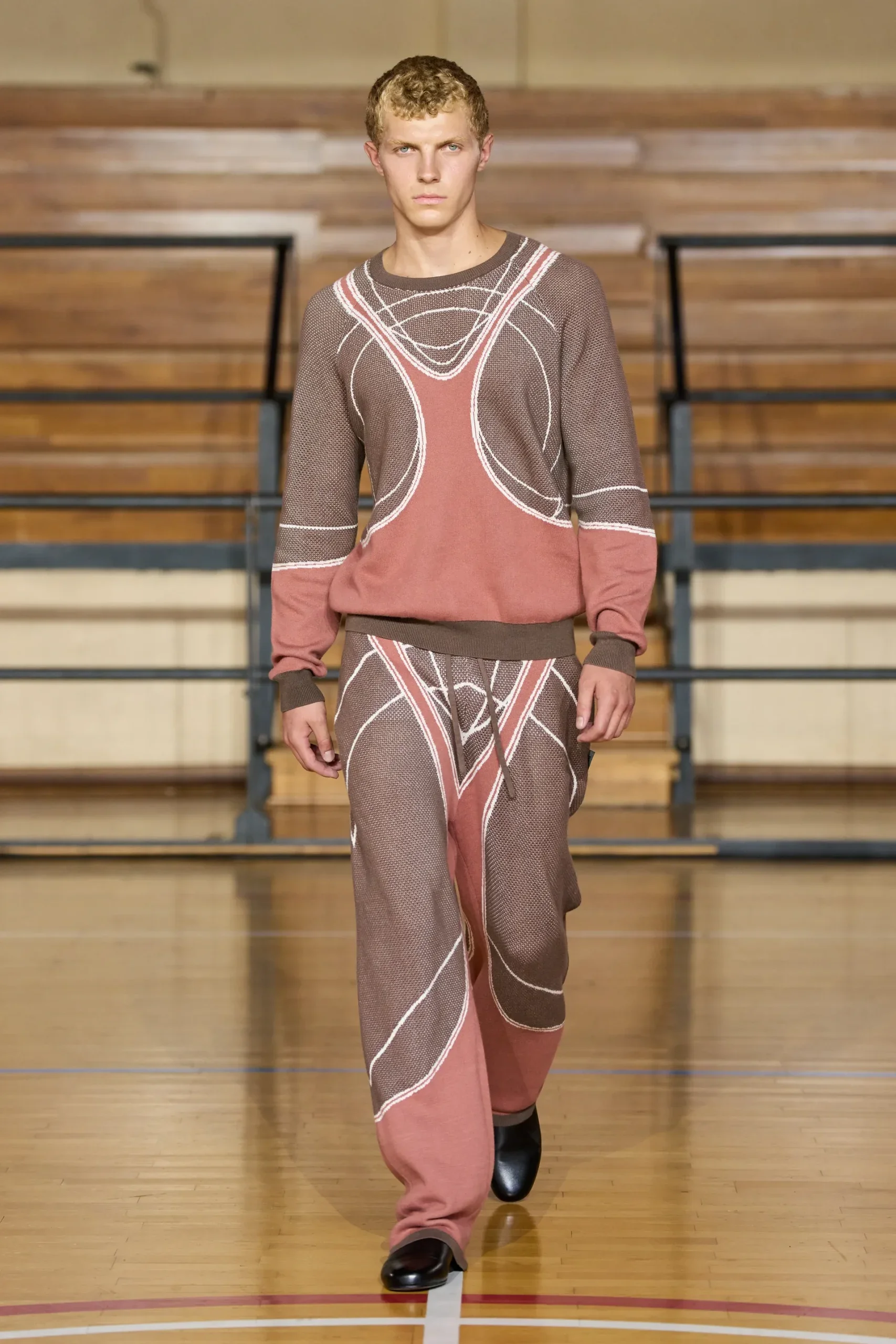
Singlets became recurring foundation pieces beneath bomber jackets, lightweight anoraks and technical outerwear. Elsewhere, the familiar shape of the athletic vest was recreated through stitched detailing across sweatshirts, tracksuits and base layers, introducing subtle visual continuity throughout the collection.
Sheer fabrics also played an important role.
Rather than using transparency simply for shock value, Nash employed mesh and lightweight textiles to celebrate movement, muscle and physical expression.
The garments highlighted the body's natural form while preserving the collection's emphasis on functionality.
Technical Innovation With Urban Appeal
Performance fabrics remained fundamental to Nash's design vocabulary.
Ultra-light nylon, technical wool and stretch textiles allowed garments to transition effortlessly between sportswear and contemporary tailoring. The material choices reflected the designer's growing ability to combine innovation with everyday wearability, making experimental concepts feel commercially relevant.
The collection retained its distinctly urban identity while embracing increasingly sophisticated construction techniques.
Challenging Contemporary Masculinity
At its core, Spring/Summer 2027 proposed a broader vision of modern masculinity.
Rather than celebrating traditional ideals of strength alone, Nash explored confidence through openness, individuality and physical freedom. His contemporary "pin-up" became someone comfortable expressing vulnerability alongside athleticism, elegance alongside performance.
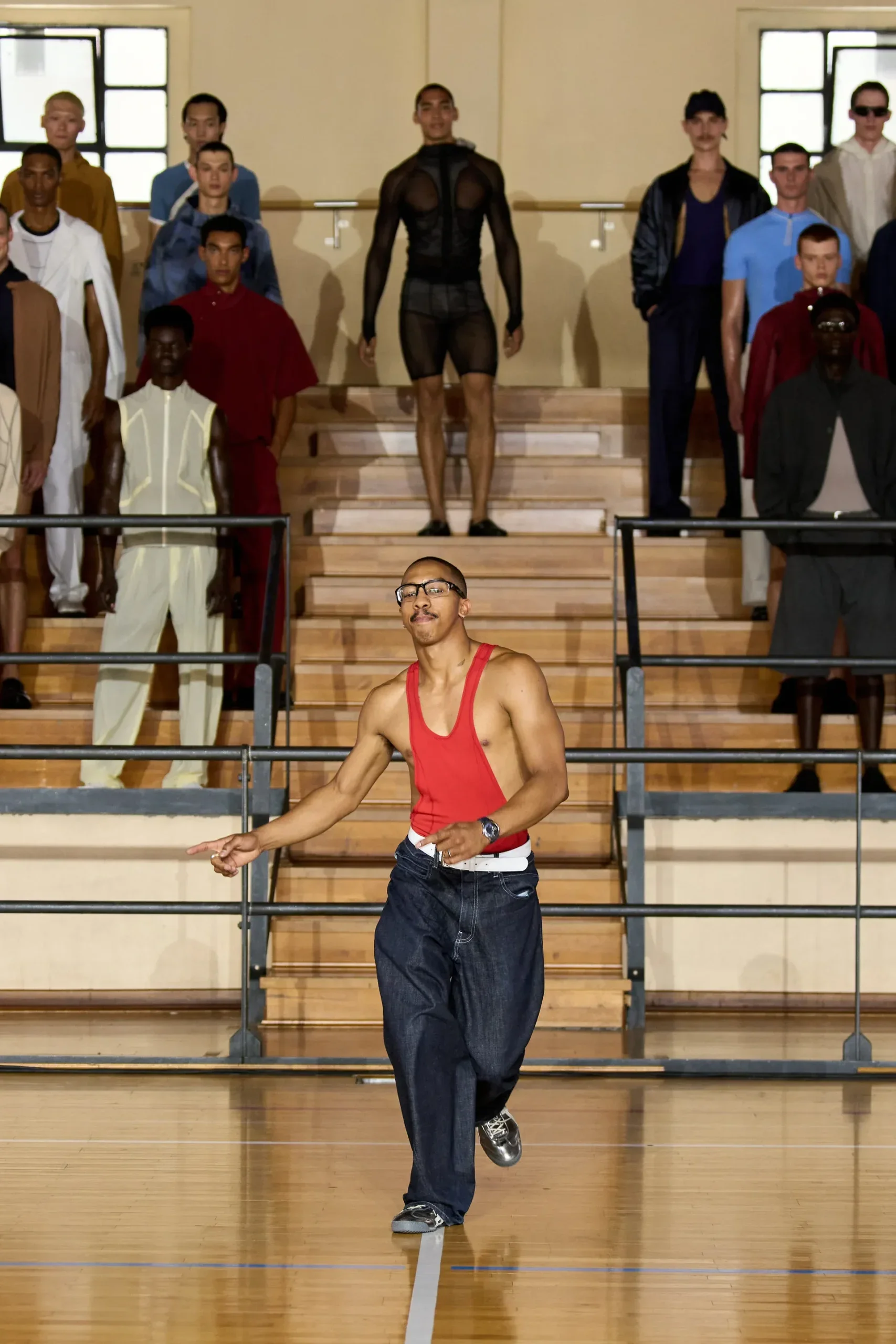
That perspective culminated in the show's closing look: a sheer, long-sleeved mesh unitard that demanded both confidence and self-assurance from its wearer.
It was less about provocation than liberation.
A New Language for Menswear
Saul Nash's Spring/Summer 2027 collection demonstrated once again why he remains one of contemporary menswear's most original voices.
By combining technical sportswear, refined tailoring and thoughtful cultural references, he challenged long-standing conventions surrounding masculinity without sacrificing practicality or wearability.
The collection suggested that clothing designed for movement can also reshape perceptions of identity, confidence and self-expression.
In doing so, Nash delivered one of Milan Men's Fashion Week's most progressive and intellectually engaging collections—one that proved the future of menswear lies as much in freedom as it does in form.