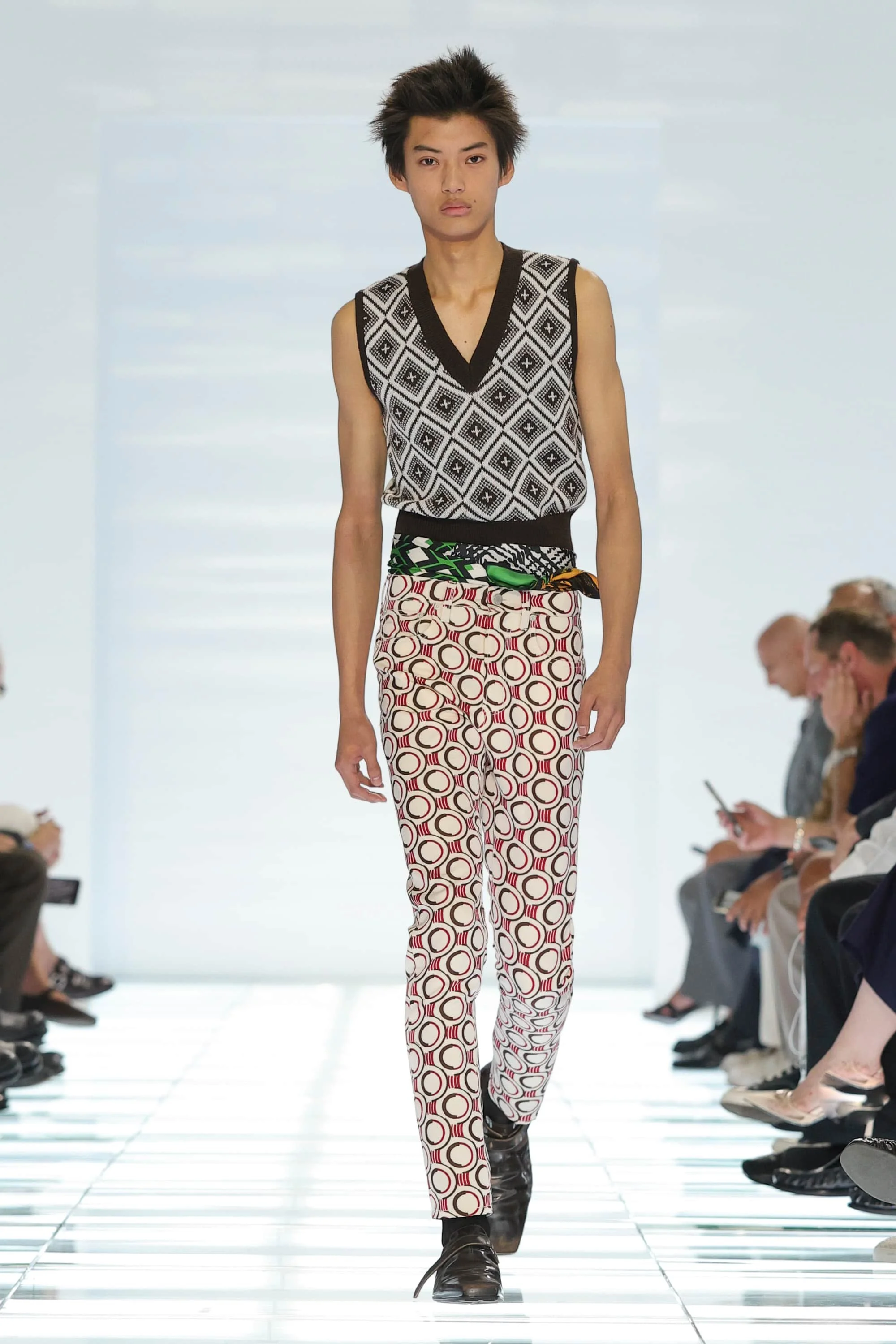
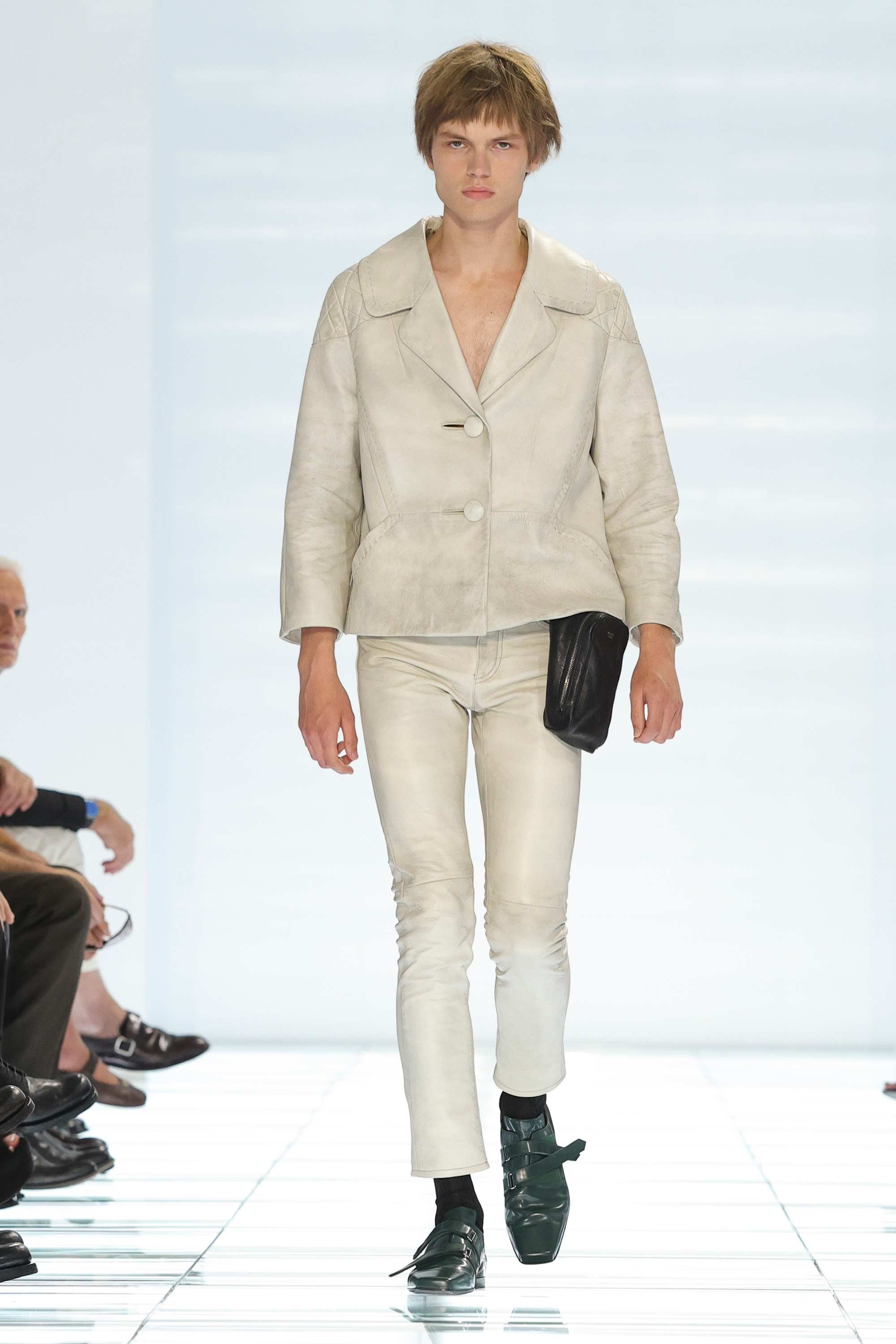
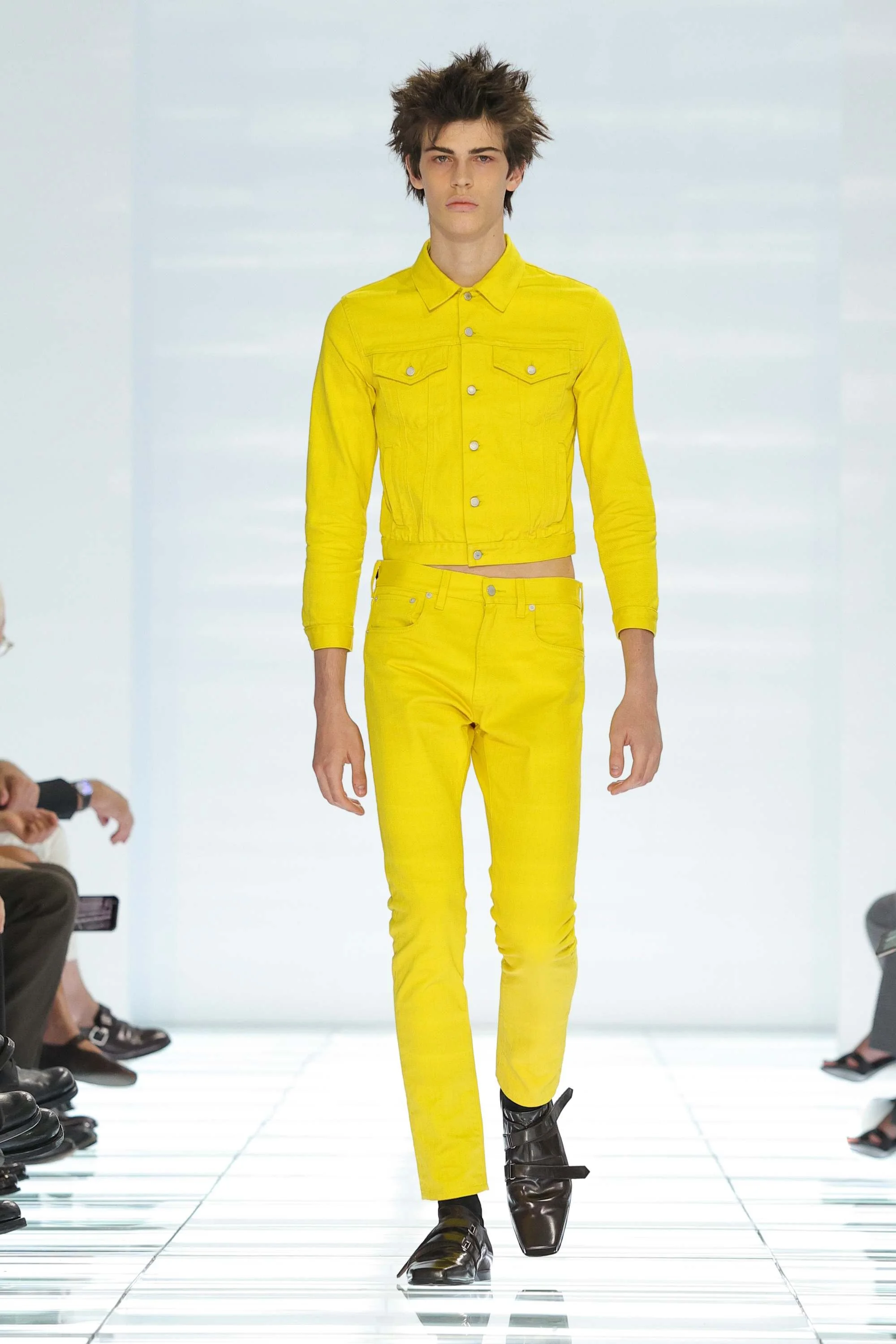
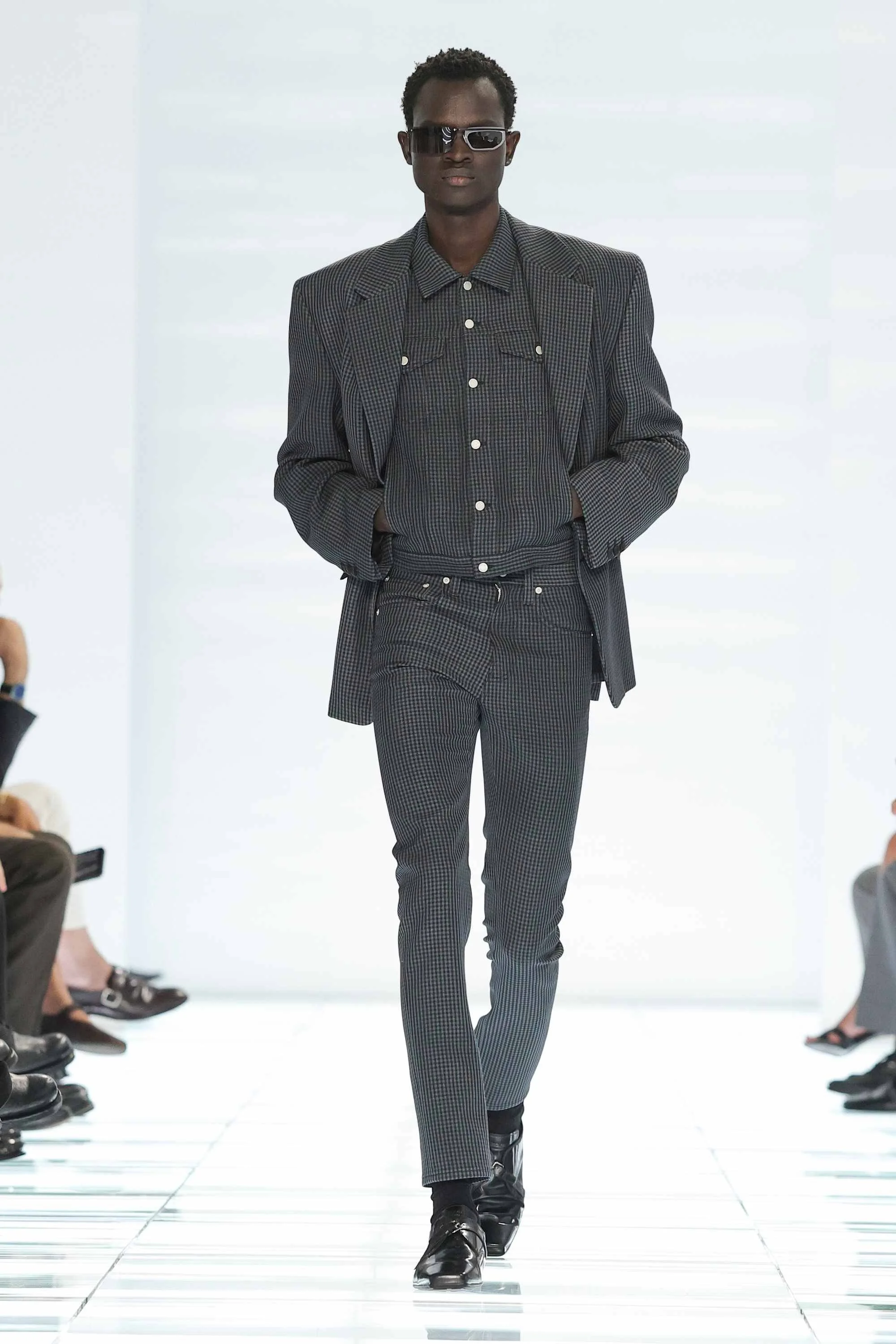
Prada Men’s Spring 2027
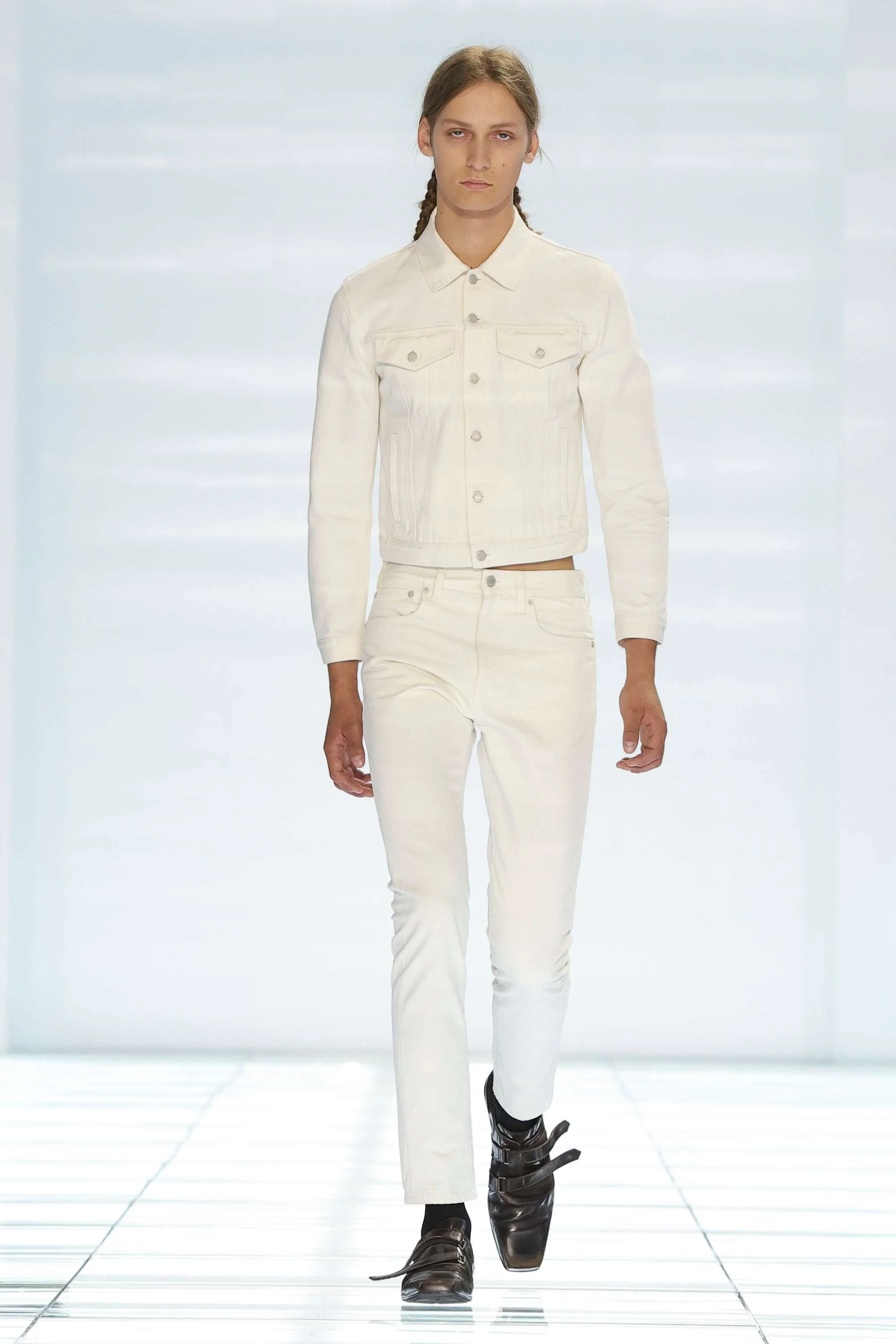
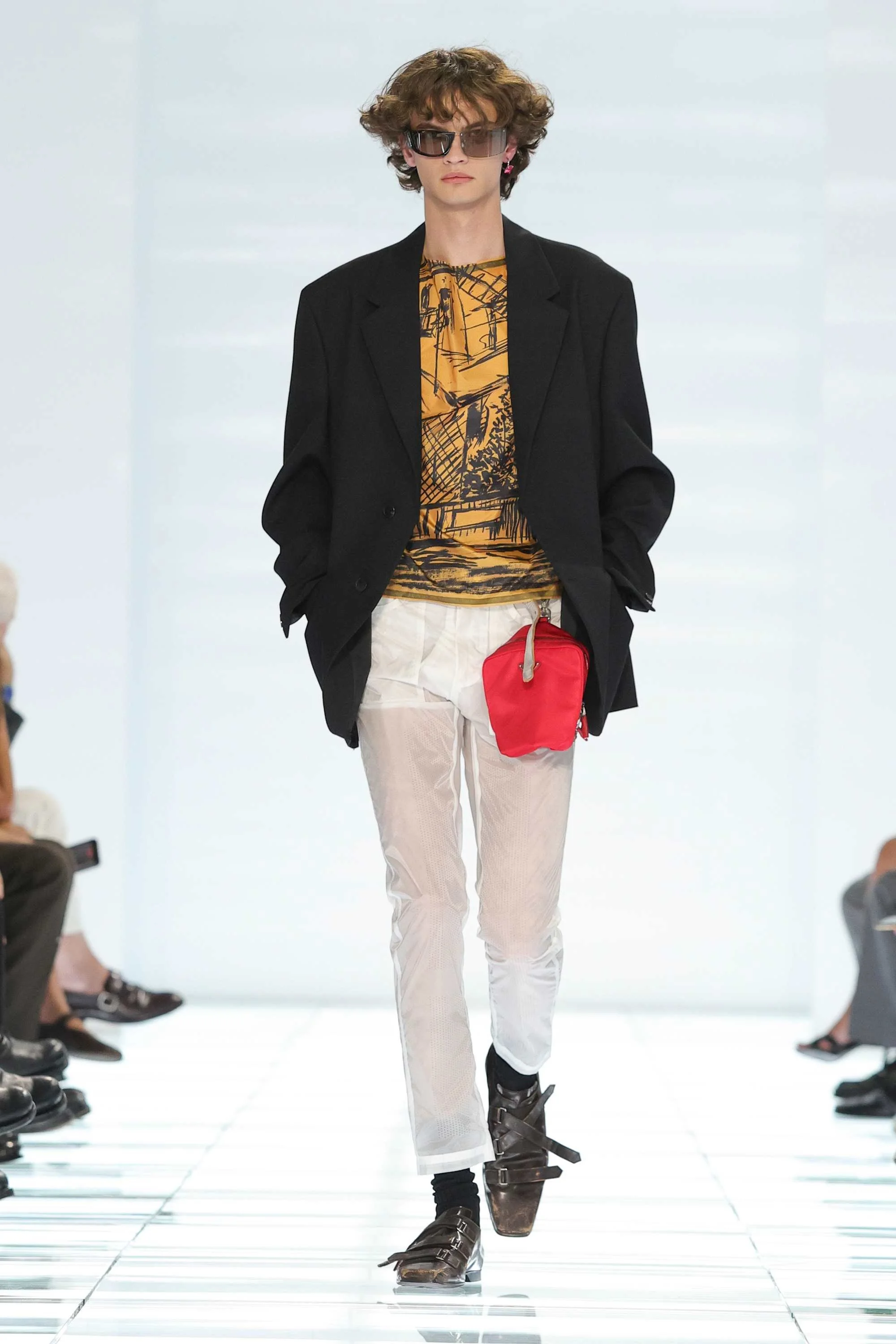
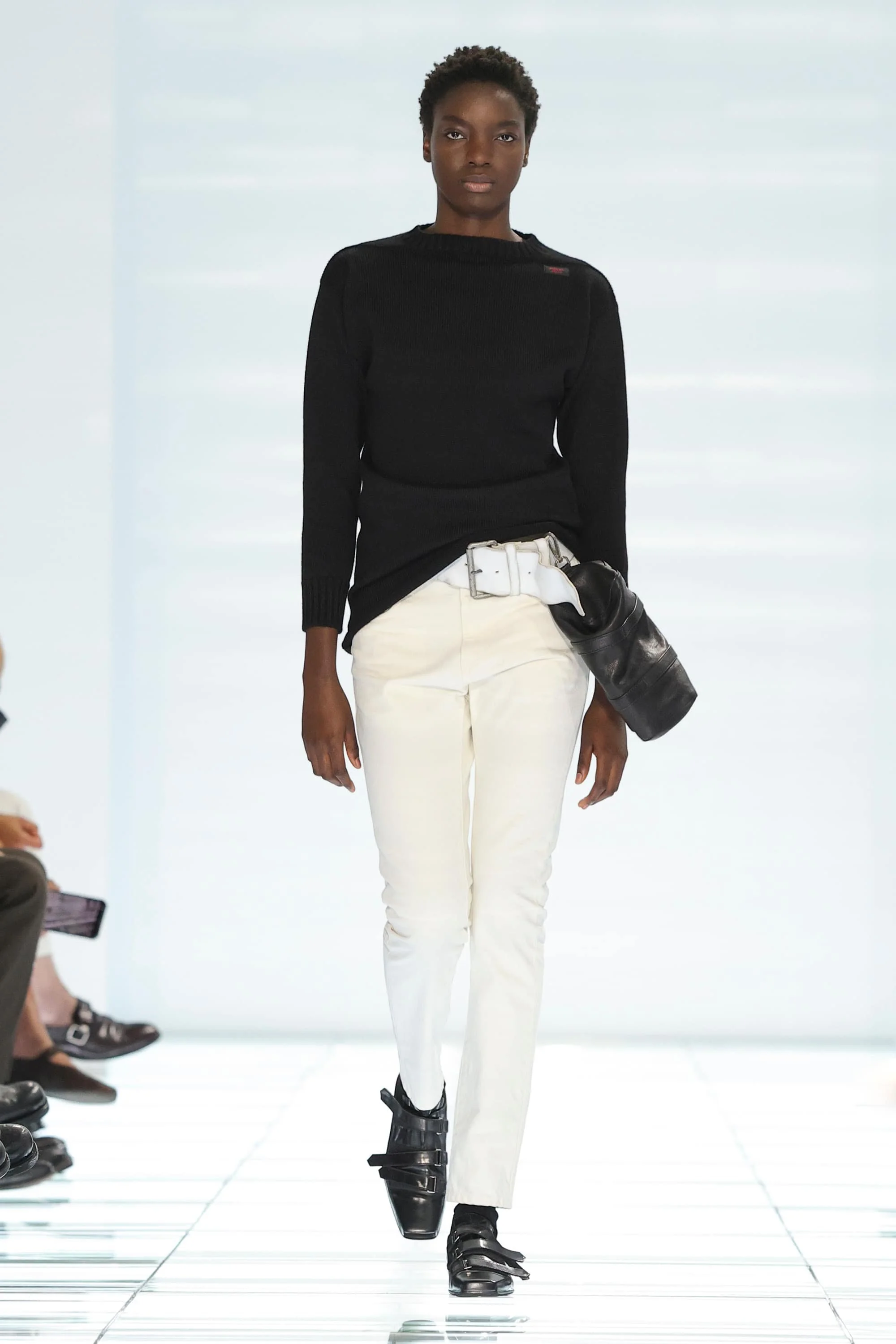
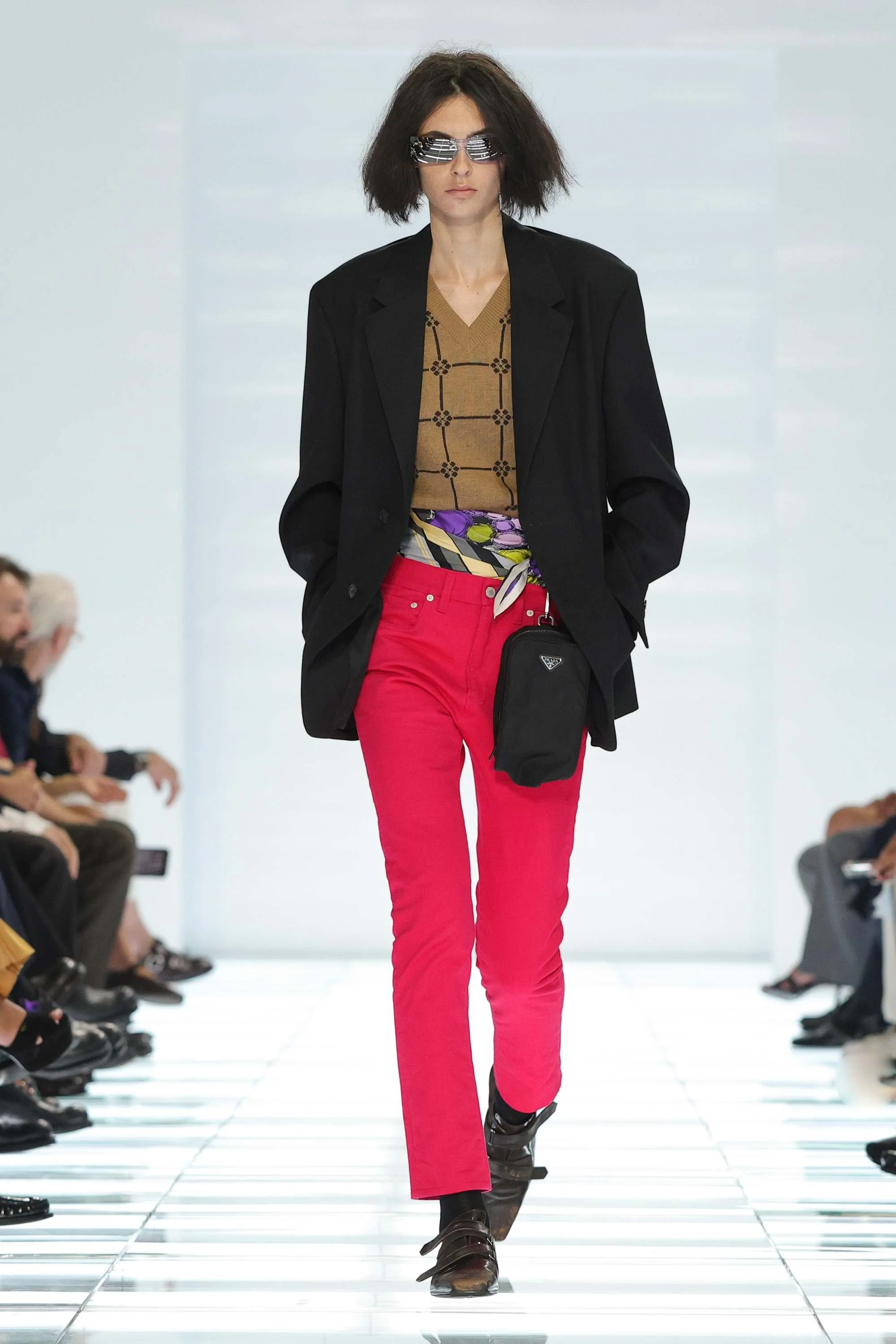
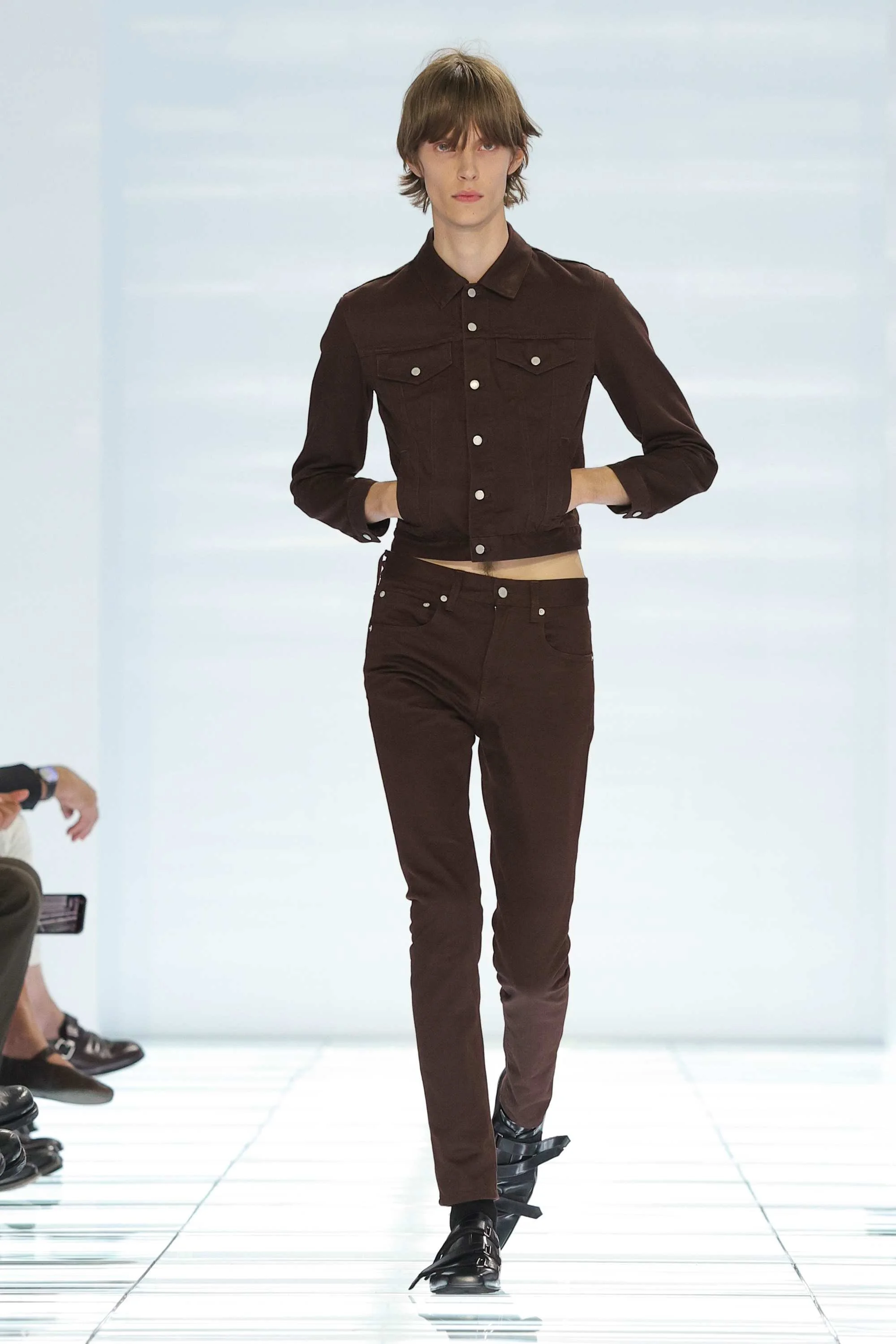
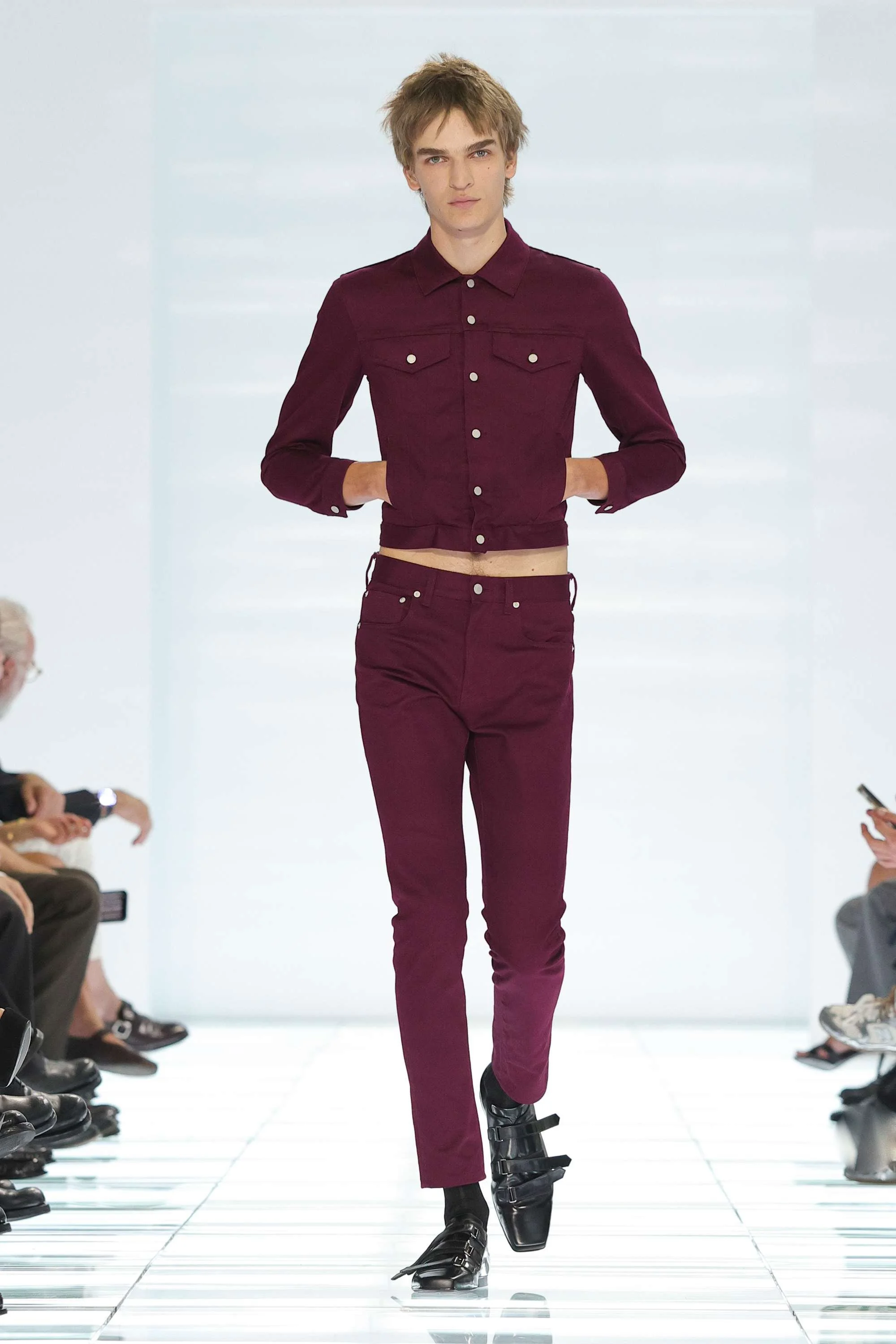
At Prada, simplicity is rarely simple. For Spring/Summer 2027, Miuccia Prada and Raf Simons returned to the most universal garment in modern fashion—the humble jean—and used it as a starting point for one of the season’s most conceptually precise collections. Presented during Milan Men’s Fashion Week, The Jeans Genies stripped menswear down to its most essential ingredients, then quietly reshaped them through proportion, material and attitude.
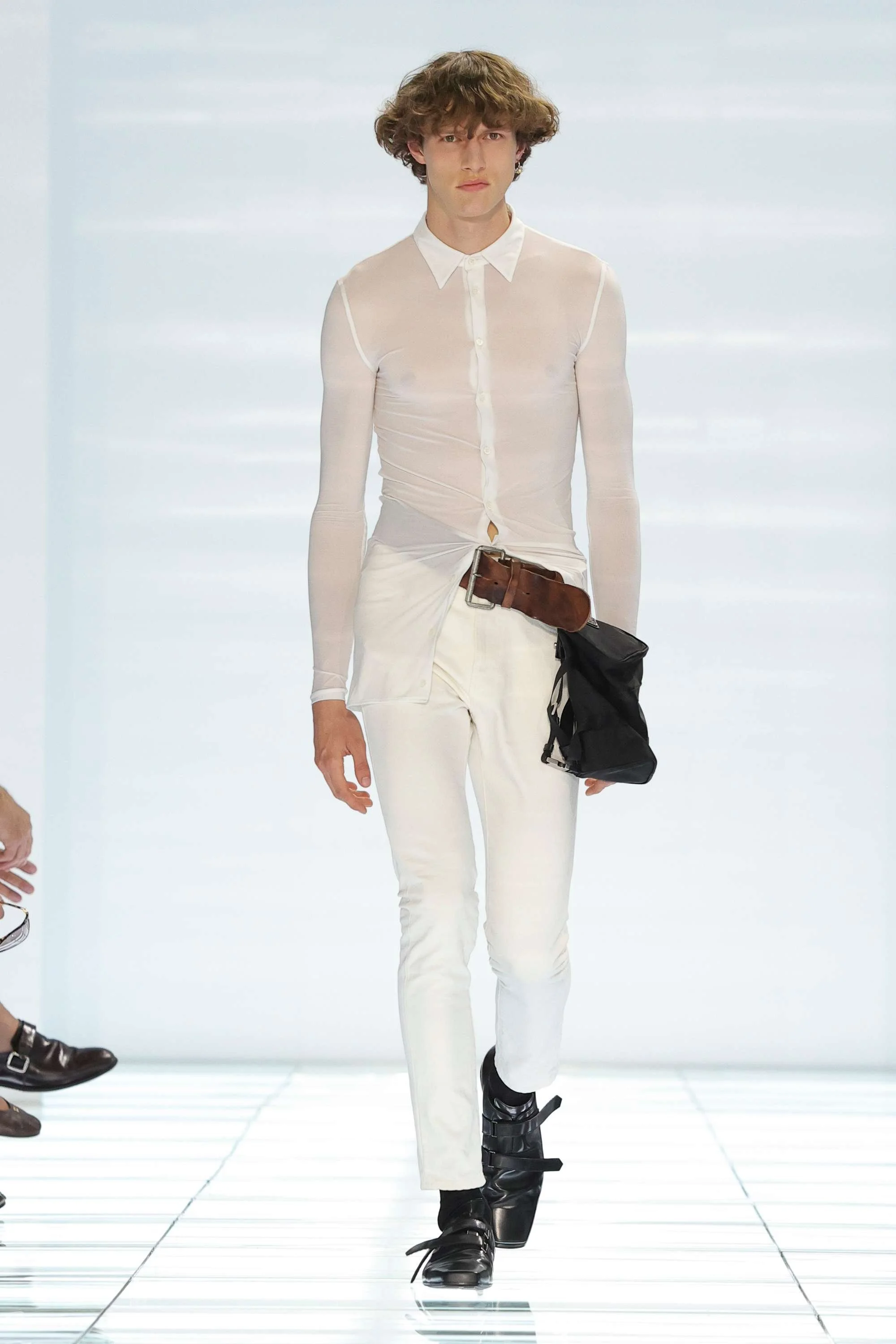
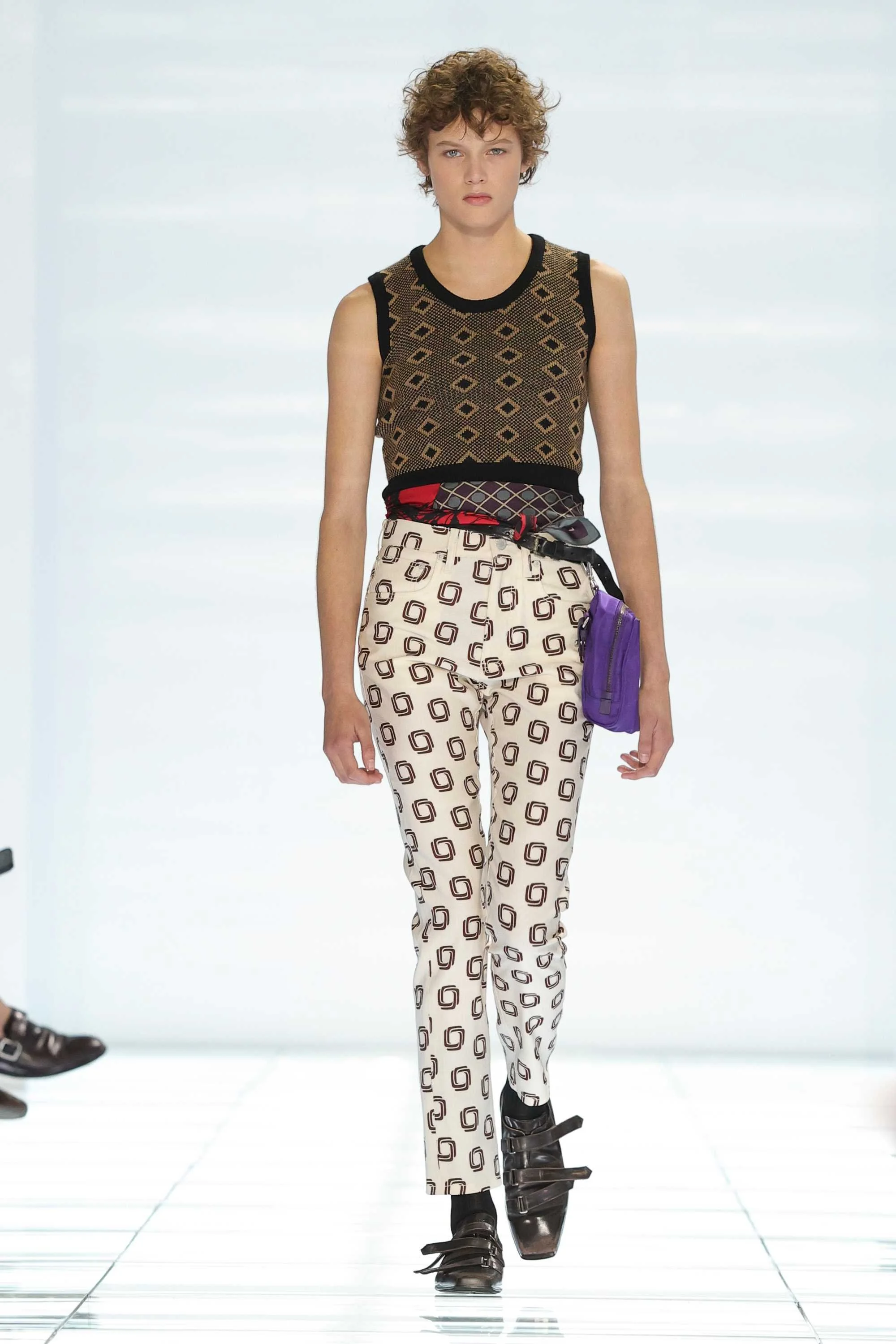
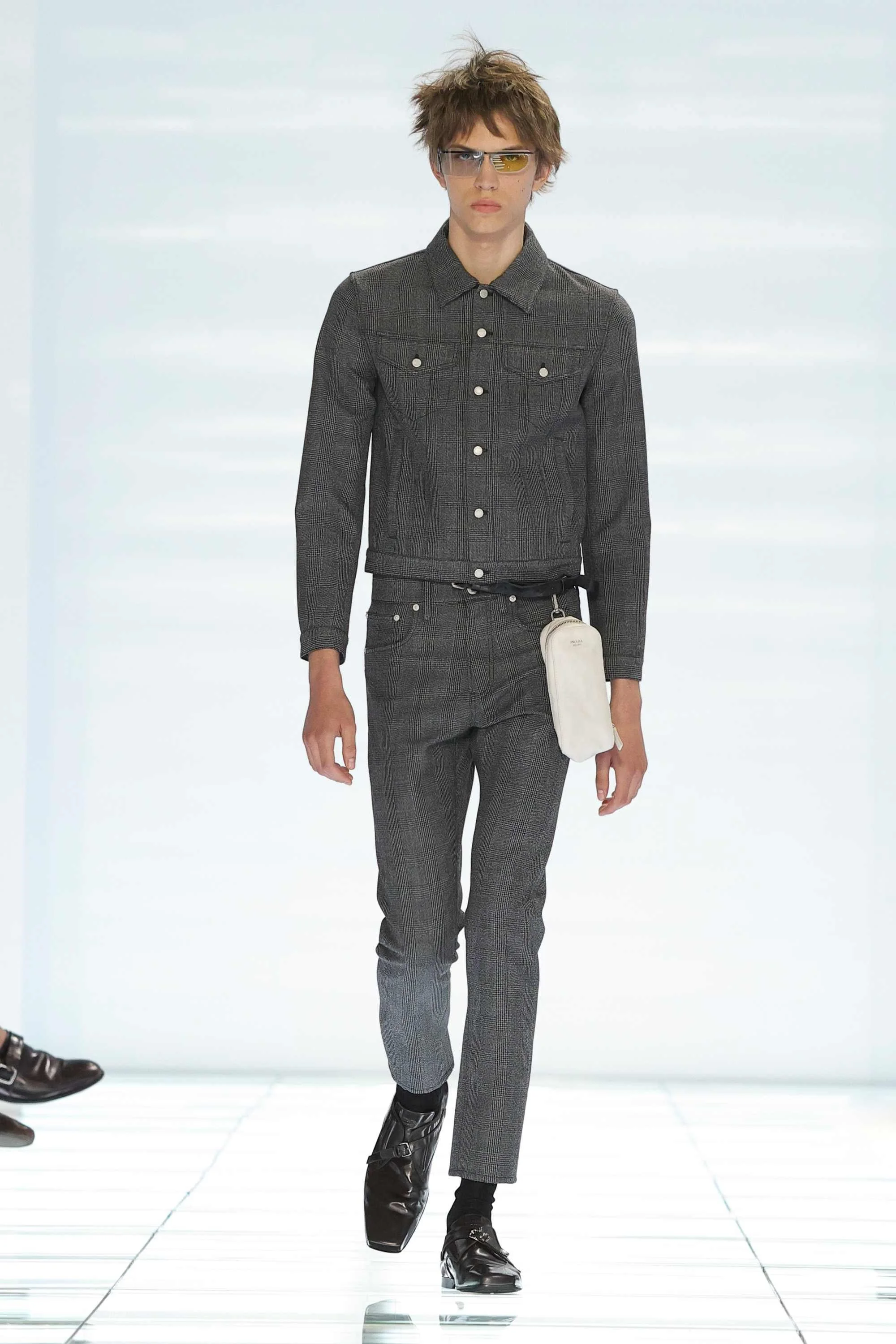
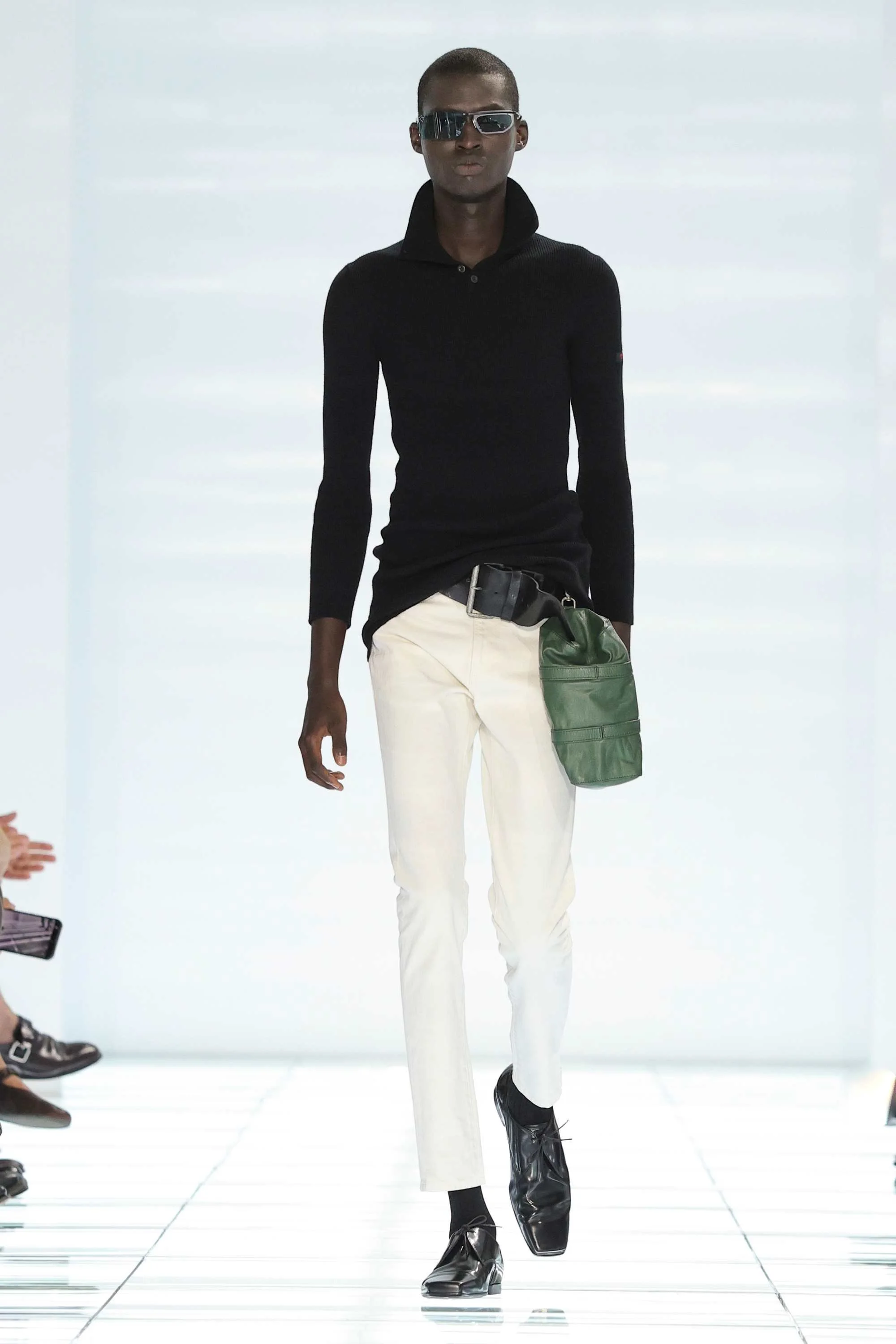
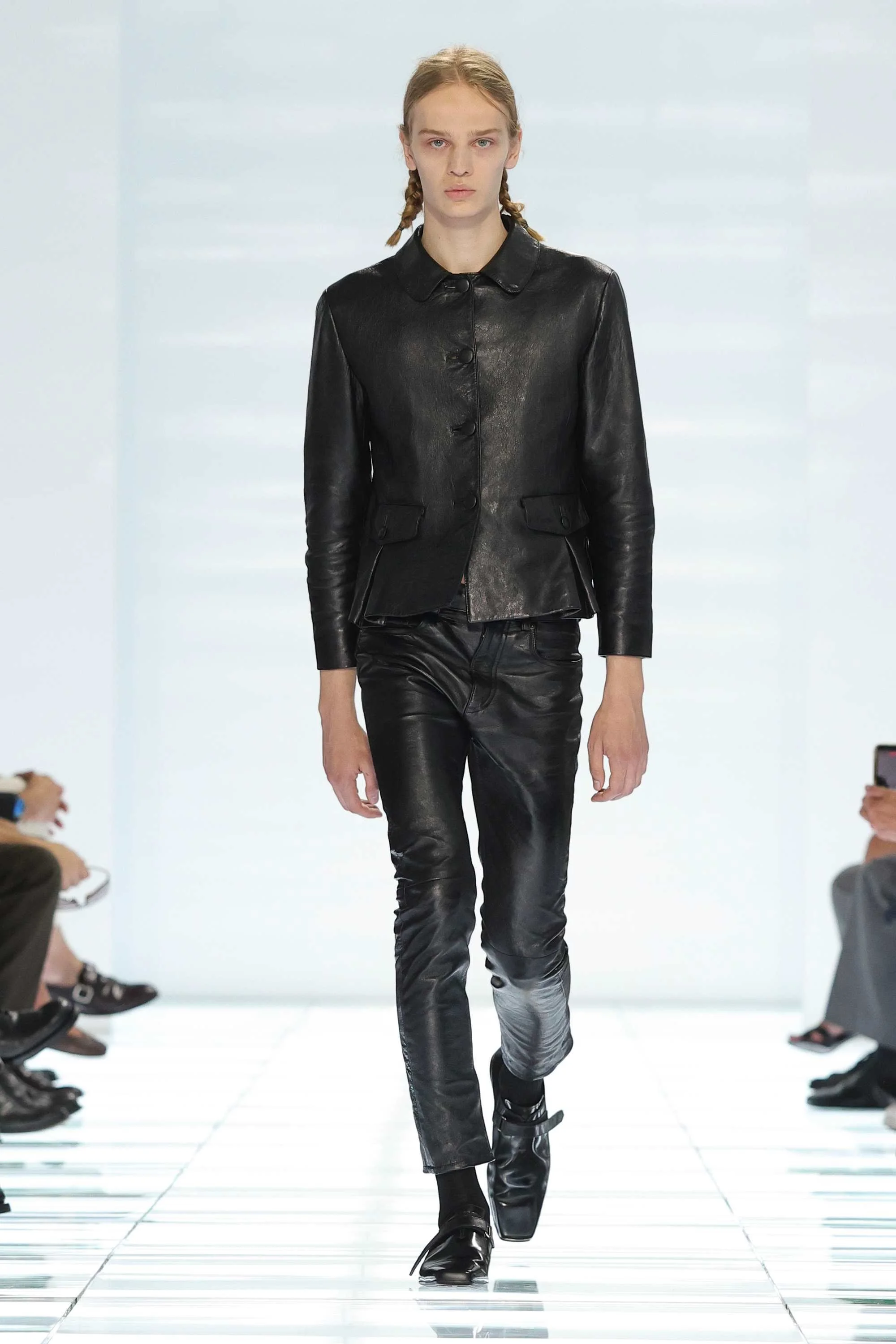
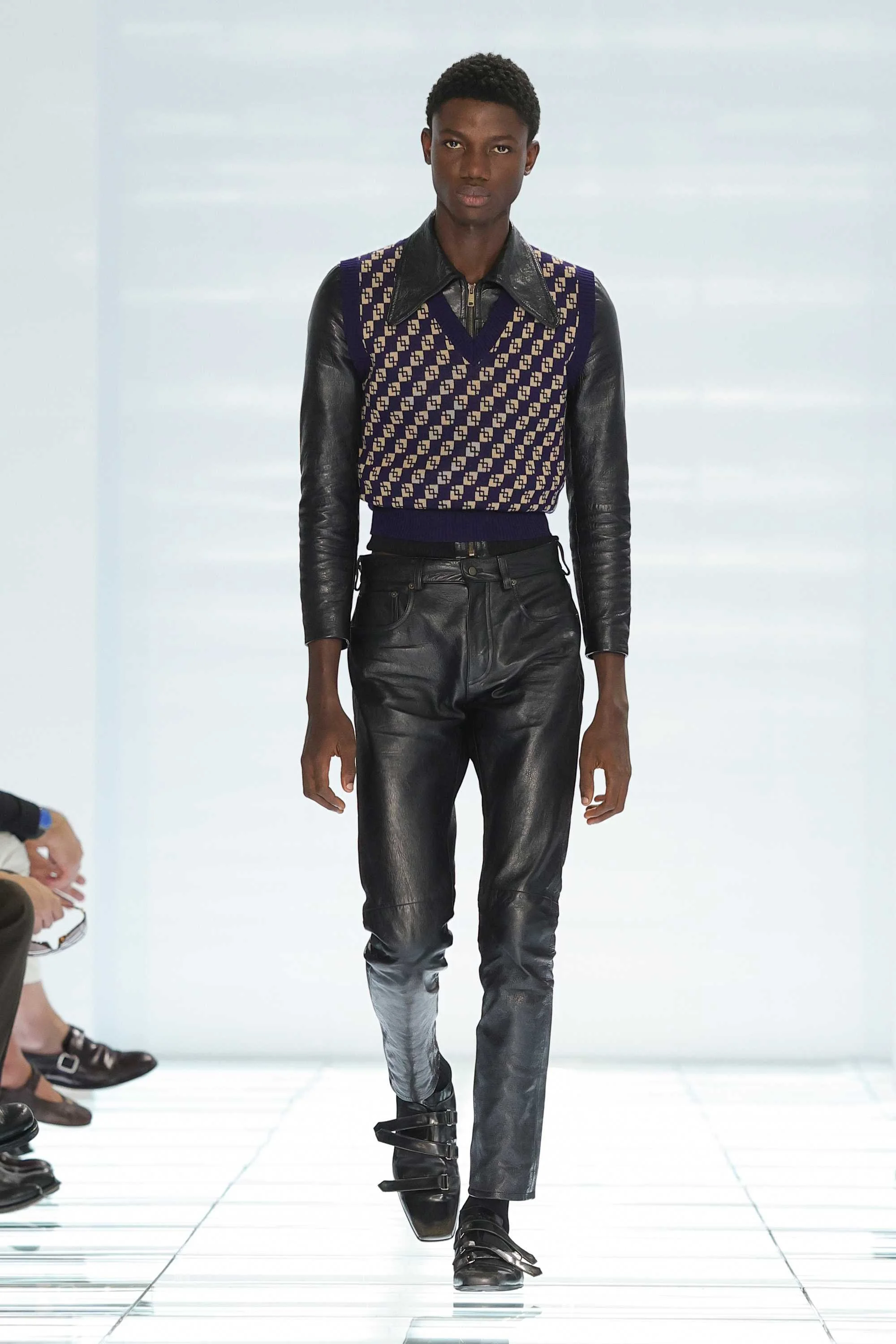
Jeans, denim jackets, T-shirts and blazers formed the foundation of the collection, but nothing remained entirely familiar. Instead, everything was reduced, rescaled or reimagined, creating a wardrobe that challenged conventional ideas of luxury through restraint rather than excess.
The result was deceptively minimal, but intellectually dense.
The Most Universal Garment, Reconsidered
The collection began with a question: what happens when fashion stops overcomplicating itself?
For Prada and Simons, jeans offered the perfect answer. Historically worn by workers, sailors and artists long before entering luxury fashion, denim carries a cultural weight that extends far beyond trends. By returning to this origin point, the designers reframed jeans not as a fashion object, but as a functional, democratic garment.
From there, the collection built outward with deliberate restraint.
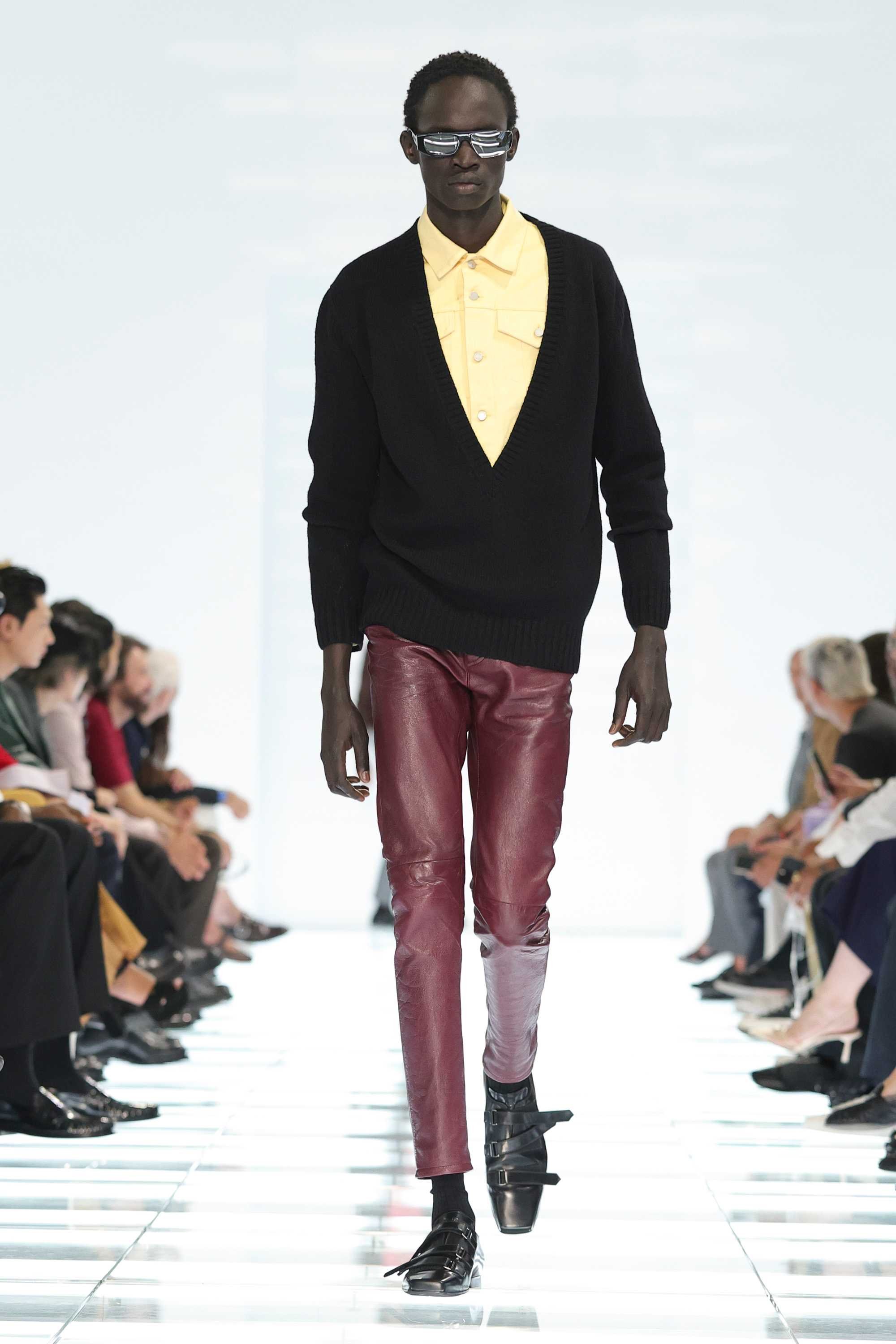
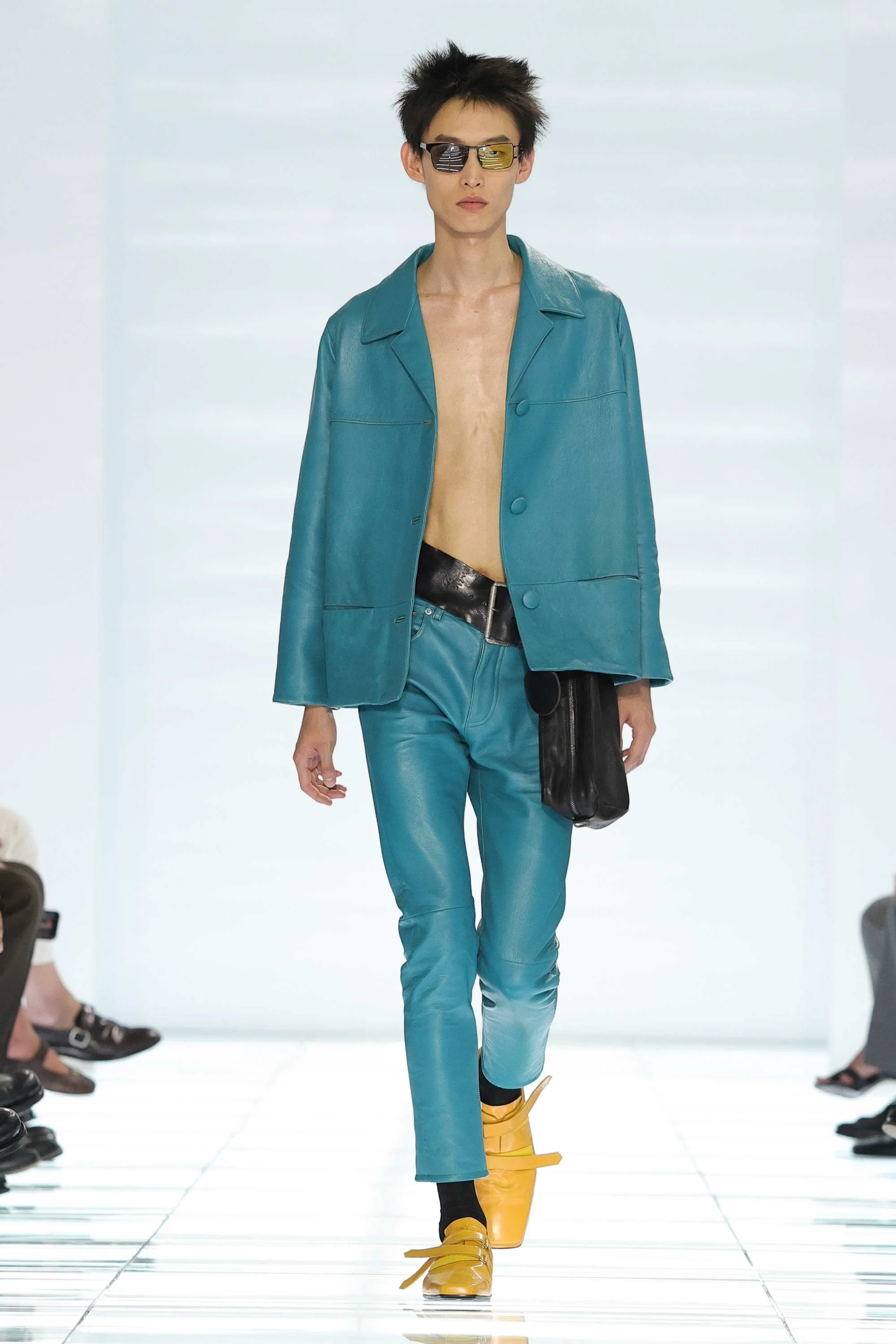
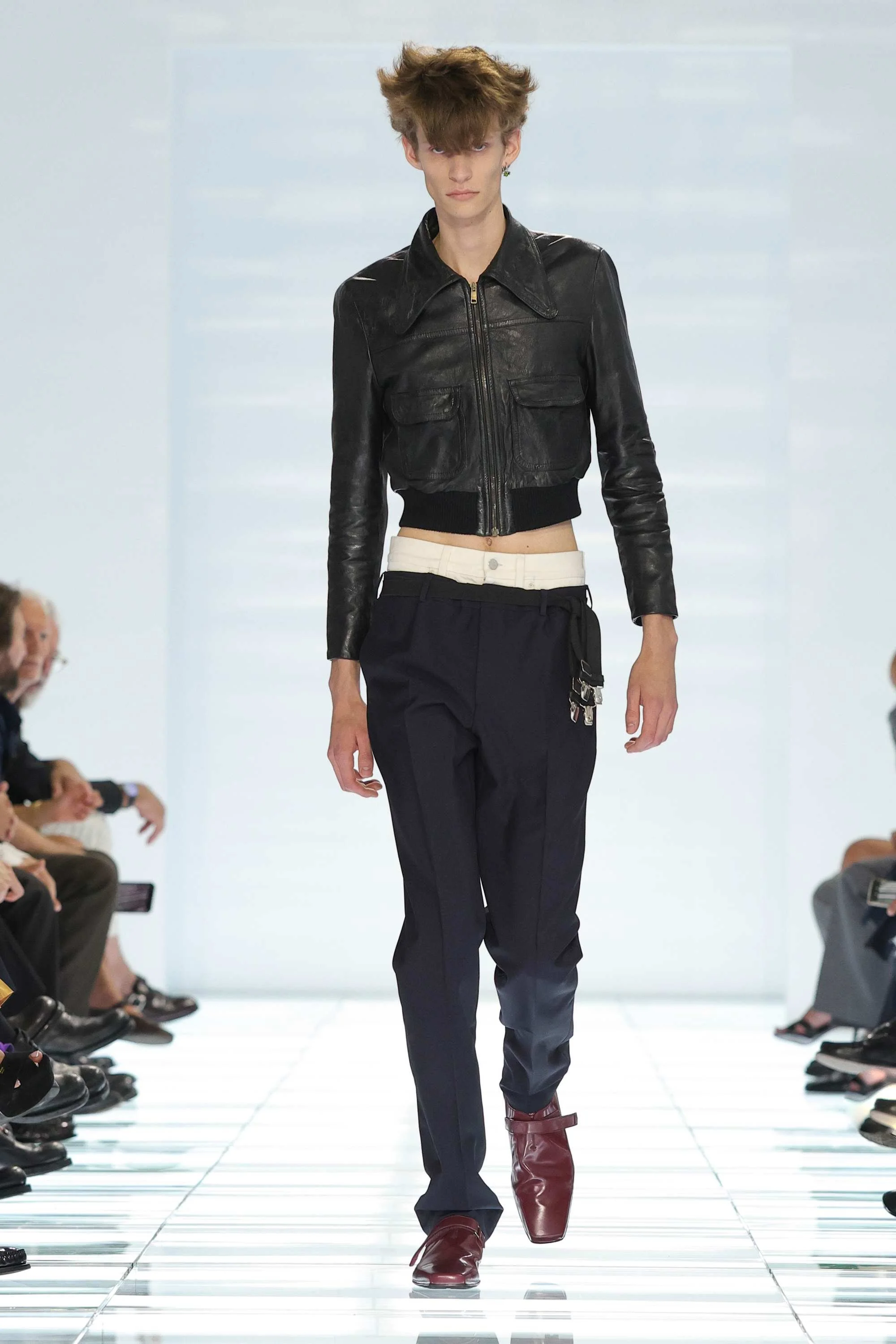
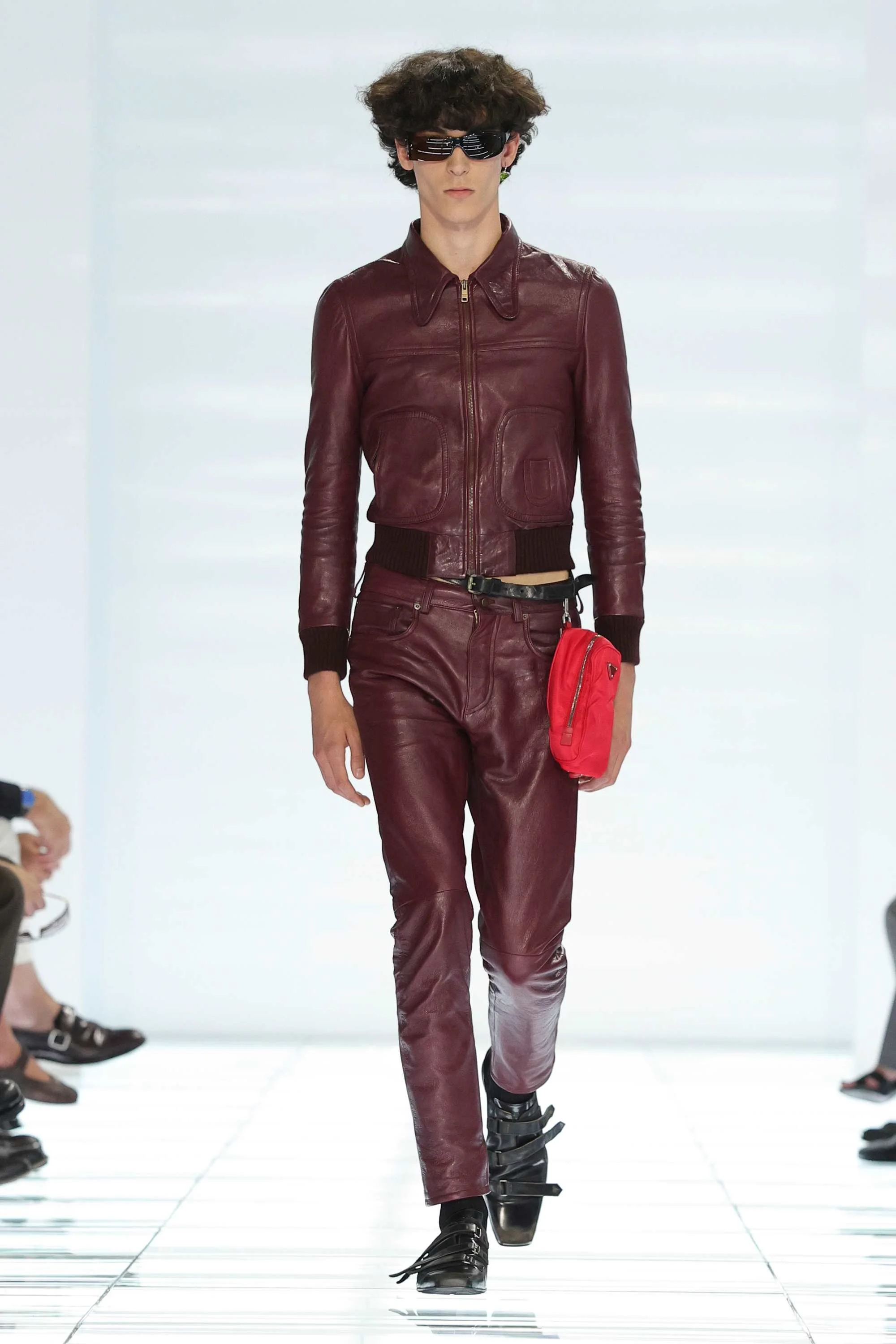
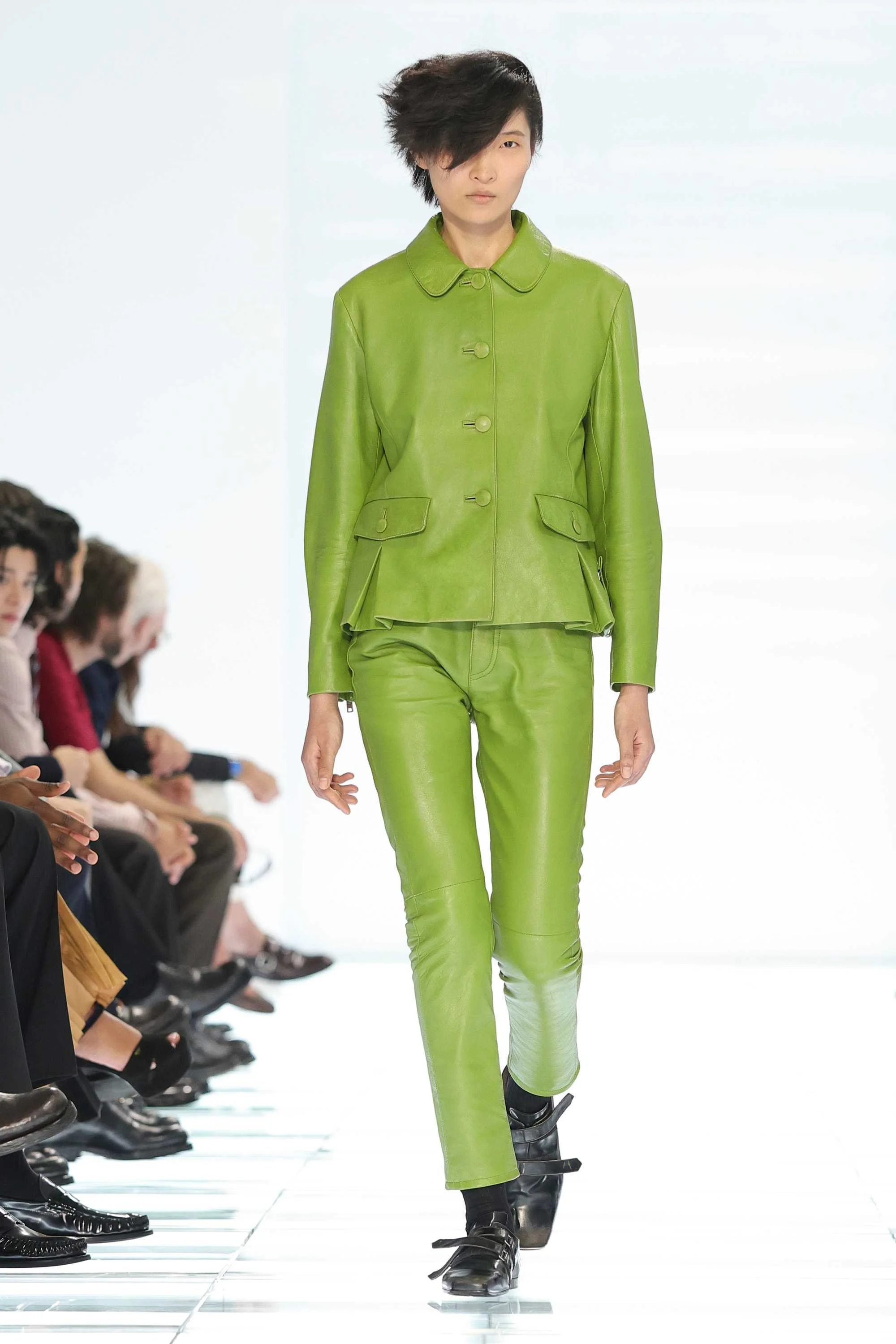
Jean jackets, T-shirts, leather blousons and simple blazers became the only necessary components of a wardrobe designed for modern life.
Reduction as Design Language
Rather than embellishing garments, Prada and Simons focused on removal.
Silhouettes were sharply reduced, creating a distinctly shrunken proportion that echoed early-2000s minimalism while feeling resolutely contemporary. Jean jackets were reworked like fitted shirts, while tailoring was stripped of unnecessary detailing to reveal pure structure.
The designers described their approach as a rejection of complication, favouring clarity over decoration.
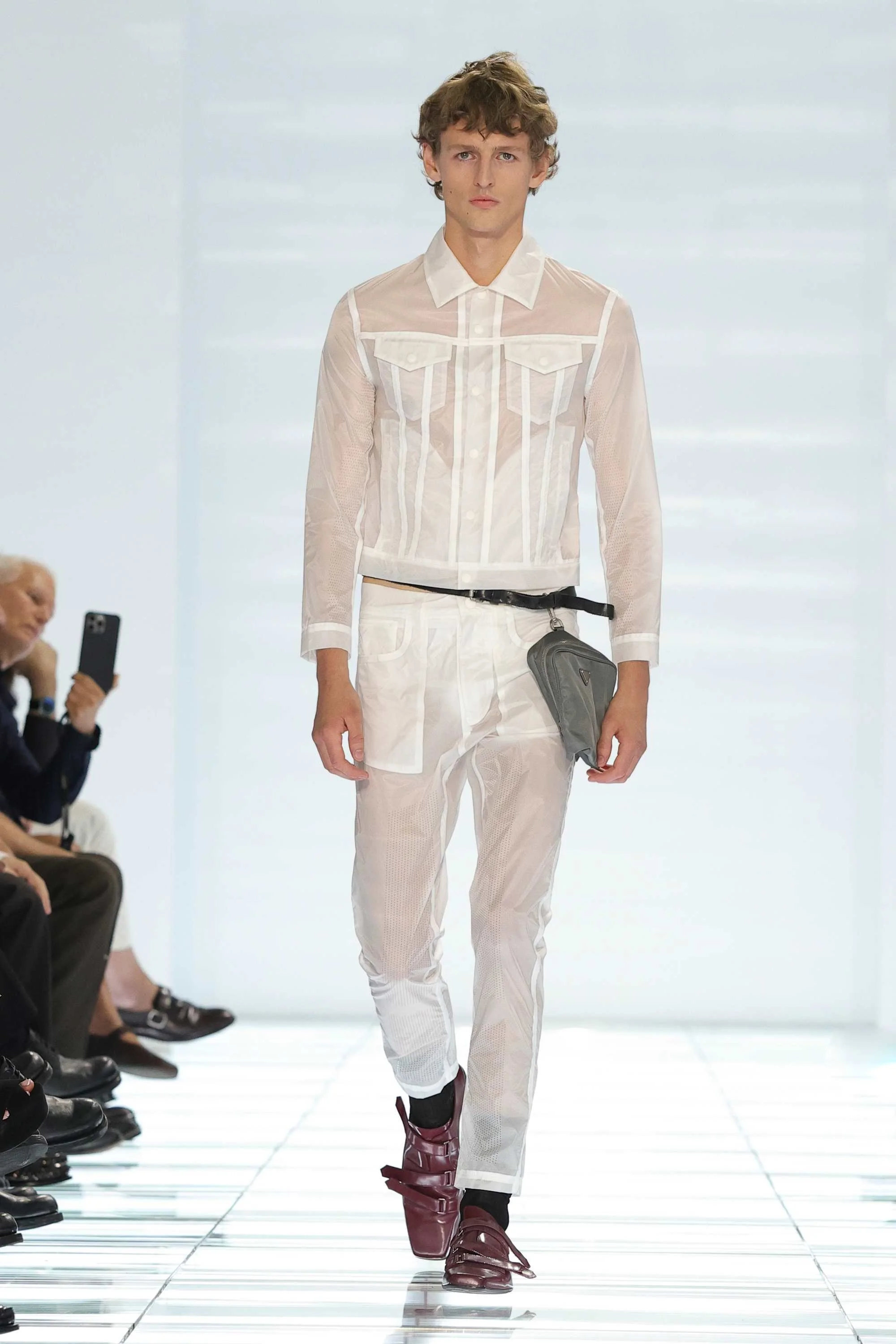
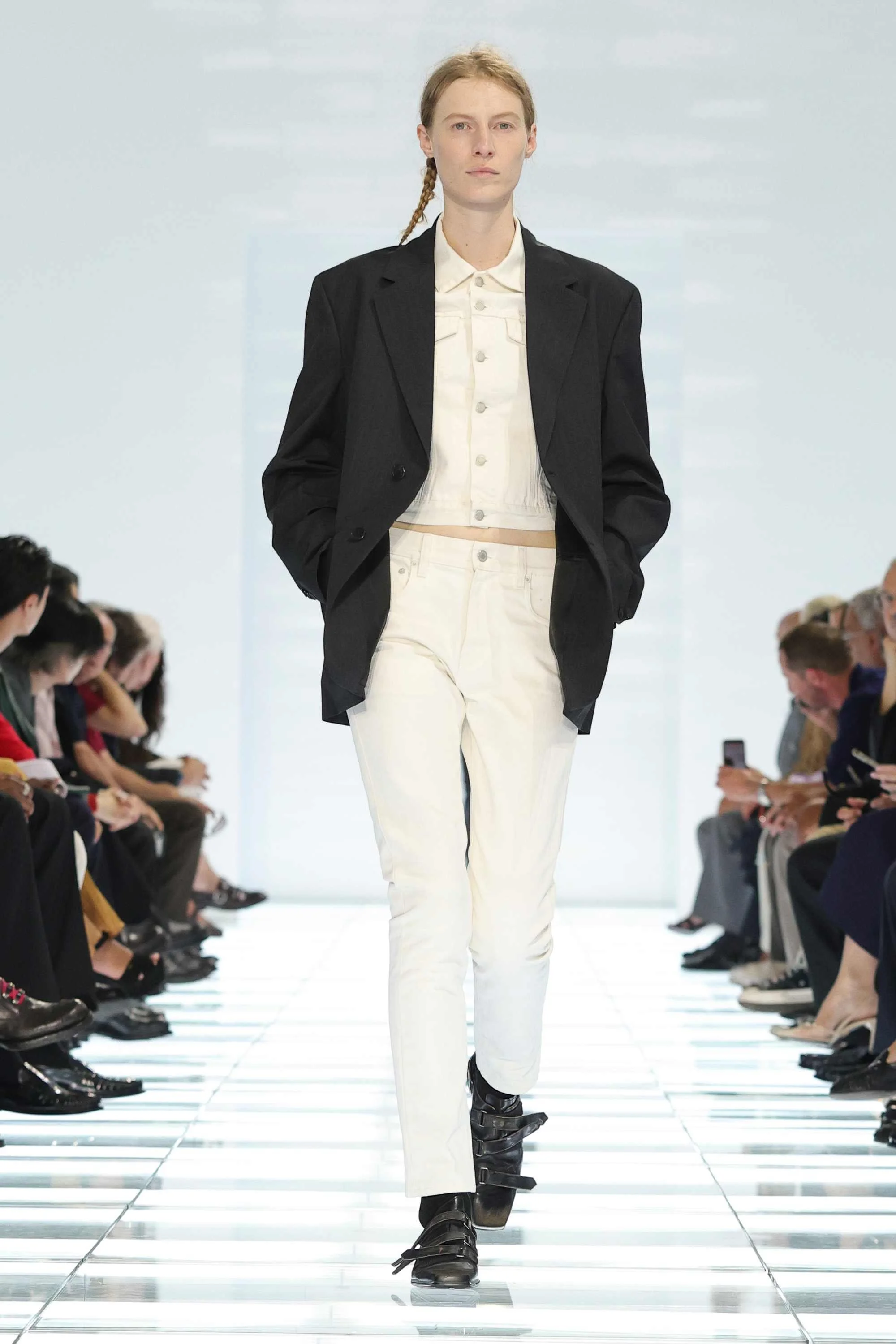
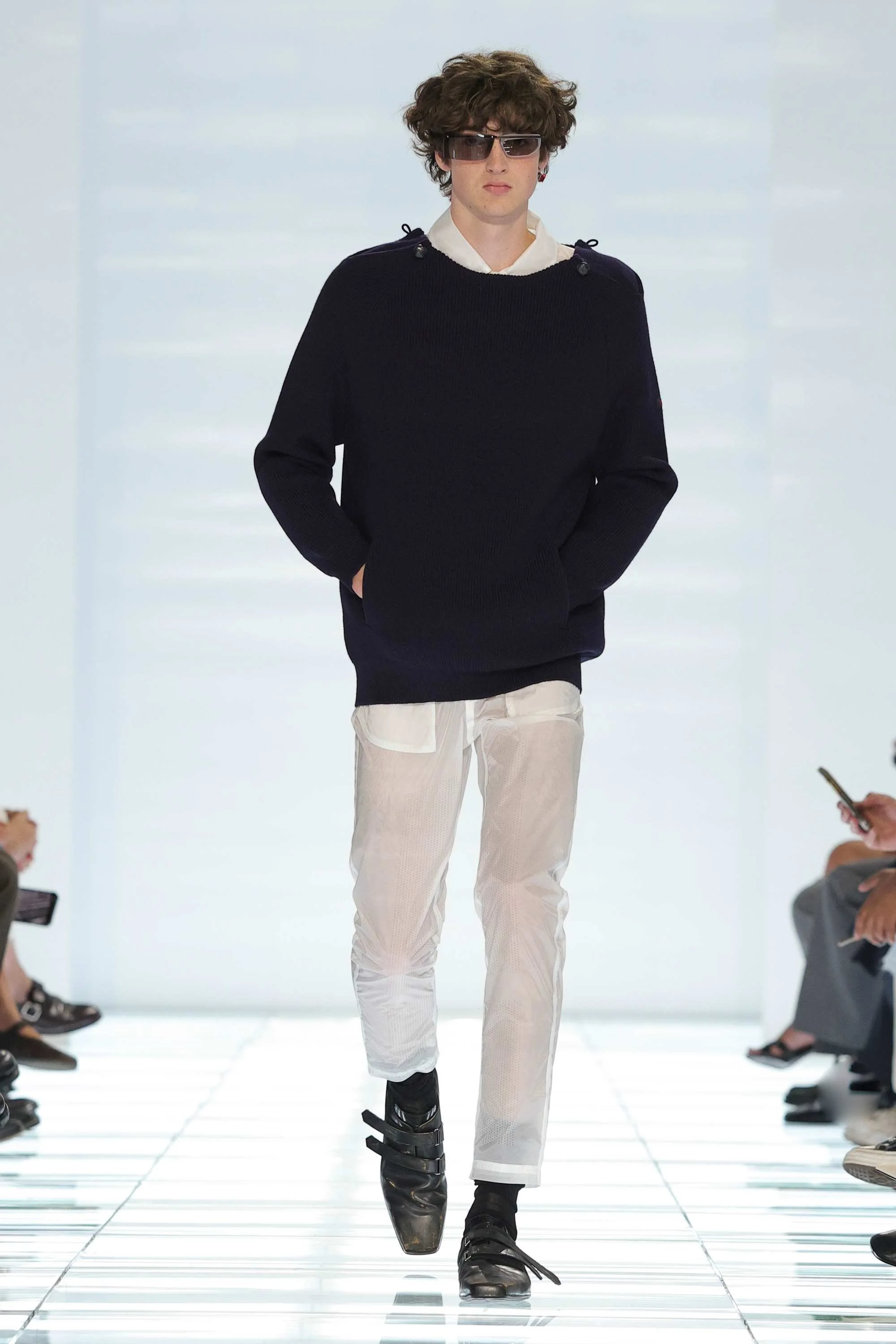
Even familiar concepts like the “Canadian tuxedo” were reconsidered, constructed in suiting fabrics or translucent nylon rather than traditional blue denim.
The effect was quietly radical.
The New Shape of Luxury
Although the collection appeared simple at first glance, its construction revealed considerable technical complexity.
Heat-sealed finishes, engineered textiles and precise printing techniques replaced visible embellishment, allowing craftsmanship to operate beneath the surface rather than on top of it. This shift reframed luxury as something embedded in construction rather than decoration.
Offbeat colour choices—including anise green, pale neutrals and unexpected pastel tones—added subtle tension without disrupting the collection’s overall restraint.
Nothing felt accidental, even when it appeared effortless.
Genderless Uniforms for Everyday Life
One of the most notable aspects of the collection was its fluid approach to gender.
Several female models walked alongside menswear looks, reinforcing the idea that these garments exist outside traditional categories. Jeans, jackets and blazers were presented as shared uniforms rather than gendered statements, designed to be worn by anyone who connects with their simplicity and function.
The message was clear: clothing should respond to individuals, not definitions.
Rejecting Ornament, Embracing Attitude
Prada and Simons were explicit in their intention to move away from decorative fashion.
Influenced in spirit by Adolf Loos’ rejection of ornamentation, the collection instead focused on attitude—how garments are worn, combined and perceived. The designers suggested that true innovation lies not in adding more, but in rethinking what already exists.
This philosophy extended even to styling, where minimal combinations of jeans, jackets and shirts created looks that felt intentionally pared back.
The absence of excess became the statement itself.
A Quiet Disruption in Milan
Within a season filled with embellishment, storytelling and maximalist references, Prada offered something entirely different.
There were no elaborate narratives or ornate surfaces—just a focused exploration of everyday clothing reimagined through precision and restraint. That refusal to compete on spectacle made the collection stand out even more.
It was fashion reduced to its most essential question: what do people actually want to wear?
The Power of Less
The Jeans Genies demonstrated that simplicity, when executed with intelligence, can be one of fashion’s most challenging ideas.
By reworking familiar garments through scale, proportion and technical innovation, Prada and Raf Simons delivered a collection that quietly questioned what luxury means today. It suggested that relevance no longer depends on complexity, but on clarity of purpose.
In stripping fashion back to its foundations, Prada proved once again that the most radical ideas are often the most restrained.