Phoebe English Autumn/Winter 2026
There was a hush over the white gallery at 180 Strand before the first look even appeared. Phoebe English titled her autumn winter 2026 collection Lost Touch, and that phrase seemed to reverberate through the room. This was not a show that shouted for attention but one that drew it quietly, almost tenderly. A single cellist played in the corner, the music soft enough to make the rustle of fabric audible. The space felt more like a meditation than a runway, and within it, English unveiled her most personal and vulnerable work to date.
The designer, long regarded as one of London’s most thoughtful voices, has always worked outside the conventions of the industry. Known for her commitment to regenerative fashion and her reliance on natural materials, she builds her practice slowly and deliberately. Since becoming a mother, her work has shifted towards a kind of creative caregiving, guided by intuition rather than seasonality. Each piece in Lost Touch seemed to reflect this gentler pace, exploring what it means to create beauty with intention.
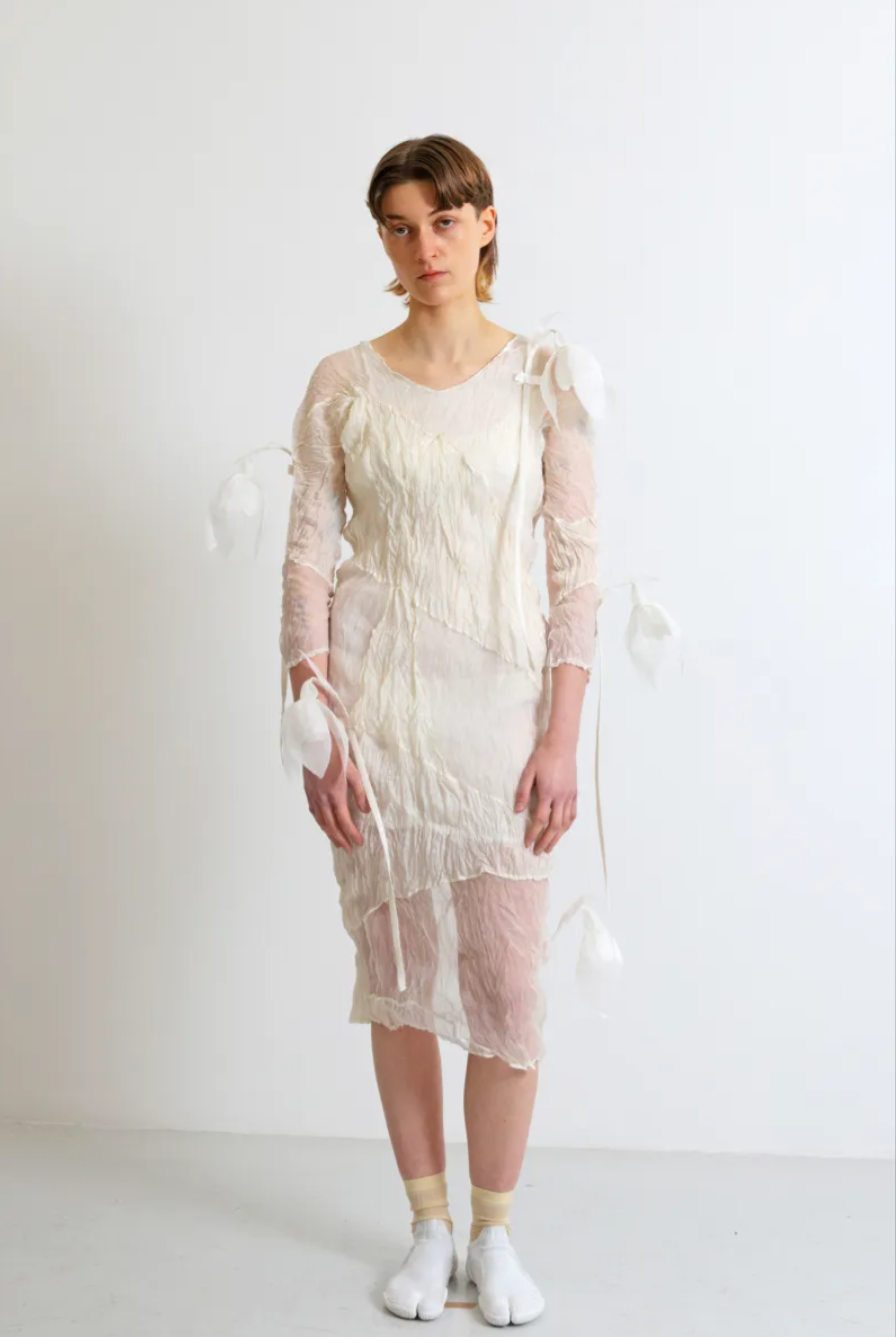
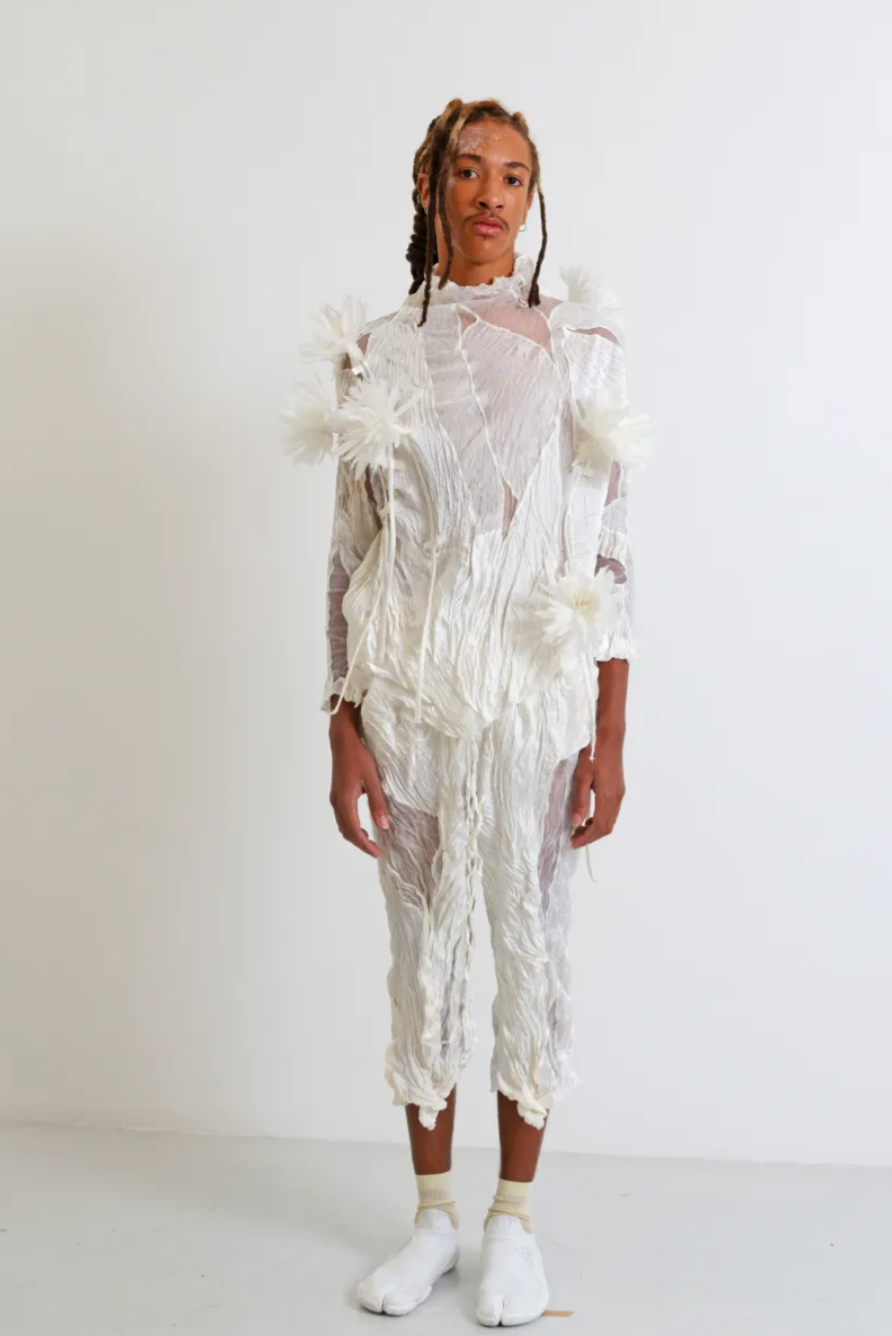
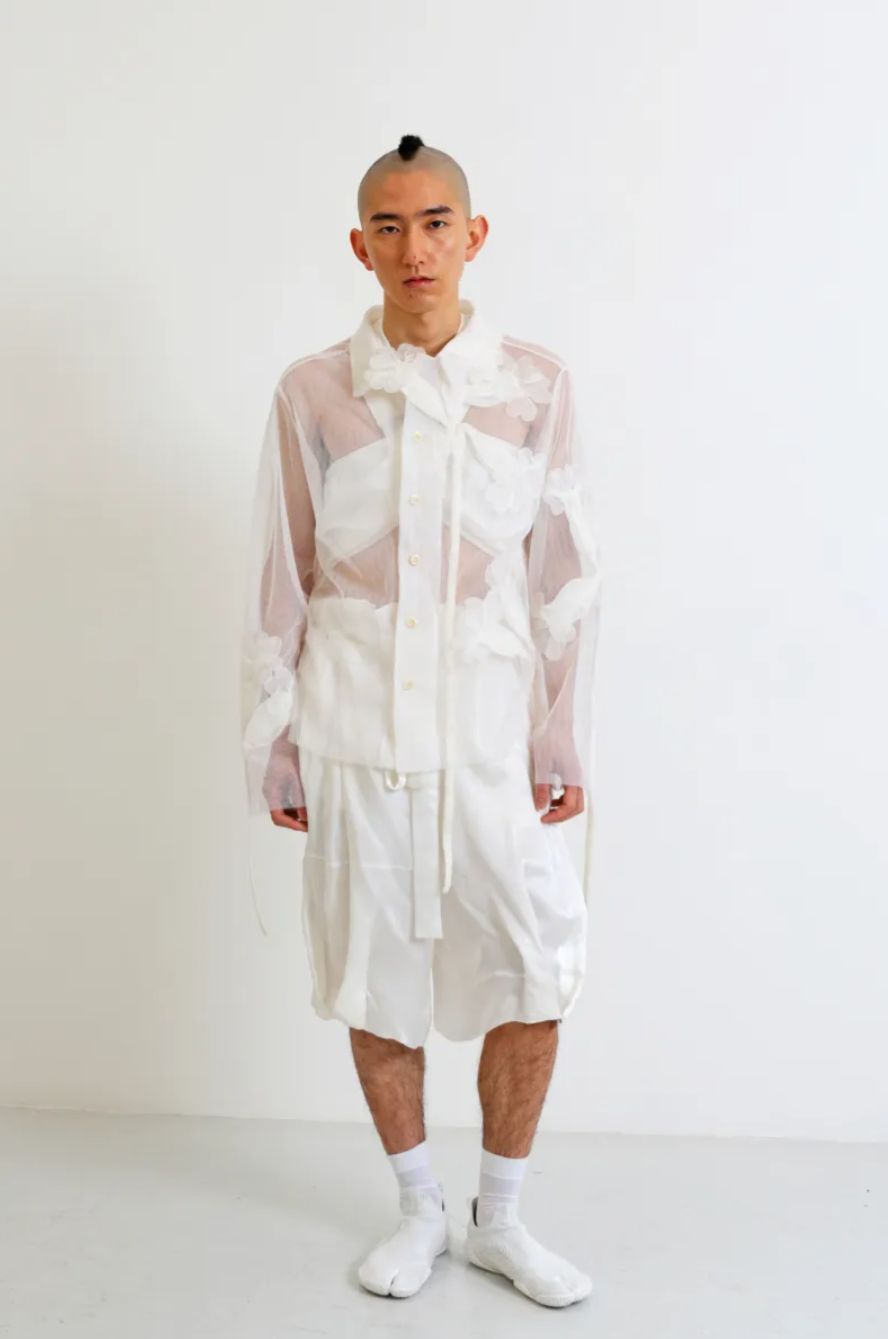
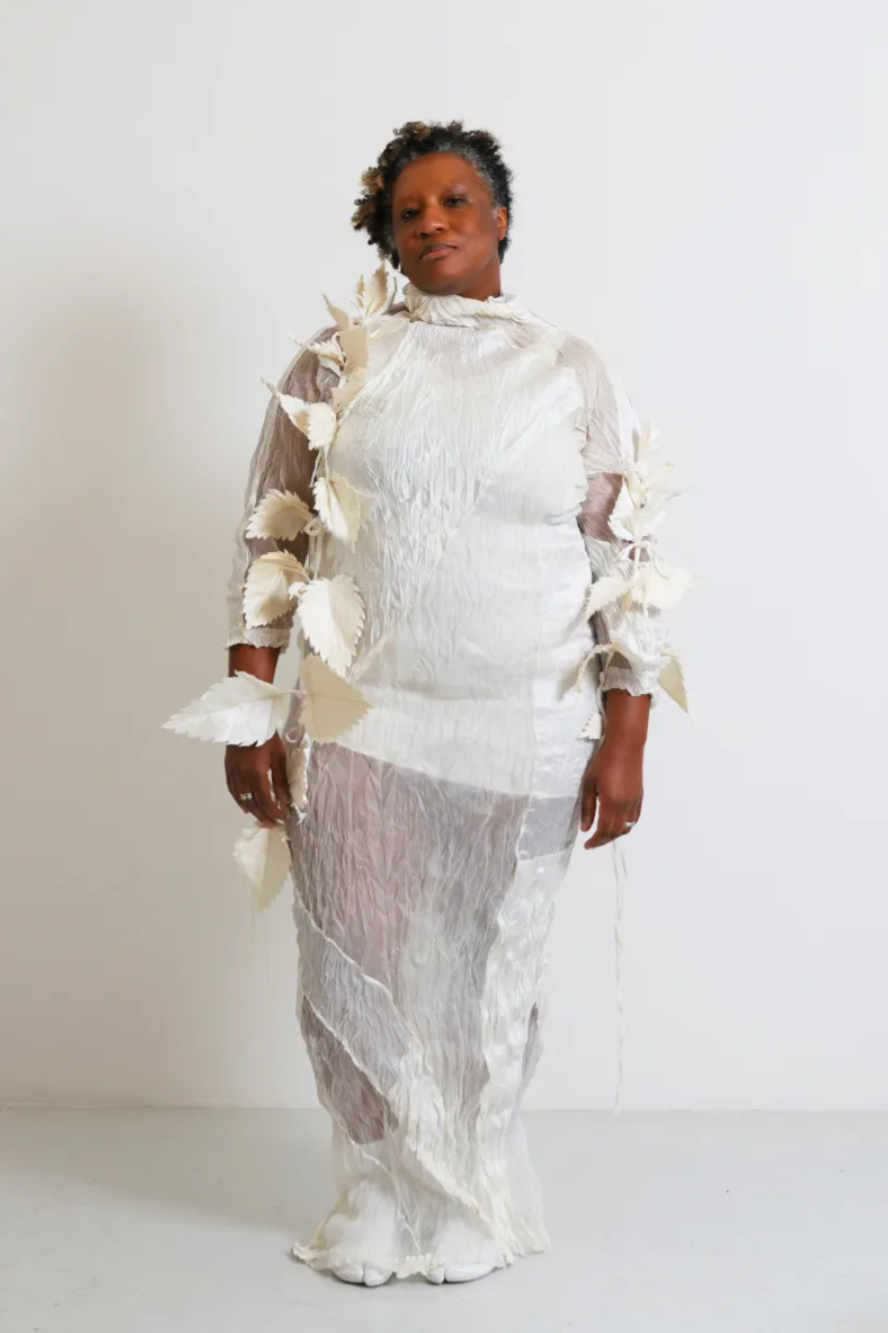
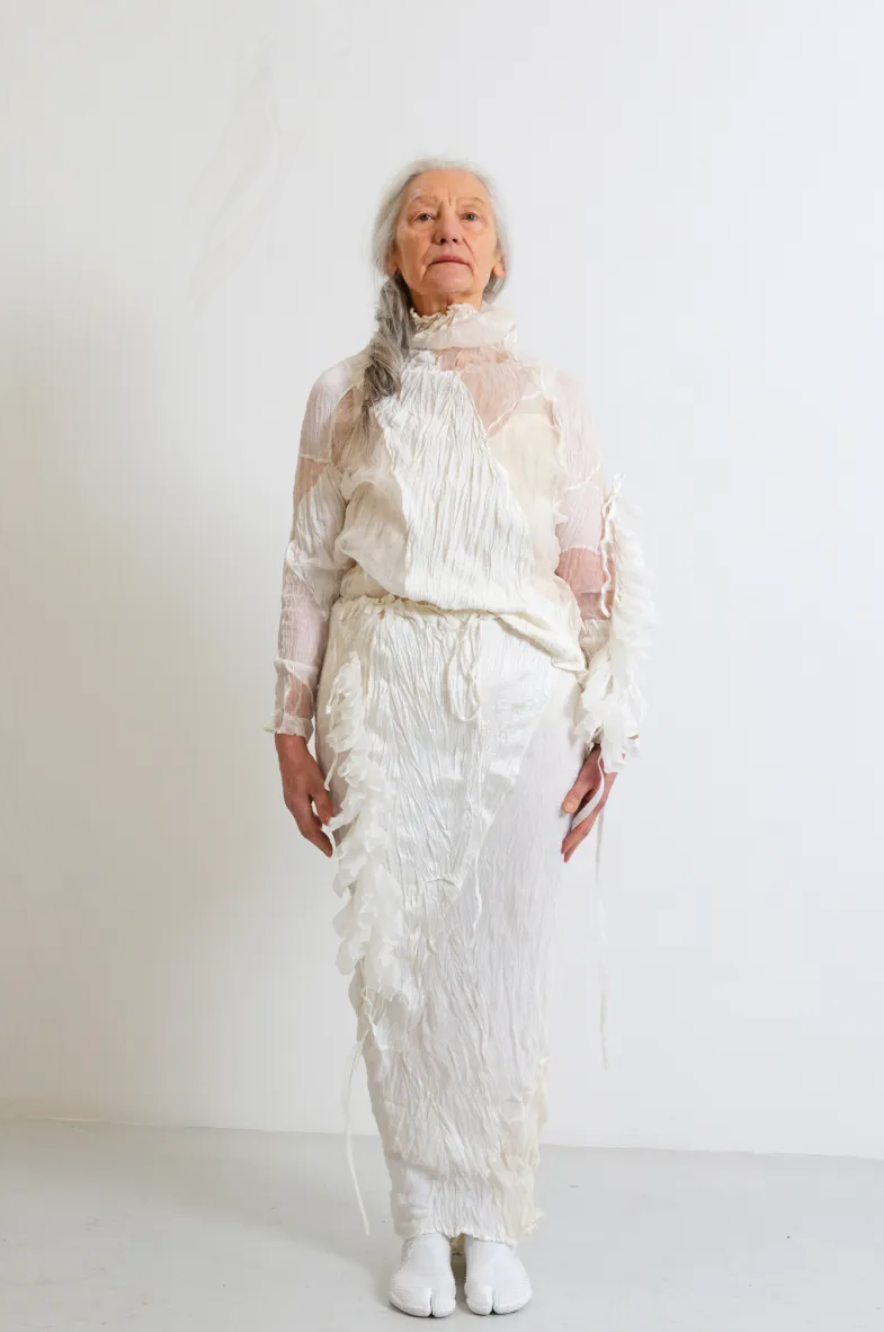
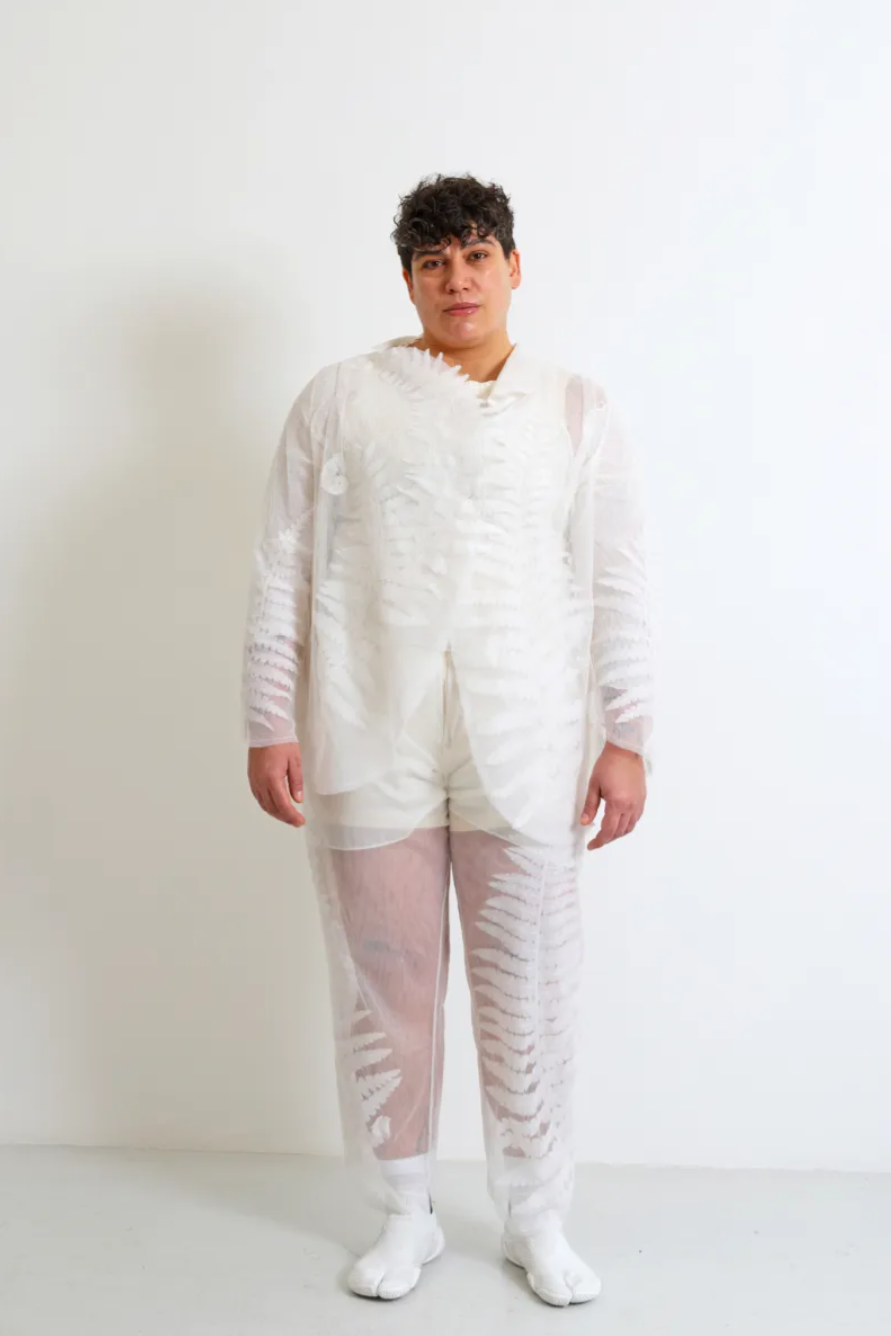
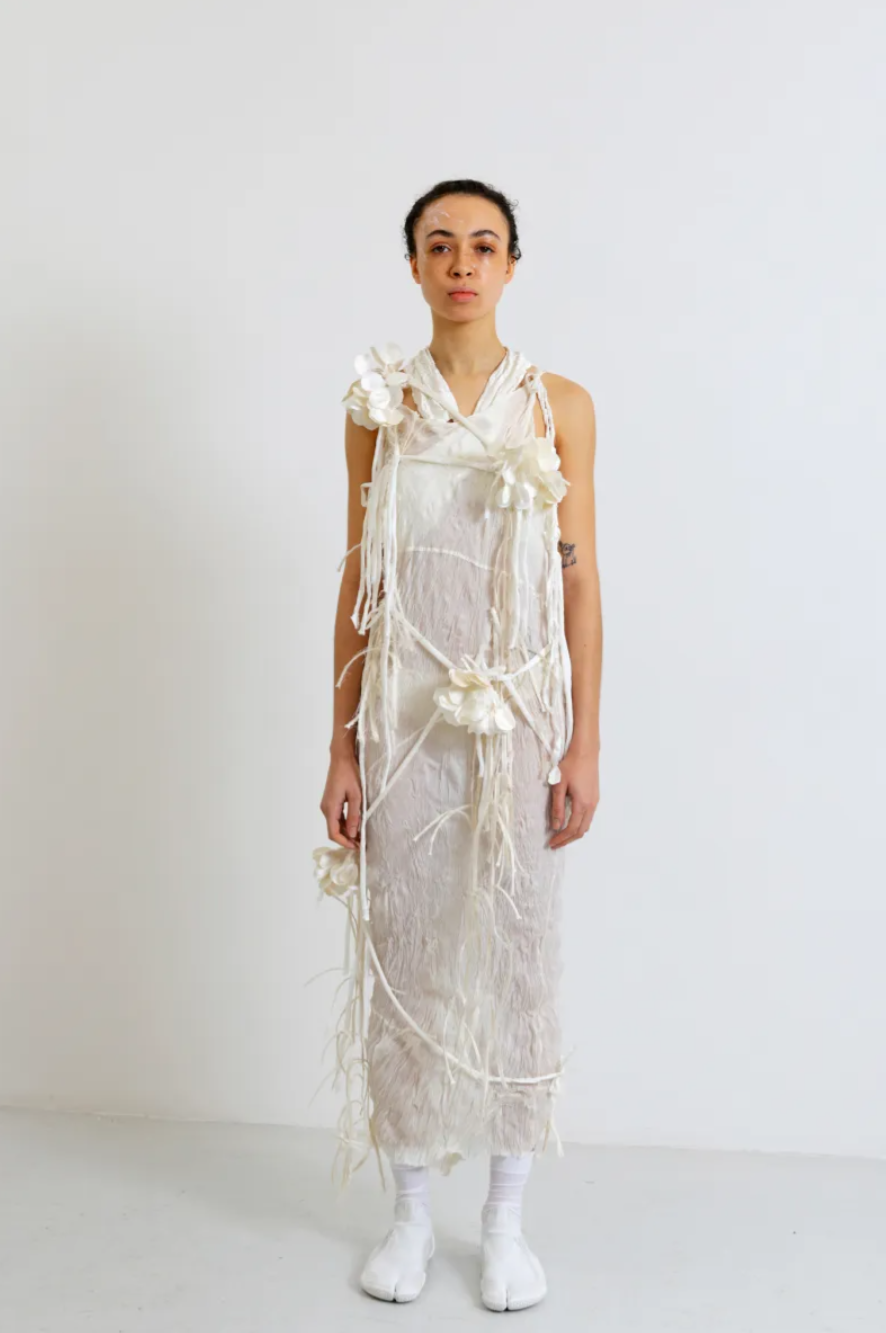
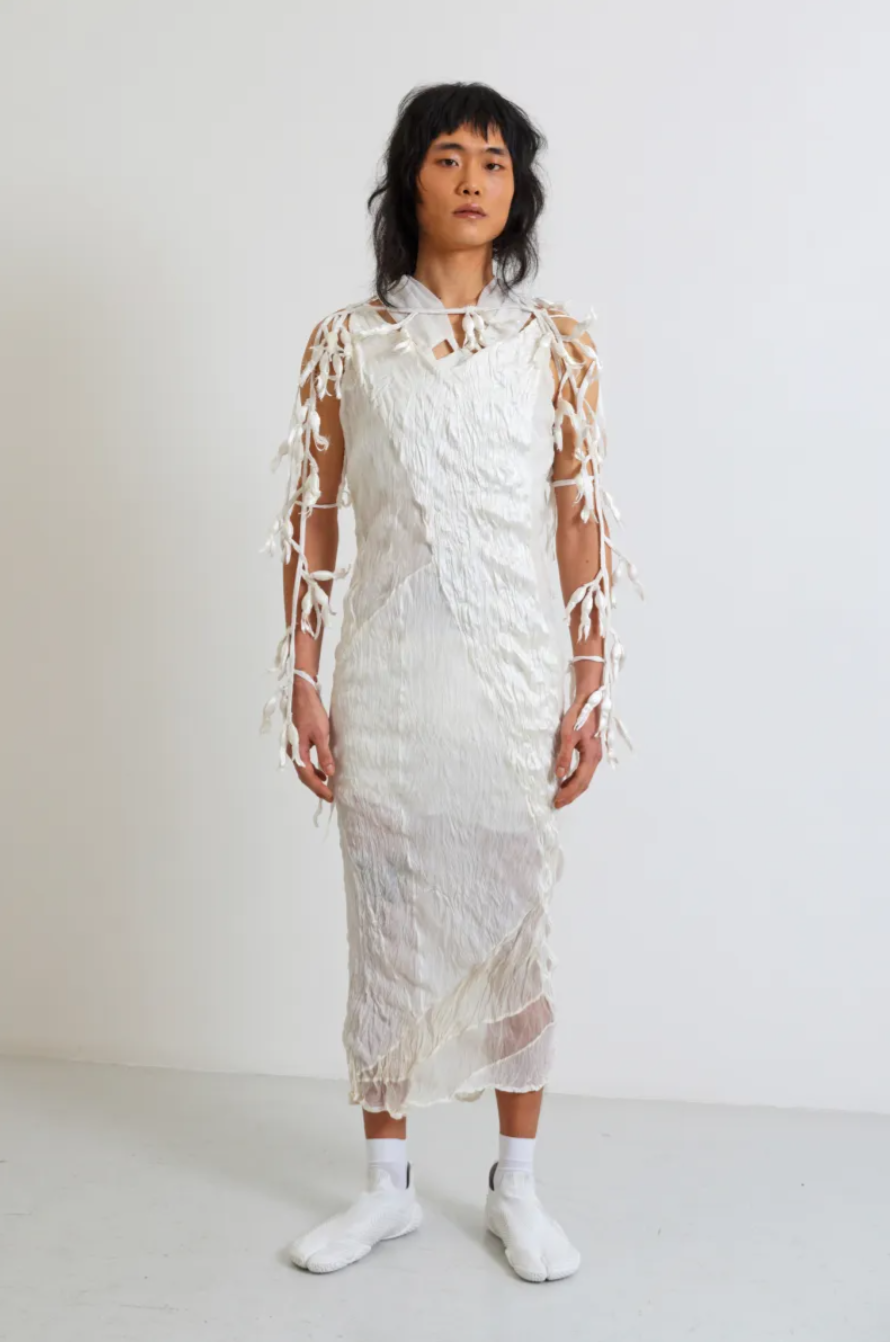
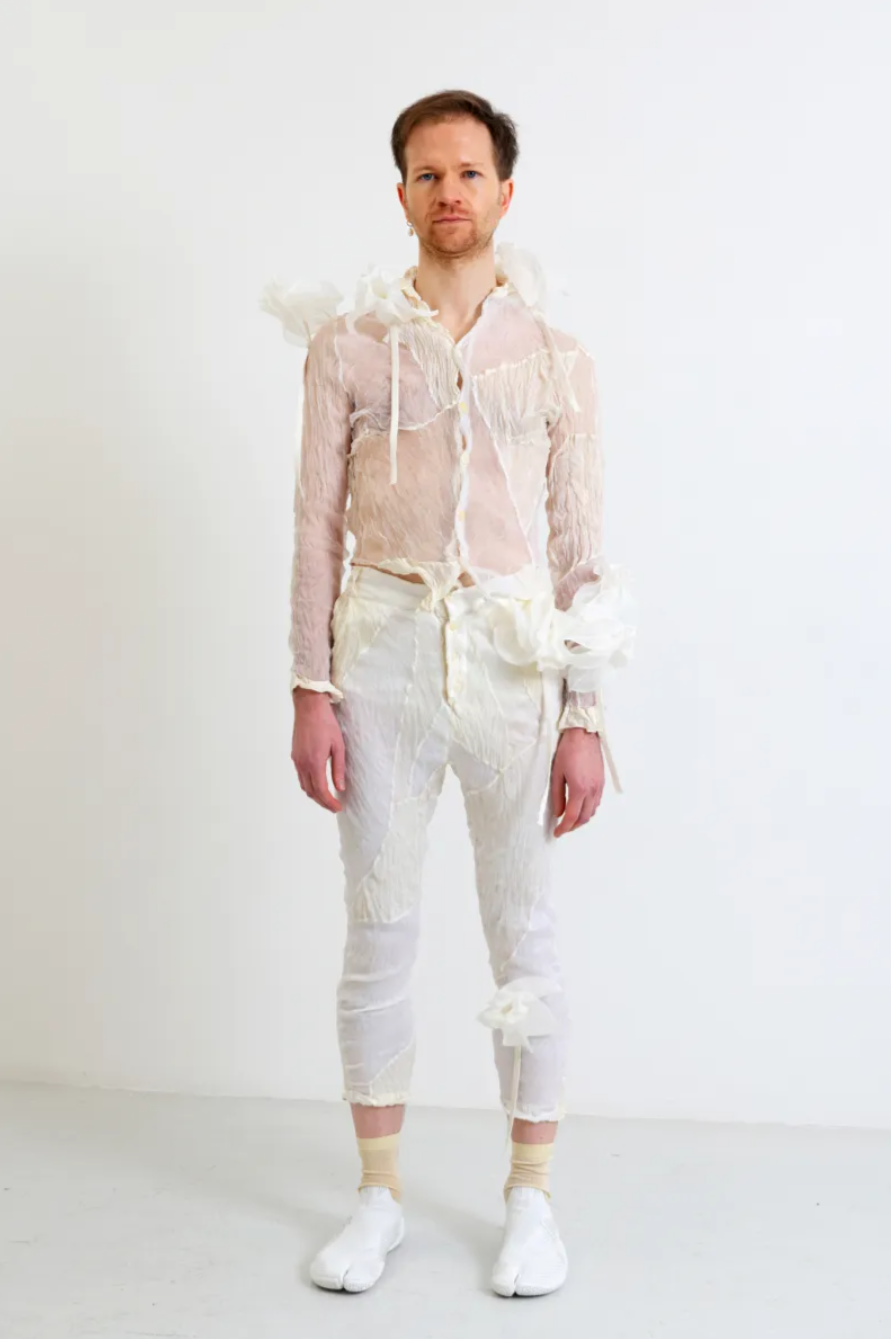
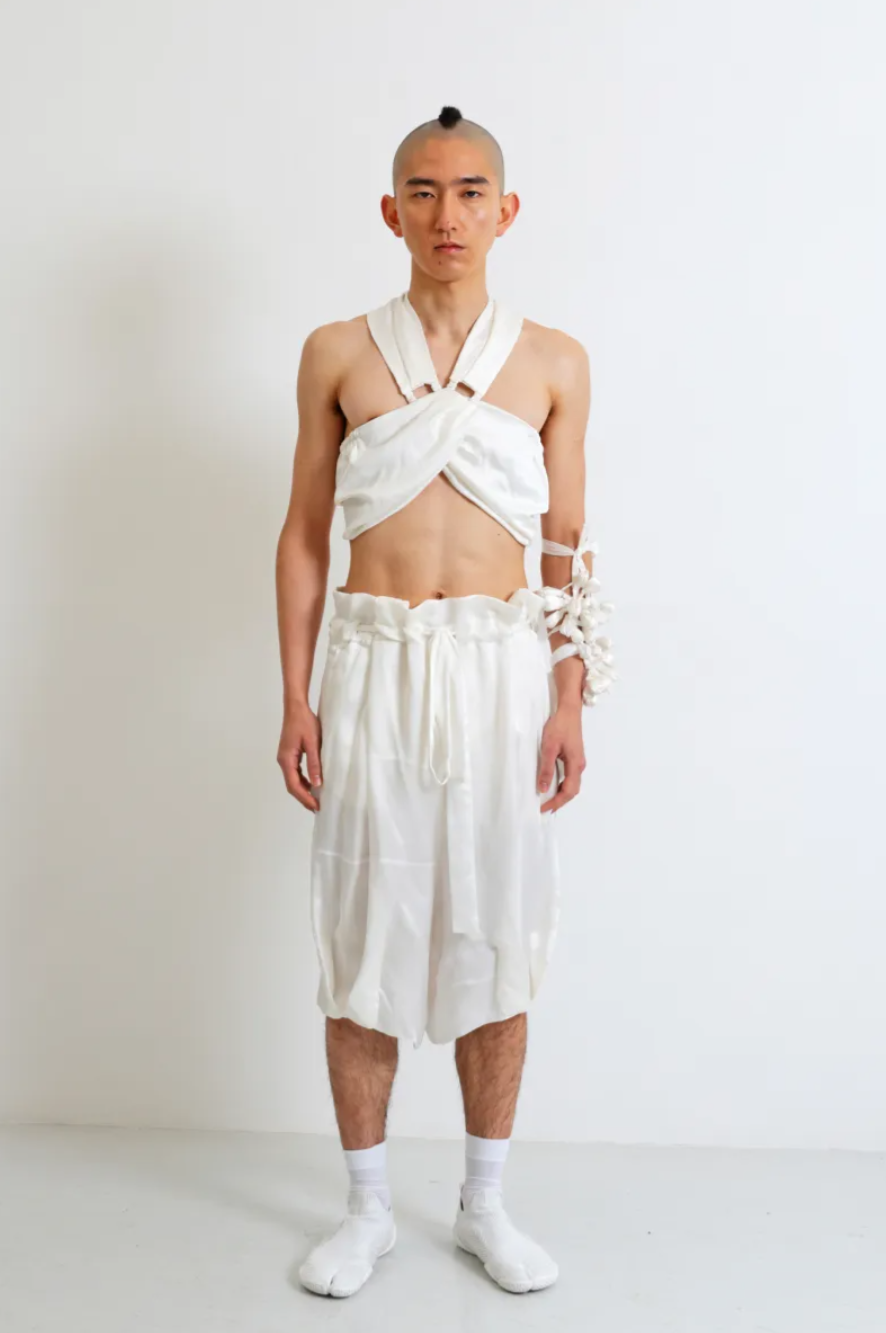
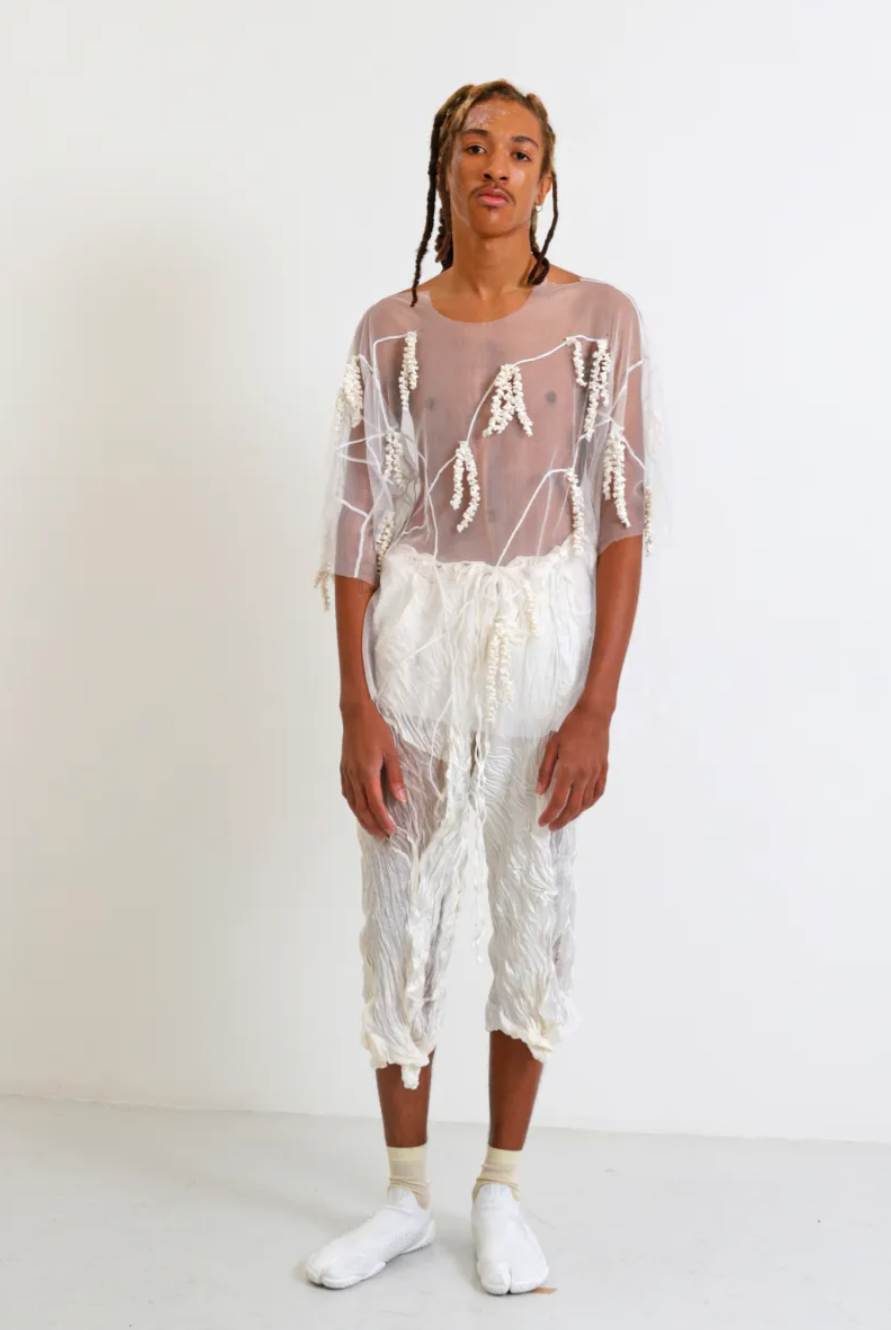
The collection unfolded as an exercise in restraint and emotional clarity. Layers of diaphanous mesh and gauzy fabric floated around the body, revealing and concealing in equal measure. English used the same textile throughout, folding and layering it into different expressions of movement and stillness. The result was a study in tactility and transparency, a dialogue between maker and wearer that felt deeply human. The room became a space where craftsmanship could breathe, untouched by spectacle or noise.
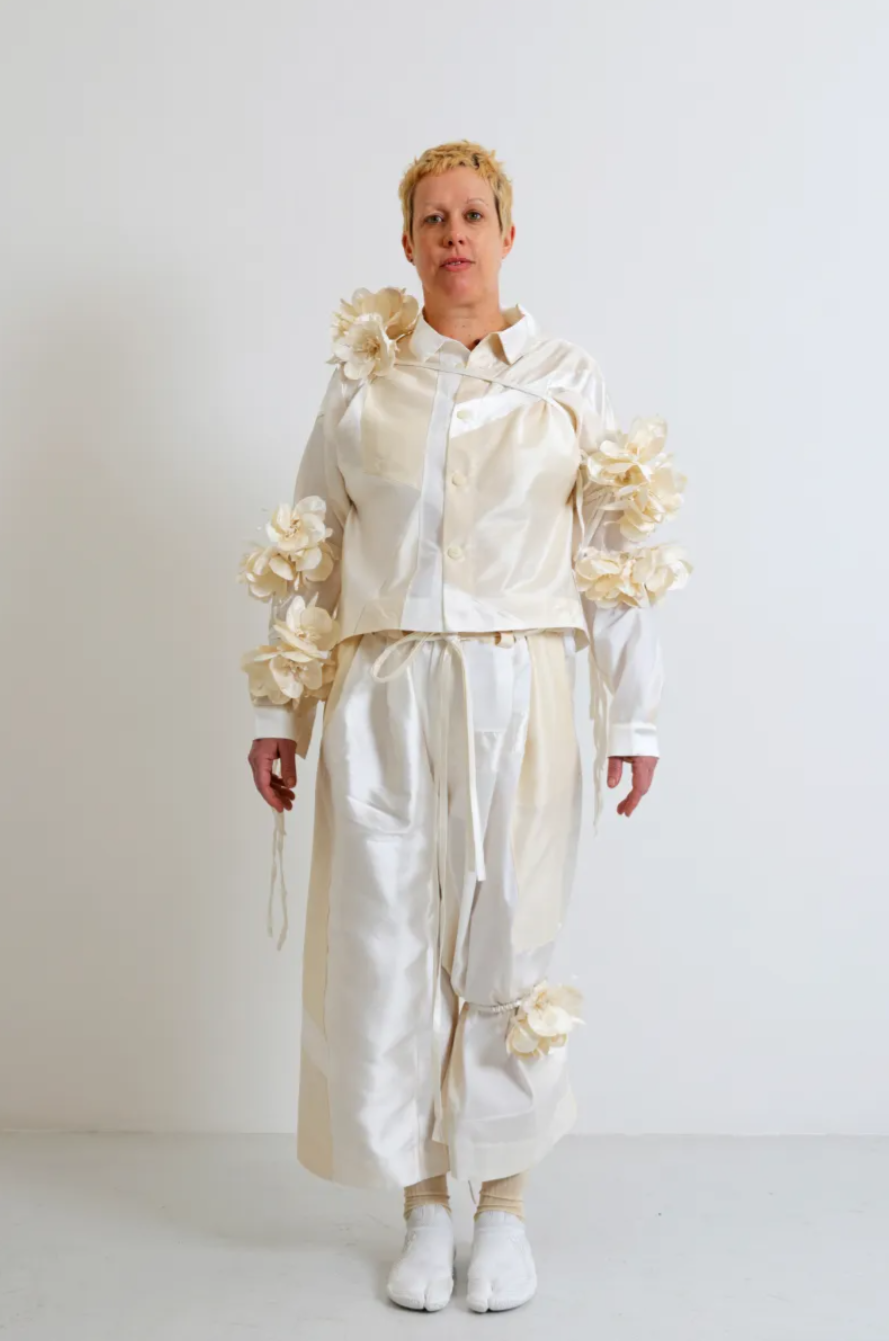
The most striking moments came through her treatment of corsetry. Instead of building rigid structure, English softened it. The boning appeared almost weightless, tracing the body’s shape without containing it. Panels curved like petals, suggesting both fragility and strength. In her hands, the corset became a vessel of empathy rather than discipline, a sculptural form that protected as much as it revealed. It was a reminder that fashion can honour the body’s architecture without seeking to control it.
What lingered after the final look was not grandeur but peace. The cello’s last note faded and the garments seemed to dissolve back into white light. English had created a moment of stillness in the rush of Fashion Week, a quiet refusal to perform in the expected way. Lost Touch felt like an act of care, both for the craft itself and for the people who encounter it. It was proof that fashion does not always need to dazzle to be profound. Sometimes it only needs to breathe.