Louis Vuitton Women’s Fall 2026
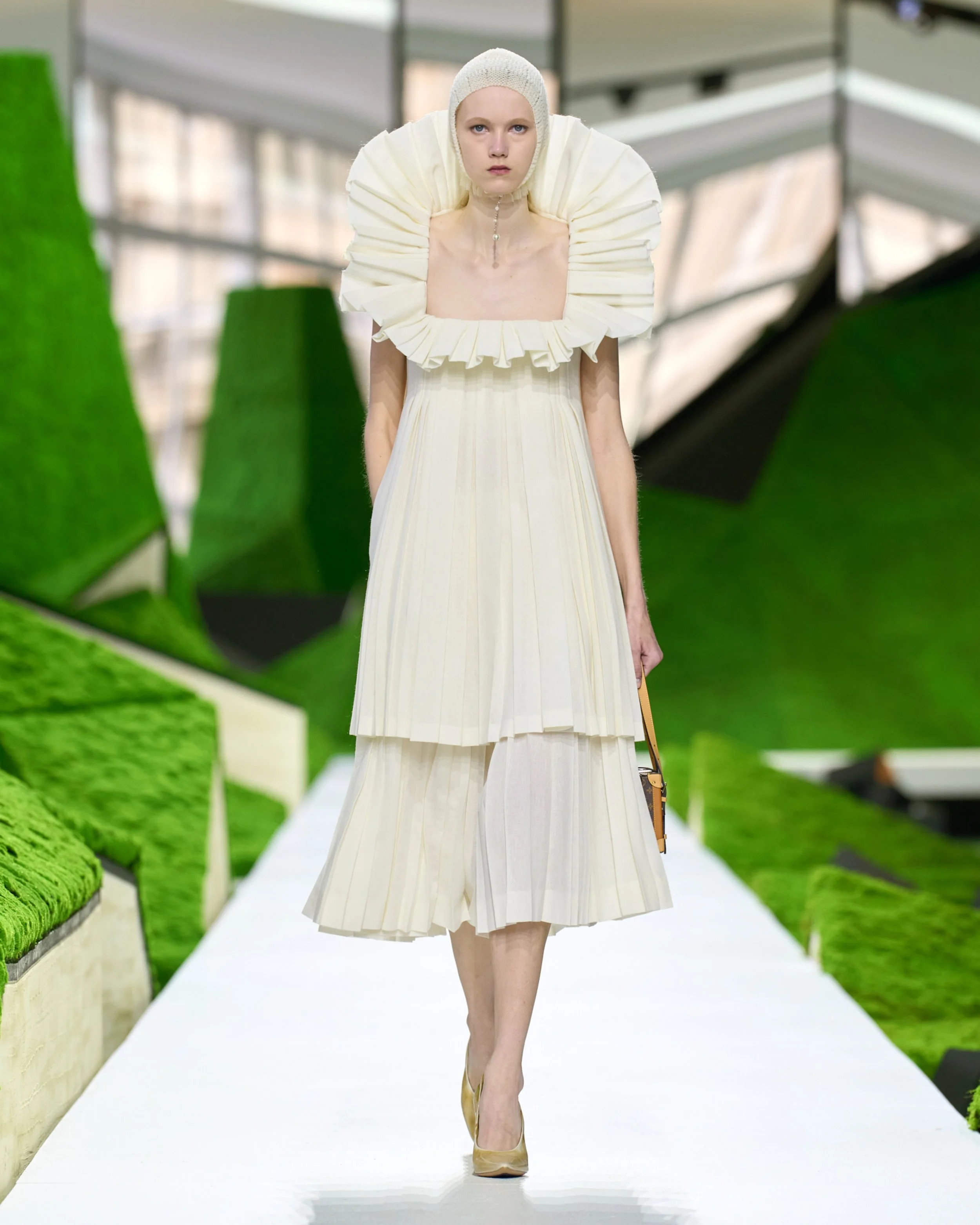
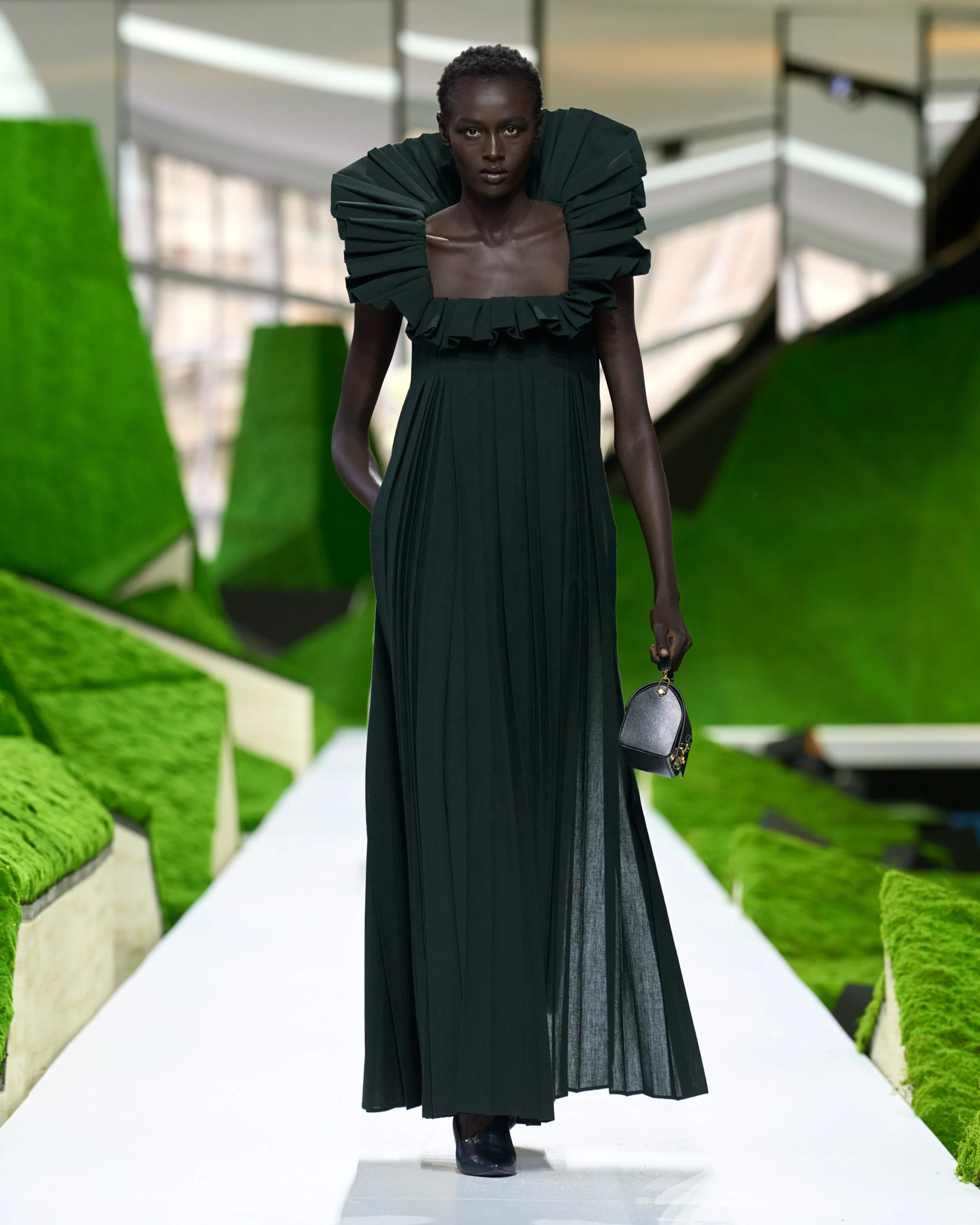
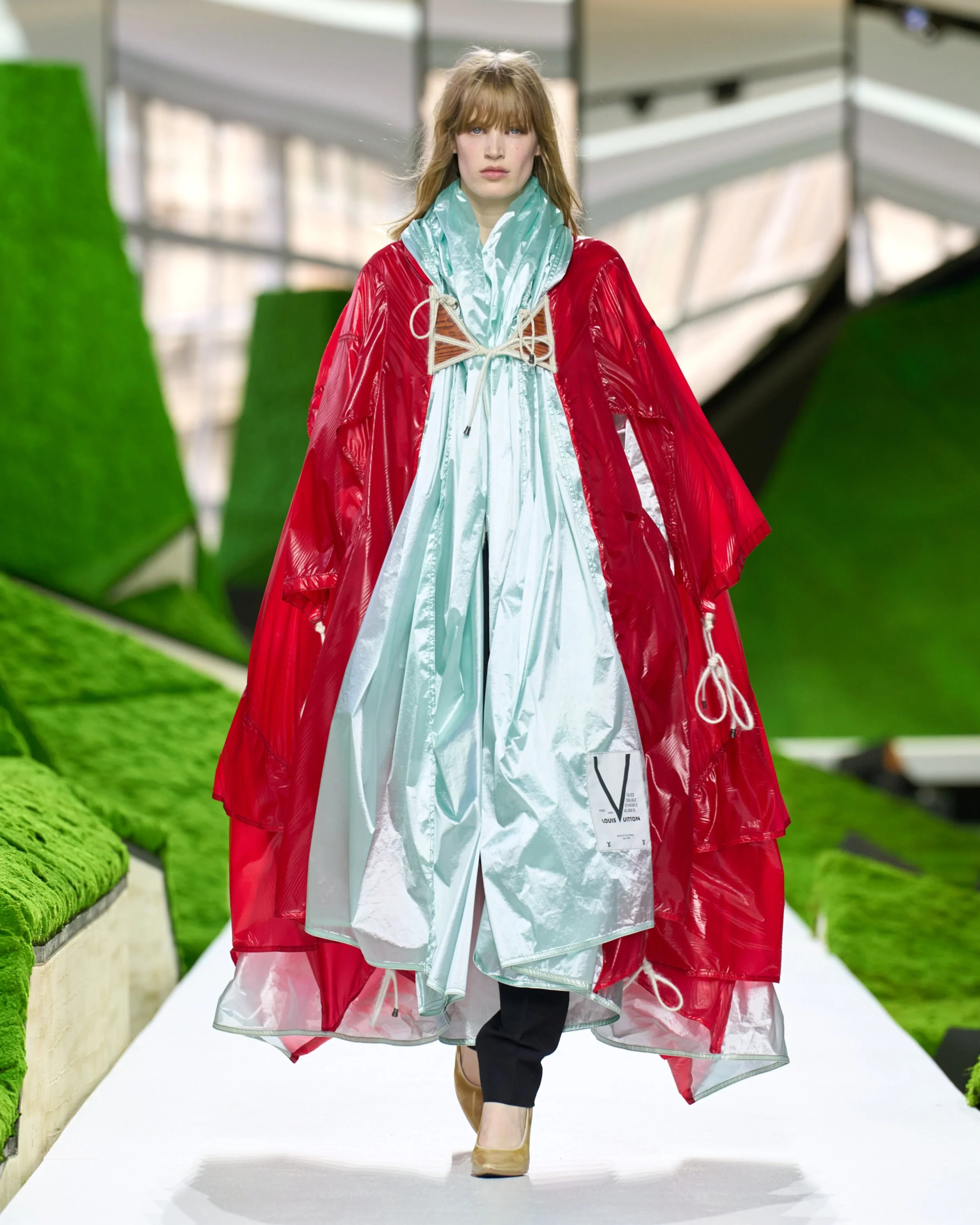
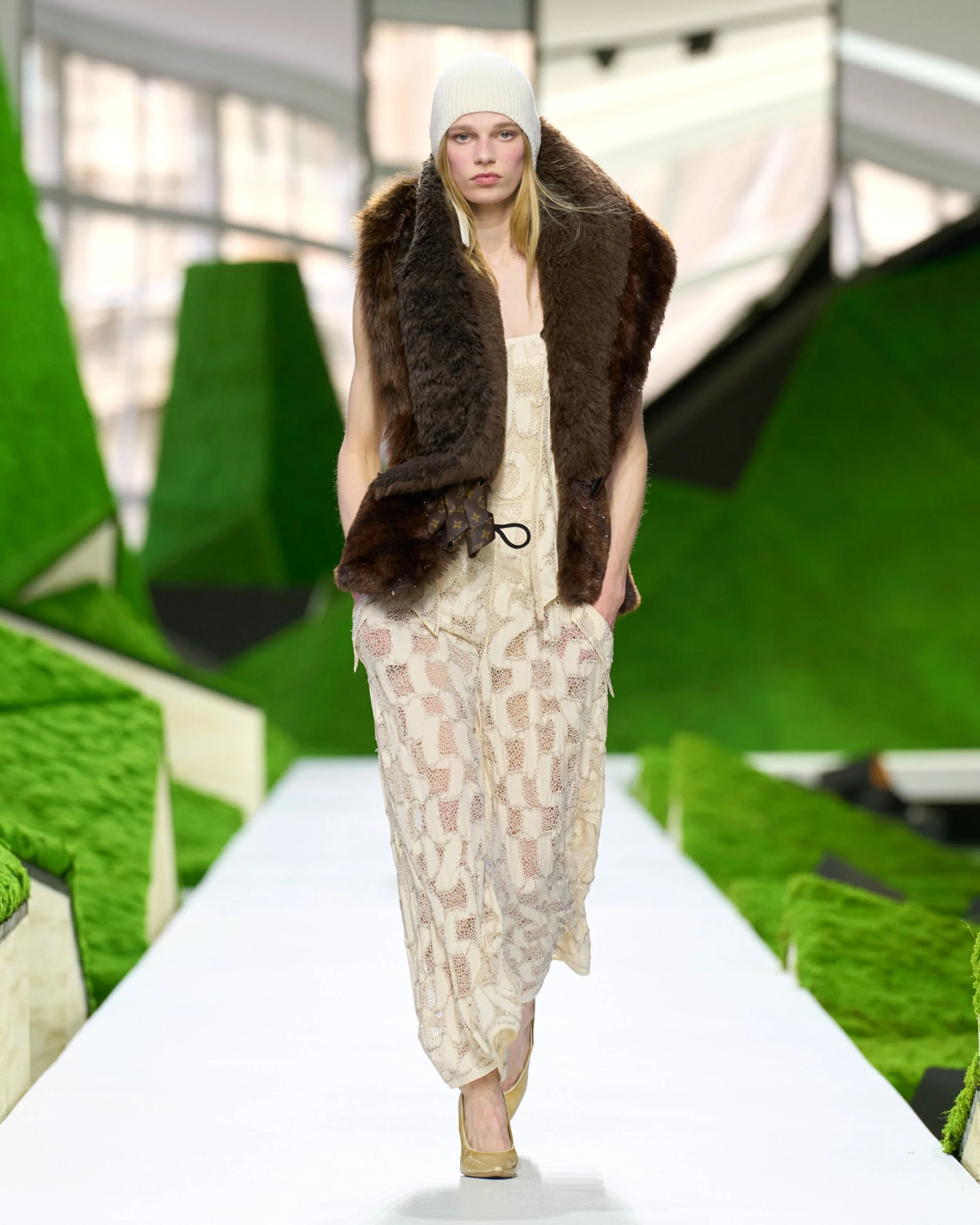
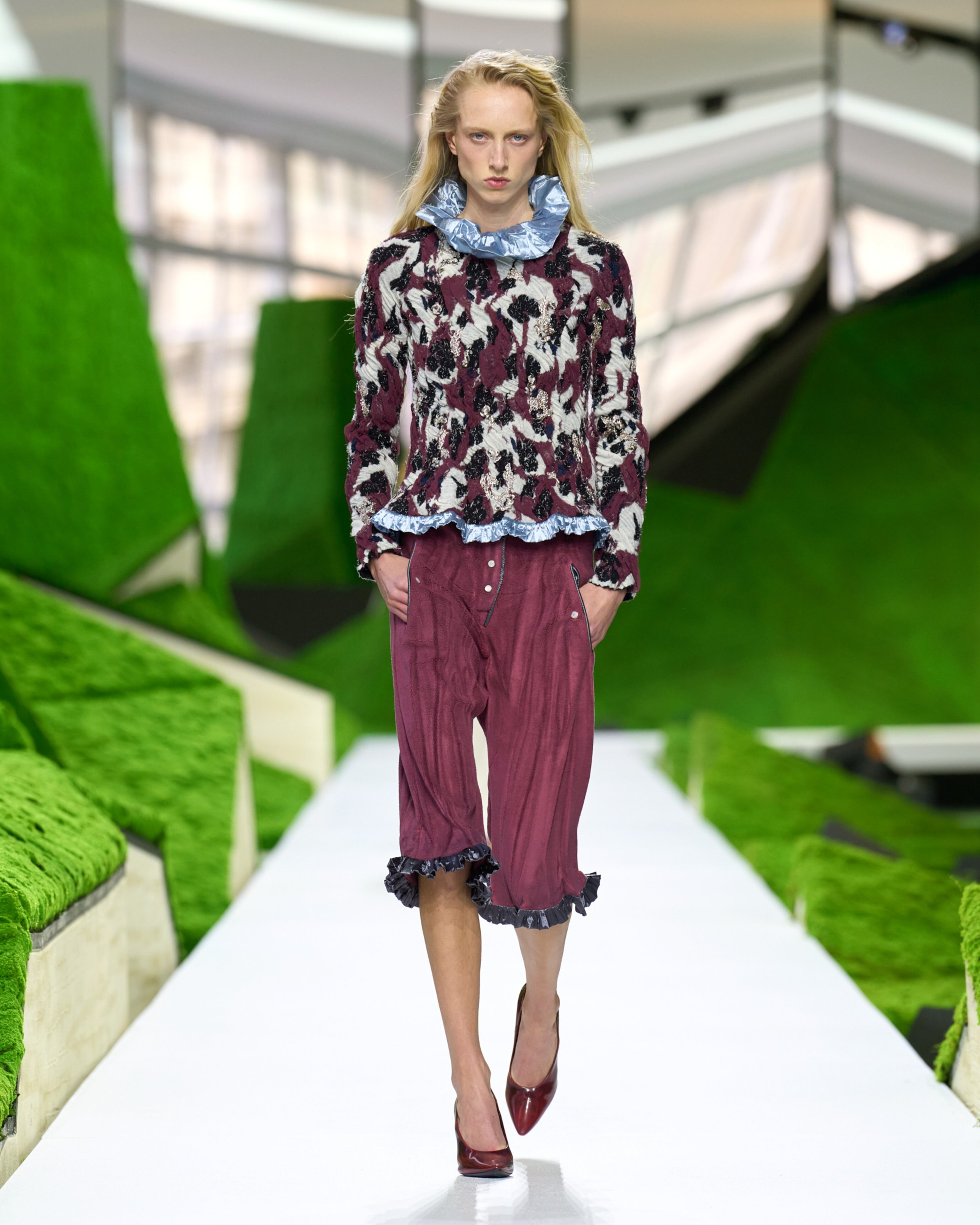
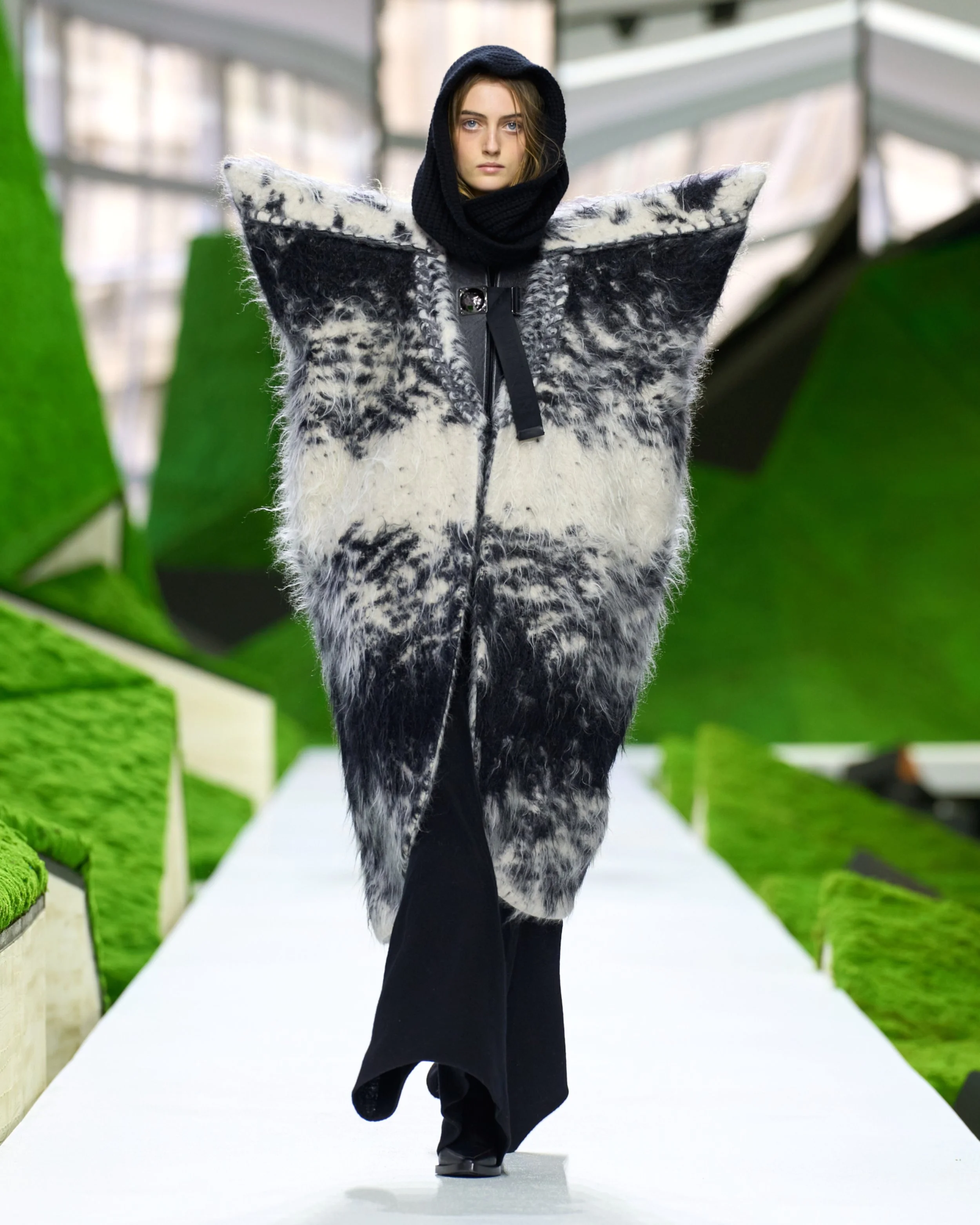
At Paris Fashion Week, Louis Vuitton presented the Louis Vuitton Women’s Fall 2026 collection under the direction of Nicolas Ghesquiere, closing the season with a show that explored the universal language of clothing shaped by nature. Rather than referencing a single geographic tradition, Ghesquière looked to the garments worn by communities living in mountainous regions across the world. The Louis Vuitton Fall Winter 2026 collection reflected his interest in how people from vastly different cultures often arrive at similar solutions for survival and movement in harsh environments. In that sense, the designer framed the collection as an anthropology of fashion, a study of how clothing can connect people rather than divide them.
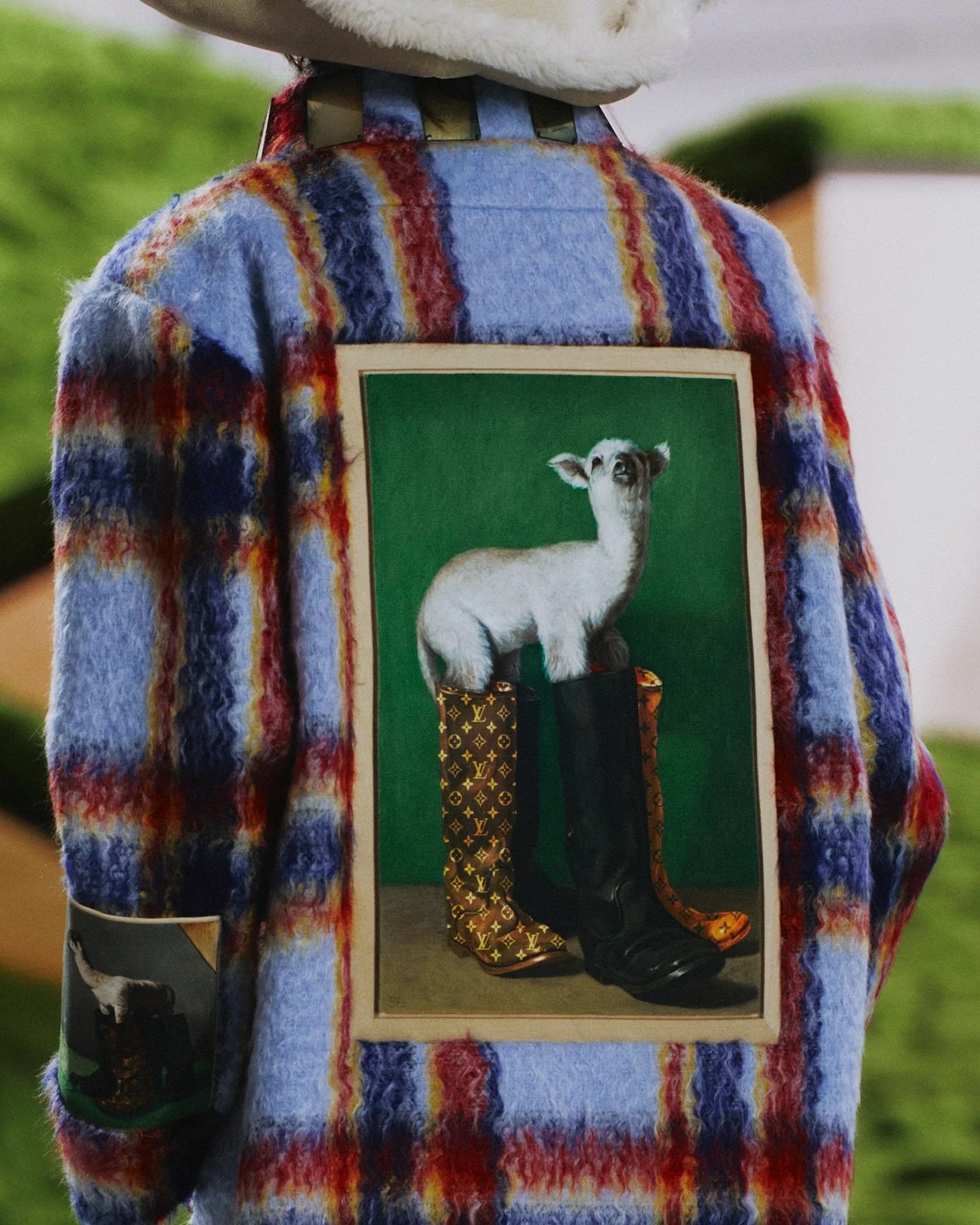
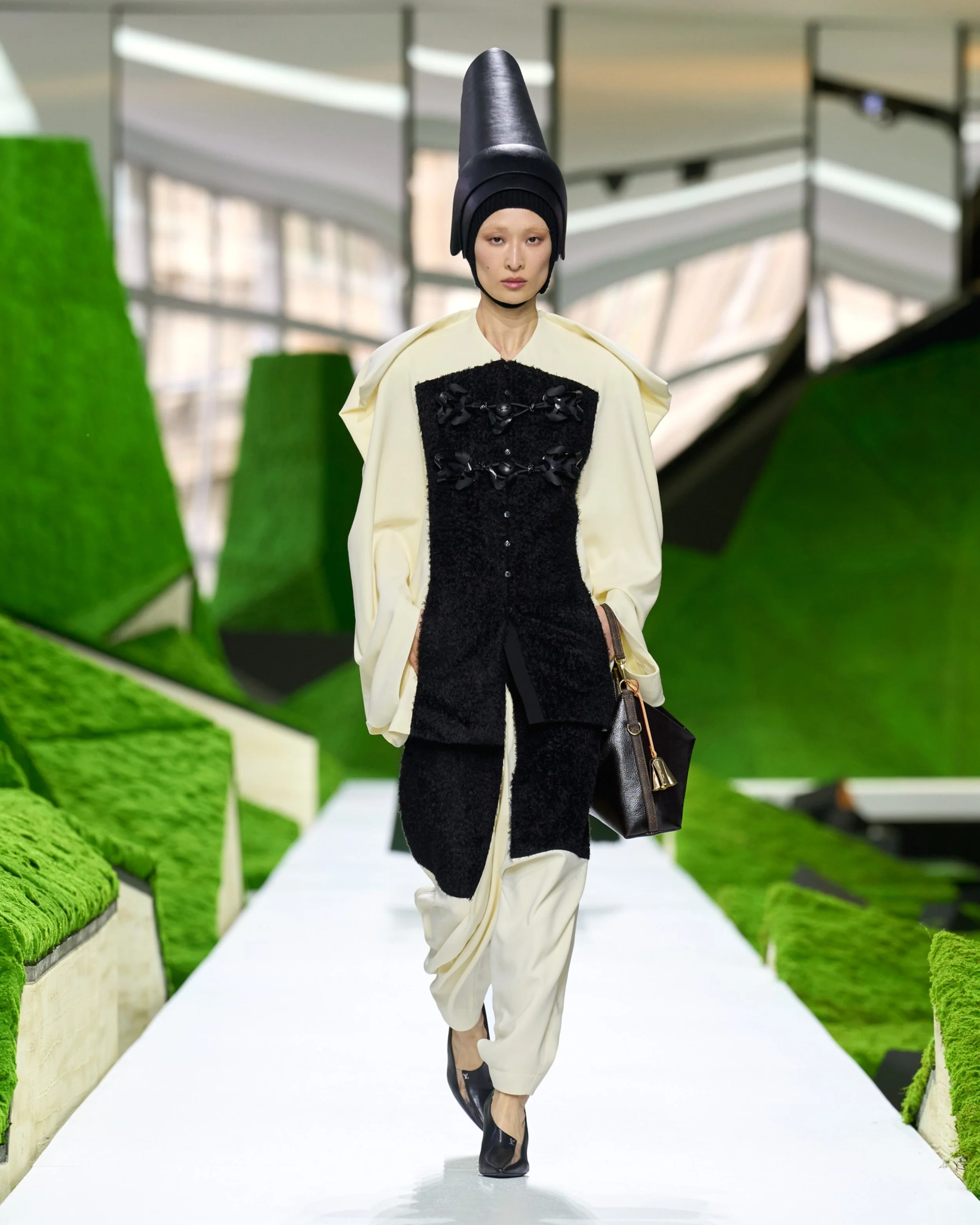
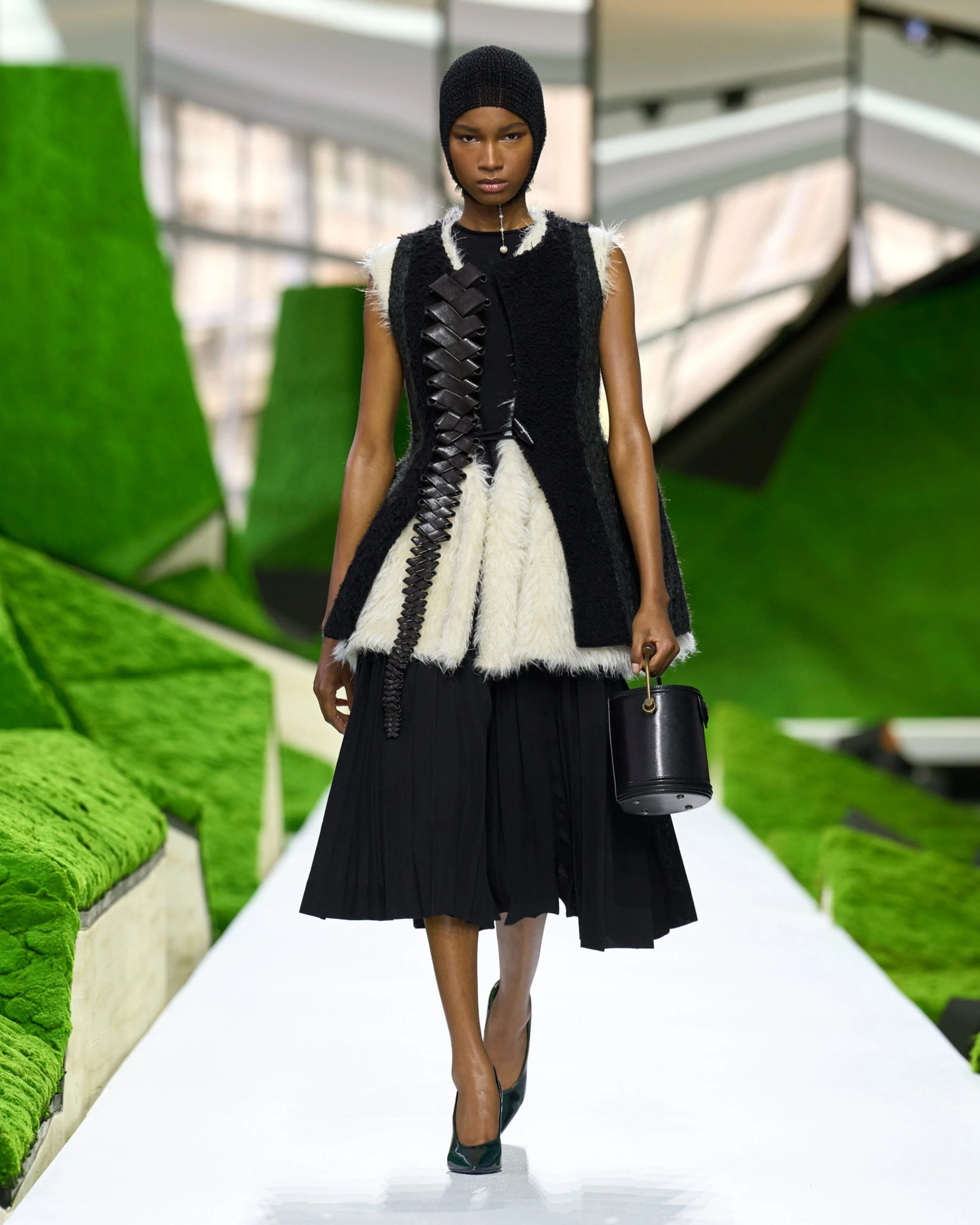
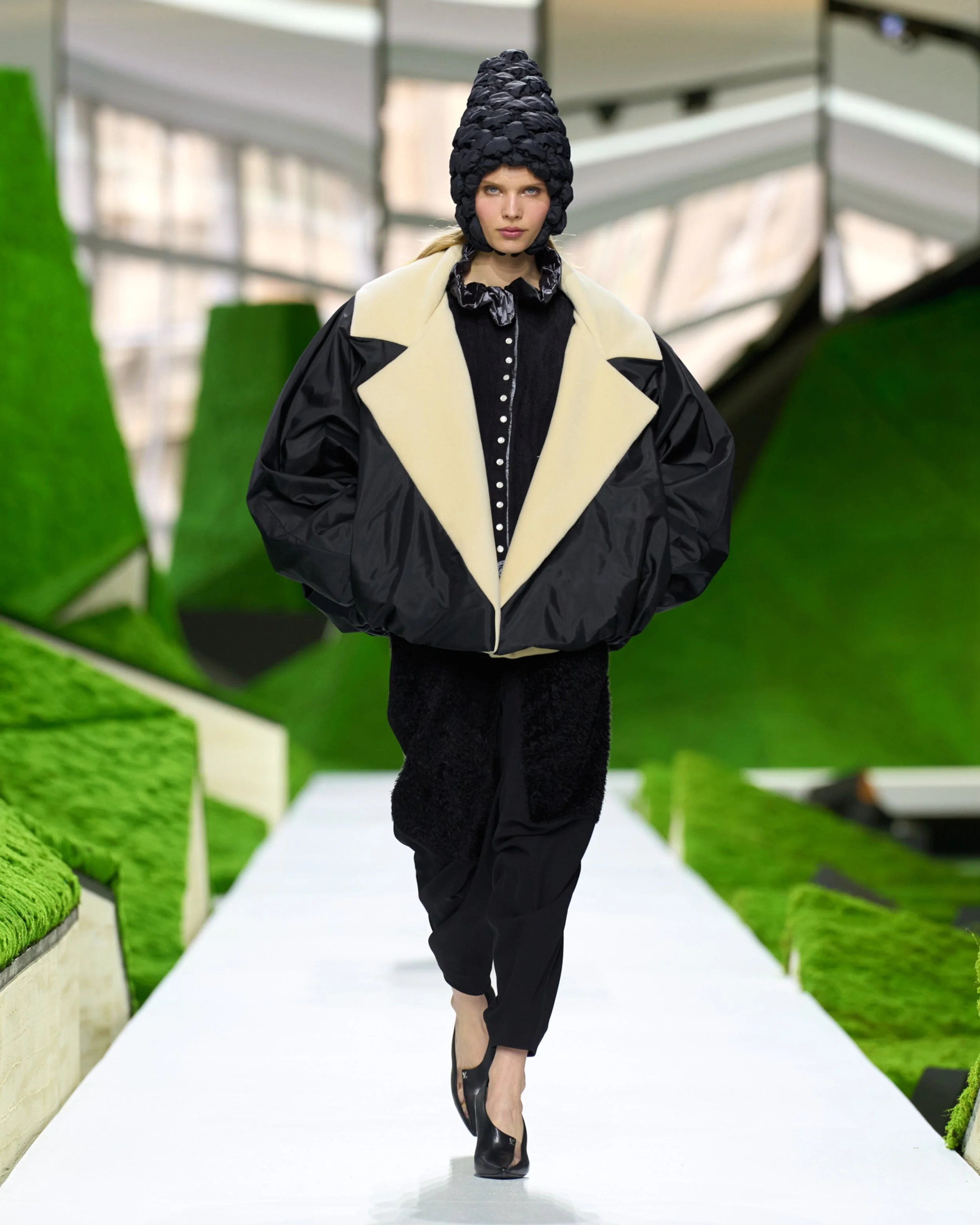
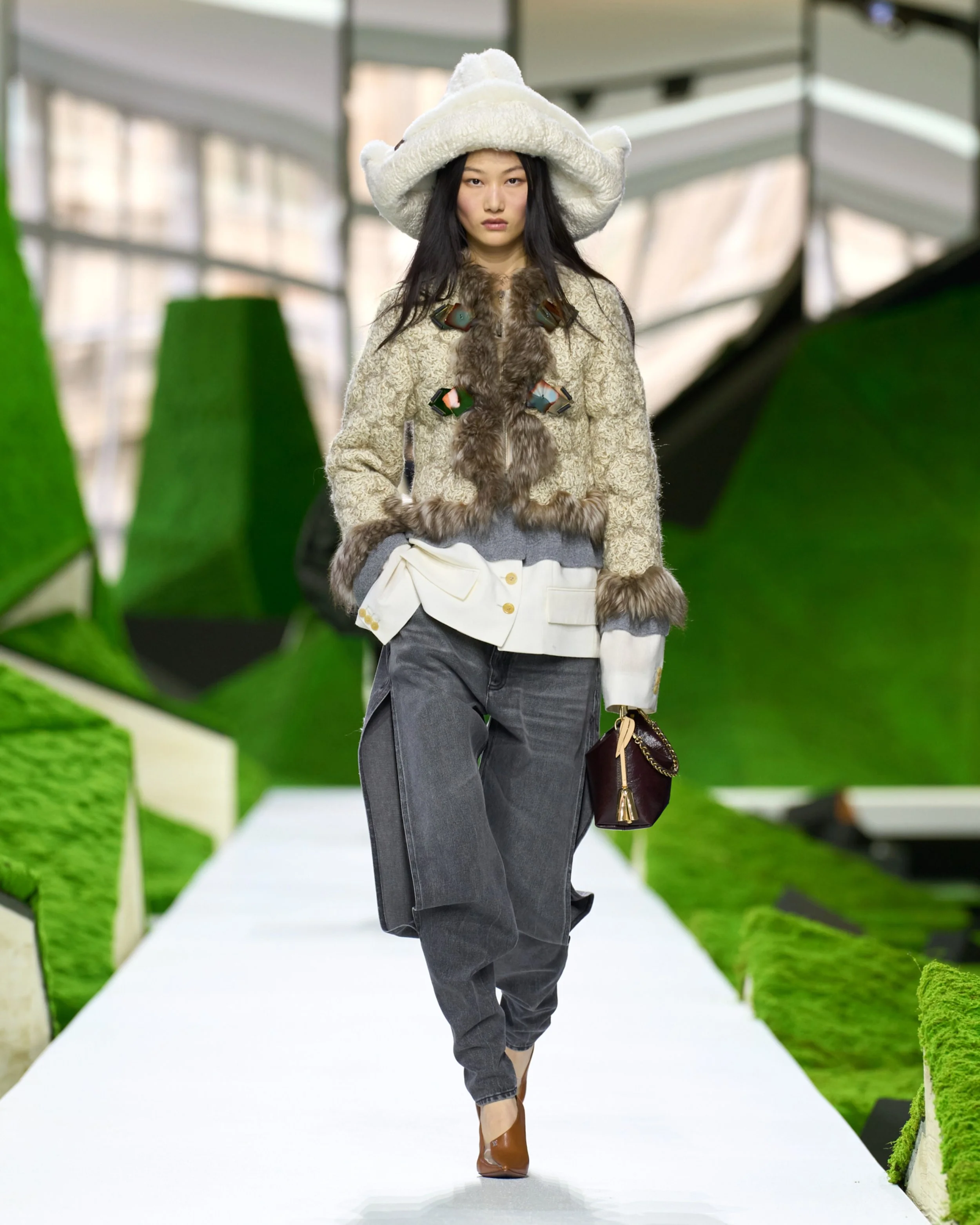
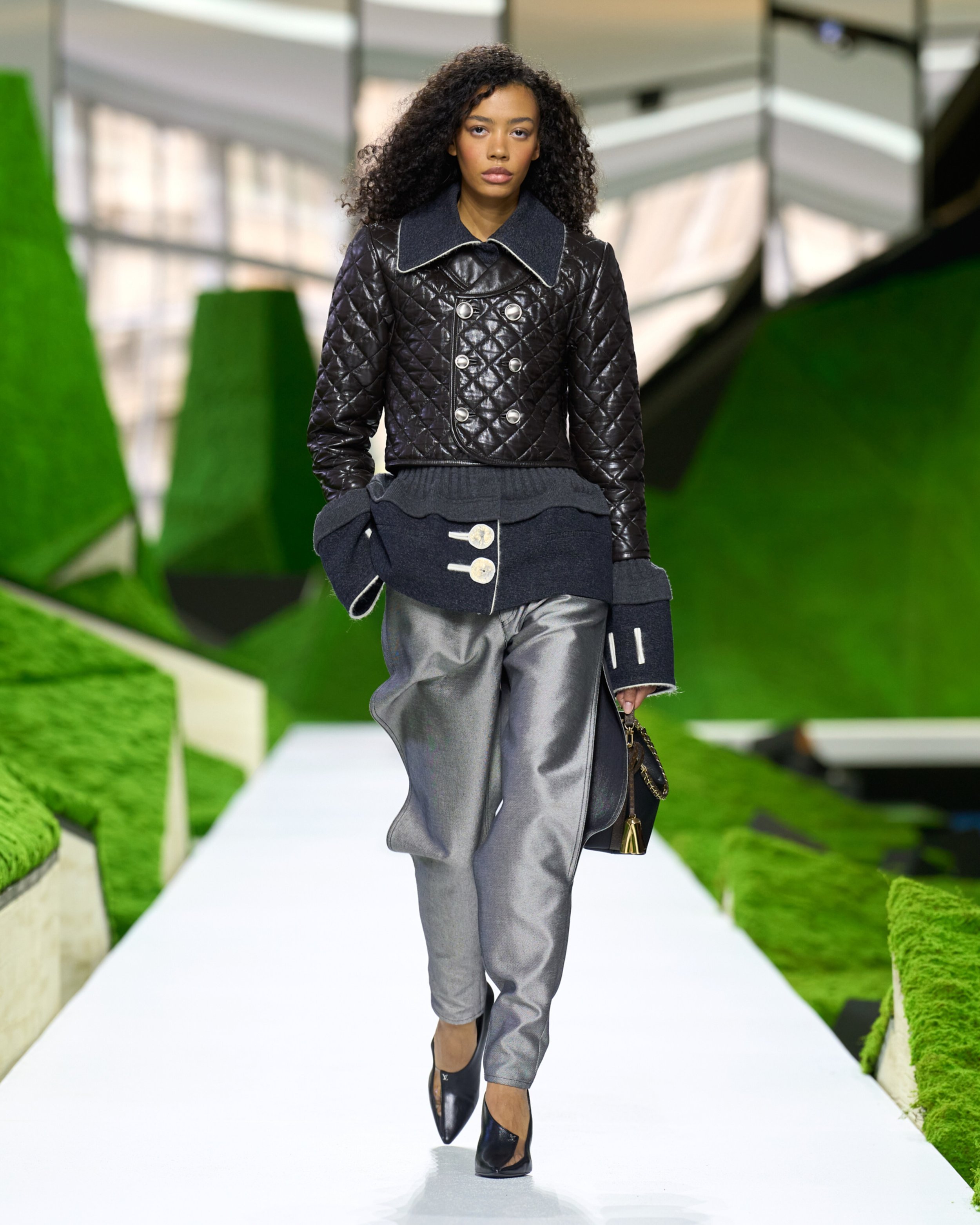
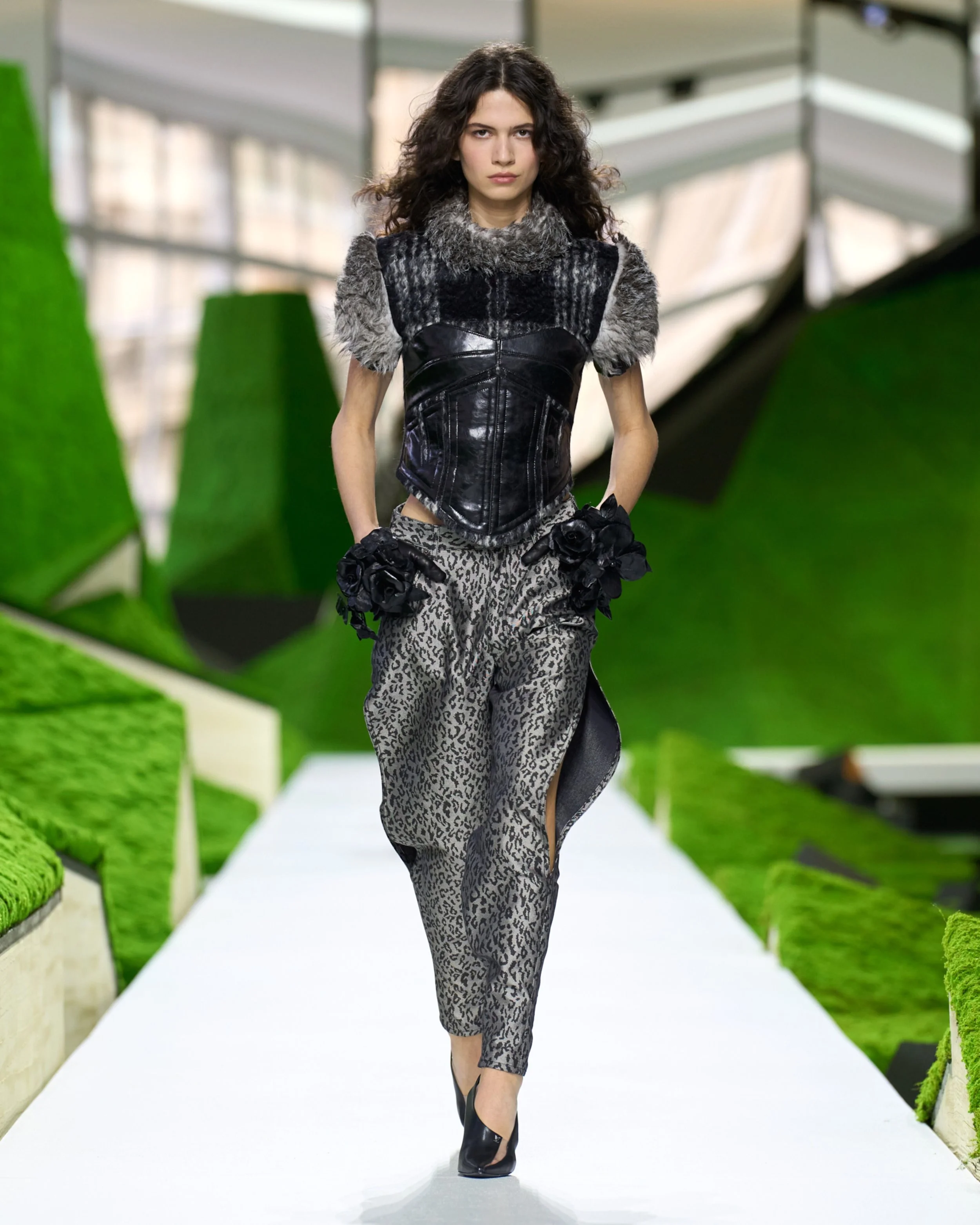
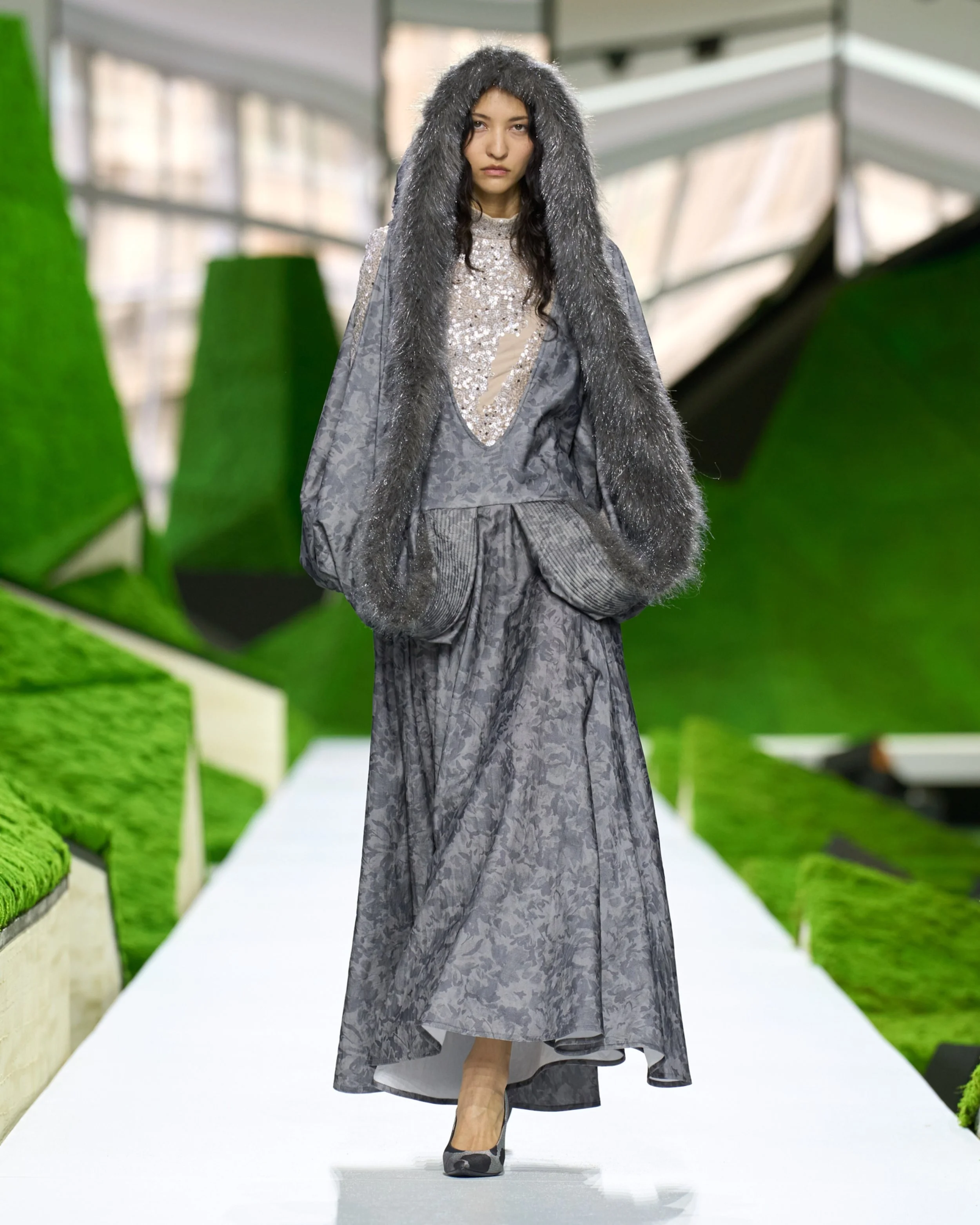
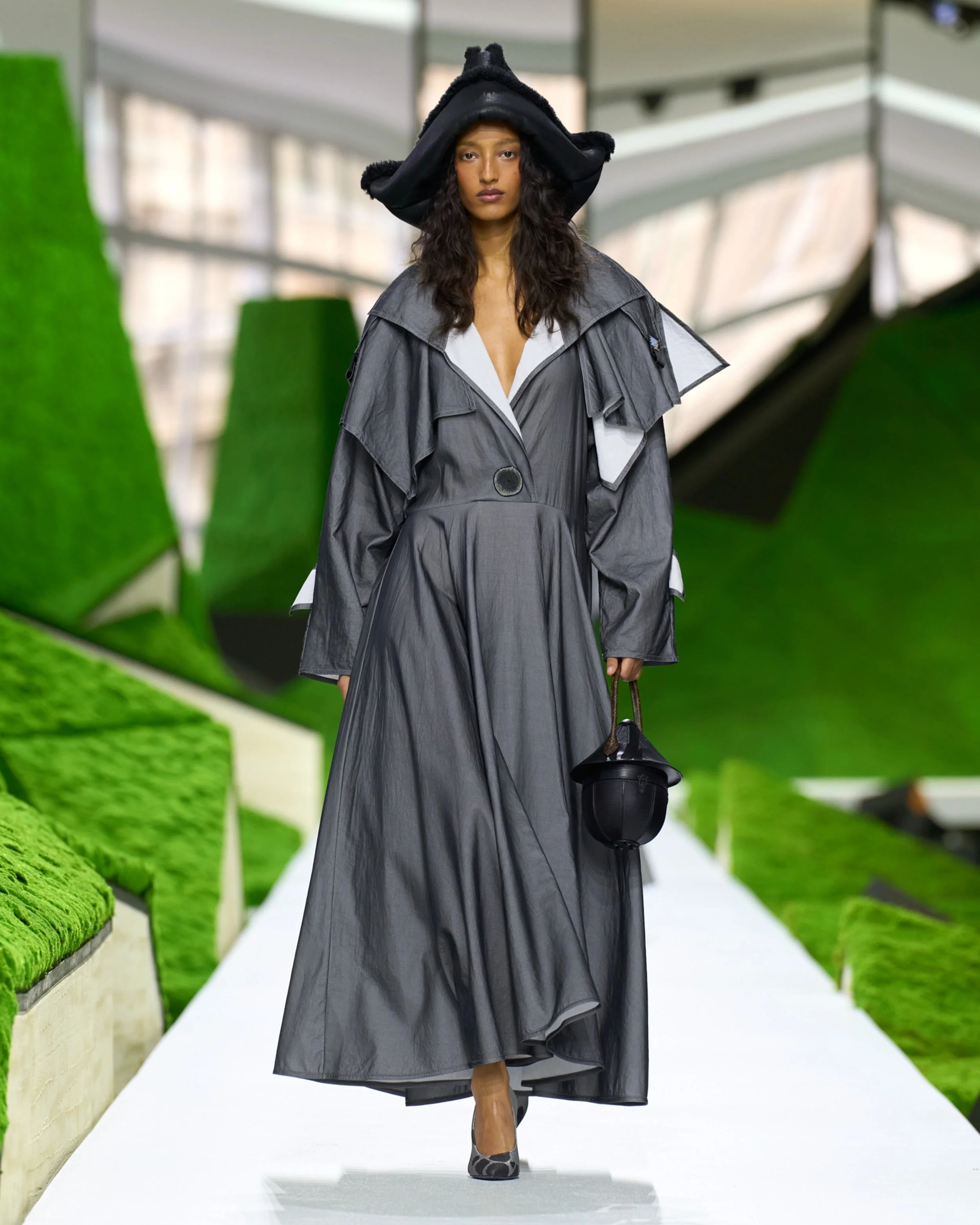
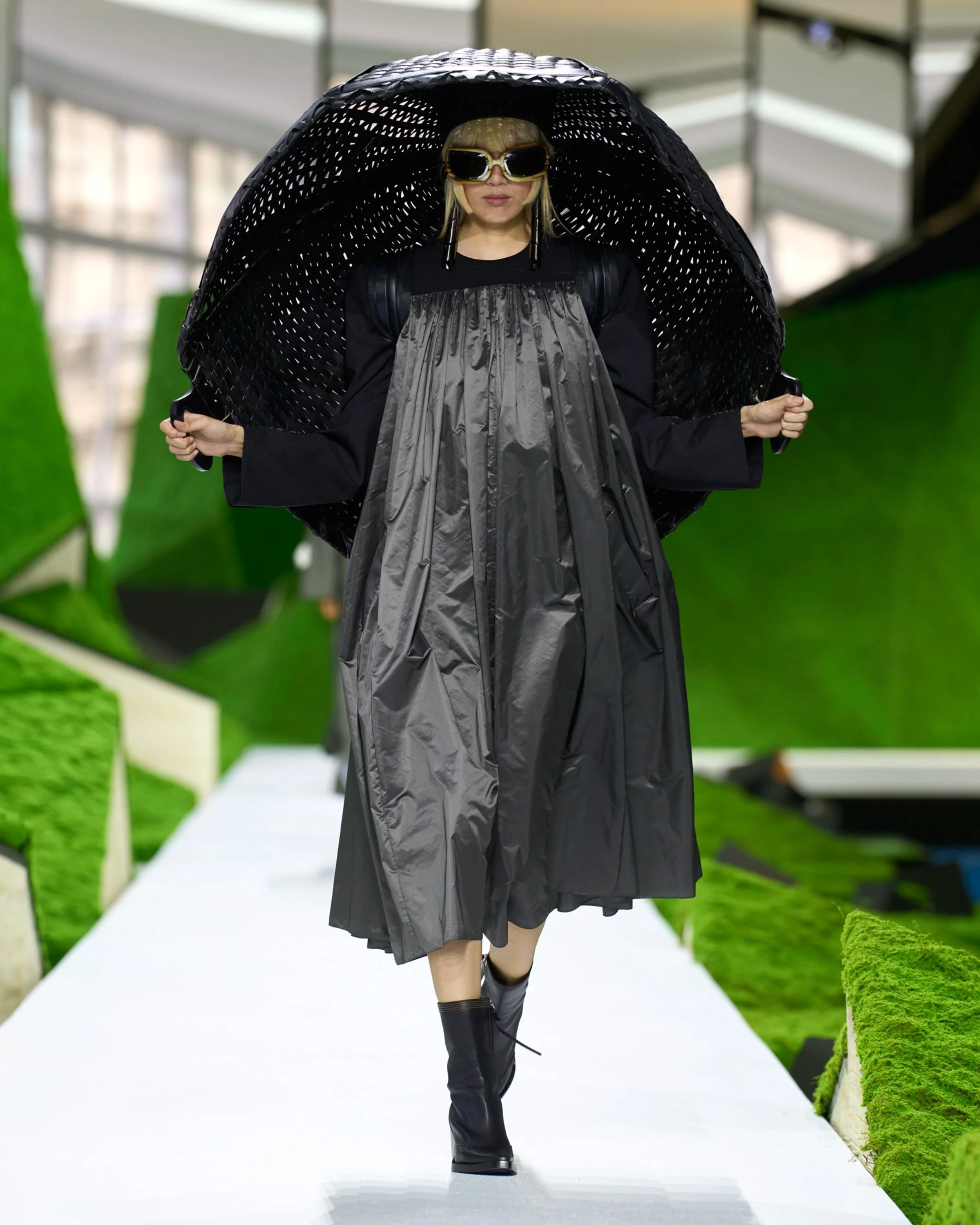
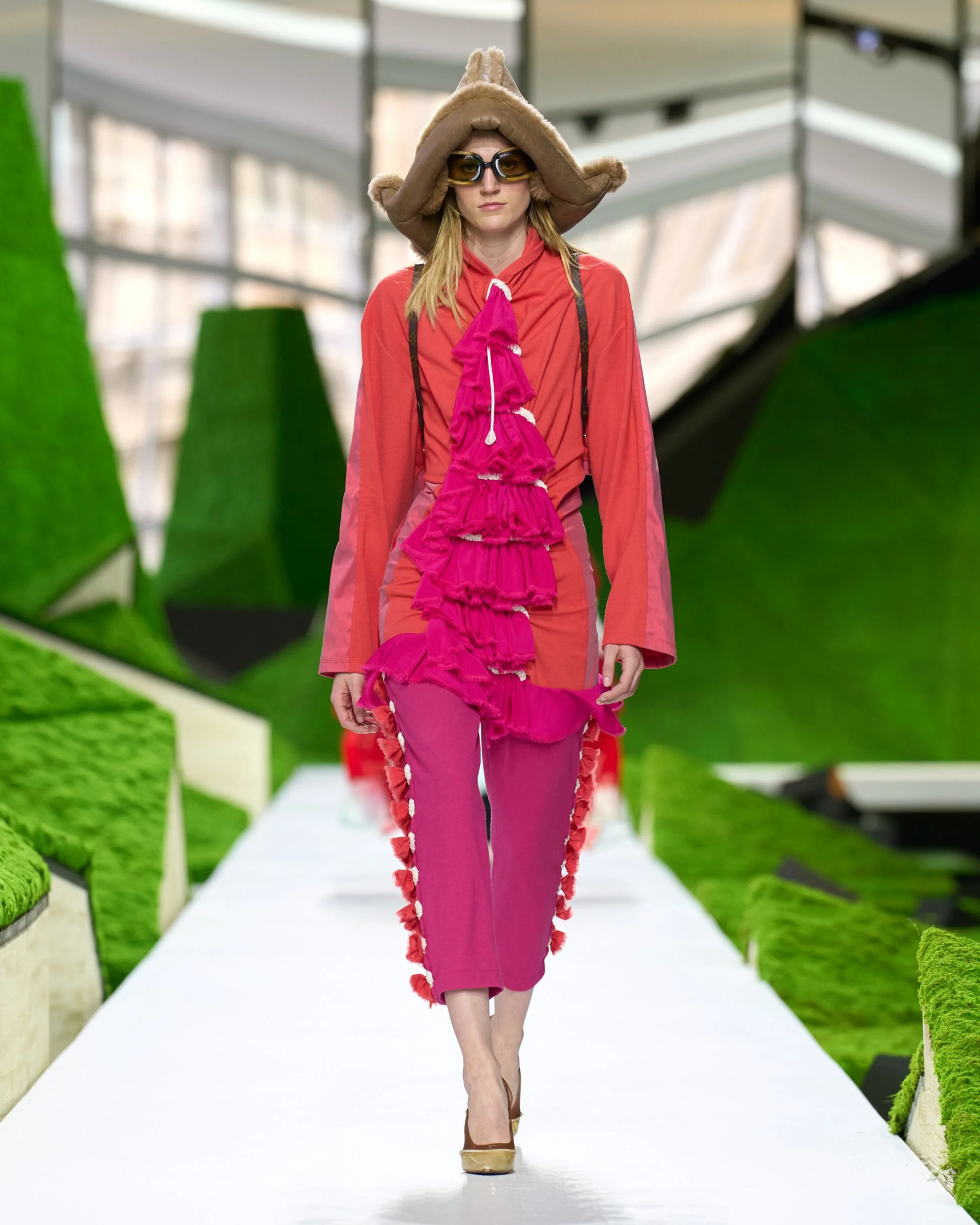
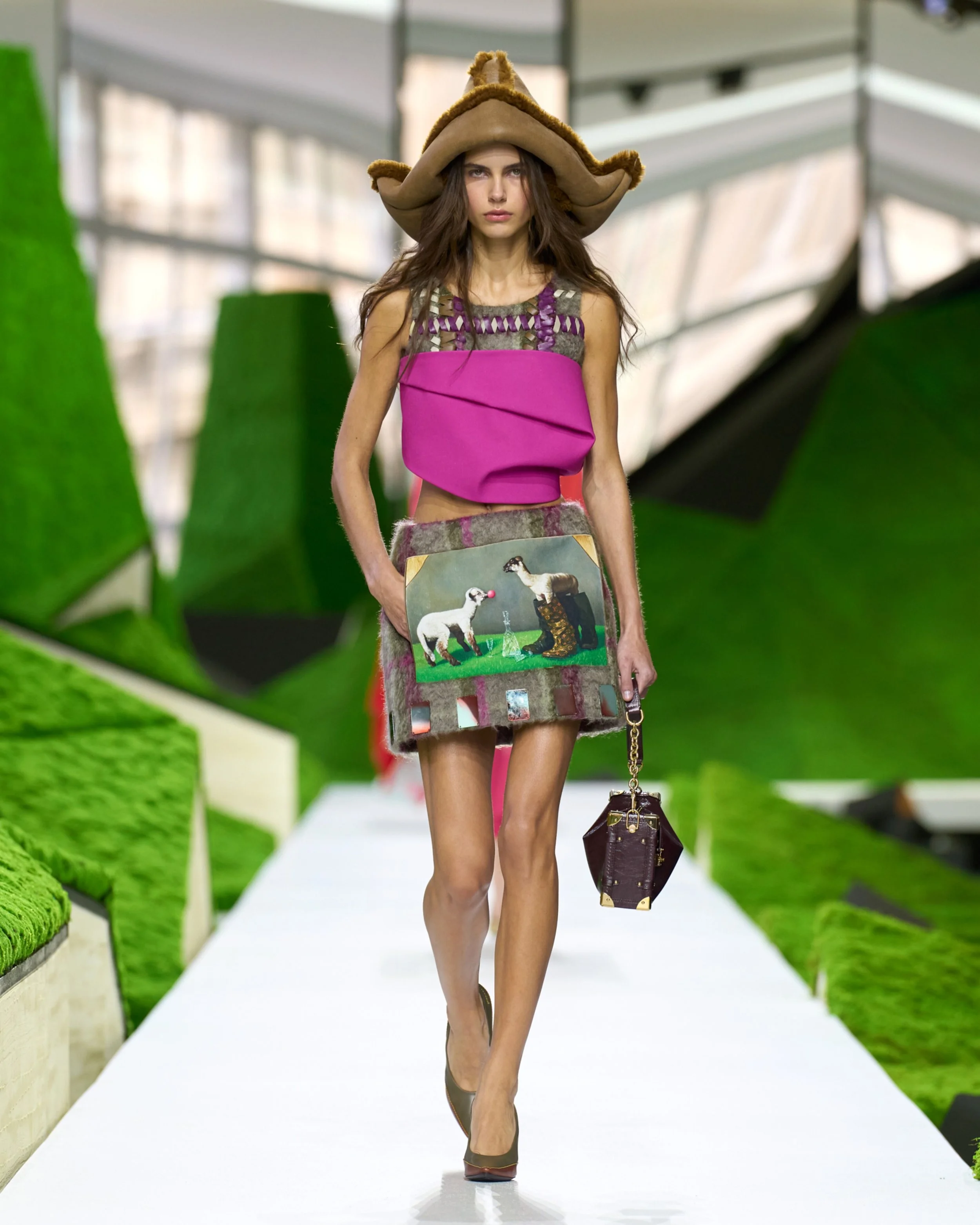
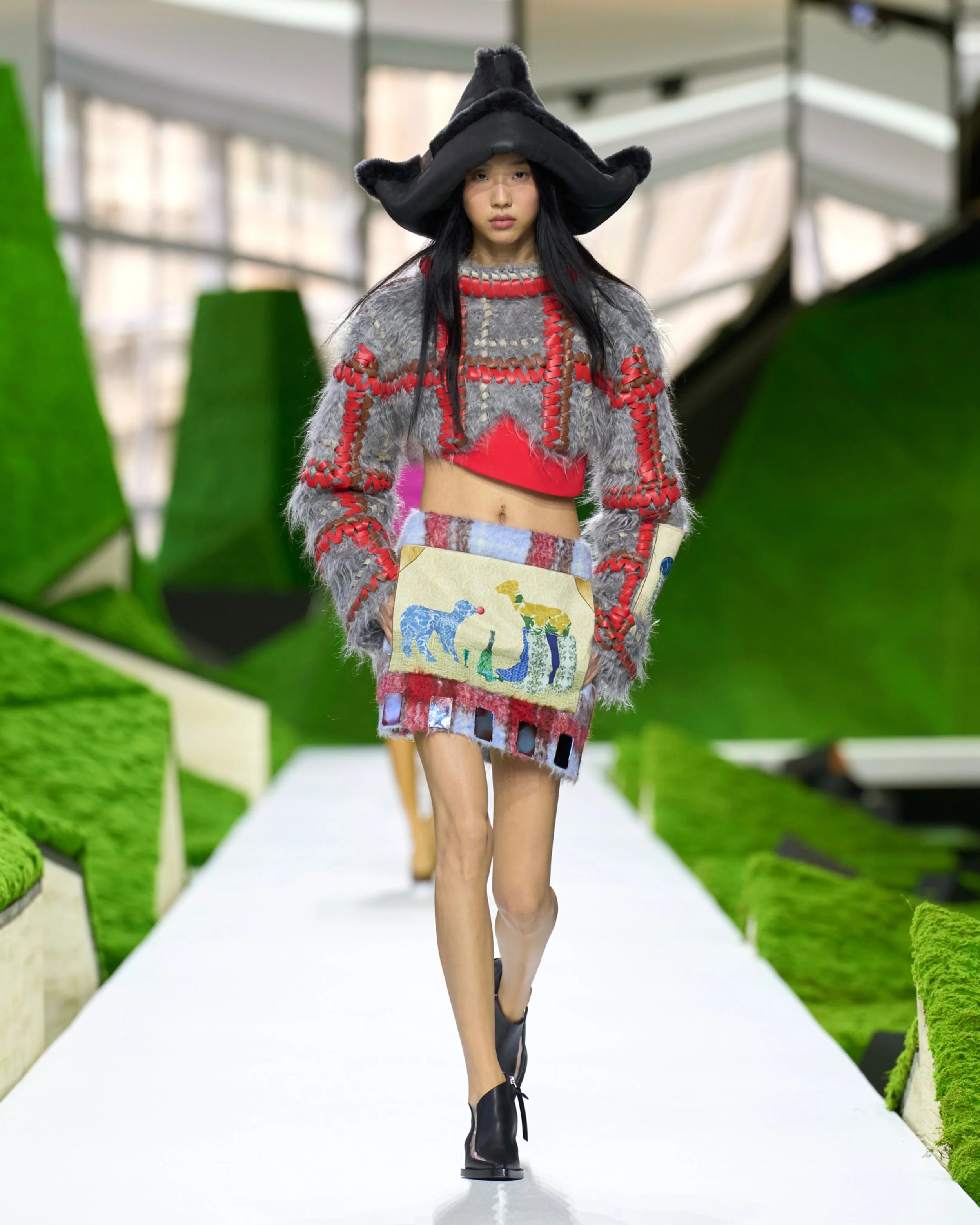
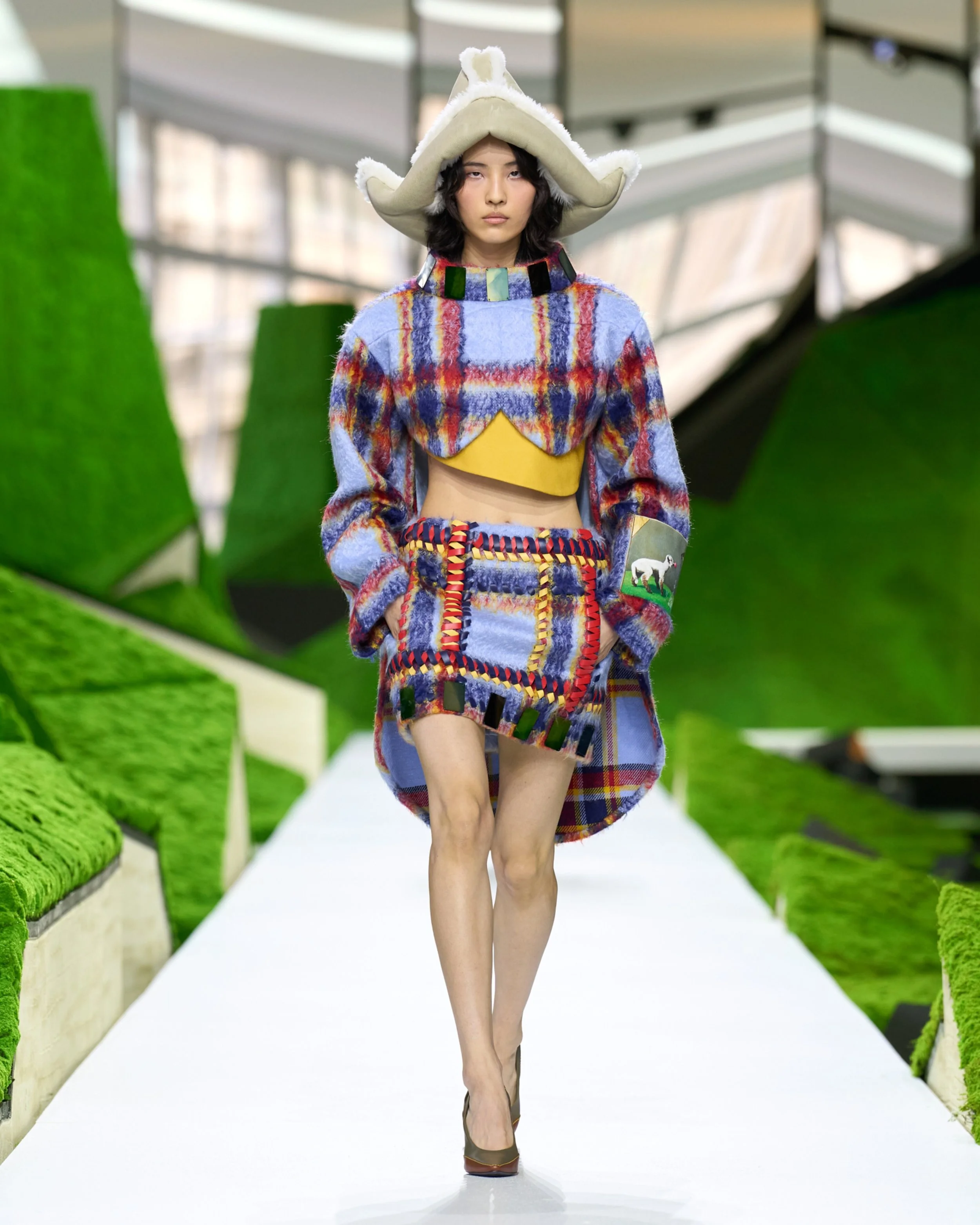
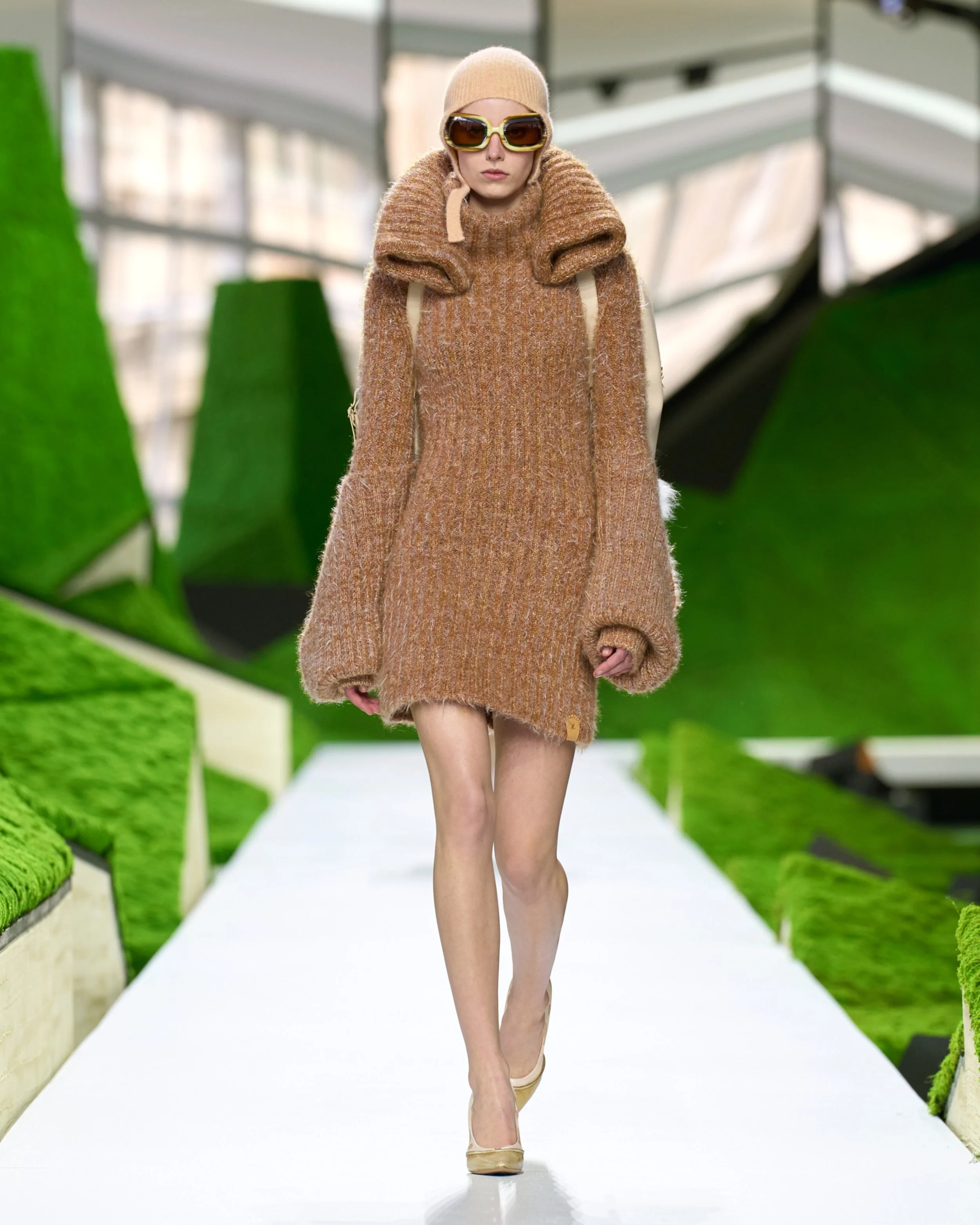
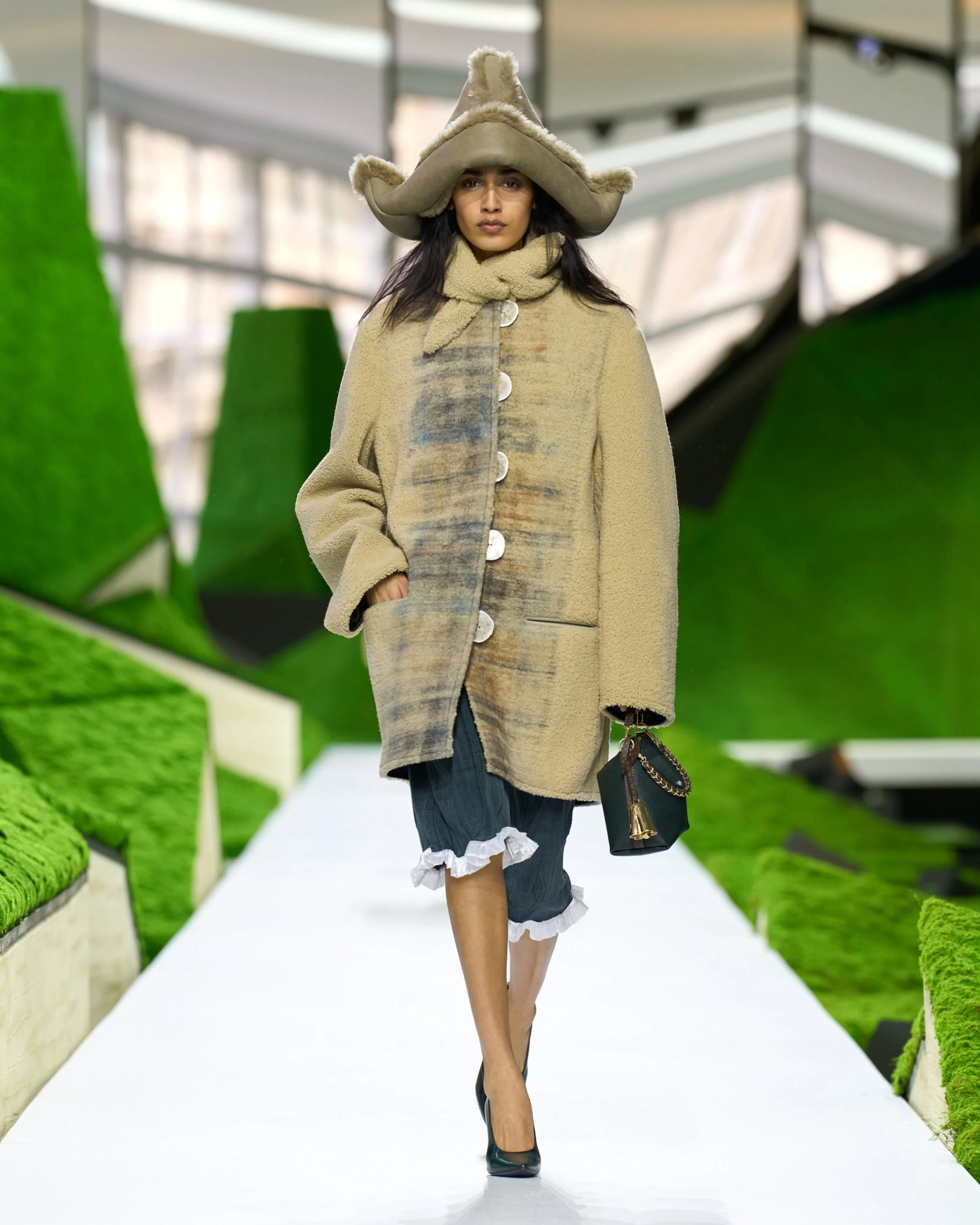
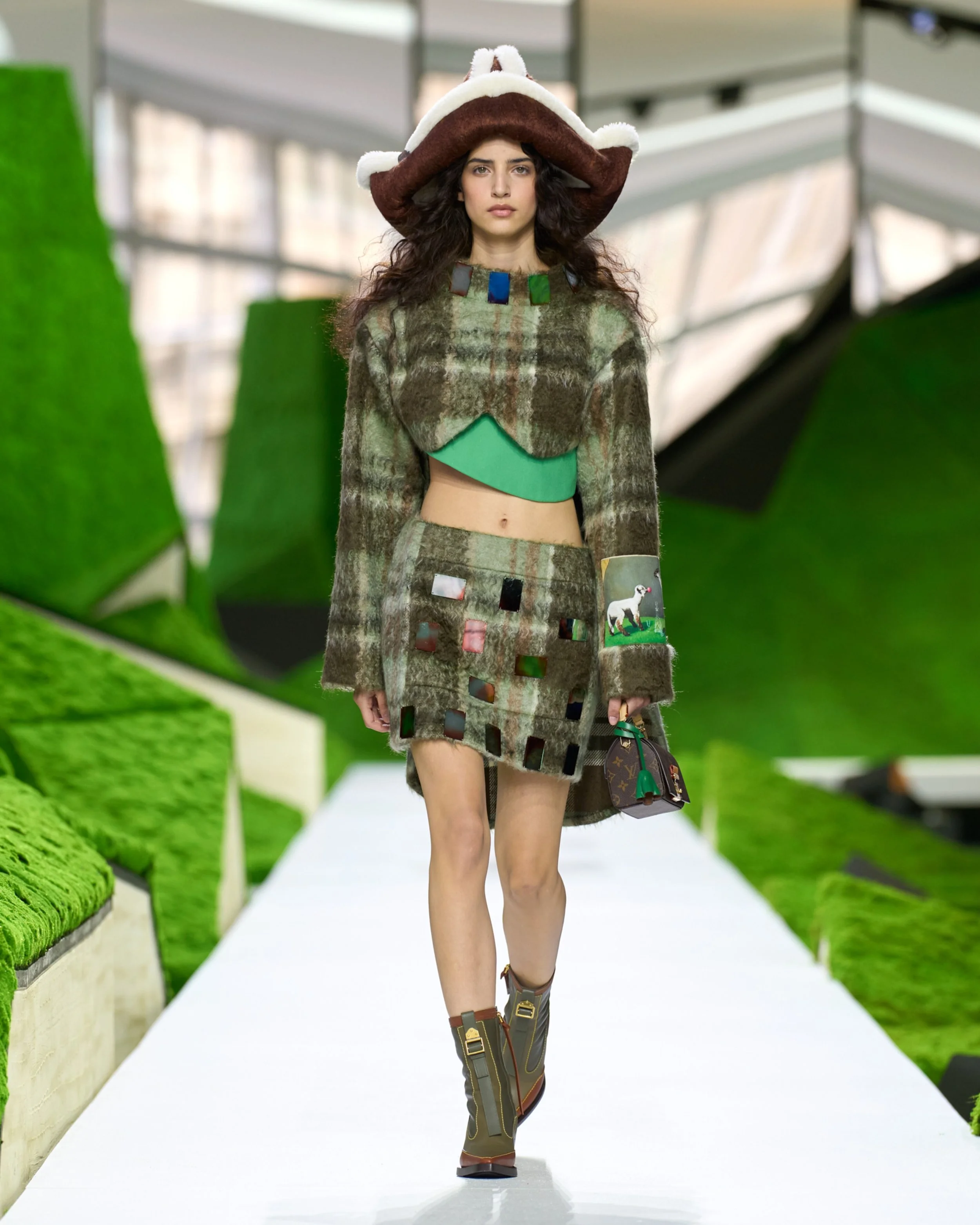
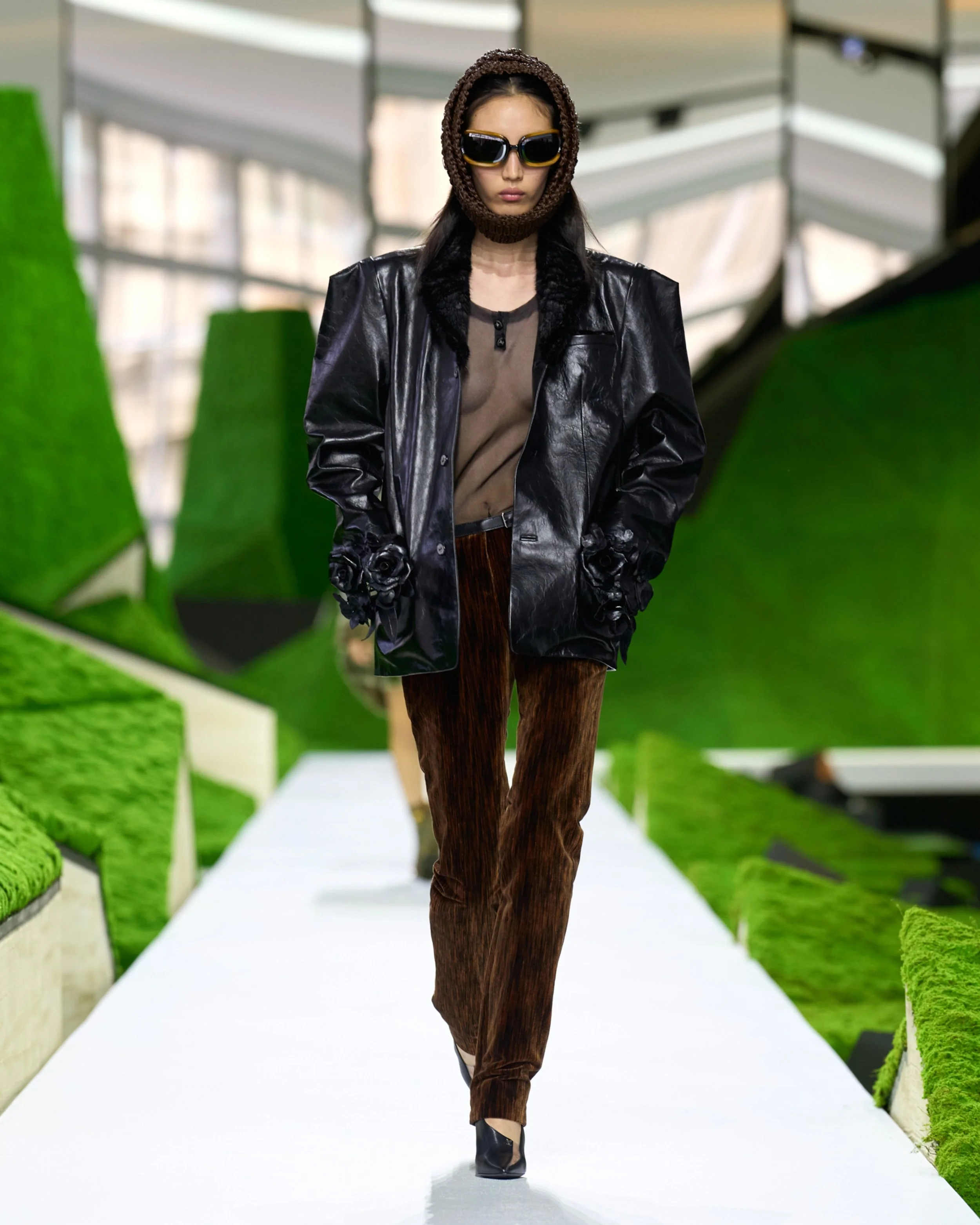
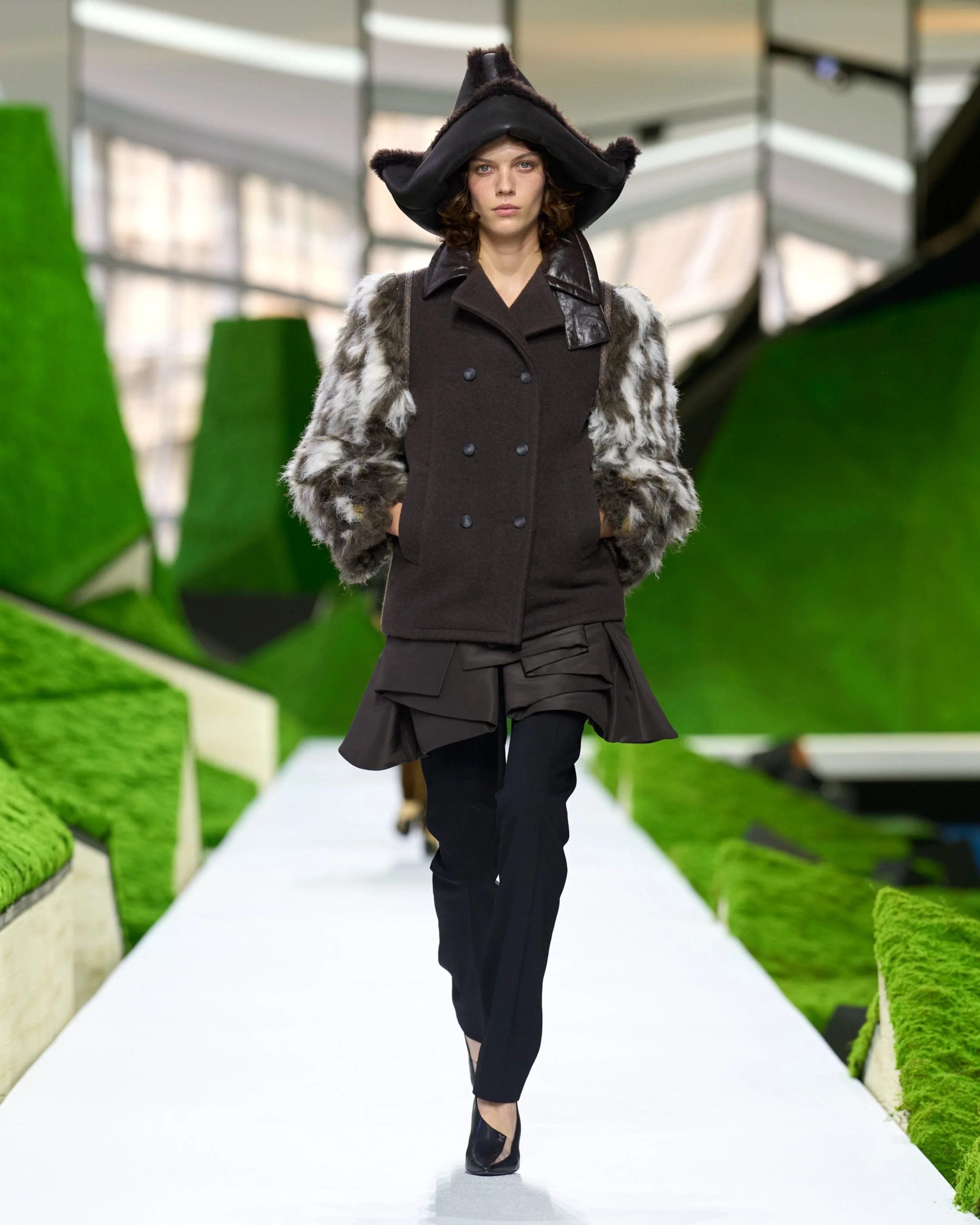
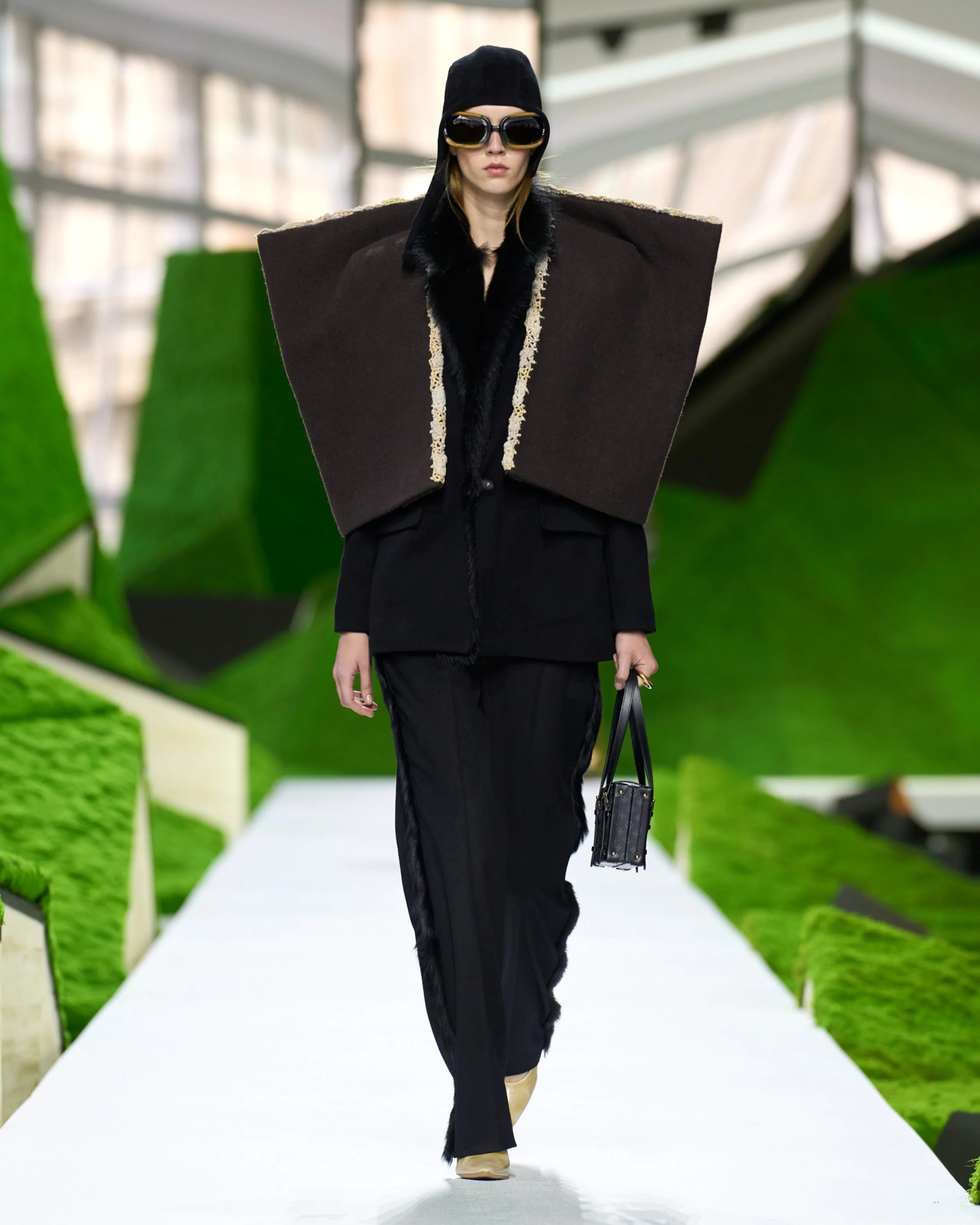
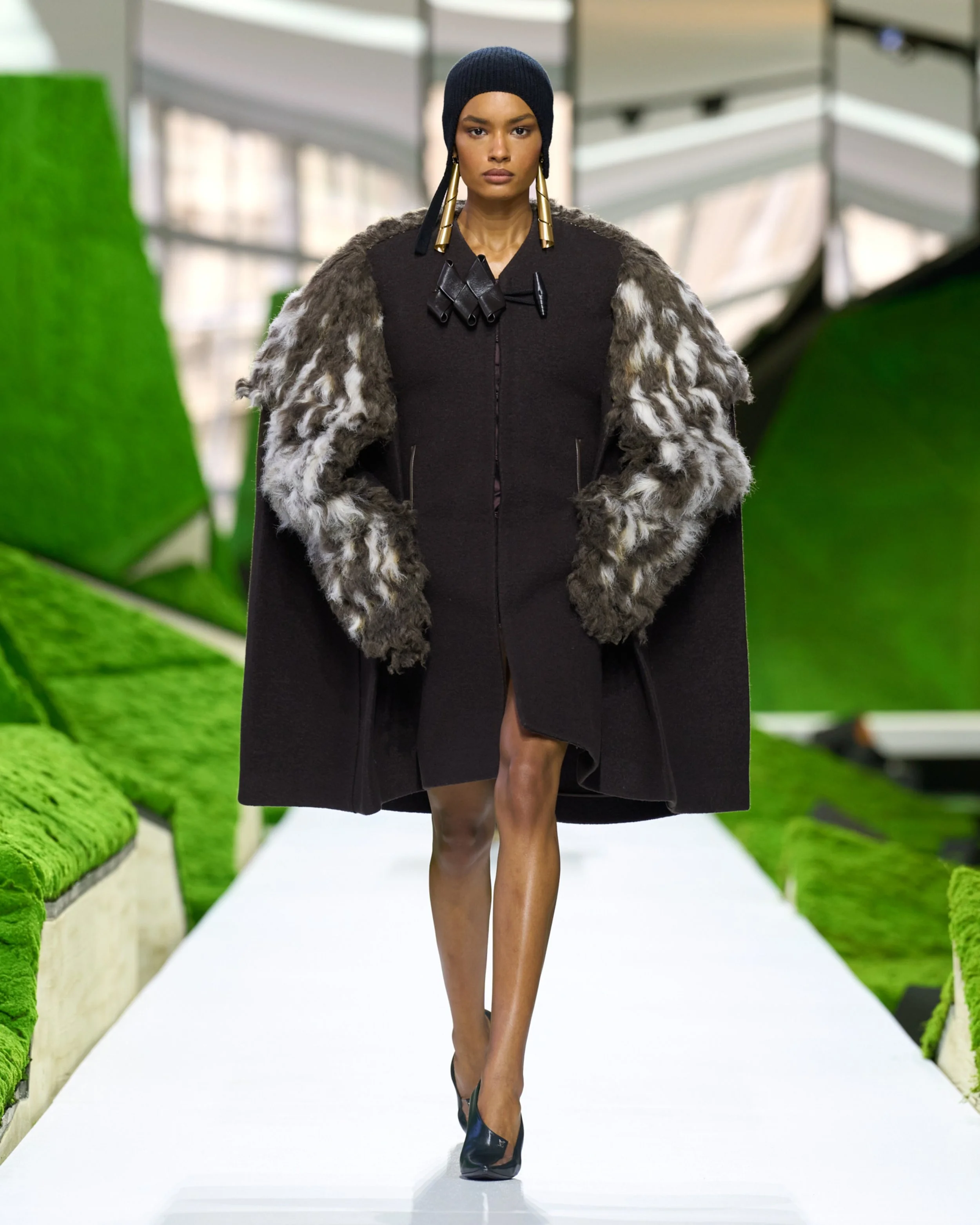
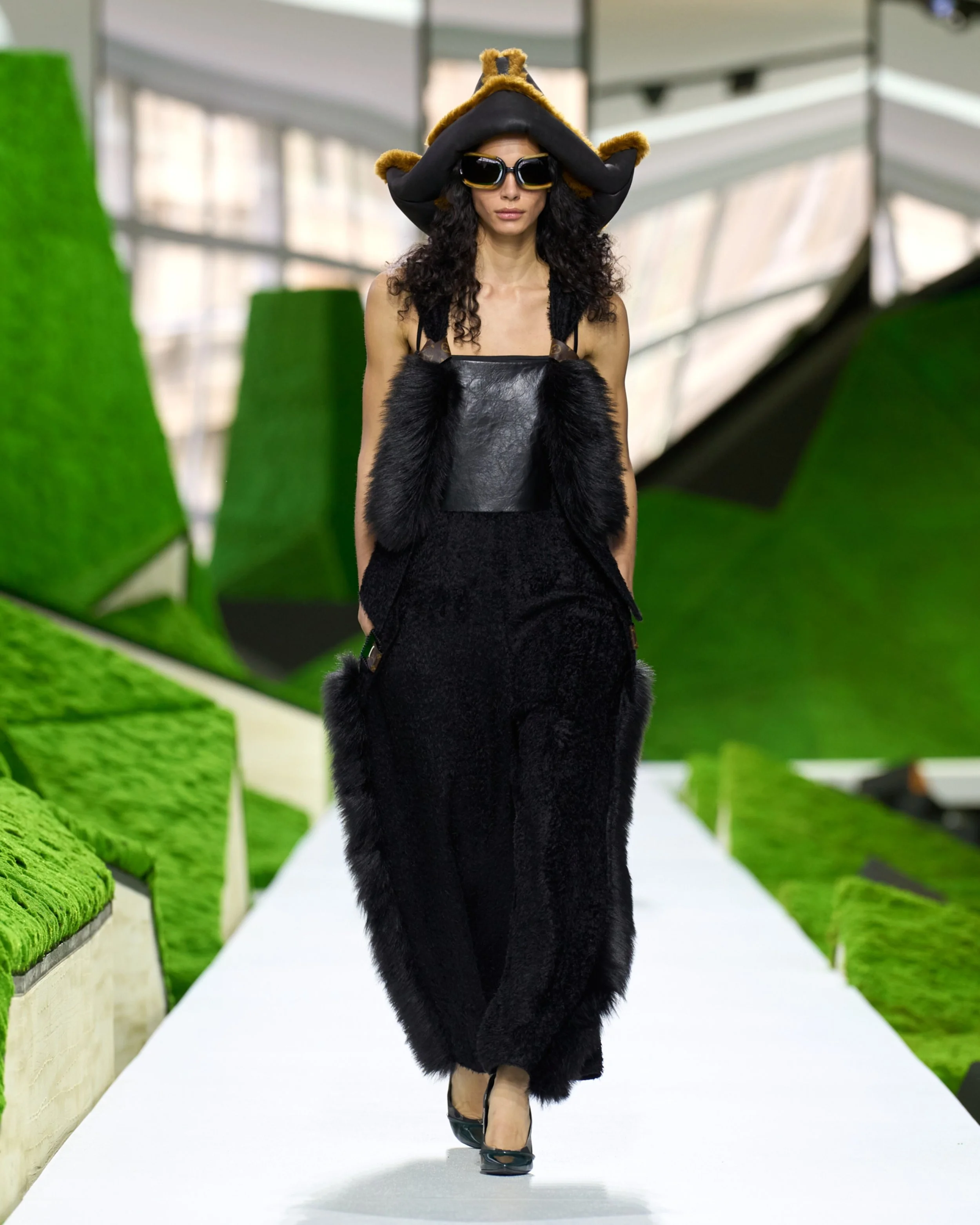
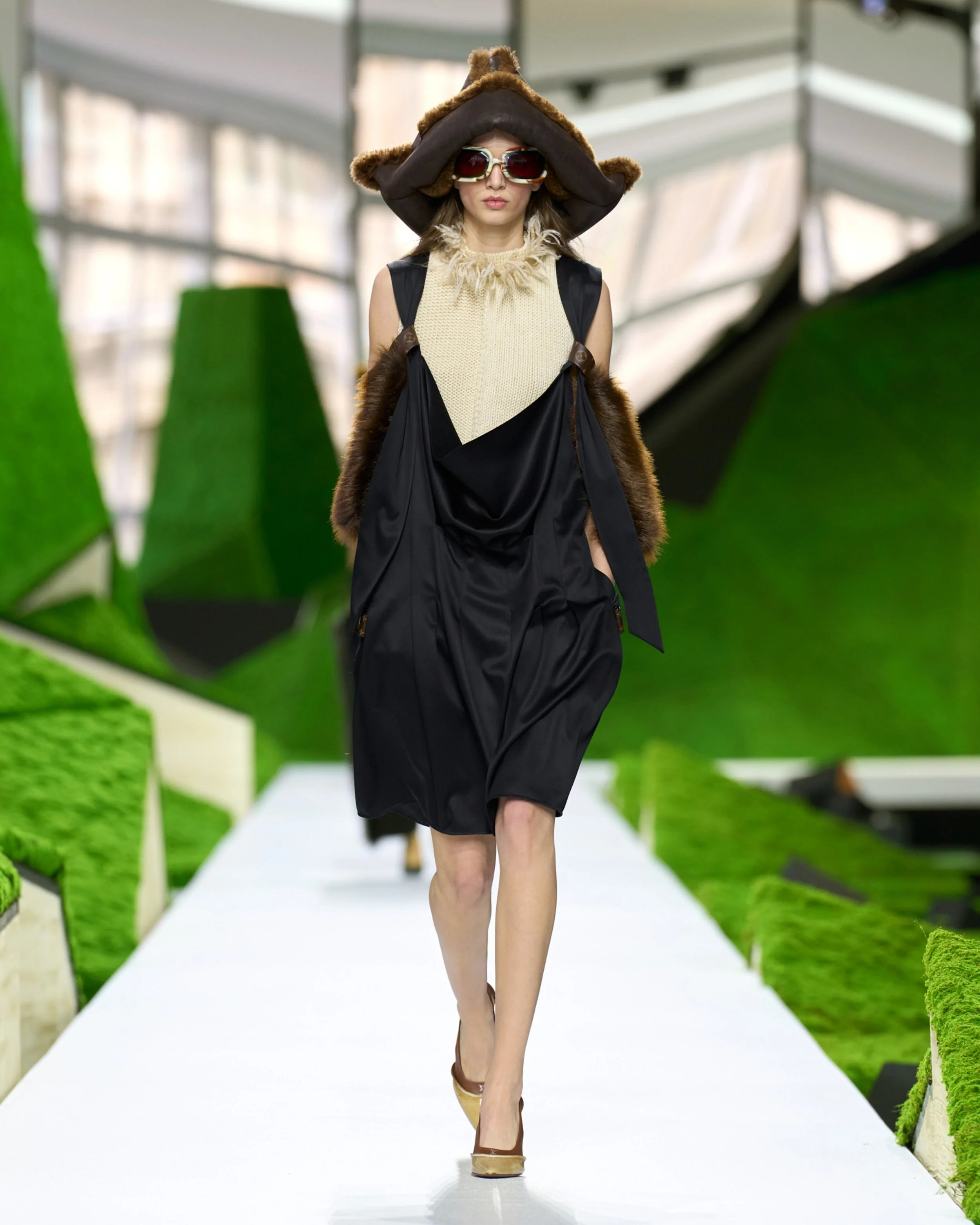
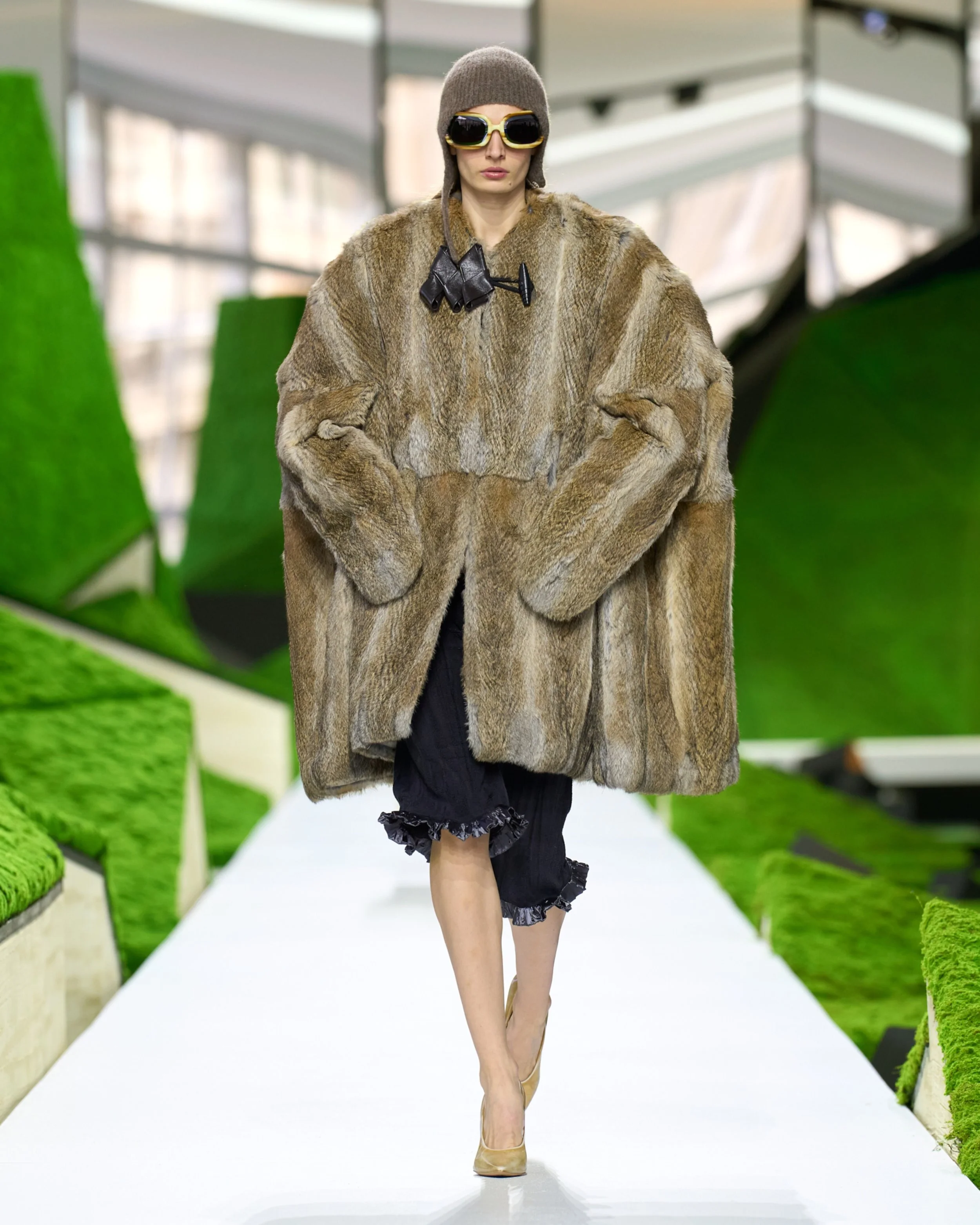
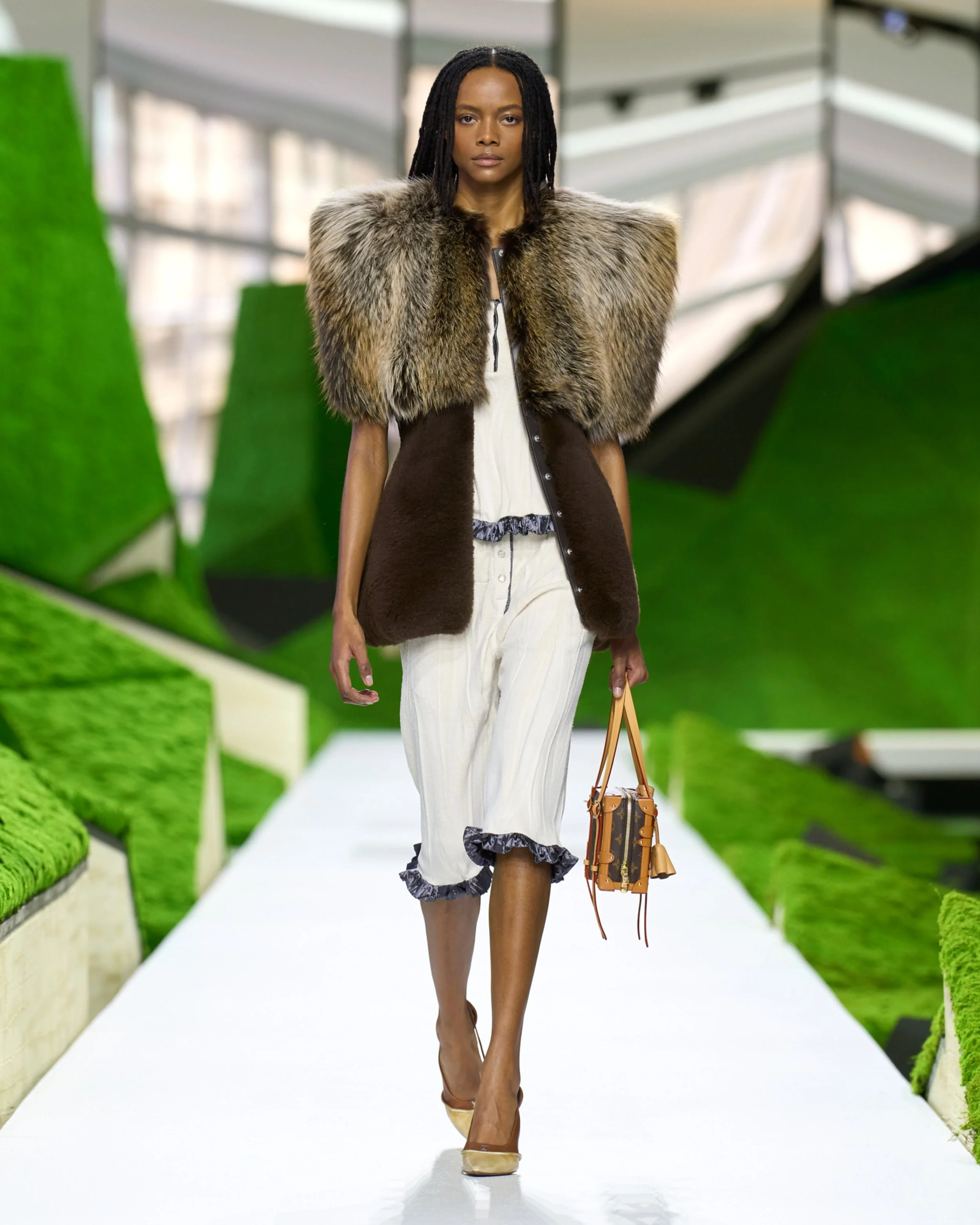
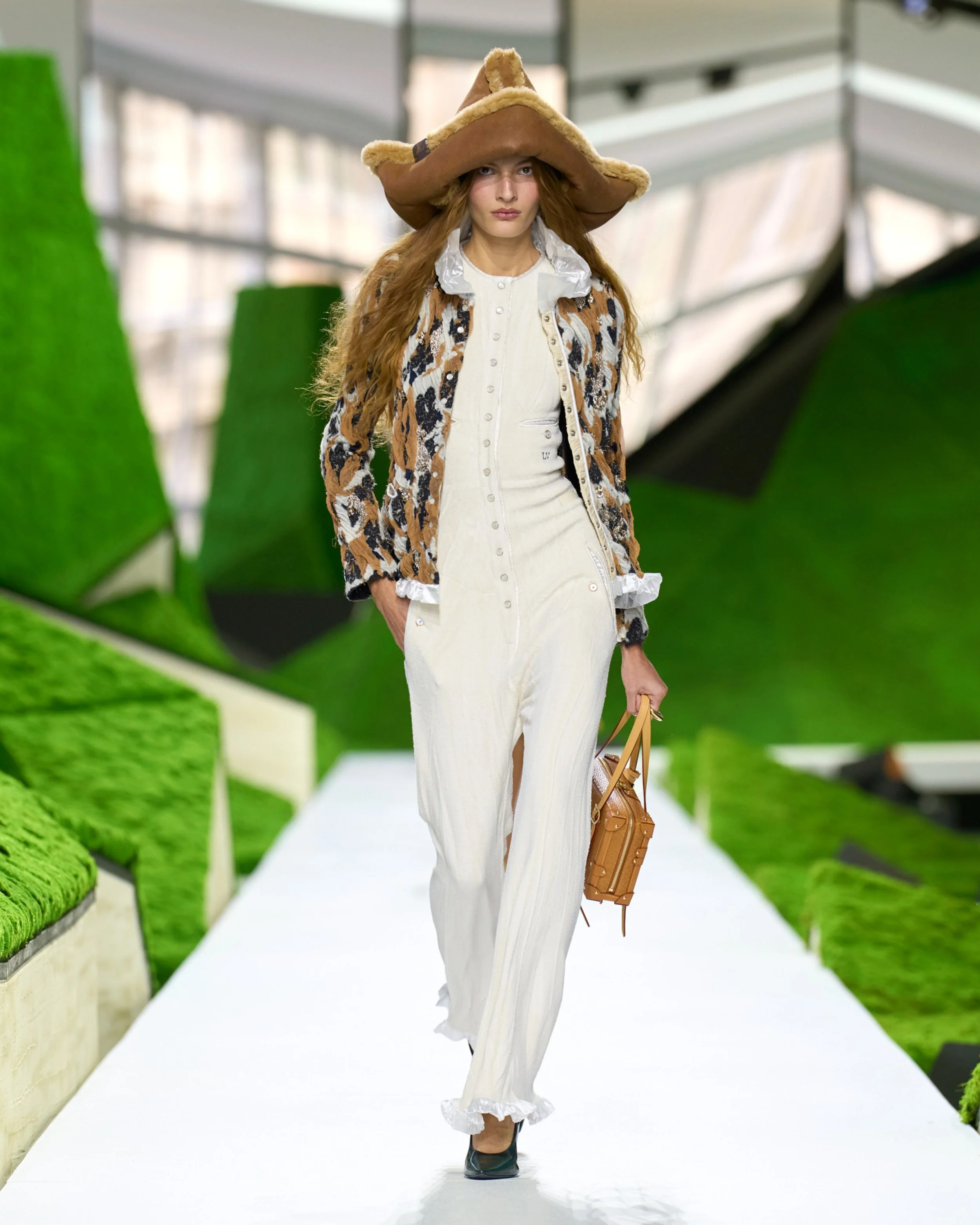
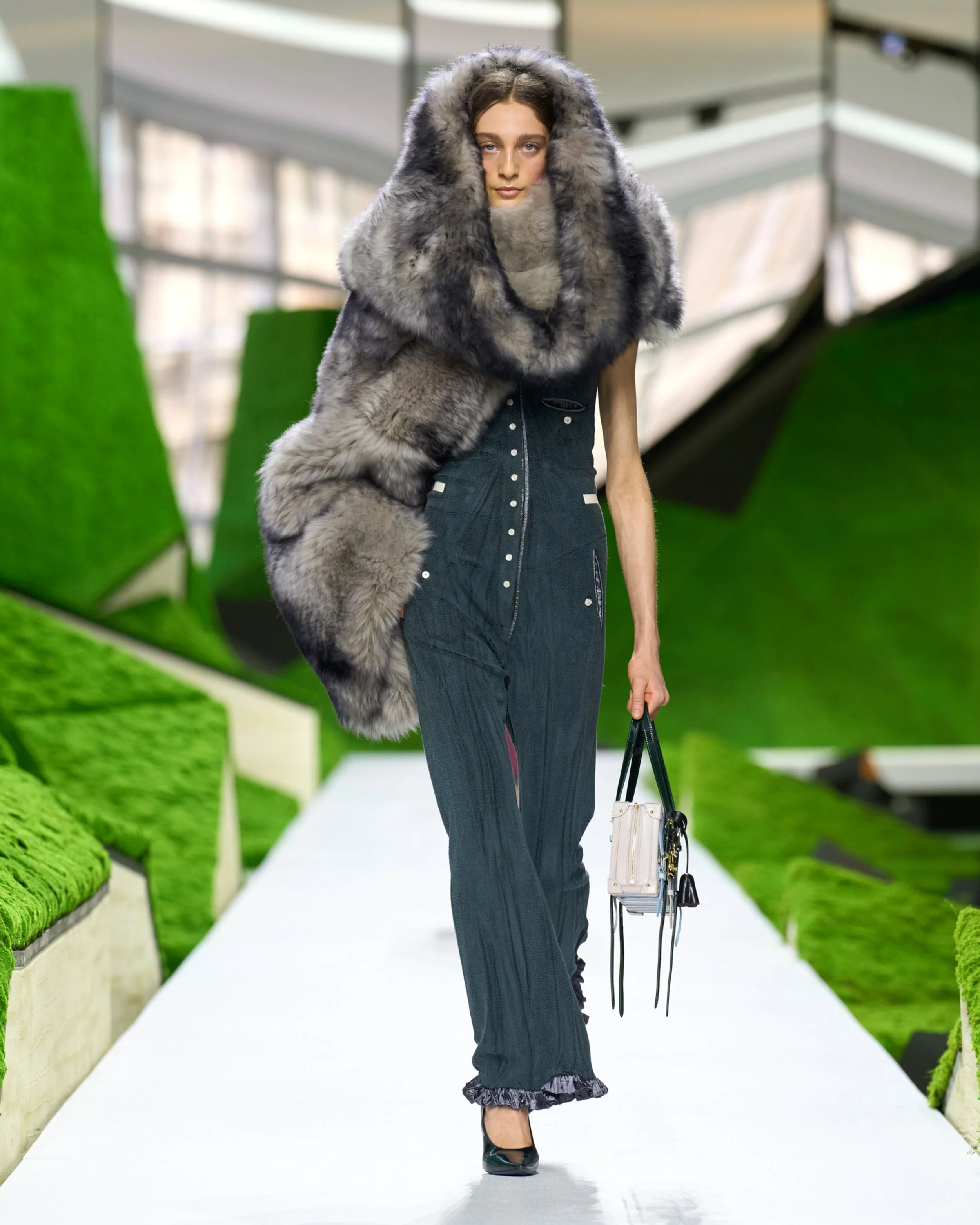
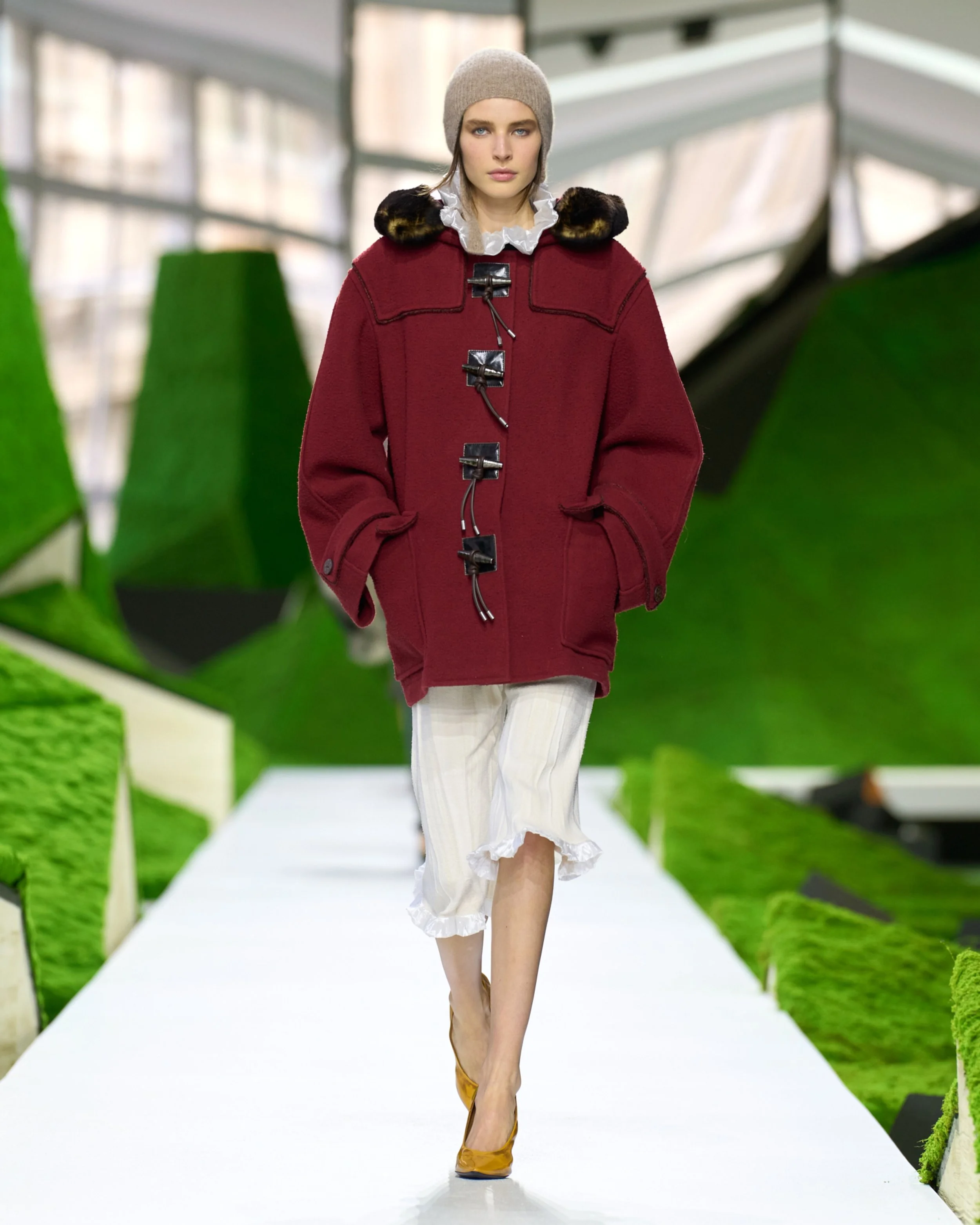
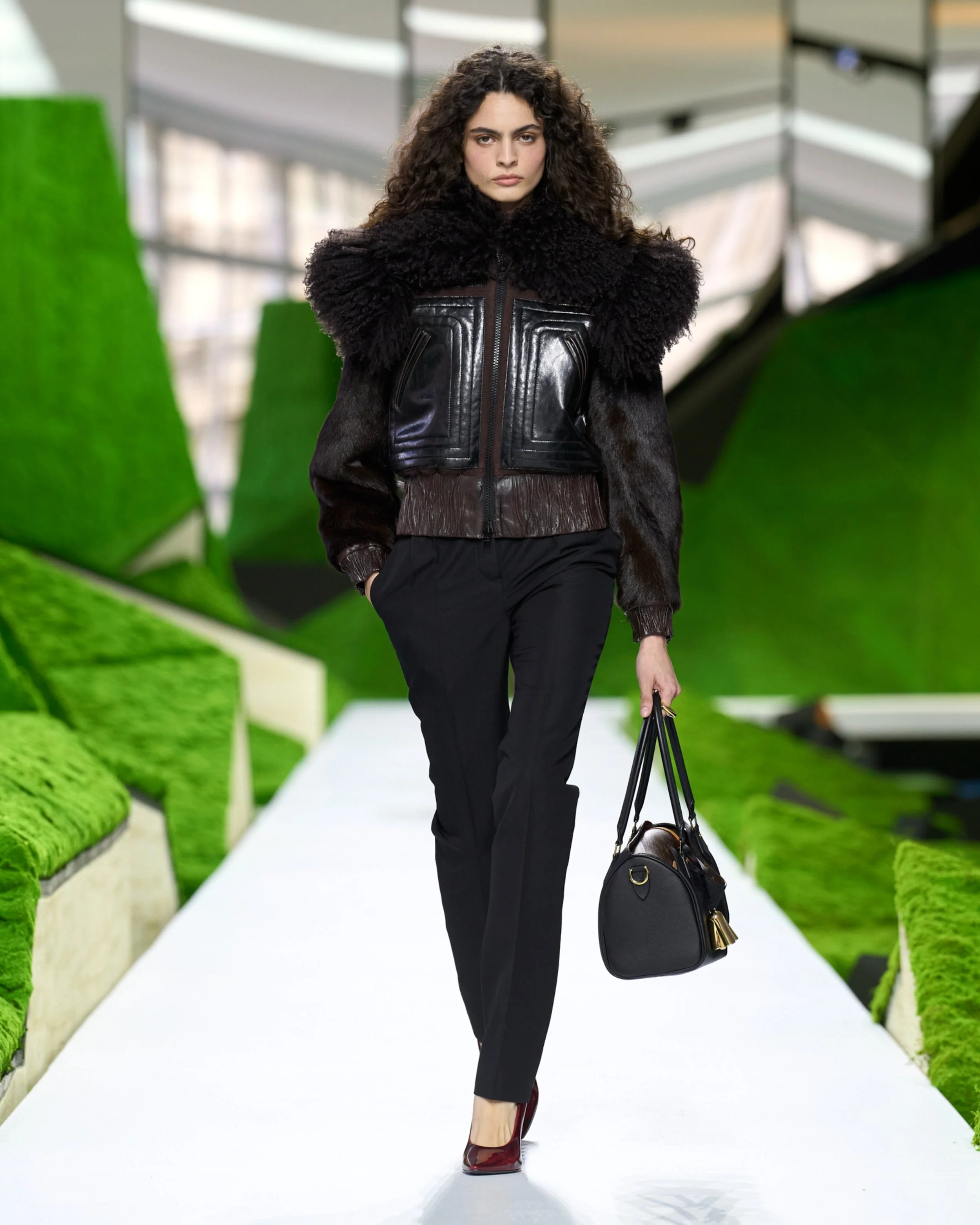
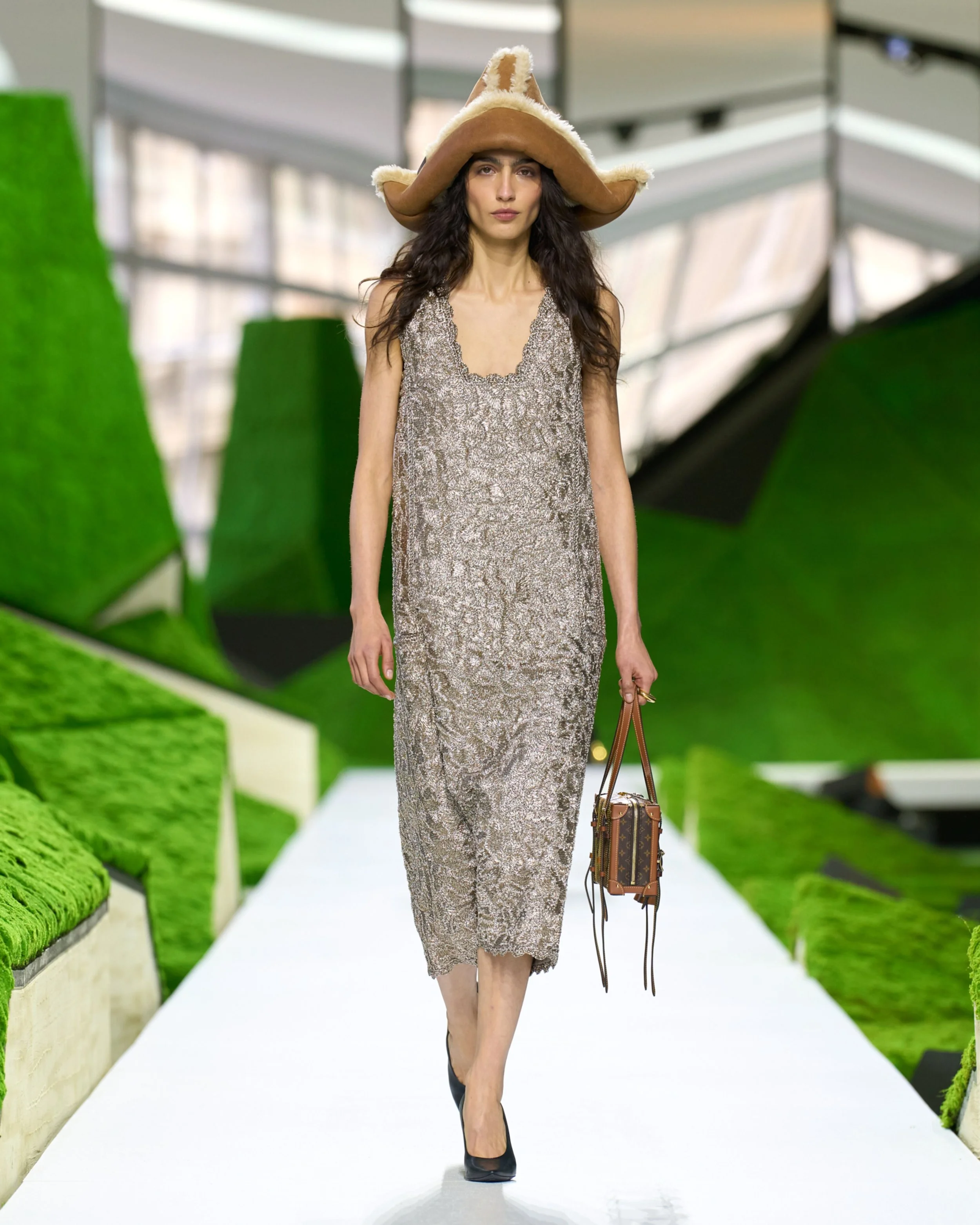
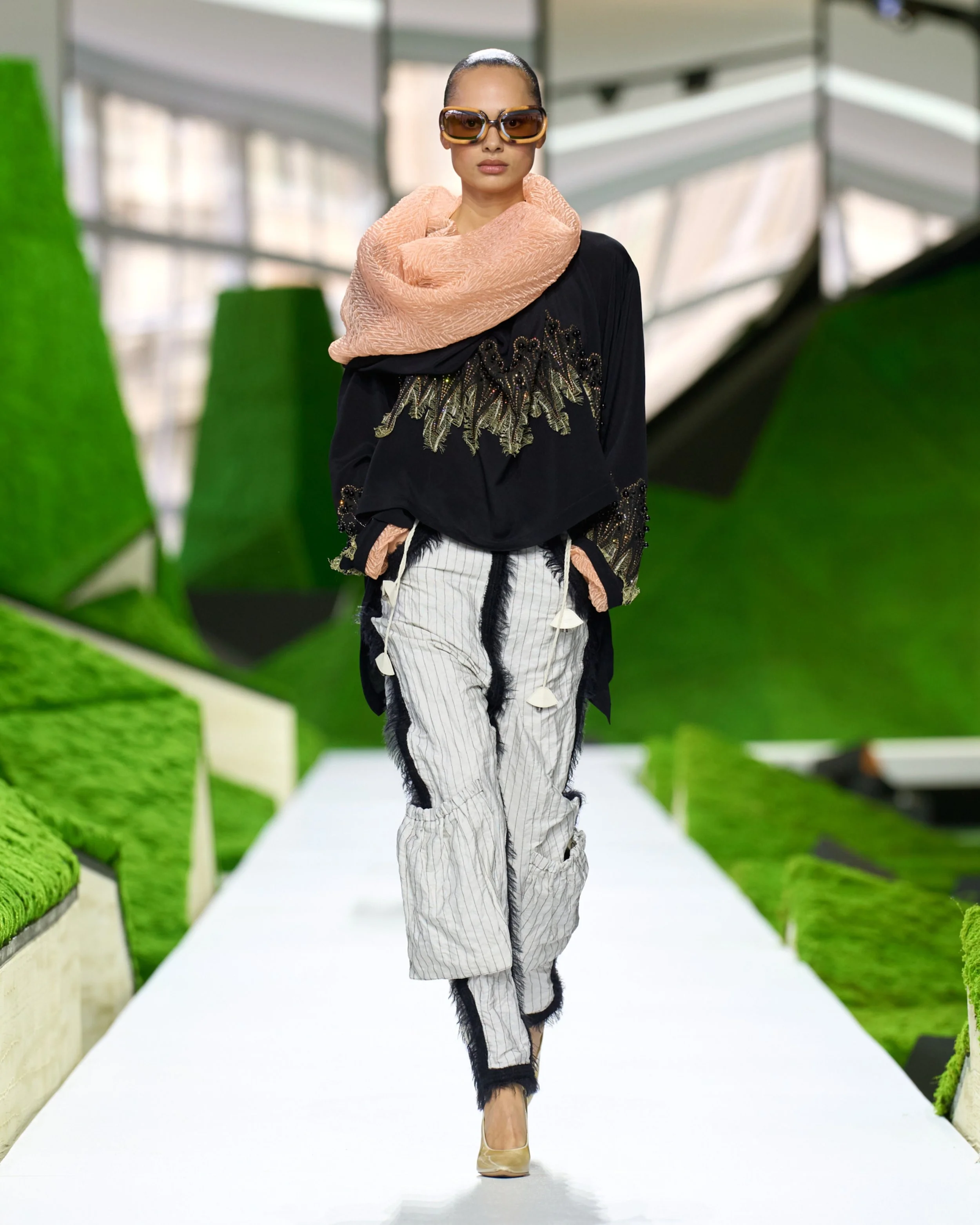
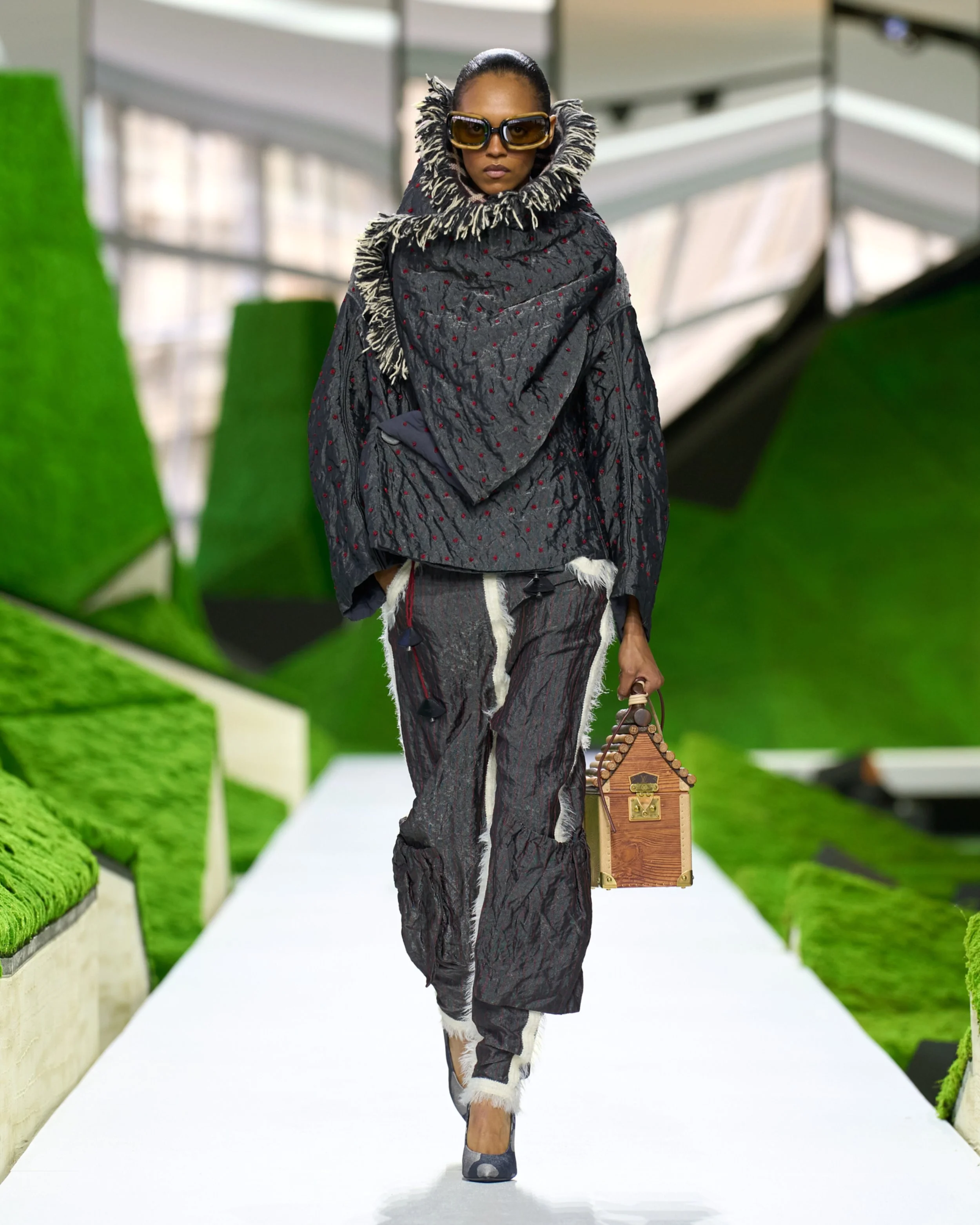
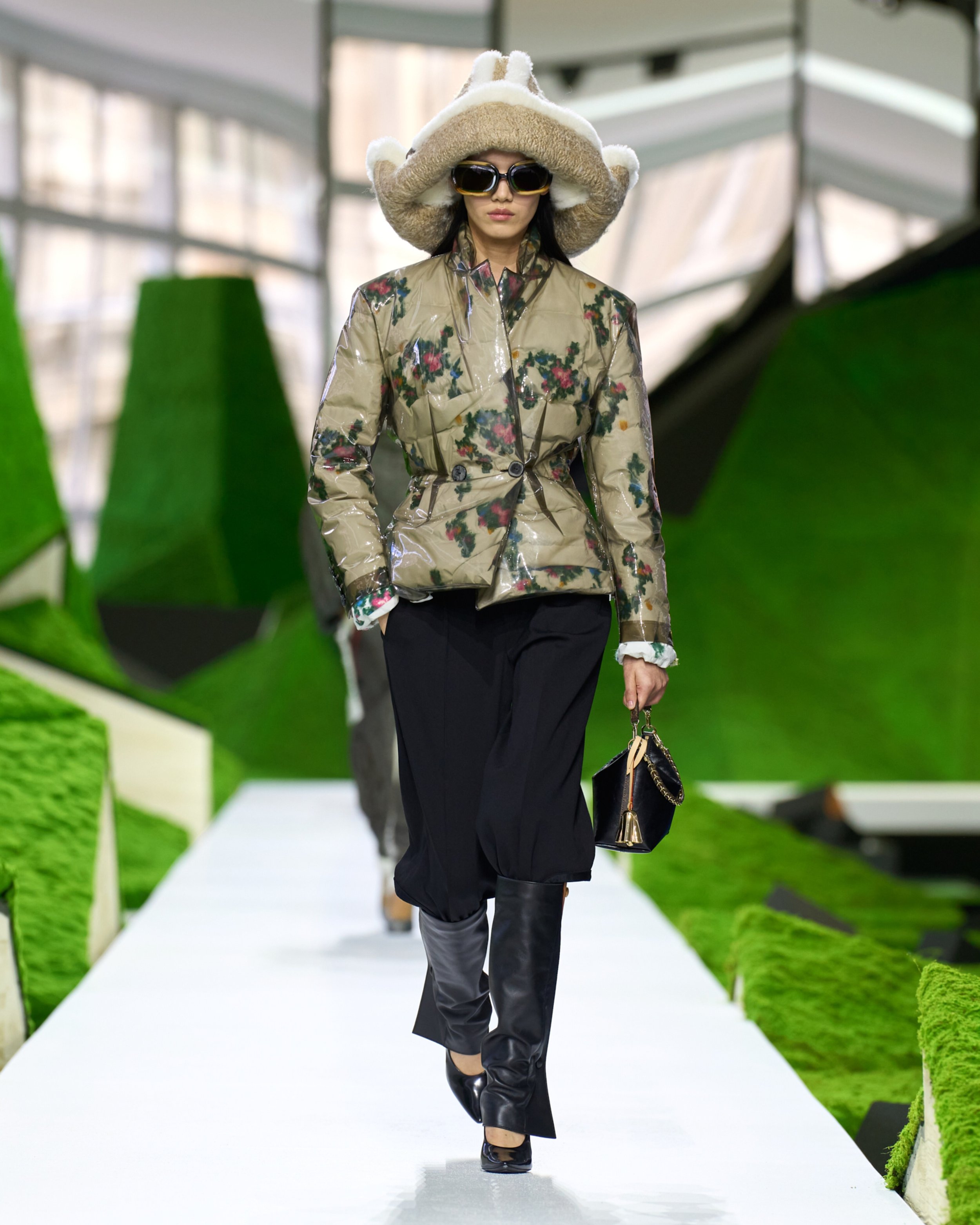
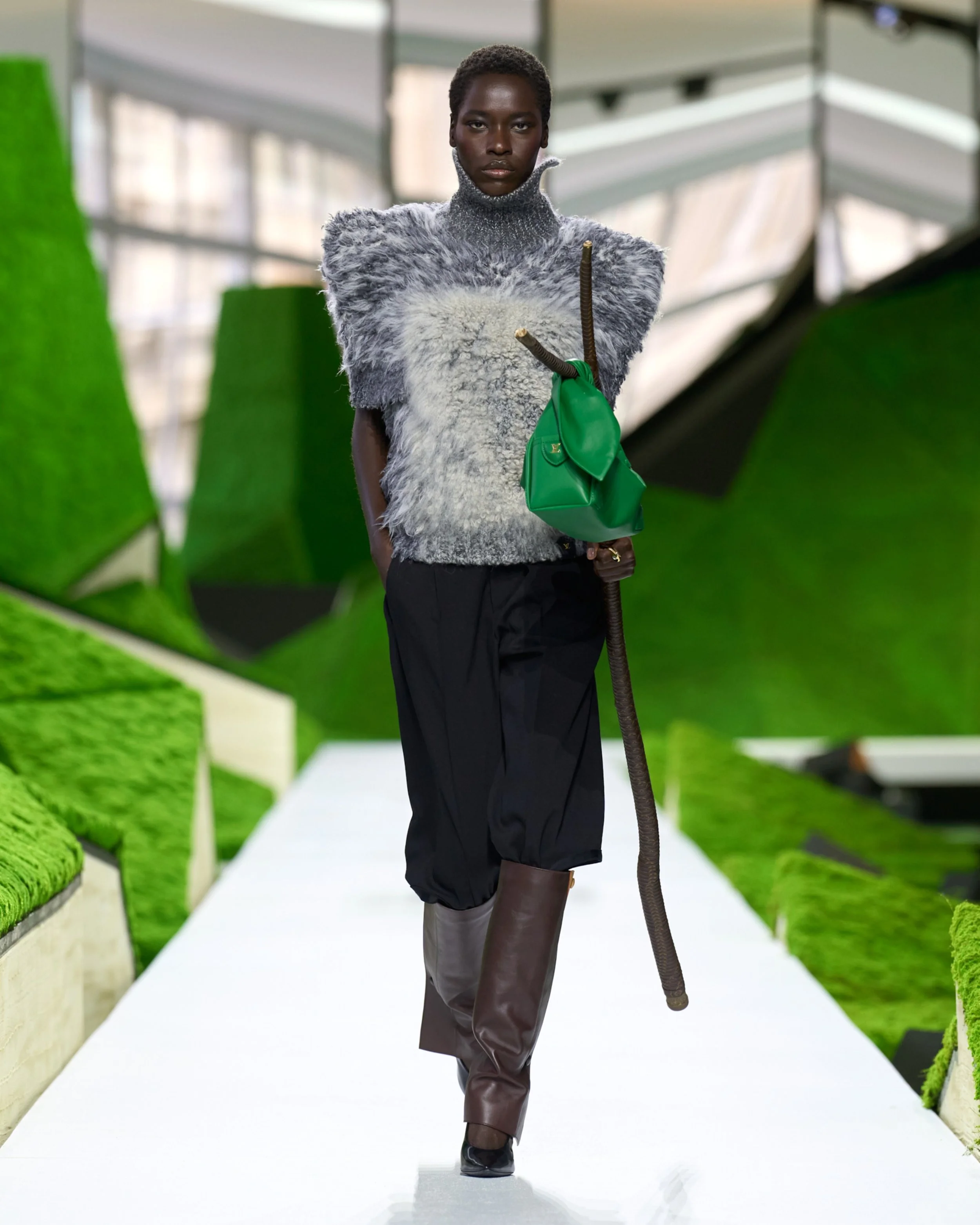
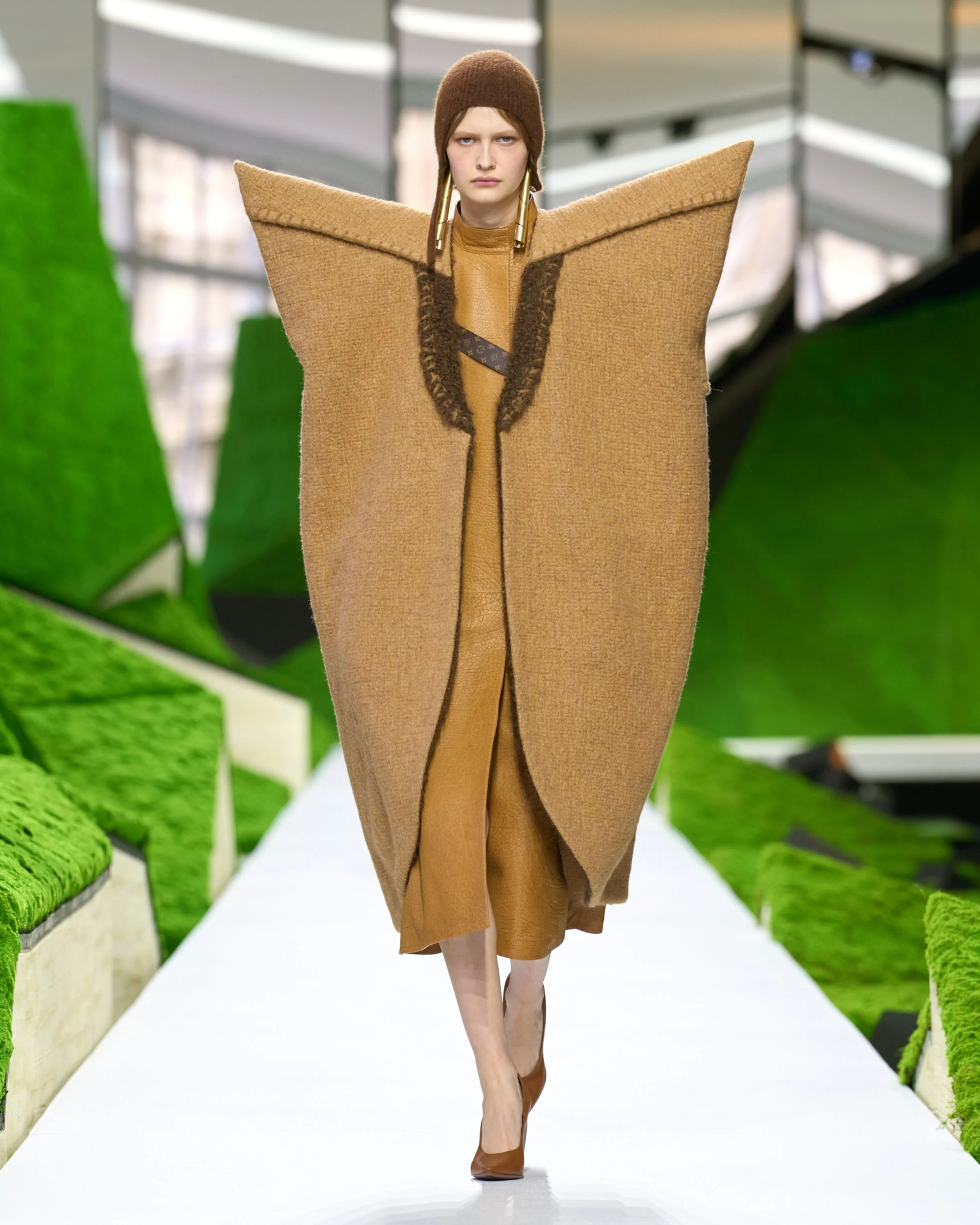
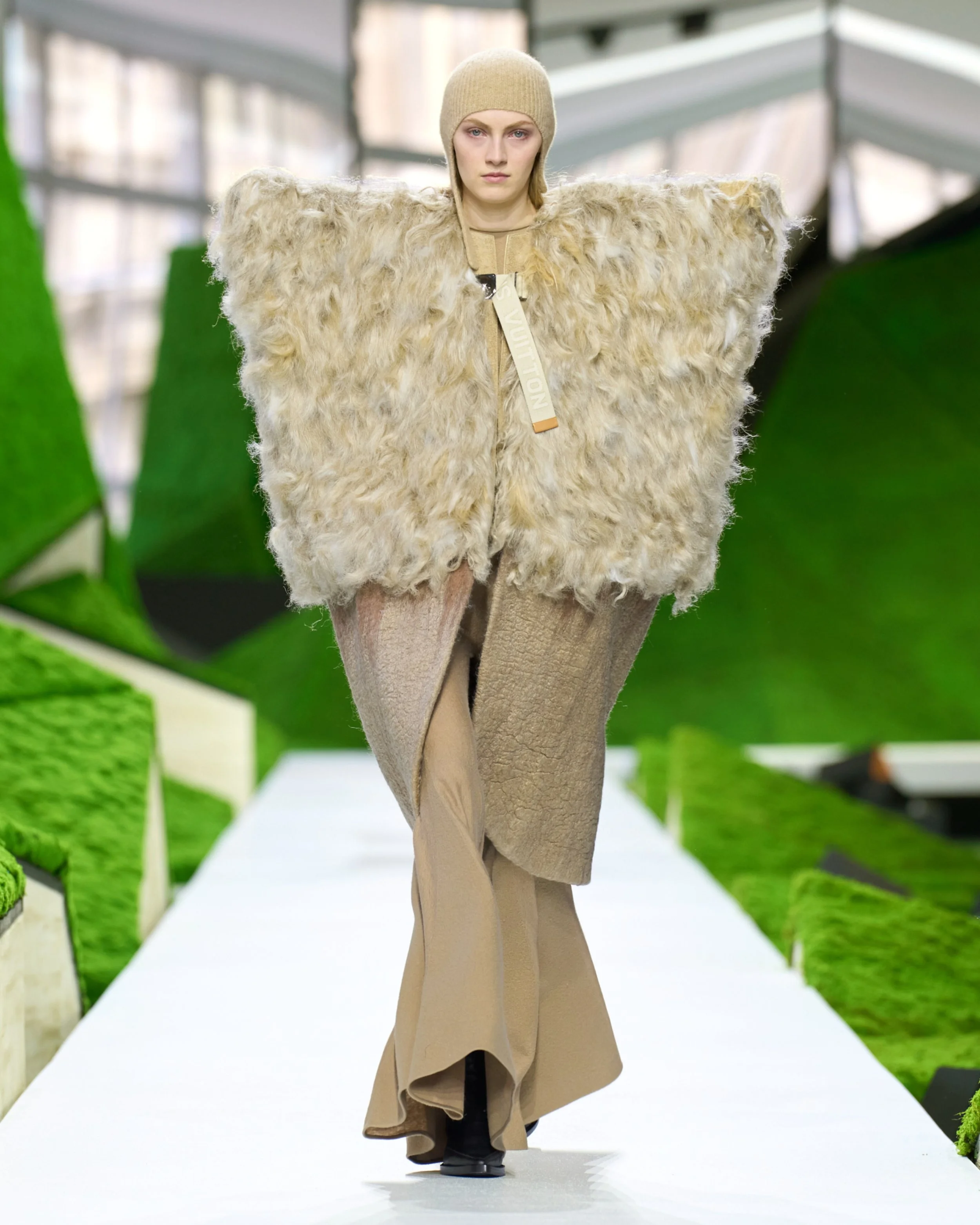
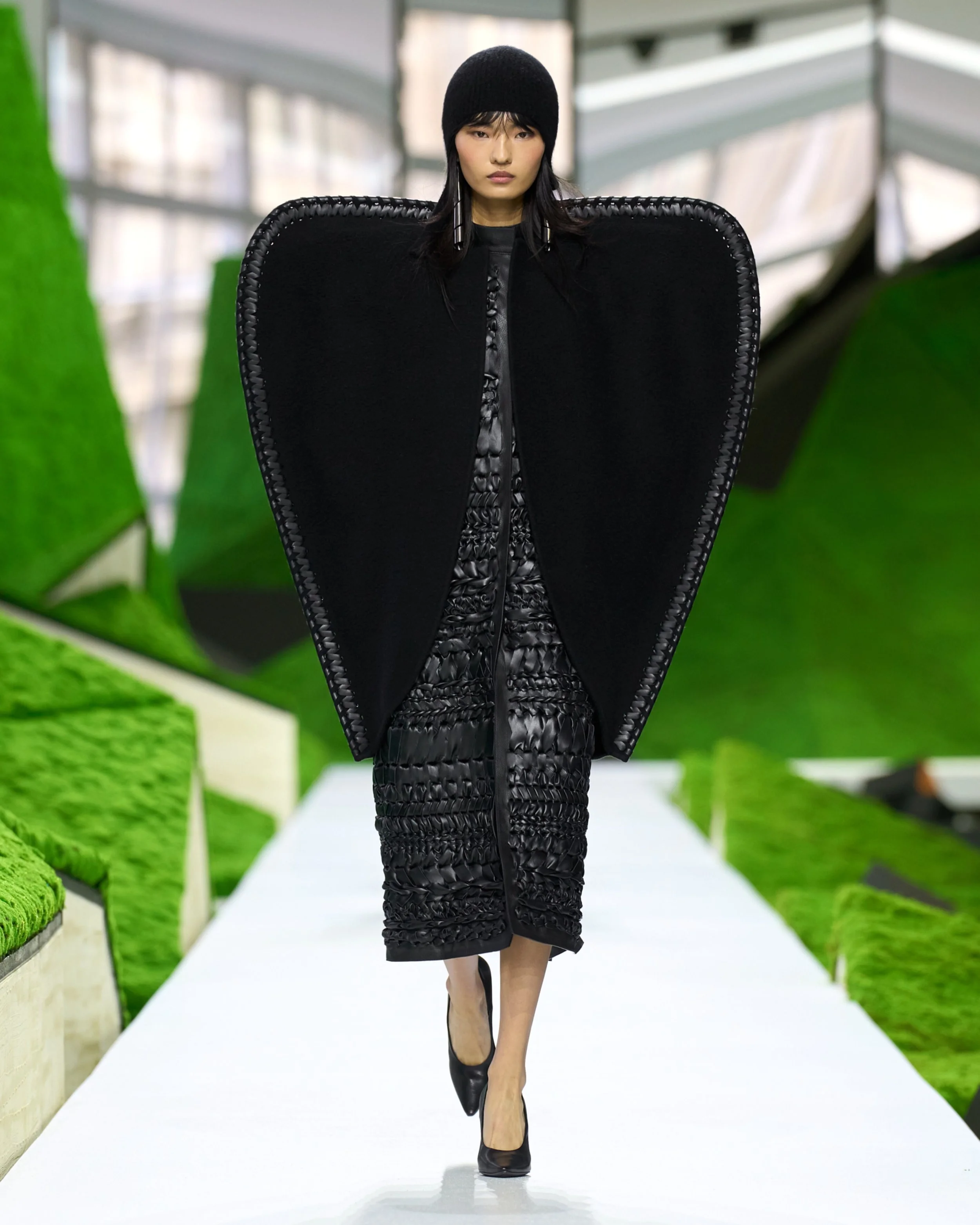
The inspiration was rooted in the protective wardrobes developed by populations living at high altitude, from the Alps to the Andes and the Himalayas. In the Louis Vuitton Fall 2026 collection, those ideas were translated into garments that suggested endurance, protection and freedom of movement. Fuzzy capes, shearling hats and heavy felt fabrics evoked the practical clothing used in extreme climates, while shaggy textures and sculptural mantles created dramatic silhouettes across the runway. Despite the folkloric references, the pieces avoided direct cultural quotation. Instead, Ghesquière distilled the visual language of mountain dress into a contemporary vocabulary of shape and texture that felt both familiar and futuristic.
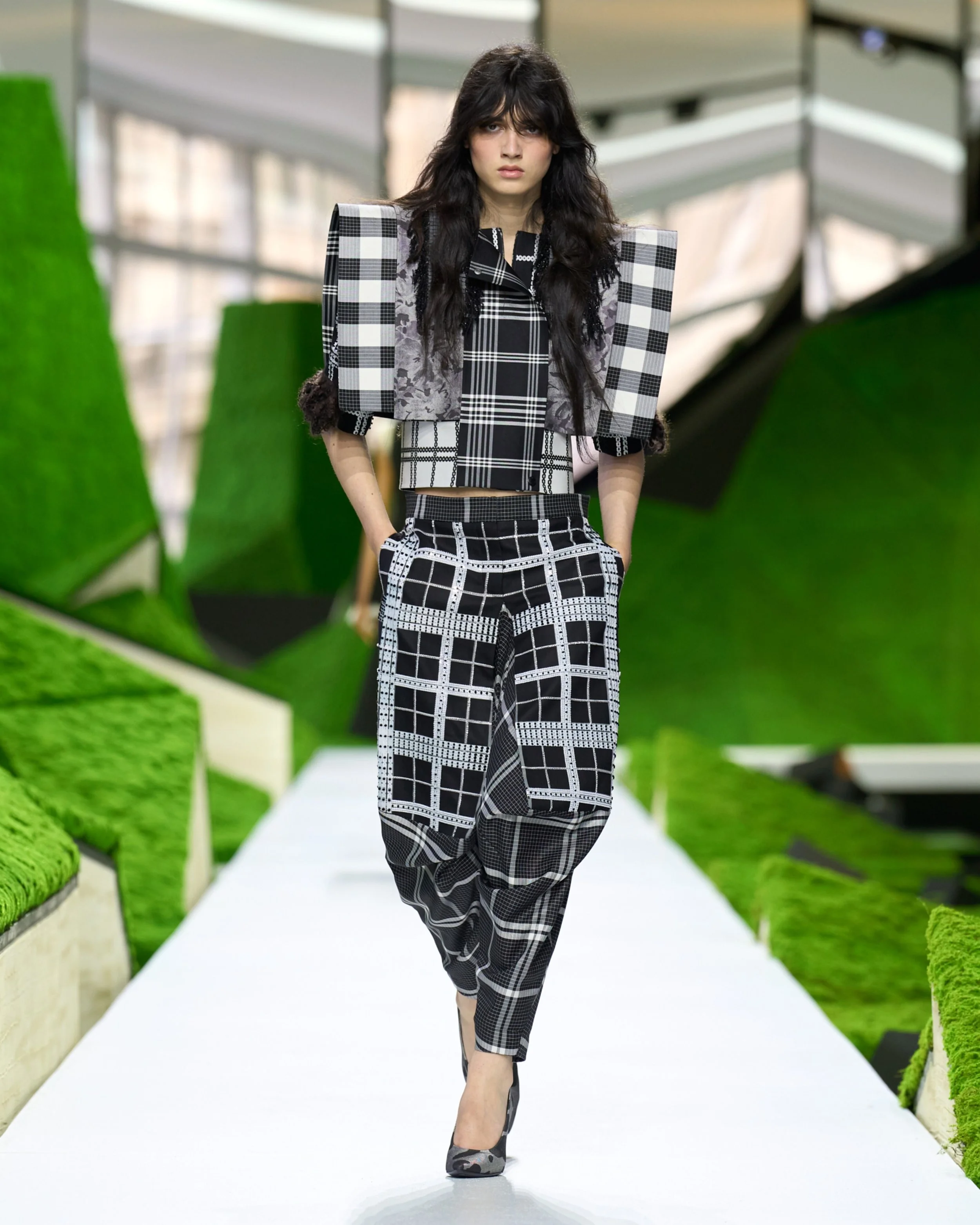
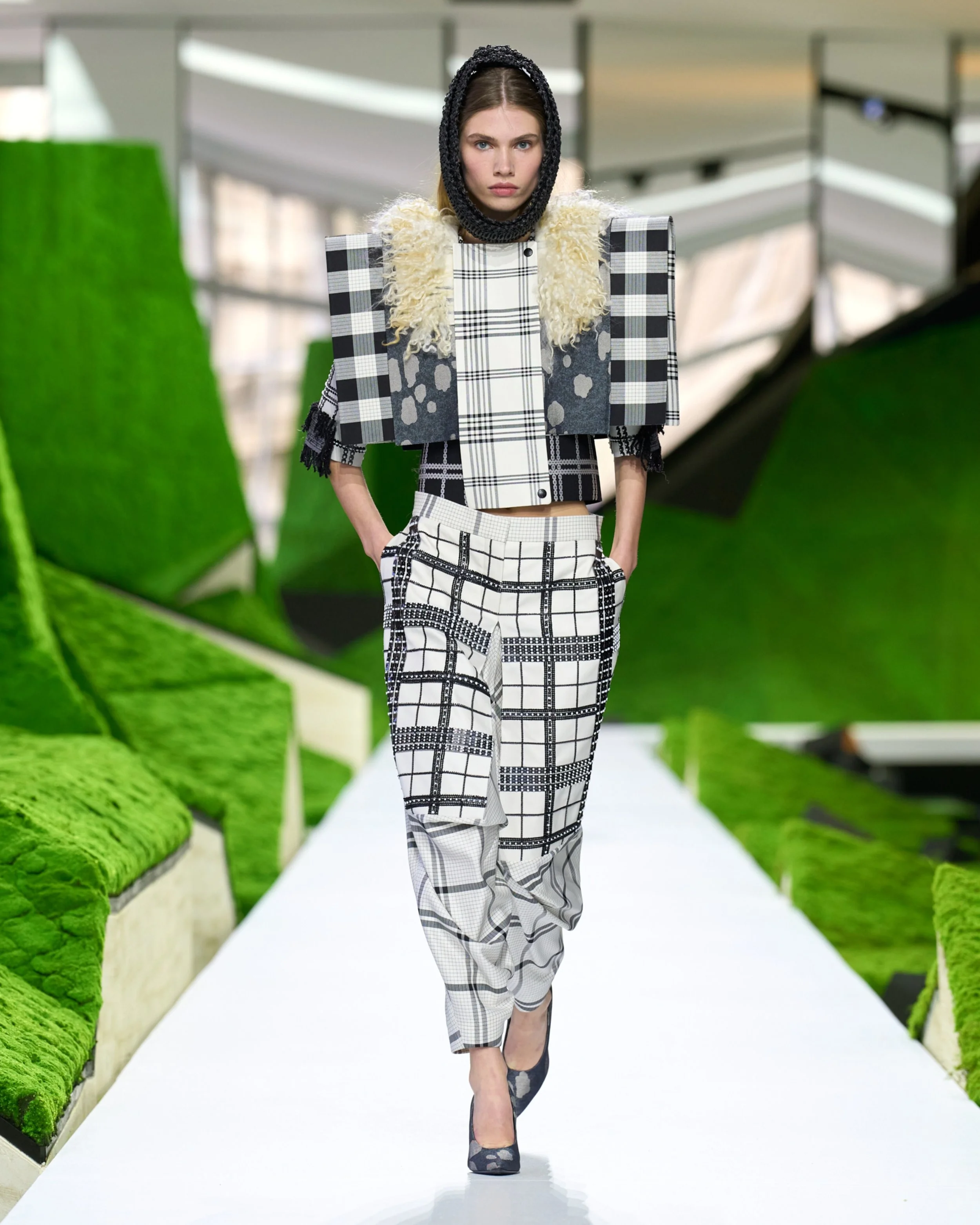
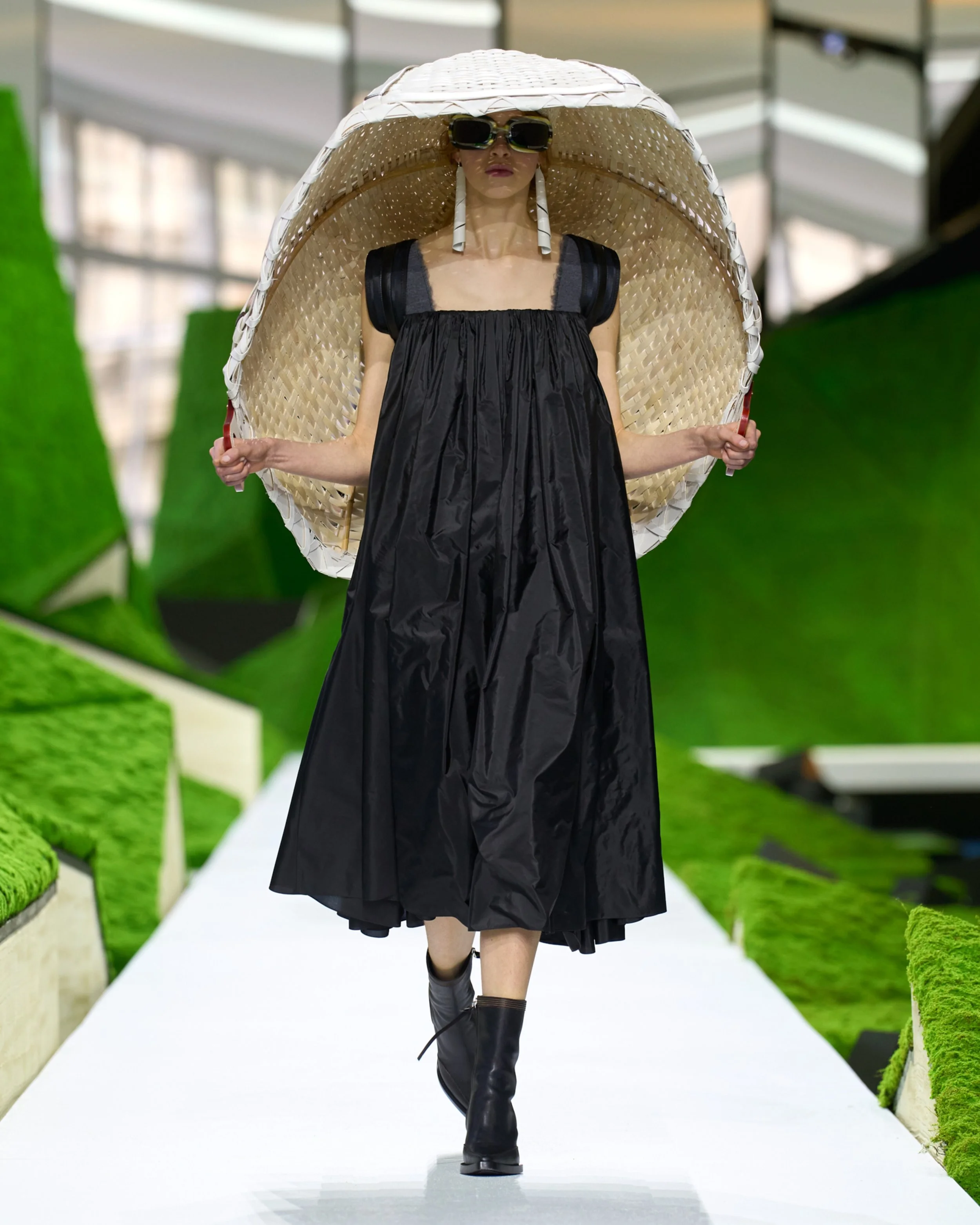
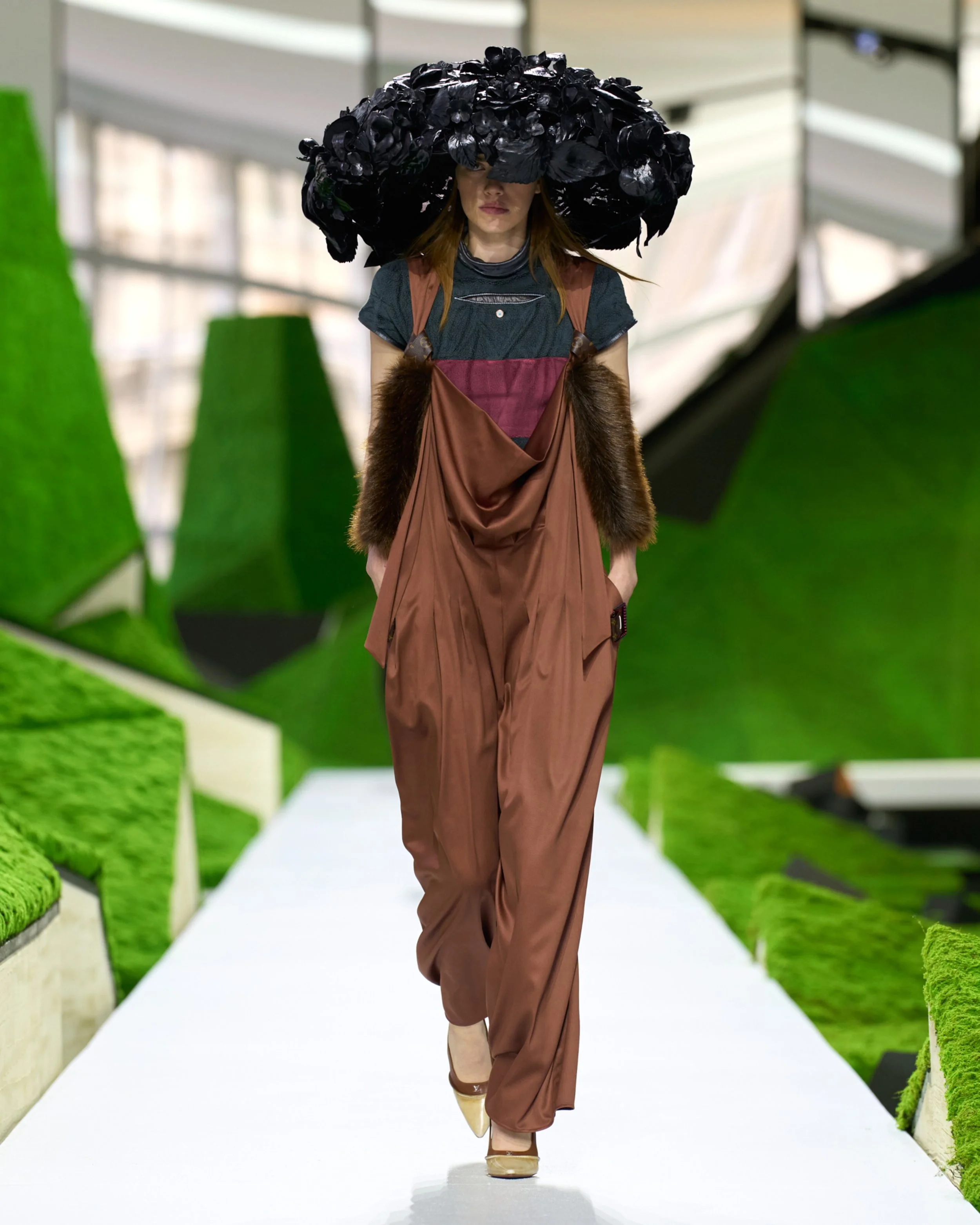
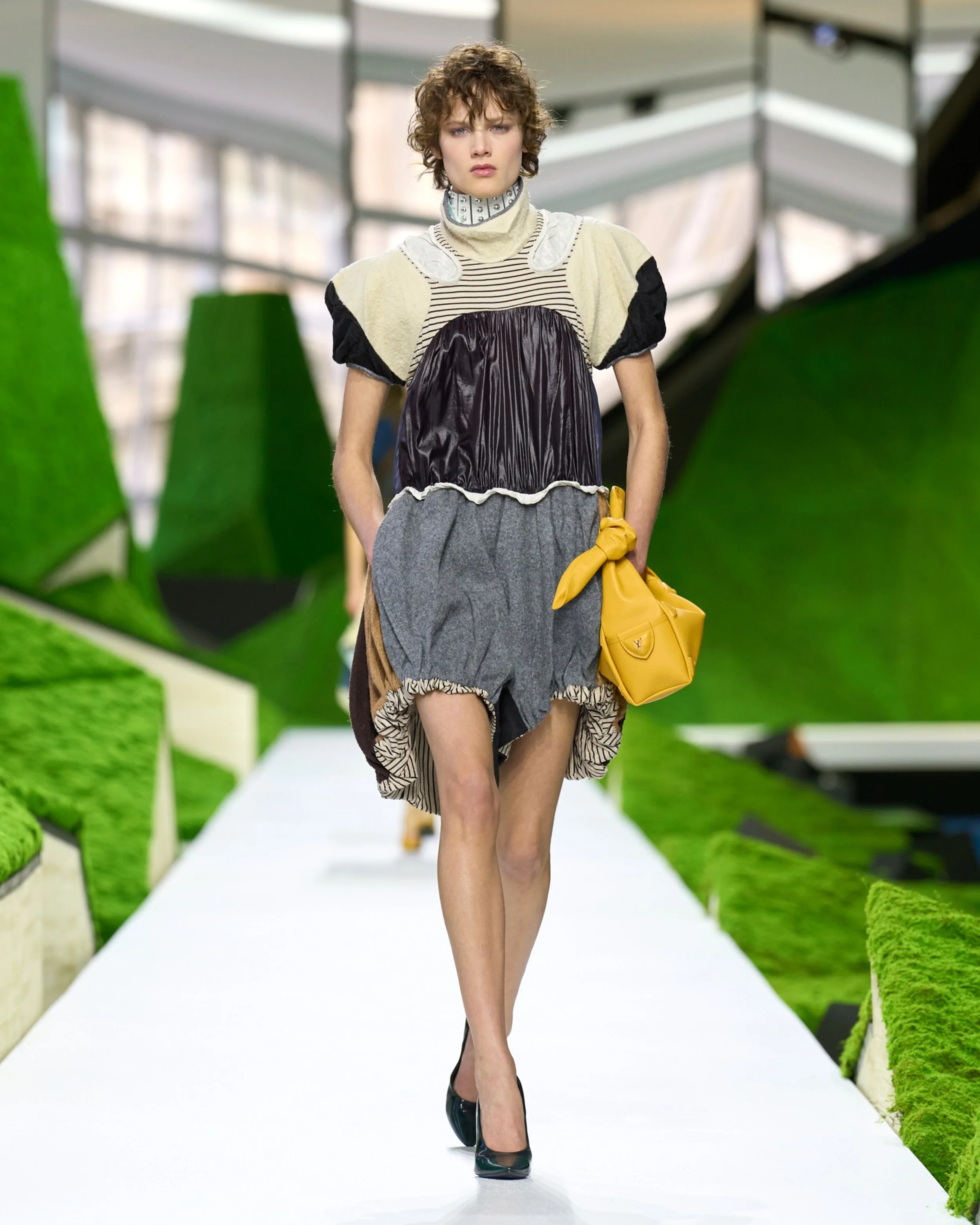
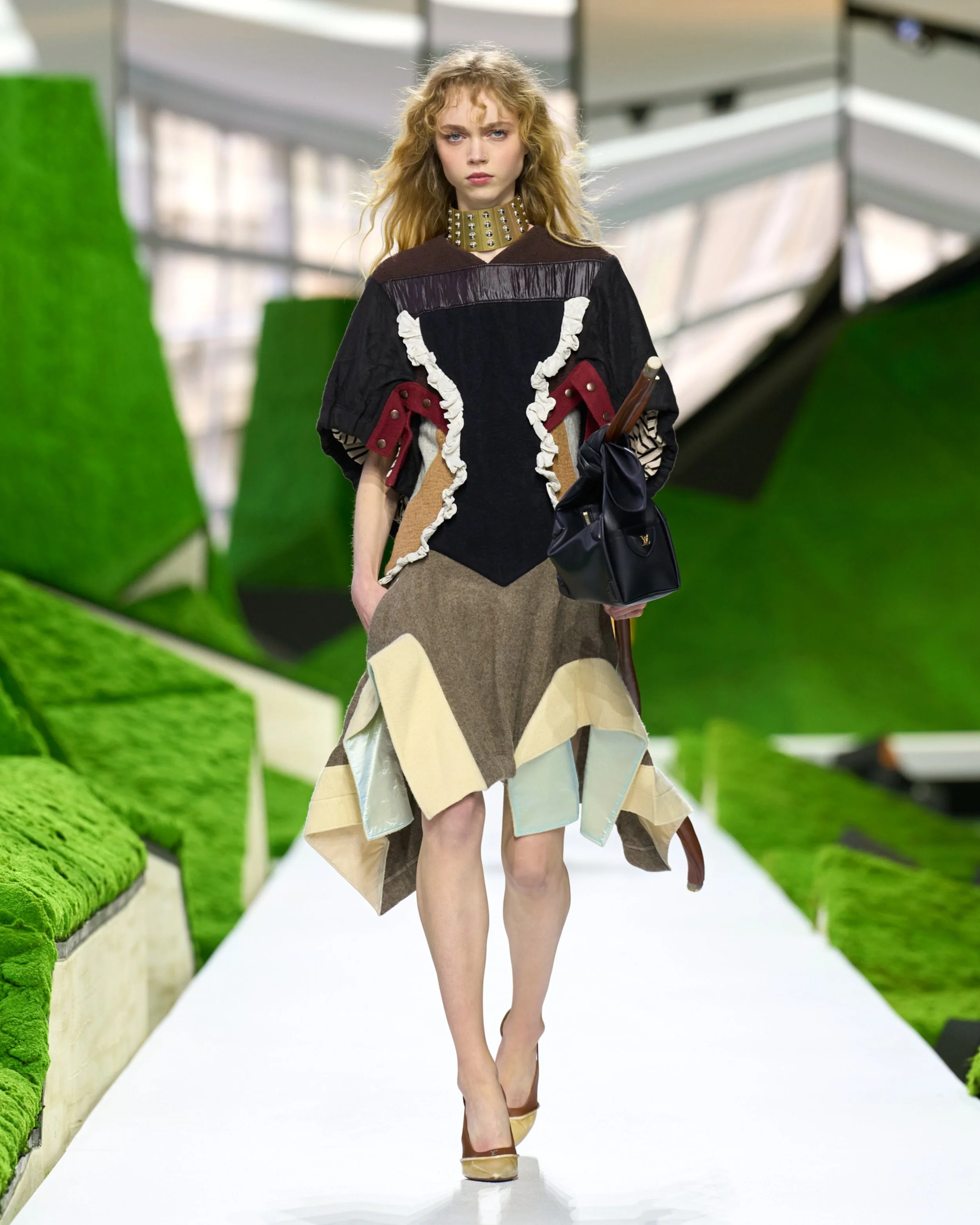
The runway environment reinforced that duality. The show space featured towering geometric prisms and pyramid like structures designed by Jeremy Hindle, best known for his work on the series Severance. The futuristic set contrasted with the earthy materials of the clothing, creating a striking visual dialogue between nature and modernity. It also underscored Ghesquière’s long standing fascination with architectural design, a quality that has defined the Louis Vuitton Fall Winter 2026 collection as much as the garments themselves.
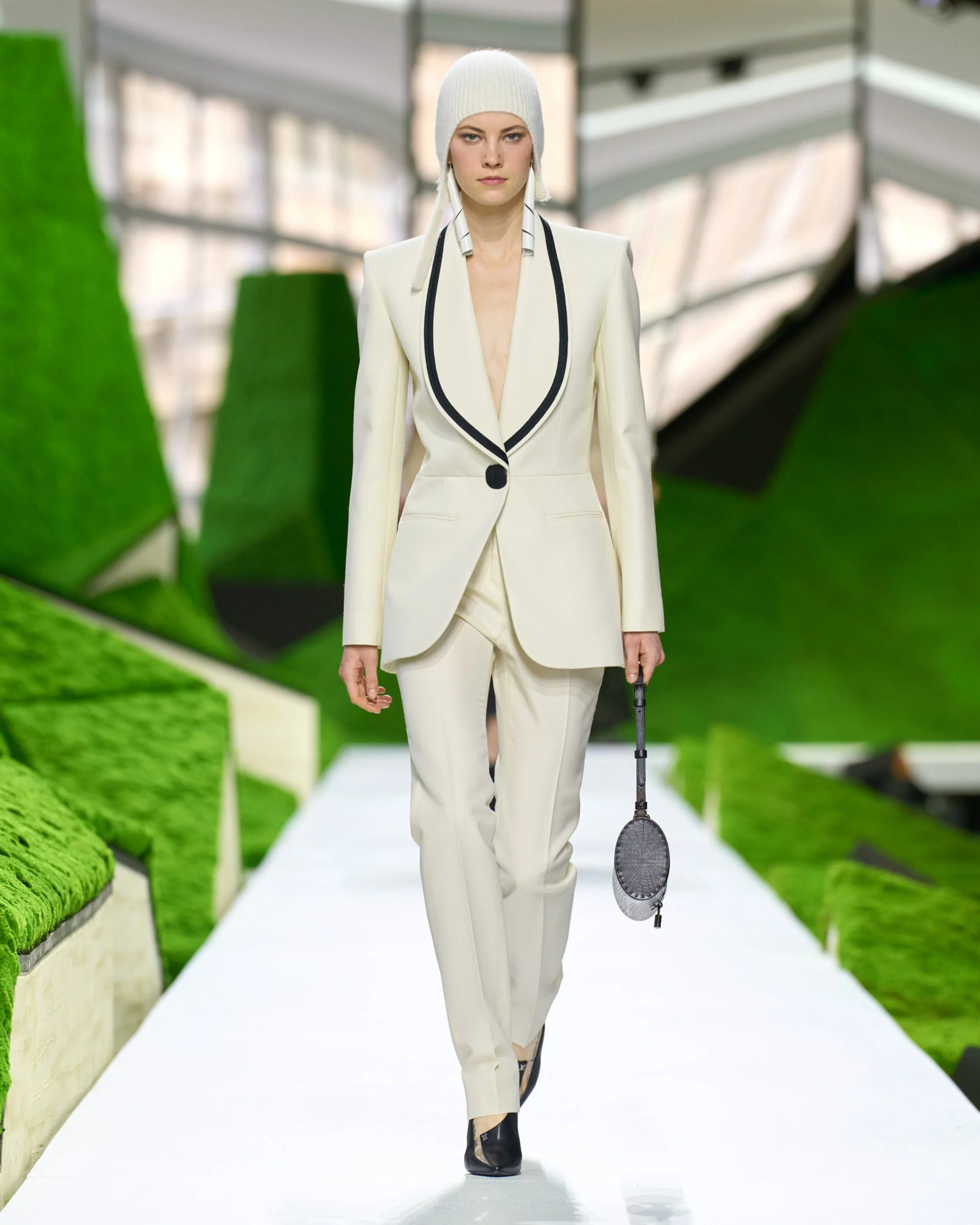
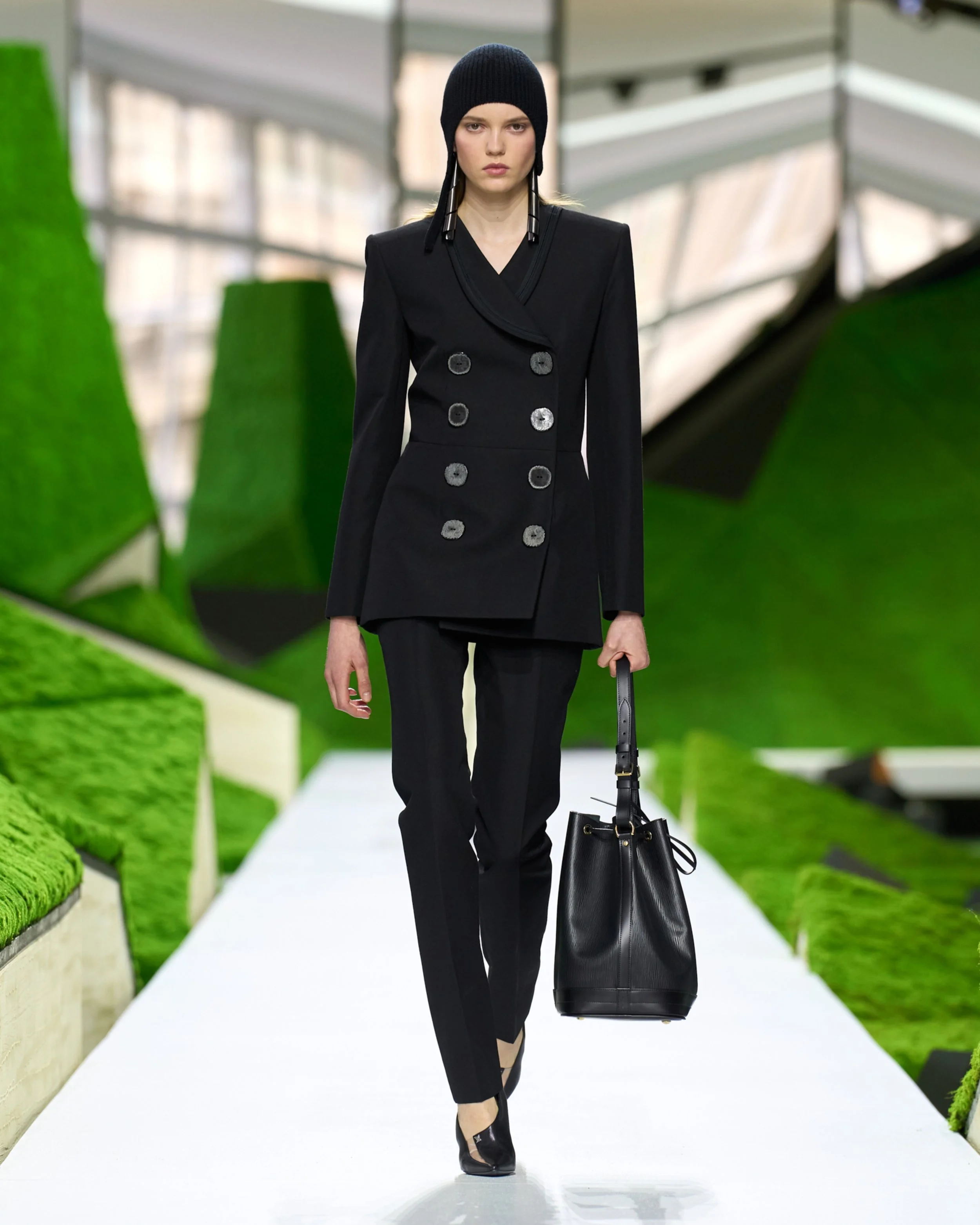
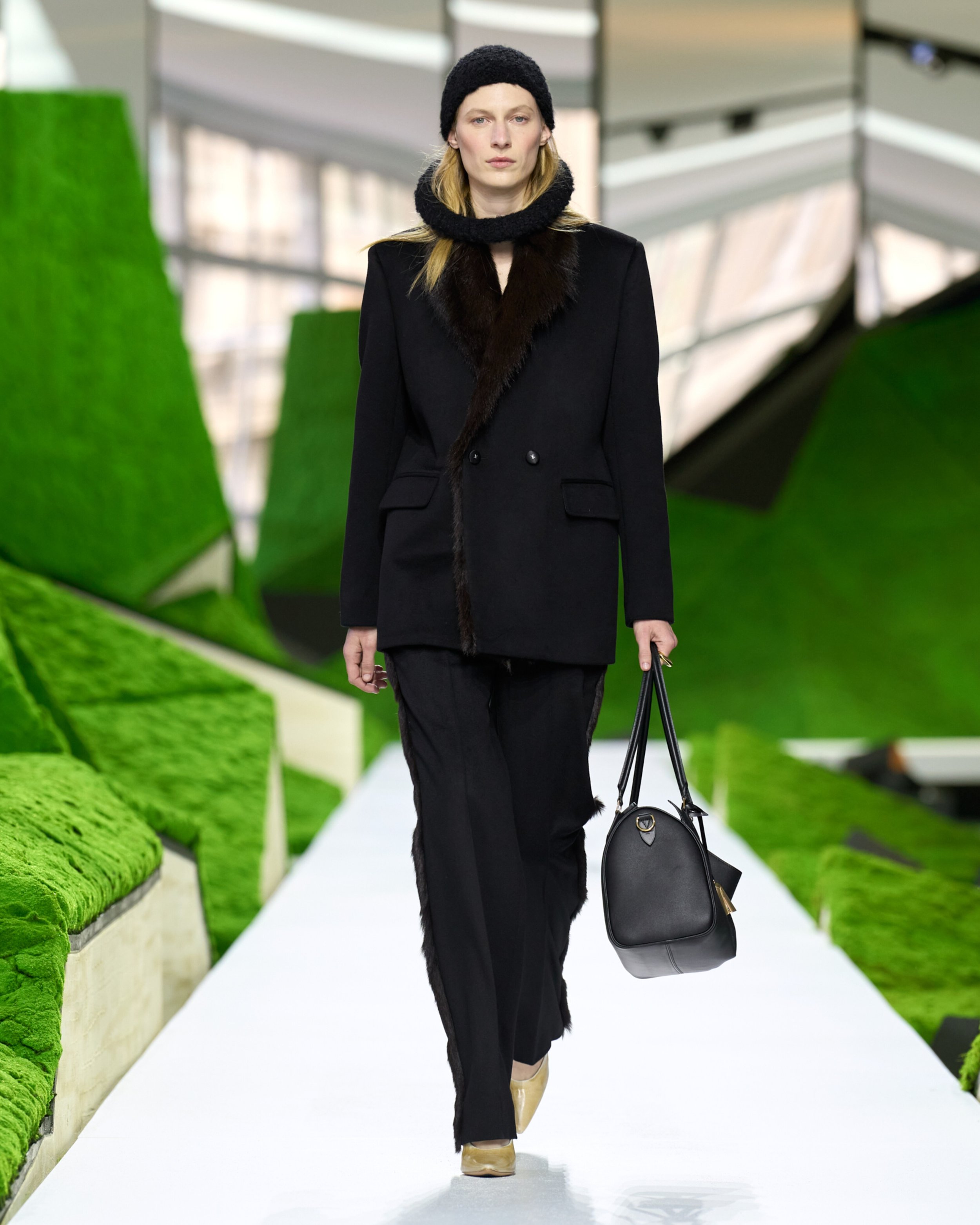
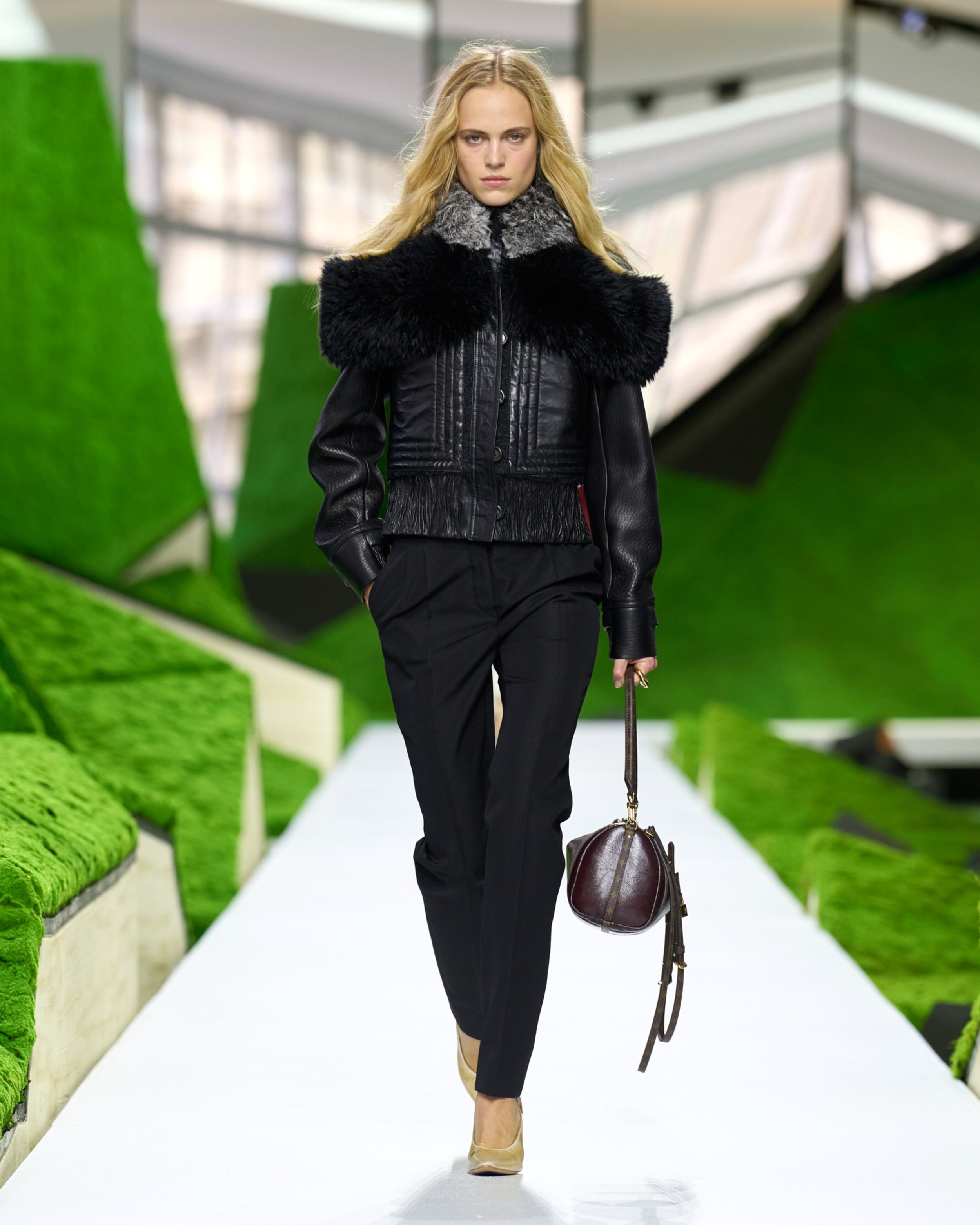
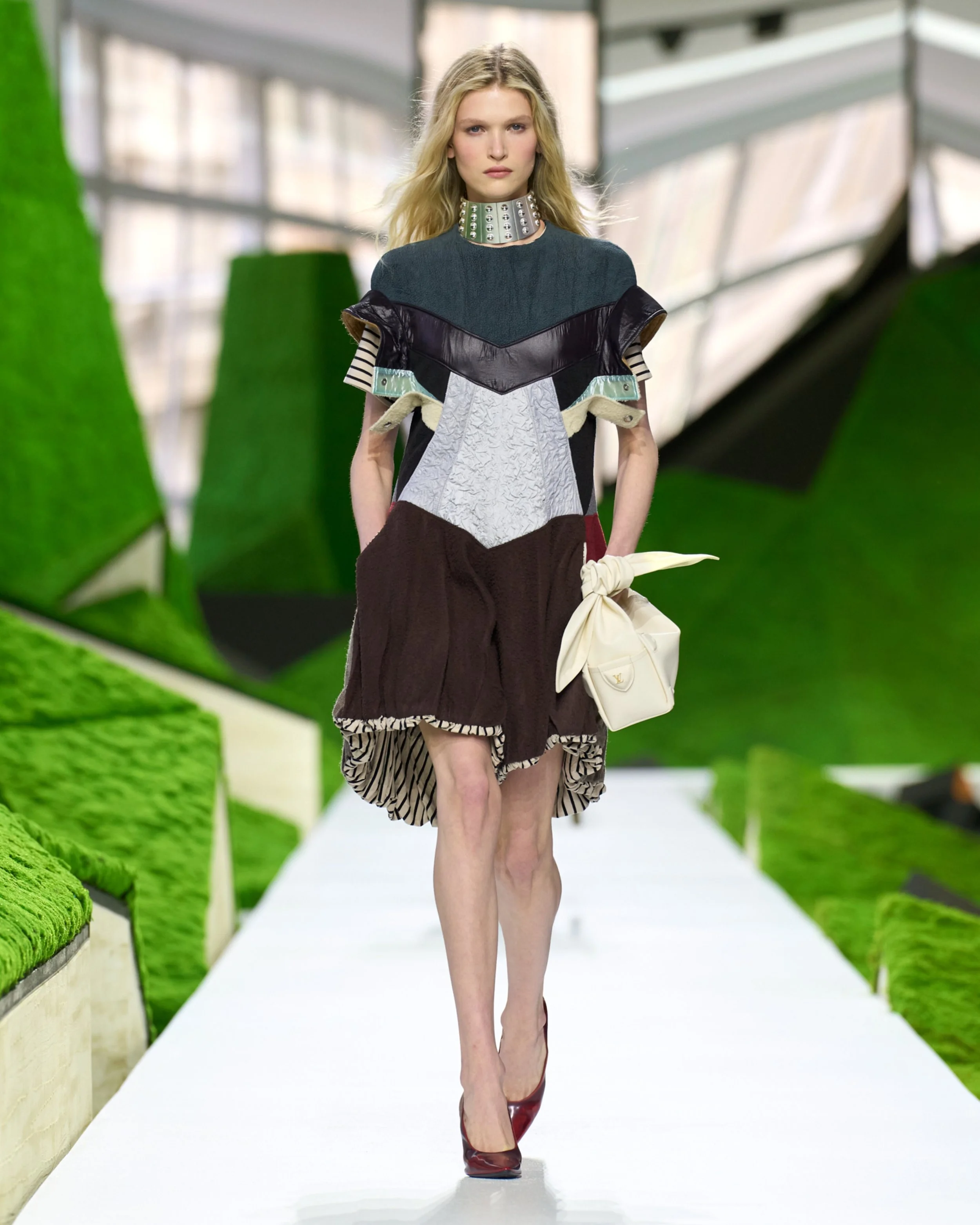
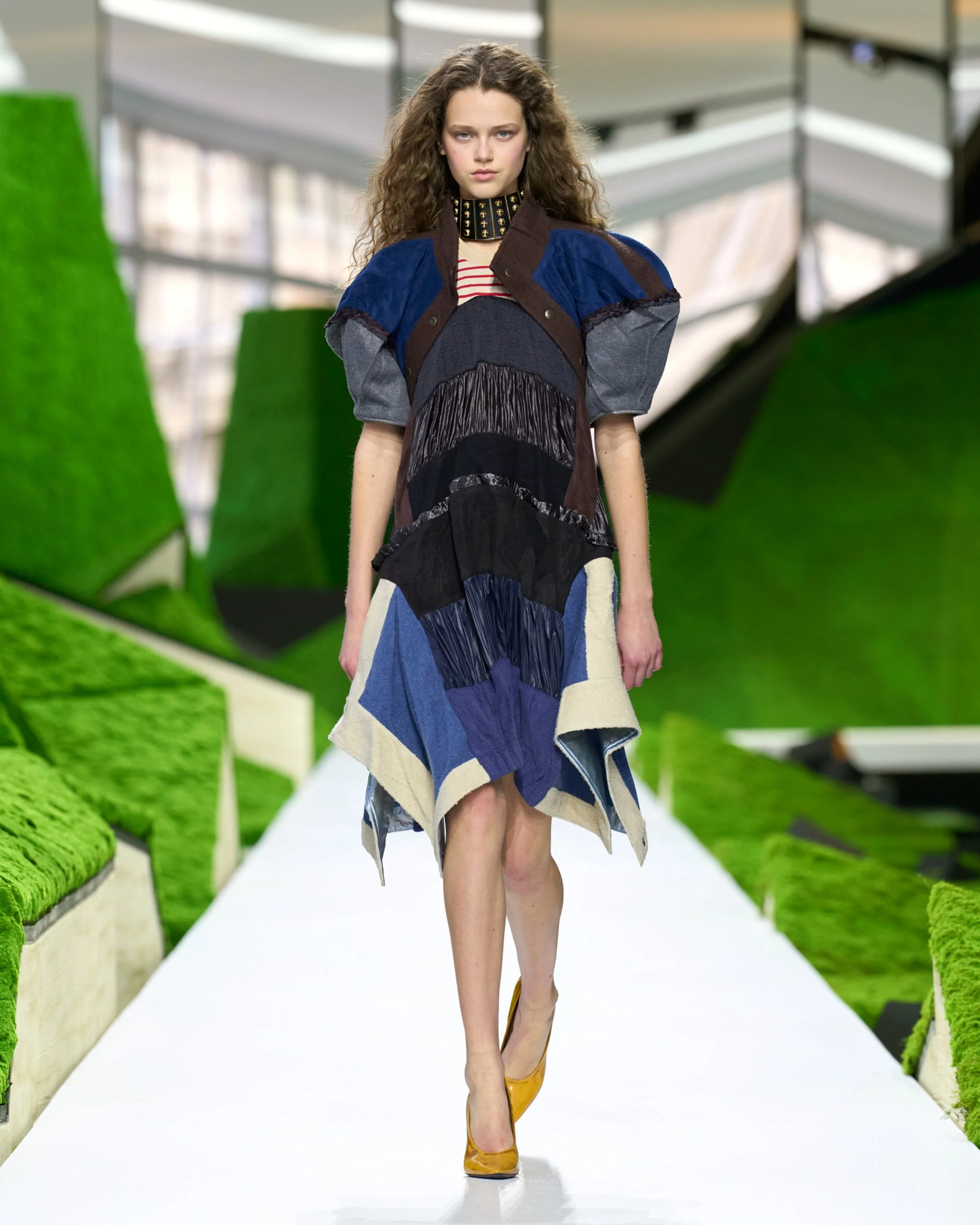
Silhouettes throughout the Louis Vuitton Fall 2026 show were varied and experimental. Patchwork rompers appeared alongside cone shaped hats and capes with exaggerated shoulders, while long john inspired jumpsuits and cropped leather jackets introduced a more utilitarian edge. Rain capes flared outward like candy wrappers, bringing unexpected movement to the runway. Textures were central to the storytelling of the Louis Vuitton Fall Winter 2026 collection, with hairy surfaces, layered fabrics and tactile materials dominating the lineup. Even tailoring adopted these elements, with black trousers trimmed by strips of fluff along the seams rather than traditional satin tuxedo stripes.
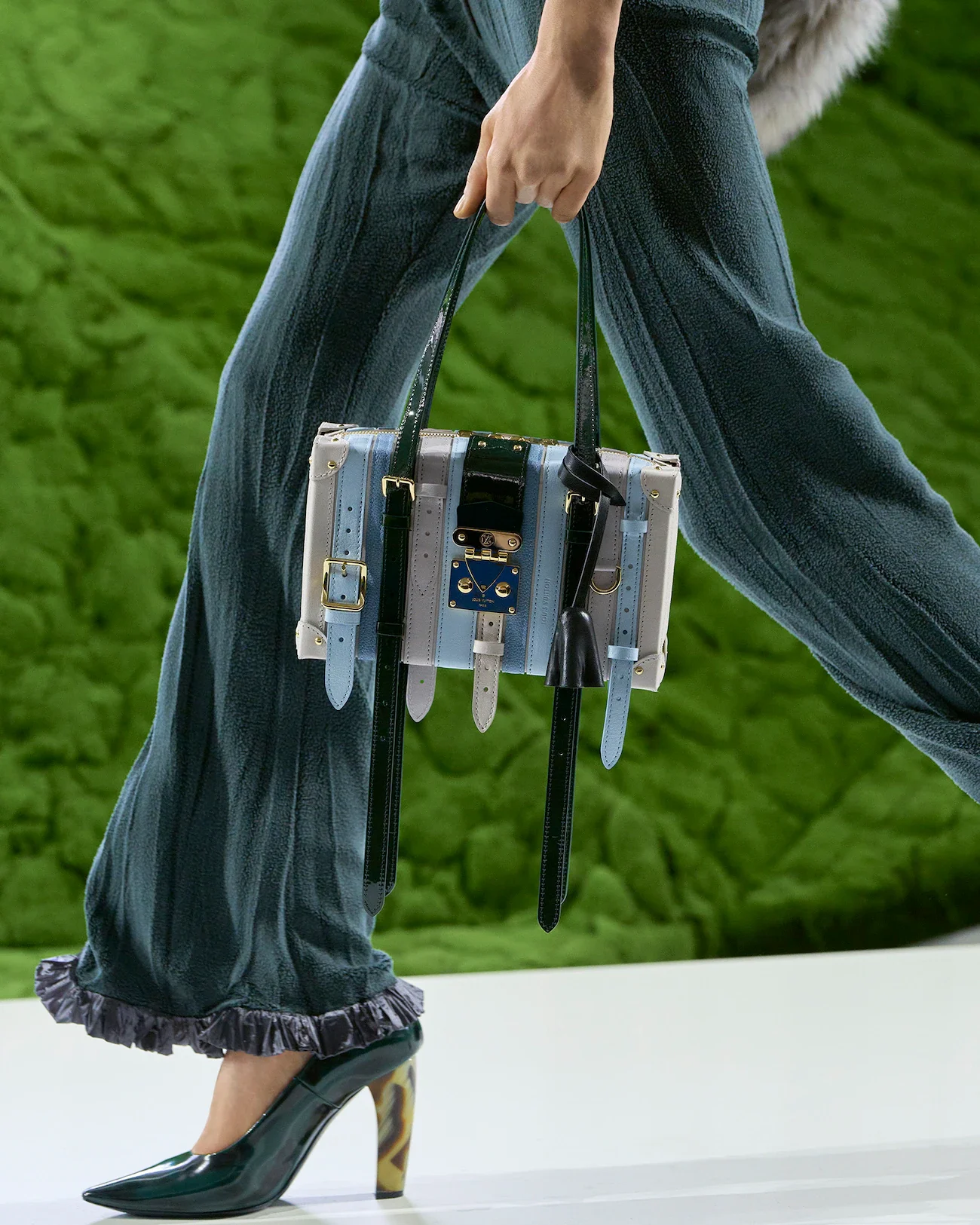
Accessories provided a sleeker counterpoint to the elaborate clothing. The handbags in the Louis Vuitton Fall 2026 collection were streamlined in smooth leather, some decorated simply with knots whose ends protruded like small sculptural details. Several new interpretations of the house’s iconic Mini Malle also appeared, a design first introduced by Ghesquière early in his tenure at the brand. For Fall 2026, the Mini Malle was softened and reimagined in new materials, sometimes finished with multiple belts that suggested the utilitarian gear used by mountaineers and travellers.
The emphasis on natural textures placed Louis Vuitton within a broader seasonal conversation. Elements such as moss coloured fabrics and organic surfaces echoed themes seen elsewhere during the week, including collections from Hermes and Gucci. Yet the Louis Vuitton Fall Winter 2026 collection stood apart for its conceptual ambition and visual range. By combining folkloric inspiration with avant garde construction, Ghesquière created a show that felt less like a literal interpretation of heritage dress and more like a speculative vision of clothing shaped by nature’s demands.
In the end, the Louis Vuitton Fall 2026 collection reaffirmed Ghesquière’s position as one of fashion’s most experimental designers working within a major luxury house. His approach continues to challenge the boundaries of what runway fashion can represent, using historical references, global perspectives and architectural silhouettes to imagine clothing for a world that is both interconnected and constantly evolving.