Lacoste Fall 2026
On a grey Paris afternoon at Roland-Garros Stadium, Lacoste staged its Fall Winter 2026 runway show on the clay of the Philippe Chatrier court, transforming the arena into the scene of a match interrupted by rain. The collection takes its cue from a little remembered moment in tennis history: a 1923 Davis Cup match in Deauville, when founder René Lacoste faced Spain’s top player Manuel de Gomar as a sudden downpour flooded the court. Spectators threw newspapers onto the grass to help dry it while players and fans waited beneath umbrellas and trench coats. The match stretched across two days, but Lacoste ultimately won. For creative director Pelagia Kolotouros, the image of that rain soaked pause becomes the emotional core of the season, a meditation on anticipation, endurance and the strange theatre that unfolds around sport when play stops and spectators take centre stage.
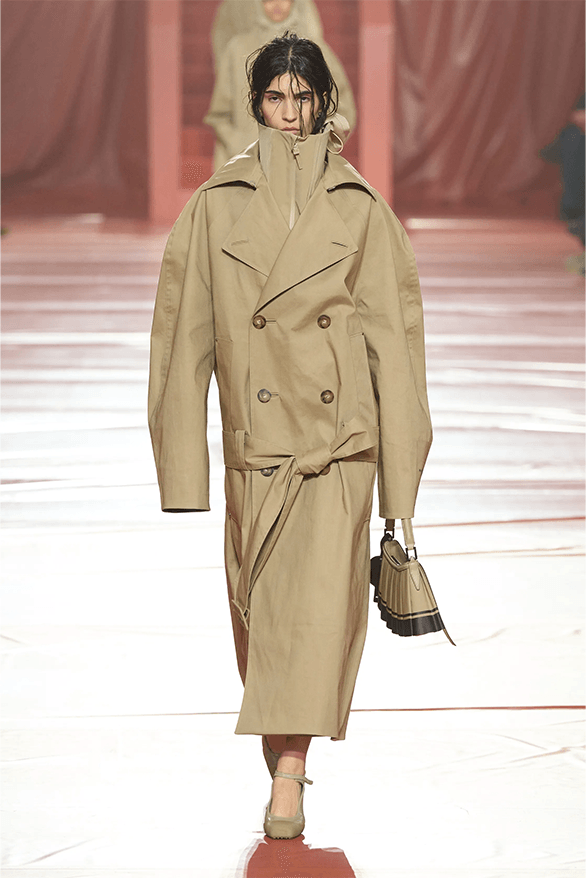
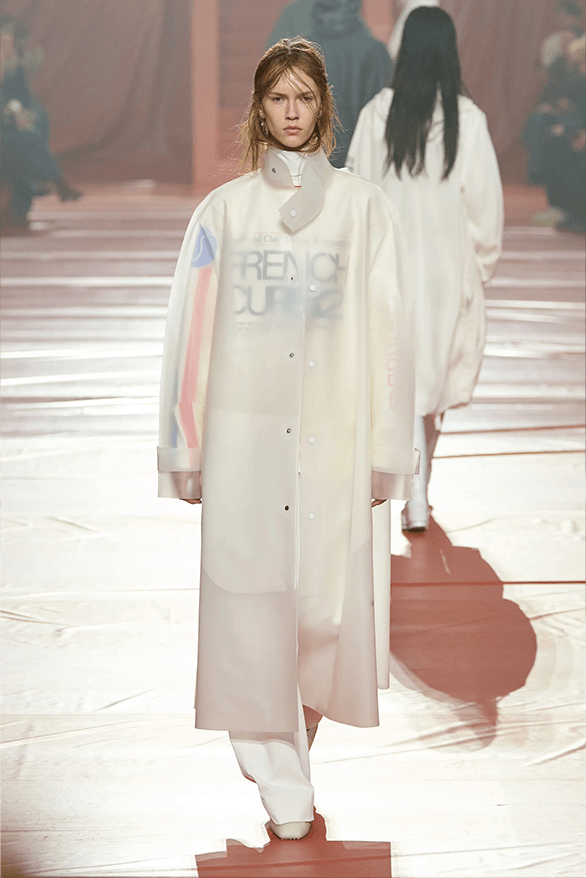
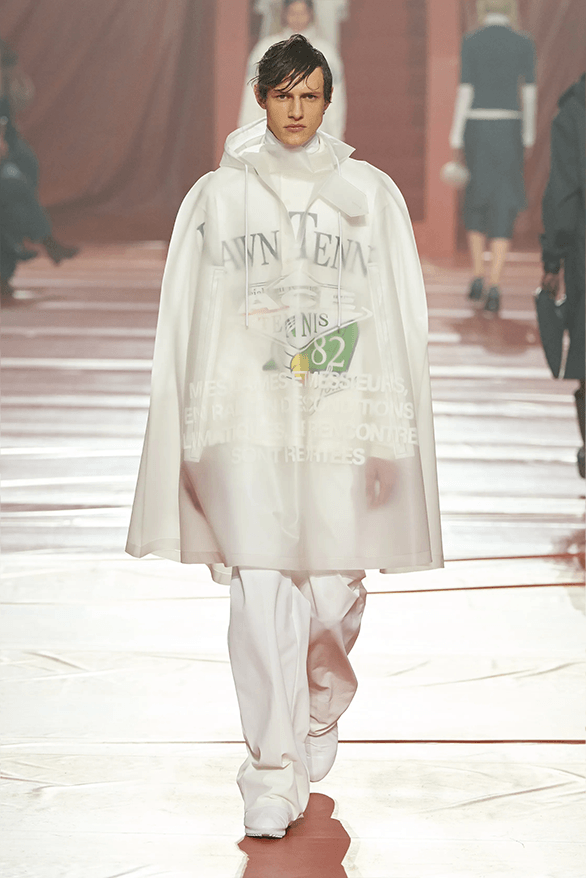
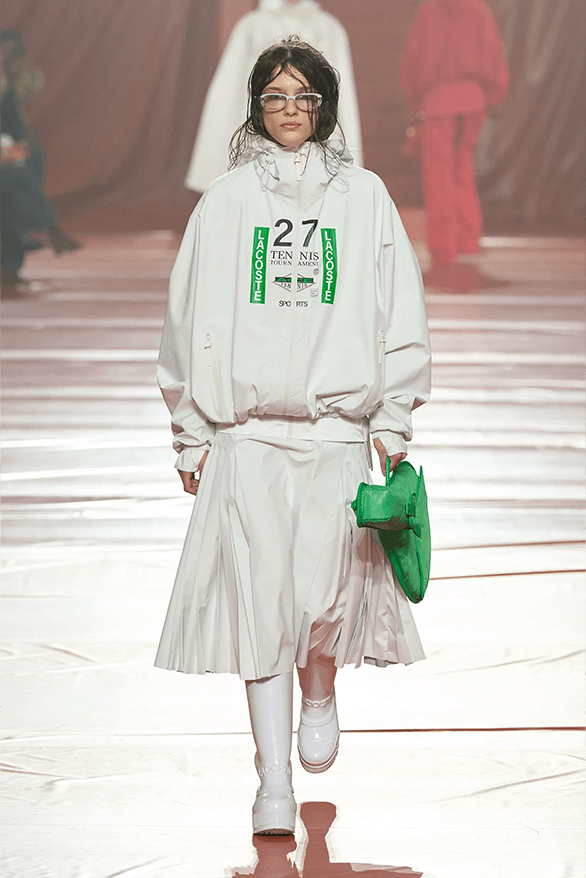
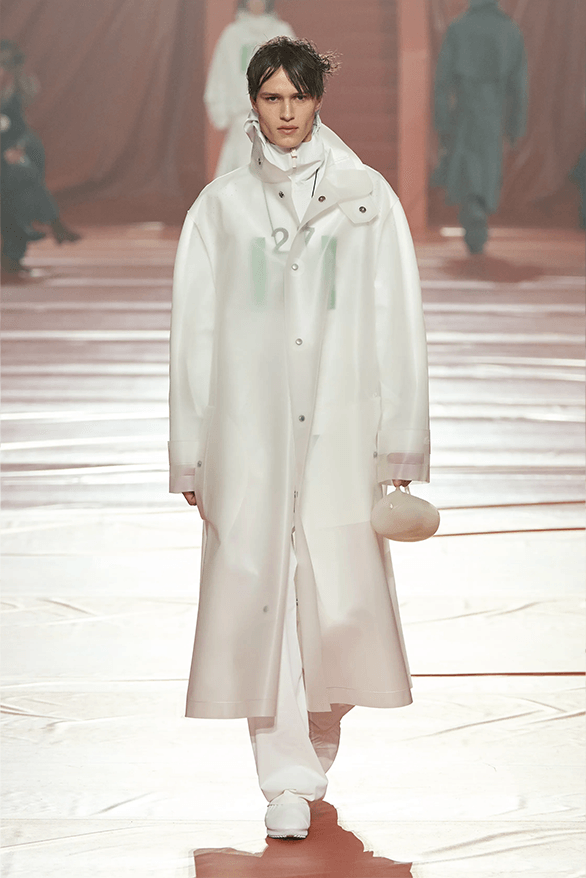
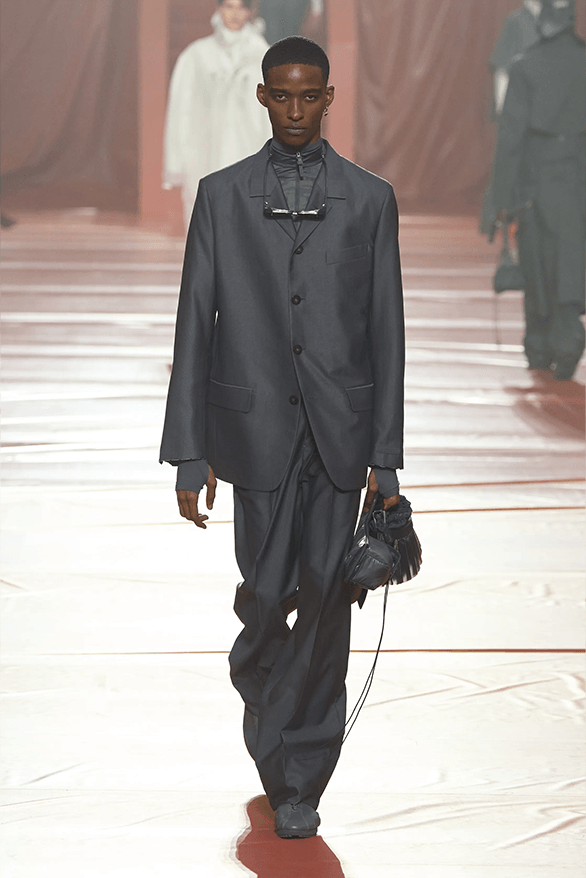
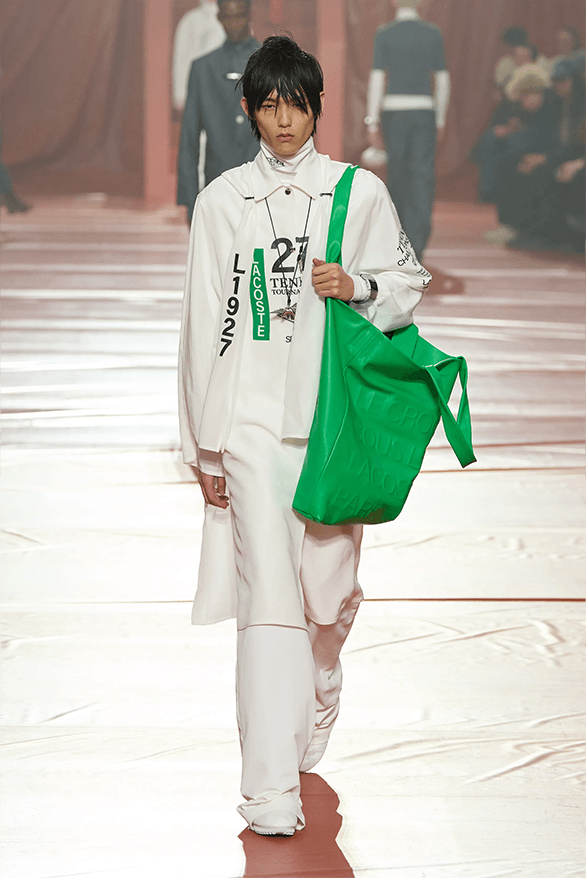
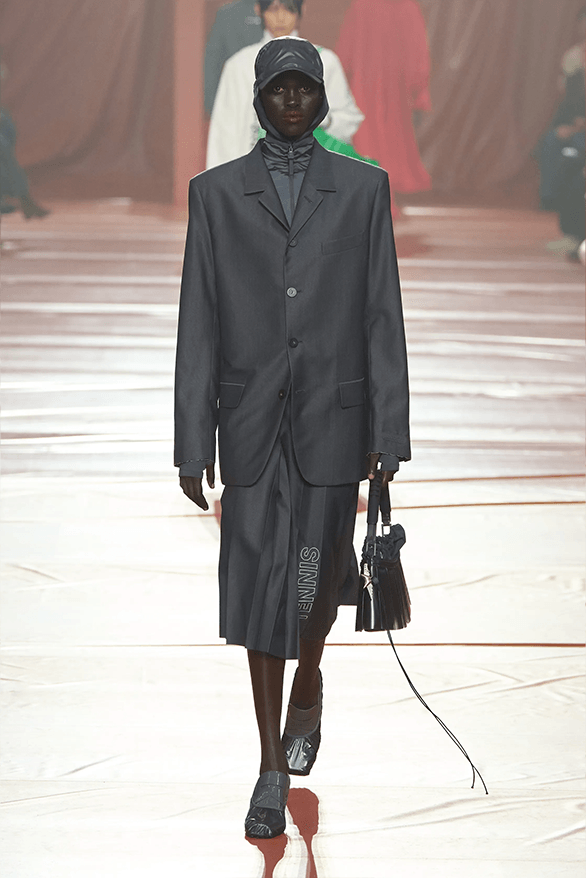
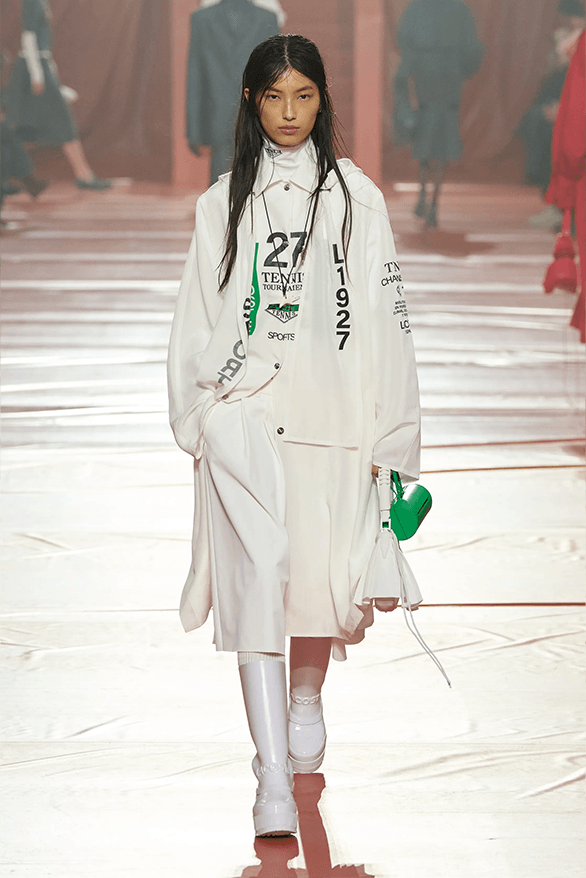
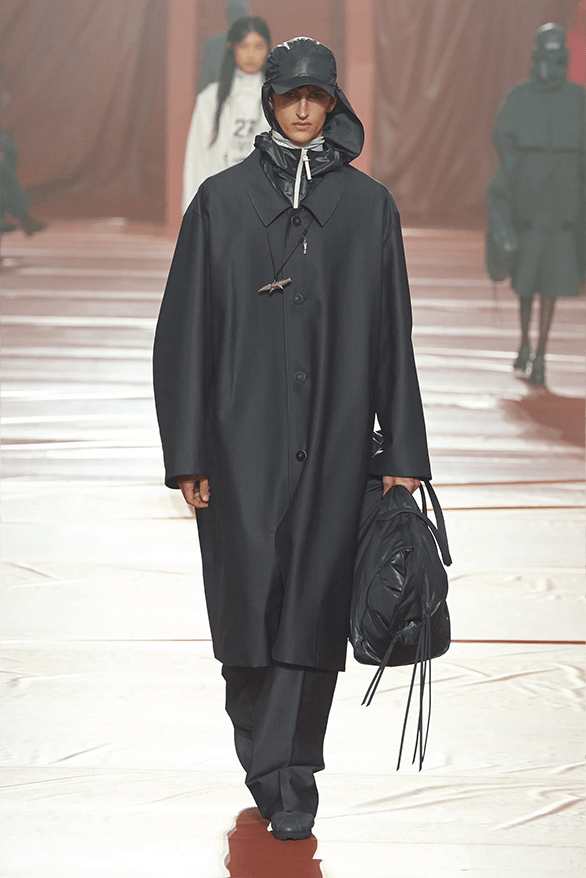
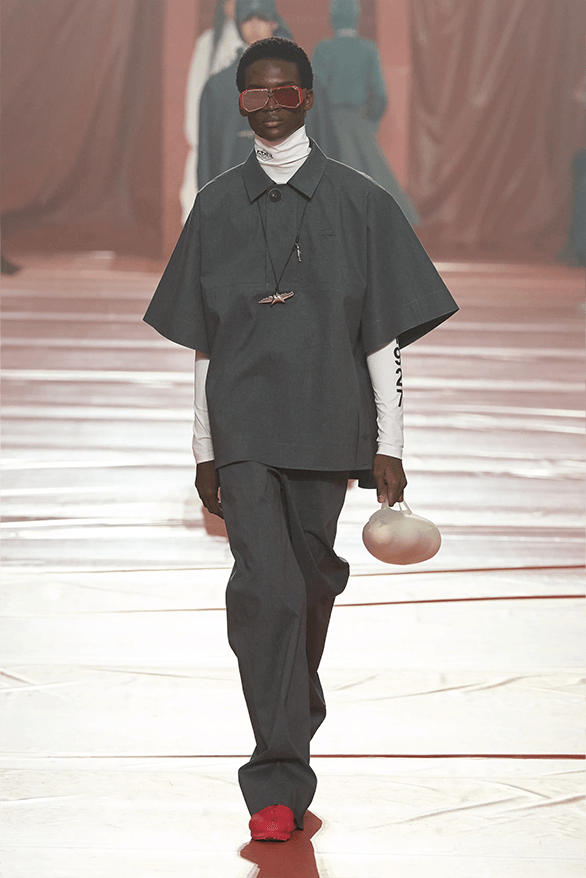
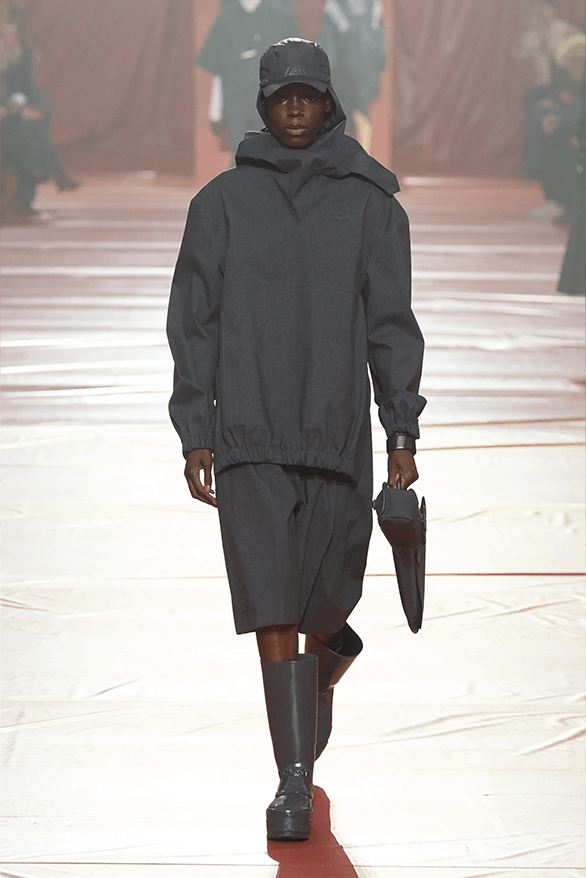
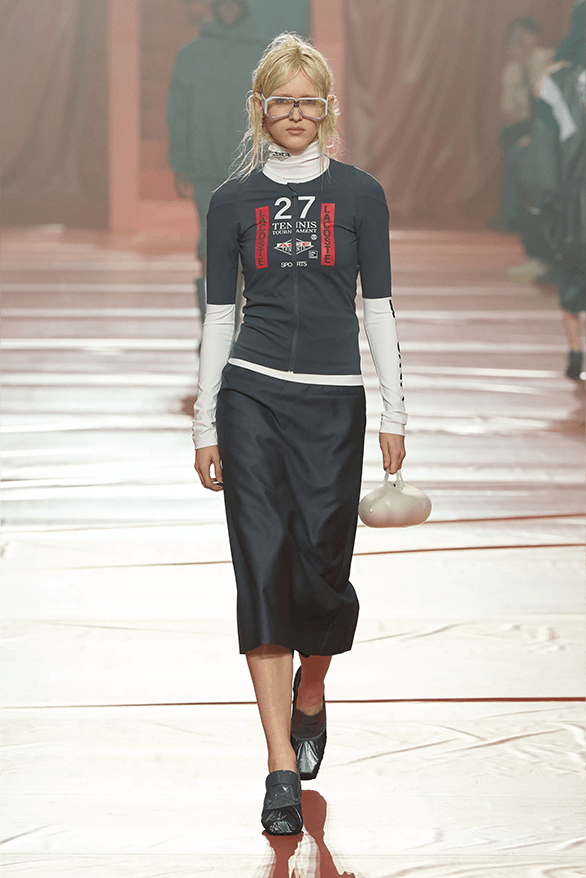
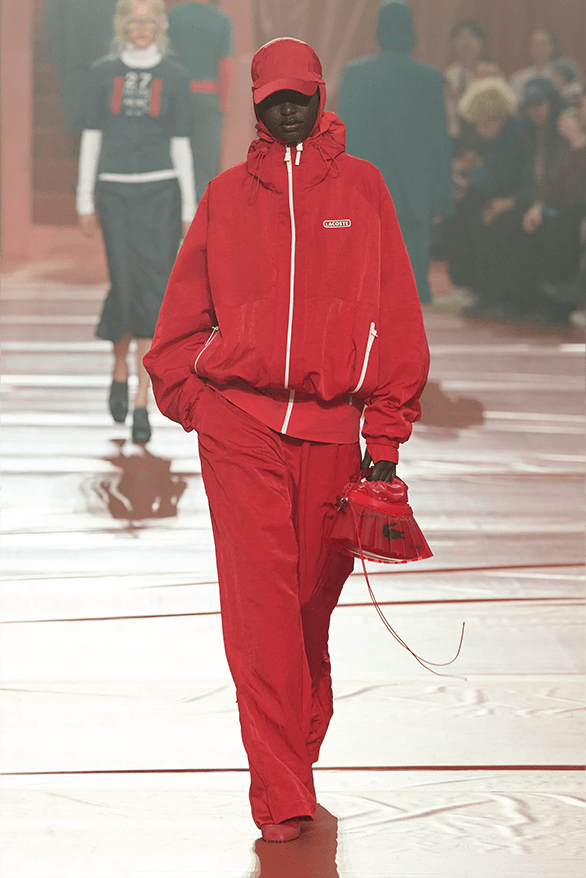
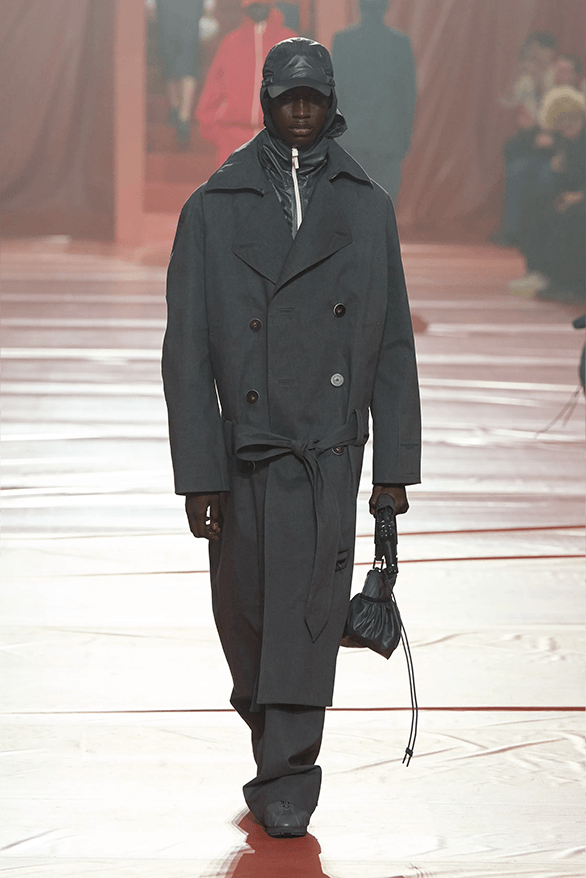
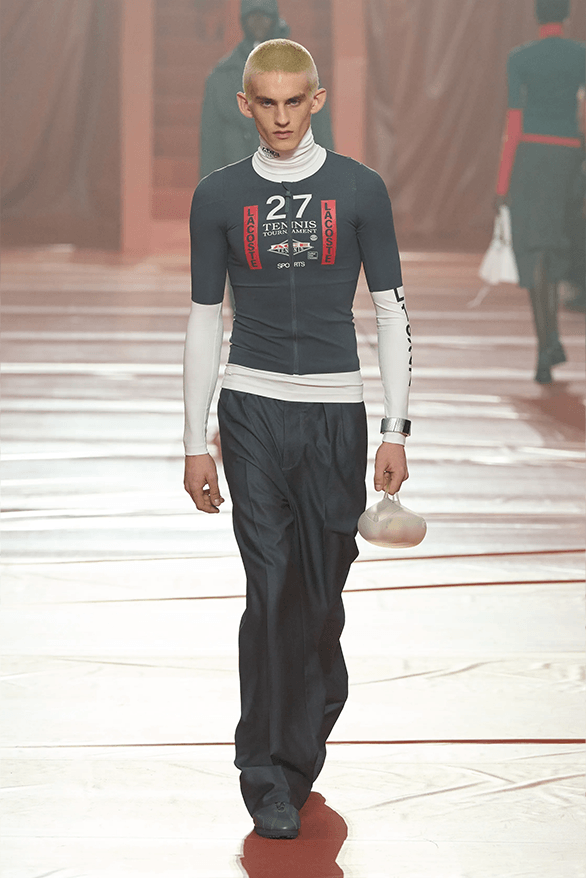
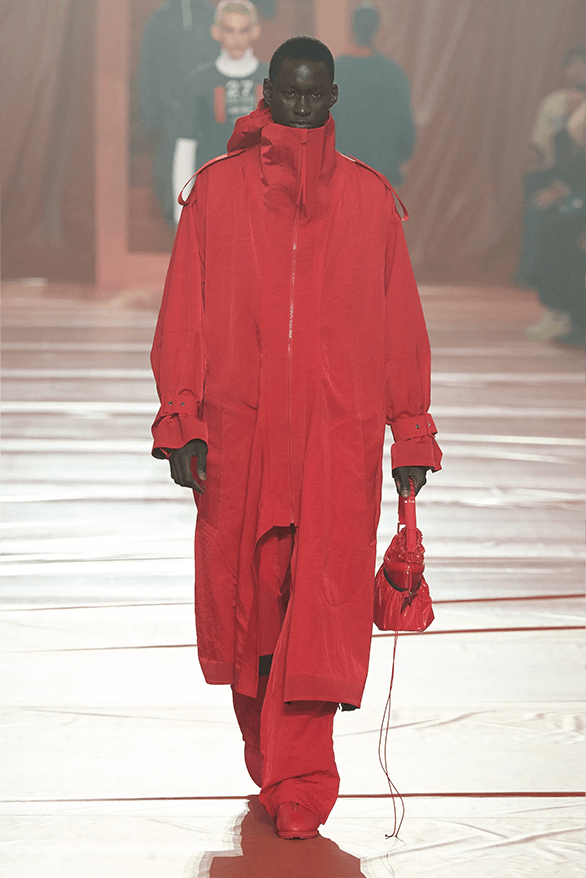
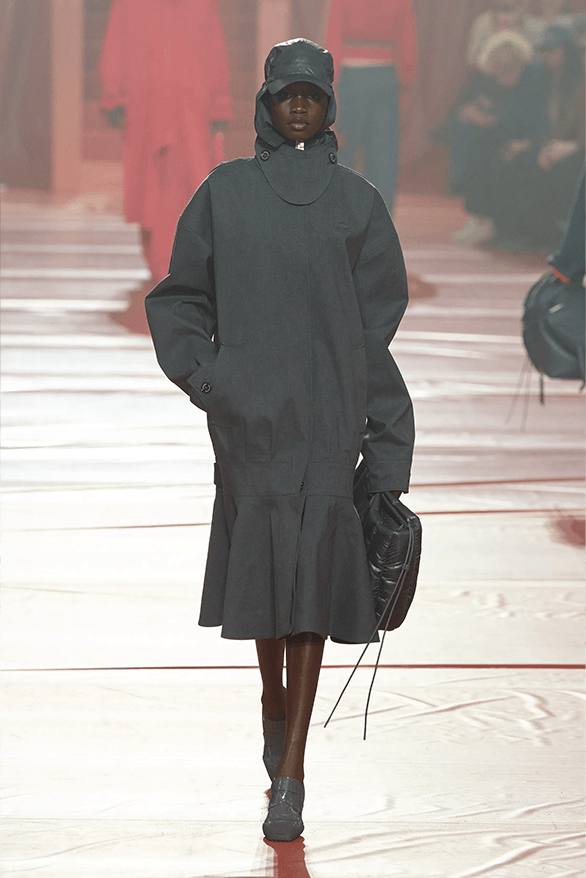
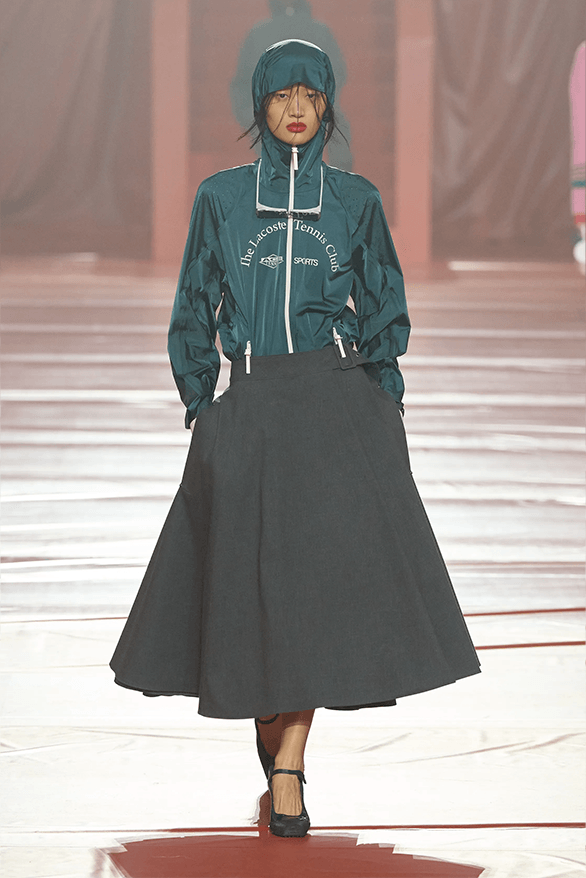
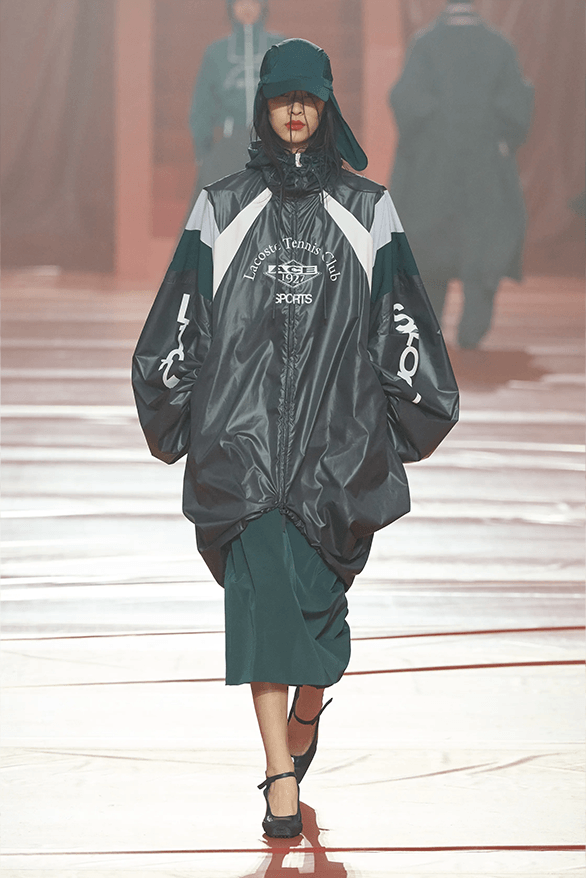
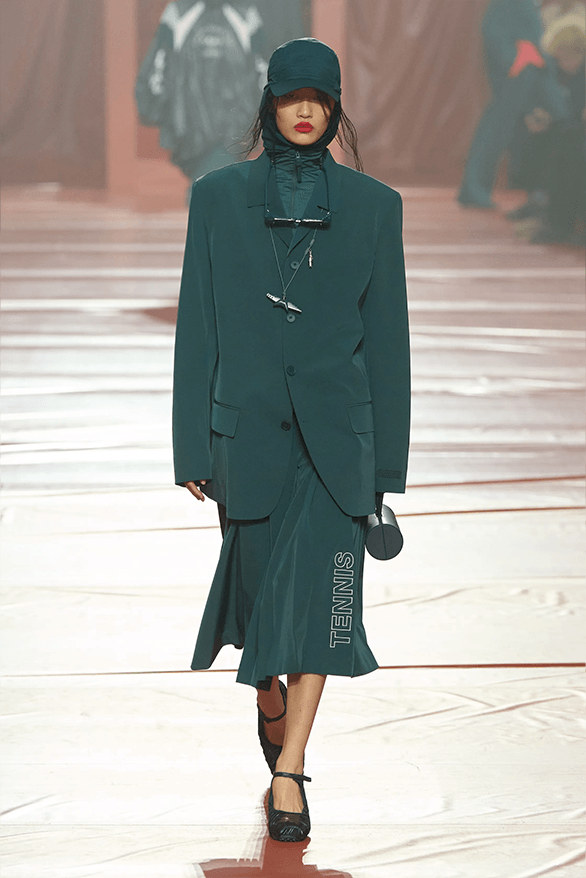
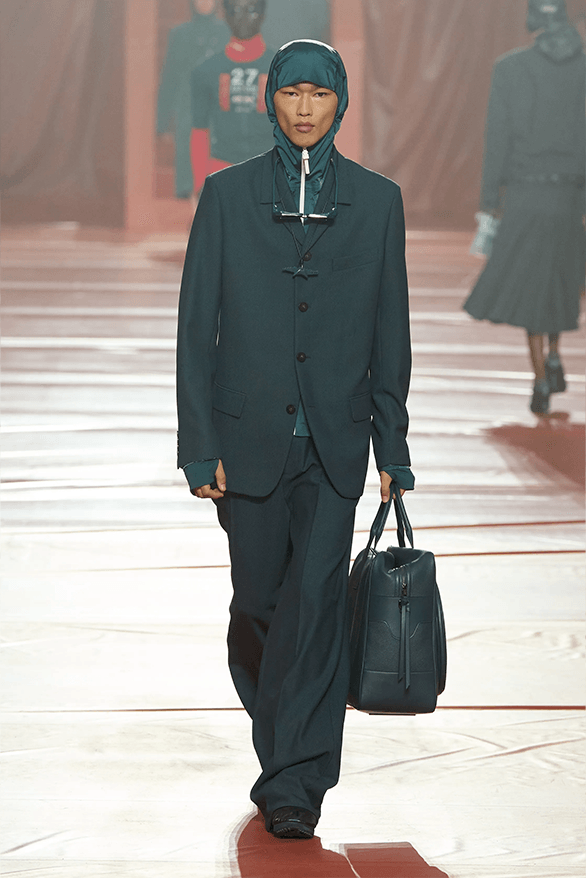
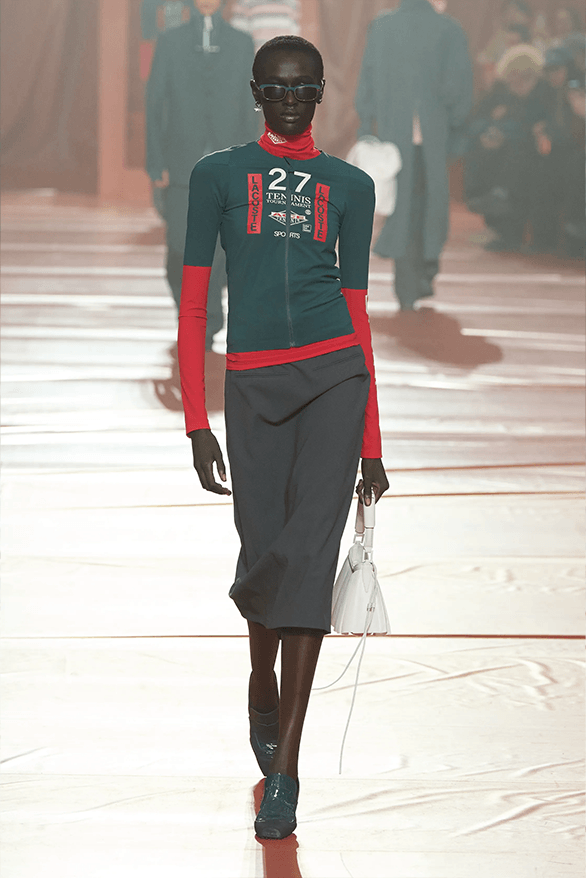
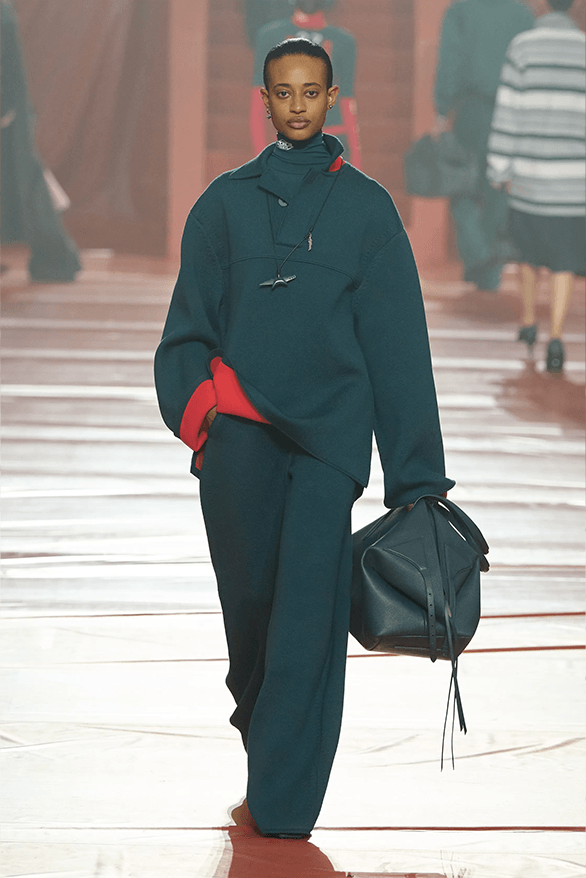
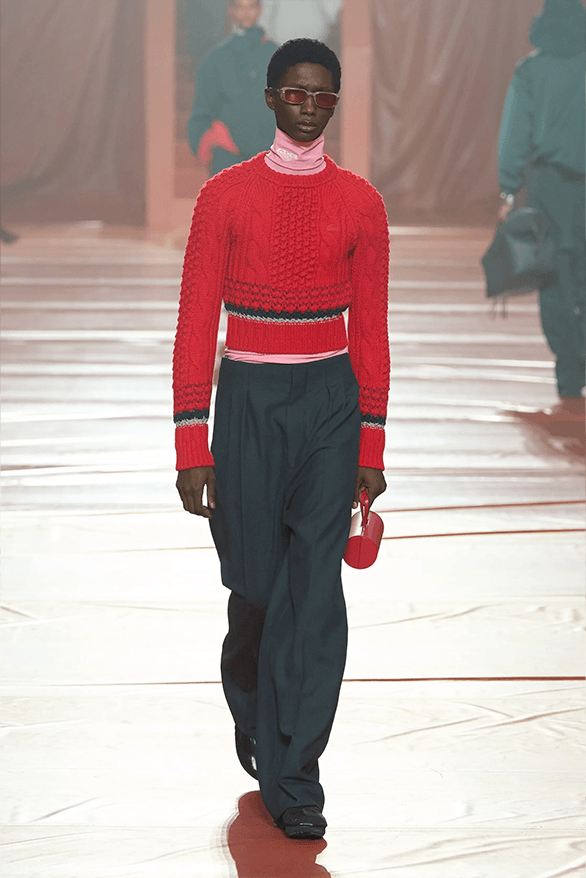
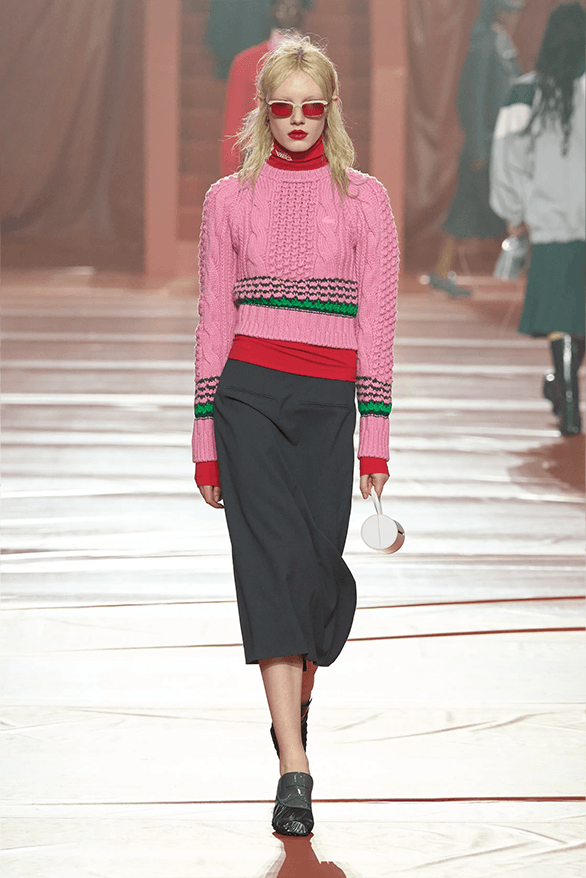
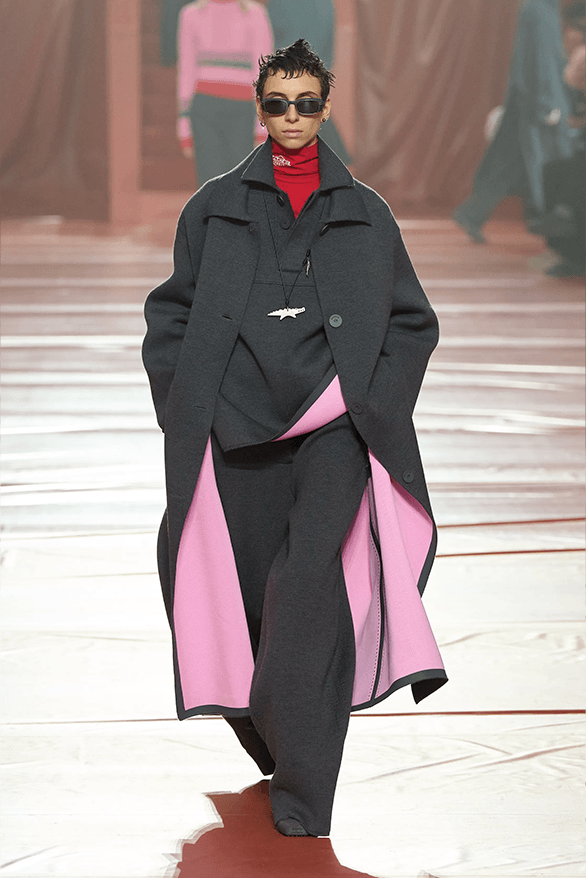
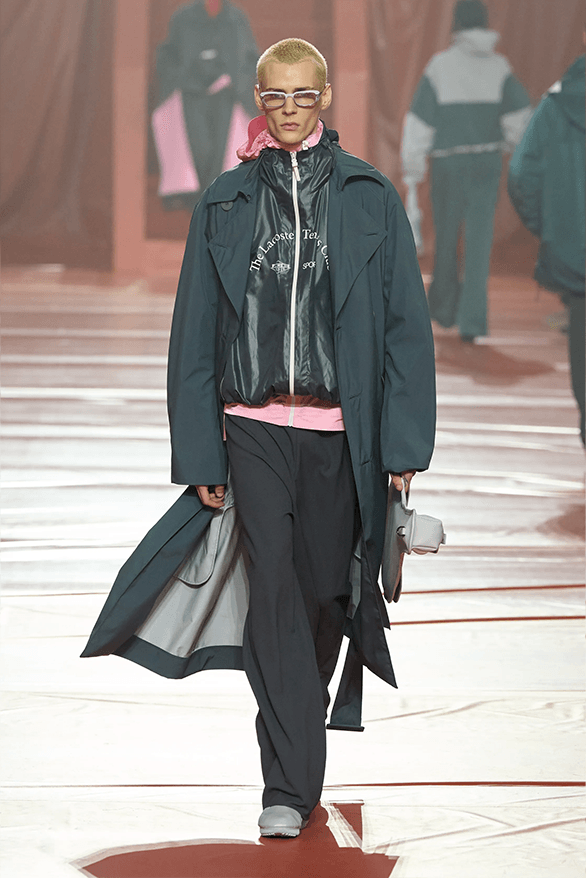
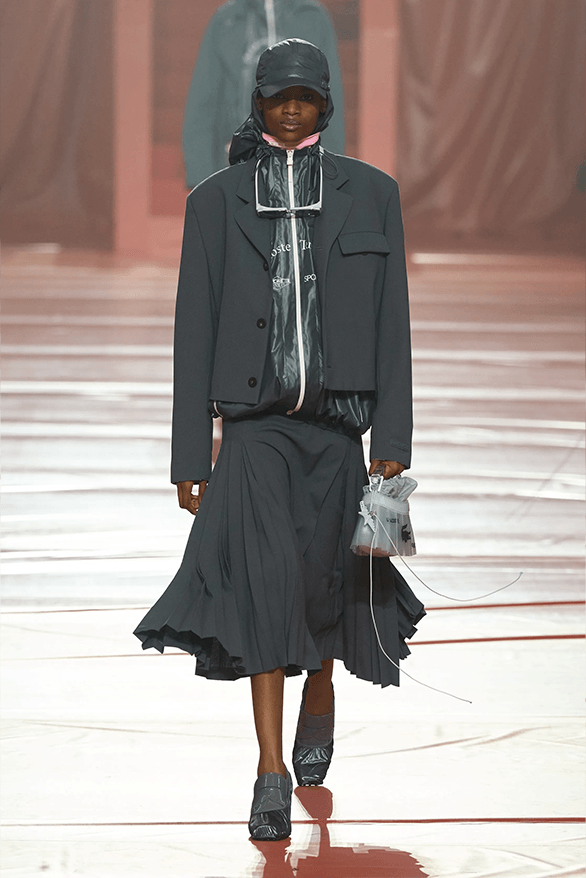
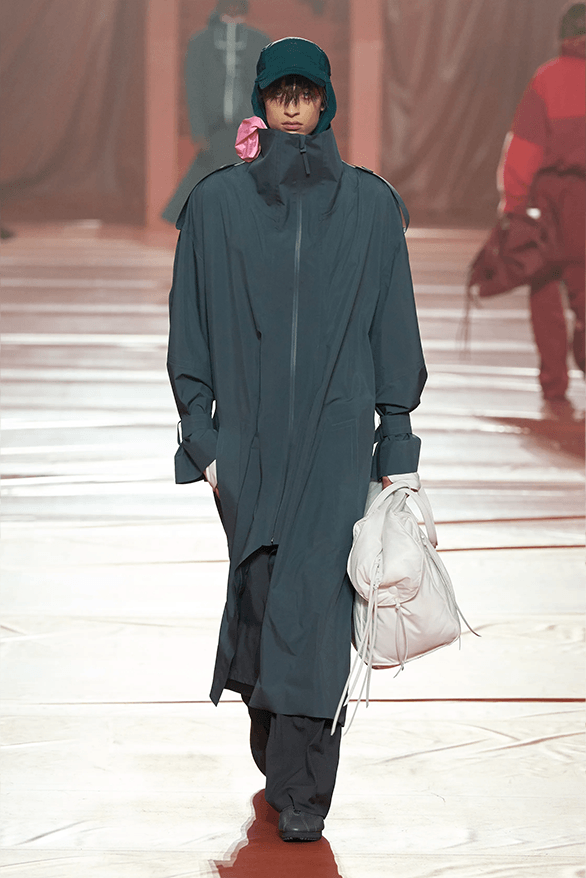
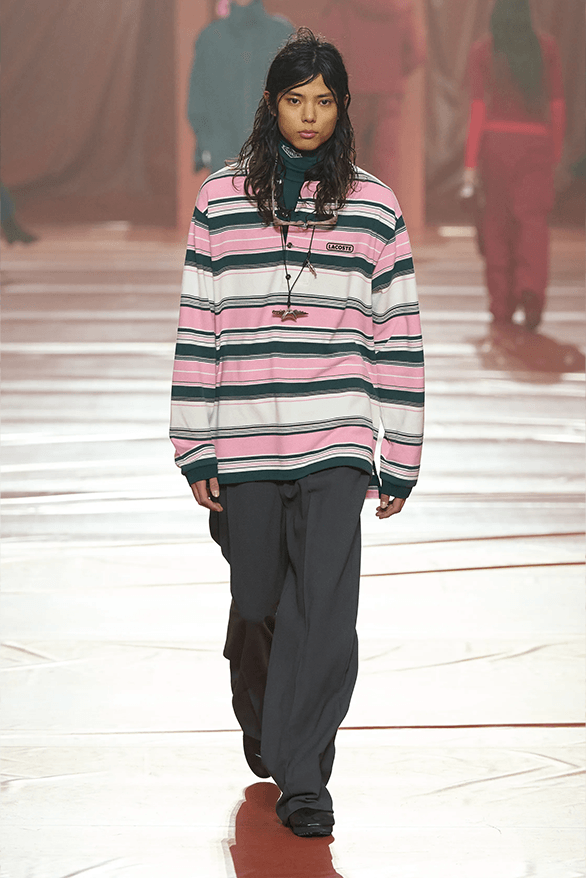
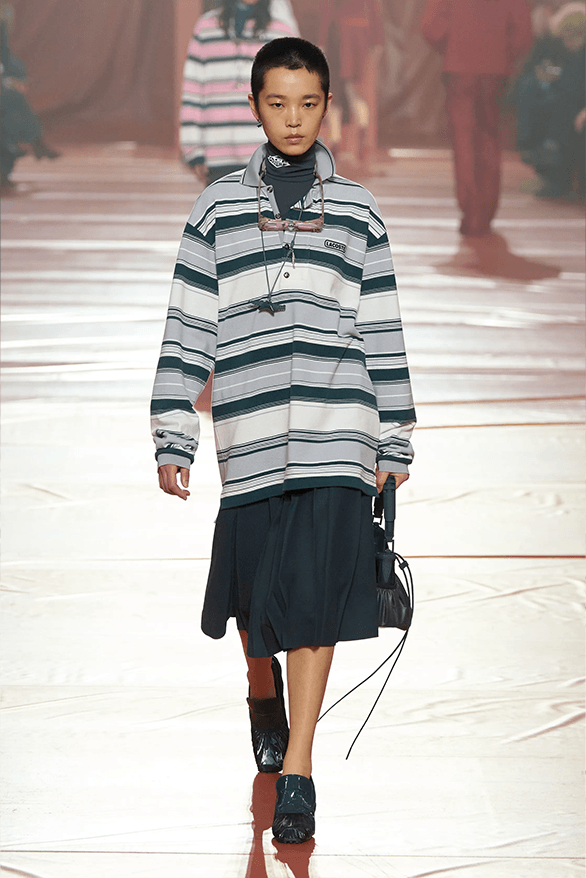
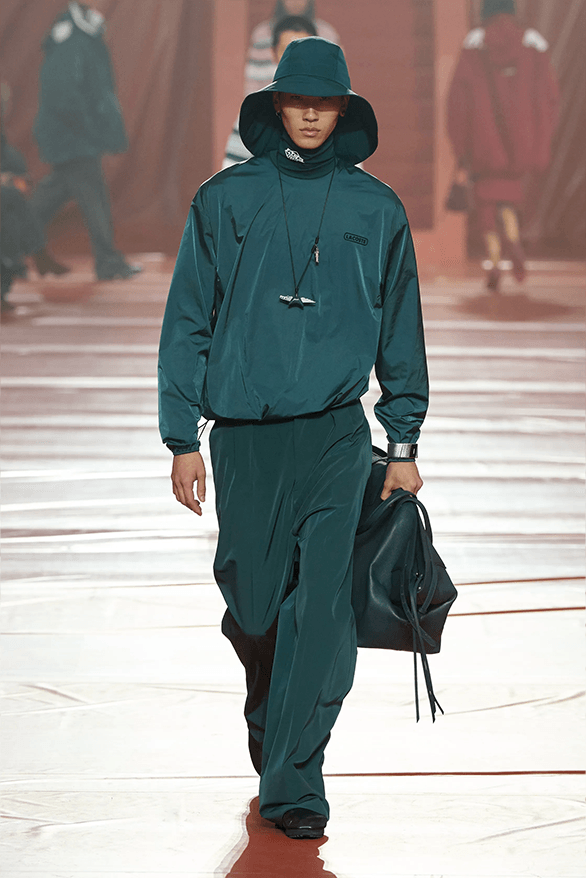
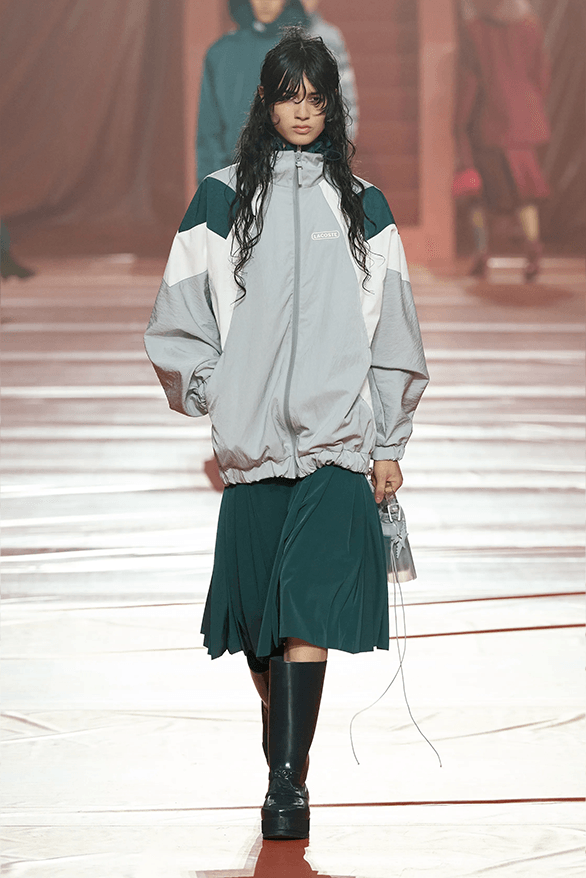
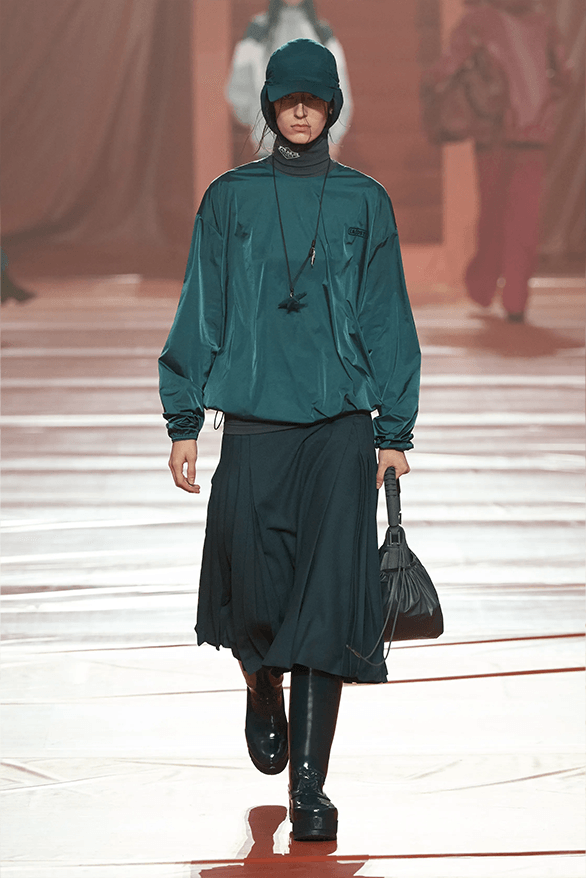
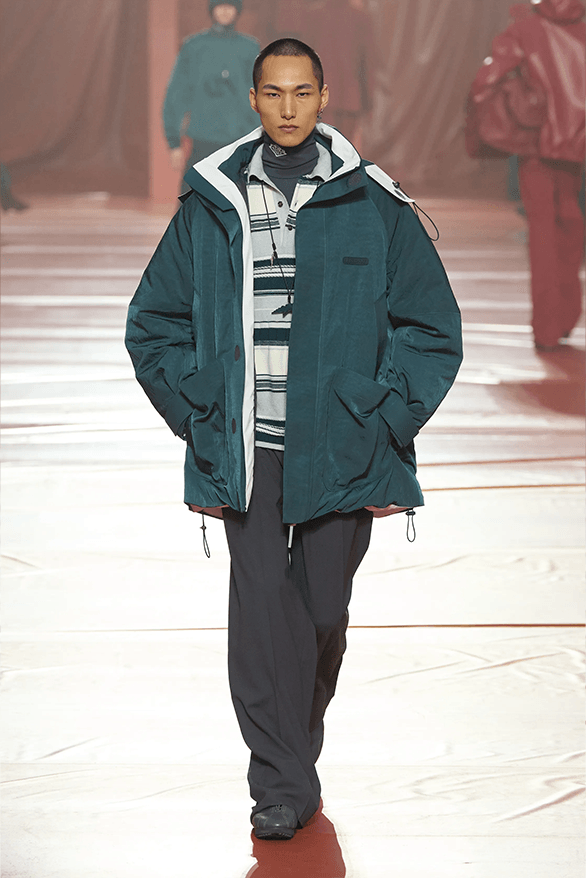
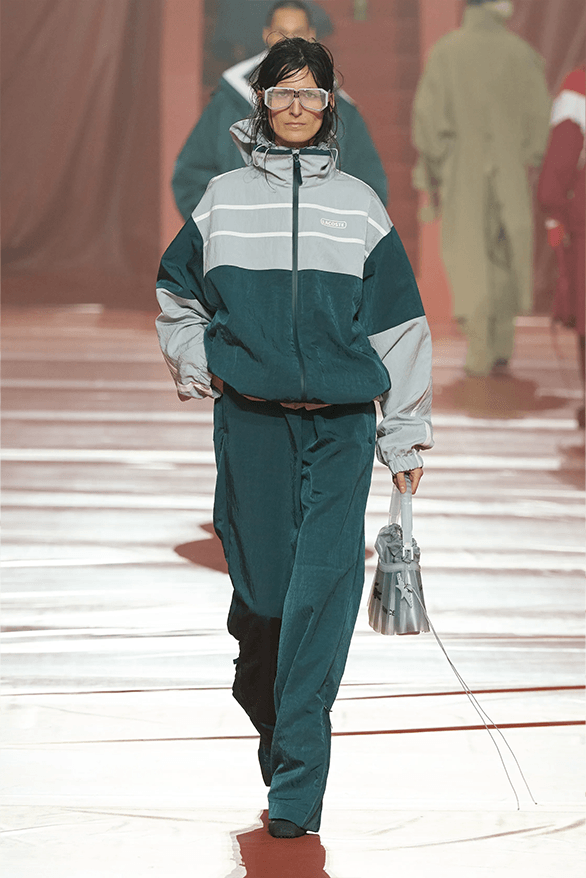
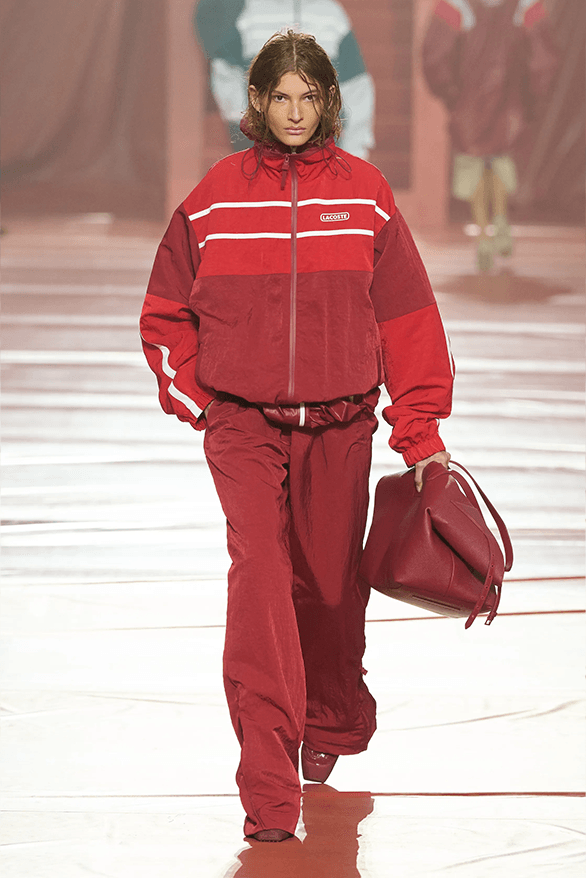
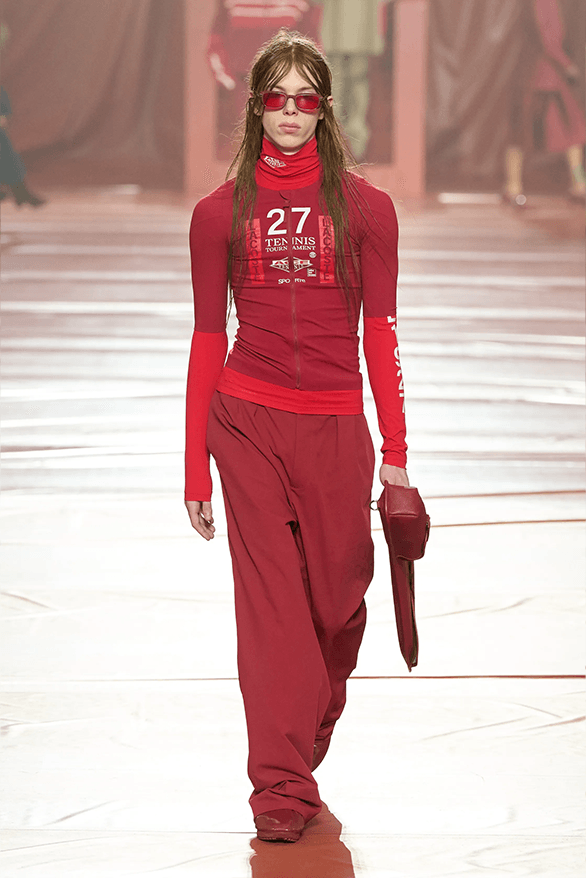
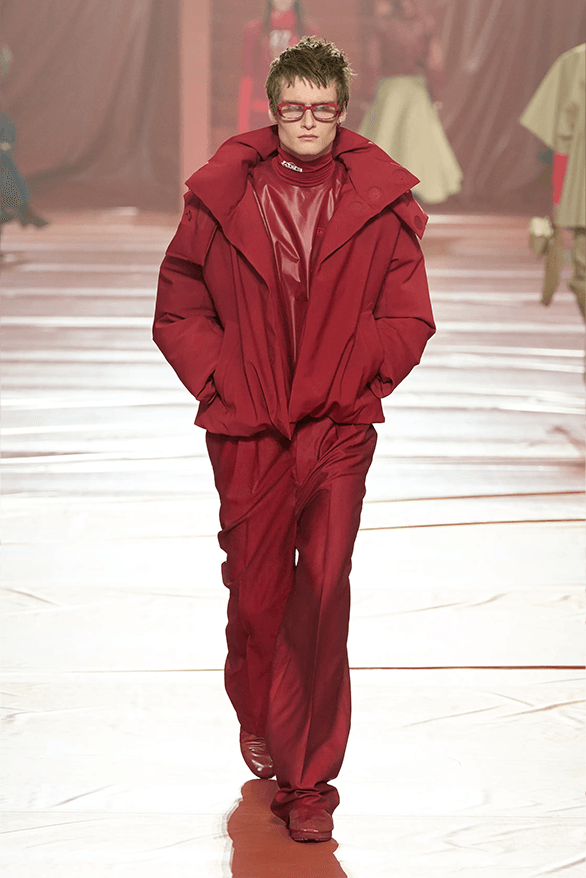
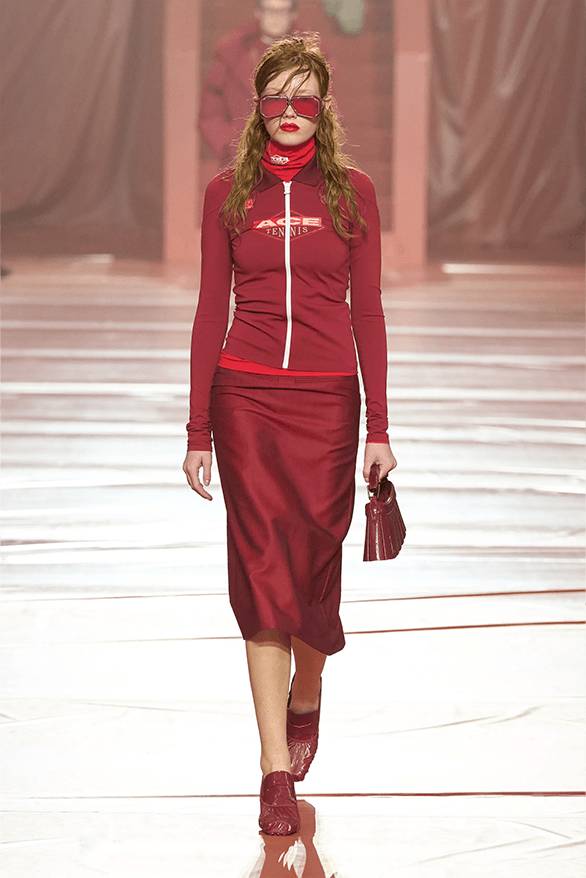
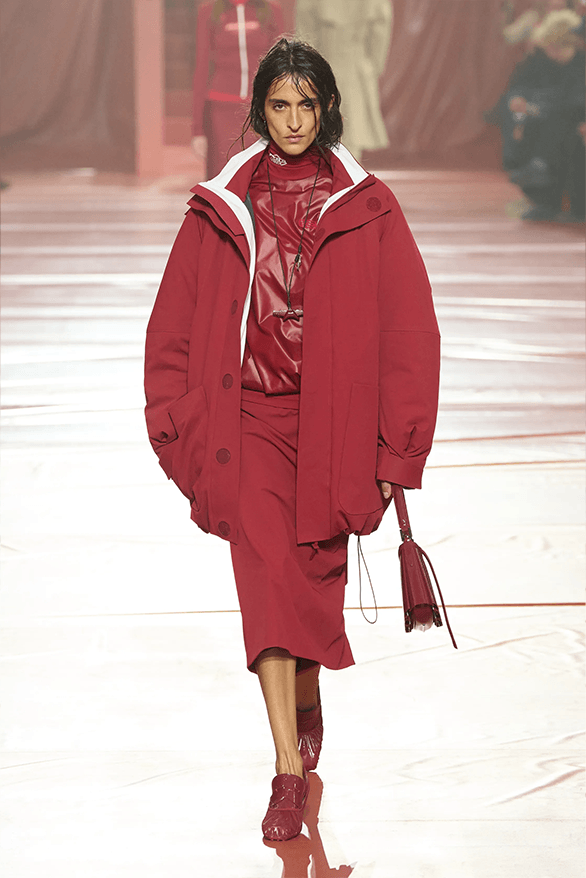
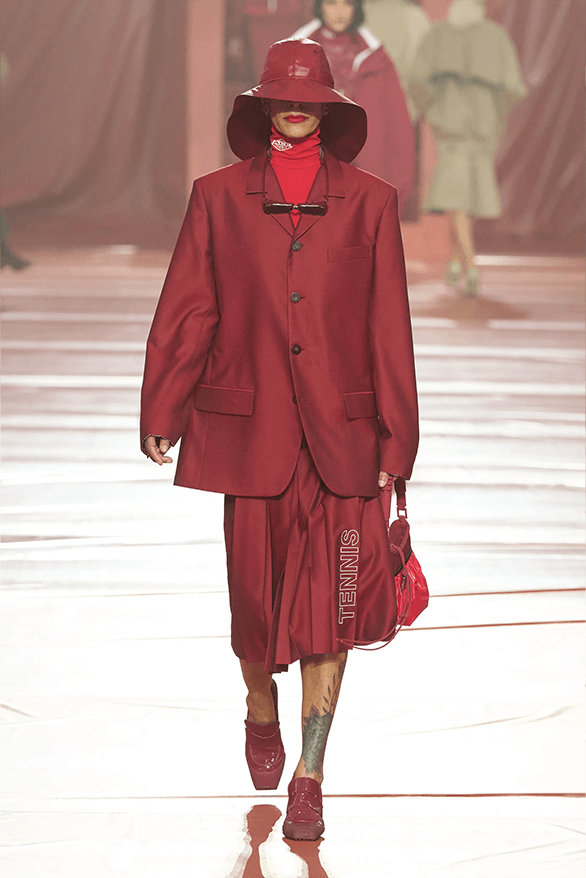
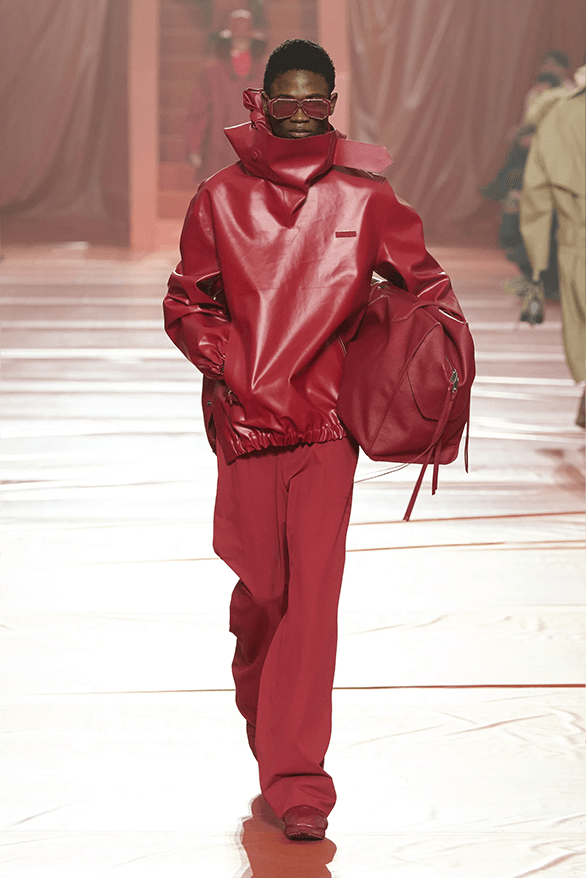
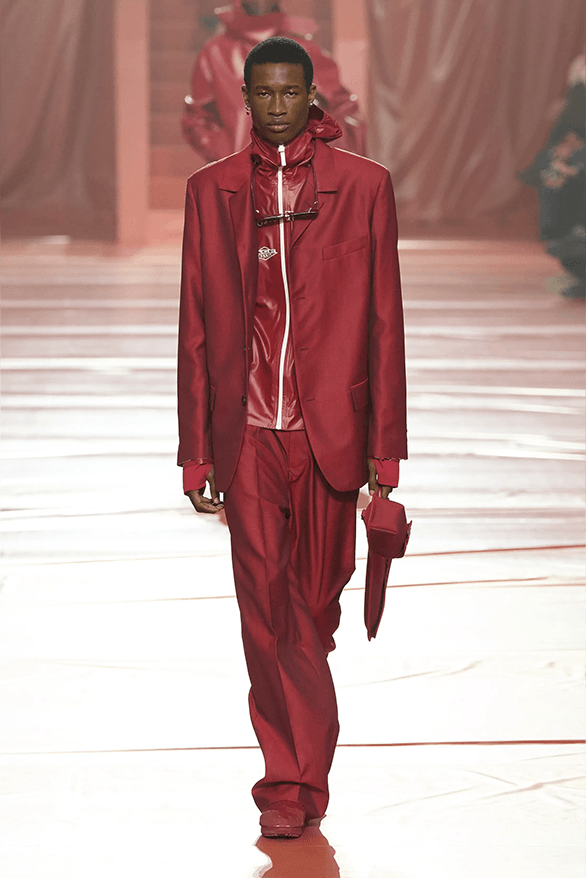
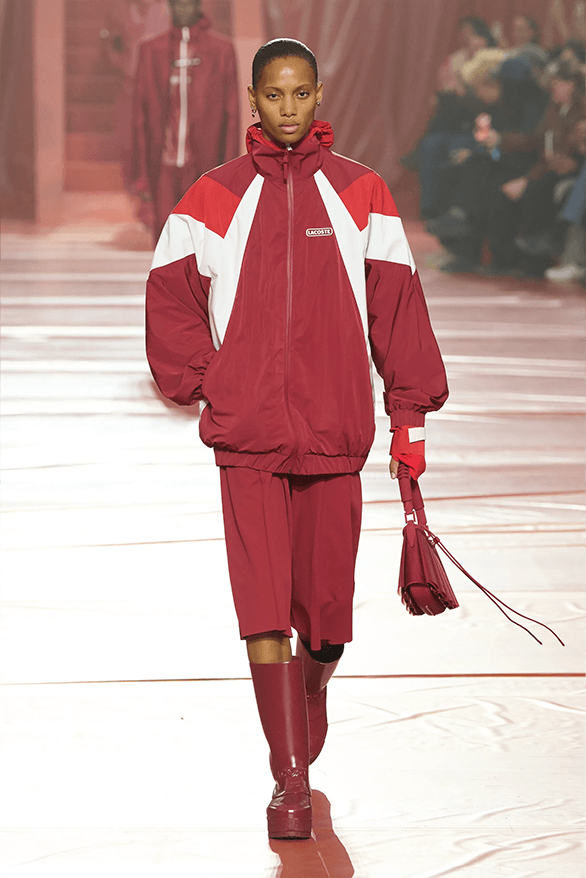
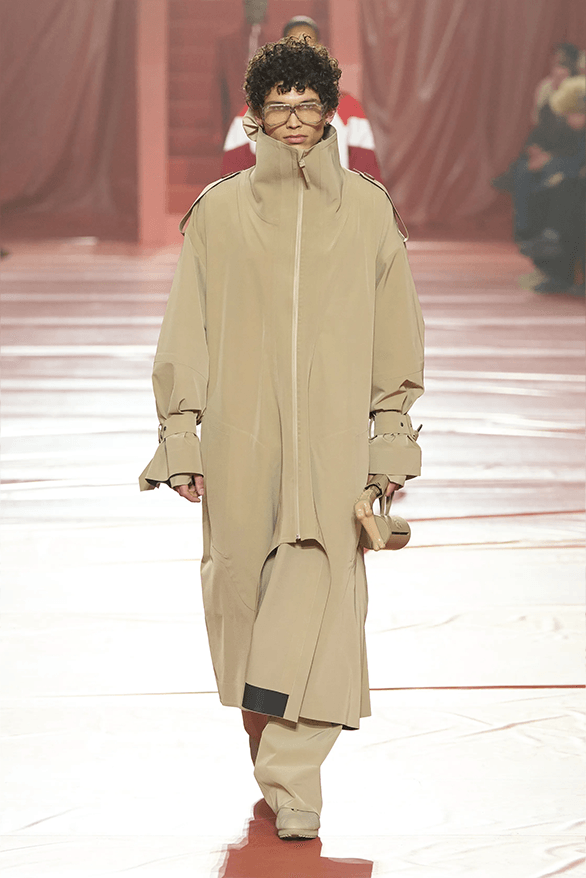
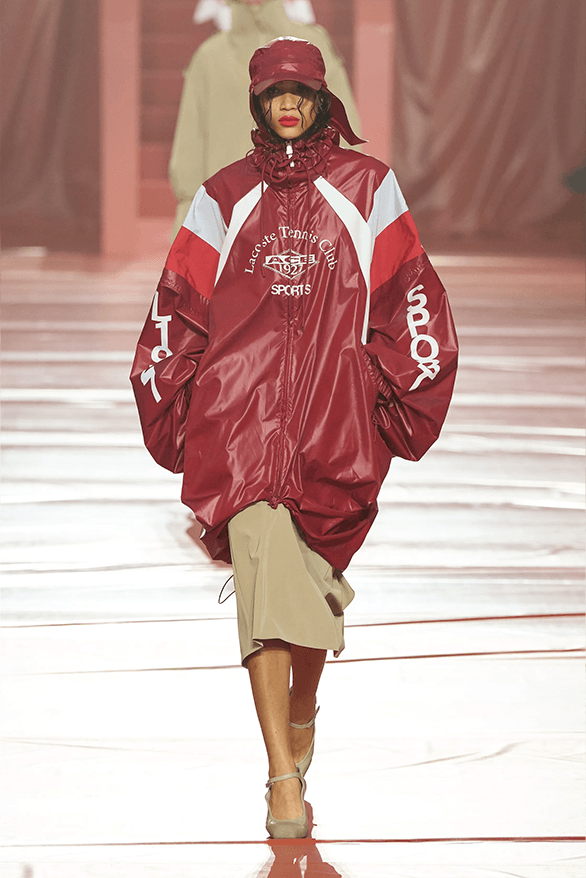
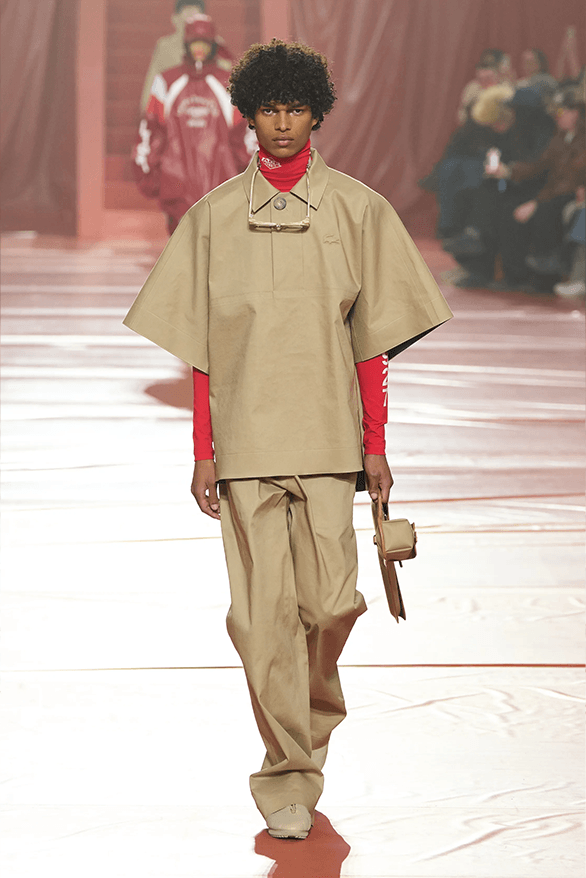
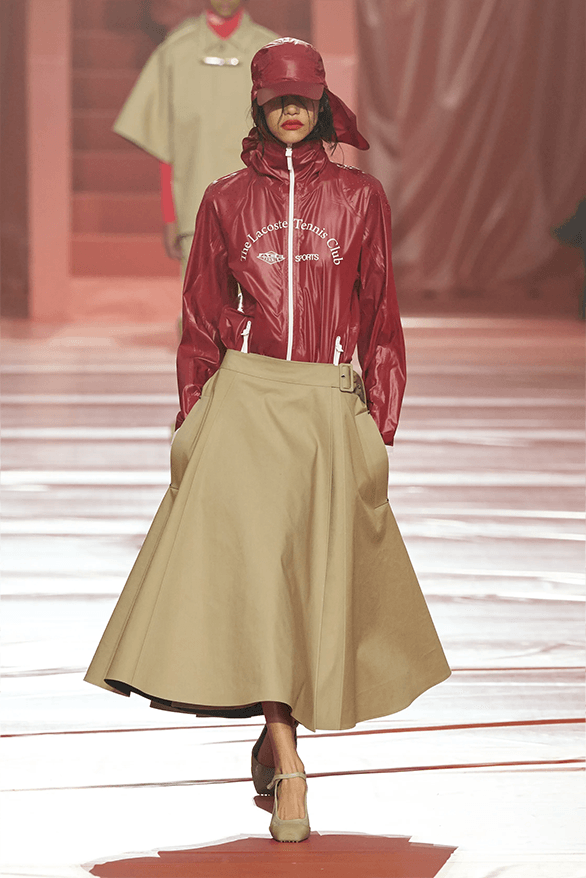
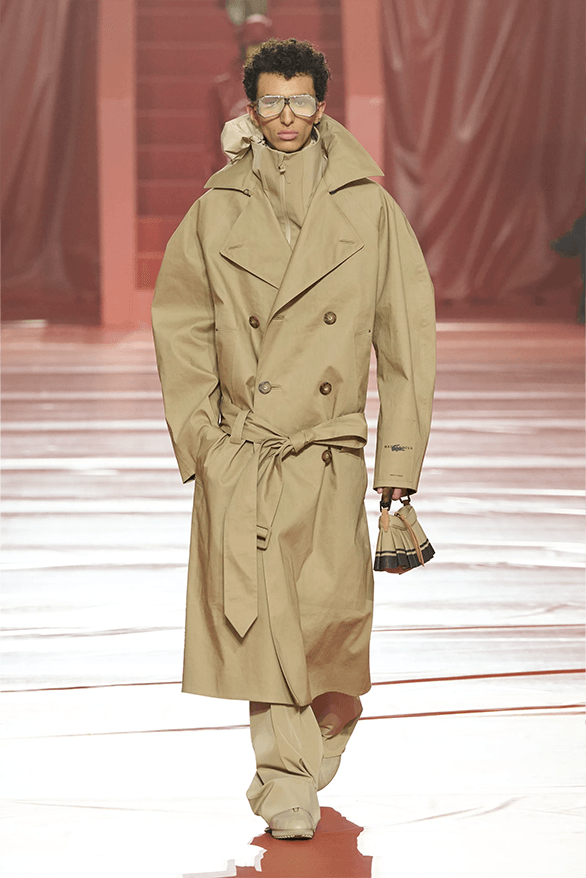
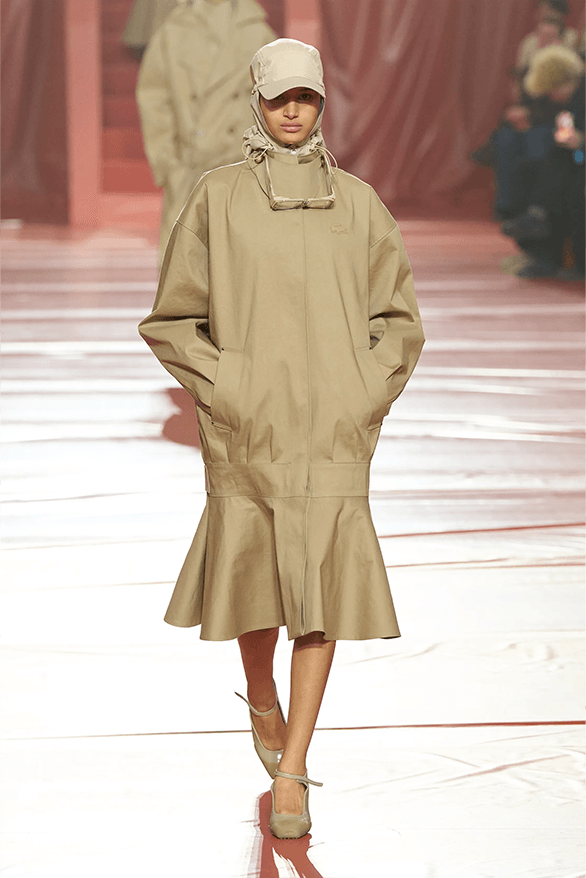
Kolotouros continues her exploration of outerwear, pushing Lacoste’s language of sport into something more architectural and tactile. Trench coats form the backbone of the collection, joined by ponchos, waterproof capes and voluminous nylon layers that shimmer as if still damp from rain. Bonded technical wool and reflective finishes sit beside plush velvet and soft tailoring, particularly in the recurring René blazer, which nods directly to the brand’s archives. The famous crocodile appears in confident new forms, embroidered or sculpted into emblematic details. A collaboration with the Scottish outerwear house Mackintosh introduces rubberised fabrics and traditional hand taped waterproof construction, producing hybrid pieces that feel both historical and futuristic: a poncho polo, rainproof tracksuits and pleated trench skirts that blur the boundary between performance gear and city dressing.
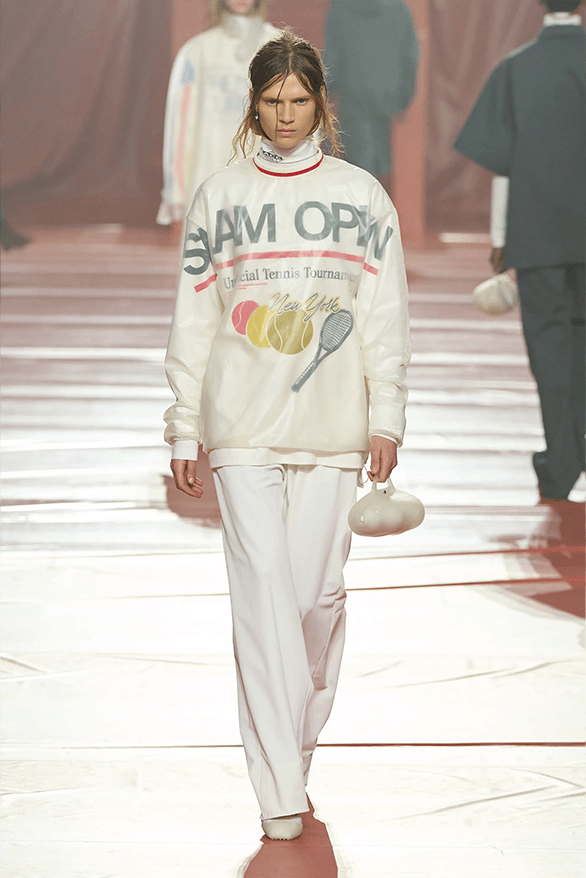
The result is what Lacoste calls tech heritage, a fusion of athletic practicality and archival romance. Accessories expand the narrative with weathered trophy pins, Grand Slam inspired T shirts and the return of the Lenglen bag in new proportions, while racquet covers and even a tennis ball clutch appear in technical Mackintosh fabrics. The palette reflects colours altered by weather: cool greys, dark metallic tones and inky heathers contrasted with agave green and the rusty red of rain soaked clay. It is a collection built around a simple idea that feels surprisingly poetic. As the story of that 1923 match suggests, sport is rarely just about the moment of victory. Sometimes the real drama lies in the waiting, when the court is quiet, the rain is falling and everyone is wondering when the game will begin again.