Jeanne Friot Spring 2027
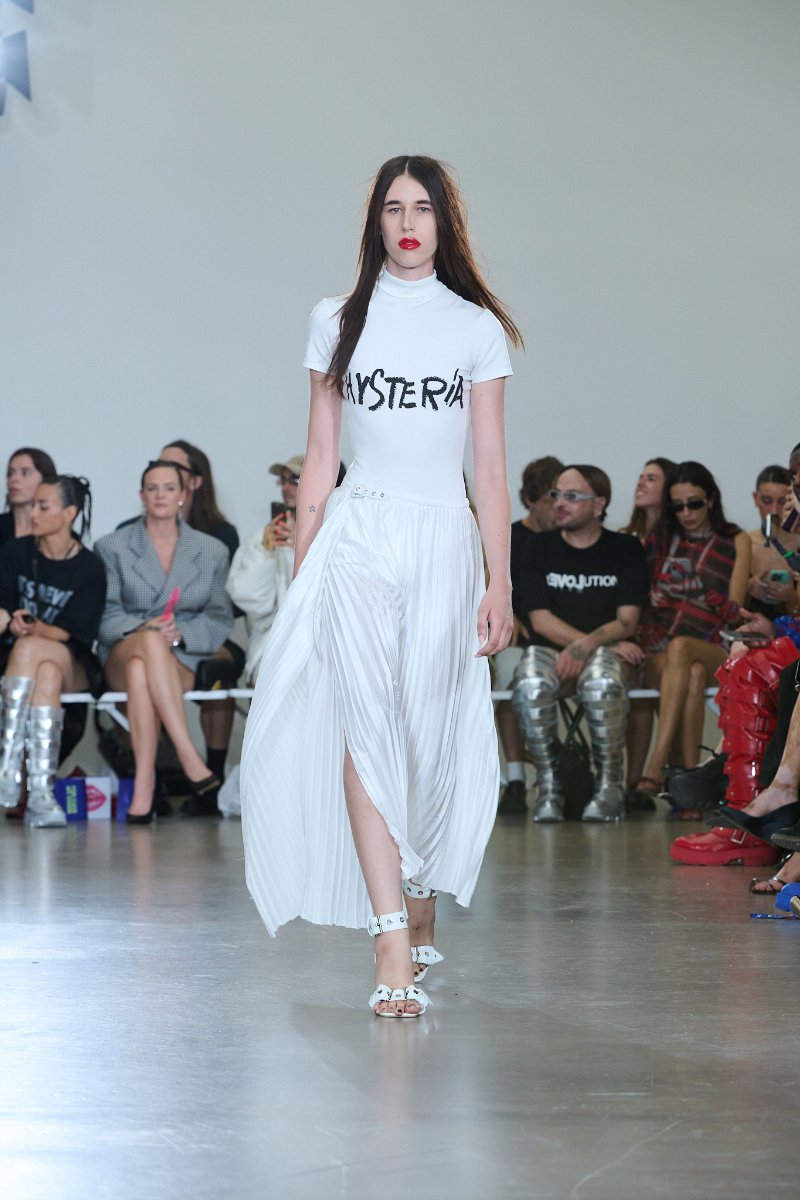
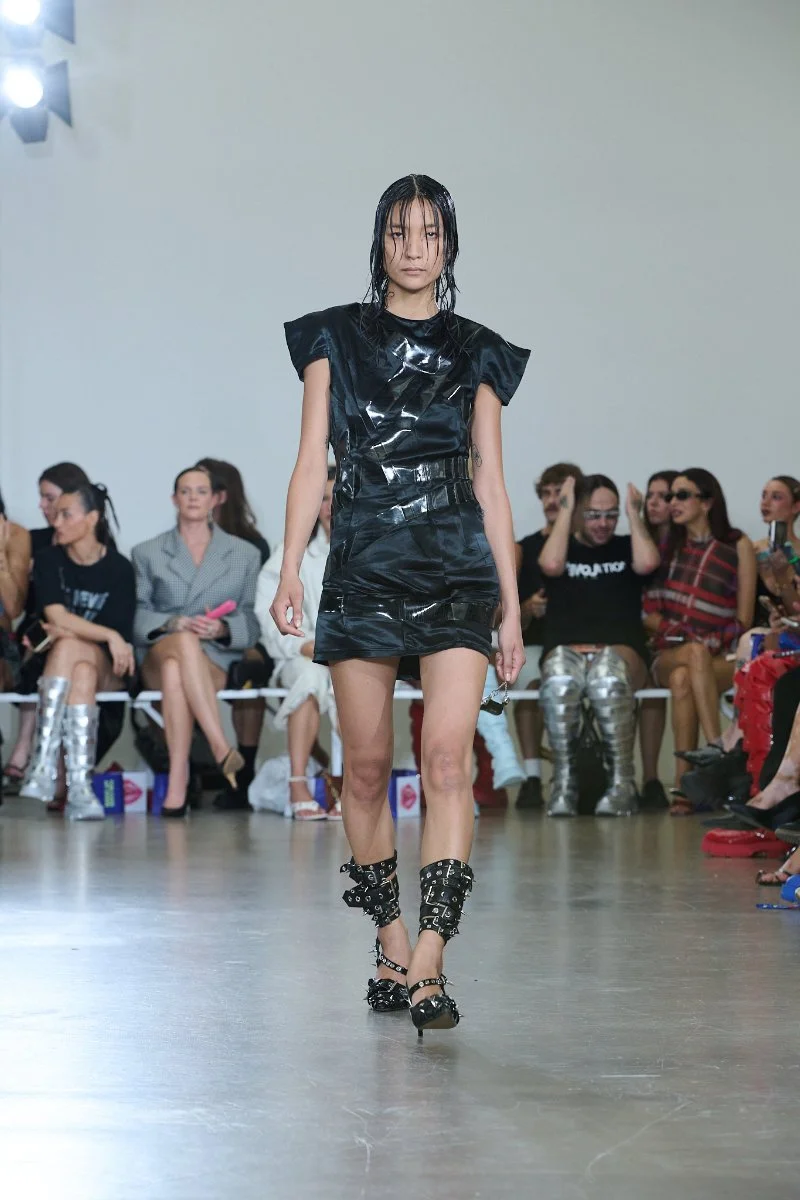
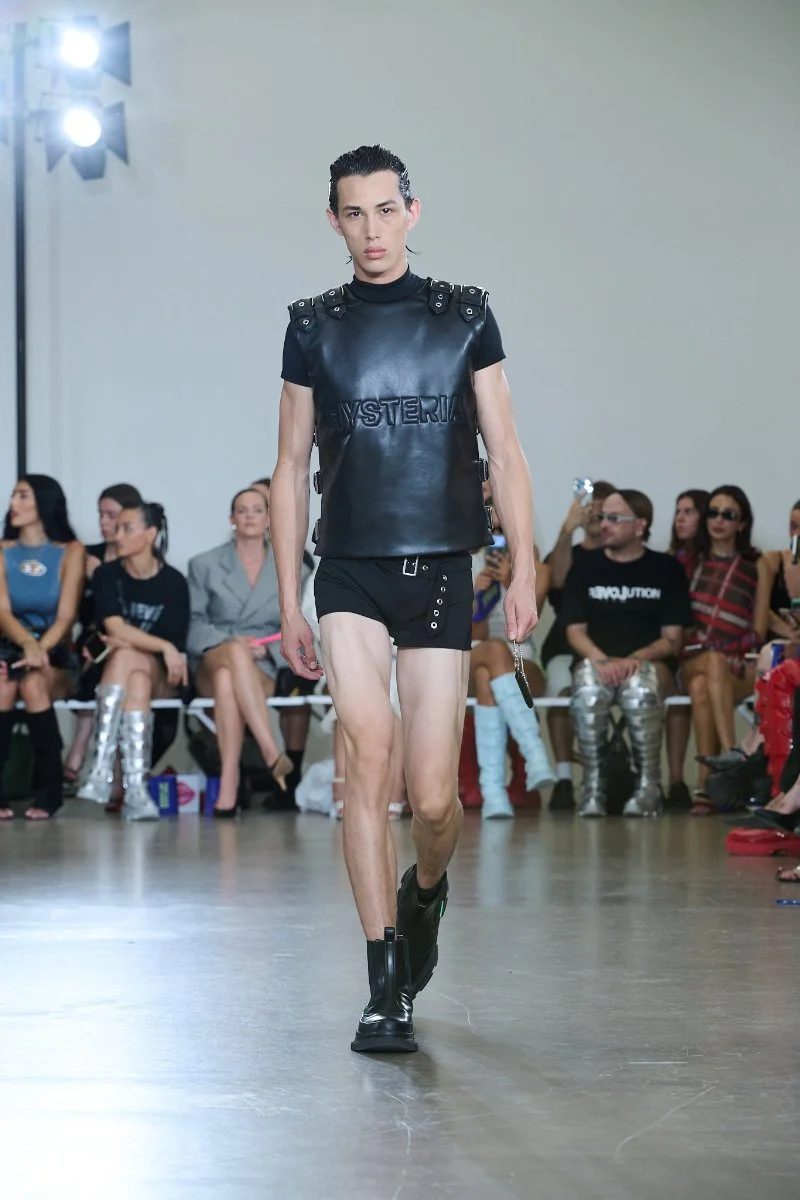
Jeanne Friot explored the notion of hysteria and how it has been used to control and disempower women through the years, turning the concept on its head and into a vision of escapism. The designer described the collection backstage as a way of looking at hysteria “in a positive way and putting it back where it belongs,” referencing Sigmund Freud, Niki de Saint Phalle and Marilyn Monroe, as well as historical visits to women’s mental hospitals for entertainment.
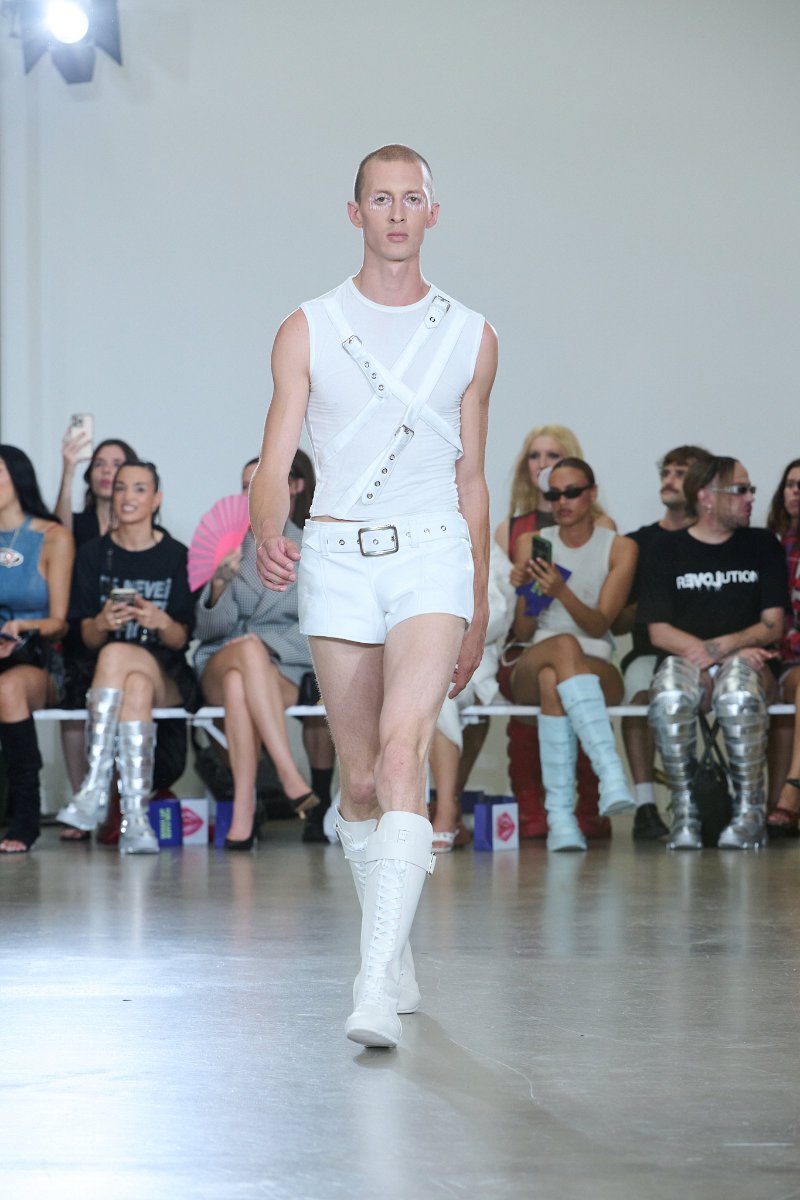
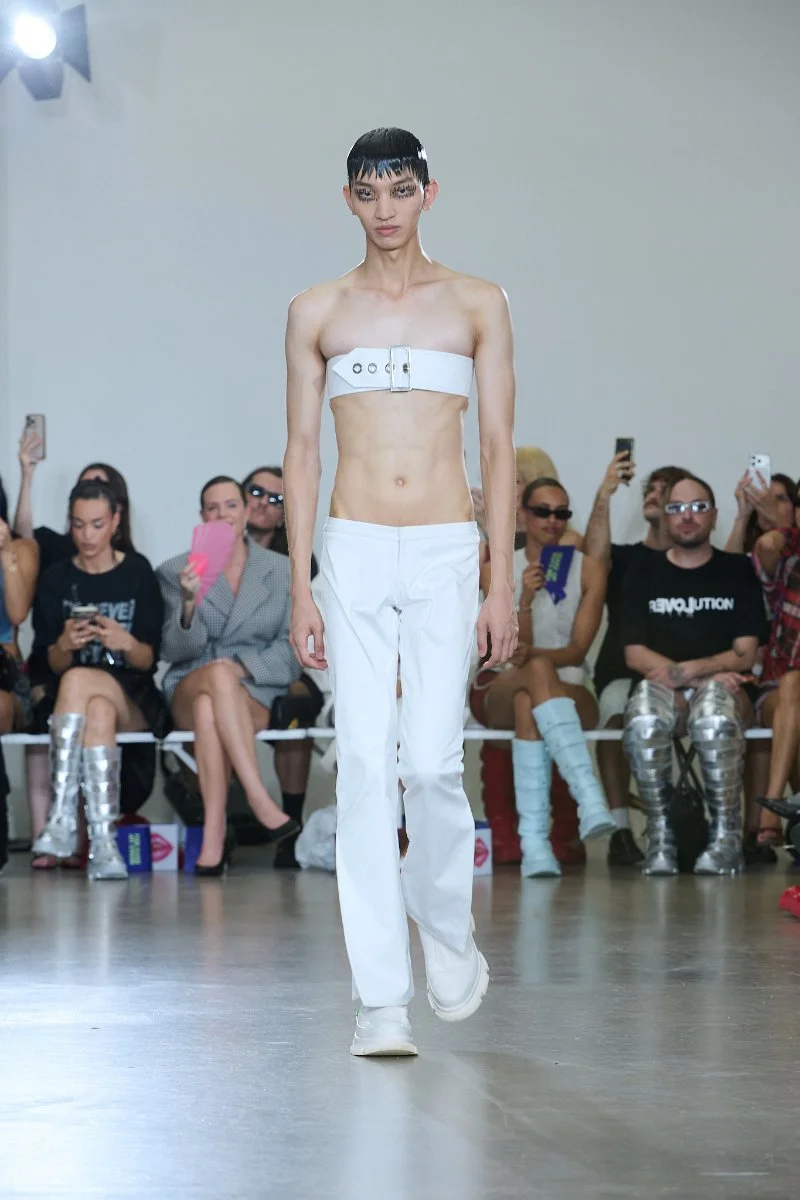
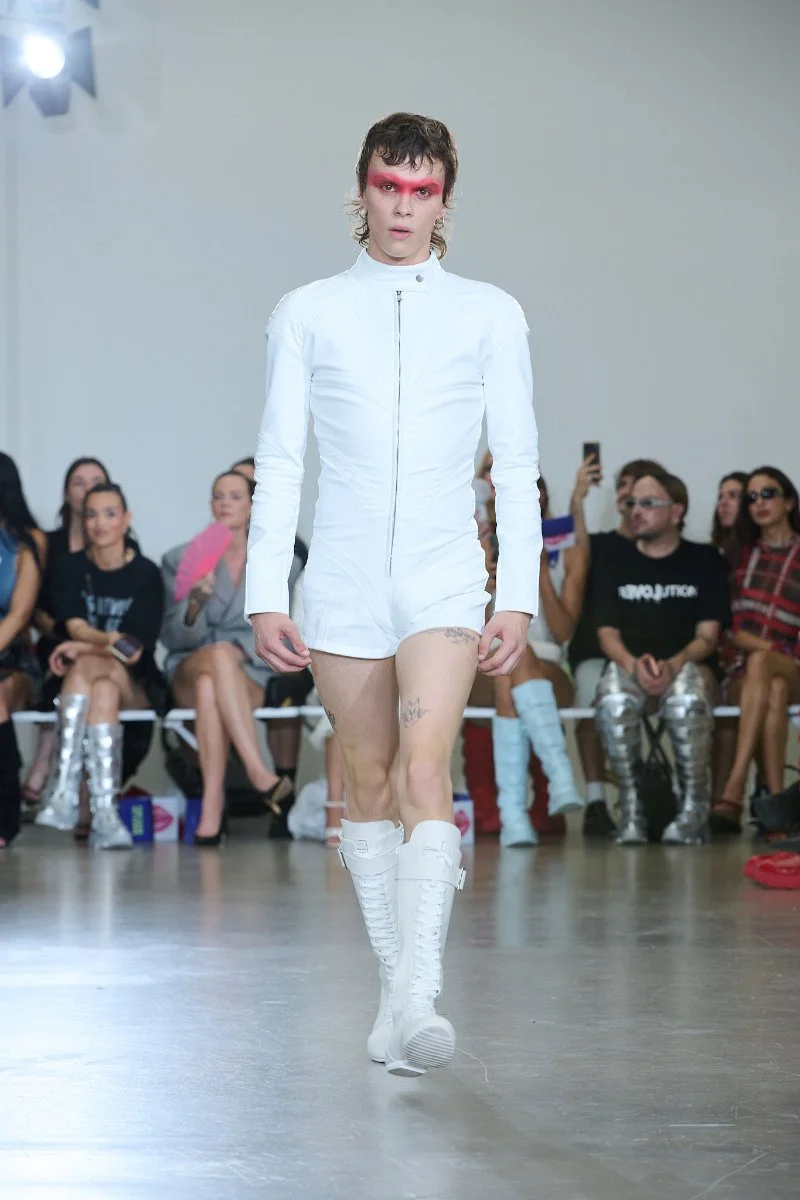
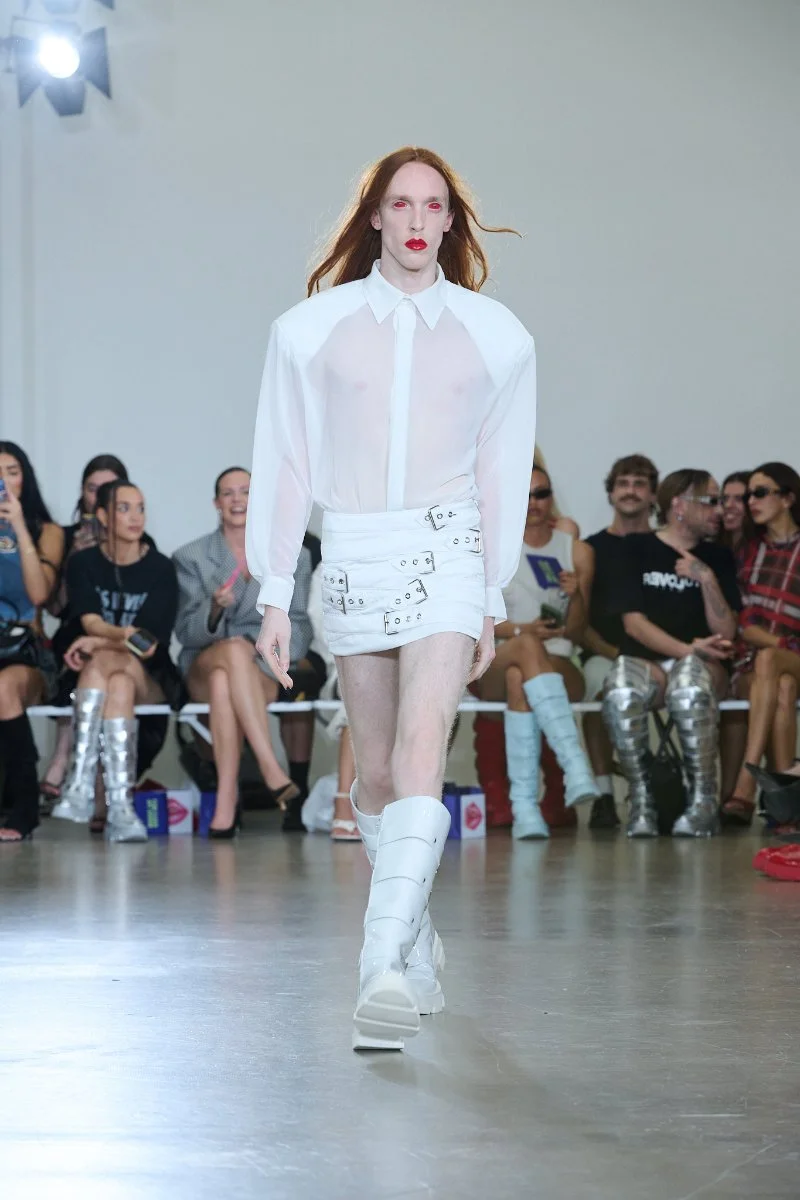
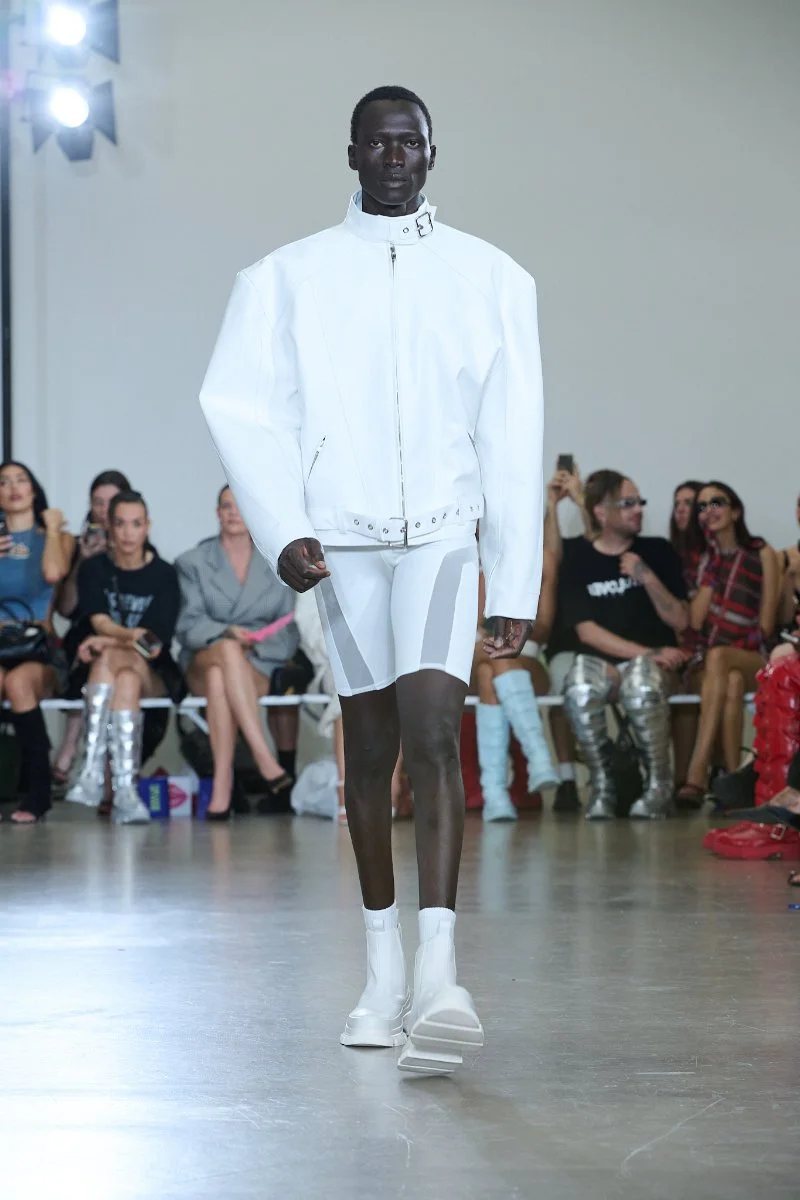
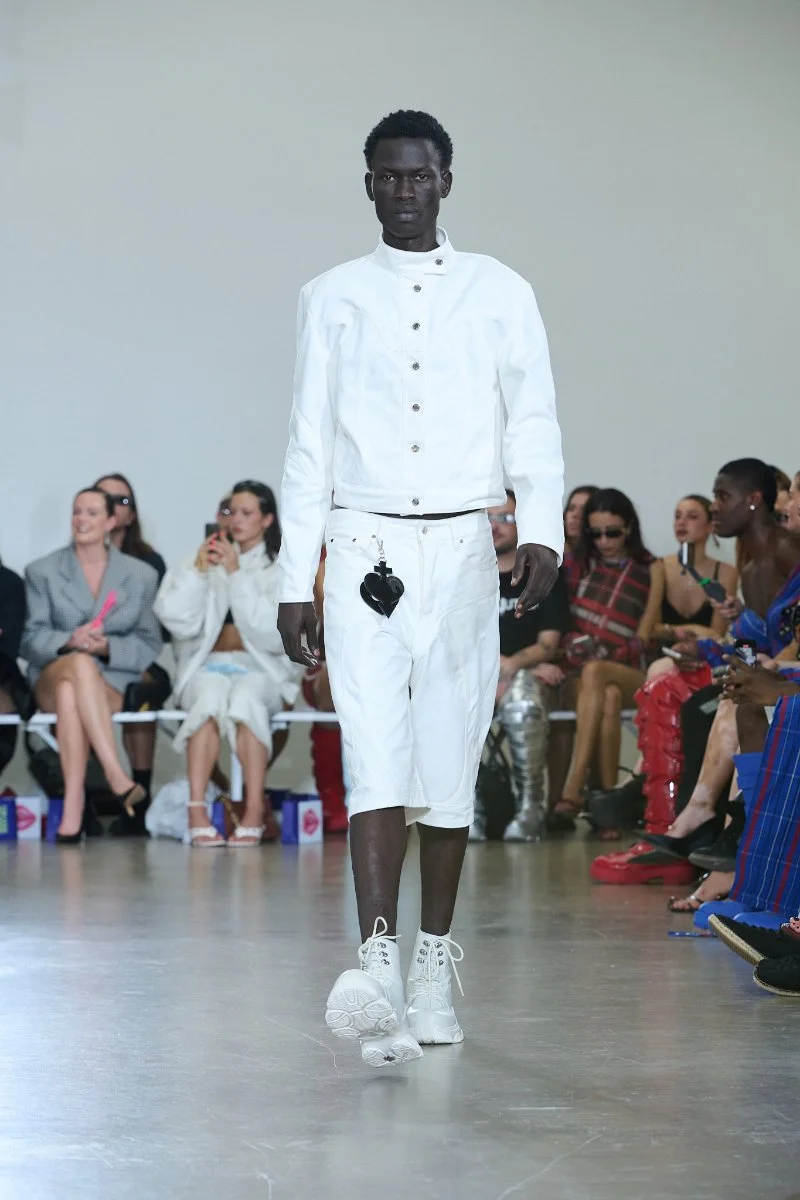
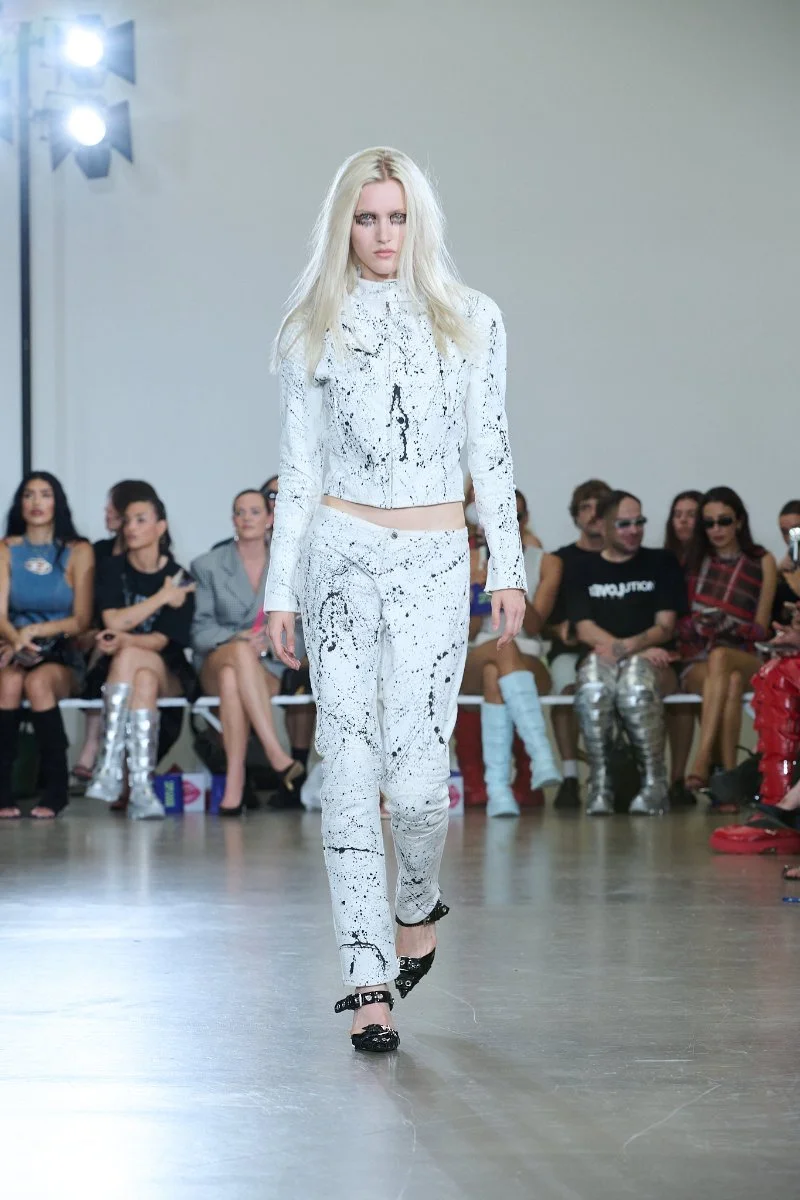
White was the dominant colour of the collection, giving weight to the theme, with Friot’s signature belting details suggesting straightjackets and restraint.
The show opened with a scream. The first look featured a model in a crinoline, with belt straps hanging loose from the bodice and tears at the hem, running through the venue.
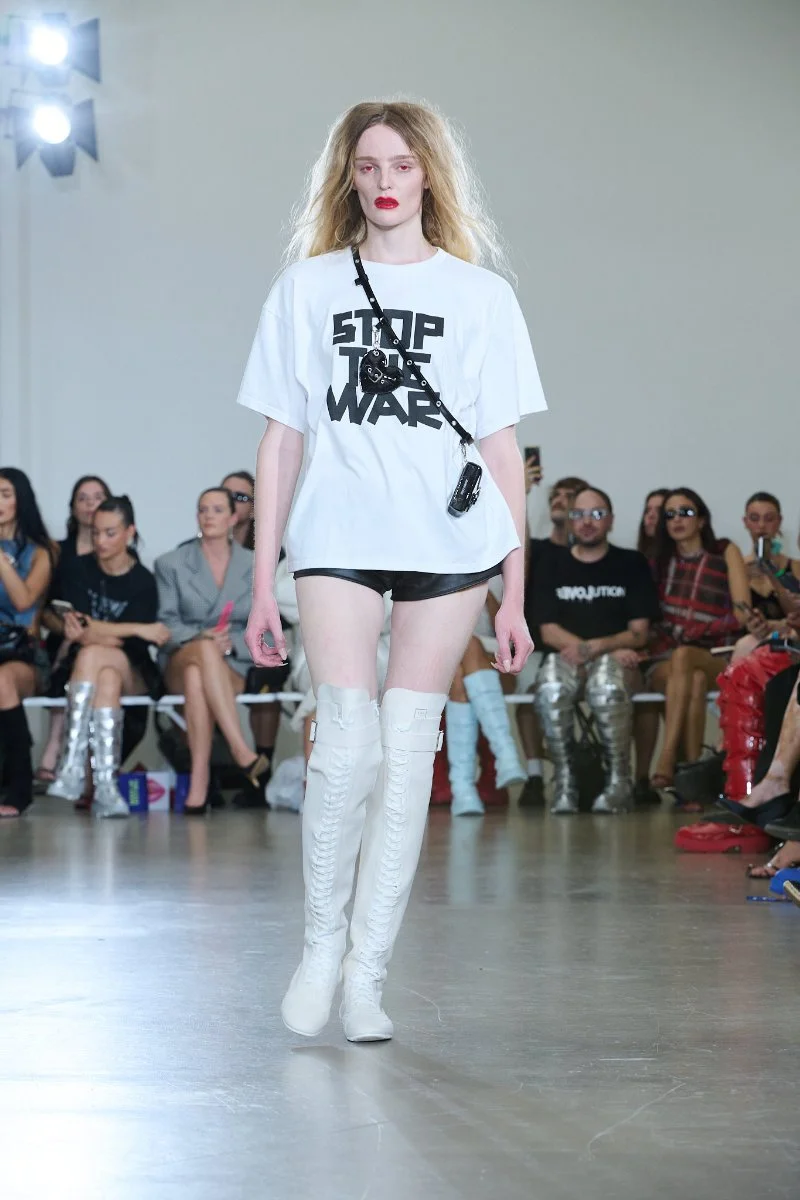
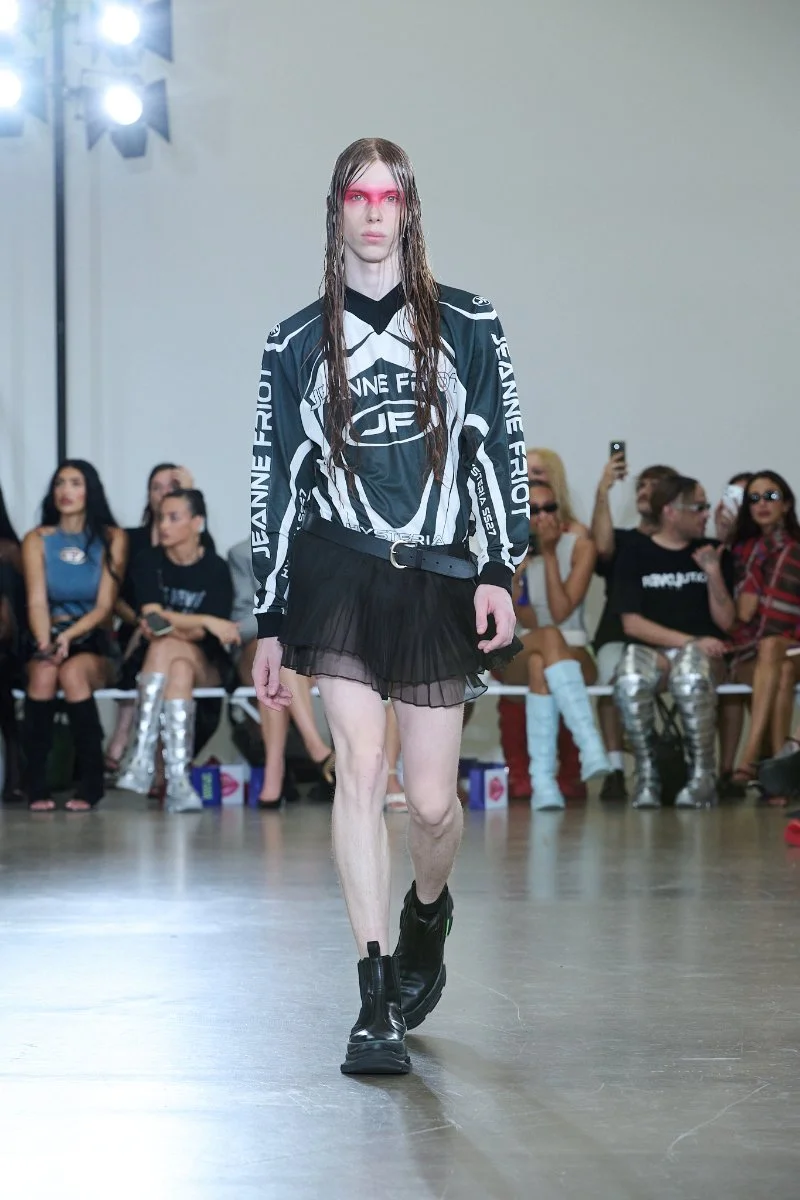
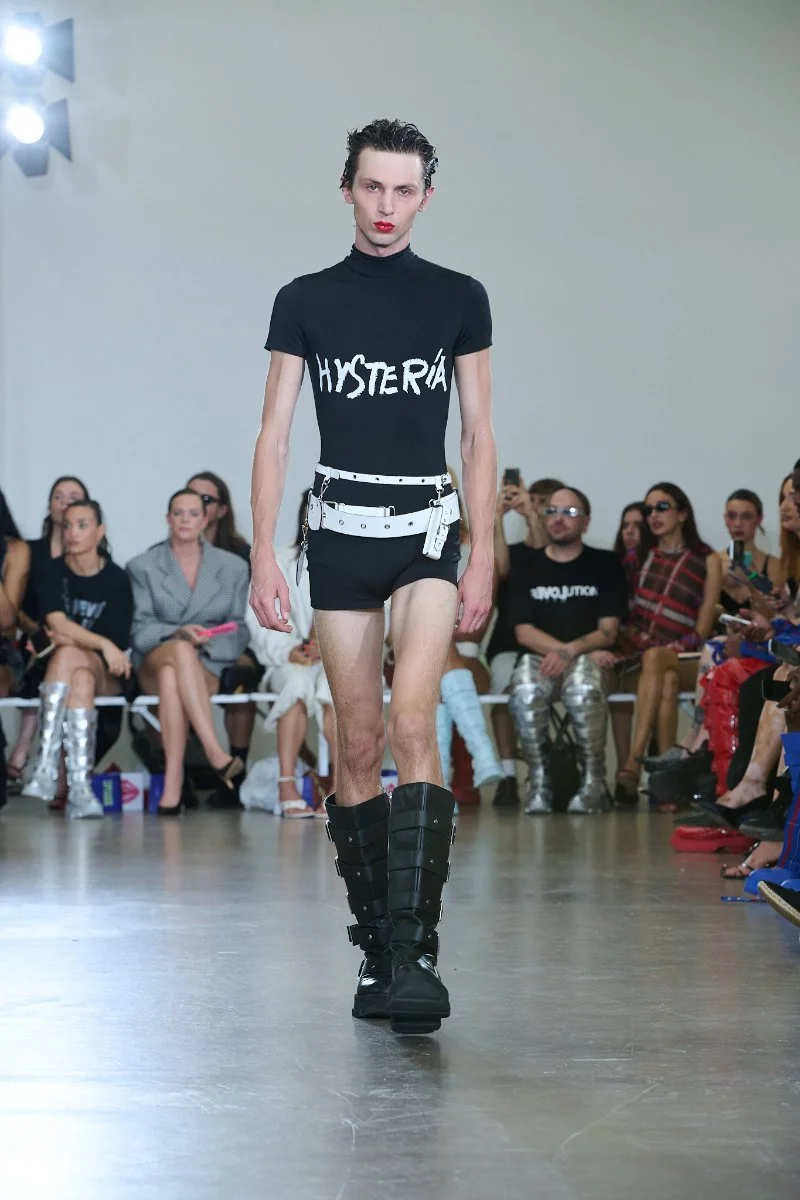
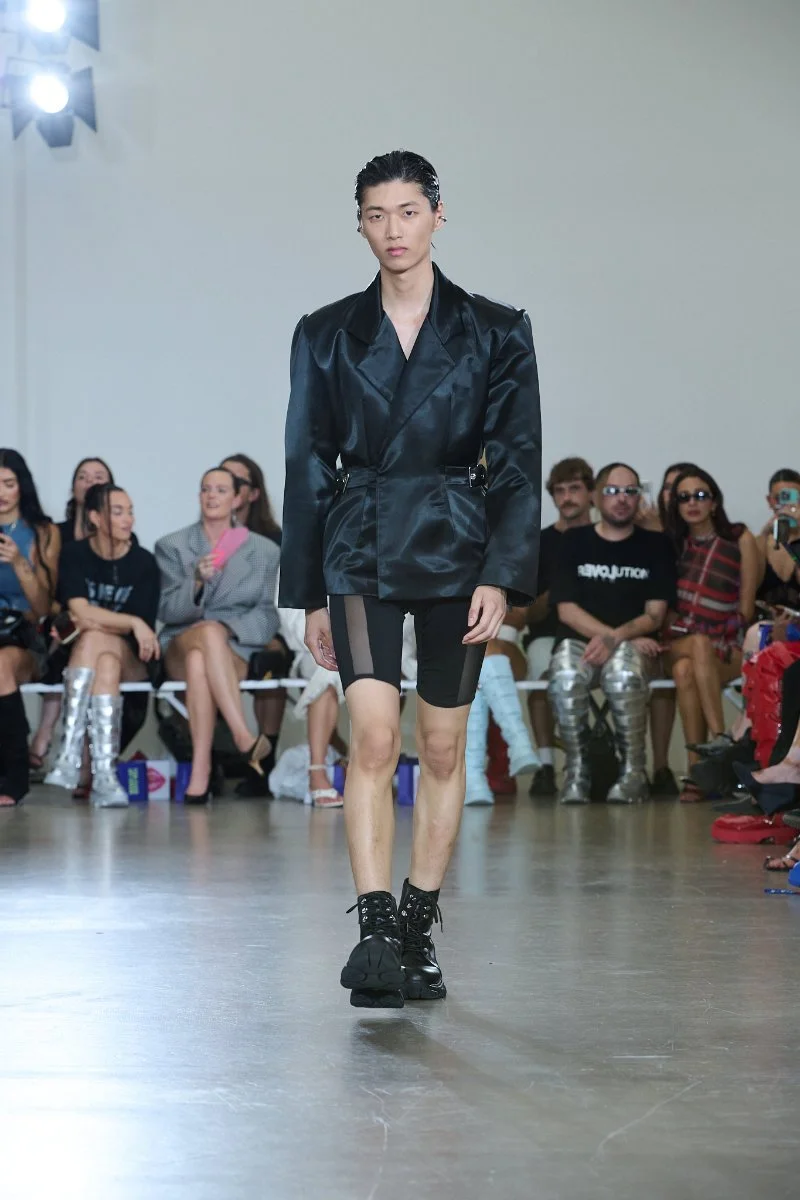
The collection then moved through monochrome looks ranging from slinky to sporty. Silhouettes included a pleated organza shift in the style of Madame Grès with horizontal cinching, a Lycra bodysuit paired with heeled buckled sandals rising to the thigh, and breezy shirting worn with cycling shorts. Boxy outerwear was styled with cropped kilts and hoodies, while shorts and slogan T-shirts were shown alongside sheer mesh dresses in black-and-white check. Some dresses appeared wrapped in plastic tape, referencing the strapping details.
For the final looks, Friot collaborated with latex artist Matisse Di Maggio, known for work with Rick Owens. The result included a top and a sharply structured minidress covered in hundreds of feathers dipped in latex, giving the impression of a bird with tarred wings.
The collection’s central idea was escape. Models broke out of the asylum in clothes designed for flight and fighting. The progression of colour moved from clinical white to spotted looks, then to deep black. White referenced walls and smocks, and throughout the making of the collection, Friot noted themes of compulsion, paranoia and repetition. The silhouettes held tension between restraint and escape, with belts—one of the house signatures—returning as both constraint and armour.