Gucci Cruise 2025 - London, Tate Modern
Sabato De Sarno takes us home for the Gucci Cruise 2025, presenting his London-inspired collection at one of the most famous art galleries - Tate Modern. Ever since Sabato was appointed the new creative director of the brand, he was tasked with the difficult mission of toning down the brand, while trying to make it more desirable and appealing to stealth wealth. With the earning releases for Gucci this Spring being another 18% lower than the previous quarter, it is making us question whether his take on the iconic brand is what was really needed.
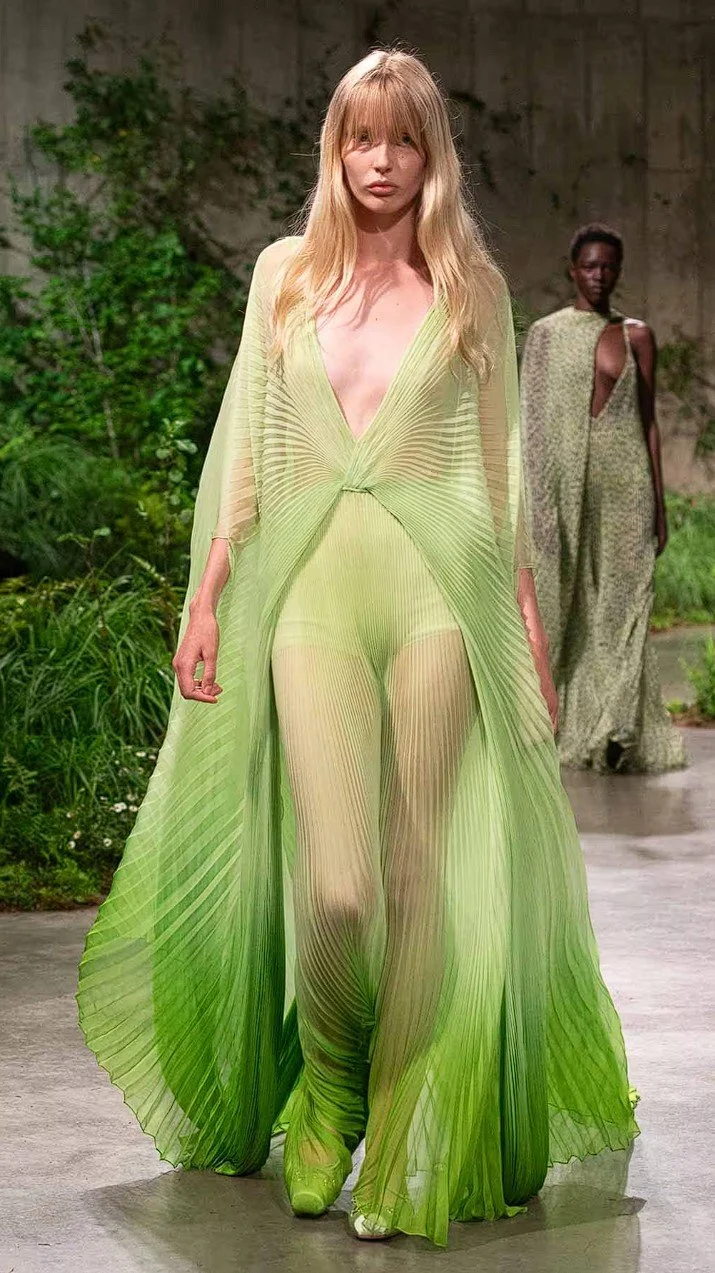
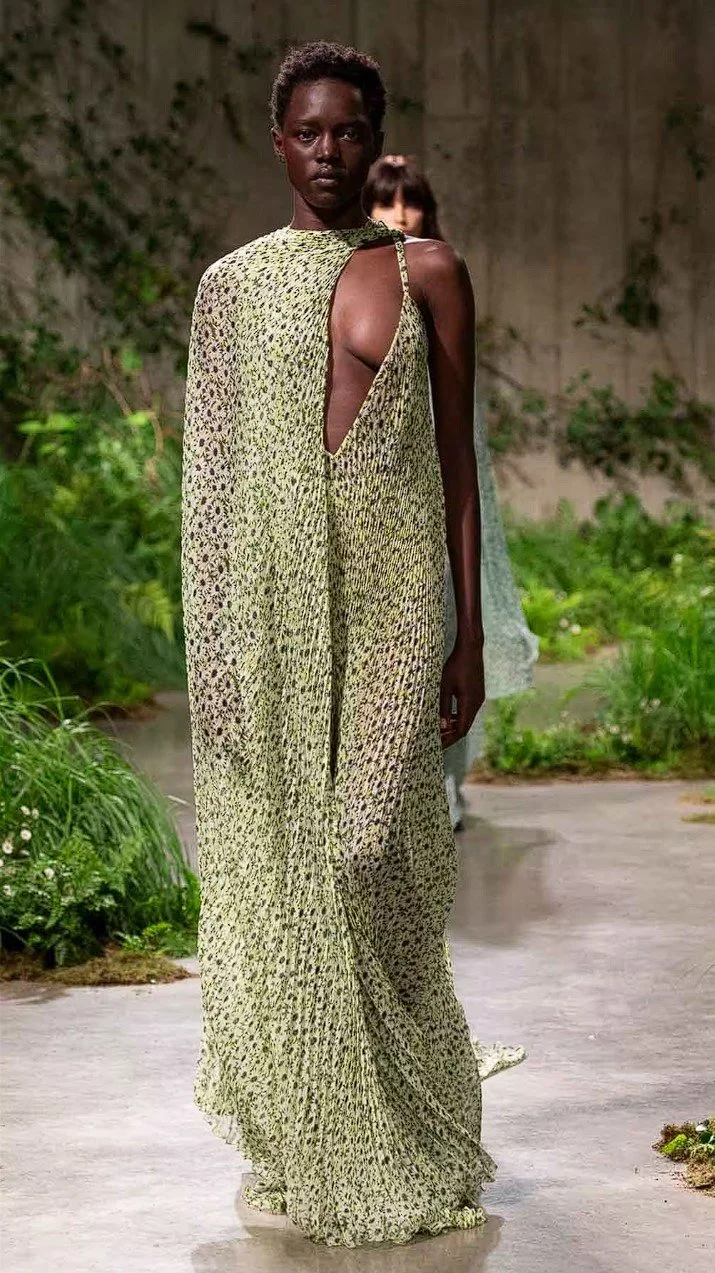
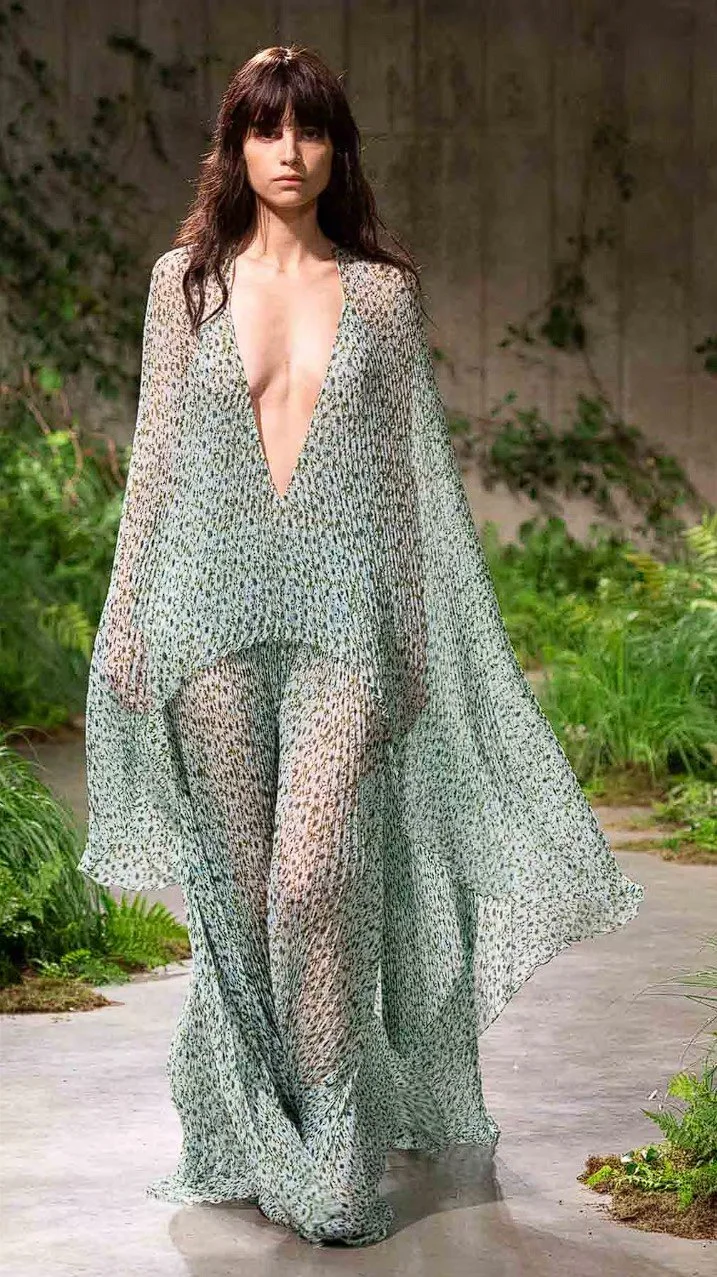
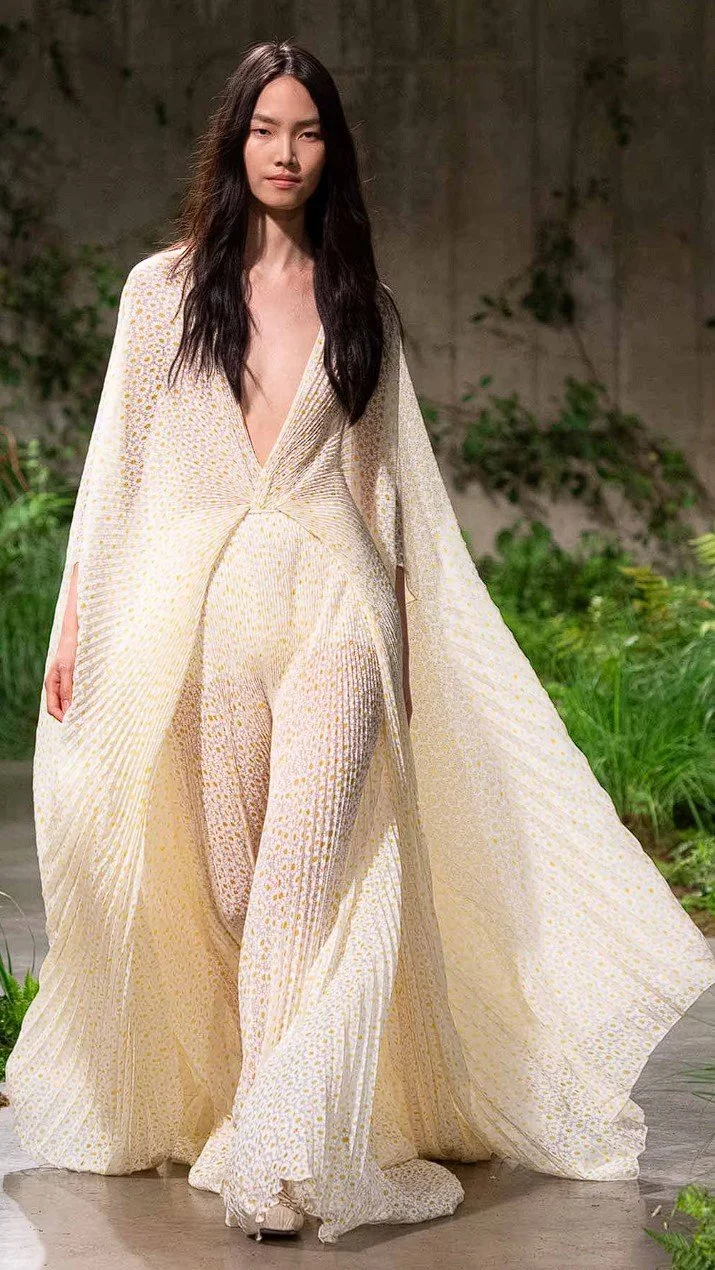
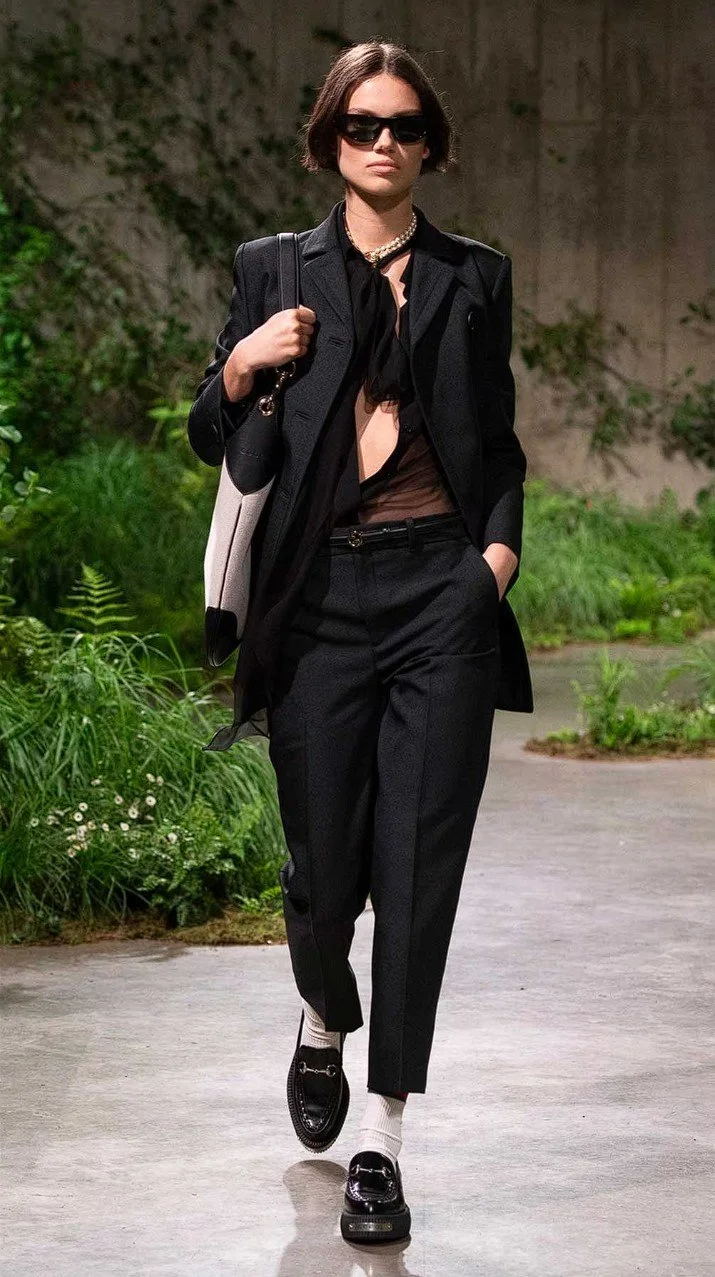
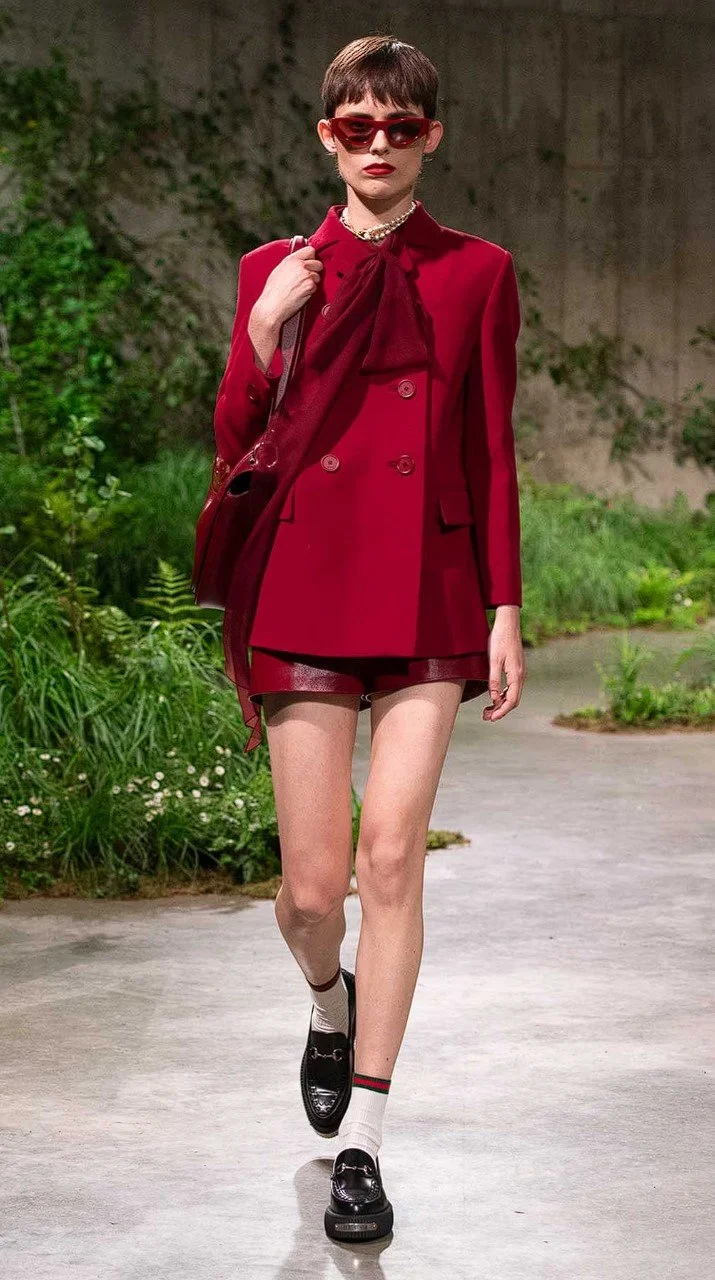
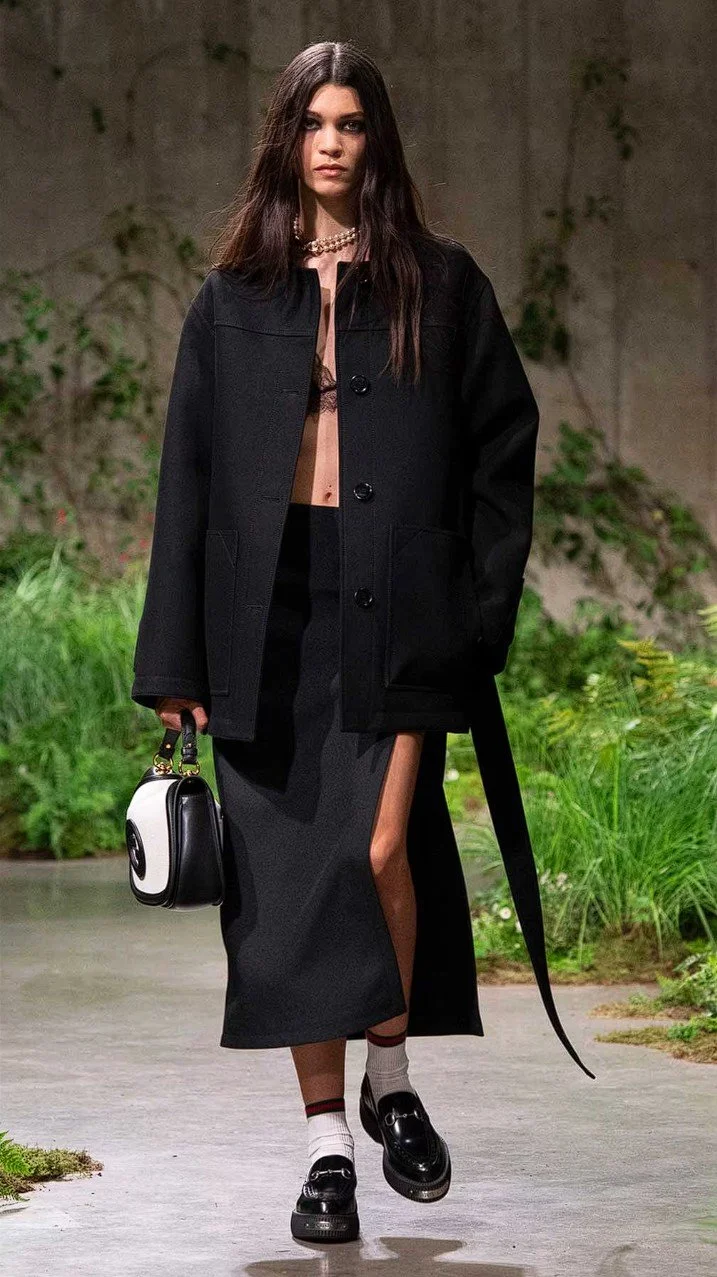
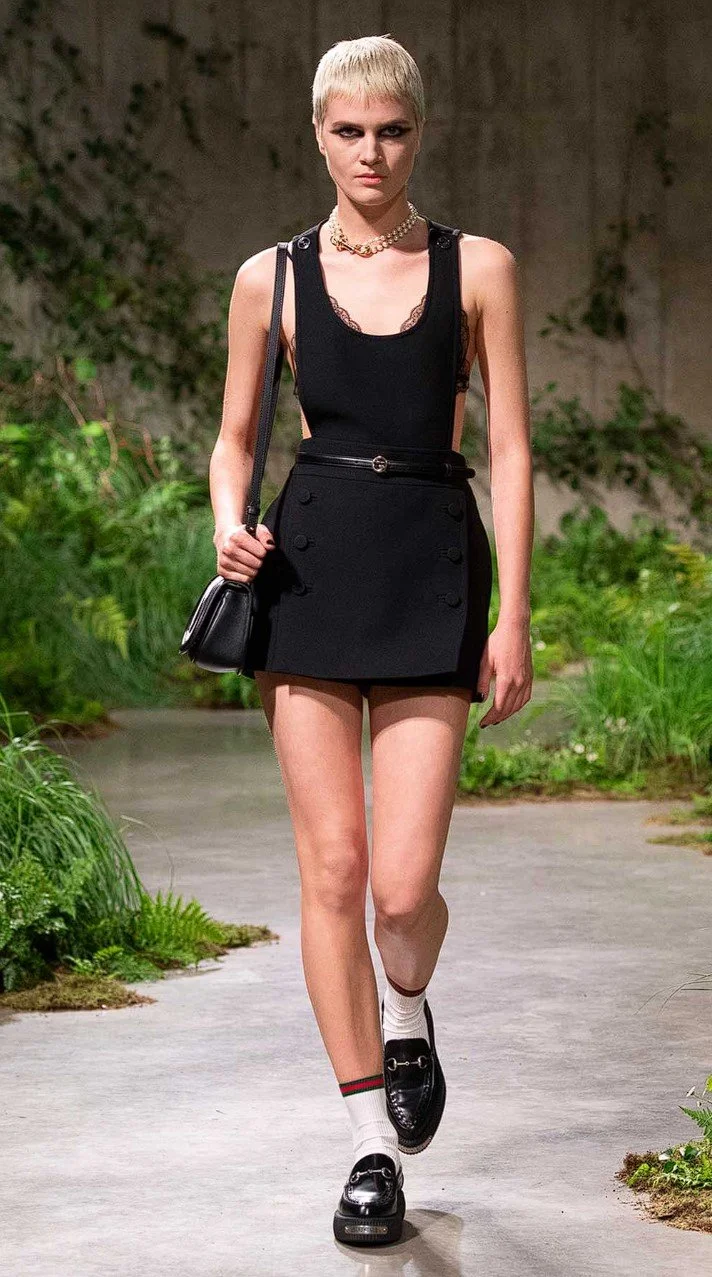
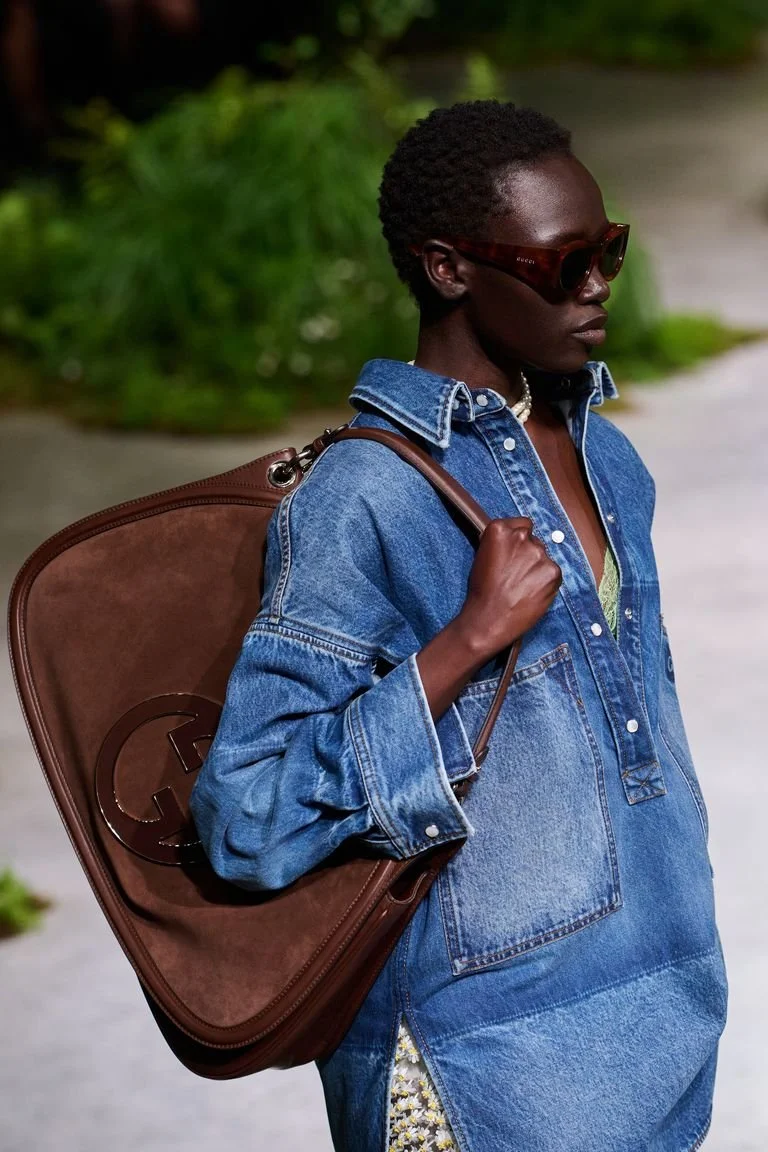
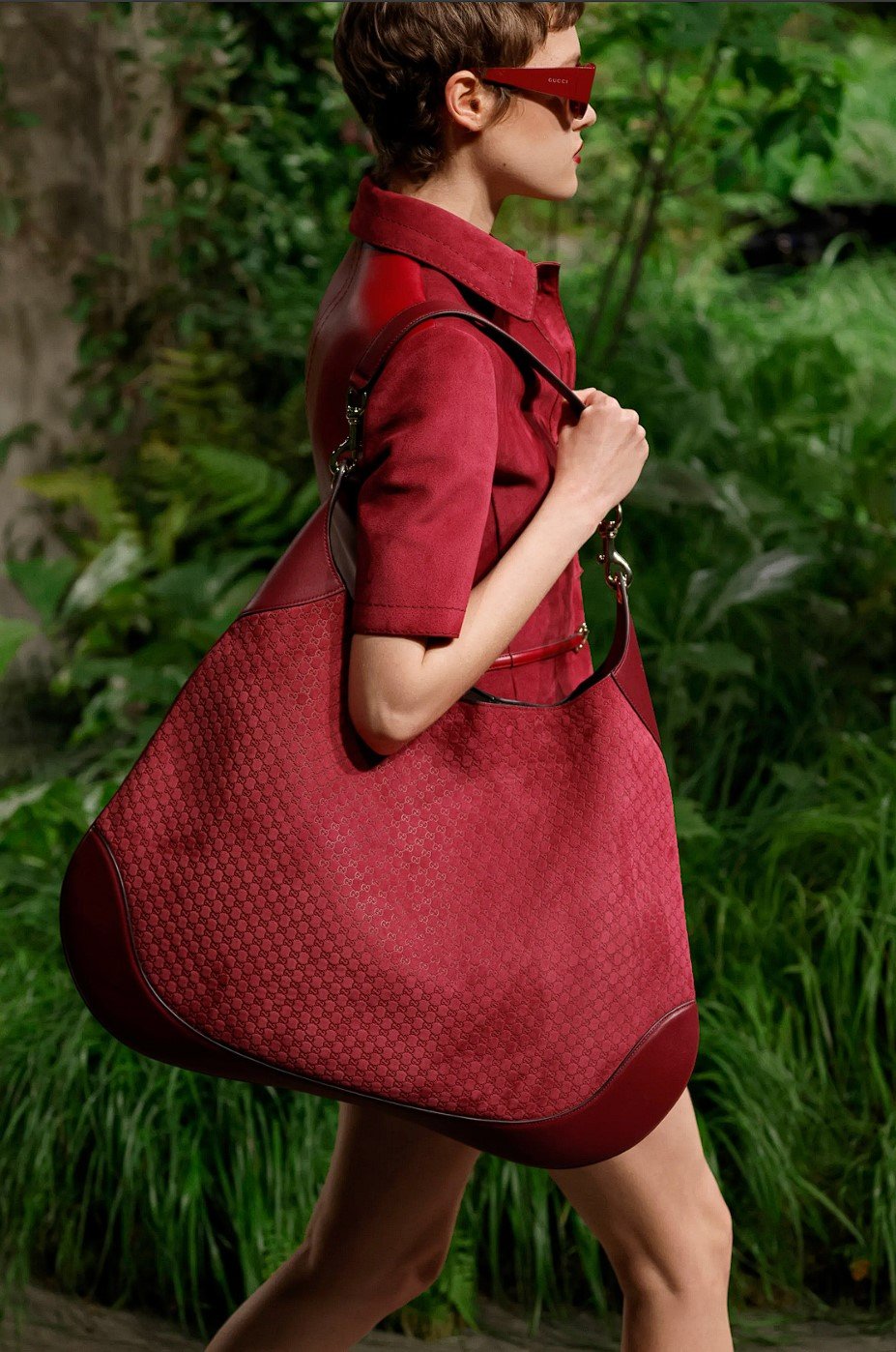
The Cruise 2025 collection explores dichotomies. It is set in a highly brutalist building - the Tate Modern, and it mixes a bit of everything, as if Sabato De Sarno is too afraid to bet on any particular movement or style for that matter. We see a plain version of Gucci, as if the house is trying to blend in with everyone else, while trying to find its space in the ever changing market. But Cruise shows were never meant to be this big thing, and our main focus was always on the bags.
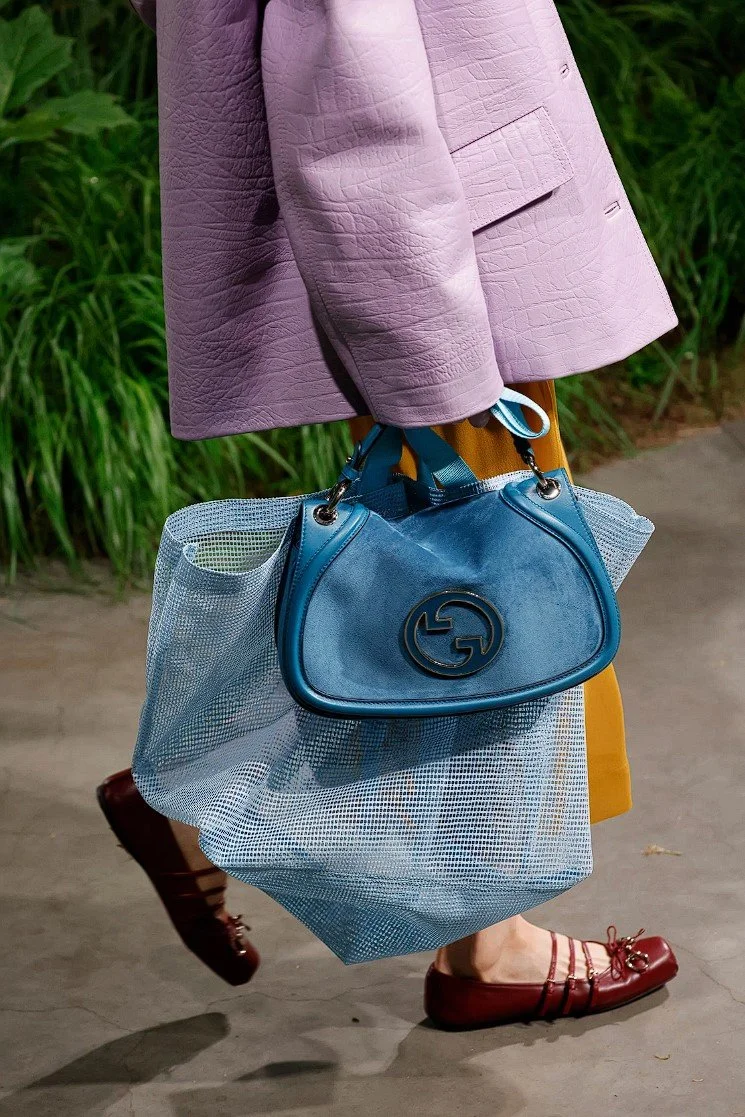
The first assemble of outfits walking down the runway isn't anything mind-blowing, but when was a Cruise/Resort collection ever of any interest? It caters to a very small market, or at least that is how it would be pitched to investors, if that market even exists. However, it oftentimes comes at a great price for fashion houses, which are forced to fly out celebrities and press to whatever location they've decided to host the event, simply because it falls off-calendar and isn't in a common fashion week location.
Gucci returned to London for the first time since 2016, a significant moment that coincided with the lead-up to the Brexit referendum. Sabato De Sarno, in his release, explained that his decision to present the Gucci Cruise 2025 collection in London was influenced by his personal connection to the city's open-mindedness. “I owe a lot to this city; it has welcomed and listened to me,” he said. The choice of location also referenced the brand’s history, as a teenage Guccio Gucci had once worked as a porter at the Savoy hotel in 1899, an experience that inspired him to start the company. Much like London navigating its post-Brexit identity, Gucci under De Sarno is finding its footing after a transitional period. His early collections are just now reaching a wider audience as the brand completes its in-store rebranding. De Sarno’s return to London, a place deeply intertwined with Gucci’s origins, marked an expansion of his creative direction. The question was whether London would still embrace him and his vision.
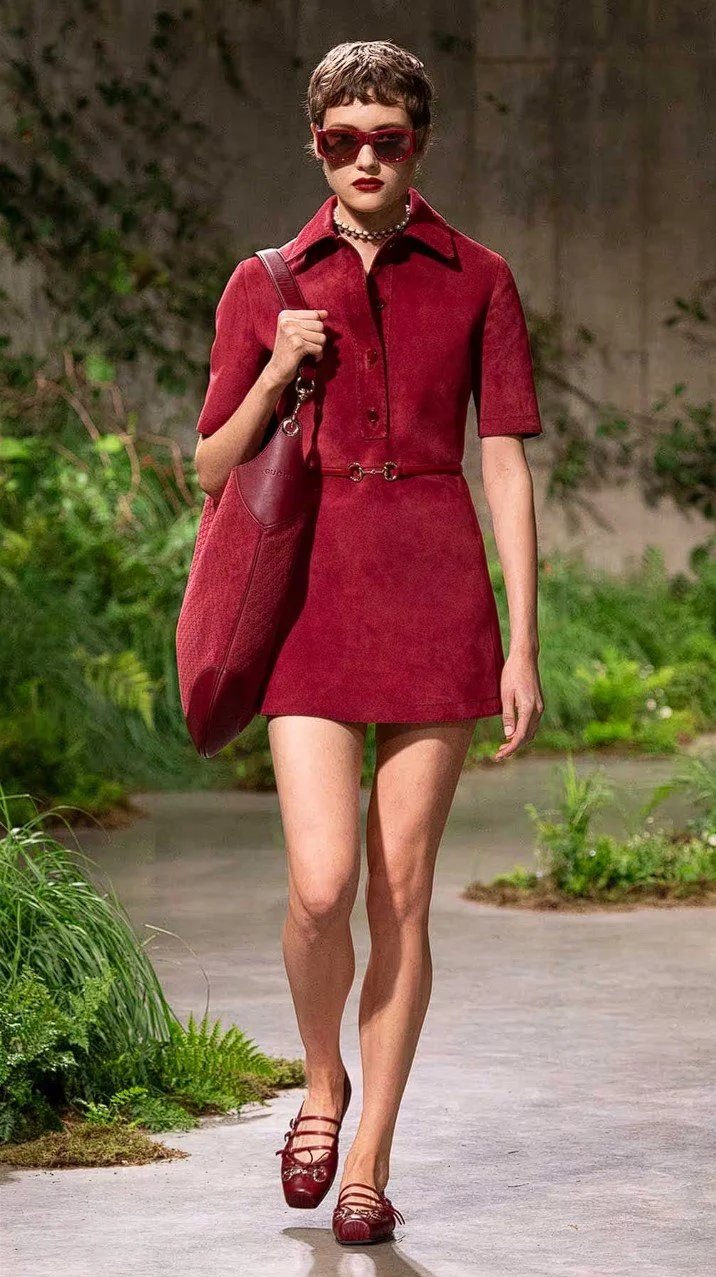
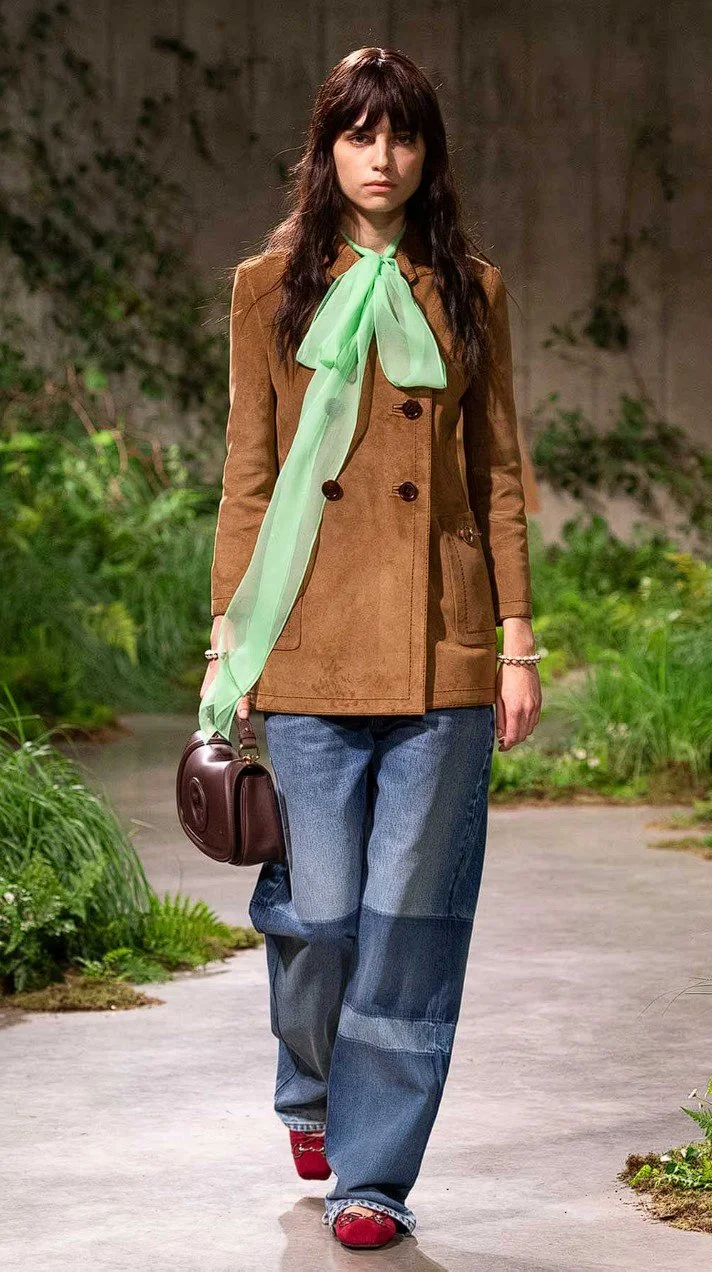
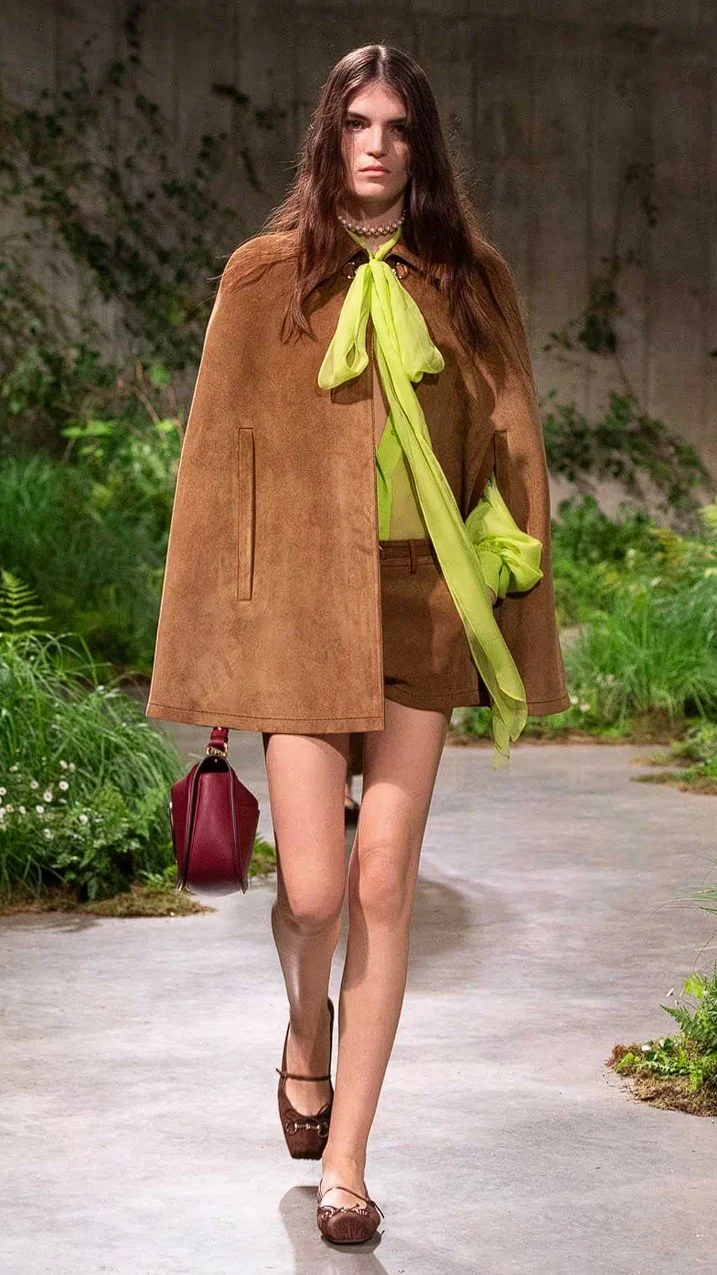
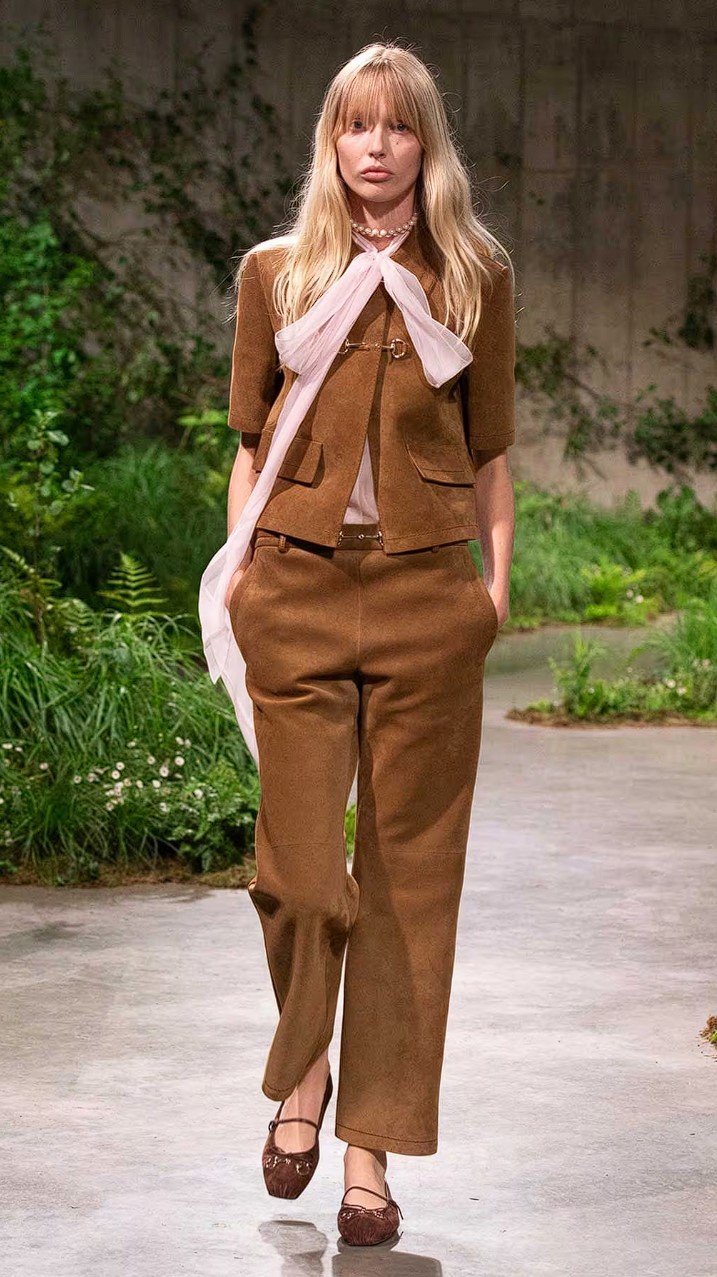
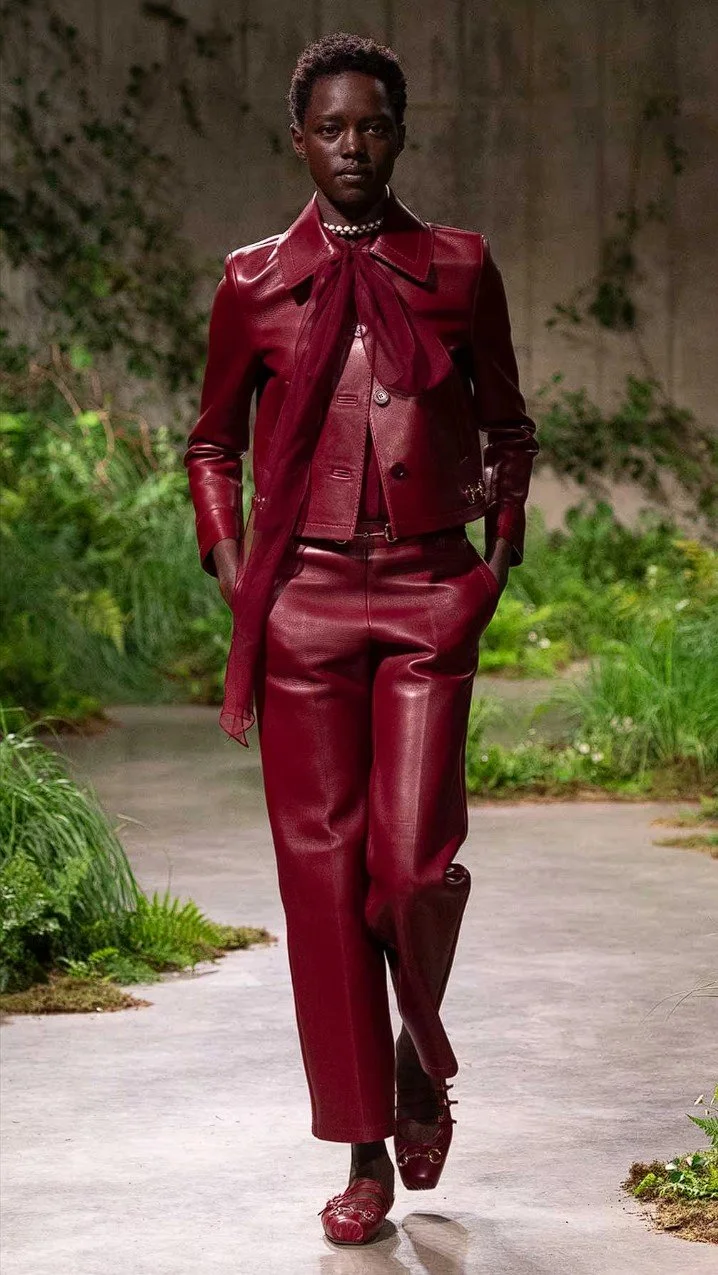
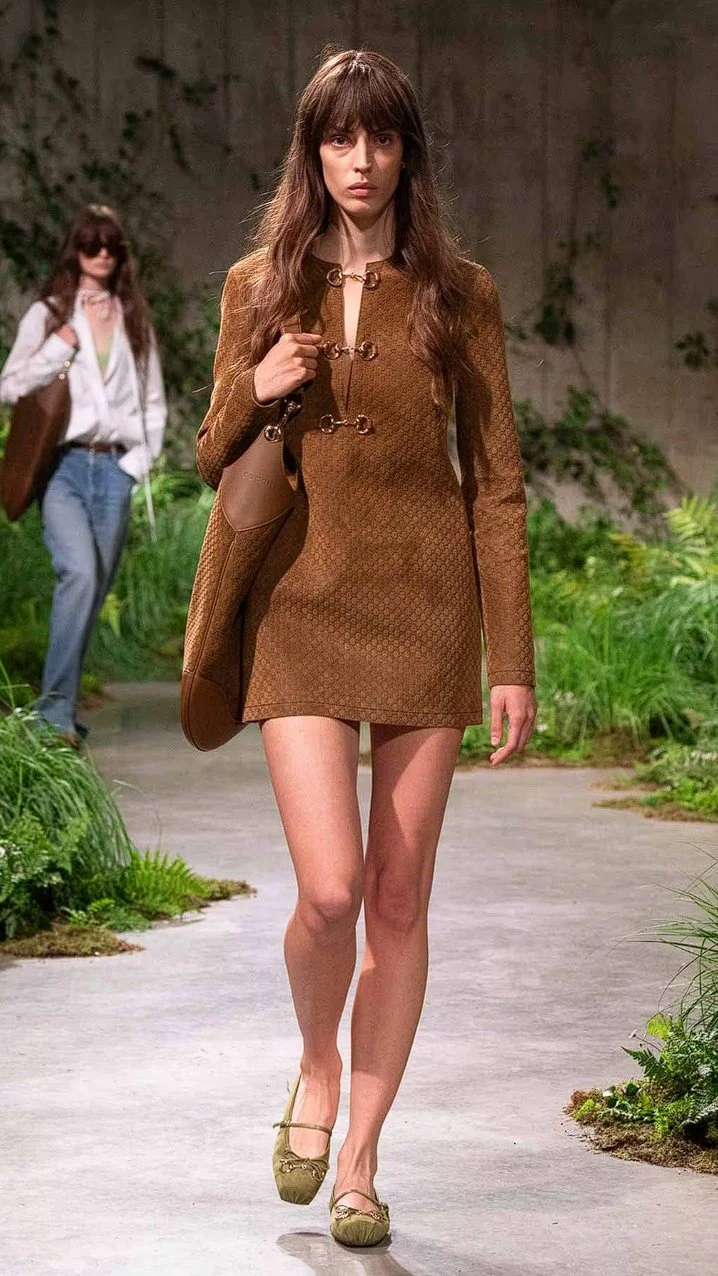
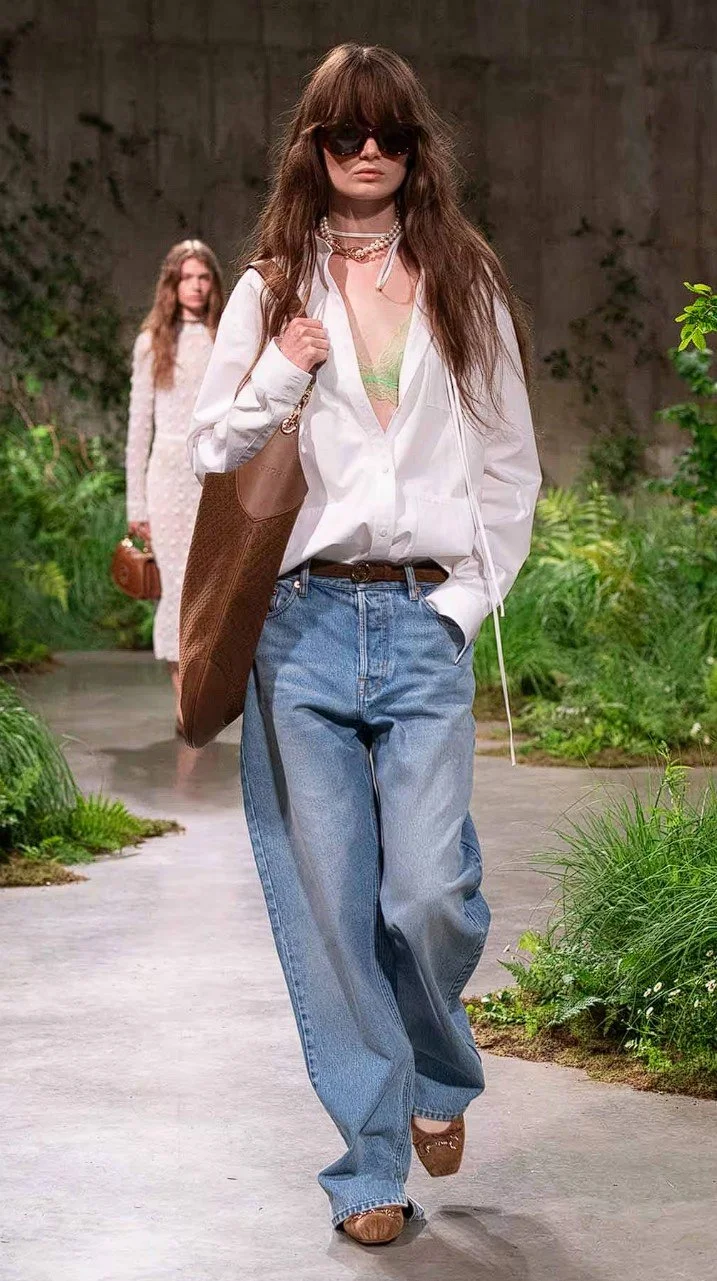
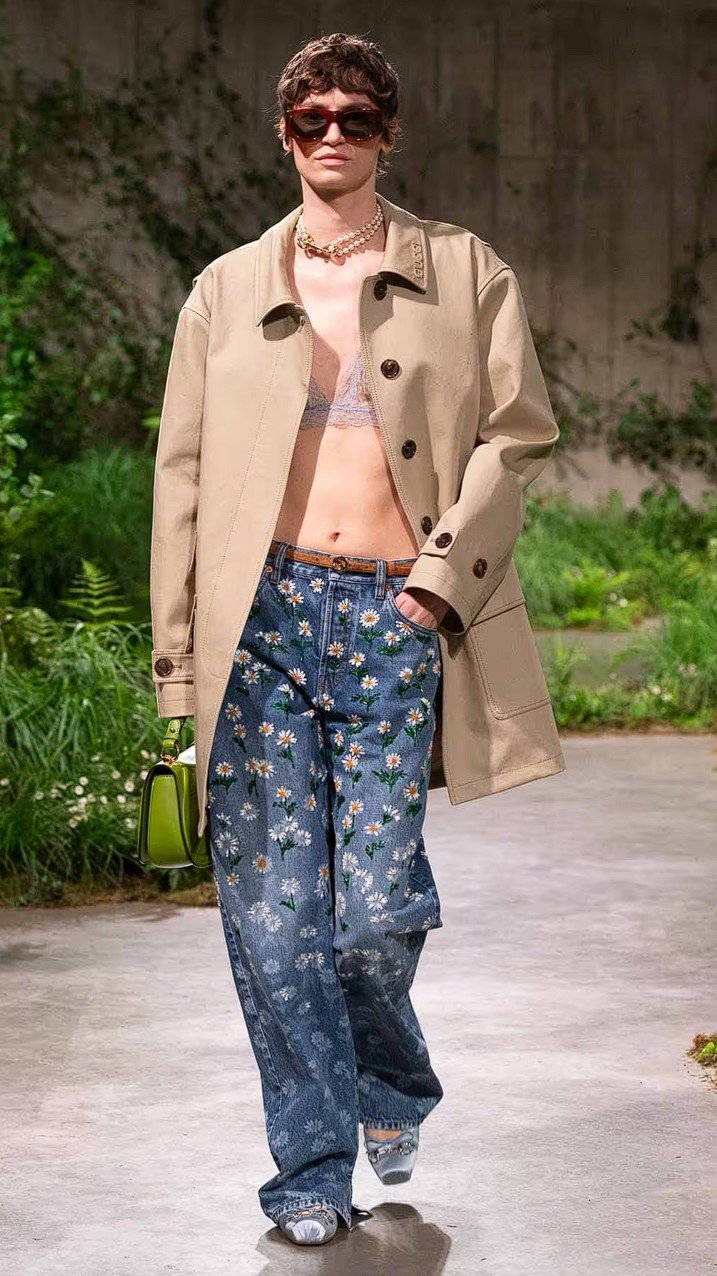
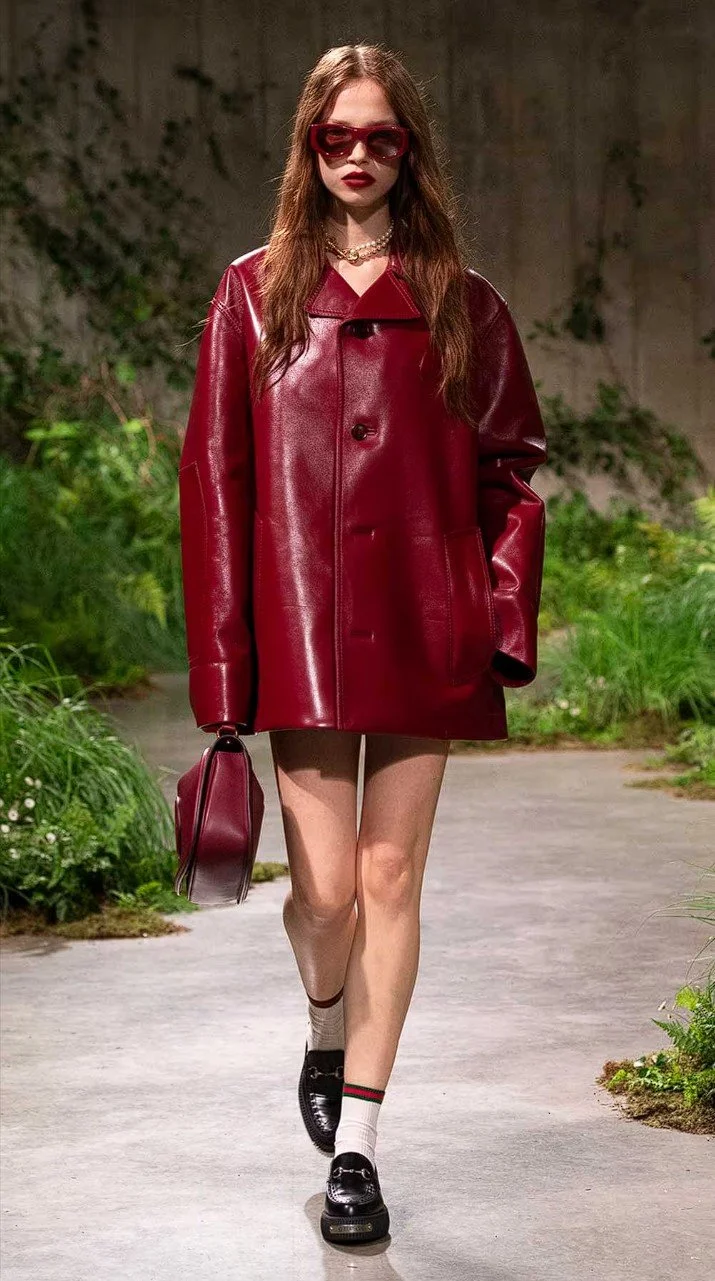
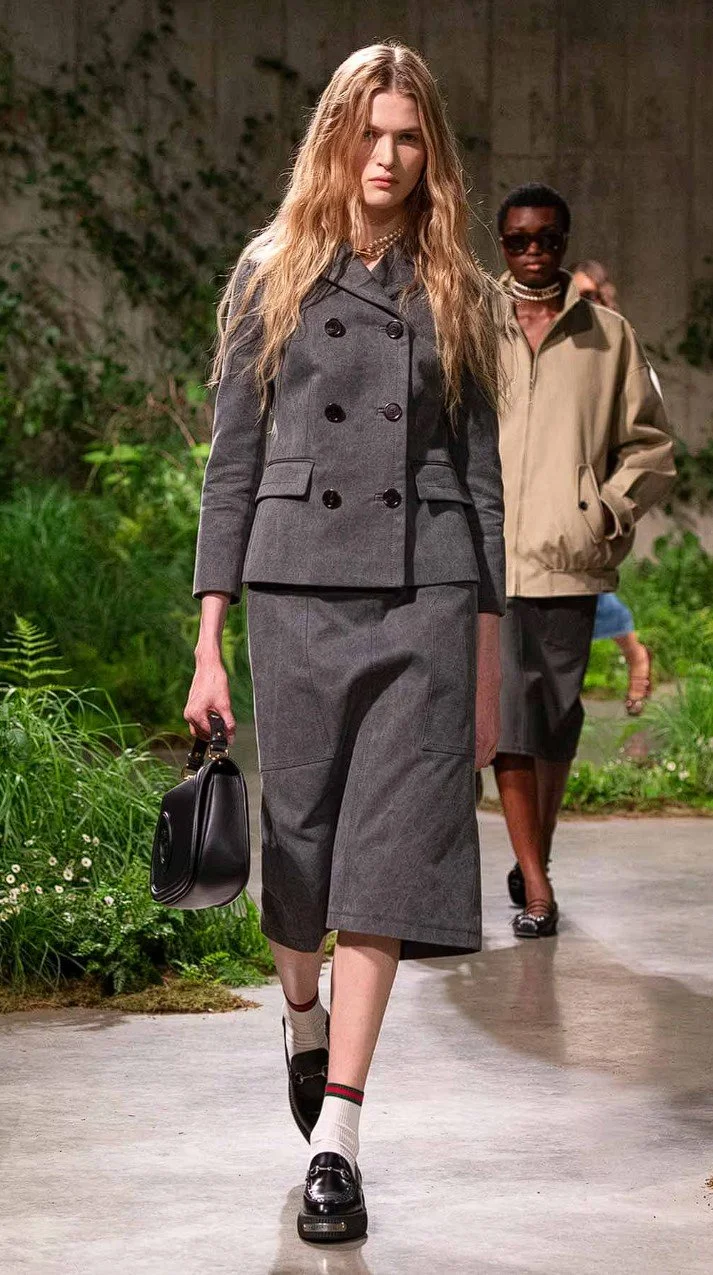
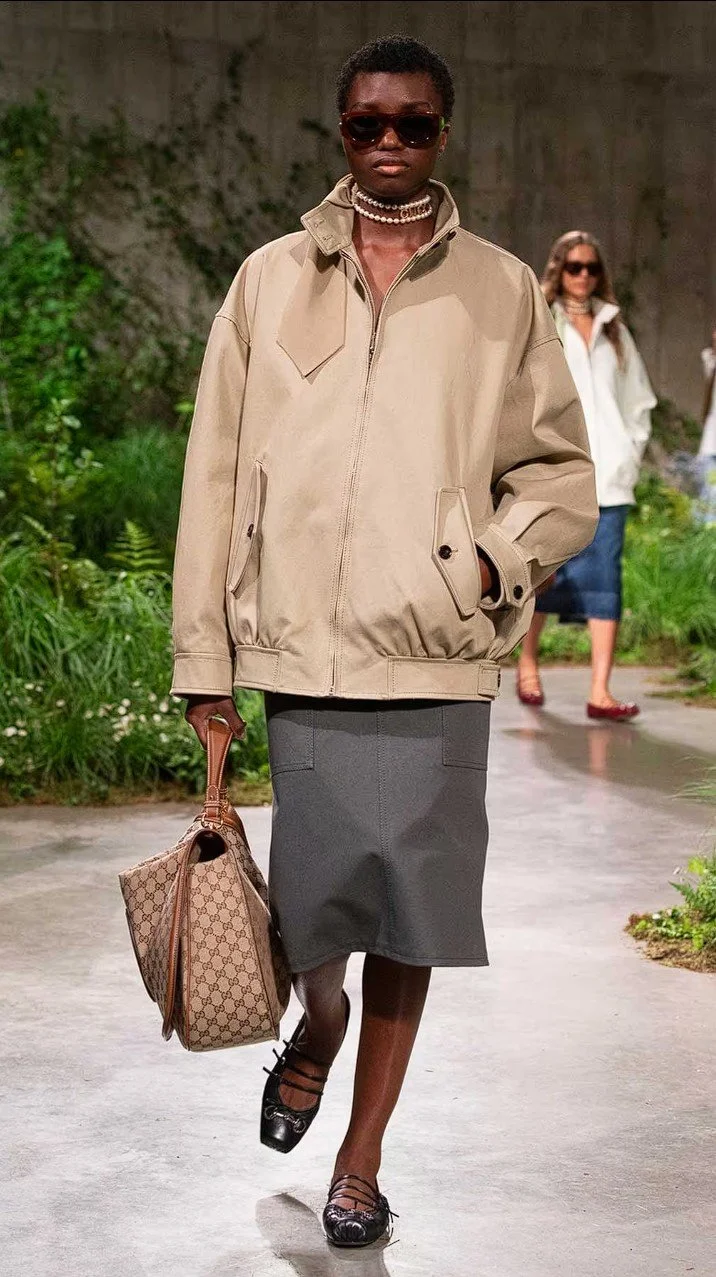
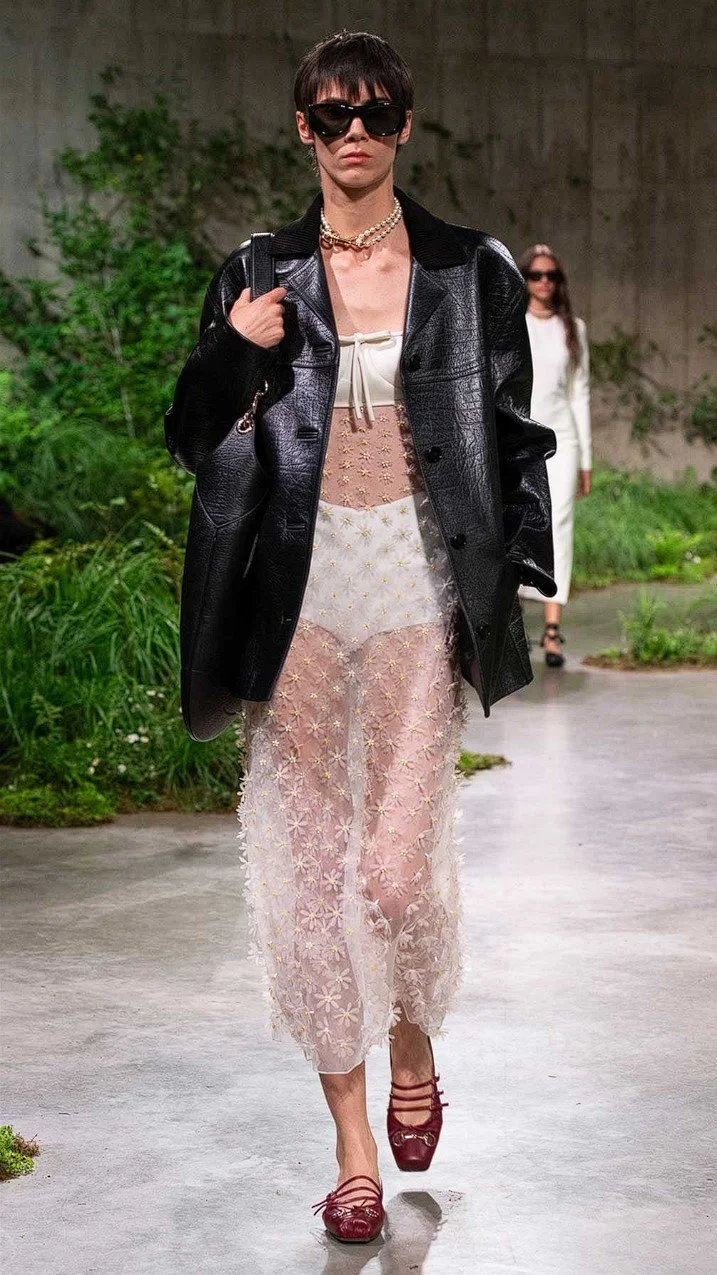
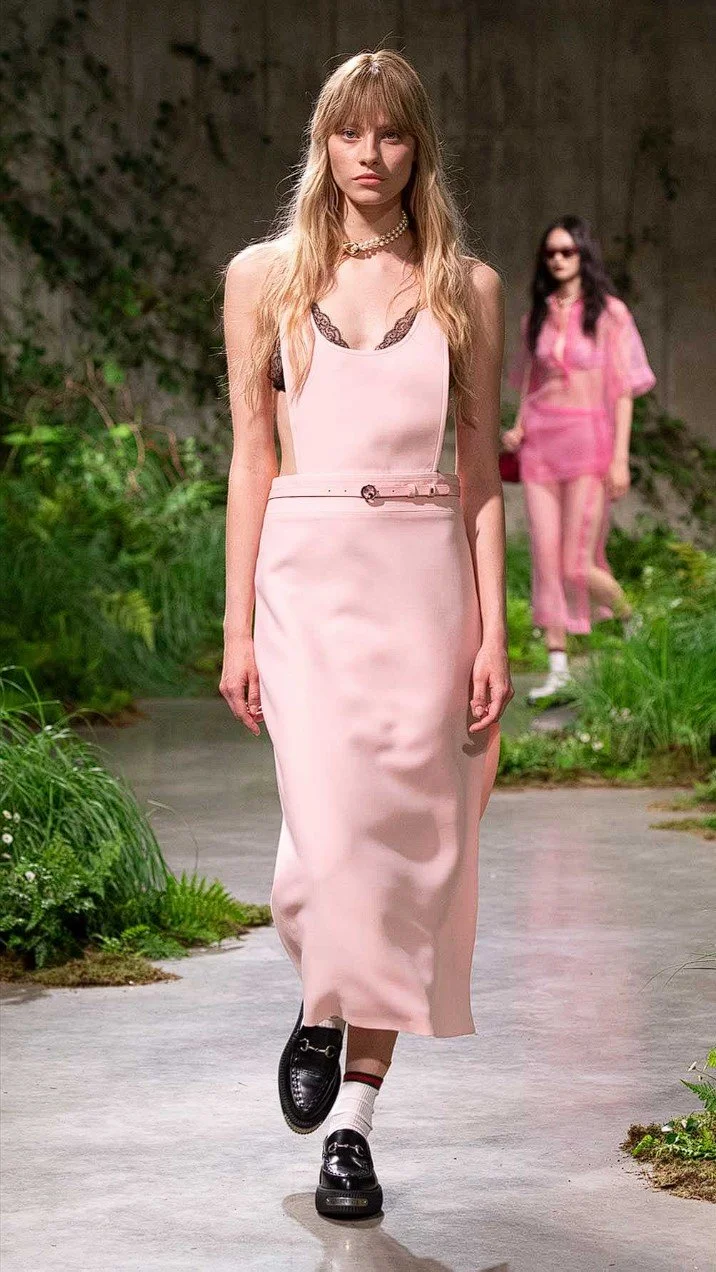
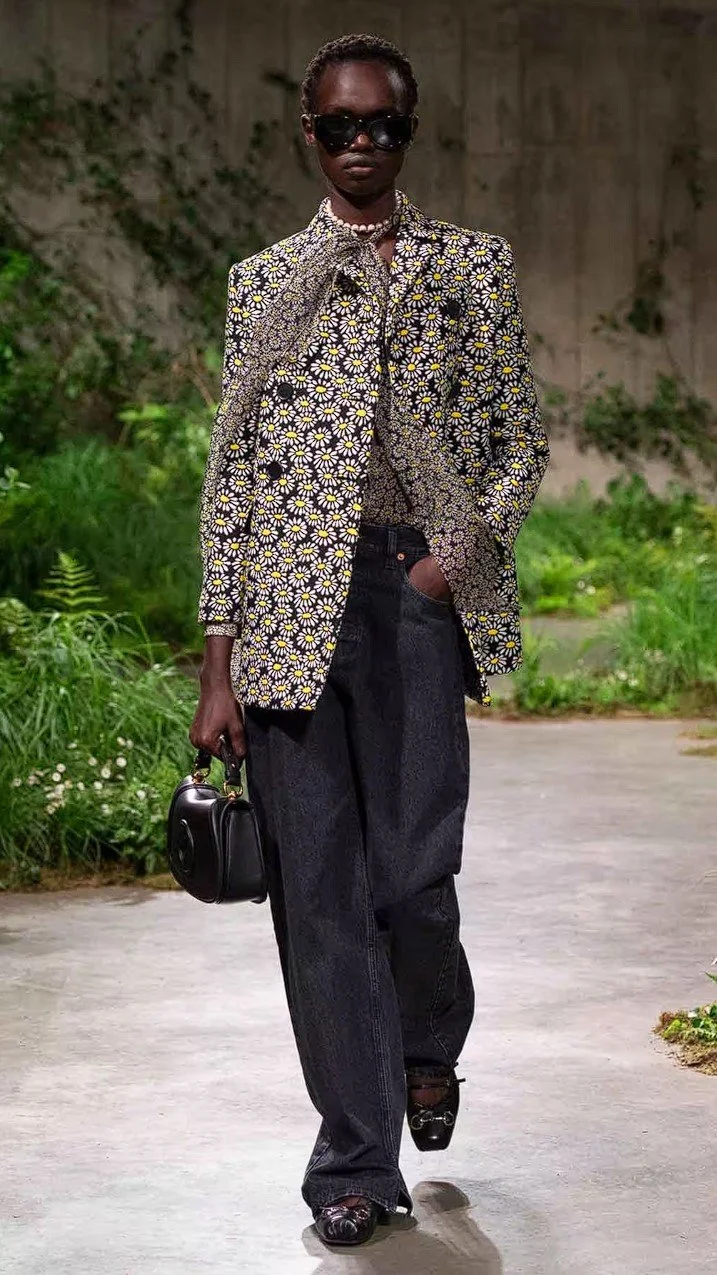
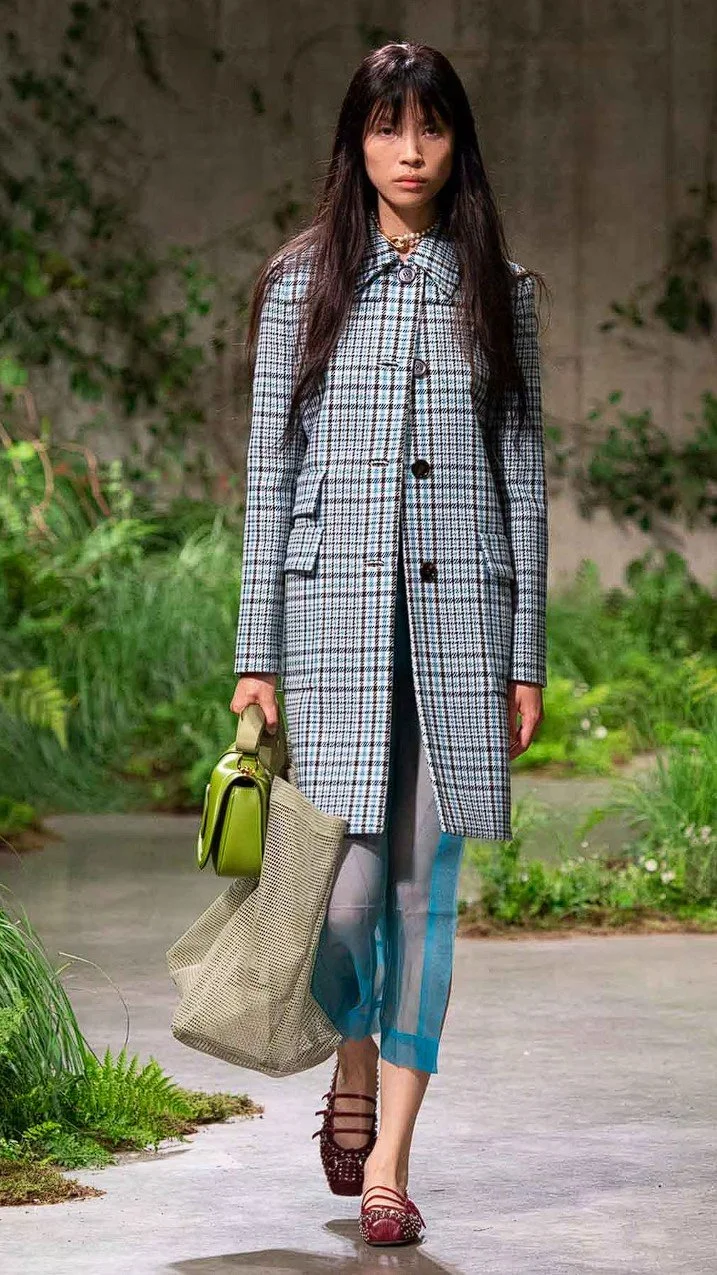
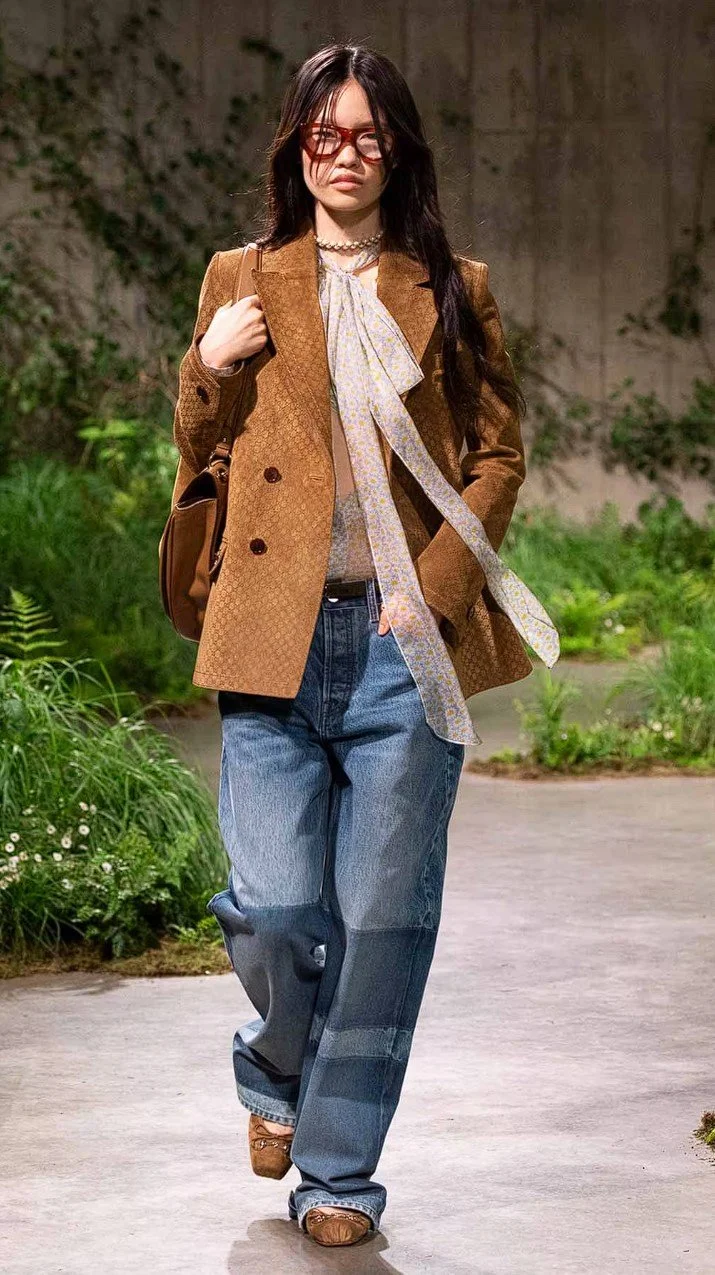
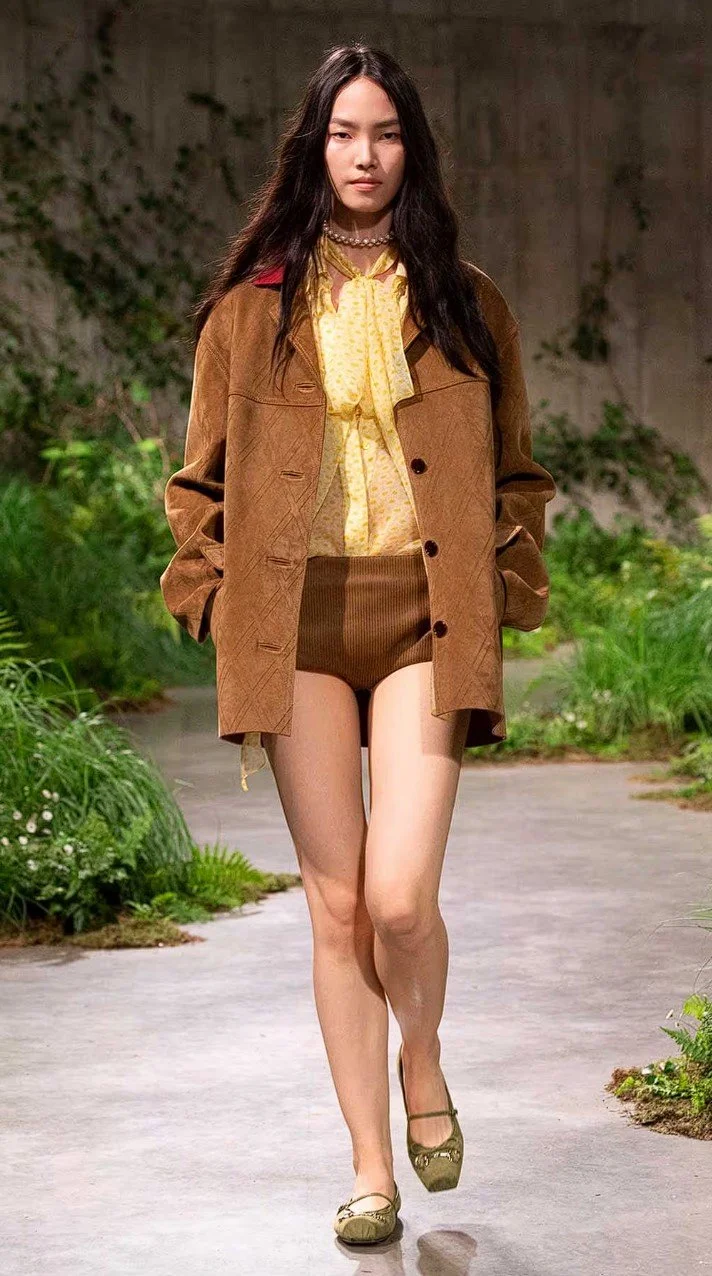
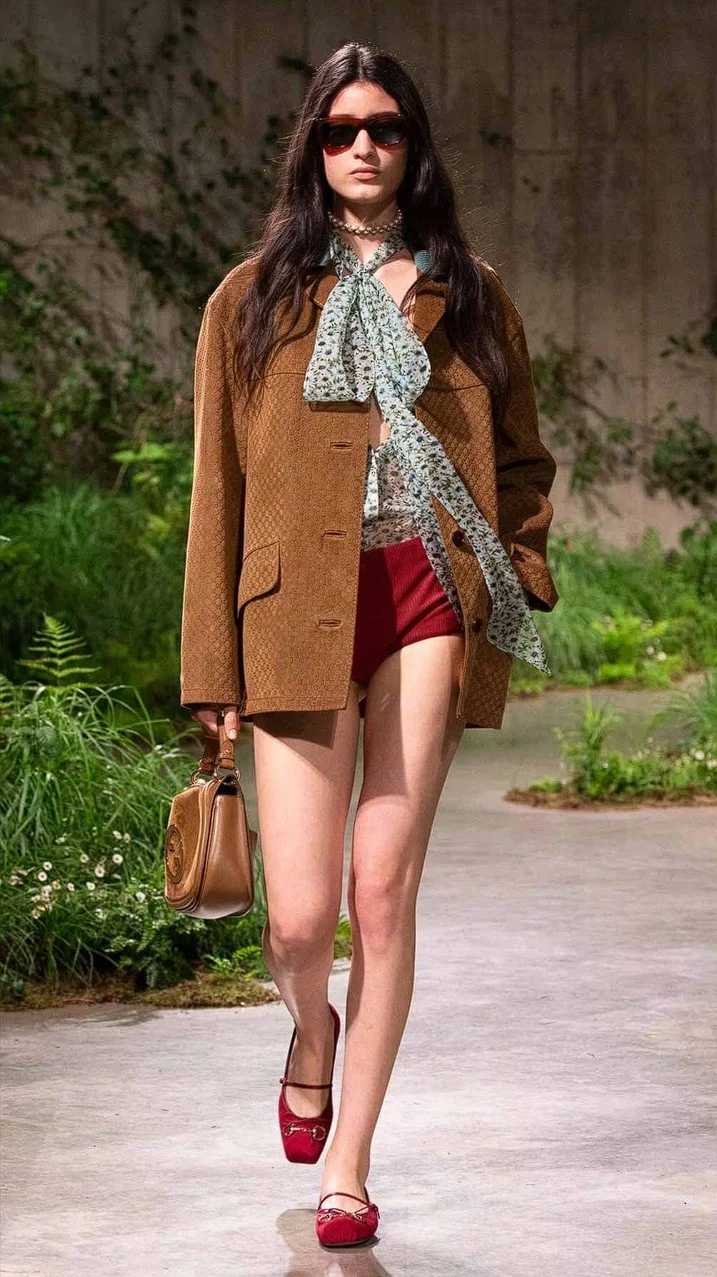
The collection opened with a nod to Gucci’s classic, polished aesthetic, infused with a more relaxed London edge. Denim pants, slightly worn-in, were paired with tailored outerwear—cabans with martingale belts and double-breasted jackets—crafted from matte brown suede that softened their formal structure. Pussy-bow blouses added a floaty, feminine touch.
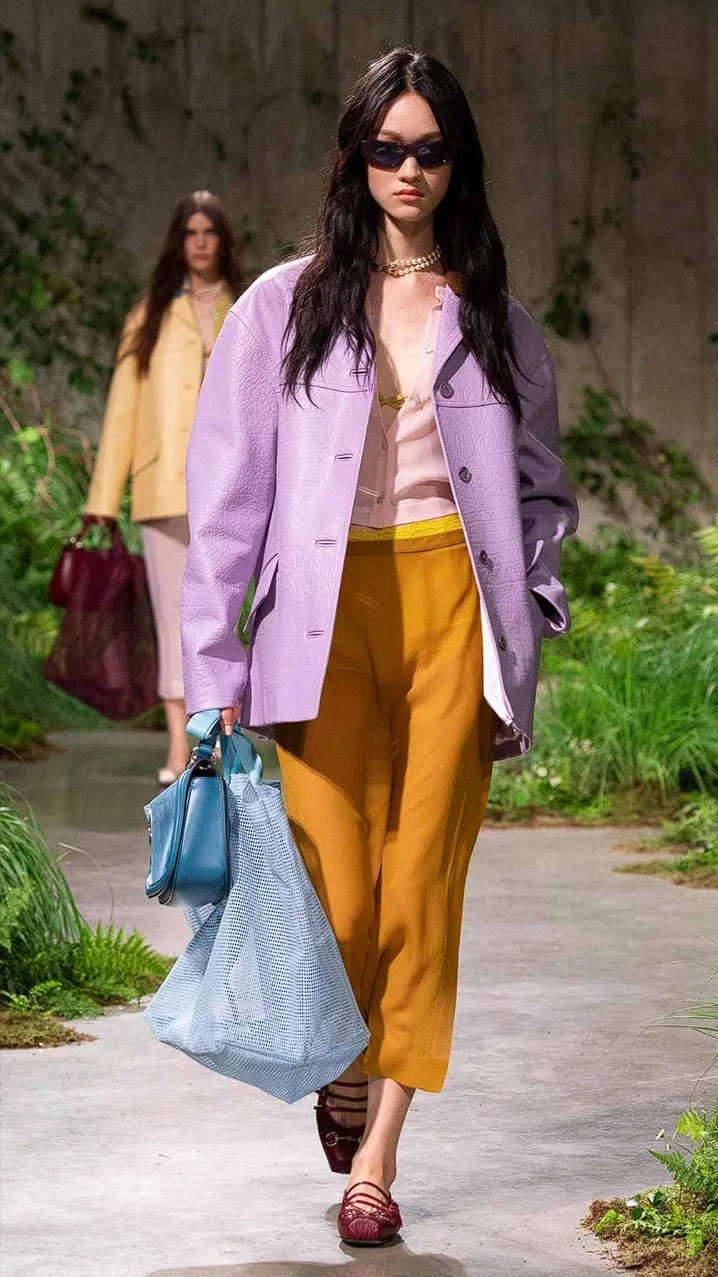
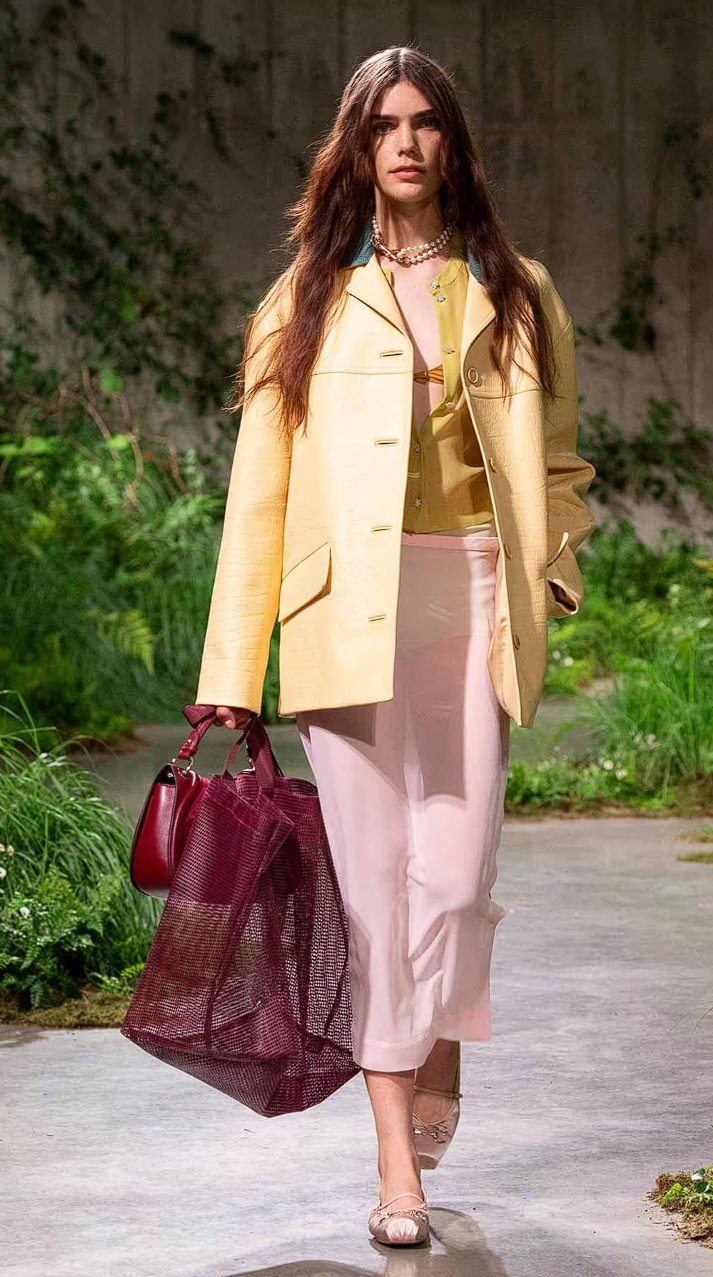
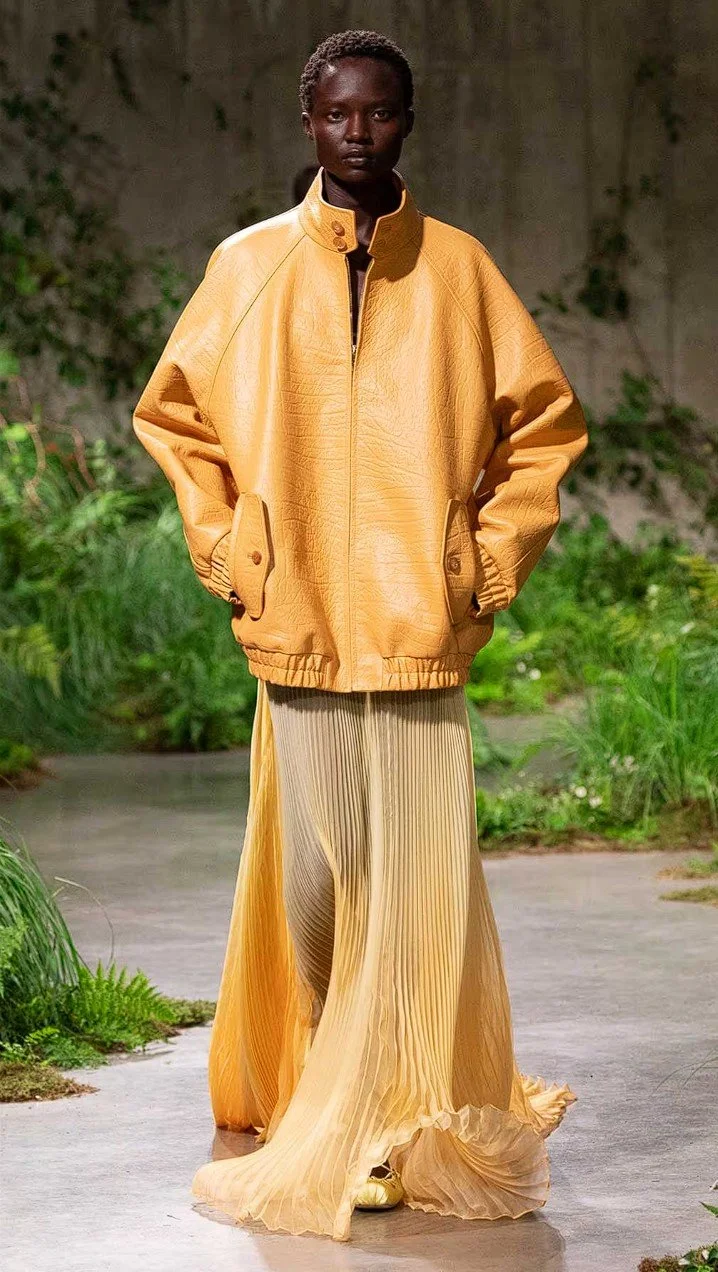
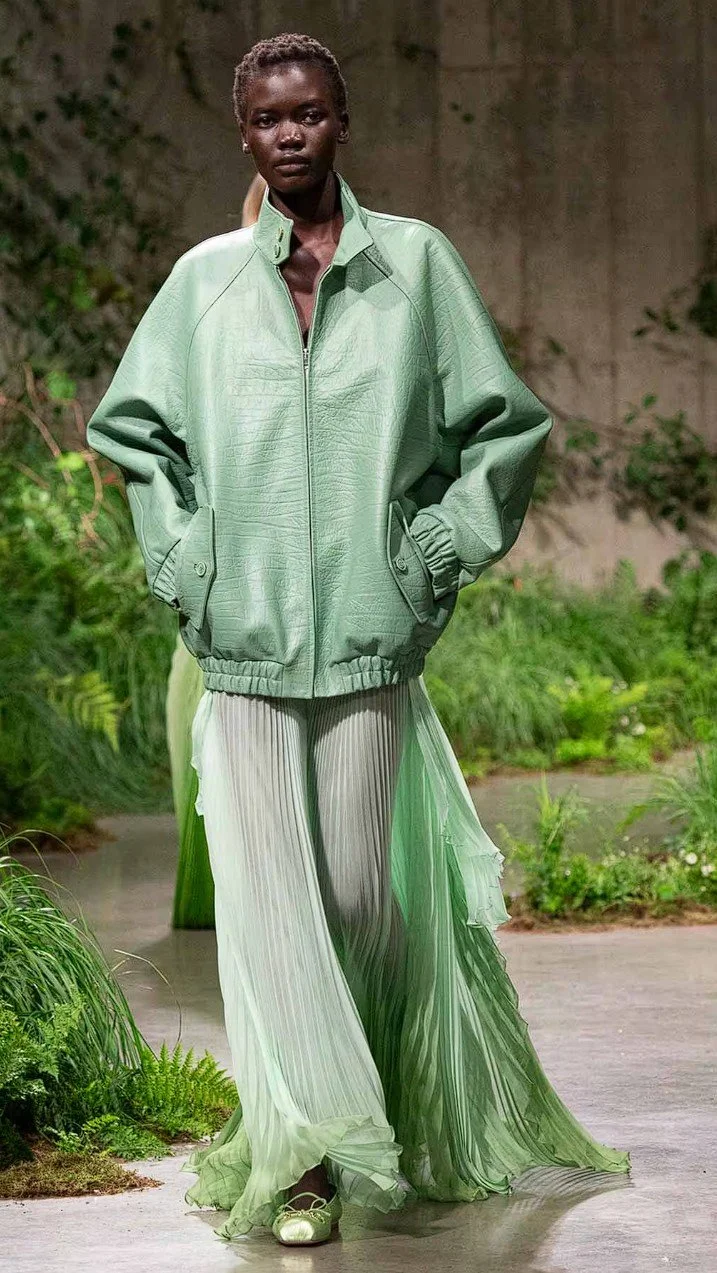
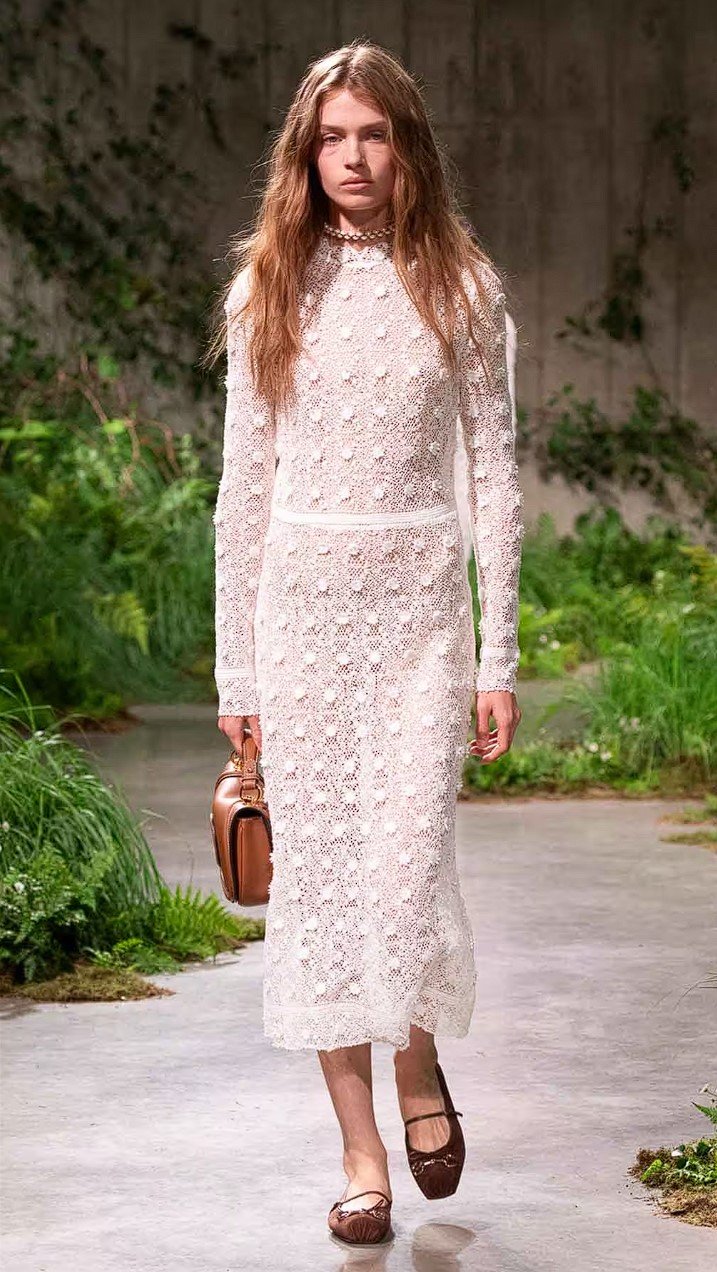
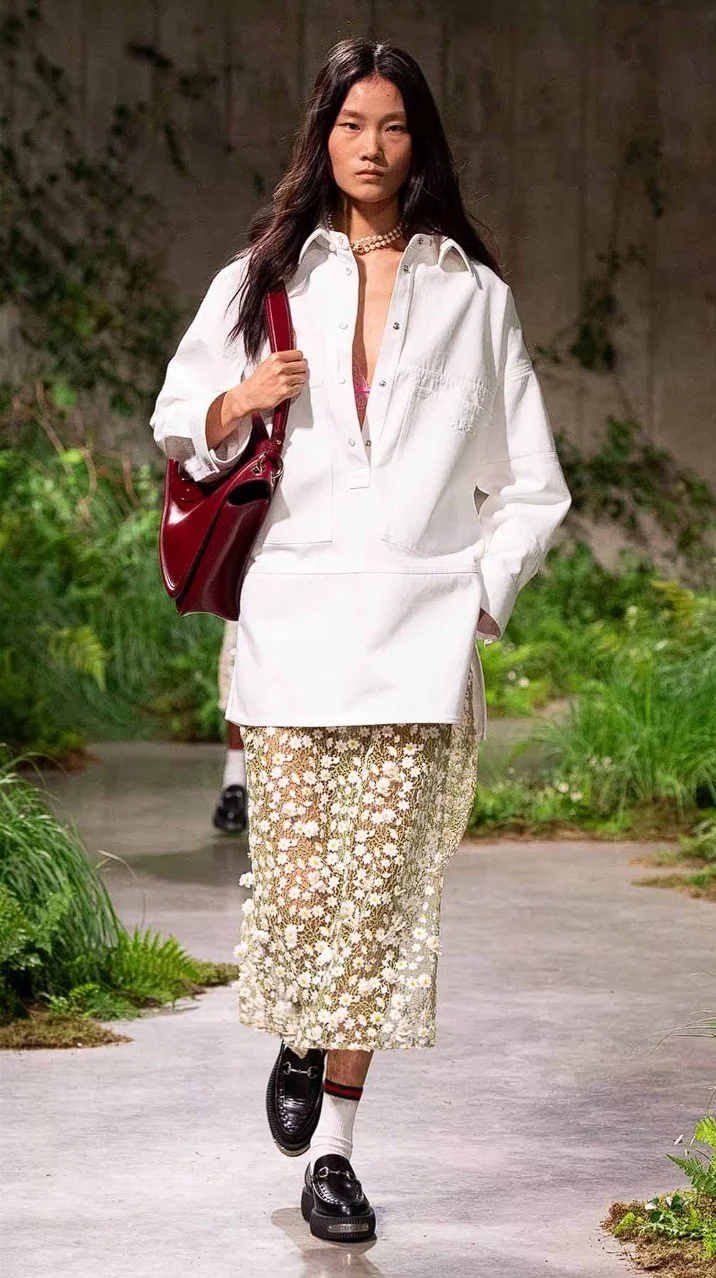
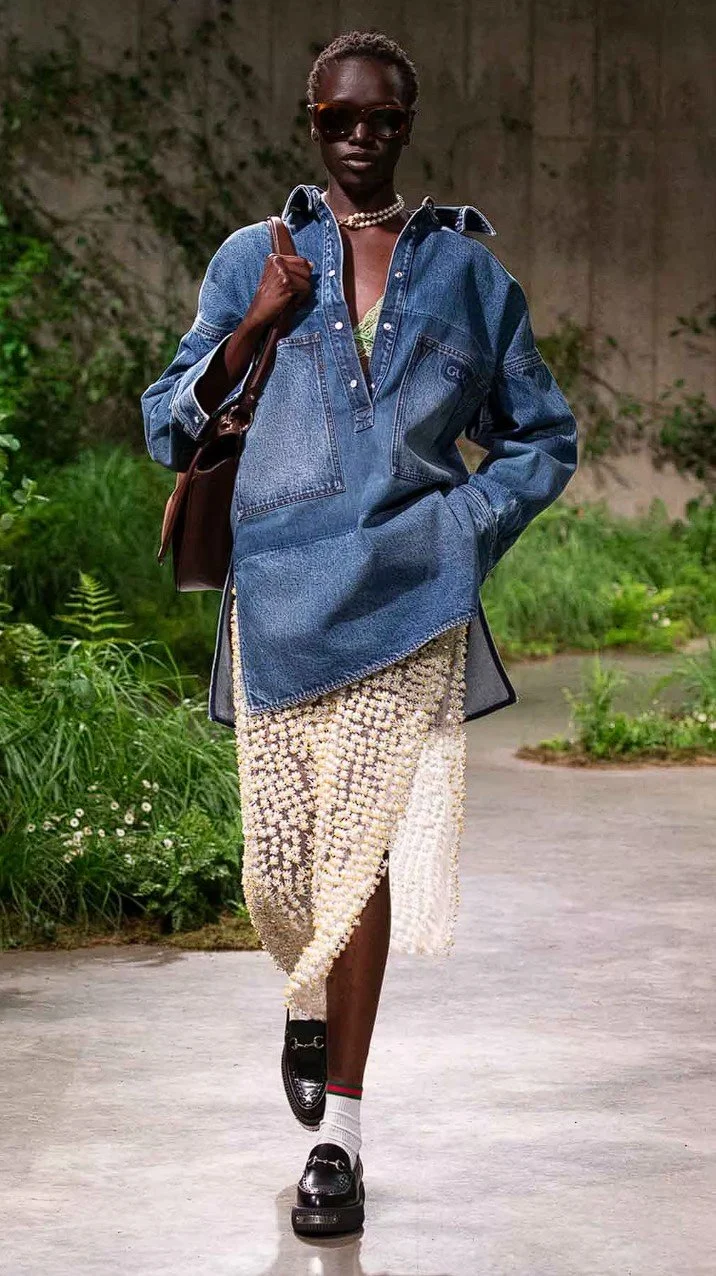
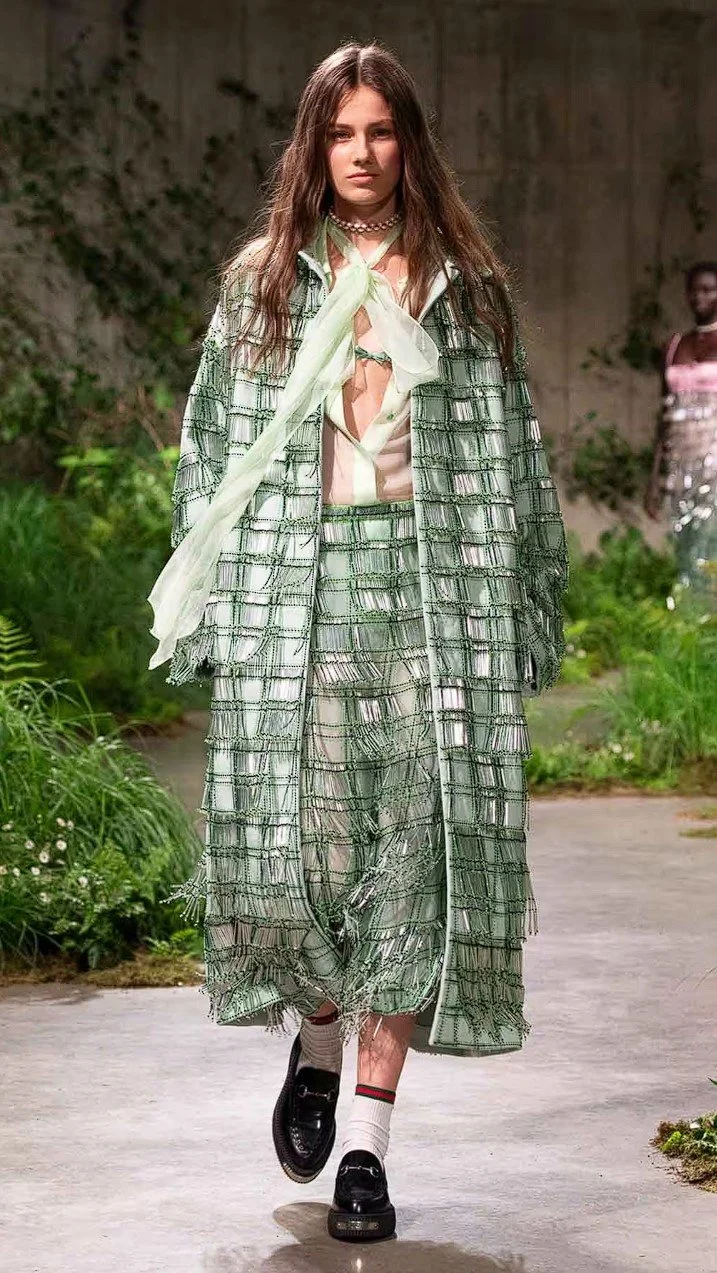
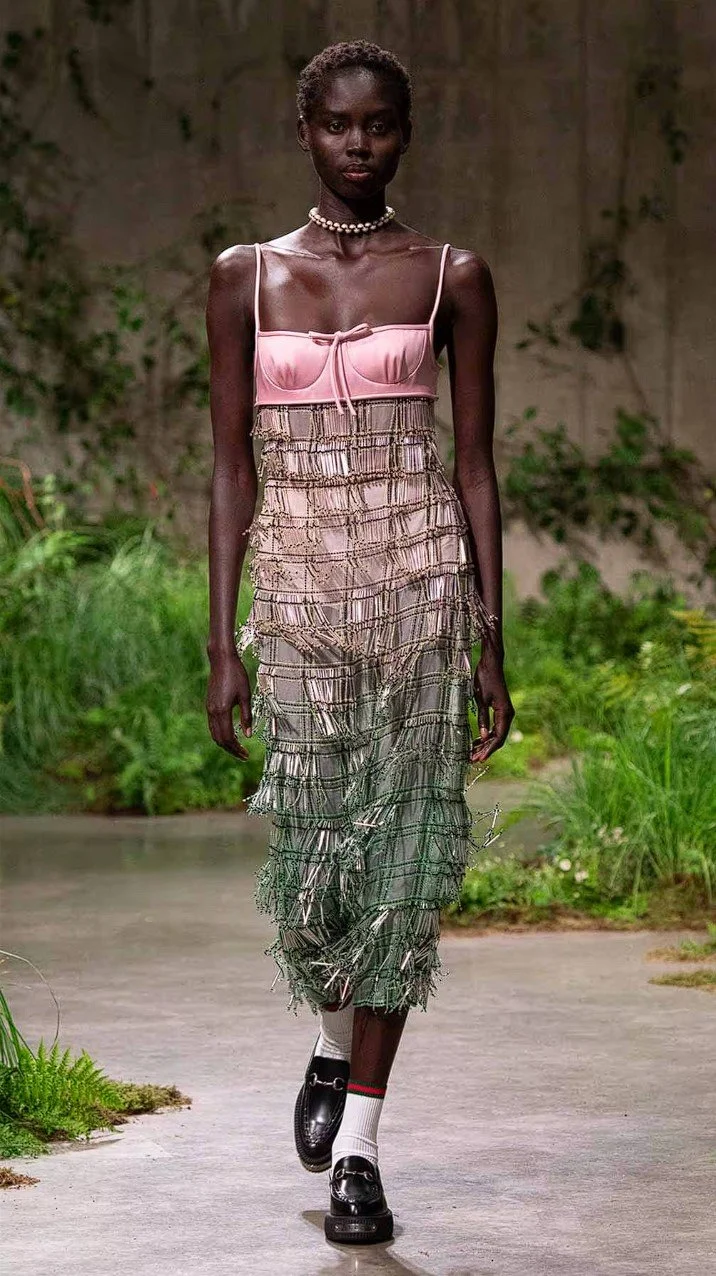
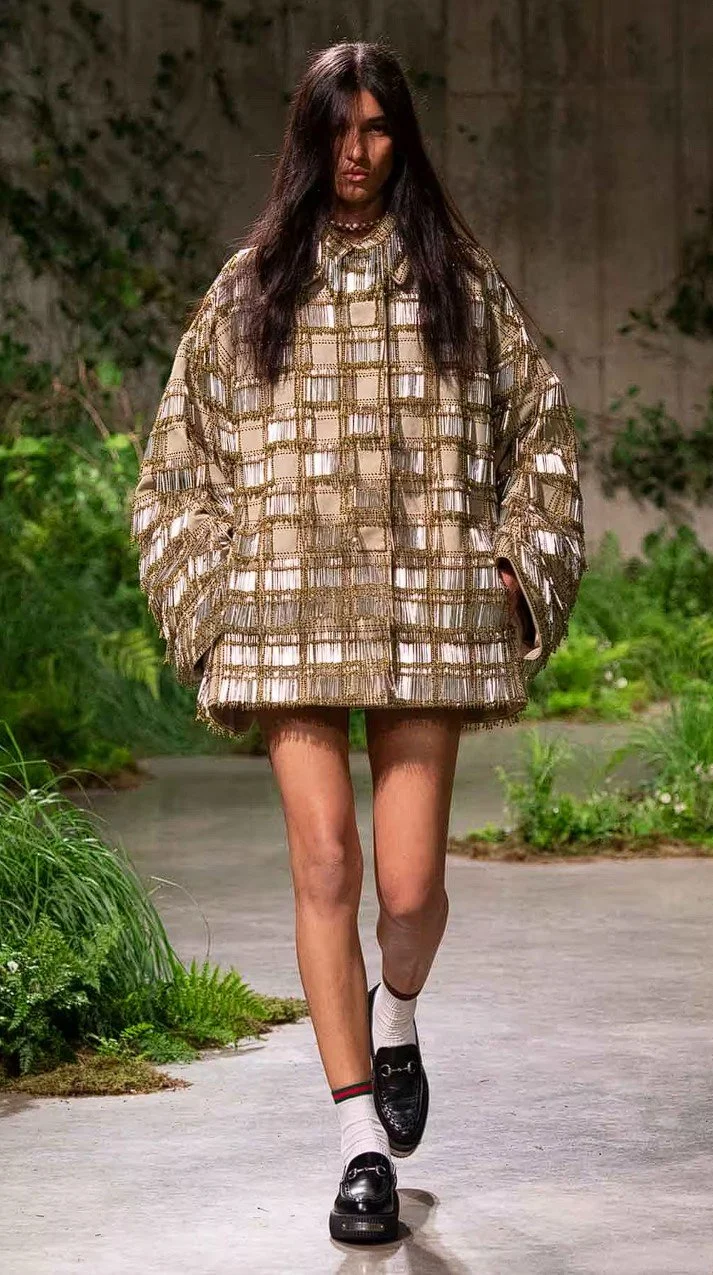
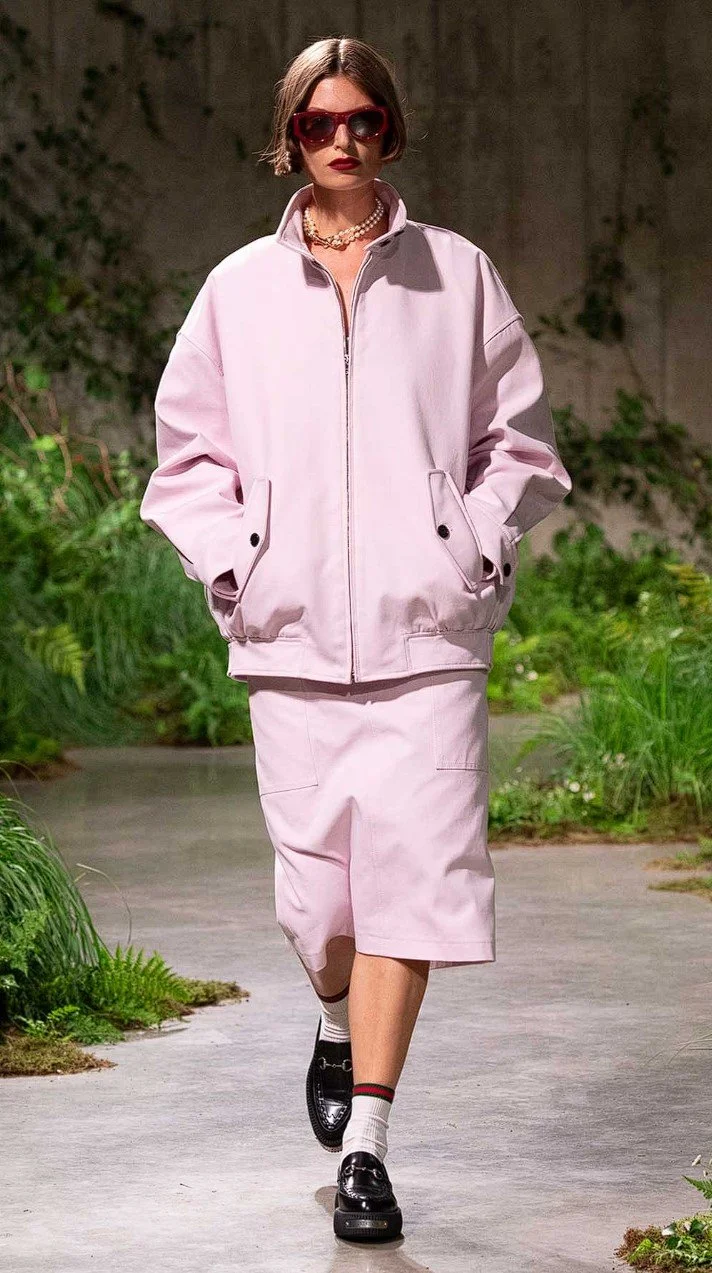
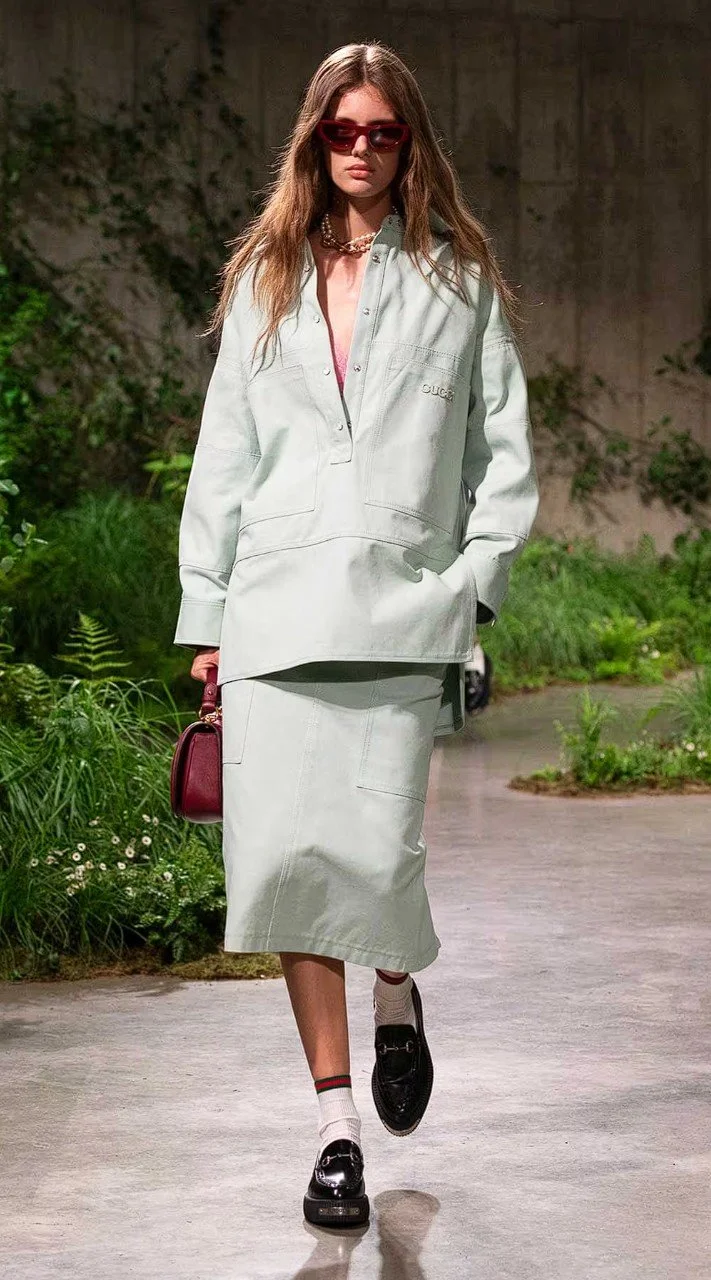
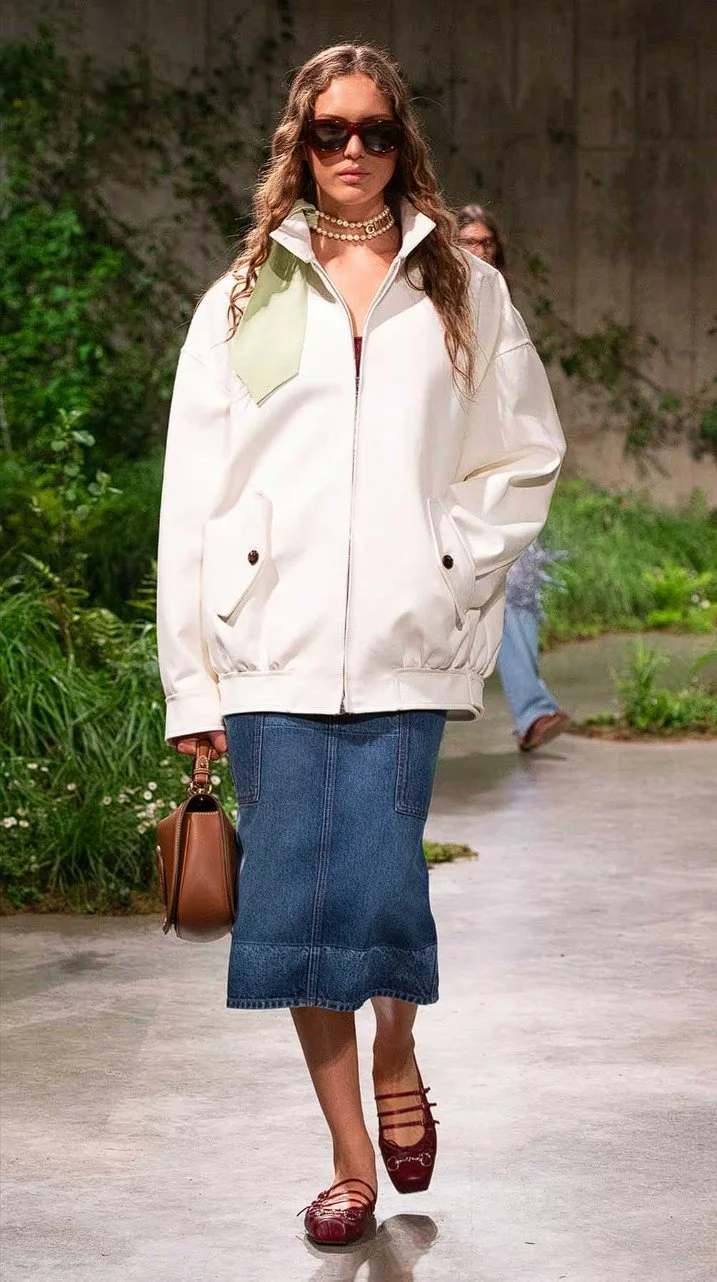
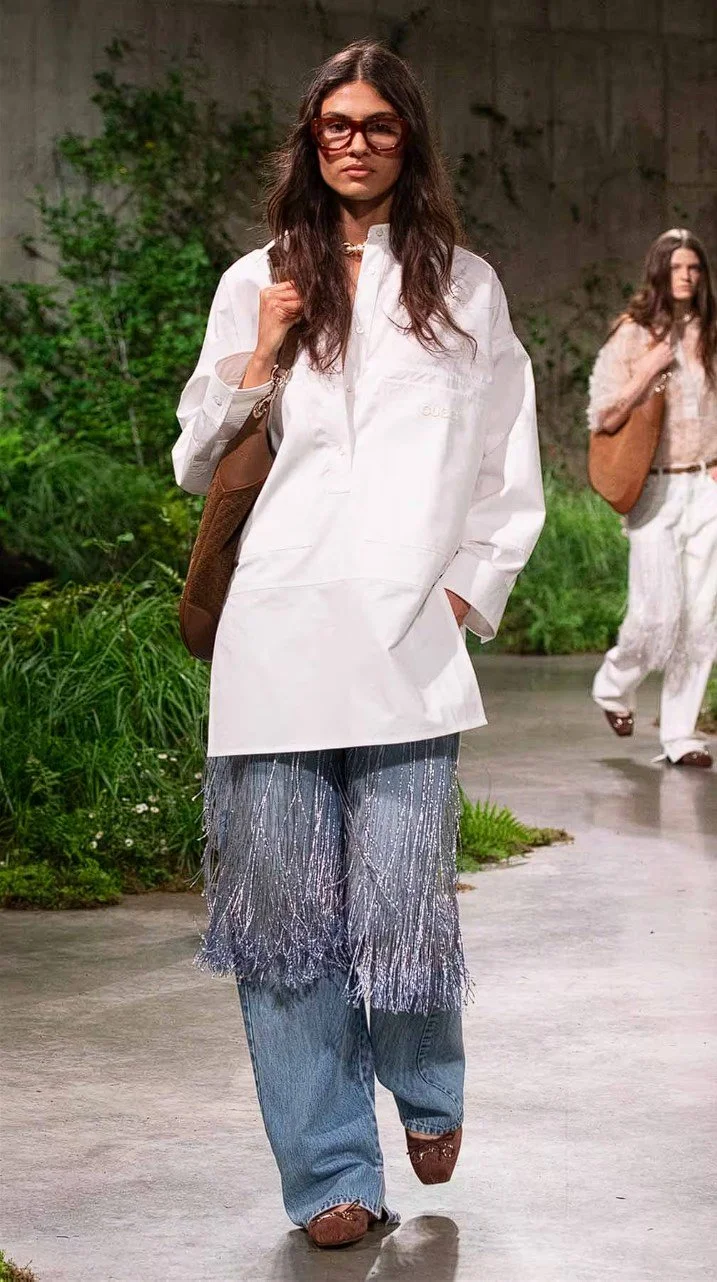
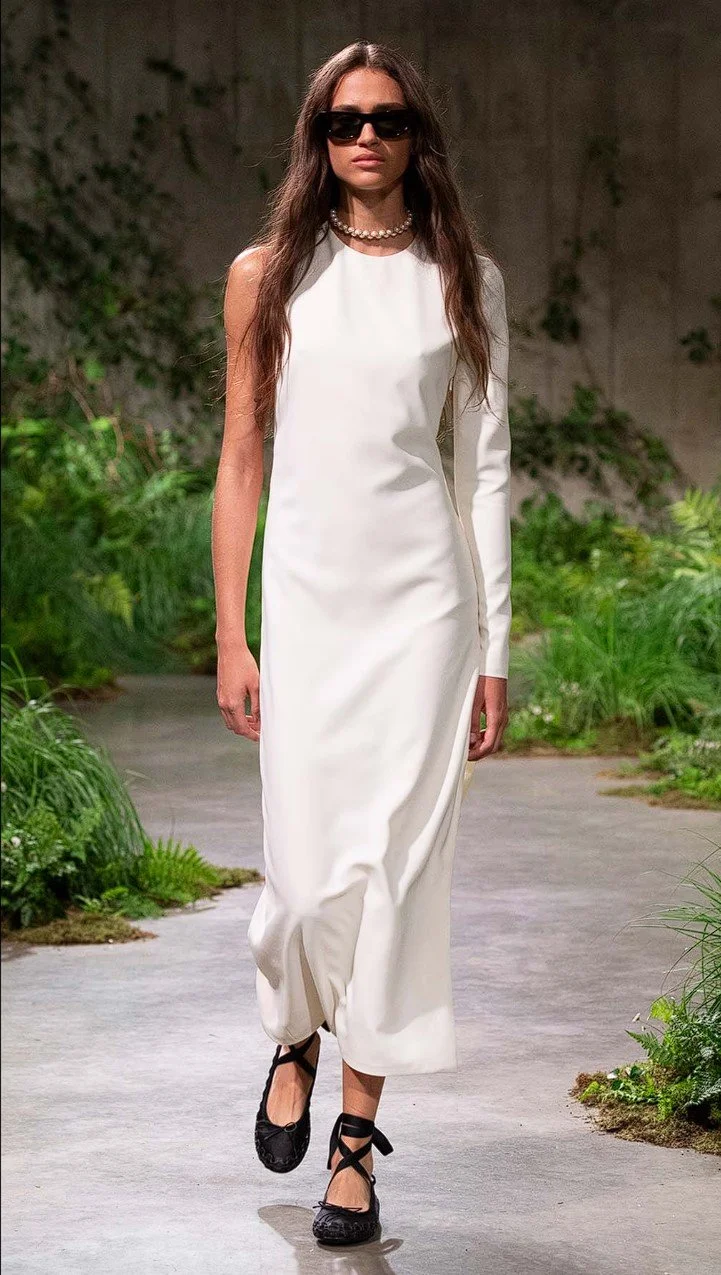
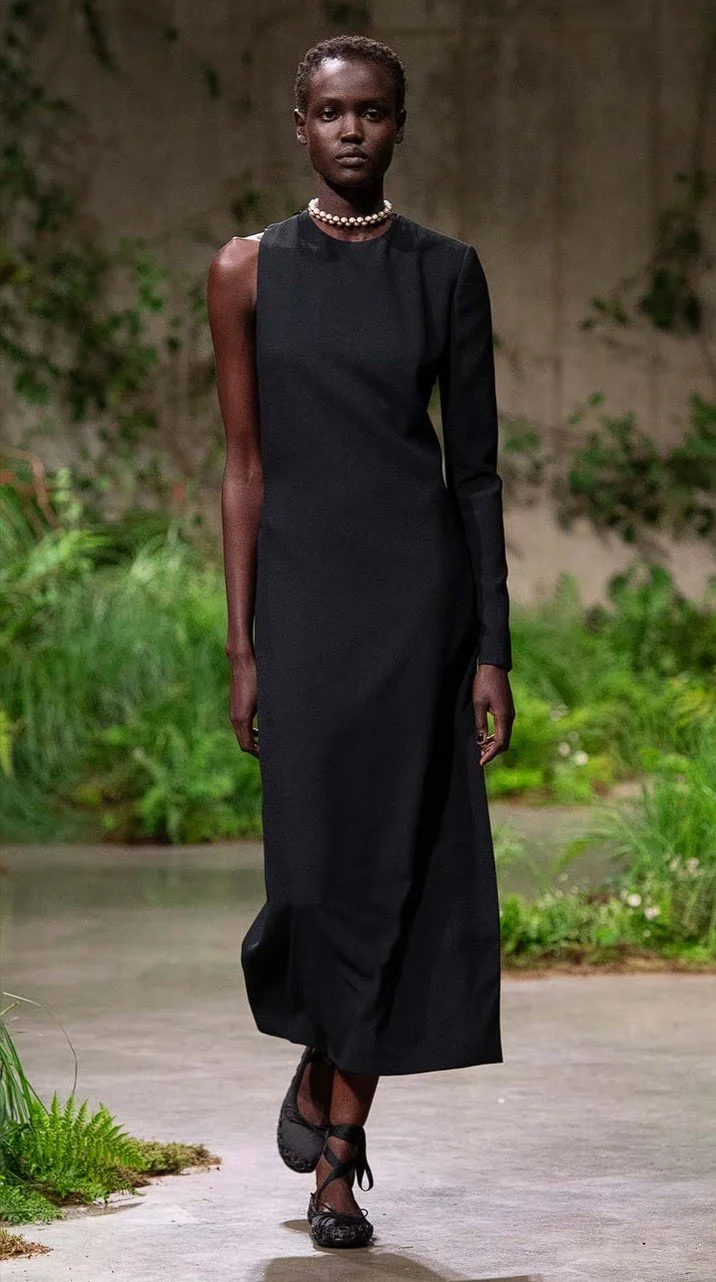
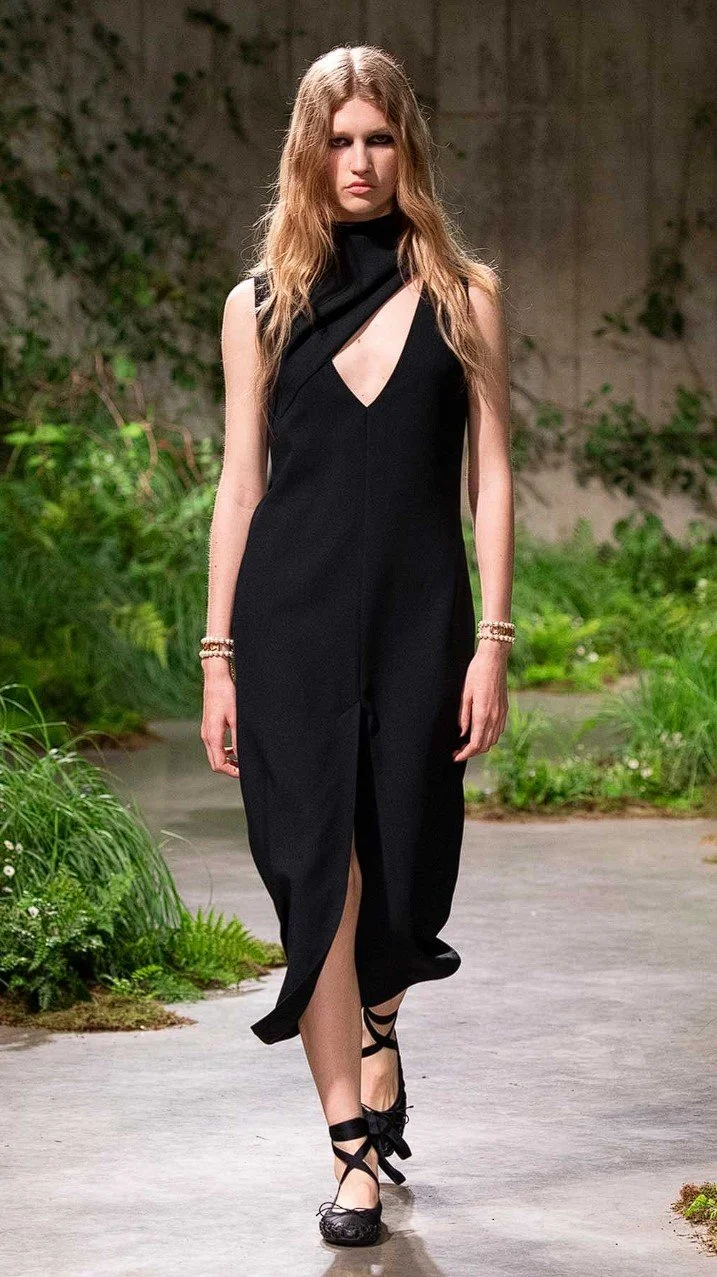
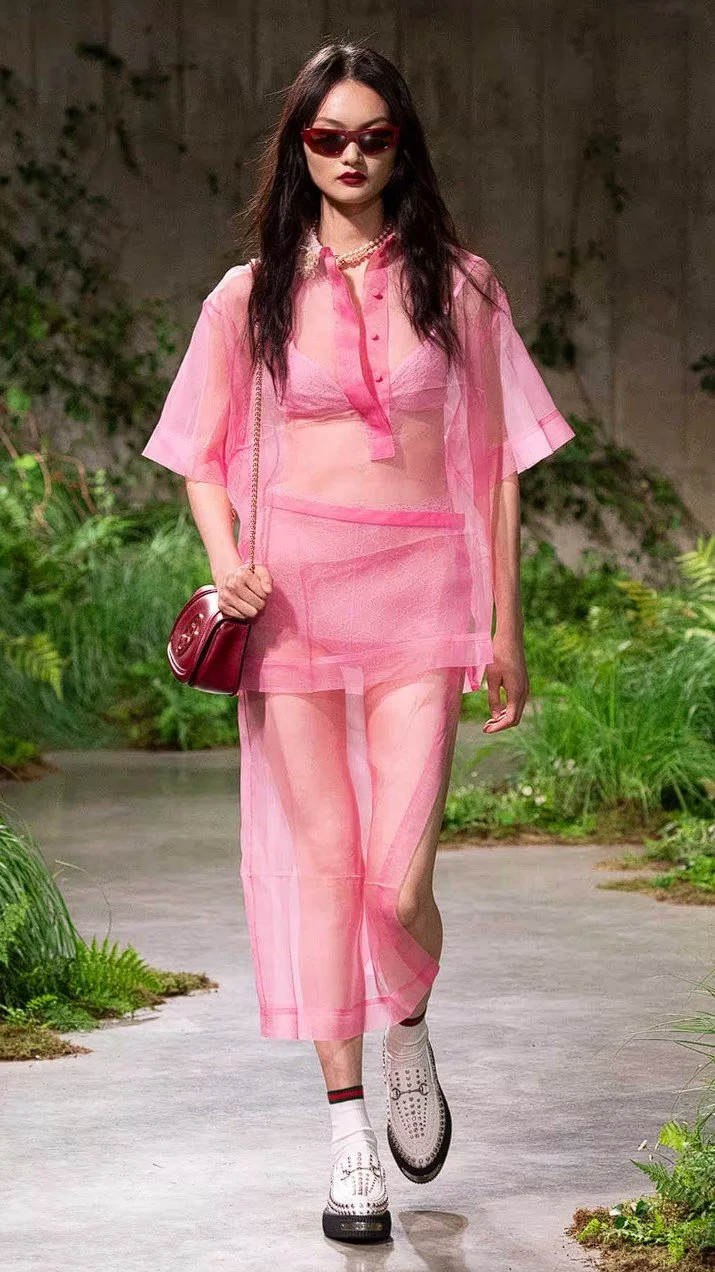
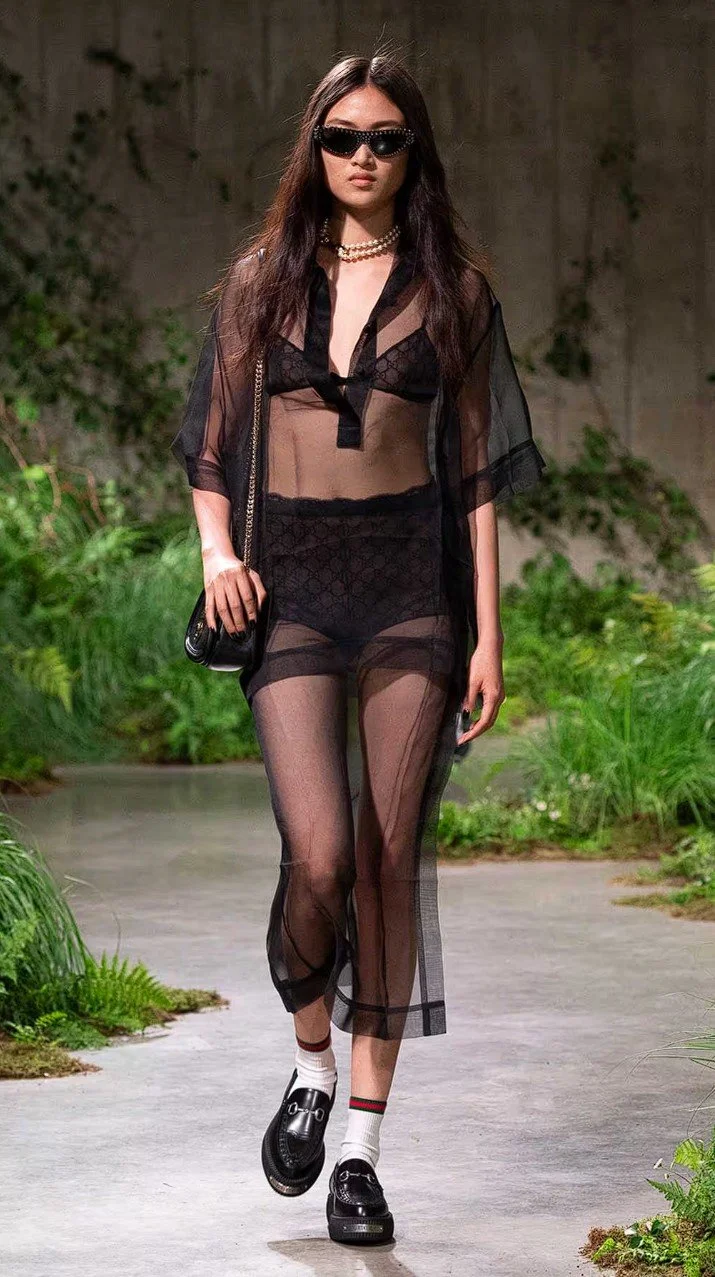
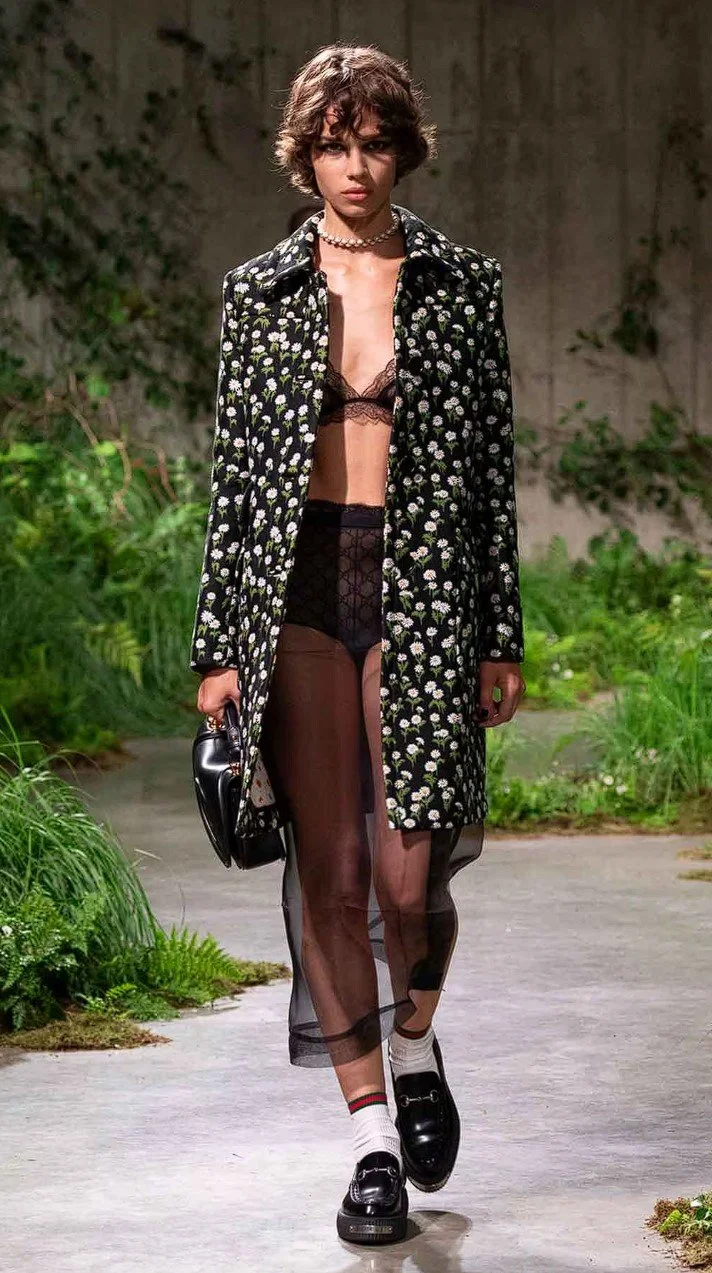
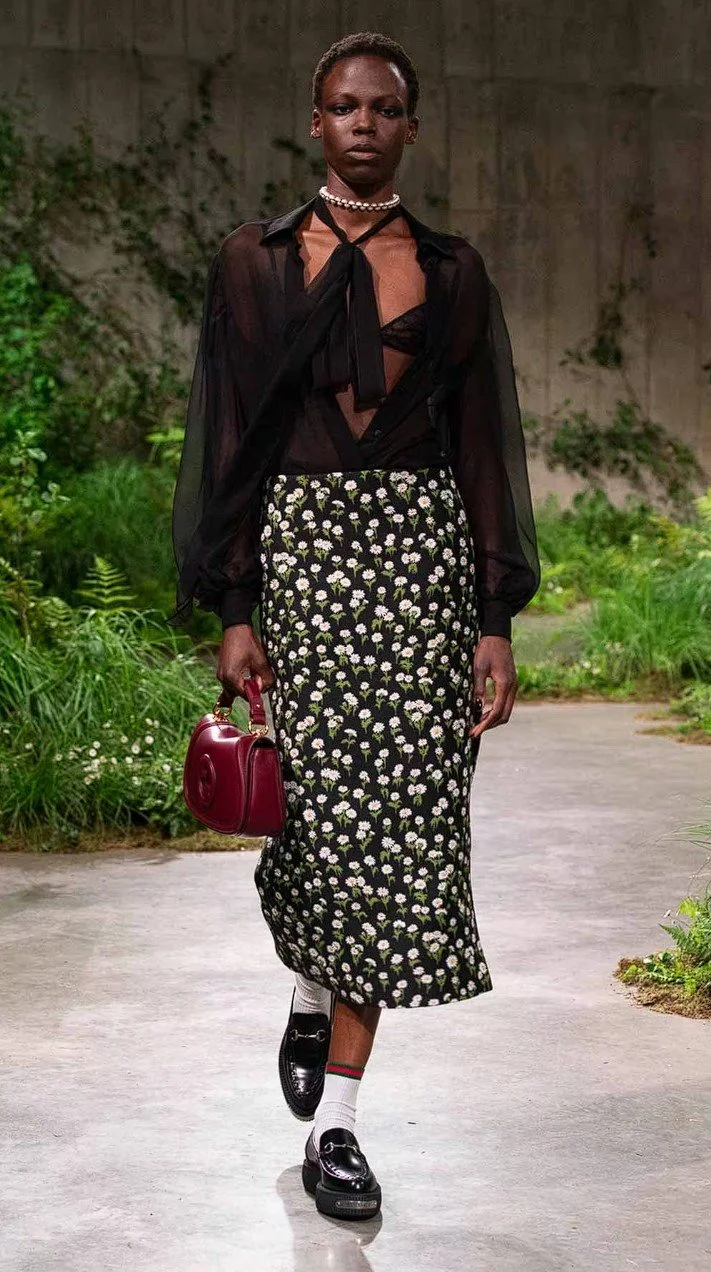
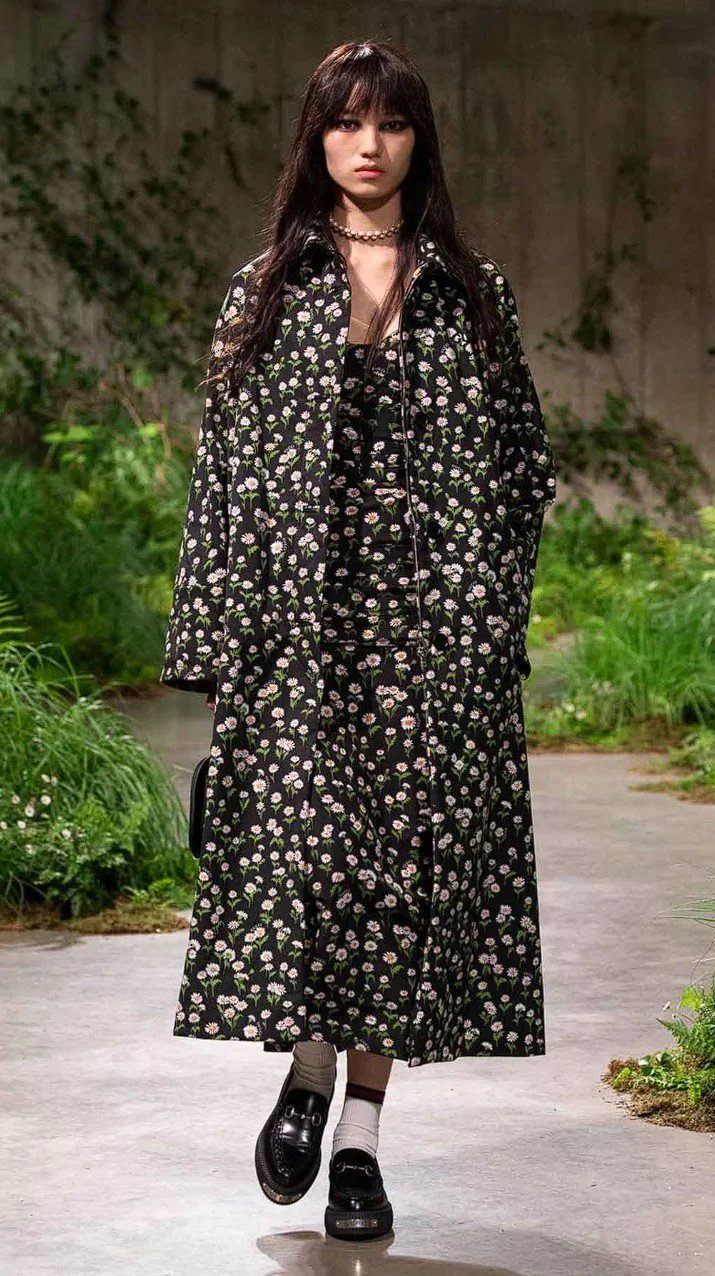
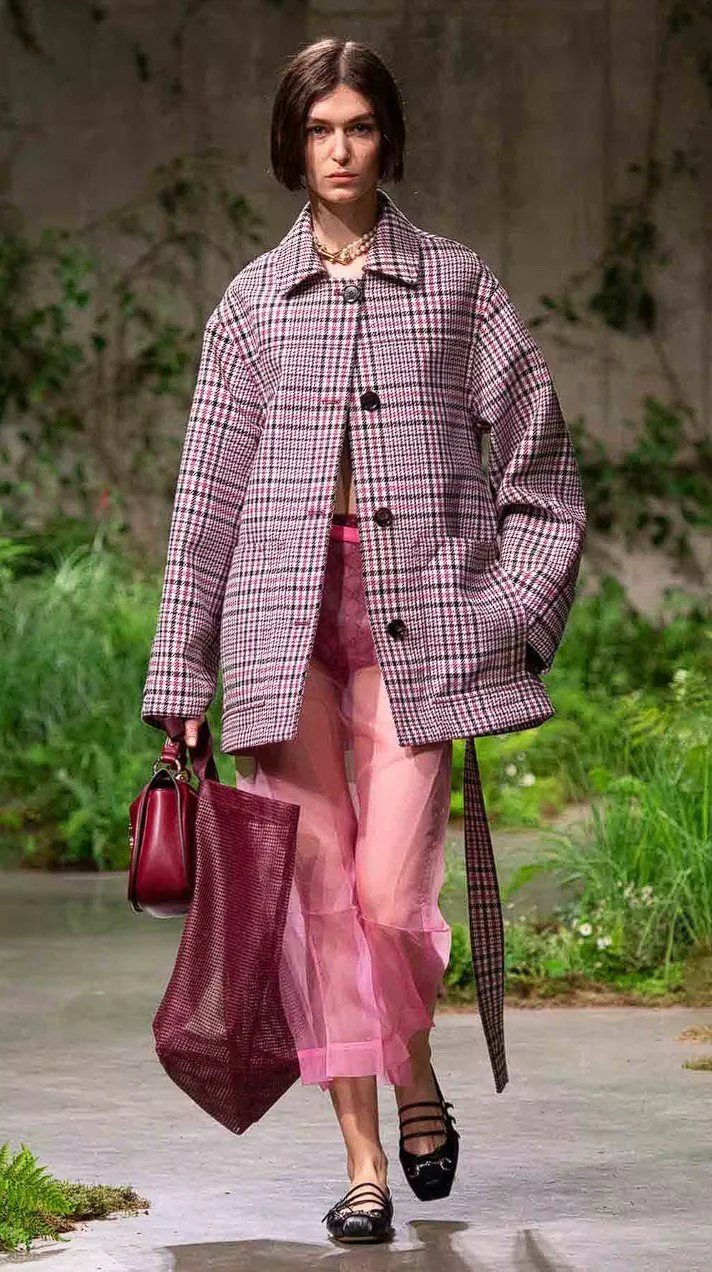
Footwear leaned toward comfort, with nearly all models sporting flats, including horse-bit ballerinas with gridded rubber soles and raised brothel creepers featuring branded metal details—a continuation of looks from the recent menswear show. Alongside these, jeans, workwear-inspired poplin tops, and oversized leather bombers suggested a cohesive thread running through De Sarno’s upcoming collections, hinting at a spring 2025 evolution in Milan. High-collared, weathered leather coats were centerpieces in a series of outfits defined by muted pastel color combinations, accompanied by matching handbags and shopping bags.
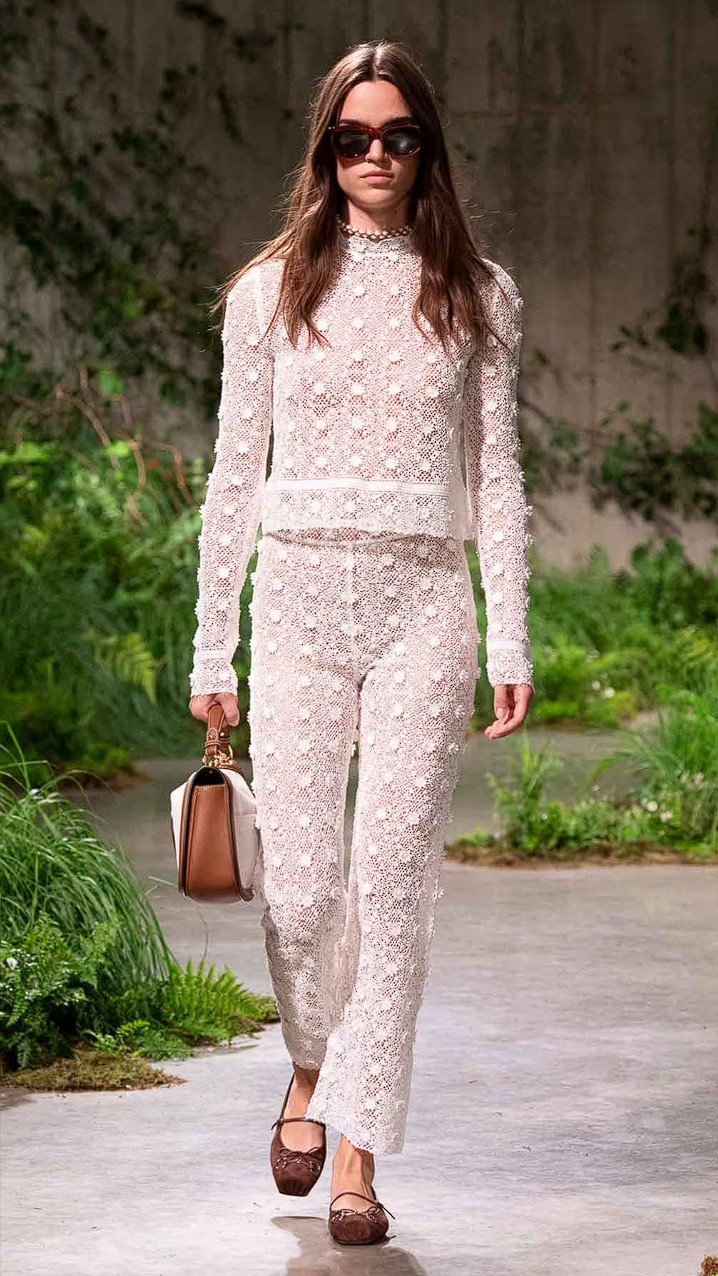
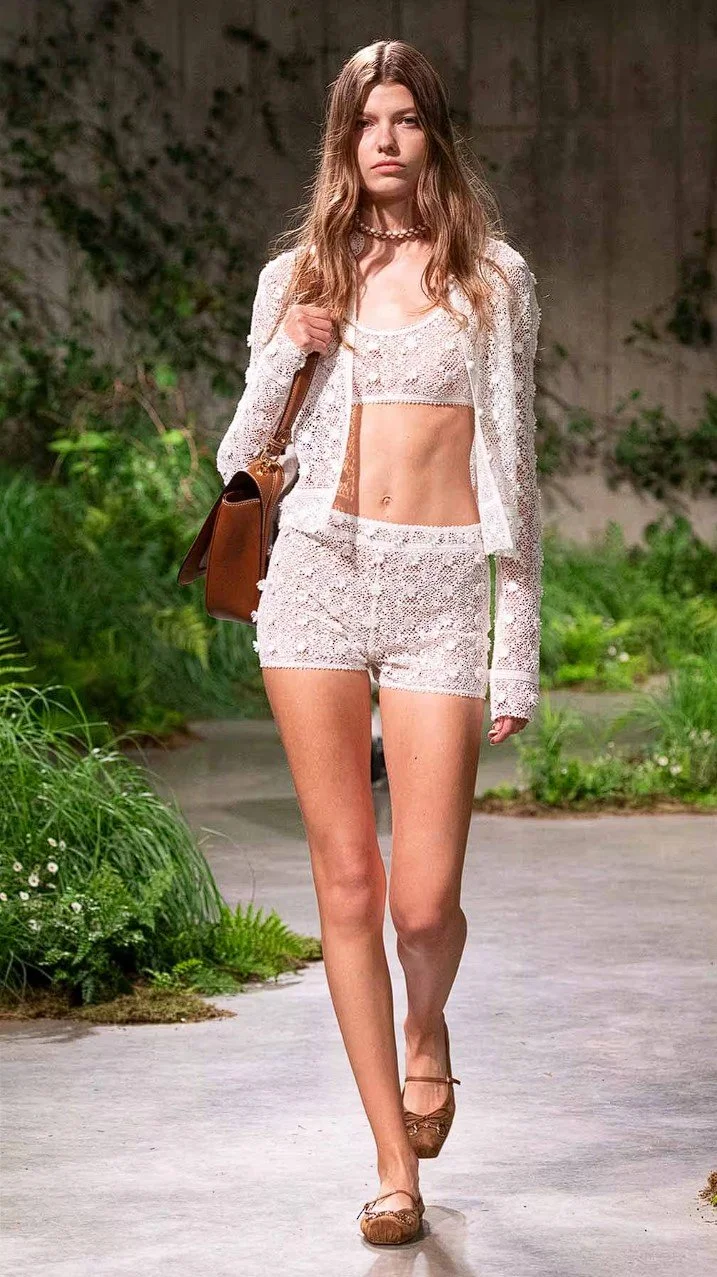
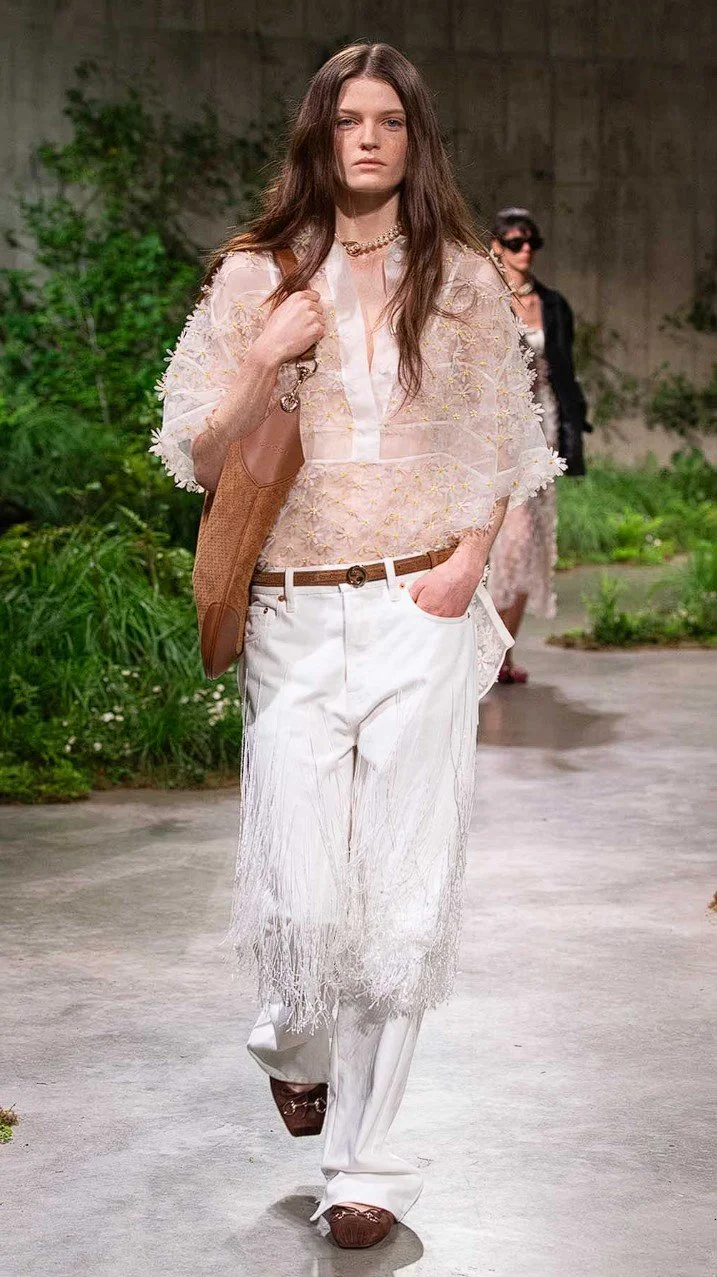
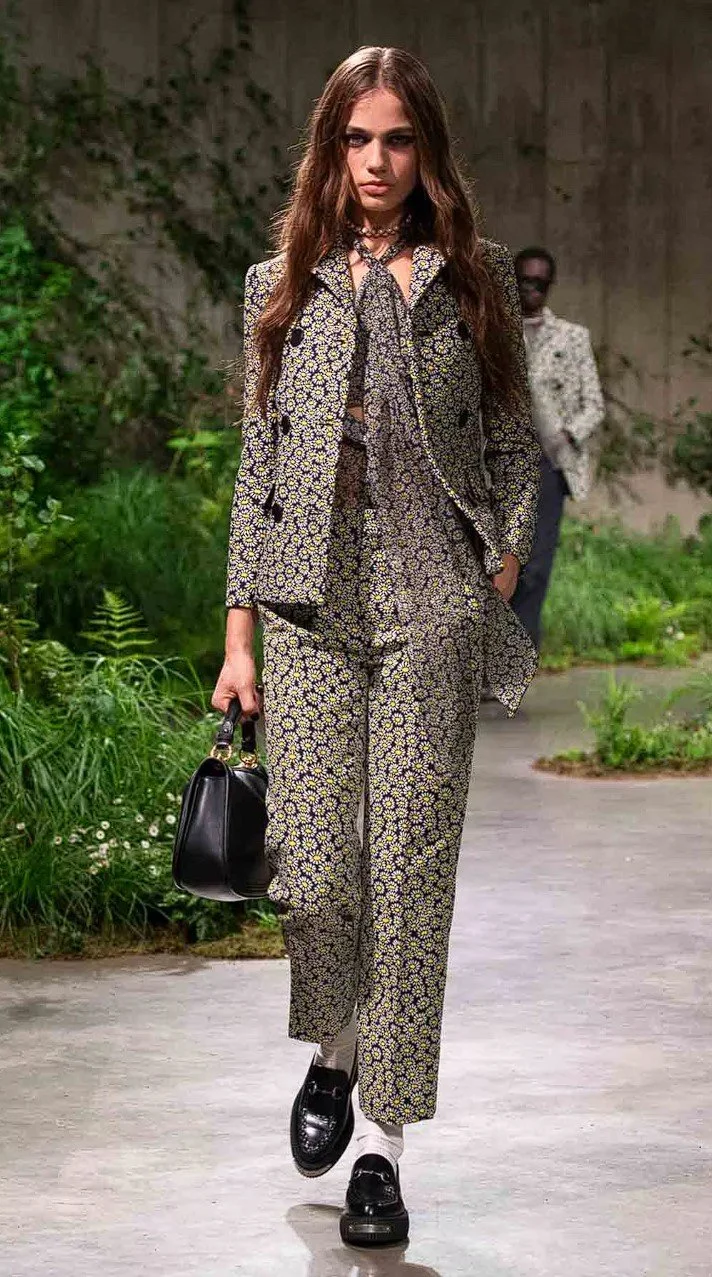
De Sarno incorporated intricate detailing, such as jeans adorned with hanging beaded threads or chamomile flowers embroidered in a dégradé pattern. The floral motif appeared again in later looks, including a skirt where the black floral pattern on the outside was mirrored in the yellow organza lining. Checks were embellished with hand-applied beads and studs, softening their lines and adding texture.
For the finale, De Sarno blended the sound of a yearning violin in Mina’s “Ancora” with Debbie Harry’s “ooh, ooh, ooh, ooh” from “Heart of Glass,” a nod to the revival of the Blondie bag, with Harry herself in attendance. The moment underscored a broadening of De Sarno’s previously tight, technical focus into something more expansive.