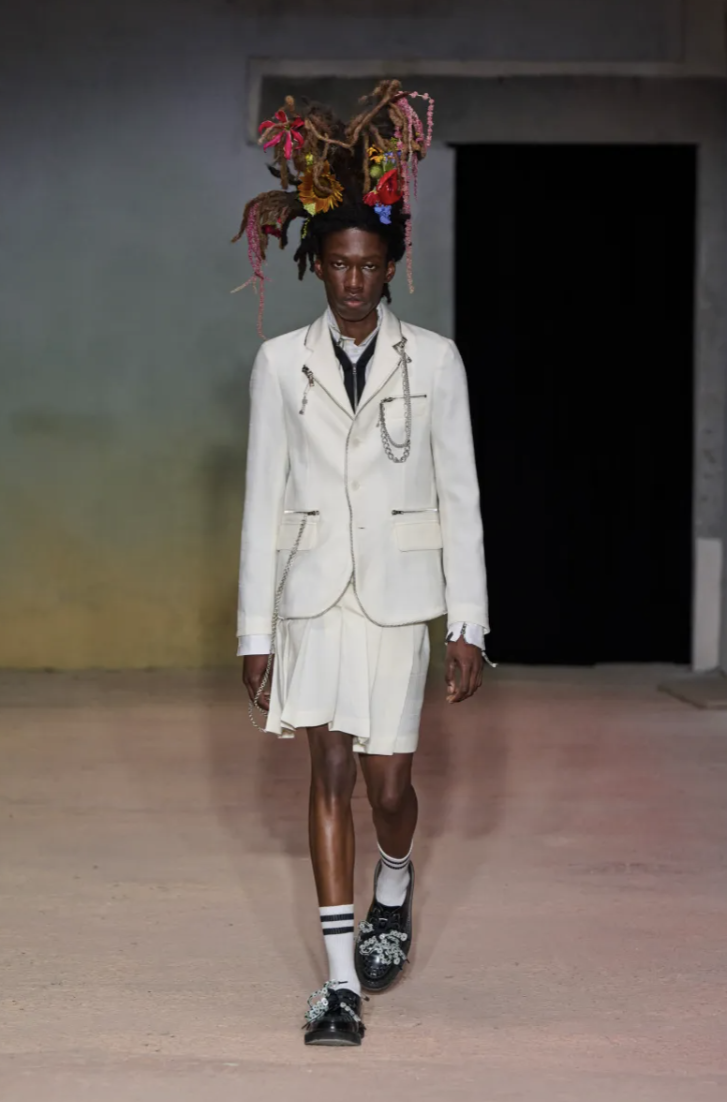
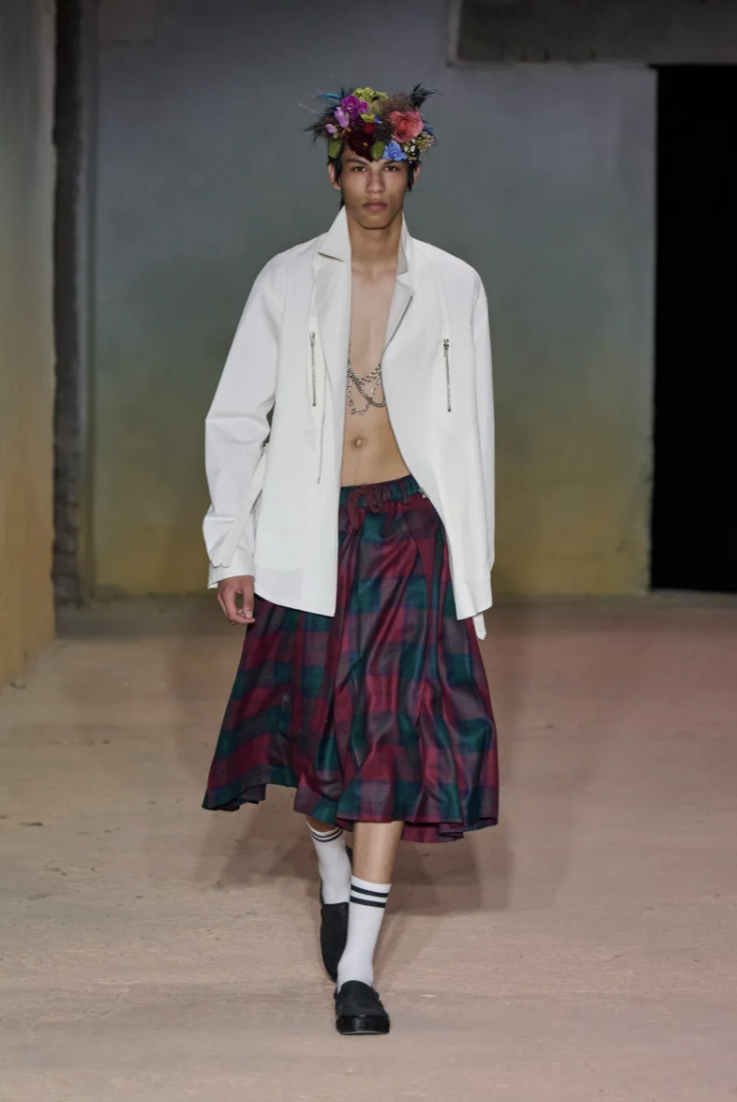
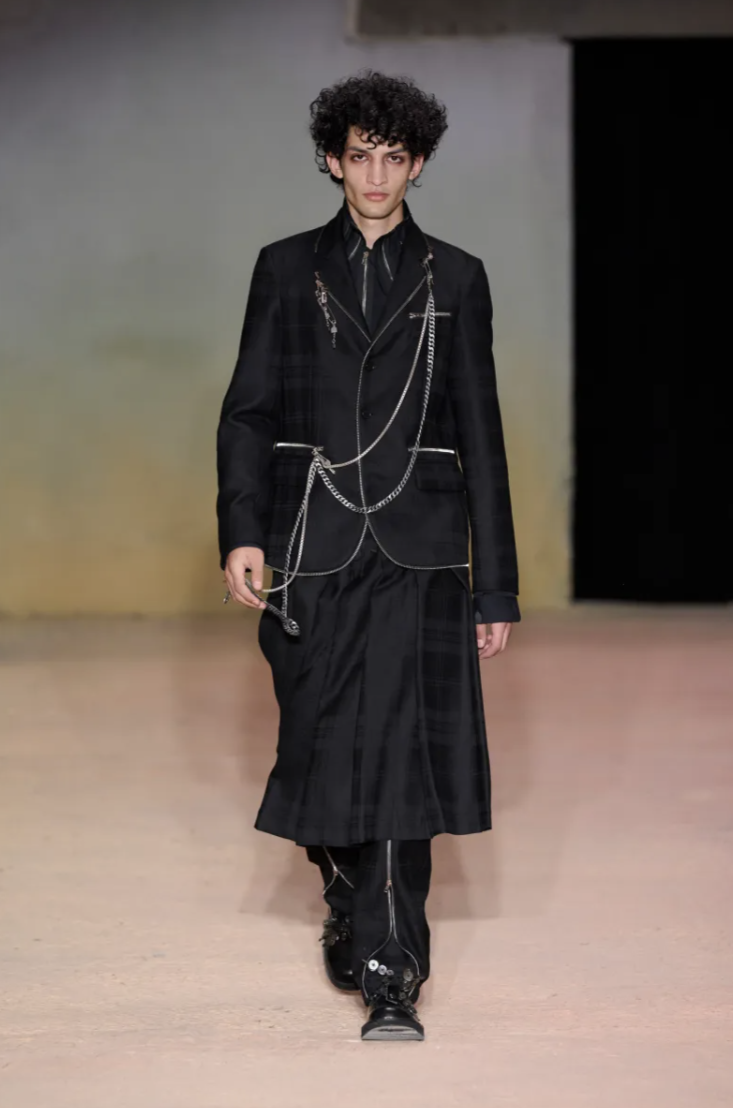
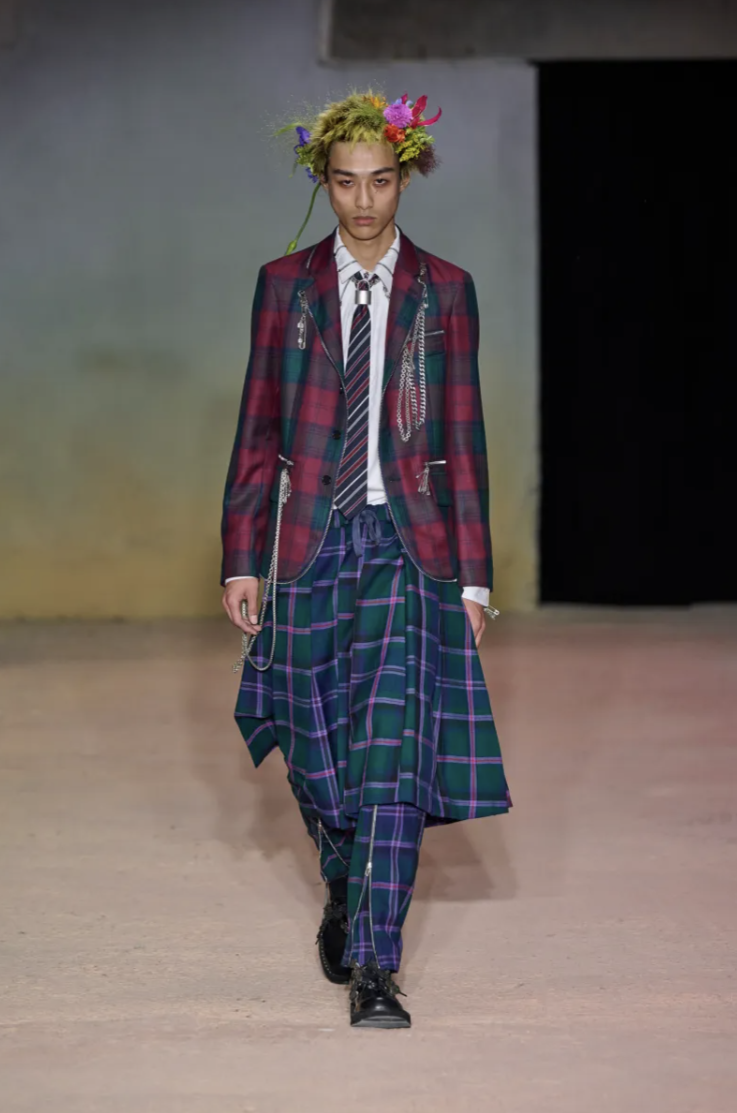
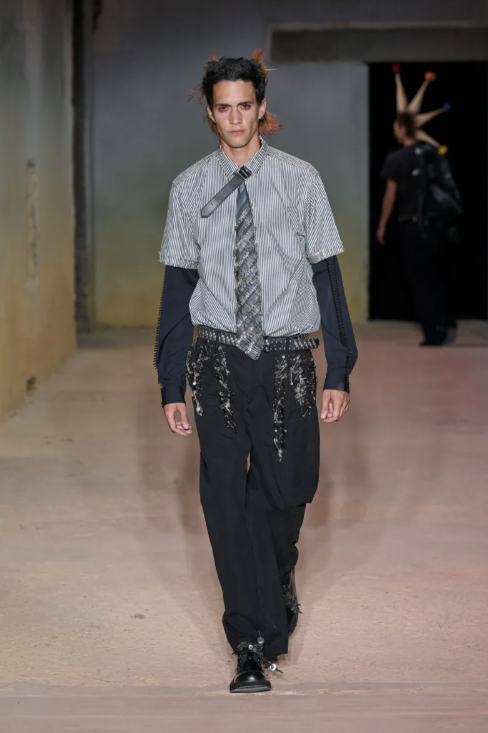
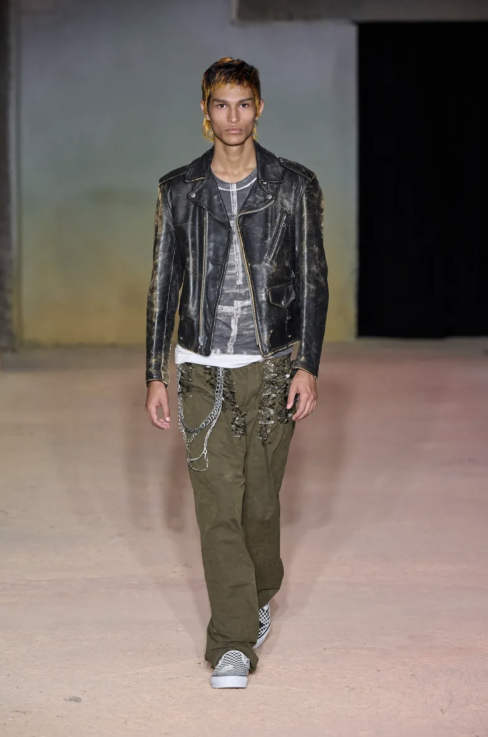
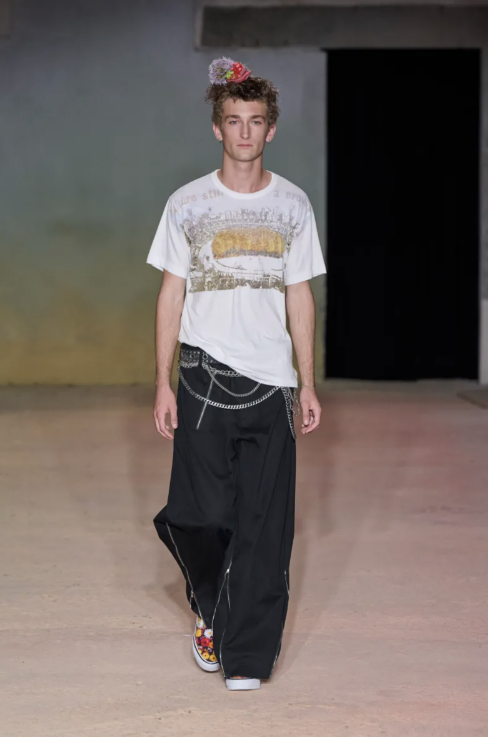
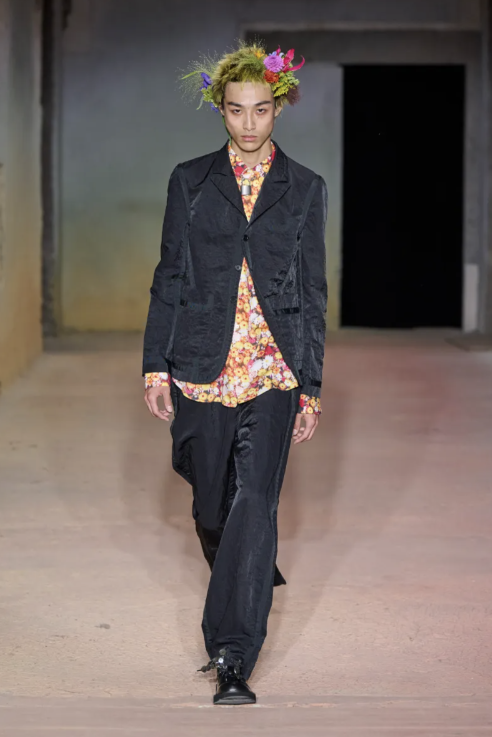
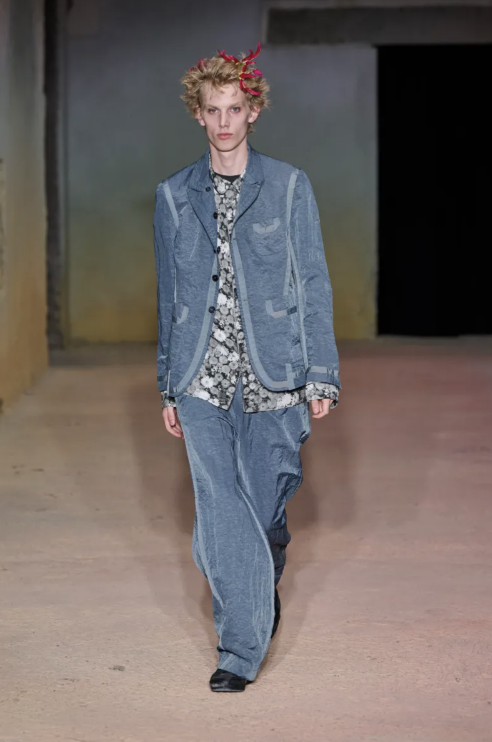
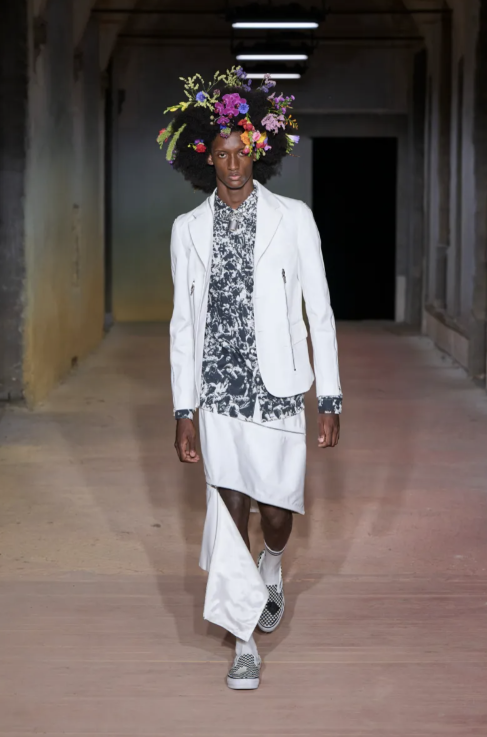
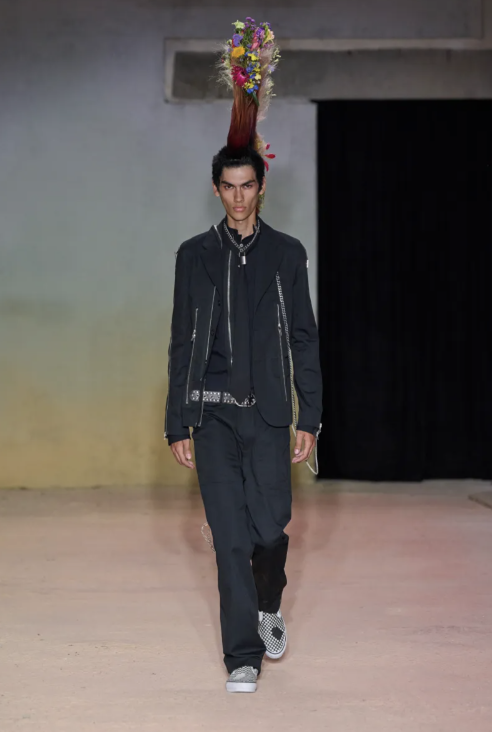
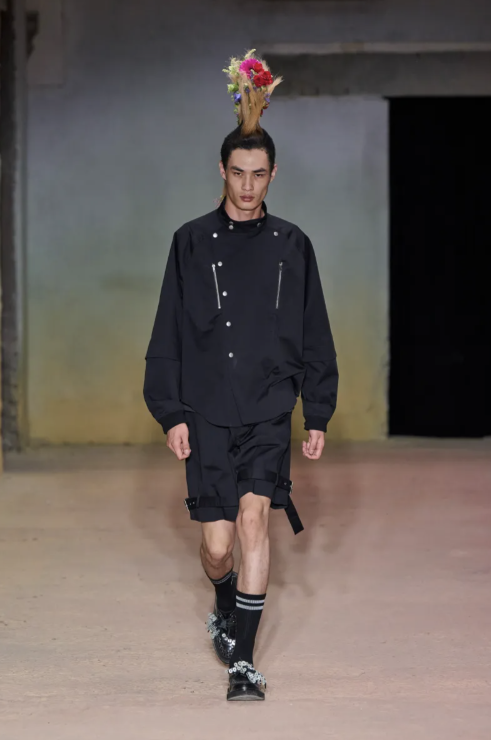
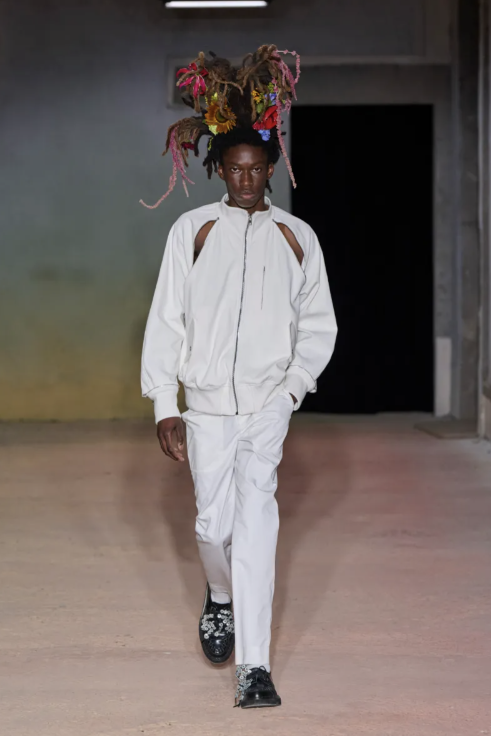
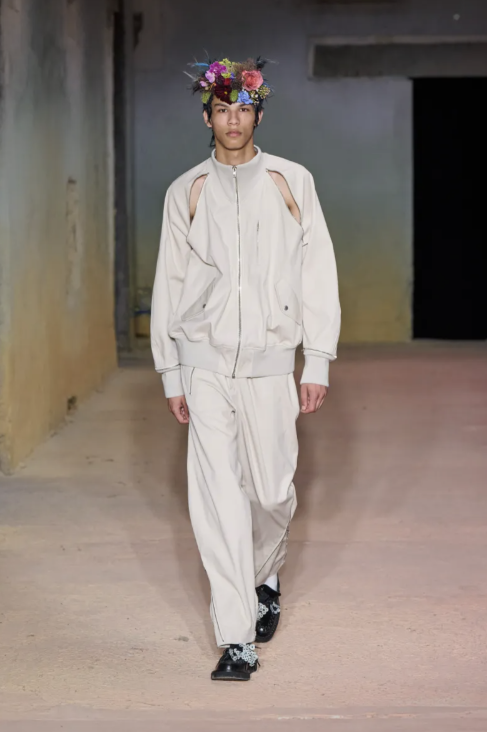
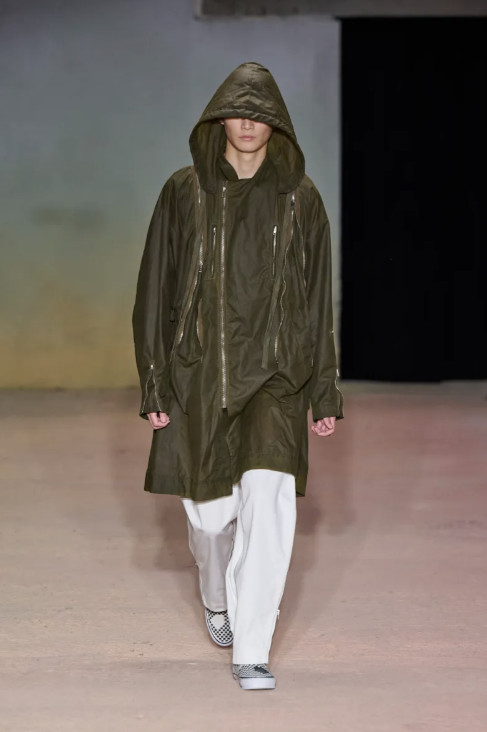
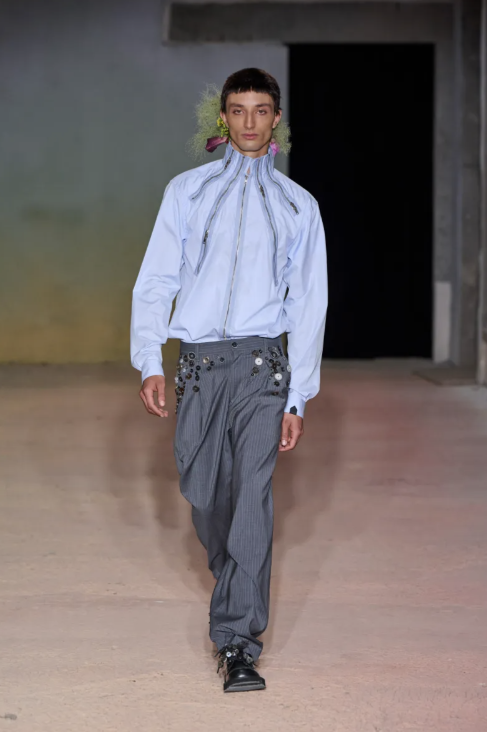
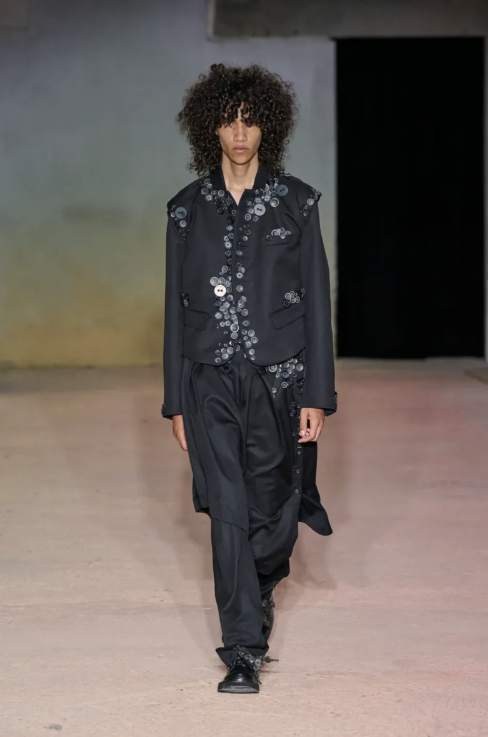
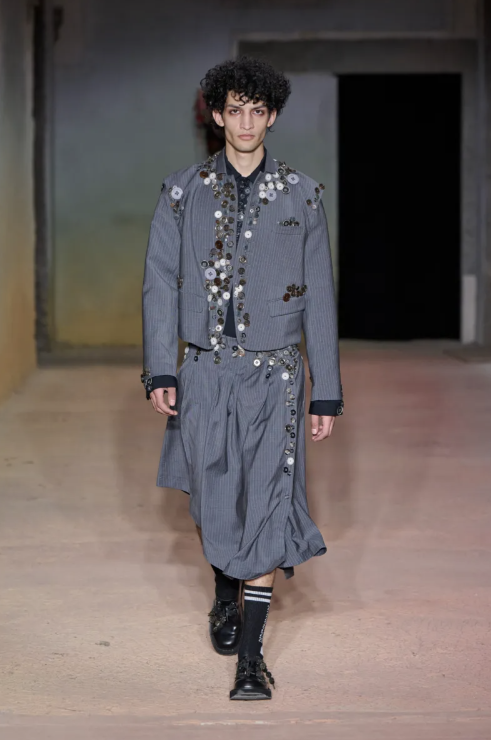
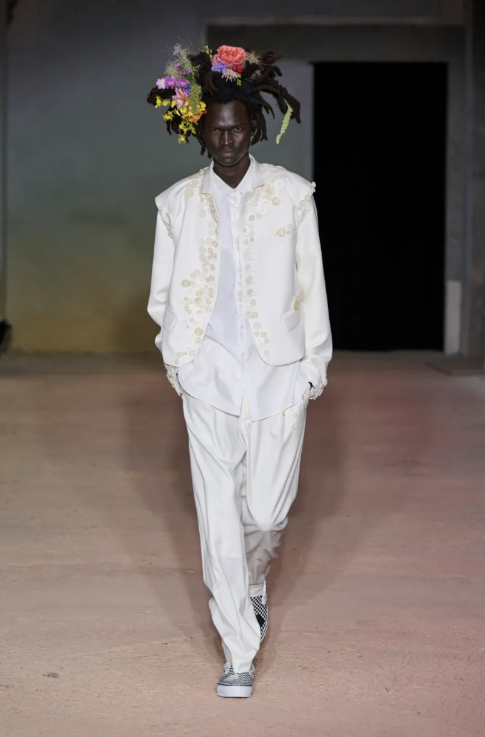
DSM Kei Ninomiya Men’s Spring 2027
Few designers understand the tension between rebellion and craftsmanship quite like Kei Ninomiya. For his third collection under the DSM Kei Ninomiya label, unveiled during Pitti Uomo in Florence, the Japanese designer delivered a collection that examined punk not as nostalgia, but as a living creative philosophy. The result was one of the week's most theatrical presentations, transforming an historic Florentine convent into an immersive world where fashion, performance and subculture collided.
The collection marked another important chapter for the Dover Street Market-backed project, launched in 2025 with the deliberately ambiguous manifesto: Untitled, Untethered, Undefined. If previous seasons explored the brand's evolving identity, Spring/Summer 2027 finally gave it a distinct voice—one rooted in the anarchic spirit of punk, interpreted through Ninomiya's meticulous eye for construction.
A Show That Blurred Performance and Reality
Rather than a traditional runway, guests entered the atmospheric courtyard of Florence's former Sant'Orsola convent, where models drifted unpredictably through scaffolding and seating areas. Some climbed the bleachers, others wandered among guests or gathered in clusters, creating the feeling of stumbling into an underground gathering rather than attending a polished fashion show.
The performance occasionally leaned into choreography more than spontaneity, but that seemed beside the point. Ninomiya wasn't attempting to recreate London's punk movement of the late 1970s. Instead, he explored the mindset behind it: disruption, individuality and creative freedom.
That approach aligned neatly with Dover Street Market's long-standing philosophy of challenging convention. Rather than celebrating punk as an aesthetic, the presentation framed it as an ongoing cultural attitude—one that remains surprisingly relevant in an increasingly commercial luxury industry.
Reworking Punk's Visual Language
The collection drew heavily from the wardrobe codes that have defined punk for decades, but each familiar element was refined through Japanese precision.
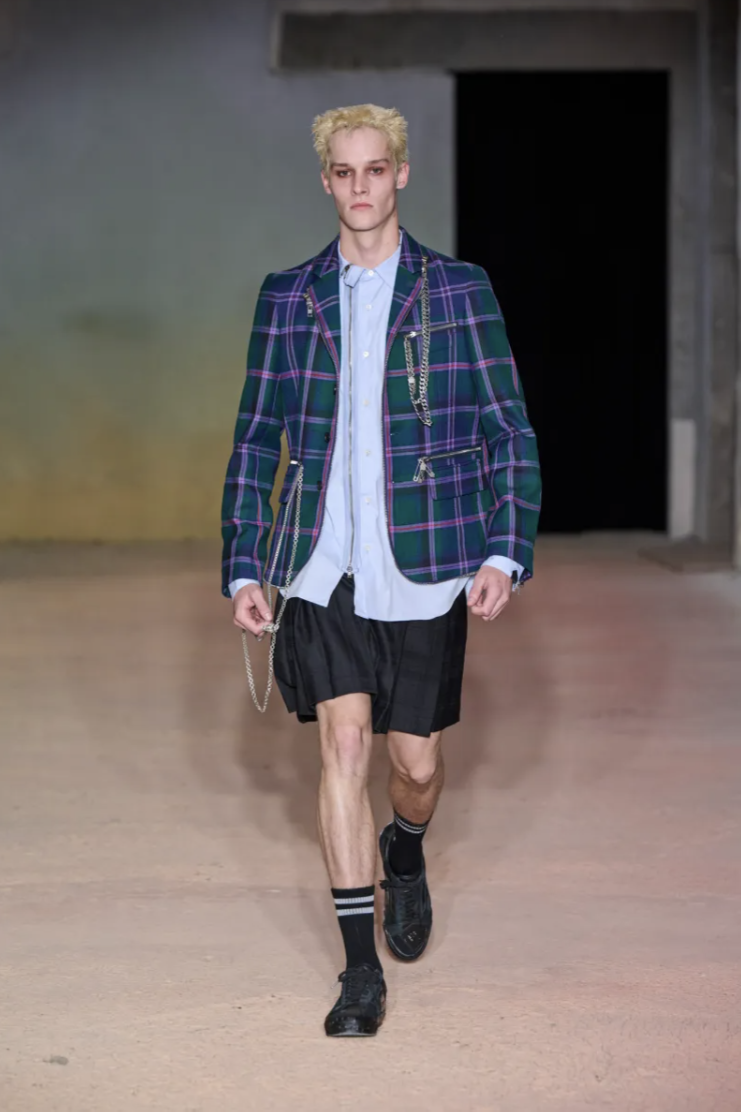
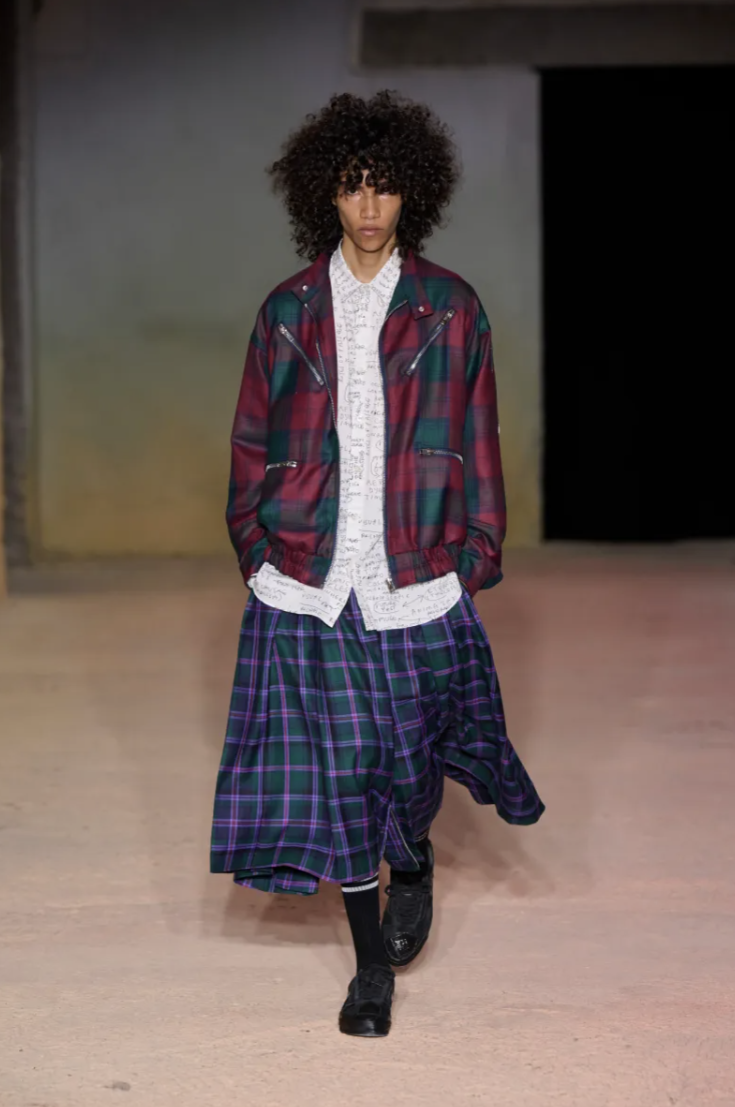
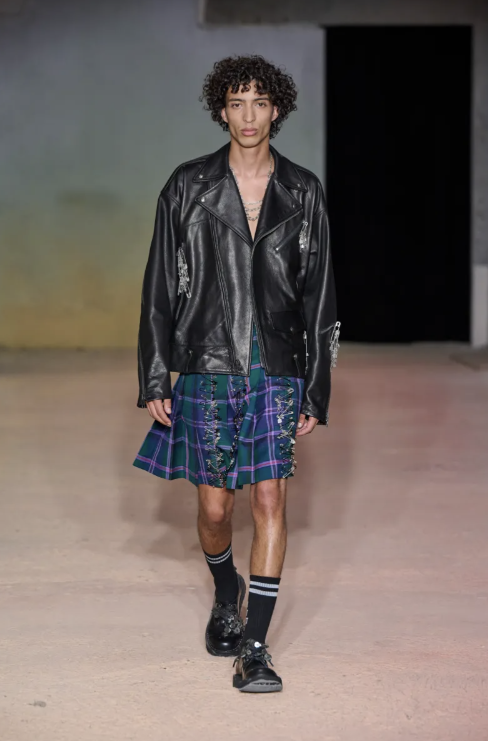
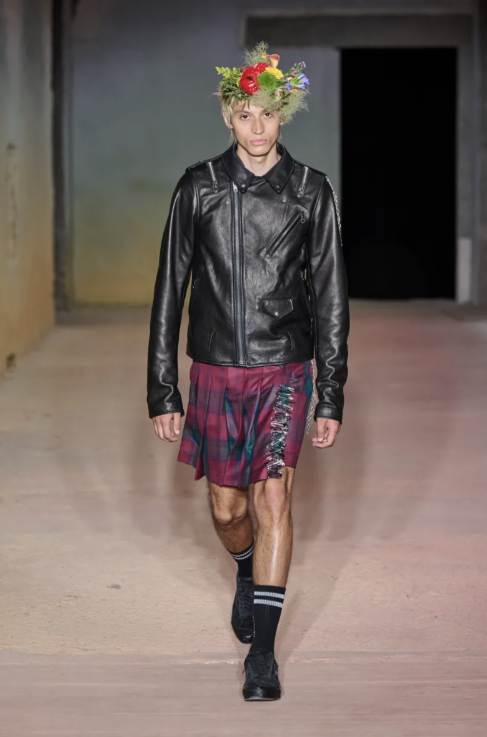
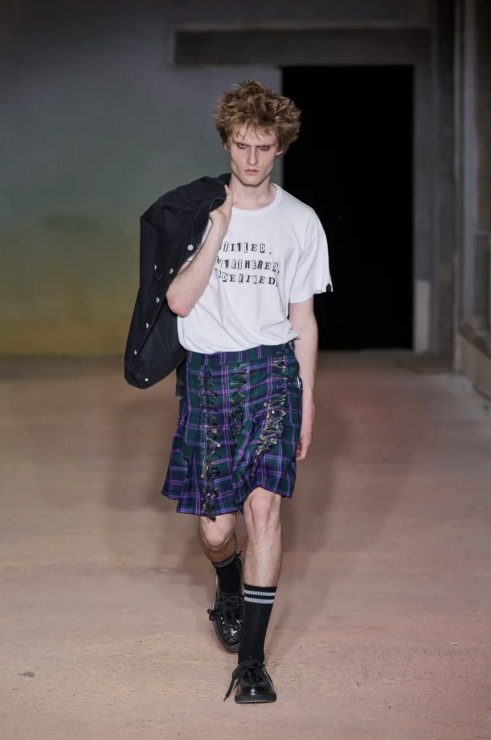
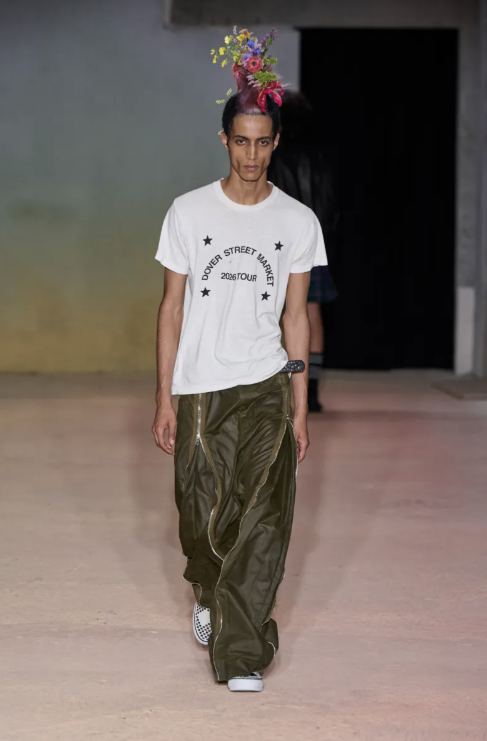
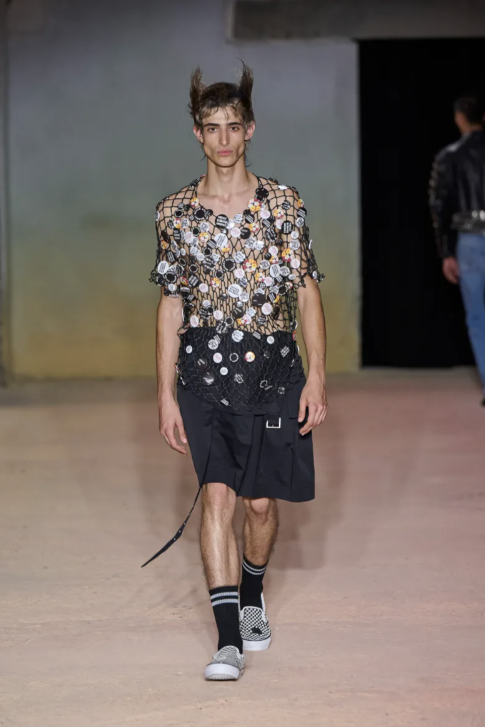
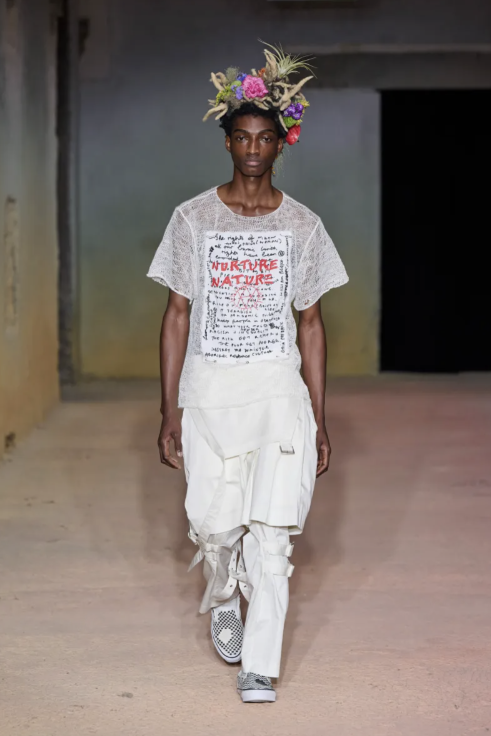
Tartan returned as one of the collection's defining motifs, appearing in sharply cut kilts that sat well above the knee, balancing provocation with elegance. Elsewhere, oversized parachute trousers and shorts featured unusual fastening systems that connected both legs together, subtly altering the silhouette while introducing an almost utilitarian restraint.
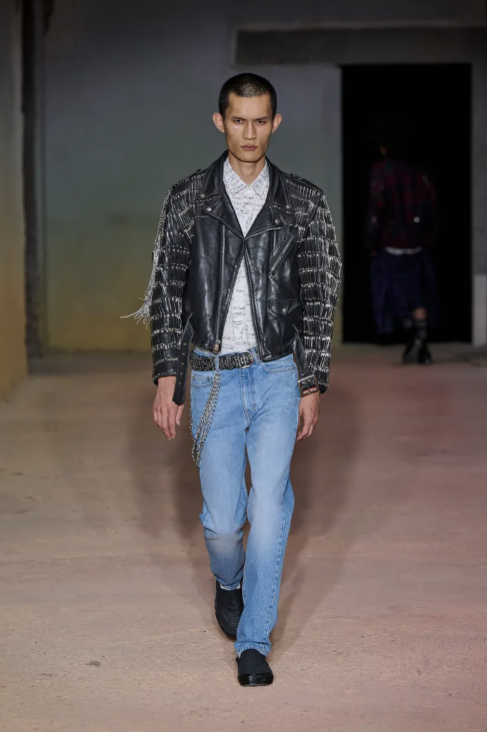
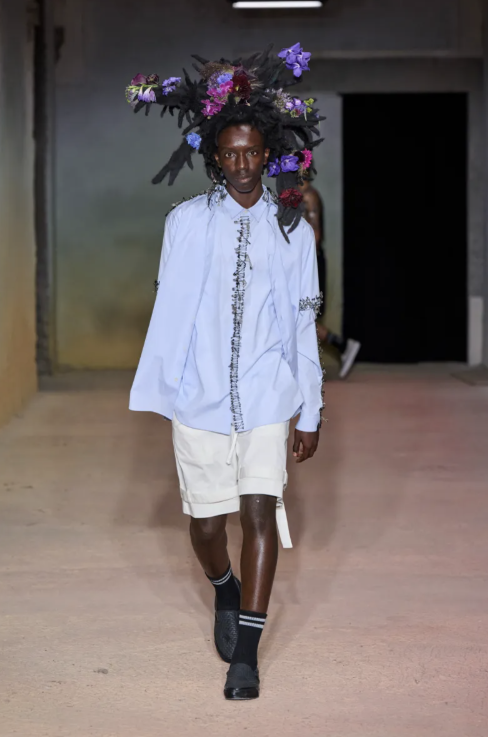
Safety pins—arguably punk's most recognisable symbol—were elevated beyond decoration. Rather than appearing haphazardly attached, they formed precise tonal embellishments across bomber jackets and tailored shirts, creating surfaces that felt closer to couture embroidery than DIY customisation.
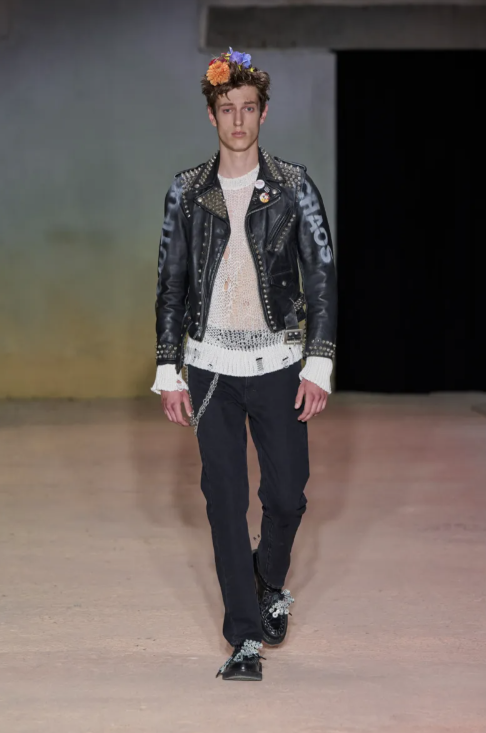
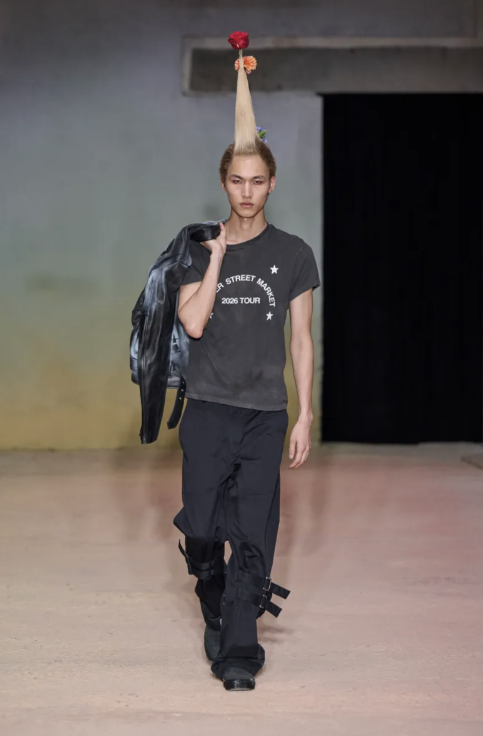
Black tailoring remained central throughout the collection, although jackets and trousers were interrupted by exposed zips, suspended chains and asymmetric detailing that prevented the garments from ever feeling conventional. Leather outerwear, developed alongside Schott N.Y.C., introduced hand-finished treatments and graffiti-inspired typography, including phrases such as "Chaos" sprayed across biker jackets.
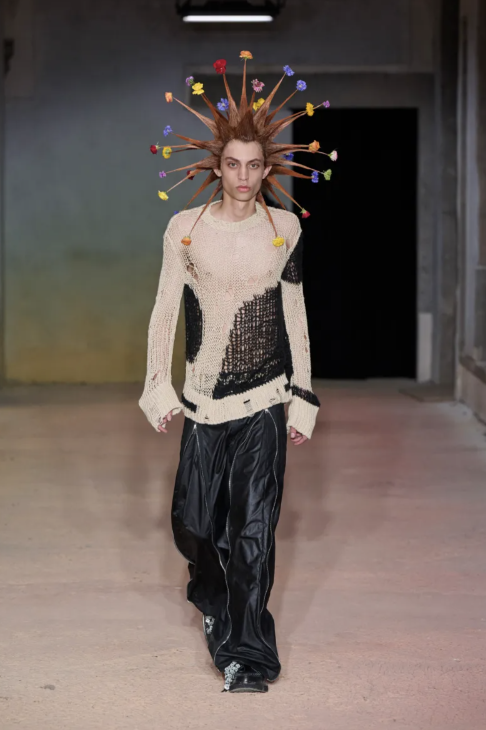
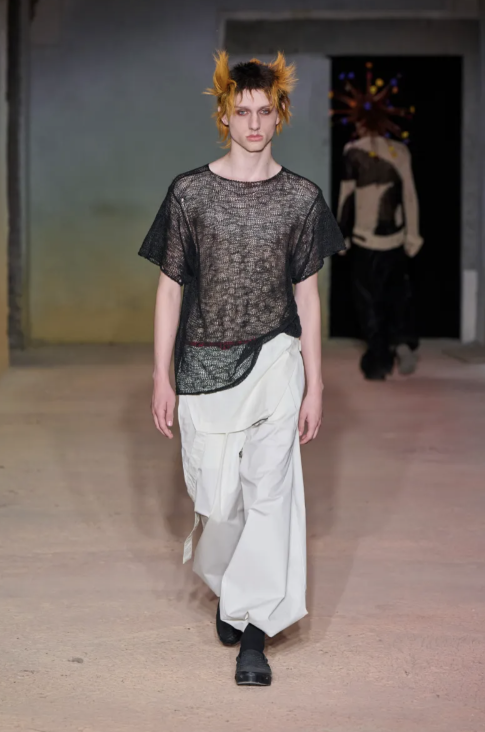
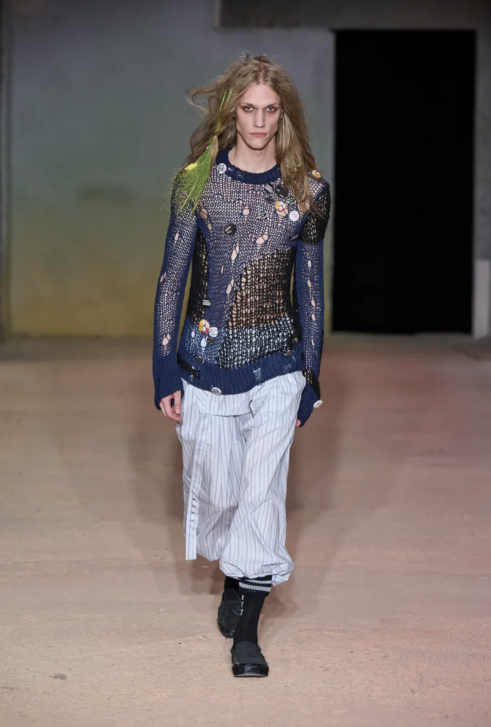
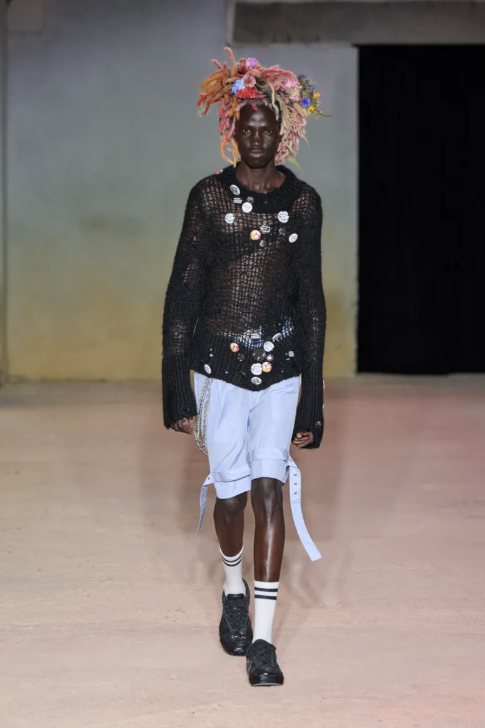
Open-weave knitwear arrived covered with enamel badges and pins, while trousers occupied an intriguing space somewhere between military utility and classic tailoring.
The styling never felt like costume. Instead, each reference was carefully filtered through Ninomiya's own design language, allowing the collection to acknowledge punk's visual history without becoming trapped by it.
Collaborations That Added Authenticity
The collection was strengthened considerably through a series of collaborations that felt genuinely connected to the narrative rather than serving as marketing exercises.
Schott N.Y.C.'s involvement brought authenticity to the leather jackets, while Vans supplied understated black leather slip-on shoes that grounded the styling. George Cox—the footwear manufacturer synonymous with Britain's original punk movement—created traditional creepers that reinforced the collection's cultural lineage.
Perhaps the most significant collaboration, however, came through the estate of Jamie Reid.
The influential British artist remains inseparable from punk's visual identity, having created the instantly recognisable artwork for the Sex Pistols' "God Save the Queen." Rather than reproducing these graphics as nostalgic prints, Ninomiya incorporated Reid's work into the broader narrative of the collection, acknowledging one of punk's most influential visual voices while allowing the garments to remain contemporary.
Hair Became Part of the Collection
If the clothing explored punk through construction, the hair completed the story.
Created by hairstylist Pablo Kümin, towering mohawks and elaborately sculpted Afro hairstyles were decorated with colourful summer flowers, introducing an unexpected softness to the collection's otherwise uncompromising aesthetic.
The juxtaposition proved remarkably effective. The flowers disrupted expectations, reminding audiences that rebellion doesn't always need to appear aggressive. Beauty and defiance can coexist.
Several of the hairstyles became talking points in their own right, occasionally threatening to steal attention from the clothing—a testament to the power of the show's overall creative direction.
Community Rather Than Commerce
One of the more interesting aspects of the presentation lay beyond the clothes themselves.
Since its launch, some critics have dismissed DSM Kei Ninomiya as little more than branded merchandise for Dover Street Market. During the presentation, Dover Street Market CEO Adrian Joffe addressed those assumptions directly, arguing that merchandise should not automatically be viewed as a lesser form of fashion.
More revealing were Ninomiya's own comments.
Rather than describing the collection through silhouettes or fabrics, he spoke repeatedly about community. Each season, he explained, focuses on a different cultural group connected to Dover Street Market's wider philosophy.
For Spring/Summer 2027, punk represented more than a style.
It symbolised openness, individuality and support for people existing outside the mainstream.
That perspective reframed the collection entirely. The tartans, safety pins and leather jackets became visual tools for discussing belonging rather than simply referencing fashion history.
A New Identity for DSM Kei Ninomiya
Only three collections into its existence, DSM Kei Ninomiya is beginning to distinguish itself from both Comme des Garçons and Dover Street Market itself.
Rather than functioning as a merchandising exercise, the label increasingly resembles an ongoing exploration of youth culture through changing creative communities. Each season appears less interested in defining a singular house aesthetic than documenting different social identities through clothing.
Spring/Summer 2027 felt like its strongest statement to date.
In an era when luxury fashion often sanitises counterculture into commercially digestible trends, Kei Ninomiya reminded audiences that punk's real legacy lies not in tartan or leather jackets, but in the willingness to question accepted norms.
That message felt surprisingly fresh.
Long after the flowers had disappeared and the music faded inside Florence's Sant'Orsola complex, it was the collection's underlying optimism—not its aggression—that lingered most.