Dior Men’s Spring 2027
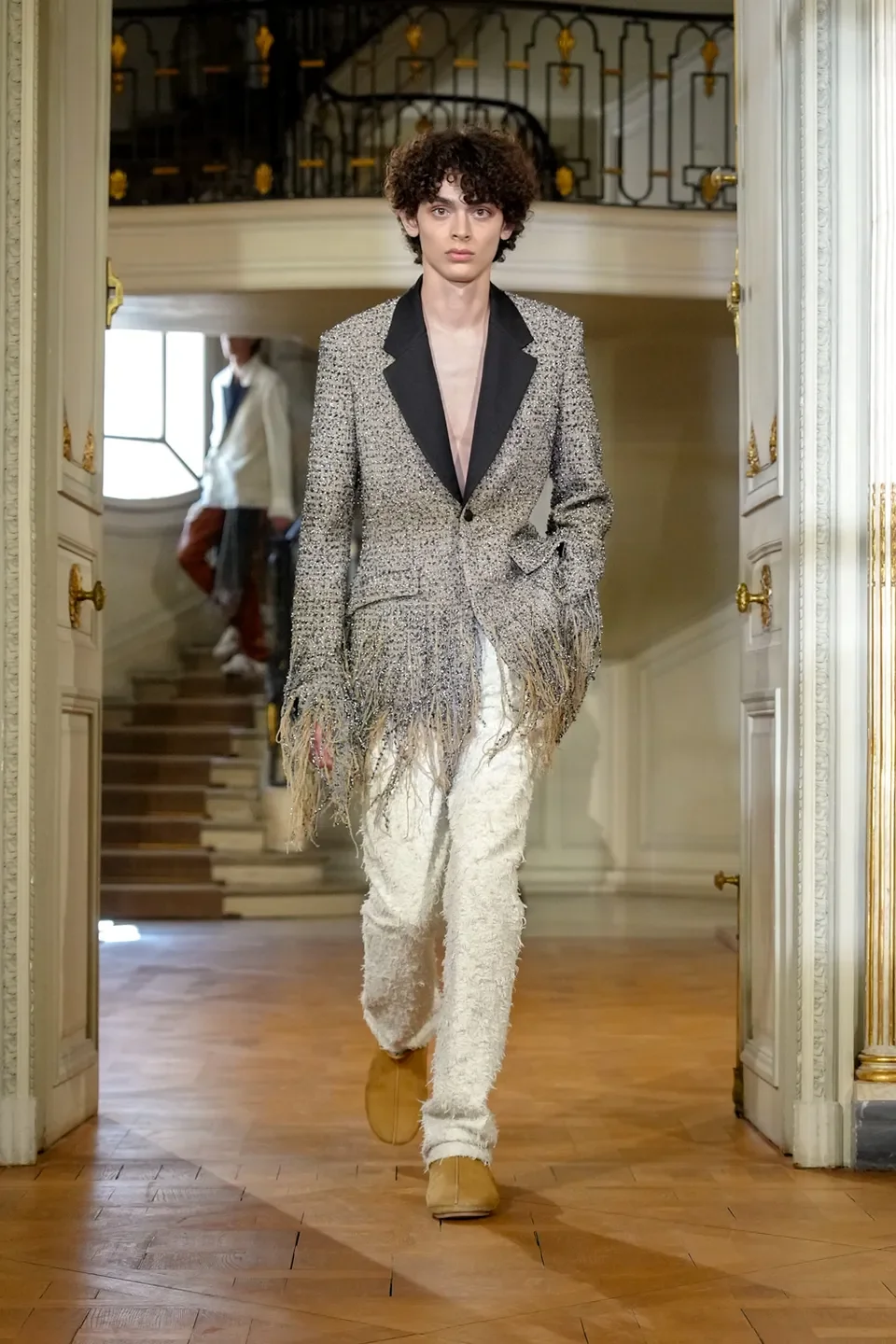
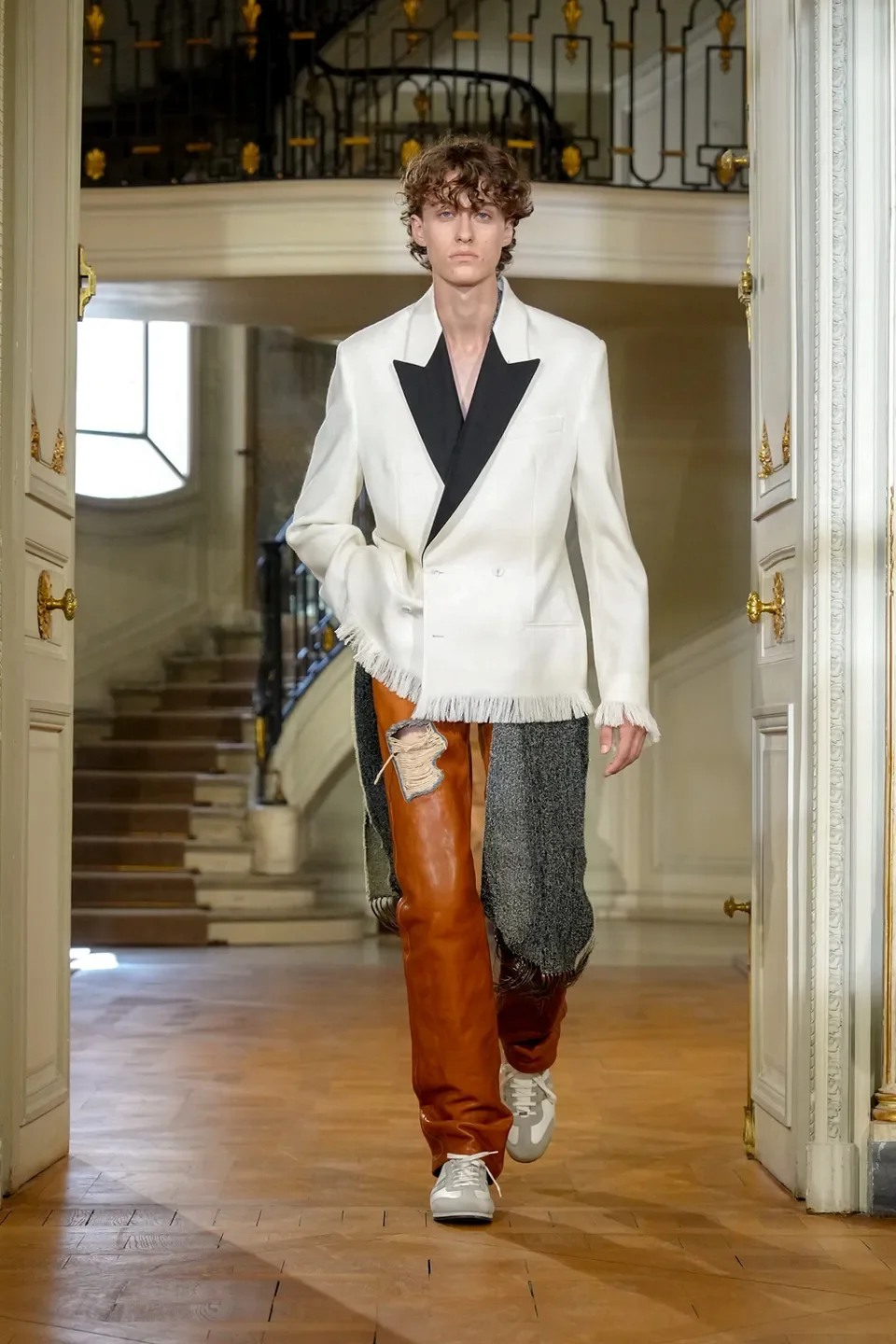
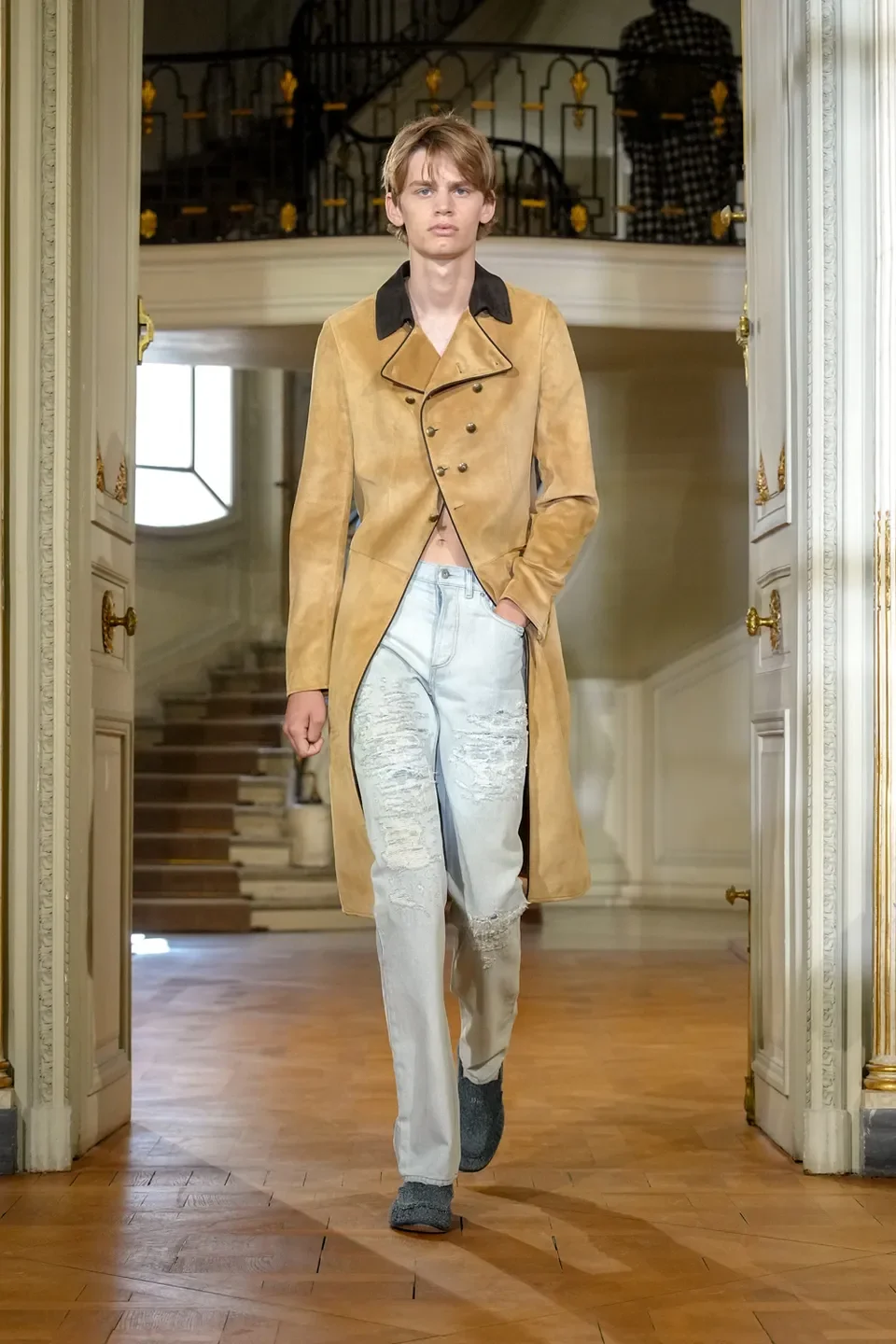
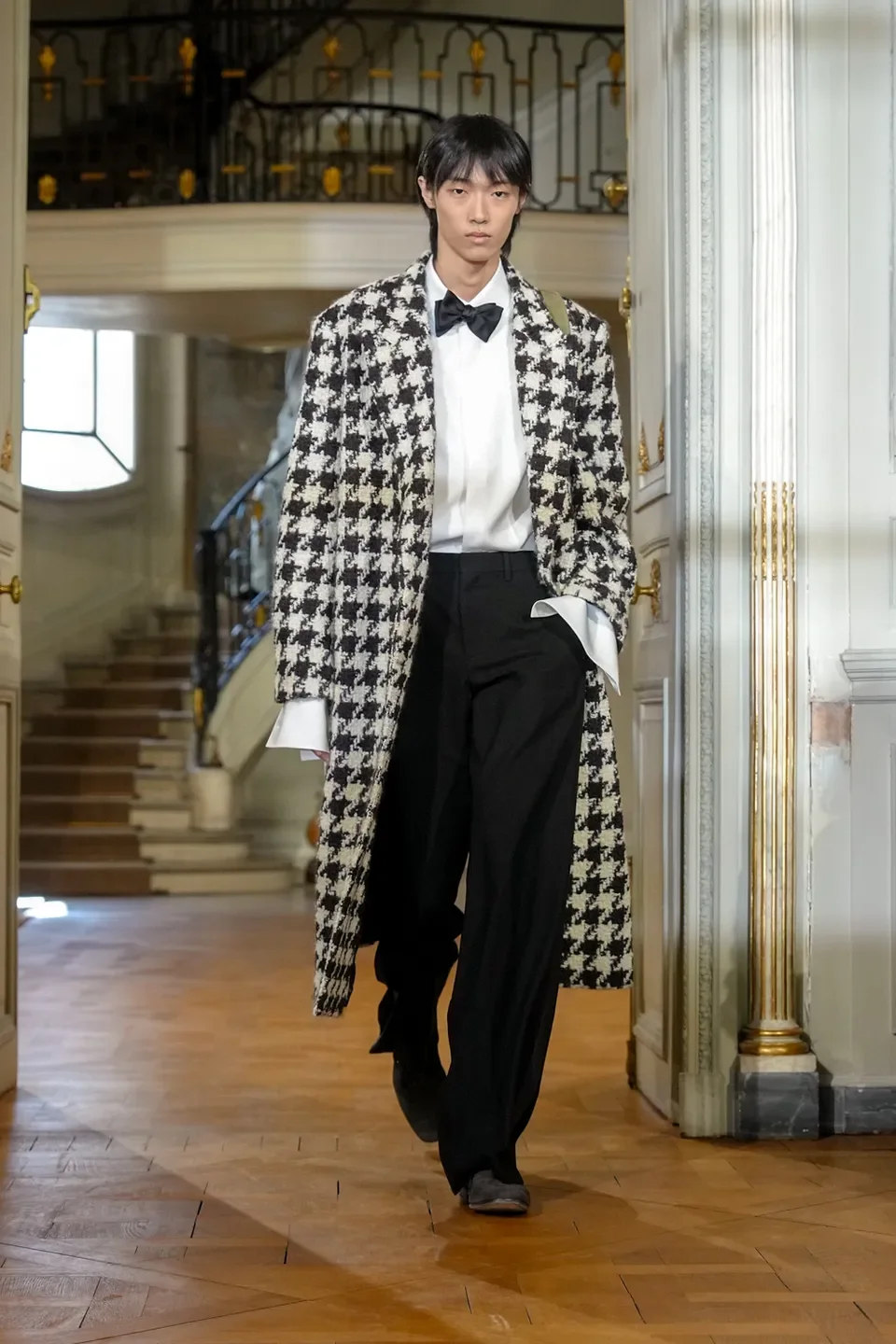
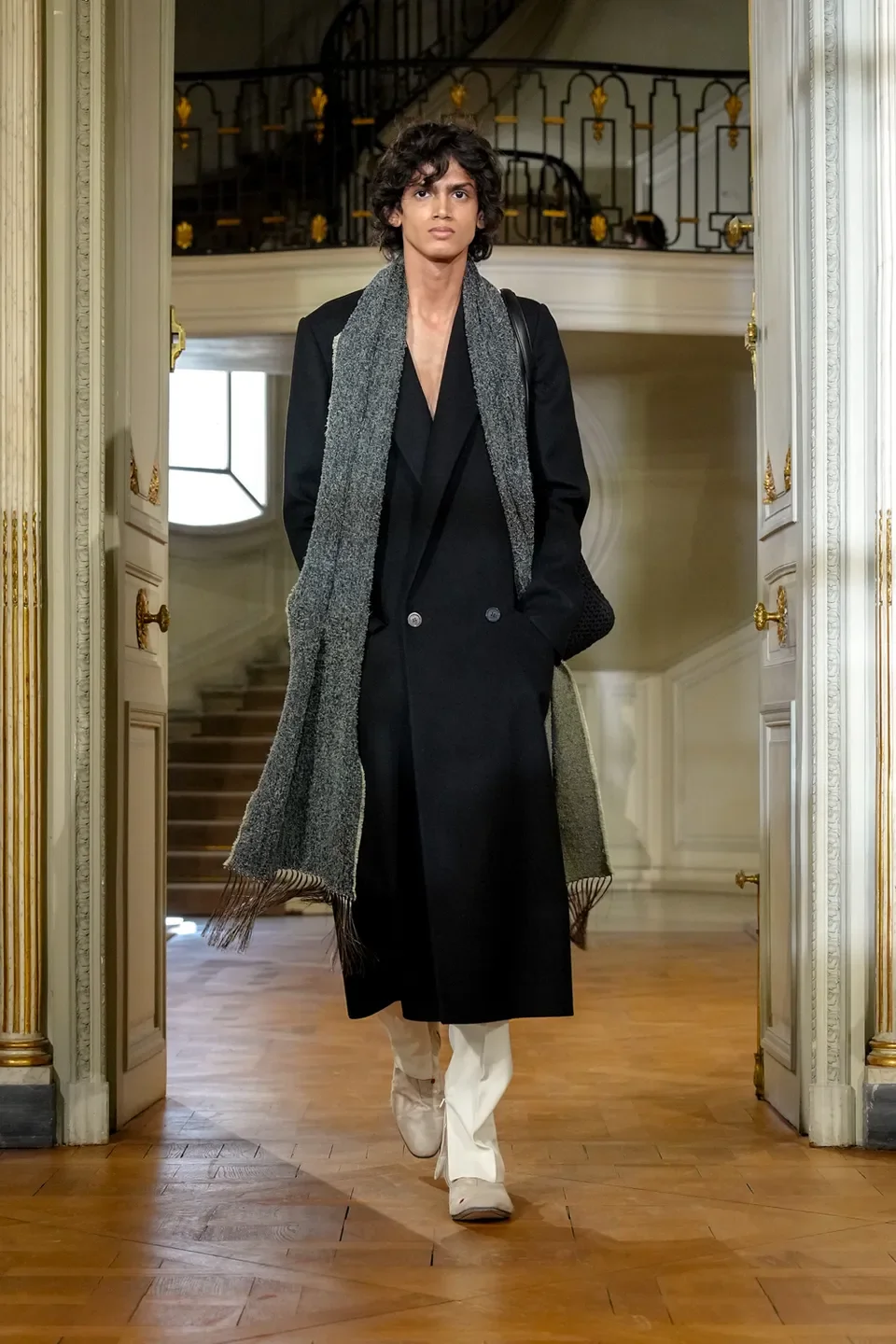
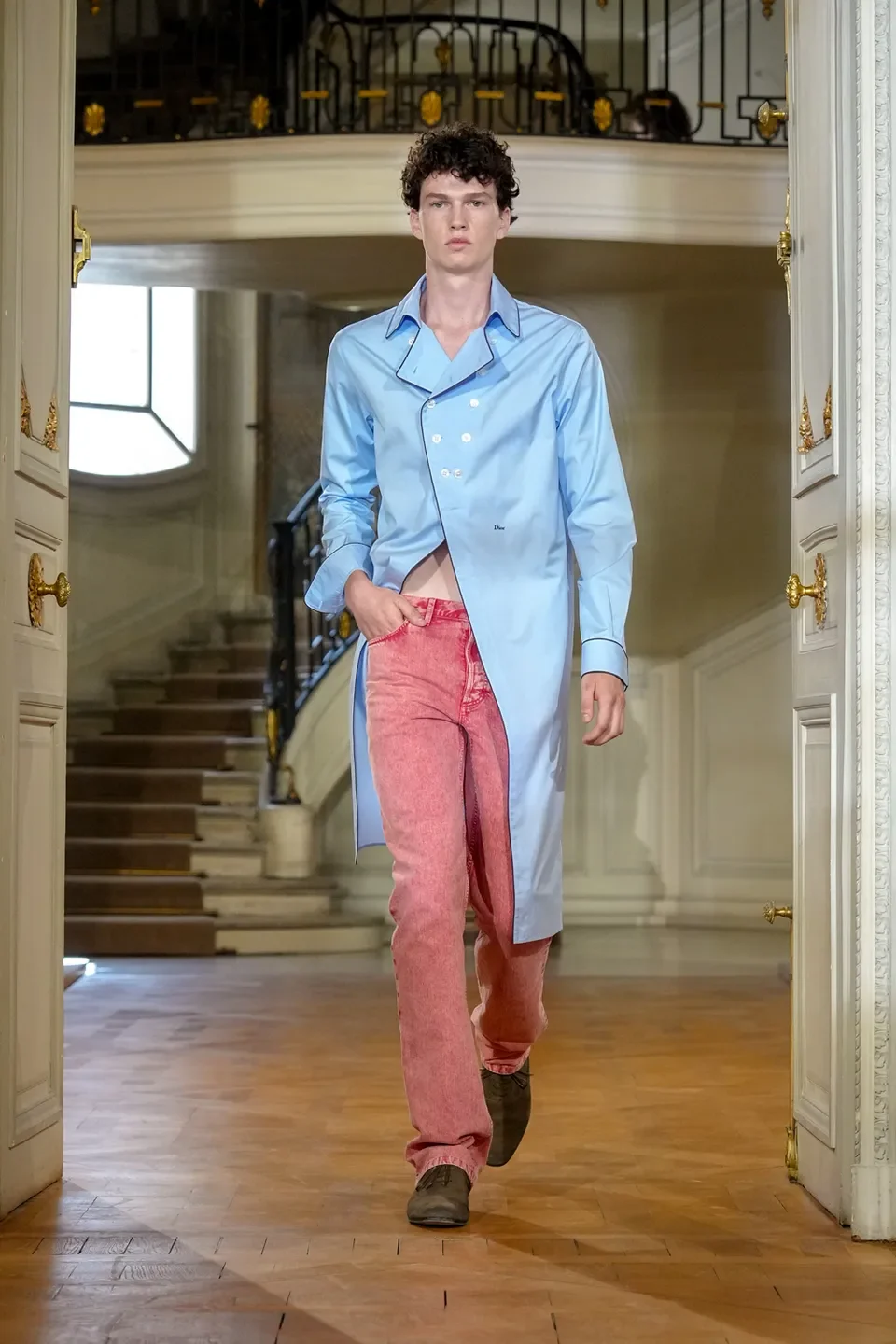
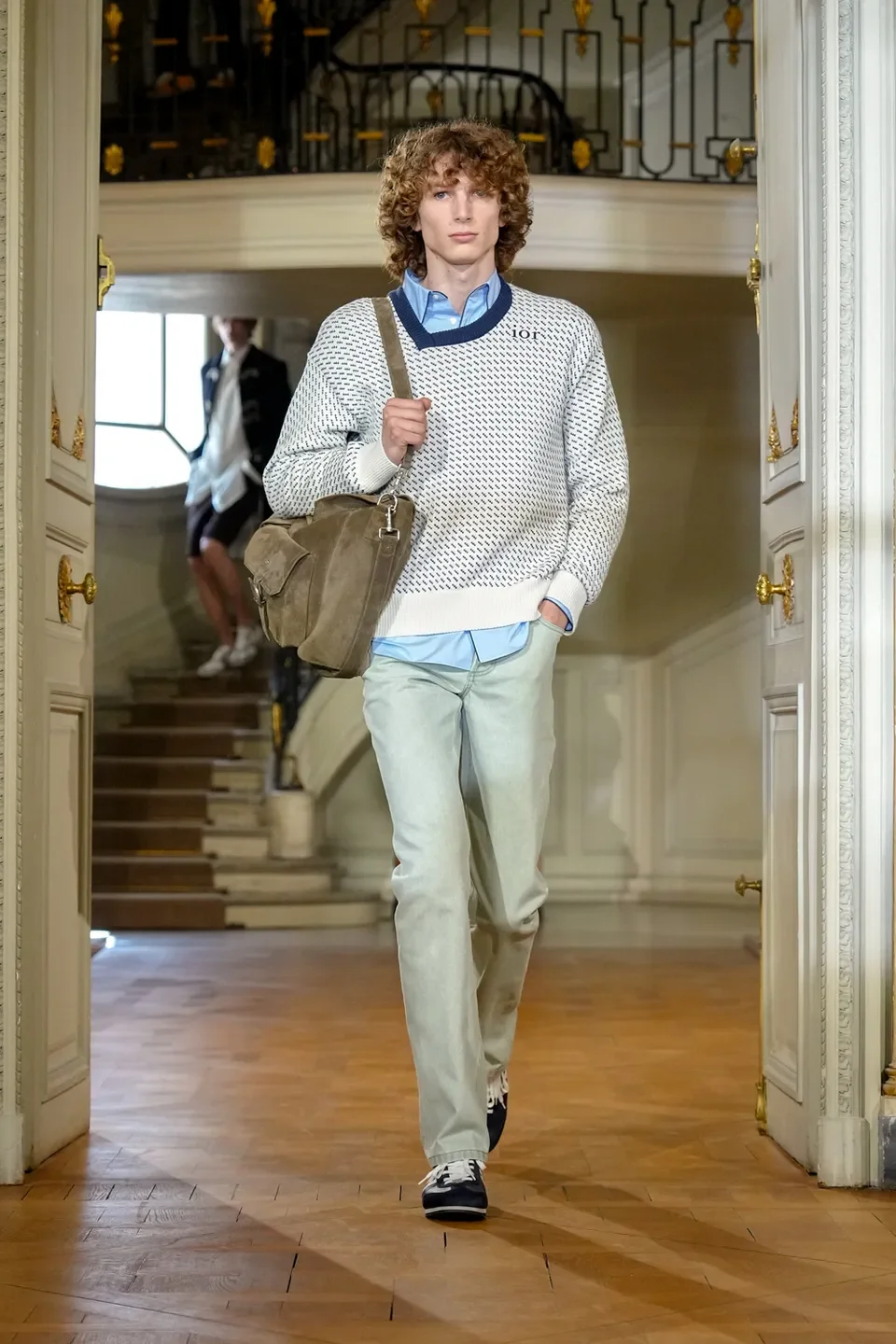
Jonathan Anderson’s Dior Men’s Spring/Summer 2027 collection continues his ongoing recalibration of the house codes through a lens of deliberate distortion, where replication, substitution and visual misdirection become the primary construction methods. Presented at Paris Fashion Week, the collection does not treat clothing as fixed objects but as systems of reinterpretation—where familiar motifs are rebuilt through alternative techniques that preserve appearance while altering fundamental structure.
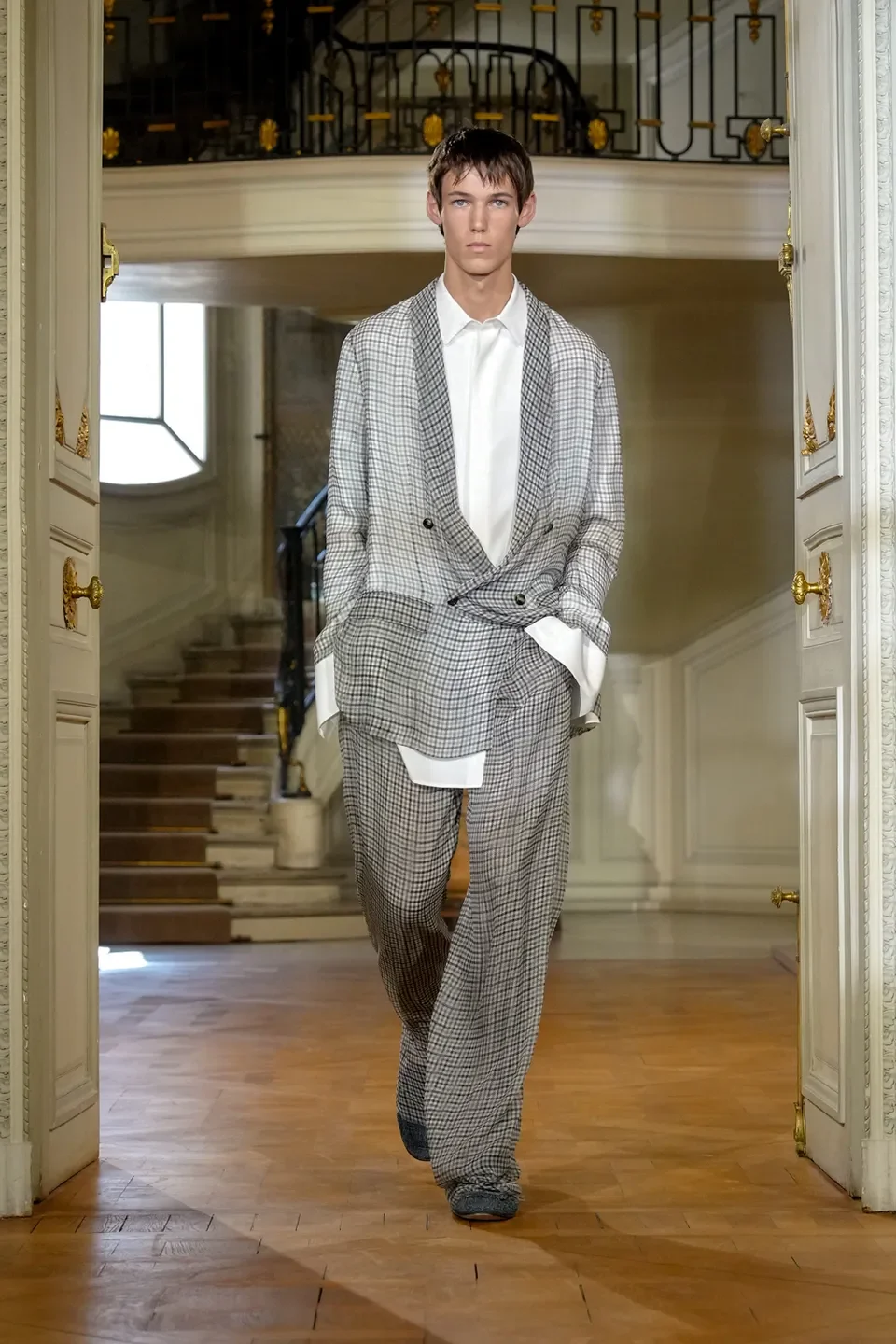
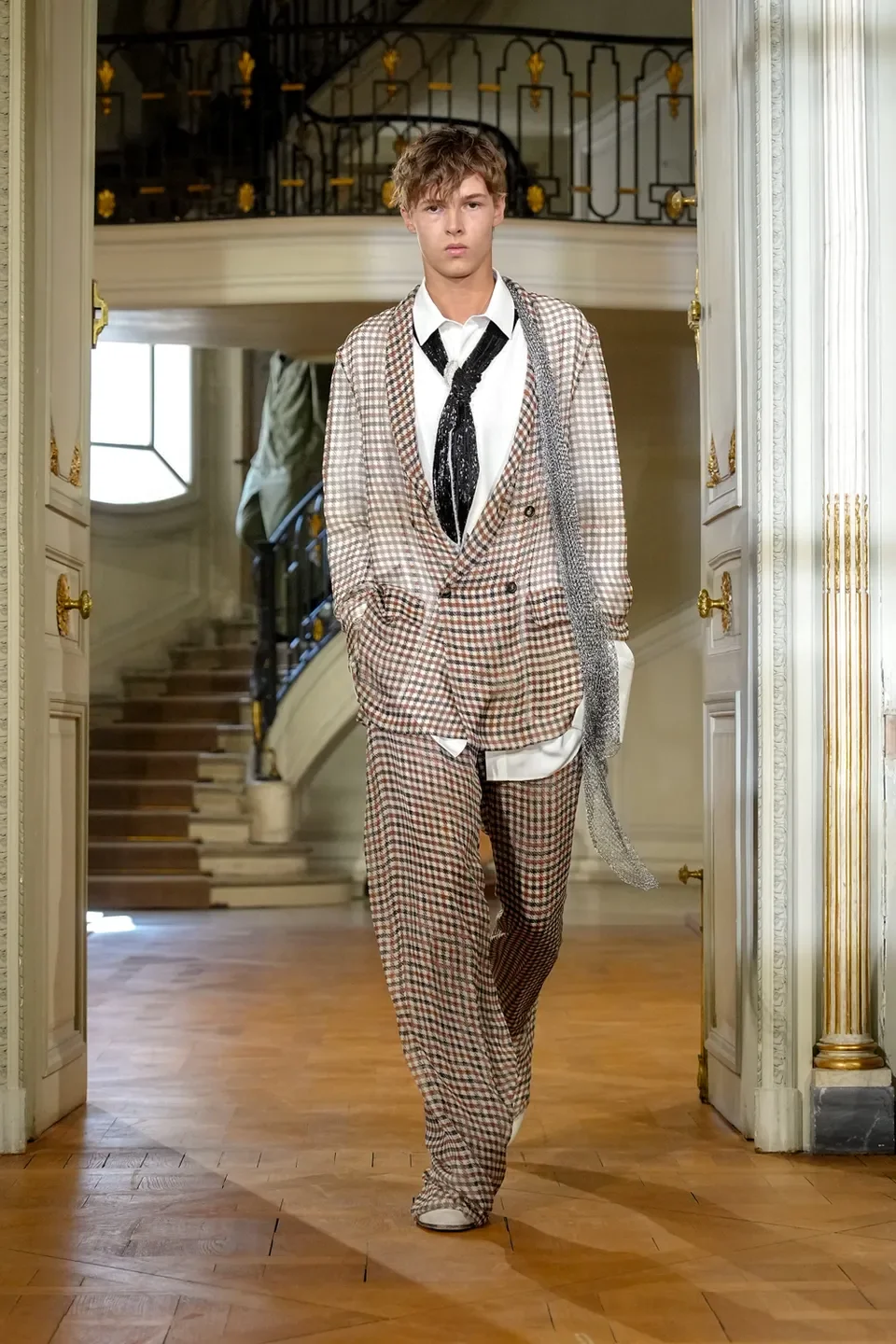
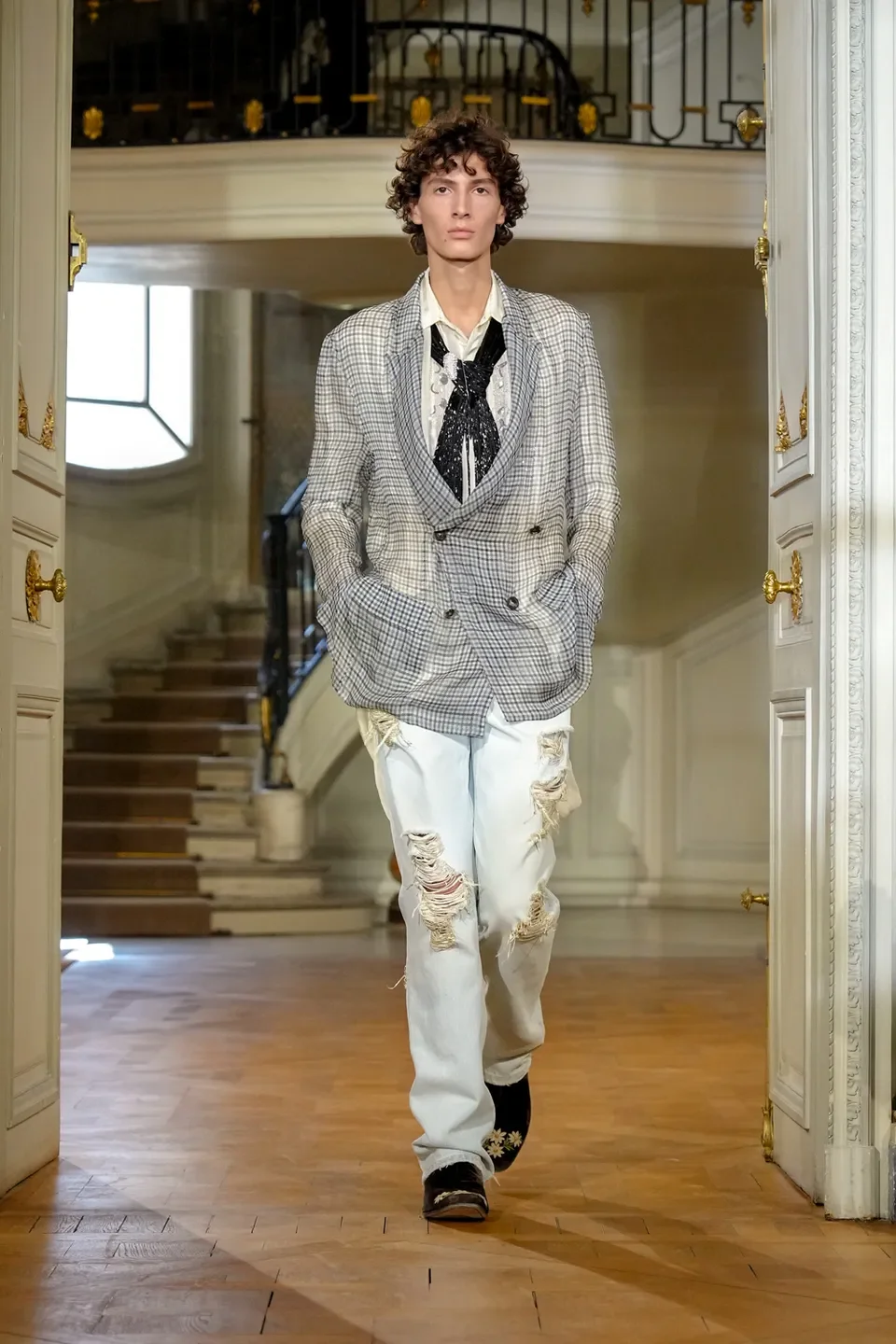
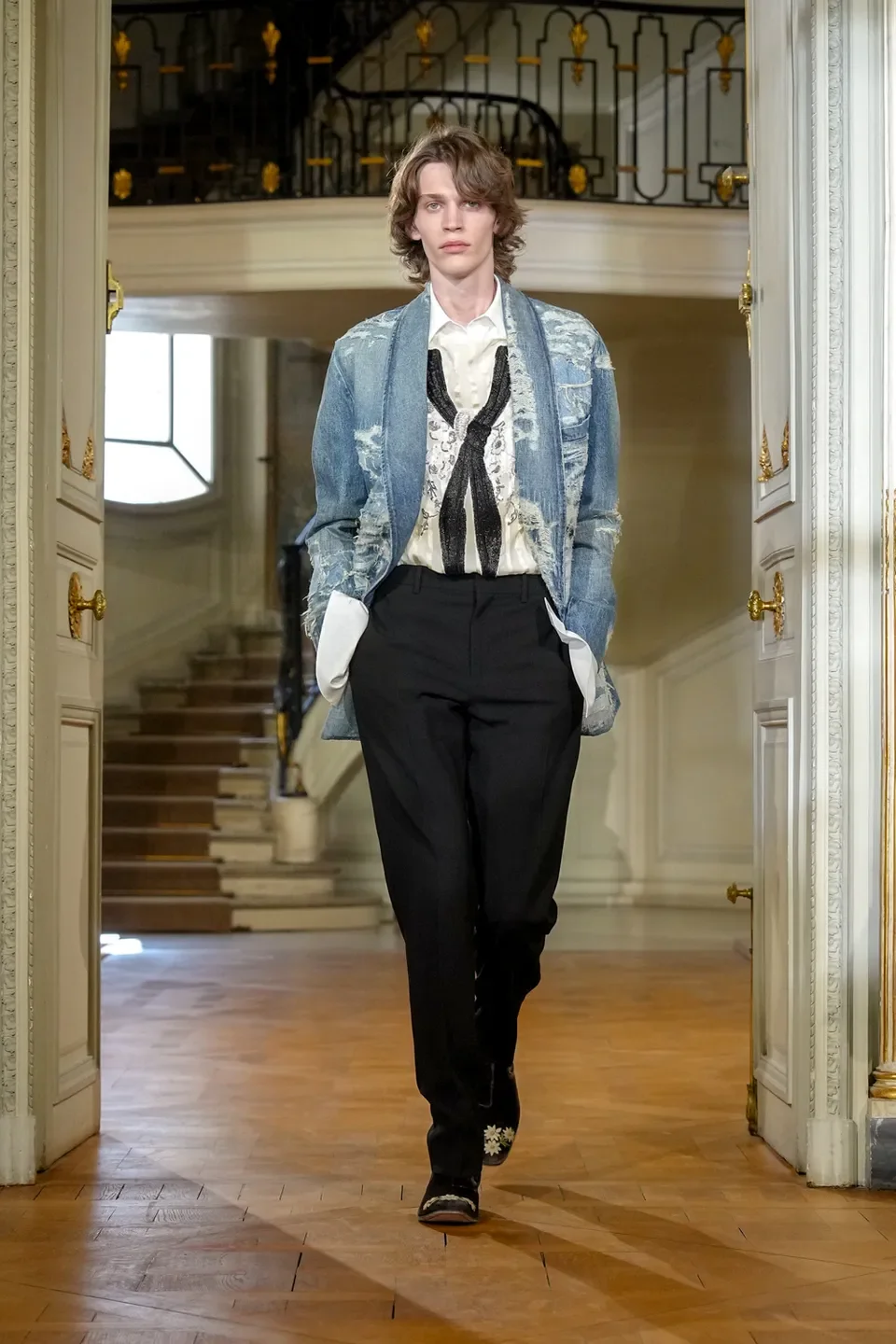
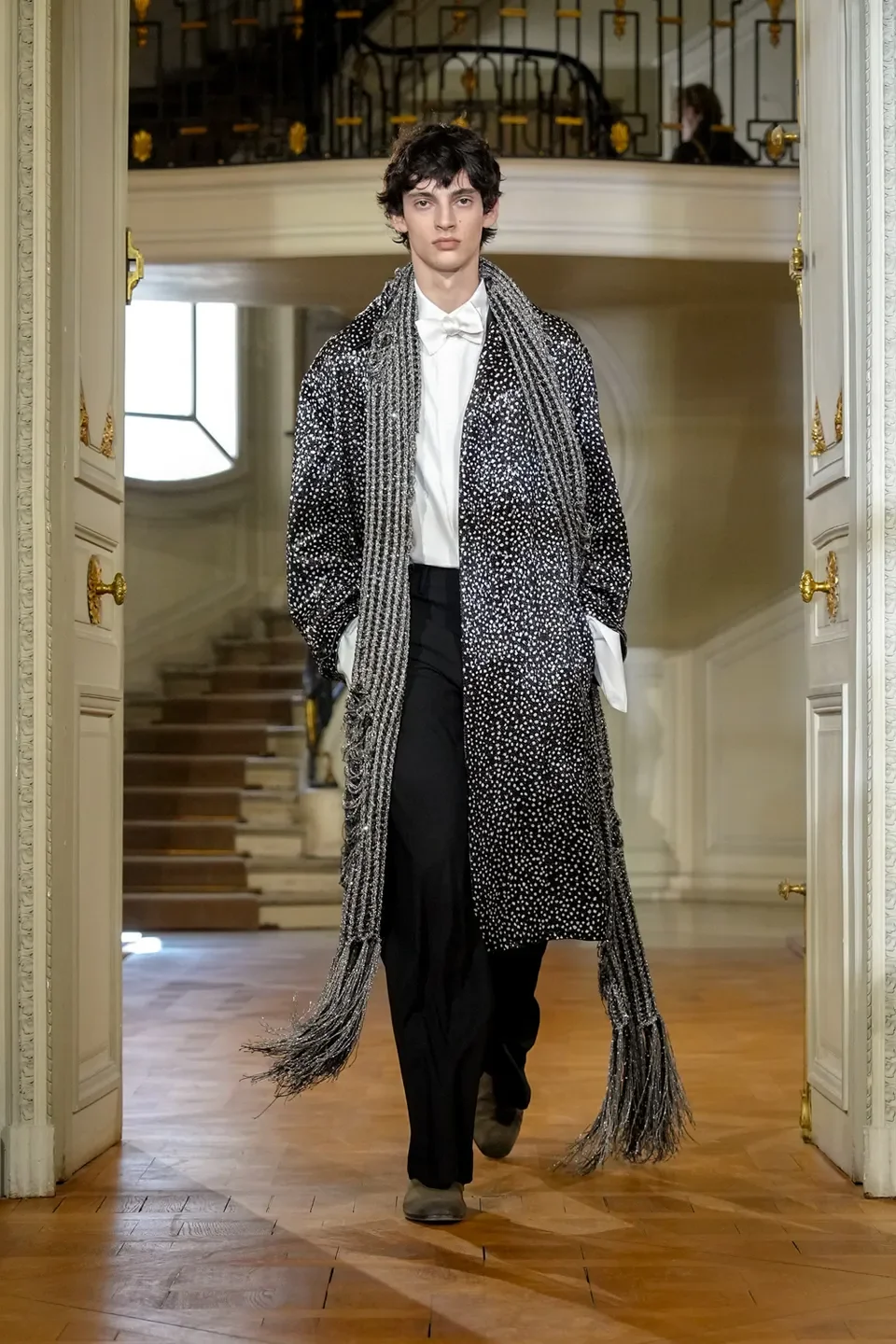
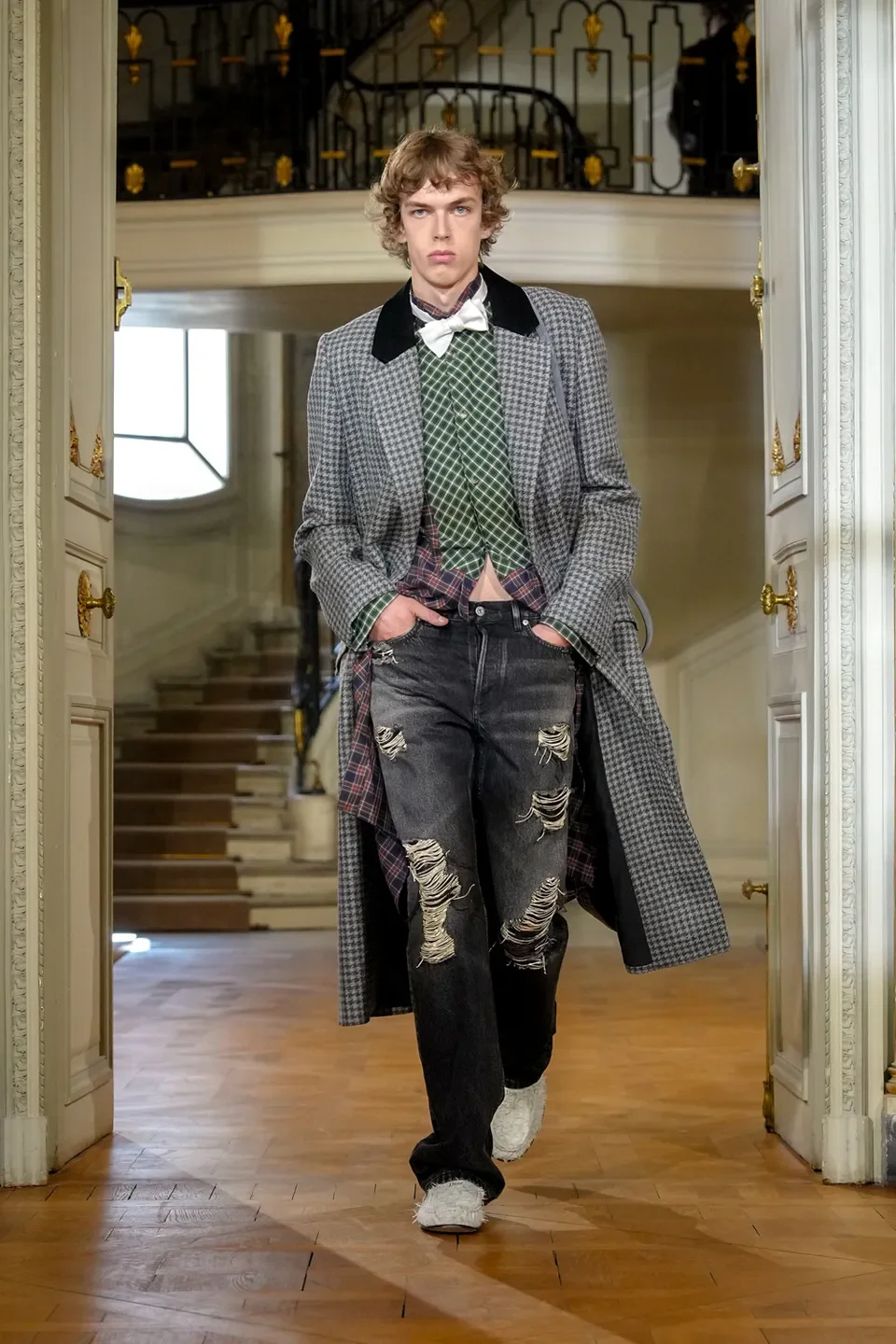
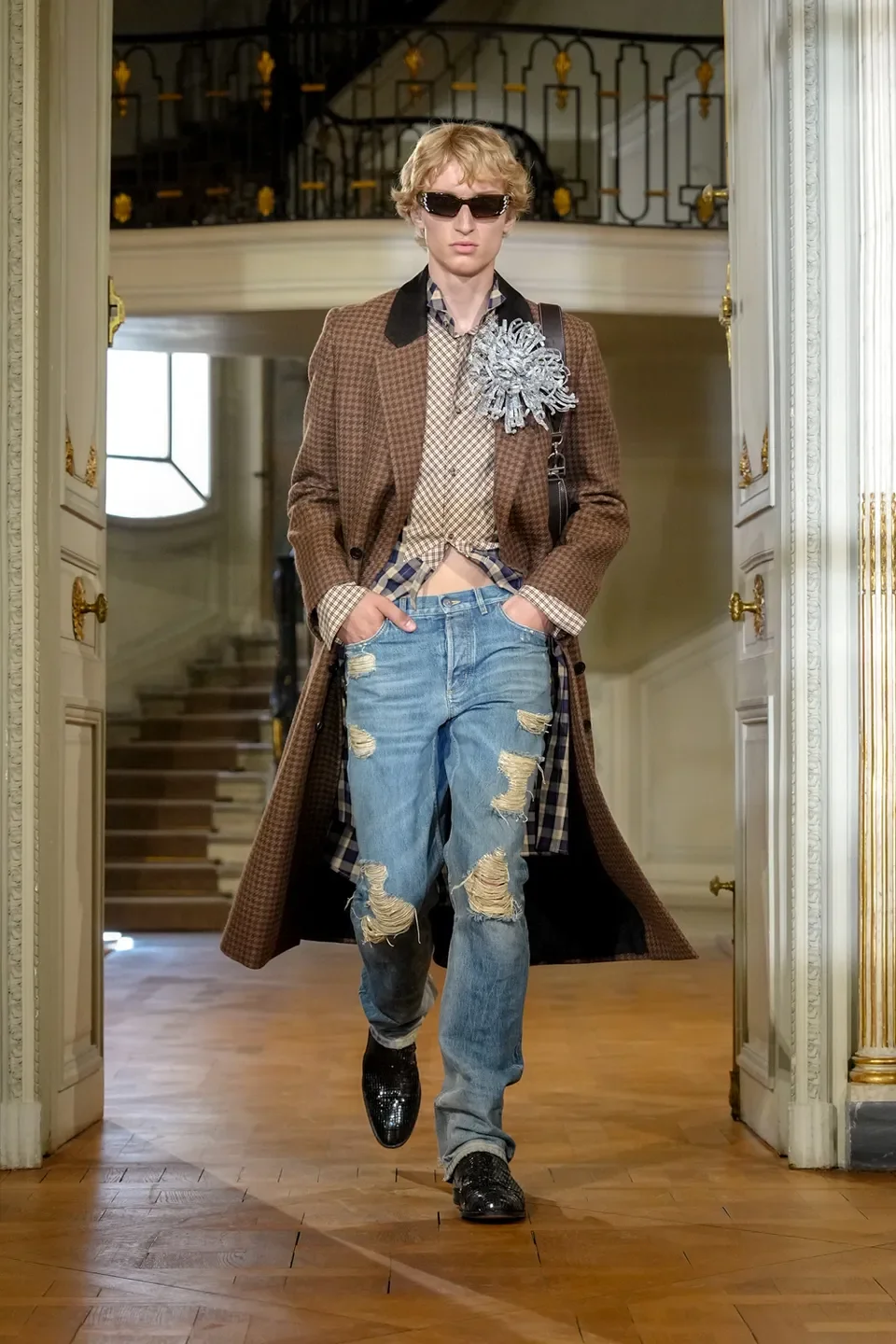
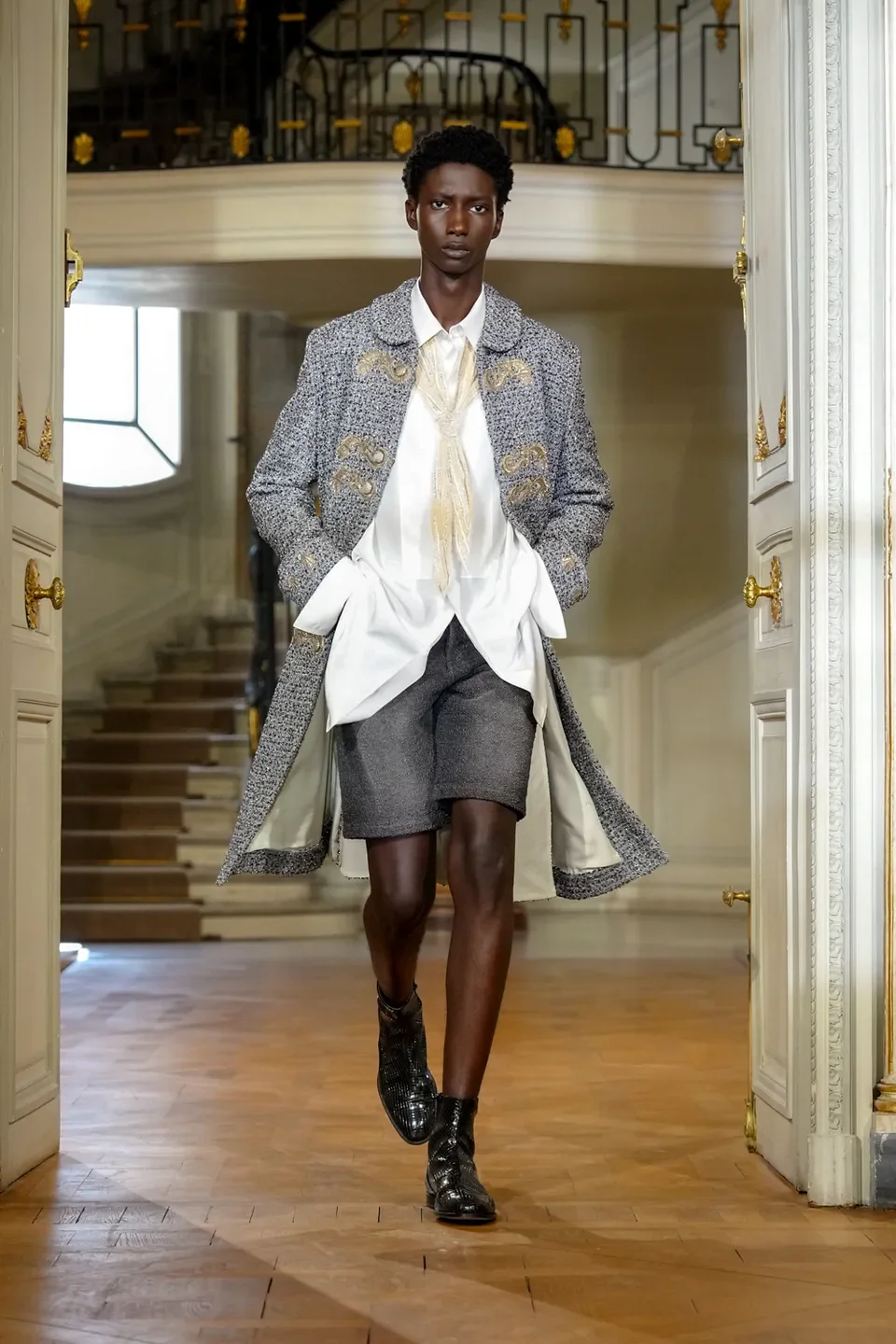
At its core, the collection is built on the idea of replication as authorship. Houndstooth is printed rather than woven, polka dots emerge as continuous fields of sequins rather than discrete motifs, and archival references are translated through layered processes of reinterpretation. A silk shirt reproduces a trompe l’oeil scarf motif originally seen in 1979 Dior haute couture, itself already an illusionistic design, now reworked through embroidery that adds yet another layer of translation. The result is a collection where nothing is entirely original or entirely reproduced—everything exists in a state of controlled echo.
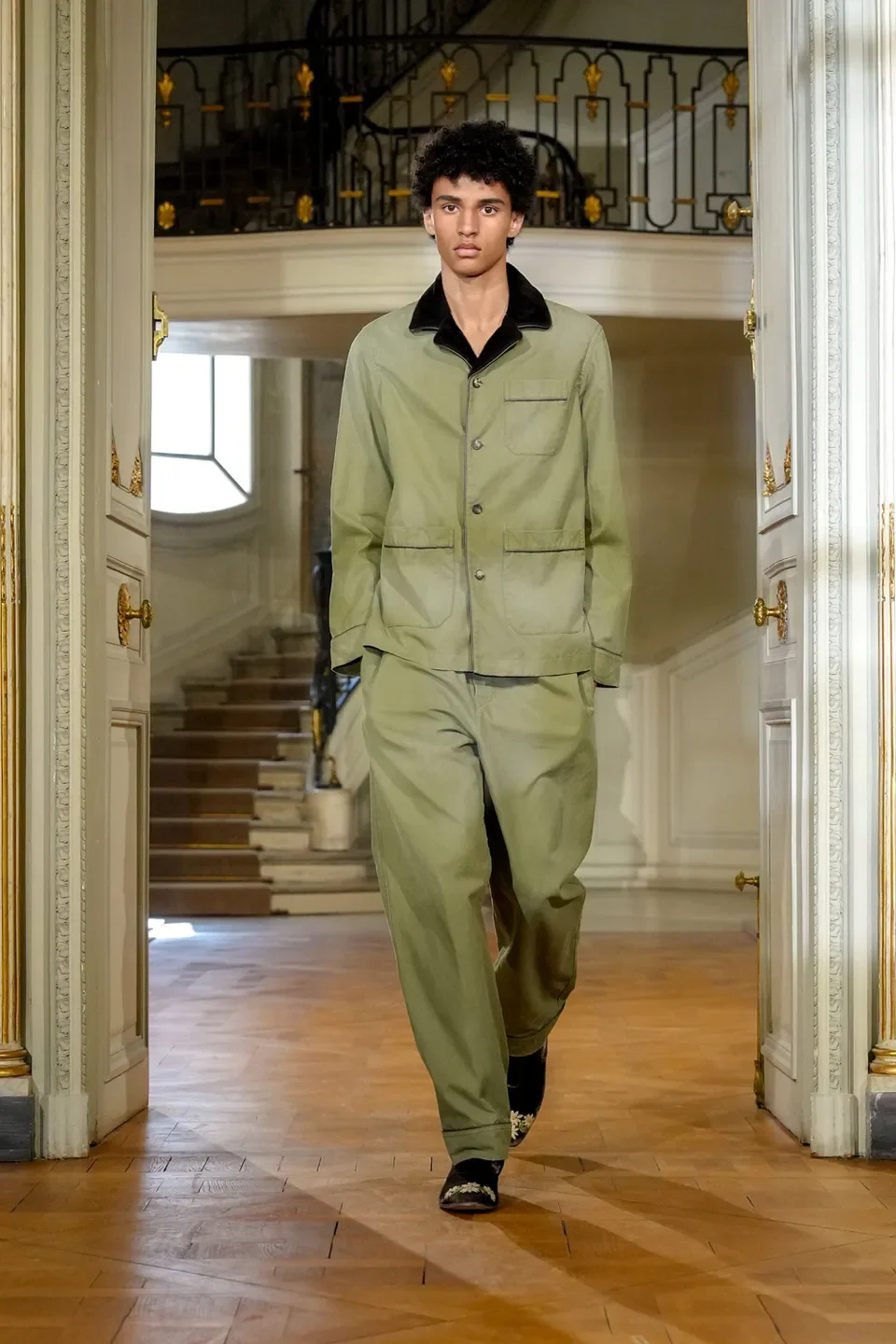
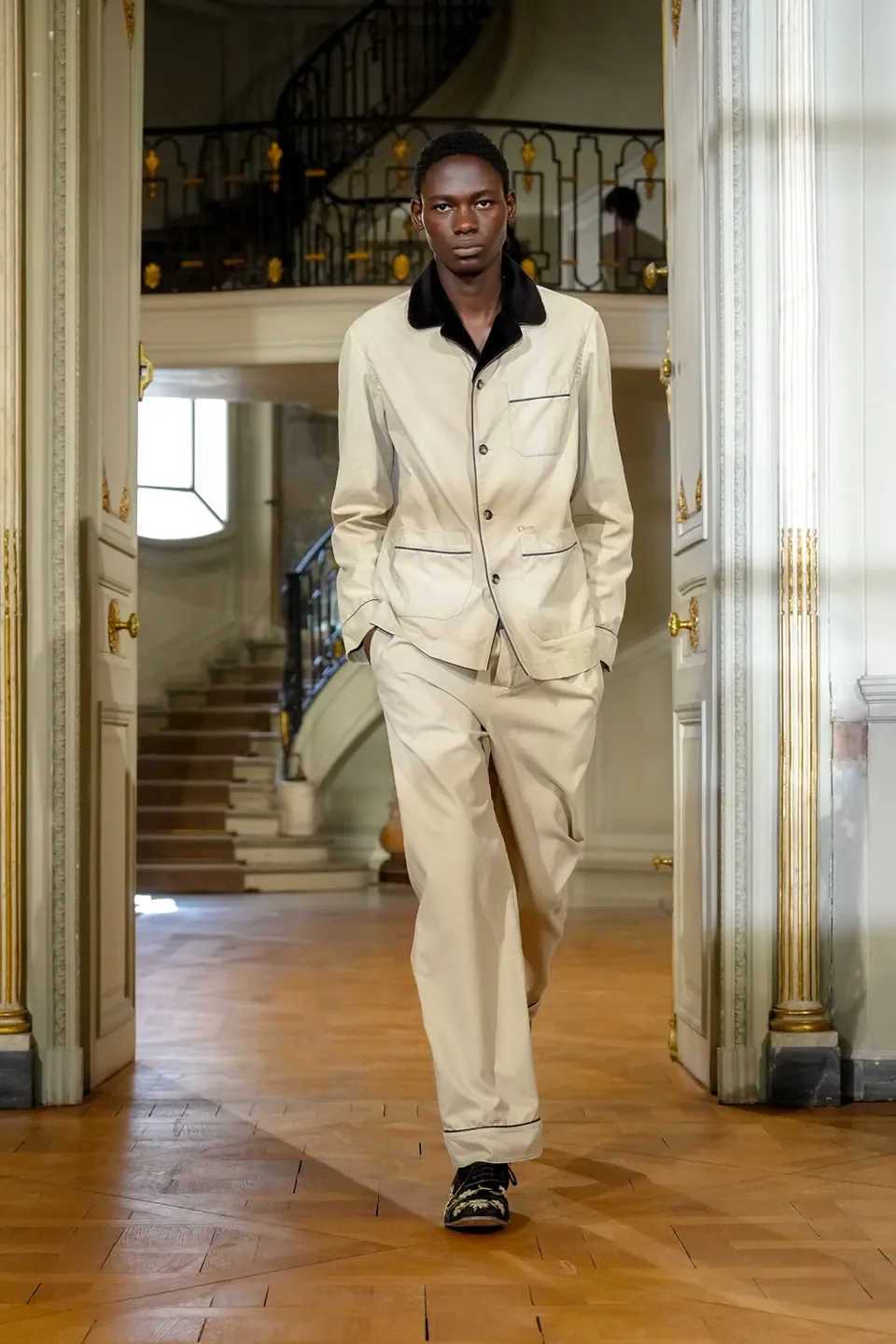
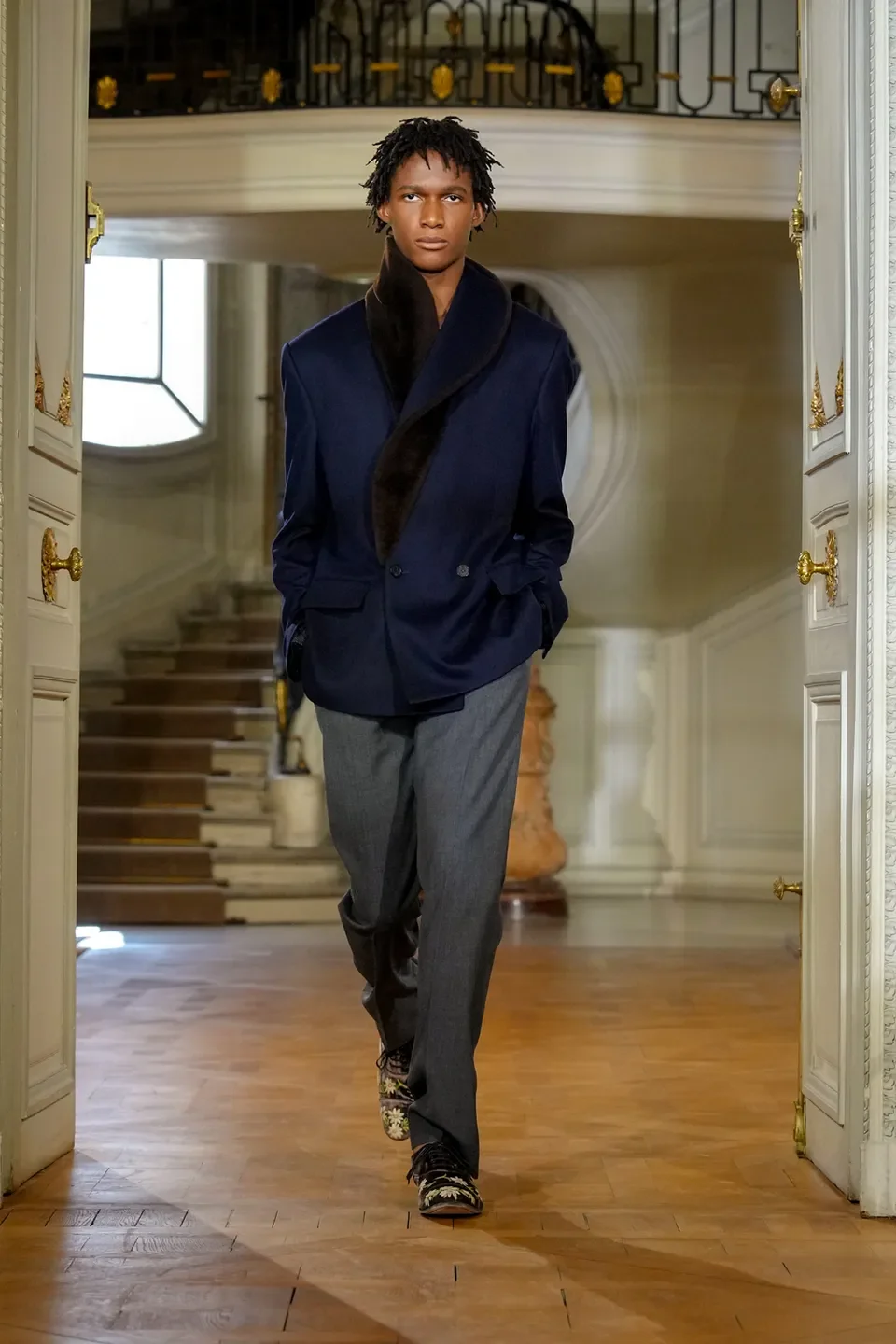
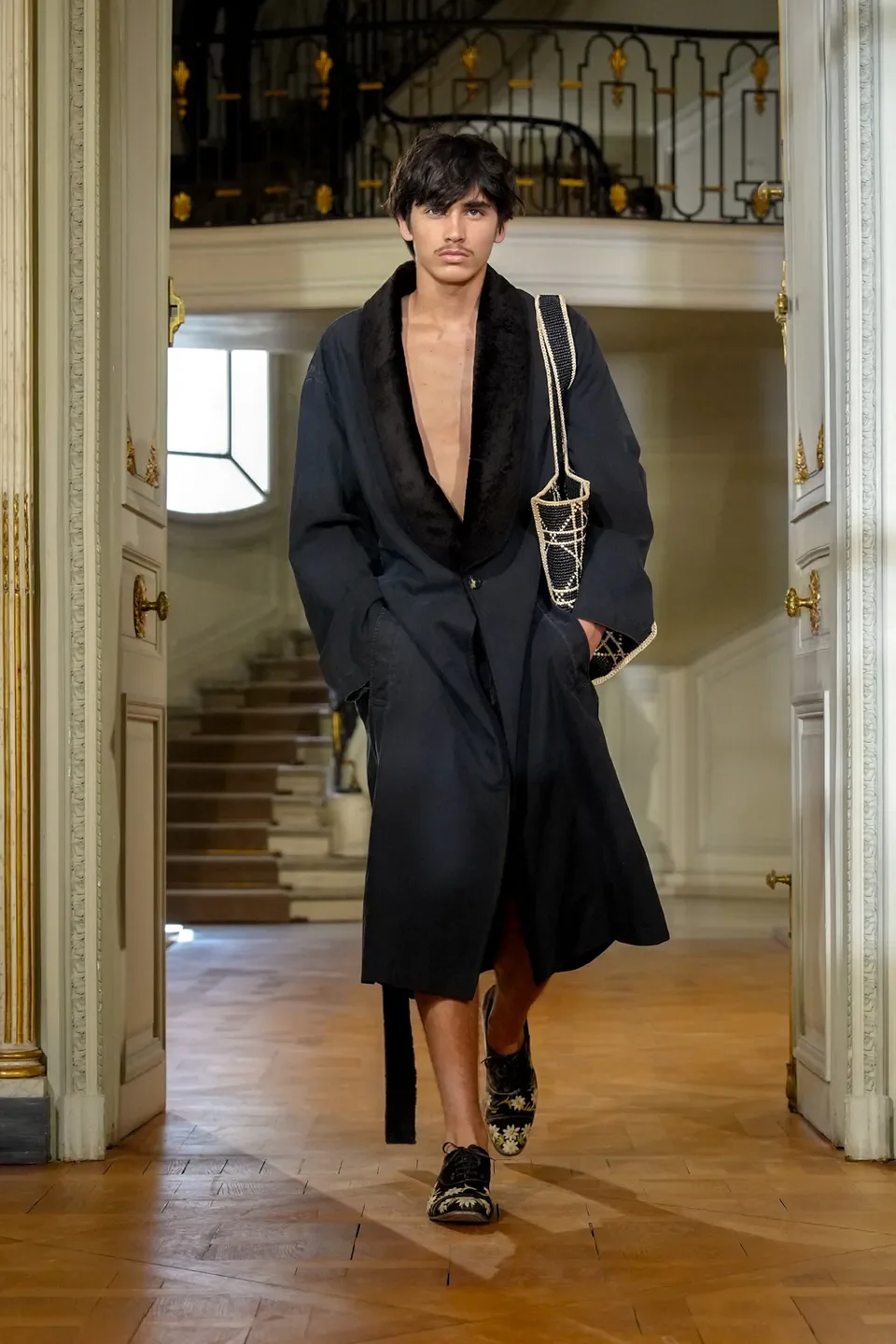
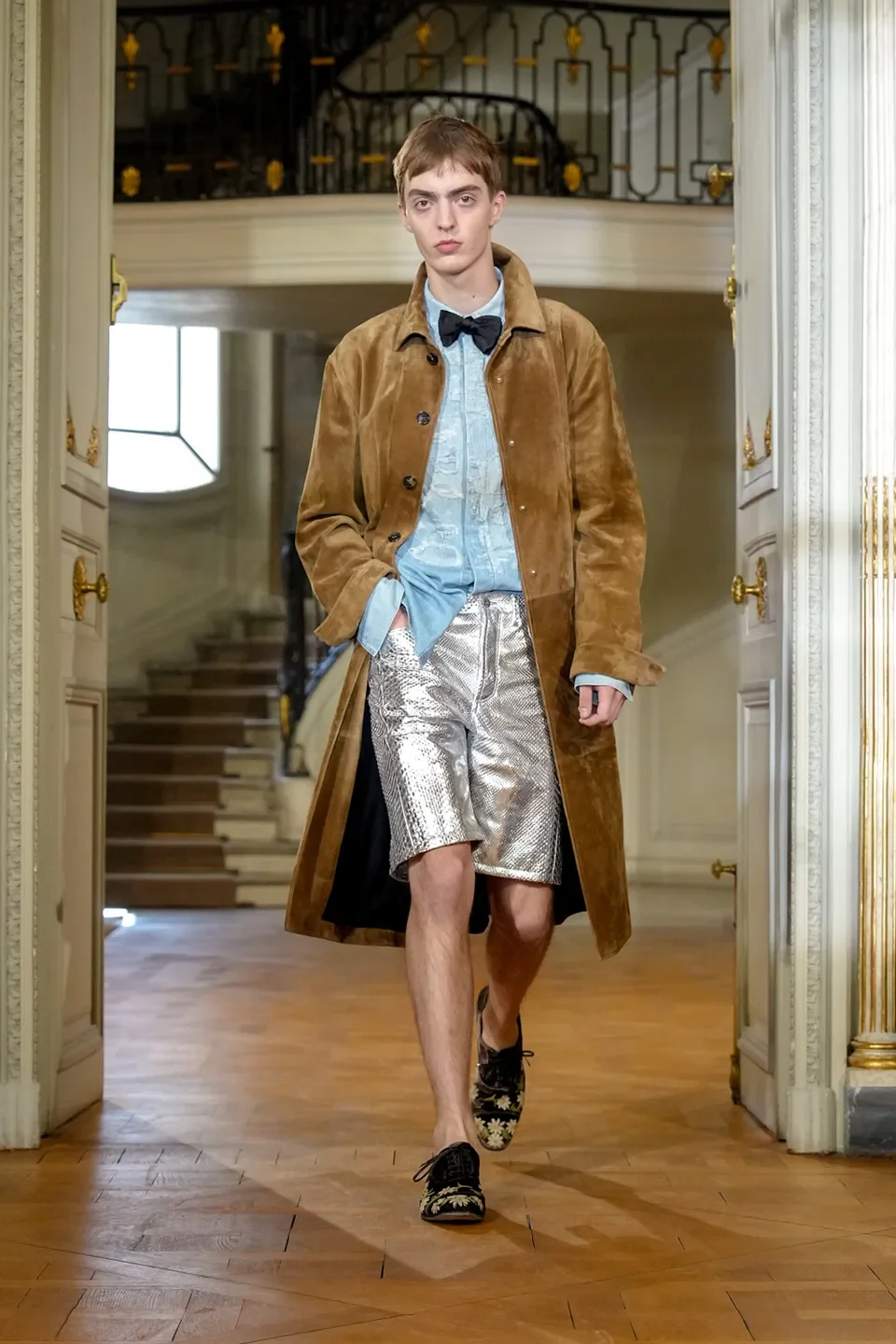
This logic extends across materials and accessories. Suede lace-up shoes are embroidered with 19th-century decorative motifs applied directly onto the upper, collapsing historical ornament into contemporary silhouette. Bags are constructed from repurposed textiles, including a vintage zig-zag woven blanket transformed into a functional object, while denim totes are treated with cannage quilting that references Dior’s archival pattern language. In each case, the gesture is less about transformation than recontextualisation—placing existing codes into new material conditions without erasing their origins.
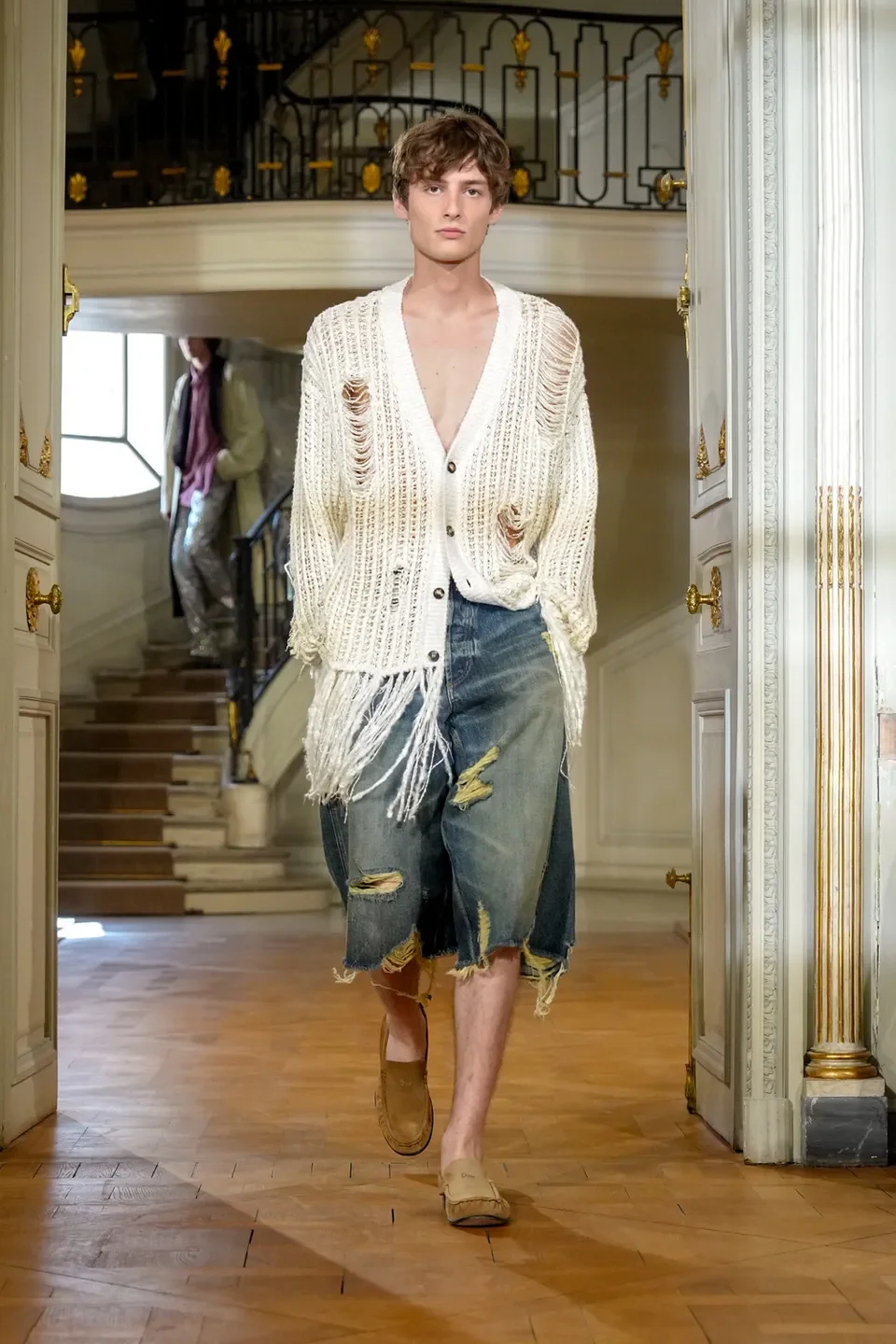
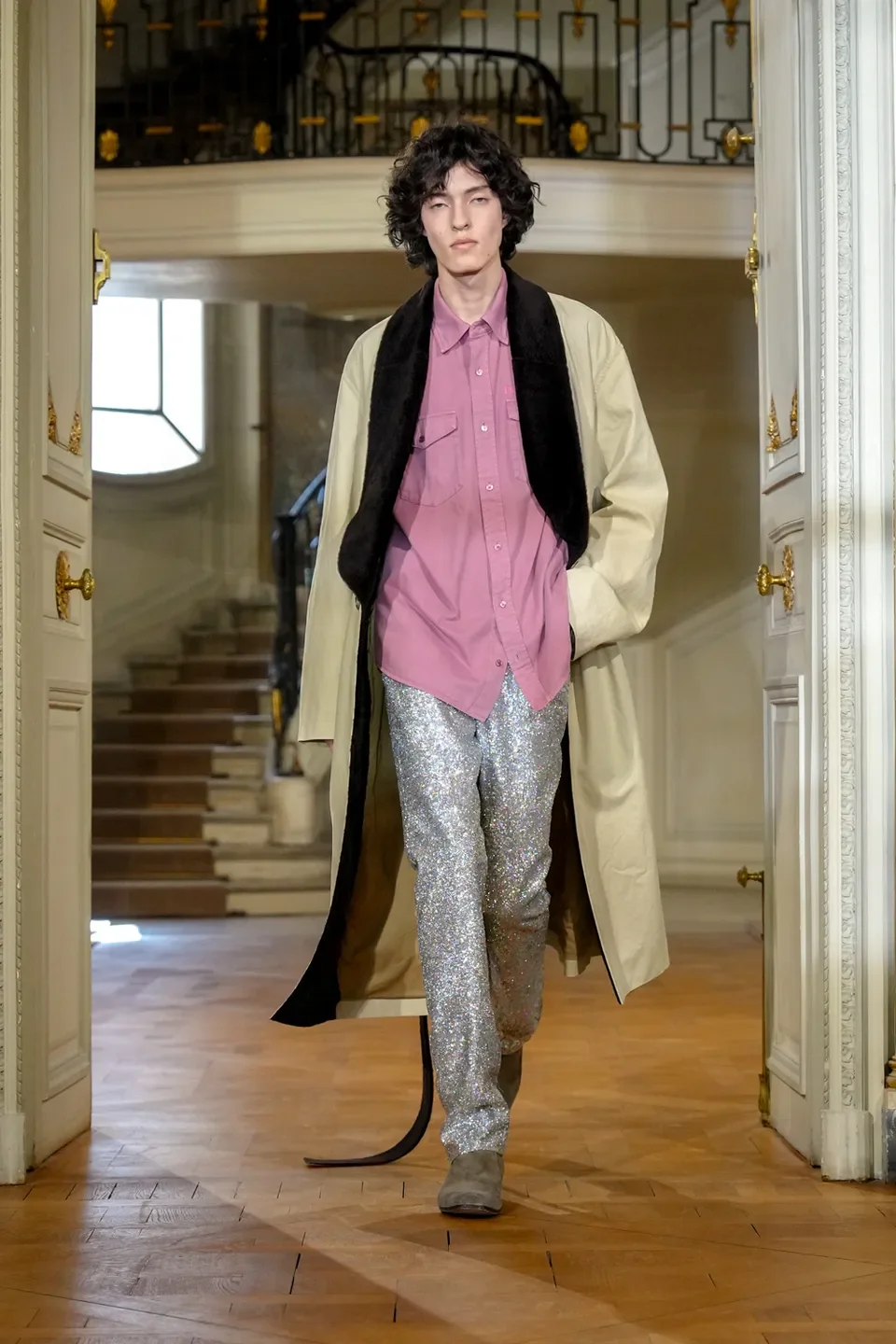
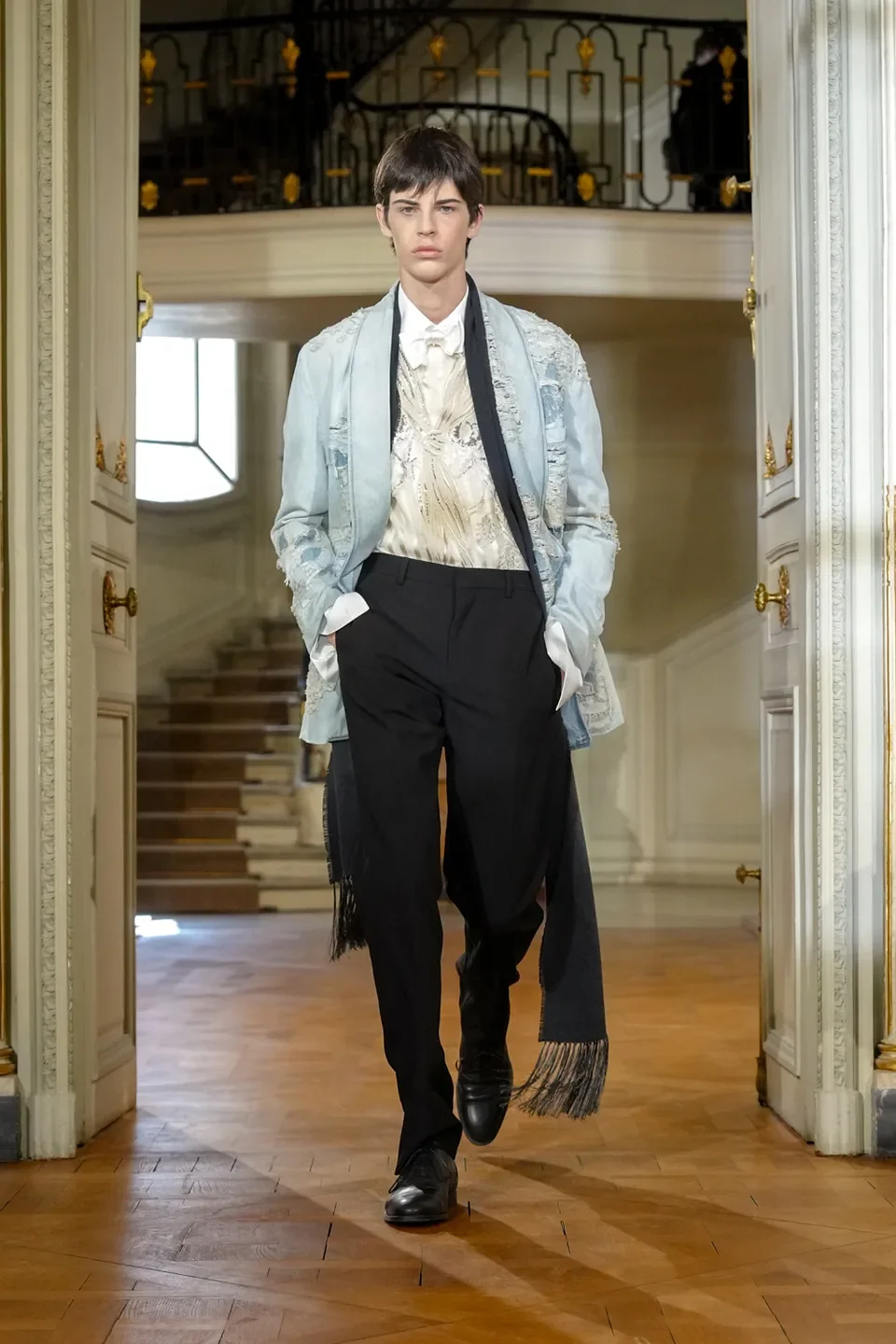
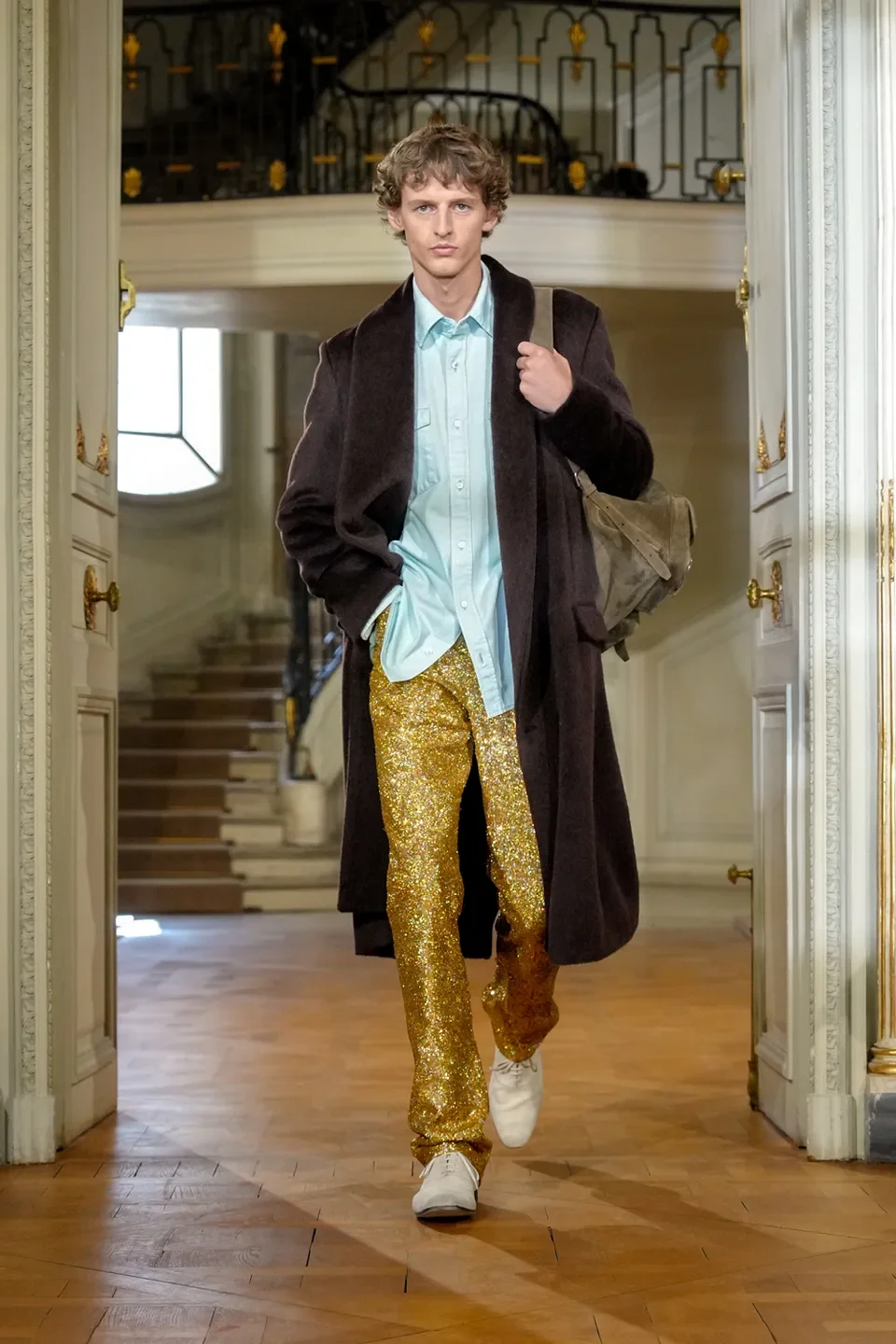
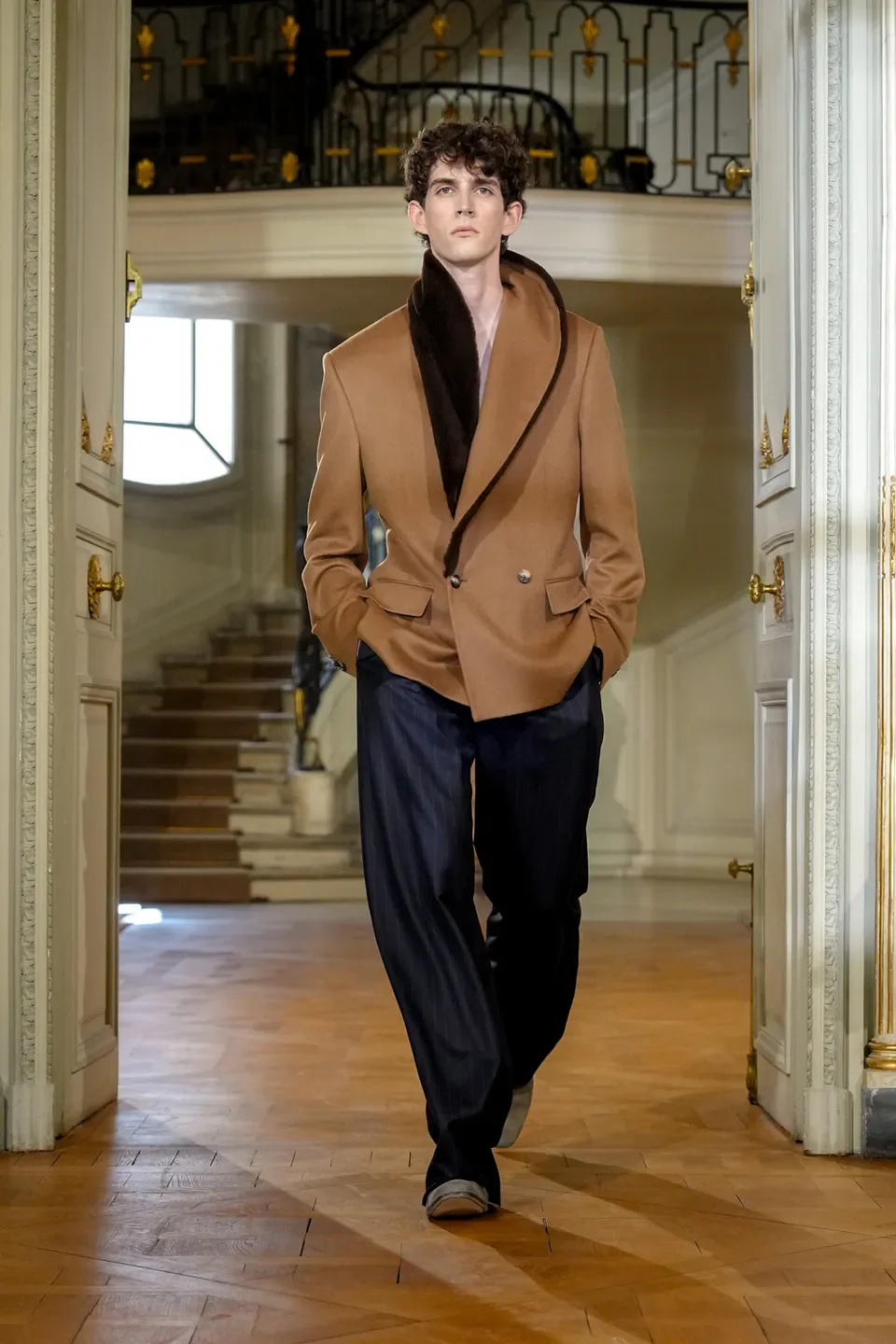
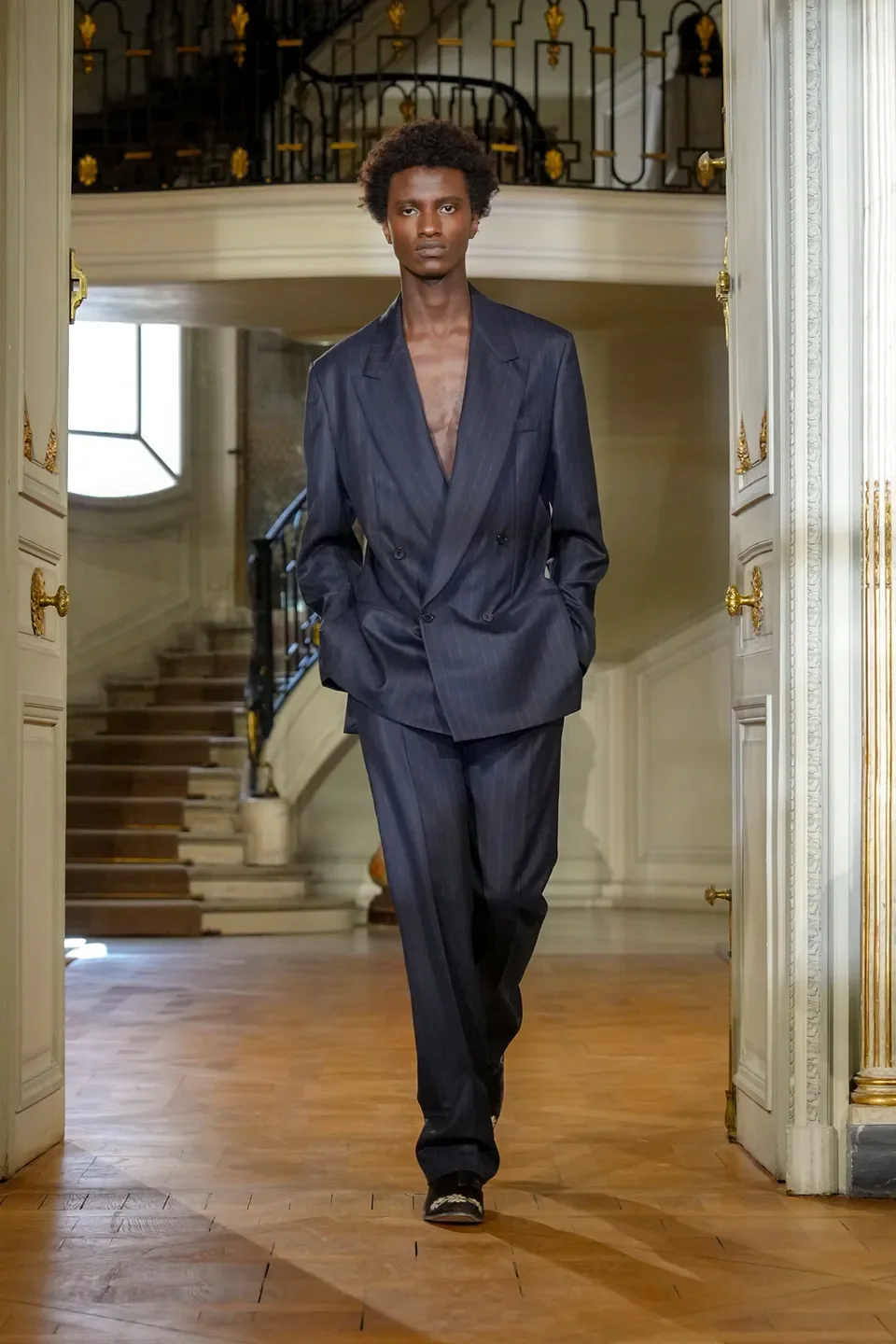
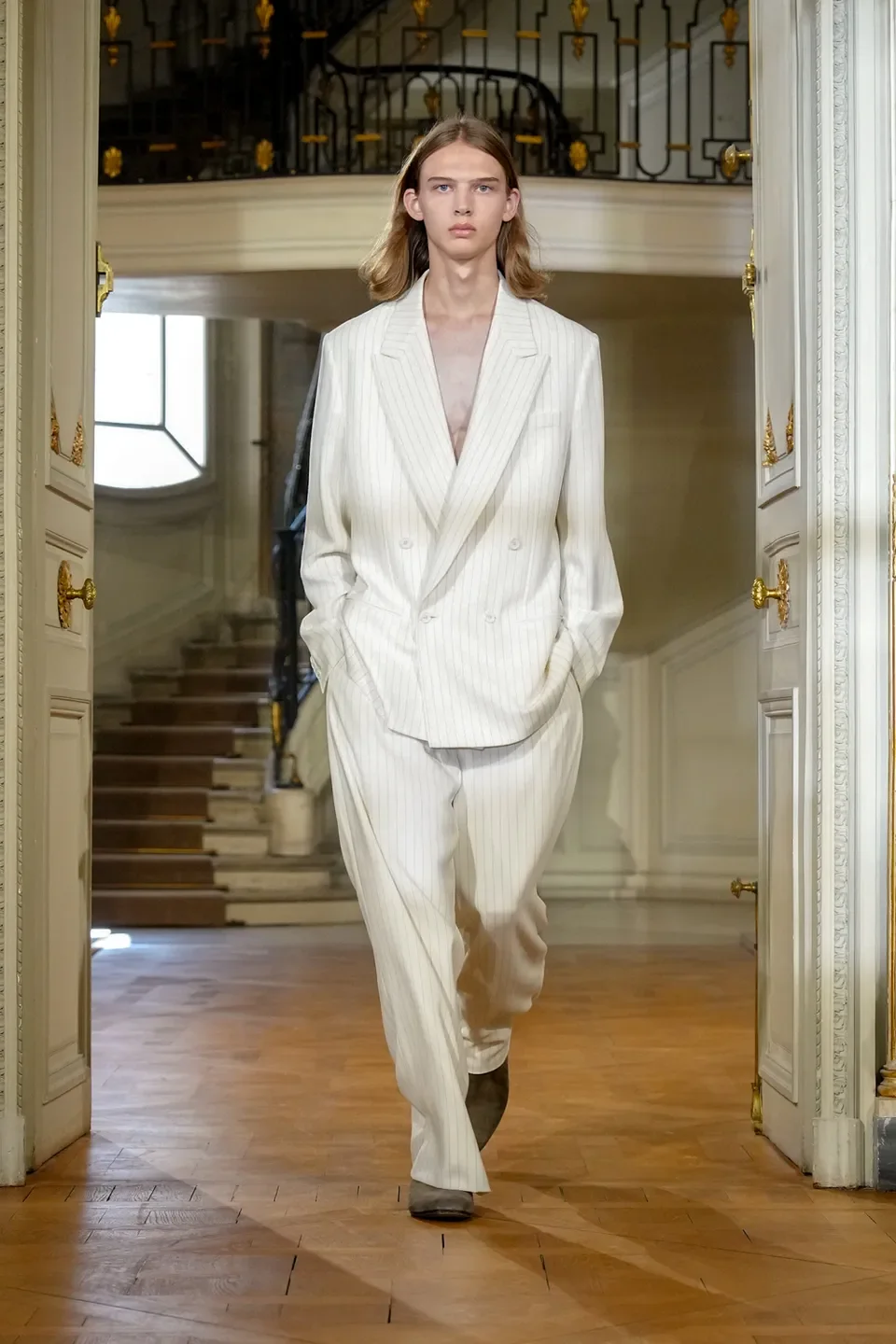
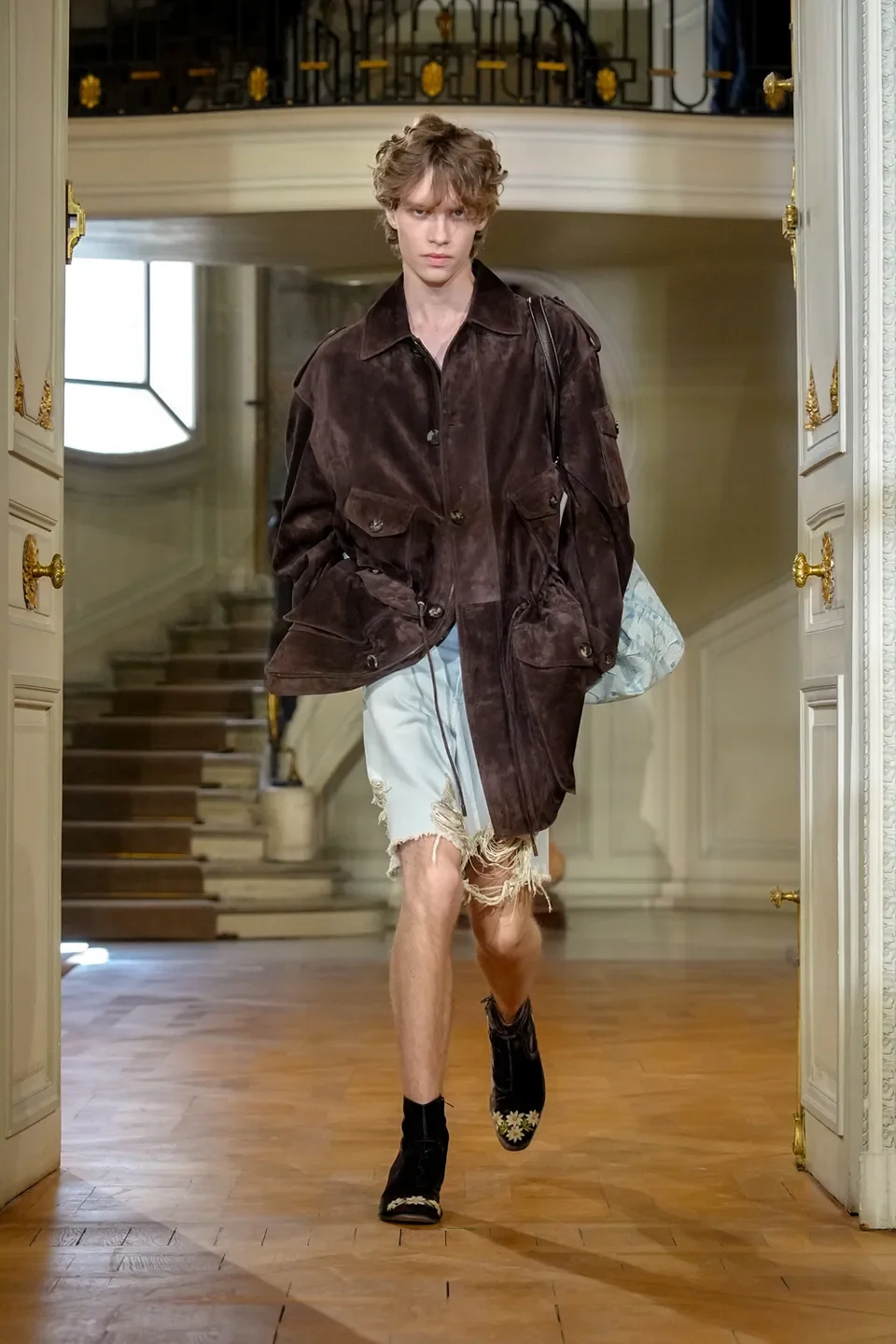
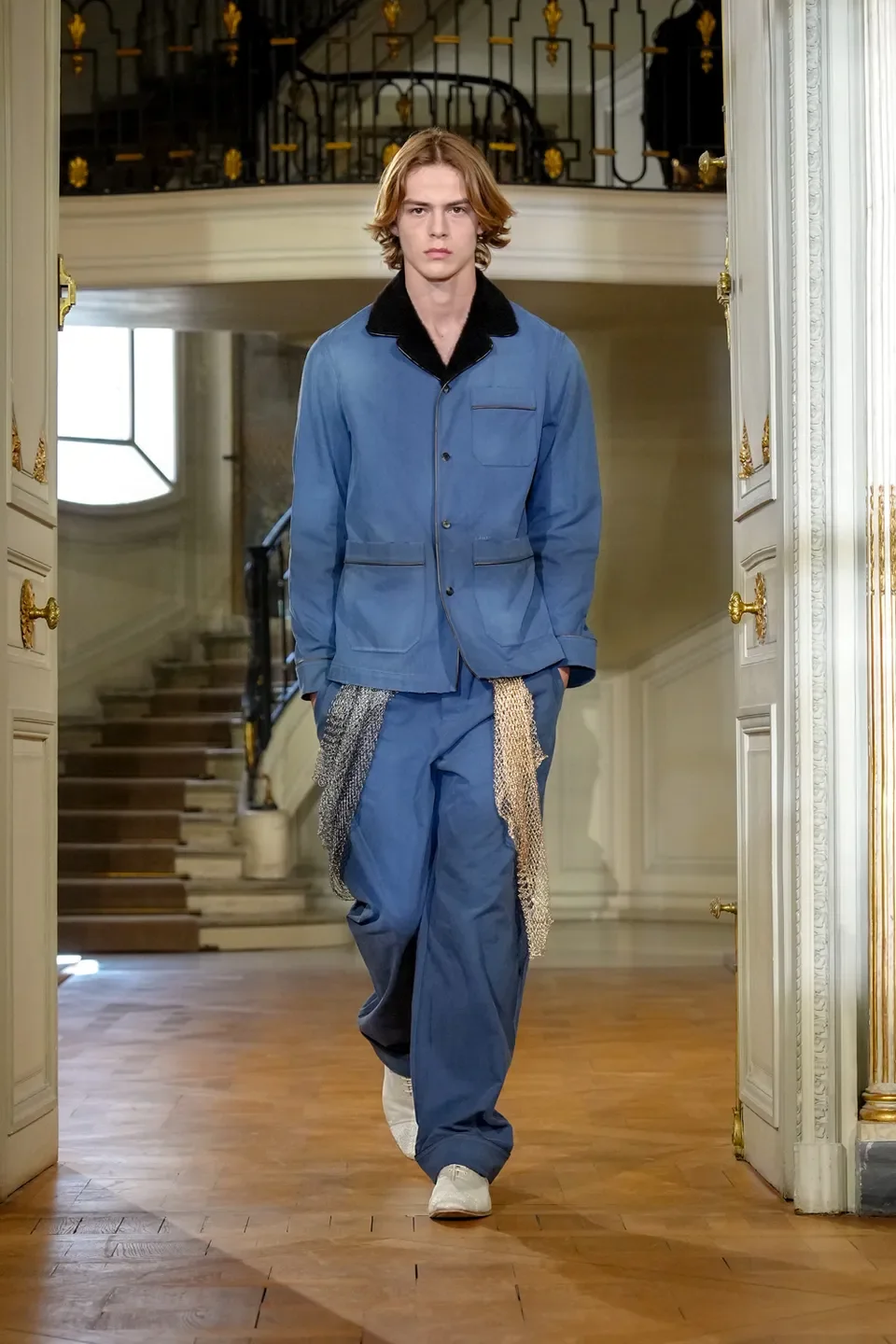
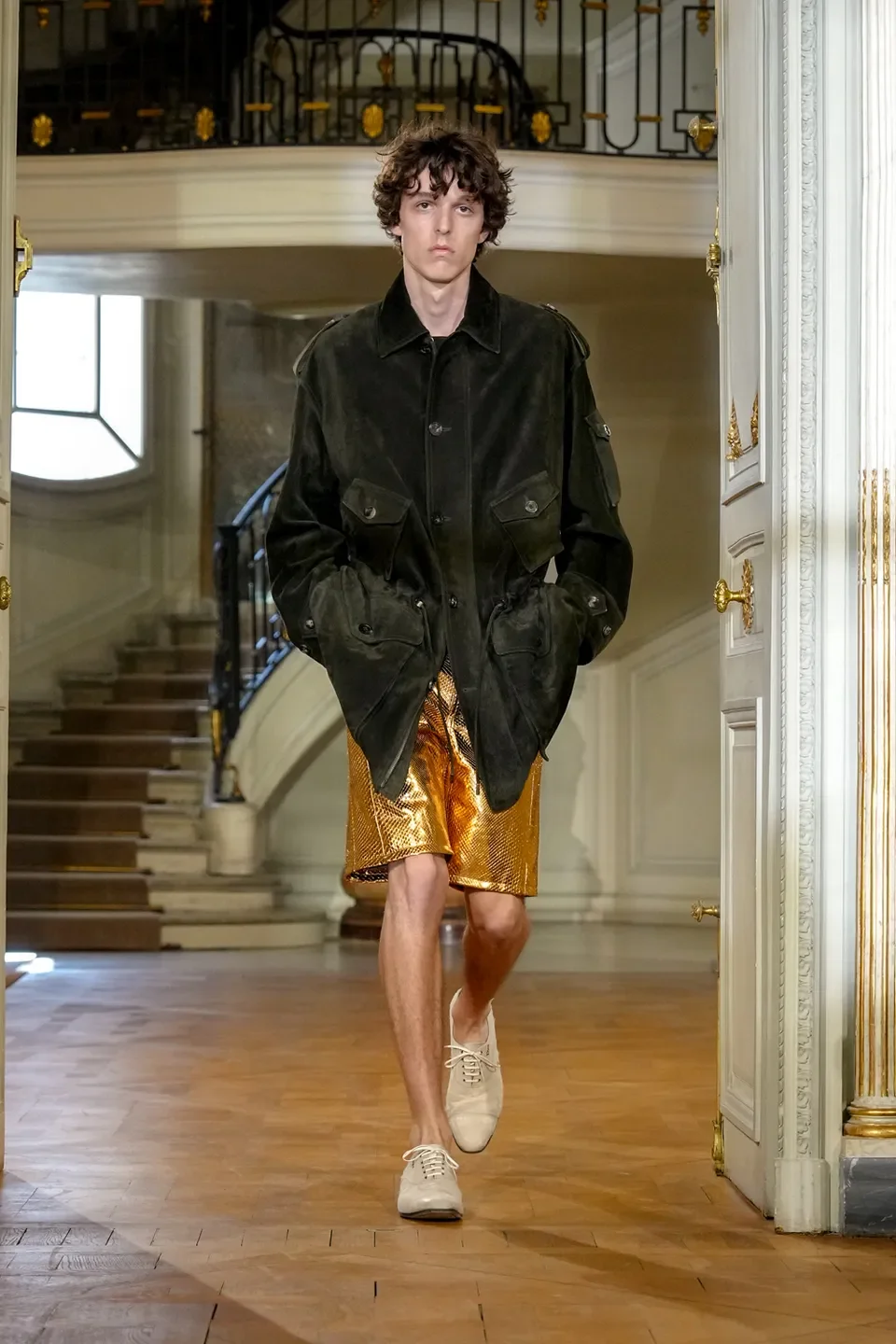
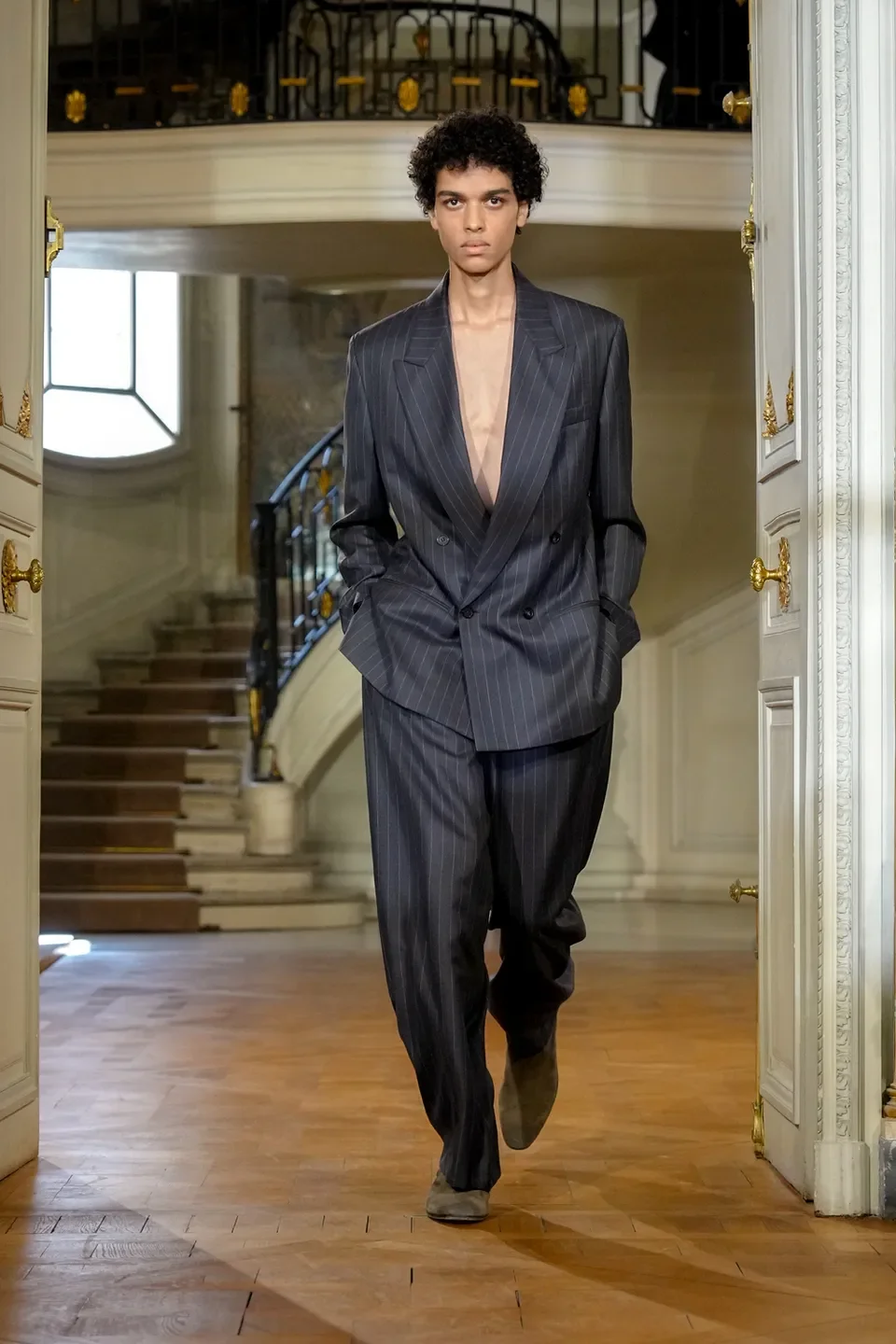
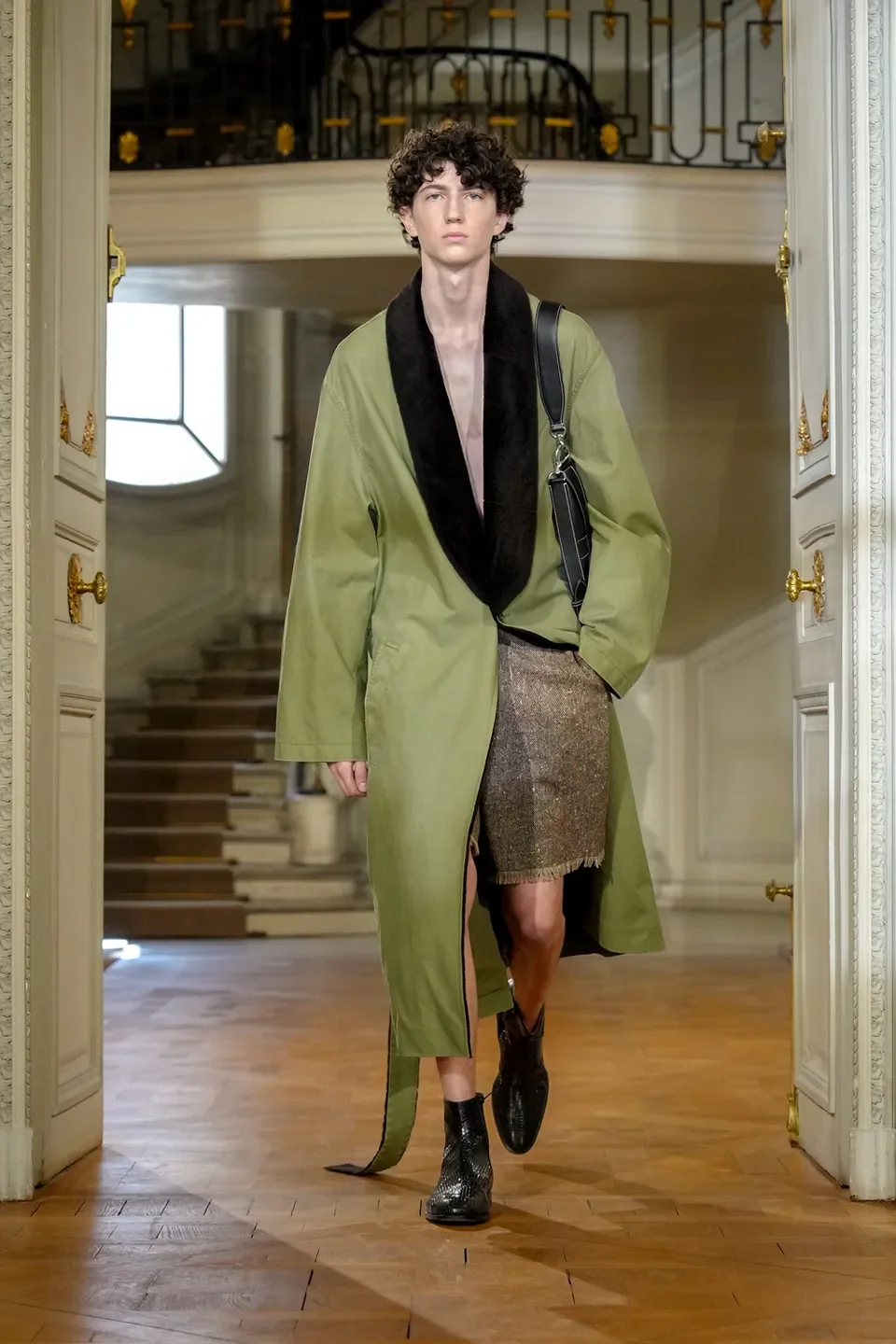
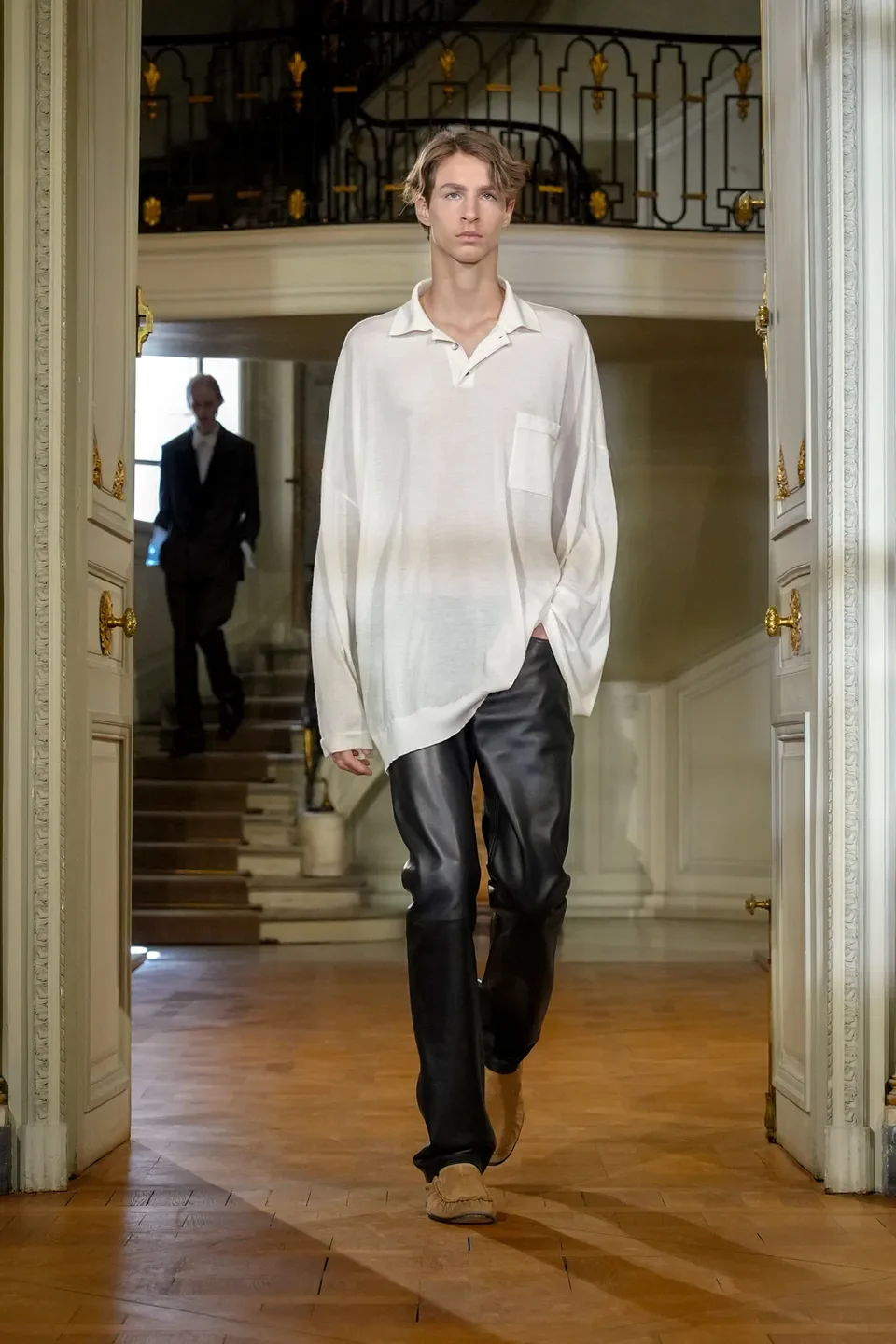
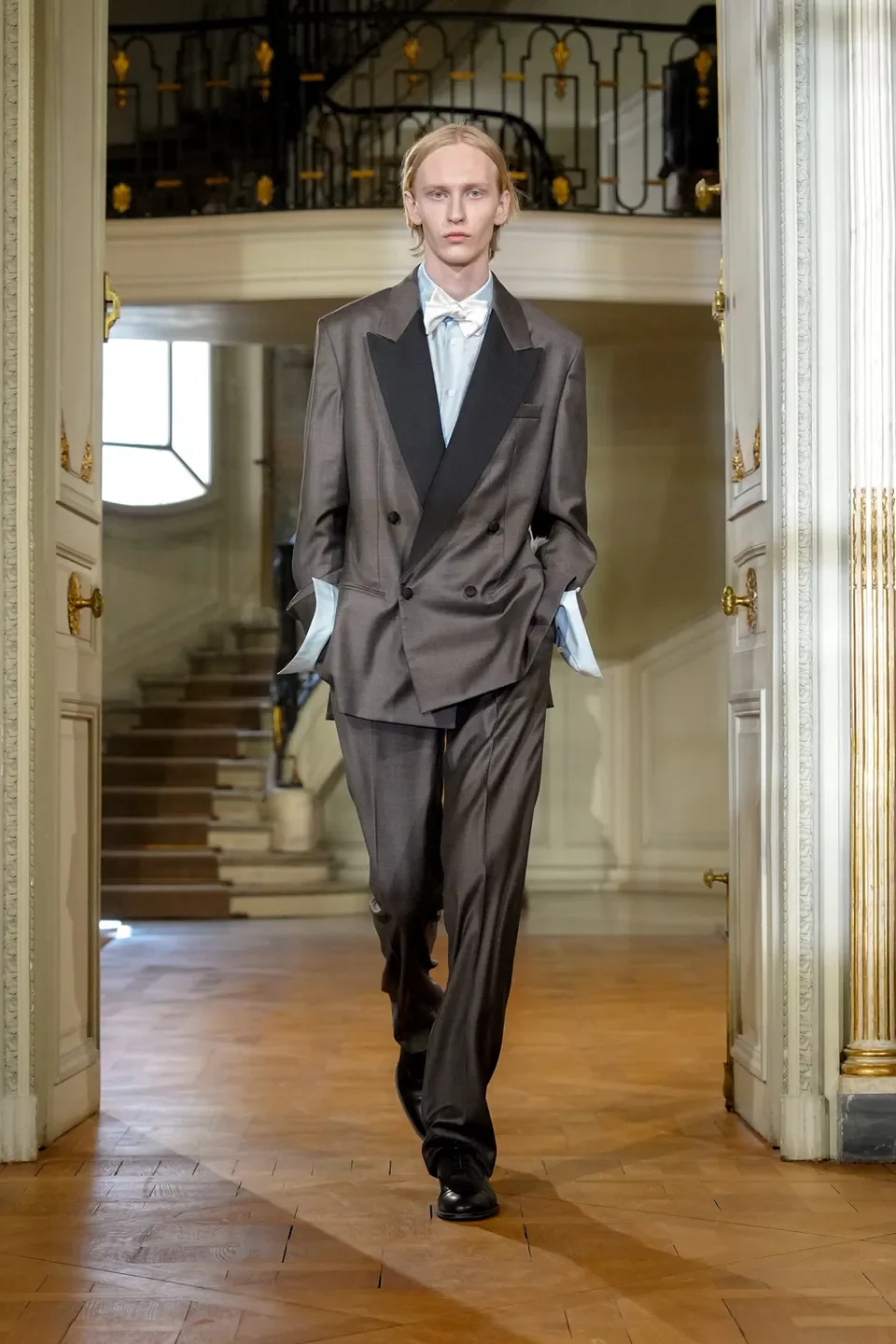
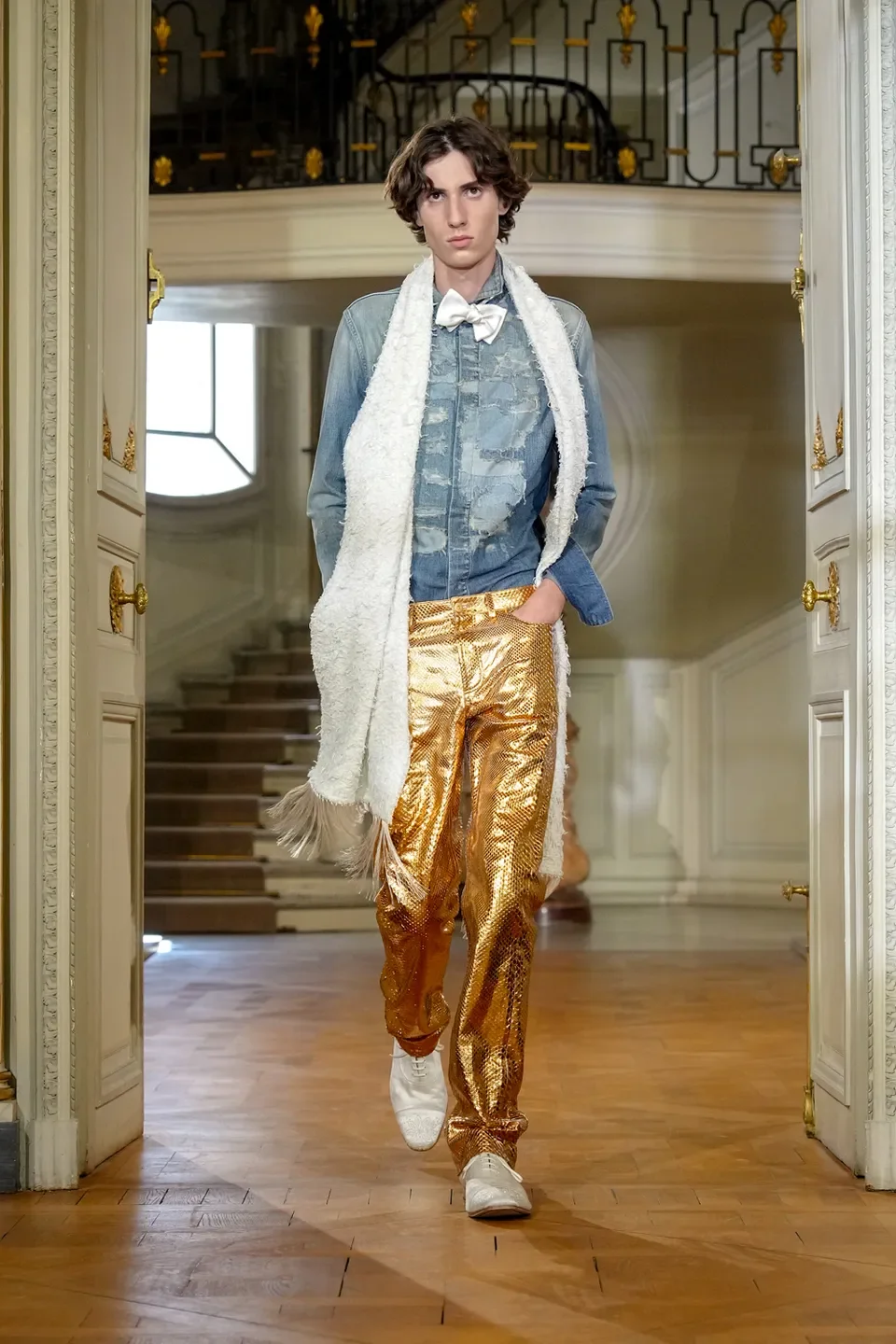
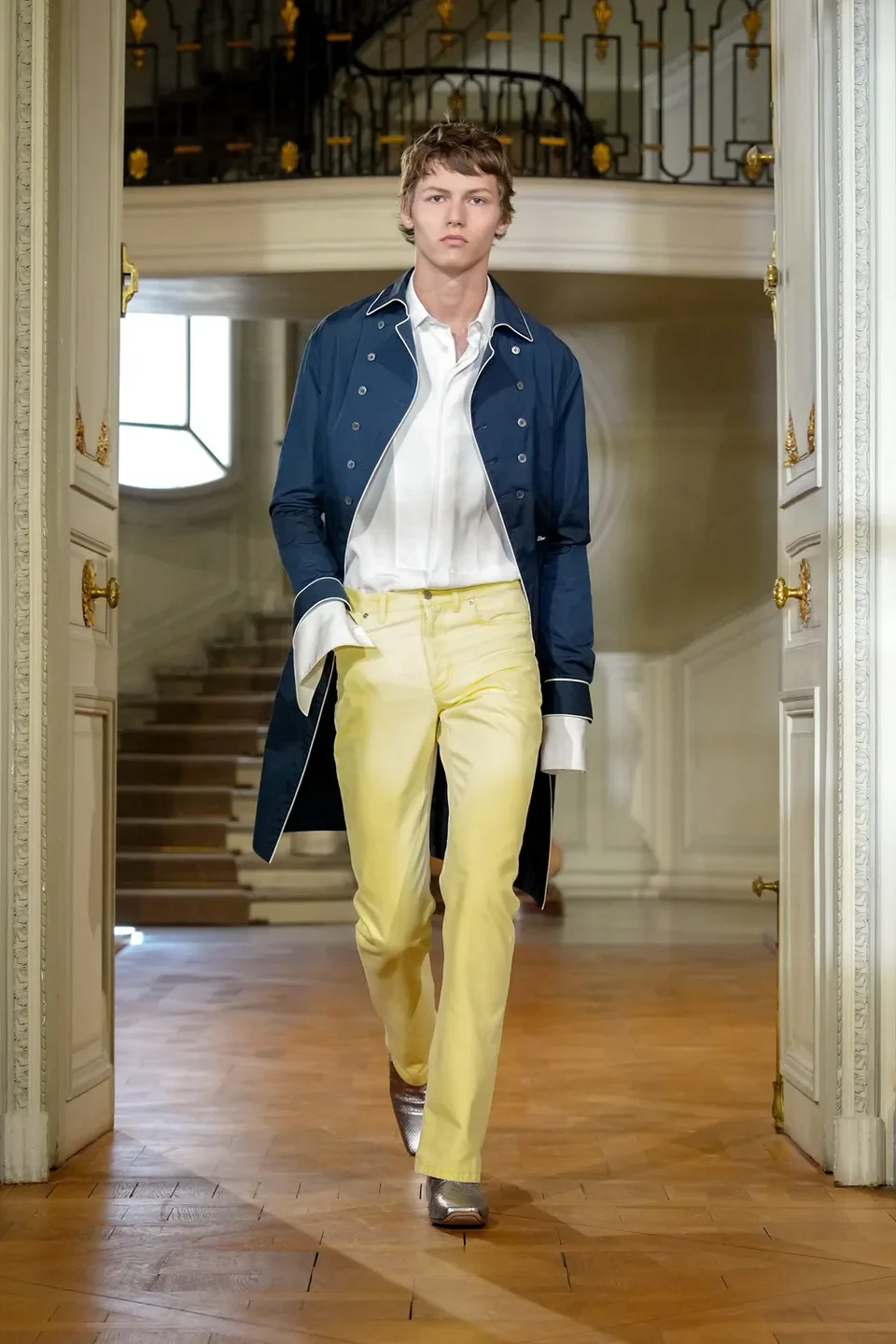
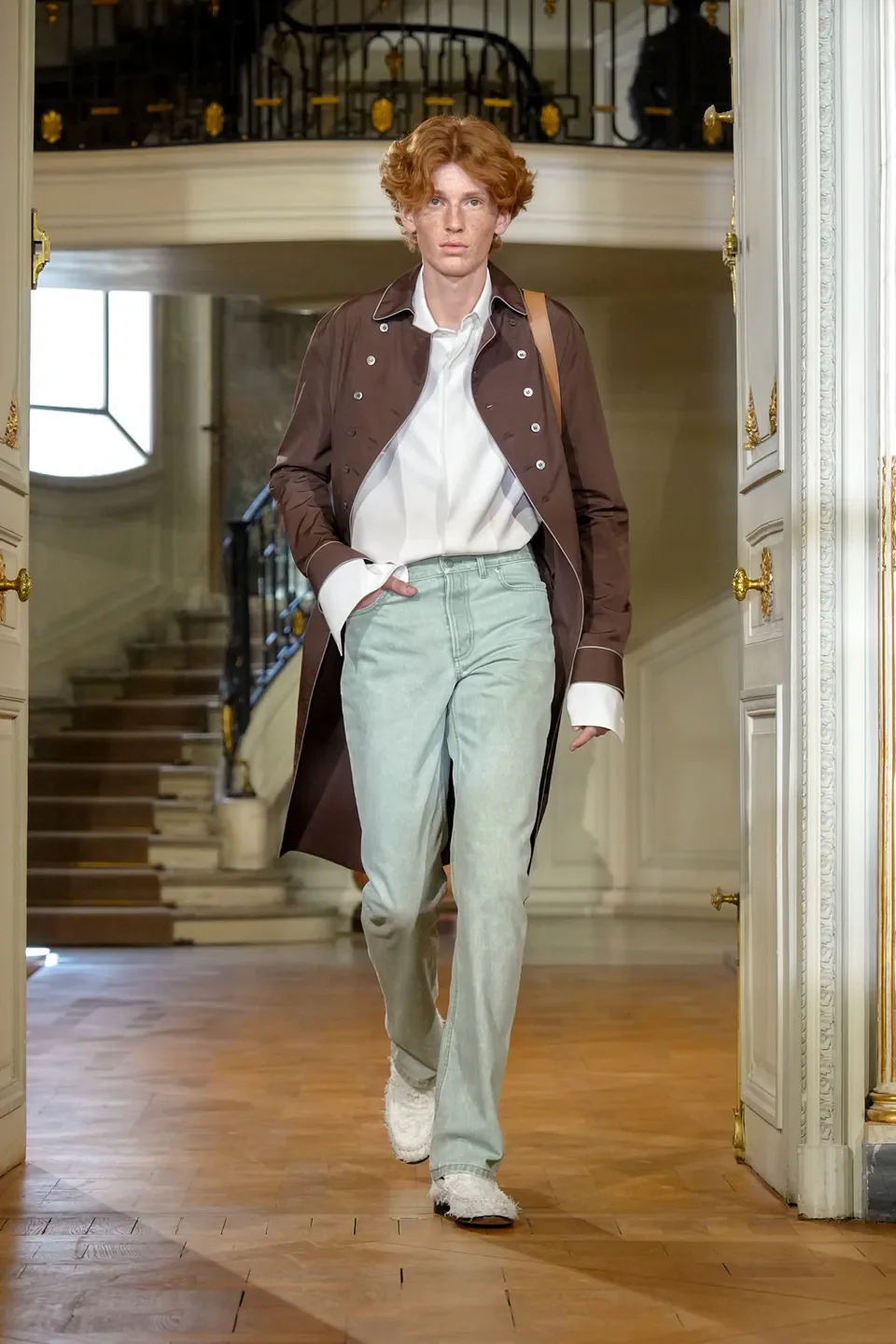
Elsewhere, tailoring continues Anderson’s broader project of loosening Dior’s historical rigidity. The “Bobby” suit, cut in a baggier silhouette and rendered in both sheer silk chiffon and traditional wool, reflects his ongoing attempt to reconcile formal structure with contemporary informality. Sequined trousers, crumpled outerwear and relaxed shirting introduce an aesthetic of controlled dishevelment, echoing the “disheveled aristocrat” theme that has underpinned his early tenure at the house.
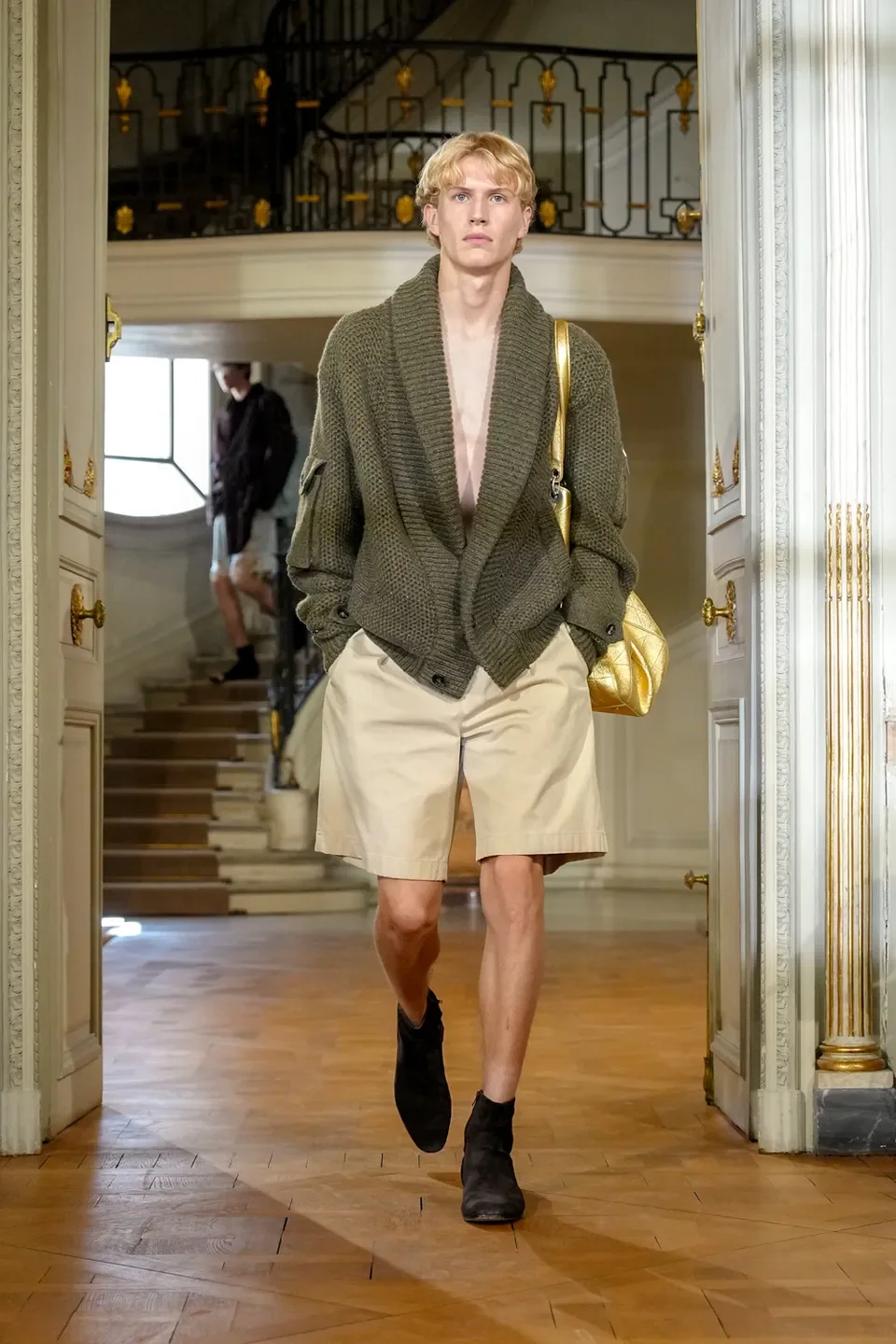
A key reference point this season is the collision between archival refinement and contemporary subculture. Anderson cites rave culture and nocturnal dressing as part of a broader shift in how formality is being rewritten, particularly in younger wardrobes. This tension manifests in the styling: embroidered shirts paired with stone-washed shorts, tuxedo elements broken apart and reassembled with casual separates, and ceremonial fabrics placed into everyday contexts. The effect is a wardrobe that feels continuously in flux, neither fully formal nor fully casual, but suspended between codes.
The show’s sonic environment reinforces this logic of remix and repetition. A custom score by Fred again.., incorporating KTNA, Mabe Fratti, Jamie T and Christine and the Queens, mirrors the collection’s approach to construction: sampling, layering and reworking existing material into something that feels recognisable yet altered. It is not background atmosphere but structural analogy.
What emerges from Dior Men’s Spring/Summer 2027 is a collection less concerned with defining new silhouettes than with interrogating how meaning is constructed through repetition. Anderson is not attempting to erase Dior’s historical vocabulary but to destabilise it—testing how far a code can be stretched before it becomes something else entirely.
If the result occasionally resists immediate clarity, that ambiguity feels intentional. The collection operates in a space where recognition and distortion coexist, where garments are simultaneously familiar and estranged. In this sense, Dior becomes not a fixed aesthetic system but a continuous process of rewriting—one that accepts instability as its defining condition.