Antonio Marras Fall 2026
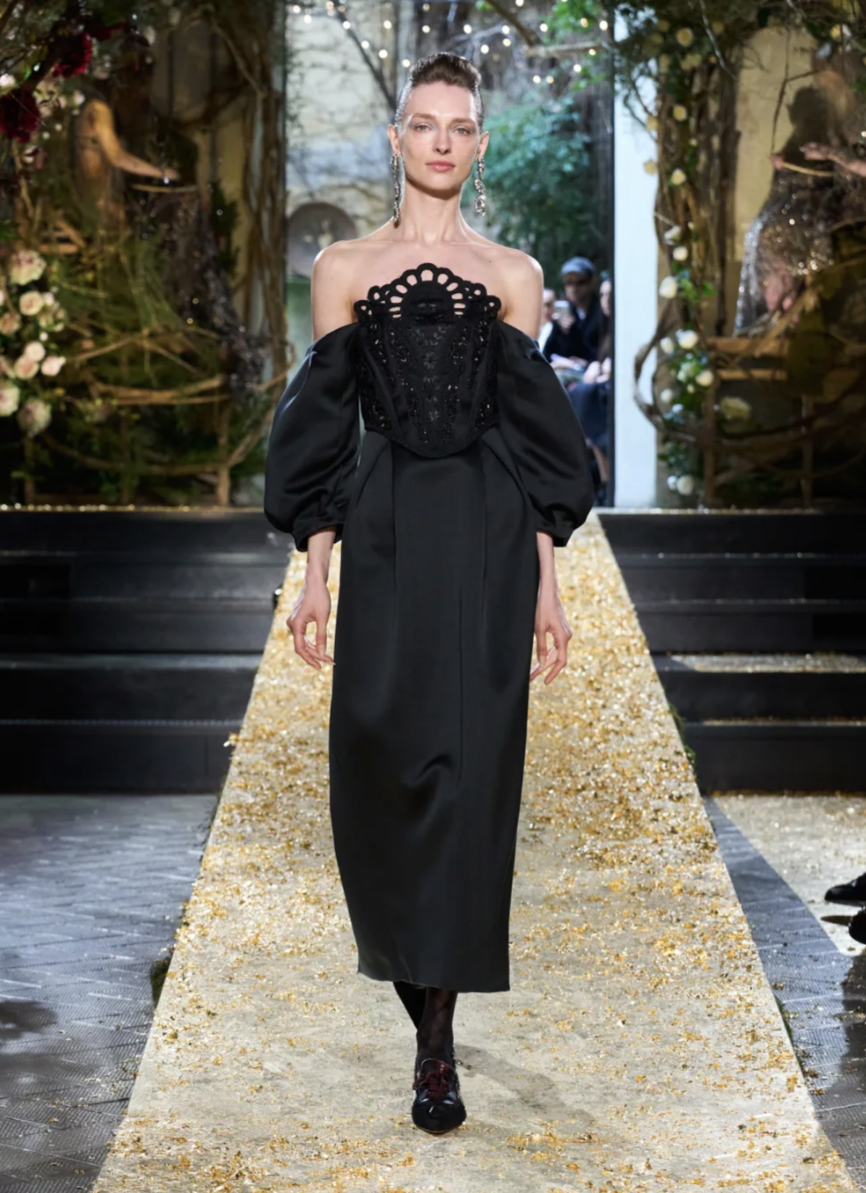
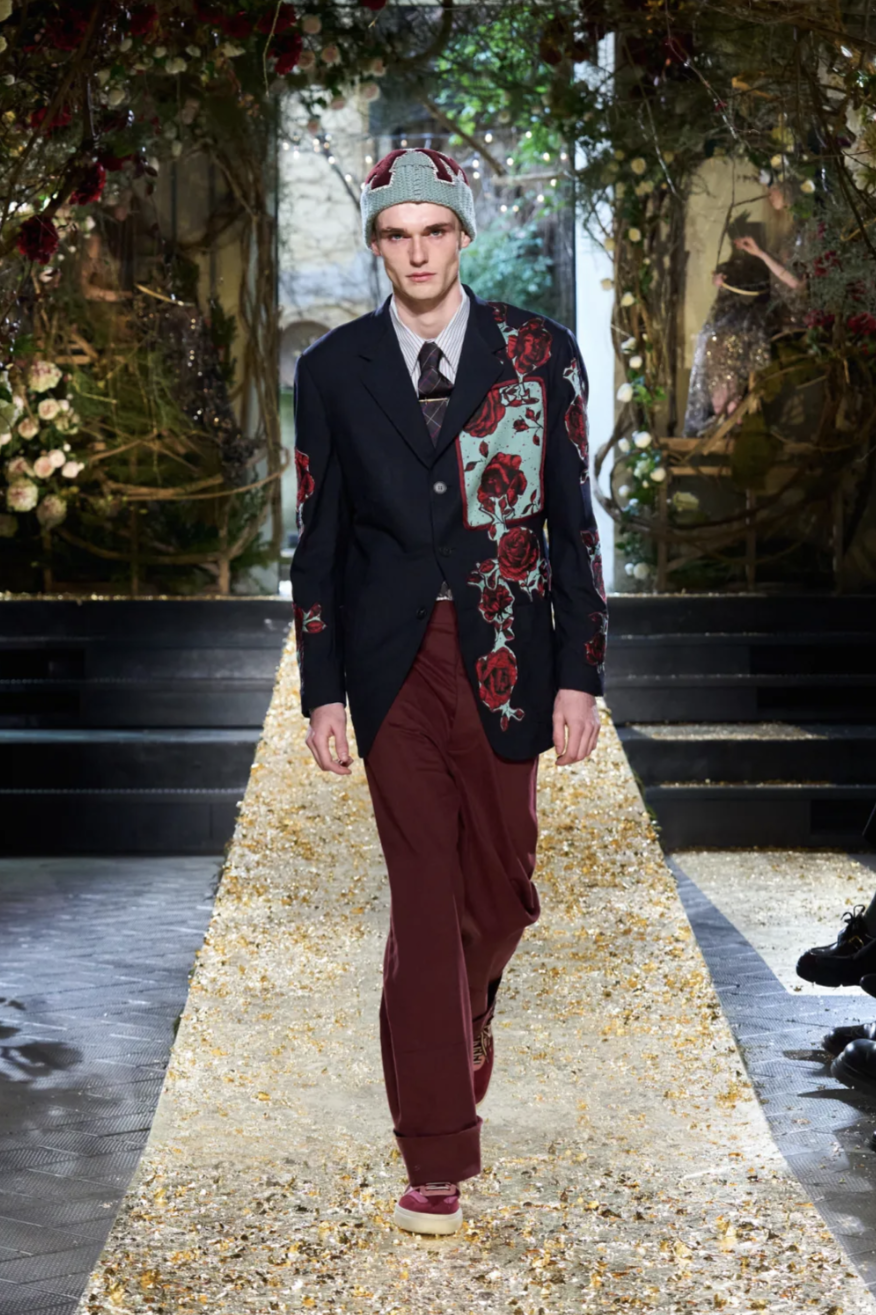
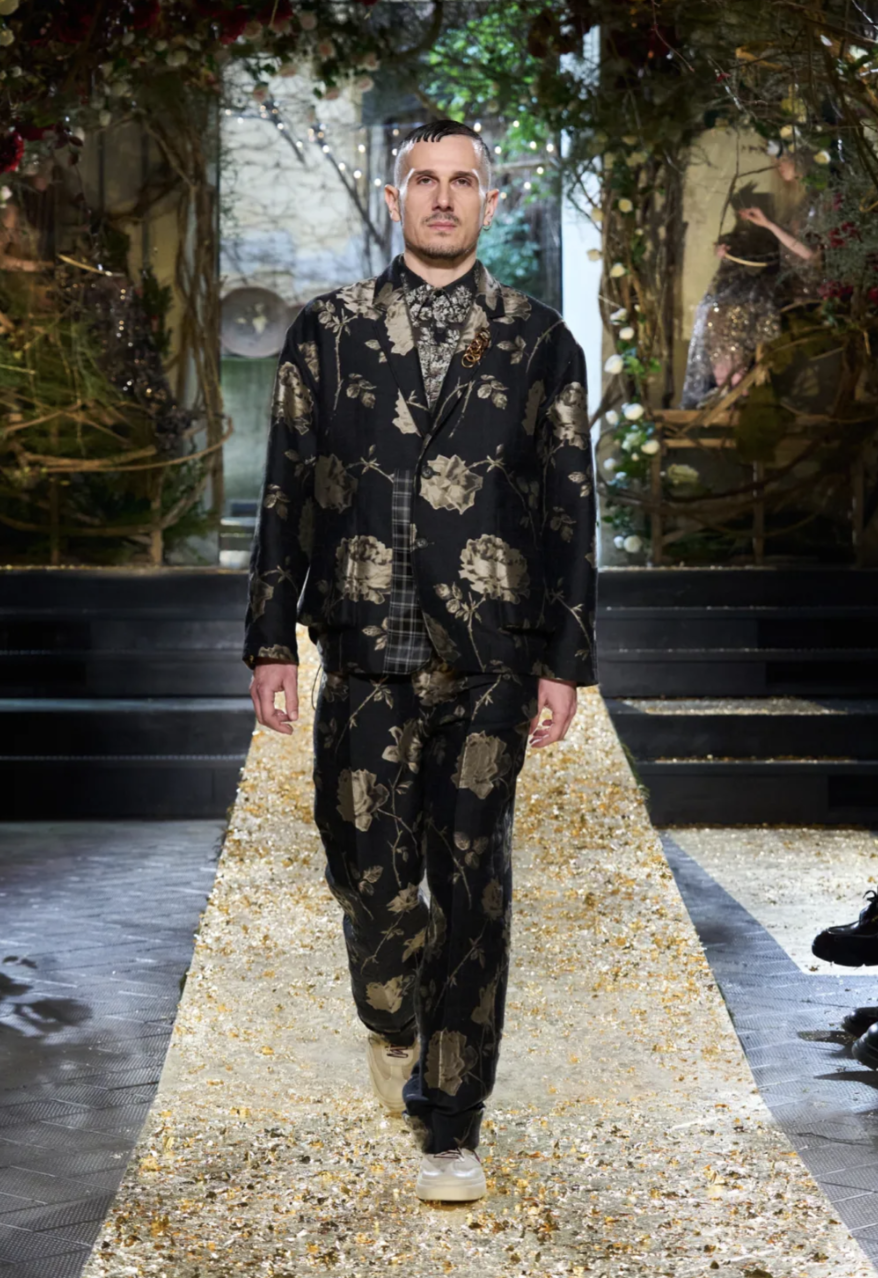
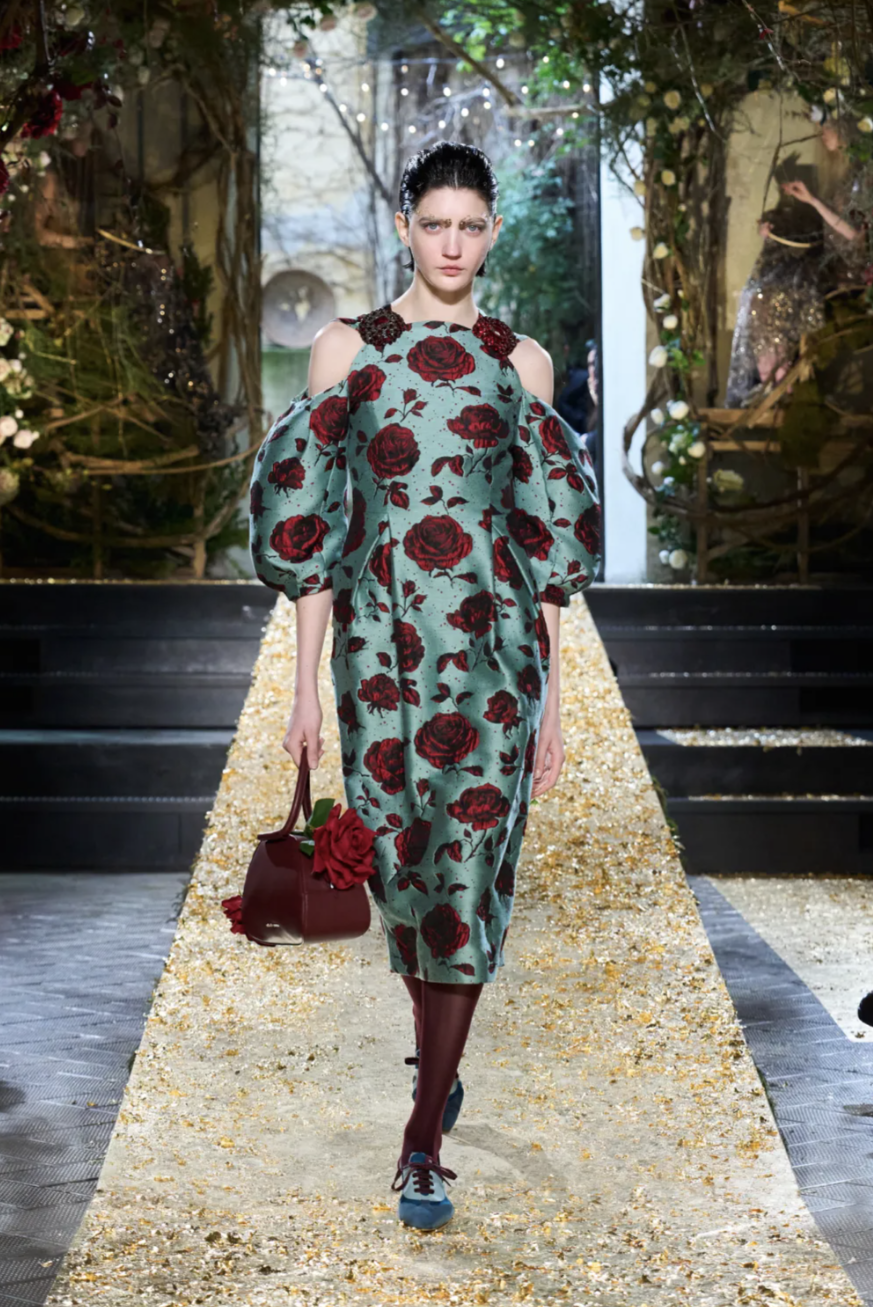
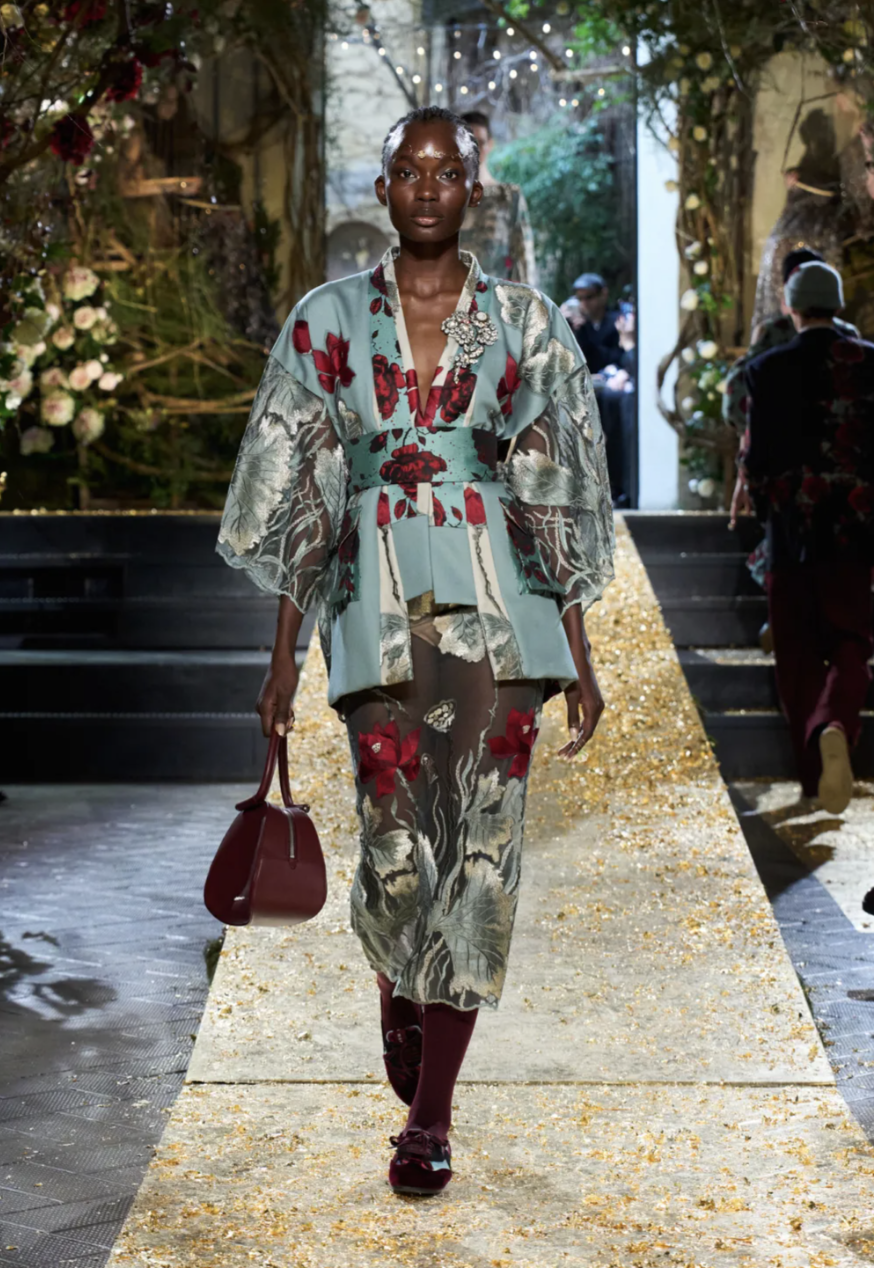
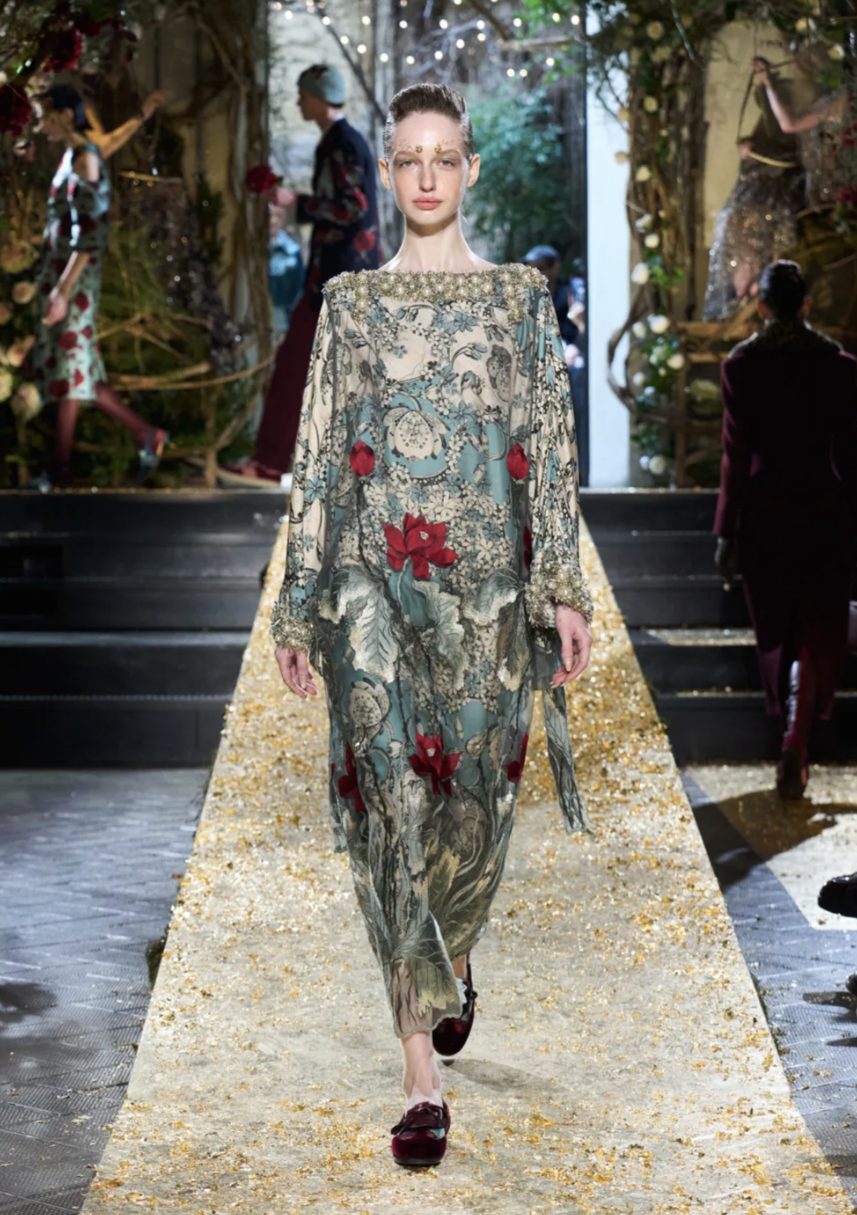
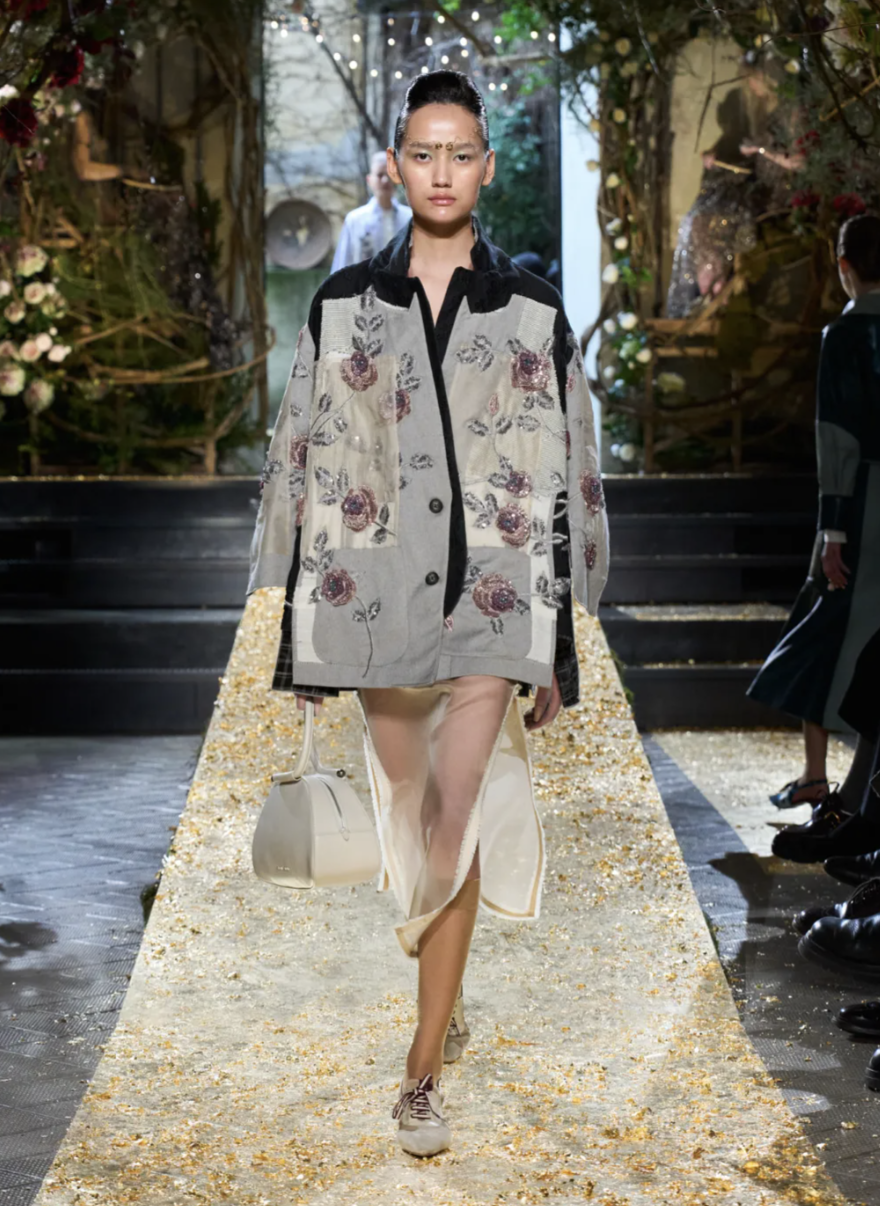
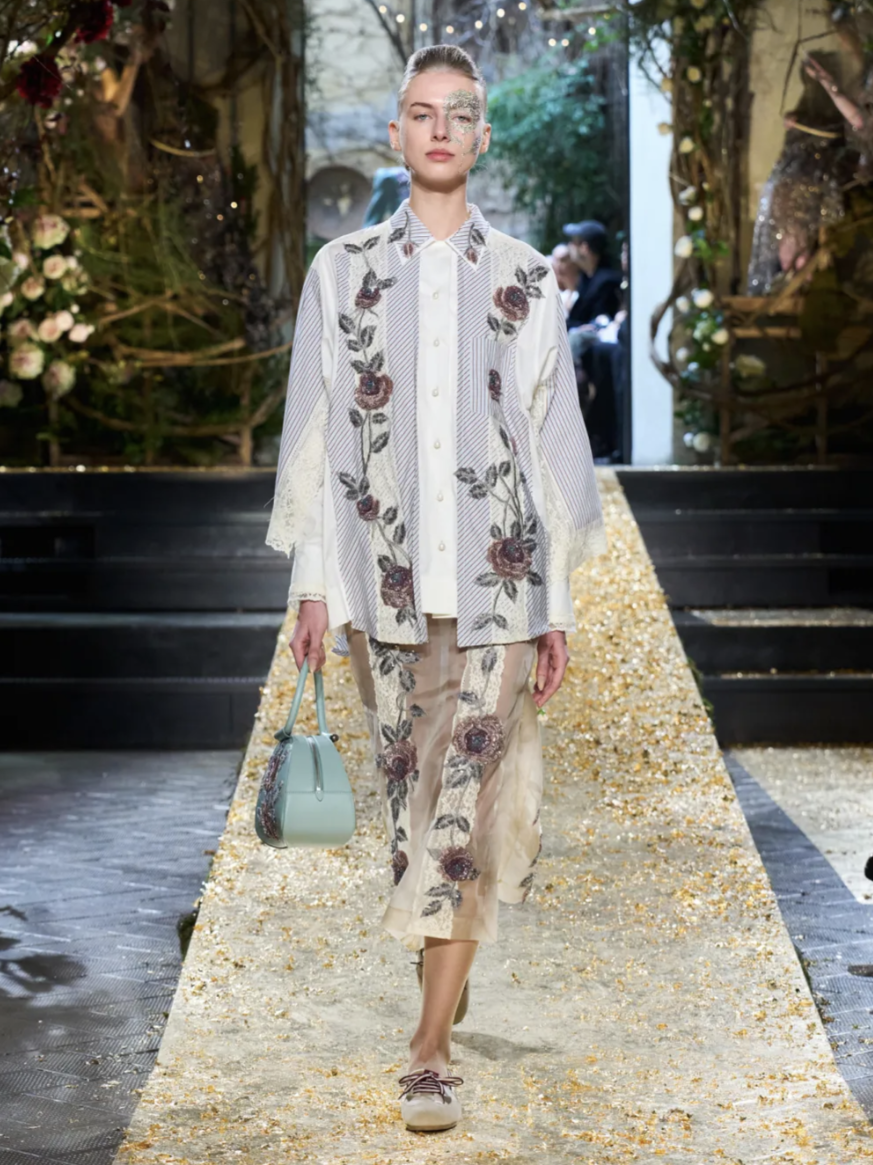
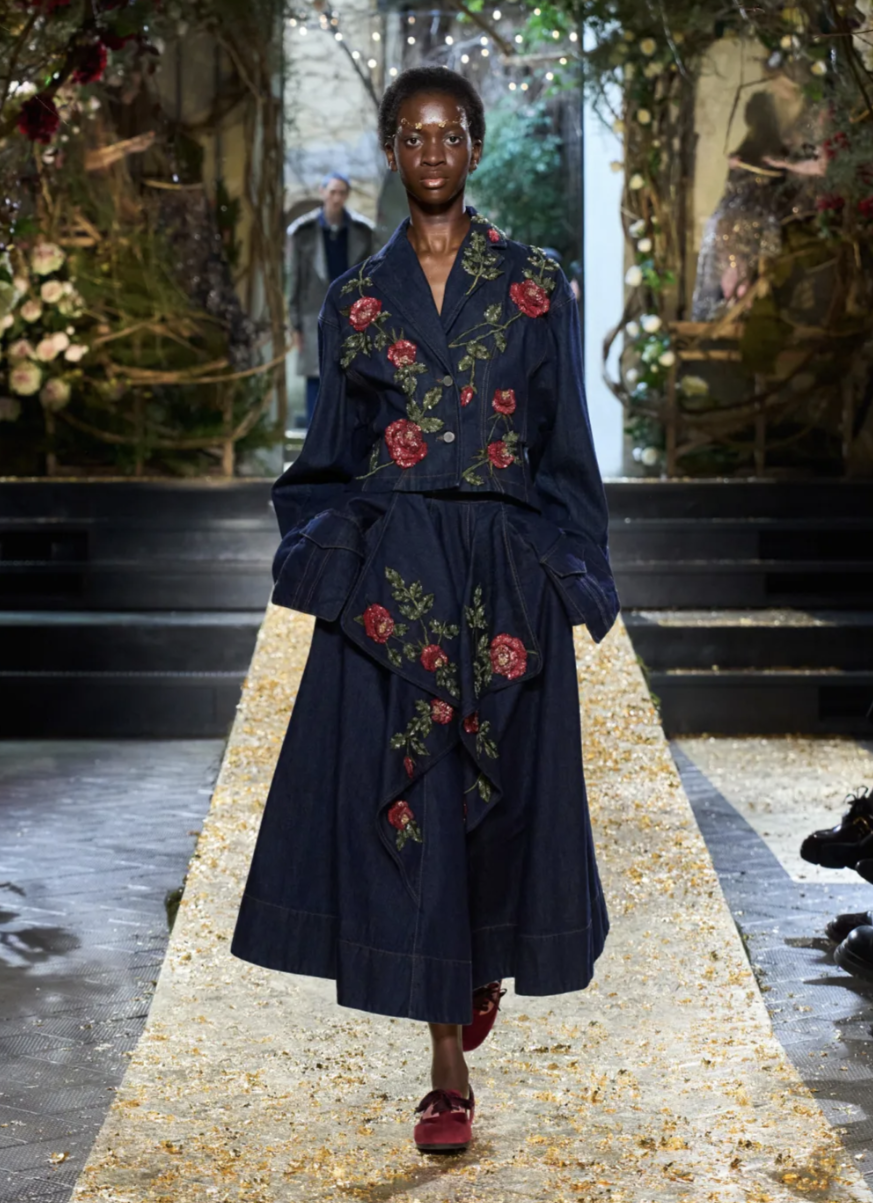
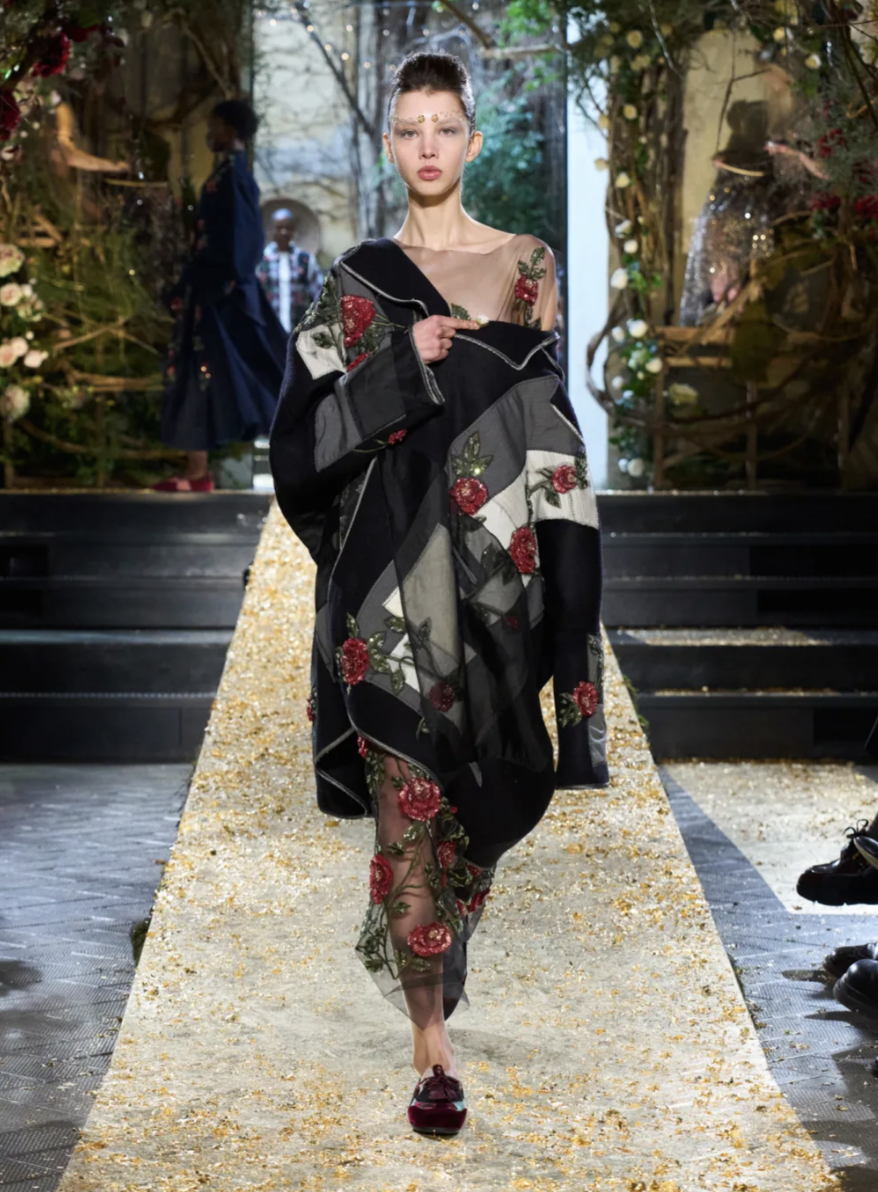
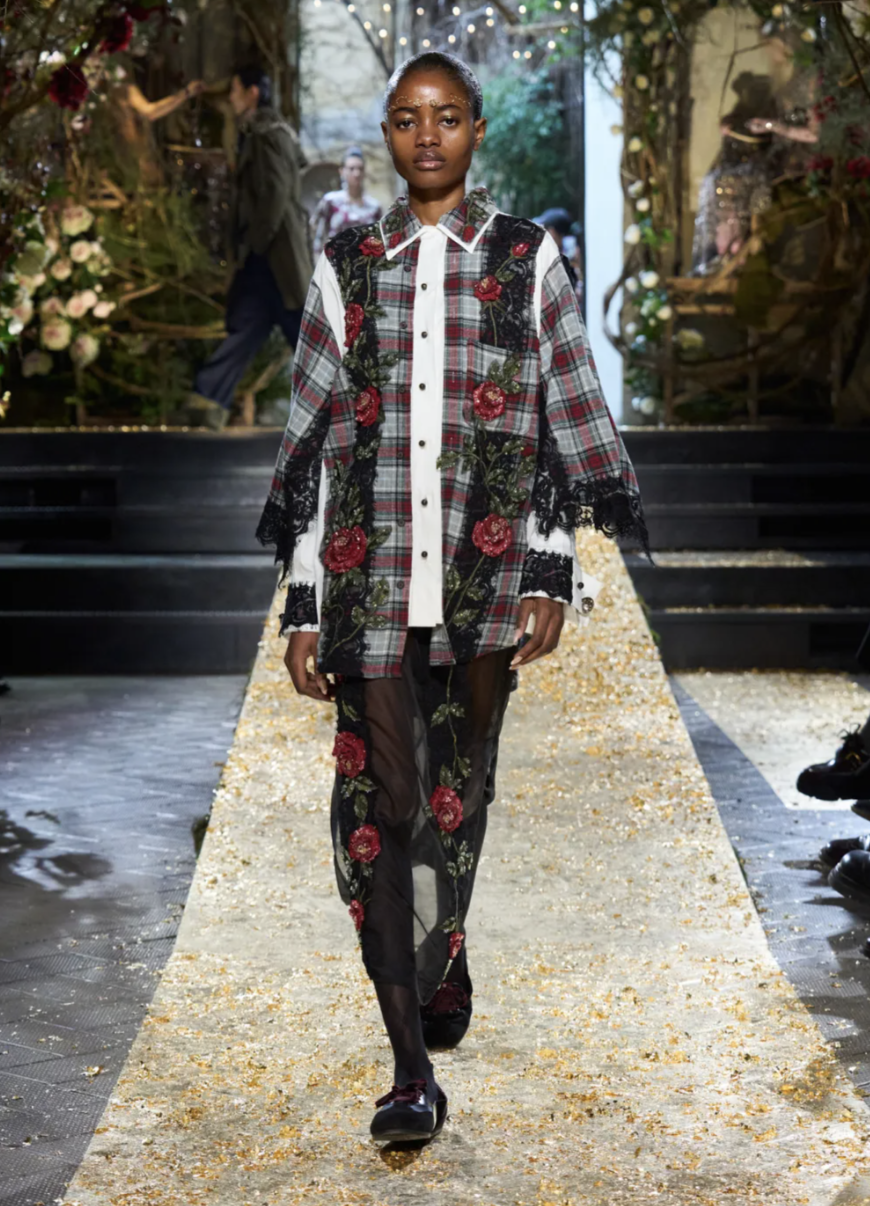
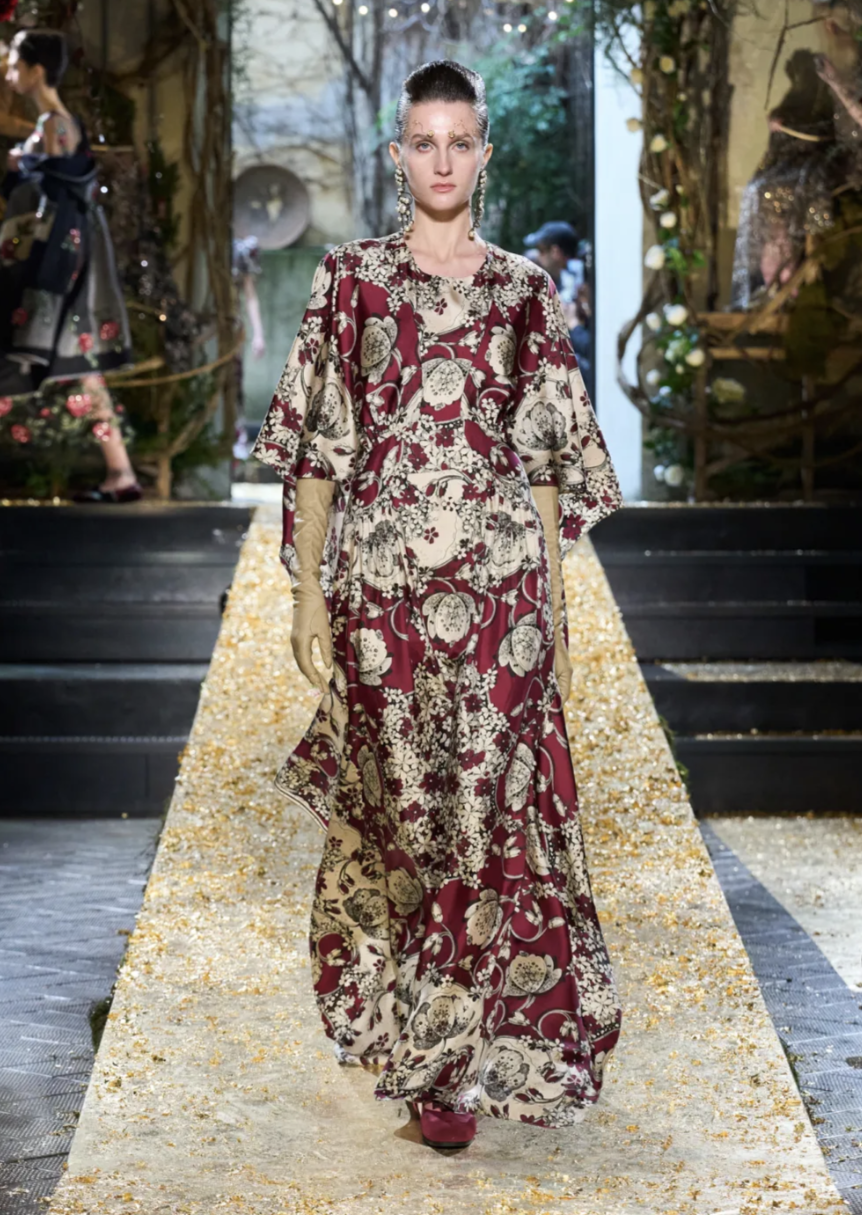
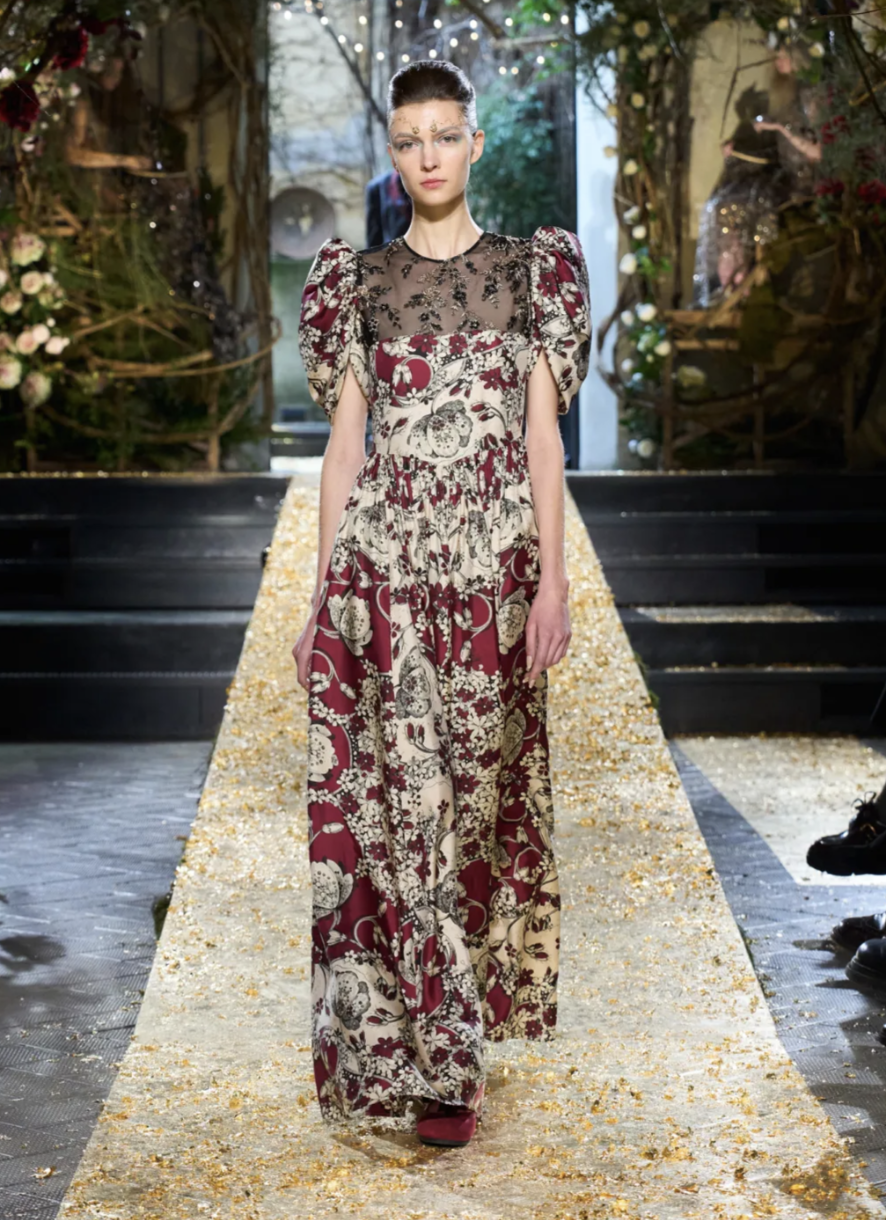
Antonio Marras turned his Milan headquarters into a fairytale garden for fall, one overflowing with roses and dotted with models who looked as if they had stepped out of a dream. Some embroidered quietly in the bushes, others stood still among the blooms, their garments overtaken by vines and petals. “The rose is a wonderful flower,” Marras said backstage, “but here it’s wild, not tended by a gardener.” The idea carried through the collection, a meditation on nature’s chaos overtaking structure and beauty existing just beyond control.
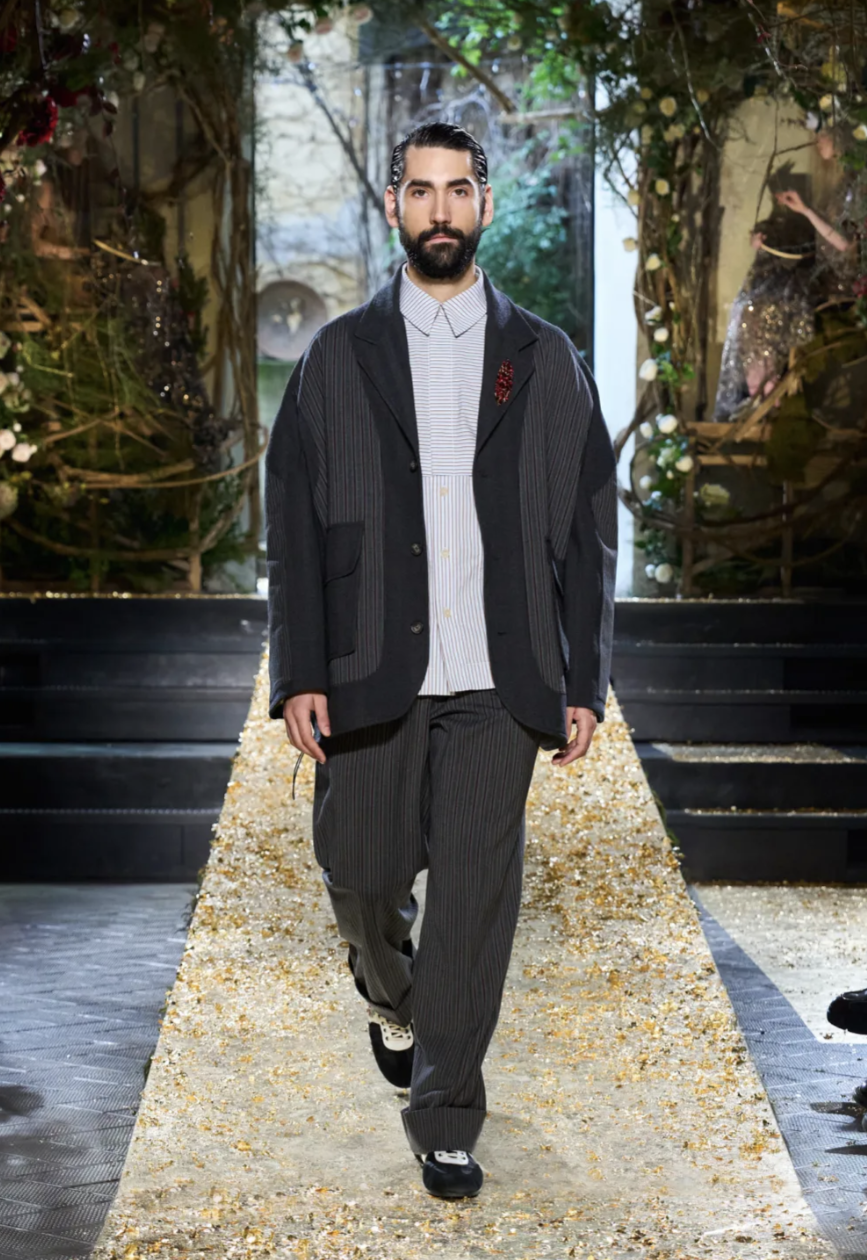
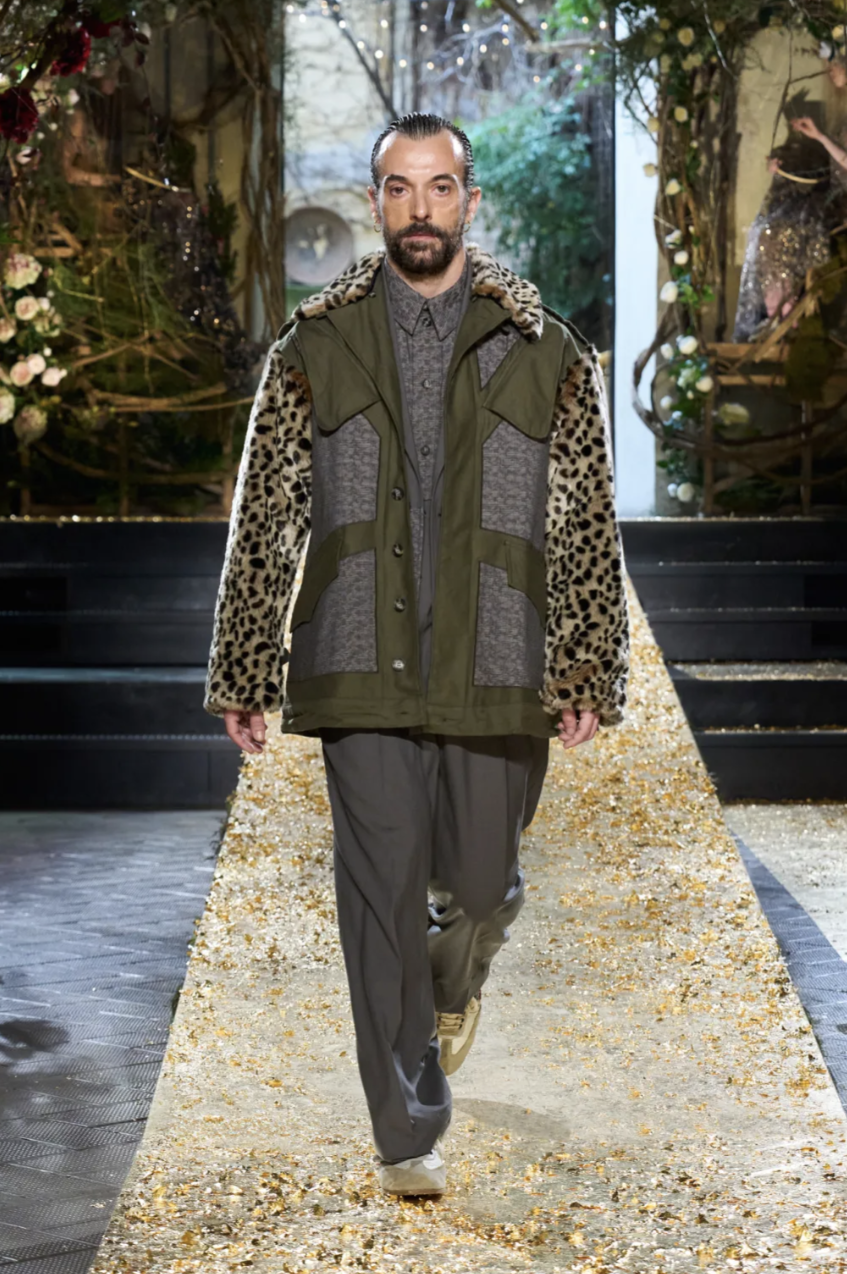
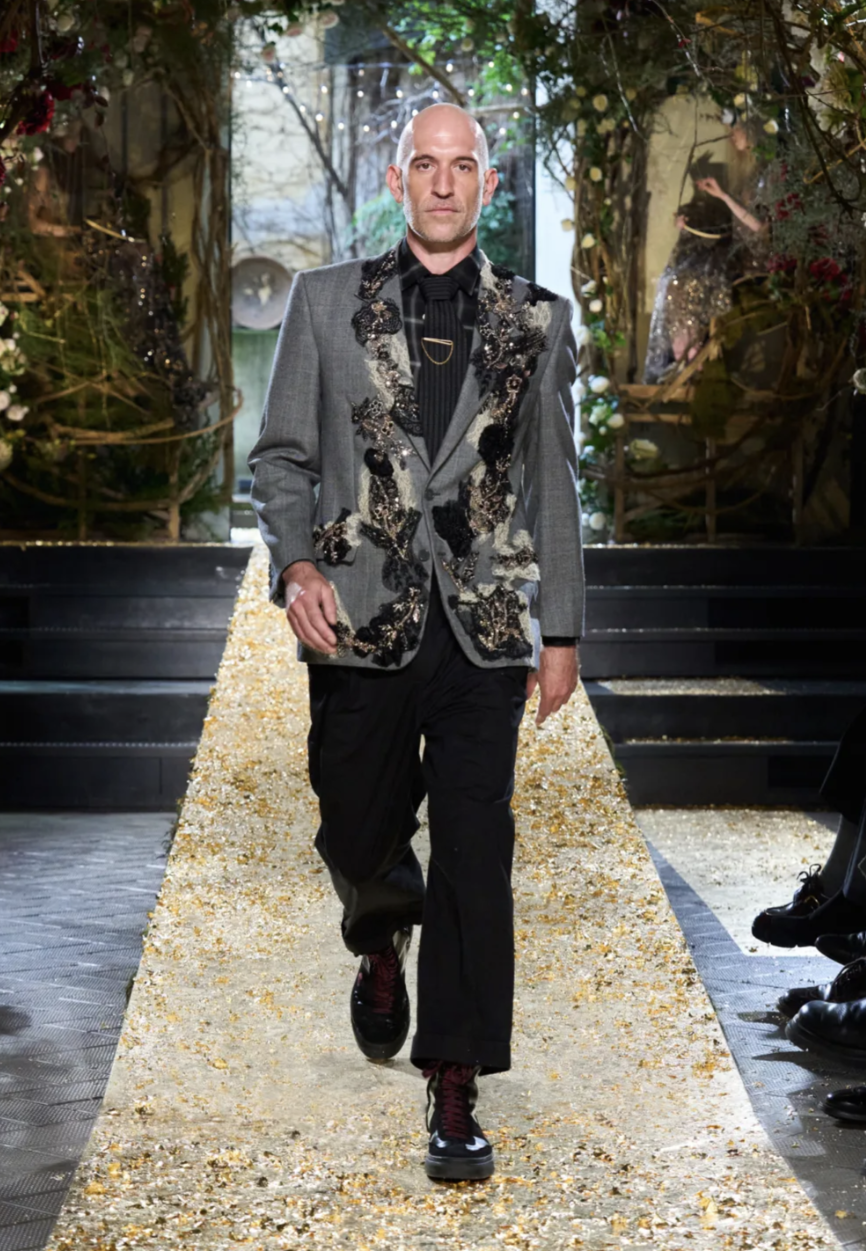
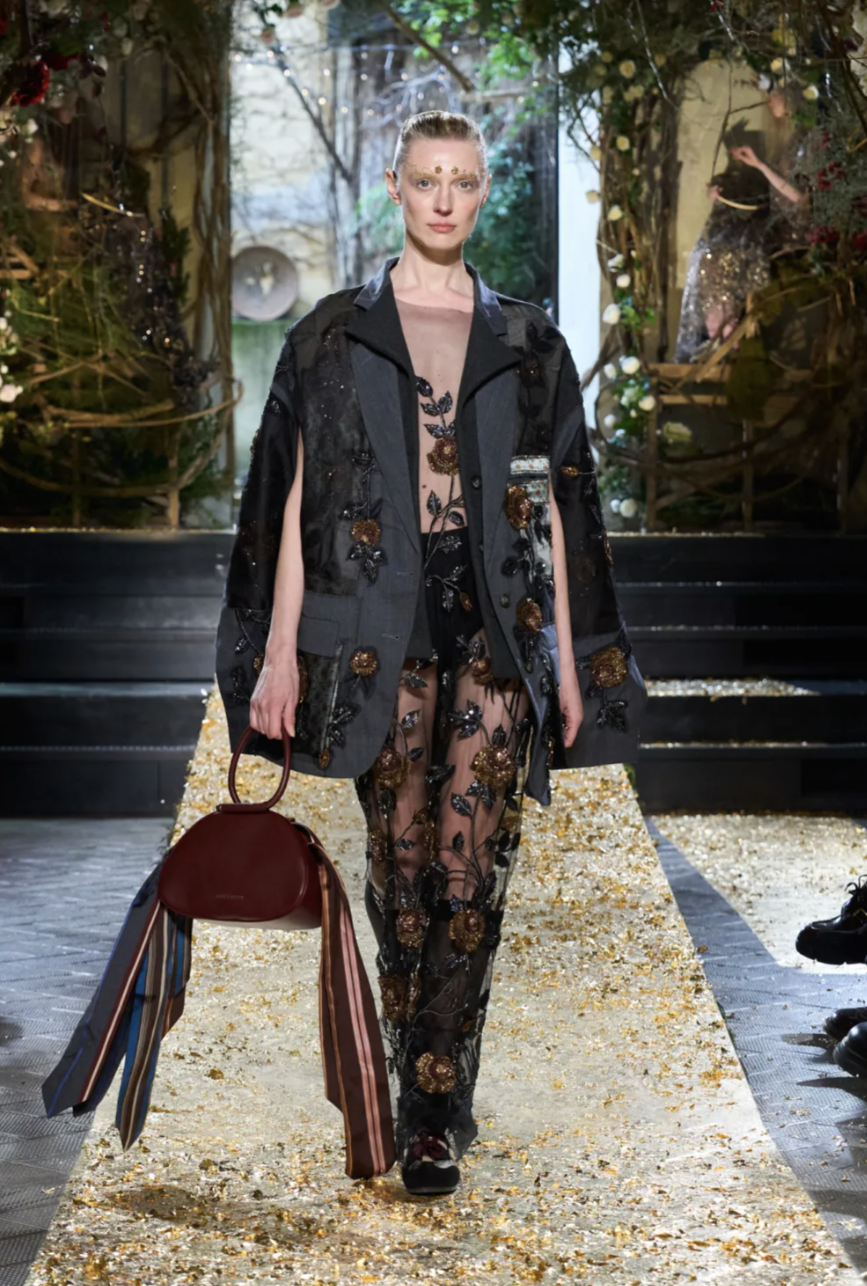
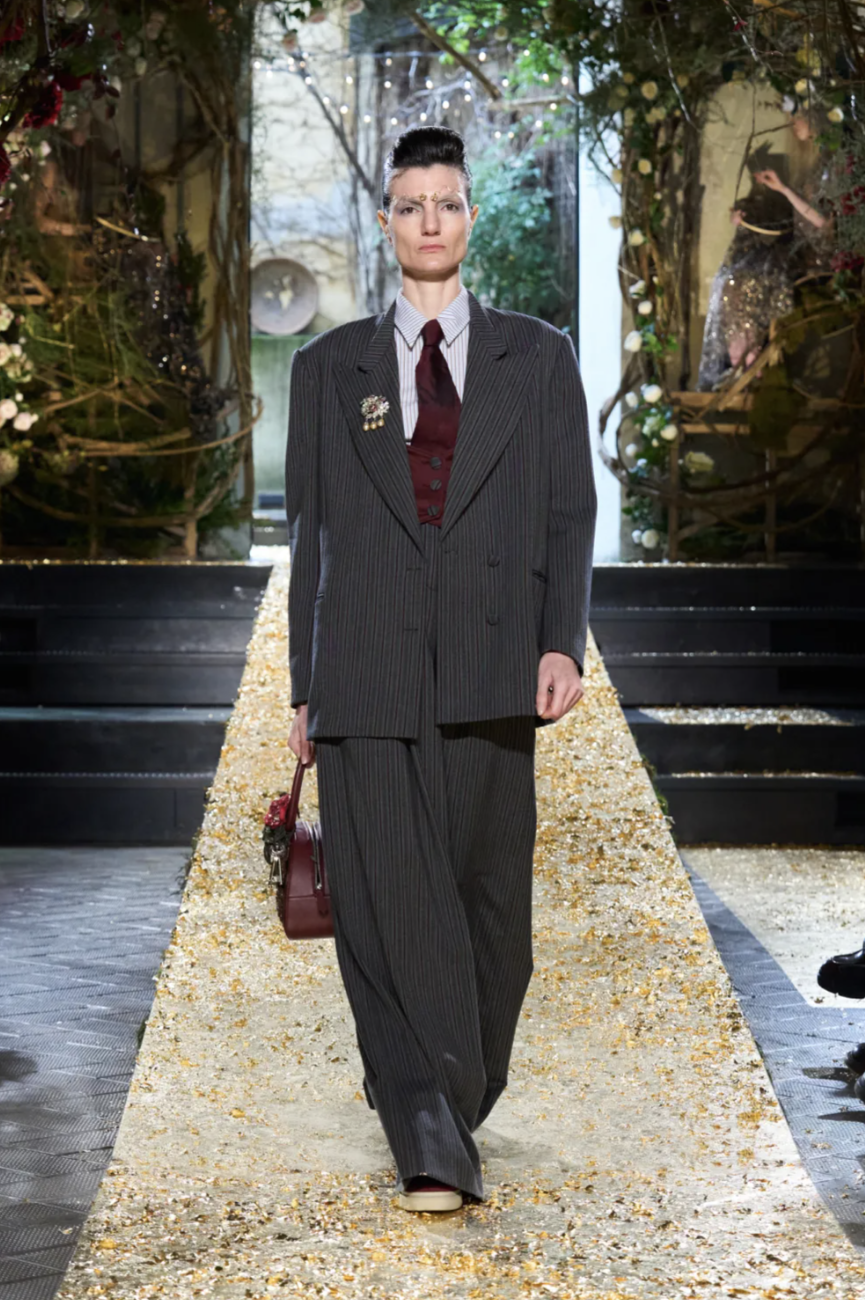
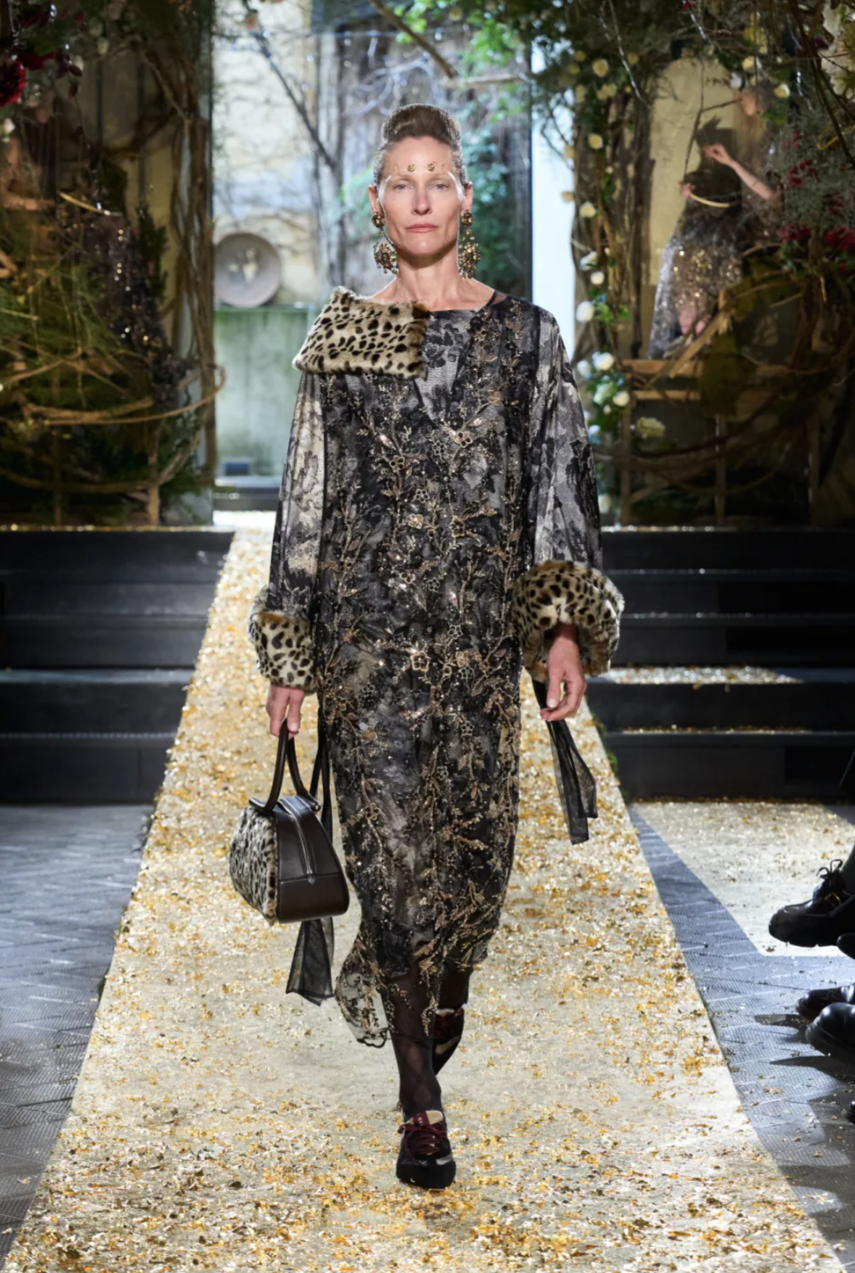
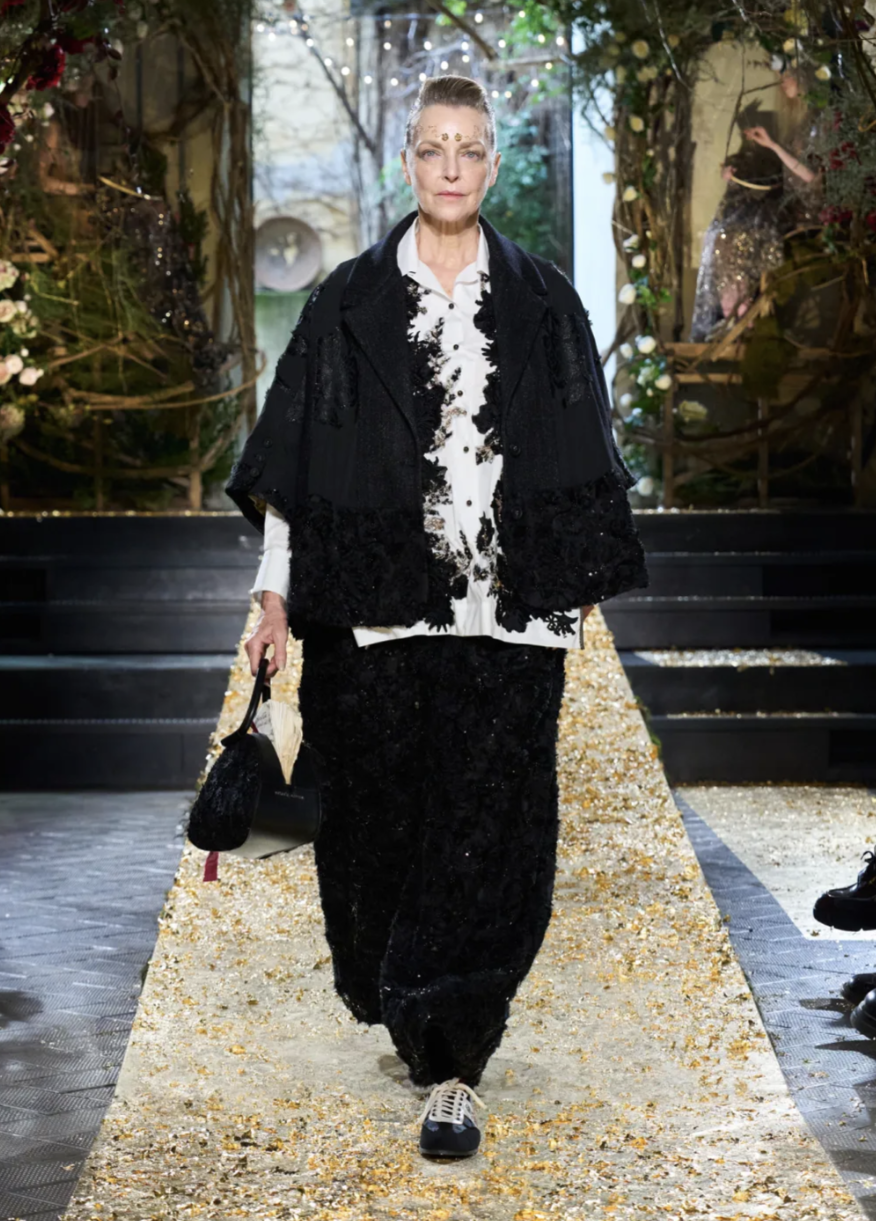
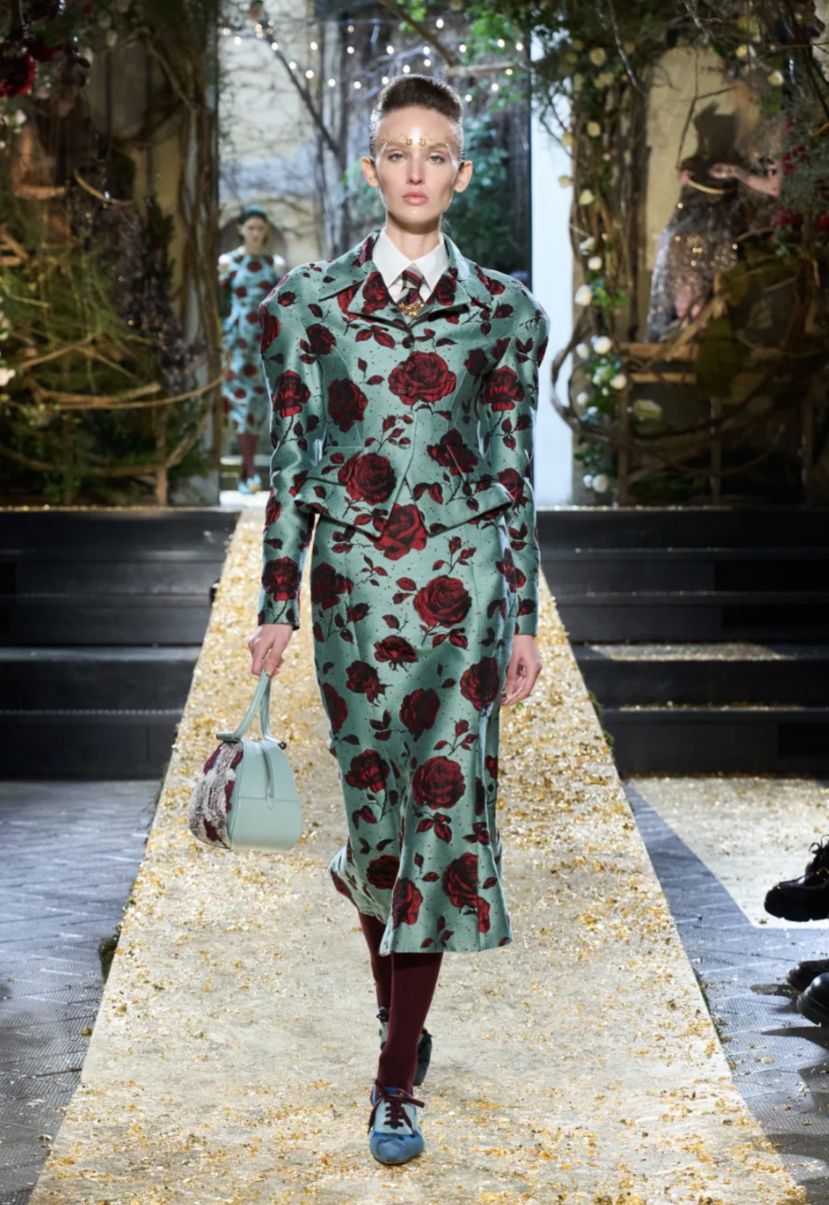
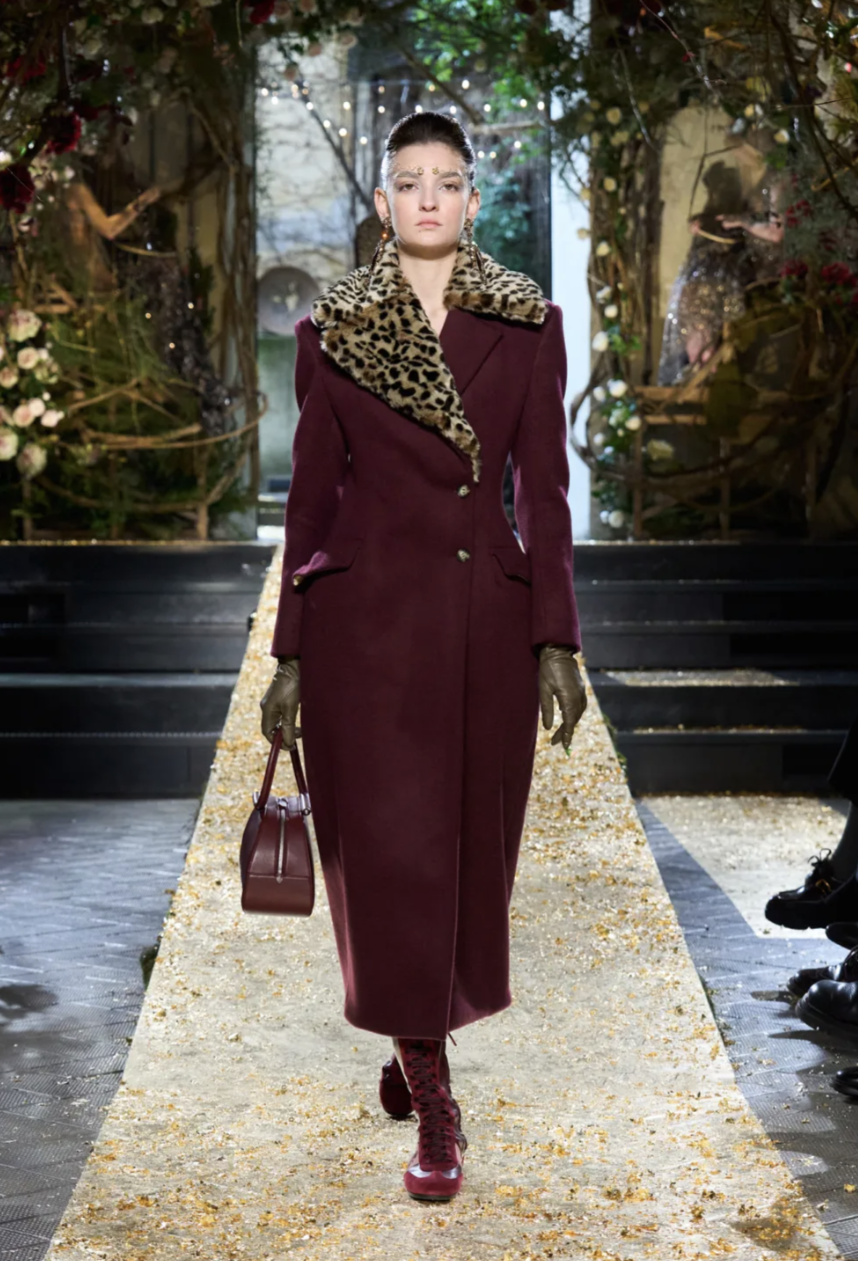
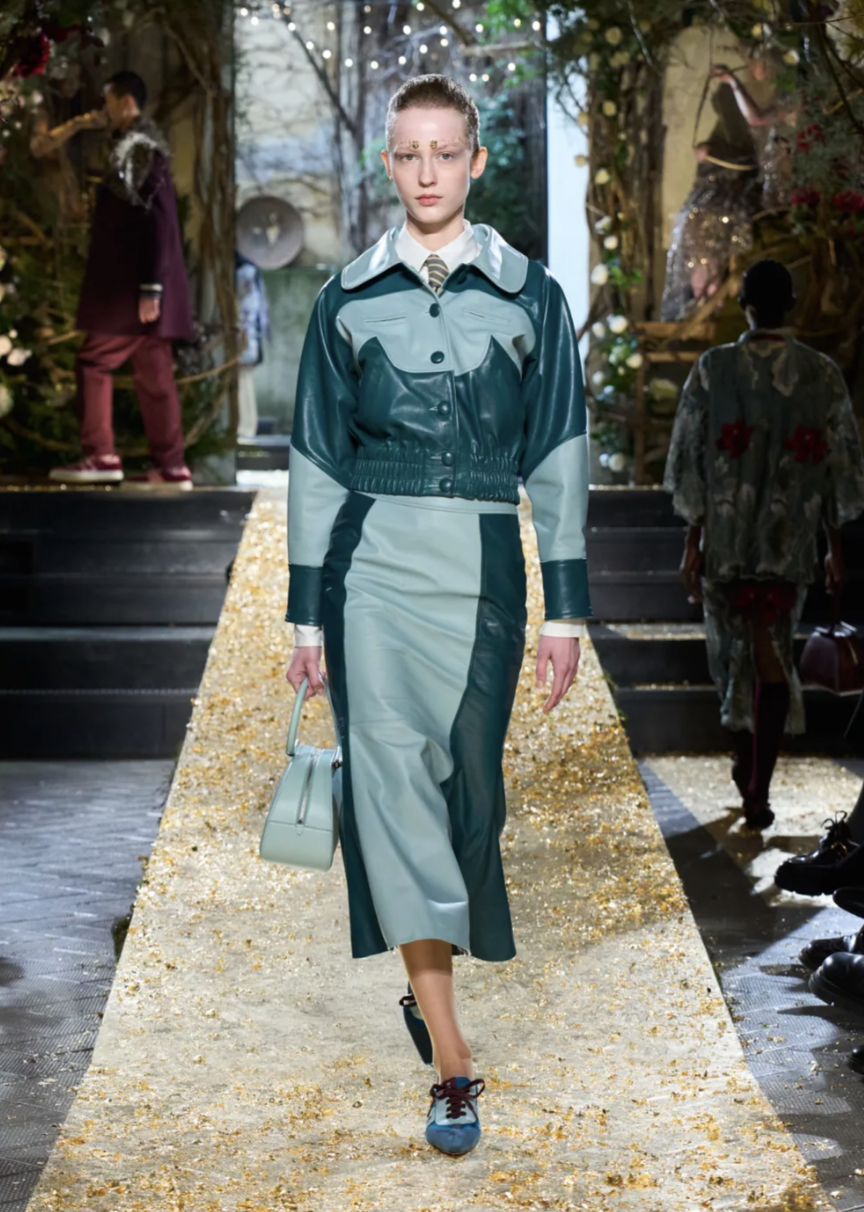
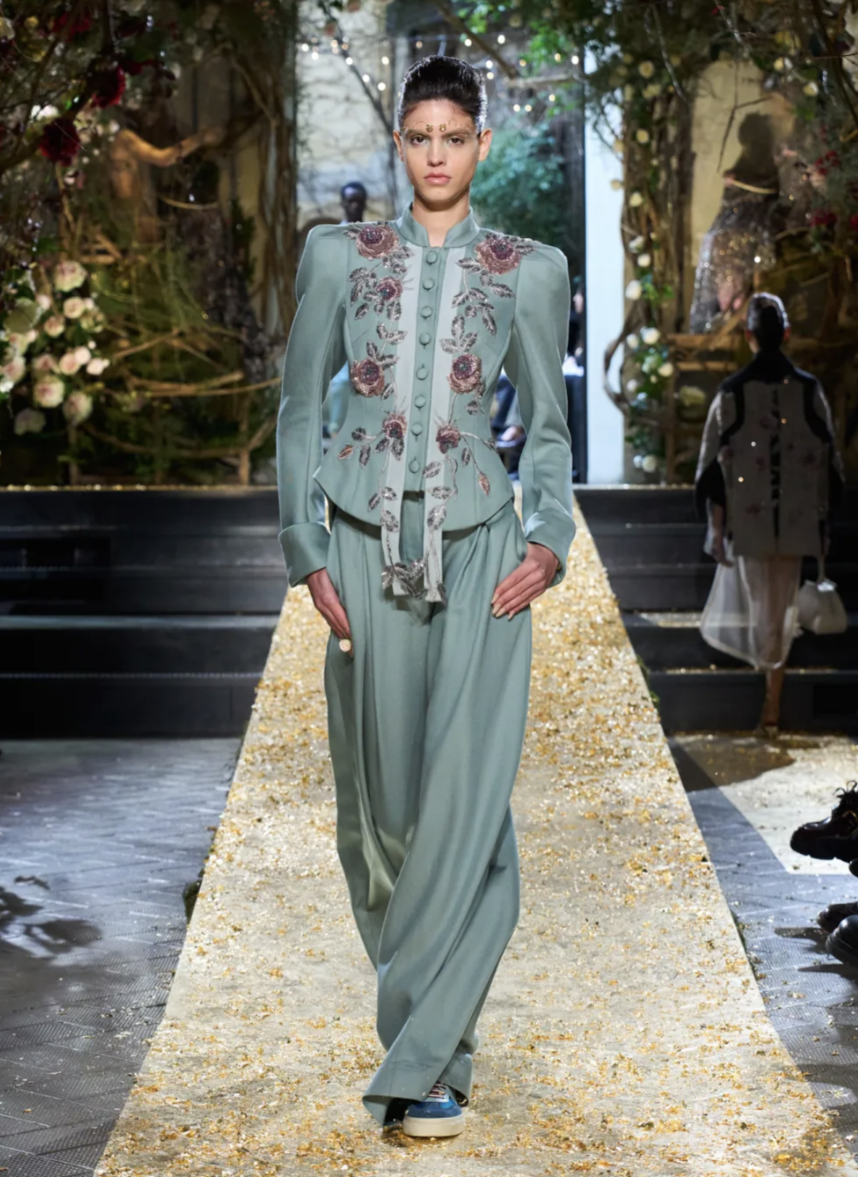
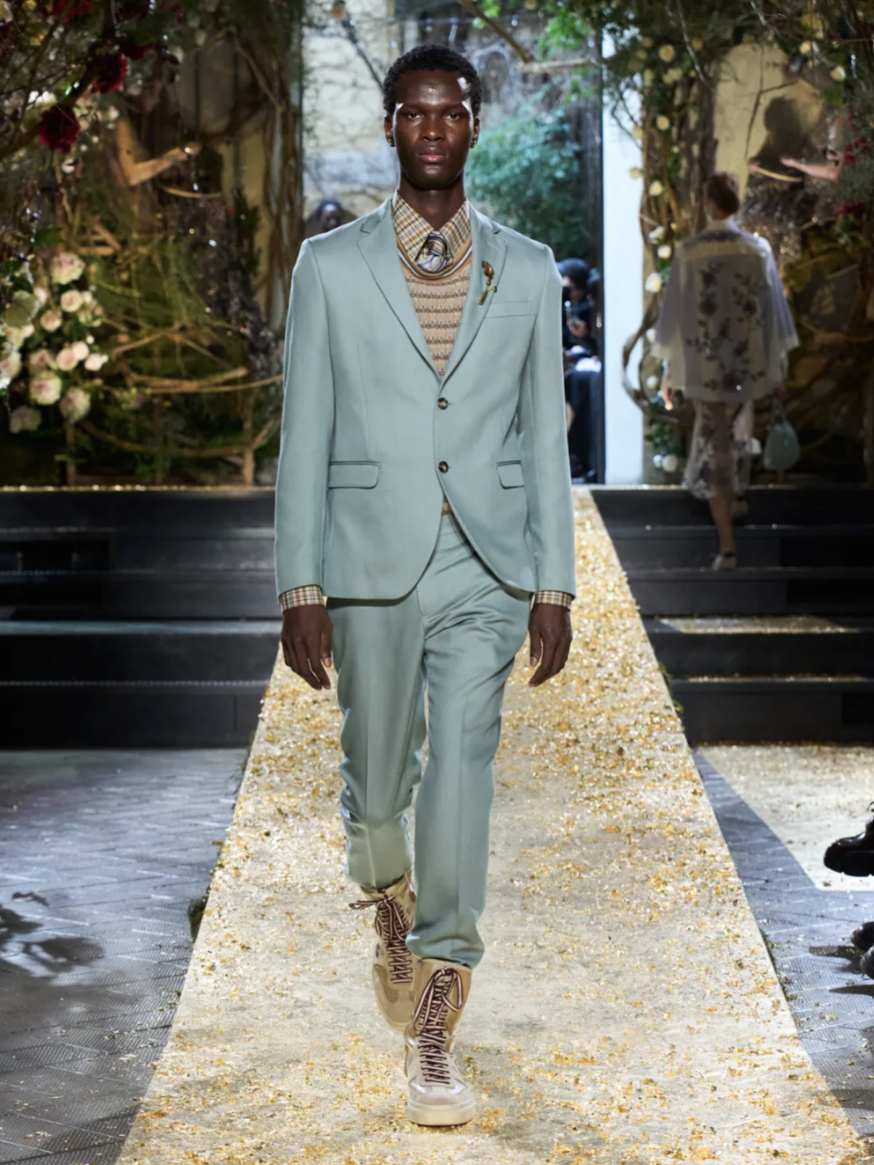
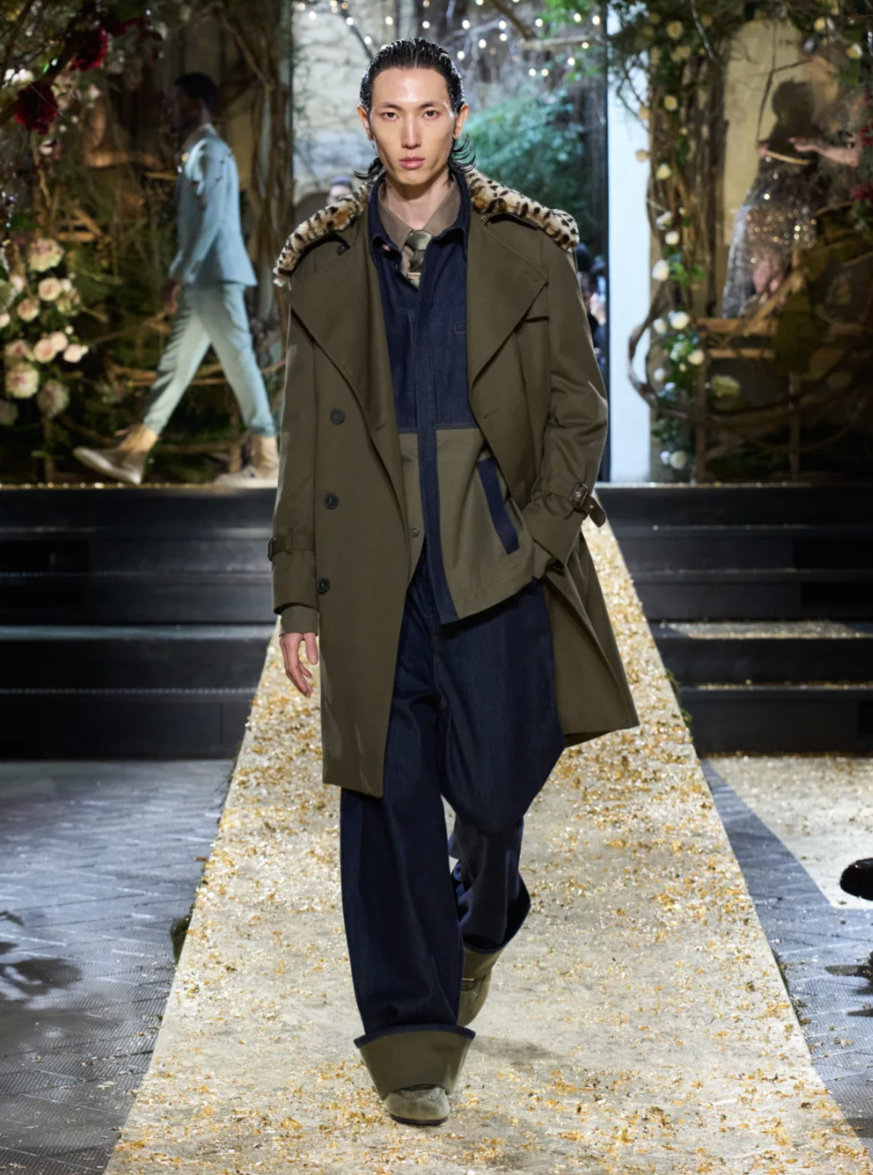
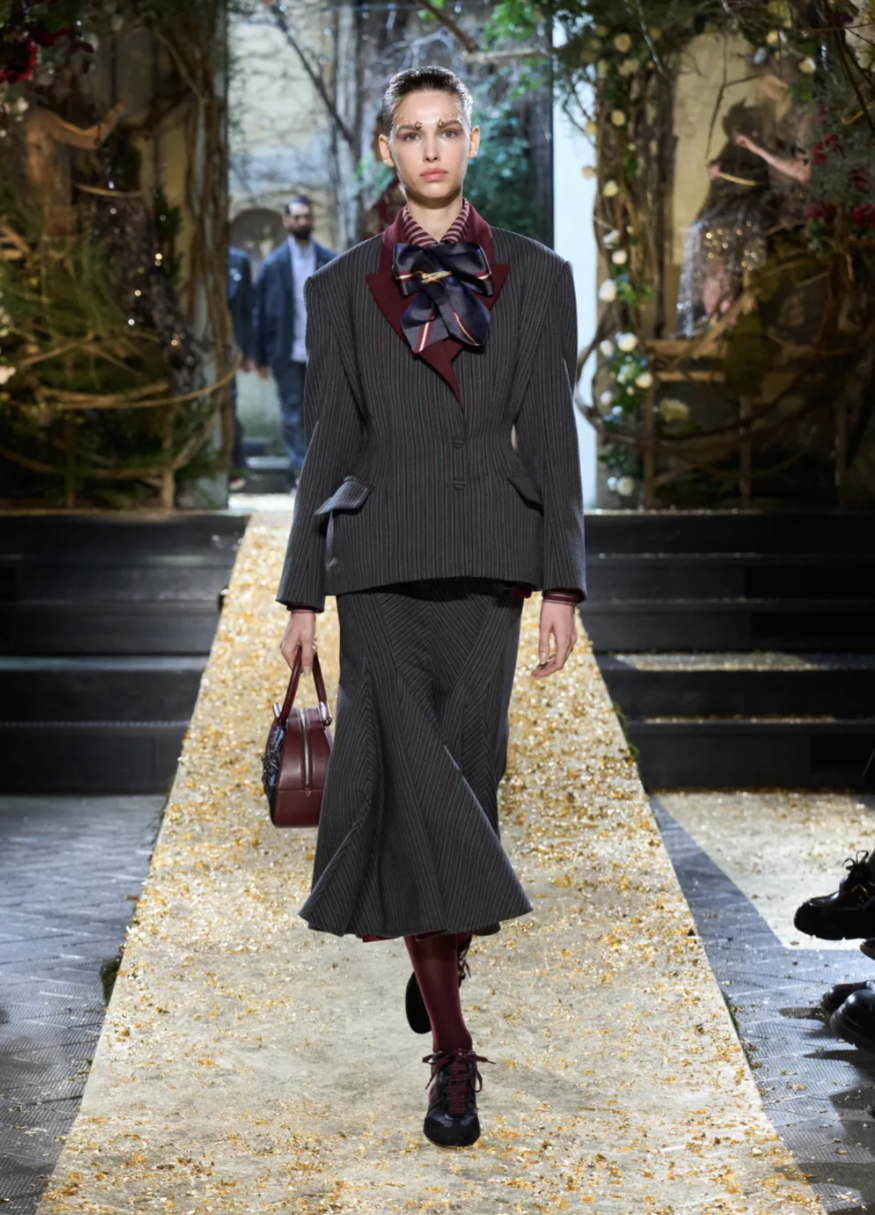
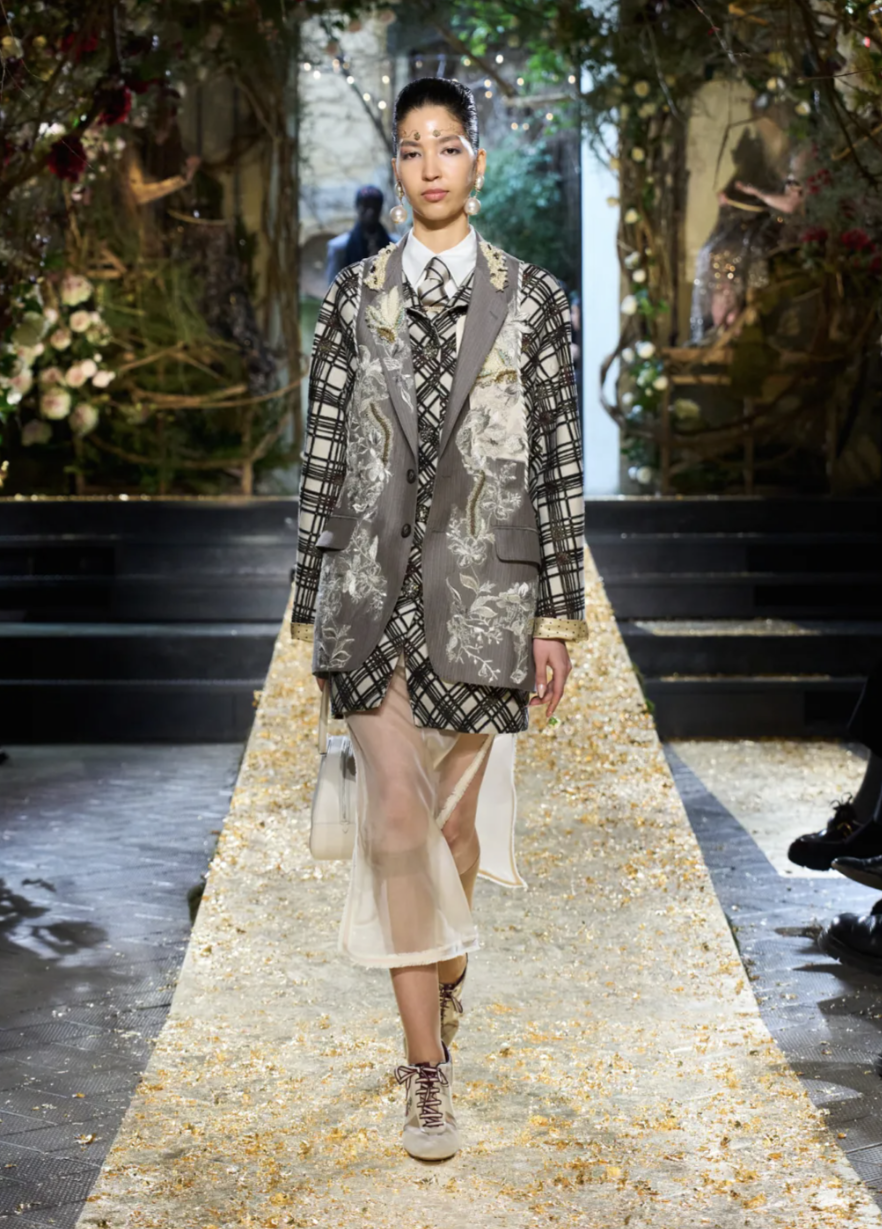
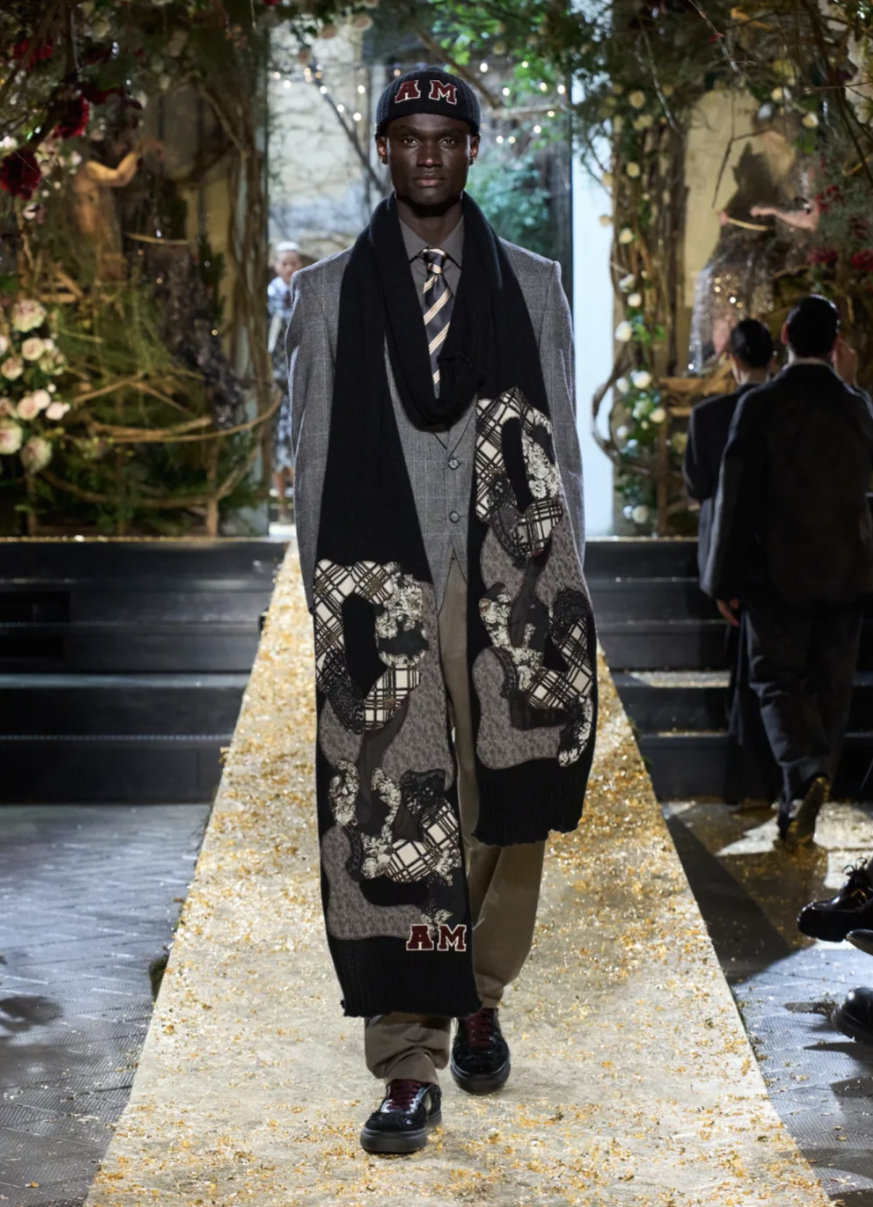
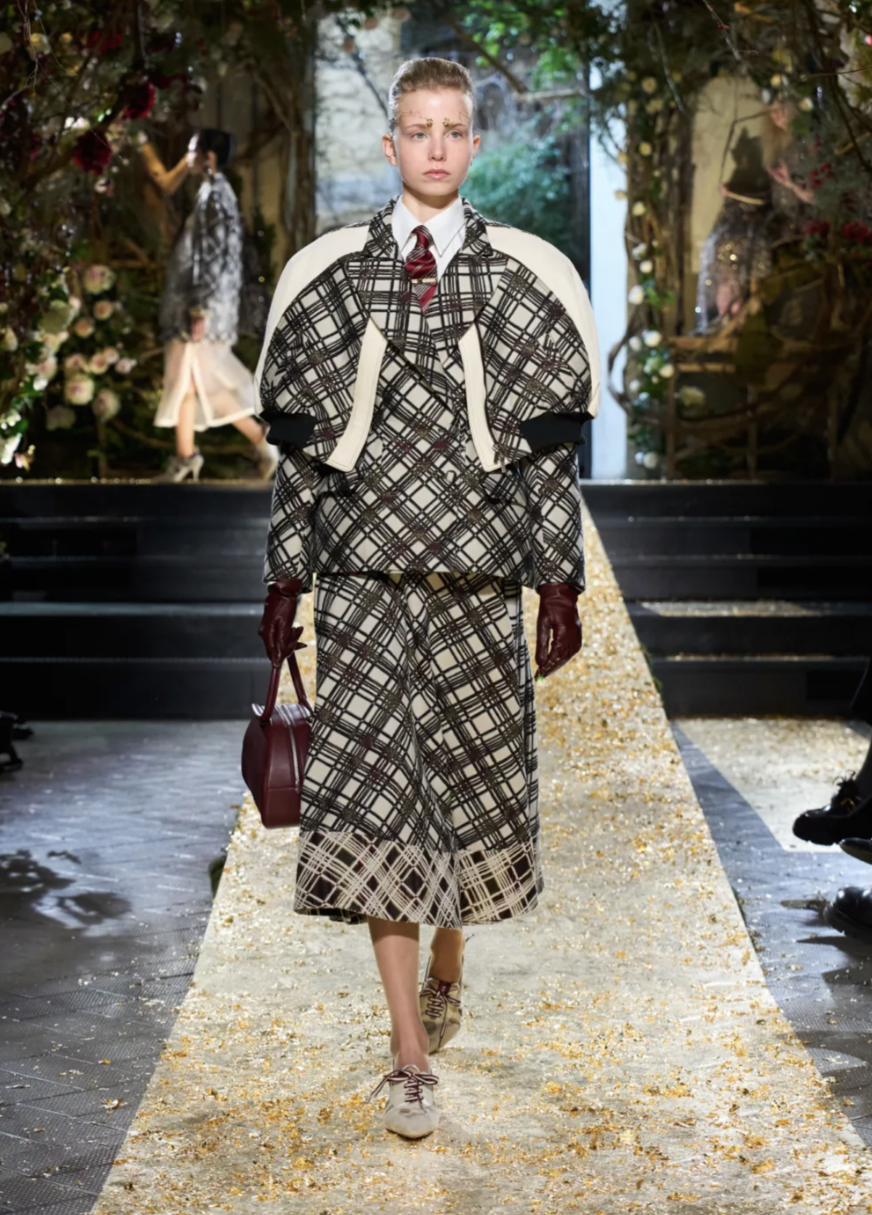
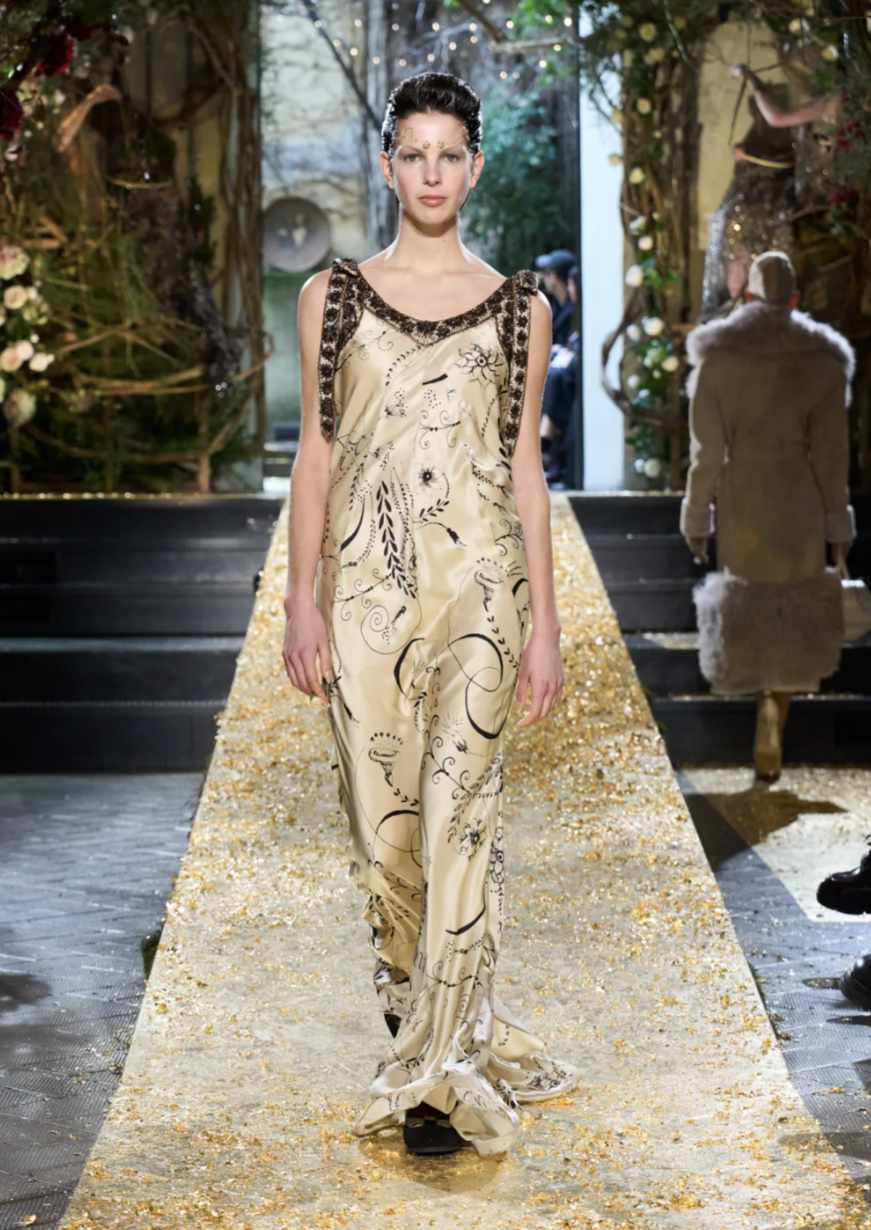
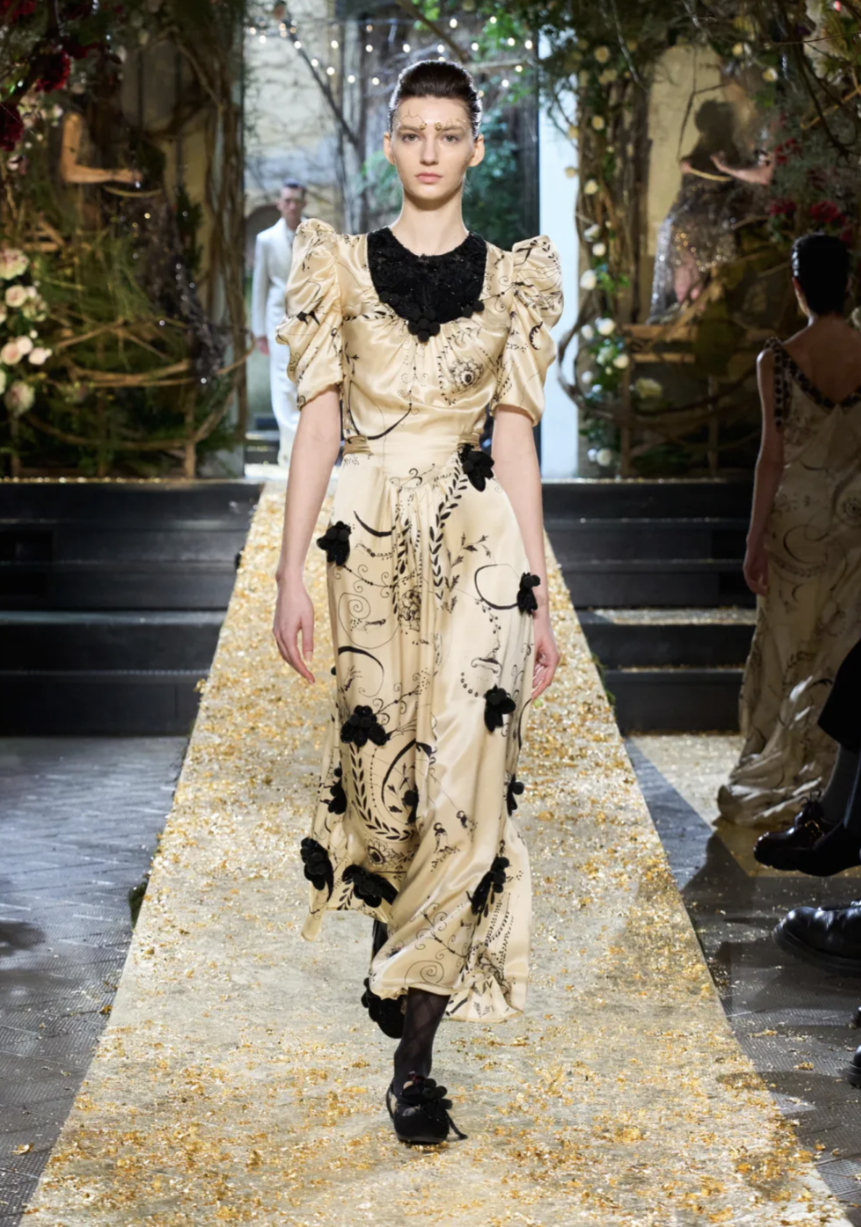
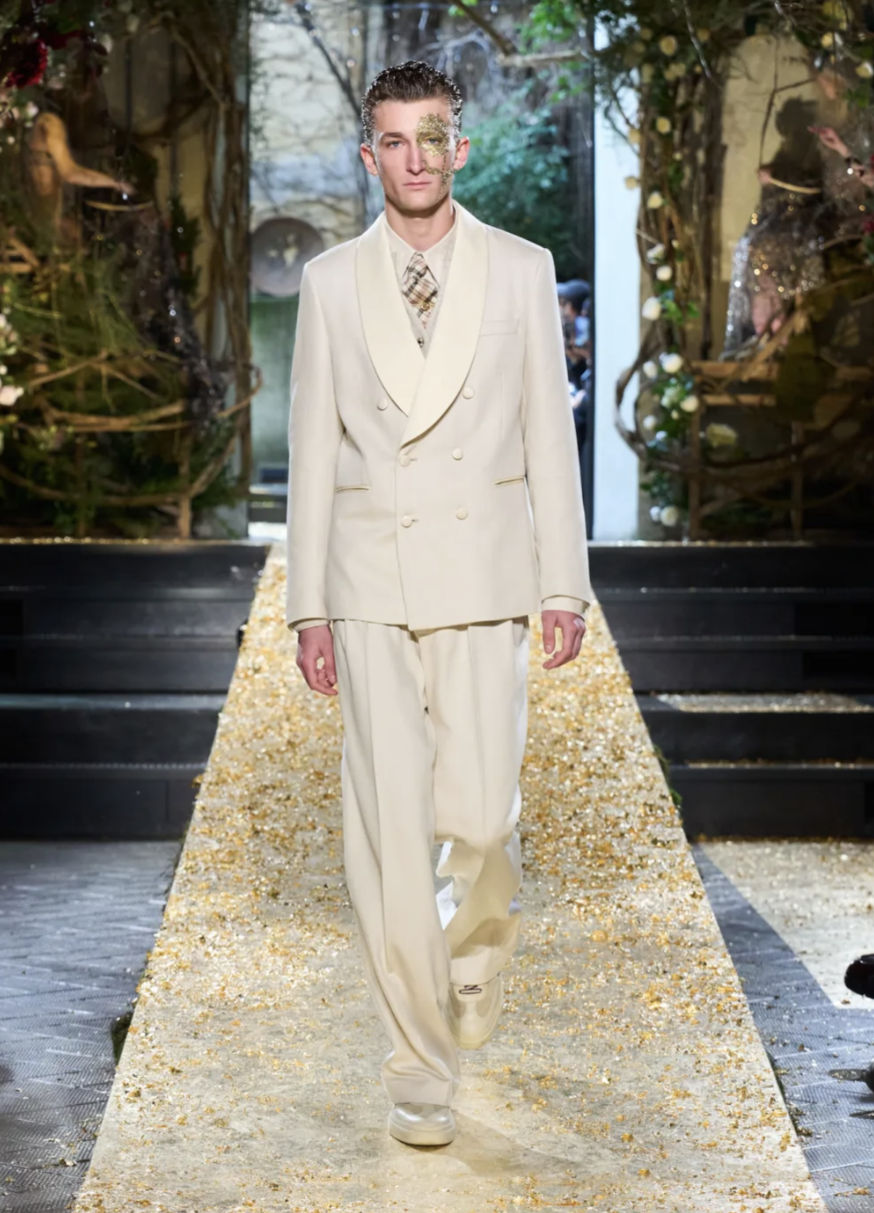
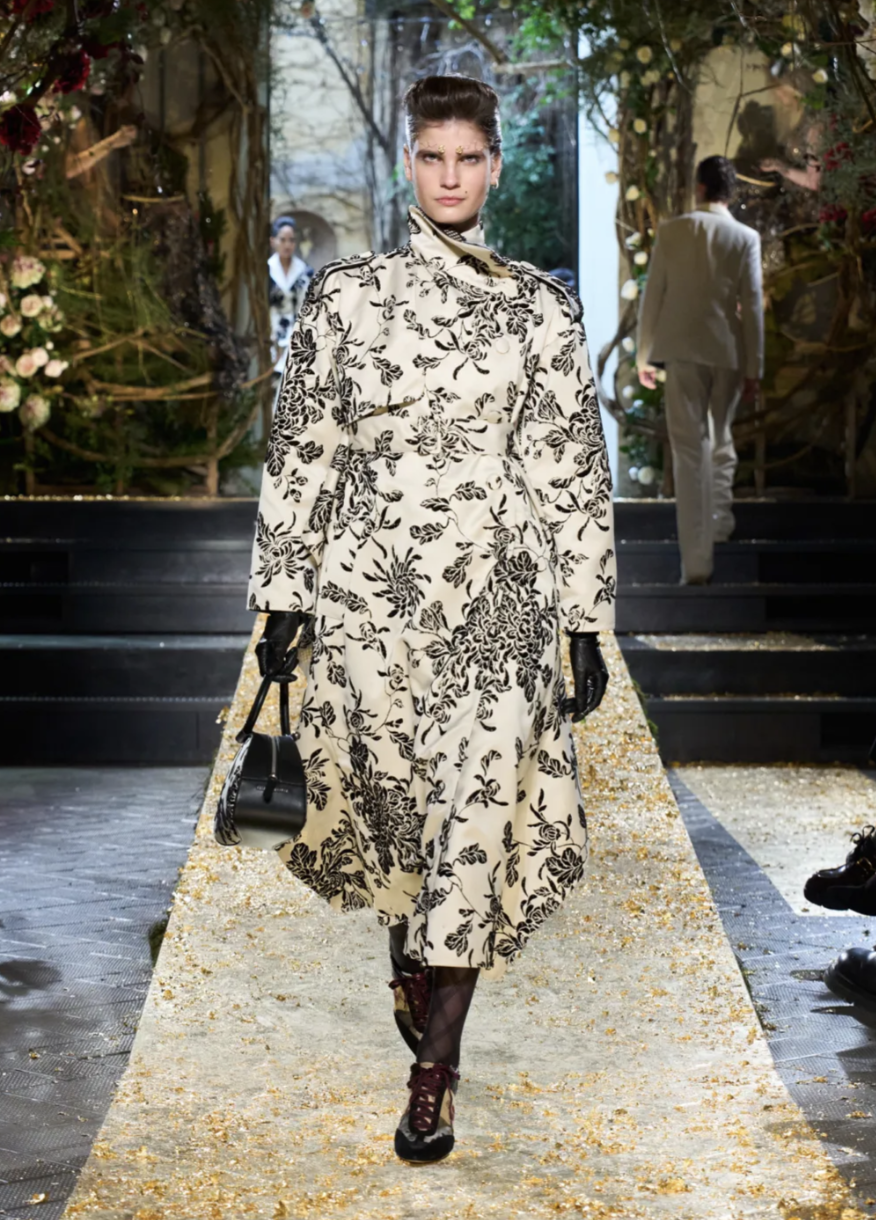
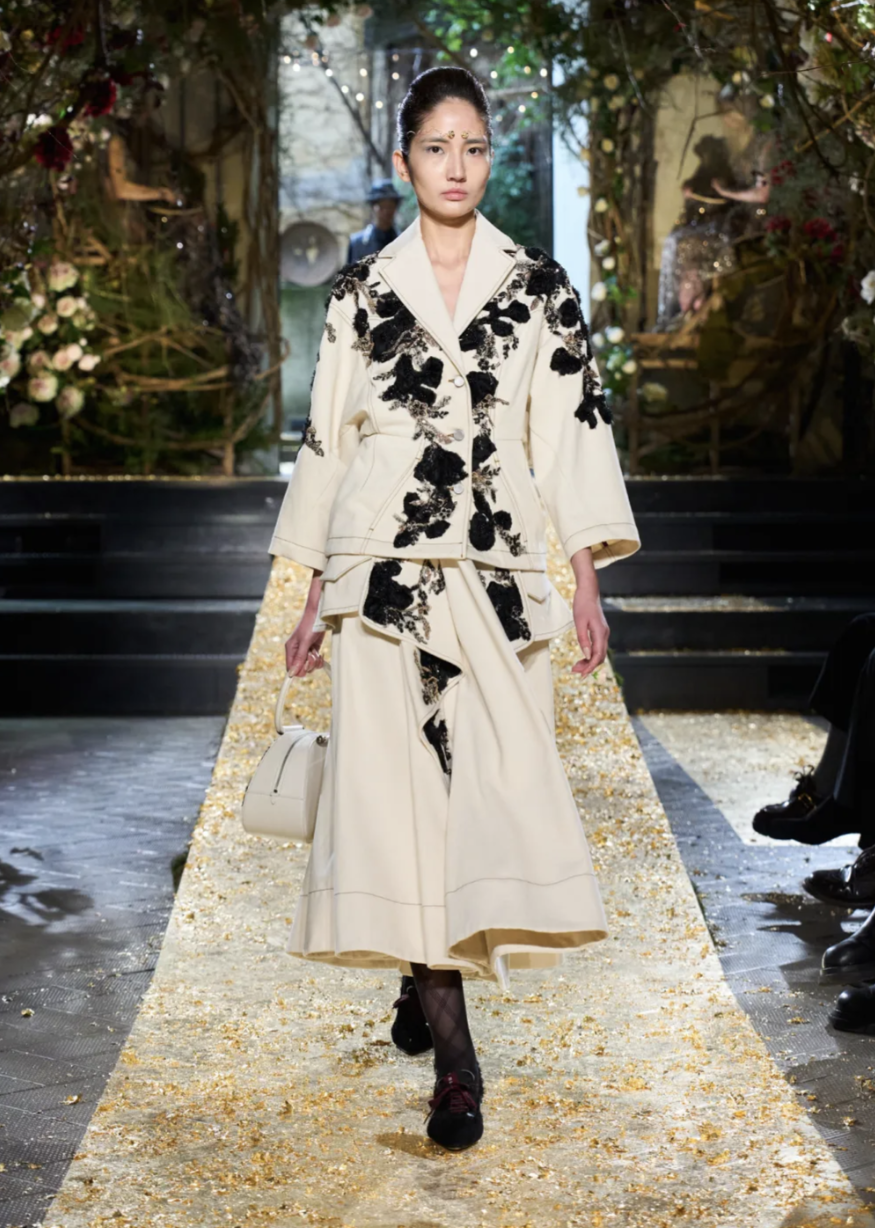
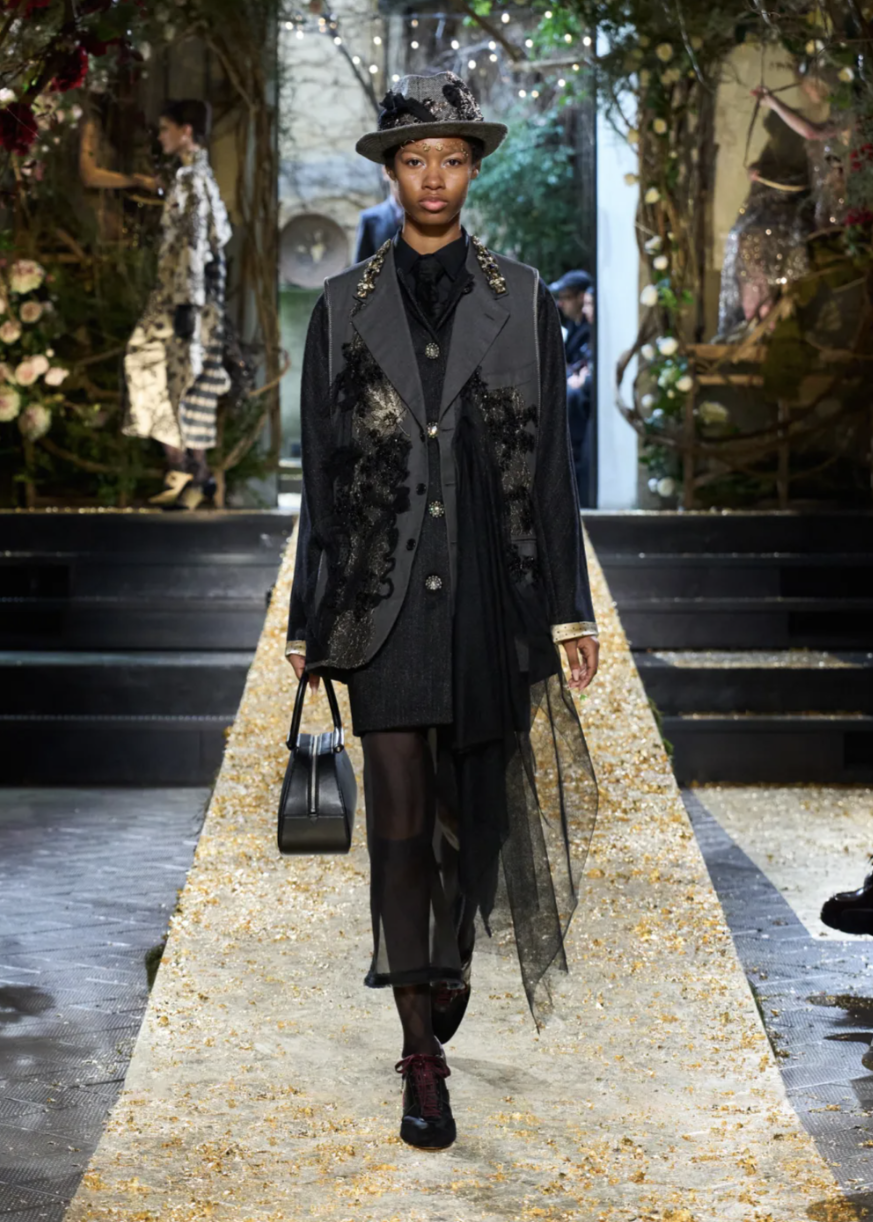
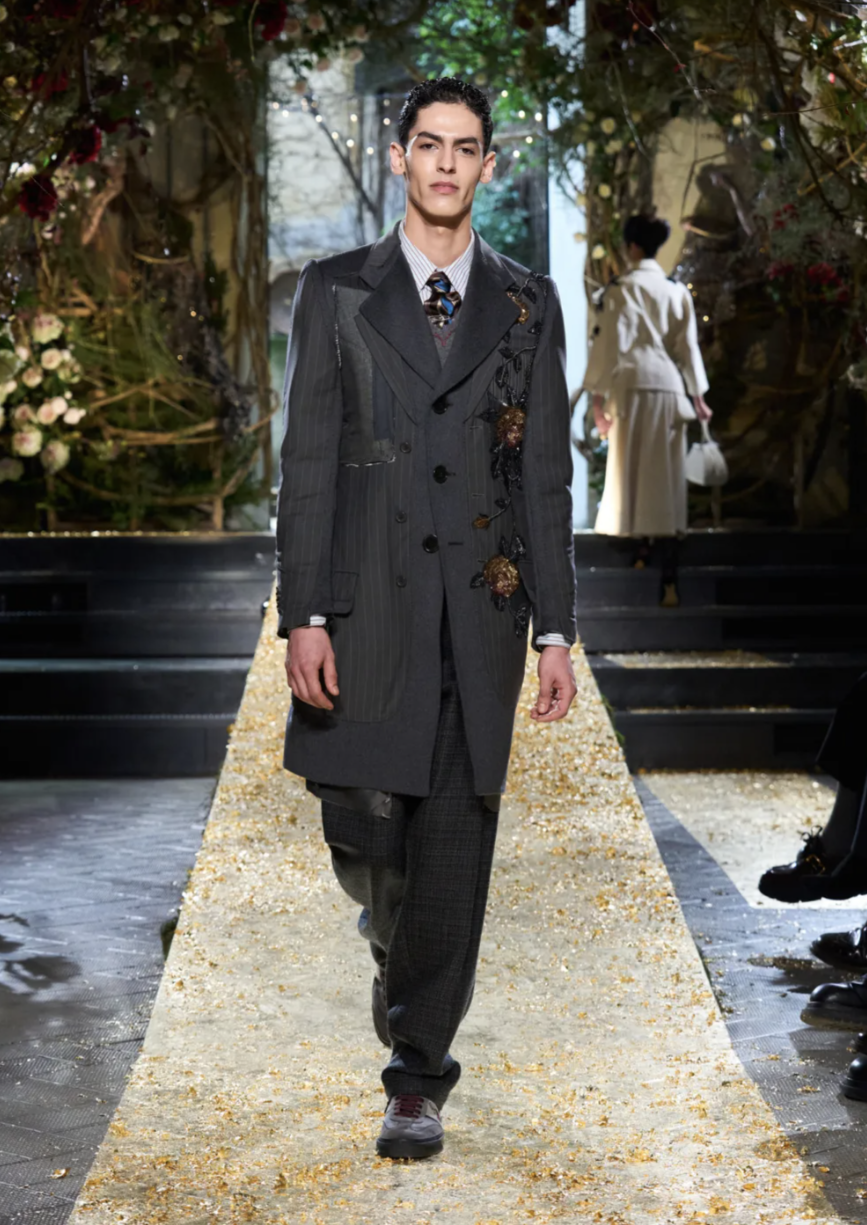
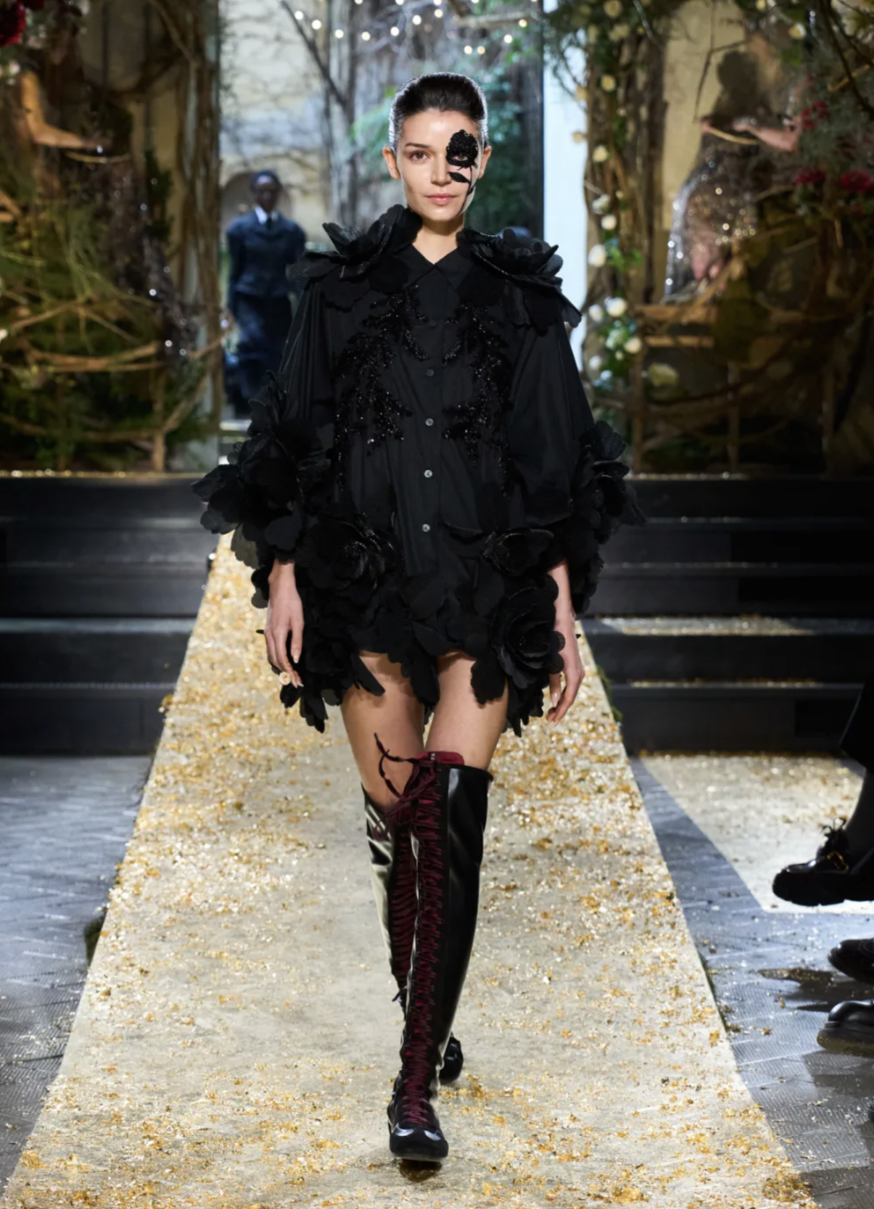
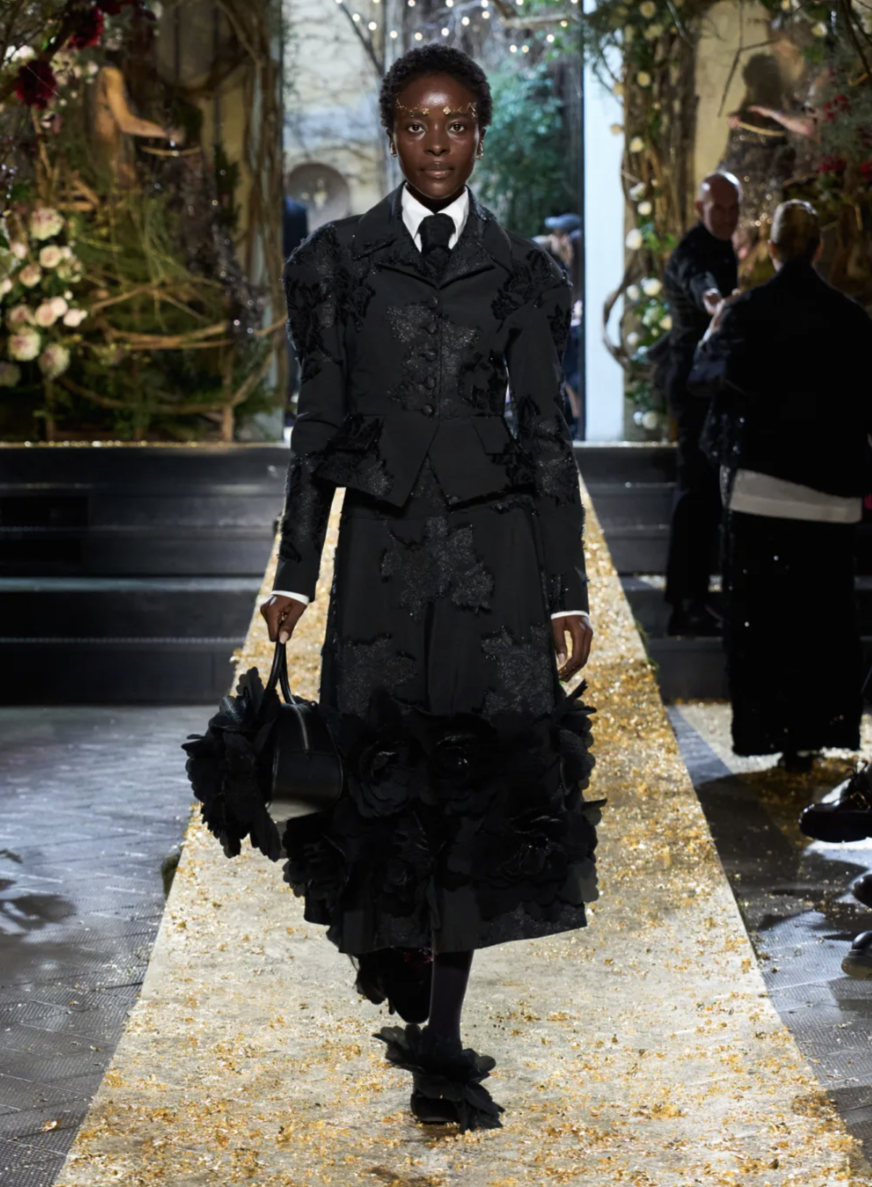
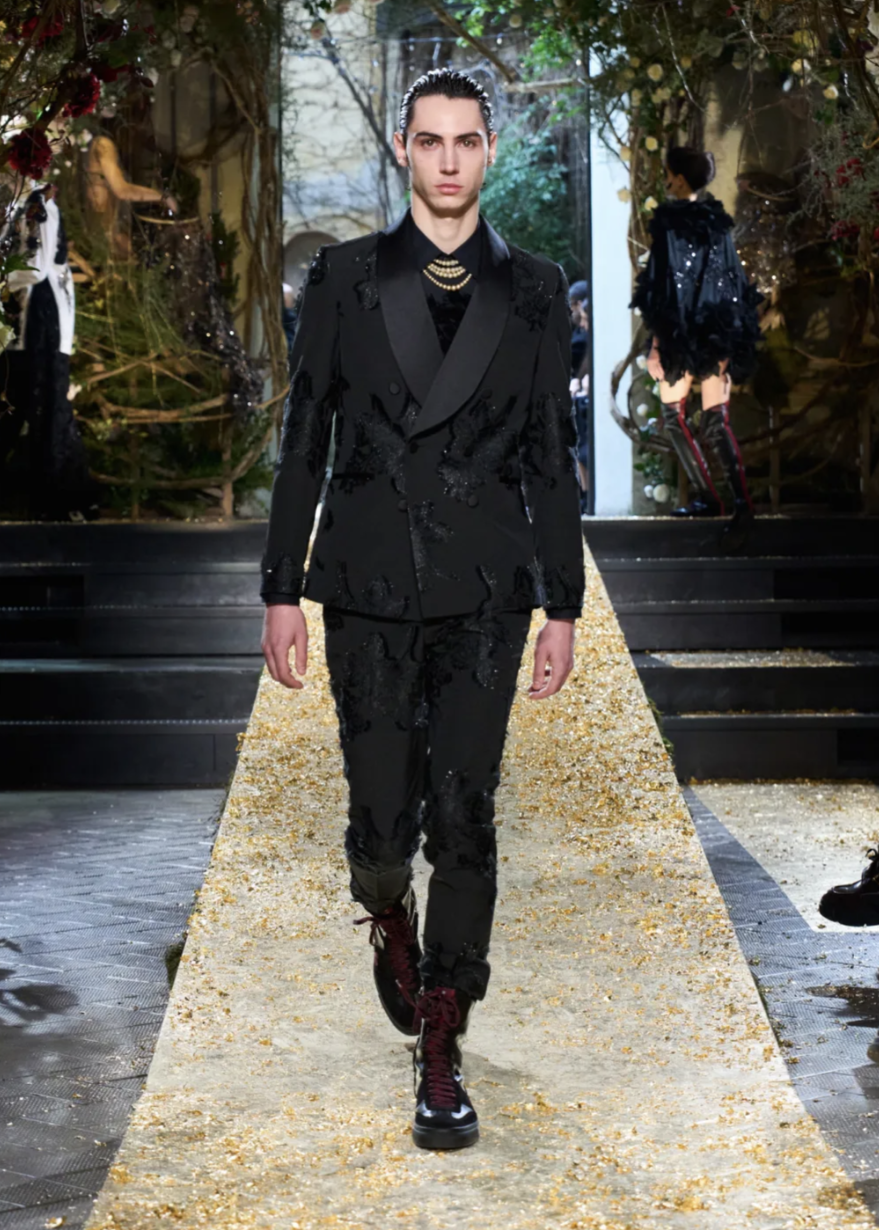
Patchwork has always been Marras’s language, and this season he spoke it fluently. Jackets looked as though they had been nicked by thorns, silk slip dresses carried delicate hand-sketched roses, and 1940s suits came alive with embroidery crawling down the seams. Menswear and womenswear blurred gently together as roses wrapped around tailored jackets and cardigans, chiffon skirts shimmered with old Hollywood light, and coats mixed brocade, velvet, and leopard inserts without losing focus. Everything felt touched by a human hand, every stitch and every sparkle, the kind of tactile intimacy that resists the speed of modern fashion.
This season, Marras reined in excess without losing his romanticism. The collection was smaller and more concentrated, a rare show where editing amplified the emotion. The new Caragol bag, named after the Alghero dialect for “snail,” tied it together as a symbol of slow, deliberate creation in an industry that rarely pauses. Among the roses, Marras offered a quiet rebellion, proof that fashion does not need to shout to be heard, only to feel alive.