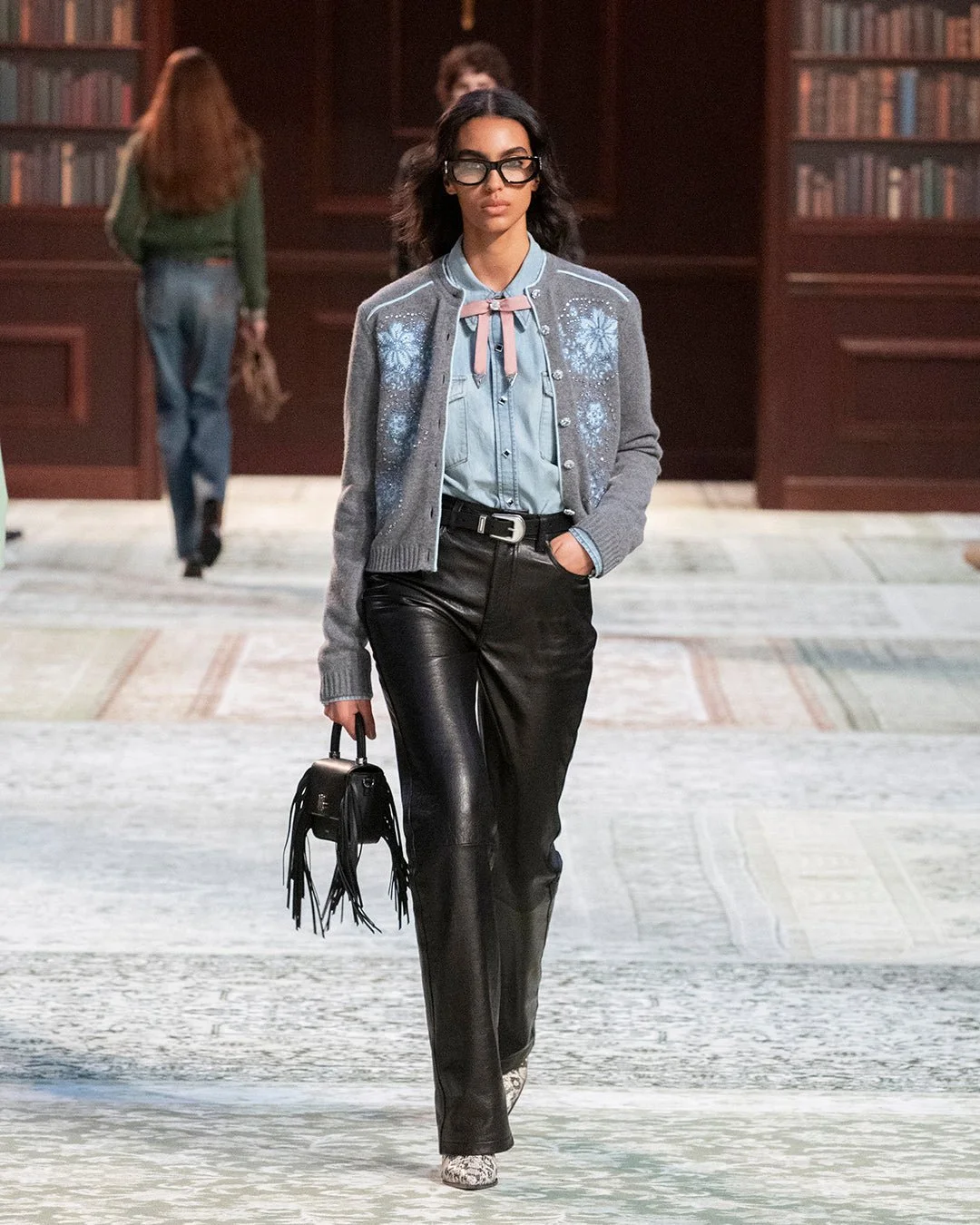
AMIRI Fall/Winter 2026
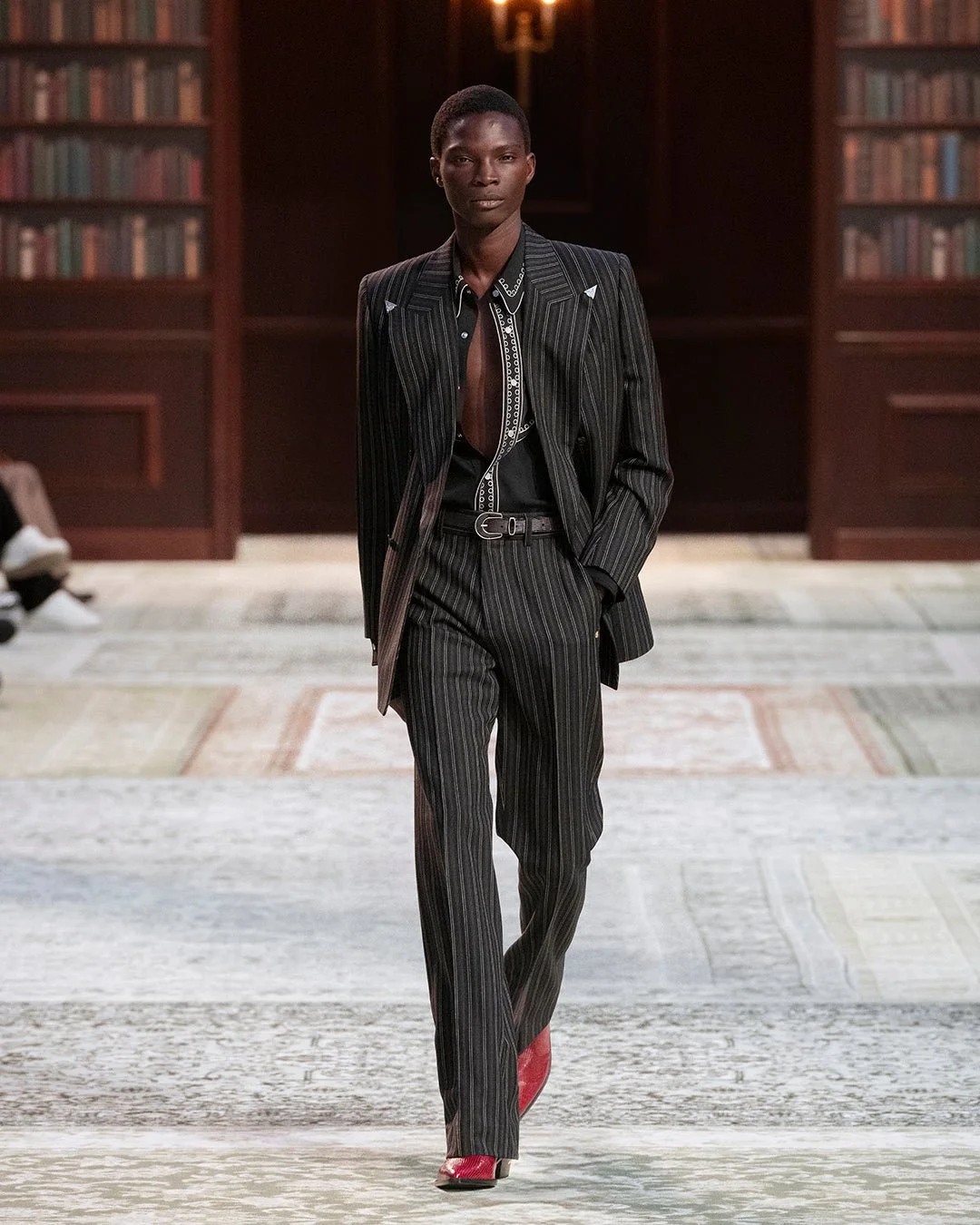
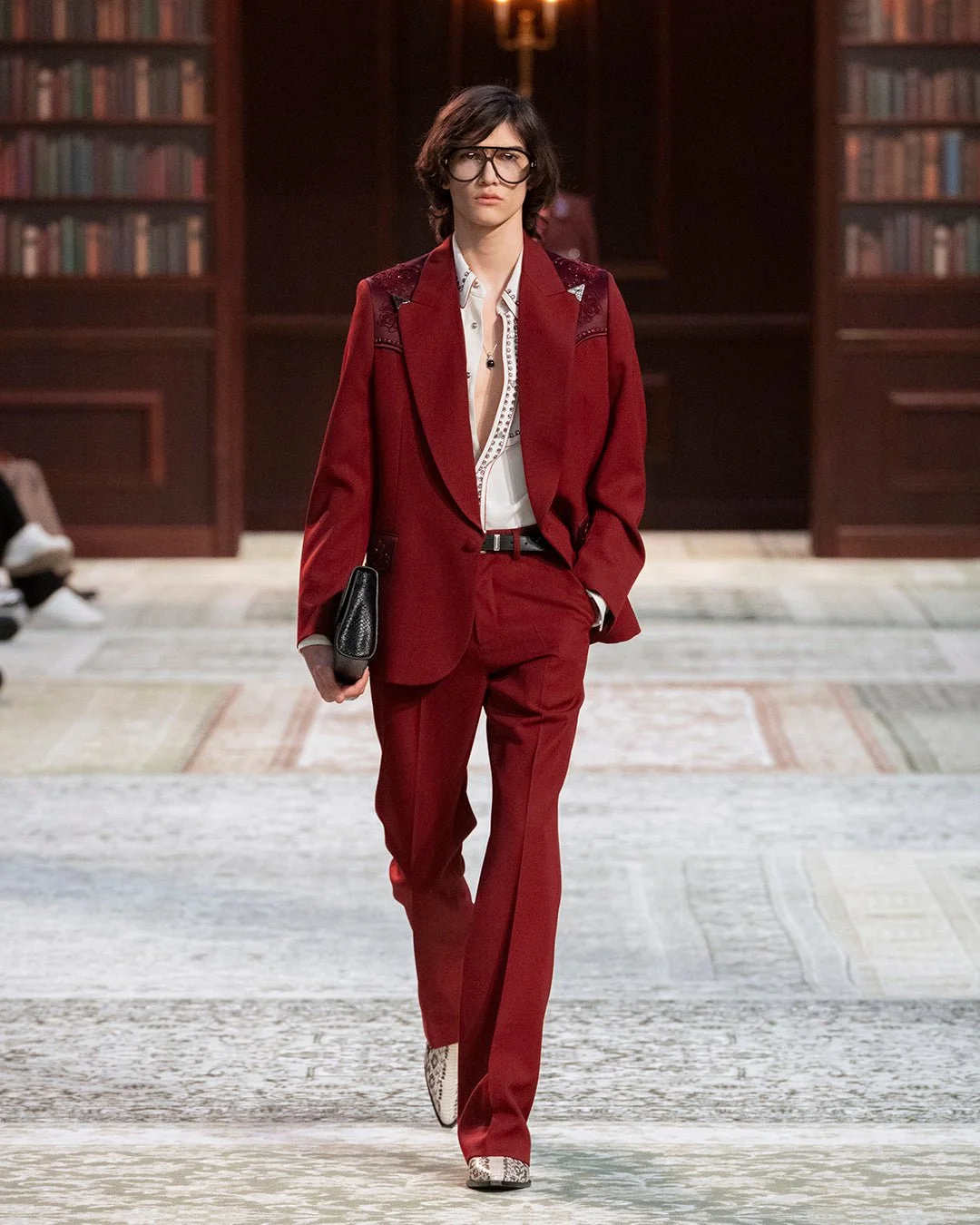
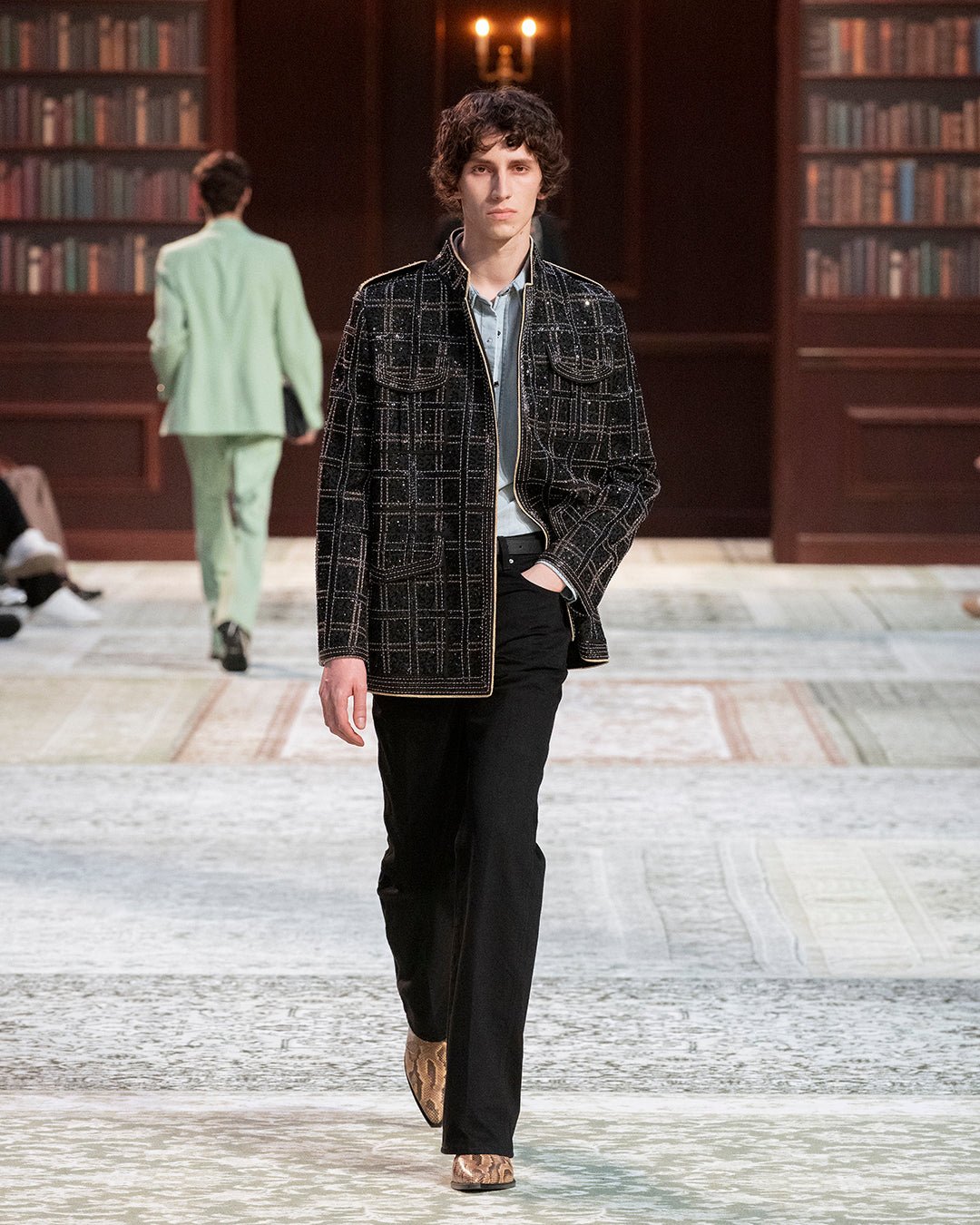
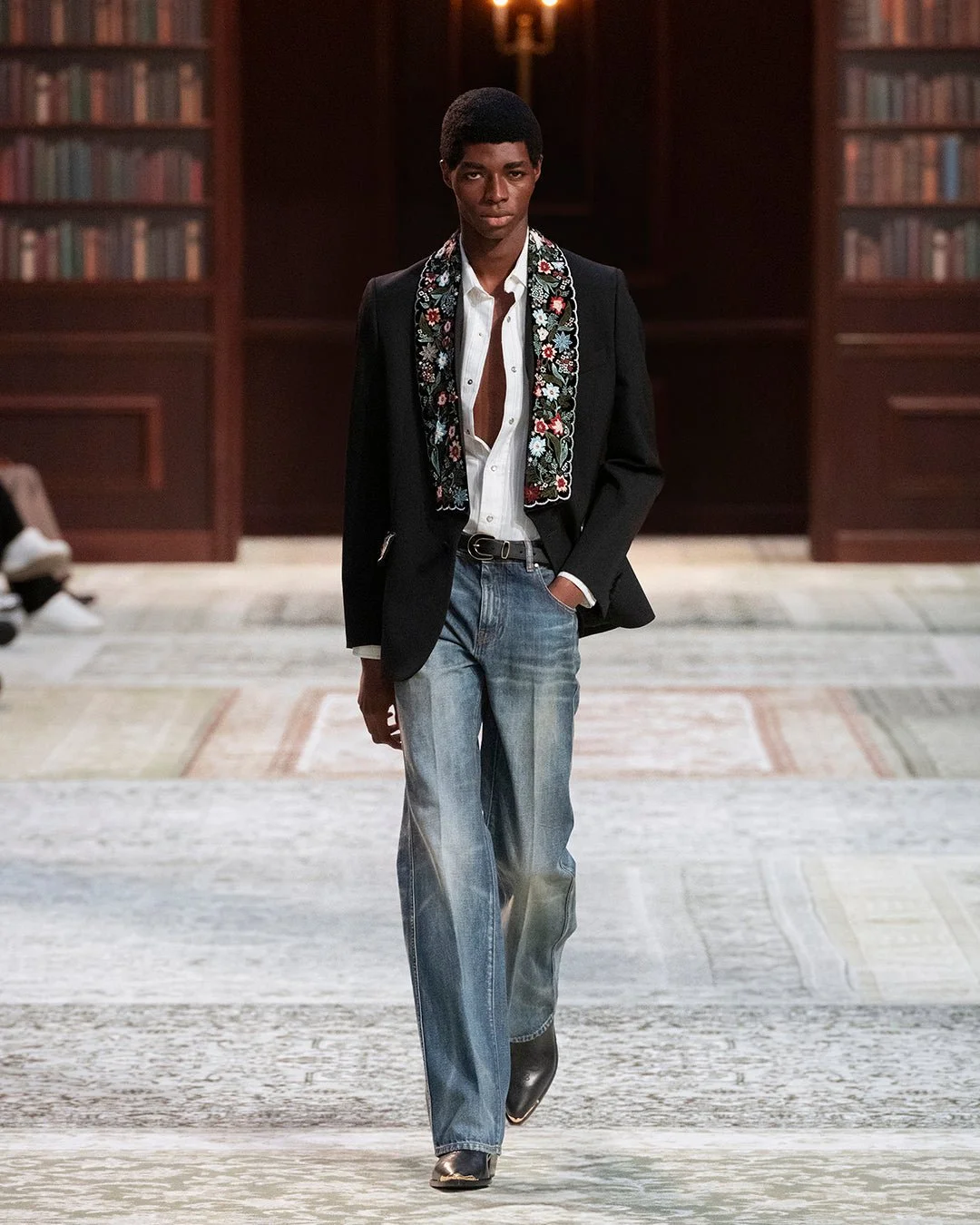
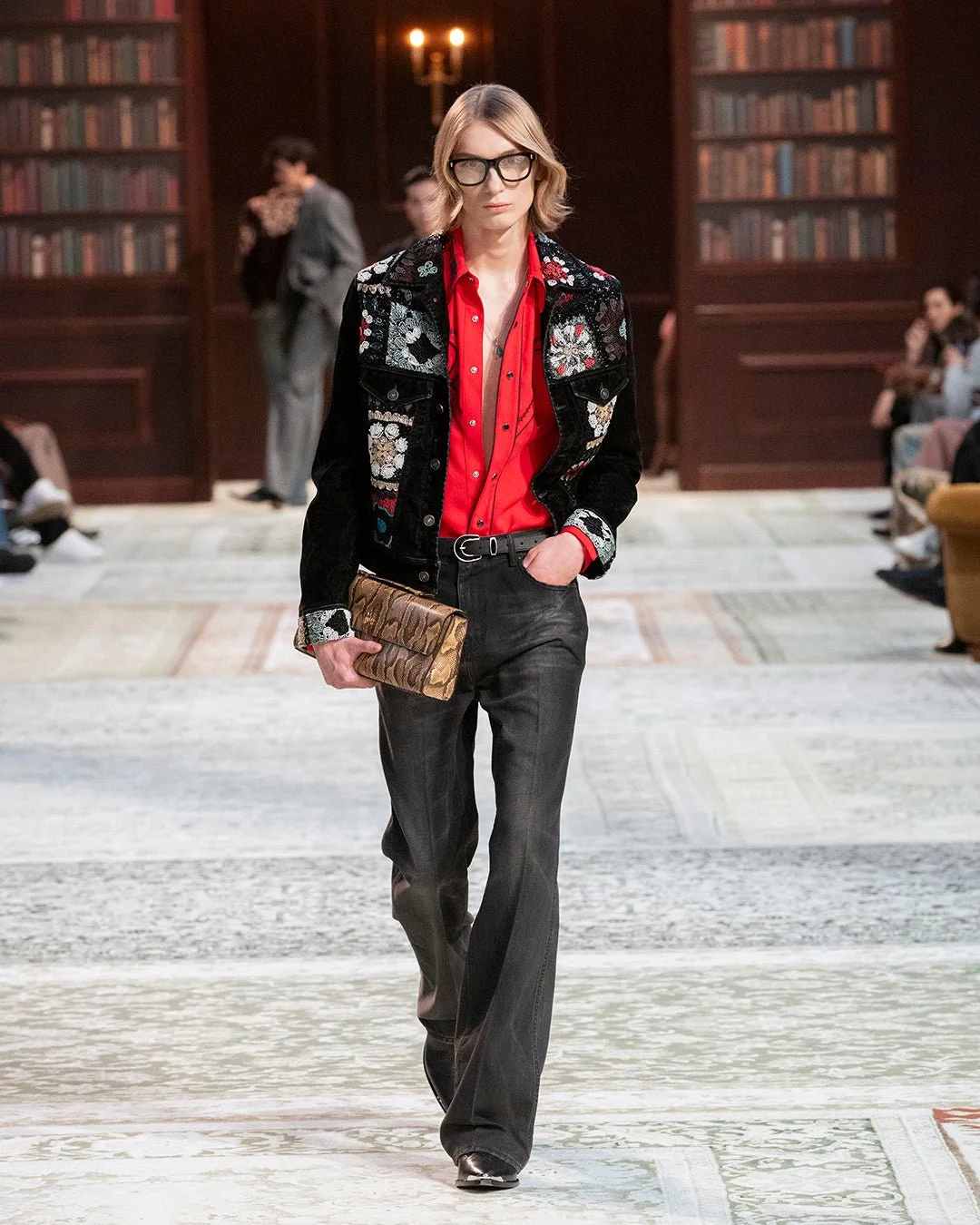
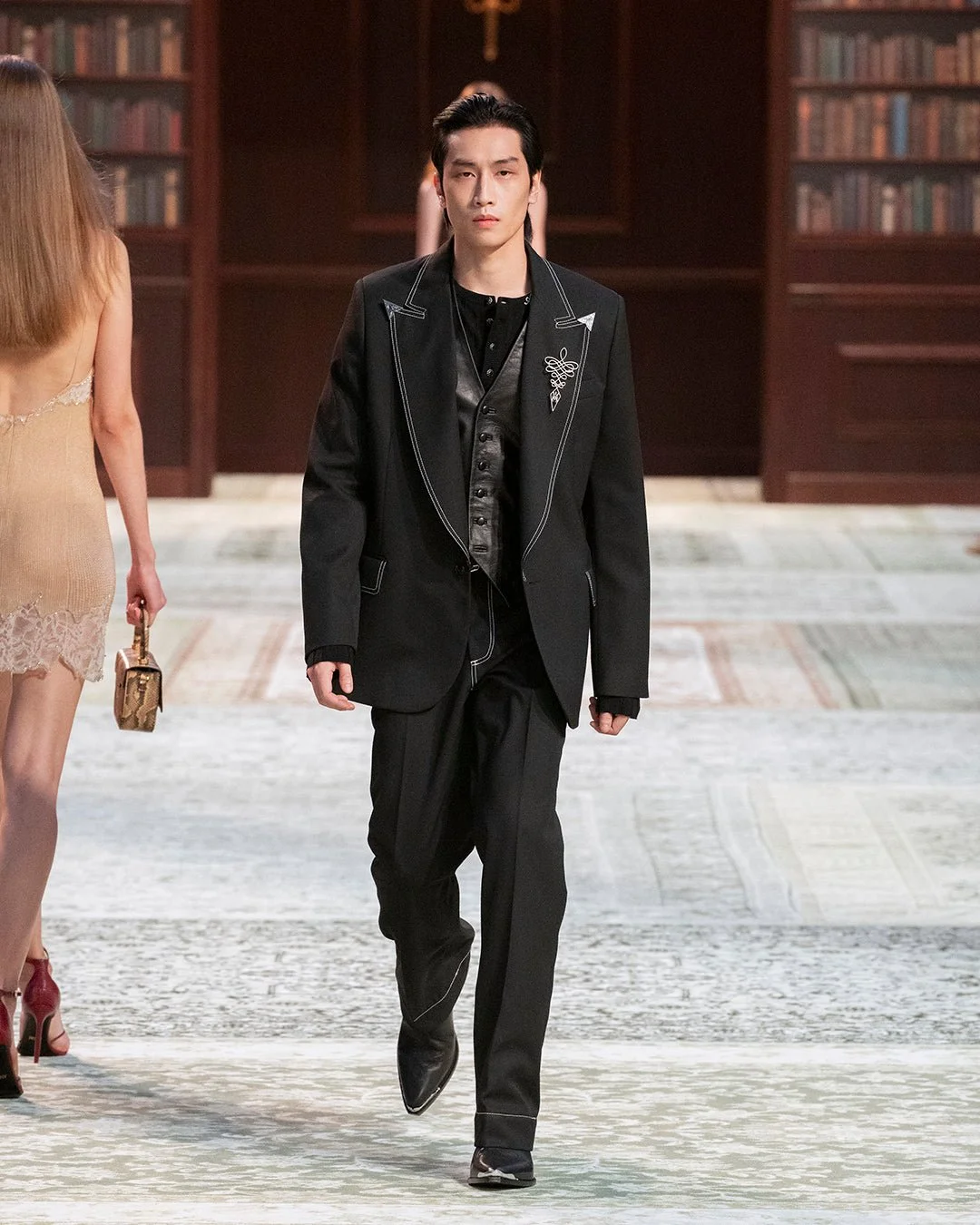
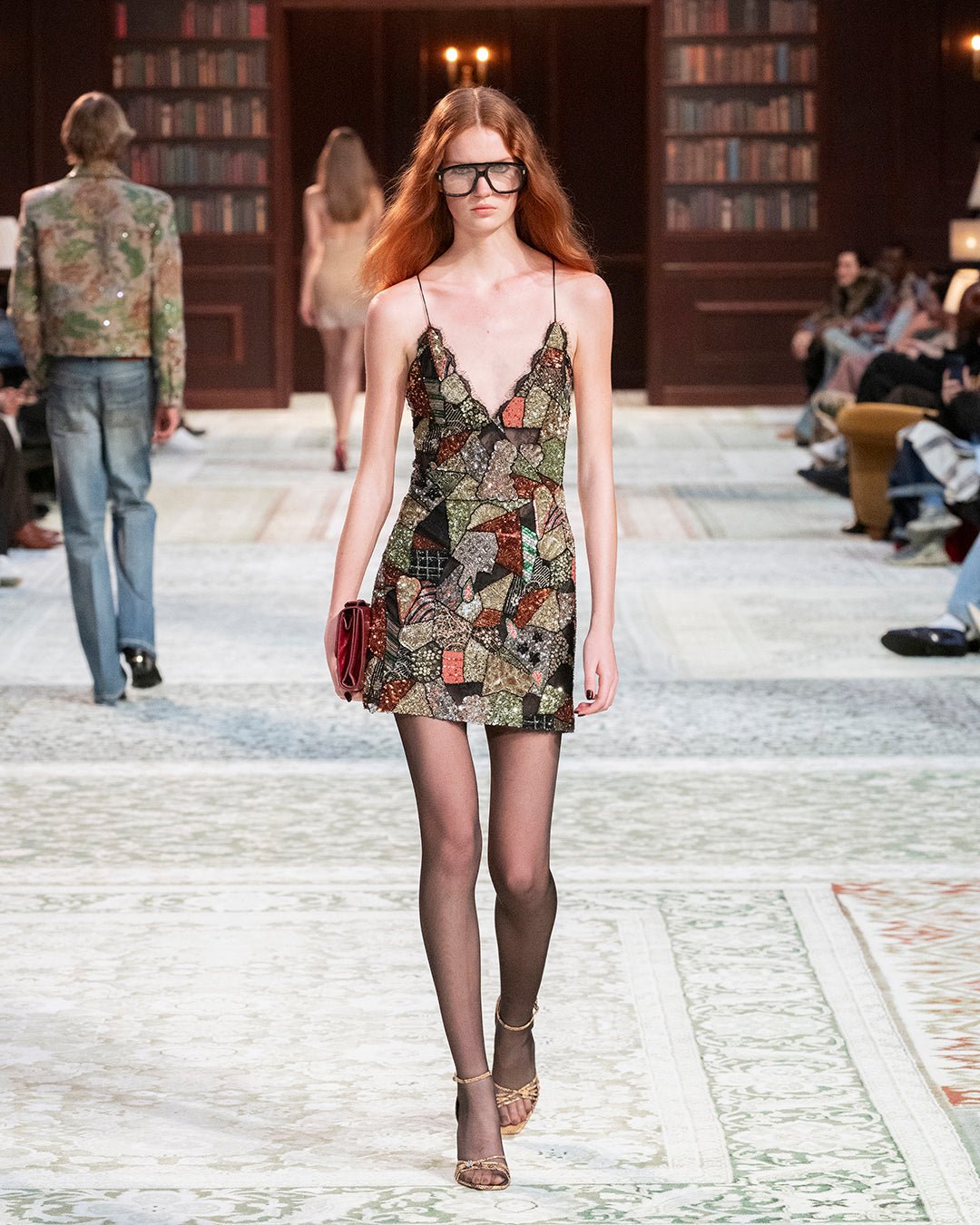
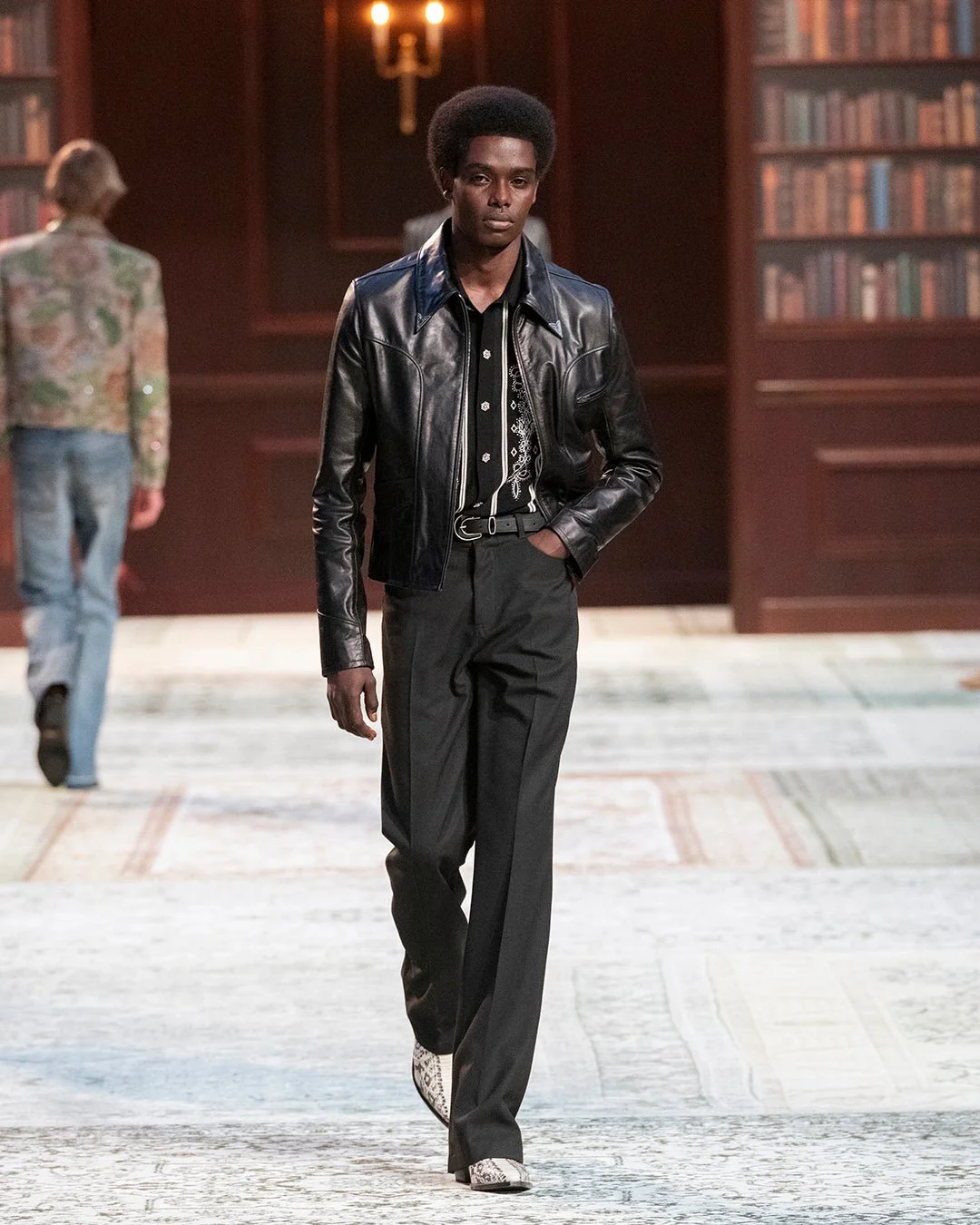
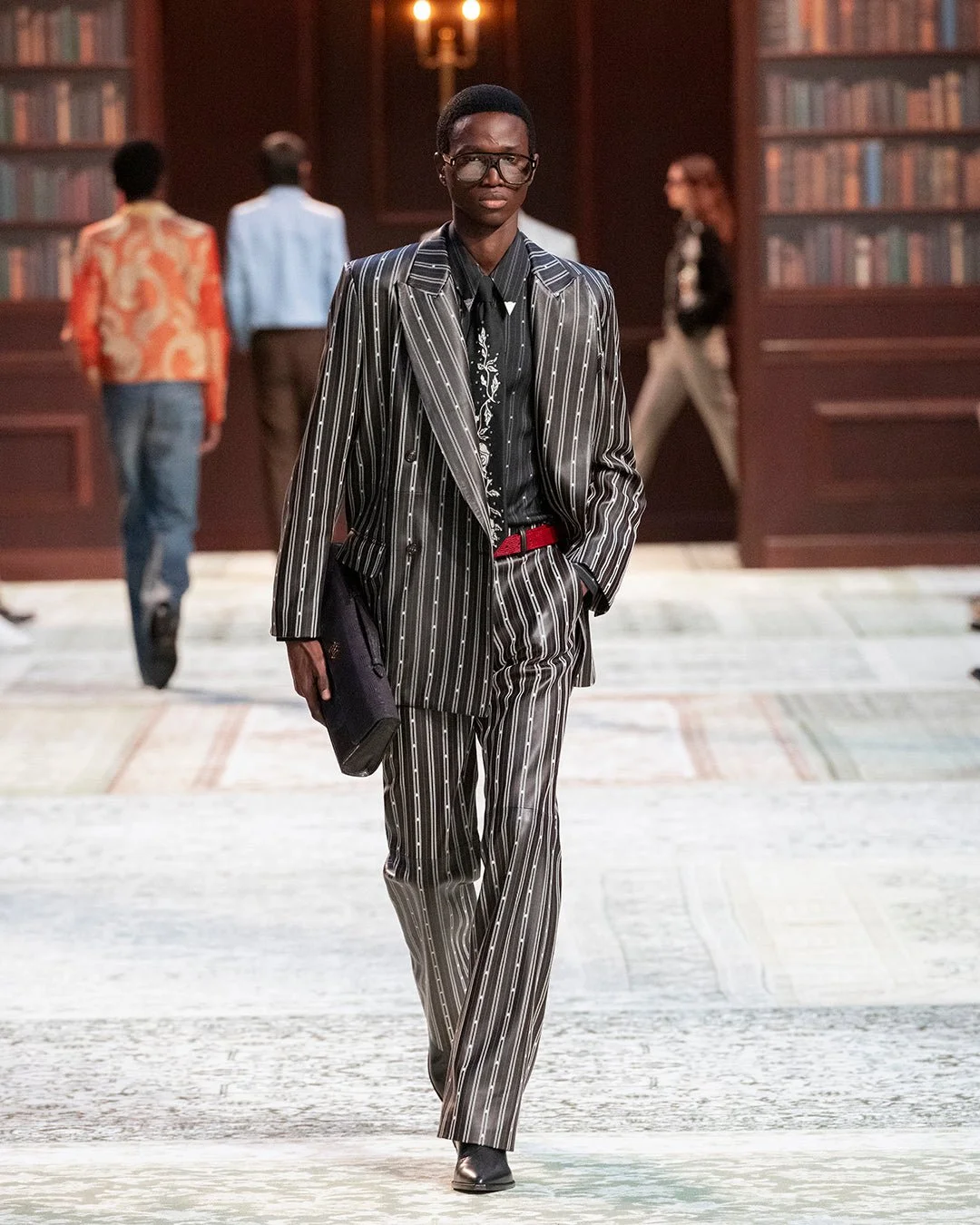
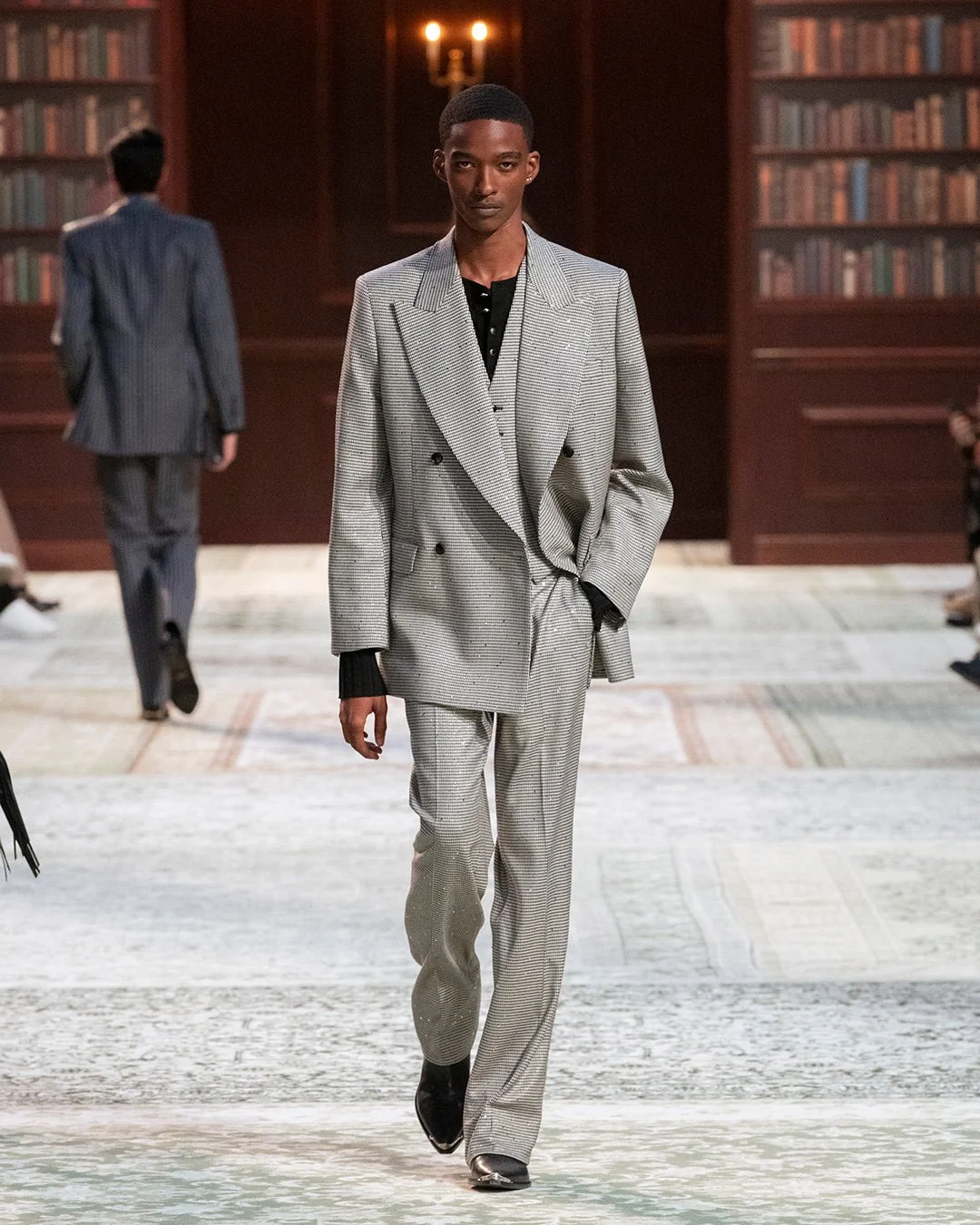
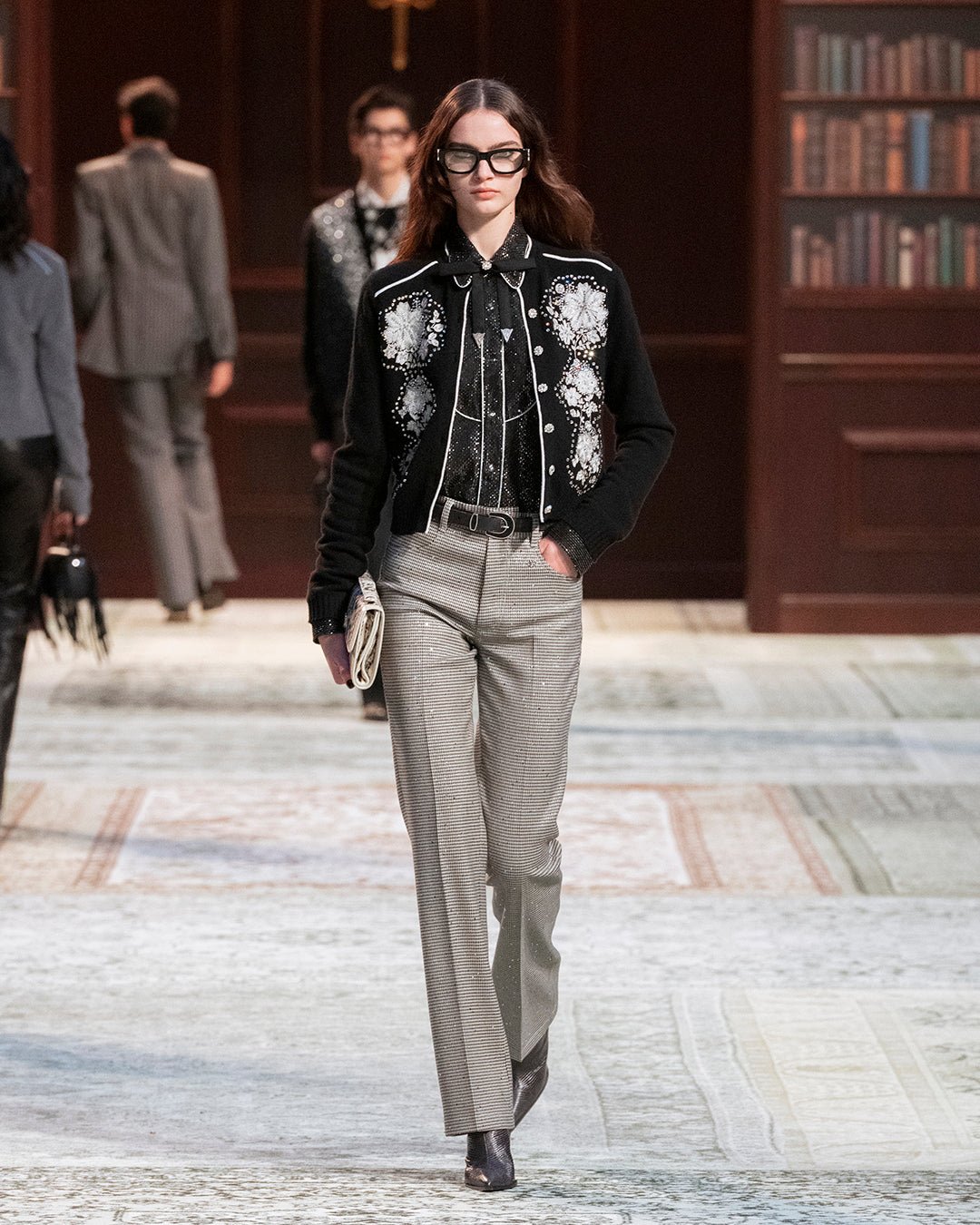
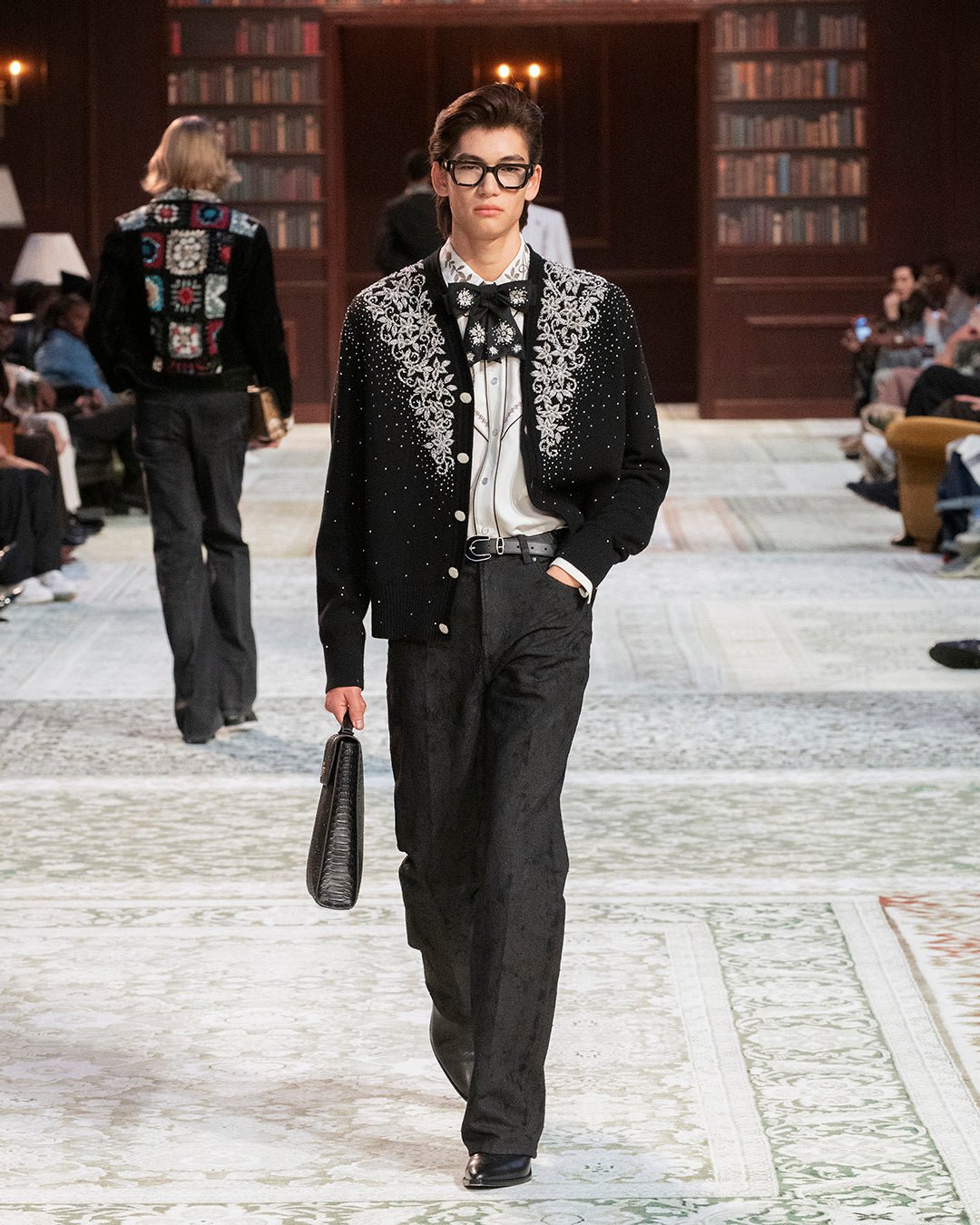
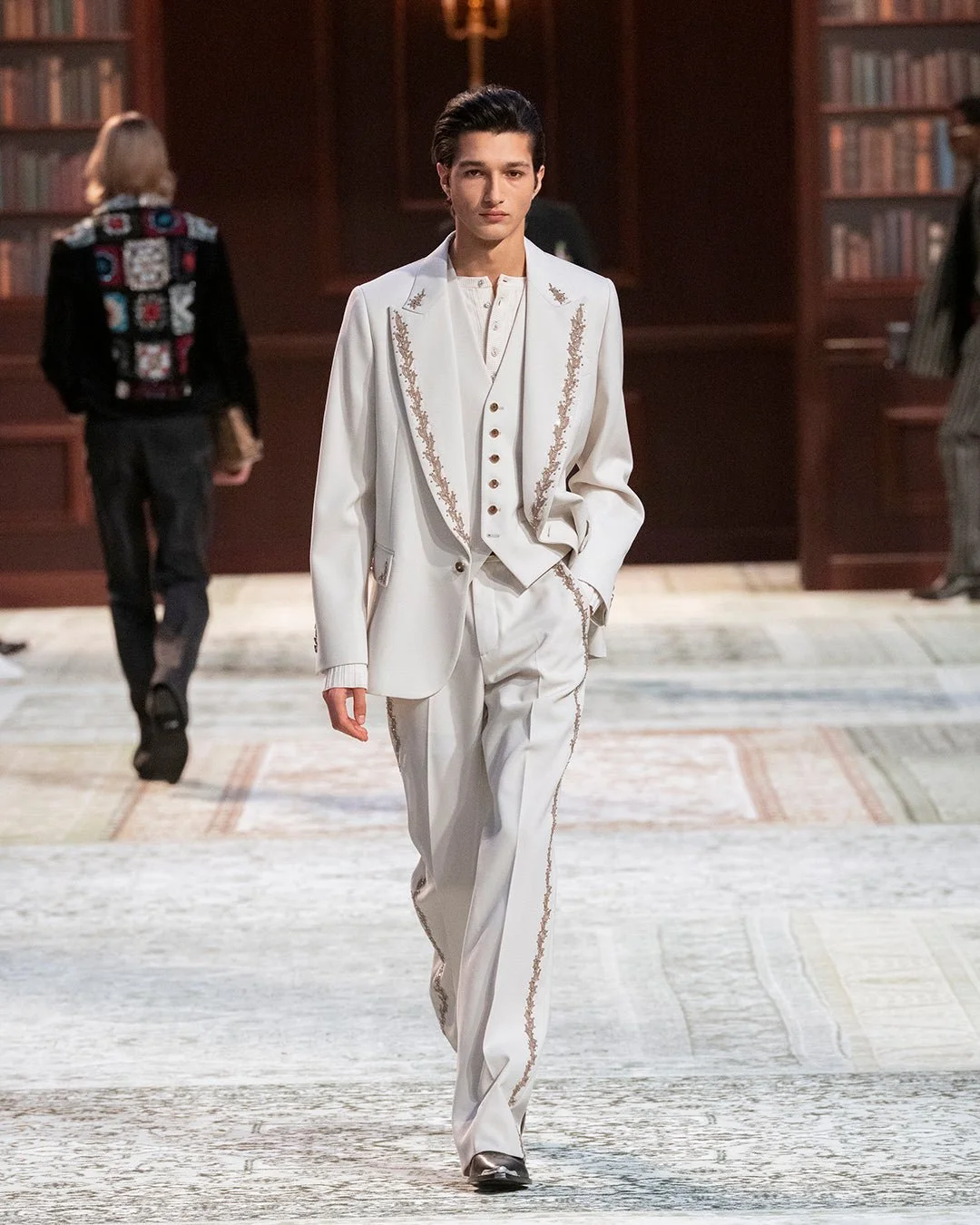
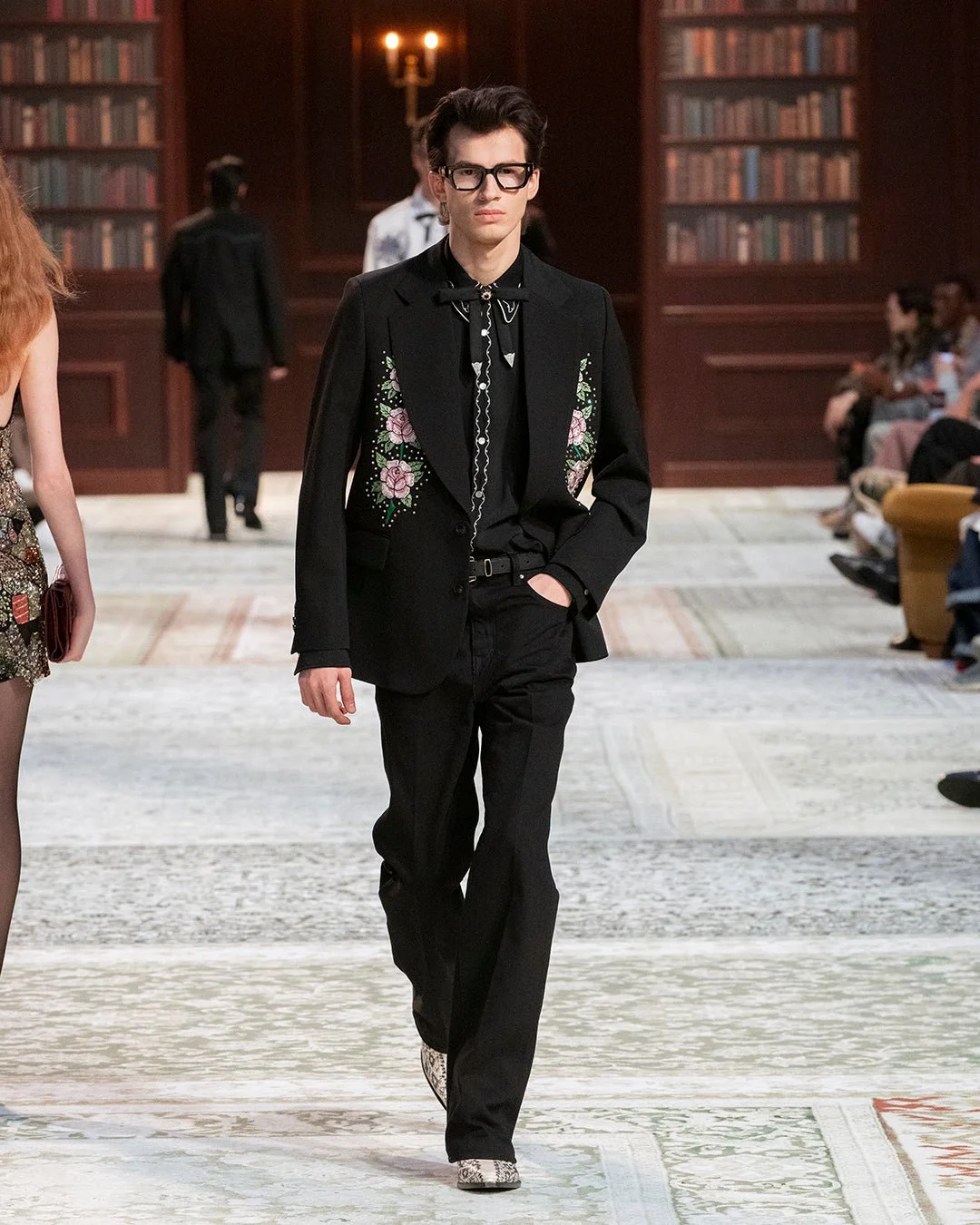
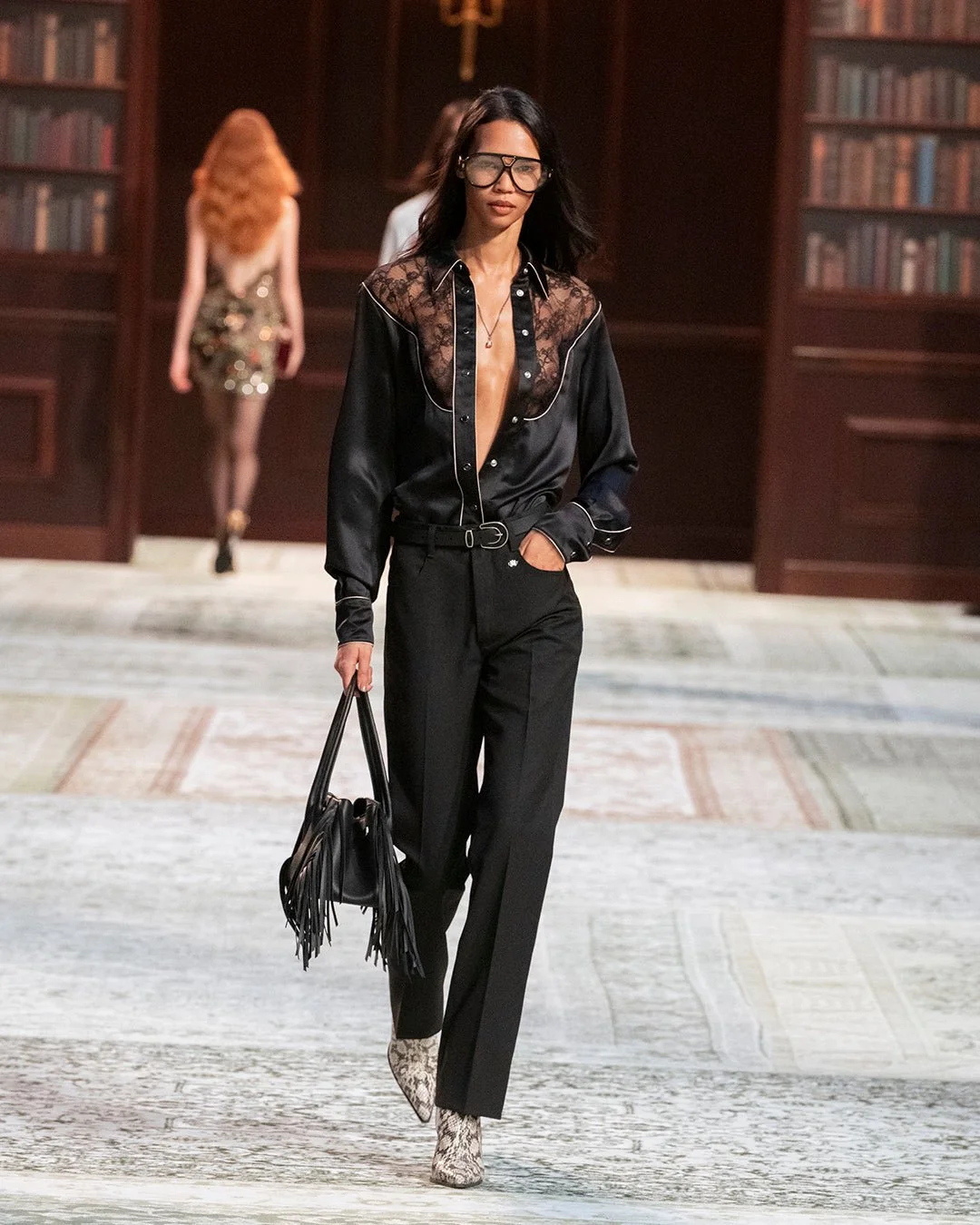
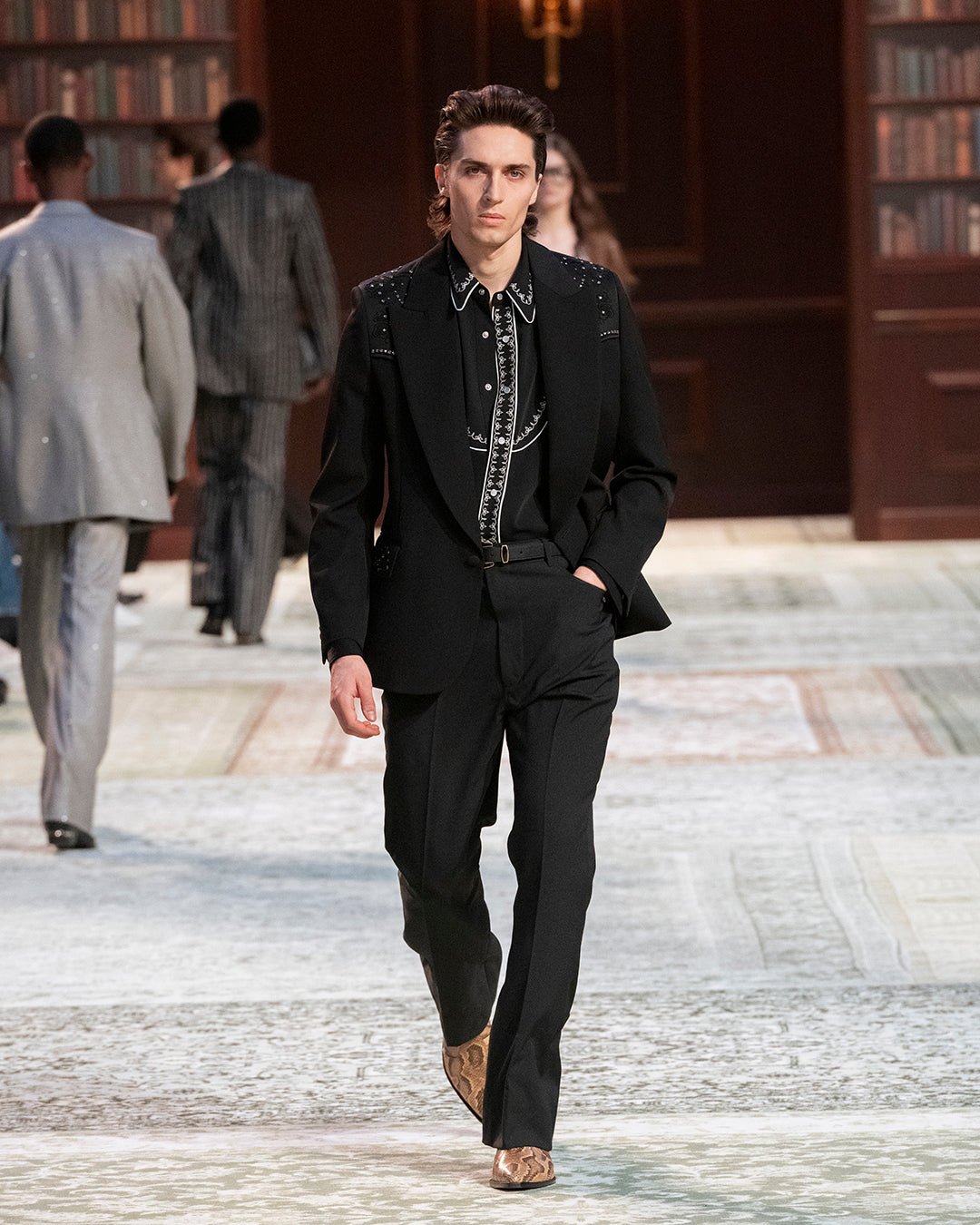
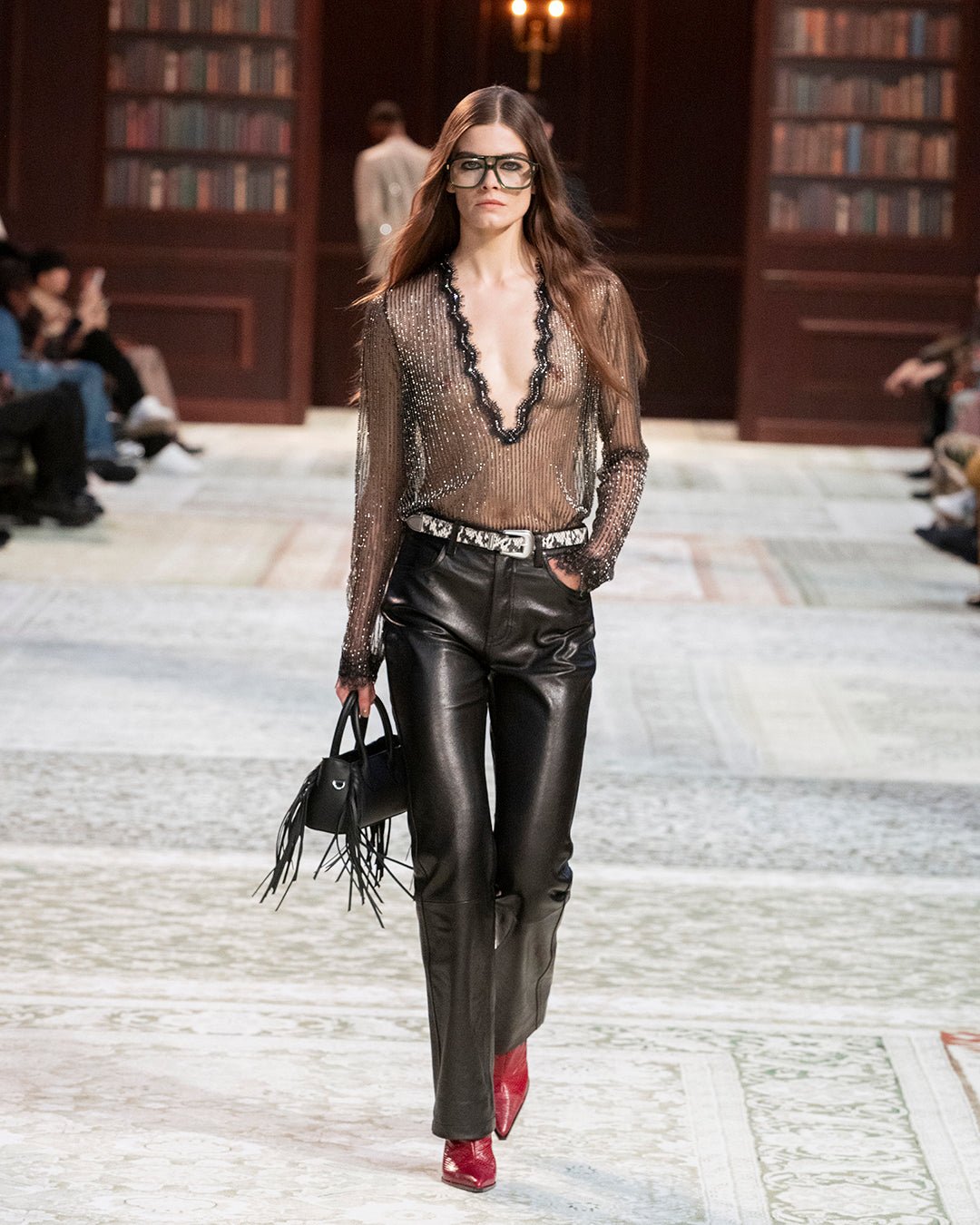
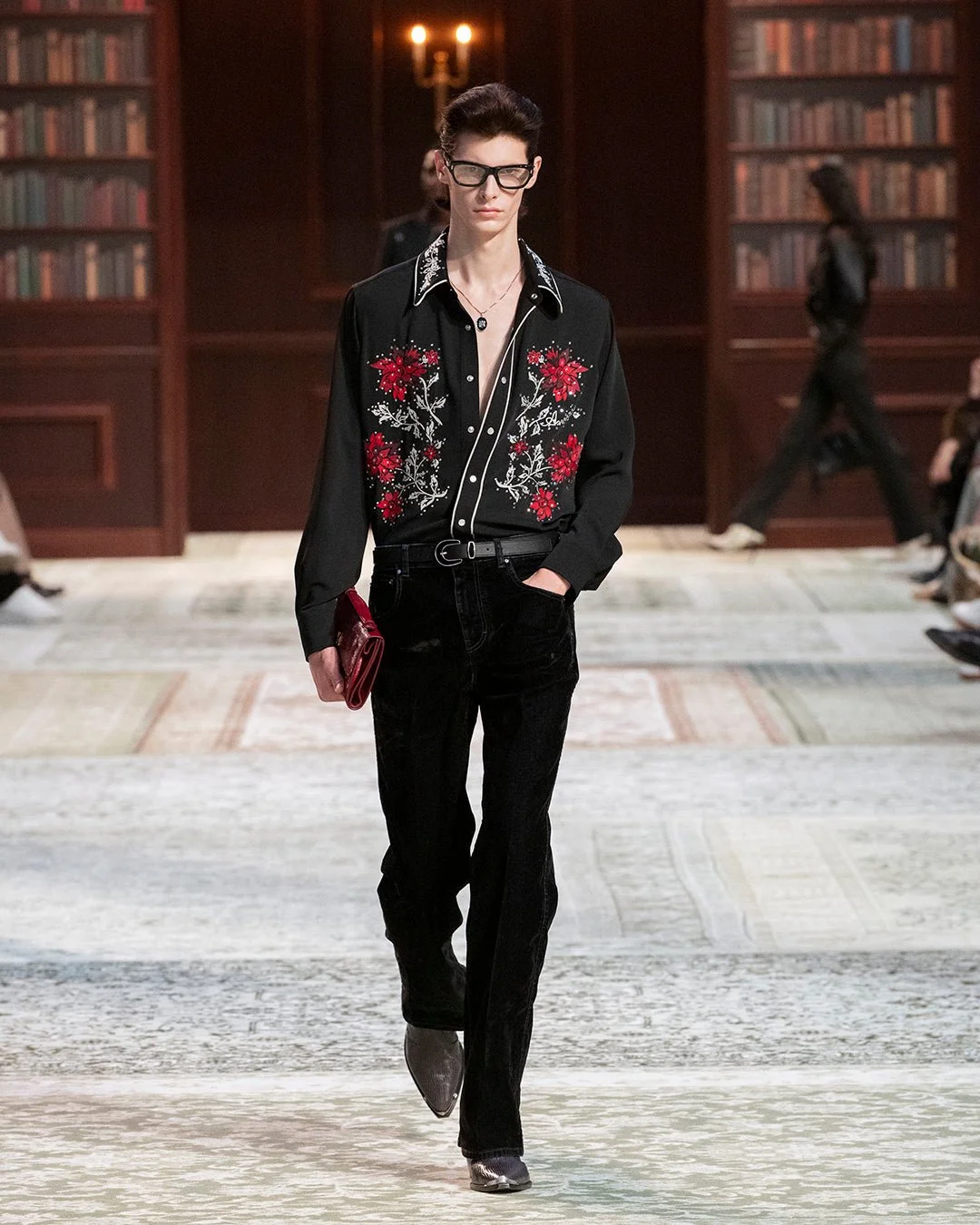
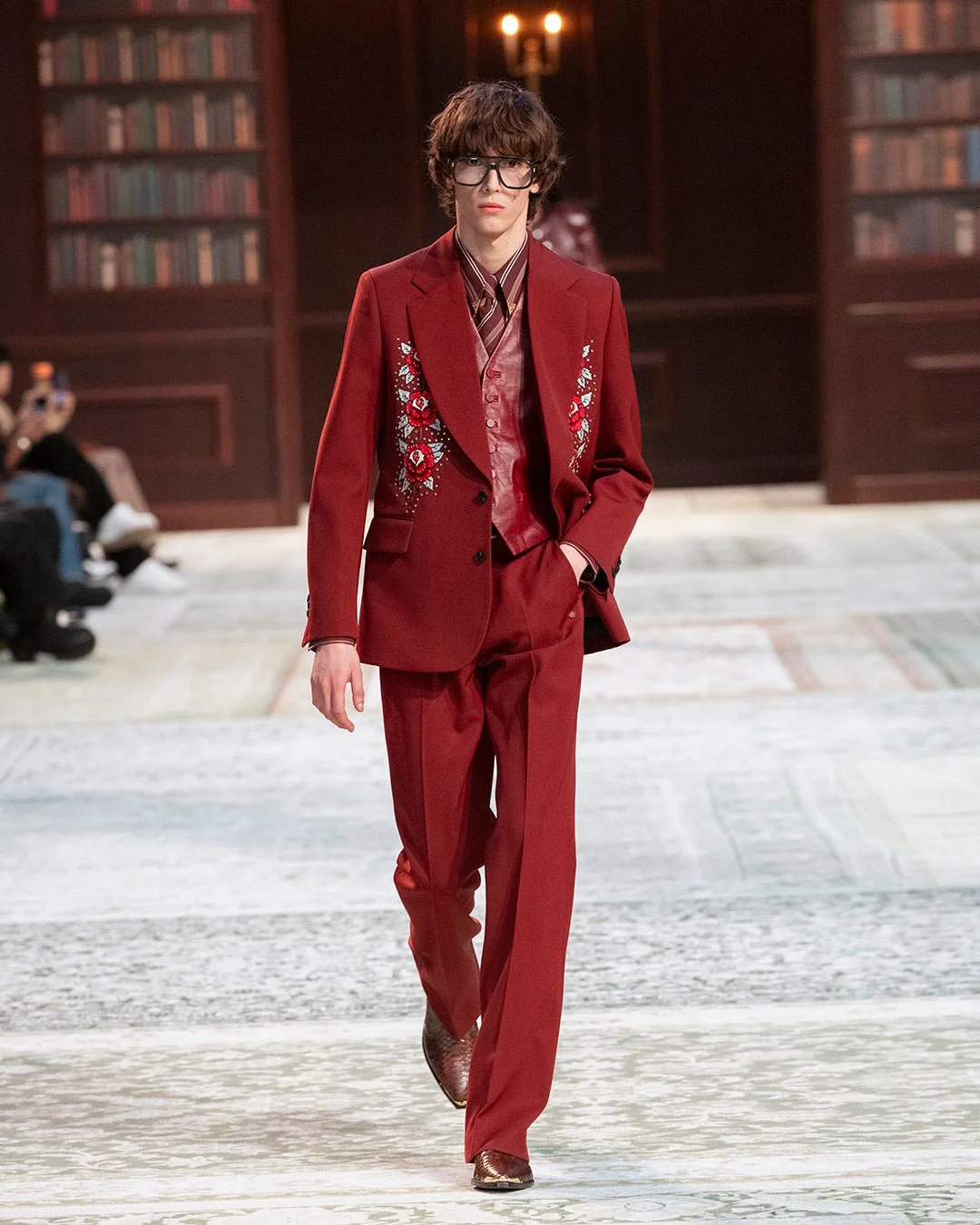
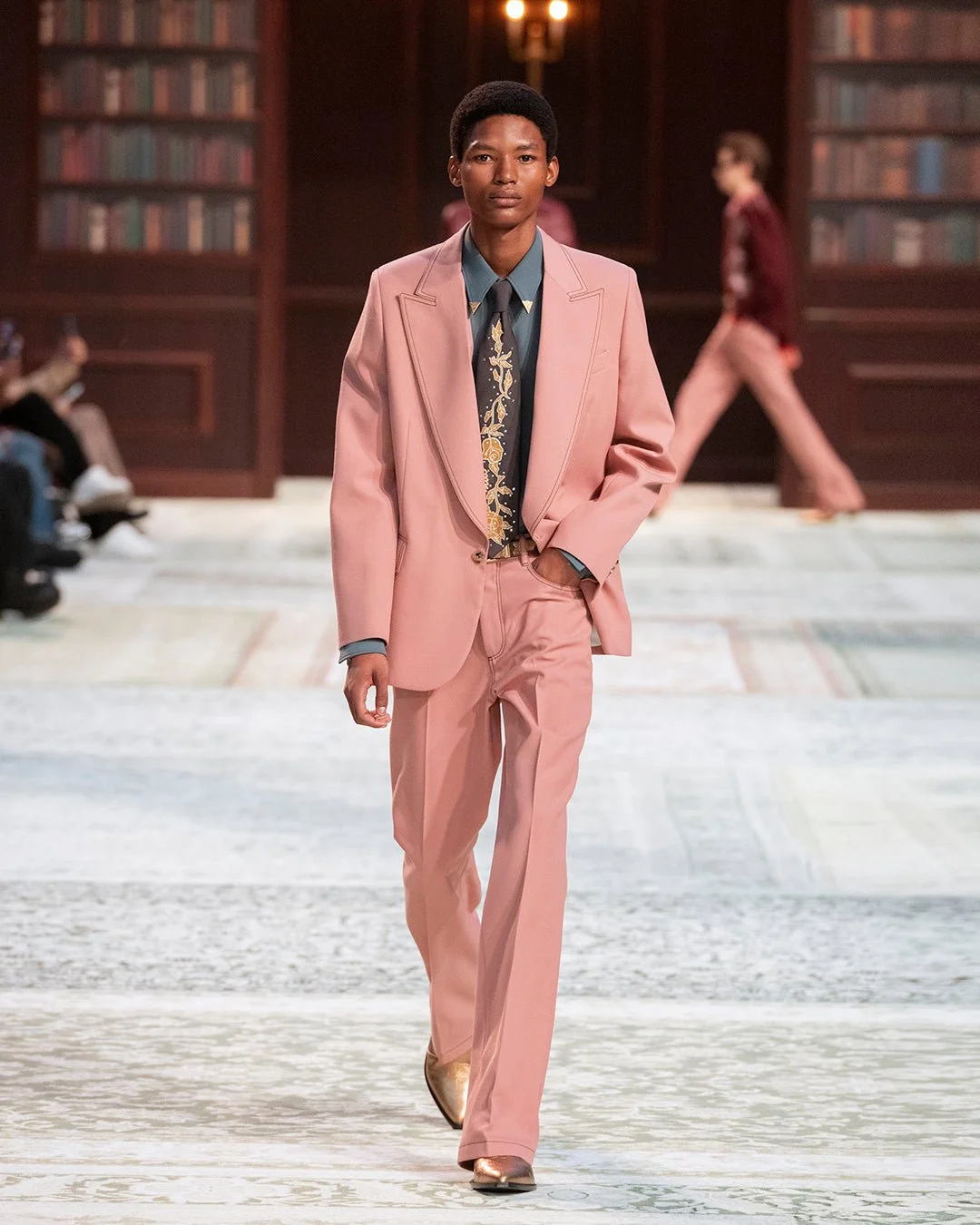
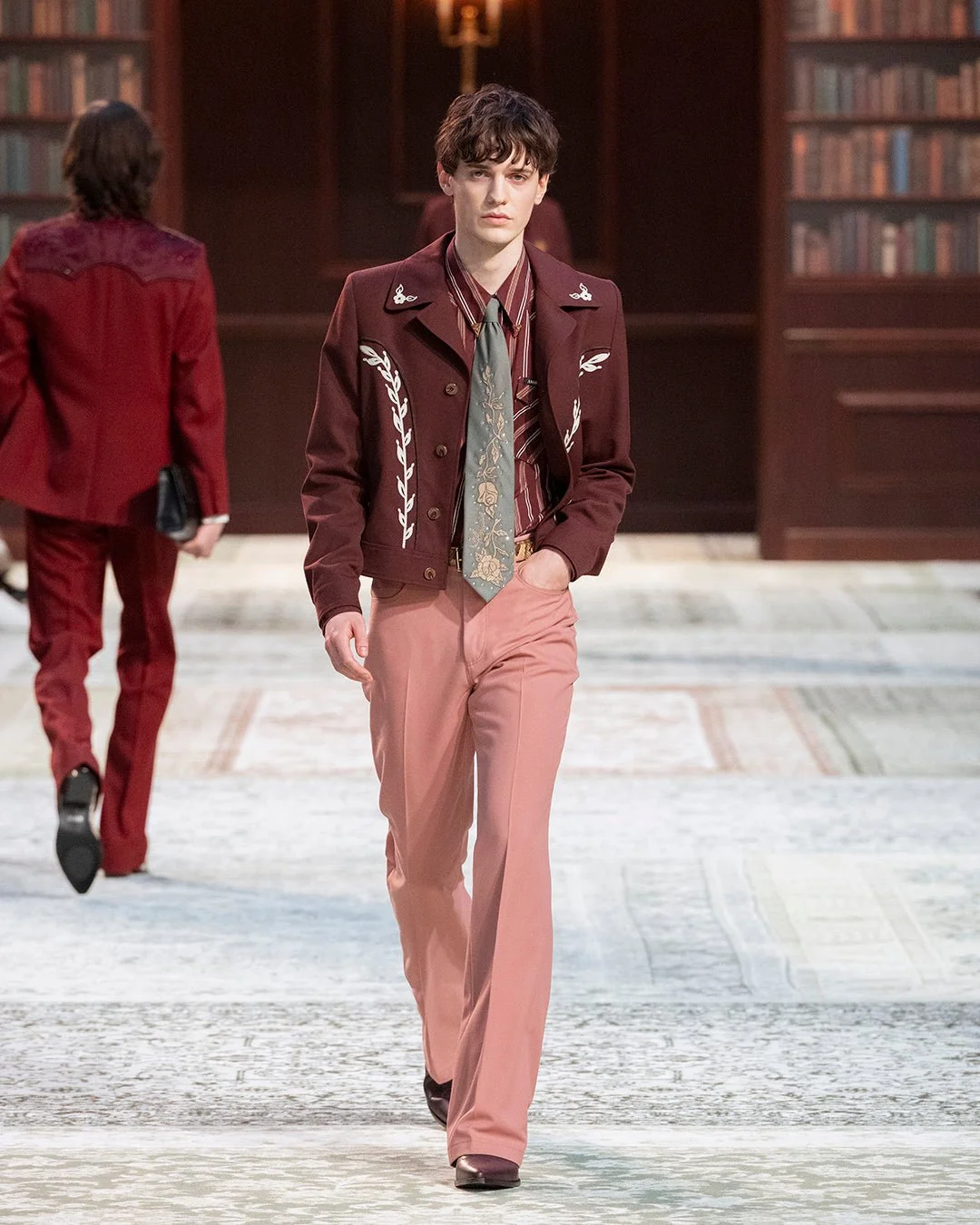
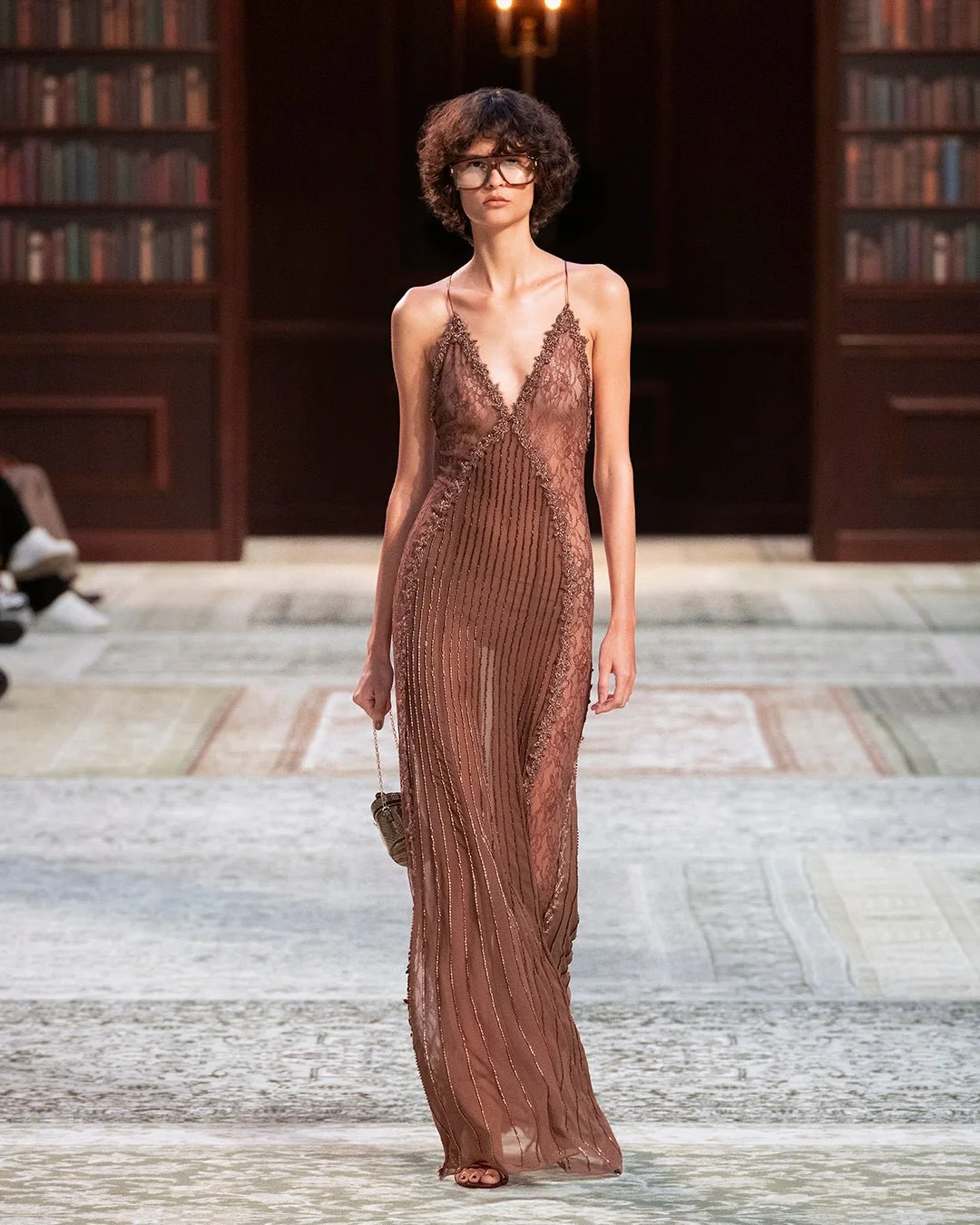
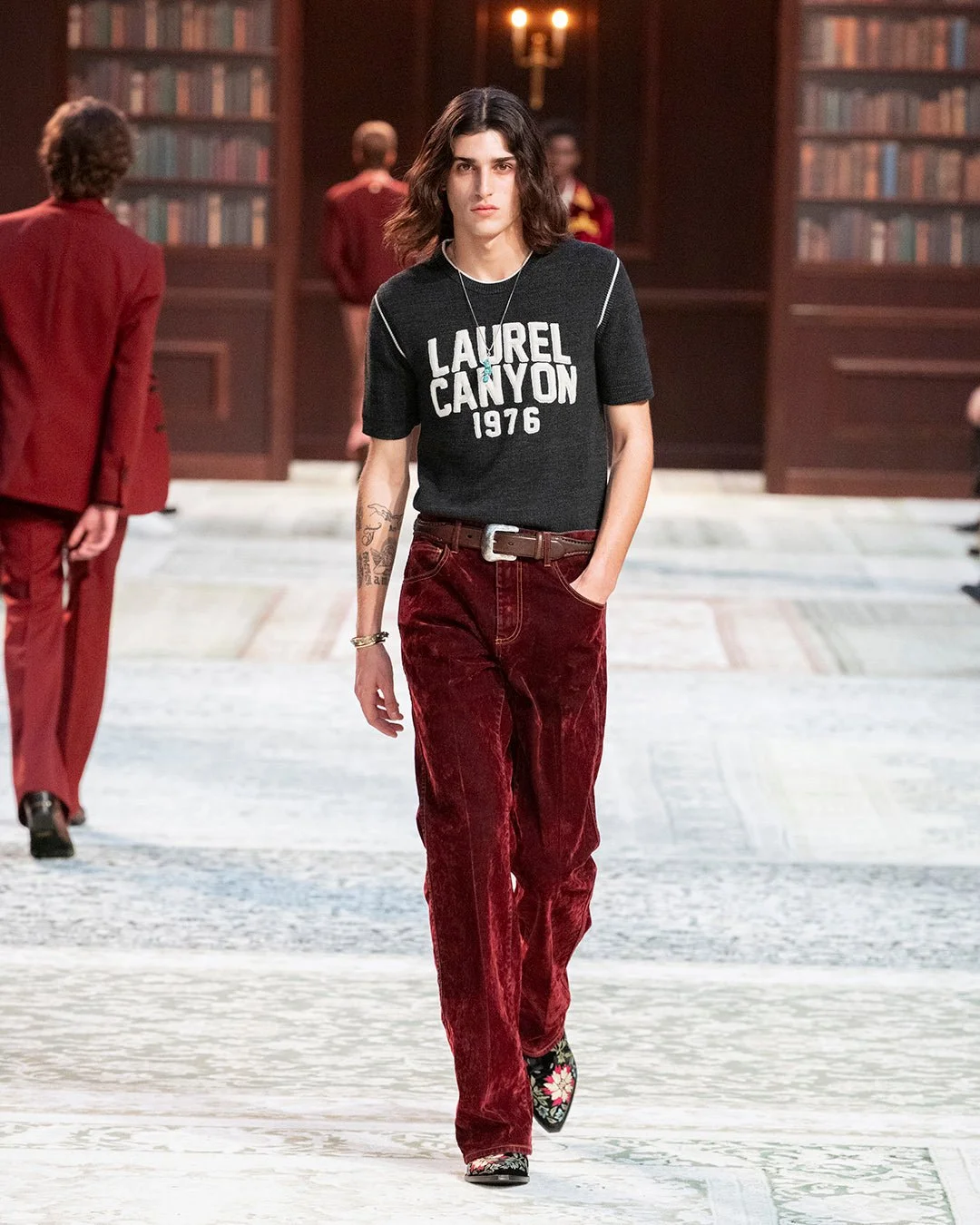
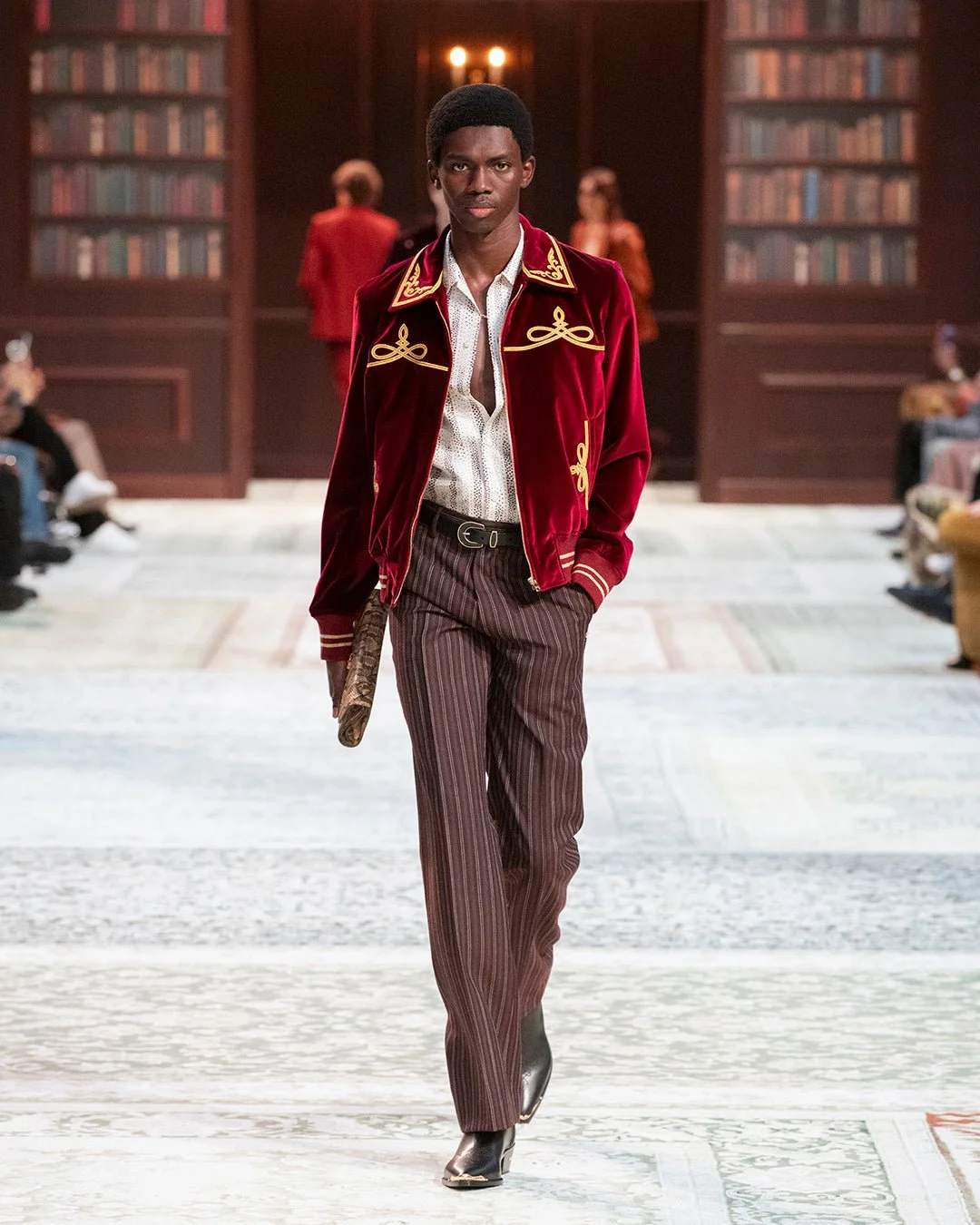
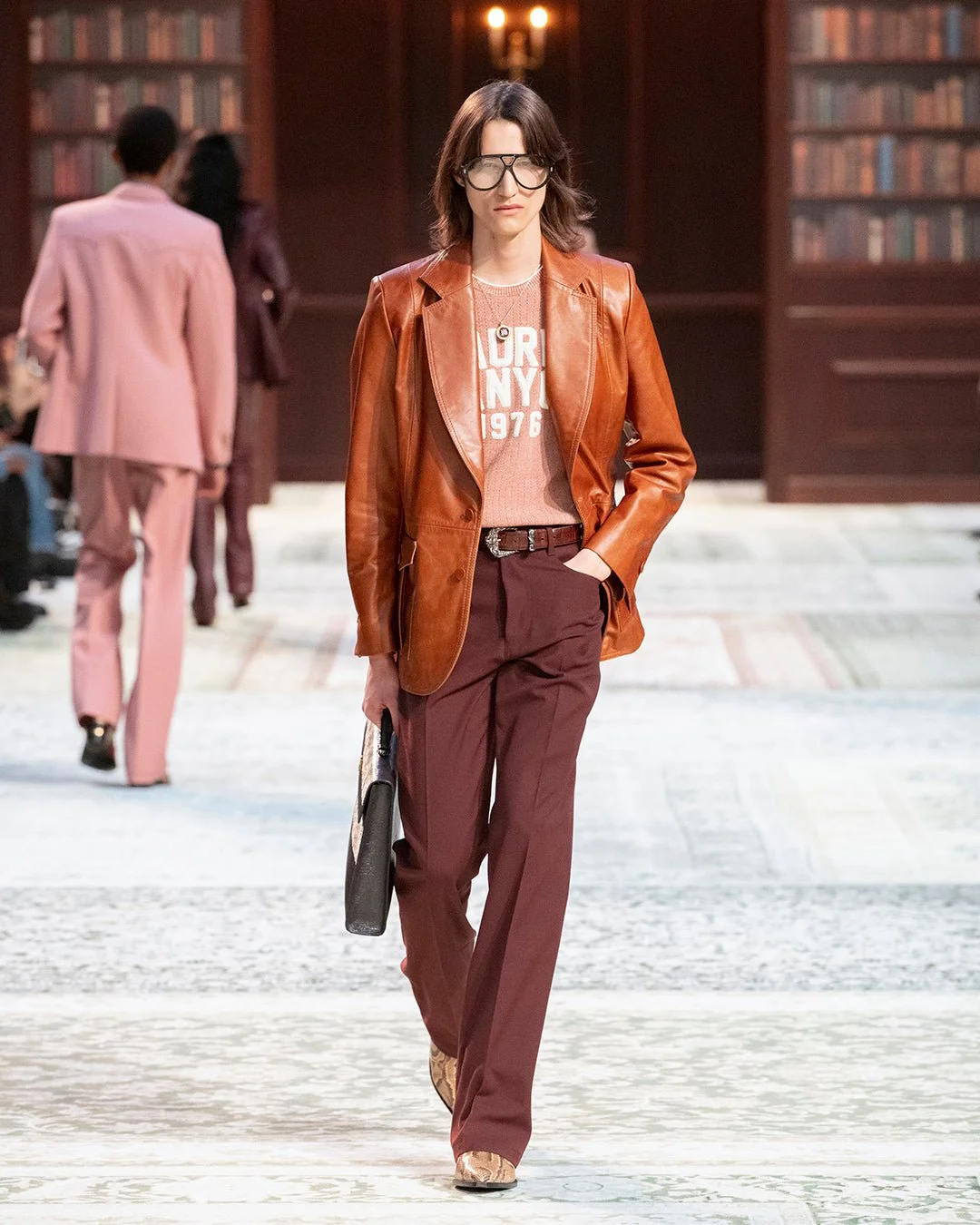
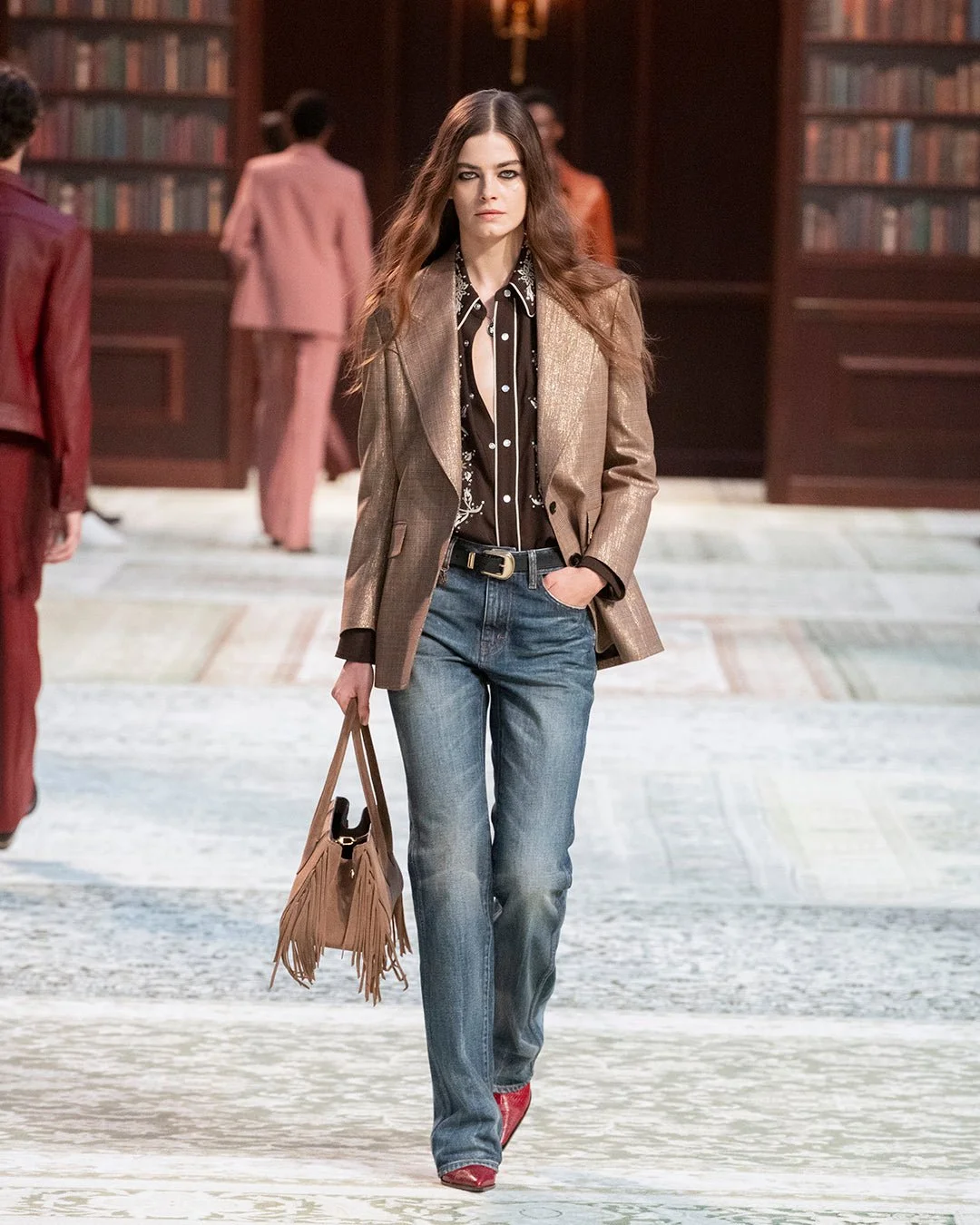
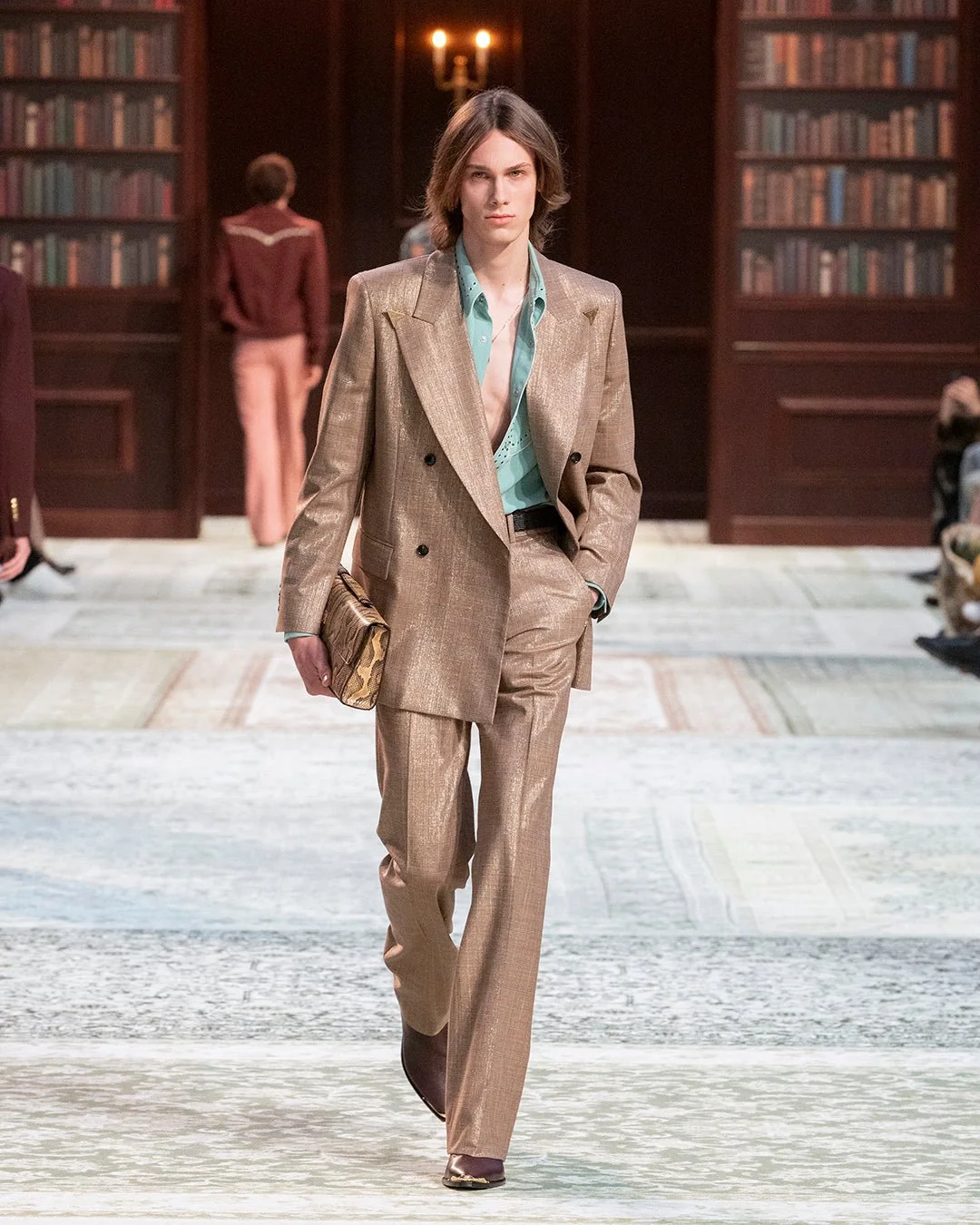
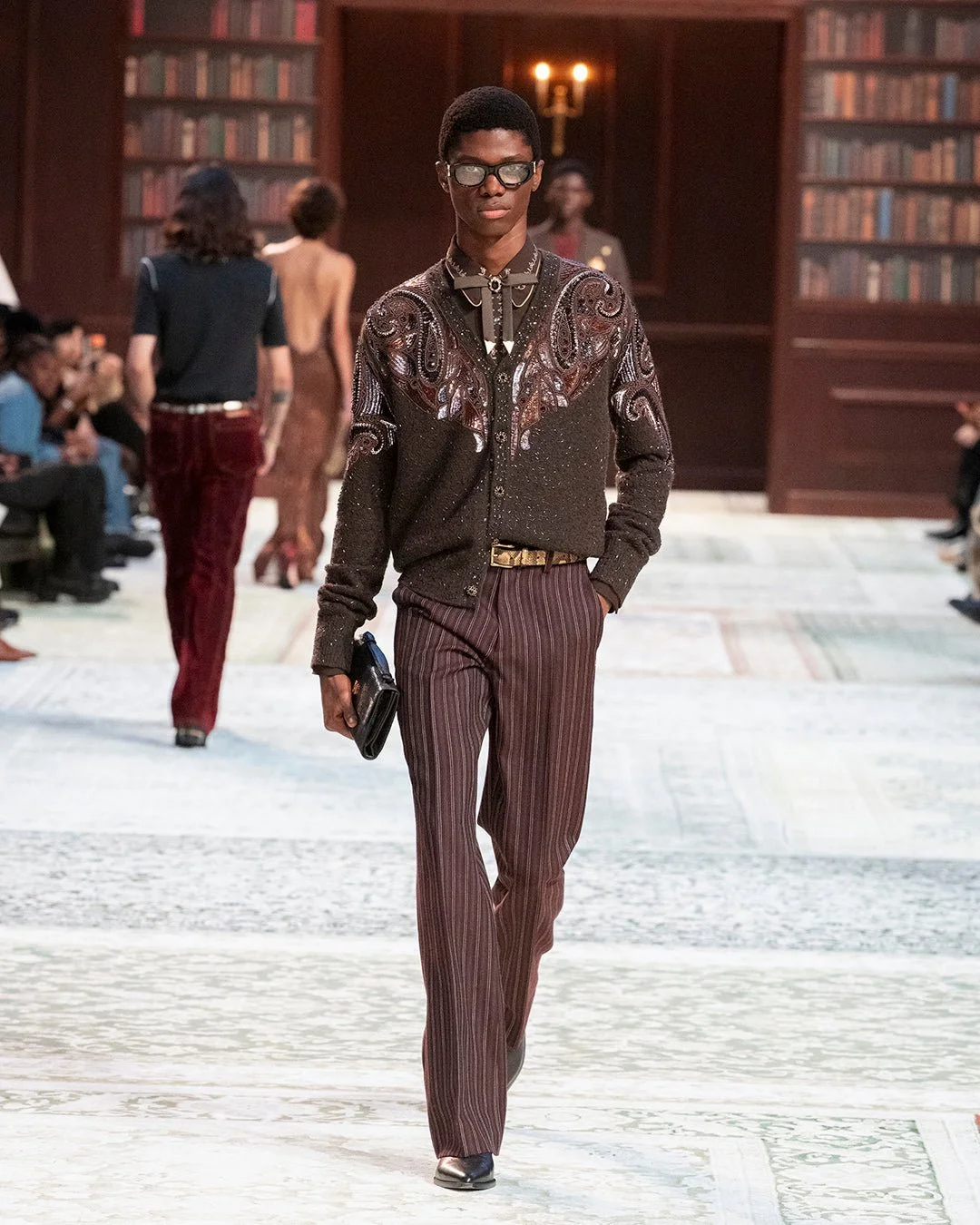
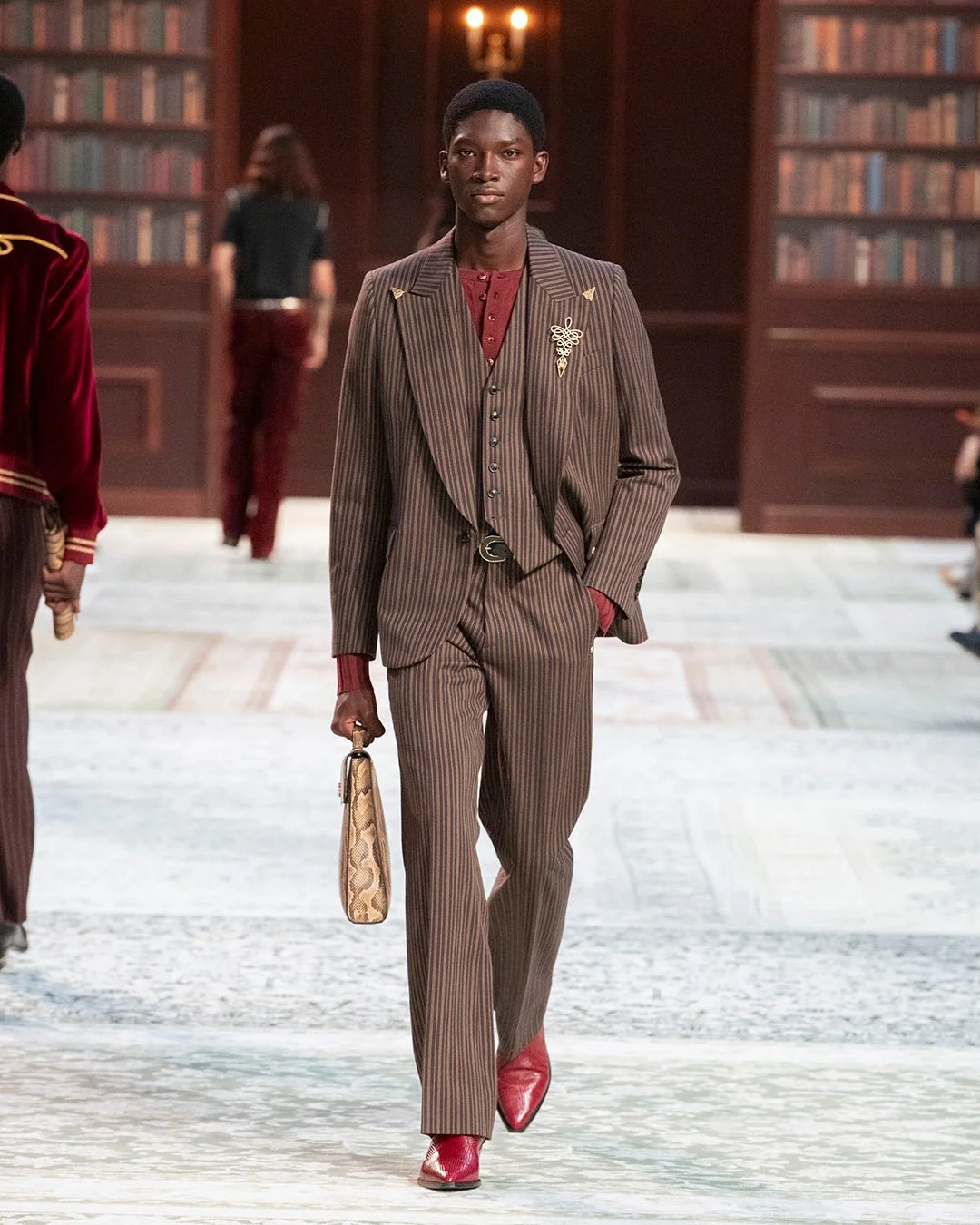
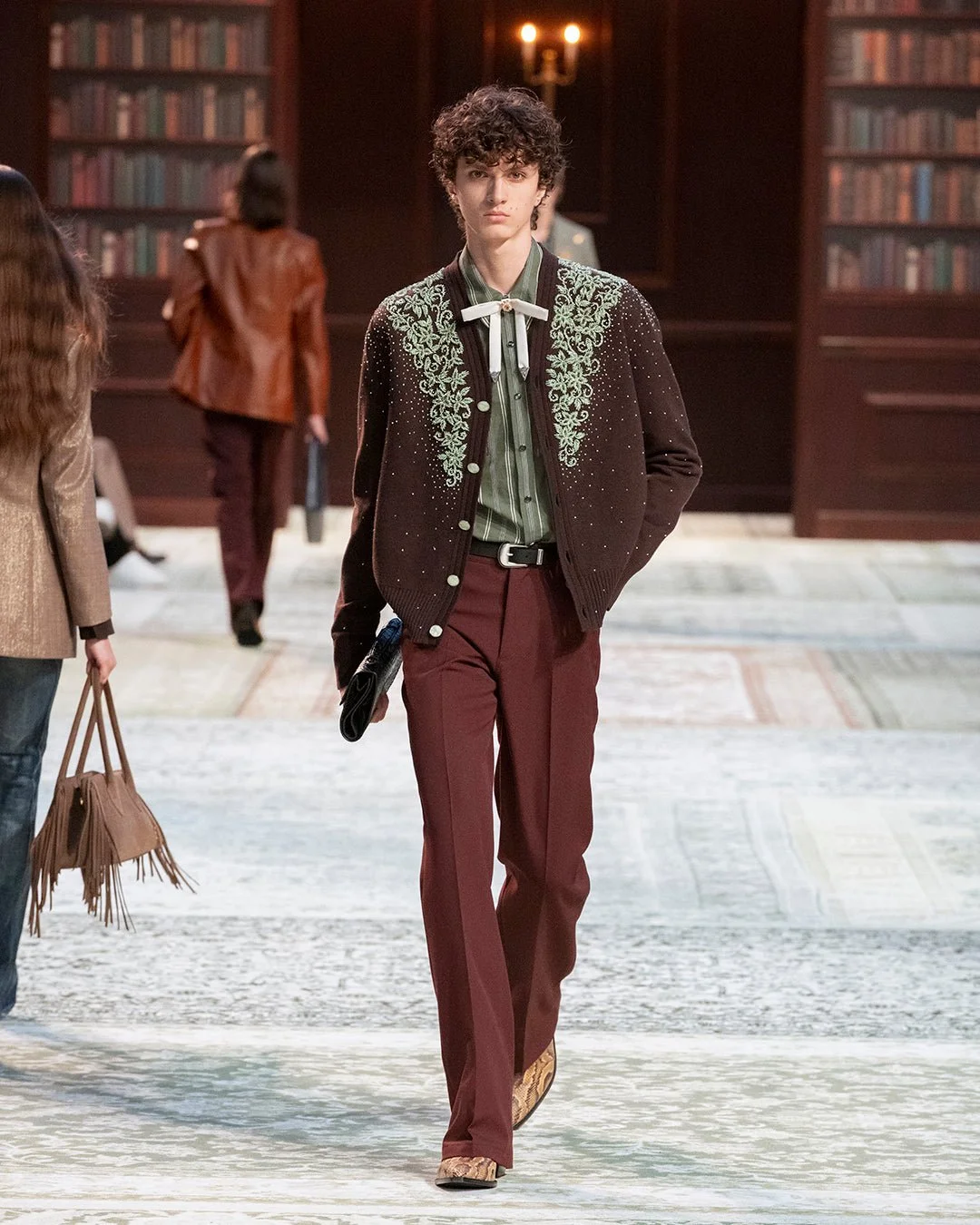
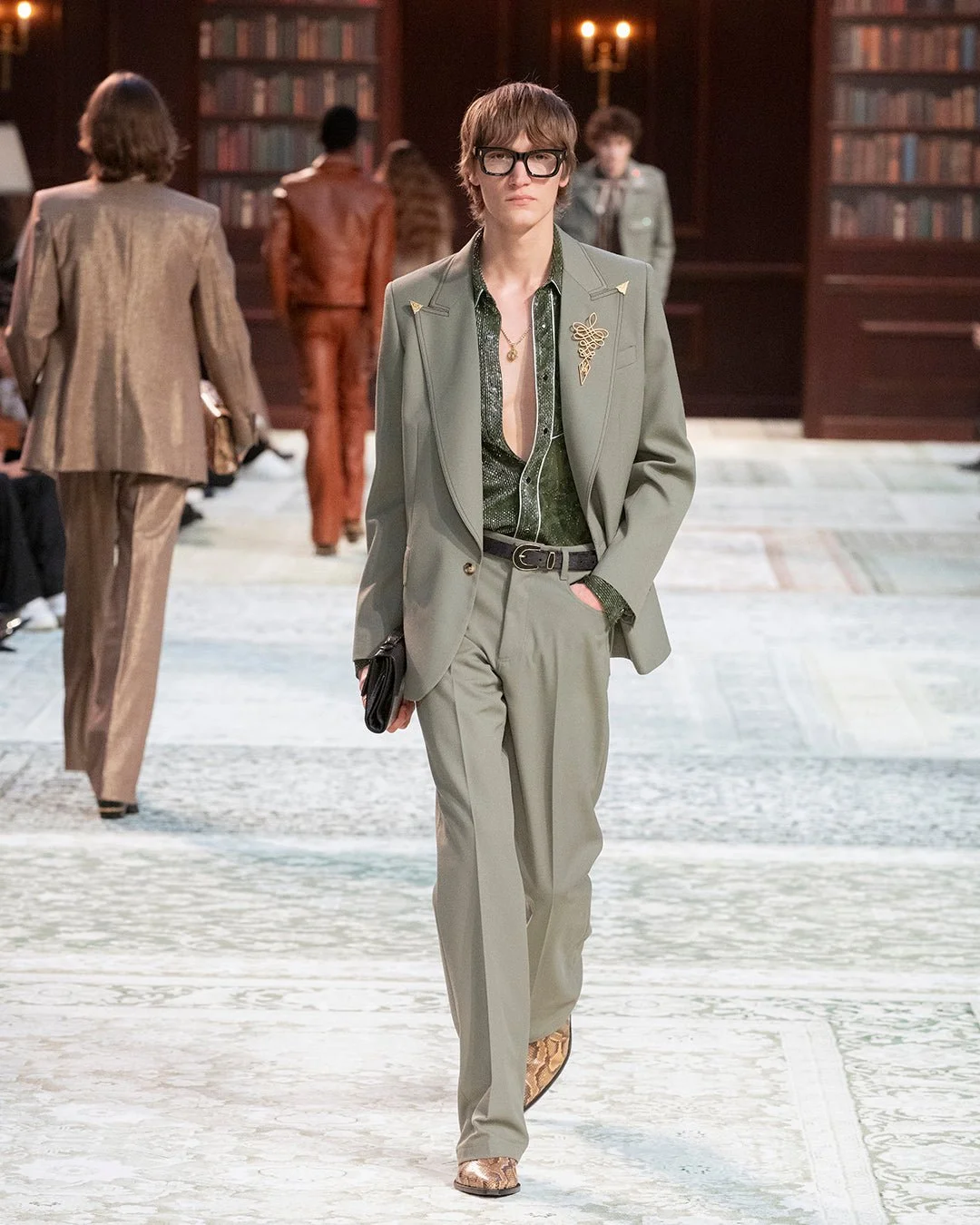
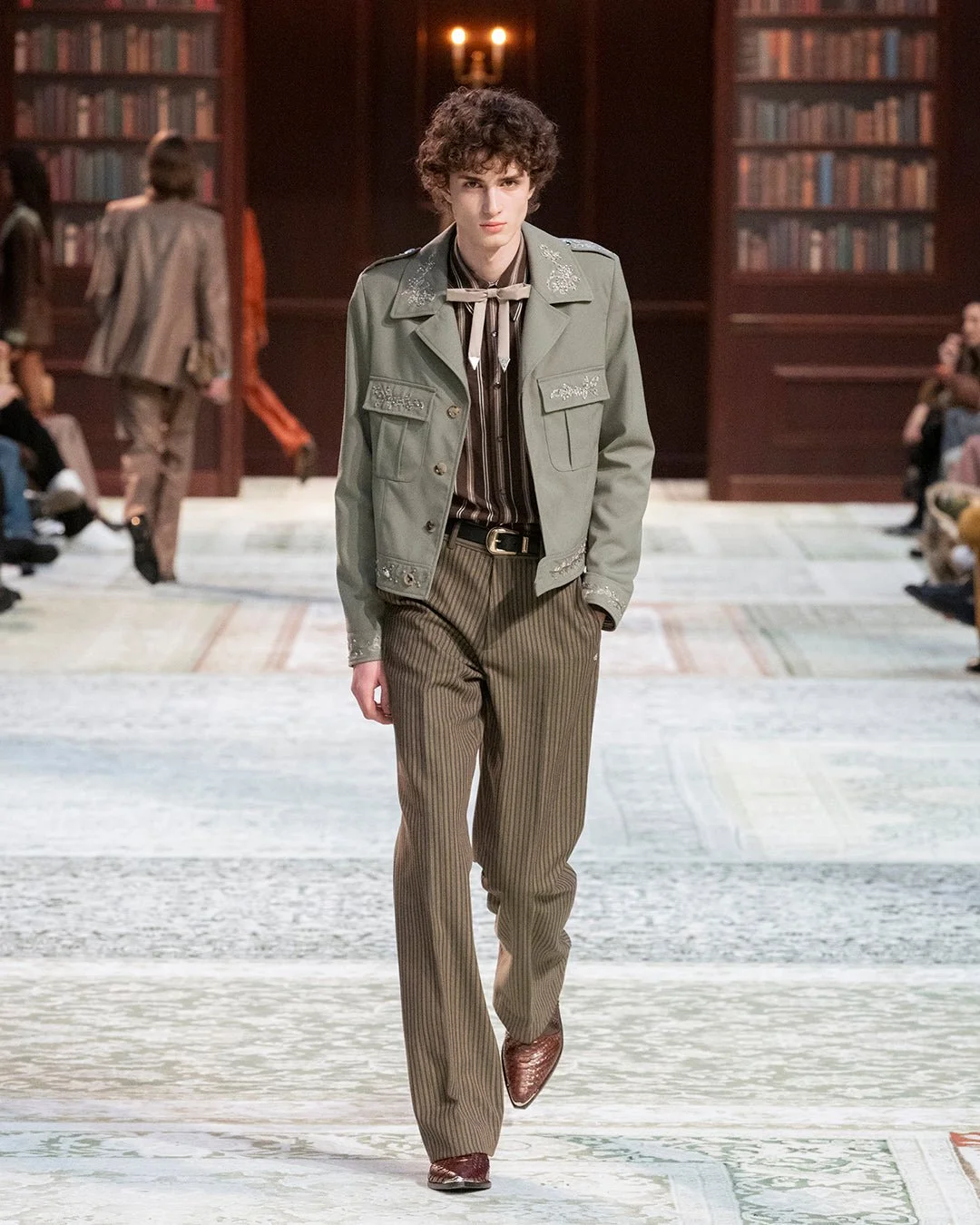
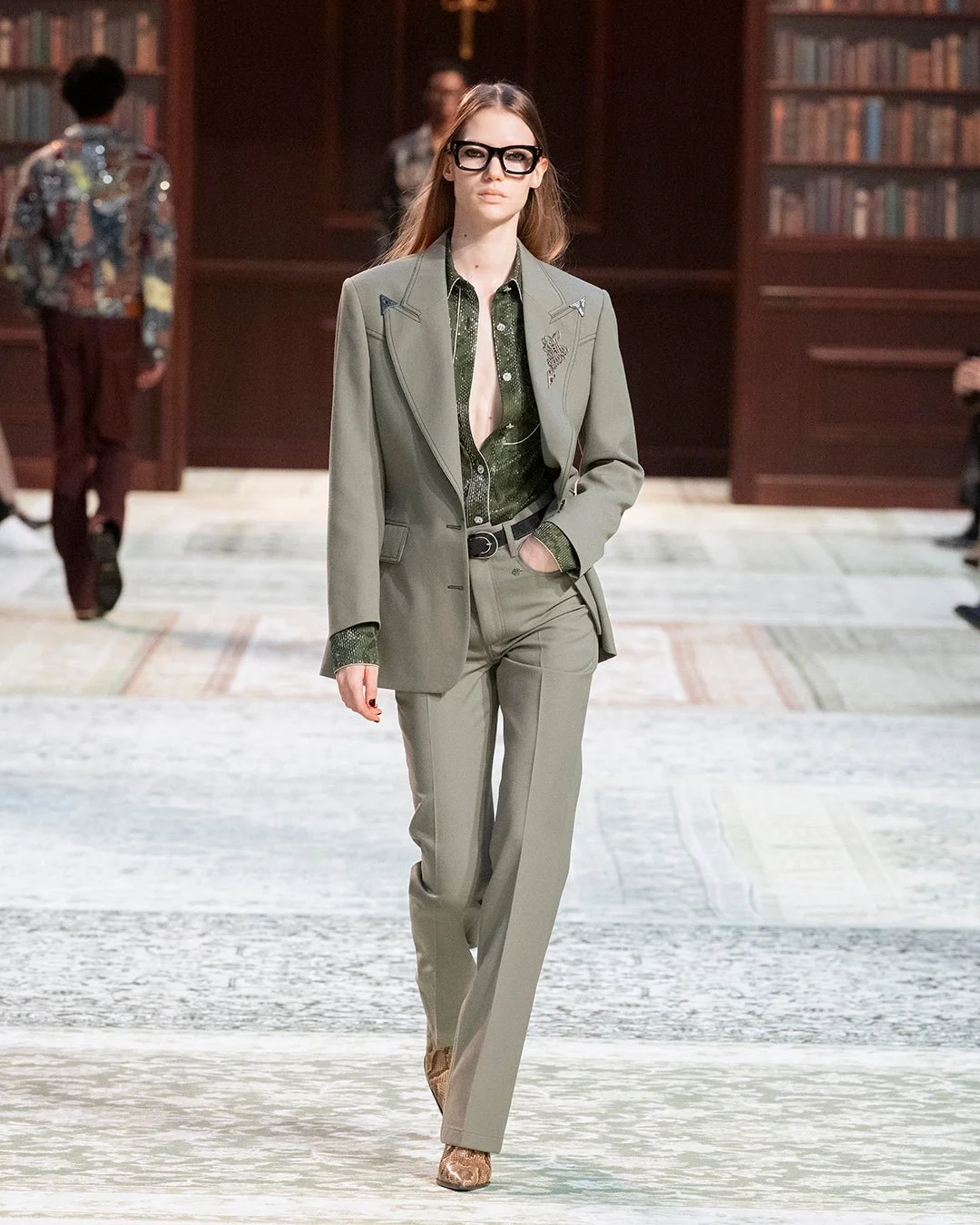
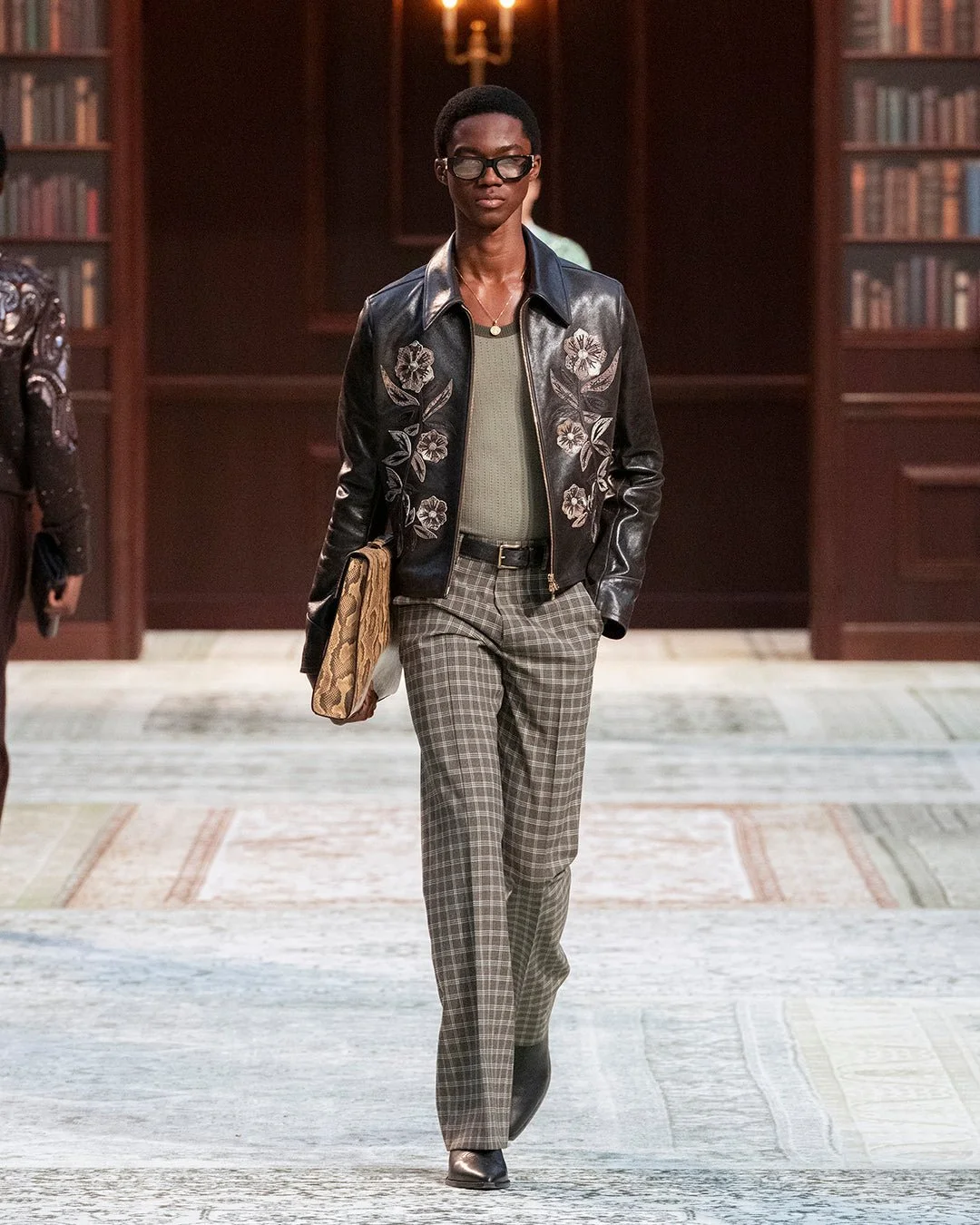
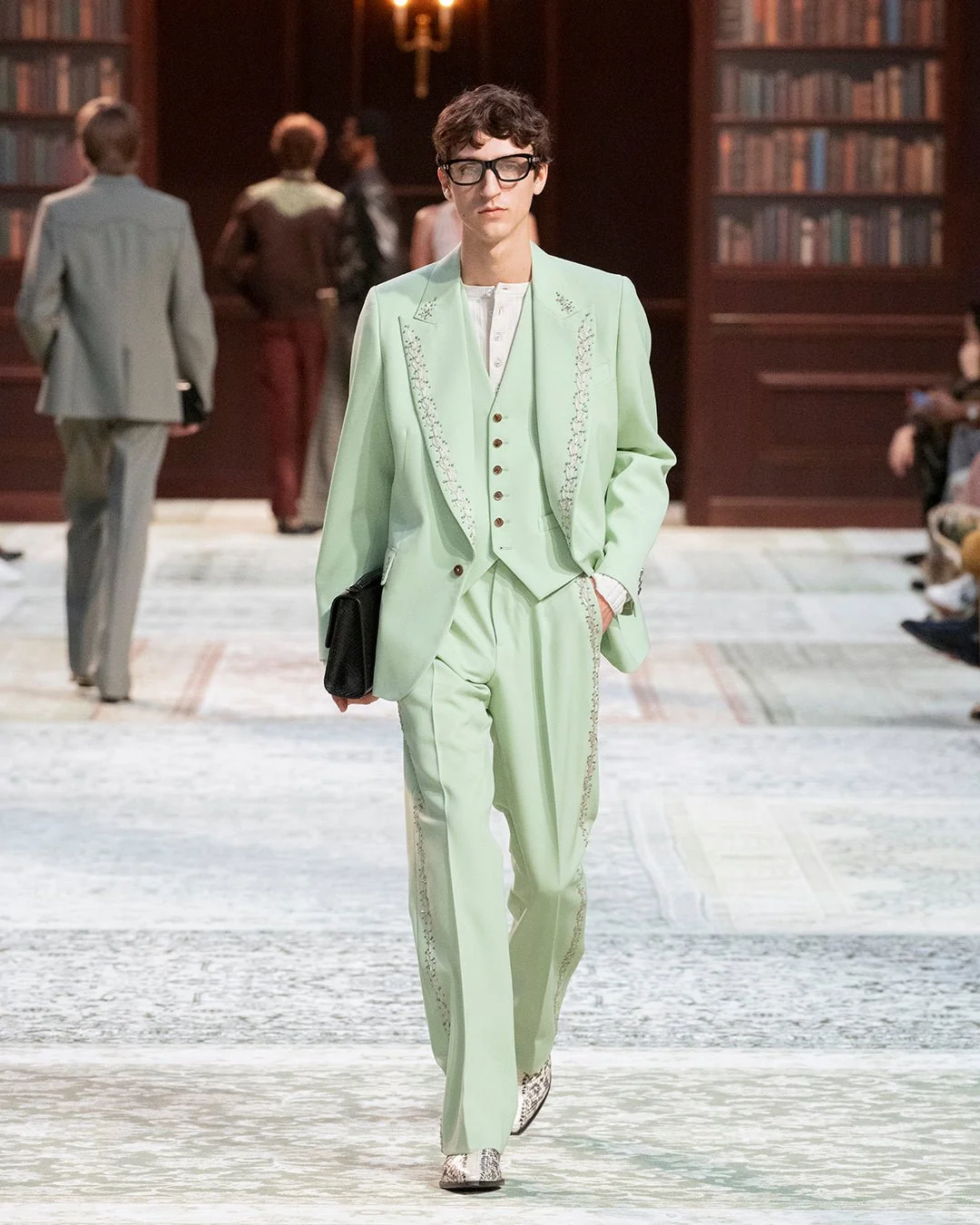
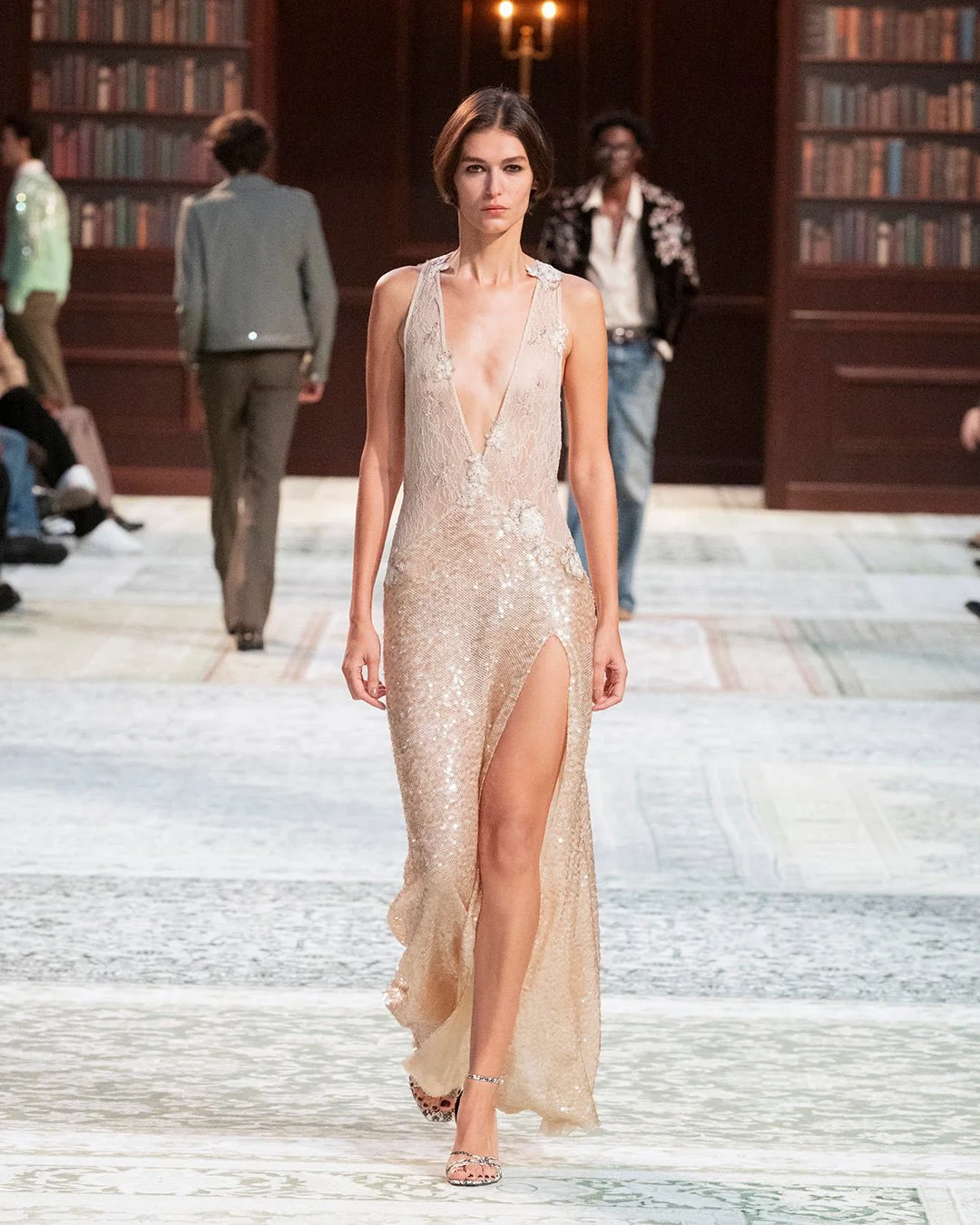
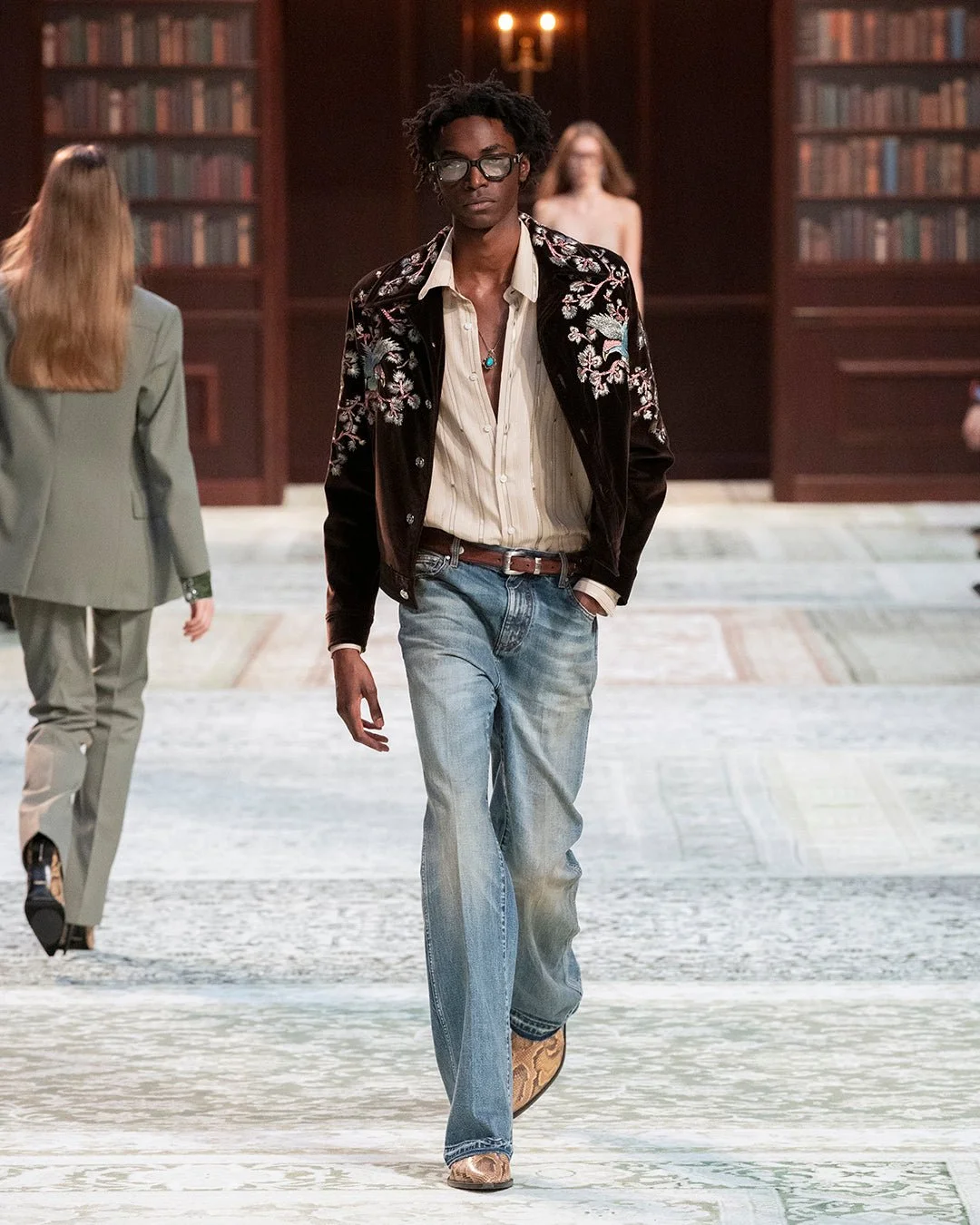
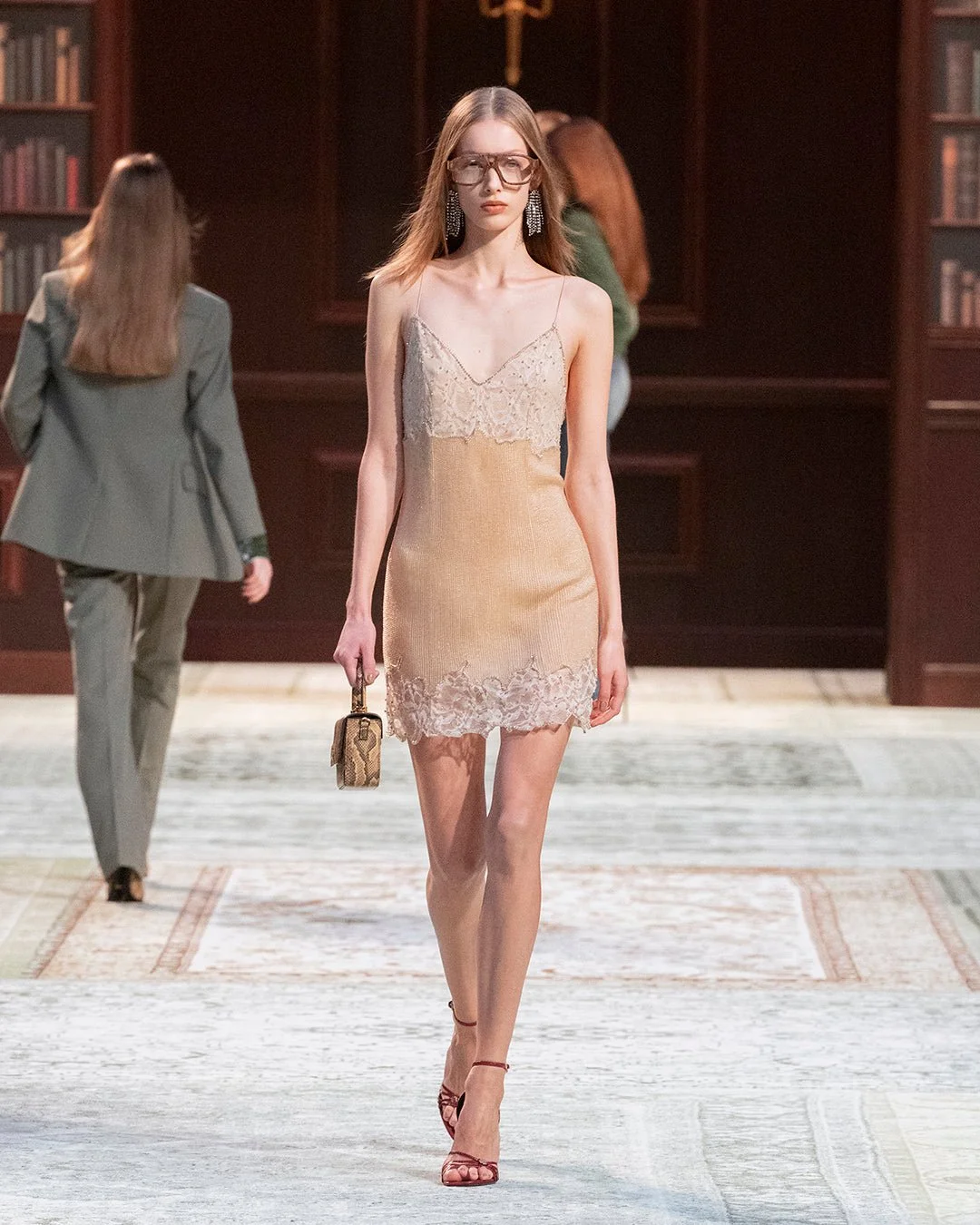
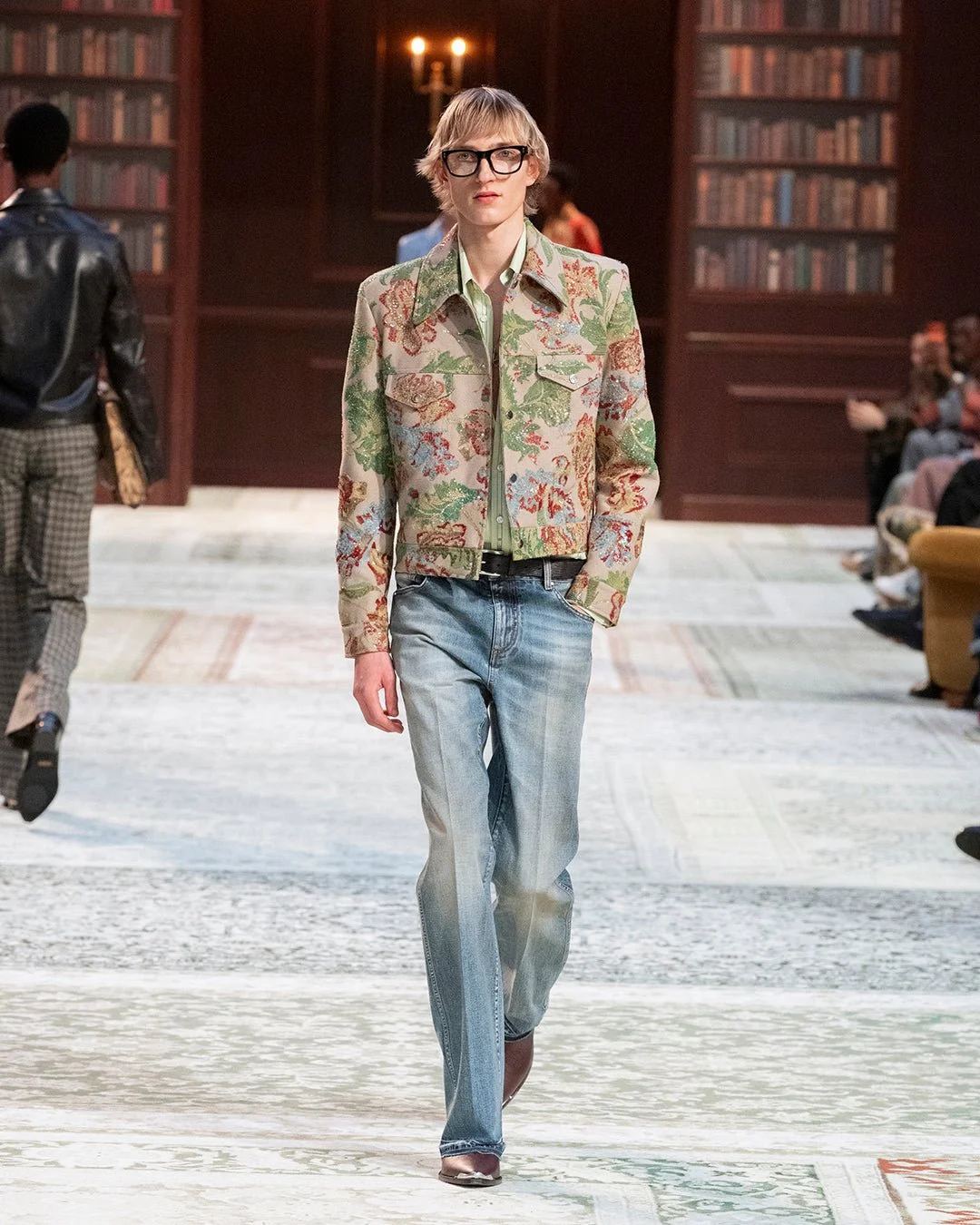
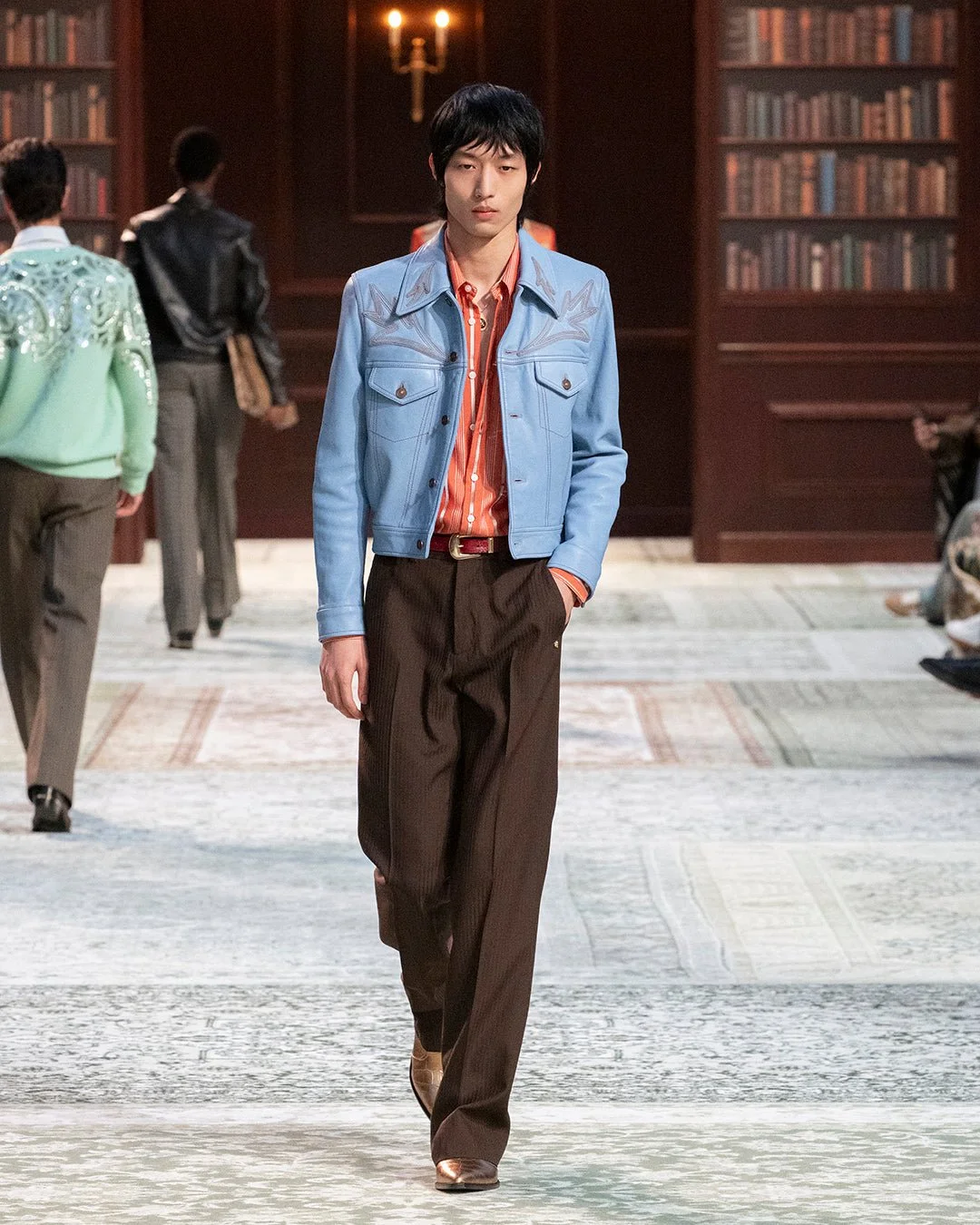
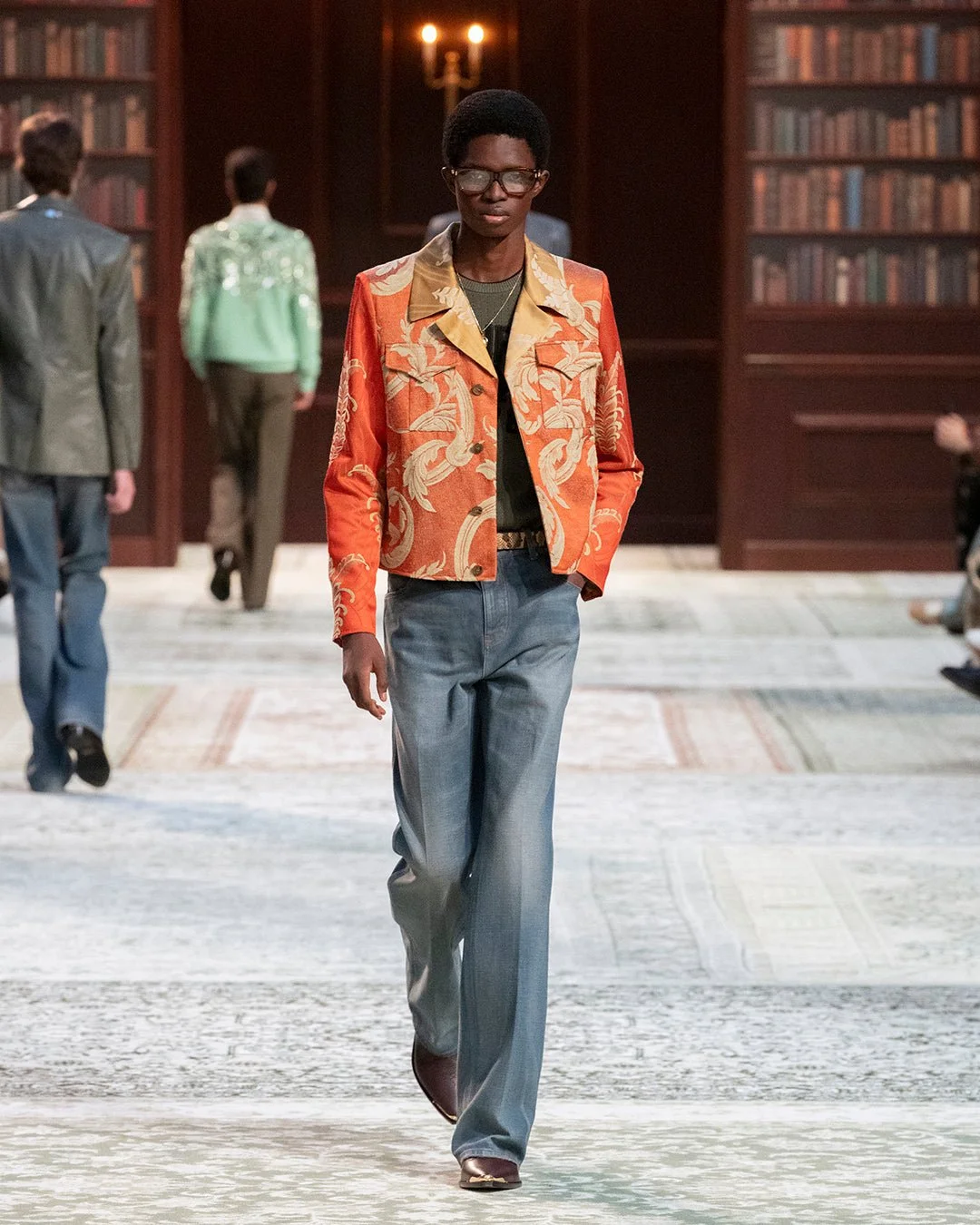
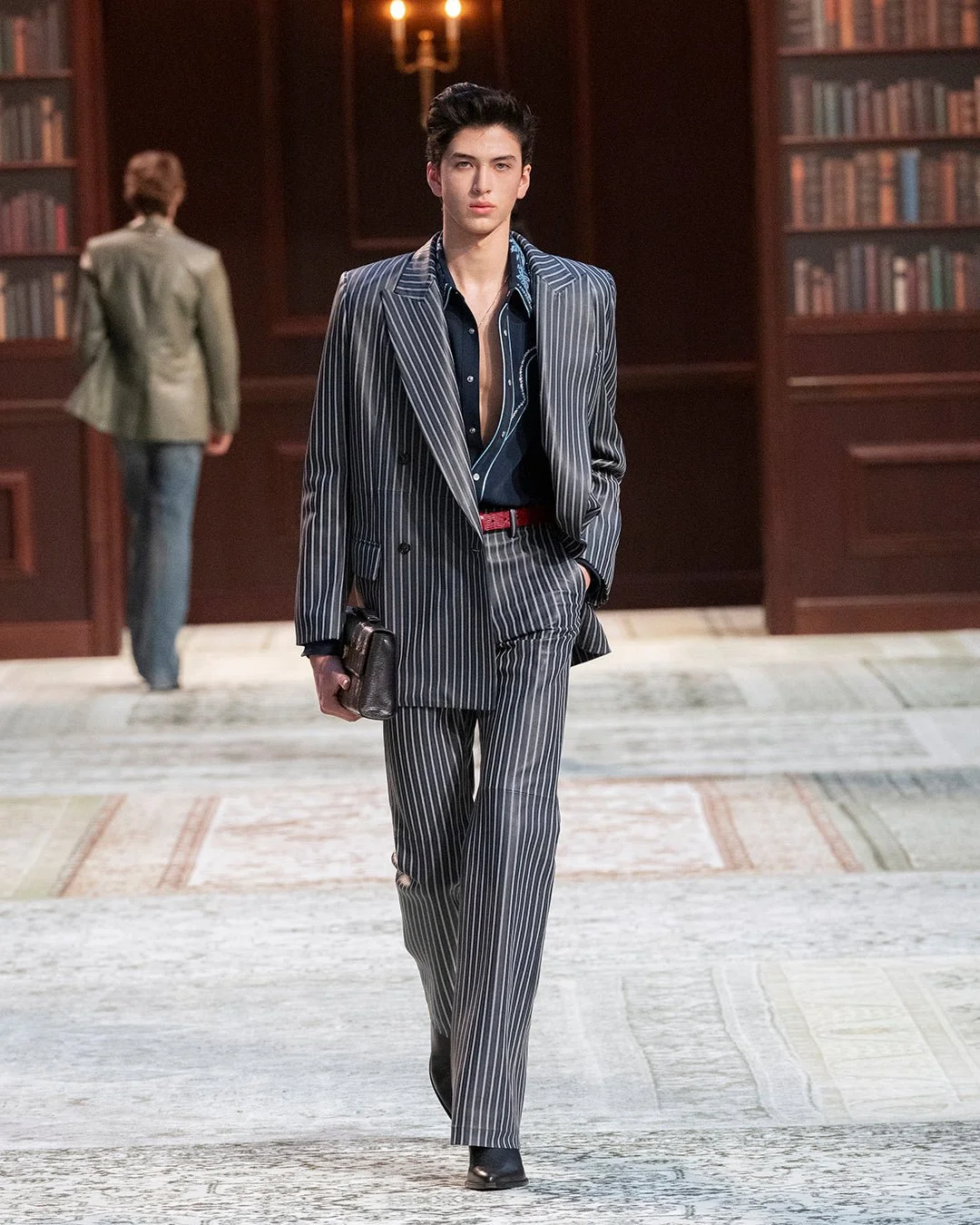
Guests arriving at the AMIRI Fall/Winter 2026 show in Paris were met with the warmth of a Laurel Canyon house party. The set, complete with armchairs and a faux library, felt more California than couture, a fitting tribute to the Los Angeles brand’s roots. Mike Amiri described the atmosphere as a nod to the 1970s, when the Hollywood Hills were alive with musicians, poets, and quiet hedonists. That mood of creative ease shaped the collection itself: a wardrobe designed for the artist who drifts effortlessly between onstage and off-duty. Western-style suits came in shades of dusty rose and vine green, their metal-tipped lapels and floral embroidery suggesting a world where showmanship and sincerity can coexist.
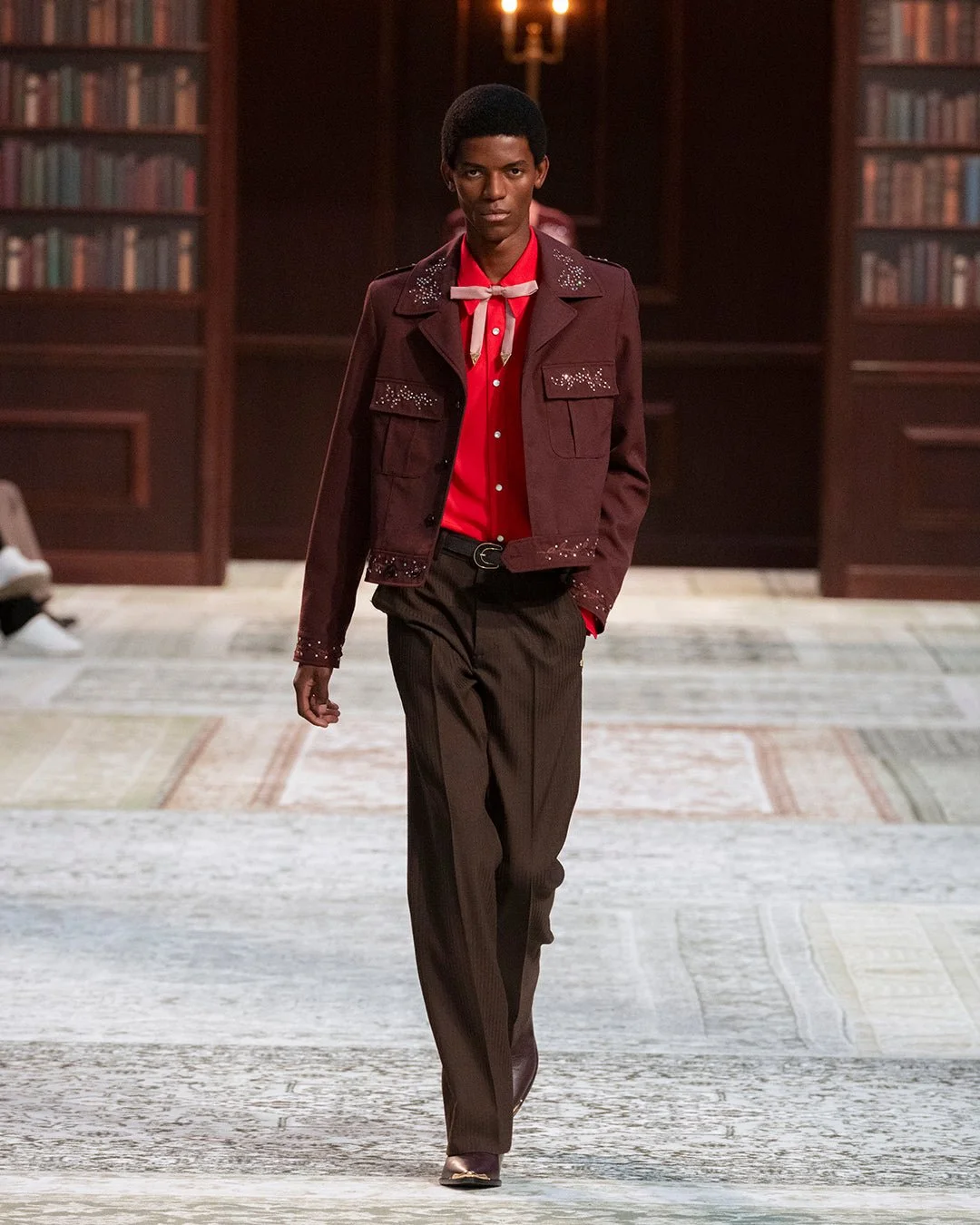
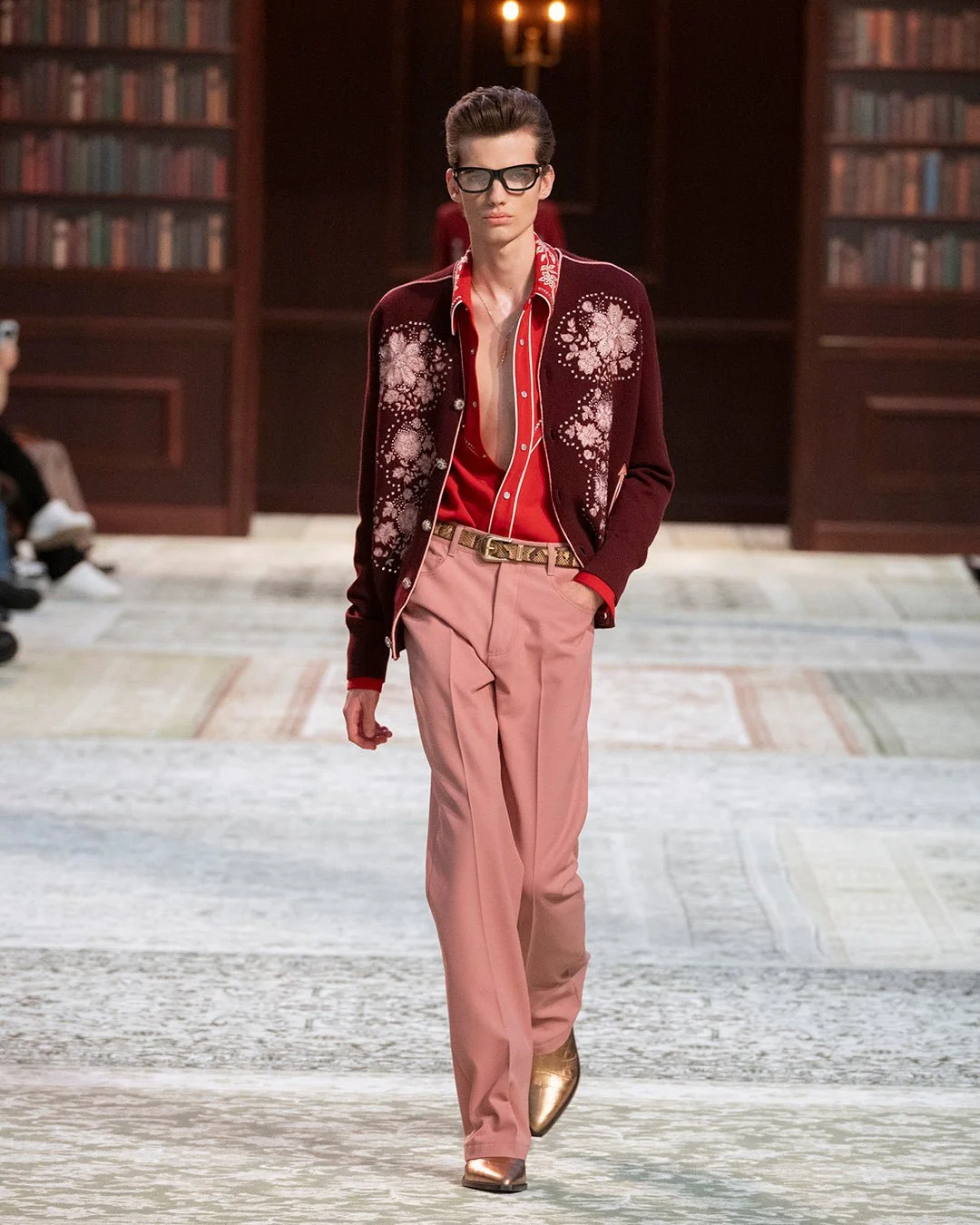
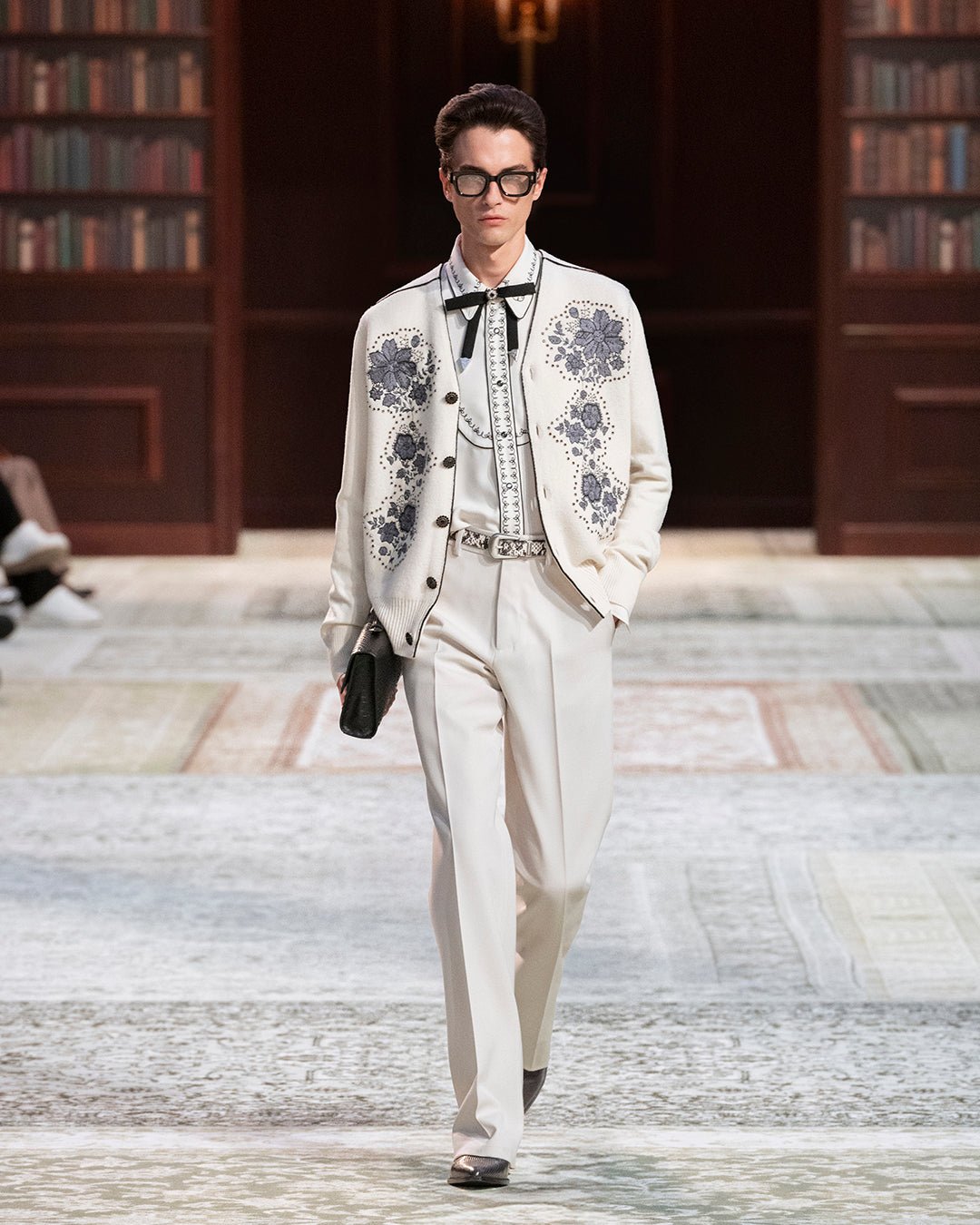
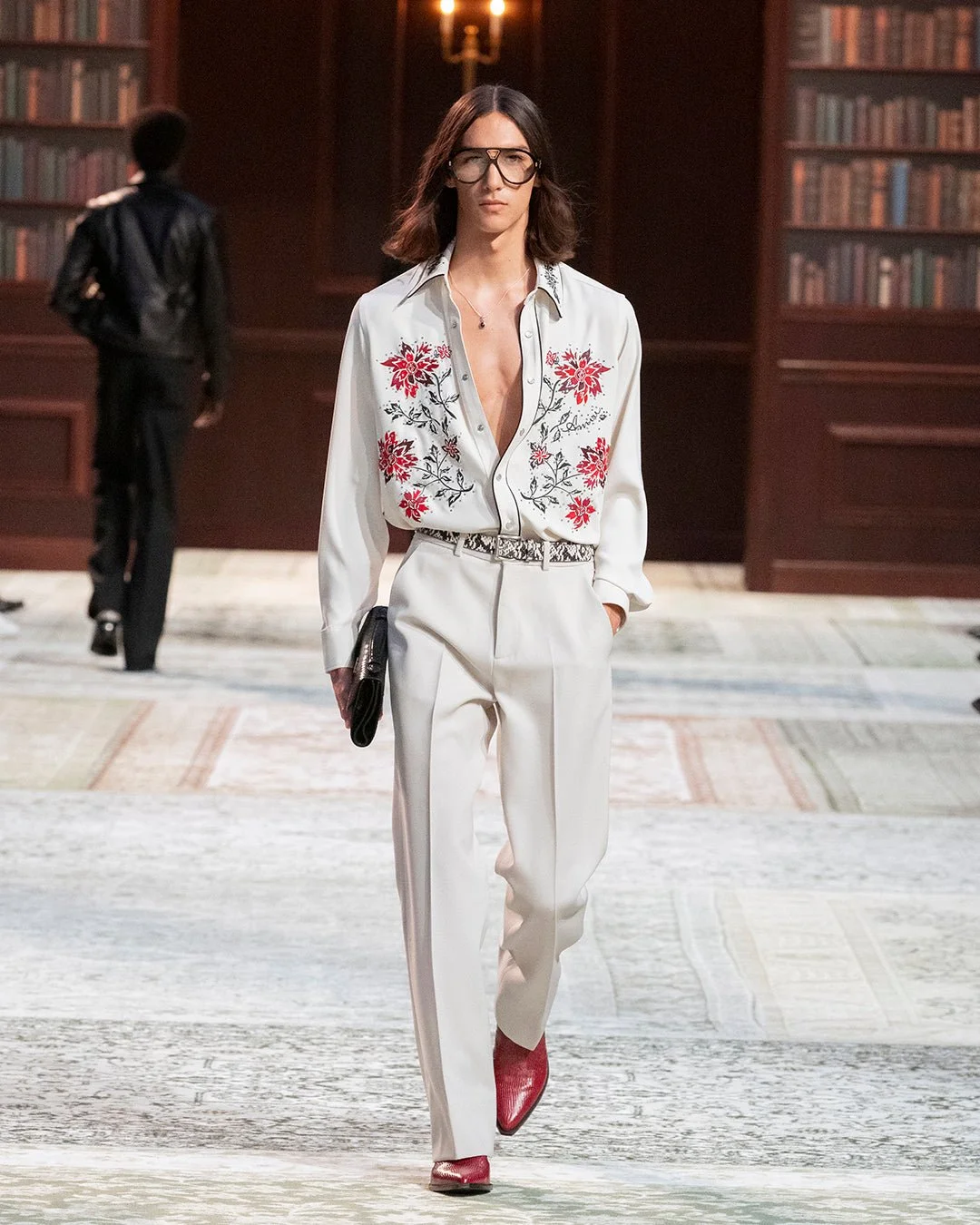
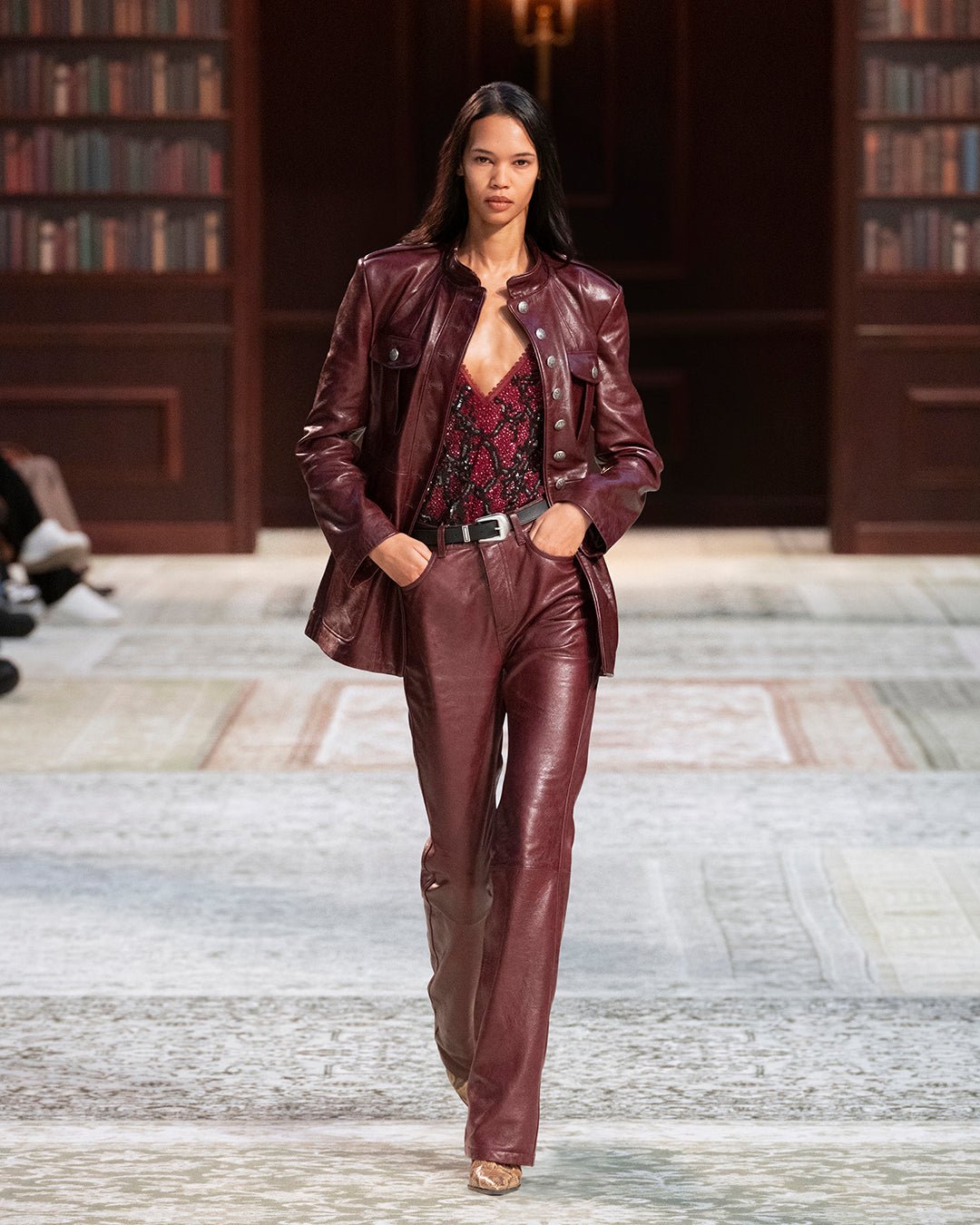
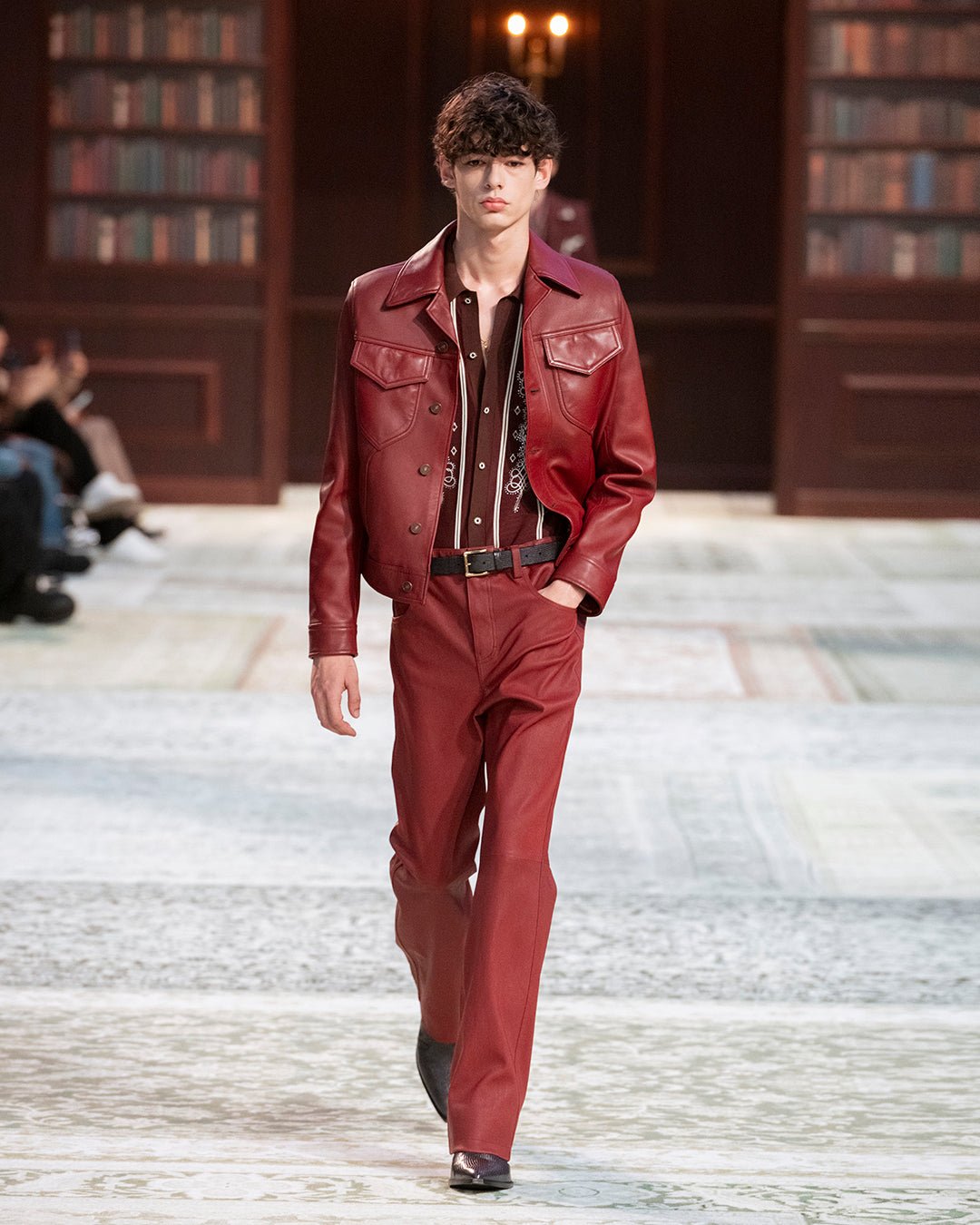
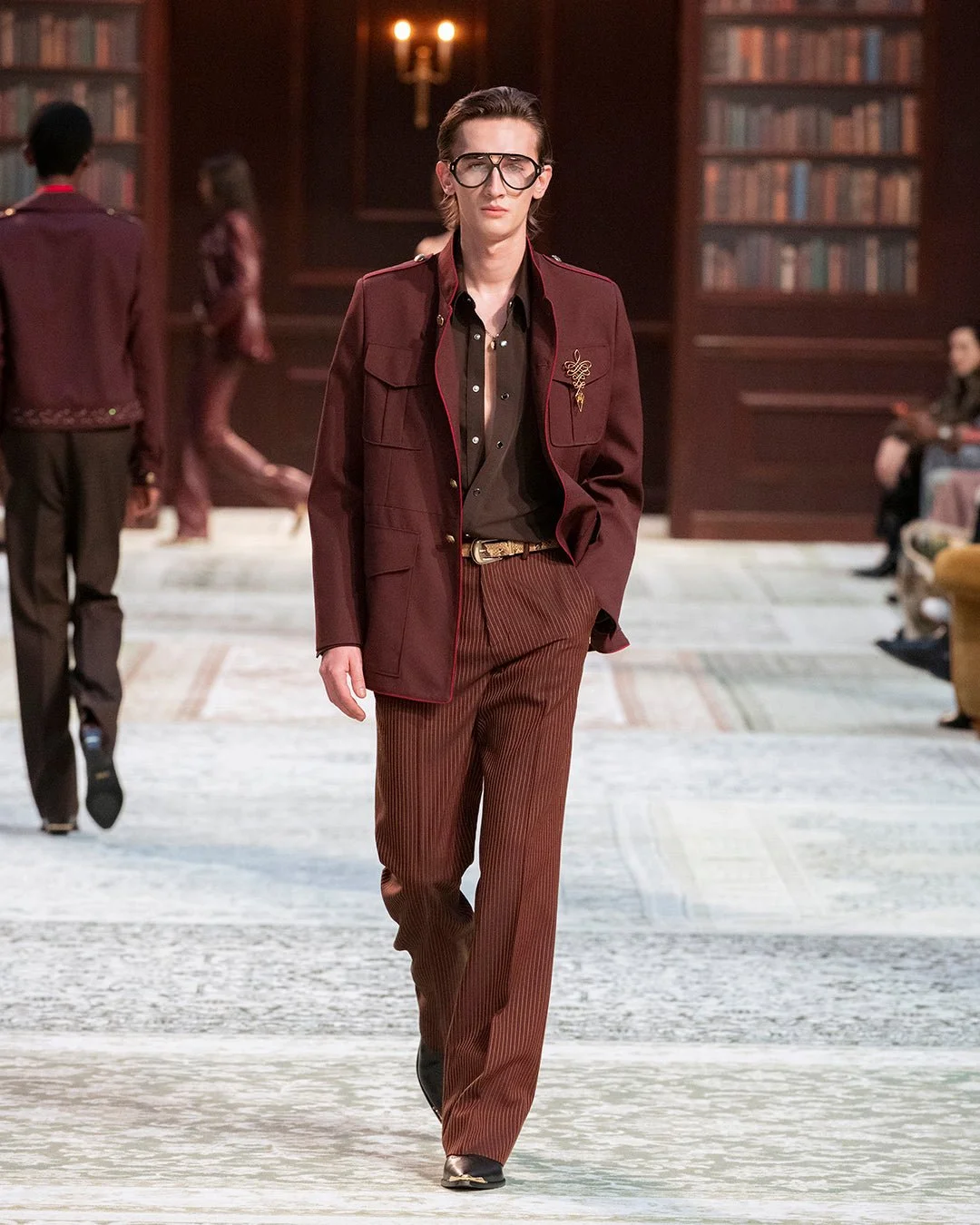
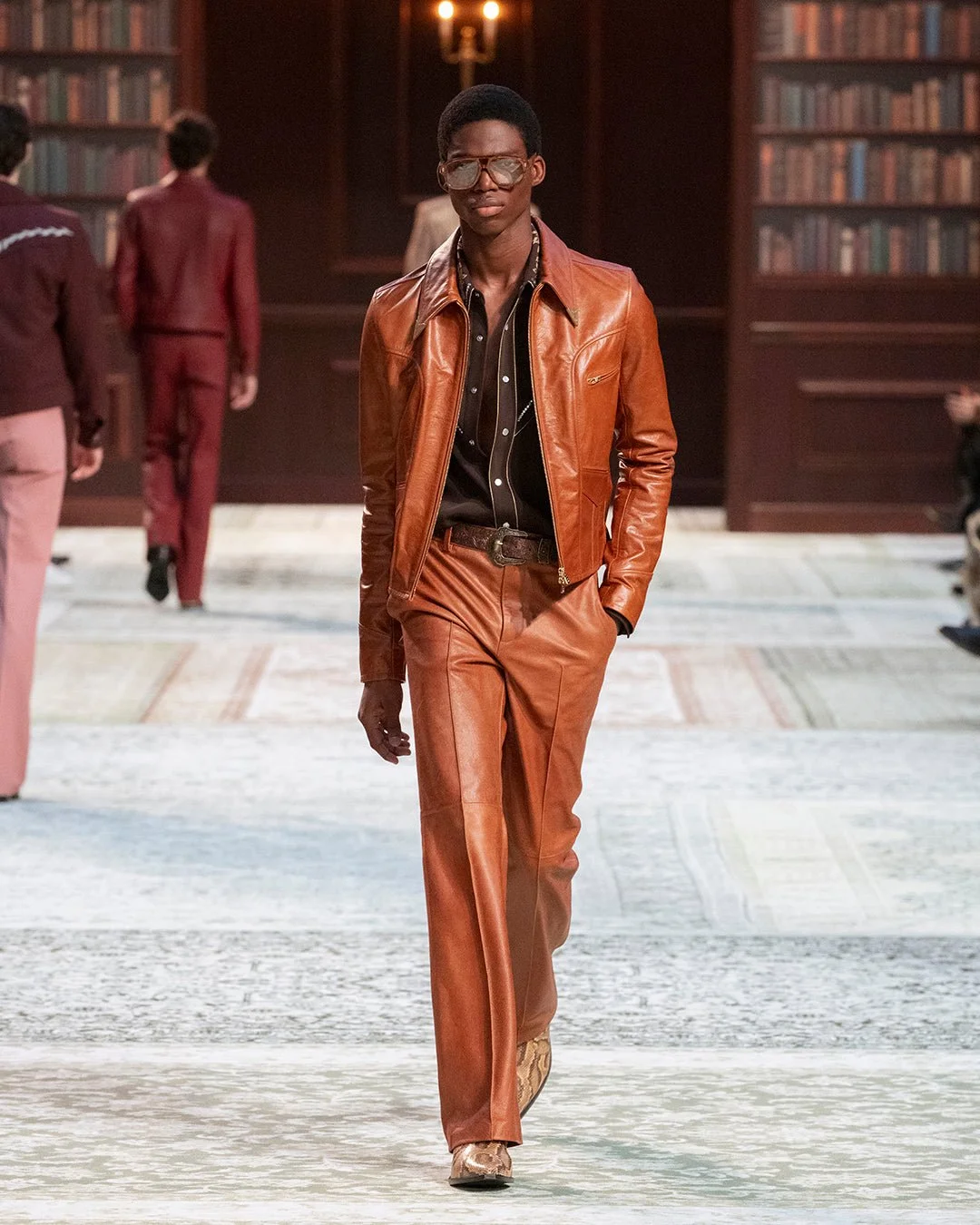
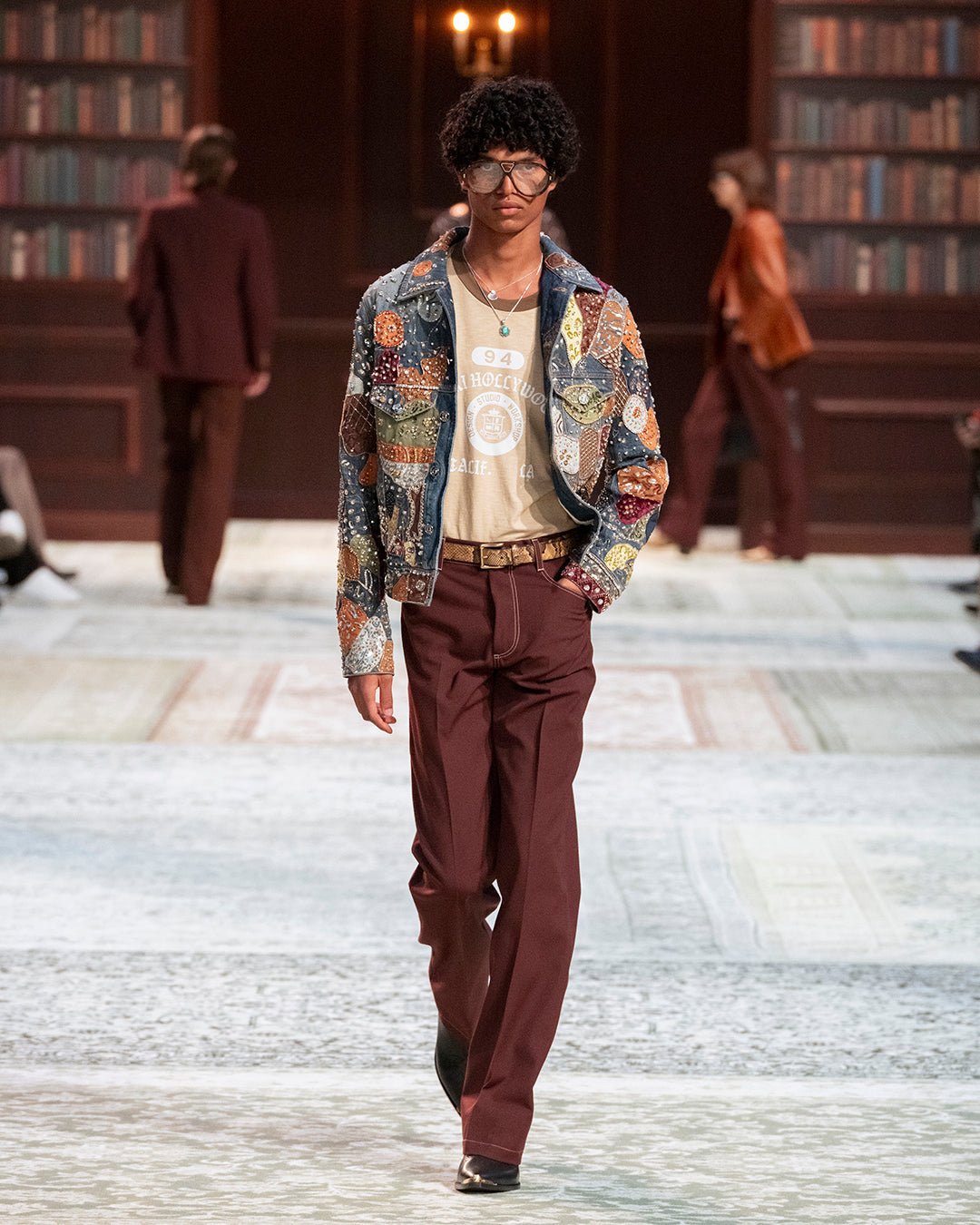
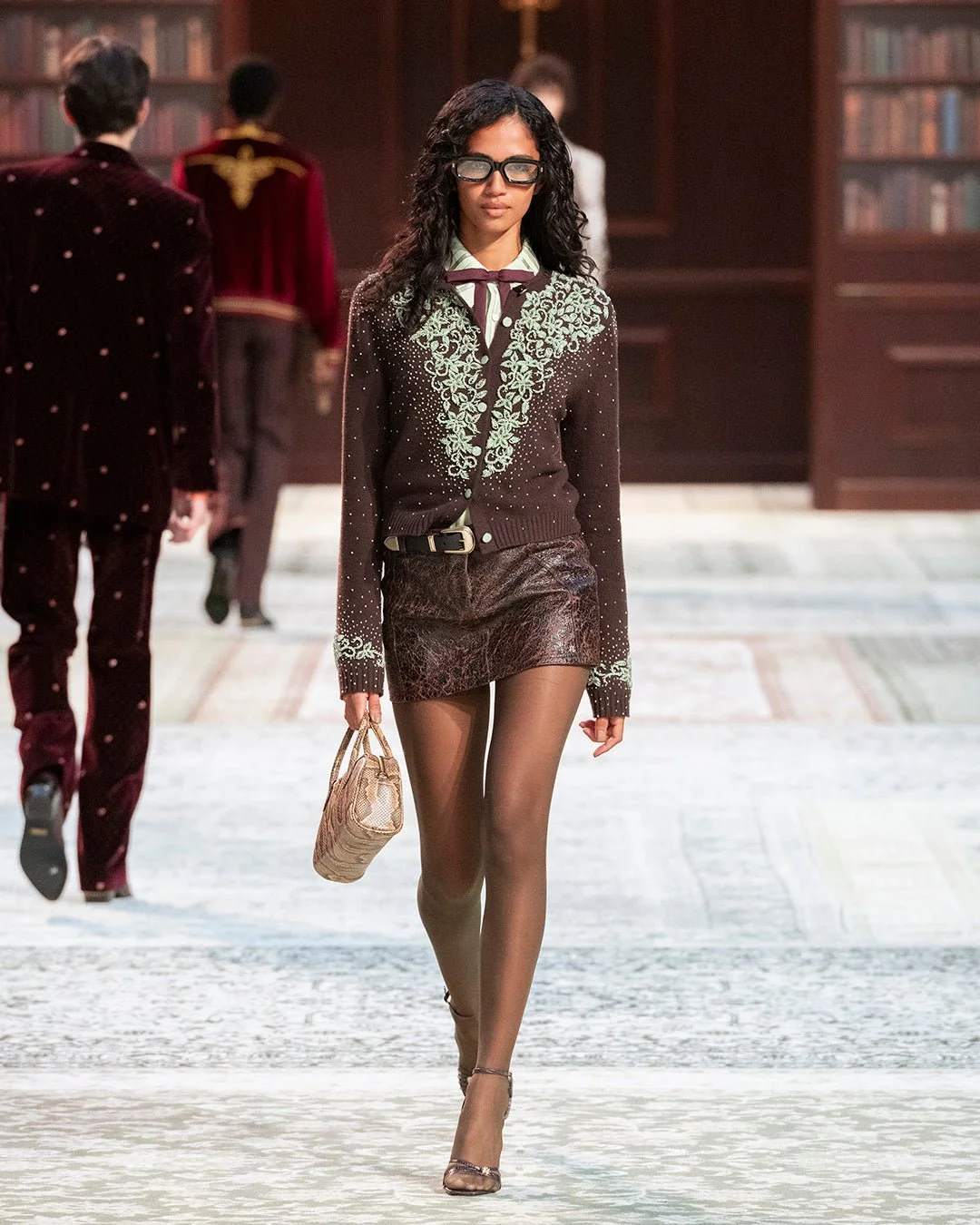
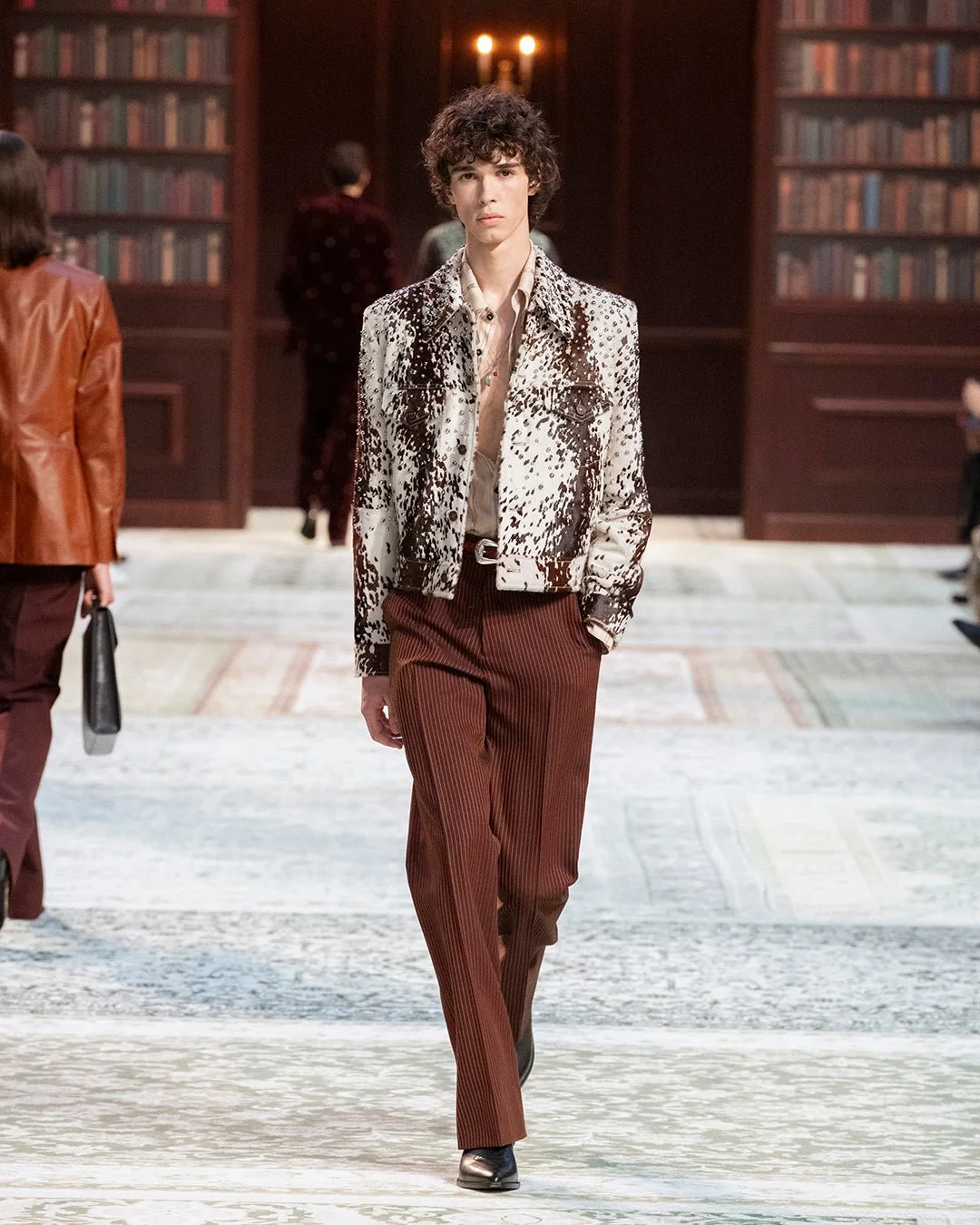
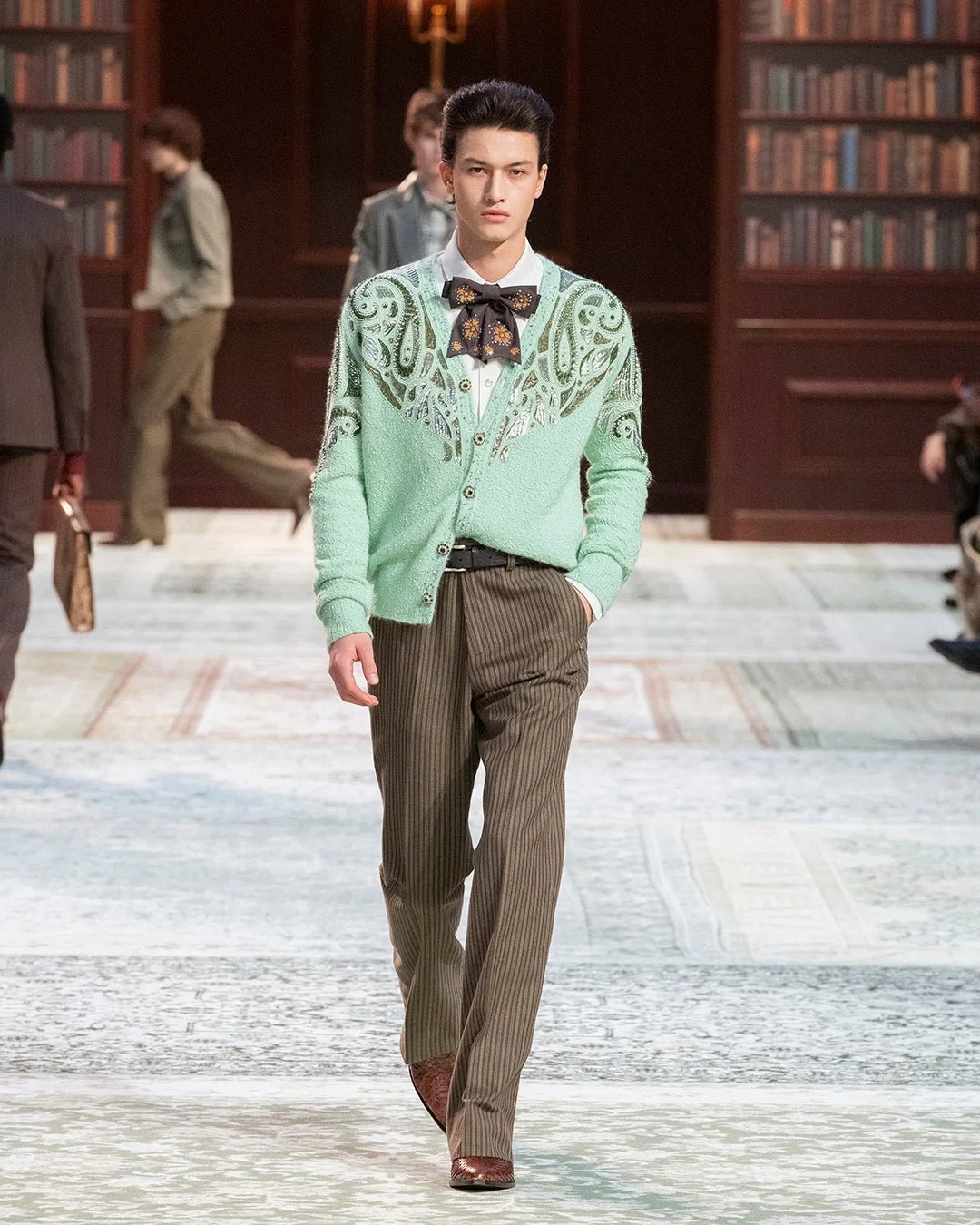
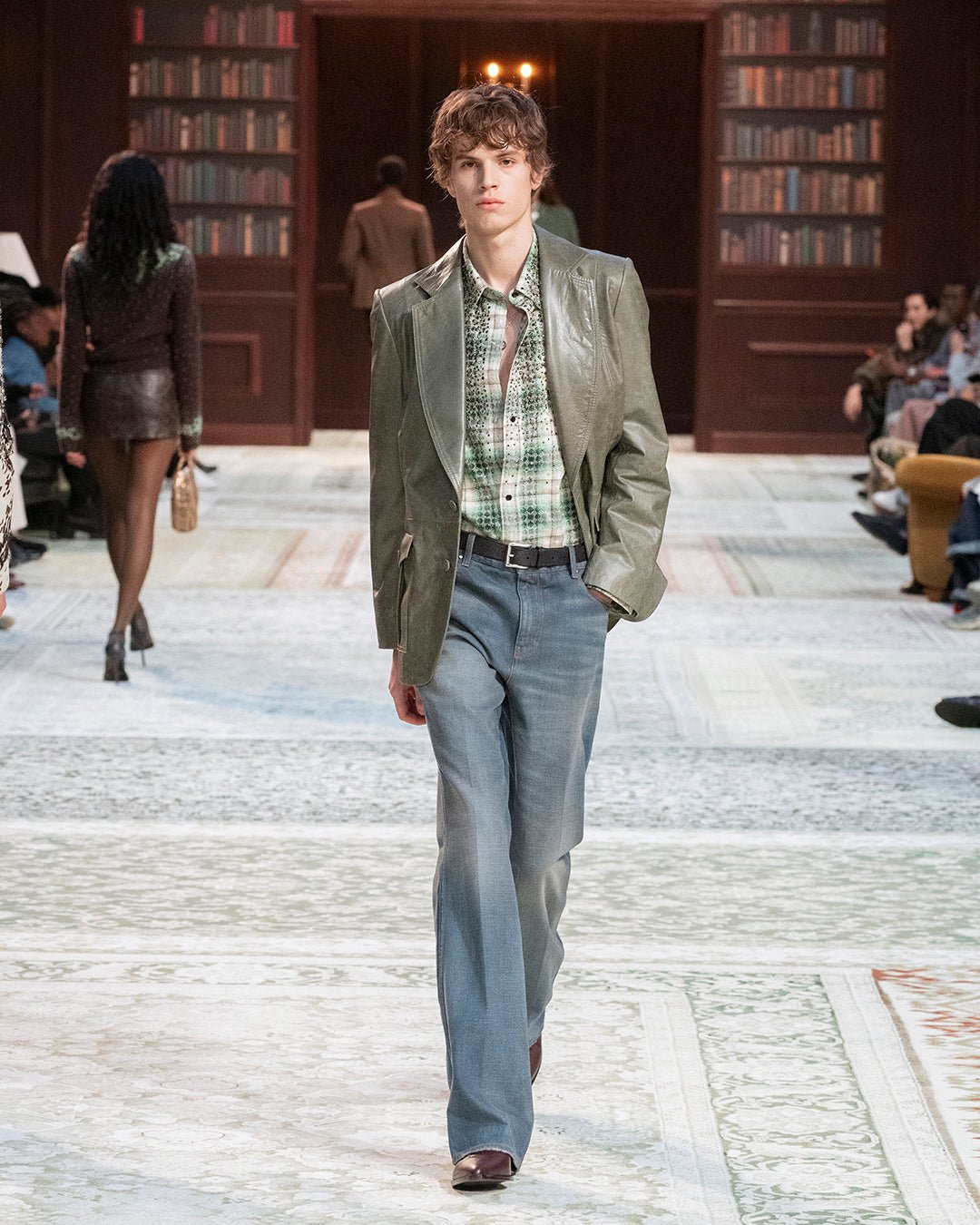
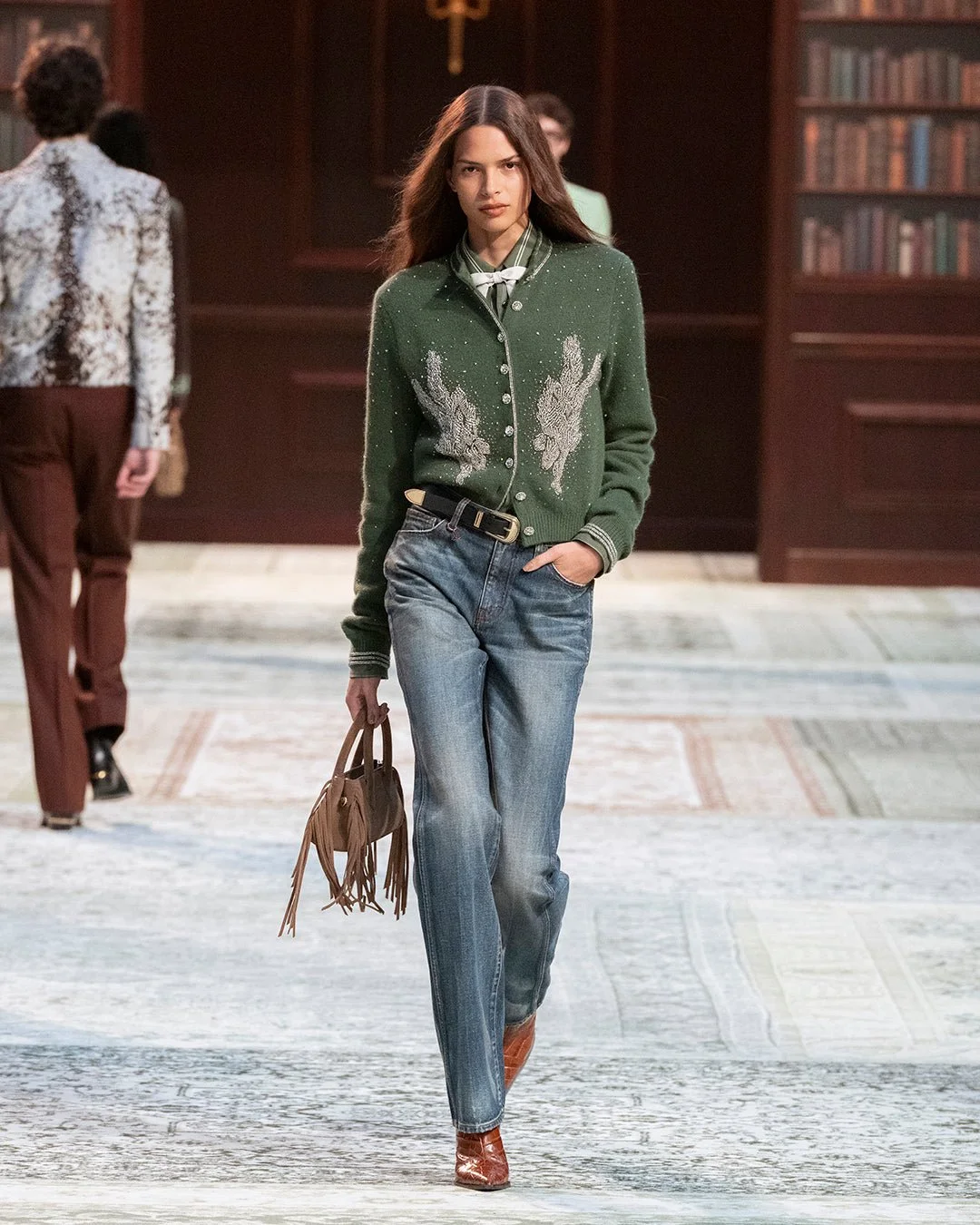
Amiri’s collection was not about reinvention so much as refinement. He has found confidence in a rhythm that balances nostalgia with restraint. Crystal-embroidered cardigans, washed leather jackets, and soft tailoring formed a visual harmony that felt lived-in rather than styled. The designer played with the codes of performance — Elvis, Johnny Cash, Buddy Holly — but filtered them through the lens of modern Los Angeles. Cowboy boots gleamed in metallic finishes, while shirts shimmered with quiet embellishment, transforming rockstar nostalgia into something intimate. The show’s cast, including Jeff Goldblum and his wife Emilie Livingston seated among the crowd, added to the cinematic air of creative community.
What Amiri captured best this season was emotion. His clothes spoke to a longing for authenticity, for glamour that does not shout but hums. “It’s not about loud or quiet fashion,” he said backstage. “It’s about something that feels real.” That sentiment echoed through the collection’s palette of merlot, sage, and seafoam, and through the silhouettes that walked with ease rather than urgency. If AMIRI once defined California cool through rebellion, its 30th chapter defines it through honesty. The result was a collection that looked back fondly, lived firmly in the present, and hinted that nostalgia — when worn well — can still feel like progress.