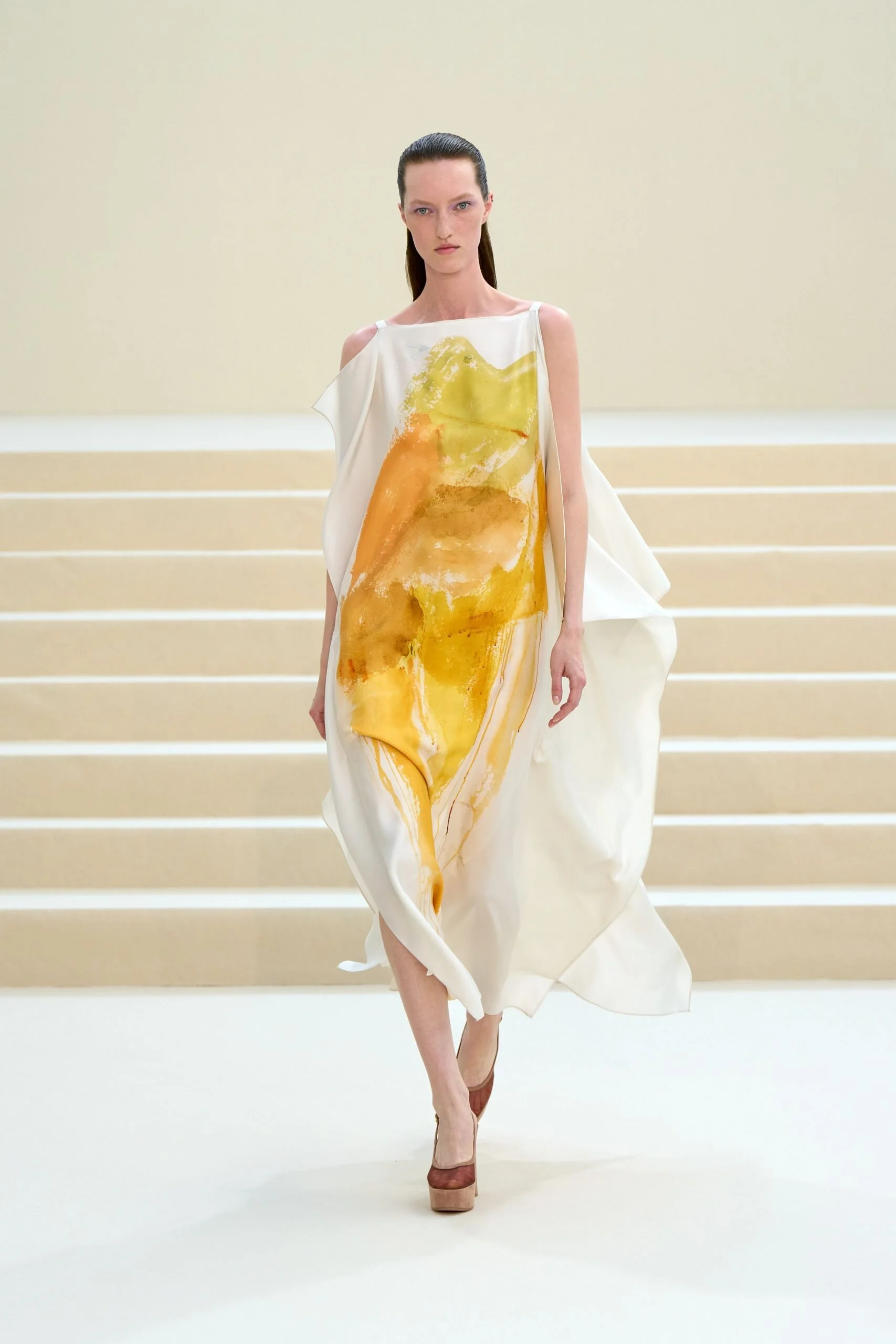
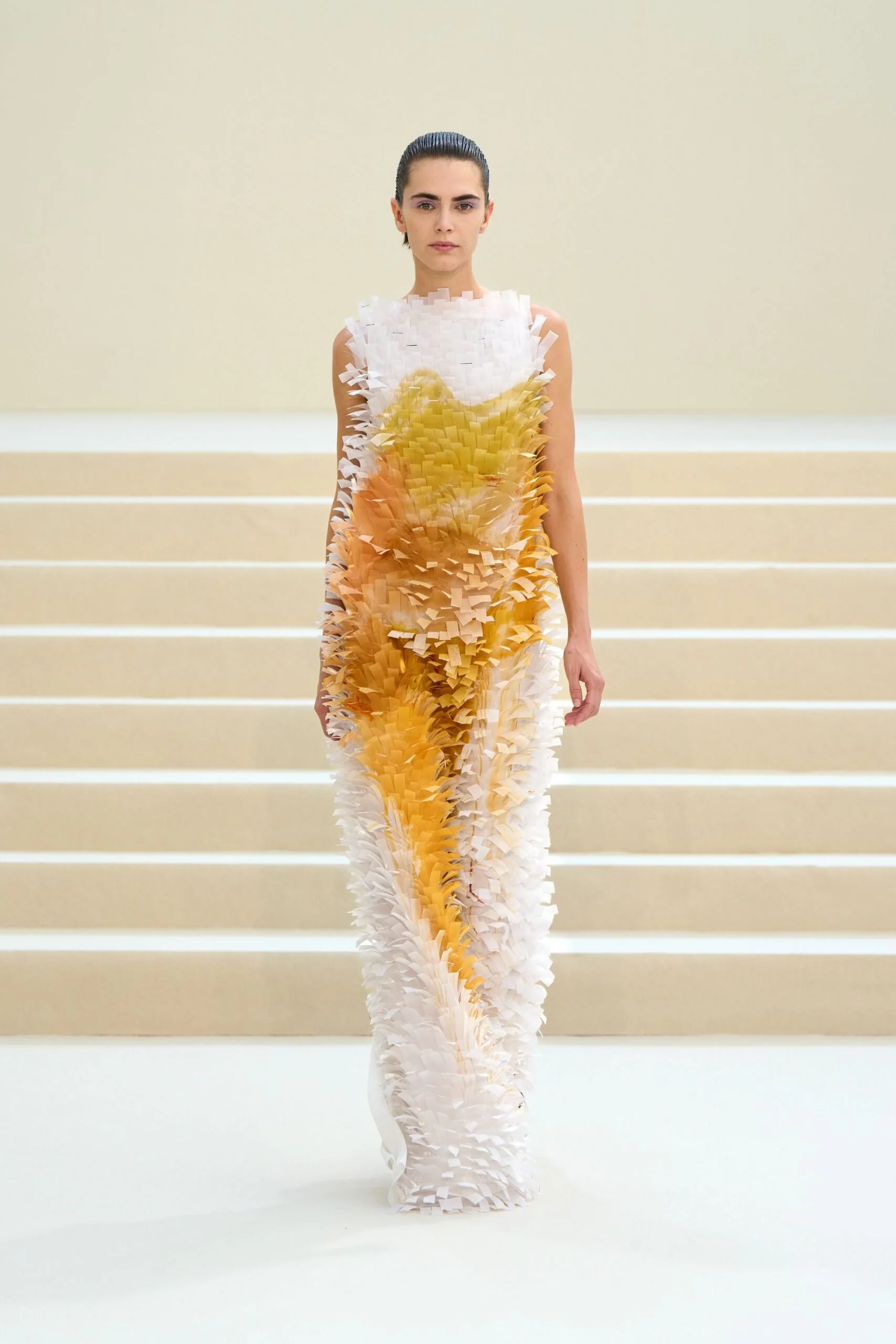
Akris Spring 2027
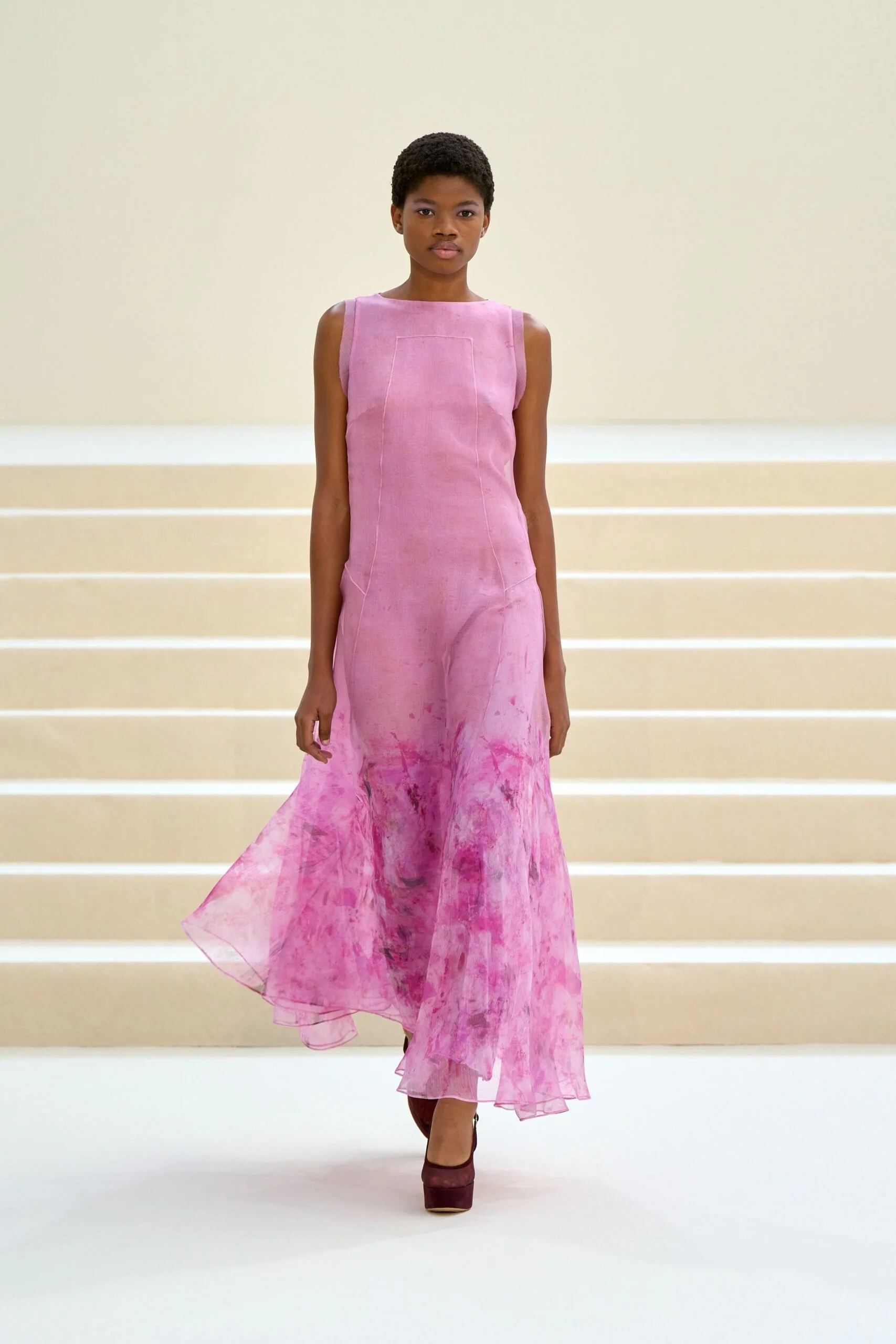
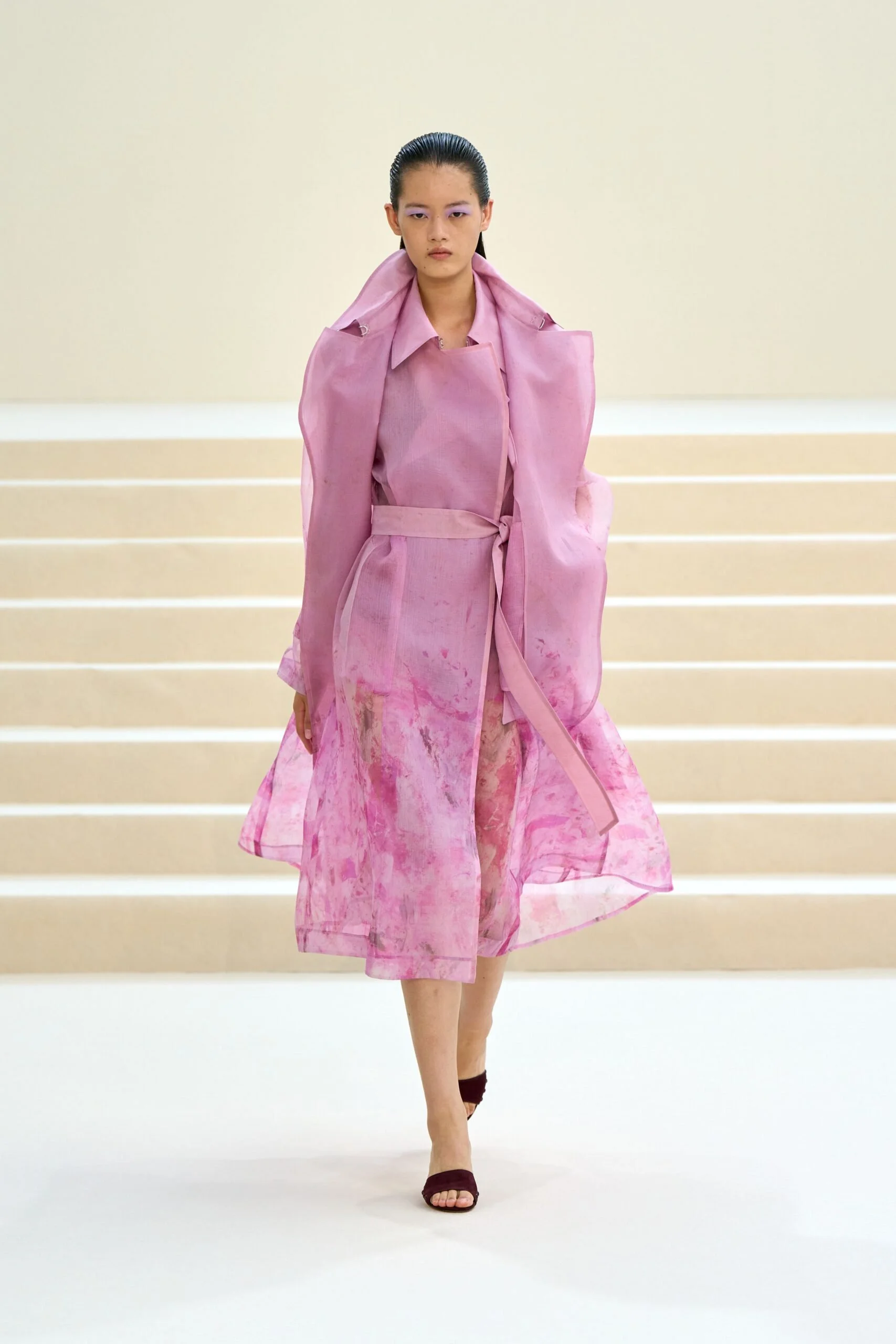
Albert Kriemler has always had a particularly close relationship with art, but for Spring 2027 he found an especially natural collaborator in Austrian painter Martha Jungwirth. After encountering her abstract work at Thaddaeus Ropac's Paris gallery, Kriemler was drawn to the bruised purples, unexpected pinks, greens and yellows that seemed to exist somewhere between a sketch and a finished painting. He later visited Jungwirth in Vienna and discovered another connection: before committing to art, she had studied fashion, giving Kriemler an unexpected point of entry into her work. “I felt the way she sketched is similar to an embroidery,” he explained, and that idea became the starting point for the collection.
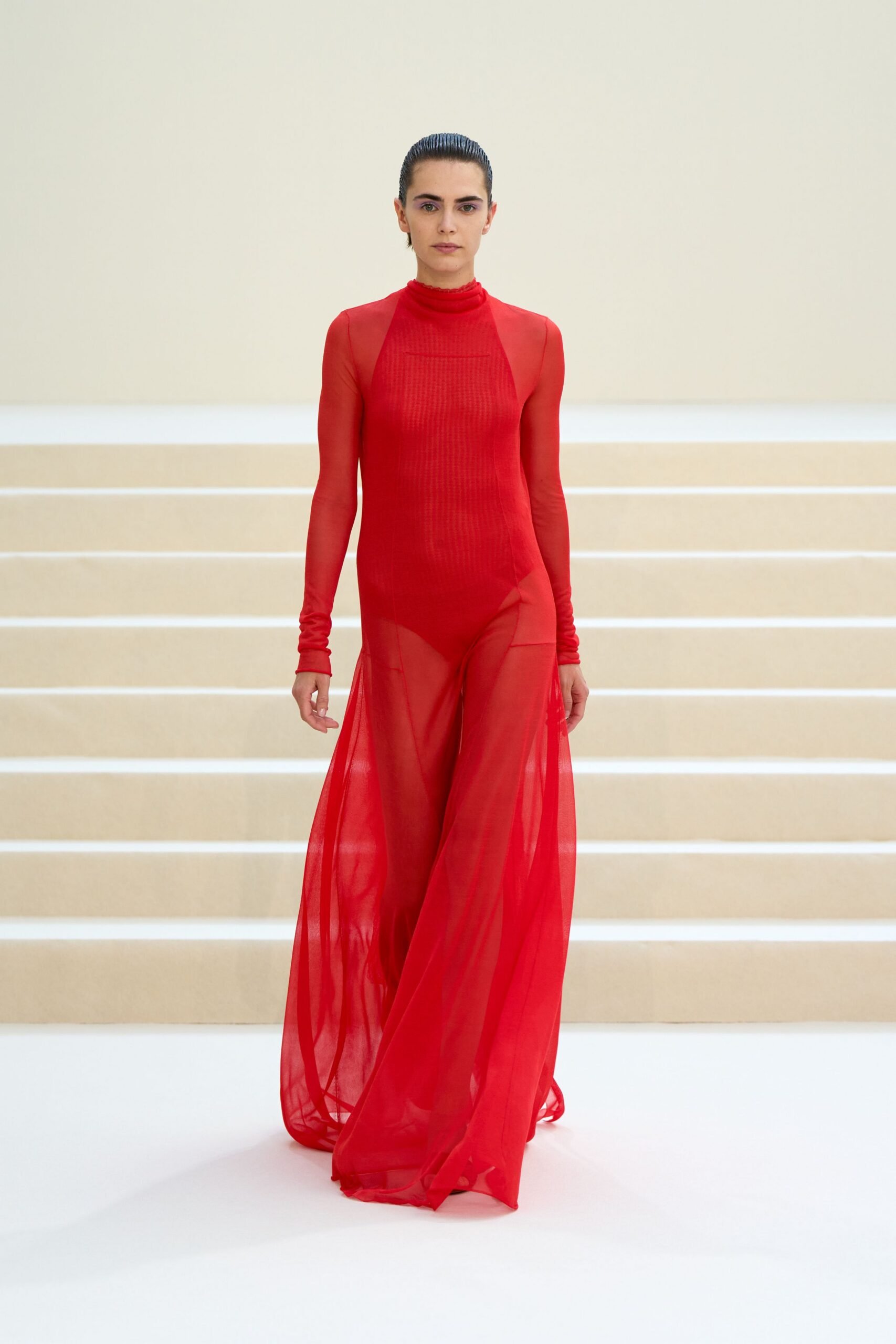
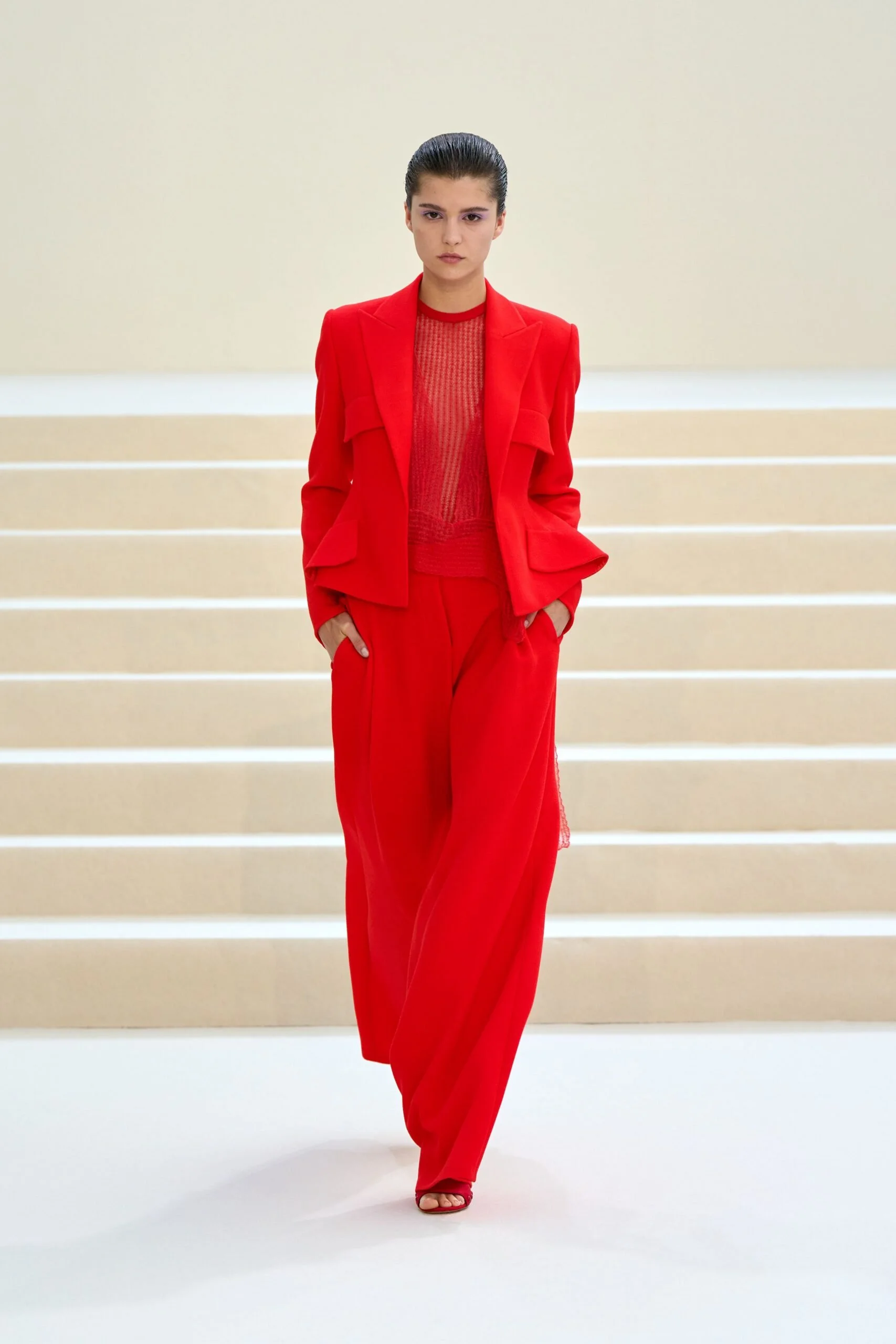
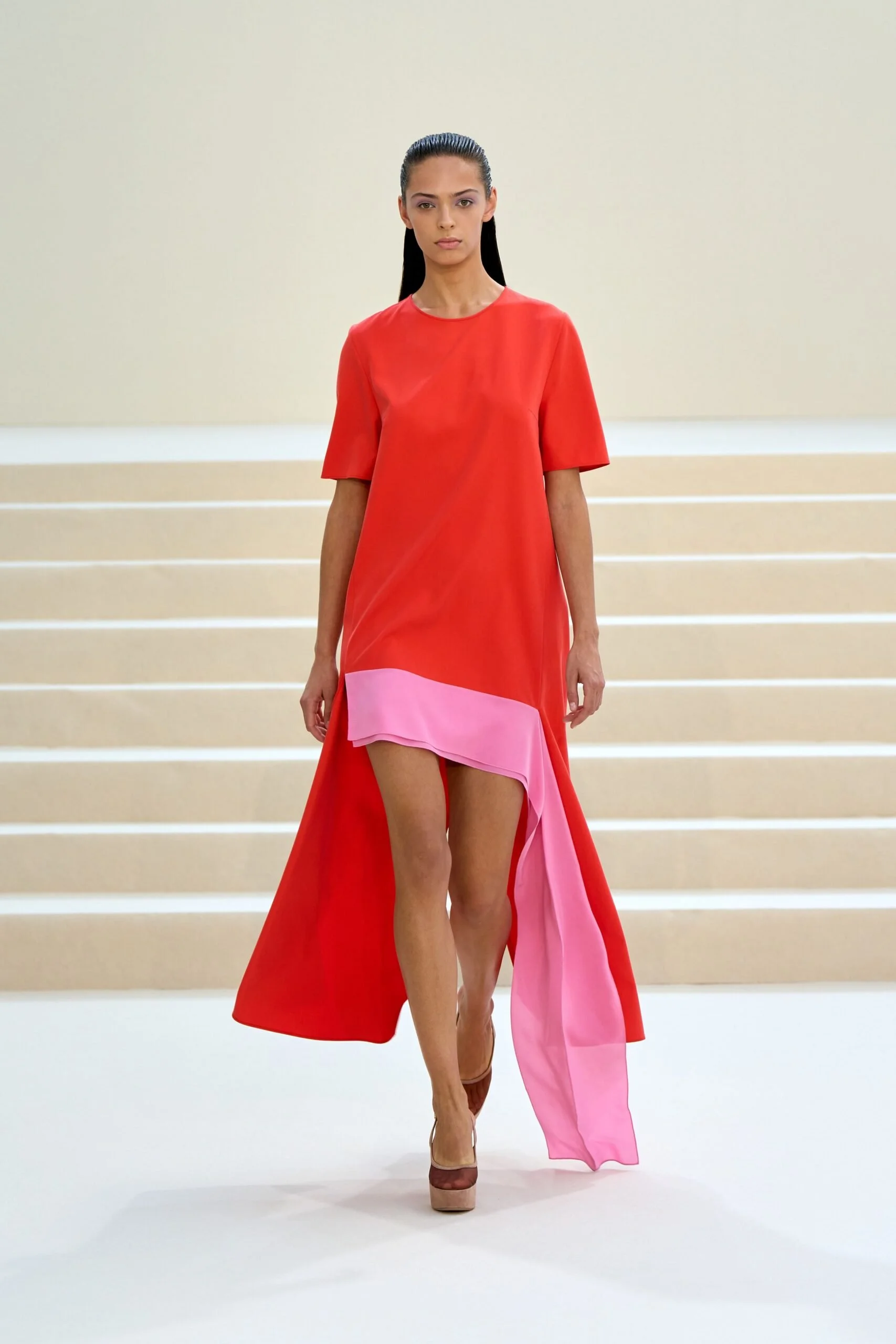
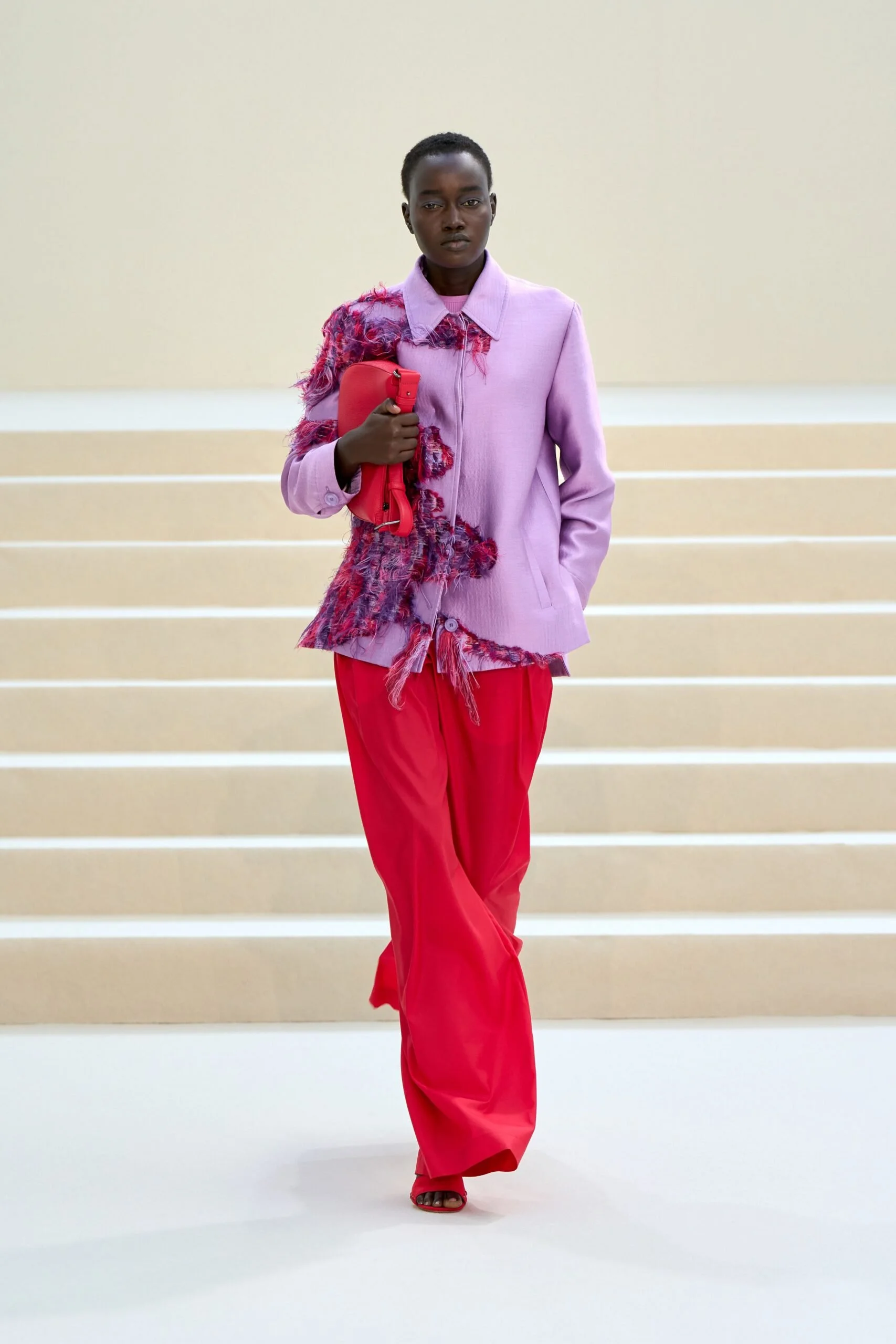
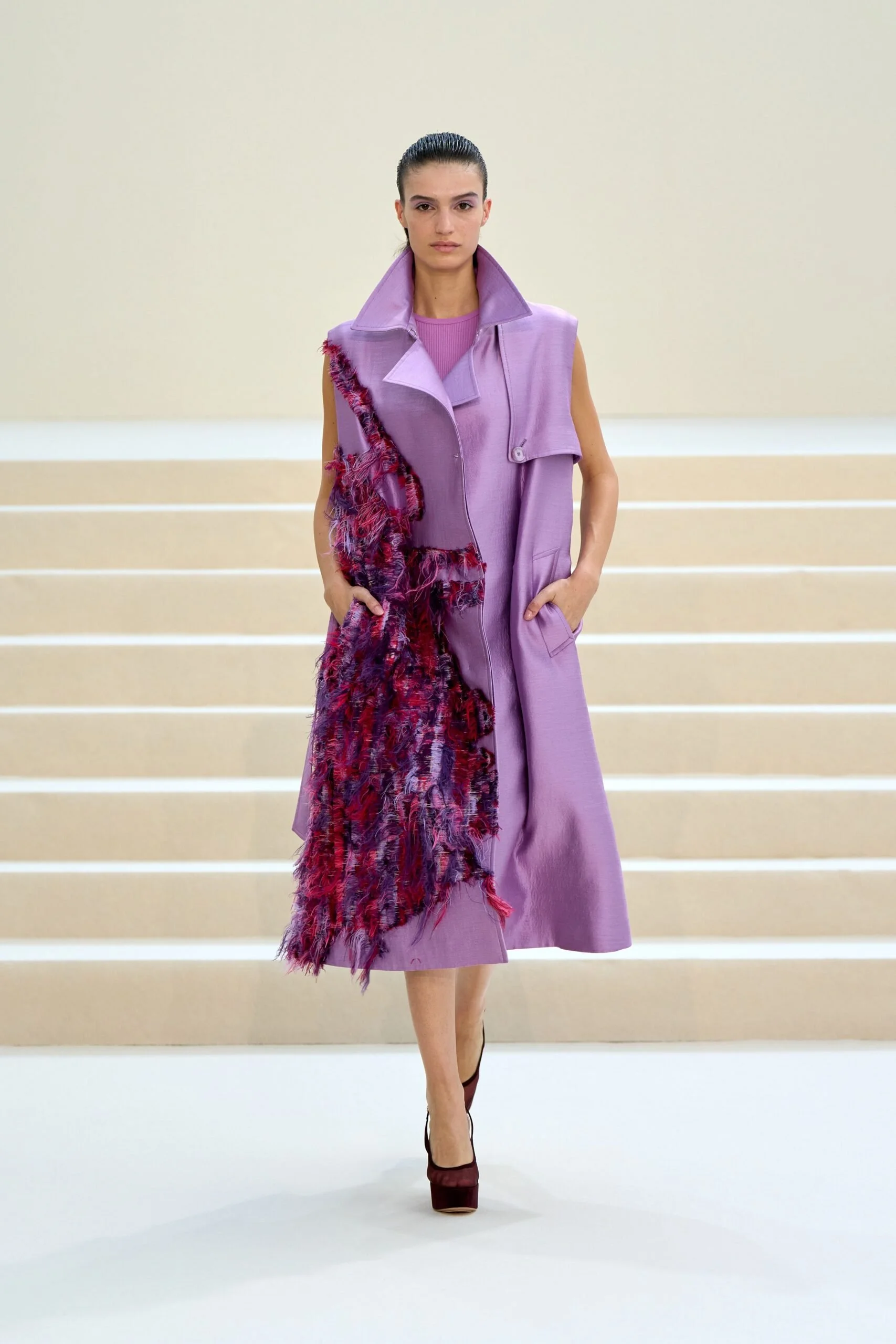
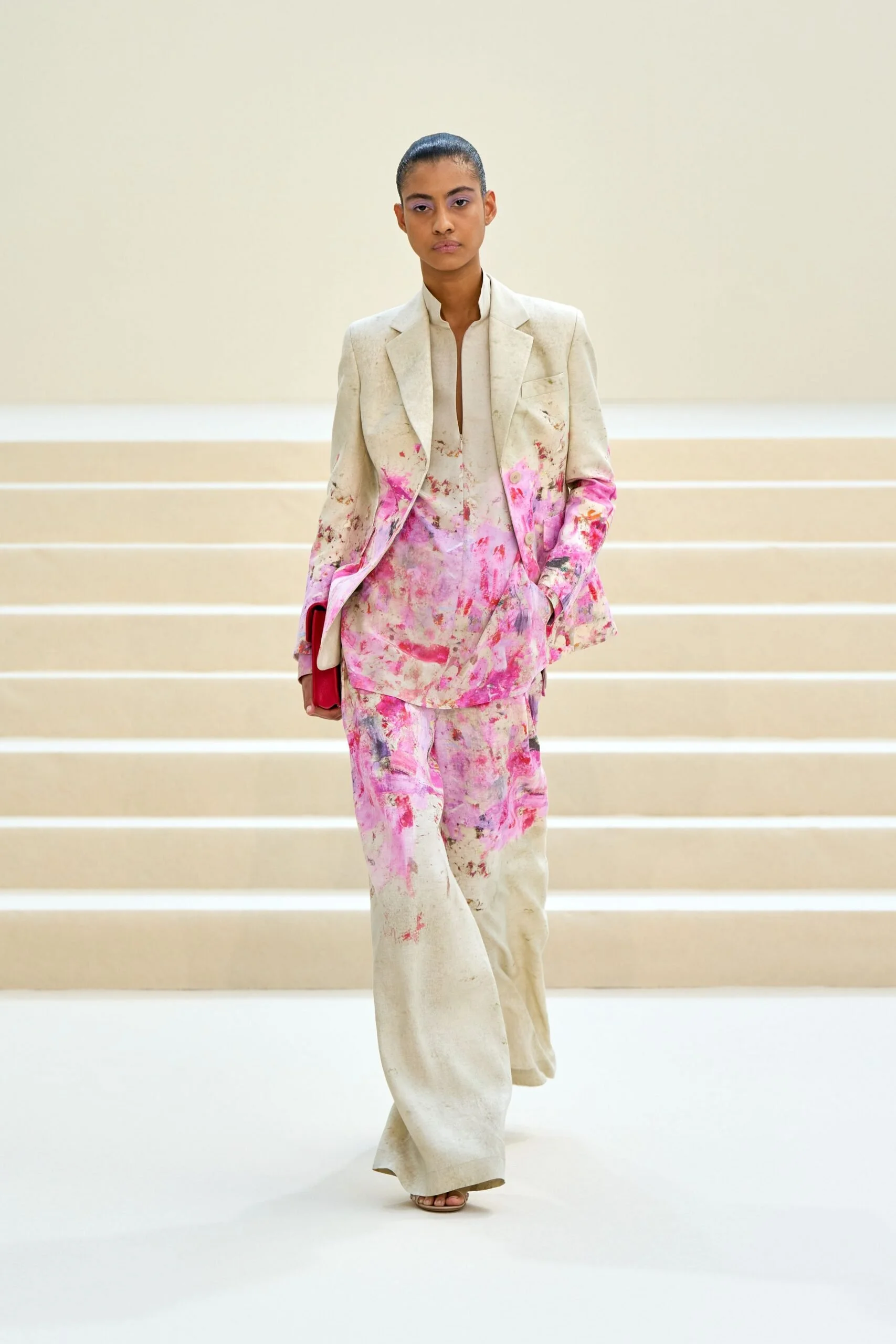
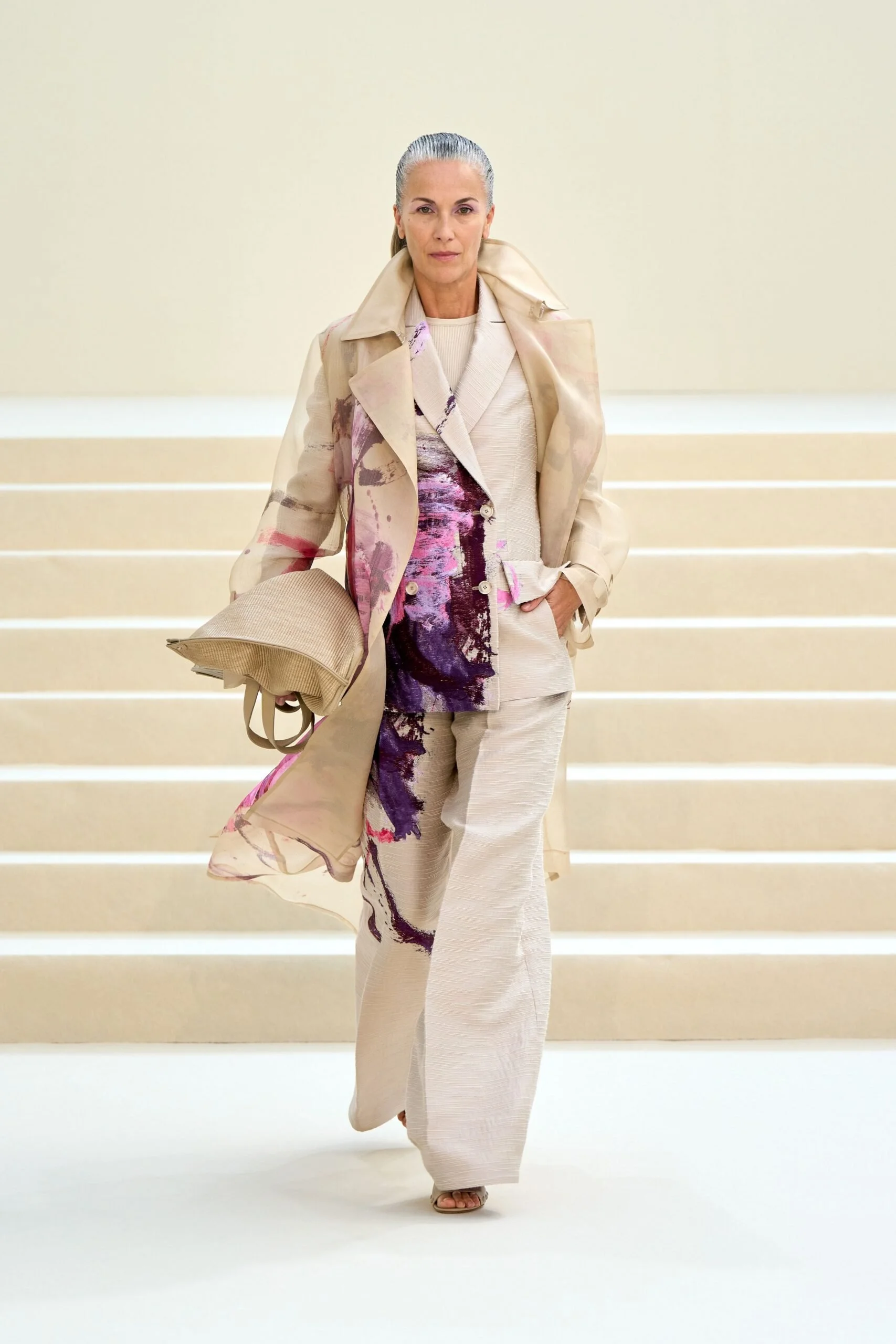
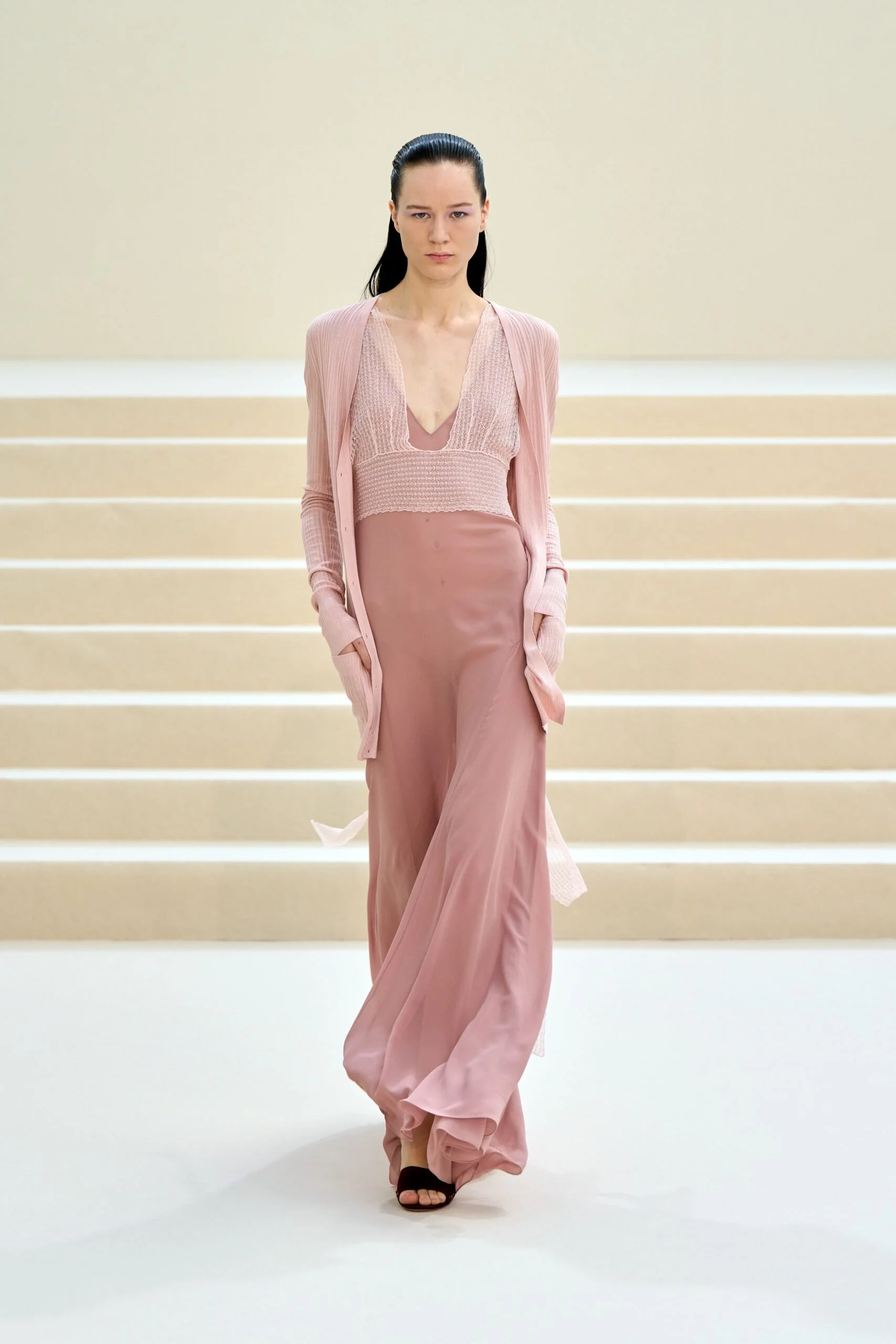
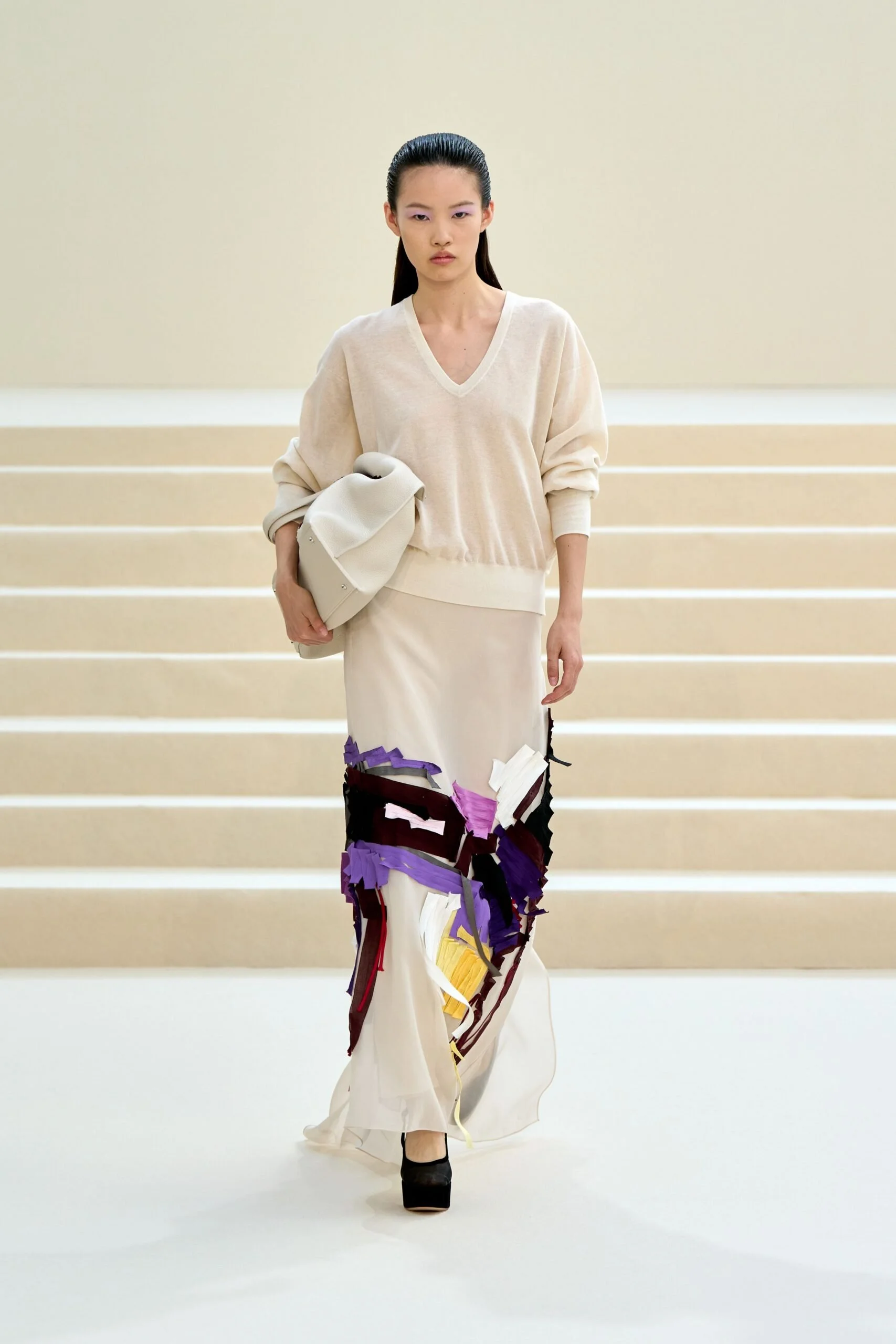
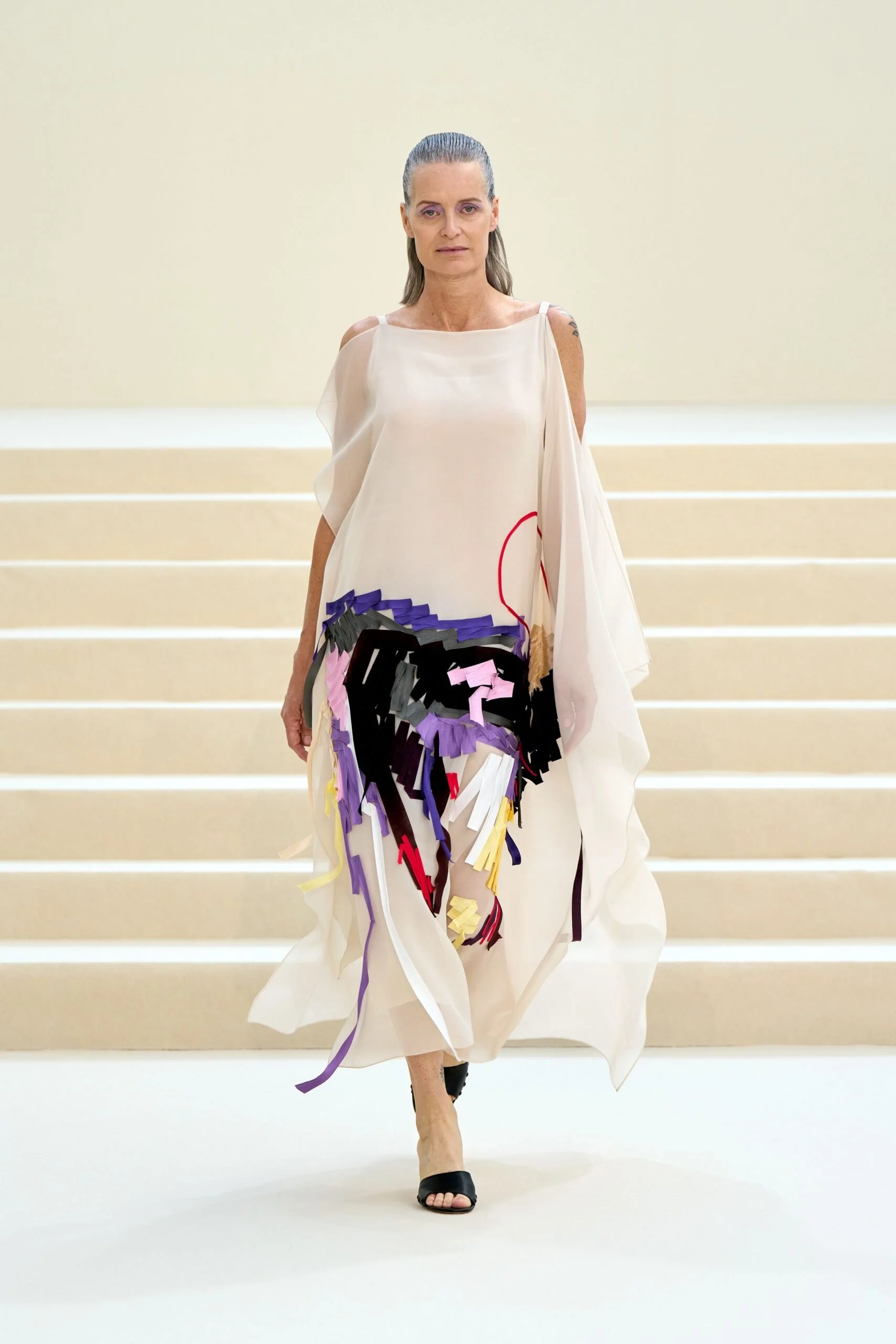
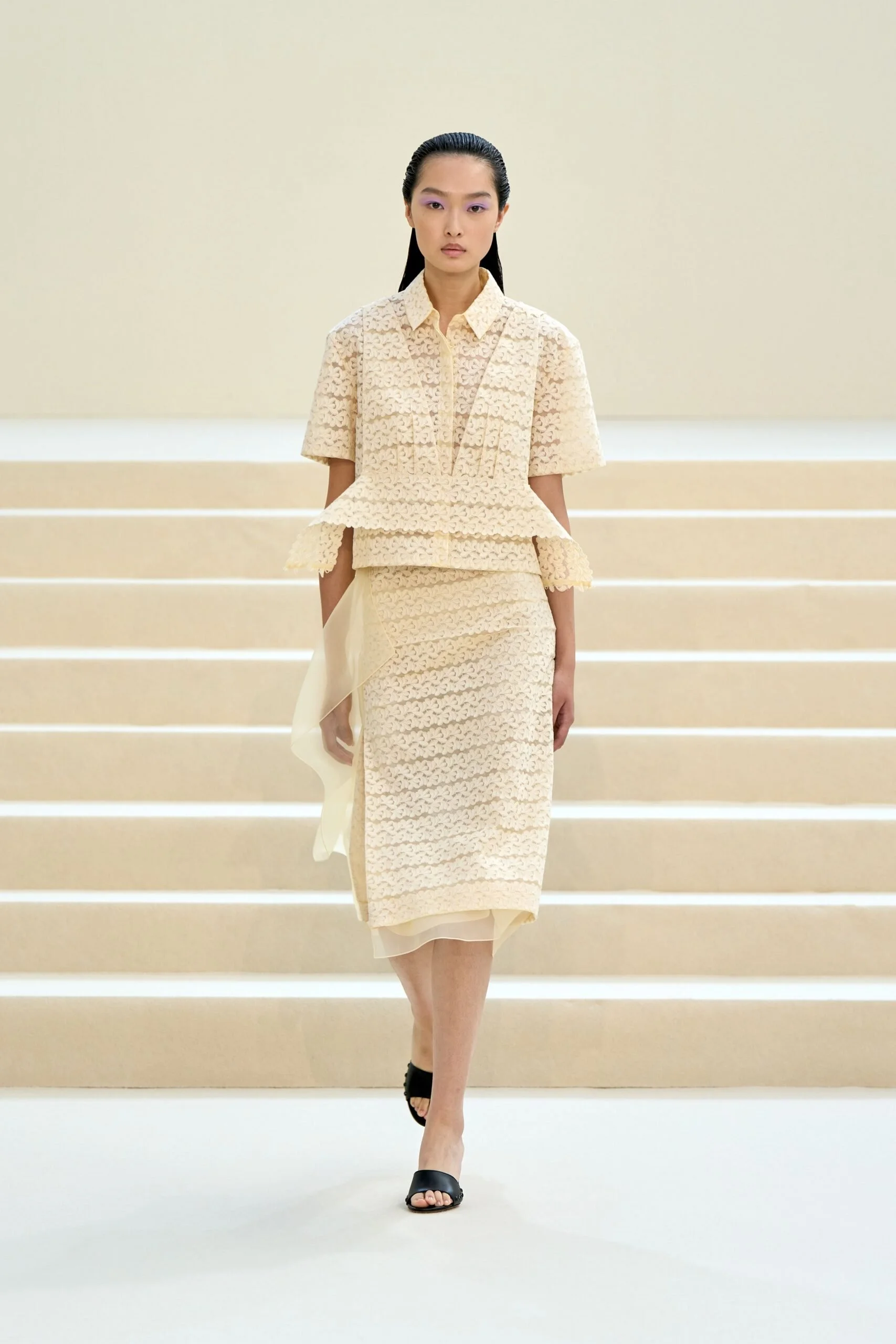
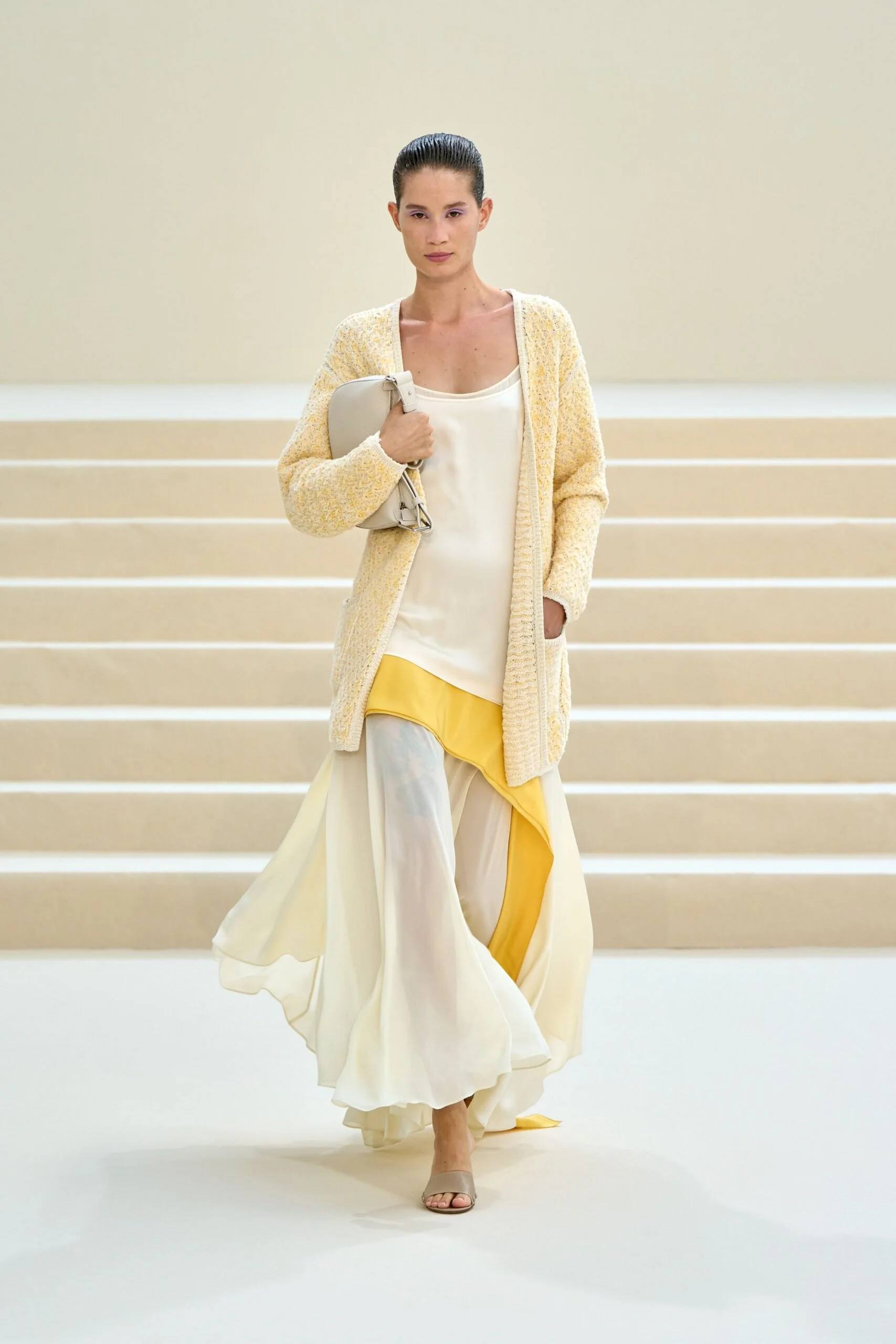
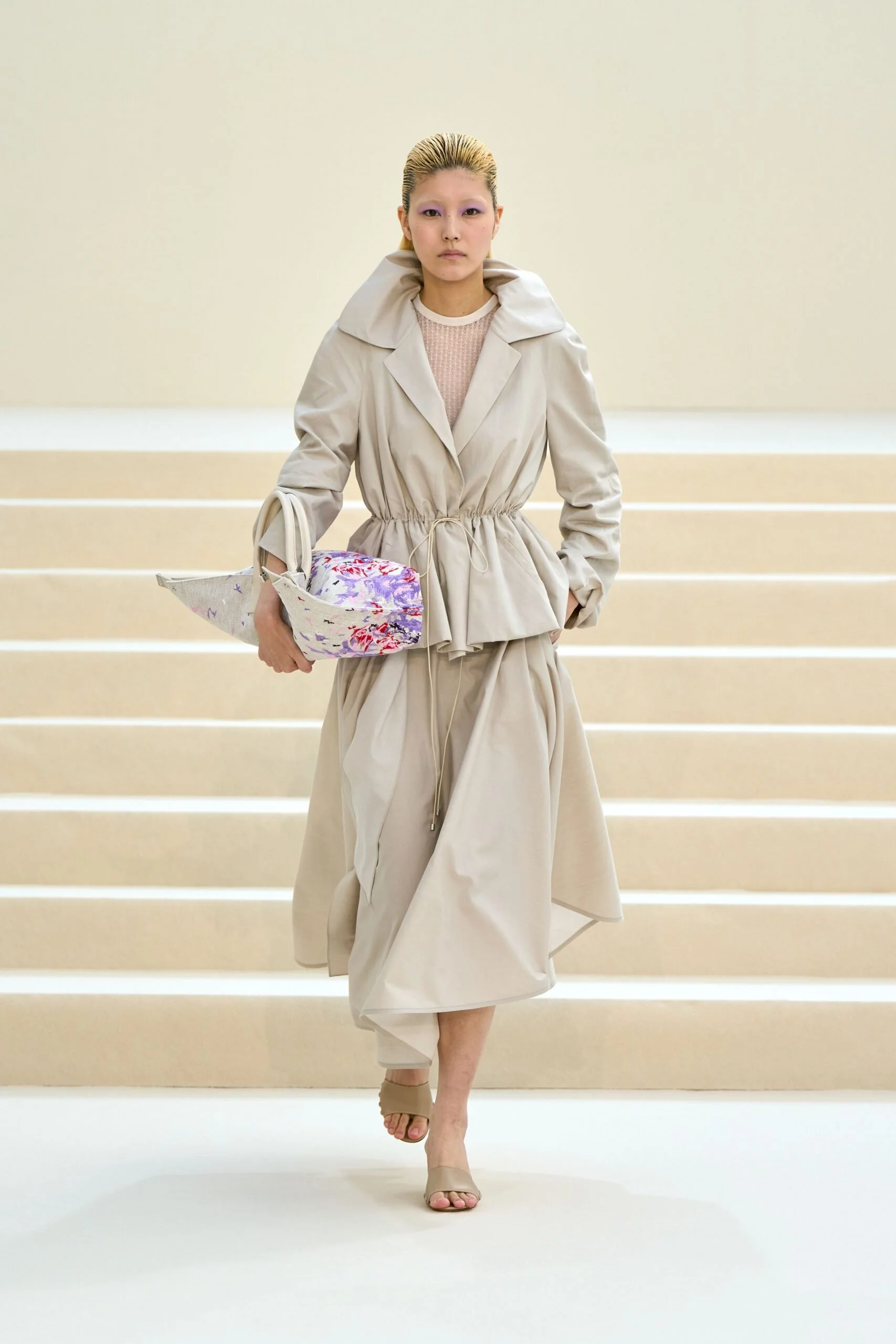
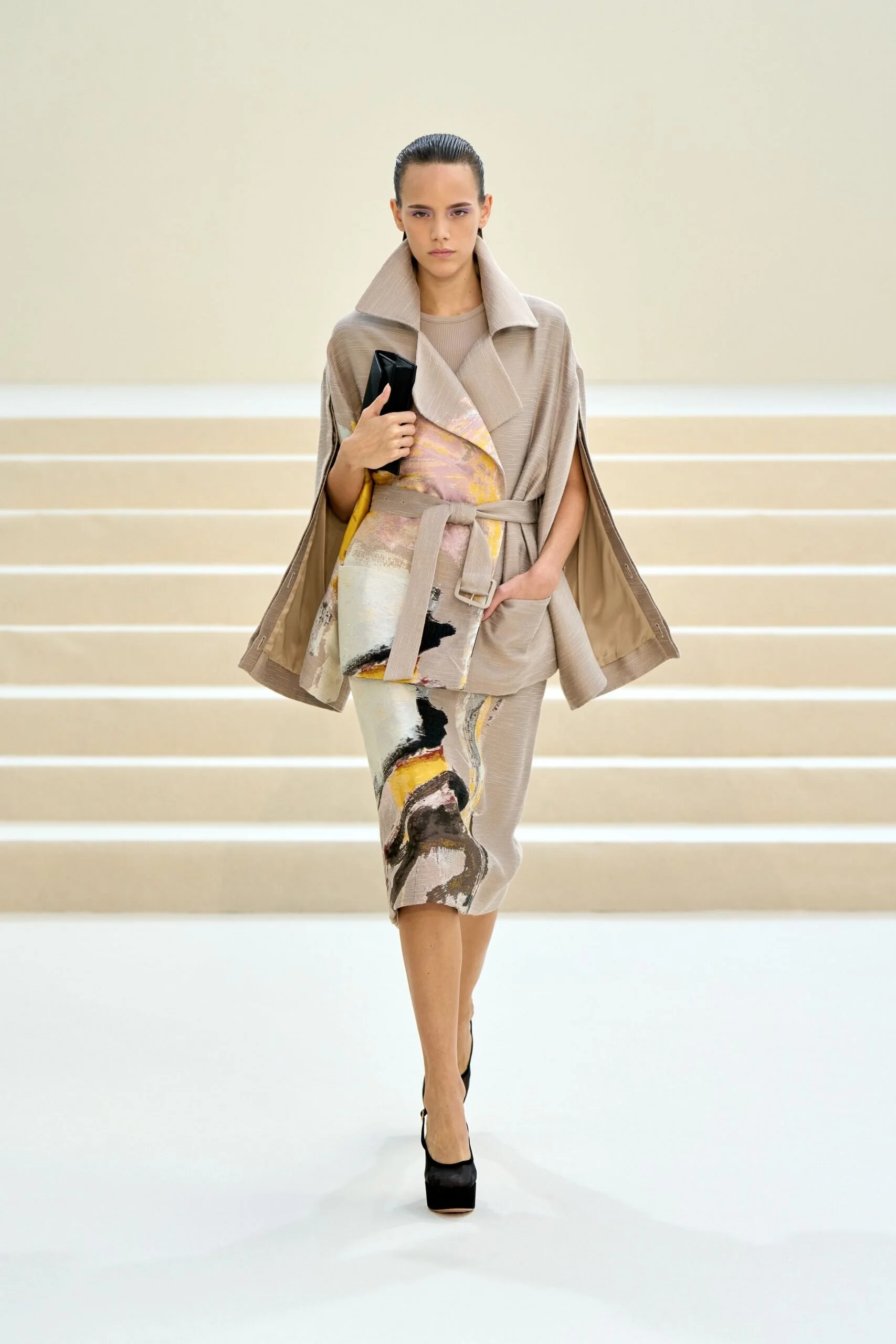
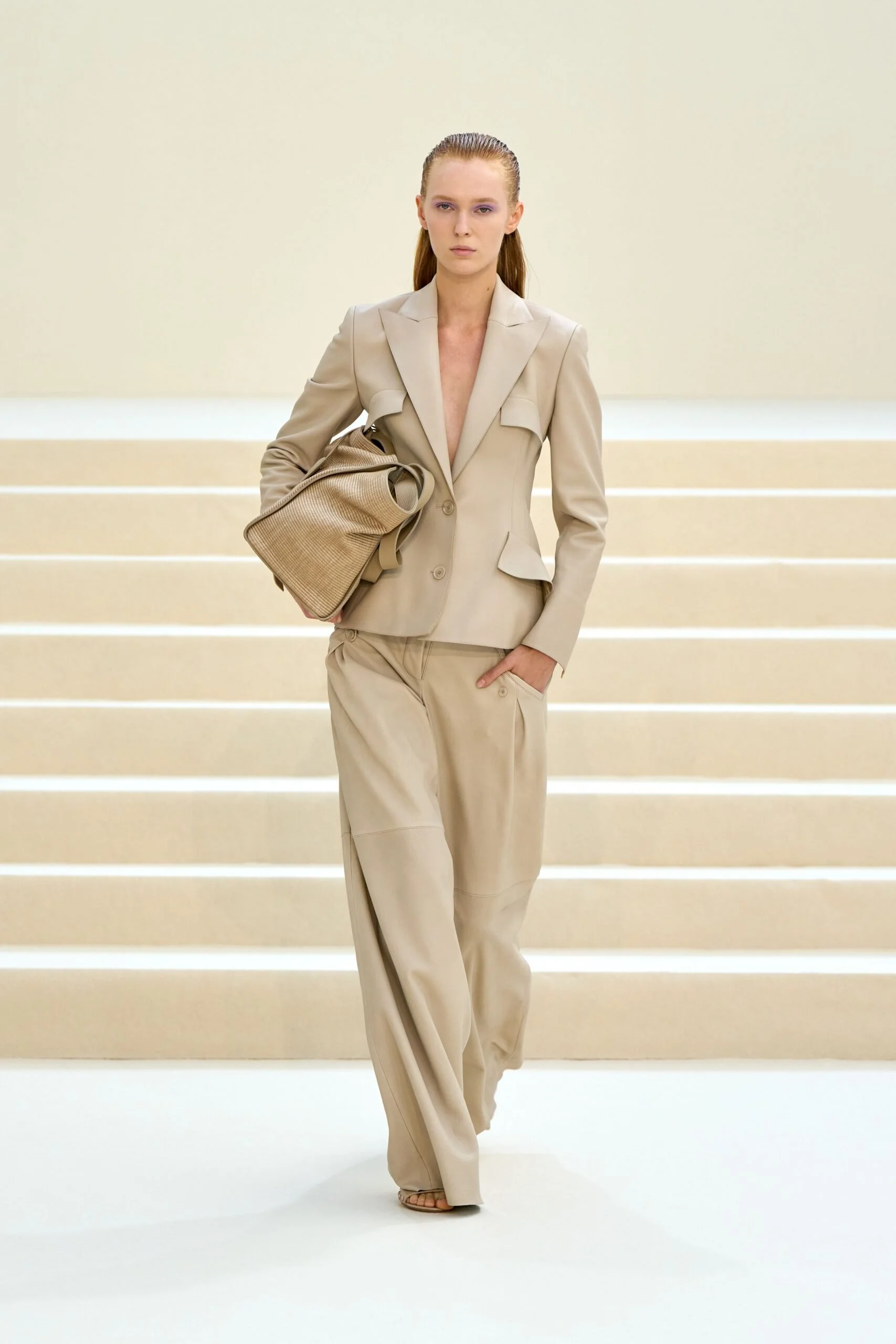
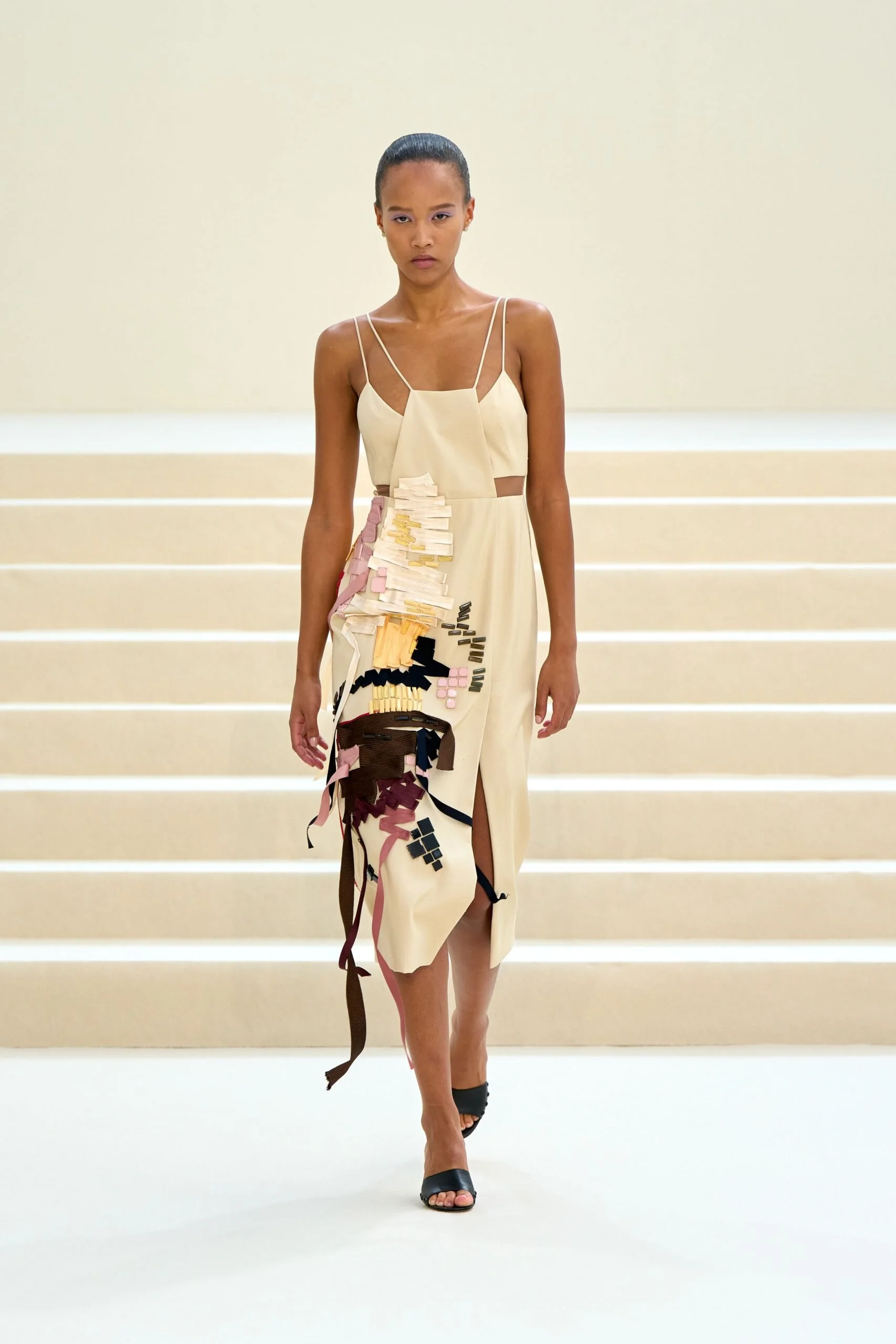
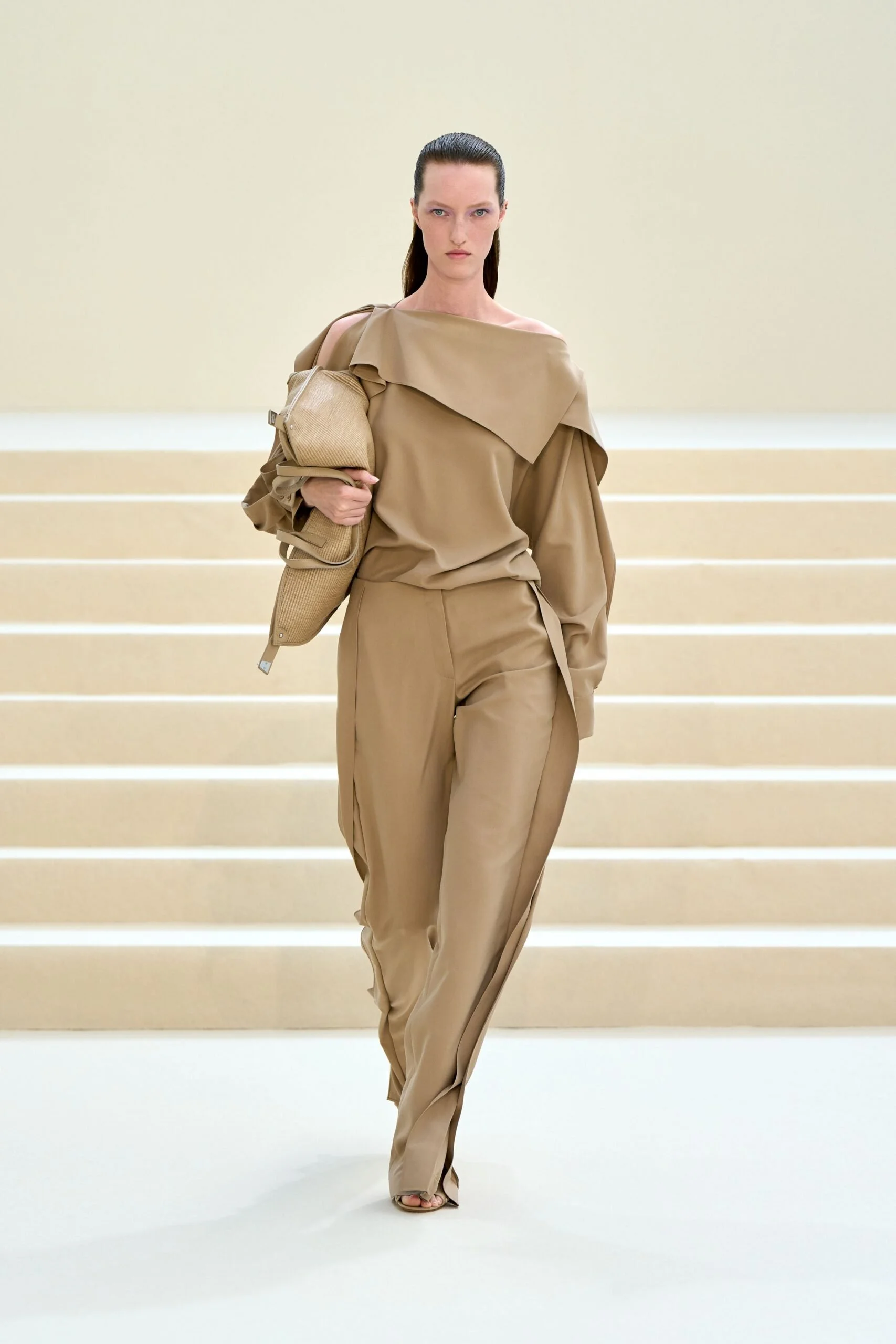
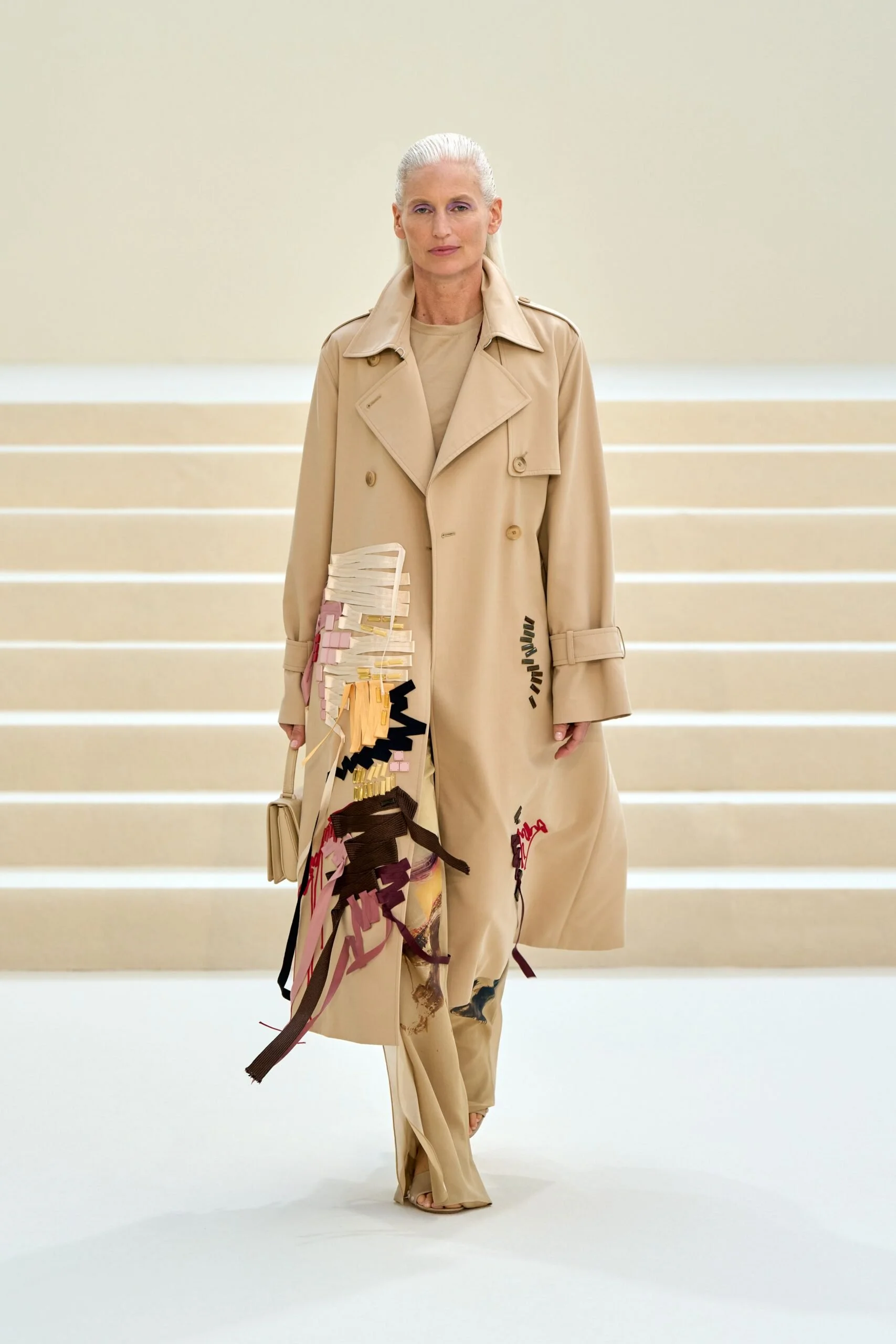
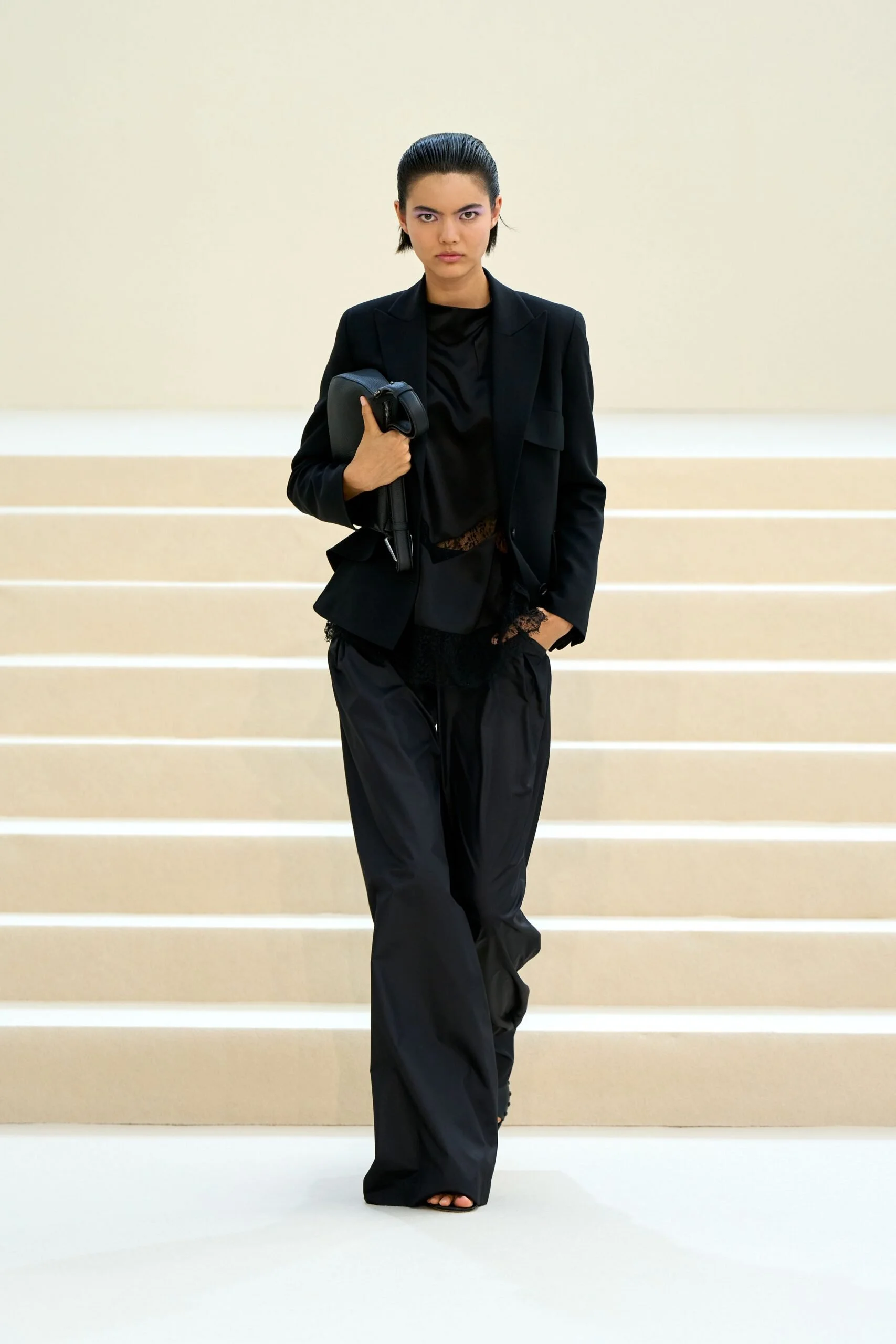
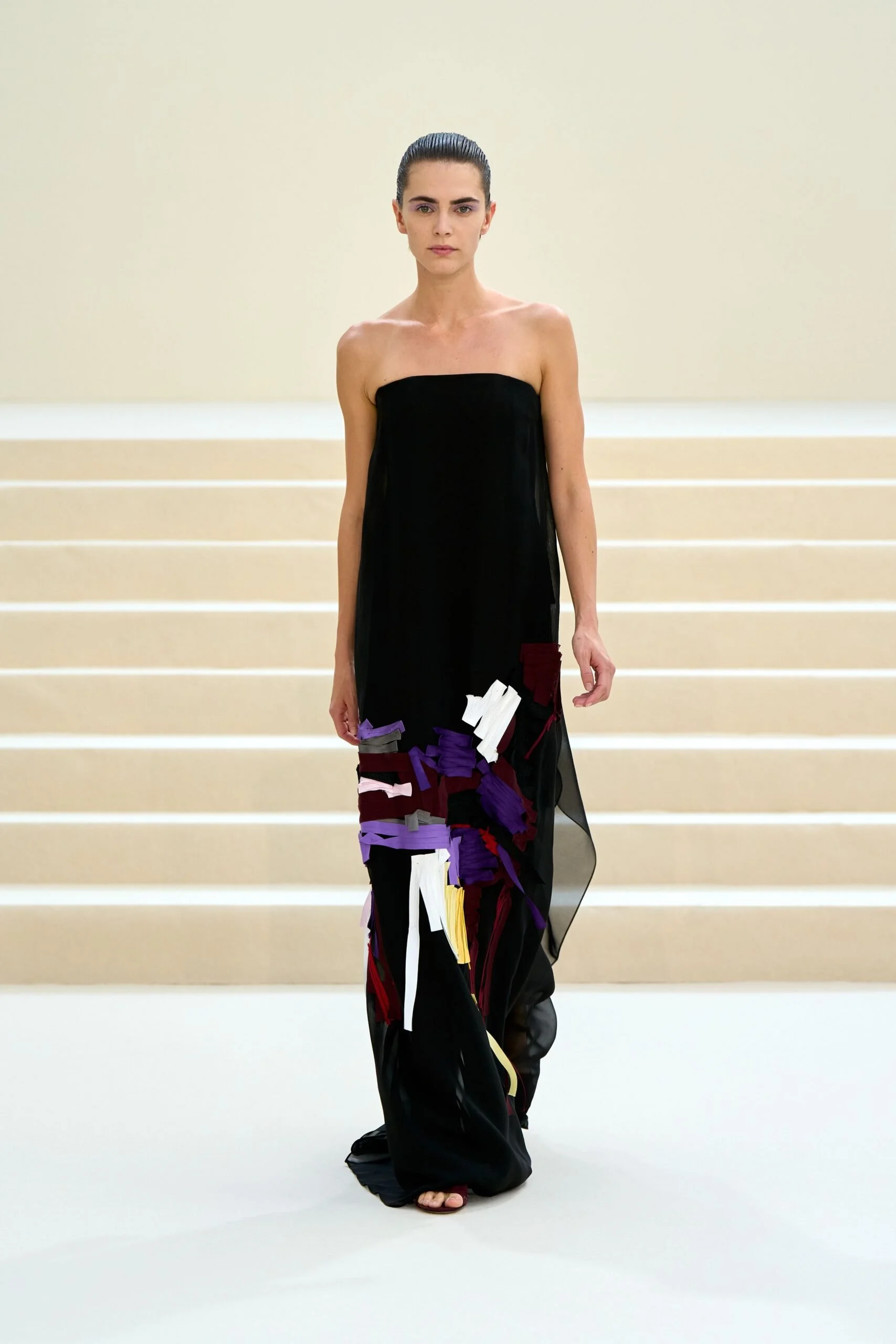
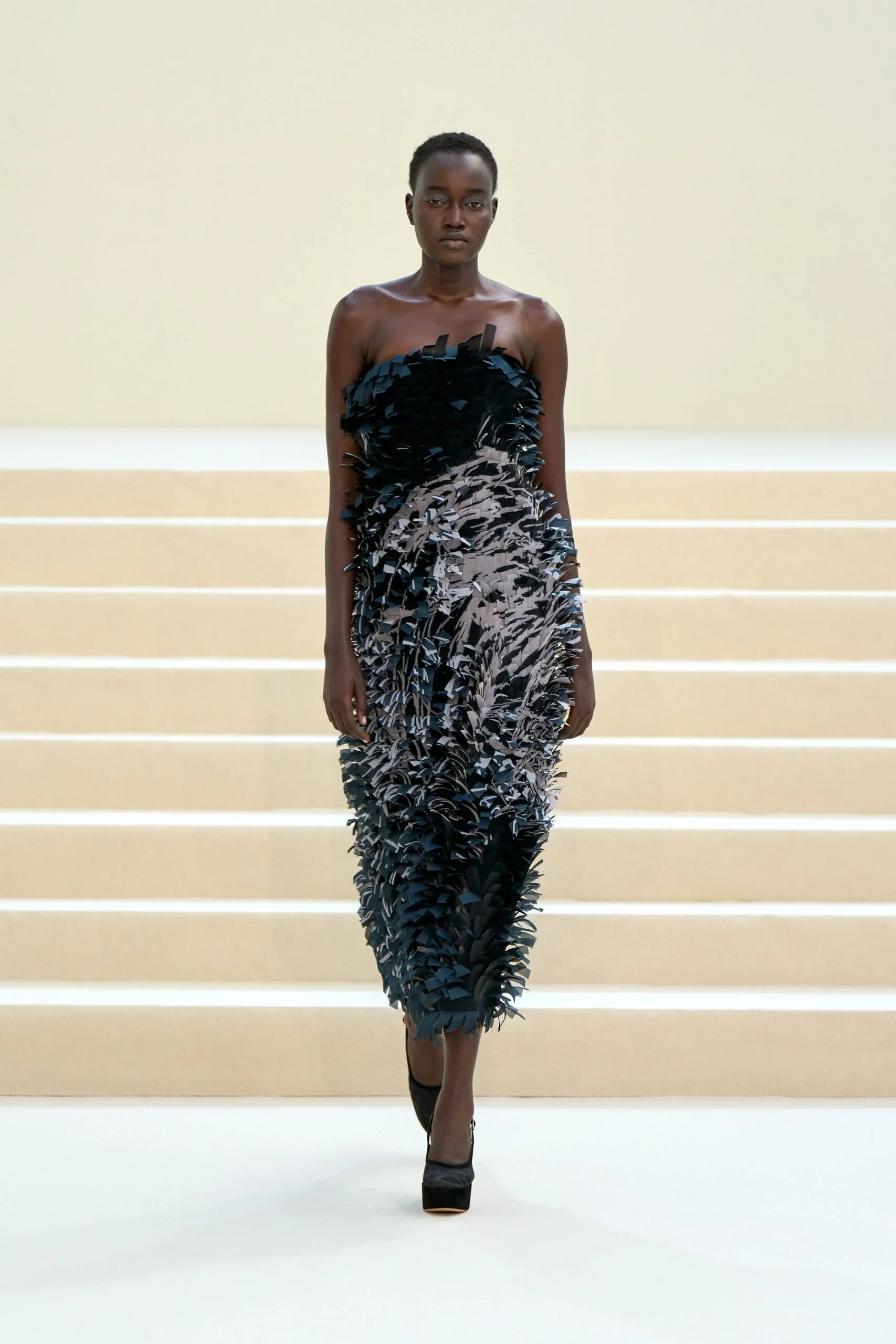
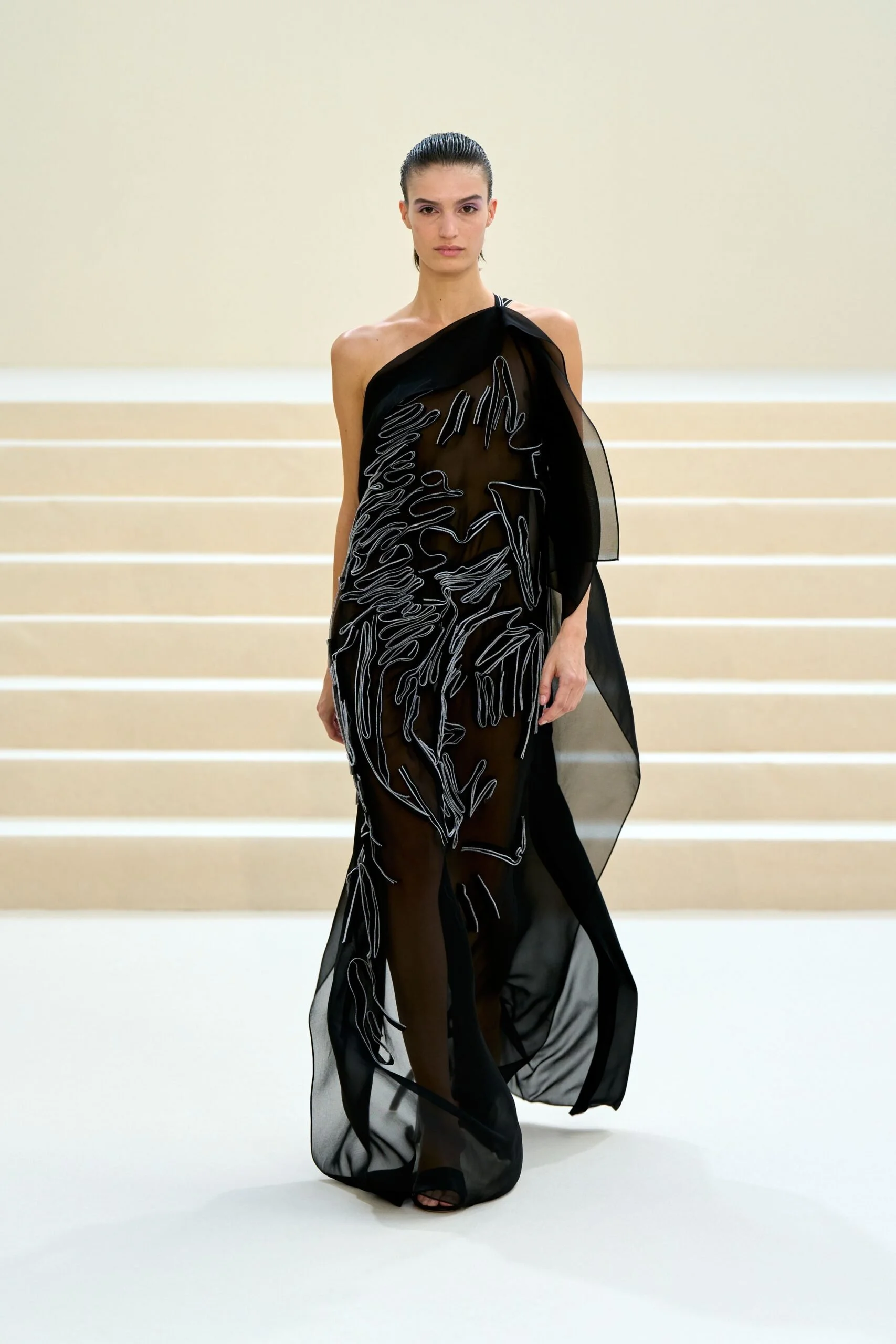
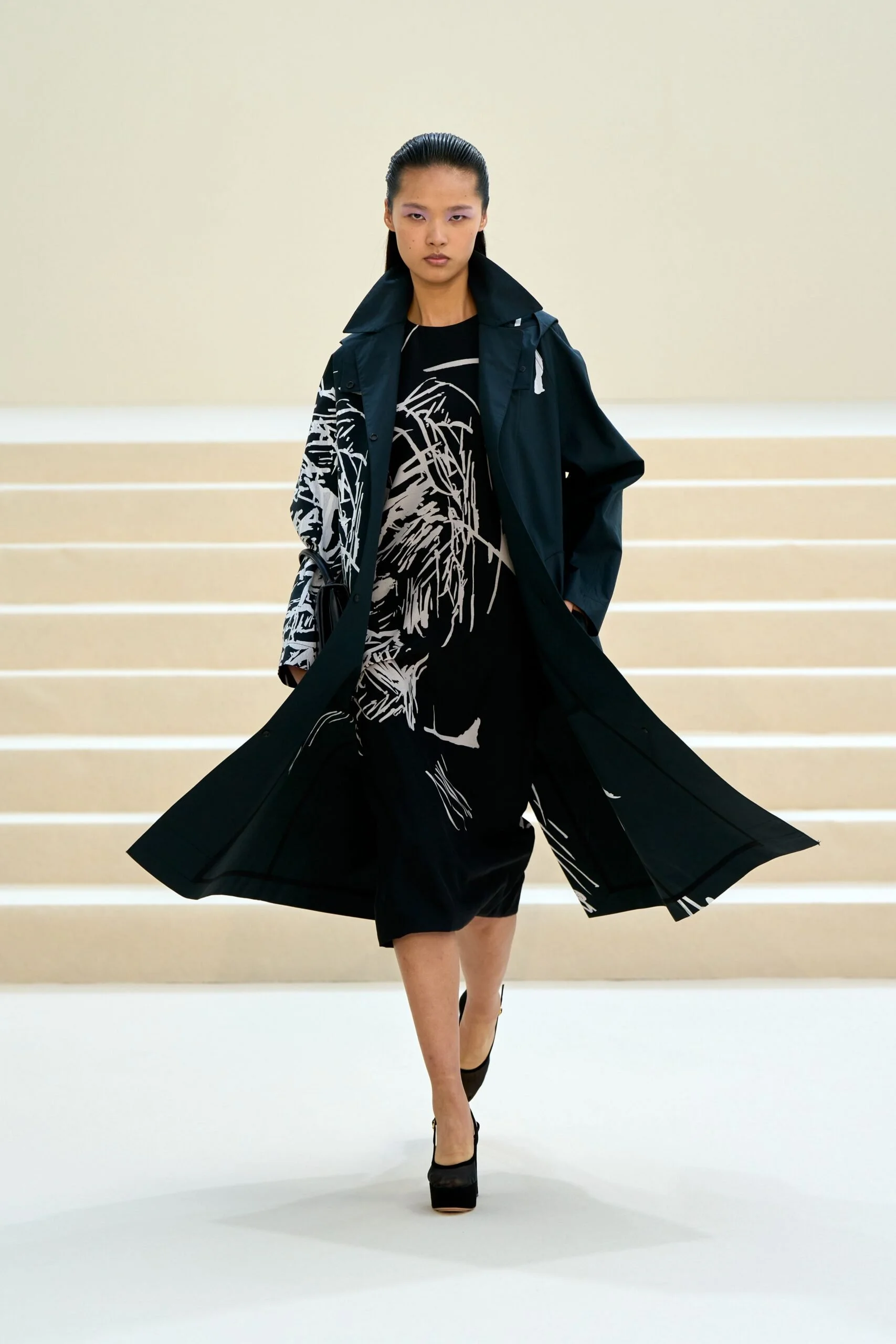
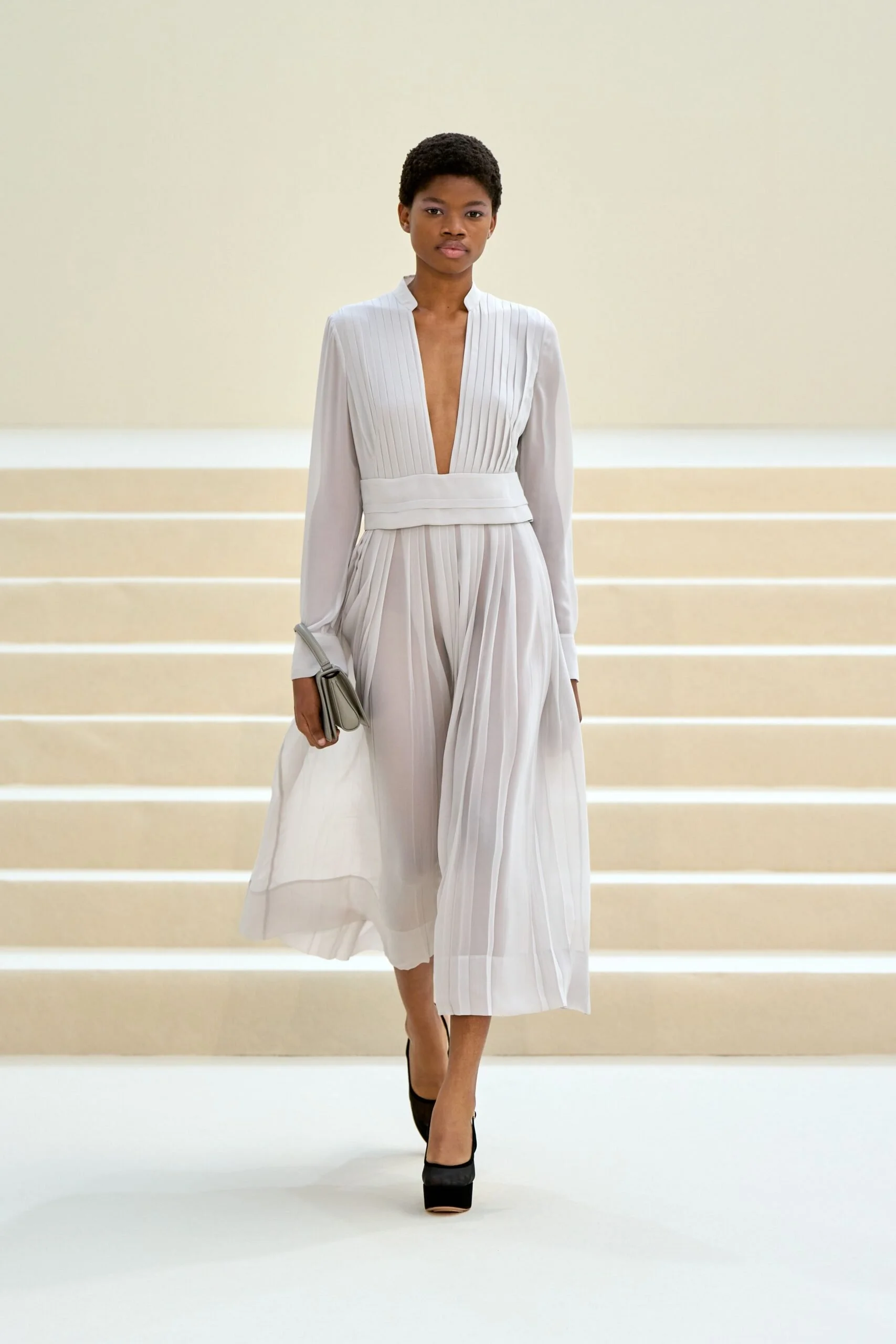
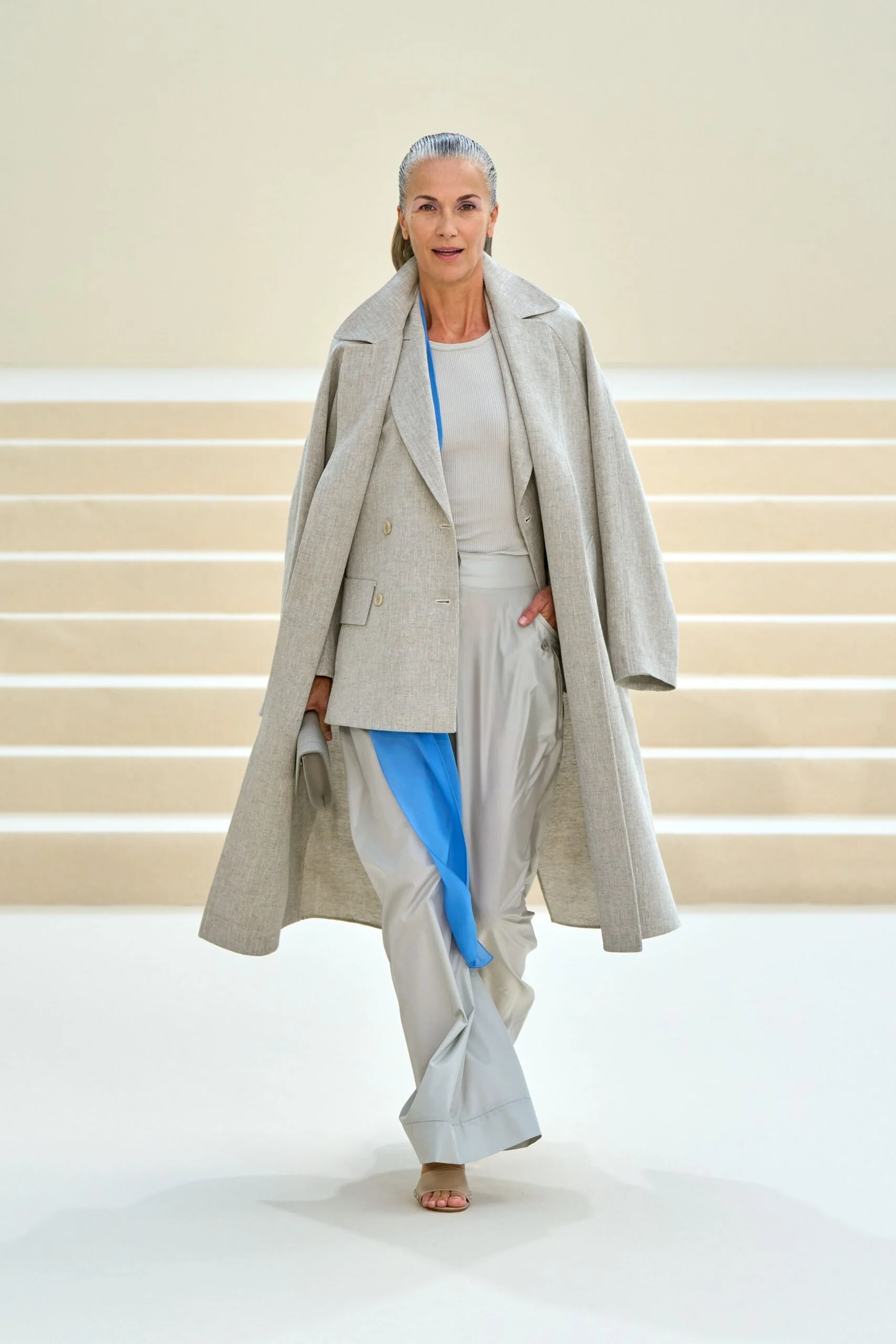
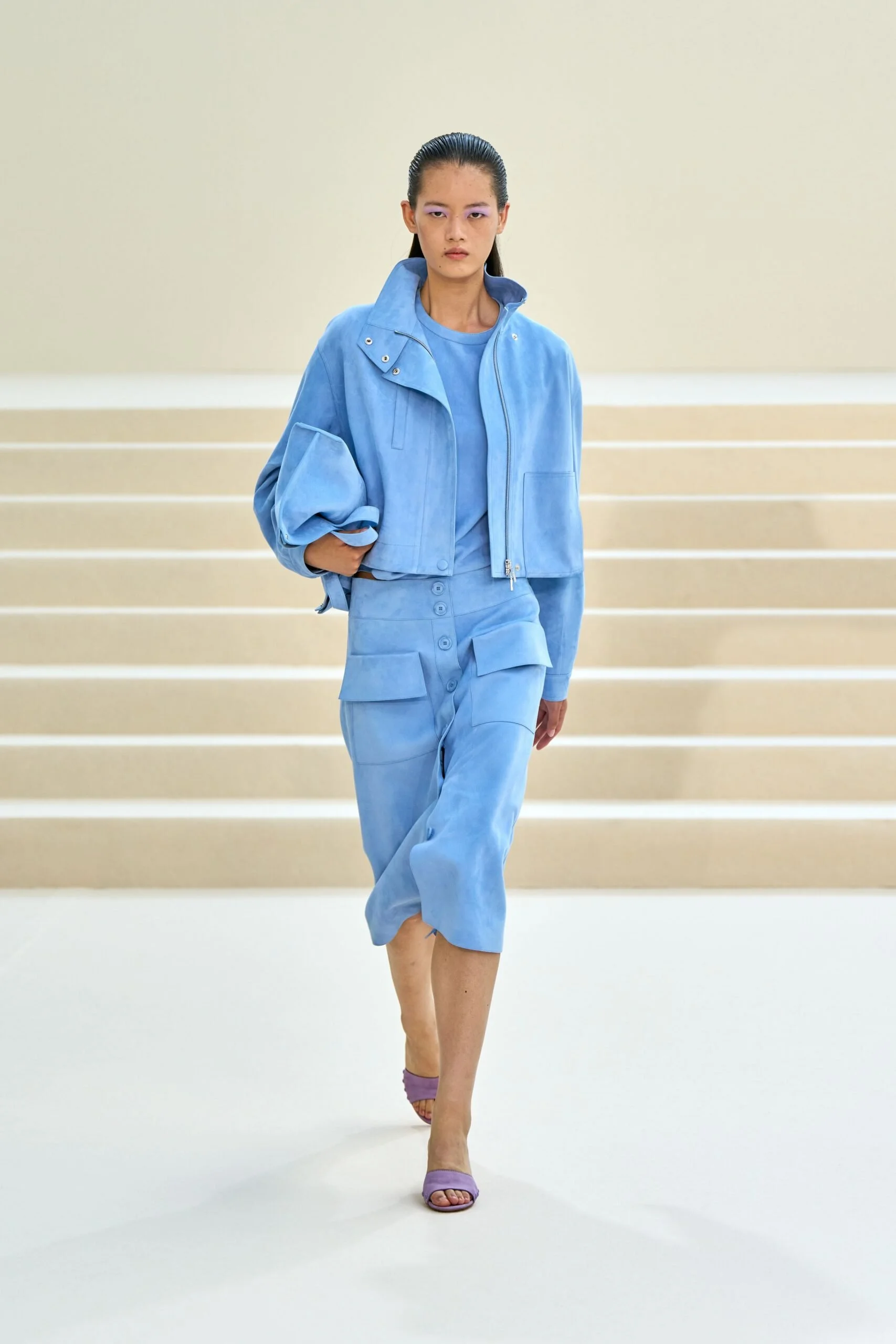
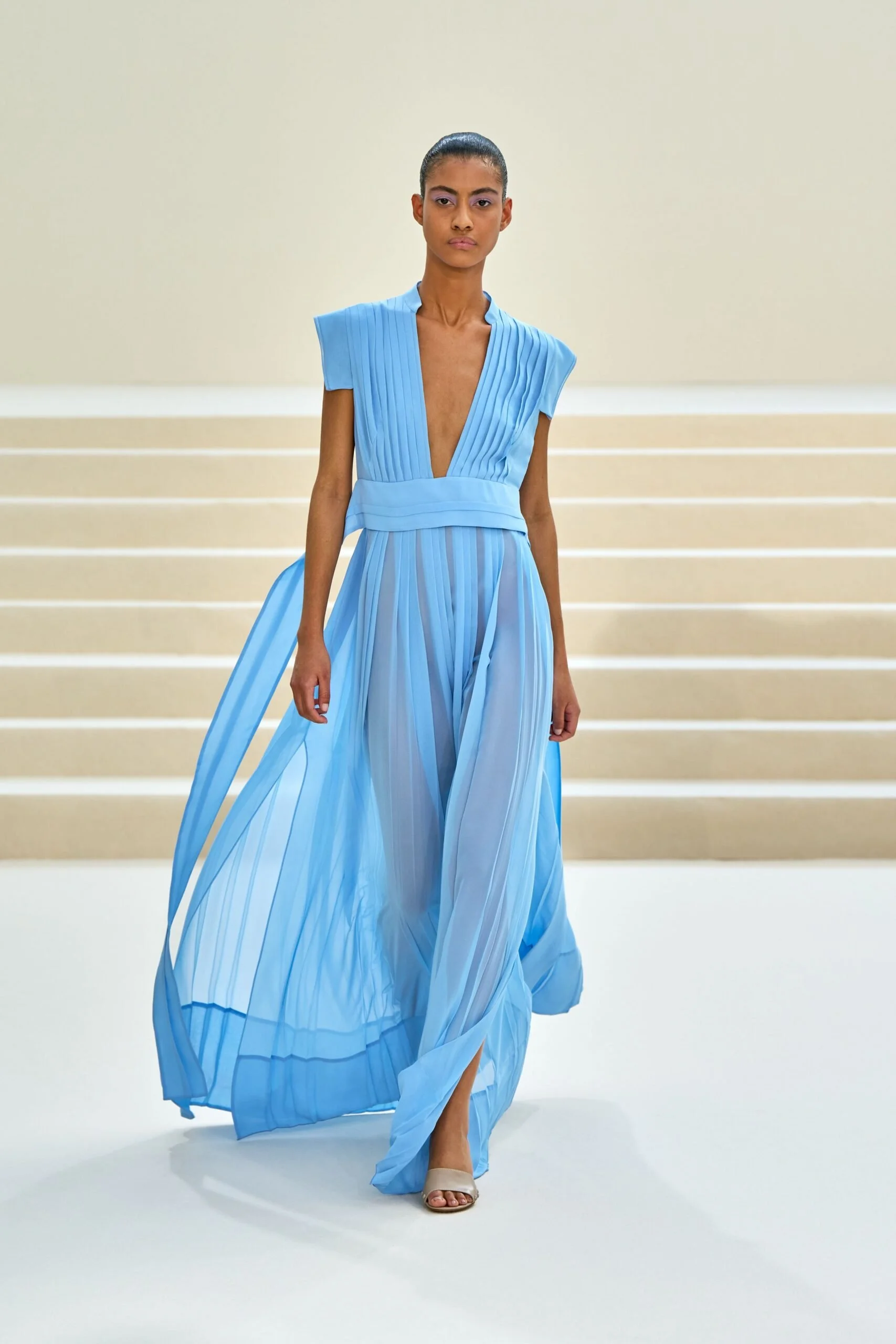
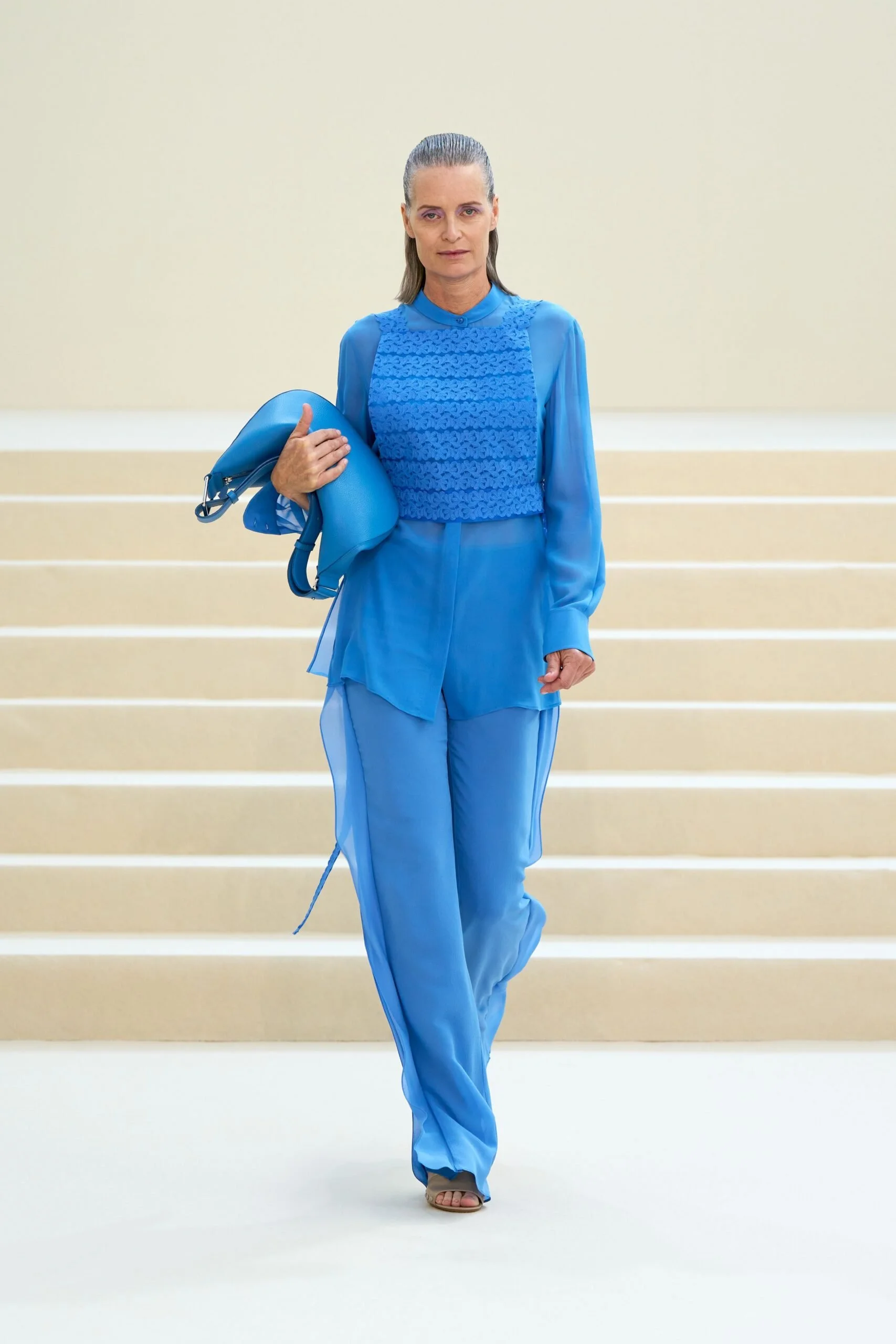
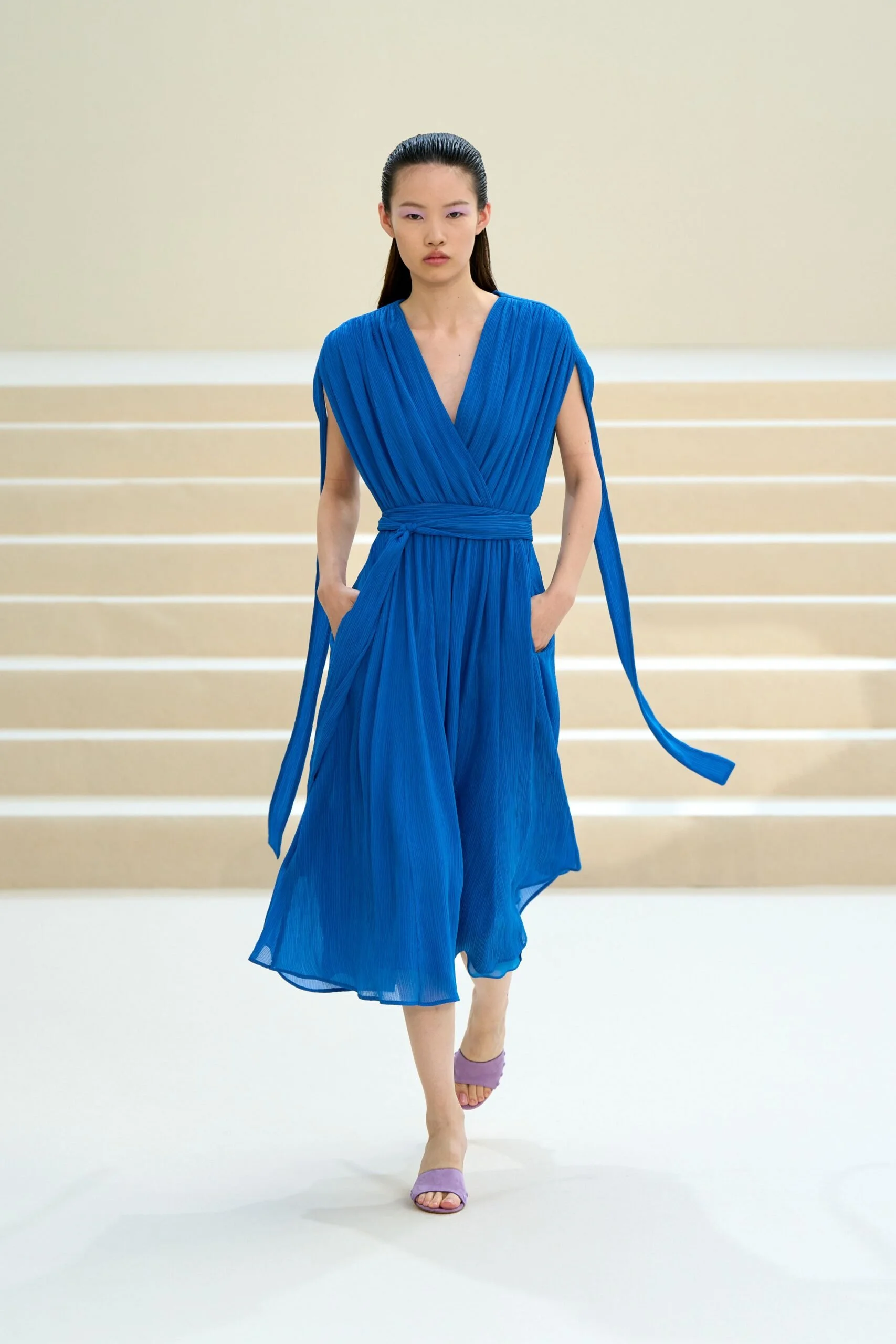
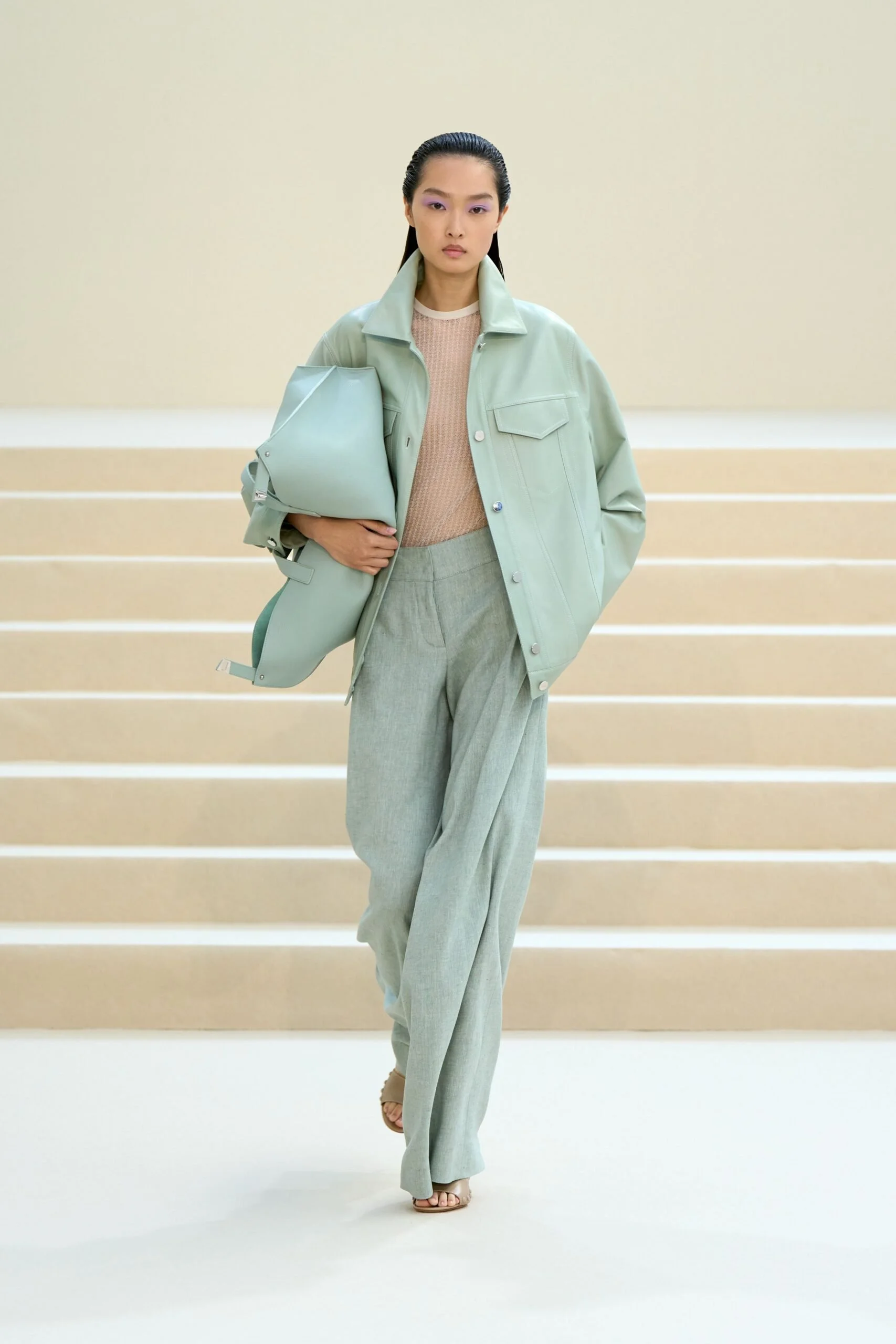
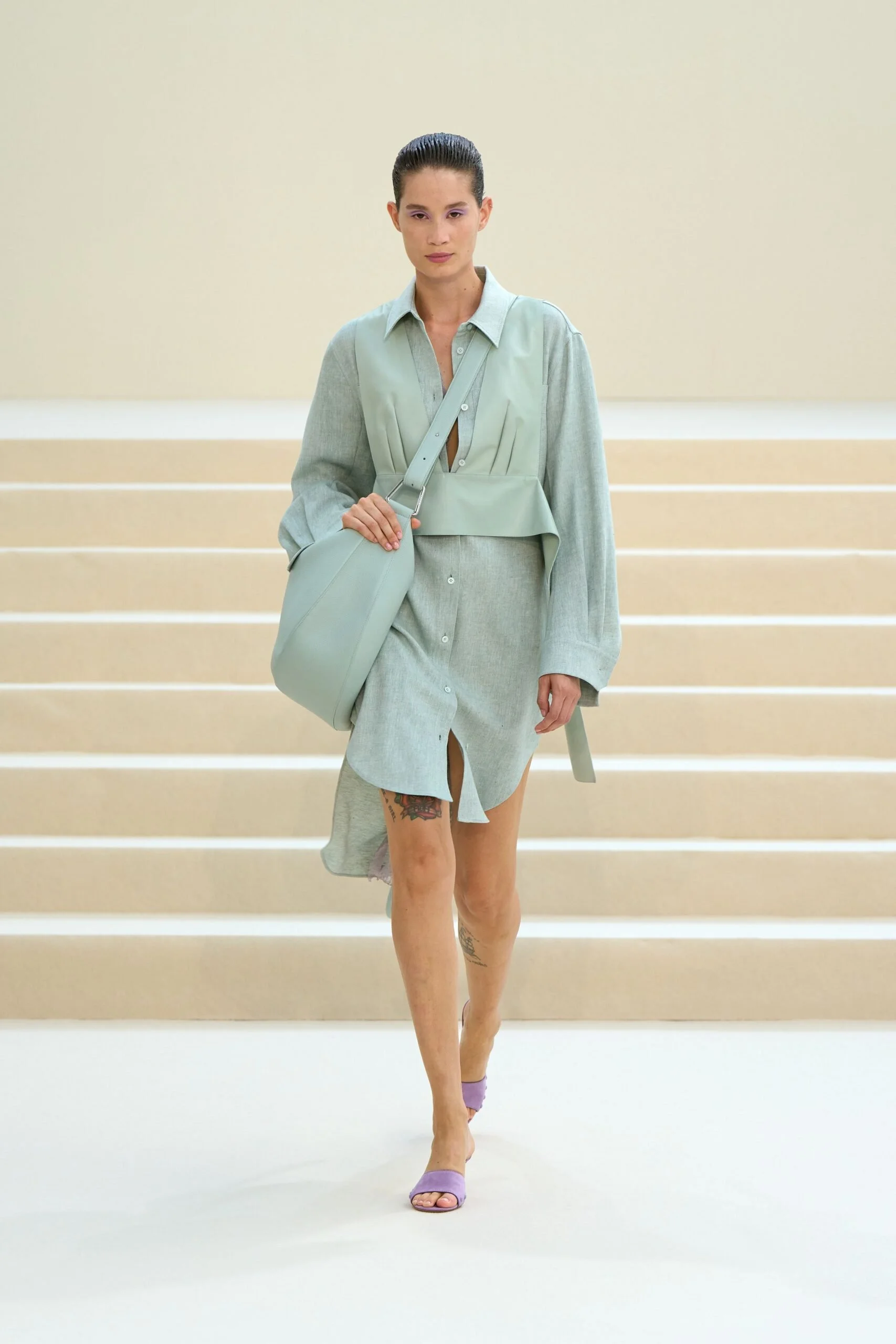
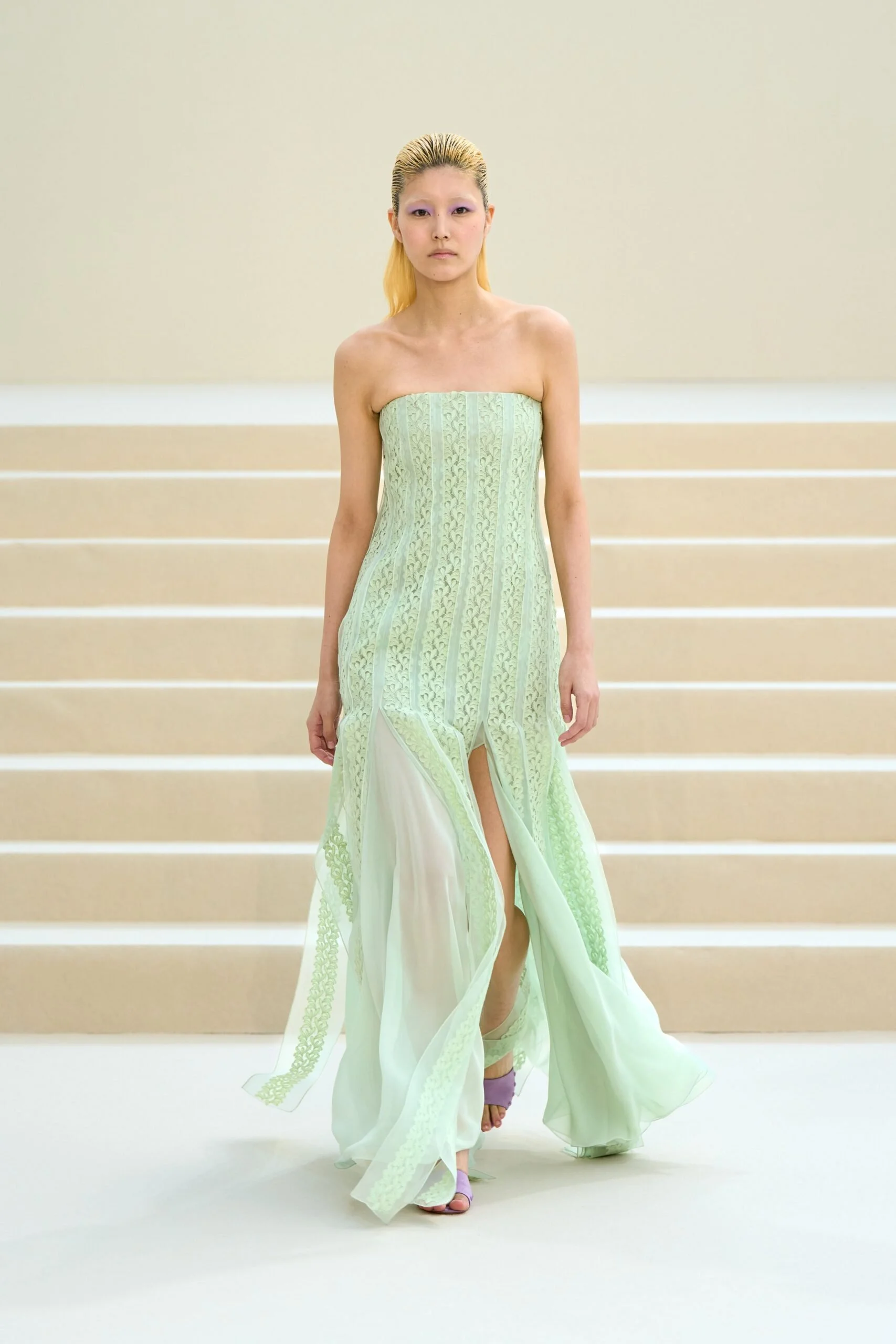
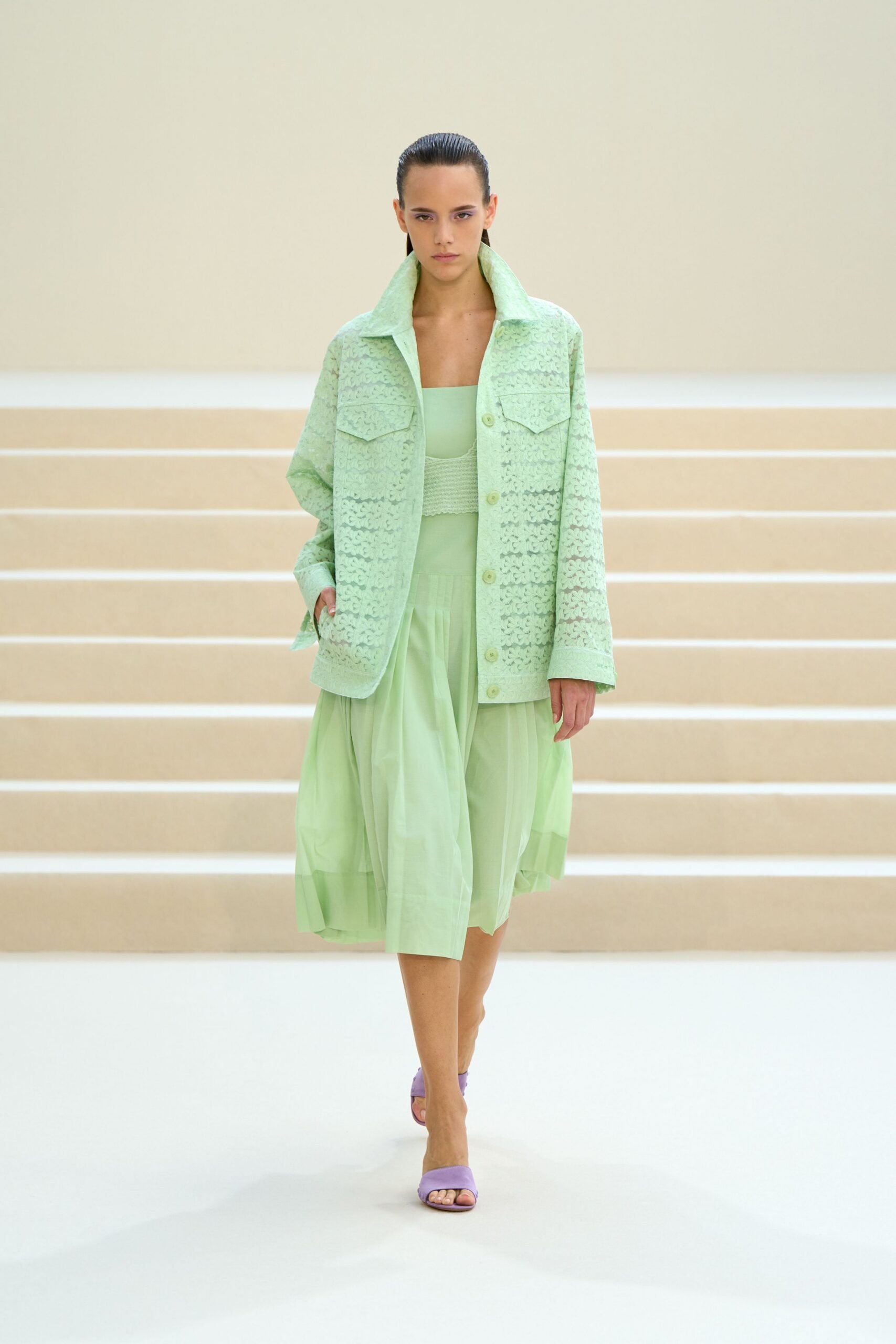
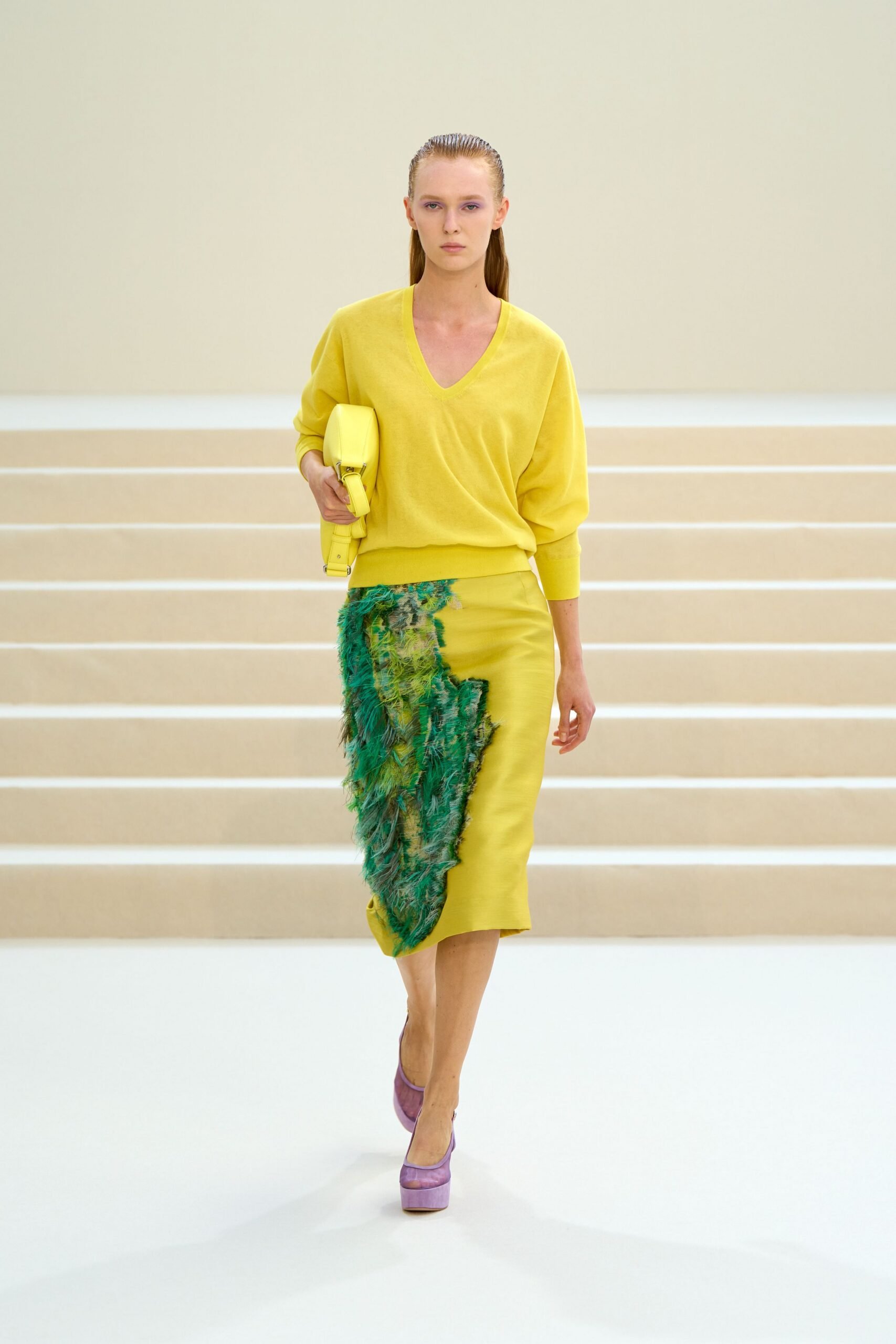
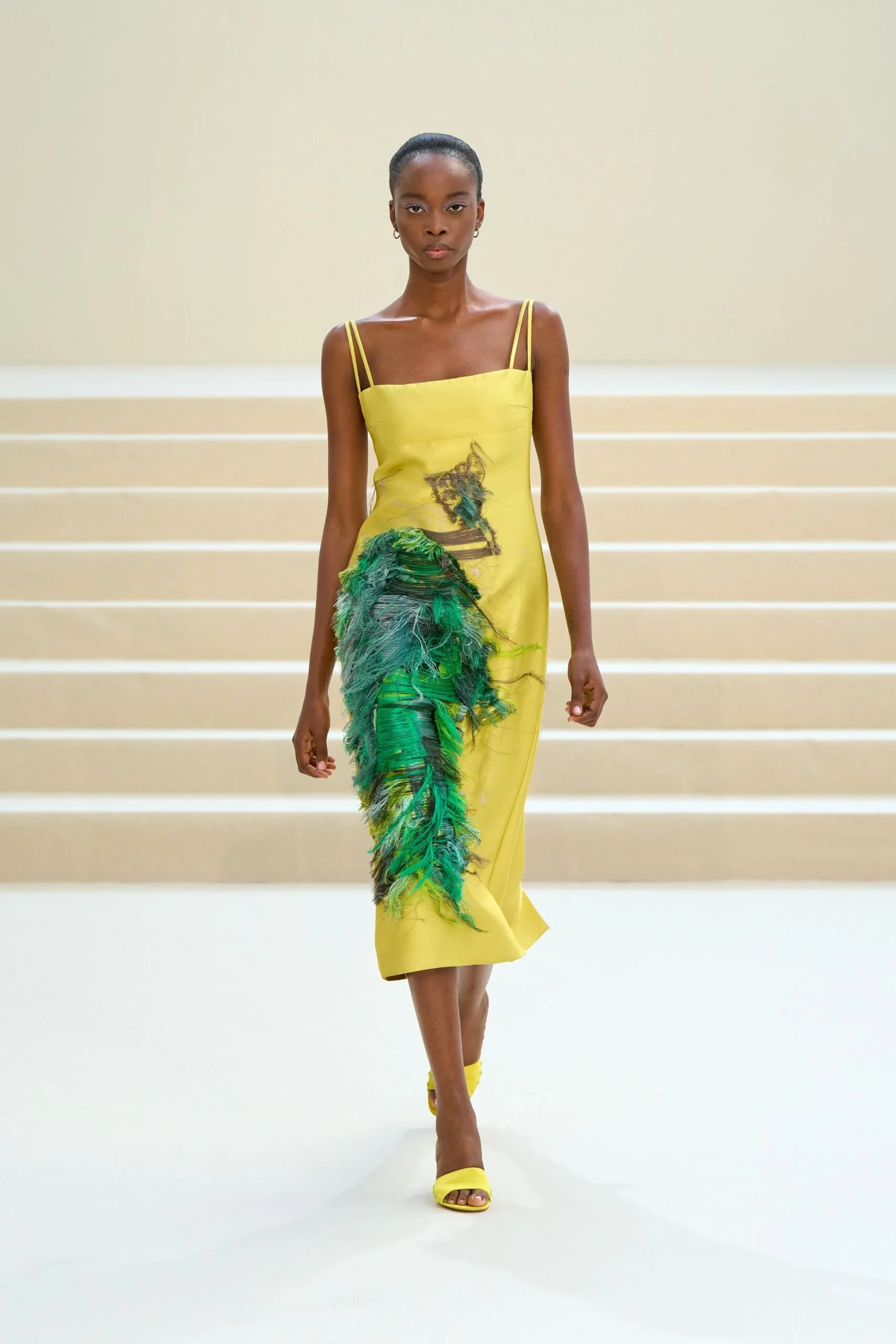
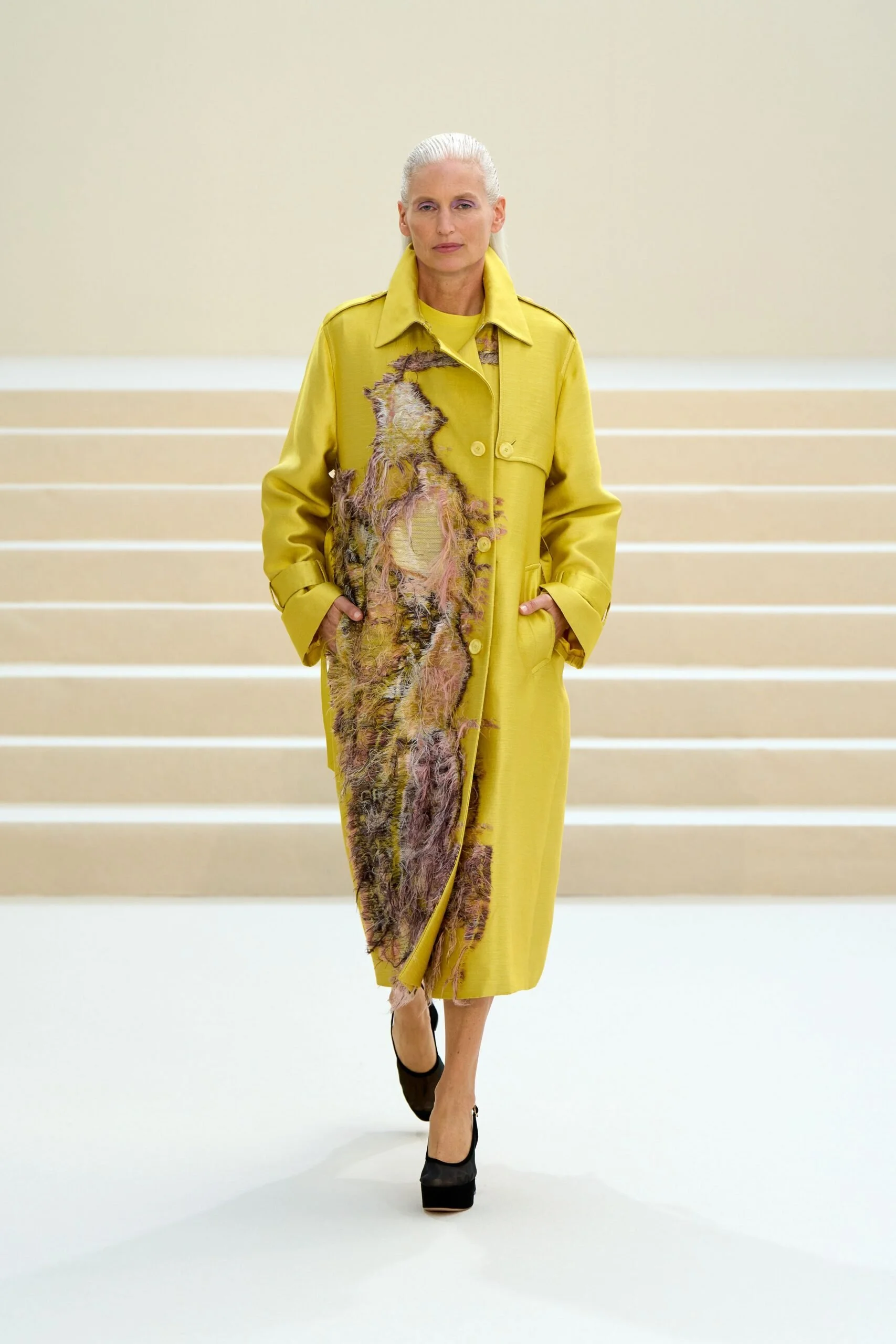
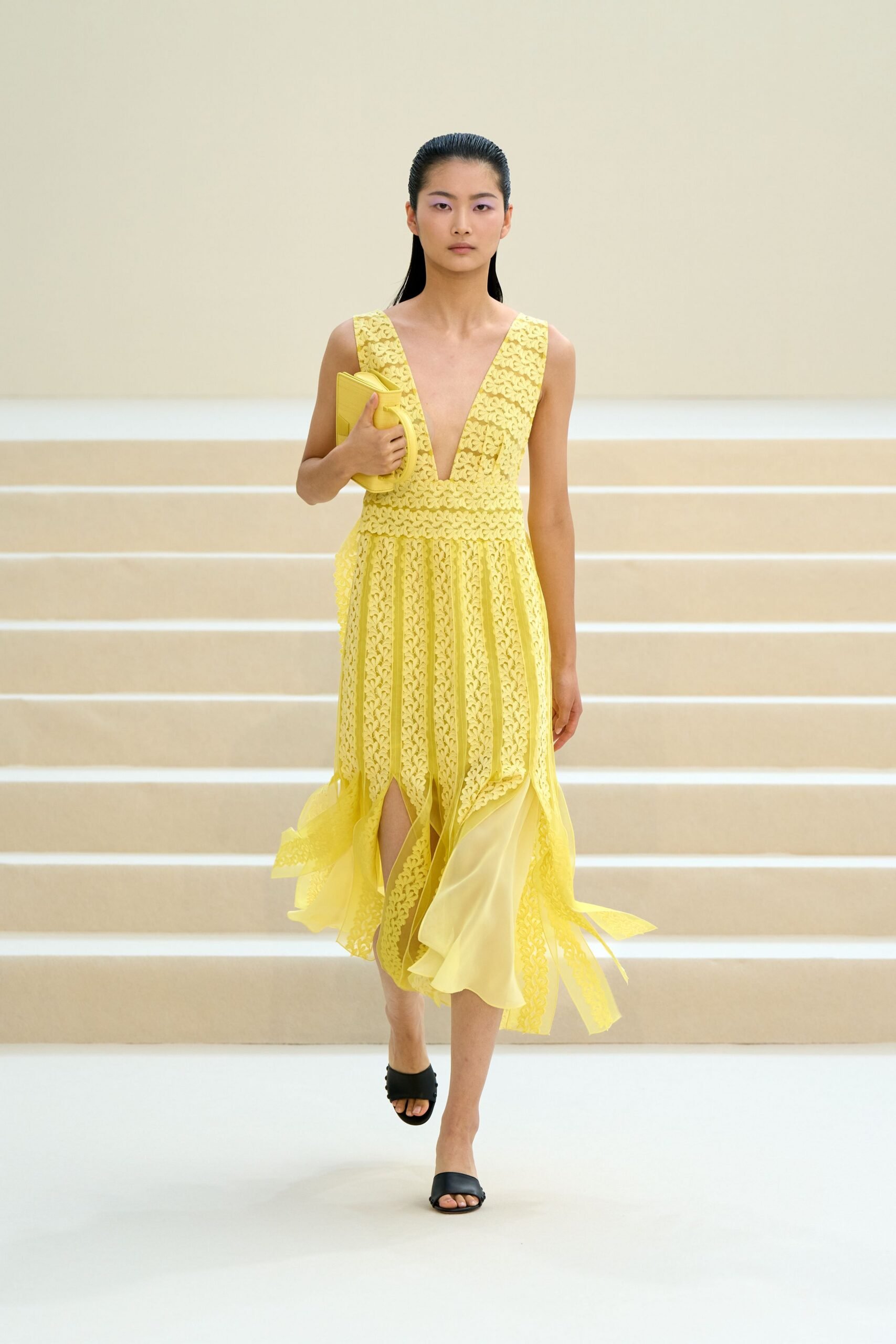
Rather than simply reproducing Jungwirth's paintings on clothes, Kriemler translated their physicality into Akris' precise language. The reverse sides of jacquards were deliberately exposed, leaving loose threads dangling from garments like unfinished brushstrokes, while zigzag ribbon embroidery referenced the gestures of one of Jungwirth's horse paintings. Fabric streamers drifted from coats and dresses, sometimes in contrasting colours, giving otherwise clean silhouettes a sense of movement. The connection became most direct on beige pantsuits and coats, chosen because Jungwirth never painted on white canvas. Curlicue lace echoed her flicks of paint while simultaneously connecting the collection to St. Gallen embroidery, a tradition deeply embedded in Akris' own history. Kriemler brought another personal reference into the mix by reviving lace designs created by his grandmother Alice in the 1950s, turning an artistic collaboration into something closer to a family archive.
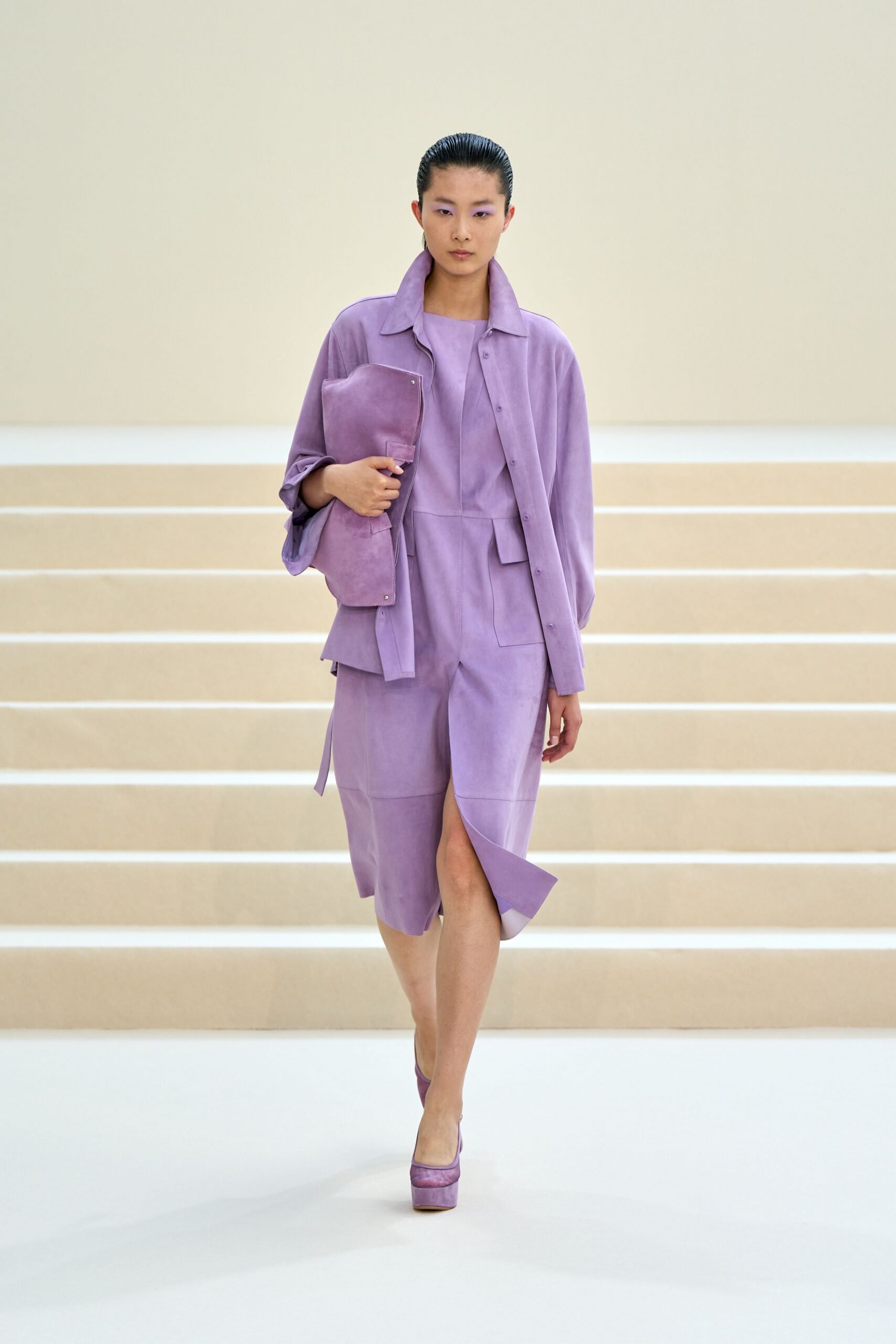
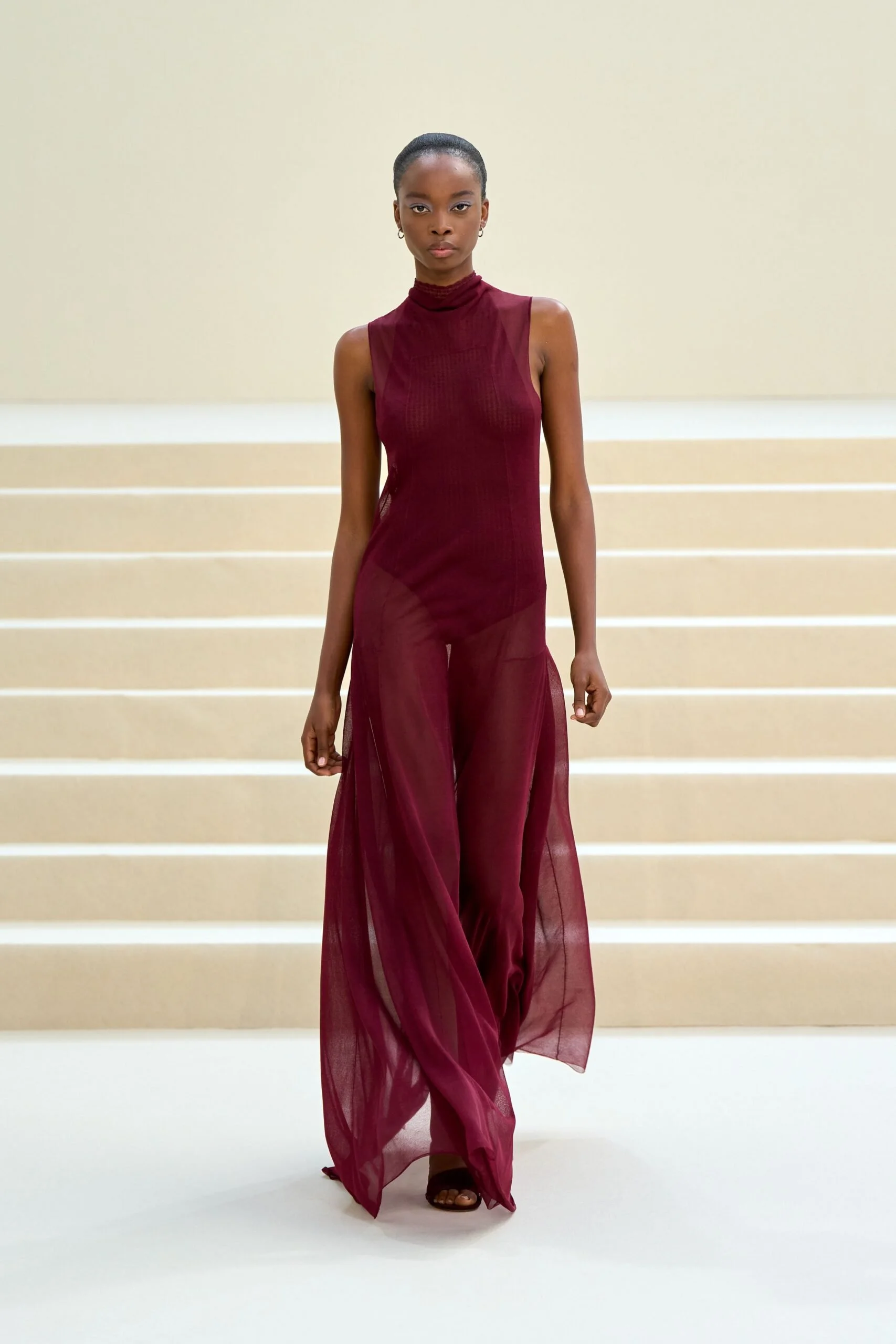
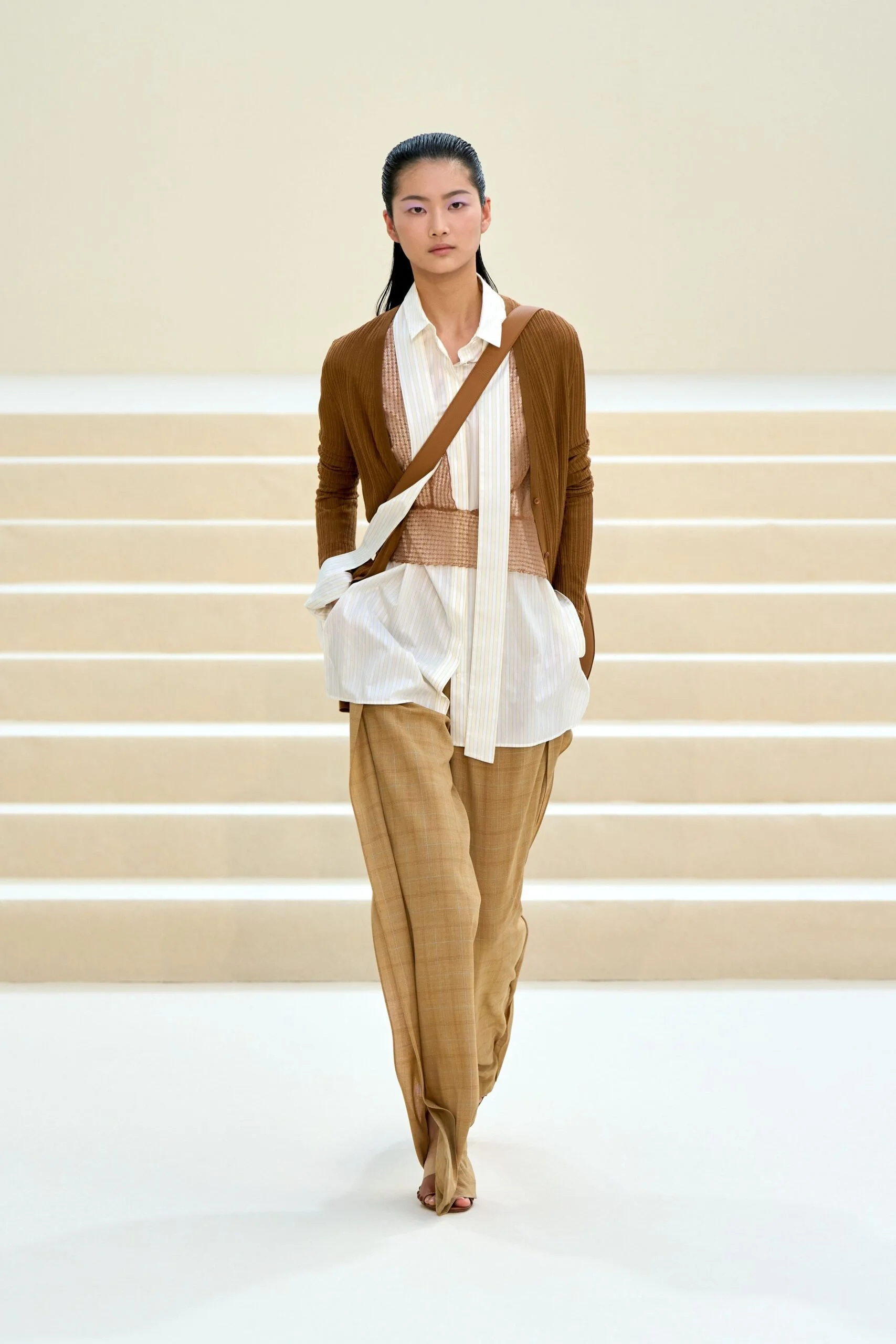
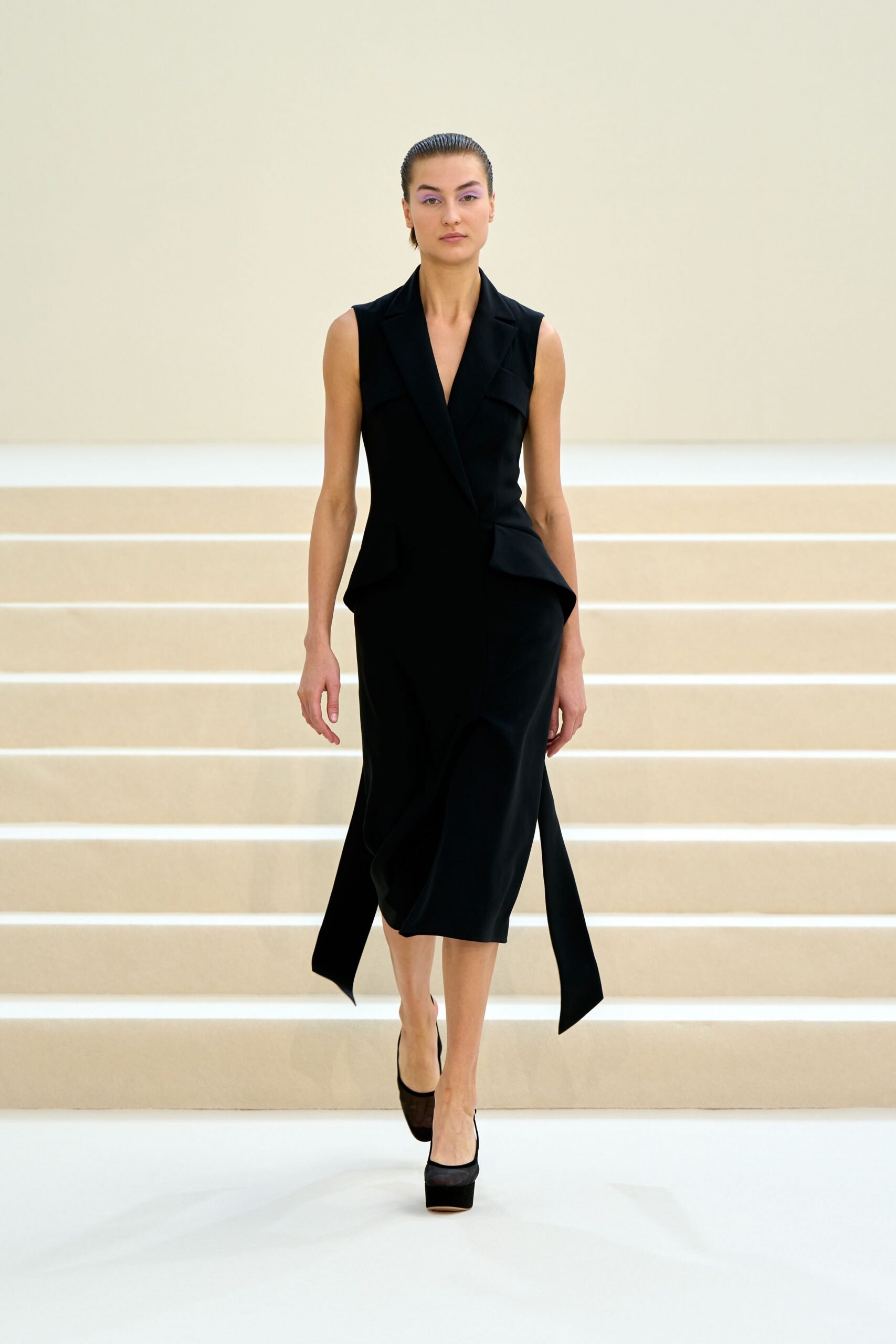
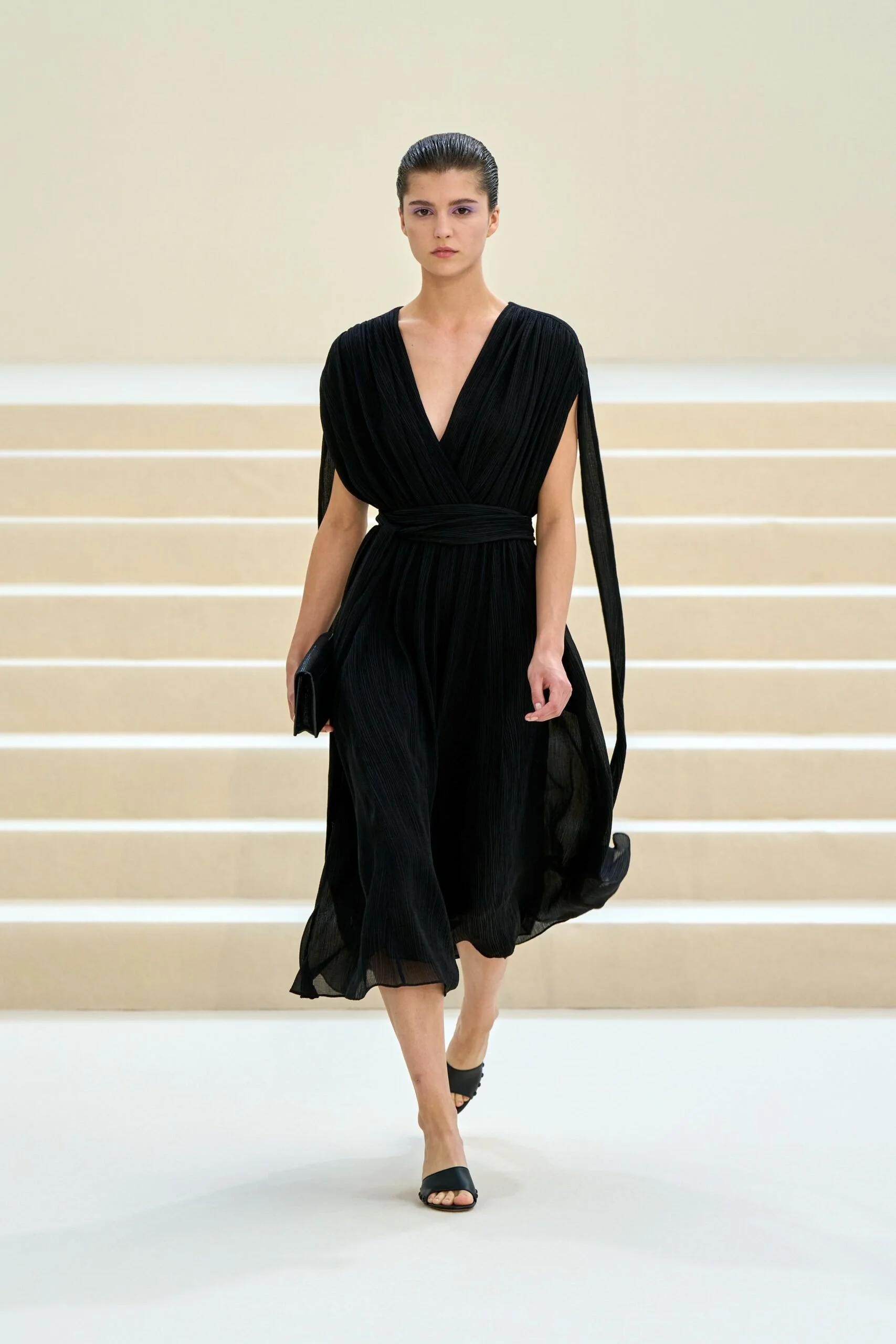
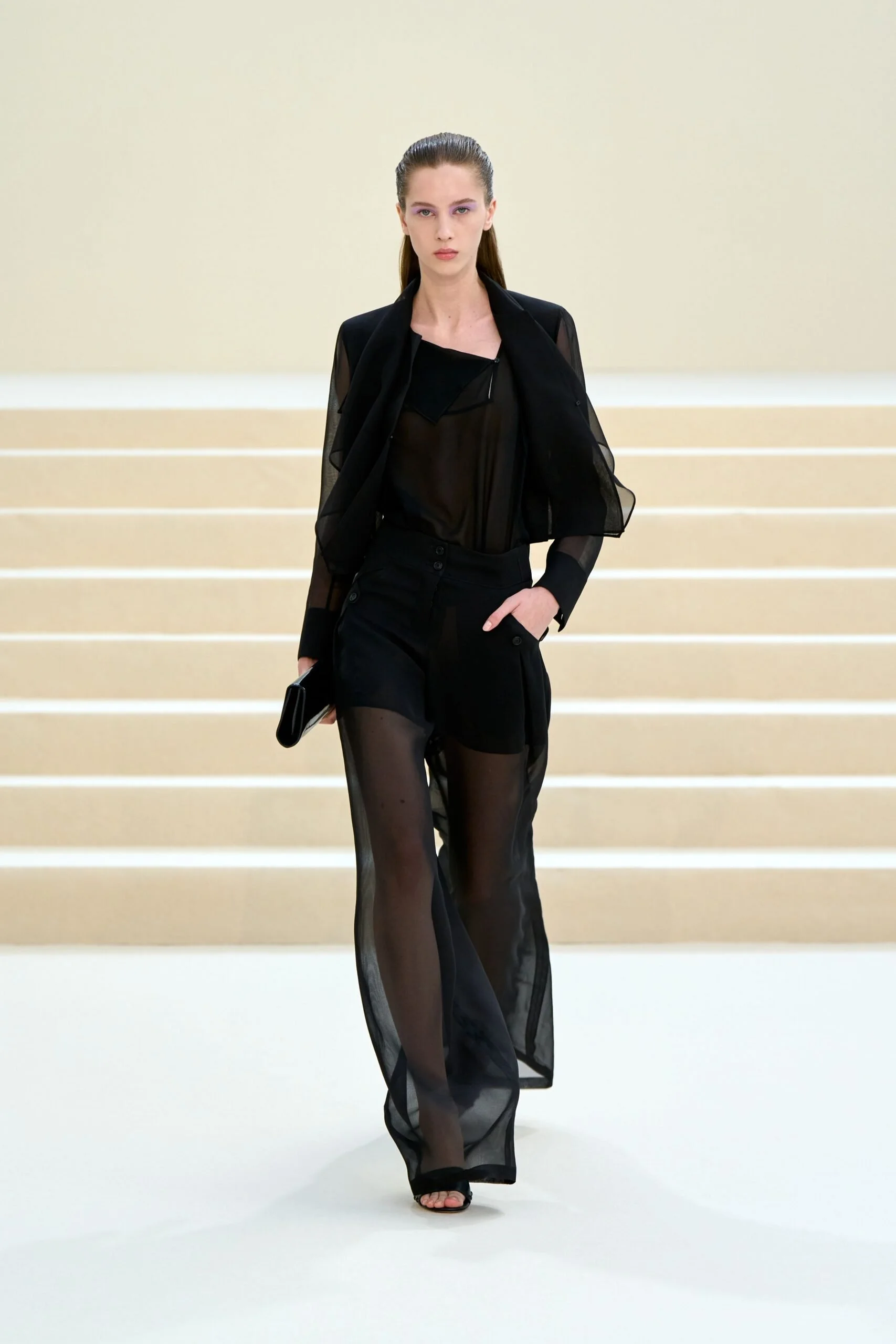
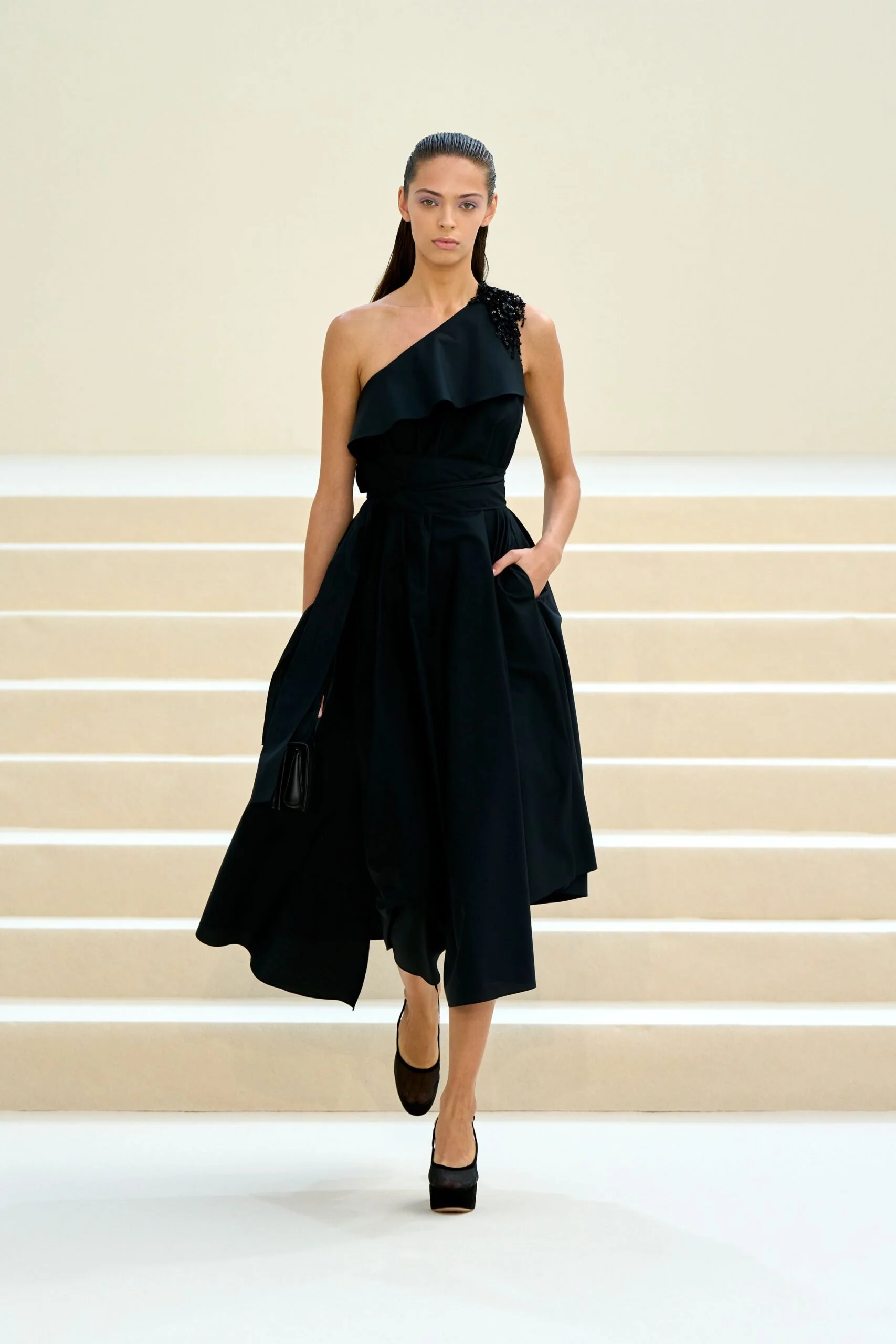
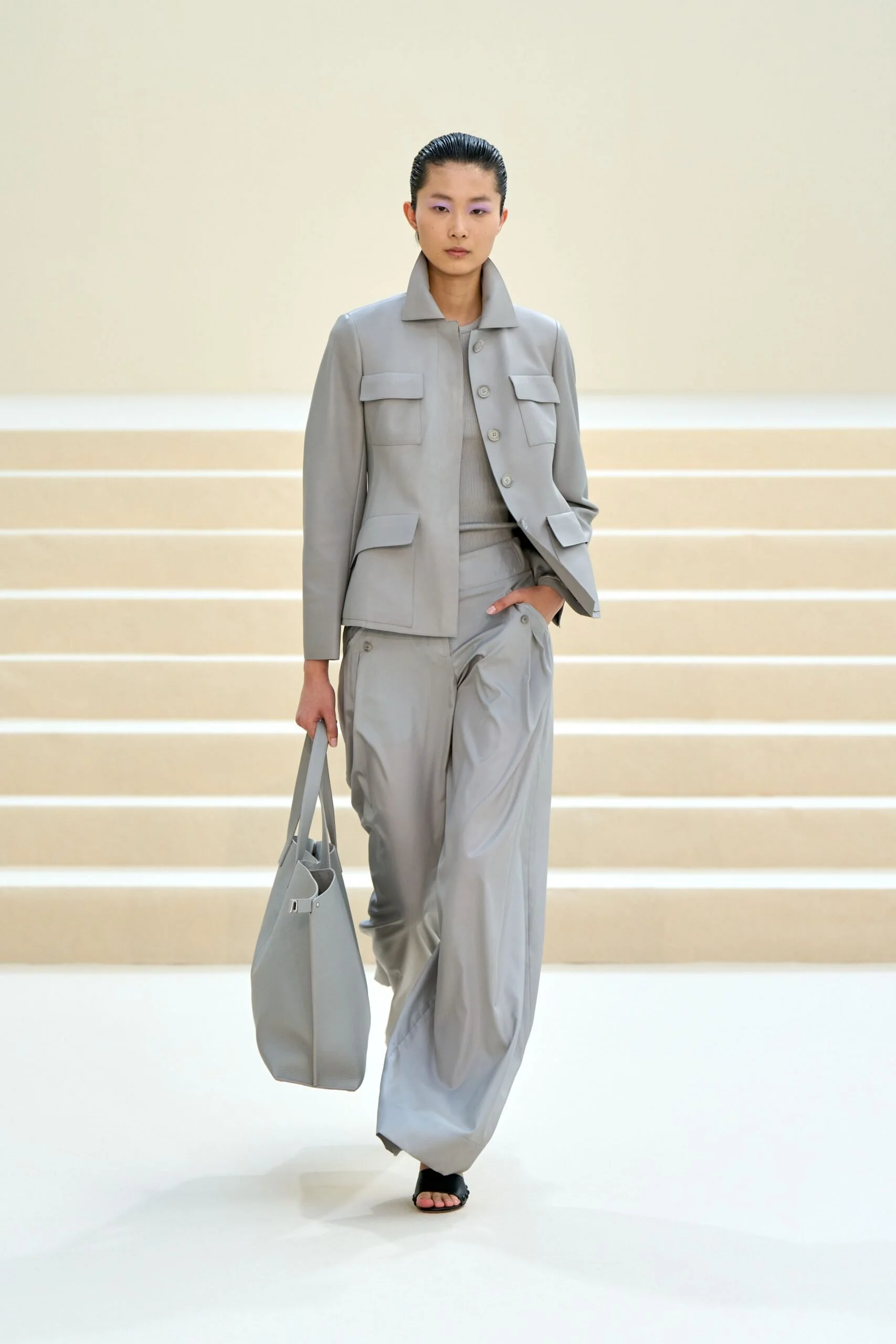
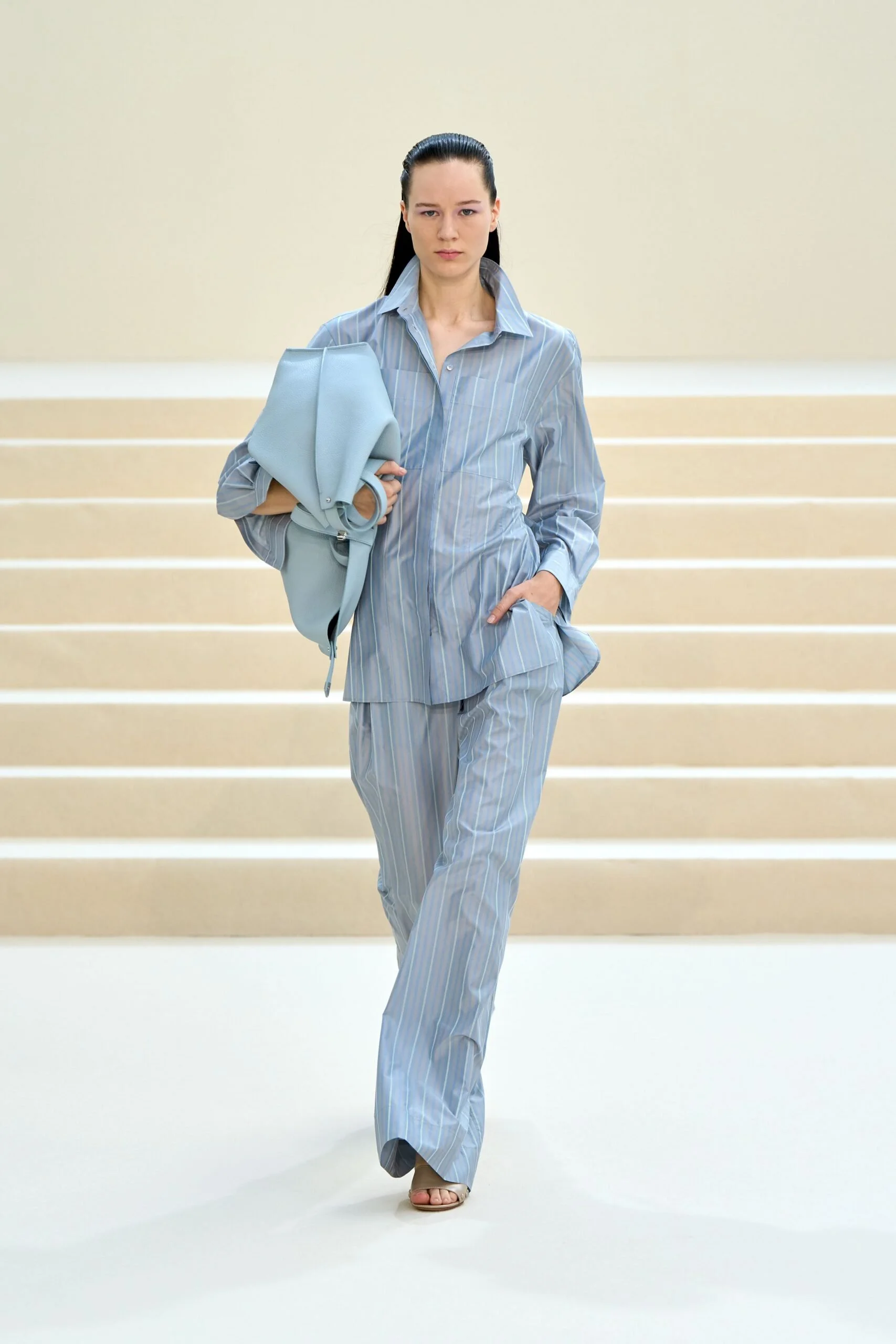
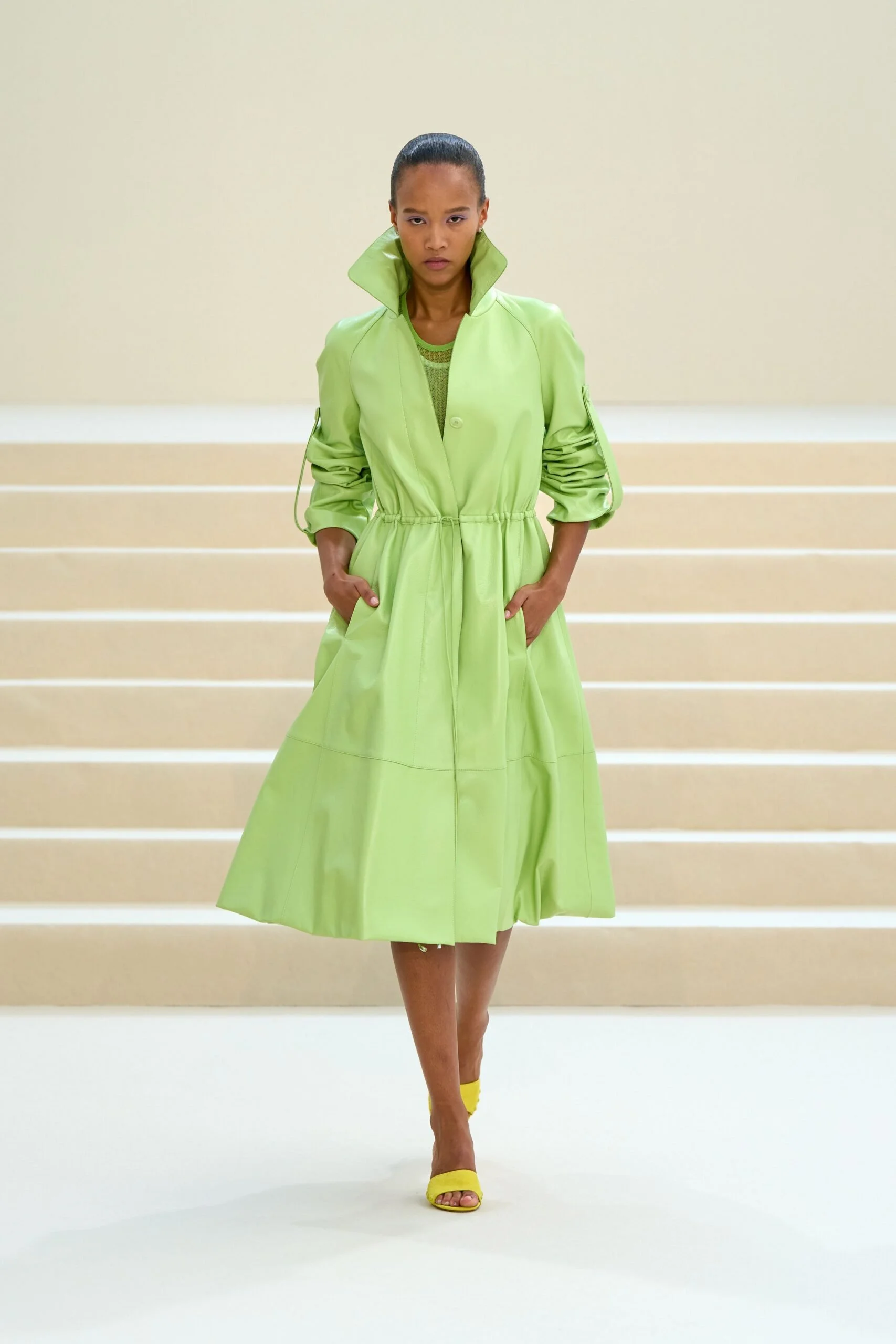
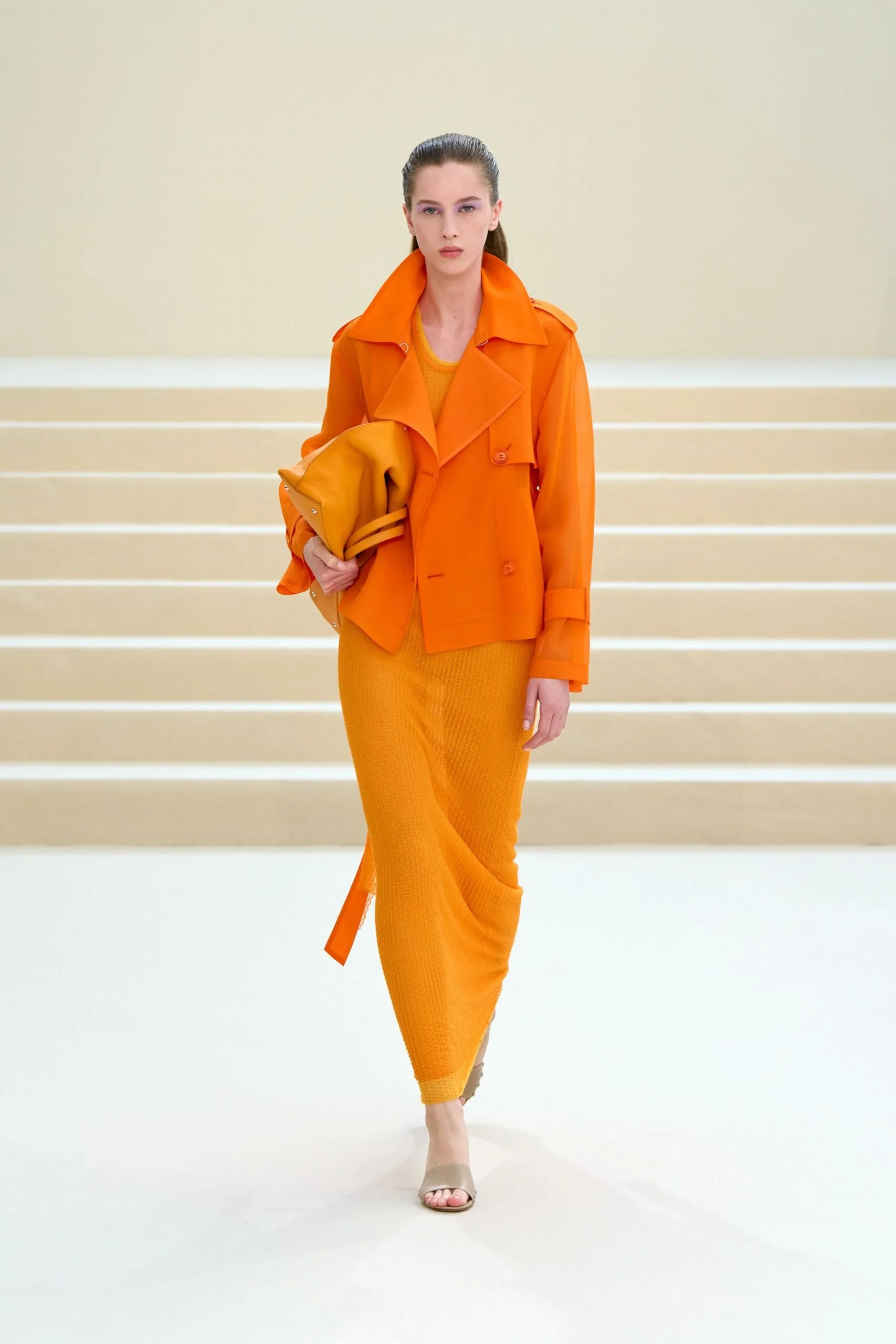
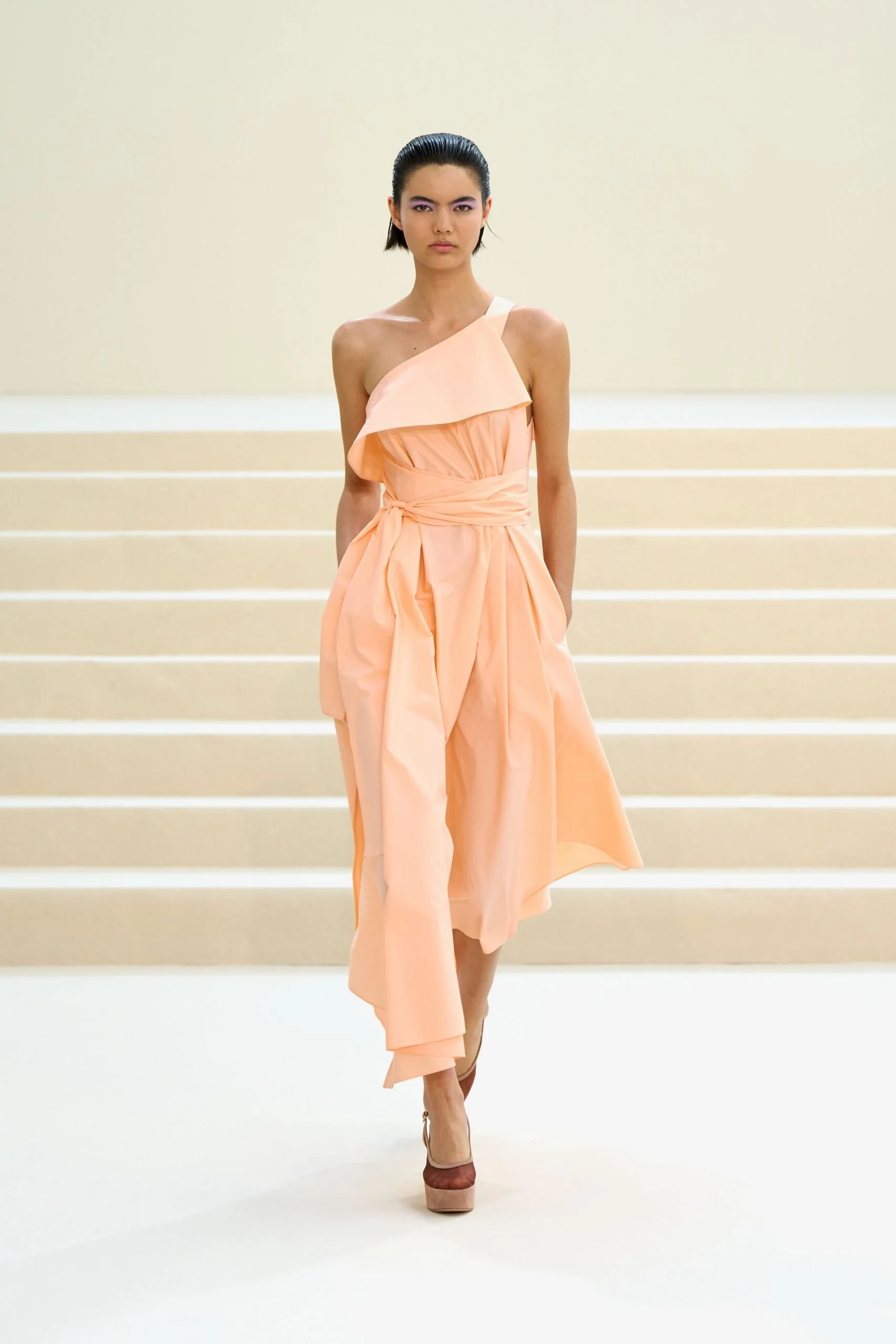
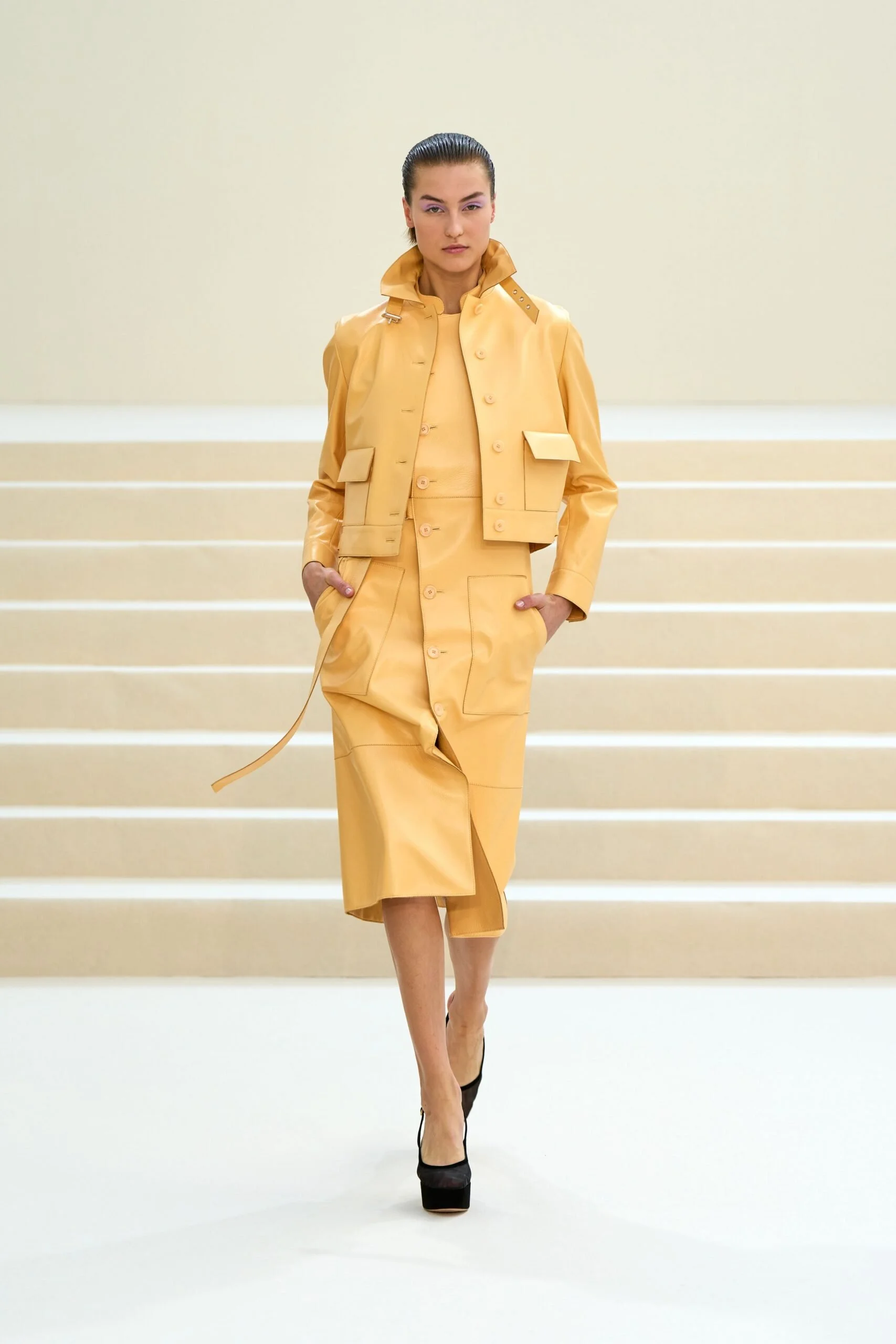
The result was distinctly Akris: controlled in silhouette but much more expressive in colour and surface. Clean lines gave the collection its structure, while audacious combinations of colour and deliberately coordinated looks created a sense of confidence that felt slightly removed from the more fragmented styling dominating many Paris runways. There was something satisfying about Kriemler allowing Jungwirth's unruly marks to enter such a disciplined house without sanding away their character. The collection did not attempt to turn painting into prints. Instead, it asked what happens when the gestures, imperfections and physical traces of an artist's hand are translated into fabric. At Akris, the answer was precise, colourful and unexpectedly tactile.