Why Mount Street Is Becoming London’s Most Interesting Luxury Neighbourhood
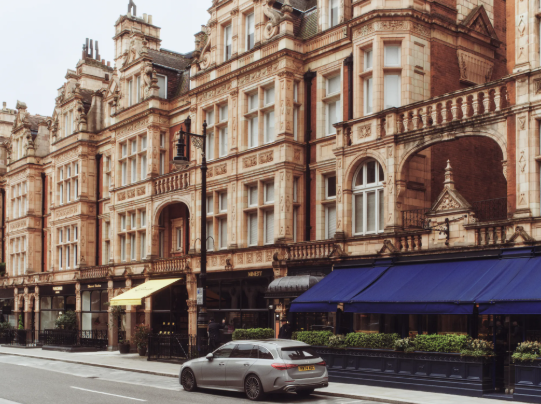
For years, Mount Street existed in the shadow of Bond Street’s global luxury machine. While tourists queued outside flagship stores and luxury brands competed for visibility through increasingly theatrical storefronts, Mount Street remained quieter, more discreet, and noticeably less interested in spectacle. It was where people who actually lived in Mayfair went for lunch. Where editors disappeared between meetings. Where private clients shopped without broadcasting it.
Now, that restraint is precisely what makes it one of London’s most compelling luxury neighbourhoods.
As luxury fashion continues shifting away from overt branding and toward experience, craftsmanship, and cultural credibility, Mount Street has quietly evolved into something larger than a shopping destination. It has become a fully formed lifestyle ecosystem where fashion, art, interiors, hospitality, publishing, and food increasingly overlap.
And unlike other luxury districts in London, it still feels human in scale.
The Shift Away From Logo Luxury
This summer, Grosvenor’s Mount Street Summer Festival crystallises that transformation. Running from June 4 to June 20 alongside London Gallery Weekend and the wider cultural calendar surrounding the Royal Academy Summer Exhibition, the festival positions Mount Street not simply as a retail destination, but as one of the city’s emerging cultural quarters.
At the centre of it is British-Iraqi designer Walid al Damirji and his label By Walid, whose six-day residency beginning June 15 may quietly say more about the future of luxury than any runway show this season.
Importantly, this is also exactly where luxury consumer behaviour is moving. Increasingly, affluent shoppers are no longer searching for products that signal status in obvious ways. They are looking for rarity, provenance, craftsmanship, and objects with emotional permanence.
Mount Street understands that shift better than most luxury neighbourhoods in London.
By Walid and the Return of Craft
By Walid has never operated like a conventional fashion label. There are no trend-led collections, no mass-produced “It” bags, and no algorithm-friendly drops engineered for social media.
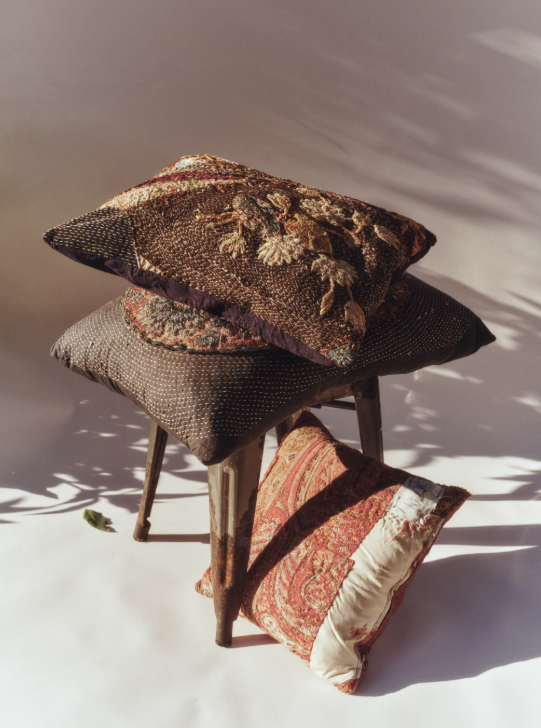
Instead, al Damirji works with salvaged and antique materials — rescued 17th-century tapestries, antique embroidery, opera gloves, and faded textiles discovered through auctions and vintage fairs — transforming them into one-of-one garments, furniture, screens, and objects.
The result sits somewhere between fashion, collectible design, and functional art.
That approach feels increasingly relevant at a moment when luxury consumers are becoming more sceptical of mass visibility and more interested in individuality, scarcity, and permanence. In many ways, By Walid represents the exact kind of craftsmanship-driven luxury Mount Street is beginning to attract more broadly.
The festival itself reflects that evolution. Alongside By Walid’s residency, the programme includes a Thames & Hudson pop-up featuring rare editions, workshops, artist residencies, and collaborations with labels such as Le Monde Béryl.
The focus is less on commerce in the traditional sense and more on immersion — creating reasons to spend time in the neighbourhood rather than simply transact within it.
A Luxury Neighbourhood Designed for Lingering
You can feel that shift simply walking through the area.
Unlike the intensity of New Bond Street, Mount Street moves slower. The architecture remains deeply residential in feeling, even as luxury boutiques occupy its ground floors. Restaurants spill onto pavements without overwhelming them. Galleries sit beside cafés and independent labels rather than global flagship stores competing for attention.
That slower rhythm extends into the neighbourhood’s cafés and restaurants too, where long breakfasts and discreet espresso bars increasingly form part of Mayfair’s quieter luxury culture. Our guide to the best cafés in London explores some of the city’s most stylish independent coffee spots.
It is one of the few areas in central London where luxury still feels connected to taste rather than performance.
Where Fashion, Food and Culture Collide
Part of Mount Street’s appeal is how naturally luxury fashion sits alongside hospitality and culture. Within a few streets, you move between heritage seafood institutions like Scott’s, polished contemporary restaurants such as Bacchanalia, Milanese pastry destination Marchesi 1824, independent galleries, specialist printers, and discreet wellness spaces without the area ever feeling commercially overwhelming.
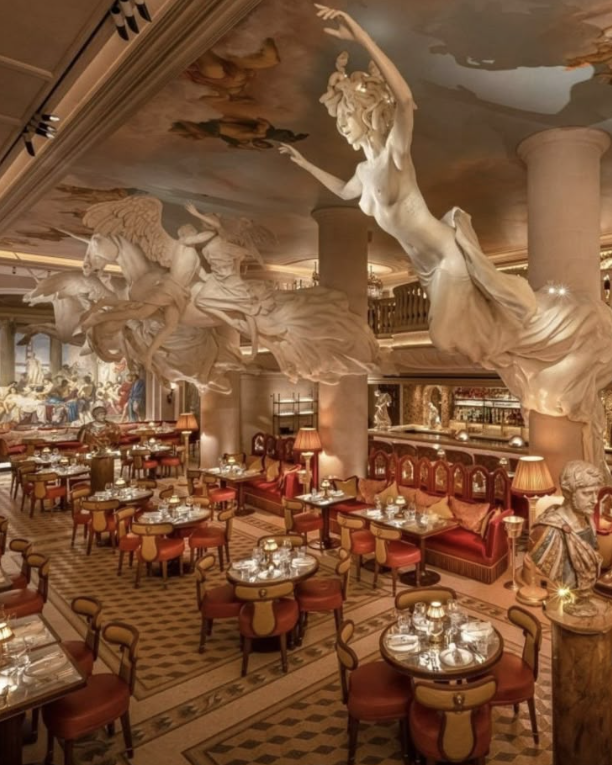
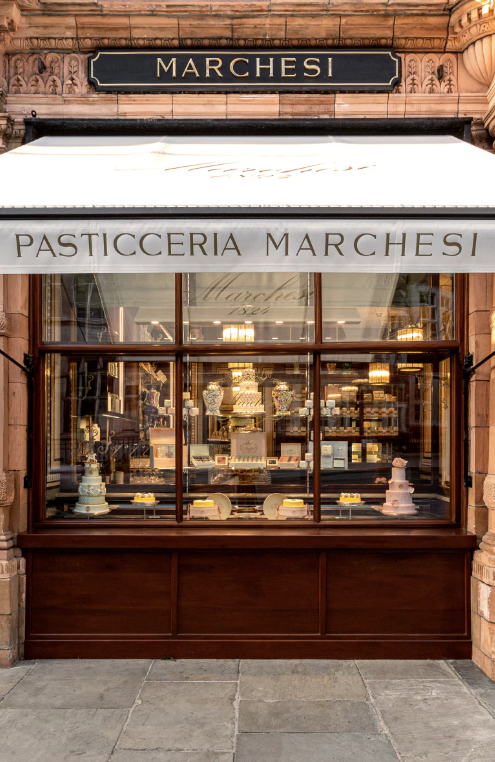
That blend of fashion, food, art, publishing, and design increasingly defines the most desirable neighbourhoods in global cities. People are no longer visiting areas like Mayfair purely to shop; they are spending entire afternoons moving between cafés, exhibitions, hotel terraces, galleries, and restaurants as part of a broader lifestyle experience.
That balance between discretion and cultural relevance is also attracting a newer kind of luxury audience: people who move fluidly between fashion, art, hospitality, interiors, and publishing rather than treating them as separate worlds.
In the space of ten minutes, you move from gallery openings to long lunches, espresso bars, private terraces, and hotel lobbies that feel more like living rooms than commercial spaces. Few parts of London still allow that kind of fluid movement between fashion, hospitality, and culture without feeling over-curated.
If you are exploring the area further, our guides to the best restaurants in Mayfair and the best bars in Mayfair offer a broader look at how the neighbourhood changes after dark.
Beyond fashion and galleries, the area also sits moments away from some of London’s most refined hotel experiences and contemporary afternoon tea destinations. For more, explore our guide to the best afternoon tea experiences in London this summer.
Why Mount Street Represents the Future of Luxury Retail
The most desirable luxury districts are no longer just places to shop, but places that offer a complete atmosphere: somewhere to eat, browse, stay, drink, discover, and linger.
Much of Mount Street’s appeal also comes from its proximity to some of London’s most iconic luxury hotels, from discreet townhouse stays to grand Mayfair institutions that increasingly shape the atmosphere of the neighbourhood itself.
As neighbouring areas like Chelsea, Belgravia, and Notting Hill continue evolving their own luxury identities, Mount Street increasingly feels like the connective tissue between them — a place where fashion, hospitality, galleries, and culture intersect most naturally.
Mount Street increasingly feels like London’s clearest blueprint for where modern luxury is heading next.
The Luxury of Understatement
What makes Mount Street particularly interesting right now is that it still feels slightly under-recognised compared to other luxury districts. It has not yet tipped fully into overexposure.
There is still a sense of discovery to it — hidden galleries, townhouse boutiques, small cafés tucked between fashion houses, conversations happening quietly behind heavy doors rather than through PR campaigns.
That ambiguity is part of the appeal.
Because Mount Street is not trying to dominate London luxury culture. It is quietly redefining it.