More than 300 works explore the artists’ extraordinary creative partnership, their influence on British modernism and the unconventional world they built at Charleston.
The Bloomsbury Group has long occupied a particular place in British cultural history. Part artistic circle, part intellectual movement and part experiment in alternative living, its members challenged the conventions of their time through painting, writing, design and the way they chose to live. At its centre were two artists whose influence extended well beyond the canvas: Vanessa Bell and Duncan Grant.
Opening at Tate Britain on 12 November 2026, Vanessa Bell & Duncan Grant: Inside Bloomsbury brings their five-decade creative partnership into focus. Featuring more than 300 works, the exhibition traces the evolution of their individual practices alongside the shared ideas, relationships and domestic spaces that shaped their work. Paintings, ceramics, textiles and furniture sit alongside a particularly rare inclusion: a reconstruction of the artists’ shared studio at Charleston, temporarily relocated to Tate Britain while the East Sussex property undergoes conservation work.
It is an opportunity to look beyond the familiar image of Bloomsbury as a fashionable gathering of writers and artists, and consider how Bell and Grant helped change the way art could be made, displayed and lived with. For more inspiration, explore our guide to the best things to do in London in November, which includes the exhibition among the month's cultural highlights.
Two artists, one shared vision
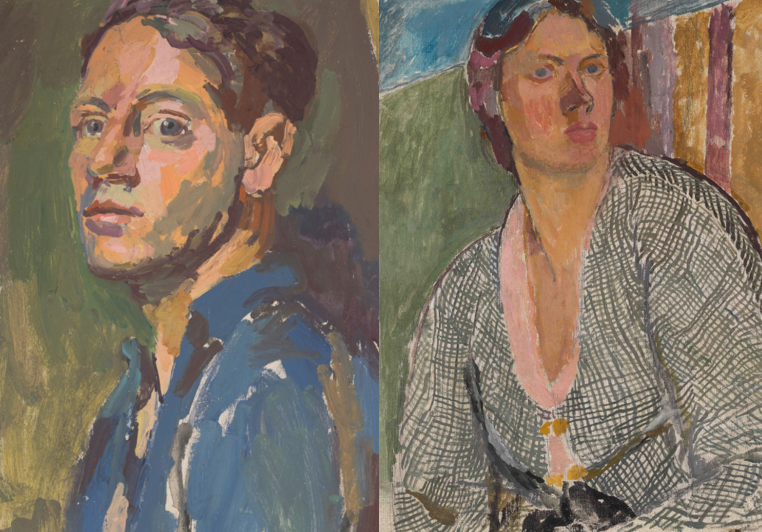
Bell and Grant first met in 1906, but their partnership began to take shape three years later. In a letter written in 1909, Bell invited Grant to tea and suggested they address one another by their first names. It was a small gesture that marked the beginning of a relationship which would become one of the most enduring creative partnerships in modern British art.
Both were closely associated with the Bloomsbury Group, a collective of artists, writers and intellectuals whose discussions centred on progressive ideas about art, literature, relationships and society. The group gathered at 46 Gordon Square, the Bloomsbury home of Bell and her siblings, including writer Virginia Woolf.
The exhibition looks back at the experiences that shaped each artist before they met. Bell's early training included instruction under John Singer Sargent, while Grant's time in Paris brought him into contact with the work of historic masters and the emerging modernist movements. Their early paintings reveal two distinct artistic approaches, but also the beginnings of a shared interest in colour, form and experimentation.
A turning point came in 1910 with Roger Fry's influential exhibition, Manet and the Post-Impressionists, which helped introduce new approaches to painting to British audiences. Bell and Grant responded with increasingly confident experiments in bold colour, simplified shapes and rhythmic lines. Works such as Bell's Studland Beach (c.1912) and Grant's Group at Asheham (1913) offer glimpses of their circle of friends, while paintings of the same subject reveal how closely their visual languages developed alongside one another.
Their work helped push Post-Impressionism towards abstraction, making them important figures in the development of modern art in Britain.
When art moved beyond the canvas
One of the most interesting aspects of Bell and Grant's partnership was their refusal to separate fine art from everyday life. That approach found a natural home in the Omega Workshops, the design enterprise established in 1913 with a communal ethos and a desire to bring modernist ideas into domestic interiors.
As directors, Bell and Grant worked with other artists and designers to create objects that brought their visual language into the home. Their designs appeared on ceramics, fans, lamps, chairs, tables and wardrobes, challenging the traditional distinction between decorative and fine art.
The exhibition brings together examples of this work, alongside commissions that demonstrate the breadth of their creative output. Bell designed book covers for her sister Virginia Woolf, while Grant produced murals depicting scenes of leisure and summertime. Among the most significant collaborative works is the Famous Women Dinner Service (1932–34), a collection of 50 hand-painted Wedgwood plates celebrating women from Jane Austen to Cleopatra.
It is a reminder that their modernism was not confined to galleries. It extended into the objects people used, the rooms they inhabited and the visual details of everyday life.
The unconventional world of Charleston
Bell and Grant's relationship was never a conventional one. They shared a home for more than 50 years and had a daughter, Angelica, while maintaining a domestic arrangement that sat outside the expectations of the period. Bell was married to art critic and fellow Bloomsbury member Clive Bell, with whom she had an open marriage, while Grant predominantly had relationships with men.
The exhibition does not overlook the emotional complexities of this arrangement. Alongside the affection and creative understanding that sustained their partnership, it explores the insecurities and tensions that could arise from their circumstances. Grant's experience as a gay man in a society that did not accept him is also addressed through rarely seen erotic male nudes, works that remained hidden for many years.
Following the First World War, Bell and Grant moved towards more naturalistic subjects, drawing inspiration from their travels across Europe. Their paintings captured scenes along the Seine in Paris and landscapes across the South of France, Italy and Spain. By the 1920s, they had settled into a family life at Charleston, their home in East Sussex, where art, domesticity and friendship became inseparable.
Paintings including Bell's Interior with the Artist's Daughter (c.1935–36) and Grant's The Hammock (1921–23) offer a glimpse of this quieter period. The exhibition also brings visitors closer to the environment in which much of this work was made, with the artists' shared studio relocated from Charleston to Tate Britain for the first time.
A closer look inside Bloomsbury
What makes Vanessa Bell & Duncan Grant: Inside Bloomsbury particularly compelling is its attention to the relationship between art and life. Rather than presenting two careers in isolation, it explores the conversations, shared influences and domestic arrangements that shaped their work over five decades.
The exhibition also offers a chance to reconsider the Bloomsbury Group's wider contribution to British culture. Its members questioned established ideas about creativity, relationships and social convention, and Bell and Grant brought those ideas into the visual world through painting, design and the spaces they inhabited.
For anyone interested in British modernism, the history of design or the creative lives behind Charleston, this is a significant addition to London's autumn and winter exhibition calendar.
Vanessa Bell & Duncan Grant: Inside Bloomsbury runs at Tate Britain from 12 November 2026 to 11 April 2027. Tate Britain is located on Millbank, London SW1P 4RG, and is open daily from 10am to 6pm. Tickets are available through Tate.