M&S Makes Its London Fashion Week Debut With 100 Years of Style
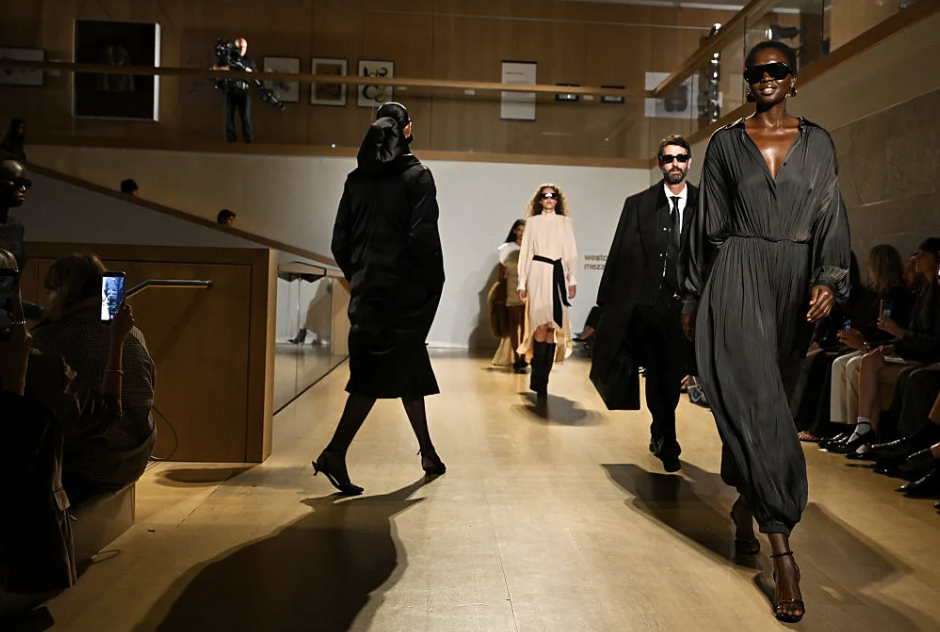
Marks & Spencer arrived on the London Fashion Week schedule for the first time on 18 September, marking a century of fashion with a 59-look runway show at the Design Museum. Rather than treating its archive as something to simply revisit, M&S used the anniversary to reinterpret the silhouettes, fabrics and fashion moments that have shaped its identity — from the tuxedo and white shirt to the twinset, lingerie and archival florals. More unusually for London Fashion Week, everything shown was available to buy immediately after the presentation, with half of the collection priced below £50.
The collection draws heavily on the M&S archive in Leeds, which contains more than 72,000 historical items. Designers looked across the decades for references rather than reproducing them literally. A 1920s lingerie piece, for example, informed contemporary camisoles designed to be seen rather than hidden beneath clothing, while 1940s-inspired wide-leg trousers and tailoring were brought into the present through updated proportions. Elsewhere, archival floral prints, the St Michael jacket, the classic tuxedo and familiar knitwear codes were given a more contemporary treatment.
That balance between heritage and modernity continued across both womenswear and menswear. Womenswear moved between sharp tailoring, fluid satin, textured knitwear and occasion dressing, with lace camisoles, fitted skirts and faux-fur details adding a sense of glamour. Menswear focused on tailoring, elevated outerwear and relaxed layering, including Japanese selvedge denim, heritage-check pieces, an 1980s-inspired double-breasted wool suit and a velvet evening suit. Rich browns, deep blues, soft neutrals and flashes of red gave the collection a distinctly autumnal palette.
The casting also made the point that this was intended to be a fashion show with a broader audience in mind. Models spanning ages 21 to 60 included Lara Stone, Erin O’Connor, Jodie Kidd, Karen Elson and Lennon Gallagher, while the front row included Joan Collins, David Gandy, Jessie Ware and other M&S ambassadors and friends of the brand. The message was less about separating the catwalk from the high street than collapsing the distance between the two.
For M&S, the significance of the show ultimately lies in that immediacy. There was no six-month wait for the runway pieces to reach stores and no expectation that the clothes should remain at the level of fashion fantasy. They were designed to move directly from the Design Museum into customers’ wardrobes, with 50 per cent of the collection priced under £50. One hundred years after M&S began selling clothing, its first London Fashion Week show offered a fairly simple proposition: the archive is useful when it can be made relevant to the way people actually want to dress now.