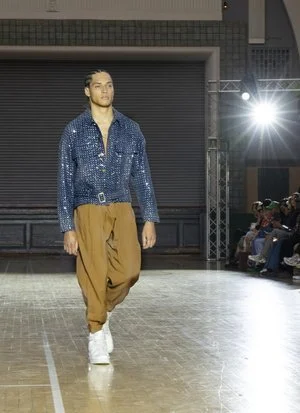
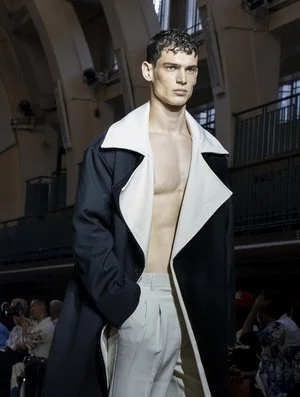
Justin Cassin SS23 - Backstage Interview
Fashion weeks are often remembered for their spectacle—the celebrity front rows, the dramatic finales and the social media moments that disappear almost as quickly as they arrive. What lasts are the designers with a clear point of view.
When Justin Cassin presented his menswear collection during London Fashion Week, the conversation backstage was less about trends and more about individuality. While many brands chase the latest aesthetic cycle, Cassin's work questions why fashion has become increasingly uniform in the age of algorithms and fast fashion.
Goldfoil Magazine was given exclusive backstage access before the show, speaking with Justin Cassin himself about the inspiration behind the collection, the philosophy driving his brand and why personality remains the most important element of modern menswear.


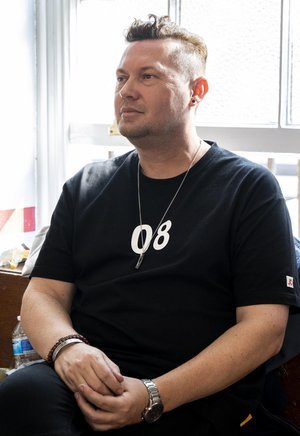
Backstage photos by Puja Bhatia @p.b_photography22
Who Is Justin Cassin?
Justin Cassin is an Australian menswear designer known for combining contemporary tailoring with experimental silhouettes and artistic detailing. His collections blur the line between classic menswear and conceptual fashion, often exploring identity, self-expression and the rejection of conformity.
Rather than designing clothes that dominate the wearer, Cassin creates garments intended to amplify individual personality.
That philosophy became the foundation of his London Fashion Week presentation.
Inside Justin Cassin's London Fashion Week Show
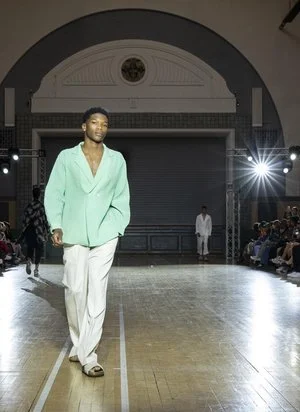
The show took place at Seymour Hall, the Art Deco Grade II-listed building whose architecture provided a striking backdrop for the collection. As evening light filtered through the large windows, the atmosphere felt energetic yet intimate—a fitting environment for a collection centred on individuality.
Music, casting and styling all contributed to the youthful optimism that defined the presentation.
Rather than relying solely on professional runway models, the show embraced personalities from different creative worlds, reinforcing the idea that fashion should celebrate people rather than standardise them.
An Exclusive Backstage Interview with Justin Cassin
Speaking backstage before the presentation, Justin Cassin explained that the collection was inspired by the growing sameness created by modern fashion consumption.
In an era dominated by fast fashion and social media trends, individuality can easily disappear beneath algorithms that encourage everyone to dress alike. His response was a collection designed to celebrate difference rather than conformity.
The message was simple: everyone deserves a place on the runway, provided they remain authentic to themselves.
Instead of imposing a strict aesthetic, the garments were intended to work alongside the wearer's personality, allowing styling and attitude to become part of the design itself.
Celebrity Cast Brings the Collection to Life
The runway featured several notable figures who embodied the collection's emphasis on individuality.
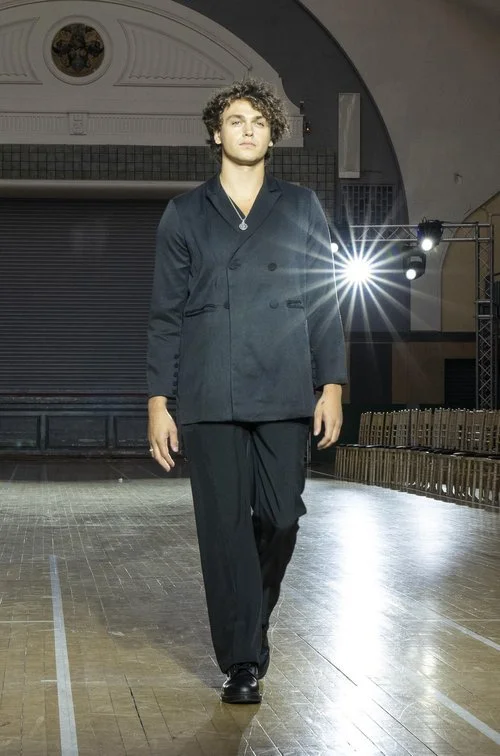
Jonah Marais
Musician Jonah Marais, best known as a member of Why Don't We, opened the show wearing an understated all-black look consisting of a relaxed double-breasted blazer, oversized trousers and polished leather shoes, accessorised with jewellery that added subtle personality without overwhelming the tailoring.
He would later return for the finale in one of the collection's most memorable looks.
Ishod Wair
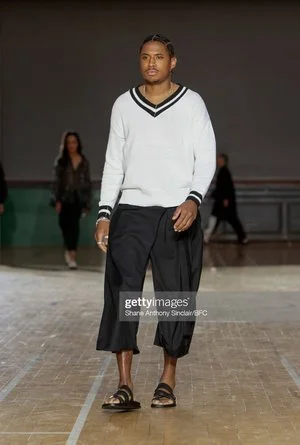
Professional skateboarder Ishod Wair, renowned for his collaboration with Nike SB, represented the intersection between sport, street culture and contemporary fashion.
His look combined asymmetrical cropped trousers with a white V-neck knit trimmed in black, brown leather sandals and gold jewellery, creating a silhouette that challenged conventional menswear proportions while remaining effortlessly wearable.
Christian Arno and Jonathan Steinig
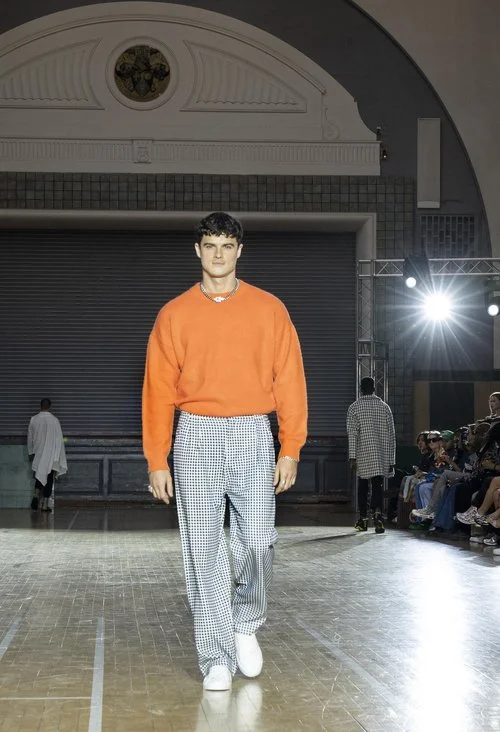
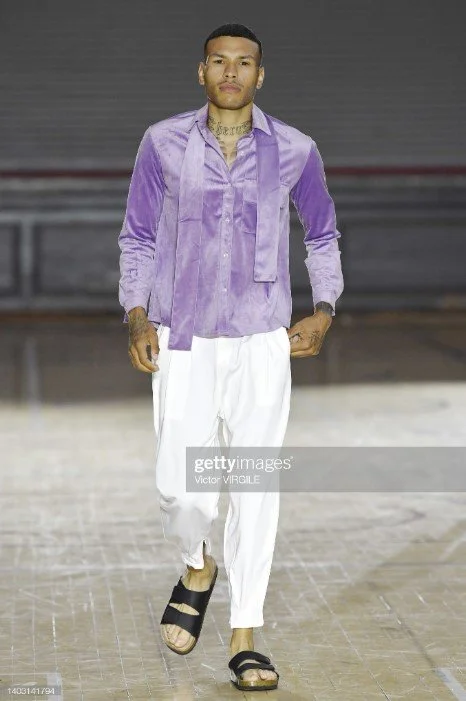
The collection also featured Christian Arno and Jonathan Steinig, each bringing distinct interpretations of Cassin's vision.
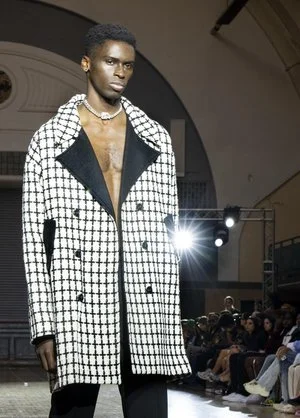
Arno wore high-waisted houndstooth trousers paired with a vivid orange knit, while Steinig appeared in a silky purple shirt finished with an oversized pussybow tie and wide cropped white trousers—one of the show's boldest combinations.
The Collection: Modern Menswear with Artistic Freedom
Throughout the collection, Justin Cassin demonstrated an ability to reinterpret wardrobe staples through unexpected construction and proportion.
One standout look transformed the classic white shirt into something altogether different through asymmetric draping and shirring, paired with relaxed white trousers that prioritised movement over rigidity.
Elsewhere, a black shirt featuring rows of contrasting white buttons created an almost graphic polka-dot effect, proving that subtle alterations can dramatically change familiar garments.
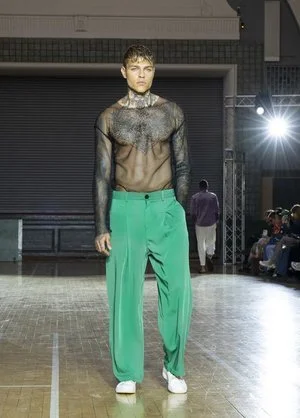
Fabrics also played a central role. Sheer materials embroidered with star-like motifs shimmered beneath the lights of Seymour Hall, while metallic finishes introduced texture without sacrificing elegance.
Rather than chasing spectacle, the collection invited closer inspection.
The Finale Look
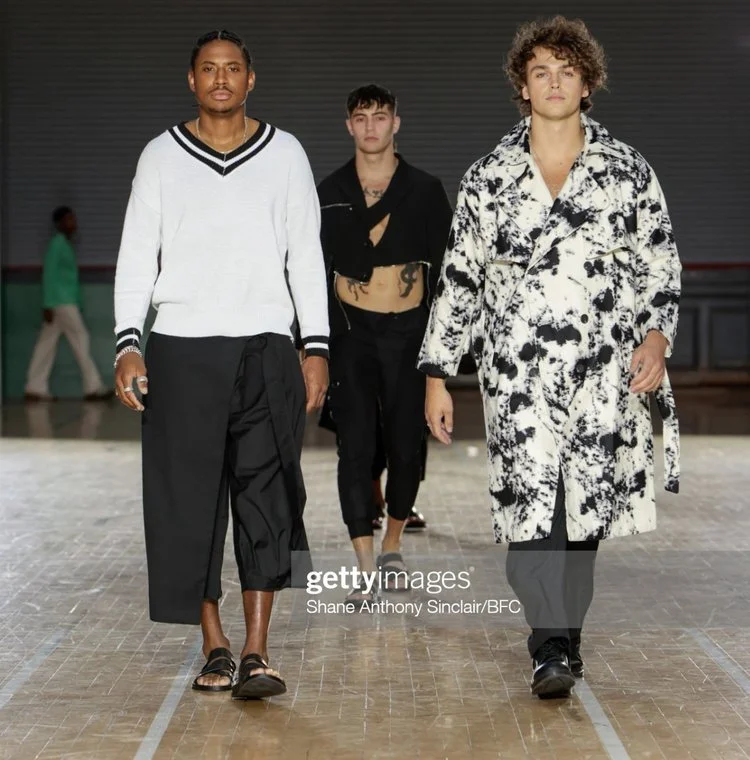
The show concluded with Jonah Marais returning to the runway in an oversized white coat splattered with black paint, worn bare-chested over flowing black trousers.
The look encapsulated the broader message behind the collection: structured yet expressive, artistic yet wearable, and unconcerned with traditional expectations of menswear.
It served as a fitting conclusion to a presentation built around confidence rather than conformity.
Why Justin Cassin Matters
Fashion increasingly rewards designers who create recognisable aesthetics rather than simply following trends.
Justin Cassin's work stands apart because it challenges the idea that clothing should make everyone look the same. His collections explore personality through tailoring, proportion and craftsmanship, offering a more thoughtful alternative to fast-moving fashion cycles.
The London Fashion Week presentation demonstrated that innovation in menswear does not always require louder logos or bigger silhouettes. Sometimes it begins with allowing individuality to take centre stage.
For a designer making his mark on the London fashion scene, that philosophy may ultimately prove to be his strongest signature.