Fashioning Masculinities: The Art of Menswear at the V&A London
When Victoria and Albert Museum staged Fashioning Masculinities: The Art of Menswear in 2022, it positioned itself at the centre of a conversation that fashion had been circling for years but rarely addressed with such clarity. The exhibition traced the evolution of menswear across centuries, not as a linear history, but as a cultural construction shaped by power, performance and shifting ideals of masculinity. It was, in essence, less about clothes and more about what those clothes had been asked to say.
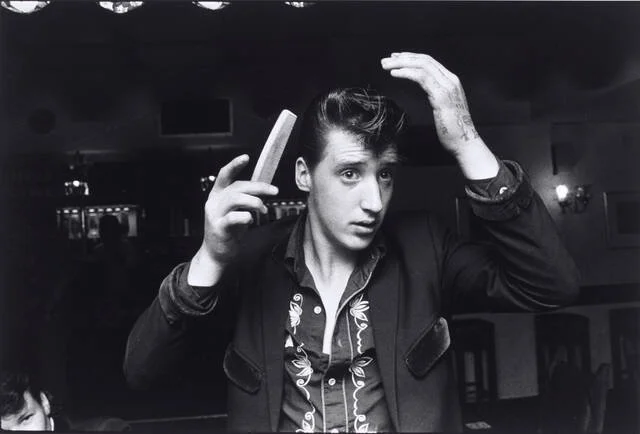
Chris Steele-Perkins, Market Tavern, Bradford, England, 1976
Curated by Claire Wilcox and Rosalind McKever, the exhibition brought together around 100 garments and 100 artworks, spanning Renaissance portraiture, classical sculpture and contemporary fashion. The scenography, conceived by JA Projects, divided the show into three thematic sections rather than a strict timeline, allowing visitors to move between eras and ideas with a certain fluidity. It felt immersive without being overwhelming, though at times its ambition threatened to outpace its depth.
The opening gallery, Undressed, examined the male body as both ideal and illusion. Classical sculptures such as the Apollo Belvedere established a historical blueprint for masculine perfection, one that has echoed through centuries of tailoring and image-making. These ideals were placed in conversation with contemporary works, including pieces by Jean Paul Gaultier and JW Anderson, who challenged traditional notions of masculinity through transparency, softness and exposure. The result was a subtle but persistent tension between aspiration and reality, between the sculpted body and the lived one.
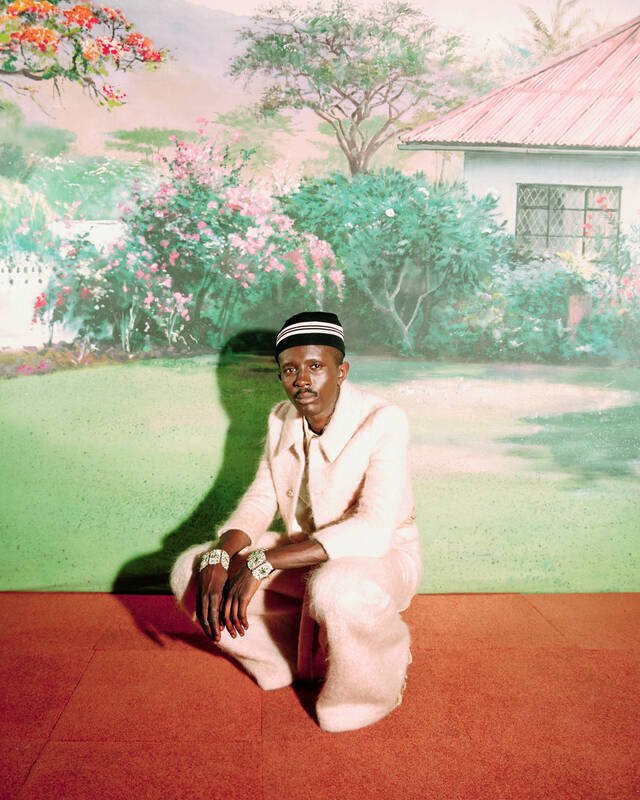
From there, the exhibition moved into Overdressed, a room that revelled in excess. Historically, menswear had not always been restrained; it had once been theatrical, decorative and unapologetically expressive. Portraits by Joshua Reynolds and garments rich in embroidery and colour made this clear, while contemporary designers such as Alessandro Michele and Grace Wales Bonner revisited these codes with a modern sensibility. Here, masculinity was less about control and more about display, suggesting that what we now consider “flamboyant” had once been the norm.
The final section, Redressed, grounded the exhibition in the familiar language of the suit. From the influence of Beau Brummell to contemporary reinterpretations by designers like Alexander McQueen and Raf Simons, the suit emerged as both uniform and canvas. It reflected industrialisation, class structures and the quiet codification of masculinity into something more restrained. Yet even here, the cracks were visible. Deconstruction, distortion and subversion hinted at a future in which the suit might no longer hold the same authority.
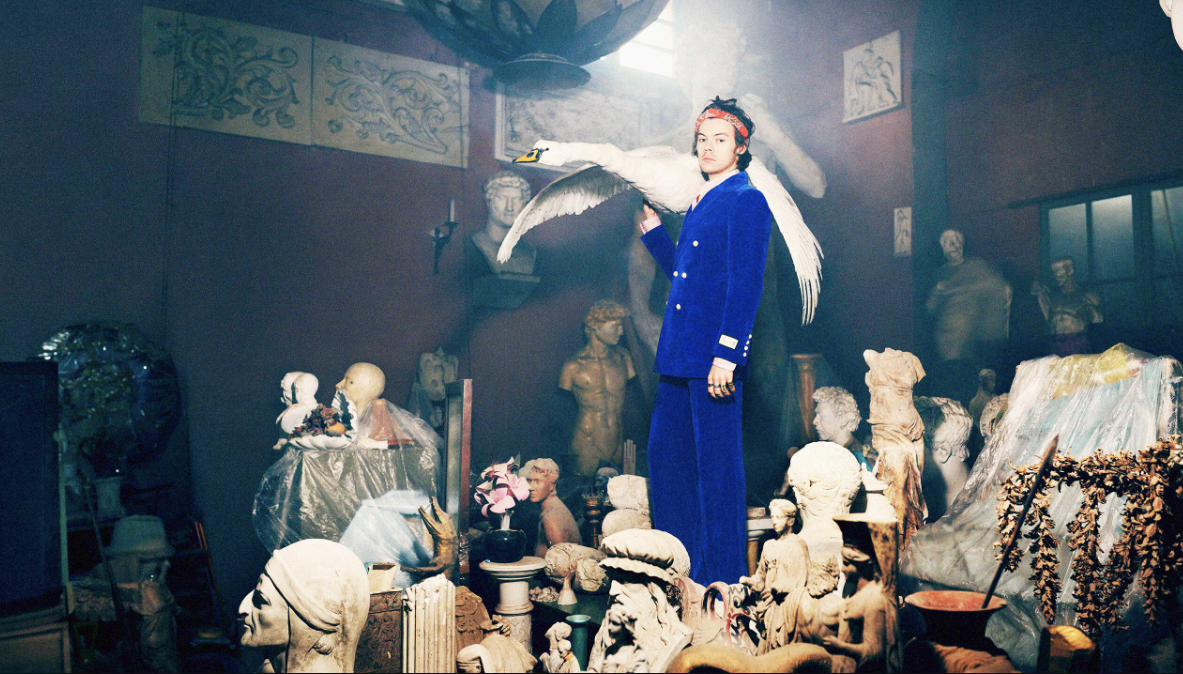
The exhibition culminated in a finale that felt deliberately headline-making. Looks worn by Harry Styles, Billy Porter and Bimini Bon-Boulash were presented as cultural flashpoints, moments where menswear collided with gender politics in the public eye. These pieces underscored the exhibition’s central argument: that masculinity is not fixed, but performed, negotiated and continuously rewritten.
Still, for all its scope, the show was not without its limitations. Its perspective remained largely Western, with a noticeable emphasis on European and North American narratives. While it acknowledged the global nature of fashion, it stopped short of fully exploring how masculinity is constructed across different cultures. Similarly, its focus on high fashion and historical artefacts occasionally overlooked the influence of streetwear, music and everyday dress, which arguably shape contemporary masculinity just as powerfully.
And yet, perhaps that was the point. Fashioning Masculinities did not claim to be definitive. Instead, it offered a framework, a way of thinking about menswear not as a set of rules but as an evolving language. It asked a simple question that lingered long after the final room: do clothes make the man, or do they merely reveal the contradictions already there?