Bad Bunny Just Delivered One of the Most Culturally Defining Super Bowl Halftime Shows Ever
Last night Bad Bunny took the stage at the 2026 Super Bowl halftime show at Levi’s Stadium in Santa Clara, and the world tuned in. For weeks, anticipation around the performance had been building. Fans expected history, and they got it. The Puerto Rican megastar became the first solo headliner to perform his entire Super Bowl set in Spanish, only days after winning a Grammy for Al Resonance. What unfolded was more than a show. It was a declaration of identity, pride and belonging, delivered through music, fashion and community.

Kevin Mazur for Roc Nation
The Set: A Living Portrait of Puerto Rico
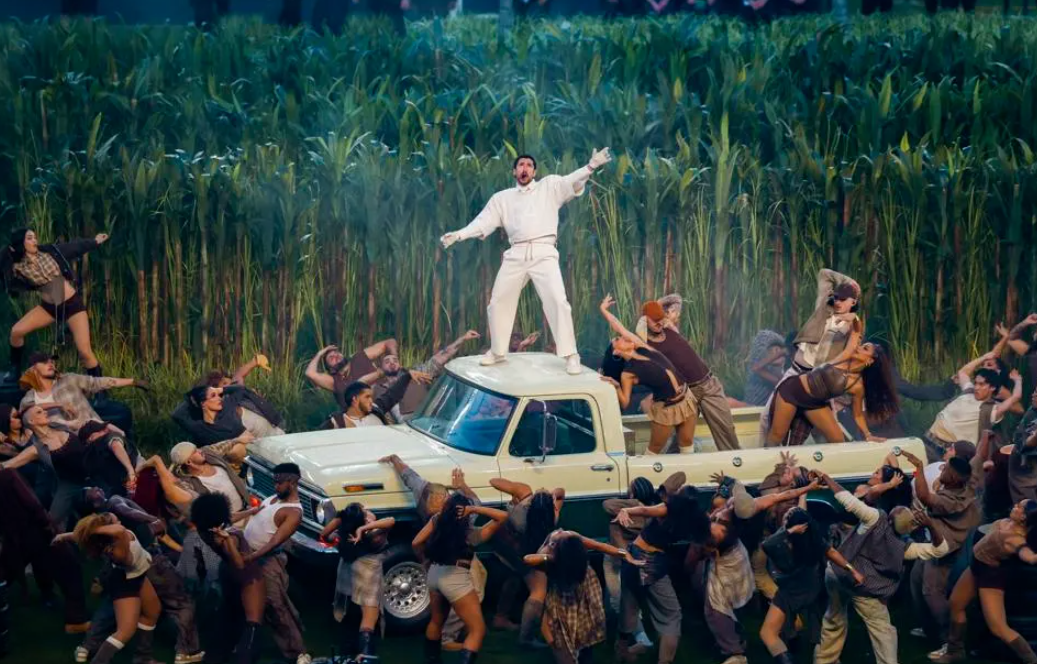
From the opening moments, it was clear that this was not a typical halftime spectacle. The stage transformed into a vibrant Puerto Rican neighbourhood, part block party and part cultural love letter. Bad Bunny wove through scenes of everyday life: friends playing dominoes, a nail technician tending to a client, vendors serving piraguas, and a boxing match taking place beside a makeshift taco stand.
At the heart of it all stood La Casita, a recreation of the home from his No Me Quiero Ir de Aquí residency, a symbol of warmth and community. The detail was extraordinary. A real wedding took place mid-performance, and the field pulsed with the colours, sounds and movement of Latin life. It was not designed simply to entertain but to represent. In an event that has long been about universal appeal, Bad Bunny offered something deeply personal, inviting millions into his world rather than performing for theirs.
Kevin Mazur for Roc Nation
The Outfit: Symbolism in Simplicity
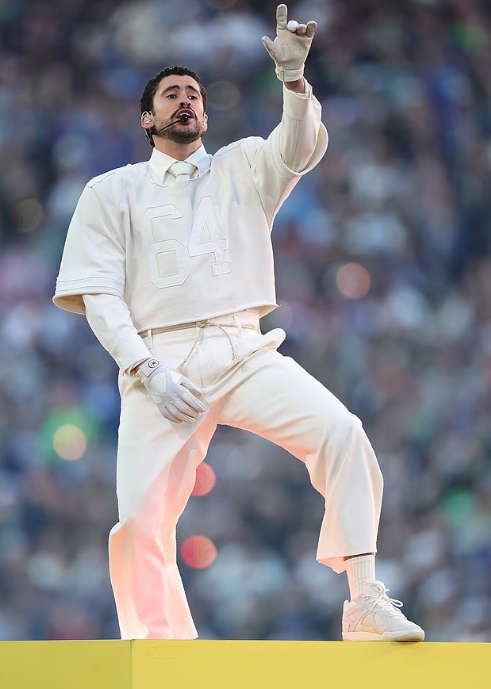
In a show filled with visual intensity, Bad Bunny’s outfit was strikingly understated. Dressed head to toe in cream by Zara, a brand choice that surprised many for its accessibility, the look was crafted by stylists Storm Pablo and Marvin Douglas Linares. He wore a collared shirt, chinos and sneakers beneath a white football jersey with “Ocasio” and the number 64 on the back.
It was a quiet nod to his roots, reportedly referencing his mother’s birth year, and a deliberate statement of belonging. Rather than choosing the theatrics of haute couture, as he did at the Grammys the week before, he opted for something grounded, democratic and familial. Later in the night, he added a double-breasted blazer and cream gloves, finishing the look with a gold Audemars Piguet watch and his Adidas “BadBo 1.0” sneakers. The message was clear: authenticity over excess.
The Guests: Global Icons in Harmony
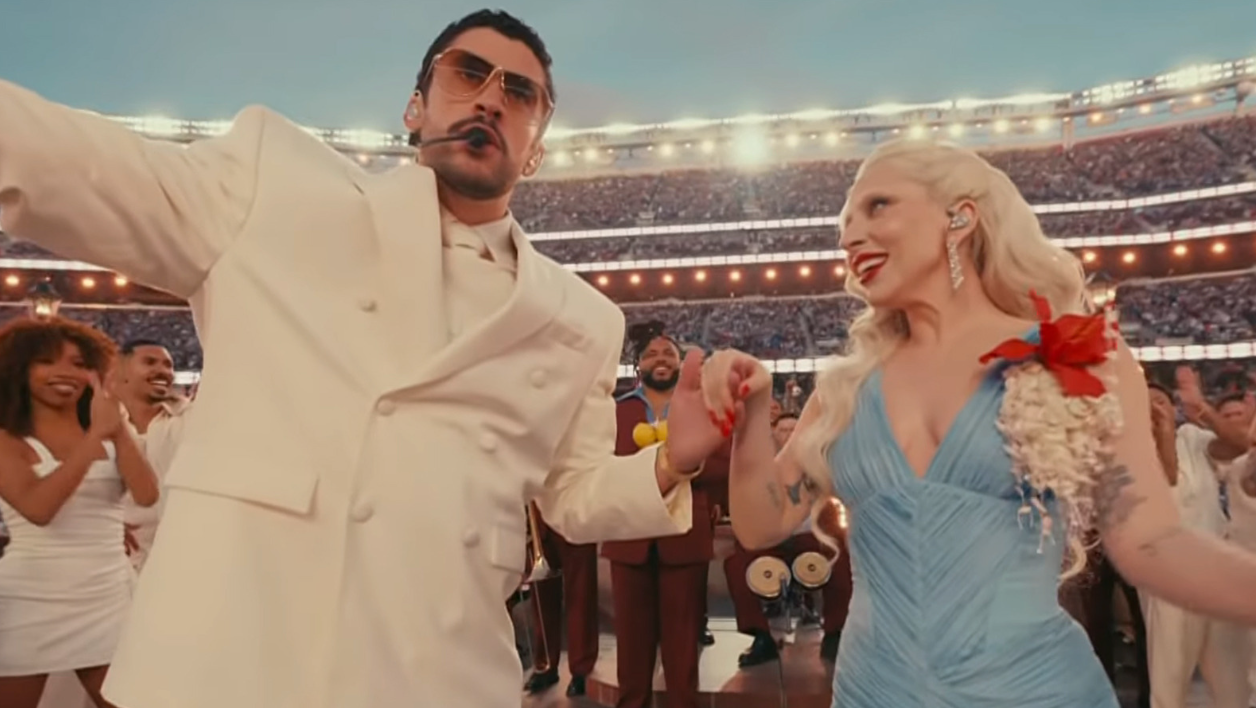
No one knew who would join Bad Bunny on stage, but when the surprises arrived, they were perfectly judged. Lady Gaga appeared first, performing a salsa rendition of Die With a Smile, seamlessly fusing her pop theatricality with the show’s Latin rhythm. It was a thrilling crossover moment that felt like genuine collaboration rather than spectacle.
Ricky Martin followed with Lo Que Le Pasó a Hawaii, a proud bridge between generations of Puerto Rican icons. Around them, the casita buzzed with cameos from Pedro Pascal, Cardi B, Karol G and Jessica Alba, who danced and laughed among the cast. These appearances were not gimmicks but gestures of solidarity, reflecting a shared cultural pulse that extended beyond fame.
The Message: Together, We Are America
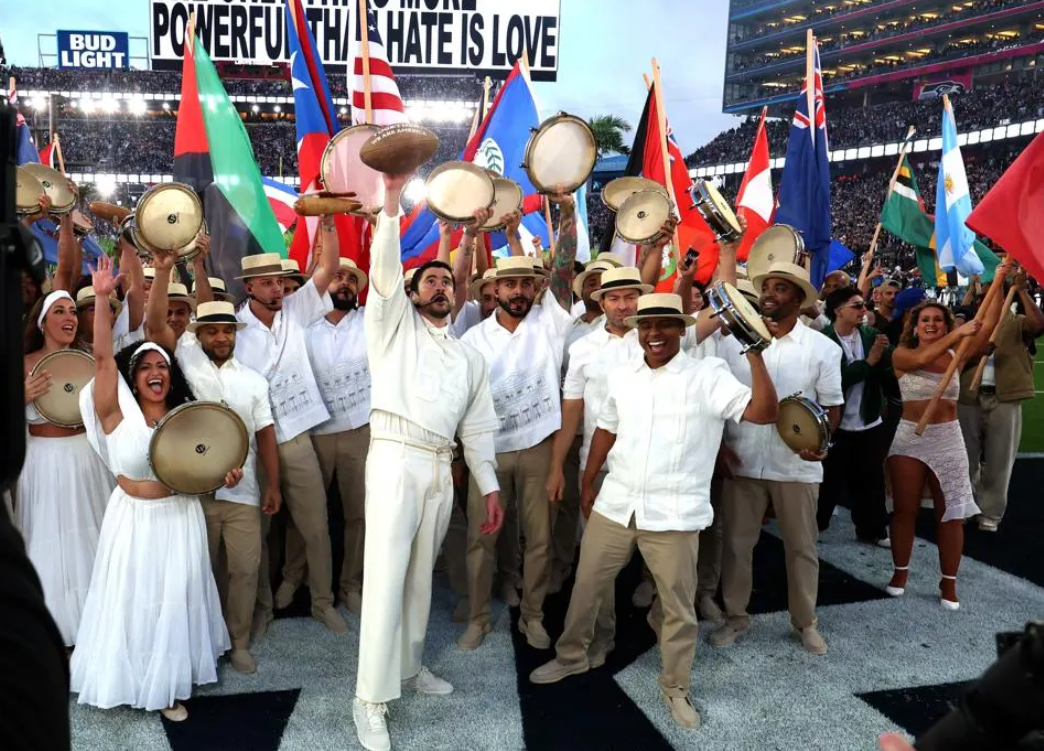
As the set drew to a close, Bad Bunny lifted a football bearing the words “Together, we are America.” It was a simple gesture that landed like a political statement. In a time when language and identity are often divisive topics, this was a call for unity through difference.
The performance ended not with spectacle but with joy. Families, friends and stars danced beneath a confetti of Caribbean colour. For a brief moment, the world looked a little more like the one Bad Bunny has been singing about for years: borderless, rhythmic and defiantly full of life.